Slashdot Mirror
Domain: mathsisfun.com
Stories and comments across the archive that link to mathsisfun.com.
Comments · 22
-
basic stats?
mean & variance? https://www.mathsisfun.com/dat...
-
Re:Whoopsie
Holy fuck i have seen some head spinning apologies for apple here but this one is fucking stupid
maybe apple should study this site if its having problems with leap years; https://www.mathsisfun.com/leap-years.html
-
Re:False Idol.
Your fallacy, like all institutionalized Churches, is assuming Free Will and Fate are mutually exclusive.
They are both true.
One truth does not negate another truth. This is the very definition of a paradox.
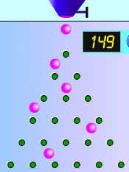
Here is an example to illustrate. Take a Quincunx (or Galton Board) and flip it vertically:
In this analogy:
* Fate = Gravity,
* Free-Will = Choice to move left or righte.g.
* You are fated to die.
* You have free-will to die sooner or later. i.e. You can commit suicide (and thus get placed in God's Penalty Box) or live a long life trying to do the 1 and only commandment to the best of your ability.The choice is yours.
For a limited time. (TM)> This is the core of Atheistic Libertarianism,
Trading the ignorance of Theism for the arrogance of Atheism is still blindness.
i.e.
Theism is the color-blind man proselytizing to others his faith that "colors" exist.
Atheism is the blind man telling everyone else they are crazy and irrational.
The mystic is the one seeing in color wondering "When will both sides will shut up and stop arguing their relative truth and realize a) the fact that everyone has faith in their beliefs, and b) experimental knowledge one lives is the only real truth."--
Javaschit, noun, a fucked up programming language designed and implemented in only 10 days. HTML5 requires the "use strict" hack to turn on type safety! WTF?! -
Re:False Idol.
Your fallacy, like all institutionalized Churches, is assuming Free Will and Fate are mutually exclusive.
They are both true.
One truth does not negate another truth. This is the very definition of a paradox.
Here is an example to illustrate. Take a Quincunx (or Galton Board) and flip it vertically:
In this analogy:
* Fate = Gravity,
* Free-Will = Choice to move left or righte.g.
* You are fated to die.
* You have free-will to die sooner or later. i.e. You can commit suicide (and thus get placed in God's Penalty Box) or live a long life trying to do the 1 and only commandment to the best of your ability.The choice is yours.
For a limited time. (TM)> This is the core of Atheistic Libertarianism,
Trading the ignorance of Theism for the arrogance of Atheism is still blindness.
i.e.
Theism is the color-blind man proselytizing to others his faith that "colors" exist.
Atheism is the blind man telling everyone else they are crazy and irrational.
The mystic is the one seeing in color wondering "When will both sides will shut up and stop arguing their relative truth and realize a) the fact that everyone has faith in their beliefs, and b) experimental knowledge one lives is the only real truth."--
Javaschit, noun, a fucked up programming language designed and implemented in only 10 days. HTML5 requires the "use strict" hack to turn on type safety! WTF?! -
Re:They're kids
Programming is not a building block.
Were you ever told to study or take notes in school? Do you know how to do either of those? Think before you answer.
Did you know organization aids in memorization? Did your teachers tell you rhythm and rhyme increase the ease with which you can learn something, or only leverage that fact, most likely thinking they were adding entertainment to keep a class full of distracted kids attentive?
Surely someone tried to feed you acrostics. Even engineers know this one.
What about mathematics? Are you still counting on your fingers and carrying the two? If you memorize your multiplication tables (by brute force) and practice using a Japanese 4/1 abacus, you can immediately compute arithmetic operations in your head. Memorize a simple system of numerical storage (Dominick's, Mnemonic Major, number shape, PAO) and use a digital computation algorithm and you can keep three registers straight while you compute infinite digits in any square root in your head faster than you can write or voice the numbers.
People think too much about goals and not about foundations. They also think children too stupid to understand anything complex, instead of thinking about how people think. You would think folks would say, "Hey, we can describe memory to children in great technical detail, because a child will stare at you blankly, think for about four seconds, and immediately recognize the mechanism you've described!" Instead they say, "Associative? You want to tell children memory is visual and associative? They're not going to understand that! It's too complex!" It's ludicrous; it's like claiming you can't tell a child teeth grind up food and wet it with saliva so it can safely transport down the esophagus to the stomach. They bite a chicken nugget, chew, swallow, and feel it move, and immediately understand what you're babbling about.
As a result, we don't teach children to learn. We force them to learn by whatever means necessary, but give them no tool to drive information into their minds. We don't teach them study methods, note-taking methods, or deliberate practice; we don't teach them any concepts of executive function or mnemonics; and we even avoid showing them highly-structured, systematic approaches to basic mathematics, under the assumption that children cannot handle structure and require a sort of free-play type of classroom learning.
Children need to start with a basic study of the mind. First a brief overview of memory in function, including a high-level overview of the neurology involved and an introduction to mnemonic devices, but excluding mnemonic systems. Then an explanation of leveraging human memory through systems of study and note-taking, like SQ3R and the Affinity Diagram device. These provide the easy foundation to ingesting new information.
Once you've transferred these, you can teach and apply deliberate practice and executive function. Deliberate practice is a method of technical, goal-oriented practice producing constant and immediate results: you recognize your weaknesses and focus on those, while trying to judge if you're improving. Executive function includes a broad array of loosely-related behaviors, notably in eliminating distraction, managing time, and orga
-
Re:Well, I did learn something
Natural numbers are complex too...
-
Re:Infinity
Oh, yeah, I fucked up... Good catch! I failed at simplifying an example where lim x->1 (x^2 - 1) / (x - 1) = 2
from https://www.mathsisfun.com/cal...
which ends up being a pretty innocuous-looking line with a "hole" at x=1 , y=2But yeah, that's exactly my point that all div by 0 operations might not be "approximated" as +/- infinity , but under certain not-uncommon circumstances, 1 or 2 or any number could be a possible "approximation" of something that would otherwise throw a div by 0 error. But it's much more trouble to code for those special cases than just bailing out. And that was the point I was trying to make to troll for some mod points
-
Re:It's been going on for years
That's a cop out and a shitty teacher -- unable to respect their student(s). The whole point of a teacher is to inspire their students to learn -- NOT to demotivate them! "Success" is the student knowing more then the teacher. That's how Scientists work!
In grade 10 (or 11) I had a physics teacher bust my balls one time because I was using the cosine law even though it wouldn't be taught until the next grade.
I asked him "Why am I being penalized for understanding Math??"
He relented and said I could keep using it.
Not a, "Hey, I saw you were curious about math using some formulas we haven't taught yet! Fantastic. Here are some other formulas you may want to check out too!"
-
Re:It's called the Higgs Field
From Einstein we learned that energy is synonymous with mass. Or the other way around. When you have a particle with mass, it's like compacted, tightly packed energy. Energy can be motion, m.d(v2), gravitational, m.g.dh, electric qE.dx, or any force, Fdx, and because these convert into each other and are conserved, there must be some common property of ether that this energy thing, or mass thing describes. In particular a potential electric field containing energy qEdx, or mgdh, the field itself contains mass, by virtue of any energy being also mass. Bound mass, or rest mass must be some lots of mv2 motion, or electric field strength, or what not, packed into a tiny little thing we call an elementary particle. If you take an electron/positron pair for instance, and you make them spin around each other really close, at a distance smaller than the circumference of a neutron, with speeds at 99.9999999999% c of light speed, you can pack a lot of energy, and a lot of relativistic mass in a tiny little thing, including making a neutron-like particle that weighs more than the whole Earth and Sun combined. Of course this is not possible because of some quantum rules, including the Pauli exclusion principle, which sounds like vacuum only supports certain kinds of waves in itself, or states, and you cannot get elementary particles of just any kind of mass and density. Also gravity is like packed energy, or mass, does not localize, but spills all over the place nearby, in a fraction we call G, the gravitational constant, in the form of energy, or mass. The gravitational field strength drops as the inverse square, but the number of space-quanta, or 3d-pixels, that gravity penetrates, increases with the r2 surface area of the sphere, so in effect, total gravity is conserved, and so it total electricity, or with anything that drops with inverse r2. Ether must be a pretty funky object, or stuff of mind, or entity, or medium, or principle, with funky properties. The funkiest is the kinetic energy, and magnetic field, energy that only arises if vacuum is swept in a frame of reference by either other energy such as compacted energy of any kind in the for of mass, or an electric field, giving rise to magnetic fields, that are completely absent if lacking uniform steady motion of electric fields. And nature does not disclose to you if you're traveling with a high speed, high energy in reference to some other thing, it only discloses the process of acceleration, which behaves the same as if you were sitting in a gravitational field, it applies to all mass, or all energy in the inverse c2 fraction that is mass. Gravity is as is all energy "leaked" in a definite proportion from being compacted and uninteractive with the environment, and electricity is as if charge "leaked" in a definite proportion from being compacted and uninteractive with the environment, and the leak is conserved throughout the universe, in that it's shared, the wavefront does not dissipate, but as the space-pixels increase, it proportionally decreases per pixel, there is only so much "leak" from the source that can be shared, only so much inveraction constant, or interaction coefficient. By the way the Euclidian metric of distance ds2=dx2+dy2 requires a pretty funky tessalation of space quanta, space pixels, as a chessboard or computer screen spacefillingquadrangle tesselation is anisotropic, it has special crystal directions, and the metric is ds=dx or dy, whichever is higher, and there are only so many possible 3d shapes, (see http://www.mathsisfun.com/geom...) that are as isotropic as possible by having equal sides, equal angles, called the 5 Platonic solids, (see http://www.mathsisfun.com/geom...) out of which not all are space filling, and even if you filled space with them, you'd end up with a chessboard or computer screen pixel like metric, and anisotropy, crystal structure of space, which vacuum lacks. So vacu
-
Re:It's called the Higgs Field
From Einstein we learned that energy is synonymous with mass. Or the other way around. When you have a particle with mass, it's like compacted, tightly packed energy. Energy can be motion, m.d(v2), gravitational, m.g.dh, electric qE.dx, or any force, Fdx, and because these convert into each other and are conserved, there must be some common property of ether that this energy thing, or mass thing describes. In particular a potential electric field containing energy qEdx, or mgdh, the field itself contains mass, by virtue of any energy being also mass. Bound mass, or rest mass must be some lots of mv2 motion, or electric field strength, or what not, packed into a tiny little thing we call an elementary particle. If you take an electron/positron pair for instance, and you make them spin around each other really close, at a distance smaller than the circumference of a neutron, with speeds at 99.9999999999% c of light speed, you can pack a lot of energy, and a lot of relativistic mass in a tiny little thing, including making a neutron-like particle that weighs more than the whole Earth and Sun combined. Of course this is not possible because of some quantum rules, including the Pauli exclusion principle, which sounds like vacuum only supports certain kinds of waves in itself, or states, and you cannot get elementary particles of just any kind of mass and density. Also gravity is like packed energy, or mass, does not localize, but spills all over the place nearby, in a fraction we call G, the gravitational constant, in the form of energy, or mass. The gravitational field strength drops as the inverse square, but the number of space-quanta, or 3d-pixels, that gravity penetrates, increases with the r2 surface area of the sphere, so in effect, total gravity is conserved, and so it total electricity, or with anything that drops with inverse r2. Ether must be a pretty funky object, or stuff of mind, or entity, or medium, or principle, with funky properties. The funkiest is the kinetic energy, and magnetic field, energy that only arises if vacuum is swept in a frame of reference by either other energy such as compacted energy of any kind in the for of mass, or an electric field, giving rise to magnetic fields, that are completely absent if lacking uniform steady motion of electric fields. And nature does not disclose to you if you're traveling with a high speed, high energy in reference to some other thing, it only discloses the process of acceleration, which behaves the same as if you were sitting in a gravitational field, it applies to all mass, or all energy in the inverse c2 fraction that is mass. Gravity is as is all energy "leaked" in a definite proportion from being compacted and uninteractive with the environment, and electricity is as if charge "leaked" in a definite proportion from being compacted and uninteractive with the environment, and the leak is conserved throughout the universe, in that it's shared, the wavefront does not dissipate, but as the space-pixels increase, it proportionally decreases per pixel, there is only so much "leak" from the source that can be shared, only so much inveraction constant, or interaction coefficient. By the way the Euclidian metric of distance ds2=dx2+dy2 requires a pretty funky tessalation of space quanta, space pixels, as a chessboard or computer screen spacefillingquadrangle tesselation is anisotropic, it has special crystal directions, and the metric is ds=dx or dy, whichever is higher, and there are only so many possible 3d shapes, (see http://www.mathsisfun.com/geom...) that are as isotropic as possible by having equal sides, equal angles, called the 5 Platonic solids, (see http://www.mathsisfun.com/geom...) out of which not all are space filling, and even if you filled space with them, you'd end up with a chessboard or computer screen pixel like metric, and anisotropy, crystal structure of space, which vacuum lacks. So vacu
-
Re:We don't
Reading the comments, many people are confused.
If this can help people doing less off-by-one errors
Depending on the language, an element in an array is referenced by either its ordinal value (1st element, 2nd element), or the cardinal value corresponding to an offset, that is, a difference counted in elements between the start of the array (1st element) and the considered element (0 position between requested element and start element, 1 position between requested element and start element).
Nominal values are used in enumerations and map/dictionaries (sets of key-values).
-
Re:They don't.
There are plenty of software documentation sets, tutorials, etc, like this one (selected at random), that have Step 0, Step 1, etc. I think it's an attempt to be clever, in that offsets start with zero, and this is documentation about computer stuff, being read by developers. But items in a list, intended to be read by humans, shouldn't be represented by offsets, but numbered with counting numbers, that is, starting at 1.
-
Re:Salem, MA 1692
> I would like to have your perspective on whether the existence of an omniscient being and free will are mutually exclusive.
Sure. First some context if I may beg your indulgence:
It is a common fallacy to assume Free-Will and Fate are mutually exclusive. They are not. The perfect example would be an inverted Quincunx or inverted "Galton Board".
Picture: http://www.mathsisfun.com/data/images/quincunx.jpg
Interactive Flash: http://www.mathsisfun.com/data/quincunx.htmlIn this analogy:
Fate = Gravity,
Free-Will = Choice to left or rightIt is quite easy to (literally) see they are independent of one another.
Now to get to your question
Key concepts:
* You are like a neuron in the mind of The Source.
* We are dealing with multiple levels of omniscience / consciousness. (Whether there is 1 or many doesn't change the answer but hopefully you can see how they all tie in.)
Now to answer your question:
While the omniscient being already _knows_ the COMPLETE reality from the "beginning" through the "end" (by definition being outside of space/time) he/she has not yet _experienced_ the totality of reality "yet". It would be more accurate to say that is he/she is ALSO _experiencing_ reality THROUGH you (again by definition since you are an _extension_ of The Source.) In computer science this would be: Theory vs Implementation.. No disrespect/trivializing to The Source is meant, but "The omniscient being is the theory, you are the implementation."
Your sub-conscious, sadly and unfortunately, has been mislabeled. It really is your "Super-Conscious". It is a "window" into your Higher Self. i.e. Your Higher Self already is aware of all the choices you will make. That in no manner detracts from the power given to you to make your own choices. Why? Your _own_ level of consciousness is not _aware_ of the greater choices available to you until you experience them! Let me give you an example. Can you teach a baby Calculus? No, because their mind is not yet developed enough to understand the concepts. But as they grow they are able to understand more and make their own choices on how they wish to understand the field of Mathematics.
If you are finding that explanation difficult to understand keep in mind it quite difficult to discuss meta-physics without a valid frame of reference since the human brain was only really designed to operate inside a temporal reality and only has brief glimpses / accesses to non-temporal reality which our Higher Self takes care of that aspect. Our brain is freed up from having to deal with the "big picture" stuff and our primary purpose is to focus on the "little picture" stuff. That is, the "soul" reason (pardon the pun) the universe exists at all is to explore one thing: relationships !
So no, infinite knowledge is not dependent on free-will. Free-Will _augments_ the learning process; it doesn't replace it.
Maybe another incomplete explanation will help. Part of the confusion comes from not knowing how meta-reality works:
* While in physical form you are given the gift of free-will and are basically in a "sandbox". While you are free to do what you want and can/do basically screw up your little sliver of reality (some more then others, some less then others) you are not allowed to fuck up the rest of reality (due to fate of death.) The "buffer of time" is a gift so we don't have to immediately experience our bad choices.
* Once you leave your physical form you lose your free-will but have access to the rest of reality. You are literally "in-tune" with "the Will of The Source." Since learning is infinite (knowledge has no bounds), you still have to go through the exp
-
Re:Salem, MA 1692
> I would like to have your perspective on whether the existence of an omniscient being and free will are mutually exclusive.
Sure. First some context if I may beg your indulgence:
It is a common fallacy to assume Free-Will and Fate are mutually exclusive. They are not. The perfect example would be an inverted Quincunx or inverted "Galton Board".
Picture: http://www.mathsisfun.com/data/images/quincunx.jpg
Interactive Flash: http://www.mathsisfun.com/data/quincunx.htmlIn this analogy:
Fate = Gravity,
Free-Will = Choice to left or rightIt is quite easy to (literally) see they are independent of one another.
Now to get to your question
Key concepts:
* You are like a neuron in the mind of The Source.
* We are dealing with multiple levels of omniscience / consciousness. (Whether there is 1 or many doesn't change the answer but hopefully you can see how they all tie in.)
Now to answer your question:
While the omniscient being already _knows_ the COMPLETE reality from the "beginning" through the "end" (by definition being outside of space/time) he/she has not yet _experienced_ the totality of reality "yet". It would be more accurate to say that is he/she is ALSO _experiencing_ reality THROUGH you (again by definition since you are an _extension_ of The Source.) In computer science this would be: Theory vs Implementation.. No disrespect/trivializing to The Source is meant, but "The omniscient being is the theory, you are the implementation."
Your sub-conscious, sadly and unfortunately, has been mislabeled. It really is your "Super-Conscious". It is a "window" into your Higher Self. i.e. Your Higher Self already is aware of all the choices you will make. That in no manner detracts from the power given to you to make your own choices. Why? Your _own_ level of consciousness is not _aware_ of the greater choices available to you until you experience them! Let me give you an example. Can you teach a baby Calculus? No, because their mind is not yet developed enough to understand the concepts. But as they grow they are able to understand more and make their own choices on how they wish to understand the field of Mathematics.
If you are finding that explanation difficult to understand keep in mind it quite difficult to discuss meta-physics without a valid frame of reference since the human brain was only really designed to operate inside a temporal reality and only has brief glimpses / accesses to non-temporal reality which our Higher Self takes care of that aspect. Our brain is freed up from having to deal with the "big picture" stuff and our primary purpose is to focus on the "little picture" stuff. That is, the "soul" reason (pardon the pun) the universe exists at all is to explore one thing: relationships !
So no, infinite knowledge is not dependent on free-will. Free-Will _augments_ the learning process; it doesn't replace it.
Maybe another incomplete explanation will help. Part of the confusion comes from not knowing how meta-reality works:
* While in physical form you are given the gift of free-will and are basically in a "sandbox". While you are free to do what you want and can/do basically screw up your little sliver of reality (some more then others, some less then others) you are not allowed to fuck up the rest of reality (due to fate of death.) The "buffer of time" is a gift so we don't have to immediately experience our bad choices.
* Once you leave your physical form you lose your free-will but have access to the rest of reality. You are literally "in-tune" with "the Will of The Source." Since learning is infinite (knowledge has no bounds), you still have to go through the exp
-
My digital thermometer has 0.1 degree precision
And it only cost 80 cents shipped from China. Its accuracy isn't better than +-1 degree Celsius though. Does your yeast really care more about a constant temperature than about the right temperature?
(Questions? http://www.mathsisfun.com/accuracy-precision.html)
-
Re:Why this tool may lull you into false security.
But the idea is valid if you include easy to remember made-up words and proper nouns and such. If you include uppercase at the beginnings of words and include spaces, then you've really given the rainbow table generator guy a run for his money.
I am glad that you didn't fall into the trap that people do and then say OMG, YOU USED REAL WORDS!!!@#!@$#!!ONE!!1 and then assume that partial passwords are recoverable and you only need to test for one word. Which, is not how it works. I've run into that argument time and again and I don't know where people get the idea.
If you also read further, he goes on to say that the length of a password is really important, and gives two examples: one that looks easy to crack, and one that looks secure, but the one that looks easy isn't the easy one, because it has all elements of a "secure" password and is longer (more bits to run through the crack) that the "difficult" one. And once you make the person running the crack have to guess how long the password is, you've probably already won.
I just wanted to run the xkcd password through to see what I'd get. I'm sure the xkcd password is part of everyone's dictionary by now and is useless as an actual password.
A secure password doesn't have to look like an already hashed password.
As for a source of words not found in typical dictionary files that will give squiggly lines everywhere when used in documents, go to the Phrontistery.info, which on my screen is squiggly-lined.
>. With four words, that's 44 bits total as their entropy is multiplied together.
Order matters, it's not just multiplication. 11 bits ^4
http://www.mathsisfun.com/combinatorics/combinations-permutations-calculator.html
Screenshot: 2000 words, 4 of each, order matters, repetition ok: http://imgur.com/0n5XL
--
BMO -
Re:What about negative numbers
Prime number are positive. There is no way to get a negative number from the sum of positive numbers.
-
Re:in before the idiots
LOL exactly
negative = negative
negative X negative = positive
math beats bigotry!
-
Re:Graduate Student Likes Wikipedia
I found most of my recent answers on
http://www.mathsisfun.com/
and
http://www.engineeringtoolbox.com/the first one explains a bit more in details what's going on, the second one is very useful if you know the basics and need the specific formula. Like "yeah, I know polar-to-cartesian coordinate transformation goes via atan in the one and cos/sin in the other direction, but what's the actual formula again?".
-
Re:Years worth of emails
That's would be 2 in hex...for the ubergeeks
wtf?? Since when? That's decimal 2 in binary... not hex. 10 in hex would be the same as 16 in decimal. Maybe you need a little help. Remember, math is FUN.
-
Re:if it is finite than what is holding it?
You're essentially correct, under this model you end up with a continuous space. Perhaps the easier way to see how it works is with a simpler example like a torus: you can make a torus (donut shape) from a flat piece of paper by first rolling it up into a tube (identifying the top edge with the bottom edge) and then looping the tube around (identifying the two ends of the tube with each other). Thus you can think of the flat piece of paper as a torus by imagining that when you pass off the top edge you appear at the bottom edge, and when you pass off of one side you appear on the other. Now, what happens at the corner (the equivalent of an edge of the dodecahedron)? A quick check and you'll see it all works out: in some sense you might be "broken up" with half of yourself on one side of the paper, and half on the other, but remember those sides are connected together, so so are you.
The same trick works with the dodecahedron, you just have to get the identification of faces right. On passing out through a fae you'll appear on the opposite face, rotated. Take a quick look at a dodecahedron (here's an example that is translucent and rotatable so you can look around) and you'll get the idea. Looking through the dodecahedron from one face you can see the opposite face doesn't align: it's at an angle - hence the rotation. Visualsing where you'll come out as you approach an edge (and where the other face of that edge will result in you appearing) you'll see that the whole thing in indeed continuous; the edges present no problems. -
Re:bandwidth
Actually you are thinking of median. For any given median half is above, and half is below.
For average only two users might be above it....
Users: A, 2 files; B, 5 files; C, 60 files; D, 6; E, 3; F, 4; G, 1;
81 files downloaded average download: 11.6 Hey there is only one user above average.
81 files downloaed median download:
take the numbers in order: 1, 2, 3, 4, 5, 6, 60
pick the middle number 4
Now half are above and half are below.
calculate the median