Slashdot Mirror
Domain: nasa.gov
Stories and comments across the archive that link to nasa.gov.
Stories · 2,550
-
Solar Cycle 24 May Have Finally Begun
xyz writes "NASA's Marshall Space Flight Center reports that the number of sunspots in October for Solar Cycle 24 outnumbered Solar Cycle 23 for the first time, indicating the start of a new solar cycle. Solar activity was observed to be at a 50-year low, with no sunspots for 200 days this year." -
Solar Cycle 24 May Have Finally Begun
xyz writes "NASA's Marshall Space Flight Center reports that the number of sunspots in October for Solar Cycle 24 outnumbered Solar Cycle 23 for the first time, indicating the start of a new solar cycle. Solar activity was observed to be at a 50-year low, with no sunspots for 200 days this year." -
Solar Cycle 24 May Have Finally Begun
xyz writes "NASA's Marshall Space Flight Center reports that the number of sunspots in October for Solar Cycle 24 outnumbered Solar Cycle 23 for the first time, indicating the start of a new solar cycle. Solar activity was observed to be at a 50-year low, with no sunspots for 200 days this year." -
New Class of Pulsars Discovered
xyz writes "NASA's Fermi Gamma-ray Space Telescope has discovered a new class of pulsars which emit purely in gamma rays. A pulsar is a rapidly spinning neutron star, and of the nearly 1,800 cataloged so far, only a small fraction emit at frequencies higher than radio waves. The gamma-ray-only pulsar, which lies within a supernova remnant known as CTA 1, is silent across parts of the electromagnetic spectrum where pulsars are normally found, indicating a new class of pulsars. It is located 'about 4,600 light-years away in the constellation Cepheus. Its lighthouse-like beam sweeps Earth's way every 316.86 milliseconds. The pulsar, which formed in a supernova explosion about 10,000 years ago, emits 1,000 times the energy of our sun.'" -
New Class of Pulsars Discovered
xyz writes "NASA's Fermi Gamma-ray Space Telescope has discovered a new class of pulsars which emit purely in gamma rays. A pulsar is a rapidly spinning neutron star, and of the nearly 1,800 cataloged so far, only a small fraction emit at frequencies higher than radio waves. The gamma-ray-only pulsar, which lies within a supernova remnant known as CTA 1, is silent across parts of the electromagnetic spectrum where pulsars are normally found, indicating a new class of pulsars. It is located 'about 4,600 light-years away in the constellation Cepheus. Its lighthouse-like beam sweeps Earth's way every 316.86 milliseconds. The pulsar, which formed in a supernova explosion about 10,000 years ago, emits 1,000 times the energy of our sun.'" -
Magnetic Portals Connect Sun and Earth
MaxwellEdison writes "Scientists have discovered evidence of magnetic portals connecting the Earth and the Sun every 8 minutes. 'Several speakers at the Workshop have outlined how FTEs form: On the dayside of Earth (the side closest to the sun), Earth's magnetic field presses against the sun's magnetic field. Approximately every eight minutes, the two fields briefly merge or "reconnect," forming a portal through which particles can flow. The portal takes the form of a magnetic cylinder about as wide as Earth. The European Space Agency's fleet of four Cluster spacecraft and NASA's five THEMIS probes have flown through and surrounded these cylinders, measuring their dimensions and sensing the particles that shoot through.'" -
Magnetic Portals Connect Sun and Earth
MaxwellEdison writes "Scientists have discovered evidence of magnetic portals connecting the Earth and the Sun every 8 minutes. 'Several speakers at the Workshop have outlined how FTEs form: On the dayside of Earth (the side closest to the sun), Earth's magnetic field presses against the sun's magnetic field. Approximately every eight minutes, the two fields briefly merge or "reconnect," forming a portal through which particles can flow. The portal takes the form of a magnetic cylinder about as wide as Earth. The European Space Agency's fleet of four Cluster spacecraft and NASA's five THEMIS probes have flown through and surrounded these cylinders, measuring their dimensions and sensing the particles that shoot through.'" -
NASA's Hubble Space Telescope Is Back In Business
Matt_dk writes "Just a couple of days after the orbiting observatory was brought back online, Hubble aimed its prime working camera, the Wide Field Planetary Camera 2 (WFPC2), at a particularly intriguing target, a pair of gravitationally interacting galaxies called Arp 147. The image demonstrated that the camera is working exactly as it was before going offline, thereby scoring a 'perfect 10 both for performance and beauty.' (Meanwhile, the slowly declining Mars Phoenix Lander has now entered safe mode, according to reader CraftyJack.) -
Mars Lander Faces Slow Death
Riding with Robots writes "It's the beginning of the end for the Phoenix Mars Lander. As winter approaches in the Martian arctic, NASA says it's in a 'race against time and the elements' in its efforts to prolong the robotic spacecraft's life. Starting today, mission managers will begin to gradually shut the lander's systems down, hoping to conserve dwindling solar power and thereby extend the remaining systems' useful life. 'Originally scheduled to last 90 days, Phoenix has completed a fifth month of exploration in the Martian arctic. As expected, with the Martian northern hemisphere shifting from summer to fall, the lander is generating less power due to shorter days and fewer hours of sunlight reaching its solar panels. At the same time, the spacecraft requires more power to run several survival heaters that allow it to operate even as temperatures decline.'" -
Multiple Asteroid Belts Found Orbiting Nearby Star
Kligat writes "Scientists have found two asteroid belts around the star Epsilon Eridani, the ninth closest star to our solar system. Epsilon Eridani also possesses an icy outer ring similar in composition to our Kuiper Belt, but with 100 times more material, and a Jovian mass planet near the edge of the innermost belt. Researchers believe that two other planets must orbit the 850 million year old star near the other two belts. Terrestrial planets are possible, but not yet indicated." -
One of HST's Cameras Is Back In Action
StupendousMan writes "One of the two big cameras aboard the Hubble Space Telescope is the Wide Field and Planetary Camera 2, or WFPC2 for short. As the most recent HST status report indicates, the camera was recently powered up again and sent commands to take some test images. Today (Sunday, Oct 26), I received E-mail from a colleague at STScI indicating that the calibration images were 'nominal.' That's NASA-speak for 'fine and dandy.' The E-mail goes on to say 'The data look nominal, indicating that Hubble optical imaging capabilities are in fine shape. (We can expect more glorious Hubble images in the near future.) ... Science with WFPC2 has resumed, and plans are underway to restore ACS/SBC to service this coming week.' Let's hope that the other big instrument, the Advanced Camera for Surveys (ACS), also comes back to life successfully. We should find out in just a week or so." -
NASA's IBEX Ready For Launch
dj writes "NASA has designed a mission to map the boundary of the solar system. The mission is called IBEX (Interstellar Boundary Explorer) and it is ready to launch. The data collected by IBEX will allow scientists to understand the interaction between our Sun and the galaxy for the first time. Understanding this interaction will help us protect future astronauts from the danger of galactic cosmic rays." The IBEX Launch Blog will go active "about 2 hours before launch scheduled for 1:48 p.m. EDT," and the Southwest Research Institute will be running webcasts of the event. The IBEX fact sheet provides more details about the mission (PDF). IBEX will reach space via a Pegasus rocket launched from an L-1011 "Stargazer" carrier plane. You can see the launch countdown schedule at NASA's site. -
NASA's IBEX Ready For Launch
dj writes "NASA has designed a mission to map the boundary of the solar system. The mission is called IBEX (Interstellar Boundary Explorer) and it is ready to launch. The data collected by IBEX will allow scientists to understand the interaction between our Sun and the galaxy for the first time. Understanding this interaction will help us protect future astronauts from the danger of galactic cosmic rays." The IBEX Launch Blog will go active "about 2 hours before launch scheduled for 1:48 p.m. EDT," and the Southwest Research Institute will be running webcasts of the event. The IBEX fact sheet provides more details about the mission (PDF). IBEX will reach space via a Pegasus rocket launched from an L-1011 "Stargazer" carrier plane. You can see the launch countdown schedule at NASA's site. -
NASA's IBEX Ready For Launch
dj writes "NASA has designed a mission to map the boundary of the solar system. The mission is called IBEX (Interstellar Boundary Explorer) and it is ready to launch. The data collected by IBEX will allow scientists to understand the interaction between our Sun and the galaxy for the first time. Understanding this interaction will help us protect future astronauts from the danger of galactic cosmic rays." The IBEX Launch Blog will go active "about 2 hours before launch scheduled for 1:48 p.m. EDT," and the Southwest Research Institute will be running webcasts of the event. The IBEX fact sheet provides more details about the mission (PDF). IBEX will reach space via a Pegasus rocket launched from an L-1011 "Stargazer" carrier plane. You can see the launch countdown schedule at NASA's site. -
NASA's IBEX Ready For Launch
dj writes "NASA has designed a mission to map the boundary of the solar system. The mission is called IBEX (Interstellar Boundary Explorer) and it is ready to launch. The data collected by IBEX will allow scientists to understand the interaction between our Sun and the galaxy for the first time. Understanding this interaction will help us protect future astronauts from the danger of galactic cosmic rays." The IBEX Launch Blog will go active "about 2 hours before launch scheduled for 1:48 p.m. EDT," and the Southwest Research Institute will be running webcasts of the event. The IBEX fact sheet provides more details about the mission (PDF). IBEX will reach space via a Pegasus rocket launched from an L-1011 "Stargazer" carrier plane. You can see the launch countdown schedule at NASA's site. -
NASA To Repair Hubble By Remote Control
Matt_dk writes "NASA says it plans to fix the Hubble Space Telescope by remote control this week. The Hubble stopped beaming information to Earth about two weeks ago, when a data unit on the telescope completely failed. Scientists on Tuesday said they will bypass the failed unit and switch to a back-up system to restart the flow of information. The computer glitch forced NASA to postpone a shuttle mission this month to repair the Hubble. That shuttle mission has been postponed until next year." Update - 10/15, 17:45 by SS: Readers have pointed out further details from Spaceflight Now and the NASA press release. -
Mysteries Swirl Around Cyclones At Saturn's Poles
Riding with Robots writes "New images of Saturn from the robotic spacecraft Cassini are shedding new light on monstrous storms that swirl at both poles of the ringed planet. 'These are truly massive cyclones, hundreds of times stronger than the most giant hurricanes on Earth,' said one mission scientist. Cumulus clouds twirl around the vortices, betraying the presence of giant thunderstorms lurking beneath. But the storms do not disturb the bizarre hexagonal cloud formation previously reported." -
Soyuz With Richard Garriott Successfully Launched
Toren Altair writes "Soyuz TMA-13 with ISS Expedition Crew 18 and Richard Garriott successfully launched from Baikonur Cosmodrome at 7:01 UT (3:01 EDT). The Soyuz capsule will dock to the ISS in two days. Garriott will return to Earth with Expedition 17 crew members, Commander Sergei Volkov and Flight Engineer Oleg Kononenko on October 23." With the extra attention on this launch, the Russians have gone out of their way to say that the return of the Soyuz vehicle will be safe, after a couple of different malfunctions in the past year. Garriott is in space partly for recreation, and partly as a promotion for his latest MMO, Tabula Rasa. He took with him a hard drive filled with information about humanity, as well as DNA sequences from Tabula Rasa players and various celebrities (including Stephen Colbert and Stephen Hawking) to 'preserve' that data in case of a disaster on Earth. Garriott will also spend time running and participating in experiments. Coverage of the Soyuz mission is ongoing at NASATV. -
Soyuz With Richard Garriott Successfully Launched
Toren Altair writes "Soyuz TMA-13 with ISS Expedition Crew 18 and Richard Garriott successfully launched from Baikonur Cosmodrome at 7:01 UT (3:01 EDT). The Soyuz capsule will dock to the ISS in two days. Garriott will return to Earth with Expedition 17 crew members, Commander Sergei Volkov and Flight Engineer Oleg Kononenko on October 23." With the extra attention on this launch, the Russians have gone out of their way to say that the return of the Soyuz vehicle will be safe, after a couple of different malfunctions in the past year. Garriott is in space partly for recreation, and partly as a promotion for his latest MMO, Tabula Rasa. He took with him a hard drive filled with information about humanity, as well as DNA sequences from Tabula Rasa players and various celebrities (including Stephen Colbert and Stephen Hawking) to 'preserve' that data in case of a disaster on Earth. Garriott will also spend time running and participating in experiments. Coverage of the Soyuz mission is ongoing at NASATV. -
Looking For Earth-Like Exoplanets
Discover Magazine is running a story detailing the search for planets like Earth orbiting other stars. While we've been able to locate a few "super earths" so far, none of them really compare in size or the potential for habitability with our own world. Fortunately, advances in data analysis and new space-based telescopes — such as Kepler, the James Webb Space Telescope, and the already-launched CoRoT (PDF) — have some astronomers predicting we'll find such an exoplanet by 2010, and a habitable one by 2012. Earth-based telescopes are also in the hunt, though the article notes, "even if a habitable Earth-like world is found first from the ground, it will most likely take a space observatory to search for the chemical signals that tell us what we really want to know: Is anything living out there? If the planet is one that can be observed transiting, it just might be possible to provide a hint of an answer in the next few years." -
Next-Gen Mars Rover In Danger of Cancellation
OriginalArlen writes "NASA's next-generation rover, the nuclear-powered, laser-equipped Mars Science Laboratory is reported to be at a serious risk of cancellation due to budget and schedule overruns, including non-delivery of vital parts by a subcontractor. Costs are running over $2B so far, and the already thin schedule of Mars missions planned for the next decade — with budget ring-fenced for an outer-planets flagship mission — is in danger of further cuts." -
Next-Gen Mars Rover In Danger of Cancellation
OriginalArlen writes "NASA's next-generation rover, the nuclear-powered, laser-equipped Mars Science Laboratory is reported to be at a serious risk of cancellation due to budget and schedule overruns, including non-delivery of vital parts by a subcontractor. Costs are running over $2B so far, and the already thin schedule of Mars missions planned for the next decade — with budget ring-fenced for an outer-planets flagship mission — is in danger of further cuts." -
Small Asteroid On Collision Course With Earth
musatov writes "There's talk on The Minor Planet Mailing List about a small asteroid approaching Earth with a 99.8% probability of colliding. The entrance to the Earth's atmosphere will take place October 7 at 0246 UTC (2:35 after this story goes live) over northern Sudan, releasing the energy of about a kiloton of TNT. The asteroid is assumed to be 3-4 meters in size; it is expected to burn up completely in the atmosphere, causing no harm. As a powerful bolide, it may put on quite a show in the sky. For those advanced enough in astronomy to observe, check the MPEC 2008-T50 and MPEC 2008-T64 circulars. NASA's JPL Small Body Database has a 3D orbit view. The story has been already picked up by CNN and NASA." -
Small Asteroid On Collision Course With Earth
musatov writes "There's talk on The Minor Planet Mailing List about a small asteroid approaching Earth with a 99.8% probability of colliding. The entrance to the Earth's atmosphere will take place October 7 at 0246 UTC (2:35 after this story goes live) over northern Sudan, releasing the energy of about a kiloton of TNT. The asteroid is assumed to be 3-4 meters in size; it is expected to burn up completely in the atmosphere, causing no harm. As a powerful bolide, it may put on quite a show in the sky. For those advanced enough in astronomy to observe, check the MPEC 2008-T50 and MPEC 2008-T64 circulars. NASA's JPL Small Body Database has a 3D orbit view. The story has been already picked up by CNN and NASA." -
NASA Holding Space Vs. Earth Chess Game
A few days ago, NASA and the US Chess Federation teamed up to host a space vs. Earth chess game. Astronaut Greg Chamitoff is playing one side, while the other side's moves will be determined by a public vote. Four potential moves will be selected each weekday by a chess club comprised of students from kindergarten through third grade. Once the selections are made, visitors to the USCF's site can vote for the move they like best. The USCF is maintaining a blog to update the moves and board position, and to provide commentary. -
Mars Lander Sees Falling Snow
Riding with Robots writes "NASA reports that the Phoenix Mars Lander has detected snow falling from Martian clouds. According to the Canadian team running a weather experiment, a laser instrument designed to study how the atmosphere and surface interact on Mars has detected snow from clouds about 4 kilometers above the landing site. Data shows the snow vaporizing before reaching the surface, but one of the mission scientists said, 'We'll be looking for signs that the snow may even reach the ground.' Spacecraft soil experiments have also provided evidence of past interaction between minerals and liquid water." -
Orbiter Reveals Rock Fracture Plumbing On Mars
Riding with Robots writes "Mars researchers report that a robotic spacecraft orbiting the Red Planet has revealed hundreds of small fractures exposed on the Martian surface that once directed flows of water through underground Martian sandstone. 'This study provides a picture of not just surface water erosion, but true groundwater effects widely distributed over the planet,' said one of the mission scientists for the Mars Reconnaissance Orbiter, which has been regularly returning terabytes of high-resolution images and other kinds of data from Mars." -
Orbiter Reveals Rock Fracture Plumbing On Mars
Riding with Robots writes "Mars researchers report that a robotic spacecraft orbiting the Red Planet has revealed hundreds of small fractures exposed on the Martian surface that once directed flows of water through underground Martian sandstone. 'This study provides a picture of not just surface water erosion, but true groundwater effects widely distributed over the planet,' said one of the mission scientists for the Mars Reconnaissance Orbiter, which has been regularly returning terabytes of high-resolution images and other kinds of data from Mars." -
Endeavour Rolled Out As Rescue Ship
stoolpigeon writes "The space shuttle Endeavour was rolled out to Launch Pad 39B yesterday. Space shuttle Atlantis is already at Launch Pad 39A, being made ready for the STS-125 mission to repair Hubble. We recently got a look at some behind-the-scenes photos for this mission. Endeavour is now in place to act as a rescue vehicle if there are any problems with Atlantis, once they are in space. This is the first time one shuttle has been prepared to act as a rescue vehicle for another. If all goes well for STS-125, Endeavour will move over to 39A to be used for STS-126." -
Endeavour Rolled Out As Rescue Ship
stoolpigeon writes "The space shuttle Endeavour was rolled out to Launch Pad 39B yesterday. Space shuttle Atlantis is already at Launch Pad 39A, being made ready for the STS-125 mission to repair Hubble. We recently got a look at some behind-the-scenes photos for this mission. Endeavour is now in place to act as a rescue vehicle if there are any problems with Atlantis, once they are in space. This is the first time one shuttle has been prepared to act as a rescue vehicle for another. If all goes well for STS-125, Endeavour will move over to 39A to be used for STS-126." -
NASA Announces Next Mars Mission
Grant Henninger writes "Today, NASA announced their final selection for the Mars Scout 2013 mission: Mars Atmosphere and Volatile EvolutioN. MAVEN will provide the first direct measurements ever taken to address key scientific questions about Mars's evolution by measuring characteristics of its atmospheric gases, upper atmosphere, solar wind, and ionosphere. The mission, estimated to cost $485M, is scheduled for launch in late 2013." -
NASA Developing Small Nuclear Reactor For the Moon
marshotel writes "NASA astronauts will need power sources when they return to the moon and establish a lunar outpost. NASA engineers are exploring the possibility of nuclear fission to provide the necessary power, and they are taking initial steps toward a non-nuclear technology demonstration of this type of system." -
Wi-Fi, Now Available On the ISS
Grant Henninger writes "Rejoice! The next time you have an extra $20 million and decide to visit the International Space Station you won't need to leave the window to tell all your friends how cool it is. The ISS now has a new Wi-Fi network, so all you'll need to do is fire up Twitterrific and announce how much better you are than your Earth-based friends." -
NASA To Explore "Secret Layer" of the Sun
SpaceAdmiral brings news that NASA will be launching a telescope next April, called Solar Ultraviolet Magnetograph Investigation (SUMI), which will examine what is called the "transition region" between the Sun's corona and the chromosphere. Scientists have studied characteristics of the Sun around this region before, but never within it. NASA notes: "It is a place in the sun's atmosphere, about 5000 km above the stellar surface, where magnetic fields overwhelm the pressure of matter and seize control of the sun's gases. It's where solar flares explode, where coronal mass ejections begin their journey to Earth, where the solar wind is mysteriously accelerated to a million mph. It is, in short, the birthplace of space weather." -
Rover Exiting Crater To Continue Martian Marathon
Riding with Robots writes "The robotic geologist Opportunity has nearly reached the rim of Victoria Crater, which it is leaving after a year of exploration inside. Rover handlers decided to abandon attempts to approach the crater's cliff walls when they saw a power spike similar to the one that preceded a broken wheel on its twin, Spirit. Opportunity is already making do with a stuck robotic arm. The mission's manager said, 'Both rovers show signs of aging, but they are both still capable of exciting exploration and scientific discovery.' Opportunity is set to continue trekking across the Meridiani Plains of Mars, even though its wheels have already seen 10 times the use they were designed for. Meanwhile, Spirit has survived yet another harsh Martian winter to produce another striking panorama." Adam Korbitz notes other Mars-related news that funding has been approved for the Search for Extra-Terrestrial Genomes (SETG) Project. The project was one of 15 selected to receive funds through a NASA research opportunity program. The stated goal of the proposal is to "develop a PCR detector for in situ analysis on other planets, most immediately, Mars. This instrument is so sensitive it should allow the detection very low levels of microbial life on Mars, and will determine its phylogenetic position by analysis of the DNA sequence of the genes detected in situ." -
Rover Exiting Crater To Continue Martian Marathon
Riding with Robots writes "The robotic geologist Opportunity has nearly reached the rim of Victoria Crater, which it is leaving after a year of exploration inside. Rover handlers decided to abandon attempts to approach the crater's cliff walls when they saw a power spike similar to the one that preceded a broken wheel on its twin, Spirit. Opportunity is already making do with a stuck robotic arm. The mission's manager said, 'Both rovers show signs of aging, but they are both still capable of exciting exploration and scientific discovery.' Opportunity is set to continue trekking across the Meridiani Plains of Mars, even though its wheels have already seen 10 times the use they were designed for. Meanwhile, Spirit has survived yet another harsh Martian winter to produce another striking panorama." Adam Korbitz notes other Mars-related news that funding has been approved for the Search for Extra-Terrestrial Genomes (SETG) Project. The project was one of 15 selected to receive funds through a NASA research opportunity program. The stated goal of the proposal is to "develop a PCR detector for in situ analysis on other planets, most immediately, Mars. This instrument is so sensitive it should allow the detection very low levels of microbial life on Mars, and will determine its phylogenetic position by analysis of the DNA sequence of the genes detected in situ." -
New Map From Fermi Gamma-Ray Space Telescope
I Don't Believe in Imaginary Property writes "NASA has received interesting results from the Fermi Gamma-ray Space Telescope, originally known as GLAST, which has allowed them to create new map of the gamma-ray sky. The secret to its ability to resolve gamma-rays is that they use layers of tungsten interleaved with silicon detectors. When a gamma-ray strikes tungsten, it produces an electron/positron pair due to the photoelectric effect, which cascades as it goes through further layers of tungsten. Meanwhile, they record which silicon detectors had electrons or positrons pass through them to determine the direction of the source and they also record the total energy of the electron/positron pairs to calculate the wavelength of the gamma-ray using Planck's Law. The data gathered in just its first few hours of operation is reportedly comparable to the data from the Energetic Gamma-Ray Experiment Telescope, which gathered data for nine years back in the 1990's and there are hopes that it could detect dark matter in the form of weakly interacting massive particles (WIMPs)." -
Scientists Solve Mystery of Star Formation Near Black Holes
eonlabs writes "A new paper has been published on the formation of stars in close proximity to a supermassive black hole. Their formation has not been well understood until now, but with the help of a year of supercomputer time, scientists have been able to model the interstellar processes needed to produce them. The results not only match up well with earlier observations, but provide clues as to how their formation is remotely possible. It also helps clear up previous research in this area. 'The simulations...followed the evolution of two separate giant gas clouds up to 100,000 times the mass of the Sun, as they fell towards the supermassive black hole. ...The disrupted clouds form into spiral patterns as they orbit the black hole... In these conditions, only high mass stars are able to form and these stars inherit the eccentric orbits from the elliptical disc.'" The paper itself was published in Science, but you'll need a subscription to read more than the abstract. -
2008 Is the Coldest Year of the 21st Century
dtjohnson writes "Data from the United Kingdom Meteorological Office suggests that 2008 will be an unusually cold year due to the La Nina effect in the western Pacific ocean. Not to worry, though, as the La Nina effect has faded recently so its effect on next year's temperatures will be reduced. However, another natural cycle, the Atlantic Multidecadal Oscillation, is predicted to hold global temperatures steady for the next decade before global warming takes our planet into new warmth. If these predictions are correct, there must be a lot of planetary heat being stored away somewhere ... unless the heat output from the sun is decreasing rather than increasing or the heat being absorbed by the earth is decreasing due to changes in the earth's albedo." -
Mars Lander Snaps the Most Detailed Pics Yet
An anonymous reader writes "The Mars Lander has taken its very first microscopic image of a piece of Martian dust (image). The particle, according to the Jet Propulsion Laboratory, is shown at a higher magnification than anything ever seen from another planet. The piece of dust is a rounded particle about a millionth of a meter across. This particle is one of the countless specks of dust that continually swirl around the Red Planet, coloring the Martian sky pink. 'Taking the images required the highest resolution microscope operated off of Earth and a specially designed substrate to hold the Martian dust,' said Tom Pike, a Phoenix science team member. 'We always knew it was going to be technically very challenging to image particles this small.'" -
Cassini Finds Source of Icy Jets On Enceladus
Not long ago, we discussed Cassini's mission to "skeet-shoot" Saturn's moon Enceladus in order to take high-resolution pictures as close to the surface as possible. Well, NASA scientists found what they were looking for. A newly released mosaic shows 300-meter-deep fractures in Enceladus' surface which are the source of enormous icy plumes that periodically erupt into space, reaching hundreds of kilometers from the moon's surface. Another picture shows one of the fractures in closer detail. -
Cassini Finds Source of Icy Jets On Enceladus
Not long ago, we discussed Cassini's mission to "skeet-shoot" Saturn's moon Enceladus in order to take high-resolution pictures as close to the surface as possible. Well, NASA scientists found what they were looking for. A newly released mosaic shows 300-meter-deep fractures in Enceladus' surface which are the source of enormous icy plumes that periodically erupt into space, reaching hundreds of kilometers from the moon's surface. Another picture shows one of the fractures in closer detail. -
Cassini Finds Source of Icy Jets On Enceladus
Not long ago, we discussed Cassini's mission to "skeet-shoot" Saturn's moon Enceladus in order to take high-resolution pictures as close to the surface as possible. Well, NASA scientists found what they were looking for. A newly released mosaic shows 300-meter-deep fractures in Enceladus' surface which are the source of enormous icy plumes that periodically erupt into space, reaching hundreds of kilometers from the moon's surface. Another picture shows one of the fractures in closer detail. -
Cassini To "Skeet-Shoot" Enceladus
CheshireCatCO writes "When Cassini makes its closest approach (50 km) during the flyby of the moon Enceladus next Monday 11 August, the spacecraft will be zipping by too quickly to turn and image in the usual way. So the Cassini team will be trying something new: a 'skeet-shoot' of the surface. The spacecraft will start to spin before the closest approach to the south pole so that when the best resolution is possible, the moon will drift through the field of view slowly enough to acquire unsmeared images. Of interest are the eruption-sites on the surface that give rise to the plume extending thousands of kilometers into space and producing Saturn's E ring. This flyby will be optimized for the imaging instruments (ISS, VIMS, CIRS, and UVS) in contrast with the March flyby, which was designed for the fields-and-particles instruments." -
NASA's Mars News Is Not Life, But Perchlorate
leighklotz writes "In an update to the little green men story of not-life-on-Mars, NASA has twittered: 'The buzz this weekend was due to an interesting soil chemistry finding, still preliminary, but now avail here:' where 'here' is NASA Spacecraft Analyzing Martian Soil Data. The exciting bit: 'Within the last month, two samples have been analyzed by the Wet Chemistry Lab of the spacecraft's Microscopy, Electrochemistry, and Conductivity Analyzer, or MECA, suggesting one of the soil constituents may be perchlorate, a highly oxidizing substance.' Also, 'NASA will hold a media teleconference on Tuesday, Aug. 5, at 2 p.m. EDT, to discuss these recent science activities.'" -
NASA Announces Water Found On Mars
s.bots writes "Straight from the horse's mouth, NASA's Phoenix Mars Lander has identified water in a soil sample. Hopefully this exciting news will boost interest in the space program and further exploration of the Martian surface." Clearly, this has long been suspected, but now Martian water's been (in the words of William Boynton, lead scientist for the Thermal and Evolved-Gas Analyzer) "touched and tasted." -
Liquid Lakes On Saturn's Moon Confirmed
Riding with Robots writes "Scientists have been using the robotic spacecraft Cassini to explore what looked to be large lakes of hydrocarbons on the surface of Saturn's planet-sized moon Titan. But they couldn't be entirely sure that the features were actually liquid lakes, and not simply very smooth, solid material. Now, new findings seem to confirm that the observations really do show extensive seas of liquid ethane and other hydrocarbons. In fact, Titan seems to have an entire 'water' cycle of ethane evaporation, rain and rivers." -
NASA Turns 50
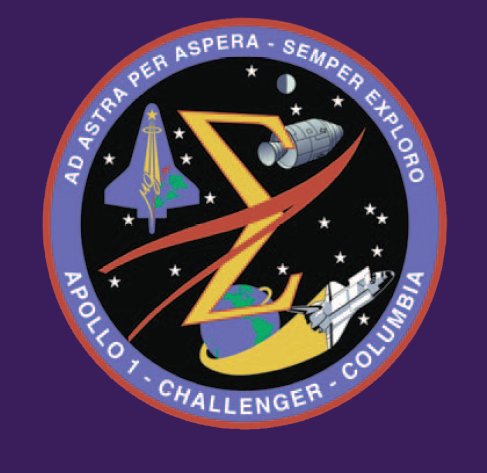
phobos13013 writes "Fifty years ago yesterday, in 1958, President Eisenhower signed the United States Public Law 85-568, National Aeronautics and Space Act to create NASA. In the fifty years since its creation, NASA has made manned missions landing on the Moon, put a space station in orbit, launched numerous unmanned missions to the Moon, Mars, the solar system, and beyond, as well as launching reusable manned spacecraft in orbit. Some of the failures included the loss of two manned spacecraft and their crews as well as the loss of the Apollo 1 crew during a training mission. Although the future of the organization is in question, Americans, and the world, are looking forward to another fifty years of progress including a return trip to the Moon and an eventual manned mission to Mars." -
NASA Turns 50
phobos13013 writes "Fifty years ago yesterday, in 1958, President Eisenhower signed the United States Public Law 85-568, National Aeronautics and Space Act to create NASA. In the fifty years since its creation, NASA has made manned missions landing on the Moon, put a space station in orbit, launched numerous unmanned missions to the Moon, Mars, the solar system, and beyond, as well as launching reusable manned spacecraft in orbit. Some of the failures included the loss of two manned spacecraft and their crews as well as the loss of the Apollo 1 crew during a training mission. Although the future of the organization is in question, Americans, and the world, are looking forward to another fifty years of progress including a return trip to the Moon and an eventual manned mission to Mars." -
NASA Turns 50
phobos13013 writes "Fifty years ago yesterday, in 1958, President Eisenhower signed the United States Public Law 85-568, National Aeronautics and Space Act to create NASA. In the fifty years since its creation, NASA has made manned missions landing on the Moon, put a space station in orbit, launched numerous unmanned missions to the Moon, Mars, the solar system, and beyond, as well as launching reusable manned spacecraft in orbit. Some of the failures included the loss of two manned spacecraft and their crews as well as the loss of the Apollo 1 crew during a training mission. Although the future of the organization is in question, Americans, and the world, are looking forward to another fifty years of progress including a return trip to the Moon and an eventual manned mission to Mars."