Slashdot Mirror
Domain: scribd.com
Stories and comments across the archive that link to scribd.com.
Stories · 204
-
Google, Huawei Agree To Pay Owners of Faulty Nexus 6P Devices Up To $400 (theverge.com)
Google and Huawei have preliminarily agreed to settle a class action lawsuit from Nexus 6P users who say their devices experienced a bootlooping issue that caused the phones to shut down randomly, regardless of the battery level. Pending court approval, the companies would be liable to a $9.75 million settlement for the class action that began in April 2017, which may result in payments of up to $400 for participating plaintiffs. The Verge reports: The lawsuit alleged that Google, which contracted the design and manufacturing of its early Android smartphones to third-party companies, and Huawei, one of the chosen companies, breached the device warranty since the companies were aware of the issue, but did not respond to the bug. The plaintiffs also said the companies continued selling the faulty devices while failing to acknowledge the issue. If the court approves the settlement at the next hearing on May 9th, Nexus 6P users in the U.S. who purchased the device on or after September 25th, 2015 would be eligible to claim reimbursement.
The proposal currently states that those who are eligible for the settlement could be paid up to $400 for their faulty device, while those who received a Pixel XL in a prior warranty exchange program would only be eligible for up to $10. Those who submit proper documentation for the bug will receive the most settlement money, while those without may be eligible for up to $75. For full details on submitting a claim, check out the as-filed longform notice document, which explains the process that will go into effect following court approval. -
Senators Introduce Bill That Would Ban Websites From Using Manipulative Consent Forms (vice.com)
U.S. Senators Mark R. Warner (D-VA) and Deb Fischer (R-NE) have introduced a bill to ban online social media companies from tricking consumers into giving away the rights to their data. The Deceptive Experiences To Online Users Reduction (DETOUR) Act would ban companies "from manipulating adults into signing away their data, or manipulating children into staying on a platform compulsively," reports Motherboard. "The bill also requires platforms to ensure informed consent from users before green-lighting academic studies." From the report: The DETOUR Act would make it illegal to "design, modify, or manipulate a user interface" in order to obscure, subvert, or impair a user's ability to decide how their data is used. The interface refers to the "style, layout, and text" of a privacy policy. The rigor of default privacy regulations would also be subject to regulation under the DETOUR Act. The DETOUR Act would also ban features that encourage "compulsive usage" for children under 13 years old. This would directly target platforms like YouTube, which has auto-play for both its regular site and for its child-specific YouTube Kids app. A representative for Common Sense Media told Motherboard in a phone call that the organization provided feedback and input to the authors of the bill.
The law would also apply to "behavioral or psychological experiments or studies," such as the ones used by Cambridge Analytica in order to sort users by personality type. Per the bill, any such studies have to get informed consent first, and experimenters would need to make routine disclosures to participants and to the public every 90 days. If enacted, the DETOUR Act would require tech companies to make their own Independent Review Boards, which would be responsible for making sure they comply with the law. The act would also give the FTC one year to make infrastructure to would review tech companies and enforce violations of the law. -
Netflix Sued By 'Choose Your Own Adventure' Publishers Over Black Mirror: Bandersnatch (polygon.com)
An anonymous reader quotes a report from Polygon: Netflix's first interactive movie, Black Mirror: Bandersnatch makes no bones about its Choose Your Own Adventure inspiration, and that's reportedly caught the eye of the series' original publisher. Chooseco, a publishing company specializing in children's books, is suing Netflix for infringing on the company's "Choose Your Own Adventure" trademark. According to the official complaint, Netflix has been in negotiations with Chooseco over a license for the series since 2016, but Chooseco says Netflix never actually gained permission to use it. After the release of Black Mirror: Bandersnatch late last month, Chooseco has filed a complaint against Netflix for $25 million in damages, as the company says that Netflix's new movie benefits from association with the Choose Your Own Adventure series, without the company ever receiving the trademark. Chooseco says it sent a cease-and-desist request to Netflix at least once over the Choose Your Own Adventure trademark in the past. Netflix has declined to comment on the complaint. -
Oregon Unconstitutionally Fined a Man $500 for Saying 'I am an Engineer,' Federal Judge Rules (vice.com)
A federal district court has ruled that the state of Oregon illegally infringed on a man's First Amendment rights for fining him $500 because he wrote "I am an engineer" in a 2014 email to the state's Engineering Board. The court ruled that the provision in the law he broke is unconstitutional, which opens the door for people in the state to legally call themselves "engineers." Motherboard reports: This dystopian saga dates back to 2013, when Mats Jarlstrom's wife, while driving, was caught by a red light camera near their home in Beaverton, Oregon. Rather than pay the red light camera fine, Jarlstrom, an electrical engineer, spent months researching the specifics of yellow light timing and red light cameras, and learned that his wife had likely been ticketed for running a yellow light. Jarlstrom began sharing his findings on his personal website, at conferences, and even got featured on 60 Minutes. He also wrote several emails to the Oregon Board of Engineers explaining what he had found. In the email, he noted that he was an "engineer."
Rather than looking into whether traffic light timing should be changed, however, the board sent Jarlstrom a warning -- and then a $500 fine for the crime of "practicing engineering without being registered." Jarlstrom had violated one of Oregon's "Title Laws," which states that "no persons may ... hold themselves out as an 'engineer'" unless they are an "individual who is registered in this state and holds a valid certificate to practice engineering in this state." Jarlstrom has a bachelor's degree in electrical engineering and spent his career working in electronics, but wasn't board certified. He sued the state's engineering board and, last week, a U.S. District Court judge for the District of Oregon ruled that the state's law is unconstitutional. The judge wrote: "The statutes prohibit truthfully describing oneself as an 'engineer,' in any context. This restriction clearly controls and suppresses protected speech, and enforcement of the statute against protected speech is not a hypothetical threat. The term 'engineer,' standing alone, is neither actually nor inherently misleading. Courts have long recognized that the term 'engineer' has a generic meaning separate from 'professional engineer' and that the term has enjoyed 'widespread usage in job titles in our society to describe positions which require no professional training.'"
"The judge ordered that the word 'engineer' be struck from Oregon's law, which is 'substantially overbroad in violation of the First Amendment' and specifically noted that Jarlstrom may describe himself publicly and privately using the word 'engineer' and that he may continue to talk about traffic light timing publicly," reports Motherboard. -
Apple Lied About iPhone X Screen Size and Pixel Count, Lawsuit Alleges (cnet.com)
A lawsuit filed Friday is accusing Apple of falsely advertised the screen sizes and pixel counts of the displays in its iPhone X, iPhone XS, and iPhone XS Max devices. The two plaintiffs, who filed the suit in the U.S. District Court of Northern California, are seeking class action status. CNET reports: The suit alleges that Apple lied about the screen sizes by counting non-screen areas like the notch and corners. So the new line of iPhones aren't "all screen" as marketed, according to the 55-page complaint. For example, iPhone X's screen size is supposed to be 5.8 inches, but the plaintiffs measured that it's "only about 5.6875 inches." The plaintiffs also allege that the iPhone X series phones have lower screen resolution than advertised. iPhone X is supposed to have a resolution of 2436x1125 pixels, but the product doesn't contain true pixels with red, green and blue subpixels in each pixel, according to the complaint. iPhone X allegedly only has two subpixels per pixel, which is less than advertised, the complaint said. The lawsuit also alleges iPhone 8 Plus has a higher-quality screen than iPhone X. -
Tesla's Giant Battery In Australia Saved $40 Million During Its First Year, Report Says (electrek.co)
Last December, Tesla switched on the world's biggest lithium ion battery in South Australia to feed the country's shaky power grid for the first day of summer. Neoen, the owner of the giant battery system, released a new report for the first full year of operation and revealed that the energy storage system saved about $40 million over the last 12 months. Electrek reports: The energy storage capacity is managed by Neoen, which operates the adjacent wind farm. They contracted Aurecon to evaluate the impact of the project and they estimate that the "battery allows annual savings in the wholesale market approaching $40 million by increased competition and removal of 35 MW local FCAS constraint." It is particularly impressive when you consider that the massive Tesla Powerpack system cost only $66 million, according to another report from Neoen. Here are the key findings from the report:
- Has contributed to the removal of the requirement for a 35 MW local Frequency Control Ancillary Service (FCAS), saving nearly $40 million per year in typical annual costs
- Has reduced the South Australian regulation FCAS price by 75% while also providing these services for other regions
- Provides a premium contingency service with response time of less than 100 milliseconds
- Helps protect South Australia from being separated from the National Electricity Market
- Is key to the Australian Energy Market Operator's (AEMO) and ElectraNet's System Integrity Protection Scheme (SIPS) which protects the SA-VIC Heywood Interconnector from overload -
Russia Wants DNC Hack Lawsuit Thrown Out, Citing International Conventions (zdnet.com)
An anonymous reader quotes a report from ZDNet: The Russian Federation has responded to a lawsuit filed by the Democratic National Committee and has requested the overseeing court to throw out the lawsuit altogether. The lawsuit, filed by the DNC in April 2018, names a slew of figures as defendants, such as the Russian state, Russia's military intelligence service GRU, the hacker known as Guccifer 2.0, WikiLeaks and its founder Julian Assange, and several members of the Trump campaign, such as Donald Trump, Jr., Paul Manafort, Roger Stone, Jared Kushner, and George Papadopoulos. According to an 87-page indictment, the DNC accused Russia and the other defendants of carrying out the hacking of DNC servers in 2016 and then leaking data online via the WikiLeaks portal in an orchestrated manner for the benefit of the Trump presidential campaign.
The lawsuit, which has its own Wikipedia page and was likened to a lawsuit the DNC filed against Nixon after the Watergate scandal, seeks damages, but also for the court to issue a declaration about the defendants' conspiracy. But in a letter sent to a New York court, presented by the Russian Embassy in the U.S. and signed by a representative of the Russian Ministry of Justice, the Russian Federation wants the lawsuit thrown out. In the 12-page letter, the Russian Federation argues that the U.S. Foreign Sovereign Immunities Act ("FSIA") grants Russia immunity. "The FSIA provides that foreign sovereign States enjoy absolute jurisdictional immunity from suit unless a plaintiff can demonstrate that one of the FSIA's enumerated 'exceptions' applies'," the letter argues. "The DNC's allegations regarding a purported 'military attack' by 'Russia's military intelligence agency' do not fall within any of the FSIA's enumerated exceptions to the Russian Federation's sovereign immunity."
"Any alleged 'military attack' is a quintessential sovereign act that does not fall within any exception to the FSIA or the customary international law of foreign sovereign immunity. The Russian Federation's sovereign immunity with respect to claims based upon such allegations is absolute." -
Russia Wants DNC Hack Lawsuit Thrown Out, Citing International Conventions (zdnet.com)
An anonymous reader quotes a report from ZDNet: The Russian Federation has responded to a lawsuit filed by the Democratic National Committee and has requested the overseeing court to throw out the lawsuit altogether. The lawsuit, filed by the DNC in April 2018, names a slew of figures as defendants, such as the Russian state, Russia's military intelligence service GRU, the hacker known as Guccifer 2.0, WikiLeaks and its founder Julian Assange, and several members of the Trump campaign, such as Donald Trump, Jr., Paul Manafort, Roger Stone, Jared Kushner, and George Papadopoulos. According to an 87-page indictment, the DNC accused Russia and the other defendants of carrying out the hacking of DNC servers in 2016 and then leaking data online via the WikiLeaks portal in an orchestrated manner for the benefit of the Trump presidential campaign.
The lawsuit, which has its own Wikipedia page and was likened to a lawsuit the DNC filed against Nixon after the Watergate scandal, seeks damages, but also for the court to issue a declaration about the defendants' conspiracy. But in a letter sent to a New York court, presented by the Russian Embassy in the U.S. and signed by a representative of the Russian Ministry of Justice, the Russian Federation wants the lawsuit thrown out. In the 12-page letter, the Russian Federation argues that the U.S. Foreign Sovereign Immunities Act ("FSIA") grants Russia immunity. "The FSIA provides that foreign sovereign States enjoy absolute jurisdictional immunity from suit unless a plaintiff can demonstrate that one of the FSIA's enumerated 'exceptions' applies'," the letter argues. "The DNC's allegations regarding a purported 'military attack' by 'Russia's military intelligence agency' do not fall within any of the FSIA's enumerated exceptions to the Russian Federation's sovereign immunity."
"Any alleged 'military attack' is a quintessential sovereign act that does not fall within any exception to the FSIA or the customary international law of foreign sovereign immunity. The Russian Federation's sovereign immunity with respect to claims based upon such allegations is absolute." -
Hawaii Supreme Court Approves Thirty Meter Telescope On Mauna Kea (hawaiinewsnow.com)
Applehu Akbar shares a report from Hawaii News Now: After years of legal wrangling and protests, the Thirty Meter Telescope got a green light Tuesday from the state Supreme Court. In a 4-to-1 decision, the state's highest court ruled in favor of the telescope's construction atop Mauna Kea, effectively ending all legal avenues for contesting the controversial project unless the U.S. Supreme Court takes up the case. In a statement, TMT International Observatory Board of Governors Chairman Henry Yang said the body is "grateful" for the ruling and "committed to being good stewards on the mountain." Slashdot reader Applehu Akbar adds: "Green anti-science organizations, such as Deep Green Resistance and Sierra Club, have been trying to stop TMT construction for years, in an expanded version of an earlier campaign to halt the construction of large research telescopes in southeastern Arizona. As in Arizona, their excuse was at first endangered species on the construction site, and subsequently native rights.
"TMT is an advanced world-class telescope designed to investigate and answer some of the most fundamental questions regarding our universe, including the formation of stars and galaxies after the Big Bang and how the universe evolved to its present form. Native Hawaiians will also be included in other direct benefits from the TMT," the court wrote. "Thus, use of the land by TMT is consistent with conservation and in furtherance of the self-sufficiency of the state." -
US Indicts Chinese Hacker-Spies In Conspiracy To Steal Aerospace Secrets (gizmodo.com)
An anonymous reader quotes a report from Gizmodo: The U.S. Justice Department has charged two Chinese intelligence officers, six hackers, and two aerospace company insiders in a sweeping conspiracy to steal confidential aerospace technology from U.S. and French companies. For more than five years, two Chinese Ministry of State Security (MSS) spies are said to have run a team of hackers focusing on the theft of designs for a turbofan engine used in U.S. and European commercial airliners, according to an unsealed indictment dated October 25. In a statement, the DOJ said a Chinese state-owned aerospace company was simultaneously working to develop a comparable engine.
The MSS officers involved were identified as Zha Rong, a division director in the Jiangsu Province regional department (JSSD), and Chai Meng, a JSSD section chief. At the direction of the MSS officers, the hackers allegedly infiltrated a number of U.S.-based aerospace companies, including California-based Capstone Turbine, among others in Arizona, Massachusetts, and Oregon, the DOJ said. The officers are also said to have recruited at least two Chinese employees of a French aerospace manufacturer -- insiders who allegedly aided the conspiracy by, among other acts, installing Sakula, a remote access trojan, onto company computers. -
New Yorkers Sue Trump and FEMA To Stop Presidential Alert (cnet.com)
Not everyone is pleased to hear that President Trump has the power to use communications systems in case of an emergency. According to CNET, three New York residents recently filed a lawsuit against President Trump and William Long, administrator of the Federal Emergency Management Agency, to halt FEMA's new Presidential Alert messaging system.
The lawsuit reads in part: "Plaintiffs are American citizens who do not wish to receive text messages, or messages of any kind, on any topic or subject, from defendant Trump. [Trump's] rise to power was facilitated by weaponized disinformation that he broadcast into the public information sphere via Twitter in addition to traditional mass media." From the report: Presidential Alerts are similar to Amber or other emergency alerts on your phone -- you hear a loud noise comes along with vibration. The messages come from the Integrated Public Alert and Warning System (IPAWS), which attempts to send the alert to every cell phone within the U.S. operating on a network run by a carrier opting into the Wireless Emergency Alert system. IPAWS is used in the event of natural disasters, acts of terrorism or other disasters or threats to public safety. The plaintiffs' main complaint is that Presidential Alerts are compulsory -- there's no way to opt-out of receiving them. They argue that under civil rights law, government cannot use cellular devices to compel listening, "trespass into and hijack" devices without a warrant or individual consent.
The plaintiffs are also concerned Trump might use the alerts to spread disinformation because IPAWS doesn't regulate the content of the messages. That means Trump may be free to define "act of terrorism" and "threat to public safety," and may broadcast "arbitrary, biased, irrational" messages to "hundreds of millions of people," the plaintiffs say in the lawsuit. -
Facebook Faces Class-Action Lawsuit Over Massive New Hack (theverge.com)
Follow the revelations this morning that a hacker exploited a security flaw in a popular feature of Facebook to steal account credentials of as many as 50 million users, a class-action lawsuit has been filed on behalf of one California resident, Carla Echavarria, and one Virginia resident, Derick Walker. "Both allege that Facebook's lack of proper security has exposed them and additional potential class members to a significantly increased chance of identity theft as a result of the breach," reports The Verge. From the report: The lawsuit was filed today in U.S. District Court for the Northern District of California. The complaint alleges Facebook is guilty of unlawful business practices, deceit by concealment, negligence, and violations of California's Customer Records Act. The plaintiffs want statutory damages and penalties awarded to them and other class members, as well as the providing of credit monitoring services, punitive damages, and the coverage of attorneys' fees and expenses. Although Facebook says it has fixed the issue that resulted in the breach, it still has little to no information to provide on who is behind the attack or when the attack even occurred.
As it stands, in addition to this new lawsuit, Facebook is facing pressure from the New York State Attorney General Barbara Underwood, who announced on Twitter this afternoon that, "We're looking into Facebook's massive data breach. New Yorkers deserve to know that their information will be protected." Federal Trade Commissioner Rohit Chopra had a terse public reaction, releasing a simple three-line tweet reading, "I want answers." In addition to Underwood and Chopra, Sen. Mark R. Warner (D-VA) released a statement describing the hack is "deeply concerning" and calling for a full investigation. -
FCC Says It Needs More Time To Review T-Mobile, Sprint Merger (cnbc.com)
The FCC says it needs more time to review the proposed Sprint-T-Mobile deal, the agency said in a letter to the companies Tuesday. According to CNBC, "The agency has paused an 'informal' 180-day transaction clock 'to allow for thorough staff and third-party review' of recently submitted materials." From the report: Sprint and T-Mobile have gone down a rocky road to a merger, calling off and resuming talks. The companies announced that they would merge last April in a bid to cut costs and combine forces to develop a next-generation network called 5G, which would provide faster speeds, more capacity and lower response times. But the companies could encounter hurdles to gaining regulatory approval for the tie-up. A deal between T-Mobile and Sprint, who are the third largest and fourth largest wireless carriers in the United States by subscribers, previously faced opposition from antitrust regulators under President Barack Obama's administration. -
Tinder Founders Sue Dating App's Owners For At Least $2 Billion (techcrunch.com)
An anonymous reader quotes a report from TechCrunch: A group of Tinder founders and executives has filed a lawsuit against parent company Match Group and its controlling shareholder IAC. The plaintiffs in the suit include Tinder co-founders Sean Rad, Justin Mateen and Jonathan Badeen -- Badeen still works at Tinder, as do plaintiffs James Kim (the company's vice president of finance) and Rosette Pambakian (its vice president of marketing and communications). The suit alleges that IAC and Match Group manipulated financial data in order to create "a fake lowball valuation" (to quote the plaintiffs' press release), then stripped Rad, Mateen, Badeen and others of their stock options. It points to the removal of Rad as CEO, as well as other management changes, as moves designed "to allow Defendants to control the valuation of Tinder and deprive Tinder optionholders of their right to participate in the company's future success."
The lawsuit also alleges that Greg Blatt, the Match CEO who became CEO of Tinder, groped and sexually harassed Pambakian at the company's 2016 holiday party, supposedly leading the company to "whitewash" his actions long enough for him to complete the valuation of Tinder and its merger with Match Group, and then to announce his departure. In response, the plaintiffs are asking for "compensatory damages in an amount to be determined at trial, but not less than $2,000,000,000." IAC and Match Group issued a statement denying the allegations: "...Match Group and the plaintiffs went through a rigorous, contractually-defined valuation process involving two independent global investment banks, and Mr. Rad and his merry band of plaintiffs did not like the outcome. Mr. Rad (who was dismissed from the Company a year ago) and Mr. Mateen (who has not been with the Company in years) may not like the fact that Tinder has experienced enormous success following their respective departures, but sour grapes alone do not a lawsuit make. Mr. Rad has a rich history of outlandish public statements, and this lawsuit contains just another series of them. We look forward to defending our position in court." -
Tesla's Giant Battery In Australia Reduced Grid Service Cost By 90 Percent (electrek.co)
An anonymous reader quotes a report from Electrek: Tesla's giant Powerpack battery in Australia has been in operation for about 6 months now and we are just starting to discover the magnitude of its impact on the local energy market. A new report now shows that it reduced the cost of the grid service that it performs by 90% and it has already taken a majority share of the market. It is so efficient that it reportedly should have made around $1 million in just a few days in January, but Tesla complained last month that they are not being paid correctly because the system doesn't account for how fast Tesla's Powerpacks start discharging their power into the grid.
The system is basically a victim of its own efficiency, which the Australian Energy Market Operator confirmed is much more rapid, accurate and valuable than a conventional steam turbine in a report published last month. Now McKinsey and Co partner Godart van Gendt presented new data at the Australian Energy Week conference in Melbourne this week and claimed that Tesla's battery has now taken over 55% of the frequency control and ancillary services (FCAS) services and reduced cost by 90%. "In the first four months of operations of the Hornsdale Power Reserve (the official name of the Tesla big battery, owned and operated by Neoen), the frequency ancillary services prices went down by 90 percent, so that's 9-0 per cent," said Gendt via Reneweconomy. "And the 100MW battery has achieved over 55 percent of the FCAS revenues in South Australia. So it's 2 percent of the capacity in South Australia achieving 55 percent of the revenues in South Australia." -
NTSB Boots Tesla From Investigation Into Fatal Autopilot Crash (theverge.com)
The National Transportation Safety Board has removed Tesla from the investigation into a fatal Autopilot accident that occurred in March. The NTSB says it took the action because Tesla had released "investigative information before it was vetted and confirmed by" the agency. "Such releases of incomplete information often lead to speculation and incorrect assumptions about the probable cause of a crash, which does a disservice to the investigative process and the traveling public," the agency writes. The Verge reports: The NTSB's account contradicts Tesla's version of the story. In a statement, the automaker says it decided to remove itself from the investigation on Tuesday because of the NTSB was restricting it from sharing information before the probe ends. The company also accuses the NTSB of being duplicitous, arguing that the agency has released statements about the crash at the same time that it told Tesla not to. "It's been clear in our conversations with the NTSB that they're more concerned with press headlines than actually promoting safety," a spokesperson for the company says. "Among other things, they repeatedly released partial bits of incomplete information to the media in violation of their own rules, at the same time that they were trying to prevent us from telling all the facts. We don't believe this is right and we will be making an official complaint to Congress." The company also said it will issue "a Freedom Of Information Act request to understand the reasoning behind their focus on the safest cars in America while they ignore the cars that are the least safe." The full letter send to Musk from the NTSB can be seen here. -
'Satoshi' Craig Wright Is Being Sued For $10 Billion For Stealing His Partner's Bitcoin (coindesk.com)
Craig Wright, the nChain chief scientist who previously claimed to be the pseudonymous bitcoin creator Satoshi Nakamoto, is being sued for a whopping $10 billion for stealing $5 billion in bitcoin from a former business partner. CoinDesk reports: The lawsuit is being brought by Ira Kleiman on behalf of the estate of his brother, Dave, who has been linked to the earliest days of bitcoin. Kleiman, a forensic computer investigator and author, passed away in 2013 following a battle with MRSA. At the heart of the new lawsuit, according to a complaint filed in the U.S. District Court for the Southern District of Florida on Feb. 14, is an alleged hoard of more than 1.1 million bitcoins, which Ira Kleiman's lawyers say is worth in excess of $10 billion. He is being represented by Boies Schiller Flexner LLP.
Wright, court records show, has been accused of allegedly conducting "a scheme against Dave's estate to seize Dave's bitcoins and his rights to certain intellectual property associated with the Bitcoin technology." "As part of this plan, Craig forged a series of contracts that purported to transfer Dave's assets to Craig and/or companies controlled by him. Craig backdated these contracts and forged Dave's signature on them," attorneys for the plaintiff wrote. Included alongside the complaint are a number of additional filings, including the business registration for a firm called W&K Info Defense Research LLC, in which Kleiman and Wright were business partners. In addition to the roughly 1.1 million bitcoins, Ira Kleiman is also seeking compensation for the intellectual property his lawyers claim arose from the partnership between his deceased brother and Wright. -
IBM Sues Microsoft's New Chief Diversity Officer To Protect Diversity Trade Secrets (geekwire.com)
theodp writes: GeekWire reports that IBM has filed suit against longtime exec Lindsay-Rae McIntyre, alleging that her new position as Microsoft's chief diversity officer violates a year-long non-compete agreement, allowing Microsoft to use IBM's internal secrets to boost its own diversity efforts. A hearing is set for Feb. 22, but in the meantime, a U.S. District Judge has temporarily barred McIntyre from working at Microsoft. "IBM has gone to great lengths to safeguard as secret the confidential information that McIntyre possesses," Big Blue explained in a court filing, citing its repeated success (in 2012, 2013, 2015, 2016, 2017) in getting the U.S. government to quash FOIA requests for IBM's EEO-1 Reports on the grounds that the mandatory race/ethnicity and gender filings represent "confidential proprietary trade secret information." IBM's argument may raise some eyebrows, considering that other tech giants -- including Google, Microsoft, Apple, and Facebook -- voluntarily disclosed their EEO-1s years ago after coming under pressure from Rev. Jesse Jackson and the Congressional Black Caucus. In 2010, IBM stopped disclosing U.S. headcount data in its annual report as it accelerated overseas hiring. -
Spotify Hit With $1.6 Billion Copyright Lawsuit (spin.com)
The Wixen Music Publishing company, which administers song compositions by Tom Petty, Dan Auerbach, Rivers Cuomo, Stevie Nicks, Neil Young, and others, has hit Spotify with a copyright lawsuit seeking $1.6 billion in damages. The publishing company filed the lawsuit on December 29, alleging the streaming giant is using Petty's "Free Fallin" and tens of thousands of other songs without license or compensation. SPIN reports: Back in September, Wixen objected to a $43 million settlement Spotify had arranged over another class action lawsuit brought by David Lowery (of Cracker and Camper van Beethoven) and Melissa Ferrick, stating it was "procedurally and substantively unfair to Settlement Class Members because it prevents meaningful participation by rights holders and offers them an unfair dollar amount in light of Spotify's ongoing, willful copyright infringement of their works." A judge has yet to rule on that settlement, and in the meantime, Wixen has moved to file its own lawsuit, which purports "as much as 21 percent of the 30 million songs on Spotify are unlicensed," according to The Hollywood Reporter.
"Spotify brazenly disregards United States Copyright law and has committed willful, ongoing copyright infringement," the complaint reads. "Wixen notified Spotify that it had neither obtained a direct or compulsory mechanical license for the use of the Works. For these reasons and the foregoing, Wixen is entitled to the maximum statutory relief." -
Here's the Letter Alleging Uber Spied on Individuals For Competitive Intelligence (recode.net)
The judge in the $1.9 billion civil suit between Google-parent company Alphabet's self-driving car unit Waymo and Uber released the letter of a disgruntled former employee -- former Uber security officer Richard Jacobs -- on Friday, laying bare a number of explosive allegations against the ride-hailing company that include corporate espionage, unlawful surveillance, illegal wiretapping, bribery of foreign officials, and illicit hacking. From a report: The letter read: "This program, formerly known as the Strategic Services Group, under Nick Gicinto, collected intelligence and conducted unauthorized surveillance, including unauthorized recording of private conversations against executives from competitor firms, such as DiDi Chuxing and against its own employees and contractors at the Autonomous Technologies Group in Pittsburgh." Jacobs testified in court and walked back some of the allegations made in the letter, which was written by his attorney, Clayton Halunen. Days later, Uber's new chief legal officer Tony West issued a directive to employees to stop surveilling individuals, which Recode first reported. In a separate note to staff Khosrowshahi (current CEO of Uber) said the letter detailed enough to "merit serious concern." While Jacobs, Padilla (Uber's general counsel) and other employees addressed some of the claims made within the letter -- confirming the use of Wickr for business-related communications -- the letter itself had not been made public before Friday evening. The document prepared by Jacobs' attorney also claimed Uber was using some of these surveillance tactics on Alphabet's self-driving arm, Waymo. However, during his testimony, Jacobs walked that allegation back. -
Apple, Samsung Face New iPhone Damages Trial (reuters.com)
An anonymous reader quotes a report from Reuters: U.S. District Judge Lucy Koh in San Jose, California issued her order late on Sunday, 10 months after the U.S. Supreme Court set aside a $399 million award against Samsung, whose devices include the Galaxy. The three Apple patents covered design elements of the iPhone such as its black rectangular front face, rounded corners, and colorful grid of icons for programs and apps. Koh's order is a setback for Apple, which called a retrial unnecessary and said the award should be confirmed. The $399 million represented profit from Samsung's sales of infringing smartphones, though the South Korean company has said it deserved reimbursement if it prevailed in the litigation. It was part of a $548 million payment that Samsung made to Apple in December 2015. The legal dispute concerned whether the "article of manufacture" for which Samsung owed damages included its entire smartphones, or only parts that infringed Apple patents. -
Apple Calls For FCC To Keep 'Strong, Enforceable' Net Neutrality Protections (appleinsider.com)
An anonymous reader quotes a report from Apple Insider: Apple has written to the U.S. Federal Communications Commission in support for the concept of net neutrality, with its four-page commentary arguing for the government agency to "retain strong, enforceable open internet protections" instead of rolling back the rules forbidding "fast lane" internet connections. "An open internet ensures that hundreds of millions of consumers get the experience they want, over the broadband connections they choose, to use the devices they love, which have become an integral part of their lives," starts the comment signed by Cynthia Hogan, Apple's Vice President of Public Policy for the Americas. Citing a "deep respect" for its customers' privacy, security, and control over personal information, Apple believes this extends to their internet connection choices as well. "What consumers do with those tools is up to them -- not Apple, and not broadband providers," the statement claims, before urging the FCC to keep advancing the key principles of net neutrality. Based on a belief of consumer choice with regards to connectivity, Apple insists broadband providers should not "block, throttle, or otherwise discriminate against lawful websites and services," and not create "paid fast lanes on the internet." Lifting current FCC bans on these restrictions could allow broadband providers to favor one service over another's, "fundamentally altering the internet as we know it today -- to the detriment of consumers, competition, and innovation." Allowing such fast lanes could result in an internet with heavily distorted competition, caused through online providers being forced to make deals or risk losing customers from providing a hampered service. Apple suggests the practice could "create artificial barriers to entry for new online services, making it harder for tomorrow's innovations to attract investment and succeed," effectively turning broadband providers into a king-maker based on its priorities. -
Drupal Developers Still Rebelling Against Drupal Leadership
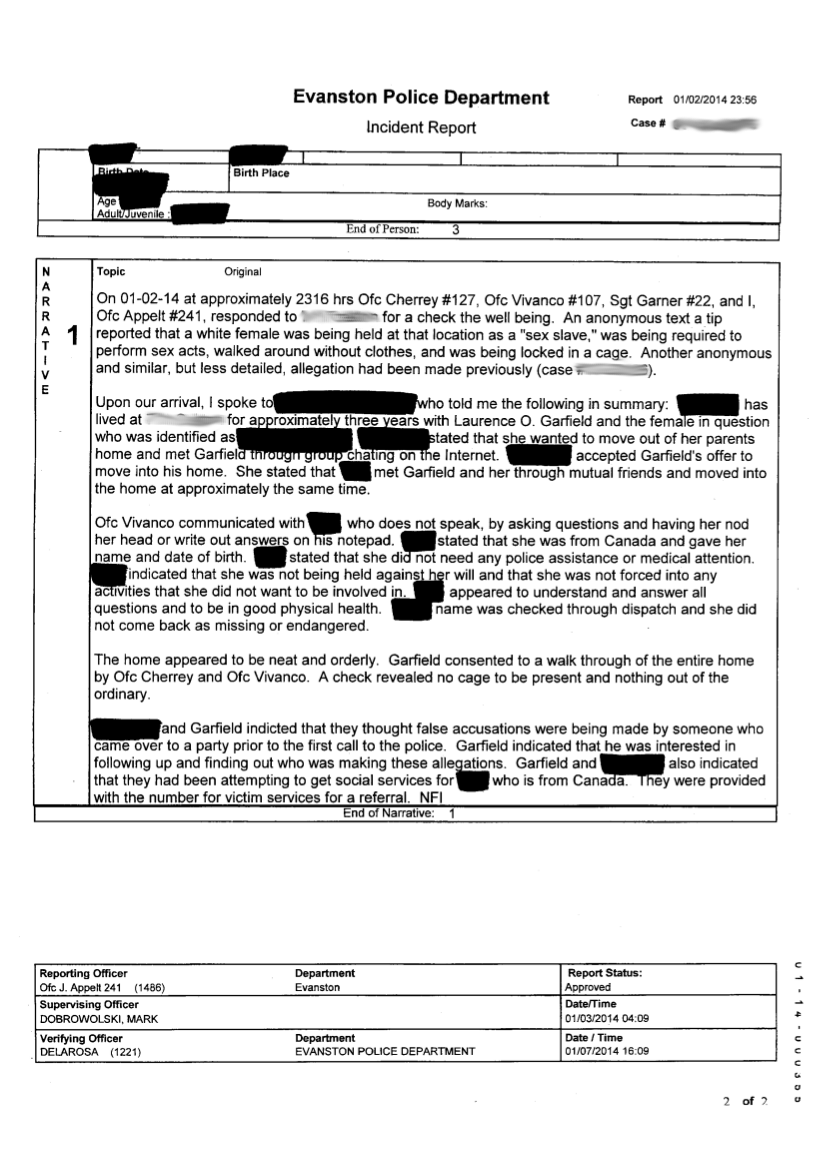
New submitter cornholed writes: In an update to previous posts on Slashdot, prominent Drupal and PHP Developer Larry Garfield is still defending his reputation against allegations by Drupal leadership against sexual misconduct. As previously reported by a variety of news organizations, Larry was exiled from the Drupal project for adherence to the Gor sci-fi lifestyle.
In the latest round of allegations, Garfield was reportedly asked to resign because an autistic "woman who attended Drupal community events ... was allowed to contribute by him". While some have accused Dries Buytart and the Drupal Association of "Autism Shaming", the leader of the Drupal project claims "this person could be vulnerable and may have been subject to exploitation", hence raising the risk of legal damage to the Drupal project. Larry refutes these allegations, saying these claims are post-hoc and has shared police reports purporting his innocence.
There is still much debate in the Drupal community around why Larry was ejected from his leadership positions. While there's much speculation over Larry's ouster, there is one thing for certain: become a leader in the OSS community and a dossier on your public statements just might be made about you. -
Apple, Amazon, and Microsoft Are Helping Google Fight an Order To Hand Over Foreign Emails (businessinsider.com)
Apple, Microsoft, Amazon, and Cisco have filed an amicus brief in support of Google, after a Pennsylvania court ruled that the company had to hand over emails stored overseas in response to an FBI warrant. From a report: An amicus brief is filed by people or companies who have an interest in the case, but aren't directly involved. In this case, it's in Silicon Valley's interest to keep US law enforcement from accessing customer data stored outside the US. It isn't clear what data Google might have to hand over and, last month, the company said it would fight to the order. In the brief, the companies argue: "When a warrant seeks email content from a foreign data center, that invasion of privacy occurs outside the United States -- in the place where the customers' private communications are stored, and where they are accessed, and copied for the benefit of law enforcement, without the customer's consent." -
Chrome's Sandbox Feature Infringes On Three Patents So Google Must Now Pay $20 Million (bleepingcomputer.com)
An anonymous reader writes: After five years of litigation at various levels of the U.S. legal system, today, following the conclusion of a jury trial, Google was ordered to pay $20 million to two developers after a jury ruled that Google had infringed on three patents when it designed Chrome's sandboxing feature. Litigation had been going on since 2012, with Google winning the original verdict, but then losing the appeal. After the Supreme Court refused to listen to Google's petition, they sent the case back for a retrial in the U.S. District Court in Eastern Texas, the home of all patent trolls. As expected, Google lost the case and must now pay $20 million in damages, in the form of rolling royalties, which means the company stands to pay more money as Chrome becomes more popular in the future. -
Lawsuit Claims Apple Forced Users To iOS 7 By Breaking FaceTime (appleinsider.com)
According to Apple Insider, a class-action lawsuit has been filed in California that claims Apple broke FaceTime in iOS 6 to force users to upgrade to iOS 7. The lawsuit says Apple forced users to upgrade so it could avoid payments on a data deal with Akamai. From the report: When FaceTime launched in 2010, Apple included two methods of connecting one iPhone to another. The first, a peer-to-peer technology, transferred audio and video data over a direct connection, while a second "relay method" used third-party servers run by Akamai to shuttle data back and forth. Initially, calls routed through Akamai's relay servers only accounted for only 5 to 10 percent of FaceTime traffic, but usage quickly spiked. On Nov. 7, 2012, a jury found Apple's peer-to-peer FaceTime call technology in infringement of patents owned by VirnetX. Along with a $368 million fine, the ruling meant Apple would have to shift away from peer-to-peer to avoid further infringement. Apple began to incur multi-million dollar monthly charges from Akamai as a result of the change. Testimony from the 2016 VirnetX retrial pegged relay fees at about $50 million between April 2013 and September 2013, rates that according to today's lawsuit were of concern to Apple executives. After eating rising relay service charges for nearly a year, Apple saw a chance to slow down or completely negate the fees in iOS 7. Among other system improvements, the next-generation OS included a method of creating peer-to-peer FaceTime connections without infringing on VirnetX patents. The only problem, according to the lawsuit, was that users continued to operate devices running iOS 6. Citing internal emails and sworn testimony from the VirnetX trial, the lawsuit alleges Apple devised a plan to "break" FaceTime on iOS 6 or earlier by causing a vital digital certificate to prematurely expire. Apple supposedly implemented the "FaceTime Break" on April 16, 2014, then blamed the sudden incompatibility on a bug, the lawsuit claims. -
Police Department Loses Years Worth of Evidence In Ransomware Incident (bleepingcomputer.com)
"Police in Cockrell Hill, Texas admitted Wednesday in a press release that they lost years worth of evidence after the department's server was infected with ransomware," reports BleepingComputer. "Lost evidence includes all body camera video, some in-car video, some in-house surveillance video, some photographs, and all Microsoft Office documents." An anonymous reader writes: Most of the data was from solved cases, but some of the evidence was from active investigations. The infection appears to be from the Locky ransomware family, one of the most active today, and took root last December, after an employee opened a document he received via via a spam email. The police department backup system apparently kicked in right after the infection took root, and created copies of the already encrypted data. The department did not pay the $4,000 ransom demand and decided to wipe all its systems. -
Samsung Hit With Class Action Lawsuit Over Exploding Galaxy Note 7 (vice.com)
An anonymous reader quotes a report from Motherboard: Samsung's Galaxy Note 7 troubles are continuing -- the company was just hit with a class action lawsuit in New Jersey focused on recovering cell phone contract fees for customers who were left with an unusable phone for several weeks. The suit has three initial plaintiffs, who say that they were left without a phone for the several weeks between when Samsung and the U.S. Consumer Product Safety Commission originally issued a recall and told consumers to "power down" their devices (September 9), and when the company began offering replacement devices (September 21). It also notes that Samsung didn't make enough replacement devices immediately available -- which is probably a good thing considering that the company ultimately had to recall those as well. "Samsung informed consumers they would have to wait several days, and even weeks in many cases, before receiving a replacement smartphone," the suit alleges. "During this time, and as a result of Defendant failing to provide consumers with an adequate replacement, consumers continued to incur monthly device and plan charges from their cellular carriers for phones they could not safely use." The total recall and destruction of Galaxy Note 7 phones is unprecedented for a modern smartphone, so there isn't much to look at in order to project whether the case will succeed. "Samsung has agreed to recall and reimburse the cost of the device, but their customers have had to continue to pay on their data and voice plans during the time they had to make their device inoperative until they received their replacement device," Richard McCune, one of the lawyers representing the class, told me. "That is the loss that the case is focused on." -
Senate GOP Launches Inquiry Into Facebook's News Curation (gizmodo.com)
Michael Nunez, reporting for Gizmodo: The US Senate Commerce Committee -- which has jurisdiction over media issues, consumer protection issues, and internet communication -- has sent a letter to Mark Zuckerberg requesting answers to questions it has on its trending topics section. The letter comes after Gizmodo on Monday reported on allegations by one former news curator, who worked for Facebook as a contractor, that the curation team routinely suppressed or blacklisted topics of interest to conservatives. That report also included allegations from several former curators that they used an "injection tool" to add or bump stories onto the trending module. The letter asks that Facebook "arrange for your staff including employees responsible for trending topics to brief committee staff on this issue." The letter was signed by Chairman for the Committee on Commerce, Science, and Transportation, Senator John Thune (R) from South Dakota. -
Facebook's Newest Privacy Problem: 'Faceprint' Data (cnet.com)
Katie Collins, reporting for CNET: Facebook knows you so well these days that it can recognize you just by seeing your face. You may not have a problem with this, but that doesn't mean it's all good in the eyes of the law. The social network lost the first round of a lawsuit on Thursday in which it is accused of "unlawfully" storing biometric data mined from people's photographs. The company was seeking to have the suit dismissed, but a federal judge in California rejected the request. Facebook taps into its photo-tagging system to build up a geometric representation of people's faces to create something called a faceprint for each of its users. Faceprints are then used to suggest tags for people when new photos are uploaded to the network. One could argue that the clue is in the name, but many Facebook users probably don't know that they agree to having data about their face stored when they sign up. -
Language Creation Society Says Klingon Language Isn't Covered By Copyright
Reader AmiMoJo writes: Earlier this year Paramount Pictures and CBS Studios filed a lawsuit against the makers of a Star Trek inspired fan film, accusing them of copyright infringement. In their amicus brief, which actually uses Klingon language, the Language Creation Society lists many examples of how Klingon has evolved, and it specifically disputes Paramount's earlier claims that there are no human beings who communicate using the Klingon language. "In fact, there are groups of people for whom Klingon is their only common language. There are friends who only speak Klingon to each other. In fact, at least one child was initially raised as a native speaker of Klingon." As such, Paramount should not be allowed to claim copyright over the entire Klingon language, both in written and spoken form. The language is a tool for people to communicate and express ideas, something people should be allowed to do freely under U.S. law, LCS argues. -
Burr-Feinstein Anti-Encryption Bill Is Officially Released (techcrunch.com)
An anonymous reader quotes a report from TechCrunch: Senators Richard Burr and Dianne Feinstein released the official version of their anti-encryption bill today after a draft appeared online last week. The bill, titled the Compliance with Court Orders Act 2016, would require tech firms to decrypt customers' data at a court's request. The bill is not expected to get anywhere in the Senate. President Obama has also indicated that he will not support the bill, Reuters reports. The bill requires legislation requires communications services to backdoor their encryption in order to provide "intelligible information or data, or appropriate technical assistance to obtain such information or data." Sen. Feinstein stated, "The bill we have drafted would simply provide that, if a court of law issues an order to render technical assistance or provide decrypted data, the company or individual would be required to do so. Today, terrorists and criminals are increasingly using encryption to foil law enforcement efforts, even in the face of a court order. We need strong encryption to protect personal data, but we also need to know when terrorists are plotting to kill Americans." -
DOJ Threatens To Seize iOS Source Code (idownloadblog.com)
An anonymous reader writes from an article posted on iDownloadBlog: The DoJ is demanding that Apple create a special version of iOS with removed security features that would permit the FBI to run brute-force passcode attempts on the San Bernardino shooter's iPhone 5c. Meanwhile, President Barack Obama has made public where he stands on the Apple vs. FBI case, which has quickly become a heated national debate. In the court papers, DoJ calls Apple's rhetoric in the San Bernardino standoff as "false" and "corrosive" because the Cupertino firm dared suggest that the FBI's court order could lead to a "police state." Footnote Nine of DoJ's filing reads:
"For the reasons discussed above, the FBI cannot itself modify the software on the San Bernardino shooter's iPhone without access to the source code and Apple's private electronic signature. The government did not seek to compel Apple to turn those over because it believed such a request would be less palatable to Apple. If Apple would prefer that course, however, that may provide an alternative that requires less labor by Apple programmers."
As Fortune's Philip-Elmer DeWitt rightfully pointed out, that's a classic police threat. "We can do this [the] easy way or the hard way. Give us the little thing we're asking for -- a way to bypass your security software -- or we'll take [the] whole thing: your crown jewels and the royal seal too," DeWitt wrote. "With Apple's source code, the FBI could, in theory, create its own version of iOS with the security features stripped out. Stamped with Apple's electronic signature, the Bureau's versions of iOS could pass for the real thing," he added. -
VPN Provider's No-Logging Claims Tested In FBI Case (torrentfreak.com)
An anonymous reader writes from an article published on TorrentFreak: [A] criminal complaint details the FBI's suspicions that 25-year-old Preston McWaters had conveyed "false or misleading information regarding an explosive device." The FBI started digging and in February 2016 two search warrants against Twitter and Facebook required them to turn over information on several accounts. Both did and the criminal complaint makes it clear that the FBI believes that McWaters was behind the accounts and the threats. With McWaters apparently leaving incriminating evidence all over the place (including CCTV at Walmart where he allegedly purchased a pre-paid Tracfone after arriving in his own car), the FBI turned to IP address evidence available elsewhere. "During the course of the investigation, subpoenas and search warrants have been directed to various companies in an attempt to identify the internet protocol (IP) address from where the email messages are being sent," the complaint reads. "All the responses from [email provider] 1&1, Facebook, Twitter, and Tracfone have been traced by IP address back to a company named London Trust Media [doing business as] PrivateInternetAccess.com. A subpoena was sent to London Trust Media and the only information they could provide is that the cluster of IP addresses being used was from the east coast of the United States," the FBI's complain reads. "However, London Trust did provide that they accept payment for their services through credit card with a vendor company of Stripe and/or Amazon. They also accept forms of payment online through PayPal, Bitpay, Bit Coin, Cash You, Ripple, Ok Pay, and Pay Garden."
While McWaters is yet to be found guilty, it's a sad fact that some people will use anonymizing services such as VPNs, pre-paid phones and anonymous email providers to harass others. And thankfully, as this case shows, they'll need to hide a lot more than their IP address to get away with that level of crime. -
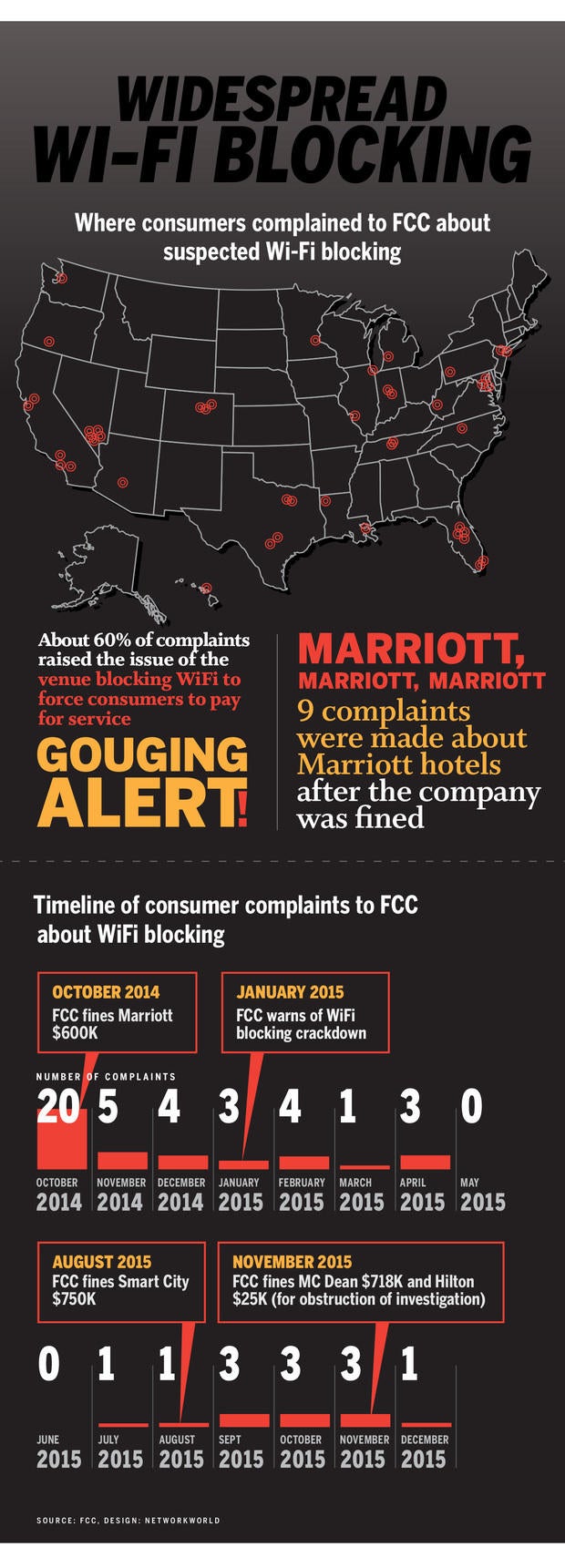
Wi-Fi Hotspot Blocking Persists Despite FCC Crackdown (networkworld.com)
An anonymous reader writes: An examination of consumer complaints to the FCC over the past year and a half shows that the practice of Wi-Fi hotspot device blocking continues even though the agency has slapped organizations such as Marriott and Hilton more than $2 million in total for doing this. Venues argue they need to block hotspots for security reasons, but the FCC and consumers say the organizations are doing this to force people to pay for pricey Internet access.
"Consumers who purchase cellular data plans should be able to use them without fear that their personal Internet connection will be blocked by their hotel or conference center," FCC Enforcement Bureau chief Travis LeBlanc said in a statement. "It is unacceptable for any hotel to intentionally disable personal hotspots while also charging consumers and small businesses high fees to use the hotel's own Wi-Fi network. This practice puts consumers in the untenable position of either paying twice for the same service or forgoing Internet access altogether." Consumers have filed many complaints about Wi-Fi hotspot blocking to the FCC. -
Dropbox Obtains Peer-To-Peer File Sharing Patent (thestack.com)
An anonymous reader writes: Cloud-based file hosting giant Dropbox has patented a new synchronization technology which could allow users to use a peer-to-peer network to securely share and collaborate on documents without the need to store them in the company's centralized servers. The patent application details how the system could allow back up to a range of media to multiple devices simultaneously, cutting the need for users to constantly upload and download from remote hardware. Dropbox argues that the development of peer-to-peer distributed sharing could boost content download speeds, eliminating bottlenecks, therefore increasing the speed at which content can be shared among individuals. -
Alabama Man Sold a Priceless Apollo-Era Lunar Rover Protoype For Scrap Metal (vice.com)
Jason Koebler writes: An Alabama man allowed an Apollo-era lunar rover prototype to rot in his backyard before ultimately selling it to a junkyard for scrap metal last year, according to documents acquired from NASA as part of a Freedom of Information Act request. NASA spent much of 2014 attempting to acquire the priceless artifact for display in a museum, but it was ultimately destroyed before the agency could recover it. -
A Broke Fan Owes $5,400 For Pokemon-Themed Party Posters
Jason Koebler writes: A fan has been ordered by a Washington judge to pay the Pokémon Company International $5,400 for copyright infringement after attempting to throw a Pokemon-themed party earlier this summer. Even though he canceled the free event, the Pokemon Company successfully sued Ramar Larkin Jones, for using an image of Pikachu to promote the Unofficial PAX Pokemon Kickoff Party. -
Legal Scholars Warn Against 10 Year Prison For Online Pirates
An anonymous reader writes: The UK Government wants to increase the maximum prison sentence for online copyright infringement from two years to ten. A number legal experts and activists are pushing back against the plan. One such group, The British and Irish Law, Education and Technology Association (BILETA) has concluded that changes to the current law are not needed. "legitimate means to tackle large-scale commercial scale online copyright infringement are already available and currently being used, and the suggested sentence of 10 years seems disproportionate," the group writes. -
Parts of SOPA Hiding Inside a Boring Case About Invisible Braces
derekmead writes: The most controversial parts of SOPA, an anti-piracy bill defeated in 2012 after a massive public outcry, may end up becoming de facto law after all, depending on the outcome in an obscure case that is working its way through the legal system without anyone noticing.
Next week, the U.S. Appeals Court for the Federal Circuit will hear oral arguments in ClearCorrect Operating, LLC v. International Trade Commission, a case that could give an obscure federal agency the power to force ISPs to block websites. In January, The Verge reported that this very legal strategy is already being considered by the Motion Picture Association of America, as evidenced by a leaked document from the WikiLeaks Sony dump. -
NASA Funded Study States People Could Be On the Moon By 2021 For $10 Billion
MarkWhittington writes: The Houston Chronicle reported that NextGen Space LLC has released the results of a study that suggests that if the United States were to choose to do space in some new and creative ways, American moon boots could be on the lunar surface by 2021. The cost from the authorization to the first crewed lunar landing would be just $10 billion. The study was partly funded by NASA and was reviewed by the space agency and commercial space experts. -
8 Yelp Reviewers Hit With $1.2 Million Defamation Suits
New submitter goodboi writes: A Silicon Valley building contractor is suing 8 of its critics over the reviews they posted on Yelp. The negative reviews were filtered out by Yelp's secretive ranking system, but in court documents filed earlier this month, Link Corporation claims that the bad publicity cost over $165,000 in lost business. -
SpaceX Is Building a Hyperloop Test Track
Jason Koebler reports that SpaceX is building a small-scale version of Elon Musk's hyperloop transport tube system, which can move cargo and people at speeds over 700 mph. The test track will be approximately one mile long, and its inner diameter will be between four and five feet. But while SpaceX is building the track, it's not going into full development mode. Instead, the company is turning it into a competition. Other organizations will be invited to build pods — the containers that move through the tubes — and test them inside the track. They say the competition will be geared toward university students and independent engineering teams. SpaceX expects the testing to happen next June, and they've published a document with details on the competition. They add, "The knowledge gained here will continue to be open-sourced." -
US Justice Department Urges Supreme Court Not To Take Up Google v. Oracle
New submitter Areyoukiddingme writes: The Solicitor General of the Justice Department has filed a response to the US Supreme Court's solicitation of advice regarding the Google vs. Oracle ruling and subsequent overturning by the Federal Circuit. The response recommends that the Federal Circuit ruling stand, allowing Oracle to retain copyright to the Java API. -
North Carolina Still Wants To Block Municipal Broadband
An anonymous reader writes: In February, when the FCC rolled out its net neutrality rules, it also voted to override state laws that let Texas and North Carolina block ISPs created by local governments and public utilities. These laws frequently leave citizens facing a monopoly or duopoly with no recourse, so the FCC abolished them. Now, North Carolina has sued the FCC to get them back. State Attorney General Roy Cooper claims, "the FCC unlawfully inserted itself between the State and the State's political subdivisions." He adds that the new rule is "arbitrary, capricious, and an abuse of discretion within the meaning of the Administrative Procedure Act; and is otherwise contrary to law." -
Senators Demand CIA Director Admit He Lied About Spying On Senate Computers
blottsie writes with a link to a story at The Daily Dot which begins: CIA Director John Brennan lied when he denied ordering agency employees to search Senate computers to trace a leak. Frustrated with his unwillingness to admit the obvious, three Senate Democrats on Friday called on Brennan to admit that his agency crossed the line. The Senate Intelligence Committee was preparing a report on the CIA's Bush-era torture programs when the spy agency discovered that the committee had somehow acquired an internal CIA report on the program. To determine how the report had leaked, Brennan ordered CIA officers to pry into the computers used by committee staffers. The heart of the story is in the letter in which the Senators call for Brennan to 'fess up, also linked from the story. Drawing from that letter: When you were asked publicly about the CIA's search in March 2014, you denied that any improper access had occurred, stating that "As fas the allegations of, you know, CIA hacking into, you know, Senate computers, nothing could be further from the truth. I mean, that's -- that's just beyond the -- you know, the scope of reason in terms of what we could do." The reports of both the Inspector General and your review board demonstrate that this denial was at odds with the facts.
In June 2014, senior officials from the FBI, NSA, and the Office of the Director of National Intelligence all testified that it would be inappropriate for their agencies to secretly search Senate files without external authorization. To date, however, there has been no public acknowledgement from you or any other CIA official (outside the Office of Inspector General) that this search was improper, nor even a commitment that the CIA will not conduct such searches in the future. This is entirely unacceptable. -
Surgeon Swears Human Head Transplant Isn't a 'Metal Gear Solid' Publicity Stunt
Jason Koebler writes: Dr. Sergio Canavero wants to become the first surgeon to perform a human head transplant. But some discerning gamers noticed that a doctor shown in the trailer for Metal Gear Solid V looks almost exactly like Canavero, leading some to speculate that it's all a viral marketing campaign for the upcoming game. Canavero, however, filed a sworn affidavit with Italian police in which he said Konami illegally stole his likeness, and that he has nothing to do with the game. -
First Lawsuits Challenging FCC's New Net Neutrality Rules Arrive
An anonymous reader writes: A small ISP based in Texas and an industry trade group have become the first to file lawsuits challenging the FCC's recent net neutrality rules. The trade group, USTelecom, argues that the regulations are not "legally sustainable." Alamo Broadband claims it is facing "onerous requirements" by operating under Title II of the Communications Act. Such legal challenges were expected, and are doubtless the first of many — but few expected them to arrive so soon. While some of the new rules were considered "final" once the FCC released them on March 12, others don't go into effect until they're officially published in the Federal Register, which hasn't happened yet. -
First Lawsuits Challenging FCC's New Net Neutrality Rules Arrive
An anonymous reader writes: A small ISP based in Texas and an industry trade group have become the first to file lawsuits challenging the FCC's recent net neutrality rules. The trade group, USTelecom, argues that the regulations are not "legally sustainable." Alamo Broadband claims it is facing "onerous requirements" by operating under Title II of the Communications Act. Such legal challenges were expected, and are doubtless the first of many — but few expected them to arrive so soon. While some of the new rules were considered "final" once the FCC released them on March 12, others don't go into effect until they're officially published in the Federal Register, which hasn't happened yet. -
SpaceX Worried Fake Competitors Could Disrupt Its Space Internet Plan
Jason Koebler writes: The biggest impediment to SpaceX's plan to create a worldwide, satellite broadband network might not be the sheer technological difficulty of putting 4,000 satellites into space. Instead, outdated international and domestic regulations on satellite communications could stand in the way, according to a new Federal Communications Commission filing by the company. The company's attorneys wrote that the FCC might make it too easy for competitors to reserve communications bandwidth that they will never use. "Spectrum warehousing can be extremely detrimental and unprepared, highly speculative, or disingenuous applicants must be prevented from pursuing 'paper satellites' (or 'paper constellations'), which can unjustly obstruct and delay qualified applicants from deploying their systems."