Slashdot Mirror
Domain: slashdot.org
Stories and comments across the archive that link to slashdot.org.
Stories · 37,380
-
SXSW: How Emotions Determine Android's Design
Nerval's Lobster writes "At a SXSW panel titled, 'Android's Principles for Designing the Future,' Helena Roeber (who headed up Android's UX research from 2007 through 2012) and Rachel Garb (who leads interaction design for Android apps at Google) discussed the complex philosophy behind Android's design. Roeber went back to the very beginning, recounting Google's Android Baseline Study, in which the team made in-home visits to study how people use technology. 'We saw the profound effect that technological design has on people's lives,' she said. 'Technology had become so pervasive that people had started to schedule and enforce deliberate offline moments to spend time with their family and friends.' From that study, the team learned that users were often overwhelmed by their options and 'limitless flexibility,' leading them to consider how to design a mobile operating system that wouldn't beat those users over the head (at least in the proverbial sense) on a minute-by-minute basis. Instead, they focused on an interface capable of serving features to users only when needed. That meant creating an interface that only interrupts users when needed; that does the 'heavy lifting' of the user's tasks and scheduling; that emphasizes 'real objects' over buttons and menus; and that offers lots of chances for customization. All those elements— and many more — eventually ended up in Android's trio of design principles: 'Enchant Me, Simplify My Life, and Make Me Amazing.'" -
EA Offering Free Game to Users After SimCity Launch Problems
An anonymous reader writes "The SimCity launch earlier this week was a complete disaster. Single player games that require an Internet connection to enable forced multiplayer features (as well as acting as a form of DRM) is bad enough, but then to not be prepared for the demand such a popular franchise has, well, that's just dumb, and Lucy Bradshaw, EA's general manager for the Maxis Label, has admitted exactly that." They did not provide much details, but supposedly anyone who has SimCity now should get "a free PC download game from the EA portfolio." They are unrepentant about the always-online requirement though. -
Chrome OS Remains Undefeated At Pwnium 3
hypnosec writes "Google has announced that its Chrome OS has managed to remain undefeated during the Pwnium 3 event that was held alongside Pwn2Own. Announced by Google on January 28, 2013 the Pwnium 3 event carried a prize money of $3.14 million. Researchers were asked to carry out attacks against a base Samsung Series 5 chromebook running the latest stable version of Chrome OS. It turns out security researchers were not able to come up with winning exploits even after the competition's deadline was extended. Google Chrome Team has revealed that partial exploit entries have been filled in but, no other details have been released." -
Google Glass Will Identify People By Clothing
recoiledsnake writes "This article notes, 'A new technology built into Google Glass, dug up by New Scientist, takes Google Glass from interesting to down right creepy. Google Glass can now pick a person out of crowd based on their fashion style. The system, InSight, developed in partnership with Google, will take a nice little moment to assess the clothing in frame, and then point out exactly where your friends are in busy settings like a bar, concert, or sporting event. It could probably point you out in a protest, or shopping mall too.' We previously discussed the disorienting effects on the wearer of the device." -
Is Daylight Saving Time Worth Saving?
Daniel_Stuckey writes "In politics, health, and academia, there are plenty of detractors that say daylight saving might not be worth saving. One vocal opponent is Missouri State Representative Delus Johnson, who wants to end the watch and clock switchery altogether. In short, he says we should spring forward this one last time, without ever falling back. He wants Missouri – and other states willing to join a pact – to permanently adopt daylight saving time and call it Standard Time. He's sure that it'll increase economic development in the later part of the year; giving people a little more daylight to do their Black Friday shopping. Matthew J. Kotchen and Laura E. Grant at the National Bureau of Economic Research have argued that DST has had adverse effects on energy spending. They calculate some extra $10-16 million spent by Indiana due to time changes. Their research concluded it's probably a much bigger loss in other states. A year ago, Motherboard's Kelly Bourdet reported on a health study that concluded DST might actually kill you. Chances of heart-attack were stated to increase by 10 percent on the days following the spring change, and to decrease by 10% after gaining the hour in the fall." There's even a We The People petition about it. -
Apple and Amazon Flirt With a Market For Used Digital Items
langelgjm writes "The New York Times reports that Apple and Amazon are attempting to patent methods of enabling the resale of digital items like e-books and MP3s. Establishing a large marketplace for people to buy and sell used digital items has the potential to benefit consumers enormously, but copyright holders aren't happy. Scott Turow, president of the Authors Guild, 'acknowledged it would be good for consumers — "until there were no more authors anymore."' But would the resale of digital items really be much different than the resale of physical items? Or is the problem that copyright holders just don't like resale?" -
Defense Dept. Directed To Disclose Domestic Drone Use
An anonymous reader writes "The U.S. House of Representatives has voted to make the Pentagon disclose whether military drones are being used in U.S. airspace to spy on U.S. citizens. This follows Rand Paul's filibuster on the floor of the Senate in which he demanded answers from the Obama administration as to whether drone strikes on U.S. soil were a possibility. (Senator Paul received an amusingly brief response (PDF) to his 13-hour question.) From the article: 'A requirement buried in a lengthy appropriations bill calls on newly confirmed Defense Secretary Chuck Hagel to disclose to Congress what "policies and procedures" are in place "governing the use" of military drones or other unmanned aerial vehicles (UAVs) domestically. The report is due no later than 90 days after the bill is signed into law. The vote on the bill, which was overwhelmingly supported by Republicans and opposed by Democrats, comes as concerns about domestic use of drones have spiked. ...The House's language stops short of requiring Hagel to disclose whether he or his predecessor have taken the step of approving the targeting of any U.S. citizens for surveillance.'" -
Cherry's New Keyboard Switches Emulate IBM Model M Feel
crookedvulture writes "Slashdot has already covered the four main flavors of Cherry MX mechanical key switches: red, black, blue, and brown. Now, there's a green MX variant that emulates the feel of the buckling spring switches in old-school IBM Model M keyboards. The green switches combine tactile feedback, an audible click, and a stiff spring that requires 80g of actuation force. They're a stiffer version of the MX blues that more closely matches the characteristics of IBM's buckling spring design. Previously reserved for use with space bars, the green switches have now taken over an entire Cooler Master keyboard. And, unlike the old Model M and contemporary copycats, the new CM Storm Trigger has modern conveniences like an integrated USB hub, LED backlighting, and programmable macros." I've had my hopes raised and then dashed by some other keyboards whose makers promised Model M feel, so I'll believe it when I feel and hear it. -
Ask Slashdot: Dealing With Flagged Channels For XBMC PVR?
AlphaWolf_HK writes "I own an HDHomeRun Prime tuner, and unfortunately I live in an area where the cable provider (Cox) blanket flags all channels to be copy restricted. I'm tired of using Windows Media Center due to bugs and other problems, but since the channels are flagged it is the only option. Satellite is of course not an option at all (no cablecard or similar standard.) I've already begun moving most of my content watching to XBMC in the form of using sickbeard and couchpotato, both of which do an amazing job even with torrents now that Usenet has been getting hit pretty hard. To match this, I've already dropped my cable tier to the lowest possible for some basic digital channels that people in my household still watch and aren't available over torrents. But ideally I'd like to cut the cord completely as the service is otherwise useless. Are there any options for obtaining this content without physically moving to Comcast territory where they don't do this? Or perhaps any workarounds for the CCI flag? Ideally, anything that allows XBMC with digital content and no transcoding." -
Ask Slashdot: Dealing With Flagged Channels For XBMC PVR?
AlphaWolf_HK writes "I own an HDHomeRun Prime tuner, and unfortunately I live in an area where the cable provider (Cox) blanket flags all channels to be copy restricted. I'm tired of using Windows Media Center due to bugs and other problems, but since the channels are flagged it is the only option. Satellite is of course not an option at all (no cablecard or similar standard.) I've already begun moving most of my content watching to XBMC in the form of using sickbeard and couchpotato, both of which do an amazing job even with torrents now that Usenet has been getting hit pretty hard. To match this, I've already dropped my cable tier to the lowest possible for some basic digital channels that people in my household still watch and aren't available over torrents. But ideally I'd like to cut the cord completely as the service is otherwise useless. Are there any options for obtaining this content without physically moving to Comcast territory where they don't do this? Or perhaps any workarounds for the CCI flag? Ideally, anything that allows XBMC with digital content and no transcoding." -
Former MySQL CEO Mårten Mickos Talks About Managing Remote Workers (Video)
Millions of pixels have been used to talk about Yahoo! CEO Marissa Mayer's decision to ban telecommuting and her reasons for doing it. Today's interviewee, Mårten Mickos, built MySQL AB into a billion-dollar company with 70% of its workers, all over the world, telecommuting instead of working in offices. Now he's CEO of another young open source company, Eucalyptus, and is following a similar hiring pattern. Mårten says (toward the end of the video/transcript) that he believes people working out of their homes is entirely natural; that this is how things were done for thousands of years before the industrial revolution. -
Former MySQL CEO Mårten Mickos Talks About Managing Remote Workers (Video)
Millions of pixels have been used to talk about Yahoo! CEO Marissa Mayer's decision to ban telecommuting and her reasons for doing it. Today's interviewee, Mårten Mickos, built MySQL AB into a billion-dollar company with 70% of its workers, all over the world, telecommuting instead of working in offices. Now he's CEO of another young open source company, Eucalyptus, and is following a similar hiring pattern. Mårten says (toward the end of the video/transcript) that he believes people working out of their homes is entirely natural; that this is how things were done for thousands of years before the industrial revolution. -
The Data That Drove Yahoo's Telecommuting Ban
Stiletto writes "Business Insider and All Things D are reporting that Yahoo CEO Marissa Mayer's decision to ban telecommuting was data-driven, as you'd expect out of the former Google exec. After spending months frustrated at how empty Yahoo parking lots were, Mayer consulted Yahoo's VPN logs to see if remote employees were checking in enough. Despite all the outrage and flak she's getting from those outside the company for the move, some ex-employees are praising the decision, citing abuse, slacking off, and general 'unavailability' of folks working from home." -
Chrome, Firefox, IE 10, Java, Win 8 All Hacked At Pwn2Own
mask.of.sanity writes "Annual Canadian hack fest Pwn2Own is famous for leaving a trail of bloodied software bits and today it did not disappoint. Security researchers tore holes through all major web browsers, breaking Windows 8 and Java, too (though the latter feat is not remarkable). Thankfully for the rest of us, the cashed-up winners will disclose the holes quietly to Microsoft, Mozilla, Google and Oracle, and the proof of concept attack code will remain in the hands of organisers only." -
Dotcom Wins Right To Sue NZ Government
An anonymous reader writes "A Court of Appeal judgement released today has ruled in favor of Kim Dotcom and will let him sue the Government Communications Security Bureau (GCSB) alongside New Zealand Police. During the High Court case, it emerged that the GCSB had been illegally spying on Dotcom prior to the raid on his Coatesville mansion, on behalf of the FBI, who now wants the Megaupload millionaire extradited to face trial in the US over copyright infringements." -
The Green Grid Publishes New Data Center Recycling Metric
Nerval's Lobster writes "The Green Grid, which helped popularize metrics for minimizing wasted electricity in data centers, has developed a new method for cutting down on wasted electronics as old servers and other equipment reach their inevitable retirement. The Electronics Disposal Efficiency metric is designed to help minimize electronic waste, specifically servers and other enterprise hardware. It will take a cue from other organizations, including the Solving the E-waste Problem (StEP) Initiative. The Green Grid is trying to build on established regulations that govern the disposal of consumer electronics such as televisions, including the rules governing Waste Electronics and Electrical Equipment (WEEE) within the EU. The metric isn't concerned with whether equipment has been reused or recycled, or where it's broken down into component parts. But Green Grid decided that recyclers need to be ISO 14001 certified, on top of being audited 'to the end of the line'—presumably to ensure that materials were being recycled and not discarded somewhere along the recycling chain." -
US Attorney General Defends Handling of Aaron Swartz Case
TrueSatan writes in with the latest in the ongoing Aaron Swartz tragedy. "Attorney General Eric Holder on Wednesday said the suicide death of internet activist Aaron Swartz was a 'tragedy,' but the hacking case against the 26-year-old was 'a good use of prosecutorial discretion.' The attorney general was testifying at a Justice Department oversight hearing before the Senate Judiciary committee and was facing terse questioning from Sen. John Cornyn (D-Texas). ...Holder stated: 'I think that's a good use of prosecutorial discretion to look at the conduct, regardless of what the statutory maximums were and to fashion a sentence that was consistent with what the nature of the conduct was. And I think what those prosecutors did in offering 3, 4, zero to 6 was consistent with that conduct.' Notwithstanding Holder's testimony, Massachusetts federal prosecutors twice indicted Swartz for the alleged hacking, once in 2011 on four felonies and again last year on 13 felonies. The case included hacking charges under the Computer Fraud and Abuse Act that was passed in 1984 to enhance the government's ability to prosecute hackers who accessed computers to steal information or to disrupt or destroy computer functionality." -
Facebook Details the Software Engineering Behind Graph Search
Nerval's Lobster writes "Facebook's Graph Search, its new and powerful way of searching the social network for all manner of information, has drawn a lot of attention since its January unveiling. Some have praised its innovation; others have wondered openly whether its search abilities will end up threatening Google and LinkedIn. Still more have questioned what it all means for users' privacy—always a touchy subject in conjunction with Facebook. The social network previously revealed how it's adjusting its hardware infrastructure to deal with the spike in traffic that will come from interactions with Graph Search (short answer: the Disaggregated Rack, which will break up hardware resources and scale them independently of one another). Now, in a new blog posting, it's offering a bit more with regard to the software side of things, and how the company repurposed an existing system to solve Graph Search's enormous engineering challenge. Bottom line: Facebook's engineers and executives finally decided on Unicorn, an inverted-index system they'd had in development for quite some time." -
Facebook Details the Software Engineering Behind Graph Search
Nerval's Lobster writes "Facebook's Graph Search, its new and powerful way of searching the social network for all manner of information, has drawn a lot of attention since its January unveiling. Some have praised its innovation; others have wondered openly whether its search abilities will end up threatening Google and LinkedIn. Still more have questioned what it all means for users' privacy—always a touchy subject in conjunction with Facebook. The social network previously revealed how it's adjusting its hardware infrastructure to deal with the spike in traffic that will come from interactions with Graph Search (short answer: the Disaggregated Rack, which will break up hardware resources and scale them independently of one another). Now, in a new blog posting, it's offering a bit more with regard to the software side of things, and how the company repurposed an existing system to solve Graph Search's enormous engineering challenge. Bottom line: Facebook's engineers and executives finally decided on Unicorn, an inverted-index system they'd had in development for quite some time." -
Facebook Details the Software Engineering Behind Graph Search
Nerval's Lobster writes "Facebook's Graph Search, its new and powerful way of searching the social network for all manner of information, has drawn a lot of attention since its January unveiling. Some have praised its innovation; others have wondered openly whether its search abilities will end up threatening Google and LinkedIn. Still more have questioned what it all means for users' privacy—always a touchy subject in conjunction with Facebook. The social network previously revealed how it's adjusting its hardware infrastructure to deal with the spike in traffic that will come from interactions with Graph Search (short answer: the Disaggregated Rack, which will break up hardware resources and scale them independently of one another). Now, in a new blog posting, it's offering a bit more with regard to the software side of things, and how the company repurposed an existing system to solve Graph Search's enormous engineering challenge. Bottom line: Facebook's engineers and executives finally decided on Unicorn, an inverted-index system they'd had in development for quite some time." -
Microsoft Restores Transfer Rights To Office 2013
New submitter gewalker writes "Bowing to significant unfriendly customer feedback regarding its new 'no transfer' license for Office 2013, Microsoft has reconsidered and will now allow Office 2013 licenses to be transferred between computers. Actual license language will not be reflected for a few months for shipped products, but Microsoft will allow transfer of license effective immediately. Calls to customer support will be necessary, as the activation servers won't be updated for a few months." -
KDE Releases Plasmate 1.0, A Plasma Workspaces SDK
jrepin writes "The KDE Plasma Workspaces team is excited to announce the first stable release of Plasmate: an add-ons SDK that focuses on ease of use. Plasmate follows the UNIX philosophy of "do one thing, and do it well". As such, it is not a general purpose IDE but rather a tool specifically tailored to creating Plasma Workspace add-ons using non-compiled languages such as QML and Javascript. It guides each step in the process, simplifying and speeding up project creation, development, adding new assets, testing and publishing. The goal of Plasmate is to enable creating something new in seconds and publishing it immediately." -
Microsoft Fined €561 Million For Non-compliance With EU Browser Settlement
Seeteufel writes "Microsoft's failure to comply with an antitrust settlement about browser choice has severe consequences. The European Commissioner for Competition Almunia set a fine of €561 million (~$732 million) for the unprecedented break of agreement. Microsoft admitted its mistakes and offered further concessions." A pretty costly bug it seems. From the EC press release: "This is the first time that the Commission has had to fine a company for non-compliance with a commitments decision. In the calculation of the fine the Commission took into account the gravity and duration of the infringement, the need to ensure a deterrent effect of the fine and, as a mitigating circumstance, the fact that Microsoft has cooperated with the Commission and provided information which helped the Commission to investigate the matter efficiently." -
Best Buy Follows Yahoo in Banning Remote Work
bednarz writes "Is telecommuting the new scapegoat for poor performance? Best Buy, in the midst of a corporate restructuring, has canceled its flexible work program and expects corporate employees to put in traditional 40-hour work weeks at the retailer's headquarters (they used to be able to work whenever and wherever they wanted). The announcement comes on the heels of Yahoo CEO Marissa Mayer's decision to end telecommuting, which ignited a firestorm of criticism. It also follows news of Best Buy's plans to lay off 400 corporate workers as part of a plan to cut $725 million in costs and restructure its business. This could signal the beginning of a trend, or be an indication that telecommuters need to actively justify their preference for working outside the office." -
Vint Cerf: Google Shouldn't Require Real Names
An anonymous reader writes "In an interview with Reuters, 'father of the internet' Vint Cerf spoke about Google's past push for requiring real names from their users — a stance they later backed down from after public outcry. Google+ and many other services work just fine with pseudonyms, Cert says, and it's better to let users pick the option that works best for them. 'Using real names is useful. But I don't think it should be forced on people, and I don't think we do.' That said, he also firmly believes some services do need true identities from both sides: 'Anonymity and pseudonymity are perfectly reasonable under some situations. But there are cases where in the transactions both parties really need to know who are we talking to. So what I'm looking for is not that we shut down anonymity, but rather that we offer an option when needed that can strongly authenticate who the parties are.' Still, the matter of pseudonyms on Google+ seems to be settled internally, at least for the moment. Cerf said, 'There was a debate on this subject and it was resolved. ... Our conclusion was that choice is important.'" -
Vint Cerf: Google Shouldn't Require Real Names
An anonymous reader writes "In an interview with Reuters, 'father of the internet' Vint Cerf spoke about Google's past push for requiring real names from their users — a stance they later backed down from after public outcry. Google+ and many other services work just fine with pseudonyms, Cert says, and it's better to let users pick the option that works best for them. 'Using real names is useful. But I don't think it should be forced on people, and I don't think we do.' That said, he also firmly believes some services do need true identities from both sides: 'Anonymity and pseudonymity are perfectly reasonable under some situations. But there are cases where in the transactions both parties really need to know who are we talking to. So what I'm looking for is not that we shut down anonymity, but rather that we offer an option when needed that can strongly authenticate who the parties are.' Still, the matter of pseudonyms on Google+ seems to be settled internally, at least for the moment. Cerf said, 'There was a debate on this subject and it was resolved. ... Our conclusion was that choice is important.'" -
Rock Band Live's Second Act: Networks and Data Centers
Nerval's Lobster writes "Of late, there's been a number of crossovers between technology and entertainment, including the rash of creative directors at brands like Polaroid (Lady Gaga), Intel (Will.i.am) and BlackBerry (Alicia Keys). It's a much rarer thing, though, for rock stars to invest in infrastructure, rather than serve as the 'face' of a brand. But that's exactly what three members of the rock band Live, which sold 20 million albums in its '90s heyday, are doing as their second act: investing in a company that plans on building a 100-Gbit fiber link across Pennsylvania to four data centers. That company, United Fiber and Data (originally known as United Federal Data), will build out a network between New York City and Ashburn, Virginia — providing a low-latency data pipeline that connects offices in Virginia to data centers owned by Wall Street. Supposedly in the name of security, the network will avoid the traditional I-95 corridor, a more direct route used by many other networks." -
KDE Launches Monthly Updates For Version 4.10
jrepin writes "Today KDE released updates for its Workspaces, Applications and Development Platform. These updates are the first in a series of monthly stabilization updates to the 4.10 series. Over 100 recorded bugfixes include improvements to the Personal Information Management suite Kontact, the Window Manager KWin, and others. KDE's Development Platform has received a number of updates that affect multiple applications." -
Microsoft: the 'Scroogled' Show Must Go On
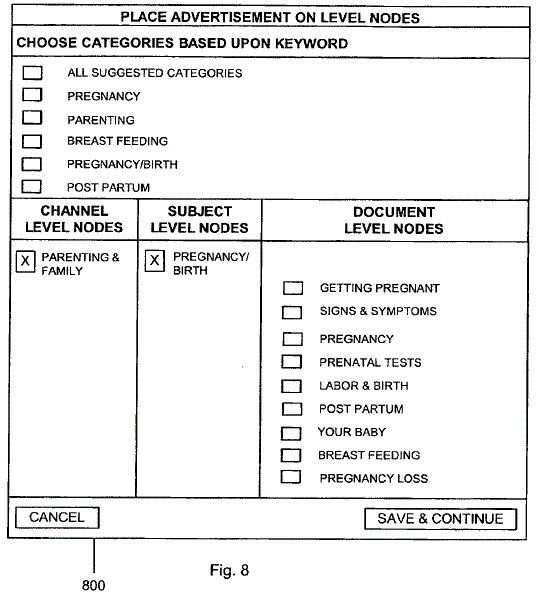
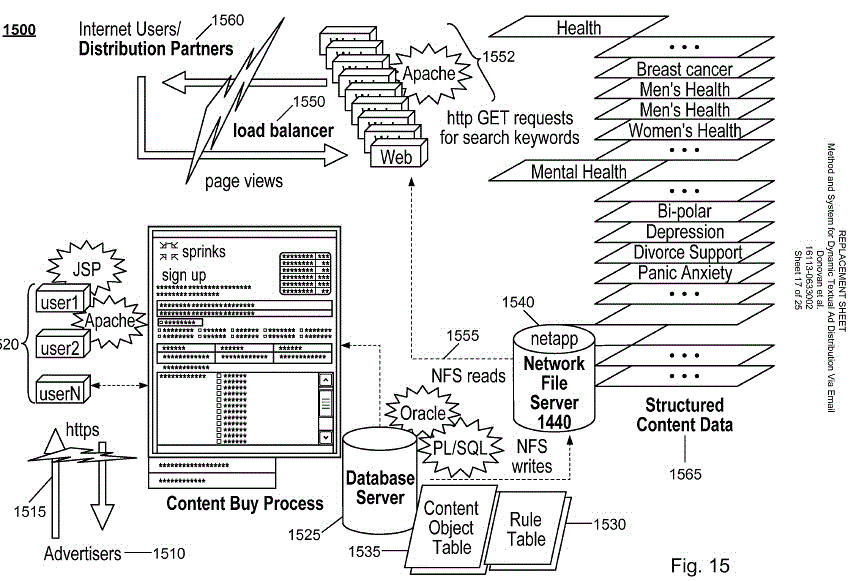
theodp writes "Microsoft says that the death of its 'Scroogled' ad campaign against Google has been greatly exaggerated. 'Scroogled will go on as long as Google keeps Scroogling people,' said a Microsoft spokesperson. 'Nearly 115,000 people signed a petition asking Google to stop going through their Gmail.' So, is Microsoft's scare campaign justified? Well, in a recently-published patent application for a Method and System for Dynamic Textual Ad Distribution Via Email, Google explains how its invention can be used to milk more money from advertisers by identifying lactating Moms, which might make some uneasy. Google also illustrates how advertisers can bid on access to those suffering from breast cancer, bi-polar disorder, depression, and panic anxiety. Hey, what could possibly go wrong?" -
White House Urges Reversal of Ban On Cell-Phone Unlocking
netbuzz writes "In a dramatic call for action directly prompted by 114,000 signatures on a 'We the People' petition, the Obama Administration moments ago urged the reversal of a federal regulatory decision that had rendered the act of unlocking a cell phone illegal. From the reply: 'The White House agrees with the 114,000+ of you who believe that consumers should be able to unlock their cell phones without risking criminal or other penalties. In fact, we believe the same principle should also apply to tablets, which are increasingly similar to smart phones. And if you have paid for your mobile device, and aren't bound by a service agreement or other obligation, you should be able to use it on another network. It's common sense, crucial for protecting consumer choice, and important for ensuring we continue to have the vibrant, competitive wireless market that delivers innovative products and solid service to meet consumers' needs.' Statements from the FCC and Library of Congress indicate that they back the administration's position." -
Apple's iWatch Could Come With IOS, Earn $6 Billion a Year
Nerval's Lobster writes "Apple's long-rumored "iWatch" could earn the company $6 billion a year, if an analyst quoted by Bloomberg proves correct. Citigroup analyst Oliver Chen estimated the global watch industry's annual revenue at $60 billion a year, with gross margins of roughly 60 percent. "This can be a $6 billion opportunity for Apple, with plenty of opportunity for upside if they create something totally new like they did with the iPod," he told the newswire, "something consumers didn't even know they needed." Meanwhile, The Verge reports that Apple has " chosen to rework the full iOS to run on the watch instead of building up the iPod nano's proprietary touch operating system," which has led to battery issues: while Apple would like the device to last "at least 4-5 days" between charges, the current prototypes give somewhat less. While an "Apple TV" long dominated the rumor mill as Apple's next big product, the frequency and detail of "iWatch" rumors over the past few weeks suggests that a timepiece could be the company's next big project." -
Copyright Trolls Sue Bloggers, Defense Lawyers
davecb writes "Prenda Law has commenced three defamation, libel and conspiracy suits against: defense lawyers, defendants and all the blogger and commentators at 'Die Troll Die' and 'Fight Copyright Trolls'. The suits, in different state courts, each attempt to identify anyone who has criticized Prenda, fine them $200,000 each for stating their opinions, and prohibit them from ever criticizing Prenda again." -
SpaceX Cargo Capsule Reaches International Space Station
Despite having some trouble with maneuvering thrusters a few days ago, SpaceX's Dragon cargo capsule has successfully reached the International Space Station. from the article: "Astronauts aboard the outpost used the station's robotic arm to pluck the capsule from orbit at 5:31 a.m. EST as the ships sailed 250 miles over northern Ukraine. Flight controllers at NASA's Mission Control in Houston then stepped in to drive the capsule to its berthing port on the station's Harmony connecting node." -
Cisco Looking To Make Things Right With West Virginia
alphadogg writes "Cisco has offered to 'take back' routers it sold to West Virginia if the state finds they are inappropriate for its needs, according to a post on wvgazette.com. The offer is in response to a state auditor's finding (PDF) that West Virginia wasted $8 million — and perhaps as much as $15 million — in acquiring 1,164 ISR model 3945 branch routers from Cisco in 2010 for $24 million in federal stimulus funds, or over $20,000 per router. The auditor found that hundreds of sites around the state — libraries, schools and State Police facilities — could have been just as suitably served with lower-end, less expensive routers." -
Cisco Looking To Make Things Right With West Virginia
alphadogg writes "Cisco has offered to 'take back' routers it sold to West Virginia if the state finds they are inappropriate for its needs, according to a post on wvgazette.com. The offer is in response to a state auditor's finding (PDF) that West Virginia wasted $8 million — and perhaps as much as $15 million — in acquiring 1,164 ISR model 3945 branch routers from Cisco in 2010 for $24 million in federal stimulus funds, or over $20,000 per router. The auditor found that hundreds of sites around the state — libraries, schools and State Police facilities — could have been just as suitably served with lower-end, less expensive routers." -
Bradley Manning Makes Statement
Bradley Manning, the 25-year-old U.S. Army soldier who allegedly leaked hundreds of thousands of internal memos about the wars in Afghanistan and Iraq, has been held by the government for two and a half years. On Thursday he pleaded guilty 10 of 22 charges brought against him, and now he has released an official statement. Here's an excerpt: "On 3 February 2010, I visited the WLO website on my computer and clicked on the submit documents link. Next I found the submit your information online link and elected to submit the SigActs via the onion router or TOR anonymizing network by special link. ... I attached a text file I drafted while preparing to provide the documents to the Washington Post. It provided rough guidelines saying ‘It’s already been sanitized of any source identifying information. You might need to sit on this information– perhaps 90 to 100 days to figure out how best to release such a large amount of data and to protect its source. This is possibly one of the more significant documents of our time removing the fog of war and revealing the true nature of twenty-first century asymmetric warfare. Have a good day. After sending this, I left the SD card in a camera case at my aunt’s house in the event I needed it again in the future. I returned from mid-tour leave on 11 February 2010. Although the information had not yet been publicly by the WLO, I felt this sense of relief by them having it. I felt I had accomplished something that allowed me to have a clear conscience based upon what I had seen and read about and knew were happening in both Iraq and Afghanistan everyday." -
Conflicted Judges Are Classier With English Accents
An anonymous reader writes "Remember The Right Honourable Professor Sir Robin Jacob, Retired Lord Justice, who staged a temporary comeback on the bench of the England and Wales Court of Appeals last fall? He's the one who required Apple to publicly retract its claims that Samsung copied the iPad and imposed sanctions on Cupertino when he concluded Tim Cook's lawyers hadn't fully complied. He has now made worldwide headline news again because he signed up as a Samsung expert witness at the U.S. International Trade Commission. Samsung says he was hired by its law firm, not the company, but the ITC filing says 'Sir Robin Jacob working on behalf of Samsung.' His clerk issued a statement according to which Sir Robin had no idea of Samsung's desire to hire him before January — two months after he gave Apple a blast. Leading legal blogs agree that there is no evidence any law was violated, but they suspect that 'the general issue of what engagements retired judges are permitted to accept will be very much up for discussion' and that this was 'a less than savvy public relations move by Samsung' because it casts doubt on the widely-noticed ruling in its favor. As one of them puts it, in the U.K. you 'never know if the judge might be looking for a new job,' so you better 'make sure [you] have fat rolls of cash spilling out of [your] pockets' in front of a U.K. judge." -
'Download This Gun' — 3-D Printed Gun Reliable Up To 600 Rounds
An anonymous reader writes "We've talked previously about Texan gunsmith Cody Wilson's efforts to create 3-D-printable parts for firearms. He has a printed magazine that can withstand normal operation for quite a while. But he's also been working on building parts of the gun itself. An early version of a 3-D printed 'lower receiver' — the part of the gun holding the operating parts — failed after firing just 6 rounds. Now, a new video posted by Wilson's organization shows their design has improved enough to withstand over 600 rounds. Plus, their test only ended because they used up their ammunition; they say the receiver could have easily withstood a thousand rounds or more. Speaking to Ars, Wilson gave some insight into his reasoning behind this creation with regard to gun laws. 'I believe in evading and disintermediating the state. It seemed to be something we could build an organization around. Just like Bitcoin can circumvent financial mechanisms. ... The message is in what we're doing—the message is: download this gun.' A spokesperson for the ATF said that while operating a business as a firearm manufacturer requires a license, an individual manufacturing one for personal use is legal." -
ProPublica's Guide To News App Tech
dstates writes "ProPublica, the award winning public interest journalism group and frequently cited Slashdot source, has published an interesting guide to app technology for journalism and a set of data and style guides. Journalism presents unique challenges with potentially enormous but highly variable site traffic, the need to serve a wide variety of information, and most importantly, the need to quickly develop and vet interesting content, and ProPublica serves lots of data sets in addition to the news. They are also doing some cool stuff like using AI to generate specific narratives from tens of thousands of database entries illustrating how school districts and states often don't distribute educational opportunities to rich and poor kids equally. The ProPublica team focuses on some basic practical issues for building a team, rapidly and flexibly deploying technology and insuring that what they serve is correct. A great news app developer needs three key skills: the ability to do journalism, design acumen and the ability to write code quickly — and the last is the easiest to teach. To build a team they look to their own staff rather than competing with Google for CS grads. Most news organizations use either Ruby on Rails or Python/Django, but more important than which specific technology you choose is to just pick a server-side programming language and stick to it. Cloud hosting provides news organizations with incredible flexibility (like increasing your capacity ten-fold for a few days around the election and then scaling back the day after), but they're not as fast as real servers, and cloud costs can scale quickly relative to real servers. Maybe a news app is not the most massive 'big data' application out there, but where else can you find the challenge of millions of users checking in several times a day for the latest news, and all you need to do is sort out which of your many and conflicting sources are providing you with straight information? Oh, and if you screw up, it will be very public." -
Criticism Of Copyright Alert System Mounts
Dangerous_Minds writes "This last week, the Copyright Alert System was rolled out. Now that everyone is getting a better idea of what the alert system looks like, criticisms are building against the system. Freezenet says that the mere fact that ISPs are using a browser pop-up window opens the floodgates for fraudsters to hijack the system and scam users out of money. The EFF criticized the system because the educational material contains numerous flaws. Meanwhile, Web Pro News said that this system will also hurt small business and consumers." -
The Raspberry Pi Turns One
hypnosec writes "The Raspberry Pi turned one yesterday. Raspberry Pi was first launched on 29 February 2012 in the UK and it was received with a huge amount of enthusiasm by students and researchers alike. The Pi has had quite an eventful year, with researchers building a Raspberry Pi cluster; release of an official turbo mode patch; a 512 MB RAM upgrade; the launch of a Pi Store; sales of over a million units; and release of the Minecraft Pocket Edition." -
The Raspberry Pi Turns One
hypnosec writes "The Raspberry Pi turned one yesterday. Raspberry Pi was first launched on 29 February 2012 in the UK and it was received with a huge amount of enthusiasm by students and researchers alike. The Pi has had quite an eventful year, with researchers building a Raspberry Pi cluster; release of an official turbo mode patch; a 512 MB RAM upgrade; the launch of a Pi Store; sales of over a million units; and release of the Minecraft Pocket Edition." -
The Raspberry Pi Turns One
hypnosec writes "The Raspberry Pi turned one yesterday. Raspberry Pi was first launched on 29 February 2012 in the UK and it was received with a huge amount of enthusiasm by students and researchers alike. The Pi has had quite an eventful year, with researchers building a Raspberry Pi cluster; release of an official turbo mode patch; a 512 MB RAM upgrade; the launch of a Pi Store; sales of over a million units; and release of the Minecraft Pocket Edition." -
The Raspberry Pi Turns One
hypnosec writes "The Raspberry Pi turned one yesterday. Raspberry Pi was first launched on 29 February 2012 in the UK and it was received with a huge amount of enthusiasm by students and researchers alike. The Pi has had quite an eventful year, with researchers building a Raspberry Pi cluster; release of an official turbo mode patch; a 512 MB RAM upgrade; the launch of a Pi Store; sales of over a million units; and release of the Minecraft Pocket Edition." -
The Raspberry Pi Turns One
hypnosec writes "The Raspberry Pi turned one yesterday. Raspberry Pi was first launched on 29 February 2012 in the UK and it was received with a huge amount of enthusiasm by students and researchers alike. The Pi has had quite an eventful year, with researchers building a Raspberry Pi cluster; release of an official turbo mode patch; a 512 MB RAM upgrade; the launch of a Pi Store; sales of over a million units; and release of the Minecraft Pocket Edition." -
The Raspberry Pi Turns One
hypnosec writes "The Raspberry Pi turned one yesterday. Raspberry Pi was first launched on 29 February 2012 in the UK and it was received with a huge amount of enthusiasm by students and researchers alike. The Pi has had quite an eventful year, with researchers building a Raspberry Pi cluster; release of an official turbo mode patch; a 512 MB RAM upgrade; the launch of a Pi Store; sales of over a million units; and release of the Minecraft Pocket Edition." -
SpaceX Pressure Hammers Stuck Valves; Dragon's ISS Mission Back On Track
SpaceX's Dragon launch to the ISS earlier today went off smoothly, but the mission encountered trouble shortly after: three sets (of four) of the craft's maneuvering thrusters didn't work. CNET quotes SpaceX founder Elon Musk: "It looks like there was potentially some blockage in the oxidizer pressurization (system). It looks like we've been able to free that blockage, or maybe a stuck valve. We've been able to free that up by cycling the valves, essentially pressure hammering the valves, to get that to loosen. It looks like that's been effective. All the oxidizer tanks are now holding the target pressure on all four (thruster) pods. I'm optimistic we'll be able to bring all four of them up and then we'll work closely with NASA to figure out what the next step is for rendezvousing with space station," and follows up with the good news that "Shortly after the briefing concluded, engineers reported all four sets of thrusters were back on line and that testing was underway to verify the health of the system." Barring further problems, Dragon could reach the ISS as soon as Sunday. -
Among Servers, Apple's Mac Mini Quietly Gains Ground
Nerval's Lobster writes "In 2005, the first business to offer colocated Mac Minis inside a data center made its debut, provoking criticism on Slashdot of everything from how the Mini was cooled to the underlying business model. But nowadays, more than half a dozen facilities are either hosting their own Mac Minis for rent, or offering colocation services for individual consumers and businesses. While some vendors declined to give out reliability information, those who did claimed a surprisingly small number of failures. 'If Dell makes a small little machine, you don't know that they'll be making that, in that form factor, six months down the road, or what they're going to do, or how they're going to refresh it,' Jon Schwenn, a network engineer for CyberLynk Networks (which owns Macminivault) said in an interview. 'We've had three model years of Minis that have stayed externally, physically identical.' Customers are using Minis for all sorts of things: providing Mail, iCal, and the Websites for small businesses; databases, like Filemaker or Daylite; as a VPN server for those who want an IP address in the United States; build servers for Xcode; and general personal servers for Plex media streaming and other fun projects. Some are even using it for Windows." -
Among Servers, Apple's Mac Mini Quietly Gains Ground
Nerval's Lobster writes "In 2005, the first business to offer colocated Mac Minis inside a data center made its debut, provoking criticism on Slashdot of everything from how the Mini was cooled to the underlying business model. But nowadays, more than half a dozen facilities are either hosting their own Mac Minis for rent, or offering colocation services for individual consumers and businesses. While some vendors declined to give out reliability information, those who did claimed a surprisingly small number of failures. 'If Dell makes a small little machine, you don't know that they'll be making that, in that form factor, six months down the road, or what they're going to do, or how they're going to refresh it,' Jon Schwenn, a network engineer for CyberLynk Networks (which owns Macminivault) said in an interview. 'We've had three model years of Minis that have stayed externally, physically identical.' Customers are using Minis for all sorts of things: providing Mail, iCal, and the Websites for small businesses; databases, like Filemaker or Daylite; as a VPN server for those who want an IP address in the United States; build servers for Xcode; and general personal servers for Plex media streaming and other fun projects. Some are even using it for Windows." -
FCC To Investigate Cell Phone Unlocking Ban
Edgewood_Dirk writes "In response to the recent White House petition, the FCC will be investigating the viability and possible harm of the ban on cell-phone unlocking. Gregory Ferenstein met with FCC Chairman Julius Genachowski at a TechCrunch CrunchGov event Wednesday, where the Chairman said the 'ban raises competition concerns; it raises innovation concerns.'" This line from the end of the article fails to inspire confidence: "Genachowski isn’t sure what authority he has, but if he finds any, given the tone of the conversation, it’s likely he will exert his influence to reverse the decision."