Slashdot Mirror
Domain: slashdot.org
Stories and comments across the archive that link to slashdot.org.
Stories · 37,380
-
Promised Platform-Independent GPU Tech Is Getting Real
Vigile writes "Last year a small company called Lucid promised us GPU scaling across multiple GPU generations with near-linear performance gains without restrictions of SLI or CrossFire. The company has been silent for some time, but now it is not only ready to demonstrate the 2nd generation hardware, but also to show the first retail product that will be available with HYDRA technology. In this article there is a quick look at the MSI 'Big Bang' motherboard that sports the P55 chipset and HYDRA chip and also shows some demos of AMD HD 4890 and NVIDIA GTX 260 graphics cards working together for game rendering. Truly platform-independent GPU scaling is nearly here and the flexibility it will offer gamers could be impressive." -
Microsoft Tax Dodge At Issue In Washington State
newscloud writes "With Washington State facing a billion-dollar biennial budget deficit, the spotlight again shifts to Microsoft's software licensing office in Reno, Nevada. 'Although the majority of its software development is performed in Washington State, Microsoft records its estimated $18 billion in licensing revenue per year through a corporate office in Reno, Nevada where there is no licensing tax. Just by enforcing the state's existing tax law from 2008 onwards, we could reduce Washington's revenue shortfall by more than 70 percent. Alternately, we could pursue the entire $707 million from Microsoft's thirteen years of tax dodging and cover most of the expected deficit going forward.' We have discussed Microsoft's creative capitalism in the past." -
Microsoft Tax Dodge At Issue In Washington State
newscloud writes "With Washington State facing a billion-dollar biennial budget deficit, the spotlight again shifts to Microsoft's software licensing office in Reno, Nevada. 'Although the majority of its software development is performed in Washington State, Microsoft records its estimated $18 billion in licensing revenue per year through a corporate office in Reno, Nevada where there is no licensing tax. Just by enforcing the state's existing tax law from 2008 onwards, we could reduce Washington's revenue shortfall by more than 70 percent. Alternately, we could pursue the entire $707 million from Microsoft's thirteen years of tax dodging and cover most of the expected deficit going forward.' We have discussed Microsoft's creative capitalism in the past." -
Google Brings Chrome Renderer, Speedy Javascript To IE
A month after we discussed Google's bringing SVG to IE, several readers let us know that Google is expanding the beachhead by offering Chrome's renderer and speedy Javascript execution in an IE plugin. This effort is in service of allowing IE to participate in Google Wave when that technology's preview is extended in a week's time. The plugin, currently in an early stage of development, is called Google Chrome Frame. -
Making Data Unvanish
sertsa writes "Earlier this year a group of researchers at the University of Washington came up with a scheme to use peer-to-peer networks to store and, ultimately, to forget the keys for encrypted messages, causing them to 'Vanish.' Now a group from researchers from UT Austin, Princeton, and the University of Michigan has come up with a way to break this approach, by making a single computer appear to be many nodes on the p2p network. 'In our experiments with Unvanish, we have shown that it is possible to make Vanish messages reappear long after they should have disappeared nearly 100 percent of the time...'" -
US Wants UK Hacker To Pay To Fix Holes He Exposed
bossanovalithium writes "Gary McKinnon, whose tribulations we have followed for several years now, is the UK hacker trying to escape extradition to the US. It appears he is expected to foot the bill for the US Government patching holes his breaching uncovered — to the tune of $700,000. It's not really the norm for someone to pay for exploits to be patched — damages fixed, yes, but this is a very different thing." The article paraphrases Eugene Spafford as saying that the victim of a cybercrime should not take the blame. "If someone broke a door to rob a store, he said, it was usual to charge them the cost of the door." Isn't the McKinnon case more like charging him to buy the lock that had been missing when he walked in? -
US Wants UK Hacker To Pay To Fix Holes He Exposed
bossanovalithium writes "Gary McKinnon, whose tribulations we have followed for several years now, is the UK hacker trying to escape extradition to the US. It appears he is expected to foot the bill for the US Government patching holes his breaching uncovered — to the tune of $700,000. It's not really the norm for someone to pay for exploits to be patched — damages fixed, yes, but this is a very different thing." The article paraphrases Eugene Spafford as saying that the victim of a cybercrime should not take the blame. "If someone broke a door to rob a store, he said, it was usual to charge them the cost of the door." Isn't the McKinnon case more like charging him to buy the lock that had been missing when he walked in? -
ASCIIpOrtal Has Been Released
maclizard writes "After much waiting, ASCIIpOrtal has now been released. Joe Larson, the man behind the game, has made sure to provide numerous mirrors so as to avoid the Slashdot effect that killed his site several months ago. An interview with Larson (part two here) is available as well." -
Are Data Center "Tiers" Still Relevant?
miller60 writes "In their efforts at uptime, are data centers relying too much on infrastructure and not enough on best practices? That question is at the heart of an ongoing industry debate about the merits of the tier system, a four-level classification of data center reliability developed by The Uptime Institute. Critics assert that the historic focus on Uptime tiers prompts companies to default to Tier III or Tier IV designs that emphasize investment in redundant UPSes and generators. Uptime says that many industries continue to require mission-critical data centers with high levels of redundancy, which are needed to perform maintenance without taking a data center offline. Given the recent series of data center outages and the current focus on corporate cost control, the debate reflects the industry focus on how to get the most uptime for the data center dollar." -
Micropayments For News — Holy Grail Or Delusion?
newscloud writes "Harvard's Nieman Journalism Lab sounds off on micropayments for news content, on the side of the argument that says they are a dangerous delusion: 'What does it mean for journalism? It could mean charging for different platforms, for early alerts, for special members-only access to certain premium or value-added content. But I'm pretty sure of one thing: It doesn't mean charging people fractions of a cent to read a news story, no matter how sophisticated the process.' The article provides good context on the debate over micropayments from a 2003 piece by Clay Shirky, to recent analysis and opinion by Masnick, Outing, Graham, and Reifman. Google's micropayment plans were recently discussed here." -
BellKor Wins Netflix $1 Million By 20 Minutes
eldavojohn writes "As we discussed at the time, there was a strange development at the end of Netflix's competition in which The Ensemble passed BellKor's Pragmatic Chaos by 0.01% a mere twenty minutes after BellKor had submitted results past the ten percent mark required to win the million dollars. Unfortunately for The Ensemble, BellKor was declared the victor this morning because of that twenty-minute margin. For those of you following the story, The New York Times reports on how teams merged to form Bellkor's Pragmatic Chaos and take the lead, which sparked an arms race of teams conjoining to merge their algorithms to produce better results. Now the Netflix Prize 2 competition has been announced." The Times blog quotes Greg McAlpin, a software consultant and a leader of the Ensemble: "Having these big collaborations may be great for innovation, but it's very, very difficult. Out of thousands, you have only two that succeeded. The big lesson for me was that most of those collaborations don't work." -
#twatch Open Hardware Networked LCD Screen
An anonymous reader writes "Dangerous Prototype's #twatch is a DIY network appliance that displays real-time topic trends from Twitter. It can also show system statistics, RSS feeds, mail notifications, and more using a TCP server on port 1337 that accepts commands from LCD control programs like LCD Smartie (Windows) and LCDproc (Linux). Everything you need to build your own is on the project's page. We've covered this hardware hacker's work previously." -
Cursive Writing Is a Fading Skill — Does It Matter?
antdude sends along an AP piece on the decline of the teaching of cursive writing in schools — ramifications of which we've discussed a few times before. "The decline of cursive is happening as students are doing more and more work on computers, including writing. In 2011, the writing test of the National Assessment of Educational Progress will require 8th and 11th graders to compose on computers, with 4th graders following in 2019. ... Handwriting is increasingly something people do only when they need to make a note to themselves rather than communicate with others, [an educator] said. Students accustomed to using computers to write at home have a hard time seeing the relevance of hours of practicing cursive handwriting. 'I am not sure students have a sense of any reason why they should vest their time and effort in writing a message out manually when it can be sent electronically in seconds.'" -
Cursive Writing Is a Fading Skill — Does It Matter?
antdude sends along an AP piece on the decline of the teaching of cursive writing in schools — ramifications of which we've discussed a few times before. "The decline of cursive is happening as students are doing more and more work on computers, including writing. In 2011, the writing test of the National Assessment of Educational Progress will require 8th and 11th graders to compose on computers, with 4th graders following in 2019. ... Handwriting is increasingly something people do only when they need to make a note to themselves rather than communicate with others, [an educator] said. Students accustomed to using computers to write at home have a hard time seeing the relevance of hours of practicing cursive handwriting. 'I am not sure students have a sense of any reason why they should vest their time and effort in writing a message out manually when it can be sent electronically in seconds.'" -
GBA Emulator Released For the DSi
Busshy writes "Darkchen has released a Gameboy Advance emulator for the Nintendo DS/DSi that plays full speed with frameskip. This can only be played with the homebrew dev cart, the DS iPlayer. The emulator adds save states, cheats and tools to GBA games, and for DSi Fans the ability to finally get over the loss of the GBA Slot on the DSi." -
Google, Apple Joust Over Rejected Voice App
ZipK writes with an update to last month's FCC inquiry that landed Apple and AT&T in hot water over the apparent rejection of a Google Voice app for the iPhone. All three companies submitted statements to the FCC — Apple claimed the app hadn't been rejected at all, that they were simply "studying" it further. The public version of Google's statement contained a redacted section, which they politely referred to as "sensitive," but after seeing Apple's comments, they decided to reveal the entire document. Google's FCC filing directly contradicts what Apple said: "Apple's representatives informed Google that the Google Voice application was rejected because Apple believed the application duplicated the core dialer functionality of the iPhone. The Apple representatives indicated that the company did not want applications that could potentially replace such functionality." (PDF, page 4.) Apple quickly released a statement reiterating that they did not reject the app. -
California Publishes Television Efficiency Standards For 2011
eldavojohn writes "It's been nine months since California announced their intentions to create new standards on energy-consuming televisions in their state, but yesterday the California Energy Commission finally released the first draft of the regulations. (More information straight from the horse's mouth.) If you live in another state, you may be unfamiliar with California's history of mandating power usage among anything from dishwashers to washing machines to other household appliances. This has also led to California pushing to ban incandescent light bulbs. From their FAQ on TV Efficiency Standards: 'The proposed standards have no effect on existing televisions. If approved, they would only apply to TVs sold in California after January 1, 2011. The first standard (Tier 1) would take effect January 1, 2011, and reduce energy consumption by average of 33 percent. The second measure (Tier 2) would take effect in 2013 and, in conjunction with Tier 1, reduce energy consumption by an average of 49 percent.' The Draft from December 2008 is available on their site (PDF, with a shorter 'Just the Facts' flier for those of you without two hours to burn). There's no indication whether that's what they're going with, or if it's been updated since then." -
California Publishes Television Efficiency Standards For 2011
eldavojohn writes "It's been nine months since California announced their intentions to create new standards on energy-consuming televisions in their state, but yesterday the California Energy Commission finally released the first draft of the regulations. (More information straight from the horse's mouth.) If you live in another state, you may be unfamiliar with California's history of mandating power usage among anything from dishwashers to washing machines to other household appliances. This has also led to California pushing to ban incandescent light bulbs. From their FAQ on TV Efficiency Standards: 'The proposed standards have no effect on existing televisions. If approved, they would only apply to TVs sold in California after January 1, 2011. The first standard (Tier 1) would take effect January 1, 2011, and reduce energy consumption by average of 33 percent. The second measure (Tier 2) would take effect in 2013 and, in conjunction with Tier 1, reduce energy consumption by an average of 49 percent.' The Draft from December 2008 is available on their site (PDF, with a shorter 'Just the Facts' flier for those of you without two hours to burn). There's no indication whether that's what they're going with, or if it's been updated since then." -
The PS3's "Yellow Light of Death"
Xest writes "More and more reports are appearing about PlayStation 3 consoles failing in a similar way to the earlier models of the Xbox 360, except for Sony, it's the 'Yellow Light of Death.' The BBC has an interesting article which suggests the problem could be almost identical to that which caused the Red Ring of Death — poor soldering connections. From the article: 'Several of those businesses have told Watchdog that the vast majority of consoles they see with the "yellow light of death" can be repaired by heating up specific parts of the circuit board. This process is called solder re-flow. By heating the connections between the components and the circuit board to temperatures in excess of 200 Celsius, the metal solder joints melt, just like they did when the device was first assembled. Console repairers say that this process method is commonly used to repair fractured connections, or dry joints.' But that's not the only rule from Microsoft's playbook Sony has been following; while they have admitted 12,500 out of 2.5 million systems have failed (a convenient 0.5%), they refuse to release full figures of failure rates, citing them as being 'commercially sensitive.' Unfortunately, Sony does not appear to be following Microsoft's lead with regard to an extended warranty, stating that if a PS3 fails after 12 months, it is not their problem. In the UK at least, the Sale of Goods Act would disagree with that statement." -
Barry White Music Gets Sharks in a Frenzy
Last month we ran a story about the Sea Life London Aquarium using Barry White music to convince their zebra shark Zorro to get romantic with their female shark. As crazy as it seems the plan worked, maybe too well. The aquarium is now warning guests about the shark's frisky frenzies as they are public, frequent and a little on the rough side. "We are absolutely delighted that Zorro is finally getting it together with his intended but the courtship rituals of the zebra shark can appear quite violent and some guests have been a little alarmed," says deputy curator Jamie Oliver. -
Ad Viewing Required For Free Zune HD Games
UnknowingFool writes "In releasing the Zune HD, Microsoft decided not to open up software development on the new Zune to third parties yet. Today, Microsoft released a handful of free games for the Zune HD: Texas hold 'em, Sudoku, Space Battle 3, Shell Game, Of the Future, Hexic, Goo Splat and Chess, as well as calculator and weather apps. Users, however, are required to view an ad (up to 30 seconds in length) while the game starts up. While ad-supported free games are also on other platforms, like the iPhone, the difference here is that those iPhone games are from third parties and not from Apple." Reader Rock3t notes related news that the Zune HD will be getting 3D games. -
Old Operating Systems Never Die
Harry writes "Haiku, an open-source re-creation of legendary 1990s operating system BeOS, was released in alpha form this week. The news made me happy and led me to check in on the status of other once-prominent OSes — CP/M, OS/2, AmigaOS, and more. Remarkably, none of them are truly defunct: In one form or another, they or their descendants are still available, being used by real people to accomplish useful tasks. Has there ever been a major OS that simply went away, period?" -
Google Buys reCAPTCHA For Better Book Scanning
TimmyC writes "This story may interest the Slashdot folk, many of whom use the reCAPTCHA anti-spam service. Well, reCAPTCHA is now owned by Google. Apparently, what attracted Google to ReCAPTCHA is that the company has linked its core authentication service with efforts to digitize print books and periodicals. The search giant has a massive (and controversial) effort underway in that area for its Google Books and Google News Archive services. Every time people solve a CAPTCHA from the company, they are also, as a byproduct, helping to turn scanned words into plain text that can be indexed and made searchable by search engines. Interesting times indeed." -
Sony To Encase Half the Star Wars: Galaxies Servers In Carbonite
Impy the Impiuos Imp writes "Sony is apparently merging out of existence half its Star Wars: Galaxies servers. In spite of a number of innovative features (three health bars, choreograph-able dancing, music you can coordinate between several players, 'your own R2 unit and 3PO,' programmable droids, and so on), a complete overhaul of the combat system, designed to simplify it and make it more action-oriented, actually drove away more people than it attracted. It soon thereafter retired to that great, Sony one-fee-for-all stable of aging and also-rans in the sky. Still on life support, it was preceded in death by Sony foster brother The Matrix Online." -
Professor Posts "Illegal Copy" of Guide To Oregon Public Record Laws
An anonymous reader writes "Copyright law has previously been used by some states to try to prevent people from passing around copies of their own government's laws. But in a new level of meta-absurdity, the attorney general of Oregon is claiming copyright over a state-produced guide to using public-records laws. That isn't sitting well with one frequent user of the laws, who has posted a copy of the guide to his website and is daring the AG to respond. The AG, who previously pledged to improve responses to public-records requests, has not responded yet." The challenger here is University of Oregon Professor Bill Harbaugh. -
First Rocky Exoplanet Confirmed
Matt_dk writes "The confirmation of the nature of CoRoT-7b as the first rocky planet outside our Solar System marks a significant step forward in the search for Earth-like exoplanets. The detection by CoRoT and follow-up radial velocity measurements with HARPS suggest that this exoplanet has a density similar to that of Mercury, Venus, Mars and Earth, making it only the fifth known terrestrial planet in the Universe. The search for a habitable exoplanet is one of the holy grails in astronomy. One of the first steps towards this goal is the detection of terrestrial planets around solar-type stars. Dedicated programs, using telescopes in space and on ground, have yielded evidence for hundreds of planets outside of our Solar System. The majority of these are giant, gaseous planets, but in recent years small, almost Earth-mass planets have been detected, demonstrating that the discovery of Earth analogues — exoplanets with one Earth mass or one Earth radius orbiting a solar-type star at a distance of about 1 astronomical unit — is within reach." -
France Passes Harsh Three-Strikes Legislation, Again
shrik writes "After having it struck down as 'unconstitutional' by the Conseil Constitutionnel once, Sarkozy's controversial 'three-strikes' law (known as HADOPI) was once again passed by the French National Assembly, this time allowing for a judge to order the disconnection (without requiring the presence of the accused party!), thus placating some of the administrative concerns. Opponents say they will 'challenge the law again in front of the Constitutional Council because it deprives the accused of being able to defend themselves properly.' Coverage at Ars also points out a provision that says, 'all Internet users must keep their connections 'secure' and are responsible for what happens on them.'" -
Windows 7 Touch, Dead On Arrival
snydeq writes "Ongoing Microsoft hype around its Surface touch technology has suggested that, with Windows 7, a touch-based UI revolution is brewing. Unfortunately, the realities of touch use in the desktop environment and the lack of worthwhile development around the technology are conspiring against the notion of touch ever finding a meaningful place on the desktop, as InfoWorld's Galen Gruman finds out reviewing Windows 7's touch capabilities. 'There's a chicken-and-egg issue to resolve,' Gruman writes. 'Few apps cry out for a touch UI, so Microsoft and Apple can continue to get away with merely dabbling with touch as an occasional mouse-based substitute. It would take one or both of these OS makers to truly touchify their platforms, using common components to pull touch into a great number of apps automatically. Without a clear demand, their incentive to do so doesn't exist.'" -
Review: Champions Online
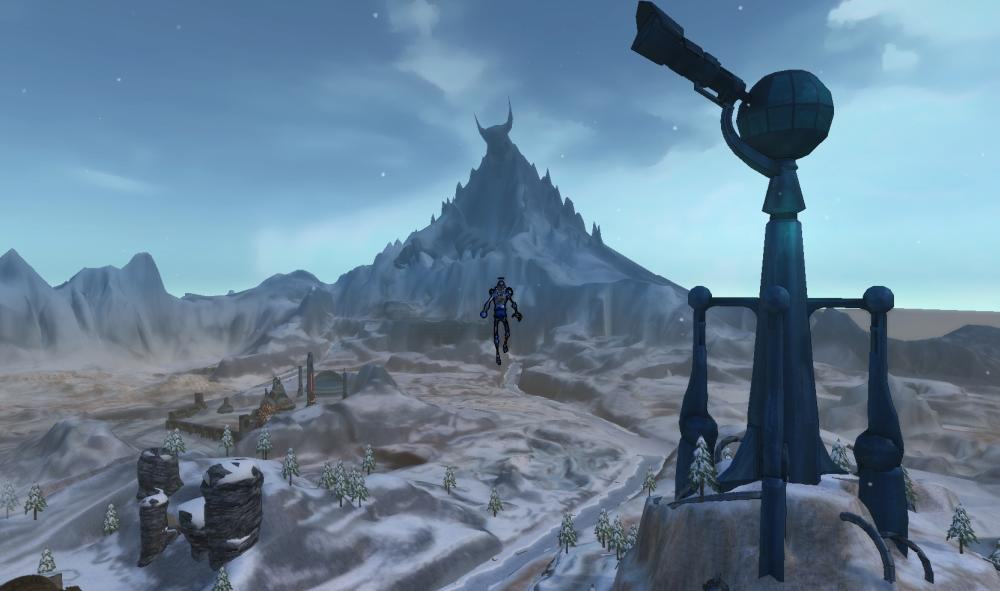
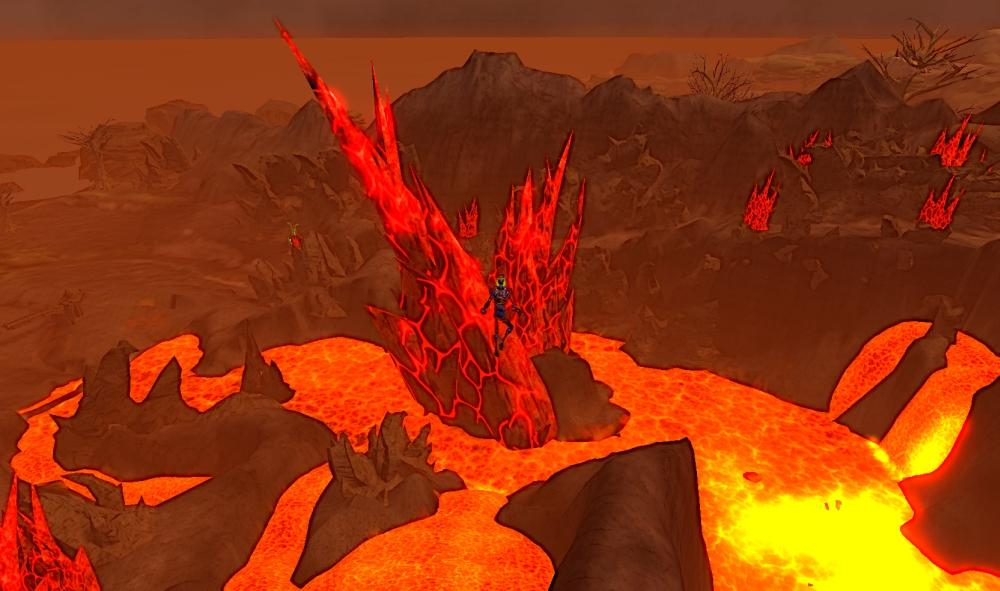
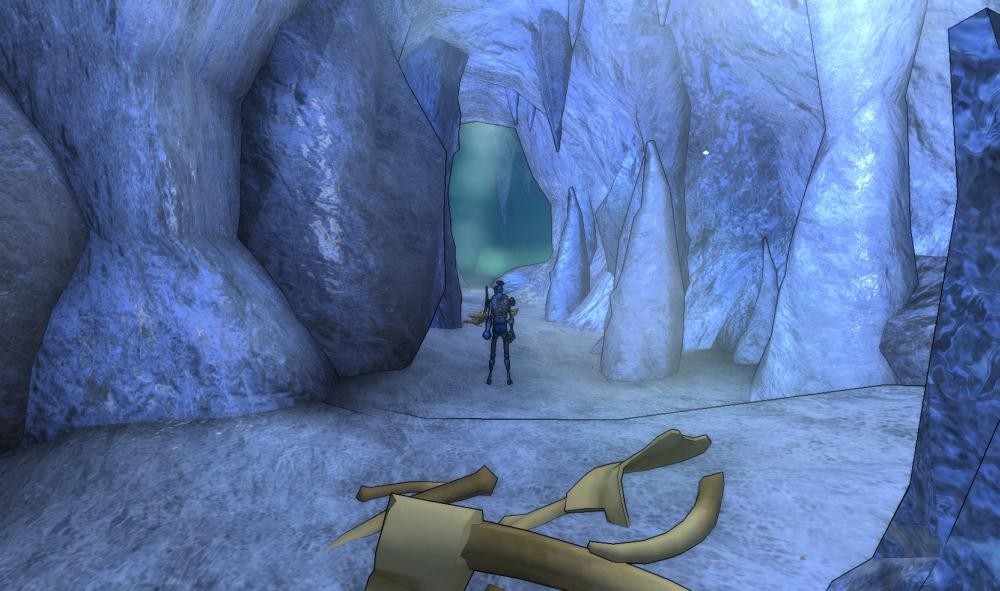
Champions Online is Cryptic Studios' latest entry into the Superhero MMORPG genre, representing several years of advancement in game design both for Cryptic and for MMOs as a whole. It's no longer a new field, and there are now certain expectations about what an MMO should contain, and how it should play. Two major factors to a new game's success or failure are the standards they embrace and do well, and the ones they reject and do differently. Champions Online succeeds at adapting many established concepts, while still setting themselves apart from the typical swords & sorcery backdrop. Read on for the rest of my thoughts.
- Title: Champions Online
- Developer: Cryptic Studios
- Publisher: Atari
- System: PC
- Reviewer: Soulskill
- Score: 8/10
First, a disclaimer — MMOs are unlike ordinary games because active development never really stops. Bugs and gameplay issues, once identified, are almost always fixed — indeed, one of the traits that distinguishes a good MMO from a bad one is how well and how quickly the development team solves such problems. Thus, this review will not focus on the minor, easily fixable problems other than to identify them and perhaps point out what Cryptic has said about fixing them, where applicable. On to the game itself.
Champions gets off on the right foot with an excellent character creator. The depth and level of detail for all of the customization options exceeds any game I've played, and it's pretty simple to find and select the look that you want. If you're the type who enjoys making your character picture-perfect, you'll love it; matching a costume to whatever vision you have for a character is surprisingly easy. There are enough options that I really don't see any player characters who look alike — or few enough that I don't notice. It also allows the irrepressible creation of characters from other intellectual properties. It's something I've seen less and less as time passes, so I assume Cryptic is clamping down on it (as they should; Marvel already sued them for the same thing in City of Heroes), but it's occasionally hilarious to see Duke Nukem, Dr. McCoy, or a WoW Paladin out killing bad guys.
The customization continues beyond the character creator, too. Throughout the game, you accumulate various powers — these are your skills/spells/abilities, everything from laser beams to giant fiery swords to huge explosions. There are a ton of powers to choose from, and each has its own graphical effect. The nice thing is that you can modify the colors of the effect and the location from which they originate. My character's first ability had him shooting red laser pulses from his fists, which I changed to be blue lasers shooting from his eyes. It's a nice touch that allows even characters with the exact same powers to look different. Beyond that, as you go through the game you can get items that unlock more costume options.
There's a tremendous variety to the powers you can use, to the point where it's almost better to figure out what you want your character to do — drop bombs, sling ice shards, Force-choke — than to look at the abilities and figure out which are the "best." They're divided up amongst 18 different "frameworks," which are collections of similarly-themed powers. For example, the Munitions framework contains powers that involve shooting various guns, dropping mines, throwing grenades, and shooting rockets. The "Unarmed" framework holds different punch and kick attacks, and the "Fire" framework has — you guessed it — fire spells. You're not restricted to a particular framework, which is nice. You can grab all your powers from a single one, or go into a different framework for each power.
It's fun to have so many options, but almost overwhelming if you're trying to min/max your character. My recommendation would be to not worry overmuch about picking the absolute best power. With a few exceptions, they're pretty well balanced — as well as can be expected for a new MMO — and Cryptic is already making refinements. More important is to select powers that have different effects. They're divided up and labeled such that you know which are for close/ranged attacks, area effect attacks, crowd control, healing, summoning, or buffs. In many cases, it's pointless to get two of a particular effect, so you want to diversify. You get a new power every few levels, and they really add to the depth of the combat.
Your character gets stronger in other ways, as well. You get "advantages," which increase the effectiveness of your powers, but you're limited into how much you can strengthen any one ability. It's another level of customization and utility, and they make interesting changes to your powers. You're also heavily dependent on stats. They're somewhat arcane and unintuitive (Strength is obvious enough, but what would you think "Presence" does?), but you'll do fine with the understanding that you should pick two and focus on them almost exclusively, as they'll determine your damage output.
The fighting is done against individual enemies or, more often, small groups. The non-player opponents you typically fight are classified as one of the following, from easiest to hardest: Henchman, Villain, Master Villain, and Super Villain. There are also Cosmic and Legendary Villains, but those are rare, and usually require a team to defeat. A more typical group will have a cluster of Henchmen, or a couple Henchmen and a Villain. The Henchmen die in a matter of seconds, but the Villains take a bit more work. As they get more powerful, you'll have to put some thought into how you want to handle them; there's a lot of content you can solo with some strategy and perseverance. Many of the powers you use complement each other in fun and interesting ways. A lot of them have short recharge periods (cooldowns), which you can fill by using a hold (crowd control) or knocking your opponent back, which delays them for several seconds.
Combat is fairly fast-paced, and it can involve a lot of movement. It feels like a hybrid between an MMO and an action RPG. Most powers can be used while on the move, giving you the opportunity to close with your attacker or maintain range, or perhaps duck out of line-of-sight just after your ability fires. You can also Block attacks. In fact, it's crucial to block some of them. Enemies will sometimes charge up big attacks, advertised by a growing symbol over their heads. When you see this happening, stop what you're doing and block it, or expect to take some serious damage. Blocking adds more depth to the combat, but is slightly hampered by the controls.
Cryptic clearly put a lot of effort into building a good system for game controls and the UI. There are a ton of different options for movement, targeting, and camera styles; you can play it like a typical MMO, or a first-person shooter, or Cryptic's own superhero MMO concoction, and it's well implemented. Unfortunately, there's a fair bit of UI lag. Server lag has been almost non-existent — amazing as that is to say during the launch period of an MMO — but the responsiveness of the controls is probably the game's biggest technical fault right now. It can be frustrating at times to have your abilities not work as you expect because of this. There's enough of a delay after hitting the button that you won't be sure if it actually triggered the ability. Many abilities require a button to be held down, so if you press it again and then the original trigger goes through, you've wasted a cooldown. Pressing Block right after charging up a power will also sometimes clip the end of it, and cause it not to fire. I would attribute the majority of my deaths so far to the UI lag. That said, it's not game-breaking.
Quests in Champions Online are called missions. A lot of it is typical MMO fare, but not all, and the mission system is streamlined and unobtrusive. The game world has several large zones, with quest hubs scattered about them. You'll get your standard "Kill N of X" and "Collect Y of Z" missions. You'll also get quest lines that tell cool stories, if you care to read them. Cryptic has stepped up the convenience factor in a few ways. First, your map is always marked with the area you need to visit to finish the missions. In other words, no more "Head past the Valley of Ambivalence and to the northeast corner of the Forest of Mild Discomfort to slay Ted the Impaler." It's simply displayed on your map (and minimap). Finding new missions is easier, too. You can open the "Crime Computer," which will tell you where various emergencies (i.e. missions) are located, and mark those for you on the map as well.
City of Heroes veterans can rest easy; the missions are a lot better in Champions. Most of them are out in the world. Some are instanced, but there are varying objectives, and I've never been sent into the same building twice, except when it makes sense for the story. Another nice feature is that you'll occasionally stumble across a civilian being accosted by villains out in the street. If you save them, they sometimes give you a mission. You can also find missions just by moving around — as you pass by a bank that's being robbed, you'll be given a quest to stop it, without having to even talk to an NPC. There are several Open Missions in each zone, too. These are missions everybody nearby can participate in, and you get rewarded based on your level of contribution. Cryptic is still working the bugs out in a few of these, but they're fun, and they have an epic feel. You'll see even more impressive missions in dungeons and "crisis zones" — one multi-part mission has you join a team of prison guards attempting to lock down a jailbreak led by a boss with paranormal powers. You fight through levels of the dungeon, struggling to reach him, and it almost feels like playing through a section of F.E.A.R.
The open world zones are few, but large, and they contain content for multiple ranges of levels. They're divided loosely into neighborhoods, which you'll typically explore until you've exhausted all the missions (gaining a couple levels in the process), and move on to a neighborhood in a different zone. The neighborhoods all tend to tell a story, or a few related stories, which tie in to the overarching plot of the game. There are a couple smallish content gaps — early into level 31, I exhausted all available quests and had to grind out the rest of the level — but Cryptic has already acknowledged that they're pinpointing those gaps and working to fill them. My advice would be to take any mission given to you by a random citizen or object; the experience from these adds up quickly, and I probably wouldn't have been stuck if I'd spent a bit more time doing those.
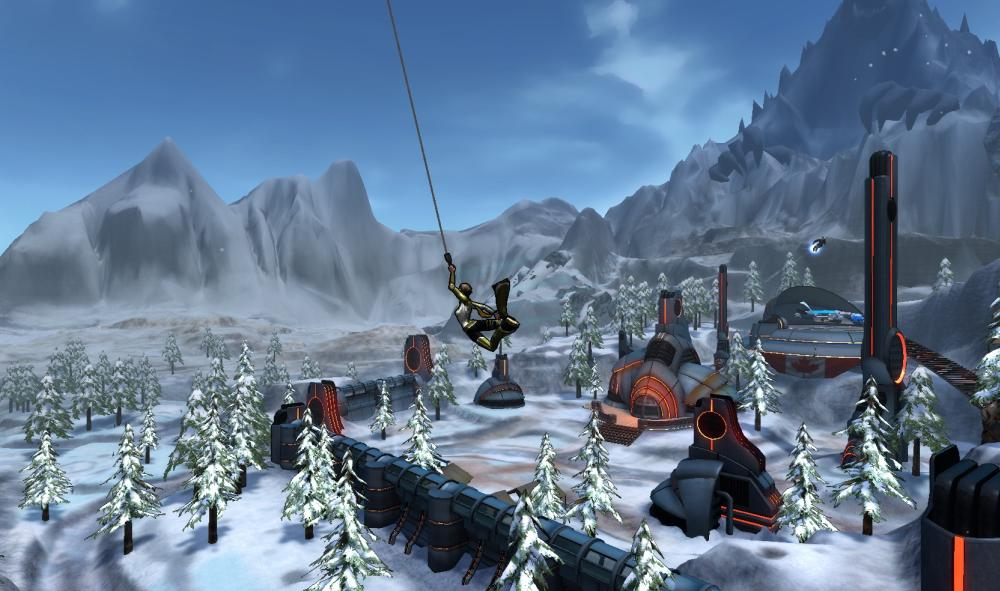
The zones would take a long time to traverse on foot, but early on you're given your choice of travel powers, which make getting from one place to another much faster. The travel powers are actually a lot of fun, in and of themselves. You can get your standard flying power, or ride a sheet of ice, or use rocket boots, but there are more entertaining options as well. You can get Superjump, which lets you literally leap tall buildings in a single bound, or Swing, which lets you shoot a grapple upwards and swing as if from vine to vine. Oftentimes you're just shooting it into the open air, so it doesn't make much sense, but that's more than made up by how fun it is.
One of the really good innovations in Champions is what they call the Powerhouse. This is where you go to buy new powers, increase your stats, and upgrade existing powers — the equivalent of a class trainer in other games. However, the Powerhouse is instanced, and it has a large testing area at the back. You can pick up your new powers, test them, and get rid of them if you don't like them. Changes aren't finalized until you leave the Powerhouse. It's great for trying out new things without worrying that they'll work poorly with your character. The game does have a re-specialization system, appropriately called "retcon," but at current it's ridiculously expensive. Recent power purchases aren't bad to change, but if you want to fix a mistake from early on (when you weren't that familiar with the game), it will likely cost you several times the wealth you've managed to accumulate.
Now, that's definitely a poor decision on Cryptic's part, but it's not as bad as it sounds. First, they've already held a post-launch dev chat, in which they said they're going to revise upward the amount of money you receive from monsters and quests. They also indicated that retcon costs would probably be lowered. What's more, they've already issued one free retcon to all characters, and said they'll likely do that whenever they make significant changes to powers in a patch. One phrase they used was "targeted retcon," which would let players freely change a power that has been modified. While I was initially displeased that I couldn't fix mistakes I made when I didn't know how the game worked, it's good to see that Cryptic is already addressing it, and on multiple fronts. That speaks well toward the long-term health of the game.
An important aspect of the game starts at level 25 when you get to create your Nemesis. This is a super villain whose plans you constantly try to thwart, and who routinely sends his minions to destroy you. It's basically an epic series of missions that happens gradually as you level up. After you tangle with him for the first time, you'll occasionally be ambushed by his henchmen when you're off doing normal missions. Sometimes when you kill the henchmen, they'll drop notes that contain information about your Nemesis' plans, which you go on a mission to disrupt. Other times, the police or NPC superheroes will call on you to stop his latest scheme. It's nicely done, and it really adds to the feel that you're doing heroic deeds and fighting complex battles.
There is less focus on gear in Champions than in most other MMOs. You have nine gear slots, and your typical item will increase your stats and and your defenses. You generally want to focus on the two "Super Stats" you select early in the leveling process, since raising those increases your damage output. There are also items with other effects; some will replace or modify your powers, adding an ancillary effect and perhaps a new graphic. Equip-able items are categorized as Arms, Mysticism, and Science — these are the three professions. Each of them has crafting and gathering aspects. Unlike most MMOs, your profession skill doesn't increase much by making things or harvesting nodes out in the wilderness. Instead, you take items you find and "research" them, breaking them down into their components. This is cool because it gives you a ton of materials to work with, and makes it easy to catch up to where your skill level is supposed to be. You don't have to make two dozen Shoulderpads of the Useless that you immediately vendor. There is virtually no "grind" to the process, which is quite nice, and you can build yourself some basic gear and useful consumables.
There's still work to be done on the game, as with any MMO launch. Pet AI isn't working right, so summoned creatures will frequently run off and attack whatever the heck they want. Several buggy missions have already been fixed, but others are still broken. PvP is dominated by a few annoying abilities; nothing you can't work around with a semi-coordinated team, but a lot of people can't rely on that. There are a few places in the game that look like they're just waiting to be populated with villains and quests; hopefully that'll happen soon to fill out the leveling process. The downside right now is that you'll frequently end up doing quests a couple levels higher than you, which give you rewards you can't use yet. Endgame doesn't have a ton of variety; that's something they'll have to address fairly soon, once a significant number of players reach the level cap.
As it stands, I think Champions Online's success will be determined by where Cryptic takes it from here. The launch is solid, there's a reasonable amount of content, and the combat is a fun break from typical MMOs. When Cryptic actively developed for City of Heroes, they released 10 expansions and City of Villains in a three-and-a-half year period. If they can roll out content on a similar scale for Champions, while staying on top of balance issues and bug fixes, it will certainly find success. As it is, it's piqued my interest. It's no WoW-killer, but it's a fun, distinct game that will carve out a niche for itself.
-
Chinese Schools Ax Green Dam Censorship Software
eldavojohn writes "China's controversial Green Dam Internet Filter died on new PCs a month ago, but it wasn't until recently that Chinese schools silently removed it. Claims that the software inhibited work in schools was cited as the reason by Reuters. 'We will remove all Green Dam software from computers in the school as it has strong conflicts with teaching software we need for normal work,' said one school, while another claimed, 'It had seriously influenced our normal work.'" -
Girls Wired To Fear Dangerous Animals
Foot-in-Mouth writes "New Scientist reports that girls are more "primed" to fear spiders and snakes, compared to boys. Infant boys and girls were shown pairs of images, a fearful and a happy object (such as a spider and a flower), measuring the boys' and girls' dwell times on the images. And in another similar test, normally happy objects (such as a flower) were given a fearful face and fearful objects were given a happy face. The results of these two tests suggested to the researcher that girls are not wired to fear spiders, for example, but rather girls are wired to more quickly learn to fear dangerous animals. The researcher, David Rakison at CMU, 'attributes the difference to behavioural differences between men and women among our hunter-gatherer ancestors. An aversion to spiders may help women avoid dangerous animals, but in men evolution seems to have favoured more risk-taking behaviour for successful hunting.' This reminds one of men's obsession with video games. Will game designers use this information to tweak video games for gender, either to make the games more or less frightening?" -
IBM Policy Switches From MS Office To OO.o
eldavojohn writes "It's frequent that we hear of a country or city or company switching from Windows to Linux, but it's rare that we hear of one third of a million employees being told to use Lotus Symphony (IBM's OO.o variant) over MS Office, and also to use the Open Document Format when saving files. The change has been mandated to take place in the next 10 days. Of course, they are doing this to illustrate that they actually offer a full-fledged alternative to Microsoft. With i4i stirring stuff up against MS Office and absolving OO.o from litigation, are we on the verge of a potential break from Microsoft's dominant document suite? Hopefully IBM supports OO.o past Sun's acquisition by Oracle instead of concentrating on Lotus Symphony." -
IBM Policy Switches From MS Office To OO.o
eldavojohn writes "It's frequent that we hear of a country or city or company switching from Windows to Linux, but it's rare that we hear of one third of a million employees being told to use Lotus Symphony (IBM's OO.o variant) over MS Office, and also to use the Open Document Format when saving files. The change has been mandated to take place in the next 10 days. Of course, they are doing this to illustrate that they actually offer a full-fledged alternative to Microsoft. With i4i stirring stuff up against MS Office and absolving OO.o from litigation, are we on the verge of a potential break from Microsoft's dominant document suite? Hopefully IBM supports OO.o past Sun's acquisition by Oracle instead of concentrating on Lotus Symphony." -
IBM Policy Switches From MS Office To OO.o
eldavojohn writes "It's frequent that we hear of a country or city or company switching from Windows to Linux, but it's rare that we hear of one third of a million employees being told to use Lotus Symphony (IBM's OO.o variant) over MS Office, and also to use the Open Document Format when saving files. The change has been mandated to take place in the next 10 days. Of course, they are doing this to illustrate that they actually offer a full-fledged alternative to Microsoft. With i4i stirring stuff up against MS Office and absolving OO.o from litigation, are we on the verge of a potential break from Microsoft's dominant document suite? Hopefully IBM supports OO.o past Sun's acquisition by Oracle instead of concentrating on Lotus Symphony." -
$358 Million Patent Judgment Against Microsoft Overturned
eldavojohn writes "Last year, Microsoft was ordered to pay Alcatel-Lucent hundreds of millions of dollars for patent infringement. Well, that award has just been overturned by the United States Court of Appeals for the Federal Circuit, saving Microsoft a considerable sum. But Microsoft isn't in the clear yet; the appellate court said that they did infringe on Alcatel-Lucent patents, but that those infringements did not warrant $358 million in damages. The case needs to be retried." -
Risk Aversion At Odds With Manned Space Exploration
Several readers including tyghe!! sent in a Popular Mechanics piece analyzing the Augustine Commission's recommendations and NASA itself in terms of a persistent bias towards risk aversion, and arguing that such a bias is fundamentally incompatible with the mission of opening a new frontier. "Rand Simberg, a former aerospace engineer finds the report a little too innocuous. In this analysis, Simberg asks, what happens when we take the risk out of space travel? ... Aerospace pioneer Burt Rutan said a few years ago that if we're not killing people, we're not pushing hard enough. That might sound harsh to people outside the aerospace community but, as Rutan knows, test pilots and astronauts are a breed of people that willingly accepts certain risk in order to be part of great endeavors. They're volunteers and they know what they're getting into." -
Oracle To Increase Investment In SPARC and Solaris
An anonymous reader writes "The Slashdot community has recently questioned what Oracle will do with Sun hardware if and when Oracle's acquisition of Sun closes. And it seems that speculation about the future of SPARC hardware has been common among Slashdot commenters for years. That said, it seems newsworthy that Oracle is going out of their way with some aggressive marketing directed at IBM to state clearly their plans to put more money than Sun does now into SPARC and Solaris." MySQL is not mentioned in this ad, perhaps because (as Matt Asay speculates) the EU is looking closely into that aspect of the proposed acquisition. -
Apple Open Sources Grand Central Dispatch
bonch writes "Apple has open sourced libdispatch, also known as Grand Central Dispatch, which is technology in Snow Leopard that makes it easier for developers to take advantage of multi-core parallelism. Kernel support is not required, but performance optimizations Apple made for supporting GCD are visible in xnu. Block support in C is required and is currently available in LLVM (note that Apple has submitted their implementation of C blocks for standardization)." Update: 09/11 15:32 GMT by KD : Drew McCormack has a post up speculating on what Apple's move means to Linux and other communities (but probably not Microsoft): "...this is also very interesting for scientific developers. It may be possible to parallelize code in the not too distant future using Grand Central Dispatch, and run that code not only on Macs, but also on clusters and supercomputers." -
Facebook Releases Open Source Web Server
Dan Jones writes "Ah the irony. The week Facebook is being asked to cough up source code to satisfy an alleged patent infringement, the company releases an open source Web server. The Web server framework that Facebook will offer as open source is called Tornado, was written in the Python language and is designed for quickly processing thousands of simultaneous connections. Tornado is a core piece of infrastructure that powers FriendFeed's real-time functionality, which Facebook maintains. While Tornado is similar to existing Web-frameworks in Python, it focuses on speed and handling large amounts of simultaneous traffic." -
Alan Turing Gets an Apology From Prime Minister Brown
99luftballon writes "The British government has officially apologized for the treatment of Alan Turing in the post war era. An online petition got more than enough signatures to force an official statement and Prime Minister Gordon Brown has issued a lengthy apology. 'Thousands of people have come together to demand justice for Alan Turing and recognition of the appalling way he was treated. While Turing was dealt with under the law of the time and we can't put the clock back, his treatment was of course utterly unfair and I am pleased to have the chance to say how deeply sorry I and we all are for what happened to him. So on behalf of the British government, and all those who live freely thanks to Alan's work I am very proud to say: we're sorry, you deserved so much better.'" -
Google Offers Scanned Books To Rival Stores
eldavojohn writes "Yesterday we covered Microsoft's jabs at the Google book deal, but today Reuters is reporting that the scanned books will be available to Google's rivals. Google said in a surprising statement, 'Google will host the digital (out-of-print) books online, and retailers such as Amazon, Barnes & Noble or your local bookstore will be able to sell access to users on any Internet-connected device they choose.' They made this statement today at the US House of Representatives Judiciary Committee that had been called to discuss criticism of a 2008 settlement between the Authors Guild and Google. Well, I would bet this has caught more than a few people by surprise. The Authors Guild offers a history and the fine print of the agreement." -
Linux Kernel 2.6.31 Released
diegocgteleline.es writes "The Linux kernel v2.6.31 has been released. Besides the desktop improvements and USB 3.0 support mentioned some days ago, there is an equivalent of FUSE for character devices that can be used for proxying OSS sound through ALSA, new tools for using hardware performance counters, readahead improvements, ATI Radeon KMS, Intel's Wireless Multicomm 3200 support, gcov support, a memory checker and a memory leak detector, a reimplementation of inotify and dnotify on top of a new filesystem notification infrastructure, btrfs improvements, support for IEEE 802.15.4, IPv4 over Firewire, new drivers and small improvements. The full list of changes can be found here." -
Pigeon Turns Out To Be Faster Than S. African Net
inject_hotmail.com writes "The results are in: it's faster to send your data via an airborne carrier than it is through the pipes. As discussed Tuesday, a company in South Africa called Unlimited IT, frustrated by terribly slow Internet speeds, decided to prove their point by sending an actual homing pigeon with a "data card" strapped to its leg from one of their offices to another while at the same time uploading the same amount of data to the same destination via their ISPs data lines. The media outlet reporting this triumph said that it took the pigeon just over 1 hour to make the 80km/50mile flight, whereas it took over 2 hours to transfer just 4% of that data." -
GaiKai Beta To Start In Europe "Later This Month"
Alison Beasley sends word that GaiKai, the cloud gaming service being developed by games industry vet Dave Perry, is about to begin beta testing in Europe. (Sign-up page.) GaiKai is a competitor to OnLive, which started beta tests of its own recently. IGN got a chance to try out GaiKai for themselves, and they've posted a video showing how it performed. From Perry's announcement: "Our closed beta has two goals. #1 is to bring our servers to their knees so we can choose the final configuration before we start ordering large quantities of them. (We think we have it worked out, but you can be certain our staff will be swapping cards and testing different processors as each day goes by.) Goal #2 is to test older computers. We've had lots of emails from people describing their computers and 99% of them have ample performance. Remember you don't even need a 3D card to see a 3D game run on our service. I know this is strangely counter to what people expect, but we actually want to get plenty of basic office-grade XP machines testing so we can make sure we can reach the widest audience possible. ... After we choose the hardware configuration in Europe, our next phase will be our USA Nationwide Network Test, that will be using 8 Tier-1 Data Centers, getting hammered by Closed Beta testers. During that process, [we] will be identifying the other data centers we need to include to blanket the USA in a low latency array. Phase 2 of that is Europe, in exactly the same test." -
Microsoft Blasts Google Book Deal
eldavojohn writes "With authors, scholars, the DoJ and publishers ripping apart the Google book deal, it's Microsoft's turn. They're claiming it's frankly an illegal 'joint venture' and not a settlement. According to ZDNet, Microsoft's four complaints against the deal are: 1) Future infringements are covered by the settlement, affecting the exclusive rights of absent class members for the life of their copyrights. 2) The deal gives away to Google vast rights that were not contested in the underlying litigation. The lawsuits dealt with Google's displaying brief excerpts. Instead of compromising on that infringement, the parties instead agreed to give away the rights to display entire books. 3) The publishers who negotiated this deal each have undisclosed side deals with Google, which will likely give them better terms than the class will get. 4) The publishers plan to exclude their own works from the deal. You might recall over a year ago Microsoft's own scanning effort died." -
Microsoft Blasts Google Book Deal
eldavojohn writes "With authors, scholars, the DoJ and publishers ripping apart the Google book deal, it's Microsoft's turn. They're claiming it's frankly an illegal 'joint venture' and not a settlement. According to ZDNet, Microsoft's four complaints against the deal are: 1) Future infringements are covered by the settlement, affecting the exclusive rights of absent class members for the life of their copyrights. 2) The deal gives away to Google vast rights that were not contested in the underlying litigation. The lawsuits dealt with Google's displaying brief excerpts. Instead of compromising on that infringement, the parties instead agreed to give away the rights to display entire books. 3) The publishers who negotiated this deal each have undisclosed side deals with Google, which will likely give them better terms than the class will get. 4) The publishers plan to exclude their own works from the deal. You might recall over a year ago Microsoft's own scanning effort died." -
Microsoft Blasts Google Book Deal
eldavojohn writes "With authors, scholars, the DoJ and publishers ripping apart the Google book deal, it's Microsoft's turn. They're claiming it's frankly an illegal 'joint venture' and not a settlement. According to ZDNet, Microsoft's four complaints against the deal are: 1) Future infringements are covered by the settlement, affecting the exclusive rights of absent class members for the life of their copyrights. 2) The deal gives away to Google vast rights that were not contested in the underlying litigation. The lawsuits dealt with Google's displaying brief excerpts. Instead of compromising on that infringement, the parties instead agreed to give away the rights to display entire books. 3) The publishers who negotiated this deal each have undisclosed side deals with Google, which will likely give them better terms than the class will get. 4) The publishers plan to exclude their own works from the deal. You might recall over a year ago Microsoft's own scanning effort died." -
Microsoft Blasts Google Book Deal
eldavojohn writes "With authors, scholars, the DoJ and publishers ripping apart the Google book deal, it's Microsoft's turn. They're claiming it's frankly an illegal 'joint venture' and not a settlement. According to ZDNet, Microsoft's four complaints against the deal are: 1) Future infringements are covered by the settlement, affecting the exclusive rights of absent class members for the life of their copyrights. 2) The deal gives away to Google vast rights that were not contested in the underlying litigation. The lawsuits dealt with Google's displaying brief excerpts. Instead of compromising on that infringement, the parties instead agreed to give away the rights to display entire books. 3) The publishers who negotiated this deal each have undisclosed side deals with Google, which will likely give them better terms than the class will get. 4) The publishers plan to exclude their own works from the deal. You might recall over a year ago Microsoft's own scanning effort died." -
TomTom Announces an Open Source GPS Technology
TuringTest writes "According to OStatic, European company TomTom (which recently settled a patent agreement with Microsoft) has announced a new open source format OpenLR for sharing routing data (relevant points, traffic information...) in digital maps of different vendors, to be used in GPS devices. The LR stands for Location Referencing. They aim is to push it as an open standard to build a cooperative information base, presumably to operate in a similar fashion as its current TomTom Map Share technology, in which end users provide map corrections on the fly. The technology to support the format will be released as GPLv2. Does that make OpenLR a GPL GPS?" -
Sega Dreamcast Turns 10
traycerb writes "It's been 10 years since 9/9/1999, when the Dreamcast launched on American shores. The hardware was ahead of its time; online capability, web browser, a visual memory unit, and a controller that anticipated the much-loved Xbox 360 controller. The games were amazing: Jet Set Radio (the first popular 3d cell-shaded game on a console), Marvel vs. Capcom 2 (still the apotheosis of 2-d fighting; just try finding a copy on ebay), Soul Calibur (still looks good compared to the recent Xbox/PS3 versions), NFL 2K (came out of nowhere, and was so good that it shook EA into spending tens of millions of dollars to seal up exclusivity for NFL rights), and many others. No doubt some of the reasons for the Dreamcast's demise lay with Sega, whose dubious hardware decisions (ahem, 32x) finally caught up to them, in the form of ambivalence from both developers and gamers, just as the console-making world was shifting to the multinationals with big pockets who were willing to spend it on pricey hardware design (or could absorb the cost of faulty hardware design). It was also one of the first consoles widely used for homebrew. In honor of the 10th anniversary, a new game is being released for the Dreamcast, called Rush Rush Rally Racing. The Dreamcast is dead! Long live the Dreamcast!"