Slashdot Mirror
Domain: slashdot.org
Stories and comments across the archive that link to slashdot.org.
Stories · 37,380
-
Schneier on Security
brothke writes "There is a perception in both the private and government sector, that security, both physical and digital, is something you can buy. Witness the mammoth growth of airport security products following 9/11, and the sheer number of vendors at security conferences. With that, government officials and corporate executives often think you can simply buy products and magically get instant security by flipping on the switch. The reality is that security is not something you can buy; it is something you must get." Keep reading for the rest of Ben's review. Schneier on Security author Bruce Schneier pages 336 publisher Wiley rating 10 reviewer Ben Rothke ISBN 978-0470395356 summary The best articles from one of security's best Perhaps no one in the world gets security like author Bruce Schneier does. Schneier is a person who I am proud to have as a colleague [Schneier and I are both employed by the same parent company, but work in different divisions, in different parts of the country]. Schneier on Security is a collection of the best articles that Bruce has written from June 2002 to June 2008, mainly from his Crypto-Gram Newsletter, his blog, and other newspapers and magazine. The book is divided into 12 sections, covering nearly the entire range of security issues from terrorism, aviation, elections, economics, psychology, the business of security and much more.
Two of the terms Schneier uses extensively throughout the book are intelligence and economics. From an intelligence perspective, he feels that Washington has spent far too much on hardware and other trendy security devices that create a sense of security theater. The security theater gives an aura and show of security, but in reality, has little real effect.
The lack of intelligence is most manifest with airports, which are a perfect example of misguided security. Schneier notes that current trends in US airport security requires that people remove their shoes, due to a one-time incident with shoe-based explosive. Such an approach completely misses the point. Also, Schneier notes that the attempt to create a no-fly list, by feeding a limited set of characteristics into a computer, which is somehow expected to divine a person's terrorist leaning, is farcical.
Schneier therefore feels that the only way to effectively uncover terrorist plats is via intelligence and investigations, not via large-scale processing of everyone. Intelligence is an invaluable tool against terrorism, and the beauty of it is that it works regardless of what the terrorists are plotting. The bottom line according to Schneier in the book is that too much of the United State's counterterrorism security spending is not designed to protect us from the terrorists; but instead to protect public officials from criticism when another attack occurs.
Schneier also astutely notes that for the most part, security is not really so much of a technical issue, rather one of economics. A perfect example he gives is that of bulletproof vests. Since they are so effective, why doesn't everyone wear them all of the time? The reason people don't is that they do not think they are worth the cost. It is not worth the money or inconvenience, as the risk of being shot for most people is quite low. As a security consumer, people have made the calculation that not wearing a bulletproof vest is a good security trade-off. Schneier also notes that much of what is being proposed as national security is a bad security trade-off. It is not worth it and as consumers, the public is being ripped off.
Another recurring theme throughout the book is how the Bush administration has little by little eroded the Constitution, all in the name of fighting terrorism. Schneier notes that the brilliant framework the founding fathers created by creating divisions of power (executive, legislative, judicial) with checks and balances violates a basic unwritten rule, that the government should be granted only limited powers, and for limited purposes. Since there is a certainty that government powers will be abused.
Schneier observes that the USA PATRIOT is a perfect example of this abuse. The Constitution was designed and carefully outlines which powers each branch may exercise. While Schneier is best-known as a cryptographer and security expert, Schneier on Security also shows him to be a defender of the Constitution. In a number of essays in the book, he shows how unchecked presidential powers is bad not only for security, but for the preservation of democracy.
In chapter 8, on the topic of the economics of security, Schneier suggests a three-step program for improving computer and network security. He notes that none of them have anything to do with technology; they all have to do with businesses, economics, and people.
In chapter 9, on the psychology of security, Schneier writes that he tells people that if something is in the news, then they do not have to worry about it. He writes that the very definition of news is something that hardly ever happens. It's when something is not in the news, when it is so common that it is no longer news, drunk drivers killing people, domestic violence, deaths from diabetes, etc., that is when you should start worrying. And much of the terrorist threats that the Department of Homeland Security is spending tens of billions of dollars on, are those news threats, such as shoe bombers and liquid explosives that present very little real threat to the people of the US.
A fundamental theme of the book is that security is a trade-off. And far too many people have made the security trade-off without thinking if it is truly worth it. In essay after essay, Schenier challenges those assertions. Since 9/11, much has been given up in the name of terrorism, and that has been personal privacy and security. Schenier asks, has it been worth it?
Schneier on Security is an exceptionally important book that is overflowing with thought-provoking articles. Schneier gets above vague adages such as the war on terror and gets to the heart of the matter. His insight details what the real threats are, and what we should really be worrying about. The irony is that what Washington does is often the exact opposite of what should be done.
Much of the security carried out in the name of 9/11 has proven to be infective in the seven years since the attack. Schneier on Security is a manifesto of what should have been done, and what should be done. The book is eye-opening from the first page to the last. It lets you know that the next time you see grandma asked to take her shoes off by a TSA agent at the airport, why she is simply a bit player in the large security theater. And why spending tens of billions on a charade like that, makes that a tragedy of epic proportions.
Ben Rothke is the author of Computer Security: 20 Things Every Employee Should Know.
You can purchase Schneier on Security from amazon.com. Slashdot welcomes readers' book reviews -- to see your own review here, read the book review guidelines, then visit the submission page. -
Schneier on Security
brothke writes "There is a perception in both the private and government sector, that security, both physical and digital, is something you can buy. Witness the mammoth growth of airport security products following 9/11, and the sheer number of vendors at security conferences. With that, government officials and corporate executives often think you can simply buy products and magically get instant security by flipping on the switch. The reality is that security is not something you can buy; it is something you must get." Keep reading for the rest of Ben's review. Schneier on Security author Bruce Schneier pages 336 publisher Wiley rating 10 reviewer Ben Rothke ISBN 978-0470395356 summary The best articles from one of security's best Perhaps no one in the world gets security like author Bruce Schneier does. Schneier is a person who I am proud to have as a colleague [Schneier and I are both employed by the same parent company, but work in different divisions, in different parts of the country]. Schneier on Security is a collection of the best articles that Bruce has written from June 2002 to June 2008, mainly from his Crypto-Gram Newsletter, his blog, and other newspapers and magazine. The book is divided into 12 sections, covering nearly the entire range of security issues from terrorism, aviation, elections, economics, psychology, the business of security and much more.
Two of the terms Schneier uses extensively throughout the book are intelligence and economics. From an intelligence perspective, he feels that Washington has spent far too much on hardware and other trendy security devices that create a sense of security theater. The security theater gives an aura and show of security, but in reality, has little real effect.
The lack of intelligence is most manifest with airports, which are a perfect example of misguided security. Schneier notes that current trends in US airport security requires that people remove their shoes, due to a one-time incident with shoe-based explosive. Such an approach completely misses the point. Also, Schneier notes that the attempt to create a no-fly list, by feeding a limited set of characteristics into a computer, which is somehow expected to divine a person's terrorist leaning, is farcical.
Schneier therefore feels that the only way to effectively uncover terrorist plats is via intelligence and investigations, not via large-scale processing of everyone. Intelligence is an invaluable tool against terrorism, and the beauty of it is that it works regardless of what the terrorists are plotting. The bottom line according to Schneier in the book is that too much of the United State's counterterrorism security spending is not designed to protect us from the terrorists; but instead to protect public officials from criticism when another attack occurs.
Schneier also astutely notes that for the most part, security is not really so much of a technical issue, rather one of economics. A perfect example he gives is that of bulletproof vests. Since they are so effective, why doesn't everyone wear them all of the time? The reason people don't is that they do not think they are worth the cost. It is not worth the money or inconvenience, as the risk of being shot for most people is quite low. As a security consumer, people have made the calculation that not wearing a bulletproof vest is a good security trade-off. Schneier also notes that much of what is being proposed as national security is a bad security trade-off. It is not worth it and as consumers, the public is being ripped off.
Another recurring theme throughout the book is how the Bush administration has little by little eroded the Constitution, all in the name of fighting terrorism. Schneier notes that the brilliant framework the founding fathers created by creating divisions of power (executive, legislative, judicial) with checks and balances violates a basic unwritten rule, that the government should be granted only limited powers, and for limited purposes. Since there is a certainty that government powers will be abused.
Schneier observes that the USA PATRIOT is a perfect example of this abuse. The Constitution was designed and carefully outlines which powers each branch may exercise. While Schneier is best-known as a cryptographer and security expert, Schneier on Security also shows him to be a defender of the Constitution. In a number of essays in the book, he shows how unchecked presidential powers is bad not only for security, but for the preservation of democracy.
In chapter 8, on the topic of the economics of security, Schneier suggests a three-step program for improving computer and network security. He notes that none of them have anything to do with technology; they all have to do with businesses, economics, and people.
In chapter 9, on the psychology of security, Schneier writes that he tells people that if something is in the news, then they do not have to worry about it. He writes that the very definition of news is something that hardly ever happens. It's when something is not in the news, when it is so common that it is no longer news, drunk drivers killing people, domestic violence, deaths from diabetes, etc., that is when you should start worrying. And much of the terrorist threats that the Department of Homeland Security is spending tens of billions of dollars on, are those news threats, such as shoe bombers and liquid explosives that present very little real threat to the people of the US.
A fundamental theme of the book is that security is a trade-off. And far too many people have made the security trade-off without thinking if it is truly worth it. In essay after essay, Schenier challenges those assertions. Since 9/11, much has been given up in the name of terrorism, and that has been personal privacy and security. Schenier asks, has it been worth it?
Schneier on Security is an exceptionally important book that is overflowing with thought-provoking articles. Schneier gets above vague adages such as the war on terror and gets to the heart of the matter. His insight details what the real threats are, and what we should really be worrying about. The irony is that what Washington does is often the exact opposite of what should be done.
Much of the security carried out in the name of 9/11 has proven to be infective in the seven years since the attack. Schneier on Security is a manifesto of what should have been done, and what should be done. The book is eye-opening from the first page to the last. It lets you know that the next time you see grandma asked to take her shoes off by a TSA agent at the airport, why she is simply a bit player in the large security theater. And why spending tens of billions on a charade like that, makes that a tragedy of epic proportions.
Ben Rothke is the author of Computer Security: 20 Things Every Employee Should Know.
You can purchase Schneier on Security from amazon.com. Slashdot welcomes readers' book reviews -- to see your own review here, read the book review guidelines, then visit the submission page. -
Switzerland Places Ban on the Humiliation of Plants
In an attempt to be on the cutting edge of the absurd, the Swiss government has added an amendment to their plant rights law. It is now illegal to humiliate a plant. "Where does it stop?" asks Yves Poirier, a molecular biologist at the laboratory of plant biotechnology at the University of Lausanne. "Should we now defend the dignity of microbes and viruses?" If the Swiss have their way, nobody will be eating twice-shamed potatoes at my house anymore. -
"Roadable Aircraft" Moving Towards Launch
We discussed Terrafugia's plans for what they don't like to call a "flying car" — rather a "roadable aircraft" — last spring. The Boston Globe has an update on Massachusetts-based Terrafugia and its fight to get airborne in these parlous times. "The last serious attempt to bring a car-airplane hybrid to market was the Aerocar, in 1949. According to Carl Dietrich, chief executive of Terrafugia, that company built six prototypes. It needed 500 orders in order to gear up for mass production, but it never got there... 'It can be hard to explain the value of this to non-pilots,' Dietrich says, 'but when you're a pilot, the problems of high costs, limited mobility on the ground, and weather sensitivity are in your face, all the time.' The company says more than 50 of the vehicles have been pre-ordered. The target price is $198,000." -
"Roadable Aircraft" Moving Towards Launch
We discussed Terrafugia's plans for what they don't like to call a "flying car" — rather a "roadable aircraft" — last spring. The Boston Globe has an update on Massachusetts-based Terrafugia and its fight to get airborne in these parlous times. "The last serious attempt to bring a car-airplane hybrid to market was the Aerocar, in 1949. According to Carl Dietrich, chief executive of Terrafugia, that company built six prototypes. It needed 500 orders in order to gear up for mass production, but it never got there... 'It can be hard to explain the value of this to non-pilots,' Dietrich says, 'but when you're a pilot, the problems of high costs, limited mobility on the ground, and weather sensitivity are in your face, all the time.' The company says more than 50 of the vehicles have been pre-ordered. The target price is $198,000." -
iGoogle Users Irate About Portal's Changes
bhhenry sends in an InformationWeek report on a recent unannounced change in the iGoogle portal. Quoting: "Google insists that its revised iGoogle personalized home page generates better 'happiness metrics' than the old design, but a vocal group of users isn't happy about the changes." The recent change introduces what Google refers to as "canvas view," which the Official Google Blog claims "... makes iGoogle a more useful homepage and a better platform for developers." Unlike the last major change made to Gmail, there is no option to revert to the old version of iGoogle. iGoogle users are reporting that widgets and themes are broken, Gmail attachments don't work, and valuable screen space is wasted. The Personalizing Google section of Google Groups is full of thousands of complaints about this sudden and unannounced change. Many posters have have stated that they are using the Canadian or UK version of iGoogle or even moving to NetVibes.com to get their preferred layout back. It seems that Google and Yahoo are moving in lockstep in springing forced changes that users hate. -
Lawsuit Between Apple and Psystar Moves Toward Settlement
An anonymous reader writes "Psystar and Apple have agreed to alternative dispute resolution to keep the public eye away from their disagreements, and to reduce legal costs. This will eliminate any rulings that would set a precedent over Psystar's claim that Apple is violating anti-trust laws by tying Mac OS X to only their hardware and thus creating a monopoly. This could result in a profit for Psystar's business, but eliminate their line of open-computing Mac-compatible PCs. On the other hand, what's to stop a similar company from doing the same thing?" -
Lawsuit Between Apple and Psystar Moves Toward Settlement
An anonymous reader writes "Psystar and Apple have agreed to alternative dispute resolution to keep the public eye away from their disagreements, and to reduce legal costs. This will eliminate any rulings that would set a precedent over Psystar's claim that Apple is violating anti-trust laws by tying Mac OS X to only their hardware and thus creating a monopoly. This could result in a profit for Psystar's business, but eliminate their line of open-computing Mac-compatible PCs. On the other hand, what's to stop a similar company from doing the same thing?" -
Lawsuit Between Apple and Psystar Moves Toward Settlement
An anonymous reader writes "Psystar and Apple have agreed to alternative dispute resolution to keep the public eye away from their disagreements, and to reduce legal costs. This will eliminate any rulings that would set a precedent over Psystar's claim that Apple is violating anti-trust laws by tying Mac OS X to only their hardware and thus creating a monopoly. This could result in a profit for Psystar's business, but eliminate their line of open-computing Mac-compatible PCs. On the other hand, what's to stop a similar company from doing the same thing?" -
Passport Required To Buy Mobile Phones In the UK
David Gerard points out a Times Online story that says: "Everyone [in the UK] who buys a mobile telephone will be forced to register their identity on a national database under government plans to extend massively the powers of state surveillance. Phone buyers would have to present a passport or other official form of identification at the point of purchase. Privacy campaigners fear it marks the latest government move to create a surveillance society. A compulsory national register for the owners of all 72m mobile phones in Britain would be part of a much bigger database to combat terrorism and crime. Whitehall officials have raised the idea of a register containing the names and addresses of everyone who buys a phone in recent talks with Vodafone and other telephone companies, insiders say." We've recently discussed other methods the UK government is using to keep track of people within its borders, such as ID cards for foreigners and comprehensive email surveillance. -
Passport Required To Buy Mobile Phones In the UK
David Gerard points out a Times Online story that says: "Everyone [in the UK] who buys a mobile telephone will be forced to register their identity on a national database under government plans to extend massively the powers of state surveillance. Phone buyers would have to present a passport or other official form of identification at the point of purchase. Privacy campaigners fear it marks the latest government move to create a surveillance society. A compulsory national register for the owners of all 72m mobile phones in Britain would be part of a much bigger database to combat terrorism and crime. Whitehall officials have raised the idea of a register containing the names and addresses of everyone who buys a phone in recent talks with Vodafone and other telephone companies, insiders say." We've recently discussed other methods the UK government is using to keep track of people within its borders, such as ID cards for foreigners and comprehensive email surveillance. -
Why the Kill Switch Makes Sense For Android
Technologizer writes "It came out this week that Google's Android phone OS, like the iPhone, has a kill switch that lets Android Market applications be disabled remotely. But it's a mistake to lump Google's implementation and Apple's together — the Google version is a smart, pro-consumer move that avoids all the things that make Apple's version a bad idea." -
Why the Kill Switch Makes Sense For Android
Technologizer writes "It came out this week that Google's Android phone OS, like the iPhone, has a kill switch that lets Android Market applications be disabled remotely. But it's a mistake to lump Google's implementation and Apple's together — the Google version is a smart, pro-consumer move that avoids all the things that make Apple's version a bad idea." -
Oz High Court Hears Landmark TV Guide Copyright Case
highways writes "It's rare that that a copyright case is heard in the Australian High Court, let alone a case heard by all seven sitting judges. At stake is a small company IceTV (which we discussed when it launched four years back) taking on Australia's largest television station, the Nine Network, over the copyright status of the weekly broadcast schedule. That is, the schedule itself, not any synopsis or description of the individual programs. Users of PVRs such as MythTV will be well aware of the hassle it is to get a reliable program schedule stream to use for recordings. The saga has gone on for more than two years with Nine unsuccessfully suing IceTV, but later winning on appeal. At issue is whether a list of facts like an electronic program guide is a 'compilation' protected under Australian copyright law. This has implications for the copyright status of many publicly available databases and the limits to which the information can be distributed." -
Hacker Admits To Scientology DDoS Attack
lbwbl writes with news that a New Jersey man will plead guilty to one felony count of 'unauthorized impairment of a protected computer' for his distributed denial of service attacks on Scientology websites as part of 'Anonymous' earlier this year. From Wired: "He faces a likely sentence of 12 to 18 months in prison based on stipulations in his plea agreement, which also obliges him to pay $37,500 in restitution. ... Friday's case, in US District Court in Los Angeles, marks the first prosecution of an Anonymous member for a series of attacks against the Church of Scientology that began in mid-January. The secretive religious group strayed into Anonymous' sights after trying to suppress the publication of a creepy Tom Cruise video produced for Scientology members." -
Generic VMs Key To Future of Coding
snydeq writes "Fatal Exception's Neil McAllister calls for generic VMs divorced from the syntactic details of specific languages in order to provide developers with some much-needed flexibility in the years ahead: 'Imagine being able to program in the language of your choice and then choose from any of several different underlying engines to execute your code, depending upon the needs of your application.' This 'next major stage in the evolution of programming' is already under way, he writes, citing Jim Hugunin's work with Python on the CLR, Microsoft's forthcoming Dynamic Language Runtime, Jython, Sun's Da Vinci Machine, and the long-delayed Perl/Python Parrot. And with modern JITs capable of outputting machine code almost as efficient as hand-coded C, the idea of running code through a truly generic VM may be yet another key factor that will shape the future of scripting." -
Ballmer Admits Google Apps Are Biting Into MS Office
twitter points out coverage of a discussion between Steve Ballmer and two Gartner analysts in which the Microsoft CEO admits that Google Apps is enjoying an advantage over Office by users who want to share their documents. He points to Office Live as their response to Google, and adds, "Google has the lead, but, if we're good at advertising, we'll compete with them in the consumer business." Whether or not they're good at advertising is still in question, if their recent attempts are any indication. Ballmer also made statements indicating some sort of arrangement with Yahoo! could still be in the works, but Microsoft was quick to step on that idea. Regarding Windows Vista, he said Microsoft was prepared for people to skip it altogether, and that Microsoft would be "ready" when it was time to deploy Windows 7. -
Ballmer Admits Google Apps Are Biting Into MS Office
twitter points out coverage of a discussion between Steve Ballmer and two Gartner analysts in which the Microsoft CEO admits that Google Apps is enjoying an advantage over Office by users who want to share their documents. He points to Office Live as their response to Google, and adds, "Google has the lead, but, if we're good at advertising, we'll compete with them in the consumer business." Whether or not they're good at advertising is still in question, if their recent attempts are any indication. Ballmer also made statements indicating some sort of arrangement with Yahoo! could still be in the works, but Microsoft was quick to step on that idea. Regarding Windows Vista, he said Microsoft was prepared for people to skip it altogether, and that Microsoft would be "ready" when it was time to deploy Windows 7. -
Ballmer Admits Google Apps Are Biting Into MS Office
twitter points out coverage of a discussion between Steve Ballmer and two Gartner analysts in which the Microsoft CEO admits that Google Apps is enjoying an advantage over Office by users who want to share their documents. He points to Office Live as their response to Google, and adds, "Google has the lead, but, if we're good at advertising, we'll compete with them in the consumer business." Whether or not they're good at advertising is still in question, if their recent attempts are any indication. Ballmer also made statements indicating some sort of arrangement with Yahoo! could still be in the works, but Microsoft was quick to step on that idea. Regarding Windows Vista, he said Microsoft was prepared for people to skip it altogether, and that Microsoft would be "ready" when it was time to deploy Windows 7. -
RIAA Agrees To Take $200-Per-File In Texas Case
NewYorkCountryLawyer writes "In a San Antonio, Texas case, Maverick v. Harper, in which a young woman was accused of having committed copyright infringement at the age of 16, the Judge denied the RIAA's summary judgment motion this summer, saying there were factual issues as to whether the defendant qualified for the 'innocent infringement' defense. He offered the record companies a way out, however, saying he would grant them a judgment if they agreed to take only $200 — as opposed to the $9,250 they sought from Jammie Thomas or the $750 they usually seek — per infringed recording. We have recently learned that, after the Judge denied the RIAA's reconsideration motion and scheduled a trial date, the RIAA filed papers agreeing to take the $200-per-recording amount. While $200 is still about 600 times the amount of the actual damages, it's better than paying 26,000 times the actual damages, which is what the RIAA tried to squeeze out of Ms. Thomas." This is a reversal of the RIAA's rejection of the $200 award per song last month. -
Large Warhammer Patch In December, Two New Classes
Eurogamer reports on an announcement from Mythic CEO Mark Jacobs regarding the future of Warhammer Online. Jacobs said the first big content patch will be coming in December, and it will contain two new classes, the Black Guard and the Knight of the Blazing Sun. These are two of the four classes lost to the pre-launch content cuts. A number of other changes are on their way as well. "The Knight of the Blazing Sun is described as a tactical leader using Battlefield Commands, while the Black Guard is simply 'the embodiment of hatred and disdain.' The arrival of the two new careers will mean that every race in the game has a damage-taking tanking archetype. Of the originally planned careers, only the Dwarf Hammerer and Greenskin Choppa, both melee damage-dealers, will remain on the cutting room floor." -
A Brief History of Features Apple Has Killed
Technologizer writes "Some folks are outraged over the lack of FireWire in the new MacBook released this week. But Apple wouldn't be Apple if it didn't move faster than any other computer company to kill technologies that may be past their prime. And history usually validates its decisions. We've posted a decade's worth of examples that prove the point." -
Stardock Evaluates DRM Complaints, Updates Gamer's Bill of Rights
Earlier this year, we discussed the Gamer's Bill of Rights, a document put forth by Stardock CEO Brad Wardell to address what he felt were the unacceptable characteristics of the gaming industry. ShackNews reports that Wardell has taken feedback from gamers, developers, and publishers, and updated the document accordingly. One particular area on which he focused was DRM. Stardock also published a customer report that examines the issue in greater detail (PDF). MTV's Multiplayer Blog fans the flames of the debate by asking if anyone is embarrassed about pirating video games. -
E17, Slimmed Down For Cell Phones
twitter writes "Want to run Enlightenment on your cell phone? The Rasterman's recent efforts bring E17 to Open Moko FreeRunner and Treo 650: 'According to the Rasterman, when used with his updated illume stack and new Elementary widget set, E17 can now run in just 32MB of RAM, on an ARM9 processor clocked at 317MHz. To prove it, he is distributing a Linux kernel and E17/Illume/Elementary stack for Palm's Treo650. The stack can be launched from PalmOS without touching the device's flash storage, he says.' While Microsoft fumbles with limited 'instant on,' GNU/Linux rules the embedded world and that's the only thing going in the IT market right now." -
E17, Slimmed Down For Cell Phones
twitter writes "Want to run Enlightenment on your cell phone? The Rasterman's recent efforts bring E17 to Open Moko FreeRunner and Treo 650: 'According to the Rasterman, when used with his updated illume stack and new Elementary widget set, E17 can now run in just 32MB of RAM, on an ARM9 processor clocked at 317MHz. To prove it, he is distributing a Linux kernel and E17/Illume/Elementary stack for Palm's Treo650. The stack can be launched from PalmOS without touching the device's flash storage, he says.' While Microsoft fumbles with limited 'instant on,' GNU/Linux rules the embedded world and that's the only thing going in the IT market right now." -
The Smell of Space
According to NASA scientists, space smells a lot like my uncle's workshop. One can detect hints of fried steak, hot metal, and the welding of a motorbike. They have hired Steven Pearce, a chemist and managing director of fragrance manufacturing company Omega Ingredients, to recreate the smell in a laboratory. NASA will use his research to help train potential astronauts. Steven said, "I did some work for an art exhibition in July, which was based entirely on smell, and one of the things I created was the smell of the inside of the Mir space station. NASA heard about it and contacted me to see if I could help them recreate the smell of space to help their astronauts." -
Mirror's Edge Planned As a Trilogy
Ausgamers interviewed Mirror's Edge senior producer Owen O'Brien at the recent Tokyo Games Show. He revealed some interesting information, including the fact that Mirror's Edge is planned as a three-story arc. He also said a level editor may appear in a sequel. The full video interview is also available for viewing. A full list of achievements for the Xbox 360 has been uncovered as well. We discussed the making of Mirror's Edge earlier this month. -
6 Languages You Wish the Boss Let You Use
Esther Schindler writes "Several weeks ago, Lynn Greiner's article on the state of the scripting universe was slashdotted. Several people raised their eyebrows at the (to them) obvious omissions, since the article only covered PHP, Perl, Python, Ruby, Tcl and JavaScript. As I wrote at the time, Lynn chose those languages because hers was a follow-up to an article from three years back. However, it was a fair point. While CIO has covered several in depth, those five dynamic languages are not the only ones developers use. In 6 Scripting Languages Your Developers Wish You'd Let Them Use, CIO looks at several (including Groovy, Scala, Lua, F#, Clojure and Boo) which deserve more attention for business software development, even if your shop is dedicated to Java or .NET. Each language gets a formal definition and then a quote or two from a developer who explains why it inspires passion." -
PHP5 CMS Framework Development
Michael J. Ross writes "Most Web developers are familiar with one or more content management systems (CMSs), and how they can be used to create Web sites more efficiently than by hand. These developers may have deep knowledge of how to install, configure, customize, and extend a CMS. But far more rare is knowledge of how to develop a CMS of one's own, and the programming considerations required to do so successfully. These are the main themes of Martin Brampton's book PHP5 CMS Framework Development." Read below for the rest of Michael's review. PHP5 CMS Framework Development author Martin Brampton pages 348 publisher Packt Publishing rating 8/10 reviewer Michael J. Ross ISBN 1847193579 summary An in-depth look at creating a CMS, focusing on Aliro. This title was released by Packt Publishing on 6 June 2008, under the ISBNs 1847193579 and 978-1847193575. In addition to an appendix on packaging Aliro extensions, the book's material is organized into 14 chapters, covering various CMS topics: overall CMS architecture; users and administrators; code organization; user sessions; databases and data objects; access control; supporting extensions of the CMS; data caching and handlers; menus; support for multiple human languages; presentation services; miscellaneous services, such as file handling, e-mail delivery, and admin functionality; error handling; and how to manage many types of content.
At the very beginning of the preface, the author notes that "This book guides you through the design and implementation decisions necessary to create a working architecture for a PHP5-based content management system." Martin Brampton is qualified for this task, given his strong background in CMS development, having served as the leader of the Mambo development team during a critical period of its evolution, and later creating his own CMS, Aliro. It should be noted that the book does not assume any prior knowledge of CMSs in general or Aliro in particular, although in most respects this work is very much a case study of the architecture and design decisions of that specific CMS. However, the book does assume a solid understanding of PHP and object-oriented principles.
All of the code samples come from the Aliro content management system, of which Martin Brampton is the project architect. On the book's Web page, the publisher has made available links to purchase the electronic version of the book, to download the source code, to post feedback on the book, to ask questions, to read the table of contents and media reviews, and to download a sample chapter (Chapter 6: Access Control). The only problem with these offerings is that the source code is not organized by chapter, but instead comprises the source code for Aliro. (The publisher's page labels it as 2.6 MB, as of this writing, but Aliro is about three times that size.) Consequently, readers who want to find specific code should search through the files using their favorite programmer's editor.
The author devotes the first chapter of the book to presenting his perspective on the advantages of using CMSs for site development, the required and the desirable features of a CMS, and some system management issues. Also covered are reasons for using PHP 5, its object-oriented capabilities, XHTML, and the Model-View-Controller pattern. He then discusses sundry topics on site hosting, JavaScript, site security, and CMS-specific terminology. Many readers may find interesting the arguments for separating system administrative access (as done in Aliro, for instance) versus integrating it with the regular site interface and using access control to restrict non-admin users (as done in Drupal, for instance). The chapter concludes with a summary, which for this and the following two chapters, may be of value to some readers, since these chapters are more narrative than the others. But the chapter summaries that follow, for the more technical material, could be disposed of in future editions, since readers will seek within the chapters for the information covered.
Throughout much of the history of the Web, one of the most problematic aspects of site development has been the management of users and administrators — especially with CMSs causing the two distinct groups to be splintered into a spectrum ranging from anonymous visitors with no privileges, to site administrators with full privileges, along with authorized users, content contributors, and content editors. In his second chapter, the author examines the challenges of user authentication, password storage, SQL injection, and other access issues. He proposes a framework solution and also a division of user data into two tables, as done in Aliro. He describes some of the key code utilized within his CMS (naturally, the full code is obtainable since Aliro is an open-source project). Chapter 4 addresses an area that frequently mystifies new PHP programmers — namely, how to create, utilize, and protect user sessions. Thus, this material should have been placed immediately after the second chapter.
The third chapter is devoted to the critical architectural issue of how to best organize one's code. Given that the two aforementioned chapters — dealing with users and sessions — both contain a fair amount of code, this chapter's meta-information should have been presented prior to both Chapters 2 and 4. Nonetheless, the author covers such topics as inclusion and the singleton pattern. He makes a strong case for favoring small classes, stored in separate source code files, and only loading them when needed, using PHP 5's autoloading capability.
In Chapter 5, the author spends some time exploring some of the key issues for storing data in a CMS framework, including dependency upon a particular RDBMS, item counting and ordering, database security, SQL validation, PHP exception handling, and the techniques that the author used for effectively dealing with these challenges when developing his own CMS. The first portion of the chapter, which essentially presents the problems, is fairly disjointed compared to the other material; the remaining portion of the chapter, which covers all of the solutions, is certainly more complete.
The next two chapters of the book, 6 and 7, are focused on topics more specific to CMSs: access control, and extensions to the CMS (components, modules, plug-ins, and templates), respectively. Chapter 8 explores caching and cache handlers, as well as the advantages of using them. The ninth chapter, on menus and page handling, is quite specific to Aliro, and thus will prove disappointing to any reader who hopes to get ideas for their own menu code. In contrast, Chapter 10 should be of interest to anyone who would like their Web sites to be usable and appealing to Internet visitors who do not read the single language of any site not designed for foreign use. Character sets and language extensions are discussed, as well as a third-party solution that is available.
For many years there has been an ongoing debate among PHP developers, as to whether or not to use templating systems as a way of separating presentational content from business logic and functional content. At essence is a question pondered by most if not all dedicated PHP developers: What is the easiest and yet most maintainable way to deliver one's XHTML code, using PHP? This is just one of many subjects discussed in Chapter 11, "Presentation Services," which is easily one of the most compelling and wide ranging sections of the book. Chapter 12 addresses the topic of allowing a site to interact with other services, such as those for WYSIWYG editing and XML parsing. Error handling is explored in Chapter 13, including errors within application code — from PHP itself and from business logic problems — and the database. The book's final chapter covers what the author refers to as "real content," by which he means the content contributed by administrators and users to a CMS, such as articles, comments, forum postings, calendar entries, and other items. The book's single appendix explains how to package an Aliro extension for release, and would most likely be of no interest to anyone not creating such extensions for distribution.
The book has few weaknesses. Occasionally the author will state something that could be misleading to the beginning programmer. For instance, on the first page of the first chapter (not an auspicious start) he refers to the World Wide Web as a markup language. On the contrary, the markup language used to create the Web, is HTML. As we are seeing more frequently in technical books, the writing itself could use a bit more editing — such as hyphens missing from adjective phrases in many locations in the text. Lastly, some programmers may find the author's GNU style of code formatting rather bizarre in appearance.
Overall, PHP programmers who are committed to following best practices in site security, code organization, database usage, and other important factors in any site development, will find plenty of ideas in this book to consider and possibly apply to their own coding. Readers who simply see the book's title, and perhaps browse quickly through its contents, may get the false impression that the information would only be of value to someone who wants to create their own CMS from scratch. The book may be of considerable value for such an effort, but it offers more than that. Many of the most critical issues in architecting and implementing a CMS, apply to non-CMS Web sites as well. Also, as a veteran of software development, the author conveys worthy advice on development practices — such as in the first chapter — regardless of the chosen computer language. In addition, for the growing number of developers who are exploring the inner workings of CMSs — usually with the idea of extending their functionality by writing modules — an appreciation for how the creator of a CMS thinks, could be helpful. Ideas are illustrated throughout with sample code — none of them excessive in length. PHP5 CMS Framework Development offers lessons in PHP 5 object-oriented programming and Web site development that goes beyond CMSs and Aliro.
Michael J. Ross is a Web developer, writer, and freelance editor.
You can purchase PHP5 CMS Framework Development from amazon.com. Slashdot welcomes readers' book reviews -- to see your own review here, read the book review guidelines, then visit the submission page. -
PHP5 CMS Framework Development
Michael J. Ross writes "Most Web developers are familiar with one or more content management systems (CMSs), and how they can be used to create Web sites more efficiently than by hand. These developers may have deep knowledge of how to install, configure, customize, and extend a CMS. But far more rare is knowledge of how to develop a CMS of one's own, and the programming considerations required to do so successfully. These are the main themes of Martin Brampton's book PHP5 CMS Framework Development." Read below for the rest of Michael's review. PHP5 CMS Framework Development author Martin Brampton pages 348 publisher Packt Publishing rating 8/10 reviewer Michael J. Ross ISBN 1847193579 summary An in-depth look at creating a CMS, focusing on Aliro. This title was released by Packt Publishing on 6 June 2008, under the ISBNs 1847193579 and 978-1847193575. In addition to an appendix on packaging Aliro extensions, the book's material is organized into 14 chapters, covering various CMS topics: overall CMS architecture; users and administrators; code organization; user sessions; databases and data objects; access control; supporting extensions of the CMS; data caching and handlers; menus; support for multiple human languages; presentation services; miscellaneous services, such as file handling, e-mail delivery, and admin functionality; error handling; and how to manage many types of content.
At the very beginning of the preface, the author notes that "This book guides you through the design and implementation decisions necessary to create a working architecture for a PHP5-based content management system." Martin Brampton is qualified for this task, given his strong background in CMS development, having served as the leader of the Mambo development team during a critical period of its evolution, and later creating his own CMS, Aliro. It should be noted that the book does not assume any prior knowledge of CMSs in general or Aliro in particular, although in most respects this work is very much a case study of the architecture and design decisions of that specific CMS. However, the book does assume a solid understanding of PHP and object-oriented principles.
All of the code samples come from the Aliro content management system, of which Martin Brampton is the project architect. On the book's Web page, the publisher has made available links to purchase the electronic version of the book, to download the source code, to post feedback on the book, to ask questions, to read the table of contents and media reviews, and to download a sample chapter (Chapter 6: Access Control). The only problem with these offerings is that the source code is not organized by chapter, but instead comprises the source code for Aliro. (The publisher's page labels it as 2.6 MB, as of this writing, but Aliro is about three times that size.) Consequently, readers who want to find specific code should search through the files using their favorite programmer's editor.
The author devotes the first chapter of the book to presenting his perspective on the advantages of using CMSs for site development, the required and the desirable features of a CMS, and some system management issues. Also covered are reasons for using PHP 5, its object-oriented capabilities, XHTML, and the Model-View-Controller pattern. He then discusses sundry topics on site hosting, JavaScript, site security, and CMS-specific terminology. Many readers may find interesting the arguments for separating system administrative access (as done in Aliro, for instance) versus integrating it with the regular site interface and using access control to restrict non-admin users (as done in Drupal, for instance). The chapter concludes with a summary, which for this and the following two chapters, may be of value to some readers, since these chapters are more narrative than the others. But the chapter summaries that follow, for the more technical material, could be disposed of in future editions, since readers will seek within the chapters for the information covered.
Throughout much of the history of the Web, one of the most problematic aspects of site development has been the management of users and administrators — especially with CMSs causing the two distinct groups to be splintered into a spectrum ranging from anonymous visitors with no privileges, to site administrators with full privileges, along with authorized users, content contributors, and content editors. In his second chapter, the author examines the challenges of user authentication, password storage, SQL injection, and other access issues. He proposes a framework solution and also a division of user data into two tables, as done in Aliro. He describes some of the key code utilized within his CMS (naturally, the full code is obtainable since Aliro is an open-source project). Chapter 4 addresses an area that frequently mystifies new PHP programmers — namely, how to create, utilize, and protect user sessions. Thus, this material should have been placed immediately after the second chapter.
The third chapter is devoted to the critical architectural issue of how to best organize one's code. Given that the two aforementioned chapters — dealing with users and sessions — both contain a fair amount of code, this chapter's meta-information should have been presented prior to both Chapters 2 and 4. Nonetheless, the author covers such topics as inclusion and the singleton pattern. He makes a strong case for favoring small classes, stored in separate source code files, and only loading them when needed, using PHP 5's autoloading capability.
In Chapter 5, the author spends some time exploring some of the key issues for storing data in a CMS framework, including dependency upon a particular RDBMS, item counting and ordering, database security, SQL validation, PHP exception handling, and the techniques that the author used for effectively dealing with these challenges when developing his own CMS. The first portion of the chapter, which essentially presents the problems, is fairly disjointed compared to the other material; the remaining portion of the chapter, which covers all of the solutions, is certainly more complete.
The next two chapters of the book, 6 and 7, are focused on topics more specific to CMSs: access control, and extensions to the CMS (components, modules, plug-ins, and templates), respectively. Chapter 8 explores caching and cache handlers, as well as the advantages of using them. The ninth chapter, on menus and page handling, is quite specific to Aliro, and thus will prove disappointing to any reader who hopes to get ideas for their own menu code. In contrast, Chapter 10 should be of interest to anyone who would like their Web sites to be usable and appealing to Internet visitors who do not read the single language of any site not designed for foreign use. Character sets and language extensions are discussed, as well as a third-party solution that is available.
For many years there has been an ongoing debate among PHP developers, as to whether or not to use templating systems as a way of separating presentational content from business logic and functional content. At essence is a question pondered by most if not all dedicated PHP developers: What is the easiest and yet most maintainable way to deliver one's XHTML code, using PHP? This is just one of many subjects discussed in Chapter 11, "Presentation Services," which is easily one of the most compelling and wide ranging sections of the book. Chapter 12 addresses the topic of allowing a site to interact with other services, such as those for WYSIWYG editing and XML parsing. Error handling is explored in Chapter 13, including errors within application code — from PHP itself and from business logic problems — and the database. The book's final chapter covers what the author refers to as "real content," by which he means the content contributed by administrators and users to a CMS, such as articles, comments, forum postings, calendar entries, and other items. The book's single appendix explains how to package an Aliro extension for release, and would most likely be of no interest to anyone not creating such extensions for distribution.
The book has few weaknesses. Occasionally the author will state something that could be misleading to the beginning programmer. For instance, on the first page of the first chapter (not an auspicious start) he refers to the World Wide Web as a markup language. On the contrary, the markup language used to create the Web, is HTML. As we are seeing more frequently in technical books, the writing itself could use a bit more editing — such as hyphens missing from adjective phrases in many locations in the text. Lastly, some programmers may find the author's GNU style of code formatting rather bizarre in appearance.
Overall, PHP programmers who are committed to following best practices in site security, code organization, database usage, and other important factors in any site development, will find plenty of ideas in this book to consider and possibly apply to their own coding. Readers who simply see the book's title, and perhaps browse quickly through its contents, may get the false impression that the information would only be of value to someone who wants to create their own CMS from scratch. The book may be of considerable value for such an effort, but it offers more than that. Many of the most critical issues in architecting and implementing a CMS, apply to non-CMS Web sites as well. Also, as a veteran of software development, the author conveys worthy advice on development practices — such as in the first chapter — regardless of the chosen computer language. In addition, for the growing number of developers who are exploring the inner workings of CMSs — usually with the idea of extending their functionality by writing modules — an appreciation for how the creator of a CMS thinks, could be helpful. Ideas are illustrated throughout with sample code — none of them excessive in length. PHP5 CMS Framework Development offers lessons in PHP 5 object-oriented programming and Web site development that goes beyond CMSs and Aliro.
Michael J. Ross is a Web developer, writer, and freelance editor.
You can purchase PHP5 CMS Framework Development from amazon.com. Slashdot welcomes readers' book reviews -- to see your own review here, read the book review guidelines, then visit the submission page. -
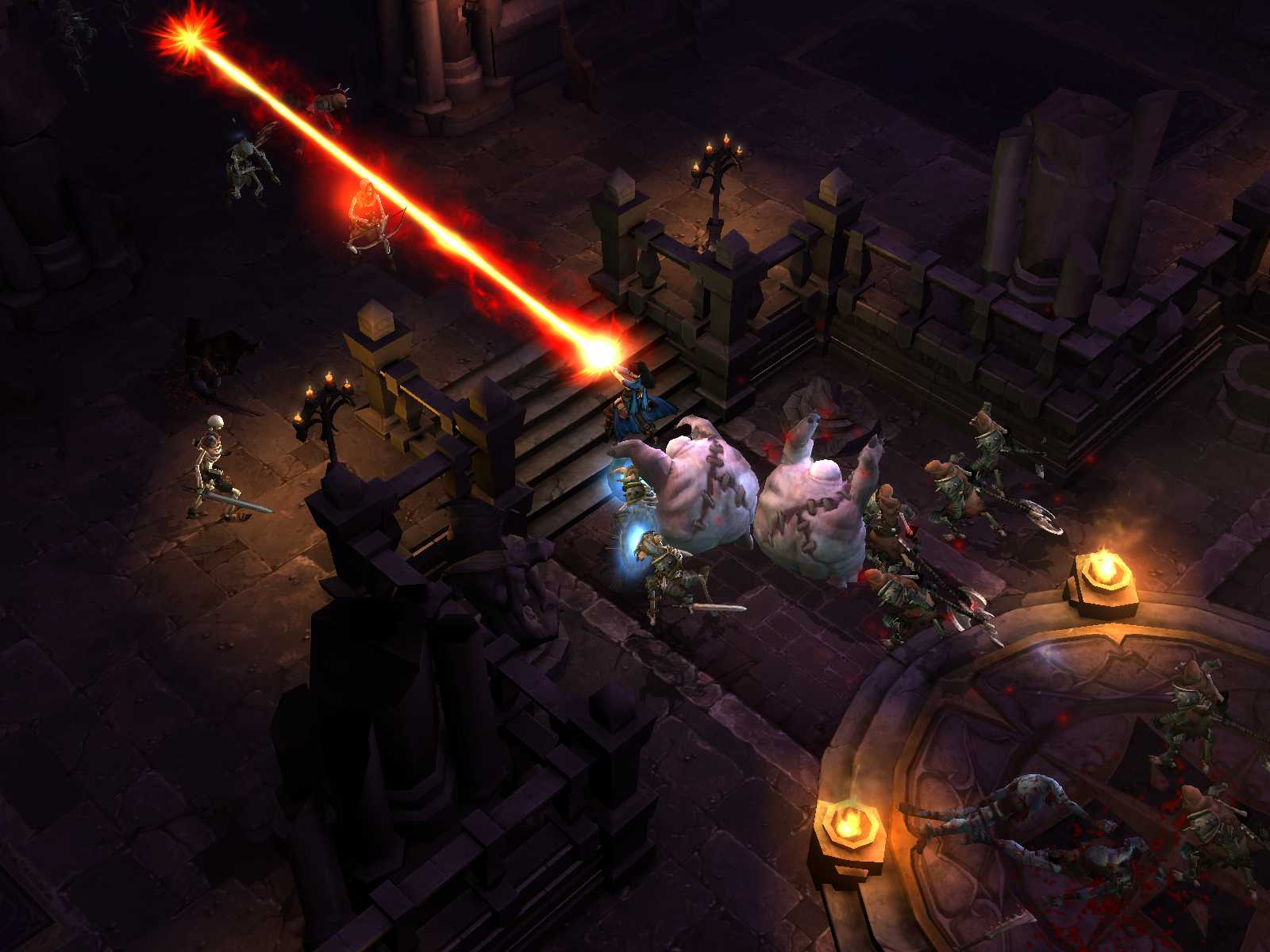
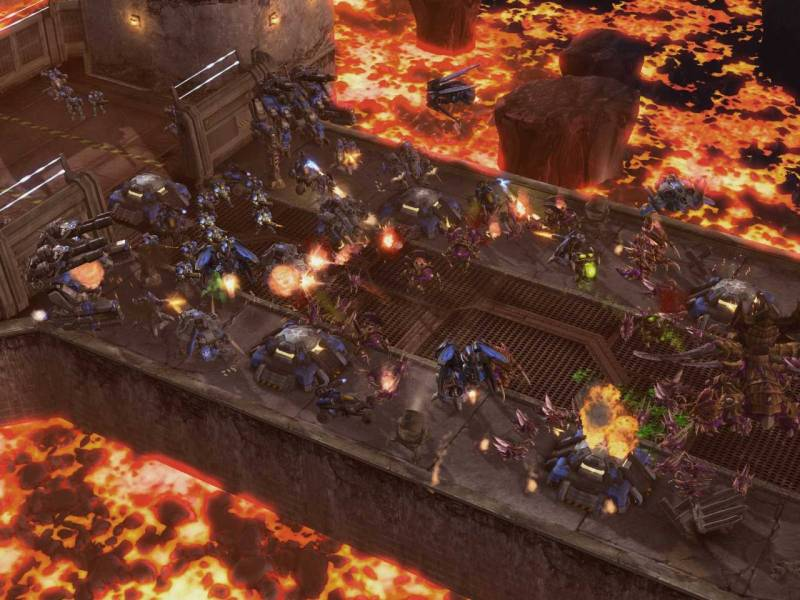
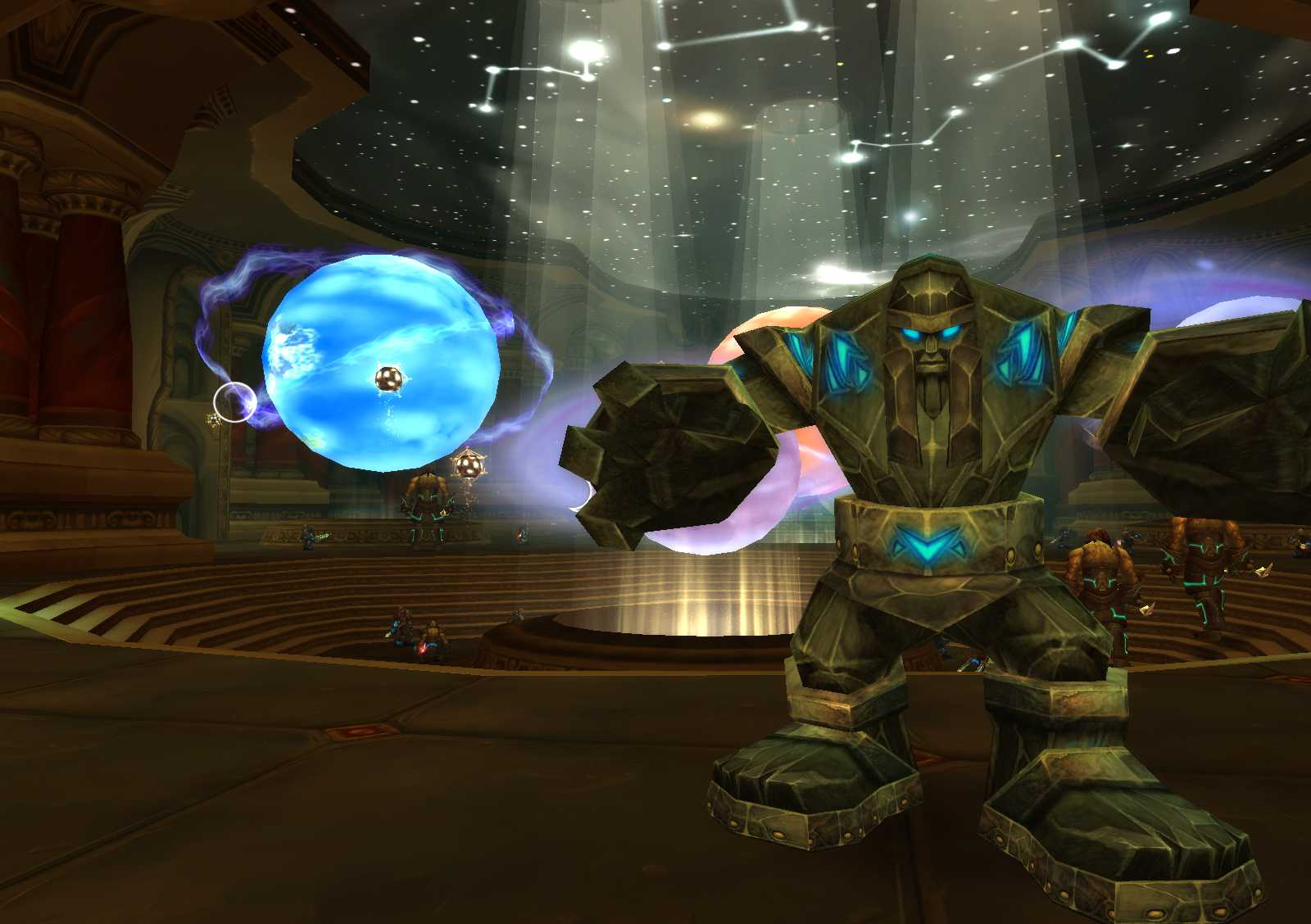
Blizzard Answers Your Questions, From Blizzcon
Last week we asked you to submit questions for several Blizzard employees on a wide range of issues. Since we undertook the pilgrimage to Blizzcon in person this year, we decided to use the question ideas as a guide rather than an absolute, so that it could be a little more conversational in tone. Below we have included the responses from Chris Sigaty, lead producer on StarCraft II; Jeffrey Kaplan (aka Tigole), game director for World of Warcraft; Leonard Boyarsky, lead world designer on Diablo III; and Paul Sams, Blizzard's COO. One interesting point: Paul Sams indicated in his interview that, with enough interest, Blizzard would be willing to entertain the idea of open sourcing some of their older games. He suggested that if you are interested in this to contact them directly (please be at least semi-coherent and polite). Update 19:00 by SM: Bob Colayco from Blizzard just contacted us to mention that if users wish to leave feedback about open sourcing games, support for Linux, or anything else you would like to express to them, you should do so in the comments section of this story. They plan on perusing the comments below for user feedback and interest, so don't be shy.
Jeff "Tigole" Kaplan — World of Warcraft Game Director
Slashdot: Could you walk us through how you balance a particular class or ability — especially going into Wrath as you're adding all these new and extra skills, and trying to find a new balance?
Jeff: Definitely. It's really an ongoing, iterative process. Every piece of content we add in terms of PvE — a new raid boss, new abilities that creatures are doing — and every other class ability are going to come into play in whatever original class ability we were trying to tune in the first place. So, as we add more things, we constantly have to go back and look at the things that were previously fine, but now might suddenly be overpowered or underpowered. We also have a lot of philosophy that comes into play. It's very easy to do what we call — it's kind of a Blizzard 'cardinal rule of never-do-this' — balancing to mediocrity, which means that you always notch everything down because you're scared of certain things feeling overpowered and are literally living by the numbers. I think numbers are a great guideline, and you should always understand the math behind what you're doing, but at the core, you need to follow the gut and ask "Hey, does this feel really great?" The best place classes can get, in our mind, is where everybody thinks everybody's overpowered. That's kind of the Starcraft balance at work — I think it's best illustrated in Starcraft — "Oh my god, all three races are wildly overpowered!" Yet, somehow, the matches seem to come out even most of the time. Something that we also try to communicate to players — it's difficult for them to understand, and it's not really their responsibility to even worry about it — if we never touched the classes — let's say we all agreed that the classes were perfectly balanced, and never touched them, and let them go for three months, they will eventually become unbalanced because of different strategies that evolve. The players are really driving how the game goes, and it's our job to play referee at a certain point. But not referee in the sense of "No, no, no, you're breaking the rules," but just asking, "Hey, are you still having fun?" And we have to make sure that you're having fun, but not at the expense of someone else.
Slashdot: Along those lines, how are you trying to balance for the arena at level 80, with the addition of a new class and all the new skills coming into play?
Jeff: The arena is particularly challenging because of the three brackets; a class that might be absolutely godly in 2v2 doesn't even get invited to 5v5. What we've claimed, and what we've stood by, is that we don't balance the classes in PvP in a 1v1 scenario. We have zero expectation that every class will be able to beat every other class. The key, and the real core to our arena tuning is making sure that tuning the classes in the arena doesn't step on the toes of the classes in other parts of the game. It's very important when we look at a class that we say, "Here are the fun things that this class has to do leveling up," and some level-up abilities have very little use in the arena at all. "Here are some uses in a 5-person encounter, and here are uses in a 25-man." So, the arena is just one part of that. It's very important that the arena doesn't become the sole focus of class balance for the game.
Slashdot: Professions in The Burning Crusade — tailoring, for one — the curve wasn't very smooth for progressing into raids. Are you trying to change that this time so it segues into raids better?
Jeff: We totally agreed with that; we felt like a lot of the trade skills had a very odd curve. Either they were way too easy, and you just sort of had everything, and you were instantly done for the expansion, or it felt like you could never get there. There's a new system in place for Jewelcrafting that I think is really interesting, and is a direction we want to swing more towards, which is a Jewelcrafting daily quest that rewards a currency for Jewelcrafters only. Then, there is a trainer that literally has dozens and dozens of Jewelcrafting recipes. Some of them are what we like to call "selfish" recipes — they only benefit the Jewelcrafter — and for others you're being the "outgoing, good guild member" if you get them. So we're really putting the power in the player's choice as far as "Hey, I want to get my guild in good shape for raiding Naxxramas," or, "No one on the auction house has yet purchased this recipe and put these gems up," or, "I really want this powerful item for myself, personally." So, we feel it will let player choose the direction of their tradeskill development while still having access to all the content over time. By the end of the expansion cycle, they'll probably have it all, it just depends how soon you get it, and how you prioritize. It's us putting that control in the players' hand, rather than us trying to anticipate what's going to matter to you, because there are so many different play styles.
Slashdot: As you go into raids, are you still going to be able to get upgrades through your professions?
Jeff: Yeah. You're going to continue to get upgrades. There's also the concept of the Primal Nether in The Burning Crusade. It used to be Bind on Pickup — we switched it to being trade-able. The equivalent to that is already in Wrath of the Lich King, and it's already trade-able. It can be purchased for the equivalent of Badges of Justice. So we feel like we have things that gate the tiers of raiding, and when we add a new raid tier, we can add another one of those items, similar to the progression from Primal Nether to Nether Vortex, and continue to progress those throughout the raid tiers.
Slashdot: Wintergrasp is a bold new direction in terms of creating world PvP that's something in which a lot of people can and want to participate. What's it like to design something like that and commit so many resources to it before seeing the fans' reaction to it?
Jeff: Well, I think it's our job as the WoW development team to try to anticipate fan reaction; anticipate not only what will be cool about things, and hold that vision, preach it through to the team, and make sure we realize the vision, but also to second guess ourselves the entire way. We have to ask all the questions of "What happens if...?" We need to solve a lot of those problems ahead of time and test it as much as possible. We had a test last Monday on the beta realm where we had 350 people fighting at once, which was a tremendous feat for us, because it was, on the server-side, completely lag-free. Player's clients, with 350 people in the area, are not always going to have systems that can handle it. For some people on lower-end systems, the sheer video lag or lack of processing power is going to slow them down. But, on the server side, as far as the network went, things were great, and we were supporting it. Another key component of doing something like Wintergrasp is playing it ourselves. There's no way to watch over an encounter like that and know, "Is that guy having fun?" Is it fun to be the one guy getting hit by four siege engines at one time? So, we need to play it ourselves and form our own opinions of what is fun, what is balance, what is overpowered. Is it too short? Is the reset time too long? For those sorts of things, you're never going to have enough design intuition to have the answer short of playing your own game. That sort of applies to us throughout World of Warcraft. We're very fortunate that our development team.. we have the problem of saying, "Ok guys, let's try to keep the WoW to lunch time or after hours." We're still in the mode where everybody's playing the game.
Slashdot: Speaking of siege engines, are you happy with where they're at, and where do you want to take them from here?
Jeff: I think the vehicle system has turned out to be one of the best things we added to the game. Originally we added it to do the Wintergrasp vehicles and the Strand of the Ancients vehicles, and to use those against destructible buildings. We wanted the Plaguethrower, and the Demolisher, and all these other things we added. What we ended up doing was developing a very robust vehicle system, which our quest designers, who weren't even working on the PvP content were kind of looking over our shoulder saying, "Well.. let me see what I can do with that." And they've ended up writing some of the coolest quest mechanics you've ever seen using that same system. You're on the back of a guy's horse throwing flaming bombs at Worgen as you go; you're flying a frost wyrm; the Malygos encounter — not to spoil any surprises — it ends with a big finale where the entire raid is on what are the equivalent of vehicles. So, that's turned out to be one of the coolest things. Also, just watching in Wintergrasp.. the sounds of the Plaguethrower are just amazing. Our sound team really nailed it. It just feels super-visceral to have that barrel of plague-muck and wing it across the battlefield, and see the destruction that it leaves. It's just fun, visceral, very video-gamey. It's fun to click the buttons; that was the general idea.
Slashdot: Are there any plans for vehicles to come into the arenas.
Jeff: Not into the arenas. We do have bigger battleground plans on the horizon. We have nothing specific to talk about, but siege definitely comes into play in those new battleground plans. The arena, we feel, is a more pure environment. The more we do gimmicks in the arena, the more the arena players complain. Our long-term goal for PvP is to actually shift the focus off of the arena, and get it back onto the Horde/Alliance conflict in the battlegrounds. We think Wintergrasp is really cool, and public PvP is cool, but when we don't have control over the balance — which we really don't, in a thing like Wintergrasp — we can't guarantee a fun play experience for people. But we feel that in the battlegrounds, it really strikes the right number of people, accessibility, less focus on individuals and more on teams, and definitely more focus on Horde vs. Alliance, and big, epic feel, which is really what Warcraft is all about.
Slashdot: Are there any plans to make WoW friendlier to Linux?
Jeff: Friendlier to Linux.. Currently we don't have any plans to release on Linux. WoW is actually extremely Linux-friendly, internally. There are many Linux WoW servers and WoW clients. But, publicly, we haven't released WoW on Linux, and don't currently have any plans to announce that.
Slashdot: Is there any sort of vehicle that might allow the people who have gone through the trials and tribulations of getting it stable on Linux to share their experience?
Jeff: Possibly. It's definitely not out of the realm of probability. But, at this time, we don't have any plans to announce it on any other clients than we currently have.
Slashdot: Are there any plans implement some kind of a spectator mode?
Jeff: Yes. We would love to implement spectator mode. We've had some really great ideas about it. Not only to do it for the arena, but we've had some really good suggestions about doing spectator modes for the 10 and 25-person raiding as well. There's been a desire for people to watch the top end guilds. It's definitely on our list. I can't say that it's coming out any time soon; it's quite a bit of development. Priority-wise, there's not a lot of new gameplay there. But, it is something that we'd like to do. We'd also like to get to replays, too. In a lot of ways, I feel like, for the arena, replay would serve people better than actual spectator mode. In spectator mode, you have to know to be watching the match when it happens, whereas a replay mode would allow, "Oh my god, this turned into the match of the century, you've got to see it." Those are definitely on our list. We think they're super-cool ideas, and it's just a matter of finding the right time in our production schedule to get to it.
Leonard Boyarsky — Lead World Designer, Diablo 3
Leonard was joined by another Blizzard representative.
Slashdot: How do you define the limits of the world and the individual levels?
Leonard: Well, the limits for designing the world and the limits for designing the levels are completely different things. For the world, we've done a lot of design even in areas that you won't be seeing in this game. We really wanted it to feel like a living world. One of the things they really started to scratch the surface on in Diablo 2 was expanding it and talking about some of that stuff. But you really didn't get all of the history. You got the feel for what these places were at the time you were there, but you didn't get a lot of depth. There's never too much you can do. There's too much we can try to shove on the player, but there's never too much for us to do. If we have that intense, deep knowledge, we can just drop tidbits here and there; intriguing things that will hopefully get people to research it further. As far as the levels, it really comes down to play time and what kind of feel we want for the dungeon. The perfect example for that would be the demo. There will probably be no levels as short as the one in the demo, except maybe the very first dungeon you go into. But, we crafted that level specifically for Blizzcon, because we knew people only had 15 minutes. So, that's a perfect example of the way it works. You look at it and you ask, "Ok, what kind of chunk of gameplay do we think this is going to be?" And then you make it how big you think it should be for that gameplay, play through it, fix it because you're generally wrong, and then just keep iterating until you get it. It's an iterative and complete process. It's not like you can look at one level separate from all the other levels. You have to look where it fits in the game.
Slashdot: Is it going to be the same system where there are Acts, and then the Acts are subdivided into different sections?
Leonard: Yes. We're probably going to do a little bit of tweaking. It's not going to be exactly the same as it was in Diablo 2, but we are sticking with the Act structure. We were trying to move away from it at first, but it just kept coming up, so it was obvious that the game needed to be structured that way.
Slashdot: Have you given any thought to having a less linear type of gameplay, where you have a world - similar to the things they're doing to Starcraft 2, where it lets players make more of a choice — or are you going to stick with the linear style for now?
Blizzard: The advantage we have with Diablo is that we can actually tell a story. You have a huge impact on the world with what you're doing.
Leonard: In the previous Diablos, you would get the quests in a linearly doled-out manner. Our main story arc is going to be linearly doled-out, but there are a lot of side quests. There are a lot of random quests that you may or may not get per game. Those are very non-linear in that you can do them earlier or later, depending on when they come up. So there's that form of non-linearity, and there's probably going to be ... other stuff we'll talk about at a later date that'll enhance that as well.
Blizzard: It's like a mix of the two. You have the backbone story structure and then you can decide whether to take some of the quests, and also the game decides whether you can see some of these things, because they're random each time you play through.
Slashdot: By that, are you referring to the scripted events that they mentioned yesterday?
Leonard: Yeah. A lot of those are random. Some of them have to do with the main story arc. Did you play the demo? When you run in and see those guys talking about the crown, that's supposed to be giving you a hint about what you're doing. You're basically summoning his spirit into the physical world so you can fight him. So, that's a way for us to give you guys a little more information. That one would always happen, because you always fight the Skeleton King. Other ones, the escort quest, for example, that's a completely random one. There's another one in the dungeon about bringing this mysterious box and putting it on an altar. There will be random quests in the world which work that way, probably some in the dungeons. So, even with letting you do quests in a different order, there's going to be a ton of varying content.
Slashdot: How does the new checkpoint system work?
Leonard: When you the end of a dungeon level, before you go to the next one, you hit a checkpoint. That's so, number one, you don't get teleported back to town if you die and say "Okay I have to run allllll the way back to the dungeon." The reason that we didn't put it at the beginning of the next level is because half the time you're saying "Oh my god, I'm going to die," and you're running back to the entrance to get away. So, you have this mob of monsters following you to the entrance, and you'd just spawn and die, spawn and die. It's a very simple system; it's just a way of keeping you from having to run from town to wherever you were every time you die.
Blizzard: It's nice for the users because you don't have to work about saving and crawling; it just works. You don't ever worry about saving your character.
Slashdot: Are there any plans to release some sort of map editor?
Leonard: No. The way we put together our maps is very art intensive and artist intensive. We talked about it a lot at the very beginning. First of all, you have the random dungeons, which are very technical. Then you have our out-of-doors, which gets put together in a very specific way. So, there's really not the raw materials for people to make their own stuff. It would take a lot of work for us to build our editor so that it was usable by those on the outside. It just didn't seem to have enough bang for the buck.
Blizzard: One of our key goals for Diablo 3, going back to the world layout and design, was to bring the world of Sanctuary into more focus and have more specifics. This is why Leonard and Chris Metzen are looking at having more back story for the classes you can pick. They're not just faceless archetypes, they have this whole back story. The regions you visit are more defined, and the whole world is becoming more and more real. We're just putting a lot more subtle and outwardly noticeable things in the world design to tell a story. You can come to a city that has this great past, and you can see it in the actual level design.
Slashdot: Along those lines, will we be seeing a similar amount of cinematics as were in Diablo 2?
Leonard: I don't know if there will be more. In Diablo 2, it was almost like a separate story from what was going on in the game. The story we're telling through our cinematics is directly related to what you're going through in the game. So, it is very much going to have an emotional impact on what you're seeing and doing. And we're doing scripted events in-game — you've seen some of the small ones, and there could be spots where we do bigger ones. But, once again, we're really keeping in mind the fact that it is an action game. We're balancing the action and the RPG. We don't want people who want a hardcore action game to feel like they're being bogged down with story, but we want it there for people who want to dig deeper.
Blizzard: It's mostly opt-in. You can decide to stay and listen to that little scripted event, or you can just go on and start cracking more skulls.
Slashdot: As far as the single-player campaign goes, will there be changes in balance as the difficulty scales up, so there are fewer instances of players running into a proverbial brick wall against certain monsters with extreme immunities and resists?
Leonard: You mean between the Normal, Nightmare, and Hell difficulties? Yeah. You know.. all our sympathy for the player starts being removed brick by brick as you get into those levels. (laughs) In the main game, we say, "We can't do that because players need to be able to get by this," and we don't want them to have to go back and build up their character even further just to handle this one guy. When you get into Nightmare and Hell, we figure that's what you're asking for.
Blizzard: Not that we just make it harder for harder's sake.
Leonard: Yeah, we don't screw you on purpose.
Blizzard: We require you to dig deeper into your kit of abilities to really pull things off. We require you to be smarter, use more tactics, and really dig into what you're able to do to handle some of the challenges.
Slashdot: From what it looks like, there's more of a toolset, or more of an incentive to build up a larger toolset.
Blizzard: Yeah. Say there's a boss that could be in a side-quest or the main quest that has a resistance to frost, and frost is what you've been focusing on. Well, you can go back and learn some new skills — fire skills, or something else — and return to tackle that guy. Those kind of specifics will be more prominent in the higher difficulty levels.
Slashdot: In the demo and the trailer, we saw parts of the environment that seemed to be destructible. Is that something you evolved from busting barrels in Diablo 2?
Leonard: Yes. We started off saying, "You know, it'd be really cool to be able to destroy a wall." At first it didn't do any damage, but we thought, "If you're destroying a wall and it falls down, it should damage whatever's there." So then we put the damage into it. And then everyone said, "That's the most fun in the whole game," so we decided, "Hey, we need to do more of that." So now, there are chandeliers. I didn't see anyone using chandeliers in the demo. If you click on the thing on the wall that holds them up, they'll drop. That's one of the fun things we do in co-op, because it stuns players. We'll wait until our friends get underneath and click it to stun them. (laughs) We are exploring what we can do with destructible environments a lot, because it's a crowd-pleaser.
Blizzard: Our engineering group is amazing. The engine they've created — there's these technical aspects with the random dungeons as well as all the things they've advanced going from Diablo 2 to Diablo 3; the 3-D characters, all the effects, real-time physics, destructible environments. They're just pouring everything they can into making that engine sing and have all these great features.
Slashdot: In one of the panels, they mentioned their goal of making the character animations very visceral and having a big impact. What is your direction for the backgrounds — the levels themselves? What's your inspiration for building them, what are you trying to do with them, and what are you trying to make them look like?
Leonard: We want them to look fantastic. We want them to be very impressive. We look at a lot of real-world stuff, starting with a lot of real-world cultures, and then try to extrapolate from there. We try for the balance between believable — that it can actually be constructed — and fantastic. You don't want it mundane. You don't want it to look like you could go to Europe and see a destroyed 13th century castle and have it look the same. But, at the other end, we're being conscientious to not make it look like a full-on fantasy world. I think one of the reasons Diablo has worked so well in the past is because it feels very grounded in reality. That's our biggest balancing act, right there; trying to get both of those together.
Blizzard: It's kind of different; this is a world of dark fantasy. There are no elves or dwarves or that sort of thing. It has this off-kilter view that's foreboding, and we're trying to have that seep into and drip from all the environments we're creating.
Slashdot: Can you tell us about the multiplayer aspect of the game, in terms of Battle.net and the possibility of LAN play?
Blizzard: We're not supporting LAN play. We're basically focusing on making the best multiplayer experience we can, and that's all through Battle.net. There are tons of features we're going to be supporting both for cooperative play and competitive play. One of the things we can talk about with the new Battle.net is security. Fixing some of the problems we had with the earlier Diablos — item duping, cheating, and griefing — we're going to be addressing all of those things with the new Battle.net, as well as some pretty awesome competitive play ideas we're working with right now. So that's going to be the biggest advance, especially for previous Diablo players, to see all these we're planning. It going to be really awesome.
Chris Sigaty — Lead Producer, Starcraft 2
Slashdot: What is your approach when you look at balancing, not only player versus campaign, but player versus player?
Chris: Really, it all just happens through lots of play. We definitely are looking at numbers, and there are tons of numbers plugged into the game, and a lot of different dials that we can manipulate to try and hit balance. But, a lot of it comes through play, and often times we find things in beta or even after ship. We have patched Starcraft many, many times; we have patched Warcraft III many, many times. We definitely ship out the gates with a good balance, but it evolves. There are things that these really great players come along and figure out that we just aren't able to figure out. These are things that we don't necessarily anticipate, even in beta, so for us I would say the biggest part is lots of play. For example, Starcraft 2 right now is in alpha internally. Our whole company — we have over 3,000 people now, and many of them are playing when they have time between their jobs to give us feedback. The other big balance tool we have is a couple of pro-gamers, who basically spend all day just playing each other, and they try to develop strategies against each other. One of the unique challenges that we face in doing this, because the original was such a huge phenomenon from the e-sport perspective, is balancing those numbers really well, yet making things for the more average player, or new player, that feel really powerful. What happens is, in the hands of an expert, everything is powerful to some degree, and so then you end up balancing the numbers down to mediocrity. One thing we just did to try to combat this is that we just made the Zerg 30% faster on Creep. Many people were like, "You can't do that, that's gonna break it," but I wanted to try it and see what happens. We are trying to work in some things like this, so we would add an ability, balance it out and then explore some bigger things, like what does this mean in the hands of a pro. Those are some of the tools that we use to approach balance.
Slashdot: What types of caps are you looking at?
Chris: We are sticking with the hard population cap. We have had them in all of our games; it's 200 food again, and we will be sticking with that unless something changes significantly. Right now, we're definitely balancing the game in that direction. There isn't anything we have seen that has made us desire to do otherwise. Where we had a bigger reaction was with Warcraft III; we put in a much smaller cap — 90 — and a lot of people felt that was pretty heavy handed. It was a very different game, though, and a very different time. Graphics engines, too, were very different. So, part of it was system requirements, but now that it has opened up, the main reason is that going beyond 200 doesn't seem to mean anything for us. 200 seems like a good, hard cap, and even though hardware has come a long ways, we still see performance issues, especially in some of the 2v2 matches. If all four players have the 200 food cap, and they are running those units against each other, other games may solve that problem by choosing a performance solution. From a visual fidelity standpoint, we wanted to keep the same unit that you have at the beginning of the game that looks a particular way to look the same way when you have 200 units. So, it's partially that, and again, it's partially just management — once you get to 200, what are you really doing at that point? You want to force the guys to actually have action at some point, and 200 is really out there. We think far enough out there that it works.
Slashdot: How constrained are you going to keep players with respect to the UI? Some players have specific questions about the zoom level, and is there any possibility of giving a broader view of the battlefield?
Chris: It's interesting that you bring up UI. UI has been a point of contention since the beginning, for Starcraft 2. There were the biggest arguments about things you would never believe; unlimited selection is a great example of that. People thought unlimited selection would break it, arguing that you have to control groups of twelve units at a time, and that is the strategy and the way you have to play. Each one of those has been a big conversation. As far as zoom level specifically, we made a decision to keep the action pretty close on purpose. We are actually allowing players to see a little more with wider monitors, which is a big decision, but we kept it constrained, really, because that's how we feel is the best way to play the game. We are holding the players to some standards. The user interface that we have isn't going to be some sort of scripted user interface that you can update at will, like World of Warcraft does. It's going to be set, and this is how we envision the game being played. That said, you can go ahead and create all sorts of different visions for what gameplay should be by using the map editor and changing things up.
Slashdot: What are your goals for system requirements? Is there enough attention being paid to both the low and the high end?
Chris: We have definitely done a lot of cutting-edge things on our end, but we are about to (post-Blizzcon) run back through and make sure we are hitting the low end. We have generally done a good job at Blizzard about trying to make sure we support that lower end. I would even say that we have spent a little too much time making sure we have all the bells and whistles and crazy things, like our new cinematics, so now we are going back to re-balance. I'm not sure we are discussing any specifics yet, but we are going to be investigating those questions as soon as we get back from Blizzcon.
Slashdot: What capabilities do you foresee for the map creator, and is there any chance that the map creator could be released early, in a manner similar to Spore?
Chris: There is a possibility; we have actually been talking about releasing our editor in the beta. There are some concerns that if we put it out there for multi-player, we feel like a lot of players will just respond by saying, "Here is how you should balance it," and send back out re-balanced maps. We really don't want to go down that slippery slope and have players just joining in to those types of maps. We want to balance the game we're trying to make. At the same time, we do want to enable people that are doing more extreme games — things like the DOTAs out there that are re-envisioning games. So we are talking about it, and we may or may not include the map editor in the beta, or potentially roll it out halfway through. As far as scope of the editor and how big, I can tell you it's much more powerful than what we had in Warcraft III. We are trying to ensure the things that were done in Warcraft III are still possible. On top of that, we have this actor system now that allows players to do a lot more as far as putting together a series of events to make up abilities. For example, "Make this missile fly using this particular piece of art, play this explosion, make this sound go off." This way, people can now encompass abilities that have their own customized versions of that ability. So, beyond that, all the stuff we are doing with in-game cinematics are possible using the editor. DOTA is awesome. We love phenomenons like that. We want to make sure things like that and beyond are possible.
Slashdot: With Ghost suspended, do you ever see Starcraft evolving beyond a strict RTS setting?
Chris: We don't have any specific plans like that, but I definitely feel that the universe itself is very well loved within the company and other places. I personally think that it would be a fantastic universe to do any of several different genres. An MMO, an FPS, or anything in between. It's always something that is in discussion — "Where is this going to take place?" Always high on the list somewhere is the Starcraft universe.
Slashdot: With the recent controversy surrounding DRM, what is your take on DRM with respect to both Starcraft 2 and Battle.net?
Chris: We don't have specific plans ironed out. We are definitely aware of things that have happened with Spore, and some of the other games that have come out with big uprisings. We want to make sure that we are protected, but at the same time we want to make sure that it feels like the "right way" and not the "wrong way." Our biggest advantage is Battle.net, so I think the solution is that Battle.net is the premiere place to play, and that's where you want to be playing. So, that alone is the best sort of solution. You want to be up there and in contact with your friends, see what's going on, so there is your copy protection, essentially. As far as specifics, we haven't really worked that out. There are definitely some things to discuss still. One of the main things we are talking about is that there has to be a way for people to play offline — on the plane or wherever — but those are discussions that we still have to have.
Slashdot: How would you describe your AI in Starcraft 2, and how does it stack up against earlier AIs?
Chris: Our AI is a very script-driven, home-rolled system. We're going to expose all of that this time, and let people see that. Every time we change significant balance, we have to go back and look at what is going on. We have a pretty strong AI in there right now on hard, and it is just the beginnings of what we want to have in there at ship. There are different tactics and different paths that they can go down, so that you'll be surprised, but we're going to be rewriting all of that again before beta. It's not a learning AI, so we have to do a lot of hand tuning. We have certain algorithms in place that will attempt to analyze data and see what the player is doing. One thing that we are doing this time around that is totally new — our AI cheated in the past. Starcraft and Warcraft III saw the whole map, so the AI could see what the player was building or doing at any given time. The AI in Starcraft 2 now has to scout, and it's much harder to do, but there is a pretty effective AI in there for now.
Paul Sams — COO
Slashdot: What types of challenges do you face on a daily basis?
Paul: I would say that we have such a high level of confidence in our developers that I don't spend a ton of time worry about them, because I feel like they always are going to deliver great content, and they are always going to make sure that they are meeting the quality proposition. We have such an experienced team in that area that we kind of feel that they "got it." What's really new for us — and I guess it's not so new, because we have been doing it for four years now — is the customer service piece of the puzzle. It's really challenging. When you are dealing with 10.9 million subscribers globally and you are trying to provide customer service to them in a way that is consistent with their expectations, it's challenging. You never know what is going to be happening the next day or what challenges there may be with patches, griefing, bugs, or something. You never really know, so the customer service piece is probably the most challenging. Certainly in the earlier days, managing the network was very difficult. We have worked out many of the different challenges that we encountered. We periodically will have a challenge here and there, but for the most part the really nightmarish, difficult times are behind us, thankfully.
Slashdot: What types of measures do you use to ensure quality control?
Paul: One of the things that we have been doing for a while is surveys immediately after you get a ticket closed. It's a short survey that helps us to track the quality of our reps' performance. We also track how quickly they are able to resolve the issues and how long the customer had to wait. We are continually trying to evolve and improve that. I think that our customer service is pretty good. I would say that it is amongst the better customer service solutions in our industry, but it's not someplace where I am comfortable or "happy." We are actually putting forth a ton of focus right now — it's actually one of the big initiatives in our company and our leadership, to try to take our customer service experience from what I think is one of the best in our industry to being amongst the best of class regardless of industry. This is something that people are going to see over the next year. We are putting a huge amount of investment (time, energy, and money) towards really evolving and improving our customer service. It's something that our customers are telling us that they think needs to be better, and we are hearing them. I would envision some significant improvements in the coming months.
Slashdot: Given your position of market dominance, have you ever considered using this position to effect wide, sweeping change? Specifically, and most important to our readers, is with respect to Linux. I know you aren't about to jump in with both feet and support Linux outright, but I know there are people within Blizzard that have clients and tools running on Linux. Is there any sort of vehicle that could be put in place to allow that experience to be communicated to the outside world?
Paul: I know that there are a lot of people at our organization that are big fans of Linux, and I would say that it is something that we have looked at and have an openness to. But, we have built this system, and it is a system that we have gotten to be stable right now, so I wouldn't anticipate that we would do anything to make meaningful changes for right now. For future products it is certainly possible, but for us, there is certainly a comfort level in the way that we are doing it. All of our staff is very comfortable with the way that we are operating and the systems that we are using. So, when you go and shift your focus to something else, you don't necessarily know how to do it as well. I think that whenever you do something like that you have to do so with a lot of caution, so that it doesn't negatively impact your consumers. That being said, I would say that it is possible, but it's not something we are working on with any amount of focus right now.
Slashdot: Given that Blizzard has such a wonderfully rich backlog of games, has there any been any thought to open sourcing some of the older products?
Paul: I don't think we have ever talked about open sourcing our games. We own a few older games, like Lost Vikings, Rock and Roll Racing, and Black Thorn. Those were originally Interplay published products, and they owned those franchises. A number of years ago, we went to them, because those games hold a special place in our heart. So, we wanted to get those back, if for no other reason just because we didn't want anyone to do something different with those franchises and cause them to not have such a fond place in people's hearts. So we acquired those a few years back, which was good timing, since Interplay had a desire to have some revenue coming in, and we released GBA titles of each of those, and that was a fun thing for us to be able to make those available to a newer audience. My kids were both into Gameboy stuff, so they really dug that. That is something we have done with older titles, but open source isn't something that we have ever really talked about, and I don't know what the thought process would be. Certainly, if it is something of interest by your readers, they should let us know that officially so we could talk about it.
Slashdot: What are some of the details that you can give us about the evolution of Battle.net and some of the thought processes behind the decisions being made?
Paul: The things that we have shared thus far as it relates to the new version of Battle.net is, number one, it will ship together with Starcraft 2. There is going to be a real focus on e-sports, and there will also be some strong social networking elements to it as well. As far as it relates to what the business model is — we really haven't gotten there yet. I know that there is a lot of speculation, but I think that part of the speculation is simply because Blizzard isn't answering the question. The simple fact that Blizzard is not answering the question of whether Battle.net is for-pay or not suggests to people that it could have a pay component, and people should not assume that. The reason that we aren't talking about it is because we want to focus on the game, and we want to focus on the game network, and if you look at Blizzard's history, that is how we always do it. We almost never talk about how we are going to distribute it, what the price is going to be — we never talk about that stuff until very, very late in the game. There are multiple reasons for this. One, when you start talking about stuff like those things earlier, you start making decisions and potentially compromise on what the gameplay experience is. We never want to do that. The other thing is that even though we are a very game-first focused type of company, we are still mindful that we have competitors. Those competitors want to know what Blizzard is going to do, and how they are going to charge, and to be candid, I'm not interested in letting anyone else know how we are going to do it until it is too late for them to react. I think a lot of other companies, the way they run their business is they sit down at a table much like we are sitting at right now, they've got marketing and finance people sitting around, and they may ... maybe ... have a developer sitting at the table. They get out reports, and they look at what type of products are selling well, and then they notify the game development team, "Oh, by the way, you are going to be making a game about sailing." Well, no one is necessarily enthusiastic or excited about that. We do it differently. We actually go to the game teams as they are coming off of a game and ask them what is it they would like to play next, what they would like to work on next, and let them decide. Then we tell them to make the game and we decide what type of business model to wrap around it when it's time, but let's not have the business model dictate how good the game is. I think this is something that a lot publishers and developers make the mistake of doing, because they spend so much time thinking about how to get your money and they don't spend the time thinking about the game. We try to build a process such that we focus on the game, and our feeling is that if we make a great game that you and I want to play, that we'll vote with our pocketbooks.
Slashdot: Has Blizzard given any thought to consoles, both for existing and future games?
Paul: This is going to sound strangely similar to my last answer, and here is why. When we are making these games, we make the game for the platform that makes the most sense for the gameplay we're looking at. It's not that we don't like consoles. It's not that we aren't going to be on consoles, because we started on consoles. The games that we developed back with the Lost Vikings, Blackthorne, and Rock and Roll Racing — those, to us, felt better and more appropriate for consoles. Some would argue that it's because PC wasn't as big back then, but that was where those games naturally fit. Games that we have been making since that time have felt better and made more sense to be on PC. But, if our development teams came to us and said, "Listen, we want to make and play the following game next," and if that made sense to be on a console, then we wouldn't hesitate to do that. We're not afraid of consoles and we're not against consoles, it's just an issue of making the right decisions for the game and for the customers.
Slashdot: There has obviously been a lot of DRM fallout recently. What, specifically, is your mindset with respect to DRM?
Paul: Obviously, we want to protect our games. We put a lot of time and energy into building these things, and we feel like we prioritize the right things and make the right sacrifices to create a great game for the gamers. As a result of that, when we have done all of those things, and we think we have done them right, then we do have a desire to see the fruits of those labors. Just like other companies, we are looking at how we can protect those products and how we can ensure that the people who are playing our games have paid for them. How, exactly, are we going to approach that? Certainly Battle.net is a piece of that, and there may be other components there together with that when we launch these future games. World of Warcraft kind of has it built in — you can't play it without an authentic copy, but the other products aren't as easy to protect, so we are trying to come up with creative and clever ways to be able to do that, but it's challenging. -
Computer Error Caused Qantas Jet Mishap
highways sends word that preliminary investigations into a Qantas Airbus A330 mishap where 51 passengers were injured has concluded that it was due to the Air Data Inertial Reference System feeding incorrect information into the flight control system — not interference from passenger electronics, as Qantas had initially claimed. Quoting from the ABC report: "Authorities have blamed a faulty onboard computer system for last week's mid-flight incident on a Qantas flight to Perth. The Australian Transport Safety Bureau said incorrect information from the faulty computer triggered a series of alarms and then prompted the Airbus A330's flight control computers to put the jet into a 197-meter nosedive ... The plane was cruising at 37,000 feet when a fault in the air data inertial reference system caused the autopilot to disconnect. But even with the autopilot off, the plane's flight control computers still command key controls in order to protect the jet from dangerous conditions, such as stalling, the ATSB said." -
Paul Krugman Awarded Nobel Prize For Economics
zogger writes in his journal, "The guy who put together the concept of geographical location combined with cheap transportation leading to 'like trades with like' and the rise of superindustrial trading blocs has won the Nobel economics science prize. He's a bigtime critic of a lot of this administration's policies, and is unabashedly an FDR-economy styled fella. Here is his blog at the NYTimes." Reader yoyoq adds that Krugman's career choice was inspired by reading Asimov's Foundation series at a young age. -
Linux On Brazilian Voting Machines, the Video
Augusto writes "Just 10 days ago, 130M Brazilian voters were turned into users of one of the largest Linux deployments worldwide: the 400,000 electoral sections in all of the 5,563 Brazilian municipalities were running electronic voting machines, and the Linux kernel was running in all of them. These voting machines have been used in Brazil since 1996, and are rugged, self-contained, low-spec PCs. We've discussed the technical details of this Linux deployment and implementation elsewhere, but I thought it would be interesting to show some pictures (and a movie) of Linux booting on these voting machines. So I asked for official permission and thus was helped by a technician while I took some quick pictures and made a small movie showing the boot process, where you can actually read the kernel messages." -
Do Nerds Have Better Sperm?
mcgrew writes "The question of how we loveless nerds managed to not be bred out of the species genome may have been answered. According to New Scientist, we have better sperm. According to the article, men who scored high on a battery of intelligence tests boasted high counts of healthy sperm, while low scorers tended to have fewer and more sickly little guys. ... Though the connections between brains and sperm were 'not awesome, they're there and highly significant.' All things held equal, good sperm and good brains go together." Don't start gloating yet. Another recent study found that the gene that makes you good at Halo also makes you a premature ejaculator. A study of 200 Dutch men found that those with a premature ejaculation problem all had a version of a gene that controls the release of serotonin. These men seem to "have very quick reflexes. They may be excellent at playing tennis or computer games." Remember, if you smoke after sex you're doing it too fast. -
Blizzcon 2008 Wrap-Up
This year's Blizzcon saw 15,000 gamers descend from 27 different countries to take part in two days of discussions, tournaments, and sneak peaks at upcoming releases. Several big announcements were scattered among a raft of new details about Diablo 3, Starcraft 2 and Wrath of the Lich King. The new information went a long way toward drumming up interest for what already appear to be worthy successors to old favorites. Read on for more.
As the convention prepared to get underway Friday morning, people showed up early to get a decent spot in line. When we arrived at about 9:30, we walked for a good 15 minutes to track down the actual end of the line. When we reached the spot where we thought it would be, we instead found a large parking lot filled with a sea of people. The line snaked back and forth across the lot, and it grew ever larger as we watched. Periodic cries of "For the Horde!" were heard, with a resulting roar from the crowd. Inflatable World of Warcraft themed beach balls from the Blizzcon Goody Bag were sent flying around to relieve boredom (at which point we found that WoW players aren't so good at keeping beach balls in the air). Some convention-goers walked around in elaborate costumes, pausing frequently to pose for pictures. Once everyone got inside and seated for the opening ceremony, Blizzard President Mike Morhaime came to the stage and welcomed us to the convention. It wasn't long before he got to the day's first big news — the unveiling of Diablo 3's third class, the Wizard. We were shown a cinematic for the new class, as well as one for the upcoming World of Warcraft expansion, Wrath of the Lich King. They were particularly impressive on huge screens with the volume high enough to shake the walls. Shortly thereafter, we were turned loose to partake of all the presentations and entertainment Blizzcon had to offer.
Diablo 3:
In designing the Wizard, the Diablo 3 developers made a conscious decision to focus on what they call "high magic." They said the Wizard was designed with a brash and ambitious personality in mind; she would not choose the safe, easy, or common way to do things. So, when they were looking at possibilities for the first spell a player would use, the designers chose to avoid something like a fireball or frostbolt. Rather than having an elemental attack, they wanted a more "pure" magic attack. As a result, they chose Magic Missile. They explained that Magic Missile was easy to customize and modify; it would make more sense for things like homing missiles, or launching more than one at a time. Another important spell in that regard was Arcane Orb. Functionally, it appeared somewhat similar to Diablo 2's Frozen Orb, but despite being further down the "Arcane" talent tree than Magic Missile, it defined the look and the type of damage for that tree. The Arcane tree has several interesting spells, including Slow Time, which drops a giant permeable orb on the ground which, as the name suggests, slows time within it. Projectiles and enemies inside the orb become very easy to dodge and avoid. The developers said it was originally Stop Time, but that created difficulties for multiplayer balance. Disintegrate is another great new spell within the tree, dubbed a "face melter" by the designers. It launches a continuous beam of energy that you can sweep around the room at your leisure. The longer it hits an enemy, the more damage it does per second, and it has quite a range. Some familiar spells will be returning from Diablo 2, such as Charged Bolt and Teleport. The Blizzard spell will be back as well, which the developers say they paid particular attention to, given that it shares a name with their company. It will be part of the "Storm" skill tree, along with Frost Nova and Electrocute (the new Chain Lightning). The theme for that tree is control of the weather, which was chosen because it "feels epic." The last tree is "Conjure," and its focus is the creation of tools. Hydra is returning as a Conjure skill, and you can make weapons with which to smite your enemies. Shacknews has a look at each of the actual trees and the skills within.
The skill system for Diablo 3 went through a lengthy design process, and the developers admit that it's not quite finished. Most importantly, they will be implementing the ability to respec, the lack of which was one of Diablo 2's biggest weaknesses. They wanted players to not worry about misplacing points. In Diablo 2, it was common to hold onto skill points as a character leveled up, thus decreasing the actual reward for leveling. They wanted to encourage players to get the rewards and immediately enjoy them. Blizzard went on to show us about a half-dozen experimental implementations of the skill system, and how they weighed the pros and cons of the methods used in the previous Diablo games and World of Warcraft. They tried out a radial skill tree, skill "wheels," skill cards (dropped by monsters, which you could combine in different ways to acquire particular abilities), and even a humorous "horadric cube" three-dimensional skill tree. As they tested all of those, they found their design philosophy of "different but worse isn't better; better is better" coming into play, and went back to what worked. The system they currently use is an evolution of Diablo 2's skill trees. There are a few major differences. First, in order to move down to a more powerful tier, you need to spend a certain number of points in the previous tiers. To get Hydra, a 4th-tier Conjure talent, you need to spend at least 15 points in the Conjure tree. Second, the developers decided that not all skills needed huge point investments. They didn't want players dumping 20 points in one skill, moving to another, and doing the same. As as result, activated abilities now tend to take just one point to acquire. Passive skills, such as a percentage-based damage increase, have room for many points, and will be the primary method of advancing to further tiers. The goal was for players to have six activated abilities in common use; they felt that Diablo 2 forced players to focus on just two or three, to the detriment of the gameplay experience.
The Rune system also received a complete redesign. Instead of socketing runes into gear, you'll use them to modify your skills. Each skill can be affected by one rune at a time (which seems to preclude the possibility of runewords), and each rune affects a skill differently. The goal for this was to diversify gameplay even further. Two players with the same class and spec can still use abilities that look and behave quite differently depending on their rune selection. The runes are replaceable, and they will have tiers of power, and corresponding drop rates. The developers say it will change your gameplay as you level, and encourage you to experiment with different runes. They also showed us several examples of how the runes work. First was Teleport. It's primarily a defensive spell; you use it to get away from enemies quickly. However, if you put a Striking rune on Teleport, it will deal damage where you land, effectively making it an offensive spell. Another rune caused what they likened to a "transporter malfunction," spraying destructive energy around the Wizard. Another example was Skull of Flame, a Witchdoctor ability. Normally, the spell is sort of like tossing a grenade; it hits an enemy and explodes, and that's the (very entertaining) end of it. With the Multistrike rune, it will hit enemies, explode, and bounce to the next enemy. With a Power rune, it will leave a small pool of fire where it explodes. The last example was Electrocute. A Multistrike rune will increase the number of jumps, and a Lethality rune will cause targets to explode when they are hit. All in all, it looks extremely fun, and quite cool.
Another thing the developers wanted to do in Diablo 3 was to make everything more "visceral," to give it an exciting visual impact that would keep the player interested in watching everything that goes on. The Wizard was designed as a "light show," with lightning, huge glowing tornadoes, and destructive beams of energy. Witchdoctors use more indirect magic. Instead of spraying fire, they'll summon a horde of bats, set them on fire, and funnel them at an enemy. Similarly, instead of creating a Wall of Fire, the developers took it another step toward crazy and gave Witchdoctors Zombie Wall, which is exactly what it sounds like. In order to keep Barbarians interesting, they'll be able to call on the power of The Ancients for certain special attacks. Another area of particular focus was death animations. Since players will be wading through a sea of monsters, Blizzard wanted to keep the monster deaths from becoming stale or part of the background. So, Diablo 3 will feature a variety of death scenes for each monster. Some deaths will be dependent on damage; the more you do, the messier things get. You'll also see what are called "critical deaths" that tend to feature explosions. Certain skills will have their own death animations; acid will melt an enemy, and Disintegrate will do just that. Rare and special monsters will have interesting animations with extra detail. There is also the possibility for unique player deaths from bosses.
A variety of other features were discussed, such as the inventory system. Gone is the grid system of Diablo 2. Weapons and armor now seem to take up a uniform amount of space, and the amount of total space was increased. What's more, there are now bag slots, and bags which drop off monsters. Playing through the demo level, I quickly acquired three bags which gave me an extra slot apiece. Larger bags will drop in later levels. Also, items have a color-coded background, so it's easy to see which are junk, which are rare, set pieces, etc. A question mark is visible over items that have yet to be identified. The belt system has been replaced by an action bar similar but much smaller than the one in World of Warcraft. It has room for several skills and potions. Potions themselves are much less common; instead, many monsters drop health orbs that will refill your red orb between fights. The developers wanted potions to be used in emergencies, not for nigh-invincibility throughout the game. They say the change opens up more avenues for challenging the player without simply dumping a ton of damage on him. They felt that escape was too easy in Diablo 2. You needn't worry that this change will result in annoyingly long corpse runs, however. The new checkpoint system goes a long way toward making recovery easier. As you go through dungeons and the outside world, you'll frequently come across checkpoints that mark your progress. When you die, you'll respawn at the nearest checkpoint. This keeps the corpse run short and solves the problem of having a hundred monsters waiting for you after you fled up a flight of stairs. Another player-friendly change will be the "toning down" of elemental resistances and immunities. They won't be gone, but they won't be the same brick wall they often were for some classes in Diablo 2.
The difficulty system and the Act system will be very similar to those of Diablo 2. Maps will still be randomly generated with non-random elements. Blizzard was keen to point out the inclusion of scripted events in Diablo 3. The events will range from mini-cutscenes to actual events in which the player can participate, and they're included in levels randomly, so different play-throughs can give you different experiences. In the demo, one event was simply witnessing two NPCs come together and discuss some of the back story of the first quest. Others may involve escort quests and town invasions. And, if players want to ignore these events, they're welcome to. The goal was for the events to help bring the Diablo 3 world to life. Another way they're trying to do so is including more destructible elements of the environment. There are spots where you can knock down walls, chandeliers, and other objects. The best part is that knocking down a wall onto an enemy will deal significant damage. It's a fun progression from smashing barrels. Another addition is the inclusion of kill streaks and experience bonuses. Every so often while smashing through a group of monsters, you'll see text in the bottom right corner of your screen saying "23 Kills! New Record! 300 Bonus Exp!" It'll be interesting to see what else they do with it.
After looking at the game, playing it, and discussing it for two days, we're looking forward to it more than ever. It appears to be as much of an improvement over Diablo2 as Diablo 2 was over Diablo. They're also going out of their way to make multiplayer more appealing. While Diablo 3 won't support offline LAN parties (which, they say, was decision based on keeping the game secure), it will encourage more cooperative play over Battle.net. As we discussed earlier, players in the same game will see different drops, leading to less loot drama and more sharing. They've mentioned the possibility of doing something to monetize Battle.net, but made very clear that they aren't ready to discuss pricing internally, much less publicly. And, they've said that they don't want Diablo 3 to be subscription based. As Rob Pardo stated, it would most likely involve extra services, as has been done for World of Warcraft. The concerns about the art direction were effectively laid to rest in my mind. The game looks great, and it stays true to previous themes.
Starcraft 2:
By now you've probably heard the biggest news about Starcraft 2 at Blizzcon: The game will be divided into a trilogy. When plotting out their ideas for the game, the developers found they had three stories to tell. As they fleshed the stories out, they realized that there was more content than they could reasonably fit in one game. They faced three options; delay the game significantly, cut vast portions of the story, or expand one game into three. Given their commitment to quality over all else, they chose the third option. The games will be divided by campaign: Terran: Wings of Liberty, Zerg: Heart of the Swarm, and Protoss: Legacy of the Void.
Part of the reason for the trilogy was that they wanted to build branching campaigns with multiple paths to an ending. Completing a mission at one planet may open up missions at several other planets. You'll be able to play the same campaign in different ways, but the designers were clear that you'd end in the same place. Each part of the trilogy will have definite ending; there won't be cliffhangers. They also wanted to develop deep story arcs with lots of dialogue and cinematics. Each game will have specially designed environments, maps, and mission hubs. With the increased number of missions, they put a great deal of effort into making them unique and interesting. Most of the missions will have their own "gimmick," and you'll see special units in the campaigns that you won't see in multiplayer. Speaking of which, the multiplayer will be fully developed and balanced for all three races from the start. Blizzard will be doing everything they can to foster competitive and cooperative gaming in Starcraft 2, assisted by the revamped Battle.net.
The Terran campaign will focus on Jim Raynor, a freedom fighter who has seen better times. Starcraft 2 takes places four years after the events of the original game, and it starts on Mar Sara, the same planet that kicked off Starcraft. We were shown a cinematic in which Raynor is approached by Tychus Findlay, the guy who suits up in the cinematic released last year when Starcraft 2 was announced. Findlay and Raynor have a history of fighting together, and Findlay has a business proposition for Raynor. The two characters interact inside a bar, which Blizzard has designed as an interactive environment for between missions. You're able to click on the characters for small cinematics which explain their back story. A jukebox in the corner will play different songs you choose. A television plays news reports, providing further information about missions. A bulletin board has Wanted posters and can contain optional missions players can take. Other environments like these also exist, and they're filled with nice little touches. When the characters end up on a ship later in the game, you can see they've taken the jukebox and nailed it to the ceiling, indispensable piece of hardware that it is. You're also able to look out the main viewscreen at whatever may be there.
The other big Starcraft 2 news was that Kerrigan would be returning as the focus on the Zerg campaign. A cinematic in which she is dimly seen through the fire and smoke of a Zerg invasion of Mar Sara drew a huge round of applause from the crowd. The first Terran mission has Raynor and Findlay holding out against the invasion long enough for Raynor's ship to come rescue him. As it turns out, he's doing better than it seemed. The Protoss campaign will involve Zeratul; another cinematic showed him fighting off hydralisks and briefly encountering Kerrigan. The developers said their intentions were to make the story deep and immersive, much more so than even Warcraft 3.
Running missions will earn you credits, which you can then use to upgrade your technology. You'll be able to customize your fighting force to suit whichever playstyle you like. For example, you can upgrade your bunkers to hold more marines if you like playing defensively. There will be a star map for mission selection; planets will glow when a missions is available there. Some will be from distress calls, and you can choose whether or not to answer them. There will even be some Easter egg missions. My time with the Starcraft 2 demo was brief, but the multiplayer map felt very complete, and very much like a new and improved version of Starcraft.
World of Warcraft: Wrath of the Lich King
There was a great deal of discussion about Wrath of the Lich King at Blizzcon, though little of it was new, thanks to the extensive coverage of the beta. A few interesting tidbits were announced, though, such as the fact that the expansion is largely done, and is already being sent to DVD production. At one of the Q&A sessions, Jeffrey Kaplan revealed that mounts would be able to swim after the first content patch. Also included in that patch will be a raid dungeon that hasn't been revealed yet. They also confirmed that the 3.02 patch to prepare for the expansion would be going live today. Patch notes are available at the World of Warcraft site. The last big bit of news was that a dual-spec system was coming at some point after the expansion goes live. Players will be able to swap between two specs in order to facilitate their participation in both PvE and PvP. Glyphs and action bars will most likely be tied to this swap system, so players don't need to spend time and money flipping between specs. A built-in gear swapping interface may also come about. Beyond that, they gave some in-depth previews of various dungeons and arenas, and explained their goals and reasoning for class and gameplay changes.
The PvP panel broke news that the new battleground, Strand of the Ancients, would increase the number of players per side to 15 (from 10), and feature more vehicles than previous iterations. It's a unique battleground in that each side is assigned either defense or offense at the beginning, and plays that side until the game ends. Attackers try to knock down the destructible walls of the fort to get inside. The developers also demonstrated the two new arenas. The Ring of Valor brings new gameplay elements to the arena; moving platforms that periodically interrupt line-of-sight, and fire that will deal damage to anyone who touches it. Teams also start off very close to each other, which facilitates faster battles and quick thinking. The Dalaran Sewer arena contains water spouts that will knock back anyone who touches them. They also spent time talking about Wintergrasp, the open PvP zone that has battles between Alliance and Horde every 2.5 hours, with the battles lasting 30-40 minutes. To prevent the most populous side from having an unfair advantage, a buff will be given to the faction with fewer players. Blizzard wants to diversify the options for PvP and take the focus off arenas. They also want to develop more and more PvP content and create some sort of mechanism for players to gain experience in battlegrounds.
The UI Panel had some interesting information as well. The very simple threat monitoring system is final as it stands in the beta. The developers don't want it to become too complicated for the average player, and mods already exist to monitor threat in greater detail. They've also made changes to threat generation by tanks in order to shift the focus from whether or not players should attack to how they should attack. Backpack size won't be changing, but mounts and certain currencies have been moved from the inventory to their own UI element. A focus frame will be added to the default UI.
The Raids and Dungeons panel took us through several Wrath of the Lich King instances. First was Halls of Lightning, a 5-man dungeon themed on the Titans. It exists within a vast space, though only a fraction of that space is explorable by players. Blizzard wanted to give the dungeons an epic feel. Similarly, they provide views of the outside in order to make the instance seem integrated with the rest of the game world. The instance contains unique art, including statues made of constellations and boss models that the developers had to restrain themselves from re-using elsewhere. The last boss has cinematics before and after the fight. They moved on to Ahn'Kahet, an underground city that's influenced by the Old Gods. They said the city was intended to be what Naxxramas was based on in the game's lore, and the artistic style reflects that. It's another huge, epic space, and the end boss is a Faceless One. He makes use of newly developed phasing technology that allows players to fight clones of their own groupmates. When those are defeated, the player is shunted into another player's phase to help with that player's clones.
The developers emphasized how pleased they were with the decision to include 10-man and 25-man versions of each raid instance. They showed us an introductory-level raid called Chamber of the Aspects, which they said was much better tuned than The Burning Crusade's introductory raids, Gruul's Lair and Magtheridon's Lair. Chamber of the Aspects contains a main boss, Sartharion, and three drake sub-bosses. The sub-bosses are easy fights on their own, and don't drop much in terms of loot. As an alternative to killing them, however, you can leave them alive when you fight Sartharion, and they will join in to fight against you. You can effectively choose your own difficulty by leaving zero, one, two, or all three drakes alive. The more drakes you leave alive when you kill Sartharion, the better loot drops you receive. The other raid they showed us was the Eye of Eternity, in which you fight Malygos, an aspect of magic. Since it's an iconic battle in Warcraft lore, they went all-out in designing the models, special effects, and phases of the fight. The raid will make use of vehicles, see the destructible building technology at work, and get some timely help from the Red Dragonflight. The Eye of Eternity is also the only raid that will require any sort of key or attunement. A drop from Sapphiron, the second to last boss in Naxxramas, will be required to start the Malygos fight, but only one person in the raid needs the item.
They went on to talk about itemization, and said the progression from dungeon to heroic to raid would be much smoother in Wrath of the Lich King than in previous versions of the game. Heroic dungeons will have their own unique itemization, and it will be a clear step up from regular dungeons. There will be two new versions of The Burning Crusade's Badge of Justice. Emblems of Heroism will drop from heroic dungeons and the 10-man version of Naxxramas. Emblems of Valor will drop from every other raid. The developers also told us that certain raid dungeon set pieces will be purchasable through Emblems. Gears sets will differ between the 10-man and 25-man versions of the dungeons, but they will count toward each other's set bonuses, similar to the way PvP sets work. They also mentioned that it's about time for another caster/healer legendary item, and that it would almost certainly come through a quest, rather than a random drop.
A few other interesting tidbits came out of the Raid panel; Deathwing is something they're "working on," and we will see him at some point. Raids won't be designed with the dual-spec system in mind. You may switch specs between fights, but you certainly won't be required to. There will definitely be a difficulty progression for raids, but we probably won't see anything as difficult as Sunwell. They want to keep thing challenging and fun. Bosses will drop more loot over all, and the Ashbringer story will continue.
The Class panel focused on the directions the developers wanted to go with each of the classes, the Death Knight in particular. They said they wanted to help the shortage of tanks by creating another class that could fill the role. Warriors, Paladins, and Druids also received some modifications to their tanking specs to make it more fun and less of a hassle. Another major goal was to get each talent tree for each class a specific playstyle, even if it was just another method of dealing damage. As a part of that, they revamped the buff and debuff system so give guilds more of an opportunity to bring the people they wanted rather than the people they needed to maximize their chance for success. Blizzard considered revamping the dispel system too — they aren't satisfied with the current implementation — but said they didn't want to introduce another huge set of changes at this time. In addition, they talked about their decision to unify several itemization stats in order to make it easier on some classes to switch roles, and to reduce the number of items required to support all possible specs.
Blizzard had plenty to talk about this year, and they made the most of their time in the spotlight. The demos for Diablo 3 and Starcraft 2 looked excellent, and had the expected "Blizzard polish" even at this early stage of development. Blizzcon attendees were told that they would receive invites to the Starcraft 2 beta, although it hasn't reached that stage yet, and Diablo 3 is even further away. Wrath of the Lich King will be hitting store shelves in a month, though, and will undoubtedly further World of Warcraft's dominance of the MMO market. As you may recall, we asked you for interview questions for various Blizzard employees; stay tuned, their answers will be up soon.
-
Blizzcon 2008 Wrap-Up
This year's Blizzcon saw 15,000 gamers descend from 27 different countries to take part in two days of discussions, tournaments, and sneak peaks at upcoming releases. Several big announcements were scattered among a raft of new details about Diablo 3, Starcraft 2 and Wrath of the Lich King. The new information went a long way toward drumming up interest for what already appear to be worthy successors to old favorites. Read on for more.
As the convention prepared to get underway Friday morning, people showed up early to get a decent spot in line. When we arrived at about 9:30, we walked for a good 15 minutes to track down the actual end of the line. When we reached the spot where we thought it would be, we instead found a large parking lot filled with a sea of people. The line snaked back and forth across the lot, and it grew ever larger as we watched. Periodic cries of "For the Horde!" were heard, with a resulting roar from the crowd. Inflatable World of Warcraft themed beach balls from the Blizzcon Goody Bag were sent flying around to relieve boredom (at which point we found that WoW players aren't so good at keeping beach balls in the air). Some convention-goers walked around in elaborate costumes, pausing frequently to pose for pictures. Once everyone got inside and seated for the opening ceremony, Blizzard President Mike Morhaime came to the stage and welcomed us to the convention. It wasn't long before he got to the day's first big news — the unveiling of Diablo 3's third class, the Wizard. We were shown a cinematic for the new class, as well as one for the upcoming World of Warcraft expansion, Wrath of the Lich King. They were particularly impressive on huge screens with the volume high enough to shake the walls. Shortly thereafter, we were turned loose to partake of all the presentations and entertainment Blizzcon had to offer.
Diablo 3:
In designing the Wizard, the Diablo 3 developers made a conscious decision to focus on what they call "high magic." They said the Wizard was designed with a brash and ambitious personality in mind; she would not choose the safe, easy, or common way to do things. So, when they were looking at possibilities for the first spell a player would use, the designers chose to avoid something like a fireball or frostbolt. Rather than having an elemental attack, they wanted a more "pure" magic attack. As a result, they chose Magic Missile. They explained that Magic Missile was easy to customize and modify; it would make more sense for things like homing missiles, or launching more than one at a time. Another important spell in that regard was Arcane Orb. Functionally, it appeared somewhat similar to Diablo 2's Frozen Orb, but despite being further down the "Arcane" talent tree than Magic Missile, it defined the look and the type of damage for that tree. The Arcane tree has several interesting spells, including Slow Time, which drops a giant permeable orb on the ground which, as the name suggests, slows time within it. Projectiles and enemies inside the orb become very easy to dodge and avoid. The developers said it was originally Stop Time, but that created difficulties for multiplayer balance. Disintegrate is another great new spell within the tree, dubbed a "face melter" by the designers. It launches a continuous beam of energy that you can sweep around the room at your leisure. The longer it hits an enemy, the more damage it does per second, and it has quite a range. Some familiar spells will be returning from Diablo 2, such as Charged Bolt and Teleport. The Blizzard spell will be back as well, which the developers say they paid particular attention to, given that it shares a name with their company. It will be part of the "Storm" skill tree, along with Frost Nova and Electrocute (the new Chain Lightning). The theme for that tree is control of the weather, which was chosen because it "feels epic." The last tree is "Conjure," and its focus is the creation of tools. Hydra is returning as a Conjure skill, and you can make weapons with which to smite your enemies. Shacknews has a look at each of the actual trees and the skills within.
The skill system for Diablo 3 went through a lengthy design process, and the developers admit that it's not quite finished. Most importantly, they will be implementing the ability to respec, the lack of which was one of Diablo 2's biggest weaknesses. They wanted players to not worry about misplacing points. In Diablo 2, it was common to hold onto skill points as a character leveled up, thus decreasing the actual reward for leveling. They wanted to encourage players to get the rewards and immediately enjoy them. Blizzard went on to show us about a half-dozen experimental implementations of the skill system, and how they weighed the pros and cons of the methods used in the previous Diablo games and World of Warcraft. They tried out a radial skill tree, skill "wheels," skill cards (dropped by monsters, which you could combine in different ways to acquire particular abilities), and even a humorous "horadric cube" three-dimensional skill tree. As they tested all of those, they found their design philosophy of "different but worse isn't better; better is better" coming into play, and went back to what worked. The system they currently use is an evolution of Diablo 2's skill trees. There are a few major differences. First, in order to move down to a more powerful tier, you need to spend a certain number of points in the previous tiers. To get Hydra, a 4th-tier Conjure talent, you need to spend at least 15 points in the Conjure tree. Second, the developers decided that not all skills needed huge point investments. They didn't want players dumping 20 points in one skill, moving to another, and doing the same. As as result, activated abilities now tend to take just one point to acquire. Passive skills, such as a percentage-based damage increase, have room for many points, and will be the primary method of advancing to further tiers. The goal was for players to have six activated abilities in common use; they felt that Diablo 2 forced players to focus on just two or three, to the detriment of the gameplay experience.
The Rune system also received a complete redesign. Instead of socketing runes into gear, you'll use them to modify your skills. Each skill can be affected by one rune at a time (which seems to preclude the possibility of runewords), and each rune affects a skill differently. The goal for this was to diversify gameplay even further. Two players with the same class and spec can still use abilities that look and behave quite differently depending on their rune selection. The runes are replaceable, and they will have tiers of power, and corresponding drop rates. The developers say it will change your gameplay as you level, and encourage you to experiment with different runes. They also showed us several examples of how the runes work. First was Teleport. It's primarily a defensive spell; you use it to get away from enemies quickly. However, if you put a Striking rune on Teleport, it will deal damage where you land, effectively making it an offensive spell. Another rune caused what they likened to a "transporter malfunction," spraying destructive energy around the Wizard. Another example was Skull of Flame, a Witchdoctor ability. Normally, the spell is sort of like tossing a grenade; it hits an enemy and explodes, and that's the (very entertaining) end of it. With the Multistrike rune, it will hit enemies, explode, and bounce to the next enemy. With a Power rune, it will leave a small pool of fire where it explodes. The last example was Electrocute. A Multistrike rune will increase the number of jumps, and a Lethality rune will cause targets to explode when they are hit. All in all, it looks extremely fun, and quite cool.
Another thing the developers wanted to do in Diablo 3 was to make everything more "visceral," to give it an exciting visual impact that would keep the player interested in watching everything that goes on. The Wizard was designed as a "light show," with lightning, huge glowing tornadoes, and destructive beams of energy. Witchdoctors use more indirect magic. Instead of spraying fire, they'll summon a horde of bats, set them on fire, and funnel them at an enemy. Similarly, instead of creating a Wall of Fire, the developers took it another step toward crazy and gave Witchdoctors Zombie Wall, which is exactly what it sounds like. In order to keep Barbarians interesting, they'll be able to call on the power of The Ancients for certain special attacks. Another area of particular focus was death animations. Since players will be wading through a sea of monsters, Blizzard wanted to keep the monster deaths from becoming stale or part of the background. So, Diablo 3 will feature a variety of death scenes for each monster. Some deaths will be dependent on damage; the more you do, the messier things get. You'll also see what are called "critical deaths" that tend to feature explosions. Certain skills will have their own death animations; acid will melt an enemy, and Disintegrate will do just that. Rare and special monsters will have interesting animations with extra detail. There is also the possibility for unique player deaths from bosses.
A variety of other features were discussed, such as the inventory system. Gone is the grid system of Diablo 2. Weapons and armor now seem to take up a uniform amount of space, and the amount of total space was increased. What's more, there are now bag slots, and bags which drop off monsters. Playing through the demo level, I quickly acquired three bags which gave me an extra slot apiece. Larger bags will drop in later levels. Also, items have a color-coded background, so it's easy to see which are junk, which are rare, set pieces, etc. A question mark is visible over items that have yet to be identified. The belt system has been replaced by an action bar similar but much smaller than the one in World of Warcraft. It has room for several skills and potions. Potions themselves are much less common; instead, many monsters drop health orbs that will refill your red orb between fights. The developers wanted potions to be used in emergencies, not for nigh-invincibility throughout the game. They say the change opens up more avenues for challenging the player without simply dumping a ton of damage on him. They felt that escape was too easy in Diablo 2. You needn't worry that this change will result in annoyingly long corpse runs, however. The new checkpoint system goes a long way toward making recovery easier. As you go through dungeons and the outside world, you'll frequently come across checkpoints that mark your progress. When you die, you'll respawn at the nearest checkpoint. This keeps the corpse run short and solves the problem of having a hundred monsters waiting for you after you fled up a flight of stairs. Another player-friendly change will be the "toning down" of elemental resistances and immunities. They won't be gone, but they won't be the same brick wall they often were for some classes in Diablo 2.
The difficulty system and the Act system will be very similar to those of Diablo 2. Maps will still be randomly generated with non-random elements. Blizzard was keen to point out the inclusion of scripted events in Diablo 3. The events will range from mini-cutscenes to actual events in which the player can participate, and they're included in levels randomly, so different play-throughs can give you different experiences. In the demo, one event was simply witnessing two NPCs come together and discuss some of the back story of the first quest. Others may involve escort quests and town invasions. And, if players want to ignore these events, they're welcome to. The goal was for the events to help bring the Diablo 3 world to life. Another way they're trying to do so is including more destructible elements of the environment. There are spots where you can knock down walls, chandeliers, and other objects. The best part is that knocking down a wall onto an enemy will deal significant damage. It's a fun progression from smashing barrels. Another addition is the inclusion of kill streaks and experience bonuses. Every so often while smashing through a group of monsters, you'll see text in the bottom right corner of your screen saying "23 Kills! New Record! 300 Bonus Exp!" It'll be interesting to see what else they do with it.
After looking at the game, playing it, and discussing it for two days, we're looking forward to it more than ever. It appears to be as much of an improvement over Diablo2 as Diablo 2 was over Diablo. They're also going out of their way to make multiplayer more appealing. While Diablo 3 won't support offline LAN parties (which, they say, was decision based on keeping the game secure), it will encourage more cooperative play over Battle.net. As we discussed earlier, players in the same game will see different drops, leading to less loot drama and more sharing. They've mentioned the possibility of doing something to monetize Battle.net, but made very clear that they aren't ready to discuss pricing internally, much less publicly. And, they've said that they don't want Diablo 3 to be subscription based. As Rob Pardo stated, it would most likely involve extra services, as has been done for World of Warcraft. The concerns about the art direction were effectively laid to rest in my mind. The game looks great, and it stays true to previous themes.
Starcraft 2:
By now you've probably heard the biggest news about Starcraft 2 at Blizzcon: The game will be divided into a trilogy. When plotting out their ideas for the game, the developers found they had three stories to tell. As they fleshed the stories out, they realized that there was more content than they could reasonably fit in one game. They faced three options; delay the game significantly, cut vast portions of the story, or expand one game into three. Given their commitment to quality over all else, they chose the third option. The games will be divided by campaign: Terran: Wings of Liberty, Zerg: Heart of the Swarm, and Protoss: Legacy of the Void.
Part of the reason for the trilogy was that they wanted to build branching campaigns with multiple paths to an ending. Completing a mission at one planet may open up missions at several other planets. You'll be able to play the same campaign in different ways, but the designers were clear that you'd end in the same place. Each part of the trilogy will have definite ending; there won't be cliffhangers. They also wanted to develop deep story arcs with lots of dialogue and cinematics. Each game will have specially designed environments, maps, and mission hubs. With the increased number of missions, they put a great deal of effort into making them unique and interesting. Most of the missions will have their own "gimmick," and you'll see special units in the campaigns that you won't see in multiplayer. Speaking of which, the multiplayer will be fully developed and balanced for all three races from the start. Blizzard will be doing everything they can to foster competitive and cooperative gaming in Starcraft 2, assisted by the revamped Battle.net.
The Terran campaign will focus on Jim Raynor, a freedom fighter who has seen better times. Starcraft 2 takes places four years after the events of the original game, and it starts on Mar Sara, the same planet that kicked off Starcraft. We were shown a cinematic in which Raynor is approached by Tychus Findlay, the guy who suits up in the cinematic released last year when Starcraft 2 was announced. Findlay and Raynor have a history of fighting together, and Findlay has a business proposition for Raynor. The two characters interact inside a bar, which Blizzard has designed as an interactive environment for between missions. You're able to click on the characters for small cinematics which explain their back story. A jukebox in the corner will play different songs you choose. A television plays news reports, providing further information about missions. A bulletin board has Wanted posters and can contain optional missions players can take. Other environments like these also exist, and they're filled with nice little touches. When the characters end up on a ship later in the game, you can see they've taken the jukebox and nailed it to the ceiling, indispensable piece of hardware that it is. You're also able to look out the main viewscreen at whatever may be there.
The other big Starcraft 2 news was that Kerrigan would be returning as the focus on the Zerg campaign. A cinematic in which she is dimly seen through the fire and smoke of a Zerg invasion of Mar Sara drew a huge round of applause from the crowd. The first Terran mission has Raynor and Findlay holding out against the invasion long enough for Raynor's ship to come rescue him. As it turns out, he's doing better than it seemed. The Protoss campaign will involve Zeratul; another cinematic showed him fighting off hydralisks and briefly encountering Kerrigan. The developers said their intentions were to make the story deep and immersive, much more so than even Warcraft 3.
Running missions will earn you credits, which you can then use to upgrade your technology. You'll be able to customize your fighting force to suit whichever playstyle you like. For example, you can upgrade your bunkers to hold more marines if you like playing defensively. There will be a star map for mission selection; planets will glow when a missions is available there. Some will be from distress calls, and you can choose whether or not to answer them. There will even be some Easter egg missions. My time with the Starcraft 2 demo was brief, but the multiplayer map felt very complete, and very much like a new and improved version of Starcraft.
World of Warcraft: Wrath of the Lich King
There was a great deal of discussion about Wrath of the Lich King at Blizzcon, though little of it was new, thanks to the extensive coverage of the beta. A few interesting tidbits were announced, though, such as the fact that the expansion is largely done, and is already being sent to DVD production. At one of the Q&A sessions, Jeffrey Kaplan revealed that mounts would be able to swim after the first content patch. Also included in that patch will be a raid dungeon that hasn't been revealed yet. They also confirmed that the 3.02 patch to prepare for the expansion would be going live today. Patch notes are available at the World of Warcraft site. The last big bit of news was that a dual-spec system was coming at some point after the expansion goes live. Players will be able to swap between two specs in order to facilitate their participation in both PvE and PvP. Glyphs and action bars will most likely be tied to this swap system, so players don't need to spend time and money flipping between specs. A built-in gear swapping interface may also come about. Beyond that, they gave some in-depth previews of various dungeons and arenas, and explained their goals and reasoning for class and gameplay changes.
The PvP panel broke news that the new battleground, Strand of the Ancients, would increase the number of players per side to 15 (from 10), and feature more vehicles than previous iterations. It's a unique battleground in that each side is assigned either defense or offense at the beginning, and plays that side until the game ends. Attackers try to knock down the destructible walls of the fort to get inside. The developers also demonstrated the two new arenas. The Ring of Valor brings new gameplay elements to the arena; moving platforms that periodically interrupt line-of-sight, and fire that will deal damage to anyone who touches it. Teams also start off very close to each other, which facilitates faster battles and quick thinking. The Dalaran Sewer arena contains water spouts that will knock back anyone who touches them. They also spent time talking about Wintergrasp, the open PvP zone that has battles between Alliance and Horde every 2.5 hours, with the battles lasting 30-40 minutes. To prevent the most populous side from having an unfair advantage, a buff will be given to the faction with fewer players. Blizzard wants to diversify the options for PvP and take the focus off arenas. They also want to develop more and more PvP content and create some sort of mechanism for players to gain experience in battlegrounds.
The UI Panel had some interesting information as well. The very simple threat monitoring system is final as it stands in the beta. The developers don't want it to become too complicated for the average player, and mods already exist to monitor threat in greater detail. They've also made changes to threat generation by tanks in order to shift the focus from whether or not players should attack to how they should attack. Backpack size won't be changing, but mounts and certain currencies have been moved from the inventory to their own UI element. A focus frame will be added to the default UI.
The Raids and Dungeons panel took us through several Wrath of the Lich King instances. First was Halls of Lightning, a 5-man dungeon themed on the Titans. It exists within a vast space, though only a fraction of that space is explorable by players. Blizzard wanted to give the dungeons an epic feel. Similarly, they provide views of the outside in order to make the instance seem integrated with the rest of the game world. The instance contains unique art, including statues made of constellations and boss models that the developers had to restrain themselves from re-using elsewhere. The last boss has cinematics before and after the fight. They moved on to Ahn'Kahet, an underground city that's influenced by the Old Gods. They said the city was intended to be what Naxxramas was based on in the game's lore, and the artistic style reflects that. It's another huge, epic space, and the end boss is a Faceless One. He makes use of newly developed phasing technology that allows players to fight clones of their own groupmates. When those are defeated, the player is shunted into another player's phase to help with that player's clones.
The developers emphasized how pleased they were with the decision to include 10-man and 25-man versions of each raid instance. They showed us an introductory-level raid called Chamber of the Aspects, which they said was much better tuned than The Burning Crusade's introductory raids, Gruul's Lair and Magtheridon's Lair. Chamber of the Aspects contains a main boss, Sartharion, and three drake sub-bosses. The sub-bosses are easy fights on their own, and don't drop much in terms of loot. As an alternative to killing them, however, you can leave them alive when you fight Sartharion, and they will join in to fight against you. You can effectively choose your own difficulty by leaving zero, one, two, or all three drakes alive. The more drakes you leave alive when you kill Sartharion, the better loot drops you receive. The other raid they showed us was the Eye of Eternity, in which you fight Malygos, an aspect of magic. Since it's an iconic battle in Warcraft lore, they went all-out in designing the models, special effects, and phases of the fight. The raid will make use of vehicles, see the destructible building technology at work, and get some timely help from the Red Dragonflight. The Eye of Eternity is also the only raid that will require any sort of key or attunement. A drop from Sapphiron, the second to last boss in Naxxramas, will be required to start the Malygos fight, but only one person in the raid needs the item.
They went on to talk about itemization, and said the progression from dungeon to heroic to raid would be much smoother in Wrath of the Lich King than in previous versions of the game. Heroic dungeons will have their own unique itemization, and it will be a clear step up from regular dungeons. There will be two new versions of The Burning Crusade's Badge of Justice. Emblems of Heroism will drop from heroic dungeons and the 10-man version of Naxxramas. Emblems of Valor will drop from every other raid. The developers also told us that certain raid dungeon set pieces will be purchasable through Emblems. Gears sets will differ between the 10-man and 25-man versions of the dungeons, but they will count toward each other's set bonuses, similar to the way PvP sets work. They also mentioned that it's about time for another caster/healer legendary item, and that it would almost certainly come through a quest, rather than a random drop.
A few other interesting tidbits came out of the Raid panel; Deathwing is something they're "working on," and we will see him at some point. Raids won't be designed with the dual-spec system in mind. You may switch specs between fights, but you certainly won't be required to. There will definitely be a difficulty progression for raids, but we probably won't see anything as difficult as Sunwell. They want to keep thing challenging and fun. Bosses will drop more loot over all, and the Ashbringer story will continue.
The Class panel focused on the directions the developers wanted to go with each of the classes, the Death Knight in particular. They said they wanted to help the shortage of tanks by creating another class that could fill the role. Warriors, Paladins, and Druids also received some modifications to their tanking specs to make it more fun and less of a hassle. Another major goal was to get each talent tree for each class a specific playstyle, even if it was just another method of dealing damage. As a part of that, they revamped the buff and debuff system so give guilds more of an opportunity to bring the people they wanted rather than the people they needed to maximize their chance for success. Blizzard considered revamping the dispel system too — they aren't satisfied with the current implementation — but said they didn't want to introduce another huge set of changes at this time. In addition, they talked about their decision to unify several itemization stats in order to make it easier on some classes to switch roles, and to reduce the number of items required to support all possible specs.
Blizzard had plenty to talk about this year, and they made the most of their time in the spotlight. The demos for Diablo 3 and Starcraft 2 looked excellent, and had the expected "Blizzard polish" even at this early stage of development. Blizzcon attendees were told that they would receive invites to the Starcraft 2 beta, although it hasn't reached that stage yet, and Diablo 3 is even further away. Wrath of the Lich King will be hitting store shelves in a month, though, and will undoubtedly further World of Warcraft's dominance of the MMO market. As you may recall, we asked you for interview questions for various Blizzard employees; stay tuned, their answers will be up soon.
-
Blizzcon 2008 Wrap-Up
This year's Blizzcon saw 15,000 gamers descend from 27 different countries to take part in two days of discussions, tournaments, and sneak peaks at upcoming releases. Several big announcements were scattered among a raft of new details about Diablo 3, Starcraft 2 and Wrath of the Lich King. The new information went a long way toward drumming up interest for what already appear to be worthy successors to old favorites. Read on for more.
As the convention prepared to get underway Friday morning, people showed up early to get a decent spot in line. When we arrived at about 9:30, we walked for a good 15 minutes to track down the actual end of the line. When we reached the spot where we thought it would be, we instead found a large parking lot filled with a sea of people. The line snaked back and forth across the lot, and it grew ever larger as we watched. Periodic cries of "For the Horde!" were heard, with a resulting roar from the crowd. Inflatable World of Warcraft themed beach balls from the Blizzcon Goody Bag were sent flying around to relieve boredom (at which point we found that WoW players aren't so good at keeping beach balls in the air). Some convention-goers walked around in elaborate costumes, pausing frequently to pose for pictures. Once everyone got inside and seated for the opening ceremony, Blizzard President Mike Morhaime came to the stage and welcomed us to the convention. It wasn't long before he got to the day's first big news — the unveiling of Diablo 3's third class, the Wizard. We were shown a cinematic for the new class, as well as one for the upcoming World of Warcraft expansion, Wrath of the Lich King. They were particularly impressive on huge screens with the volume high enough to shake the walls. Shortly thereafter, we were turned loose to partake of all the presentations and entertainment Blizzcon had to offer.
Diablo 3:
In designing the Wizard, the Diablo 3 developers made a conscious decision to focus on what they call "high magic." They said the Wizard was designed with a brash and ambitious personality in mind; she would not choose the safe, easy, or common way to do things. So, when they were looking at possibilities for the first spell a player would use, the designers chose to avoid something like a fireball or frostbolt. Rather than having an elemental attack, they wanted a more "pure" magic attack. As a result, they chose Magic Missile. They explained that Magic Missile was easy to customize and modify; it would make more sense for things like homing missiles, or launching more than one at a time. Another important spell in that regard was Arcane Orb. Functionally, it appeared somewhat similar to Diablo 2's Frozen Orb, but despite being further down the "Arcane" talent tree than Magic Missile, it defined the look and the type of damage for that tree. The Arcane tree has several interesting spells, including Slow Time, which drops a giant permeable orb on the ground which, as the name suggests, slows time within it. Projectiles and enemies inside the orb become very easy to dodge and avoid. The developers said it was originally Stop Time, but that created difficulties for multiplayer balance. Disintegrate is another great new spell within the tree, dubbed a "face melter" by the designers. It launches a continuous beam of energy that you can sweep around the room at your leisure. The longer it hits an enemy, the more damage it does per second, and it has quite a range. Some familiar spells will be returning from Diablo 2, such as Charged Bolt and Teleport. The Blizzard spell will be back as well, which the developers say they paid particular attention to, given that it shares a name with their company. It will be part of the "Storm" skill tree, along with Frost Nova and Electrocute (the new Chain Lightning). The theme for that tree is control of the weather, which was chosen because it "feels epic." The last tree is "Conjure," and its focus is the creation of tools. Hydra is returning as a Conjure skill, and you can make weapons with which to smite your enemies. Shacknews has a look at each of the actual trees and the skills within.
The skill system for Diablo 3 went through a lengthy design process, and the developers admit that it's not quite finished. Most importantly, they will be implementing the ability to respec, the lack of which was one of Diablo 2's biggest weaknesses. They wanted players to not worry about misplacing points. In Diablo 2, it was common to hold onto skill points as a character leveled up, thus decreasing the actual reward for leveling. They wanted to encourage players to get the rewards and immediately enjoy them. Blizzard went on to show us about a half-dozen experimental implementations of the skill system, and how they weighed the pros and cons of the methods used in the previous Diablo games and World of Warcraft. They tried out a radial skill tree, skill "wheels," skill cards (dropped by monsters, which you could combine in different ways to acquire particular abilities), and even a humorous "horadric cube" three-dimensional skill tree. As they tested all of those, they found their design philosophy of "different but worse isn't better; better is better" coming into play, and went back to what worked. The system they currently use is an evolution of Diablo 2's skill trees. There are a few major differences. First, in order to move down to a more powerful tier, you need to spend a certain number of points in the previous tiers. To get Hydra, a 4th-tier Conjure talent, you need to spend at least 15 points in the Conjure tree. Second, the developers decided that not all skills needed huge point investments. They didn't want players dumping 20 points in one skill, moving to another, and doing the same. As as result, activated abilities now tend to take just one point to acquire. Passive skills, such as a percentage-based damage increase, have room for many points, and will be the primary method of advancing to further tiers. The goal was for players to have six activated abilities in common use; they felt that Diablo 2 forced players to focus on just two or three, to the detriment of the gameplay experience.
The Rune system also received a complete redesign. Instead of socketing runes into gear, you'll use them to modify your skills. Each skill can be affected by one rune at a time (which seems to preclude the possibility of runewords), and each rune affects a skill differently. The goal for this was to diversify gameplay even further. Two players with the same class and spec can still use abilities that look and behave quite differently depending on their rune selection. The runes are replaceable, and they will have tiers of power, and corresponding drop rates. The developers say it will change your gameplay as you level, and encourage you to experiment with different runes. They also showed us several examples of how the runes work. First was Teleport. It's primarily a defensive spell; you use it to get away from enemies quickly. However, if you put a Striking rune on Teleport, it will deal damage where you land, effectively making it an offensive spell. Another rune caused what they likened to a "transporter malfunction," spraying destructive energy around the Wizard. Another example was Skull of Flame, a Witchdoctor ability. Normally, the spell is sort of like tossing a grenade; it hits an enemy and explodes, and that's the (very entertaining) end of it. With the Multistrike rune, it will hit enemies, explode, and bounce to the next enemy. With a Power rune, it will leave a small pool of fire where it explodes. The last example was Electrocute. A Multistrike rune will increase the number of jumps, and a Lethality rune will cause targets to explode when they are hit. All in all, it looks extremely fun, and quite cool.
Another thing the developers wanted to do in Diablo 3 was to make everything more "visceral," to give it an exciting visual impact that would keep the player interested in watching everything that goes on. The Wizard was designed as a "light show," with lightning, huge glowing tornadoes, and destructive beams of energy. Witchdoctors use more indirect magic. Instead of spraying fire, they'll summon a horde of bats, set them on fire, and funnel them at an enemy. Similarly, instead of creating a Wall of Fire, the developers took it another step toward crazy and gave Witchdoctors Zombie Wall, which is exactly what it sounds like. In order to keep Barbarians interesting, they'll be able to call on the power of The Ancients for certain special attacks. Another area of particular focus was death animations. Since players will be wading through a sea of monsters, Blizzard wanted to keep the monster deaths from becoming stale or part of the background. So, Diablo 3 will feature a variety of death scenes for each monster. Some deaths will be dependent on damage; the more you do, the messier things get. You'll also see what are called "critical deaths" that tend to feature explosions. Certain skills will have their own death animations; acid will melt an enemy, and Disintegrate will do just that. Rare and special monsters will have interesting animations with extra detail. There is also the possibility for unique player deaths from bosses.
A variety of other features were discussed, such as the inventory system. Gone is the grid system of Diablo 2. Weapons and armor now seem to take up a uniform amount of space, and the amount of total space was increased. What's more, there are now bag slots, and bags which drop off monsters. Playing through the demo level, I quickly acquired three bags which gave me an extra slot apiece. Larger bags will drop in later levels. Also, items have a color-coded background, so it's easy to see which are junk, which are rare, set pieces, etc. A question mark is visible over items that have yet to be identified. The belt system has been replaced by an action bar similar but much smaller than the one in World of Warcraft. It has room for several skills and potions. Potions themselves are much less common; instead, many monsters drop health orbs that will refill your red orb between fights. The developers wanted potions to be used in emergencies, not for nigh-invincibility throughout the game. They say the change opens up more avenues for challenging the player without simply dumping a ton of damage on him. They felt that escape was too easy in Diablo 2. You needn't worry that this change will result in annoyingly long corpse runs, however. The new checkpoint system goes a long way toward making recovery easier. As you go through dungeons and the outside world, you'll frequently come across checkpoints that mark your progress. When you die, you'll respawn at the nearest checkpoint. This keeps the corpse run short and solves the problem of having a hundred monsters waiting for you after you fled up a flight of stairs. Another player-friendly change will be the "toning down" of elemental resistances and immunities. They won't be gone, but they won't be the same brick wall they often were for some classes in Diablo 2.
The difficulty system and the Act system will be very similar to those of Diablo 2. Maps will still be randomly generated with non-random elements. Blizzard was keen to point out the inclusion of scripted events in Diablo 3. The events will range from mini-cutscenes to actual events in which the player can participate, and they're included in levels randomly, so different play-throughs can give you different experiences. In the demo, one event was simply witnessing two NPCs come together and discuss some of the back story of the first quest. Others may involve escort quests and town invasions. And, if players want to ignore these events, they're welcome to. The goal was for the events to help bring the Diablo 3 world to life. Another way they're trying to do so is including more destructible elements of the environment. There are spots where you can knock down walls, chandeliers, and other objects. The best part is that knocking down a wall onto an enemy will deal significant damage. It's a fun progression from smashing barrels. Another addition is the inclusion of kill streaks and experience bonuses. Every so often while smashing through a group of monsters, you'll see text in the bottom right corner of your screen saying "23 Kills! New Record! 300 Bonus Exp!" It'll be interesting to see what else they do with it.
After looking at the game, playing it, and discussing it for two days, we're looking forward to it more than ever. It appears to be as much of an improvement over Diablo2 as Diablo 2 was over Diablo. They're also going out of their way to make multiplayer more appealing. While Diablo 3 won't support offline LAN parties (which, they say, was decision based on keeping the game secure), it will encourage more cooperative play over Battle.net. As we discussed earlier, players in the same game will see different drops, leading to less loot drama and more sharing. They've mentioned the possibility of doing something to monetize Battle.net, but made very clear that they aren't ready to discuss pricing internally, much less publicly. And, they've said that they don't want Diablo 3 to be subscription based. As Rob Pardo stated, it would most likely involve extra services, as has been done for World of Warcraft. The concerns about the art direction were effectively laid to rest in my mind. The game looks great, and it stays true to previous themes.
Starcraft 2:
By now you've probably heard the biggest news about Starcraft 2 at Blizzcon: The game will be divided into a trilogy. When plotting out their ideas for the game, the developers found they had three stories to tell. As they fleshed the stories out, they realized that there was more content than they could reasonably fit in one game. They faced three options; delay the game significantly, cut vast portions of the story, or expand one game into three. Given their commitment to quality over all else, they chose the third option. The games will be divided by campaign: Terran: Wings of Liberty, Zerg: Heart of the Swarm, and Protoss: Legacy of the Void.
Part of the reason for the trilogy was that they wanted to build branching campaigns with multiple paths to an ending. Completing a mission at one planet may open up missions at several other planets. You'll be able to play the same campaign in different ways, but the designers were clear that you'd end in the same place. Each part of the trilogy will have definite ending; there won't be cliffhangers. They also wanted to develop deep story arcs with lots of dialogue and cinematics. Each game will have specially designed environments, maps, and mission hubs. With the increased number of missions, they put a great deal of effort into making them unique and interesting. Most of the missions will have their own "gimmick," and you'll see special units in the campaigns that you won't see in multiplayer. Speaking of which, the multiplayer will be fully developed and balanced for all three races from the start. Blizzard will be doing everything they can to foster competitive and cooperative gaming in Starcraft 2, assisted by the revamped Battle.net.
The Terran campaign will focus on Jim Raynor, a freedom fighter who has seen better times. Starcraft 2 takes places four years after the events of the original game, and it starts on Mar Sara, the same planet that kicked off Starcraft. We were shown a cinematic in which Raynor is approached by Tychus Findlay, the guy who suits up in the cinematic released last year when Starcraft 2 was announced. Findlay and Raynor have a history of fighting together, and Findlay has a business proposition for Raynor. The two characters interact inside a bar, which Blizzard has designed as an interactive environment for between missions. You're able to click on the characters for small cinematics which explain their back story. A jukebox in the corner will play different songs you choose. A television plays news reports, providing further information about missions. A bulletin board has Wanted posters and can contain optional missions players can take. Other environments like these also exist, and they're filled with nice little touches. When the characters end up on a ship later in the game, you can see they've taken the jukebox and nailed it to the ceiling, indispensable piece of hardware that it is. You're also able to look out the main viewscreen at whatever may be there.
The other big Starcraft 2 news was that Kerrigan would be returning as the focus on the Zerg campaign. A cinematic in which she is dimly seen through the fire and smoke of a Zerg invasion of Mar Sara drew a huge round of applause from the crowd. The first Terran mission has Raynor and Findlay holding out against the invasion long enough for Raynor's ship to come rescue him. As it turns out, he's doing better than it seemed. The Protoss campaign will involve Zeratul; another cinematic showed him fighting off hydralisks and briefly encountering Kerrigan. The developers said their intentions were to make the story deep and immersive, much more so than even Warcraft 3.
Running missions will earn you credits, which you can then use to upgrade your technology. You'll be able to customize your fighting force to suit whichever playstyle you like. For example, you can upgrade your bunkers to hold more marines if you like playing defensively. There will be a star map for mission selection; planets will glow when a missions is available there. Some will be from distress calls, and you can choose whether or not to answer them. There will even be some Easter egg missions. My time with the Starcraft 2 demo was brief, but the multiplayer map felt very complete, and very much like a new and improved version of Starcraft.
World of Warcraft: Wrath of the Lich King
There was a great deal of discussion about Wrath of the Lich King at Blizzcon, though little of it was new, thanks to the extensive coverage of the beta. A few interesting tidbits were announced, though, such as the fact that the expansion is largely done, and is already being sent to DVD production. At one of the Q&A sessions, Jeffrey Kaplan revealed that mounts would be able to swim after the first content patch. Also included in that patch will be a raid dungeon that hasn't been revealed yet. They also confirmed that the 3.02 patch to prepare for the expansion would be going live today. Patch notes are available at the World of Warcraft site. The last big bit of news was that a dual-spec system was coming at some point after the expansion goes live. Players will be able to swap between two specs in order to facilitate their participation in both PvE and PvP. Glyphs and action bars will most likely be tied to this swap system, so players don't need to spend time and money flipping between specs. A built-in gear swapping interface may also come about. Beyond that, they gave some in-depth previews of various dungeons and arenas, and explained their goals and reasoning for class and gameplay changes.
The PvP panel broke news that the new battleground, Strand of the Ancients, would increase the number of players per side to 15 (from 10), and feature more vehicles than previous iterations. It's a unique battleground in that each side is assigned either defense or offense at the beginning, and plays that side until the game ends. Attackers try to knock down the destructible walls of the fort to get inside. The developers also demonstrated the two new arenas. The Ring of Valor brings new gameplay elements to the arena; moving platforms that periodically interrupt line-of-sight, and fire that will deal damage to anyone who touches it. Teams also start off very close to each other, which facilitates faster battles and quick thinking. The Dalaran Sewer arena contains water spouts that will knock back anyone who touches them. They also spent time talking about Wintergrasp, the open PvP zone that has battles between Alliance and Horde every 2.5 hours, with the battles lasting 30-40 minutes. To prevent the most populous side from having an unfair advantage, a buff will be given to the faction with fewer players. Blizzard wants to diversify the options for PvP and take the focus off arenas. They also want to develop more and more PvP content and create some sort of mechanism for players to gain experience in battlegrounds.
The UI Panel had some interesting information as well. The very simple threat monitoring system is final as it stands in the beta. The developers don't want it to become too complicated for the average player, and mods already exist to monitor threat in greater detail. They've also made changes to threat generation by tanks in order to shift the focus from whether or not players should attack to how they should attack. Backpack size won't be changing, but mounts and certain currencies have been moved from the inventory to their own UI element. A focus frame will be added to the default UI.
The Raids and Dungeons panel took us through several Wrath of the Lich King instances. First was Halls of Lightning, a 5-man dungeon themed on the Titans. It exists within a vast space, though only a fraction of that space is explorable by players. Blizzard wanted to give the dungeons an epic feel. Similarly, they provide views of the outside in order to make the instance seem integrated with the rest of the game world. The instance contains unique art, including statues made of constellations and boss models that the developers had to restrain themselves from re-using elsewhere. The last boss has cinematics before and after the fight. They moved on to Ahn'Kahet, an underground city that's influenced by the Old Gods. They said the city was intended to be what Naxxramas was based on in the game's lore, and the artistic style reflects that. It's another huge, epic space, and the end boss is a Faceless One. He makes use of newly developed phasing technology that allows players to fight clones of their own groupmates. When those are defeated, the player is shunted into another player's phase to help with that player's clones.
The developers emphasized how pleased they were with the decision to include 10-man and 25-man versions of each raid instance. They showed us an introductory-level raid called Chamber of the Aspects, which they said was much better tuned than The Burning Crusade's introductory raids, Gruul's Lair and Magtheridon's Lair. Chamber of the Aspects contains a main boss, Sartharion, and three drake sub-bosses. The sub-bosses are easy fights on their own, and don't drop much in terms of loot. As an alternative to killing them, however, you can leave them alive when you fight Sartharion, and they will join in to fight against you. You can effectively choose your own difficulty by leaving zero, one, two, or all three drakes alive. The more drakes you leave alive when you kill Sartharion, the better loot drops you receive. The other raid they showed us was the Eye of Eternity, in which you fight Malygos, an aspect of magic. Since it's an iconic battle in Warcraft lore, they went all-out in designing the models, special effects, and phases of the fight. The raid will make use of vehicles, see the destructible building technology at work, and get some timely help from the Red Dragonflight. The Eye of Eternity is also the only raid that will require any sort of key or attunement. A drop from Sapphiron, the second to last boss in Naxxramas, will be required to start the Malygos fight, but only one person in the raid needs the item.
They went on to talk about itemization, and said the progression from dungeon to heroic to raid would be much smoother in Wrath of the Lich King than in previous versions of the game. Heroic dungeons will have their own unique itemization, and it will be a clear step up from regular dungeons. There will be two new versions of The Burning Crusade's Badge of Justice. Emblems of Heroism will drop from heroic dungeons and the 10-man version of Naxxramas. Emblems of Valor will drop from every other raid. The developers also told us that certain raid dungeon set pieces will be purchasable through Emblems. Gears sets will differ between the 10-man and 25-man versions of the dungeons, but they will count toward each other's set bonuses, similar to the way PvP sets work. They also mentioned that it's about time for another caster/healer legendary item, and that it would almost certainly come through a quest, rather than a random drop.
A few other interesting tidbits came out of the Raid panel; Deathwing is something they're "working on," and we will see him at some point. Raids won't be designed with the dual-spec system in mind. You may switch specs between fights, but you certainly won't be required to. There will definitely be a difficulty progression for raids, but we probably won't see anything as difficult as Sunwell. They want to keep thing challenging and fun. Bosses will drop more loot over all, and the Ashbringer story will continue.
The Class panel focused on the directions the developers wanted to go with each of the classes, the Death Knight in particular. They said they wanted to help the shortage of tanks by creating another class that could fill the role. Warriors, Paladins, and Druids also received some modifications to their tanking specs to make it more fun and less of a hassle. Another major goal was to get each talent tree for each class a specific playstyle, even if it was just another method of dealing damage. As a part of that, they revamped the buff and debuff system so give guilds more of an opportunity to bring the people they wanted rather than the people they needed to maximize their chance for success. Blizzard considered revamping the dispel system too — they aren't satisfied with the current implementation — but said they didn't want to introduce another huge set of changes at this time. In addition, they talked about their decision to unify several itemization stats in order to make it easier on some classes to switch roles, and to reduce the number of items required to support all possible specs.
Blizzard had plenty to talk about this year, and they made the most of their time in the spotlight. The demos for Diablo 3 and Starcraft 2 looked excellent, and had the expected "Blizzard polish" even at this early stage of development. Blizzcon attendees were told that they would receive invites to the Starcraft 2 beta, although it hasn't reached that stage yet, and Diablo 3 is even further away. Wrath of the Lich King will be hitting store shelves in a month, though, and will undoubtedly further World of Warcraft's dominance of the MMO market. As you may recall, we asked you for interview questions for various Blizzard employees; stay tuned, their answers will be up soon.
-
Blizzcon 2008 Wrap-Up
This year's Blizzcon saw 15,000 gamers descend from 27 different countries to take part in two days of discussions, tournaments, and sneak peaks at upcoming releases. Several big announcements were scattered among a raft of new details about Diablo 3, Starcraft 2 and Wrath of the Lich King. The new information went a long way toward drumming up interest for what already appear to be worthy successors to old favorites. Read on for more.
As the convention prepared to get underway Friday morning, people showed up early to get a decent spot in line. When we arrived at about 9:30, we walked for a good 15 minutes to track down the actual end of the line. When we reached the spot where we thought it would be, we instead found a large parking lot filled with a sea of people. The line snaked back and forth across the lot, and it grew ever larger as we watched. Periodic cries of "For the Horde!" were heard, with a resulting roar from the crowd. Inflatable World of Warcraft themed beach balls from the Blizzcon Goody Bag were sent flying around to relieve boredom (at which point we found that WoW players aren't so good at keeping beach balls in the air). Some convention-goers walked around in elaborate costumes, pausing frequently to pose for pictures. Once everyone got inside and seated for the opening ceremony, Blizzard President Mike Morhaime came to the stage and welcomed us to the convention. It wasn't long before he got to the day's first big news — the unveiling of Diablo 3's third class, the Wizard. We were shown a cinematic for the new class, as well as one for the upcoming World of Warcraft expansion, Wrath of the Lich King. They were particularly impressive on huge screens with the volume high enough to shake the walls. Shortly thereafter, we were turned loose to partake of all the presentations and entertainment Blizzcon had to offer.
Diablo 3:
In designing the Wizard, the Diablo 3 developers made a conscious decision to focus on what they call "high magic." They said the Wizard was designed with a brash and ambitious personality in mind; she would not choose the safe, easy, or common way to do things. So, when they were looking at possibilities for the first spell a player would use, the designers chose to avoid something like a fireball or frostbolt. Rather than having an elemental attack, they wanted a more "pure" magic attack. As a result, they chose Magic Missile. They explained that Magic Missile was easy to customize and modify; it would make more sense for things like homing missiles, or launching more than one at a time. Another important spell in that regard was Arcane Orb. Functionally, it appeared somewhat similar to Diablo 2's Frozen Orb, but despite being further down the "Arcane" talent tree than Magic Missile, it defined the look and the type of damage for that tree. The Arcane tree has several interesting spells, including Slow Time, which drops a giant permeable orb on the ground which, as the name suggests, slows time within it. Projectiles and enemies inside the orb become very easy to dodge and avoid. The developers said it was originally Stop Time, but that created difficulties for multiplayer balance. Disintegrate is another great new spell within the tree, dubbed a "face melter" by the designers. It launches a continuous beam of energy that you can sweep around the room at your leisure. The longer it hits an enemy, the more damage it does per second, and it has quite a range. Some familiar spells will be returning from Diablo 2, such as Charged Bolt and Teleport. The Blizzard spell will be back as well, which the developers say they paid particular attention to, given that it shares a name with their company. It will be part of the "Storm" skill tree, along with Frost Nova and Electrocute (the new Chain Lightning). The theme for that tree is control of the weather, which was chosen because it "feels epic." The last tree is "Conjure," and its focus is the creation of tools. Hydra is returning as a Conjure skill, and you can make weapons with which to smite your enemies. Shacknews has a look at each of the actual trees and the skills within.
The skill system for Diablo 3 went through a lengthy design process, and the developers admit that it's not quite finished. Most importantly, they will be implementing the ability to respec, the lack of which was one of Diablo 2's biggest weaknesses. They wanted players to not worry about misplacing points. In Diablo 2, it was common to hold onto skill points as a character leveled up, thus decreasing the actual reward for leveling. They wanted to encourage players to get the rewards and immediately enjoy them. Blizzard went on to show us about a half-dozen experimental implementations of the skill system, and how they weighed the pros and cons of the methods used in the previous Diablo games and World of Warcraft. They tried out a radial skill tree, skill "wheels," skill cards (dropped by monsters, which you could combine in different ways to acquire particular abilities), and even a humorous "horadric cube" three-dimensional skill tree. As they tested all of those, they found their design philosophy of "different but worse isn't better; better is better" coming into play, and went back to what worked. The system they currently use is an evolution of Diablo 2's skill trees. There are a few major differences. First, in order to move down to a more powerful tier, you need to spend a certain number of points in the previous tiers. To get Hydra, a 4th-tier Conjure talent, you need to spend at least 15 points in the Conjure tree. Second, the developers decided that not all skills needed huge point investments. They didn't want players dumping 20 points in one skill, moving to another, and doing the same. As as result, activated abilities now tend to take just one point to acquire. Passive skills, such as a percentage-based damage increase, have room for many points, and will be the primary method of advancing to further tiers. The goal was for players to have six activated abilities in common use; they felt that Diablo 2 forced players to focus on just two or three, to the detriment of the gameplay experience.
The Rune system also received a complete redesign. Instead of socketing runes into gear, you'll use them to modify your skills. Each skill can be affected by one rune at a time (which seems to preclude the possibility of runewords), and each rune affects a skill differently. The goal for this was to diversify gameplay even further. Two players with the same class and spec can still use abilities that look and behave quite differently depending on their rune selection. The runes are replaceable, and they will have tiers of power, and corresponding drop rates. The developers say it will change your gameplay as you level, and encourage you to experiment with different runes. They also showed us several examples of how the runes work. First was Teleport. It's primarily a defensive spell; you use it to get away from enemies quickly. However, if you put a Striking rune on Teleport, it will deal damage where you land, effectively making it an offensive spell. Another rune caused what they likened to a "transporter malfunction," spraying destructive energy around the Wizard. Another example was Skull of Flame, a Witchdoctor ability. Normally, the spell is sort of like tossing a grenade; it hits an enemy and explodes, and that's the (very entertaining) end of it. With the Multistrike rune, it will hit enemies, explode, and bounce to the next enemy. With a Power rune, it will leave a small pool of fire where it explodes. The last example was Electrocute. A Multistrike rune will increase the number of jumps, and a Lethality rune will cause targets to explode when they are hit. All in all, it looks extremely fun, and quite cool.
Another thing the developers wanted to do in Diablo 3 was to make everything more "visceral," to give it an exciting visual impact that would keep the player interested in watching everything that goes on. The Wizard was designed as a "light show," with lightning, huge glowing tornadoes, and destructive beams of energy. Witchdoctors use more indirect magic. Instead of spraying fire, they'll summon a horde of bats, set them on fire, and funnel them at an enemy. Similarly, instead of creating a Wall of Fire, the developers took it another step toward crazy and gave Witchdoctors Zombie Wall, which is exactly what it sounds like. In order to keep Barbarians interesting, they'll be able to call on the power of The Ancients for certain special attacks. Another area of particular focus was death animations. Since players will be wading through a sea of monsters, Blizzard wanted to keep the monster deaths from becoming stale or part of the background. So, Diablo 3 will feature a variety of death scenes for each monster. Some deaths will be dependent on damage; the more you do, the messier things get. You'll also see what are called "critical deaths" that tend to feature explosions. Certain skills will have their own death animations; acid will melt an enemy, and Disintegrate will do just that. Rare and special monsters will have interesting animations with extra detail. There is also the possibility for unique player deaths from bosses.
A variety of other features were discussed, such as the inventory system. Gone is the grid system of Diablo 2. Weapons and armor now seem to take up a uniform amount of space, and the amount of total space was increased. What's more, there are now bag slots, and bags which drop off monsters. Playing through the demo level, I quickly acquired three bags which gave me an extra slot apiece. Larger bags will drop in later levels. Also, items have a color-coded background, so it's easy to see which are junk, which are rare, set pieces, etc. A question mark is visible over items that have yet to be identified. The belt system has been replaced by an action bar similar but much smaller than the one in World of Warcraft. It has room for several skills and potions. Potions themselves are much less common; instead, many monsters drop health orbs that will refill your red orb between fights. The developers wanted potions to be used in emergencies, not for nigh-invincibility throughout the game. They say the change opens up more avenues for challenging the player without simply dumping a ton of damage on him. They felt that escape was too easy in Diablo 2. You needn't worry that this change will result in annoyingly long corpse runs, however. The new checkpoint system goes a long way toward making recovery easier. As you go through dungeons and the outside world, you'll frequently come across checkpoints that mark your progress. When you die, you'll respawn at the nearest checkpoint. This keeps the corpse run short and solves the problem of having a hundred monsters waiting for you after you fled up a flight of stairs. Another player-friendly change will be the "toning down" of elemental resistances and immunities. They won't be gone, but they won't be the same brick wall they often were for some classes in Diablo 2.
The difficulty system and the Act system will be very similar to those of Diablo 2. Maps will still be randomly generated with non-random elements. Blizzard was keen to point out the inclusion of scripted events in Diablo 3. The events will range from mini-cutscenes to actual events in which the player can participate, and they're included in levels randomly, so different play-throughs can give you different experiences. In the demo, one event was simply witnessing two NPCs come together and discuss some of the back story of the first quest. Others may involve escort quests and town invasions. And, if players want to ignore these events, they're welcome to. The goal was for the events to help bring the Diablo 3 world to life. Another way they're trying to do so is including more destructible elements of the environment. There are spots where you can knock down walls, chandeliers, and other objects. The best part is that knocking down a wall onto an enemy will deal significant damage. It's a fun progression from smashing barrels. Another addition is the inclusion of kill streaks and experience bonuses. Every so often while smashing through a group of monsters, you'll see text in the bottom right corner of your screen saying "23 Kills! New Record! 300 Bonus Exp!" It'll be interesting to see what else they do with it.
After looking at the game, playing it, and discussing it for two days, we're looking forward to it more than ever. It appears to be as much of an improvement over Diablo2 as Diablo 2 was over Diablo. They're also going out of their way to make multiplayer more appealing. While Diablo 3 won't support offline LAN parties (which, they say, was decision based on keeping the game secure), it will encourage more cooperative play over Battle.net. As we discussed earlier, players in the same game will see different drops, leading to less loot drama and more sharing. They've mentioned the possibility of doing something to monetize Battle.net, but made very clear that they aren't ready to discuss pricing internally, much less publicly. And, they've said that they don't want Diablo 3 to be subscription based. As Rob Pardo stated, it would most likely involve extra services, as has been done for World of Warcraft. The concerns about the art direction were effectively laid to rest in my mind. The game looks great, and it stays true to previous themes.
Starcraft 2:
By now you've probably heard the biggest news about Starcraft 2 at Blizzcon: The game will be divided into a trilogy. When plotting out their ideas for the game, the developers found they had three stories to tell. As they fleshed the stories out, they realized that there was more content than they could reasonably fit in one game. They faced three options; delay the game significantly, cut vast portions of the story, or expand one game into three. Given their commitment to quality over all else, they chose the third option. The games will be divided by campaign: Terran: Wings of Liberty, Zerg: Heart of the Swarm, and Protoss: Legacy of the Void.
Part of the reason for the trilogy was that they wanted to build branching campaigns with multiple paths to an ending. Completing a mission at one planet may open up missions at several other planets. You'll be able to play the same campaign in different ways, but the designers were clear that you'd end in the same place. Each part of the trilogy will have definite ending; there won't be cliffhangers. They also wanted to develop deep story arcs with lots of dialogue and cinematics. Each game will have specially designed environments, maps, and mission hubs. With the increased number of missions, they put a great deal of effort into making them unique and interesting. Most of the missions will have their own "gimmick," and you'll see special units in the campaigns that you won't see in multiplayer. Speaking of which, the multiplayer will be fully developed and balanced for all three races from the start. Blizzard will be doing everything they can to foster competitive and cooperative gaming in Starcraft 2, assisted by the revamped Battle.net.
The Terran campaign will focus on Jim Raynor, a freedom fighter who has seen better times. Starcraft 2 takes places four years after the events of the original game, and it starts on Mar Sara, the same planet that kicked off Starcraft. We were shown a cinematic in which Raynor is approached by Tychus Findlay, the guy who suits up in the cinematic released last year when Starcraft 2 was announced. Findlay and Raynor have a history of fighting together, and Findlay has a business proposition for Raynor. The two characters interact inside a bar, which Blizzard has designed as an interactive environment for between missions. You're able to click on the characters for small cinematics which explain their back story. A jukebox in the corner will play different songs you choose. A television plays news reports, providing further information about missions. A bulletin board has Wanted posters and can contain optional missions players can take. Other environments like these also exist, and they're filled with nice little touches. When the characters end up on a ship later in the game, you can see they've taken the jukebox and nailed it to the ceiling, indispensable piece of hardware that it is. You're also able to look out the main viewscreen at whatever may be there.
The other big Starcraft 2 news was that Kerrigan would be returning as the focus on the Zerg campaign. A cinematic in which she is dimly seen through the fire and smoke of a Zerg invasion of Mar Sara drew a huge round of applause from the crowd. The first Terran mission has Raynor and Findlay holding out against the invasion long enough for Raynor's ship to come rescue him. As it turns out, he's doing better than it seemed. The Protoss campaign will involve Zeratul; another cinematic showed him fighting off hydralisks and briefly encountering Kerrigan. The developers said their intentions were to make the story deep and immersive, much more so than even Warcraft 3.
Running missions will earn you credits, which you can then use to upgrade your technology. You'll be able to customize your fighting force to suit whichever playstyle you like. For example, you can upgrade your bunkers to hold more marines if you like playing defensively. There will be a star map for mission selection; planets will glow when a missions is available there. Some will be from distress calls, and you can choose whether or not to answer them. There will even be some Easter egg missions. My time with the Starcraft 2 demo was brief, but the multiplayer map felt very complete, and very much like a new and improved version of Starcraft.
World of Warcraft: Wrath of the Lich King
There was a great deal of discussion about Wrath of the Lich King at Blizzcon, though little of it was new, thanks to the extensive coverage of the beta. A few interesting tidbits were announced, though, such as the fact that the expansion is largely done, and is already being sent to DVD production. At one of the Q&A sessions, Jeffrey Kaplan revealed that mounts would be able to swim after the first content patch. Also included in that patch will be a raid dungeon that hasn't been revealed yet. They also confirmed that the 3.02 patch to prepare for the expansion would be going live today. Patch notes are available at the World of Warcraft site. The last big bit of news was that a dual-spec system was coming at some point after the expansion goes live. Players will be able to swap between two specs in order to facilitate their participation in both PvE and PvP. Glyphs and action bars will most likely be tied to this swap system, so players don't need to spend time and money flipping between specs. A built-in gear swapping interface may also come about. Beyond that, they gave some in-depth previews of various dungeons and arenas, and explained their goals and reasoning for class and gameplay changes.
The PvP panel broke news that the new battleground, Strand of the Ancients, would increase the number of players per side to 15 (from 10), and feature more vehicles than previous iterations. It's a unique battleground in that each side is assigned either defense or offense at the beginning, and plays that side until the game ends. Attackers try to knock down the destructible walls of the fort to get inside. The developers also demonstrated the two new arenas. The Ring of Valor brings new gameplay elements to the arena; moving platforms that periodically interrupt line-of-sight, and fire that will deal damage to anyone who touches it. Teams also start off very close to each other, which facilitates faster battles and quick thinking. The Dalaran Sewer arena contains water spouts that will knock back anyone who touches them. They also spent time talking about Wintergrasp, the open PvP zone that has battles between Alliance and Horde every 2.5 hours, with the battles lasting 30-40 minutes. To prevent the most populous side from having an unfair advantage, a buff will be given to the faction with fewer players. Blizzard wants to diversify the options for PvP and take the focus off arenas. They also want to develop more and more PvP content and create some sort of mechanism for players to gain experience in battlegrounds.
The UI Panel had some interesting information as well. The very simple threat monitoring system is final as it stands in the beta. The developers don't want it to become too complicated for the average player, and mods already exist to monitor threat in greater detail. They've also made changes to threat generation by tanks in order to shift the focus from whether or not players should attack to how they should attack. Backpack size won't be changing, but mounts and certain currencies have been moved from the inventory to their own UI element. A focus frame will be added to the default UI.
The Raids and Dungeons panel took us through several Wrath of the Lich King instances. First was Halls of Lightning, a 5-man dungeon themed on the Titans. It exists within a vast space, though only a fraction of that space is explorable by players. Blizzard wanted to give the dungeons an epic feel. Similarly, they provide views of the outside in order to make the instance seem integrated with the rest of the game world. The instance contains unique art, including statues made of constellations and boss models that the developers had to restrain themselves from re-using elsewhere. The last boss has cinematics before and after the fight. They moved on to Ahn'Kahet, an underground city that's influenced by the Old Gods. They said the city was intended to be what Naxxramas was based on in the game's lore, and the artistic style reflects that. It's another huge, epic space, and the end boss is a Faceless One. He makes use of newly developed phasing technology that allows players to fight clones of their own groupmates. When those are defeated, the player is shunted into another player's phase to help with that player's clones.
The developers emphasized how pleased they were with the decision to include 10-man and 25-man versions of each raid instance. They showed us an introductory-level raid called Chamber of the Aspects, which they said was much better tuned than The Burning Crusade's introductory raids, Gruul's Lair and Magtheridon's Lair. Chamber of the Aspects contains a main boss, Sartharion, and three drake sub-bosses. The sub-bosses are easy fights on their own, and don't drop much in terms of loot. As an alternative to killing them, however, you can leave them alive when you fight Sartharion, and they will join in to fight against you. You can effectively choose your own difficulty by leaving zero, one, two, or all three drakes alive. The more drakes you leave alive when you kill Sartharion, the better loot drops you receive. The other raid they showed us was the Eye of Eternity, in which you fight Malygos, an aspect of magic. Since it's an iconic battle in Warcraft lore, they went all-out in designing the models, special effects, and phases of the fight. The raid will make use of vehicles, see the destructible building technology at work, and get some timely help from the Red Dragonflight. The Eye of Eternity is also the only raid that will require any sort of key or attunement. A drop from Sapphiron, the second to last boss in Naxxramas, will be required to start the Malygos fight, but only one person in the raid needs the item.
They went on to talk about itemization, and said the progression from dungeon to heroic to raid would be much smoother in Wrath of the Lich King than in previous versions of the game. Heroic dungeons will have their own unique itemization, and it will be a clear step up from regular dungeons. There will be two new versions of The Burning Crusade's Badge of Justice. Emblems of Heroism will drop from heroic dungeons and the 10-man version of Naxxramas. Emblems of Valor will drop from every other raid. The developers also told us that certain raid dungeon set pieces will be purchasable through Emblems. Gears sets will differ between the 10-man and 25-man versions of the dungeons, but they will count toward each other's set bonuses, similar to the way PvP sets work. They also mentioned that it's about time for another caster/healer legendary item, and that it would almost certainly come through a quest, rather than a random drop.
A few other interesting tidbits came out of the Raid panel; Deathwing is something they're "working on," and we will see him at some point. Raids won't be designed with the dual-spec system in mind. You may switch specs between fights, but you certainly won't be required to. There will definitely be a difficulty progression for raids, but we probably won't see anything as difficult as Sunwell. They want to keep thing challenging and fun. Bosses will drop more loot over all, and the Ashbringer story will continue.
The Class panel focused on the directions the developers wanted to go with each of the classes, the Death Knight in particular. They said they wanted to help the shortage of tanks by creating another class that could fill the role. Warriors, Paladins, and Druids also received some modifications to their tanking specs to make it more fun and less of a hassle. Another major goal was to get each talent tree for each class a specific playstyle, even if it was just another method of dealing damage. As a part of that, they revamped the buff and debuff system so give guilds more of an opportunity to bring the people they wanted rather than the people they needed to maximize their chance for success. Blizzard considered revamping the dispel system too — they aren't satisfied with the current implementation — but said they didn't want to introduce another huge set of changes at this time. In addition, they talked about their decision to unify several itemization stats in order to make it easier on some classes to switch roles, and to reduce the number of items required to support all possible specs.
Blizzard had plenty to talk about this year, and they made the most of their time in the spotlight. The demos for Diablo 3 and Starcraft 2 looked excellent, and had the expected "Blizzard polish" even at this early stage of development. Blizzcon attendees were told that they would receive invites to the Starcraft 2 beta, although it hasn't reached that stage yet, and Diablo 3 is even further away. Wrath of the Lich King will be hitting store shelves in a month, though, and will undoubtedly further World of Warcraft's dominance of the MMO market. As you may recall, we asked you for interview questions for various Blizzard employees; stay tuned, their answers will be up soon.
-
Blizzcon 2008 Wrap-Up
This year's Blizzcon saw 15,000 gamers descend from 27 different countries to take part in two days of discussions, tournaments, and sneak peaks at upcoming releases. Several big announcements were scattered among a raft of new details about Diablo 3, Starcraft 2 and Wrath of the Lich King. The new information went a long way toward drumming up interest for what already appear to be worthy successors to old favorites. Read on for more.
As the convention prepared to get underway Friday morning, people showed up early to get a decent spot in line. When we arrived at about 9:30, we walked for a good 15 minutes to track down the actual end of the line. When we reached the spot where we thought it would be, we instead found a large parking lot filled with a sea of people. The line snaked back and forth across the lot, and it grew ever larger as we watched. Periodic cries of "For the Horde!" were heard, with a resulting roar from the crowd. Inflatable World of Warcraft themed beach balls from the Blizzcon Goody Bag were sent flying around to relieve boredom (at which point we found that WoW players aren't so good at keeping beach balls in the air). Some convention-goers walked around in elaborate costumes, pausing frequently to pose for pictures. Once everyone got inside and seated for the opening ceremony, Blizzard President Mike Morhaime came to the stage and welcomed us to the convention. It wasn't long before he got to the day's first big news — the unveiling of Diablo 3's third class, the Wizard. We were shown a cinematic for the new class, as well as one for the upcoming World of Warcraft expansion, Wrath of the Lich King. They were particularly impressive on huge screens with the volume high enough to shake the walls. Shortly thereafter, we were turned loose to partake of all the presentations and entertainment Blizzcon had to offer.
Diablo 3:
In designing the Wizard, the Diablo 3 developers made a conscious decision to focus on what they call "high magic." They said the Wizard was designed with a brash and ambitious personality in mind; she would not choose the safe, easy, or common way to do things. So, when they were looking at possibilities for the first spell a player would use, the designers chose to avoid something like a fireball or frostbolt. Rather than having an elemental attack, they wanted a more "pure" magic attack. As a result, they chose Magic Missile. They explained that Magic Missile was easy to customize and modify; it would make more sense for things like homing missiles, or launching more than one at a time. Another important spell in that regard was Arcane Orb. Functionally, it appeared somewhat similar to Diablo 2's Frozen Orb, but despite being further down the "Arcane" talent tree than Magic Missile, it defined the look and the type of damage for that tree. The Arcane tree has several interesting spells, including Slow Time, which drops a giant permeable orb on the ground which, as the name suggests, slows time within it. Projectiles and enemies inside the orb become very easy to dodge and avoid. The developers said it was originally Stop Time, but that created difficulties for multiplayer balance. Disintegrate is another great new spell within the tree, dubbed a "face melter" by the designers. It launches a continuous beam of energy that you can sweep around the room at your leisure. The longer it hits an enemy, the more damage it does per second, and it has quite a range. Some familiar spells will be returning from Diablo 2, such as Charged Bolt and Teleport. The Blizzard spell will be back as well, which the developers say they paid particular attention to, given that it shares a name with their company. It will be part of the "Storm" skill tree, along with Frost Nova and Electrocute (the new Chain Lightning). The theme for that tree is control of the weather, which was chosen because it "feels epic." The last tree is "Conjure," and its focus is the creation of tools. Hydra is returning as a Conjure skill, and you can make weapons with which to smite your enemies. Shacknews has a look at each of the actual trees and the skills within.
The skill system for Diablo 3 went through a lengthy design process, and the developers admit that it's not quite finished. Most importantly, they will be implementing the ability to respec, the lack of which was one of Diablo 2's biggest weaknesses. They wanted players to not worry about misplacing points. In Diablo 2, it was common to hold onto skill points as a character leveled up, thus decreasing the actual reward for leveling. They wanted to encourage players to get the rewards and immediately enjoy them. Blizzard went on to show us about a half-dozen experimental implementations of the skill system, and how they weighed the pros and cons of the methods used in the previous Diablo games and World of Warcraft. They tried out a radial skill tree, skill "wheels," skill cards (dropped by monsters, which you could combine in different ways to acquire particular abilities), and even a humorous "horadric cube" three-dimensional skill tree. As they tested all of those, they found their design philosophy of "different but worse isn't better; better is better" coming into play, and went back to what worked. The system they currently use is an evolution of Diablo 2's skill trees. There are a few major differences. First, in order to move down to a more powerful tier, you need to spend a certain number of points in the previous tiers. To get Hydra, a 4th-tier Conjure talent, you need to spend at least 15 points in the Conjure tree. Second, the developers decided that not all skills needed huge point investments. They didn't want players dumping 20 points in one skill, moving to another, and doing the same. As as result, activated abilities now tend to take just one point to acquire. Passive skills, such as a percentage-based damage increase, have room for many points, and will be the primary method of advancing to further tiers. The goal was for players to have six activated abilities in common use; they felt that Diablo 2 forced players to focus on just two or three, to the detriment of the gameplay experience.
The Rune system also received a complete redesign. Instead of socketing runes into gear, you'll use them to modify your skills. Each skill can be affected by one rune at a time (which seems to preclude the possibility of runewords), and each rune affects a skill differently. The goal for this was to diversify gameplay even further. Two players with the same class and spec can still use abilities that look and behave quite differently depending on their rune selection. The runes are replaceable, and they will have tiers of power, and corresponding drop rates. The developers say it will change your gameplay as you level, and encourage you to experiment with different runes. They also showed us several examples of how the runes work. First was Teleport. It's primarily a defensive spell; you use it to get away from enemies quickly. However, if you put a Striking rune on Teleport, it will deal damage where you land, effectively making it an offensive spell. Another rune caused what they likened to a "transporter malfunction," spraying destructive energy around the Wizard. Another example was Skull of Flame, a Witchdoctor ability. Normally, the spell is sort of like tossing a grenade; it hits an enemy and explodes, and that's the (very entertaining) end of it. With the Multistrike rune, it will hit enemies, explode, and bounce to the next enemy. With a Power rune, it will leave a small pool of fire where it explodes. The last example was Electrocute. A Multistrike rune will increase the number of jumps, and a Lethality rune will cause targets to explode when they are hit. All in all, it looks extremely fun, and quite cool.
Another thing the developers wanted to do in Diablo 3 was to make everything more "visceral," to give it an exciting visual impact that would keep the player interested in watching everything that goes on. The Wizard was designed as a "light show," with lightning, huge glowing tornadoes, and destructive beams of energy. Witchdoctors use more indirect magic. Instead of spraying fire, they'll summon a horde of bats, set them on fire, and funnel them at an enemy. Similarly, instead of creating a Wall of Fire, the developers took it another step toward crazy and gave Witchdoctors Zombie Wall, which is exactly what it sounds like. In order to keep Barbarians interesting, they'll be able to call on the power of The Ancients for certain special attacks. Another area of particular focus was death animations. Since players will be wading through a sea of monsters, Blizzard wanted to keep the monster deaths from becoming stale or part of the background. So, Diablo 3 will feature a variety of death scenes for each monster. Some deaths will be dependent on damage; the more you do, the messier things get. You'll also see what are called "critical deaths" that tend to feature explosions. Certain skills will have their own death animations; acid will melt an enemy, and Disintegrate will do just that. Rare and special monsters will have interesting animations with extra detail. There is also the possibility for unique player deaths from bosses.
A variety of other features were discussed, such as the inventory system. Gone is the grid system of Diablo 2. Weapons and armor now seem to take up a uniform amount of space, and the amount of total space was increased. What's more, there are now bag slots, and bags which drop off monsters. Playing through the demo level, I quickly acquired three bags which gave me an extra slot apiece. Larger bags will drop in later levels. Also, items have a color-coded background, so it's easy to see which are junk, which are rare, set pieces, etc. A question mark is visible over items that have yet to be identified. The belt system has been replaced by an action bar similar but much smaller than the one in World of Warcraft. It has room for several skills and potions. Potions themselves are much less common; instead, many monsters drop health orbs that will refill your red orb between fights. The developers wanted potions to be used in emergencies, not for nigh-invincibility throughout the game. They say the change opens up more avenues for challenging the player without simply dumping a ton of damage on him. They felt that escape was too easy in Diablo 2. You needn't worry that this change will result in annoyingly long corpse runs, however. The new checkpoint system goes a long way toward making recovery easier. As you go through dungeons and the outside world, you'll frequently come across checkpoints that mark your progress. When you die, you'll respawn at the nearest checkpoint. This keeps the corpse run short and solves the problem of having a hundred monsters waiting for you after you fled up a flight of stairs. Another player-friendly change will be the "toning down" of elemental resistances and immunities. They won't be gone, but they won't be the same brick wall they often were for some classes in Diablo 2.
The difficulty system and the Act system will be very similar to those of Diablo 2. Maps will still be randomly generated with non-random elements. Blizzard was keen to point out the inclusion of scripted events in Diablo 3. The events will range from mini-cutscenes to actual events in which the player can participate, and they're included in levels randomly, so different play-throughs can give you different experiences. In the demo, one event was simply witnessing two NPCs come together and discuss some of the back story of the first quest. Others may involve escort quests and town invasions. And, if players want to ignore these events, they're welcome to. The goal was for the events to help bring the Diablo 3 world to life. Another way they're trying to do so is including more destructible elements of the environment. There are spots where you can knock down walls, chandeliers, and other objects. The best part is that knocking down a wall onto an enemy will deal significant damage. It's a fun progression from smashing barrels. Another addition is the inclusion of kill streaks and experience bonuses. Every so often while smashing through a group of monsters, you'll see text in the bottom right corner of your screen saying "23 Kills! New Record! 300 Bonus Exp!" It'll be interesting to see what else they do with it.
After looking at the game, playing it, and discussing it for two days, we're looking forward to it more than ever. It appears to be as much of an improvement over Diablo2 as Diablo 2 was over Diablo. They're also going out of their way to make multiplayer more appealing. While Diablo 3 won't support offline LAN parties (which, they say, was decision based on keeping the game secure), it will encourage more cooperative play over Battle.net. As we discussed earlier, players in the same game will see different drops, leading to less loot drama and more sharing. They've mentioned the possibility of doing something to monetize Battle.net, but made very clear that they aren't ready to discuss pricing internally, much less publicly. And, they've said that they don't want Diablo 3 to be subscription based. As Rob Pardo stated, it would most likely involve extra services, as has been done for World of Warcraft. The concerns about the art direction were effectively laid to rest in my mind. The game looks great, and it stays true to previous themes.
Starcraft 2:
By now you've probably heard the biggest news about Starcraft 2 at Blizzcon: The game will be divided into a trilogy. When plotting out their ideas for the game, the developers found they had three stories to tell. As they fleshed the stories out, they realized that there was more content than they could reasonably fit in one game. They faced three options; delay the game significantly, cut vast portions of the story, or expand one game into three. Given their commitment to quality over all else, they chose the third option. The games will be divided by campaign: Terran: Wings of Liberty, Zerg: Heart of the Swarm, and Protoss: Legacy of the Void.
Part of the reason for the trilogy was that they wanted to build branching campaigns with multiple paths to an ending. Completing a mission at one planet may open up missions at several other planets. You'll be able to play the same campaign in different ways, but the designers were clear that you'd end in the same place. Each part of the trilogy will have definite ending; there won't be cliffhangers. They also wanted to develop deep story arcs with lots of dialogue and cinematics. Each game will have specially designed environments, maps, and mission hubs. With the increased number of missions, they put a great deal of effort into making them unique and interesting. Most of the missions will have their own "gimmick," and you'll see special units in the campaigns that you won't see in multiplayer. Speaking of which, the multiplayer will be fully developed and balanced for all three races from the start. Blizzard will be doing everything they can to foster competitive and cooperative gaming in Starcraft 2, assisted by the revamped Battle.net.
The Terran campaign will focus on Jim Raynor, a freedom fighter who has seen better times. Starcraft 2 takes places four years after the events of the original game, and it starts on Mar Sara, the same planet that kicked off Starcraft. We were shown a cinematic in which Raynor is approached by Tychus Findlay, the guy who suits up in the cinematic released last year when Starcraft 2 was announced. Findlay and Raynor have a history of fighting together, and Findlay has a business proposition for Raynor. The two characters interact inside a bar, which Blizzard has designed as an interactive environment for between missions. You're able to click on the characters for small cinematics which explain their back story. A jukebox in the corner will play different songs you choose. A television plays news reports, providing further information about missions. A bulletin board has Wanted posters and can contain optional missions players can take. Other environments like these also exist, and they're filled with nice little touches. When the characters end up on a ship later in the game, you can see they've taken the jukebox and nailed it to the ceiling, indispensable piece of hardware that it is. You're also able to look out the main viewscreen at whatever may be there.
The other big Starcraft 2 news was that Kerrigan would be returning as the focus on the Zerg campaign. A cinematic in which she is dimly seen through the fire and smoke of a Zerg invasion of Mar Sara drew a huge round of applause from the crowd. The first Terran mission has Raynor and Findlay holding out against the invasion long enough for Raynor's ship to come rescue him. As it turns out, he's doing better than it seemed. The Protoss campaign will involve Zeratul; another cinematic showed him fighting off hydralisks and briefly encountering Kerrigan. The developers said their intentions were to make the story deep and immersive, much more so than even Warcraft 3.
Running missions will earn you credits, which you can then use to upgrade your technology. You'll be able to customize your fighting force to suit whichever playstyle you like. For example, you can upgrade your bunkers to hold more marines if you like playing defensively. There will be a star map for mission selection; planets will glow when a missions is available there. Some will be from distress calls, and you can choose whether or not to answer them. There will even be some Easter egg missions. My time with the Starcraft 2 demo was brief, but the multiplayer map felt very complete, and very much like a new and improved version of Starcraft.
World of Warcraft: Wrath of the Lich King
There was a great deal of discussion about Wrath of the Lich King at Blizzcon, though little of it was new, thanks to the extensive coverage of the beta. A few interesting tidbits were announced, though, such as the fact that the expansion is largely done, and is already being sent to DVD production. At one of the Q&A sessions, Jeffrey Kaplan revealed that mounts would be able to swim after the first content patch. Also included in that patch will be a raid dungeon that hasn't been revealed yet. They also confirmed that the 3.02 patch to prepare for the expansion would be going live today. Patch notes are available at the World of Warcraft site. The last big bit of news was that a dual-spec system was coming at some point after the expansion goes live. Players will be able to swap between two specs in order to facilitate their participation in both PvE and PvP. Glyphs and action bars will most likely be tied to this swap system, so players don't need to spend time and money flipping between specs. A built-in gear swapping interface may also come about. Beyond that, they gave some in-depth previews of various dungeons and arenas, and explained their goals and reasoning for class and gameplay changes.
The PvP panel broke news that the new battleground, Strand of the Ancients, would increase the number of players per side to 15 (from 10), and feature more vehicles than previous iterations. It's a unique battleground in that each side is assigned either defense or offense at the beginning, and plays that side until the game ends. Attackers try to knock down the destructible walls of the fort to get inside. The developers also demonstrated the two new arenas. The Ring of Valor brings new gameplay elements to the arena; moving platforms that periodically interrupt line-of-sight, and fire that will deal damage to anyone who touches it. Teams also start off very close to each other, which facilitates faster battles and quick thinking. The Dalaran Sewer arena contains water spouts that will knock back anyone who touches them. They also spent time talking about Wintergrasp, the open PvP zone that has battles between Alliance and Horde every 2.5 hours, with the battles lasting 30-40 minutes. To prevent the most populous side from having an unfair advantage, a buff will be given to the faction with fewer players. Blizzard wants to diversify the options for PvP and take the focus off arenas. They also want to develop more and more PvP content and create some sort of mechanism for players to gain experience in battlegrounds.
The UI Panel had some interesting information as well. The very simple threat monitoring system is final as it stands in the beta. The developers don't want it to become too complicated for the average player, and mods already exist to monitor threat in greater detail. They've also made changes to threat generation by tanks in order to shift the focus from whether or not players should attack to how they should attack. Backpack size won't be changing, but mounts and certain currencies have been moved from the inventory to their own UI element. A focus frame will be added to the default UI.
The Raids and Dungeons panel took us through several Wrath of the Lich King instances. First was Halls of Lightning, a 5-man dungeon themed on the Titans. It exists within a vast space, though only a fraction of that space is explorable by players. Blizzard wanted to give the dungeons an epic feel. Similarly, they provide views of the outside in order to make the instance seem integrated with the rest of the game world. The instance contains unique art, including statues made of constellations and boss models that the developers had to restrain themselves from re-using elsewhere. The last boss has cinematics before and after the fight. They moved on to Ahn'Kahet, an underground city that's influenced by the Old Gods. They said the city was intended to be what Naxxramas was based on in the game's lore, and the artistic style reflects that. It's another huge, epic space, and the end boss is a Faceless One. He makes use of newly developed phasing technology that allows players to fight clones of their own groupmates. When those are defeated, the player is shunted into another player's phase to help with that player's clones.
The developers emphasized how pleased they were with the decision to include 10-man and 25-man versions of each raid instance. They showed us an introductory-level raid called Chamber of the Aspects, which they said was much better tuned than The Burning Crusade's introductory raids, Gruul's Lair and Magtheridon's Lair. Chamber of the Aspects contains a main boss, Sartharion, and three drake sub-bosses. The sub-bosses are easy fights on their own, and don't drop much in terms of loot. As an alternative to killing them, however, you can leave them alive when you fight Sartharion, and they will join in to fight against you. You can effectively choose your own difficulty by leaving zero, one, two, or all three drakes alive. The more drakes you leave alive when you kill Sartharion, the better loot drops you receive. The other raid they showed us was the Eye of Eternity, in which you fight Malygos, an aspect of magic. Since it's an iconic battle in Warcraft lore, they went all-out in designing the models, special effects, and phases of the fight. The raid will make use of vehicles, see the destructible building technology at work, and get some timely help from the Red Dragonflight. The Eye of Eternity is also the only raid that will require any sort of key or attunement. A drop from Sapphiron, the second to last boss in Naxxramas, will be required to start the Malygos fight, but only one person in the raid needs the item.
They went on to talk about itemization, and said the progression from dungeon to heroic to raid would be much smoother in Wrath of the Lich King than in previous versions of the game. Heroic dungeons will have their own unique itemization, and it will be a clear step up from regular dungeons. There will be two new versions of The Burning Crusade's Badge of Justice. Emblems of Heroism will drop from heroic dungeons and the 10-man version of Naxxramas. Emblems of Valor will drop from every other raid. The developers also told us that certain raid dungeon set pieces will be purchasable through Emblems. Gears sets will differ between the 10-man and 25-man versions of the dungeons, but they will count toward each other's set bonuses, similar to the way PvP sets work. They also mentioned that it's about time for another caster/healer legendary item, and that it would almost certainly come through a quest, rather than a random drop.
A few other interesting tidbits came out of the Raid panel; Deathwing is something they're "working on," and we will see him at some point. Raids won't be designed with the dual-spec system in mind. You may switch specs between fights, but you certainly won't be required to. There will definitely be a difficulty progression for raids, but we probably won't see anything as difficult as Sunwell. They want to keep thing challenging and fun. Bosses will drop more loot over all, and the Ashbringer story will continue.
The Class panel focused on the directions the developers wanted to go with each of the classes, the Death Knight in particular. They said they wanted to help the shortage of tanks by creating another class that could fill the role. Warriors, Paladins, and Druids also received some modifications to their tanking specs to make it more fun and less of a hassle. Another major goal was to get each talent tree for each class a specific playstyle, even if it was just another method of dealing damage. As a part of that, they revamped the buff and debuff system so give guilds more of an opportunity to bring the people they wanted rather than the people they needed to maximize their chance for success. Blizzard considered revamping the dispel system too — they aren't satisfied with the current implementation — but said they didn't want to introduce another huge set of changes at this time. In addition, they talked about their decision to unify several itemization stats in order to make it easier on some classes to switch roles, and to reduce the number of items required to support all possible specs.
Blizzard had plenty to talk about this year, and they made the most of their time in the spotlight. The demos for Diablo 3 and Starcraft 2 looked excellent, and had the expected "Blizzard polish" even at this early stage of development. Blizzcon attendees were told that they would receive invites to the Starcraft 2 beta, although it hasn't reached that stage yet, and Diablo 3 is even further away. Wrath of the Lich King will be hitting store shelves in a month, though, and will undoubtedly further World of Warcraft's dominance of the MMO market. As you may recall, we asked you for interview questions for various Blizzard employees; stay tuned, their answers will be up soon.
-
Blizzcon 2008 Wrap-Up
This year's Blizzcon saw 15,000 gamers descend from 27 different countries to take part in two days of discussions, tournaments, and sneak peaks at upcoming releases. Several big announcements were scattered among a raft of new details about Diablo 3, Starcraft 2 and Wrath of the Lich King. The new information went a long way toward drumming up interest for what already appear to be worthy successors to old favorites. Read on for more.
As the convention prepared to get underway Friday morning, people showed up early to get a decent spot in line. When we arrived at about 9:30, we walked for a good 15 minutes to track down the actual end of the line. When we reached the spot where we thought it would be, we instead found a large parking lot filled with a sea of people. The line snaked back and forth across the lot, and it grew ever larger as we watched. Periodic cries of "For the Horde!" were heard, with a resulting roar from the crowd. Inflatable World of Warcraft themed beach balls from the Blizzcon Goody Bag were sent flying around to relieve boredom (at which point we found that WoW players aren't so good at keeping beach balls in the air). Some convention-goers walked around in elaborate costumes, pausing frequently to pose for pictures. Once everyone got inside and seated for the opening ceremony, Blizzard President Mike Morhaime came to the stage and welcomed us to the convention. It wasn't long before he got to the day's first big news — the unveiling of Diablo 3's third class, the Wizard. We were shown a cinematic for the new class, as well as one for the upcoming World of Warcraft expansion, Wrath of the Lich King. They were particularly impressive on huge screens with the volume high enough to shake the walls. Shortly thereafter, we were turned loose to partake of all the presentations and entertainment Blizzcon had to offer.
Diablo 3:
In designing the Wizard, the Diablo 3 developers made a conscious decision to focus on what they call "high magic." They said the Wizard was designed with a brash and ambitious personality in mind; she would not choose the safe, easy, or common way to do things. So, when they were looking at possibilities for the first spell a player would use, the designers chose to avoid something like a fireball or frostbolt. Rather than having an elemental attack, they wanted a more "pure" magic attack. As a result, they chose Magic Missile. They explained that Magic Missile was easy to customize and modify; it would make more sense for things like homing missiles, or launching more than one at a time. Another important spell in that regard was Arcane Orb. Functionally, it appeared somewhat similar to Diablo 2's Frozen Orb, but despite being further down the "Arcane" talent tree than Magic Missile, it defined the look and the type of damage for that tree. The Arcane tree has several interesting spells, including Slow Time, which drops a giant permeable orb on the ground which, as the name suggests, slows time within it. Projectiles and enemies inside the orb become very easy to dodge and avoid. The developers said it was originally Stop Time, but that created difficulties for multiplayer balance. Disintegrate is another great new spell within the tree, dubbed a "face melter" by the designers. It launches a continuous beam of energy that you can sweep around the room at your leisure. The longer it hits an enemy, the more damage it does per second, and it has quite a range. Some familiar spells will be returning from Diablo 2, such as Charged Bolt and Teleport. The Blizzard spell will be back as well, which the developers say they paid particular attention to, given that it shares a name with their company. It will be part of the "Storm" skill tree, along with Frost Nova and Electrocute (the new Chain Lightning). The theme for that tree is control of the weather, which was chosen because it "feels epic." The last tree is "Conjure," and its focus is the creation of tools. Hydra is returning as a Conjure skill, and you can make weapons with which to smite your enemies. Shacknews has a look at each of the actual trees and the skills within.
The skill system for Diablo 3 went through a lengthy design process, and the developers admit that it's not quite finished. Most importantly, they will be implementing the ability to respec, the lack of which was one of Diablo 2's biggest weaknesses. They wanted players to not worry about misplacing points. In Diablo 2, it was common to hold onto skill points as a character leveled up, thus decreasing the actual reward for leveling. They wanted to encourage players to get the rewards and immediately enjoy them. Blizzard went on to show us about a half-dozen experimental implementations of the skill system, and how they weighed the pros and cons of the methods used in the previous Diablo games and World of Warcraft. They tried out a radial skill tree, skill "wheels," skill cards (dropped by monsters, which you could combine in different ways to acquire particular abilities), and even a humorous "horadric cube" three-dimensional skill tree. As they tested all of those, they found their design philosophy of "different but worse isn't better; better is better" coming into play, and went back to what worked. The system they currently use is an evolution of Diablo 2's skill trees. There are a few major differences. First, in order to move down to a more powerful tier, you need to spend a certain number of points in the previous tiers. To get Hydra, a 4th-tier Conjure talent, you need to spend at least 15 points in the Conjure tree. Second, the developers decided that not all skills needed huge point investments. They didn't want players dumping 20 points in one skill, moving to another, and doing the same. As as result, activated abilities now tend to take just one point to acquire. Passive skills, such as a percentage-based damage increase, have room for many points, and will be the primary method of advancing to further tiers. The goal was for players to have six activated abilities in common use; they felt that Diablo 2 forced players to focus on just two or three, to the detriment of the gameplay experience.
The Rune system also received a complete redesign. Instead of socketing runes into gear, you'll use them to modify your skills. Each skill can be affected by one rune at a time (which seems to preclude the possibility of runewords), and each rune affects a skill differently. The goal for this was to diversify gameplay even further. Two players with the same class and spec can still use abilities that look and behave quite differently depending on their rune selection. The runes are replaceable, and they will have tiers of power, and corresponding drop rates. The developers say it will change your gameplay as you level, and encourage you to experiment with different runes. They also showed us several examples of how the runes work. First was Teleport. It's primarily a defensive spell; you use it to get away from enemies quickly. However, if you put a Striking rune on Teleport, it will deal damage where you land, effectively making it an offensive spell. Another rune caused what they likened to a "transporter malfunction," spraying destructive energy around the Wizard. Another example was Skull of Flame, a Witchdoctor ability. Normally, the spell is sort of like tossing a grenade; it hits an enemy and explodes, and that's the (very entertaining) end of it. With the Multistrike rune, it will hit enemies, explode, and bounce to the next enemy. With a Power rune, it will leave a small pool of fire where it explodes. The last example was Electrocute. A Multistrike rune will increase the number of jumps, and a Lethality rune will cause targets to explode when they are hit. All in all, it looks extremely fun, and quite cool.
Another thing the developers wanted to do in Diablo 3 was to make everything more "visceral," to give it an exciting visual impact that would keep the player interested in watching everything that goes on. The Wizard was designed as a "light show," with lightning, huge glowing tornadoes, and destructive beams of energy. Witchdoctors use more indirect magic. Instead of spraying fire, they'll summon a horde of bats, set them on fire, and funnel them at an enemy. Similarly, instead of creating a Wall of Fire, the developers took it another step toward crazy and gave Witchdoctors Zombie Wall, which is exactly what it sounds like. In order to keep Barbarians interesting, they'll be able to call on the power of The Ancients for certain special attacks. Another area of particular focus was death animations. Since players will be wading through a sea of monsters, Blizzard wanted to keep the monster deaths from becoming stale or part of the background. So, Diablo 3 will feature a variety of death scenes for each monster. Some deaths will be dependent on damage; the more you do, the messier things get. You'll also see what are called "critical deaths" that tend to feature explosions. Certain skills will have their own death animations; acid will melt an enemy, and Disintegrate will do just that. Rare and special monsters will have interesting animations with extra detail. There is also the possibility for unique player deaths from bosses.
A variety of other features were discussed, such as the inventory system. Gone is the grid system of Diablo 2. Weapons and armor now seem to take up a uniform amount of space, and the amount of total space was increased. What's more, there are now bag slots, and bags which drop off monsters. Playing through the demo level, I quickly acquired three bags which gave me an extra slot apiece. Larger bags will drop in later levels. Also, items have a color-coded background, so it's easy to see which are junk, which are rare, set pieces, etc. A question mark is visible over items that have yet to be identified. The belt system has been replaced by an action bar similar but much smaller than the one in World of Warcraft. It has room for several skills and potions. Potions themselves are much less common; instead, many monsters drop health orbs that will refill your red orb between fights. The developers wanted potions to be used in emergencies, not for nigh-invincibility throughout the game. They say the change opens up more avenues for challenging the player without simply dumping a ton of damage on him. They felt that escape was too easy in Diablo 2. You needn't worry that this change will result in annoyingly long corpse runs, however. The new checkpoint system goes a long way toward making recovery easier. As you go through dungeons and the outside world, you'll frequently come across checkpoints that mark your progress. When you die, you'll respawn at the nearest checkpoint. This keeps the corpse run short and solves the problem of having a hundred monsters waiting for you after you fled up a flight of stairs. Another player-friendly change will be the "toning down" of elemental resistances and immunities. They won't be gone, but they won't be the same brick wall they often were for some classes in Diablo 2.
The difficulty system and the Act system will be very similar to those of Diablo 2. Maps will still be randomly generated with non-random elements. Blizzard was keen to point out the inclusion of scripted events in Diablo 3. The events will range from mini-cutscenes to actual events in which the player can participate, and they're included in levels randomly, so different play-throughs can give you different experiences. In the demo, one event was simply witnessing two NPCs come together and discuss some of the back story of the first quest. Others may involve escort quests and town invasions. And, if players want to ignore these events, they're welcome to. The goal was for the events to help bring the Diablo 3 world to life. Another way they're trying to do so is including more destructible elements of the environment. There are spots where you can knock down walls, chandeliers, and other objects. The best part is that knocking down a wall onto an enemy will deal significant damage. It's a fun progression from smashing barrels. Another addition is the inclusion of kill streaks and experience bonuses. Every so often while smashing through a group of monsters, you'll see text in the bottom right corner of your screen saying "23 Kills! New Record! 300 Bonus Exp!" It'll be interesting to see what else they do with it.
After looking at the game, playing it, and discussing it for two days, we're looking forward to it more than ever. It appears to be as much of an improvement over Diablo2 as Diablo 2 was over Diablo. They're also going out of their way to make multiplayer more appealing. While Diablo 3 won't support offline LAN parties (which, they say, was decision based on keeping the game secure), it will encourage more cooperative play over Battle.net. As we discussed earlier, players in the same game will see different drops, leading to less loot drama and more sharing. They've mentioned the possibility of doing something to monetize Battle.net, but made very clear that they aren't ready to discuss pricing internally, much less publicly. And, they've said that they don't want Diablo 3 to be subscription based. As Rob Pardo stated, it would most likely involve extra services, as has been done for World of Warcraft. The concerns about the art direction were effectively laid to rest in my mind. The game looks great, and it stays true to previous themes.
Starcraft 2:
By now you've probably heard the biggest news about Starcraft 2 at Blizzcon: The game will be divided into a trilogy. When plotting out their ideas for the game, the developers found they had three stories to tell. As they fleshed the stories out, they realized that there was more content than they could reasonably fit in one game. They faced three options; delay the game significantly, cut vast portions of the story, or expand one game into three. Given their commitment to quality over all else, they chose the third option. The games will be divided by campaign: Terran: Wings of Liberty, Zerg: Heart of the Swarm, and Protoss: Legacy of the Void.
Part of the reason for the trilogy was that they wanted to build branching campaigns with multiple paths to an ending. Completing a mission at one planet may open up missions at several other planets. You'll be able to play the same campaign in different ways, but the designers were clear that you'd end in the same place. Each part of the trilogy will have definite ending; there won't be cliffhangers. They also wanted to develop deep story arcs with lots of dialogue and cinematics. Each game will have specially designed environments, maps, and mission hubs. With the increased number of missions, they put a great deal of effort into making them unique and interesting. Most of the missions will have their own "gimmick," and you'll see special units in the campaigns that you won't see in multiplayer. Speaking of which, the multiplayer will be fully developed and balanced for all three races from the start. Blizzard will be doing everything they can to foster competitive and cooperative gaming in Starcraft 2, assisted by the revamped Battle.net.
The Terran campaign will focus on Jim Raynor, a freedom fighter who has seen better times. Starcraft 2 takes places four years after the events of the original game, and it starts on Mar Sara, the same planet that kicked off Starcraft. We were shown a cinematic in which Raynor is approached by Tychus Findlay, the guy who suits up in the cinematic released last year when Starcraft 2 was announced. Findlay and Raynor have a history of fighting together, and Findlay has a business proposition for Raynor. The two characters interact inside a bar, which Blizzard has designed as an interactive environment for between missions. You're able to click on the characters for small cinematics which explain their back story. A jukebox in the corner will play different songs you choose. A television plays news reports, providing further information about missions. A bulletin board has Wanted posters and can contain optional missions players can take. Other environments like these also exist, and they're filled with nice little touches. When the characters end up on a ship later in the game, you can see they've taken the jukebox and nailed it to the ceiling, indispensable piece of hardware that it is. You're also able to look out the main viewscreen at whatever may be there.
The other big Starcraft 2 news was that Kerrigan would be returning as the focus on the Zerg campaign. A cinematic in which she is dimly seen through the fire and smoke of a Zerg invasion of Mar Sara drew a huge round of applause from the crowd. The first Terran mission has Raynor and Findlay holding out against the invasion long enough for Raynor's ship to come rescue him. As it turns out, he's doing better than it seemed. The Protoss campaign will involve Zeratul; another cinematic showed him fighting off hydralisks and briefly encountering Kerrigan. The developers said their intentions were to make the story deep and immersive, much more so than even Warcraft 3.
Running missions will earn you credits, which you can then use to upgrade your technology. You'll be able to customize your fighting force to suit whichever playstyle you like. For example, you can upgrade your bunkers to hold more marines if you like playing defensively. There will be a star map for mission selection; planets will glow when a missions is available there. Some will be from distress calls, and you can choose whether or not to answer them. There will even be some Easter egg missions. My time with the Starcraft 2 demo was brief, but the multiplayer map felt very complete, and very much like a new and improved version of Starcraft.
World of Warcraft: Wrath of the Lich King
There was a great deal of discussion about Wrath of the Lich King at Blizzcon, though little of it was new, thanks to the extensive coverage of the beta. A few interesting tidbits were announced, though, such as the fact that the expansion is largely done, and is already being sent to DVD production. At one of the Q&A sessions, Jeffrey Kaplan revealed that mounts would be able to swim after the first content patch. Also included in that patch will be a raid dungeon that hasn't been revealed yet. They also confirmed that the 3.02 patch to prepare for the expansion would be going live today. Patch notes are available at the World of Warcraft site. The last big bit of news was that a dual-spec system was coming at some point after the expansion goes live. Players will be able to swap between two specs in order to facilitate their participation in both PvE and PvP. Glyphs and action bars will most likely be tied to this swap system, so players don't need to spend time and money flipping between specs. A built-in gear swapping interface may also come about. Beyond that, they gave some in-depth previews of various dungeons and arenas, and explained their goals and reasoning for class and gameplay changes.
The PvP panel broke news that the new battleground, Strand of the Ancients, would increase the number of players per side to 15 (from 10), and feature more vehicles than previous iterations. It's a unique battleground in that each side is assigned either defense or offense at the beginning, and plays that side until the game ends. Attackers try to knock down the destructible walls of the fort to get inside. The developers also demonstrated the two new arenas. The Ring of Valor brings new gameplay elements to the arena; moving platforms that periodically interrupt line-of-sight, and fire that will deal damage to anyone who touches it. Teams also start off very close to each other, which facilitates faster battles and quick thinking. The Dalaran Sewer arena contains water spouts that will knock back anyone who touches them. They also spent time talking about Wintergrasp, the open PvP zone that has battles between Alliance and Horde every 2.5 hours, with the battles lasting 30-40 minutes. To prevent the most populous side from having an unfair advantage, a buff will be given to the faction with fewer players. Blizzard wants to diversify the options for PvP and take the focus off arenas. They also want to develop more and more PvP content and create some sort of mechanism for players to gain experience in battlegrounds.
The UI Panel had some interesting information as well. The very simple threat monitoring system is final as it stands in the beta. The developers don't want it to become too complicated for the average player, and mods already exist to monitor threat in greater detail. They've also made changes to threat generation by tanks in order to shift the focus from whether or not players should attack to how they should attack. Backpack size won't be changing, but mounts and certain currencies have been moved from the inventory to their own UI element. A focus frame will be added to the default UI.
The Raids and Dungeons panel took us through several Wrath of the Lich King instances. First was Halls of Lightning, a 5-man dungeon themed on the Titans. It exists within a vast space, though only a fraction of that space is explorable by players. Blizzard wanted to give the dungeons an epic feel. Similarly, they provide views of the outside in order to make the instance seem integrated with the rest of the game world. The instance contains unique art, including statues made of constellations and boss models that the developers had to restrain themselves from re-using elsewhere. The last boss has cinematics before and after the fight. They moved on to Ahn'Kahet, an underground city that's influenced by the Old Gods. They said the city was intended to be what Naxxramas was based on in the game's lore, and the artistic style reflects that. It's another huge, epic space, and the end boss is a Faceless One. He makes use of newly developed phasing technology that allows players to fight clones of their own groupmates. When those are defeated, the player is shunted into another player's phase to help with that player's clones.
The developers emphasized how pleased they were with the decision to include 10-man and 25-man versions of each raid instance. They showed us an introductory-level raid called Chamber of the Aspects, which they said was much better tuned than The Burning Crusade's introductory raids, Gruul's Lair and Magtheridon's Lair. Chamber of the Aspects contains a main boss, Sartharion, and three drake sub-bosses. The sub-bosses are easy fights on their own, and don't drop much in terms of loot. As an alternative to killing them, however, you can leave them alive when you fight Sartharion, and they will join in to fight against you. You can effectively choose your own difficulty by leaving zero, one, two, or all three drakes alive. The more drakes you leave alive when you kill Sartharion, the better loot drops you receive. The other raid they showed us was the Eye of Eternity, in which you fight Malygos, an aspect of magic. Since it's an iconic battle in Warcraft lore, they went all-out in designing the models, special effects, and phases of the fight. The raid will make use of vehicles, see the destructible building technology at work, and get some timely help from the Red Dragonflight. The Eye of Eternity is also the only raid that will require any sort of key or attunement. A drop from Sapphiron, the second to last boss in Naxxramas, will be required to start the Malygos fight, but only one person in the raid needs the item.
They went on to talk about itemization, and said the progression from dungeon to heroic to raid would be much smoother in Wrath of the Lich King than in previous versions of the game. Heroic dungeons will have their own unique itemization, and it will be a clear step up from regular dungeons. There will be two new versions of The Burning Crusade's Badge of Justice. Emblems of Heroism will drop from heroic dungeons and the 10-man version of Naxxramas. Emblems of Valor will drop from every other raid. The developers also told us that certain raid dungeon set pieces will be purchasable through Emblems. Gears sets will differ between the 10-man and 25-man versions of the dungeons, but they will count toward each other's set bonuses, similar to the way PvP sets work. They also mentioned that it's about time for another caster/healer legendary item, and that it would almost certainly come through a quest, rather than a random drop.
A few other interesting tidbits came out of the Raid panel; Deathwing is something they're "working on," and we will see him at some point. Raids won't be designed with the dual-spec system in mind. You may switch specs between fights, but you certainly won't be required to. There will definitely be a difficulty progression for raids, but we probably won't see anything as difficult as Sunwell. They want to keep thing challenging and fun. Bosses will drop more loot over all, and the Ashbringer story will continue.
The Class panel focused on the directions the developers wanted to go with each of the classes, the Death Knight in particular. They said they wanted to help the shortage of tanks by creating another class that could fill the role. Warriors, Paladins, and Druids also received some modifications to their tanking specs to make it more fun and less of a hassle. Another major goal was to get each talent tree for each class a specific playstyle, even if it was just another method of dealing damage. As a part of that, they revamped the buff and debuff system so give guilds more of an opportunity to bring the people they wanted rather than the people they needed to maximize their chance for success. Blizzard considered revamping the dispel system too — they aren't satisfied with the current implementation — but said they didn't want to introduce another huge set of changes at this time. In addition, they talked about their decision to unify several itemization stats in order to make it easier on some classes to switch roles, and to reduce the number of items required to support all possible specs.
Blizzard had plenty to talk about this year, and they made the most of their time in the spotlight. The demos for Diablo 3 and Starcraft 2 looked excellent, and had the expected "Blizzard polish" even at this early stage of development. Blizzcon attendees were told that they would receive invites to the Starcraft 2 beta, although it hasn't reached that stage yet, and Diablo 3 is even further away. Wrath of the Lich King will be hitting store shelves in a month, though, and will undoubtedly further World of Warcraft's dominance of the MMO market. As you may recall, we asked you for interview questions for various Blizzard employees; stay tuned, their answers will be up soon.
-
Now Even Photo CAPTCHAs Have Been Cracked
MoonUnit writes "Technology Review has an interesting article about the way CAPTCHAS are fueling AI research. Following recent news about various textual CAPTCHAs being cracked, the article notes that a researcher at Palo Alto Research Center has now found a way crack photo-based CAPTCHAs too. Most approaches are based on statistical learning, however, so Luis von Ahn (one of the inventors of the CAPTCHA) says it is usually possible to make a CAPTCHA more difficult to break by making a few simple changes." -
Now Even Photo CAPTCHAs Have Been Cracked
MoonUnit writes "Technology Review has an interesting article about the way CAPTCHAS are fueling AI research. Following recent news about various textual CAPTCHAs being cracked, the article notes that a researcher at Palo Alto Research Center has now found a way crack photo-based CAPTCHAs too. Most approaches are based on statistical learning, however, so Luis von Ahn (one of the inventors of the CAPTCHA) says it is usually possible to make a CAPTCHA more difficult to break by making a few simple changes." -
Now Even Photo CAPTCHAs Have Been Cracked
MoonUnit writes "Technology Review has an interesting article about the way CAPTCHAS are fueling AI research. Following recent news about various textual CAPTCHAs being cracked, the article notes that a researcher at Palo Alto Research Center has now found a way crack photo-based CAPTCHAs too. Most approaches are based on statistical learning, however, so Luis von Ahn (one of the inventors of the CAPTCHA) says it is usually possible to make a CAPTCHA more difficult to break by making a few simple changes." -
Free Wireless Band Gets FCC OK
narramissic writes "Last month the FCC conducted tests to determine whether mobile devices using a new US radio band (2,155 to 2,175 MHz) with free wireless service would cause significant interference with cell phones using a nearby band. Now, the results are in and in a report released Friday, the FCC concluded that 'the analysis shows that an AWS-1 and AWS-3 device operating in close proximity does not necessarily result in interference.' Still, T-Mobile accuses the FCC of basing its conclusions on new assumptions that weren't used when the tests took place. But at least one party is happy: M2Z praised the report, saying 'There is no longer any need for American consumers, the public interest and the FCC's regulatory process to be held hostage as it has been for the last five months by incumbent carriers... who have used unfounded claims of interference to disguise their intent to prevent the introduction of new broadband competition in the AWS-3 band.'" -
Mysteries Swirl Around Cyclones At Saturn's Poles
Riding with Robots writes "New images of Saturn from the robotic spacecraft Cassini are shedding new light on monstrous storms that swirl at both poles of the ringed planet. 'These are truly massive cyclones, hundreds of times stronger than the most giant hurricanes on Earth,' said one mission scientist. Cumulus clouds twirl around the vortices, betraying the presence of giant thunderstorms lurking beneath. But the storms do not disturb the bizarre hexagonal cloud formation previously reported." -
DIY Live Photos From ISS
leighklotz writes "The international amateur satellite organization AMSAT is reporting live reception of TV images directly from the orbiting ISS via the ARISS-SSTV project. The images are said to be preparations for the upcoming visit to the ISS by Richard Garriot (W5KWQ), which will provide images from space as part of the Windows on Earth project." -
Fallout 3 Gets Leaked, Goes Gold
Fallout 3 is due to be released in a few weeks, and Bethesda recently announced that all versions of the game have gone gold. They provided the systems specs for the PC release as well. Unfortunately for them, the Xbox 360 version was leaked onto torrent sites almost three weeks early. Bethesda is "looking into" how the game was distributed. In preparation for the launch, game director Todd Howard spoke at length with Gamasutra about the scope of the project, and the differences from their previous games, such as Oblivion. CrispyGamer recently ran a three-part series detailing their four hours of hands-on time with the game. We've previously looked at some gameplay videos for Fallout 3, and discussed the fact that no mod tools will ship with the game. -
Fallout 3 Gets Leaked, Goes Gold
Fallout 3 is due to be released in a few weeks, and Bethesda recently announced that all versions of the game have gone gold. They provided the systems specs for the PC release as well. Unfortunately for them, the Xbox 360 version was leaked onto torrent sites almost three weeks early. Bethesda is "looking into" how the game was distributed. In preparation for the launch, game director Todd Howard spoke at length with Gamasutra about the scope of the project, and the differences from their previous games, such as Oblivion. CrispyGamer recently ran a three-part series detailing their four hours of hands-on time with the game. We've previously looked at some gameplay videos for Fallout 3, and discussed the fact that no mod tools will ship with the game. -
Google's Chrome Declining In Popularity
holy_calamity writes "After launching in a blaze of publicity that even warmed Slashdot, Google's browser grabbed a 3% share of the market, but has been slipping ever since, and now accounts for 1.5%. Google has also stopped promoting the browser on its search page. Assuming they wanted it to grab a significant share of the browser market, have they dropped the ball, or is this part of the plan?" On Slashdot, Chrome is still the #4 browser (after FF, IE, and Safari) but it was ahead of Safari for a few days, hitting almost 10% of our traffic.