Slashdot Mirror
Domain: t-mobile.com
Stories and comments across the archive that link to t-mobile.com.
Stories · 39
-
Phone Carrier Apps Can Help Fight Robocalls -- Sometimes, Even For Free (cnn.com)
Friday CNN reported on "what you can do right now to stop robocalls."
"Short of throwing your phone in the garbage, there's no way to avoid them altogether. But wireless providers and smartphone developers offer tools to filter out at least some unwanted calls." - Verizon's Call Filter app is free to download on iPhones and Android devices. The company announced Thursday the app will offer some free features -- including auto-blocking calls from known fraudsters, showing warning banners for suspicious calls, and a spam reporting tool. For $2.99 a month per line, the Call Filter app can use a phonebook feature to look up the names of unknown callers, and it can show a "risk meter" for spam calls.
- AT&T's Call Protect has similar free features and add-ons with a $3.99 per month subscription. (iOS and Android)
- T-Mobile phones come loaded with Scam ID, which warns customers about suspicious phone numbers. It's also free to activate Scam Block, which automatically rejects calls from those numbers. An additional app called Name ID offers premium caller identification for $4 per line monthly. (iOS and Android)
- Sprint's Premium Caller ID , which comes pre-installed, looks up unknown numbers and filters and blocks robocalls for $2.99 per line.
- Google's Pixel phones also give you the option to have your voice assistant answer suspicious calls for you. The phone can transcribe the conversation and lets you decide whether to answer. -
Phone Carrier Apps Can Help Fight Robocalls -- Sometimes, Even For Free (cnn.com)
Friday CNN reported on "what you can do right now to stop robocalls."
"Short of throwing your phone in the garbage, there's no way to avoid them altogether. But wireless providers and smartphone developers offer tools to filter out at least some unwanted calls." - Verizon's Call Filter app is free to download on iPhones and Android devices. The company announced Thursday the app will offer some free features -- including auto-blocking calls from known fraudsters, showing warning banners for suspicious calls, and a spam reporting tool. For $2.99 a month per line, the Call Filter app can use a phonebook feature to look up the names of unknown callers, and it can show a "risk meter" for spam calls.
- AT&T's Call Protect has similar free features and add-ons with a $3.99 per month subscription. (iOS and Android)
- T-Mobile phones come loaded with Scam ID, which warns customers about suspicious phone numbers. It's also free to activate Scam Block, which automatically rejects calls from those numbers. An additional app called Name ID offers premium caller identification for $4 per line monthly. (iOS and Android)
- Sprint's Premium Caller ID , which comes pre-installed, looks up unknown numbers and filters and blocks robocalls for $2.99 per line.
- Google's Pixel phones also give you the option to have your voice assistant answer suspicious calls for you. The phone can transcribe the conversation and lets you decide whether to answer. -
Phone Carrier Apps Can Help Fight Robocalls -- Sometimes, Even For Free (cnn.com)
Friday CNN reported on "what you can do right now to stop robocalls."
"Short of throwing your phone in the garbage, there's no way to avoid them altogether. But wireless providers and smartphone developers offer tools to filter out at least some unwanted calls." - Verizon's Call Filter app is free to download on iPhones and Android devices. The company announced Thursday the app will offer some free features -- including auto-blocking calls from known fraudsters, showing warning banners for suspicious calls, and a spam reporting tool. For $2.99 a month per line, the Call Filter app can use a phonebook feature to look up the names of unknown callers, and it can show a "risk meter" for spam calls.
- AT&T's Call Protect has similar free features and add-ons with a $3.99 per month subscription. (iOS and Android)
- T-Mobile phones come loaded with Scam ID, which warns customers about suspicious phone numbers. It's also free to activate Scam Block, which automatically rejects calls from those numbers. An additional app called Name ID offers premium caller identification for $4 per line monthly. (iOS and Android)
- Sprint's Premium Caller ID , which comes pre-installed, looks up unknown numbers and filters and blocks robocalls for $2.99 per line.
- Google's Pixel phones also give you the option to have your voice assistant answer suspicious calls for you. The phone can transcribe the conversation and lets you decide whether to answer. -
T-Mobile Begins Verifying Calls To Protect Against Spam (theverge.com)
T-Mobile is beginning to roll out support for call verification technology, which will confirm that a phone call is actually coming from the number listed on caller ID. From a report: Now, if one T-Mobile subscriber calls another T-Mobile subscriber, the person receiving the call will see a message saying "Caller Verified" if they have a supported phone. Unfortunately, there's only one supported phone -- Samsung Galaxy Note 9 -- for the time being. Call verification won't put a stop to spammy phone calls, but it will start to help people identify which calls are actually coming from real people. As anyone with a phone knows, spammers have relentlessly spoofed local phone numbers in recent years, making it appear that you're getting an incoming call from someone you may know. Call verification is meant to combat that. -
T-Mobile, Nokia Reach $3.5 Billion Agreement To Build Nationwide 5G Network (phonedog.com)
T-Mobile has entered into a $3.5 billion multi-year agreement with Nokia to build out its 5G network. Nokia will supply T-Mobile with its end-to-end 5G technology, software, and services, including commercial AirScale radio platforms and cloud-native core, AirFrame hardware, CloudBand software, SON, and 5G Acceleration Services," reports PhoneDog. From the report: Nokia will help T-Mobile build a nationwide 5G network that'll use both 600MHz and 28GHz millimeter wave (mmWave) spectrum that'll be compliant with 3GPP 5G New Radio (NR) standards. T-Mobile has said that it'll deploy its 5G coverage in 30 cities in 2018, including New York City, Dallas, Los Angeles, and Las Vegas. The carrier's first 5G-capable smartphones are expected to arrive in early 2019. The T-Mobile announcement can be viewed here. -
Should T-Mobile Stop Claiming It Has 'Best Unlimited Network'? (arstechnica.com)
An anonymous reader writes: Speed isn't everything, or is it? According to a report from Ars Technica, the National Advertising Division (NAD) says T-Mobile should stop claiming that is has "America's Best Unlimited Network" because it needs to prove it also has the widest geographic coverage and best reliability. T-Mobile is saying that speed outweighs all other factors.
"T-Mobile's claim is based on data from Ookla and OpenSignal, which offer speed-testing apps that let consumers test their wireless data speeds," reports Ars Technica. "Both Ookla and OpenSignal have issued reports saying that T-Mobile's speeds were higher than Verizon's, AT&T's, and Sprint's. The OpenSignal tests also gave T-Mobile an edge over rivals in latency and 4G signal availability." T-Mobile "did not provide evidence that its network is superior in providing talk and text mobile services or in providing high-speed data more reliably or to a greater coverage area," the industry group's announcement said. -
T-Mobile Is Becoming a Cable Company (engadget.com)
T-Mobile has revealed that it's launching a TV service in 2018, and that is has acquired Layer3 TV (a company that integrates TV, streaming and social networking) to make this happen. The company thinks people are ditching cable due to the providers, not TV itself. Engadget reports: It claims that it can "uncarrier" TV the way it did with wireless service, and has already targeted a few areas it thinks it can fix: it doesn't like the years-long contracts, bloated bundles, outdated tech and poor customer service that are staples of TV service in the U.S. T-Mobile hasn't gone into detail about the functionality of the service yet. How will it be delivered? How much will it cost? Where will it be available? And will this affect the company's free Netflix offer? This is more a declaration of intent than a concrete roadmap, so it's far from certain that the company will live up to its promises. Ultimately, the move represents a big bet on T-Mobile's part: that people like TV and are cutting the cord based on a disdain for the companies, not the service. There's a degree of truth to that when many Americans are all too familiar with paying ever-increasing rates to get hundreds of channels they don't watch. However, there's no guarantee that it'll work in an era when many people (particularly younger people) are more likely to use Netflix, YouTube or a streaming TV service like Sling TV. -
T-Mobile To Launch Its Own Branded Budget Smartphone (cnet.com)
In a throwback to a time when carriers differentiated themselves by branding and selling exclusive phones, T-Mobile announced Wednesday that it's launching its very own budget Android smartphone called the Revvl. CNET reports: The Revvl, which runs on Android Nougat, offers pretty basic specs: a 5.5 inch HD display, 2GB of RAM, 32GB of storage, a 13-megapixel rear-facing camera a 5-megapixel front-facing camera. But it also throws in a fingerprint sensor and will cost T-Mobile customers just $5 a month with no down payment through the company's Jump! upgrade program. It goes on sale Thursday. In a blog post, T-Mobile COO Mike Sievert said the company is catering to those who want the latest smartphone technology but can't afford to pay for high-end devices. -
T-Mobile's 'Digits' Program Revamps the Phone Number (arstechnica.com)
An anonymous reader quotes a report from Ars Technica: T-Mobile has announced the launch of its "Digits" program, coming May 31. Digits is a revamp of how T-Mobile phone numbers work, virtualizing customer numbers so they can work across multiple devices. It sounds a lot like Google Voice -- rather than having a phone number tied to a single SIM card or a device, numbers are now account-based, and you can "log in" to your phone number on several devices. T-Mobile says the new phone number system will work "across virtually all connected devices," allowing multiple phones, tablets, and PCs to get texts and calls. This means T-Mobile needs apps across all those platforms, with the press release citing "native seamless integration" in Samsung Android phones, Android and iOS apps, and a browser interface for PCs. The new phone number system is free to all T-Mobile customers. Customers can also buy an extra phone number for $10 or by signing up to the $5-per-month "T-Mobile One Plus" package, which is a bundle of extra features like a mobile hotspot and in-flight Wi-Fi. -
T-Mobile's 'Digits' Program Revamps the Phone Number (arstechnica.com)
An anonymous reader quotes a report from Ars Technica: T-Mobile has announced the launch of its "Digits" program, coming May 31. Digits is a revamp of how T-Mobile phone numbers work, virtualizing customer numbers so they can work across multiple devices. It sounds a lot like Google Voice -- rather than having a phone number tied to a single SIM card or a device, numbers are now account-based, and you can "log in" to your phone number on several devices. T-Mobile says the new phone number system will work "across virtually all connected devices," allowing multiple phones, tablets, and PCs to get texts and calls. This means T-Mobile needs apps across all those platforms, with the press release citing "native seamless integration" in Samsung Android phones, Android and iOS apps, and a browser interface for PCs. The new phone number system is free to all T-Mobile customers. Customers can also buy an extra phone number for $10 or by signing up to the $5-per-month "T-Mobile One Plus" package, which is a bundle of extra features like a mobile hotspot and in-flight Wi-Fi. -
T-Mobile No Longer Offering 'Free Data For Life' Offer For New Tablets (tmonews.com)
T-Mobile has quietly killed off its "free data for life" offer for new tablets. In a statement provided to TmoNews, T-Mobile said: "When we launched Free Data For Life in 2013, 200MB of high-speed data was a lot. Today, customers want unlimited and we're all in with T-Mobile ONE. Customers who have T-Mobile ONE can add unlimited LTE data on a tablet for just $20 a month with autopay. Nothing changes for current customers with Free Data For Life on a tablet. They can keep it as long as they like." From the report: T-Mobile has updated its Free Data for Life support page to say that the program is no longer available for new activations as of May 7, 2017. The Free Data for Life program was attractive because it let you get a bit of cellular data on your tablet every month, even if you weren't a T-Mobile customer. This was nice for people that were ultra-light tablet data users, and it gave customers of other carriers a taste of T-Mo. The good news is that at least anyone that signed up before May 7 can still get their free data every 30 days, so long as they own their tablet.You can compare cell phone plans including T-Mobile plans at Wirefly.
-
How To Protect Your Privacy Online (theverge.com)
Though the U.S. Congress voted to roll back privacy rules, broadband customers can still opt-out of targeted advertising from Comcast, Charter, AT&T, and T-Mobile. But an anonymous reader explains why that's not enough: "It's not clear that opting out will prevent ISPs from putting your data to use," reports The Verge, adding "you're opting out of seeing ads, but not out of providing data." Neema Singh Guliani, legislative counsel for the American Civil Liberties Union, tells NPR that consumers can also "call their providers and opt out of having their information shared." But he also suggests a grass roots effort, calling this "an opportunity to pressure companies to implement good practices and for consumers to say 'I think that you should require opt-in consent and if you're not, why not?'"
To try to stop the creation of that data, Brian Krebs has also posted a guide for choosing a VPN provider, and shared a useful link to a chart comparing VPN providers that was recommended by the EFF. This may help avoid some of the problems reported with VPN services, and Krebs also recommends Tor as a free (albeit possibly slower) option, while sharing an informational link describing Tor's own limitations.
I'm curious what steps Slashdot's readers are taking (if any) to protect their own privacy online? -
T-Mobile Raises Deprioritization Threshold To 30GB (tmonews.com)
An anonymous reader quotes a report from TmoNews: T-Mobile's new deprioritization threshold is 30GB of usage in a single billing cycle. While T-Mo didn't make an official announcement about the change, you can see in this cached page that the network management policy says 28GB: "Based on network statistics for the most recent quarter, customers who use more than 28GB of data during a billing cycle will have their data usage prioritized below other customers' data usage for the remainder of the billing cycle in times and at locations where there are competing customer demands for network resources." Navigating to the webpage today now says 30GB. What this change means is that if you use more than 30GB of data in one billing cycle, your data usage will be prioritized below others for the remainder of that billing cycle. The only time that you're likely to see the effects of that, though, is when you're at a location on the network that is congested, during which time you may see slower speeds. Once you move to a different location or the congestion goes down, your speeds will likely go back up. And once the new billing cycle rolls around, your usage will be reset. -
Battle of the Carriers: T-Mobile's New Promotion Offers Three Unlimited Data Lines For $100 (theverge.com)
A battle is raging between telecommunications giants and the public is benefiting from it. In response to T-Mobile's "One" unlimited data plan announced in August, Verizon introduced unlimited data plans of their own a couple of weeks ago. This caused a ripple effect as Sprint and AT&T unveiled new unlimited data plans that same week, both of which have their own restrictions and pricing. The battle appears to show no signs of slowing as the carriers are continuing their efforts to win consumers over. Today, AT&T undercut Verizon and T-Mobile with newer unlimited data plans. The "Unlimited Choice" plan is the cheaper of the two new plans, featuring unlimited data at a maximum speed of 3 megabits per second, standard definition, and no mobile hotspot for $60 per month. While it's lower than T-Mobile's $70 plan and Verizon's $80 option, it may not be as generous as T-Mobile's latest promotion. The company just announced a new promotion after AT&T's announcement that offers three unlimited data lines for $100. The Verge reports: In its continuing efforts to attract more sign-ups, T-Mobile's latest promotion offers an additional line for free for accounts with two or more lines. The offer works whether you want to add an extra phone line or a line for wearables or tablets. The deal is available for current and new customers -- the amount of data available to the free line will match up with whatever your current plan is for the other lines. If your plan does not have the same amount of data between devices, the free line will get whatever's the lowest of the bunch. Just two weeks ago, the company updated its T-Mobile One plan to include unlimited data for $100 a month between two lines. CEO John Legere said the free line promotion also applies this new plan. If you are confused about the four carriers' recent announcements, you are not alone. We have included related links below to help you make sense of each carrier's plans. -
T-Mobile Promises Big LTE Boost From 5GHz Wi-Fi Frequencies (arstechnica.com)
"T-Mobile USA is ready to deploy a new LTE technology over the same 5GHz frequencies used by Wi-Fi following U.S. government approval of the first 'LTE-U' devices," reports Ars Technica. "The Federal Communications Commission today authorized the first LTE-U (LTE for unlicensed spectrum) devices after a controversial process designed to ensure that cellular network use of the 5GHz band won't interfere with Wi-Fi networks." From the report: LTE-U will help T-Mobile achieve its goal of offering gigabit LTE speeds, the carrier said. Verizon Wireless is also planning to use LTE-U. The company said in September that it is "eager to deploy" the technology and developed an equipment testing plan, but it's not clear when a Verizon deployment will happen. Cellular carriers in the US generally hold exclusive licenses to spectrum, while Wi-Fi operates in unlicensed frequencies. Anyone can operate in unlicensed spectrum without an FCC license as long as they use certified radio equipment and comply with power limits and other technical requirements. The plan to bring LTE to unlicensed Wi-Fi spectrum set off an industry fight. LTE-U deployment plans drew opposition in 2015 from cable companies and the Wi-Fi Alliance, an industry group that certifies equipment to make sure it doesn't interfere with other Wi-Fi equipment. Industry groups worked together to develop a "Coexistence Test Plan" to prevent interference, and the Wi-Fi Alliance said it's satisfied with the result even though the new testing is voluntary rather than required by the FCC. -
T-Mobile Eliminates Cheaper Postpaid Plans, Sells 'Unlimited Data' Only (arstechnica.com)
An anonymous reader quotes a report from Ars Technica: T-Mobile USA will stop selling its older and cheaper limited-data plans to postpaid customers, shifting entirely to its new "unlimited" data plans that impose bandwidth limits on video and tethering unless customers pay extra. To ease the transition, T-Mobile will offer bill credits of $10 a month to customers when they use less than 2GB per month. T-Mobile began its shift to unlimited data plans in August with the introduction of T-Mobile One, which starts at $70 a month. While there are no data caps, customers have to pay a total of $95 a month to get high-definition video and mobile hotspot speeds of greater than 512kbps. The carrier said in August that the unlimited plan would be "replacing all our rate plans," including its cheaper plans that cost $50 or $65 a month. Nonetheless, T-Mobile kept selling limited postpaid data plans to new customers for a few months, but yesterday CEO John Legere said that as of January 22, T-Mobile One will be the "only postpaid consumer plan we sell." Existing postpaid customers can keep their current plans. For new customers, T-Mobile will presumably keep selling its prepaid plans that cost $40 to $60 a month and come with 3GB to 10GB of data. T-Mobile also said yesterday that it will start including taxes and fees in its advertised rate when customers sign up for new T-Mobile One plans and enroll in automatic payments, essentially giving subscribers a discount. "The average monthly bill for a family of four will drop from $180.48 to $160, according to a company spokesman," The Wall Street Journal reported. -
T-Mobile Eliminates Cheaper Postpaid Plans, Sells 'Unlimited Data' Only (arstechnica.com)
An anonymous reader quotes a report from Ars Technica: T-Mobile USA will stop selling its older and cheaper limited-data plans to postpaid customers, shifting entirely to its new "unlimited" data plans that impose bandwidth limits on video and tethering unless customers pay extra. To ease the transition, T-Mobile will offer bill credits of $10 a month to customers when they use less than 2GB per month. T-Mobile began its shift to unlimited data plans in August with the introduction of T-Mobile One, which starts at $70 a month. While there are no data caps, customers have to pay a total of $95 a month to get high-definition video and mobile hotspot speeds of greater than 512kbps. The carrier said in August that the unlimited plan would be "replacing all our rate plans," including its cheaper plans that cost $50 or $65 a month. Nonetheless, T-Mobile kept selling limited postpaid data plans to new customers for a few months, but yesterday CEO John Legere said that as of January 22, T-Mobile One will be the "only postpaid consumer plan we sell." Existing postpaid customers can keep their current plans. For new customers, T-Mobile will presumably keep selling its prepaid plans that cost $40 to $60 a month and come with 3GB to 10GB of data. T-Mobile also said yesterday that it will start including taxes and fees in its advertised rate when customers sign up for new T-Mobile One plans and enroll in automatic payments, essentially giving subscribers a discount. "The average monthly bill for a family of four will drop from $180.48 to $160, according to a company spokesman," The Wall Street Journal reported. -
T-Mobile Eliminates Cheaper Postpaid Plans, Sells 'Unlimited Data' Only (arstechnica.com)
An anonymous reader quotes a report from Ars Technica: T-Mobile USA will stop selling its older and cheaper limited-data plans to postpaid customers, shifting entirely to its new "unlimited" data plans that impose bandwidth limits on video and tethering unless customers pay extra. To ease the transition, T-Mobile will offer bill credits of $10 a month to customers when they use less than 2GB per month. T-Mobile began its shift to unlimited data plans in August with the introduction of T-Mobile One, which starts at $70 a month. While there are no data caps, customers have to pay a total of $95 a month to get high-definition video and mobile hotspot speeds of greater than 512kbps. The carrier said in August that the unlimited plan would be "replacing all our rate plans," including its cheaper plans that cost $50 or $65 a month. Nonetheless, T-Mobile kept selling limited postpaid data plans to new customers for a few months, but yesterday CEO John Legere said that as of January 22, T-Mobile One will be the "only postpaid consumer plan we sell." Existing postpaid customers can keep their current plans. For new customers, T-Mobile will presumably keep selling its prepaid plans that cost $40 to $60 a month and come with 3GB to 10GB of data. T-Mobile also said yesterday that it will start including taxes and fees in its advertised rate when customers sign up for new T-Mobile One plans and enroll in automatic payments, essentially giving subscribers a discount. "The average monthly bill for a family of four will drop from $180.48 to $160, according to a company spokesman," The Wall Street Journal reported. -
Dutch Market Regulator Bans T-Mobile's 'Free' Streaming Music Service (reuters.com)
The Dutch Consumer and Markets regulator ordered T-Mobile to shut down its zero-rated music streaming service because it violates the country's net neutrality rules. T-Mobile launched the Music Freedom service in October, allowing customers to stream music on their mobile devices without it impacting their data plans. Reuters reports: The AFM said the practice, often called "zero rating" is a violation of Dutch net neutrality rules, because it puts rival services such as Spotify at a competitive disadvantage. Deutsche Telekom subsidiary T-Mobile Netherlands, which had introduced the product on Oct. 10, must stop offering it or face penalty of 50,000 euros ($52,000) per day, the AFM said. Zero rating is shaping up as one of the major battlegrounds for European telecommunications companies as they seek ways to attract customers. The Dutch net neutrality law unambiguously forbids the practice, but European Union rules are less clear. -
T-Mobile Exempts AT&T's DirecTV Now Service From Data Caps (arstechnica.com)
An anonymous reader writes: One of the biggest selling points of ATT's DirecTV Now service is that it streams video without counting against data caps on the ATT mobile network. But T-Mobile USA customers will also be able to watch DirecTV Now without using up data, the carrier announced yesterday. DirecTV Now is one of the latest services added to Binge On, which exempts dozens of video services from data caps as long as customers are willing to limit mobile viewing quality to about 480p. T-Mobile also promised to reimburse customers for DirecTV Now for 12 months if they port a phone number from the ATT network to T-Mobile and purchase at least two lines. This offer consists of a $35 monthly bill credit, enough to cover the DirecTV Now promotional price. This is a limited-time offer and cannot be combined with other offers like "Carrier Freedom," which reimburses customers for early termination fees when they switch to T-Mobile. "ATT wants you to think DirecTV is theirs exclusively, but that's a load of crap," Legere said in T-Mobile's press release yesterday. "Both DirecTV Now and the DirecTV apps stream free on T-Mobile with a faster, more advanced network that covers nearly every American. ATT is so distracted by their new businesses and DirecTV that they continue to ignore their 110 million wireless customers. Luckily, the Un-carrier's here to show them how to actually take care of customers!" -
T-Mobile Exempts AT&T's DirecTV Now Service From Data Caps (arstechnica.com)
An anonymous reader writes: One of the biggest selling points of ATT's DirecTV Now service is that it streams video without counting against data caps on the ATT mobile network. But T-Mobile USA customers will also be able to watch DirecTV Now without using up data, the carrier announced yesterday. DirecTV Now is one of the latest services added to Binge On, which exempts dozens of video services from data caps as long as customers are willing to limit mobile viewing quality to about 480p. T-Mobile also promised to reimburse customers for DirecTV Now for 12 months if they port a phone number from the ATT network to T-Mobile and purchase at least two lines. This offer consists of a $35 monthly bill credit, enough to cover the DirecTV Now promotional price. This is a limited-time offer and cannot be combined with other offers like "Carrier Freedom," which reimburses customers for early termination fees when they switch to T-Mobile. "ATT wants you to think DirecTV is theirs exclusively, but that's a load of crap," Legere said in T-Mobile's press release yesterday. "Both DirecTV Now and the DirecTV apps stream free on T-Mobile with a faster, more advanced network that covers nearly every American. ATT is so distracted by their new businesses and DirecTV that they continue to ignore their 110 million wireless customers. Luckily, the Un-carrier's here to show them how to actually take care of customers!" -
T-Mobile Exempts AT&T's DirecTV Now Service From Data Caps (arstechnica.com)
An anonymous reader writes: One of the biggest selling points of ATT's DirecTV Now service is that it streams video without counting against data caps on the ATT mobile network. But T-Mobile USA customers will also be able to watch DirecTV Now without using up data, the carrier announced yesterday. DirecTV Now is one of the latest services added to Binge On, which exempts dozens of video services from data caps as long as customers are willing to limit mobile viewing quality to about 480p. T-Mobile also promised to reimburse customers for DirecTV Now for 12 months if they port a phone number from the ATT network to T-Mobile and purchase at least two lines. This offer consists of a $35 monthly bill credit, enough to cover the DirecTV Now promotional price. This is a limited-time offer and cannot be combined with other offers like "Carrier Freedom," which reimburses customers for early termination fees when they switch to T-Mobile. "ATT wants you to think DirecTV is theirs exclusively, but that's a load of crap," Legere said in T-Mobile's press release yesterday. "Both DirecTV Now and the DirecTV apps stream free on T-Mobile with a faster, more advanced network that covers nearly every American. ATT is so distracted by their new businesses and DirecTV that they continue to ignore their 110 million wireless customers. Luckily, the Un-carrier's here to show them how to actually take care of customers!" -
T-Mobile's 'Digits' Solution Lets You Use One Phone Number Across All Your Devices (theverge.com)
An anonymous reader quotes a report from The Verge: T-Mobile just revealed its answer to ATT's NumberSync technology, which lets customers use one phone number across all their connected devices. T-Mobile's version is called Digits and it will launch in a limited, opt-in customer beta beginning today before rolling out to everyone early next year. "You can make and take calls and texts on whatever device is most convenient," the company said in its press release. "Just log in and, bam, your call history, messages and even voicemail are all there. And it's always your same number, so when you call or text from another device, it shows up as you." When it leaves beta, Digits will cost an extra monthly fee, but T-Mobile isn't revealing pricing today. "This is not going to be treated as adding another line to your account," said COO Mike Sievert. "Expect us to be disruptive here." And while its main feature is one number for everything, Digits does offer T-Mobile customers another big perk: multiple numbers on the same device. This will let you swap between personal and work numbers without having to maintain separate lines and accounts. You can also give out an "extra set" of Digits in situations where you might be hesitant to give someone your primary number; this temporary number forwards to your devices like any other call. You can have multiple numbers for whatever purposes you want, based on T-Mobile's promotional video. -
T-Mobile To Boost Its LTE Speeds To 400 Mbps (thenextweb.com)
An anonymous reader writes from a report via The Next Web: T-Mobile plans to boost its LTE speeds to up to 400 Mbps in the very near future. The Next Web reports: "The company is getting ready to boost its maximum theoretical internet speeds to become the faster carrier in the U.S. by a wide margin. The network will soon support theoretical speeds up to 400 Mbps -- nearly half the speed of Google Fiber. There's a two-pronged approach to the upgrade. First is incorporating 4x4 MIMO (multiple input, multiple output) technology, which will supposedly double the speed from the current 7-40 Mbps customers tend to experience with T-Mobile (about the same as Verizon with LTE-A). This upgrade is available now in 319 cities, although it's a moot point because only the S7 and S7 Edge will be able to use the tech via a software update "later this month." In October, the company will roll out 256 QAM support to the S7 and S7 Edge (and again, more phones later), which increases the amount of bits per transmission. T-Mobile says this will lead to theoretical maximum speeds of 400 Mbps." The Next Web followed-up with T-Mobile to ask about what the real-world speeds would be after the upgrade. The company says "customers can expect to see real world peak speeds of 190 Mbps," which is over four times current peaks speeds, but also far below the theoretical 400 Mbps. -
Why Free Services From Telecoms Can Be a Problem On the Internet
HughPickens.com writes: T-Mobile said last week that it would let customers watch as many movies as they wanted on services like Netflix and HBO as well as all other kinds of video, without having it count against their monthly data plans. But the NYT editorializes that there are real concerns about whether such promotions could give telecommunications companies the ability to influence what services people use on the Internet, benefiting some businesses and hurting others. Earlier this year, the FCC adopted net neutrality rules to make sure that companies like T-Mobile, Verizon and Comcast did not seek to push users toward some types of Internet services or content — like video — and not others. The rules, which telecom companies are trying to overturn in court, forbid phone and cable companies to accept money from Internet businesses like Amazon to deliver their videos to customers ahead of data from other companies. The rules, however, do not explicitly prevent telecom companies from coming up with "zero rating" plans like the one T-Mobile announced that use them treat, or rate, some content as free.
"Everybody likes free stuff, but the problem with such plans is that they allow phone and cable companies to steer their users to certain types of content. As a result, customers are less likely to visit websites that are not part of the free package." T-Mobile has said that its zero-rating plan, called Binge On, is good for consumers and for Internet businesses because it does not charge companies to be part of its free service. "Binge On is certainly better than plans in which websites pay telecom companies to be included," concludes The Times. "But it is not yet clear whether these free plans will inappropriately distort how consumers use the Internet." -
Experian Breached, 15 Million T-Mobile Customer's Data Exposed
New submitter Yuuki! writes: The Washington Post reports that T-Mobile's Credit Partner, Experian, has been breached revealing names, addresses, Social Security numbers, birth dates and driver's license and passport numbers for any customer who has applied for device financing or even services from T-Mobile which required a credit check. Both parties were quick to point out that no no credit card or banking data was stolen as part of the attack. The attack started back in September 2013 and was only just discovered on September 16, 2015. Both Experian and T-Mobile have posted statements on their websites and Experian is offering credit for two free years of identity resolution services and credit monitoring in the wake of the breach. -
Starting This Week, Wireless Carriers Must Unlock Your Phone
HughPickens.com writes Andrew Moore-Crispin reports that beginning today, as result of an agreement major wireless carriers made with FCC Chairman Tom Wheeler in late 2013, wireless carriers in the US must unlock your phone as soon as a contract term is fulfilled if asked to do so unless a phone is connected in some way to an account that owes the carrier money. Carriers must also post unlocking policies on their websites (here are links for AT&T, Verizon, Sprint, and T-Mobile), provide notice to customers when their devices are eligible for unlocking, respond to unlock requests within two business days, and unlock devices for deployed military personnel. So why unlock your phone? Unlocking a phone allows it to be used on any compatible network, regardless of carrier which could result in significant savings. Or you could go with an MVNO, stay on the same network, and pay much less for the same cellular service. -
Why My LG Optimus Cellphone Is Worse Than It's Supposed To Be
Bennett Haselton writes My LG Optimus F3Q was the lowest-end phone in the T-Mobile store, but a cheap phone is supposed to suck in specific ways that make you want to upgrade to a better model. This one is plagued with software bugs that have nothing to do with the cheap hardware, and thus lower one's confidence in the whole product line. Similar to the suckiness of the Stratosphere and Stratosphere 2 that I was subjected to before this one, the phone's shortcomings actually raise more interesting questions — about why the free-market system rewards companies for pulling off miracles at the hardware level, but not for fixing software bugs that should be easy to catch. Read below to see what Bennett has to say.How long would it have taken you to find these bugs, as a beta tester?
-
The phone's auto-correct changes single-quotes to double-quotes in contractions -- for example, when you type you're, the phone auto-corrects it to you"re .
-
When you backspace over part of a word that you've typed and then type the rest of the word, auto-correct corrects based on the letters that you type after you've finished backspacing, rather than the letters in the entire word that you've just completed. For example, if you type couchsurfing and the phone auto-corrects it to concurring, then backspace over all of the letters except the initial co, and then type "uch" followed by a space to form the word "couch", the Optimus changes "uch" to "such" to form "cosuch", because it thinks it's auto-correcting just the "uch" fragment and doesn't see the entire word "couch".
-
Taking a screen capture still doesn't work, just like it didn't work on the Stratosphere 2. There are official directions on how to do it, but you can follow the steps and nothing happens.
-
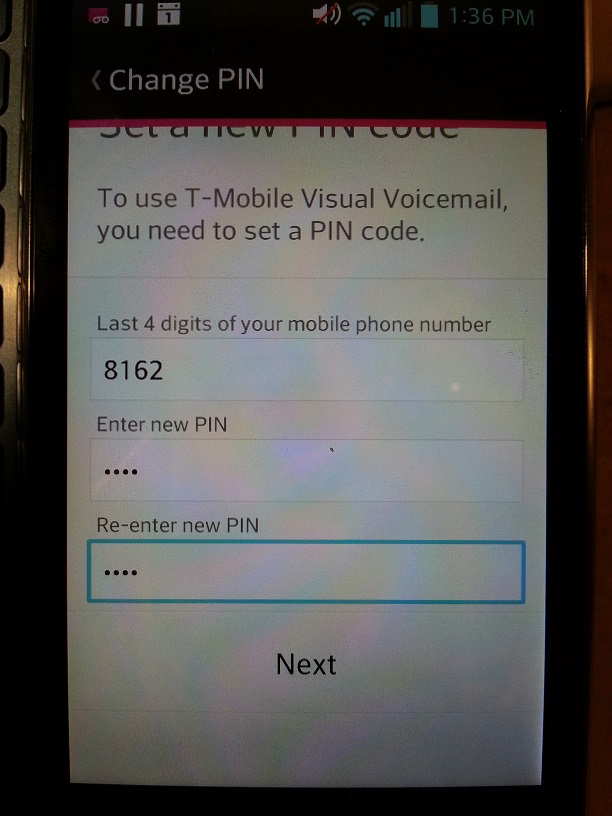
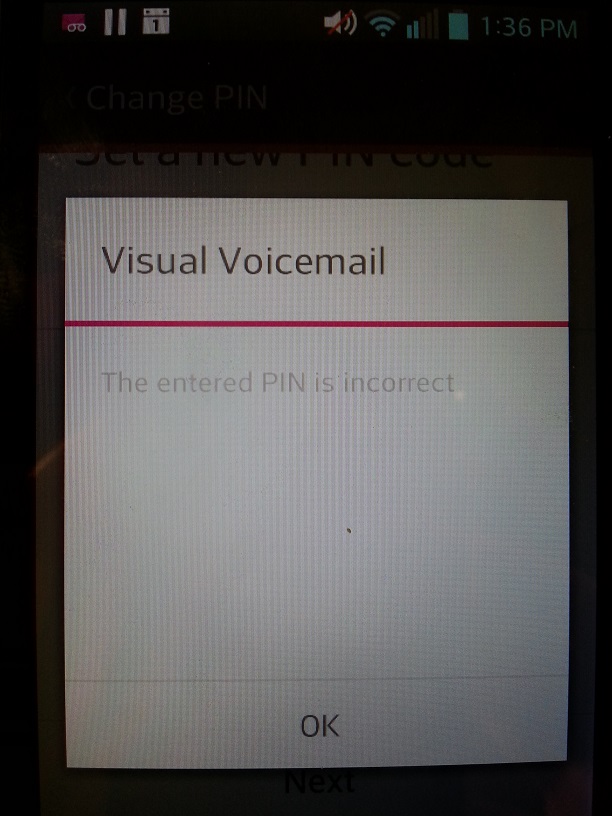
The first time I launched the voice mail application, the app prompted me to freely choose a new PIN code, and then sternly warned me, Mao-like, that my supposedly freely chosen PIN code was "incorrect". (I never got it working, and just called in to the voice mail number manually whenever I wanted to check my messages.)
-
When I bought a movie on Google Play and wanted to "pin" it to the phone -- i.e. download a static, non-streamed copy so that I could watch it offline, e.g. on a plane ride -- the phone didn't have enough internal storage left to save a copy of the movie (1.27 GB, most of it taken up in 1-2 MB increments by crapware already loaded on to the phone, so that only about 200 MB was left). So I tried saving the movie to a 32 GB SD card that I had plugged into the phone, but ran into the problem that Google Play wouldn't let me save the movie to the SD card, a problem described in Joe Levi's 2013 article "Why does Google hate your SD card?" and still not fixed almost a year later. (The comments posted on his article indicate that lots of people are pissed.)
Unlike the other bugs, this may be an example of stupidity not at the testing level but at the design specification level -- perhaps this was done in a misguided effort to prevent illegal copying. But, as Levi says of this theory, "If the DRM being used on Android is sufficient enough for content providers to accept it when media is saved internally, they should also accept it when media is saved to an SD card. Otherwise, the DRM isn't really that trustworthy, is it?" It's pointless from a copy-protection point of view, since anyone who wants to pirate a movie can just download it from various BitTorrent sites anyway; all this "feature" does is alienate people who are trying to pay for a movie legally.
-
In the Messaging (i.e. texting) app, you cannot search for messages by the name of the sender. Your conversations are listed in reverse chronological order by the date of the most recent message in each conversation, but to find a conversation with a particular person, you have to scroll down the entire list of conversations and keep your eyes peeled for the person's name.
- On certain mobile website forms (the Fandango site, for instance, and some others that I don't remember -- it's not clear why this happens on some website forms but not others), the phone won't let me type "special characters", the ones that appear in the upper-right corner of the keyboard keys (so that you can type the "@" symbol by first hitting the "Fn" key to access special characters, and then pressing the "2" key). This means that since I can't type the "@" symbol, I can't log in to any form that requires an email address as a username. (The workaround is to open the Gmail app, find an email address in an email message, copy the "@" symbol from the email address to the clipboard, and then paste it back in the browser form -- yes, I have to do every time I log in to a mobile site that has this problem.)
In my previous phone-suck article about the Samsung Stratosphere, I listed as many problems as I could think of at the time, and I completely forgot the fact that the phone recorded videos without any sound. (I know it wasn't a hardware problem with the microphone, since the phone app picked up my voice fine.) As part of my research into how to ruin Burning Man forever by telling "tourists" how to get there easily, I wanted to post a video of the quintessential Burning Man spectacle that makes all the dust and thirst and heat worthwhile -- and I had to post it with no sound recording, because Samsung's product testing is done by the same drunken bonobos that worked on the LG Optimus.
And both products raise the same question, not rhetorically, but seriously: How did this happen? More specifically, in a theoretical free market, any product improvement that costs only a small amount compared to the benefit it brings to consumers, should be implemented (and consumers will reward the company by paying additional dollars for the improvement, in proportion to the benefit it brings them). While it doesn't always work out that way in practice, it's hard to believe LG couldn't spring for a few English-language testers to point out that the phone shouldn't be correcting you're to you"re.
I think the answer in both cases is that the free market optimizes mainly for things that are easily quantifiable, like camera resolution and network speed, because those can be listed on the packaging and compared against other products. But the amount of stupid s*#t you run into while actually using the phone, is hard to define on an objective scale, so that's the first thing that companies will cut corners on, even if it's something that consumers would be willing to pay money for.
So my solution is still essentially the same as what I proposed after trashing the Stratosphere: Some Consumer-Reports-type outlet should rate phones on a Stupid S*#t Index (along with speed, reception, etc.), based on how much stupid s*#t they run into in a week of typical usage. Ideally the Stupid S*#t Index should be reduced to a number so that you can do a quick comparison between different models. If a cheap phone has a lot of stupid s*#t problems, but you don't mind because you want to save money, that's a valid choice, and if you want to pay more for a phone with less stupid s*#t, that's fine too. But people should know what they're buying.
More generally, I think people vastly overestimate the ability of the free market to meet consumer demand, in cases where the demand is for something that can't be easily quantified. I've spent a fair amount of time in "entrepreneurial" circles (while bouncing back and forth myself between entrepreneurship and regular jobs) and have heard the faithful reciting a lot of platitudes like "The market rewards the best product," or "Focus on building the best product you can make, and the customers will come." But most of them evidently didn't even believe it themselves -- they spent most of their efforts on search engine optimization, running content farms, networking with important business contacts, and other activities that didn't directly relate to the quality of their products. And who could blame them? Since their products weren't competing on qualities that were precisely quantifiable, there was no reason for any of them to try to create the "best" product, or even a particularly good one. And that strategy worked quite well for several of them.
On the other hand, when you're competing on a quantifiable metric like price, the best product or service can shoot straight to the top without wasting any time on zero-sum games like SEO or networking ass-kissery. If you're selling external hard drives on Amazon for $0.01, you'll make a lot of sales. You'll go broke, but in the meantime, the free market will connect you quite effectively with your customers.
So, make the mobile phone Stupid S*@t Index into something quantifiable, and maybe we'll have less stupid s#*t. One review body could publish the average rating from several different reviewers, or several different review bodies could publish their ratings and consumers could weight the averages themselves.
Not that it's a panacea -- I bought the LG Optimus not because it was the cheapest or because I didn't expect it to have bugs, but because it was the only offering with a slide-out keyboard, and I've become addicted to the precision of physical keys. (It is so much easier to let your fingertip feel its way to the right key first, and then actually press the key in a separate motion, rather than having to hope your fingertip lands on the right spot in the first place.) So I never returned the phone, they kept my money, and I suppose that makes me part of the problem.
-
-
FTC Says T-Mobile Made Hundreds of Millions From Bogus SMS Charges
An anonymous reader writes "Today the FTC filed a complaint (PDF) against T-Mobile USA, alleging the carrier made hundreds of millions of dollars from bogus charges placed on customers' bills for unauthorized SMS services. "The FTC alleges that T-Mobile received anywhere from 35 to 40 percent of the total amount charged to consumers for subscriptions for content such as flirting tips, horoscope information or celebrity gossip that typically cost $9.99 per month. According to the FTC's complaint, T-Mobile in some cases continued to bill its customers for these services offered by scammers years after becoming aware of signs that the charges were fraudulent." FTC chairwoman Edith Ramirez said, "It's wrong for a company like T-Mobile to profit from scams against its customers when there were clear warning signs the charges it was imposing were fraudulent. It's wrong for a company like T-Mobile to profit from scams against its customers when there were clear warning signs the charges it was imposing were fraudulent." According to the complaint, T-Mobile also made it hard for customers to figure out they were being billed for these services, and failed to provide refunds when customers complained." Here's T-Mobile's response. -
T-Mobile Merging With MetroPCS
Daetrin writes "Last year T-Mobile tried to merge with AT&T but the deal was blocked by the FCC. Now T-Mobile and MetroPCS have agreed to merge in a $1.5 billion deal. There doesn't seem to be much concern that the FCC will disagree with this deal, perhaps because the two companies combined will have a user base of 42.5 million, which will still be smaller than the #3 player Sprint's 56.4 million. Because the two companies have similar spectrum holdings T-Mobile claims the merger will allow them to offer better coverage. They also say they will continue to offer a range of both on and off-contract plans." -
After IPv4, How Will the Internet Function?
An anonymous reader writes "36 countries in the world have over 100% per-capita usage of mobile phones, and this is driving a real crunch on IPv4 addresses as more and more of these devices are data-capable. The mobile network operators are acting fast to deploy IPv6, and T-Mobile USA has had an IPv6-only trial going on for over 9 months now using NAT64 to bridge to IPv4 Internet content. It is interesting to note that the original plan for IPv6 transition, dual-stack, has failed since IPv4 addresses are effectively already exhausted for many people who want them. Dual-stack also causes many other issues and has forced the IETF to generate workarounds for end users called happy eyeballs (implying that eyeballs are not happy with dual-stack), and a big stink around DNS white-listing. How will you ensure that your network, users, and services continue to work in the address-fractured world of the future where some users have only IPv4 (AT&T ), some users have only IPv6 (mobile and machine-to-machine as well as developing countries), and other Internet nodes have both?" -
Server Failure Destroys Sidekick Users' Backup Data
Expanding on the T-Mobile data loss mentioned in an update to an earlier story, reader stigmato writes "T-Mobile's popular Sidekick brand of devices and their users are facing a data loss crisis. According to the T-Mobile community forums, Microsoft/Danger has suffered a catastrophic server failure that has resulted in the loss of all personal data not stored on the phones. They are advising users not to turn off their phones, reset them or let the batteries die in them for fear of losing what data remains on the devices. Microsoft/Danger has stated that they cannot recover the data but are still trying. Already people are clamoring for a lawsuit. Should we continue to trust cloud computing content providers with our personal information? Perhaps they should have used ZFS or btrfs for their servers." -
Why Cloud Storage Is Lousy For Enterprises (and Individuals)
storagedude points to this article at Enterprise Storage Forum which argues that cloud-based storage options have fatal limitations for both businesses and individuals: "The article makes the argument that high volumes of data and bandwidth limitations make external cloud storage all but useless for enterprises because it could take months to restore the data in a disaster. It also appears to be a consumer problem — the author spent three months replicating 1TB of home data via cable modem to an online backup service." Seems like those off-site incremental storage firms could dispatch a station wagon full of tapes, for enough money. Update: Here's another reason, for Sidekick users: reader 1ini was one of several to point out an alert from T-Mobile that "...personal information stored on your device — such as contacts, calendar entries, to-do lists or photos — that is no longer on your Sidekick almost certainly has been lost as a result of a server failure at Microsoft/Danger." -
T-Mobile Offers Relief for Hurricane Victims
lilrowdy18 writes "Eweek reports that T-Mobile is offering free Wi-Fi to areas affected by Hurricane Katrina. This relief will be free until Sept 2 and an evaluation will be done to see if it will continue after that. The hot spots are only available to residents of Alabama, Louisiana and Mississippi and does not include phone service. The article also includes a link to a map of T-Mobile hotspots. At least we can use some form of communication to get in touch with loved ones." -
Linux Support for Wireless Laptop Internet?
scubacuda asks: "I'm looking for a good "all you can eat" cellular data plan for my laptop. So far, I've looked into T-mobile, Earthlink, and Verizon's wireless Internet options. Any suggestions on price, availability, and speed? The real kicker for me is Linux support, which, I've been told by all three companies, is NOT available. (Any and all hacks would be greatly appreciated!)" This particular market is still in a great degree of flux, especially with landscape-changing deals like the AT&T/Cingular merger going on in the background and issue of going for cellular or WiFi connectivity service. Are there any wireless carriers that you've been able to get working on a Linux laptop? If so, what did you have to do to attain your wireless laptop nirvana? -
New Hiptop (Sidekick II) Photos
s4xton writes "Some new photos of the upcoming Sidekick II from T-Mobile have been leaked on hiptopinfo.org. In addition to already being one of the best portable GPRS units with SSH2, Web Browsing, AIM and Mail, the new unit, slated for an August release features a built in camera, speakerphone and a number of other features. Thread on Hiptop Forums about it here. Here's some older photos and an owners manual and a previous Slashdot story about the original Color Sidekick." -
Geek Roadtrips Through the Heartland
While researching a roadtrip which I'll be taking from St. Paul, Minnesota to Placerville, Ca I did what any geek would do, I checked out the t-mobile hotspots along the route (some), did various searching on wi-finder (some) and other sites and have been doing some googling around on the topic. I know that there must be some 802.11b access points along and inside the towns along I-80, but for the life of me I'm finding it difficult for me to find any of them. I of course have various wireless sniffing apps, but that is hardly an efficient way to find access. I don't mind paying a small fee, so....with that in mind, if you were to take a trip across the country, where would you stop for access? For specifics, Read More... If you live along I-80, what are your favorite haunts with wireless? Specifically, I plan on stopping for meals or sleep in Des Moines, Lexington, Cheyanne, Rock Springs or thereabouts, Salt Lake City and maybe Reno and points along the long, bleak road between Reno and Salt Lake. But it's clear that the net needs a good reference for places to check your email through out middle america, so post here even if you want to talk about a great unknown spot in Oklahoma or something away from my route. If you own such an establishment, let us know!On a side note, the futility of my search seems soemwhat silly, as there are clearly people who use the internet in these towns. Anyhow, I really look forward to seeing your responses! Also, any high quality, unique dining reccomendations would be really appreciated. Also, funny roadside attractions or must see geek spots are welcome, as I intend on blogging my cross country trip as it happens and would like to have something to talk about other than the state lines I cross and the number of retreads I dodge.
-
T-Mobile Sidekick Reviewed
I'm nothing if not a toy junky, and when Danger sent me at long last, a review unit of their excellent little HoTop PDA/Cellphone, now known as the T-Mobile Sidekick. I jumped at the chance to get into the thing and get my opinions out there.First up, lets talk about the form factor. This unit is much more comparable in size to my Nokia 5560 than a Palm 5 or Clie. About the same length,a little thicker, and maybe half again the width. You'll find it a little thicker than a Palm 5, but also a bit narrower. What really makes the unit stand out is that its screen does this sweet little flip thing to reveal a thumb keyboard that is actually usable.
The interface is usually a little wheel (which can be clicked as a button as well), a 'Back' button, a jump button, and a menu button. When the screen is flipped out, you have a keyboard as well. The interface largely revolves around a sort of spinning menu which quickly rotates to select your application (Calandering, Photos, Phone Calls, etc). It's surprisingly usable, but I did notice a few glitches- for example when trying to mail a picture, I couldn't return and send the picture... I ended up having to actually go to the pictures, and choose mail picture instead of writing an email and attaching it there.
I might as well mention it: the little $30 camera attachment is just a novelty. Its postage stamp sized pictures are amusing, but practically worthless. Thats probably fine with just 16 megs of memory on board anyway- you wouldn't have room to store a nice 1024x768 image anyway... I think it was more proof-of-concept in this model. And the concept works, so with any luck, a year or 2 will give us a HipTop with more memory and higher res.
The screen itself warrants mention. First off, it is a 16 scale of grey, backlit job that really looks quite stunning. Without going to a color screen, this is quite simply the nicest looking screen I've seen on a handheld.
I found the cel phone functionality to be quite usable. Rings have custom tones, and the sound is that multichannel stuff that sounds really silly thats all the rage with the kids these days. You can use an external ear thingee, or use it in the standard carcinogen position. Reception was fine, but may vary for you depending on how good the GSM network is in your area.
The web browser was also surprisingly functional. Typing in URLs on the built in keyboard is quite quick. Far faster than any graffiti handwriting recognition crap. It rendered the pages I looked at without trouble, although big graphics are quite slow, and requires some scrolling. Slashdot in light mode worked fine.
The PDA functionality is good. Contacts are interconnected with the cell phone functionality. You can use the calandering and TODO tools to keep track of schedules.
The unit also supports POP mail servers. This worked without hitch and was quite nifty. IMAP support would be nicer, but I suspect that it would be horribly slow over the phone's internet connection. There also is IM functionality, but no IRC.
There are a few nifty little games you can play as well. The form factor of the device is fairly similiar to a Gameboy Advanced, and when held in that position, makes a reasonable gaming platform.
Danger says that the phone can auto update itself as new features and bug fixes become available, so hopefully new and exciting features will roll out pleasing users with improved user interface.
Battery life is claimed to be 8 hours in use. I never managed to drain it, although I left it on quite a bit. But its still enough to easily make it through a day or 2 depending on your usage.
The thing to remember is that this thing costs just $200. FOr that you get a fully functional PDA, and Cell phone. You get a good keyboard, a web browser, and a remarkably bright screen. It's a little larger than a cell phone, a little smaller than a PDA. All in all, this is a great combination and one thats easy to recommend, especially at this price. If you have GSM network support in your area, this warrants a serious look. If the next generation adds a color screen, IRC, IMAP support, and maybe shrunk things just a little bit, I think this could truly have the integrated cellphone/pda I've been waiting for. Now if it just had 20 gigs of memory, we'd be all set. Course my fingers aren't crossed.
-
Danger's HipTop Renamed and Released
FireMage writes "According to this press release from Danger, their cheap, cool, consumer targeted, cellphone/PDA "convergance device", the HipTop is now avalible nationwide as the T-Mobile SideKick, as in you should actually be able to buy one today. They've even revived one of their nifty-mysterious original flash splash pages to announce it. I'm all for clever hacks, but it's nice to finally see what seems to be a well thought out product in this arena. (The HipTop was first mentioned on Slashdot and again in a review .)" I have a review unit on my desk, and am super impressed. A larger impression piece will be coming out just as soon as I have time to write it.