Slashdot Mirror
Domain: torrentfreak.com
Stories and comments across the archive that link to torrentfreak.com.
Comments · 688
-
Re:How about you show it?
That's quite rich considering your government just shut down 84,000 websites "by mistake": http://torrentfreak.com/u-s-government-shuts-down-84000-websites-by-mistake-110216/
That's quite rich considering that you linked to a website that condones piracy. Say what you want, but if you refuse to pay artists for their legitimately copylefted/copyrighted work, then you too, sir, are a hypocrite.
-
How about you show it?
For the United States, the choice is clear; on the spectrum of Internet freedom, we place ourselves on the side of openness
That's quite rich considering your government just shut down 84,000 websites "by mistake": http://torrentfreak.com/u-s-government-shuts-down-84000-websites-by-mistake-110216/
-
Orange's gonna take over the internet!
DailyMotion is highly influenced by the French ISP called Orange which is suspected of prioritizing some contents and slowing down Megaupload and other websites. Besides, there are people from the french government working for them which are the ones who came up with the HADOPI law. Knowing all that, I wouldn't trust news coming from DM.
-
News? Olds!
This story, is basically a reprint of a story from last week. Not exactly new any more http://torrentfreak.com/mpaa-snags-google-downloading-torrents-threatens-to-disconnect-110205/
-
Re:So what's a "victim" to do?
Do you think that, if we moved our copyright laws all the way back to where they were at the time of the Founding Fathers (particularly terms), most people who pirate media today would stop doing so? When I see at the most popular items at, say, TPB, I see stuff that was released in the last year or two. The original copyright term was 14 years. Do the math.
You're right. 14 years is far too long for copyright to last. The purpose of copyright is to "promote the arts and sciences", so it is only possible to justify as long a copyright term as is needed to "promote the arts and sciences". Specifically, a copyright term which is longer than the economic life of a work doesn't provide any additional incentive to the artist.
It turnes out that the vast majority of novels are only commercially viable through their first printing, so copyright protection after the first printing is not really needed. A small number of books are so successful they get reprinted - but if you think about it, if they're so successful, their authors should be motivated enough to continue writing by the money they earned on the first printing. After all, lots of authors who *don't* get reprinted are motivated to continue writing.
It turns out that even huge, expensive productions like movies rarely make any money to speak of five years after their release, so it's very hard to justify a copyright longer than five years, if our main concern is to "promote the arts and sciences".
So should people wait five years before they download movies, so they don't cut into the producers' and distributors' profits? No, I don't think so. It turns out that, on the average, people spend at least as much money on movies and music even if they pirate. There's now research which shows that those who pirate the most, are also those who spend the most money on things like concerts and merchandise. Pirating creates interest in movies and music, and helps consumers weed out the good from the bad. Pirating is beneficial for the market.
See, for example, the recent study from the Japanese government which concludes that piracy boosts anime sales. (TorrentFreak)In fact, except for just after the global economic crisis, the total revenues of both the movie industry and the music industry have continued to increase since filesharing took off in the late 1990's. Unfortunately for the record companies, a larger percentage of the revenues are now ending up in the artists' pockets.
-
Recent International Issue
Considering ICE just seized a Spanish domain that was deemed legal in Spain, I hope this gets more attention. The government is totally out of control here.
-
US government is still seizing domains
I figured this wasn't worth posting as a whole new story, so I figured I'd add a follow-up comment on this one.
The US government has seized several more domain names since I posted this story. A list:
* HQ-streams.com
* HQ-streams.net
* Atdhe.net
* Rojadirecta.com
* Rojadirecta.org
* Firstrow.net
* Ilemi.com
* Iilemi.com
* Iilemii.com
* Channelsurfing.netThese sites appear to be related to sporting event streaming, and by a marvelous coincidence, the Super Bowl is this weekend.
Source: http://torrentfreak.com/u-s-seizes-sports-streaming-sites-in-super-bowl-crackdown-110202
-
Re:And nothing of value was lost
Correlation doesn't equal causation - but if you look at the list of most torrented shows for 2009 http://torrentfreak.com/top-10-most-pirated-tv-shows-of-2009-091231/ you'll find that 3 of them have since been axed because of low ratings (Sarah Conner, Heroes, Prison Break) Heroes had more downloads than viewers! Now say what you want about the quality of Heroes, but if people are saying "FK IT, I'll download it rather than watch it" the ratings suffer and the show gets canned.
-
Re:Ayup...
Here's an interesting article on Privacy and Copyright where the author believes you cannot have privacy if you have copyright laws the studios are hoping for.
-
Re:Tipping point: whether websites buy into this
That is the route MegaUpload is taking for some French ISPs who were caught doing it.
-
Re:Amazing...
Perhaps the Thomas-Rasset case show more how ridiculous your copyright law is over there, when you can get fined a minimum of $750 for sharing one track (although I understand a judge later suggested that one album could count as a single work, rather than each track).
Compare this with a recent case in Germany where a judge ruled on €15 per song (assuming each was uploaded 100 times - personally I'm not sure how many seeders get *that* high a ratio, but anyway). If that isn't low enough, there's also the advice offered to a lawyer who was "mass-threatening" people for file-sharing in the UK, in which the advisor (an expert on these matters) suggested that in trial the claimant might be able to prove a single upload per song (so that works out as €0.15 per track) if they were lucky enough to be awarded any damages at all.
Finally, even if settling leads to a lesser punishment than a full trial, that does not mean one should automatically settle. Far too many cases are settled (or in these file-sharing cases, too many people just pay up as soon as they are threatened) when - in most jurisdictions at least - there is barely any case against them.
-
Re:Amazing...
Perhaps the Thomas-Rasset case show more how ridiculous your copyright law is over there, when you can get fined a minimum of $750 for sharing one track (although I understand a judge later suggested that one album could count as a single work, rather than each track).
Compare this with a recent case in Germany where a judge ruled on €15 per song (assuming each was uploaded 100 times - personally I'm not sure how many seeders get *that* high a ratio, but anyway). If that isn't low enough, there's also the advice offered to a lawyer who was "mass-threatening" people for file-sharing in the UK, in which the advisor (an expert on these matters) suggested that in trial the claimant might be able to prove a single upload per song (so that works out as €0.15 per track) if they were lucky enough to be awarded any damages at all.
Finally, even if settling leads to a lesser punishment than a full trial, that does not mean one should automatically settle. Far too many cases are settled (or in these file-sharing cases, too many people just pay up as soon as they are threatened) when - in most jurisdictions at least - there is barely any case against them.
-
Interesting story behind MegaUploadFor those that don't know the story behind the guy of MegaUpload, MegaUpload and other sites in the same family, it's definitely an interesting one.. In summer TorrentFreak made an article called The Mega-Money World Of MegaUpload.
The whole article is interesting read, but here are some interesting bits:Kim ‘Kimble’ Schmitz is a quite unbelievable character. Born in 1974 in Germany, he grew to become a computer hacker, successful businessman and convicted criminal. In 1998 Schmitz received two years’ probation for hacking into corporate networks and abusing telephone services but the draw of big money was just around the corner.
In 2001 Schmitz pulled off a huge stock market bluff which netted him a small fortune. After buying shares worth hundreds of thousands of dollars in the almost bankrupt LetsBuyIt.com, he announced that he would invest 50 million euros in the company, but in reality he didn’t have the money. His declaration led to the biggest single-day rise on the German stock market which allowed Schmitz to sell his shares and pocket $1.5 million profit. He was arrested for insider-trading in 2002, sentenced to a term of 20 months and given a 100,000 euro fine.
Also in 2001, one of Schmitz’s companies loaned another one 280,000 euros and conveniently both went bust shortly after. Schmitz later pleaded guilty to embezzlement and received another two years probation.
According to a recent report from New Zealand, Schmitz is currently under investigation for using multiple names to register three luxury cars including a Rolls-Royce Phantom convertible. The cars are adorned with personal plates – GOD, WANTED and GUILTY.
The vehicles are registered to an address in Coatesville, New Zealand, which turns out to be a very special venue indeed – Schmitz’s newly-acquired mansion and the country’s most expensive house, a snip at just over $20 million USD.
An investigative piece found Schmitz in Hong Kong business records with the new name "Kim Tim Jim Vestor", allegedly having a Finnish passport, acting as director of several "Mega-" companies, among them Megaupload Ltd. and Megarotic Ltd.
As of 2008, Kim currently lives on the top floor of the Grand Hyatt in Hong Kong with his wife and child. He goes by an alias of “Kim Vestor.” http://www.gfy.com/showthread.php?p=15096149
-
Re:To clarify
Have you tried changing the ports and forcing encryption (disabling legacy connections)?
-
Re:Duh?
I'm pretty sure it's the file sharers who are out of touch if they don't see what they're doing as illegal.
It's ironic that you are accusing others of being out of touch by claiming that file sharing is illegal. In fact, it is only illegal under some jurisdictions and, if that wasn't enough, only on very specific circumstances. Let me explain.
First of all, you must be aware that when people talk about "file sharing" or, nowadays, even "piracy", they are referring to nothing more than a copyright violation. That means that the issue is none other than distributing a work of art without the copyright owner's* explicit authorization. This bit of information is important to understand this issue, as there is a lot of FUD and propaganda muddying the waters, so that ignorant folk believe nonsense such as "you wouldn't download a car" or "copying a file is theft".
Now that we know that this "file sharing" thing is nothing more than distributing works of art without the copyright owner's explicit authorization, you must understand the rules which are implemented in different jurisdictions. For example, in countries that follow the French tradition of copyright law, it is very legal to distribute a work of art without the copyright owner's explicit authorization. It's legal to copy and distribute any work of art, provided that the sharing is being done whole following a couple of conditions, which are:
- The work is shared without any commercial compensation (i.e., the sharers aren't making a buck out of it)
- The distribution doesn't affect the commercial distribution in a meaningful way
So, in any jurisdiction that recognizes those basic values any citizen is free to distribute any work he wishes, provided that he isn't earning money from it and that he isn't personally responsible for undermining the entire commercialization of that work of art.
As a consequence, we have countries where it has been explicitly declared that sharing files is perfectly legal.
You can't make something legal by wishing it.
In the same manner, you can't make something illegal by mindlessly claiming that it is.
These aren't fairies we're talking about here. you're not going to clap your hands and have tinkerbell drop legal blu-ray rips into your lap.
Of course not. You just go to the library and pick up any book, CD, DVD or leaflet, or even just right-click on a file and click "download". It's much, much easier and simpler than getting tinkerbell involved. And perfectly legal, too.
If you believe that the current model is outdated, You can lobby. you can vote. you can inform. you can raise awareness. you can debate. but just ignoring the fact that it's illegal doesn't make it legal.
See, you wasted your post mindlessly repeating that it is illegal without pointing out a single evidence that it is so, no matter where you are, no matter where you are from. Meanwhile, people who happen to live in civilized countries whose legislative branch wasn't (yet) dominated by content distributors do enjoy some legal rights, including the right to access copyrighted works without the owner's explicit authorization (i.e., file sharing). But keep drinking that kool-aid and repeating your "it is wrong, mmmkay?" mantra.
* the sad state of affairs is that some jurisdictions bastardized their legal concept to change "author" to "copyright owner" and then make it possible to transfer copyrights from the artists, those who actually produced the work, to commercial entities who dedicate themselves to market and distribute what they label as "content". Therefore, this copyright issue, in those jurisdictions, stopped being about copyright but about the ability for a corporation to control and hold content hostage.
-
Doesn't look decentralized
The Torrentfreak article says:
The domain registrations will be totally free, but registrants will have to show that they own a similar domain with a different extension first, to prevent scammers from taking over a brand.
Have to show? Have to show to whom? It sounds like they already have a centralized authority.
If you are so concerned about "preventing scammers from taking over brands" then you're going to have some mechanism for dealing with scammers. And if that mechanism exists, then governments probably can use it to deal with you.
And also, frankly, the narrow focus on one TLD, "p2p" hints that these guys aren't thinking very big.
I think creating a new sabotage/coercion resistant DNS is a worthy goal. Remember that COICA and the recent seizures are just another straw on the camel's back, in a long history of governments interfering with DNS, people disagreeing with ICANN policies, and whatnot. The need isn't going away until it gets solved. But these particular guys have already taken at least 1 step in the wrong direction. That one line about registration shows that protecting freedom of expression isn't their top priority, but if it's not the top priority, then the system won't solve the problem people have with ICANN's DNS.
-
Re:Erm...what?
I know that no one RTFA here, but the complaint is embedded on this page, so if you haven't read it, it's your own fault.
Oh, and, that's not the linked article. Don't blame me for not following nested links to their end.
-
Re:Erm...what?
>I know that no one RTFA here, but the complaint is embedded on this page, so if you haven't read it, it's your own fault.
Thanks, hadn't seen that.
But, basically, the complaint does say pretty much what people here think. In essence, USCG wants money because people took another lawyer's advice that was not illegal.
No, it doesn't. The complaint says that the defendants were filing procedurally invalid motions, drafted with the aid of Syfert. His response of "I'm not in the jurisdiction," isn't going to help - he did establish minimum contacts with the jurisdiction, through his sale of documents to be filed there.
Regardless of whether that advice wasted court time or not, the USCG doesn't have a right to money from that lawyer.
Actually, I think there's a strong case that they do.
From his client, maybe, but once you allow lawyers to sue other lawyers who oppose them, the whole system breaks down.
So, wait - he is "another lawyer oppos[ing] them"? But here, his whole defense was that he was unrelated third party. Which is it?
-
Re:Erm...what?
We don't know that, having not seen the complaint. Additionally, it's unlikely to actually be in the complaint, since it's going to be real tough filing a lawsuit that says "we're losing money because people were successfully opposing our claims," Slashdot's wishes notwithstanding.
I know that no one RTFA here, but the complaint is embedded on this page, so if you haven't read it, it's your own fault.
But, basically, the complaint does say pretty much what people here think. In essence, USCG wants money because people took another lawyer's advice that was not illegal. Regardless of whether that advice wasted court time or not, the USCG doesn't have a right to money from that lawyer. From his client, maybe, but once you allow lawyers to sue other lawyers who oppose them, the whole system breaks down.
-
read TFA before screaming!
TFA links to this article, which includes the filed petition and answer to it: http://torrentfreak.com/hurt-locker-sue-lawyer-who-helped-bittorrent-defendants-101124/ IANAL but reading the petition shows the UScg argues the following: - the forms are baseless for legal or procedural reasons - the petitions based on these forms failed in the courts - these petitions cased unnecessary (frivolous) burden on courts and UScg - the lawer selling the petitions and defendants using them are responsible for the above IANAL, but I hope there is nothing that can be considered a "legal services contract" between the seller of the forms and buyers, otherwise they may have some merit if their argument about procedural and legal bases of these forms are valid. BTW, the UScg are lawers, they may be full if sh*t but they are not idiots.
-
Re:yeah
Have you read the post I was actually replying to, which is now at -1? My post was only a joke reply to "Maybe you can prove your point by killing some record execs, let's see who gets the sympathy then."
And you realize that they're DoSing in response to DoSes against P2P sites by companies paid by the MPAA members, so if someone was breaking the law, it were the companies. That's why this was called "Operation: Payback".
And finally, my post doesn't in any way condone their actions, just mocks the silliness of parent's post.
-
Re:How do we make sure?
Actually, Slashdot posted it yesterday: http://yro.slashdot.org/story/10/11/26/1450257/US-Government-Seizes-Torrent-Search-Engine-Domain
The same day as your link.
Slashdot may have political bias, but when it comes to tech, no party or ideology gets off the hook.
I'd sooner suspect your bias, for linking to TheHill, than Slashdot's.
Thanx. That one flew under my radar. Still, it mentions only one site that was taken over. THIS site contains an update that lists many more that have been taken over. And, NO, it's not TheHill.com.
But back to my original point. Shouldn't there be comparisons to Nazi book burnings or something? I know we would have seen that comparison made three years ago. I wonder what has changed since then.
-
Re:Welcome to Sweden
Heh, or just cover your ass : The Pirate Bay still operates, but under the parliamentary immunity granted by the pirate party's elected repreentatives.
http://torrentfreak.com/pirate-party-to-run-tpb-from-parliament-010702/
The law is bad, it is brokent by more than half of the young people in the country. They challenged it. It is a political action.
The parallel may seem out of proportion, but remember that Rosa Park broke the law. Disregarding a bad law is a form of protest, and protest is a pillar of democracy. -
Re:Hoax
I would agree this seems fishy. However as stated in this Directive ICE has the authority to do some fairly clandestine stuff without any approval, such as registering 'fake' domains to poorly beguile terrorists, miscreants, and other groups found the oracle on high deems unworthy. I suppose this could extend to transferring DNS to a sleazy hosting outfit... however I bet this is a little bit closer to home, sleezy outfits seem to attract one another. I seriously doubt DHS and ICE have anything to do with copyright infringement despite claims to the contrary, especially considering at least of the the 'victims' seems to be up and running.
P.S, The FEDs usually fell entire forests when delivering mail informing you of tax violations, compliance violations, legal violations, and penalties. It's usually quite unambiguous.
-
Where's the profit? In the RIAA's pockets...
What I've never understood is why it wasn't a flat rate (modified by the scope of the infringing activity) plus all the revenues you gained from the infringing activity.
It used to be very similar to that; "In the corporate world treble damages often arise in regard to patent infringement, willful counterfeiting and antitrust lawsuits. Damages are calculated against the financial loss incurred by the plaintiff directly resulting from the actions of the defendant."
The problem in this case, and specifically the reason the damage award keeps bouncing around so hard (gaining and losing multiple zeros on the left side of the decimal point) is that damages in IP infringement cases are difficult to quantify, especially when the "damage" may be, in actual fact, a net effect of zero... or even an increase in sales of music on physical media.
From http://torrentfreak.com/piracy-boosts-cd-sales-071103/:
The researchers conclude that that people who download more music actually buy more CDs. They report: “We estimate that the effect of one additional P2P download per month is to increase music purchasing by 0.44 CDs per year.”
-
Re:Sealand
"After a few months the project slowly died and the money raised was used to buy trees instead..."
Source -
Re:The answer is, of course...
To them, copyright maximalism is a bug to be worked around. It's kind of cool. I wish we (our culture) hadn't drunk that kool-aid
The Berne Convention was in 1886, when Kool-Aid didn't exist. Oops. Kool-Aid(tm). There.
So back in 1886, people were already crazy enough to accept that "all works except photographic and cinematographic shall be copyrighted for at least 50 years after the author's death".
And of course it was the French who are to blame (Victor Hugo in particular). The same French (President Sarkozy in particular) that are trying to get the three-strikes rule applied within the E.U. (Euro-HADOPI).
-
Re:This is a defining moment in our social evoluti
And taxpayers helped pay for the roads to your house and work, does that mean they get to dictate what happens in either one?
Yes, they do. It's called voting for a representative.
are paid to deliver information, believing they will deliver less information is a bit of paranoia and is bad business
Right...because no ISP has ever blocked traffic, right?
Awareness is more prudent here than handing they keys over to the FCC
Us: "We're aware that you're throttling and charging extra for certain sites!"
ISP: "Awesome! Glad you're paying attention. By the way, here's your bill."Yup. Awareness would solve everything.
-
Re:Motives
"I mean if the US really could control every other nation on the planet like people on slashdot think then he would have had a tragic car accident long ago."
So you're saying they can't influence other countries? you're saying the claims in this document are completely false, and that the Swedish authorities actually decided to raid The Pirate Bay off their own back, despite it being unconstitutional in Sweden to do so?
http://torrentfreak.com//images/pirate_mpa.pdf
If the US can get Sweden to raid their own citizens web servers over mere IP infringement, then why would you think getting them to refuse residency to someone who they view as a national security risk is such a far stretch?
Your viewpoint is rather naive in the face of the evidence which reasonably demonstrates the US absolutely does seem capable of influencing the actions of foreign governments.
Christ, I live in the UK and the US hoodwinked us into partaking in a possibly illegal war with them using fake intelligence about WMDs and selling it to our security services as authentic, costing us many soldier's lives, and billions in costs as well as a massive dent to our reputation politically across the globe. You really think pressuring a country to refuse citizenship is that unlikely? seriously?
I wish I lived in your world, where the US government is a harmless puppy incapable of action outside it's borders. Hell, Che Guevara might even have been enjoying his 83rd birthday next June, and Osama Bin Laden might have decided to just go back home to enjoy a peaceful life with his family in Saudi Arabia. I'm sure there's a good few million Iraqis that would appreciate living in that world moreso than the real one too.
-
Re:Not Shocking
This HAS been used successfully in a file sharing defence.
-
Re:10,000 users a day...
That basically means the only viable solution left is no more digital music - live performances only.
Study finds pirates 10 times more likely to buy music
Another Study Finds Pirates Buy More MusicIf a majority of the population decided bank robbery was okay, does that mean we should re-evaluate if robbing banks is really a bad thing? Of course not!
Ultimately, yes. Either you convince them that they benefit more from not doing so, or you legalize it.
Ultimately, copying someone else's IP, to which you have no rights
Says who? You are you to say what person A should share with person B using their personal property?
, means someone didn't get paid.
Assuming they would get paid in the other case. Which not only isn't certain, in many cases is definitively not true. Especially when that "someone" has been dead for years.
And if you copied it, you have assigned some value to it.
Yes.
At best, it means you've inflicted direct financial harm by devaluing of the product in question. If you doubt me, I encourage you to verse yourself in the basics of economics.
So I have when I resell my stuff instead of destroying it.
No bones about it, if you pirate IP, you absolutely are harming the IP owners. Either that, or *everything* published on economics is wrong. The reasonable, safe bet, is the former rather than the later.
Again, the only harm is the same as when you resell something. Doesn't mean it should be illegal.
Time and time again the pirate position seems to be, I want it. You can't stop me. Its unlikely I'll be prosecuted. Therefore, I'm entitled to whatever I can take. If you try to stop me, you're a bad person.
The position I see is: I bought the CD, I should be allowed to do what I want with my property. Who are you to tell me what I should do with my CD?
When a massive number of people feel entitled to take what isn't theirs, what do you expect is going to happen. Draconian laws are the only likely result. And frankly, you can't really blame them.
iTunes dropped the DRM, sales are up. Clearly draconian measures work better.
If you worked and didn't get paid time and time again
MPAA revenue has been rising every year, so that's clearly not true for movies.
Music artists revenue is also rising.The only people losing revenue are the labels. Cry me a river over their outdated business model. We should now ban cars for the poor carriage drivers in the unemployment. Or ban cellphones because of the telegraph companies.
-
Re:And in typical Ballmer fashion
Try writing a decent Windows app using gcc...
I think you may be missing the parent's point.
While it may be difficult to write a Windows app without Microsoft's tools, there's nobody telling me what applications I'm allowed to write, and restricting me from distributing an already-written application unless it fits their idea of what is right.
-
Re:Greed
I managed a movie theater for a few years in the '90s. It cost about $60 to show a movie -- primarily in utilities and employee costs. Tickets were $5 a piece for an adult, but most of that went to the studios. So if 12 people came to a movie and all bought something at the concession stand (which made about $5 on average per person), we broke even. Of course, since most of the shows had about 125 people in them, it was a money-making machine. The vast majority of our money came from selling overpriced popcorn and soda.
Today, the theaters themselves are the ones who get paid off of pre-movie advertising -- that's on top of vast mark-ups on concession items. Meanwhile, ticket costs have tripled in the last 15 years, and movie studios are making record profits -- particularly given that there are additional revenue streams like product placement, DVD sales/rental, fees from TV, etc.
So no, ticket costs without showing ads would certainly not be more that $10. In fact, pre-movie ads are almost entirely unrelated to ticket prices. -
Re:Smart Sound
Let me get this straight: I pay a cable bill sufficient to provide me access to every show I enjoy, and I have not been offered the opportunity to be a Nielson household, yet somehow my watching or not watching a TV show that I have paid for in a format of my choosing is both freeloading and magically detectable to the great and glorious content providers? It seems to me that if I'm not a Nielson household, my vote doesn't count to save the TV shows I like, but likewise I am not bound to watch the commercials I don't like, since my eyes aren't counted there either. In fact, by torrenting my favorite shows, my viewing habits can at least be counted
I will grant that if EVERYONE did it, or even just the Nielson households, then yes, we could end up in the Stygian world you imply. Or maybe, just maybe, the content distributors would wake up to the fact that we dislike loud commercials and like time-shifting. They might also be forced to place heavier consideration on online viewing numbers, and then start providing TV shows in the way the customer desires, while still generating revenue either by charging per episode, or by providing less obtrusive (or at least less numerous/obnoxiously loud) ads, perhaps by using TASTEFUL product placement rather than stand-alone ads.
Right now, we can be ignored, because we can't vote with our wallets. No one knows if we are watching their ads because we aren't in the magical
-
I don't know.....
-
Re:I hope they follow the law
Frankly, I do not quite see how does the data protection act authorise you to give the data in question. With fee or without.
It is my understanding that this is where the Court order comes in. And from what we've seen; provided whoever is asking for the data is willing to pay, the person who has the data may not put up a fight. However, it seems that even the judges are beginning to question this.
Plus the Data Protection Act (based on the EU data protection directives) is all about consent; if when you signed your ISP agreement there was a clause that said "we will not share the data with any third parties unless required to do so by a court order or we feel like it" then everything may well be covered.
-
Re:...deliberately does not target TalkTalk or Vir
It's because they've both publicly stated that they will challenge requests for subscriber information that don't come complete with a court order - see this Torrentfreak article from a few days ago.
"While we all know that an ISP must comply with a court order once it’s issued, Plusnet and virtually every other ISP in the UK are giving the likes of Gallant Macmillan and ACS:Law a free ride by agreeing not to contest in advance."
-
i'm a Canadian, and I still think this stinks;
I've been reading the TF thread for about an hour now, and I still can't help but think this is a horrible and stinky decision;
I've written Suddenlink to communicate my dissatisfaction :
@SuddenLink : "I've contacted Suddenlink in order to communicate my dissatisfaction. I was given the opportunity to move to an area for a job, that was serviced by Suddenlink. Their policy was the deciding factor in me choosing to reject the job opportunity.
Way to go Suddenlink, not only have you cost yourselves a reliable customer - your policy is affecting immigration to your country."
Their response was to play dumb ;
"I apologize, sir! But I'm not quite sure as to what disconnect policy you're referring to. We do not have any cancellation fees or contracts, and you're free to leave our company without any charge or penalty. "
To which I replied and pointed them in the direction of the TorrentFreak article ;
"The disconnect policy in which I refer to, can be found here;
http://torrentfreak.com/us-isp-disconnects-alleged-pirates-for-6-months-100924/"And their reply was ;
@SuddenLink : "Thank you for your email in regards to the DMCA Violation. I appreciate the opportunity to assist you today.
I apologize that you do not approve of this, sir.'
wow... I'm glad that they 'apologize' that I don't approve of their policy. Great customer service skills - both on a CSR level and Company-Wide, that this is the best response they can come up with.
-
Re:Examples
-
Re:Extortion
People broke the law and now they're being told they have to pay for their crime?
Not quite. People are accused of breaking the law (in a way that may or may not be a crime - where I am it is merely a civil offence) and are told to pay or face a costly trial. In many cases, merely saying "I've talked to a lawyer" is enough to get them to back off. Unfortunately "innocent until proven guilty" doesn't quite hold that much weight when the cost of proving innocence (or even any sort of defence) is prohibitively large. It makes little difference to the plaintiffs (or claimants, whatever you call them) whether the accused is actually guilty/liable.
Incidentally, this has been going on for years over here (in the UK) and has been referred to as "a scam" and "legal blackmail" by politicians with one of the lawyers involved facing a disciplinary tribunal at the moment.
-
Re:Great move, Pirate Party.
Well they are not one in the same sure, but The Swedish Pirate Party also hosts The Pirate Bay itself so you can't completely separate them from each other either. The Pirate Party Becomes The Pirate Bay’s New Host
Obviously both sites and the Swedish Pirate Party are betting (pretty hard) on the election next month which a successful outcome would as previously posted put TPB and perhaps now wikileaks inside the Swedish Parliament. -
Re:Slashdot participates in hoax
That photo looks liek a shoop, I can tell by the pixels
Thank you kind sir for your explanation
-
this WAS a hoax!
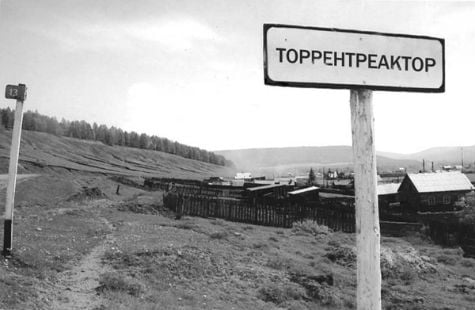
First, anyone reading the TorrentFreak article would have noticed the link at the bottom of the article that brings you to a second, related article... http://torrentfreak.com/despite-confusion-village-wants-torrent-site-investment-100809/ which explains that most of the details that Torrentreactor had about Gar were wrong, and that they never did buy a town or make an offer... but in fact the people of the REAL town of Gar are very interested in the money.
-
Re:Slashdot participates in hoax
Yep. That photo does indeed look photoshopped. Zoom in really close and look at the pixels around the word "TOPPEHTPEAKTOP". You can see blocks of grey and white pixels above the letters that don't follow letters, but instead go straight across across the screen; in addition, the second P and first E, and maybe the K, have fade near the bottom as if someone cleaning up the sign had gotten the airbrush/clone tool, with too big of brush selected, just a little too close to the letters. Finally, there's a block of inexplicable grey and white splotches above the TO that are reminiscent of fast and sloppy clone tool editing.
Quite honestly, this looks like some of the worst photoshopping I've ever seen.
-
Re:GOOGLE MAIL
Are you implying that there are more zip files floating around in workplace environments than there are rar files floating around bittorrent and other file sharing worlds?
Considering how many of those files on torrent sites are duplicates of each other, with negligible changes ("get your porn passwords from XXX.com" replaces with "get your pron passwords from XXY.com"), or contain the MP3 encodings of the same record, but with different mis-spellings in the play-list files
I'm just doing a quick back-of-the-thumbnail estimate : the last month has been fairly normal and I've generated a report comprising around a gigabyte of mostly compressed data (DLIS logging records ; databases ; WRF images and PDFs of the same images for clients who can't run the WRF-viewer application ; reports and calculation workings in various "office" formats ; biggest single file is a DLIS of around 100MB, which could be readily split up into 20-odd similar records). That, if I understand the music industry correctly is equivalent to around 50 music tracks (@2Mb/MP£), which would be several albums @15 tracks/album ; I don't know if this is realistic, because I don't waste much attention on music).
There are around 40 or 50 crews operating in this business in the North Sea region, so call that around 100 albums (coarse) equivalent, for this one region, for this one aspect of this one industry, for this one month. Meanwhile a data archiving company my wife works for would have been shunting another few tens of gigabytes into the archives, occasionally to be seen again when needed (court records, medical records like stacks of X-rays, oil well reports).
On that fairly small sample, we're looking at something like several gigabytes data per working person per month. And most of it would be compressed in ZIP format - because it's quick, reasonably effective, and known by pretty-much every operating system in frequent use.
I'll not include a former correspondent who as a minor part of his job was working on how to build a data pipeline that could handle several petabytes of data daily - data that had to be losslessly handled, because it was research data and they literally didn't know what they were going to be looking for. But that's a lot of data. I'll also not include my near-neighbour who digs holes in the road for a living - and produces hundreds of MB of images every week to document that they DID fill in that piece of road to specification. Whatever the format of the image files is, it's a safe bet that if the pictures are bundled up with the rest of the job's documentation into one file ("archived"), then it's more likely to be done in a Zip format file than in a RAR format file.Nope,I think that if the impossible were achieved and all the output from "work" could be compared to all the content on the "torrent-o-sphere", you'd be surprised and find that the torrent-o-sphere is relatively unimportant. (I've just been looking for some information on line - it's that old thing called checking your facts before posting. It reminds me of the 2009 article that asserts that bittorrent accounts for "27-55%" of internet traffic "depending on geographical location". Which means that 45 to 73% of traffic is not bittorrent. I'll leave you to work out how that works with the 2009 date on the report, and the assertion in the same report that bit-torrent was losing influence to streaming media sites. The report was based on only a petabyte or so of data analysis, so likely didn't include any big systems.)
I wouldn't even consider winzip to be a contiguous archive format.
Who mentioned
-
Re:Queue the Arguing
I don't know how people can doublethink away the idea that Pirates stealing 5x the number of copies being sold legitimately for a top selling game somehow DOESN'T hurt the industry.
Doublethink is not required. Software is a nonrival good, meaning that enjoyment by one consumer does not detract from its simultaneous enjoyment by other consumers. Simple, straightforward ‘piracy’[1] does not increase the costs incurred by the publisher, nor does it directly reduce the revenue generated. It may indirectly reduce revenue, by displacing sales that would otherwise have occurred. Whether that actually happens is an open question (and a difficult one to answer when every game is different).
To be clear, I'm not saying that this would necessarily justify ‘piracy’ even if the economic effect is zero or positive, but if you want to argue against it on economic rather than moral grounds then I would like to see some evidence.
[1] I'm assuming that you mean copyright infringement as opposed to robbery on the high seas. If the latter then I concede that would have an adverse effect on the publisher.
-
Queue the Arguing
Queue all the Pirates claiming for proof that the numbers are correct, proof that any one Pirate would have bought the game legitimately, and sentiments of entitlement revolving around how since Machinarium wasn't that great a game, people are entitled to steal it.
I don't know how people can doublethink away the idea that Pirates stealing 5x the number of copies being sold legitimately for a top selling game somehow DOESN'T hurt the industry. -
Re:Why not just call their company "NSAFront"?
Lamo was also the star of the "leaked" documentary Hackers Wanted , a thinly-disguised attempt to recruit hackers to the US military.
-
Re:Any sufficiently advanced technology...
More like that what geeks think aren't that essential to selling computers. It's a bit like selling cars to race drivers (professional workers) or car mechanics (support people). They probably have some very different thoughts about cars than we do, and think the car commercials are quite silly. But the car companies don't care because there's a huge market of soccer moms and dads that need it for their commute and driving kids around. Just like there's a huge market of people that aren't very interested in computers but want to get stuff done using one. Even when it comes to choosing platform the fact that your geek prefers Linux/OpenOffice/Firefox/GIMP doesn't necessarily make it a good idea if your people are all experienced Windows/MS Office/IE/Photoshop users.
Funny enough, if you try bringing your product to Linux you get nothing but hate burn. Try reading the comments to uTorrent coming to Linux and see what I mean. It's 95% "we don't want no closed source shit, too little too late, $torrent-app rules, fuck off". This despite being quite probably the best and certainly the most popular client on Windows, and lots of people might look more favorably on Linux if they didn't have to learn a new application. "Here's Linux, ditch all your old software, but trust me all that G/K stuff is much better" is a WTF to everyone but OSS zealots. For a platform that supposedly promotes choice, it's amazing how militantly hostile some are to giving you one.
-
Bogus.
http://torrentfreak.com/tech-news-sites-tout-misleading-bittorrent-piracy-study-100724/ The research is complete bogus. Also, it's not because something is copyrighted, that the torrent sharing it is illegal. People can copyright something and then give it out. Bittorrent being a medium enabling that.