Slashdot Mirror
Domain: vanderbilt.edu
Stories and comments across the archive that link to vanderbilt.edu.
Comments · 141
-
From a Classroom Technology Teacher
Elon has never heard of Blooms Taxonomy. Perhaps he should look it up. However, looking up facts is not thinking. It is not even understanding.
By contrast, the revolutionary design of Tesla cars and SpaceX rockets demonstrates all of the layers above remembering - understanding, application, analysis, evaluation, and creativity.
From the trenches, what I can confirm is that the more technology a student uses, the worse they are at thinking. They live in an echo chamber, devoid of reality. You would be hard put to find a teacher that disagrees.
Note: that maintaining and creating technology is not the same as using it.
-
Re: Bullshit is bullshit.
Crash test dummies can be very expensive - up to a cool $1/2 million.
-
Re:Not knowing anything
There are...
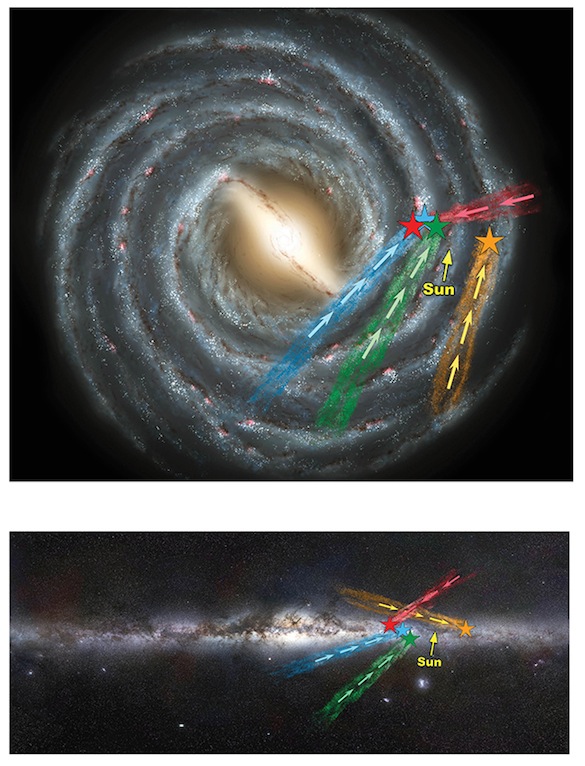
This study identified 675 stars on the outskirts of the Mily Way galaxy that appear to have come from the inner galaxy.
In 1997, it was found that in the Virgo cluster of galaxies, there may be over one trillion extragalactic stars, or more than 10% of the total stellar population of the whole cluster.
And finally...Half the stars in the universe may be intergalactic wanders, which might solve a large part of the dark matter problem.
-
Re:Not every article need scrolling effects either
DNS-and-BIND blathered:
Phonics was discredited decades ago as boring and dull for children. They weren't learning, especially most disadvantaged children in our inner cities. We needed an approach that they could excel at.
Oh, really? Perhaps you should tell that to the National Institute of Health, because their 2000 article on the report of the Congressionally-mandated, independent National Reading Panel concludes exactly the opposite. Or, if you require training wheels, you'll have an easier time of it with PBS's summary of the panel's major findings.
But, since you have such a well-documented contempt for all things USA, you might be more comfortable referring to the Australian state of New South Wales Department of Education and Training's Literacy Teaching Guide: Phonics, instead. Or, given your general dismissal of governments as oppressors, it's possible that a private corporation that has spent decades focusing on primary-level educational materials like Scholastic.com's Parent & Child Magazine could seem more credible to you.
Or, alternatively, you could just read the Wikipedia page on phonics, which not only explains what phonics is and how it works, but goes into the history and controversy of phonics, especially phonics vs. whole language, not only in the USA, but in Australia, Great Britain, and Canada, as well.
There're plenty of other resources available to support the view that phonics (and its sister technique phonemics - you really need to use them in combination with each other for best results), in conjunction with primer material that is actually interesting, is the most effective strategy for teaching new readers.
And I'm sure you don't care, but my own, anecdotal experience is all the evidence I require. You see, when I was expelled from first grade for being disruptive (due to not having been diagnosed as being nearsighted to the point that I was legally blind), my mother undertook to teach me to read at home. In less than a month, I went from not even knowing the alphabet to reading at an eighth-grade level. Much of that was due to her using the phonics+phonemics approach, a roughly equal part can be credited to her choice of Dr. Suess, rather than the achingly-dull Dick and Jane books, as my primer. (When we exhausted his catalogue, she introduced me to the Reader's Digest, instead.) Within 30 days, from a standing start, I had read my first Tom Swift, Jr. novel, and embarked on a lifelong love affair with reading - especially science fiction, but also history, biographies, science and technology, and, as Robert A. Heinlein put it, "words in a line" in general.
So, please, by all means, pray continue to explain how phonics has been "discredited" for decades. You ignorance of the subject is simply fascinating.
Wait, what's the antonym for "fascinating"
-
Re:Citation
Technically speaking, RT is based out of Moscow, and is a foreign corporation. The 1st Amendment rights of corporations is still a gray area, and Constitution protections for foreigners is still highly subjective and is still decided on a case-by-case basis. Even cases such as Citizens United really only touch on campaign contributions as a "form" of free speech, and contrary to popular belief, was pretty limited in the resultant decision. There have been many court cases that have decided that foreign nationals are not automatically covered under the Bill of Rights as these where meant for actual citizens of the US. Combining these factors together, this leads to the conclusion that RT would NOT be covered under any 1st Amendment rights.
As for the evidence of Russian involvement, there is proof. However, the actual "list" or whatever is currently still highly classified and not released into the general public yet. The real question is if the involvement was coordinated on the "state level", and was the Trump administration an active participant in said involvement or just a beneficiary. There is evidence of similar tampering in France; however Marcon's cyber team was prepared for this and may have actually done some preemptive "informational poisoning" to derail it.
People who can't see this trail are just keeping their heads buried in the sand; I blame it on something akin to the "beaten spouse syndrome". However, I don't think Clinton was a very good candidate either, and would have brought her own long list of issues with her. It's sad that out of 330 million people these two rose to "the top". We can do better than this; we MUST do better than this. Personally I advocate for replacing the House of Representatives with a proportional representation system to encourage the viability and formation of real third party choices. The US stands alone in having the meme "third party" due to the mathematical fact that our system only allows two sides due to our "winner take all" system. These sides often switch platforms, and absorb any emergent 3rd parties within a few election cycles.
Sources:
RT Network
Are foreign nationals covered under the Constitution?
Corporate personhood
First Amendment and “Foreign-Controlled” U.S. Corporations
Can US election hack be traced to Russia?
Putin: Patriotic Russians may be involved in hacking
The Macedonian Teens Who Mastered Fake News
Macedonia’s fake news industry sets sights on Europe
Russian Cyber Attack Repelled During French Elections
Proportional representation -
Re:Low fat whole grain?
New research is showing that the science isn't so settled when it comes to sodium.
-
Re:Patent? PAYWALLED
"We're forging new ground with this project, where a positive outcome is not commercialization, but instead a clear set of instructions that can be addressed to the general public. It's a completely new way of thinking about battery research, and it could bypass the barriers holding back innovation in grid scale energy storage," Pint said.
Nice populist sentiment, BUT:http://pubs.acs.org/doi/ipdf/10.1021/acsenergylett.6b00295
Purchase This Content
Choose from the following options:
$40 for 48 hour access.-but didn't I (we taxpayers all!) already pay for this work?
https://news.vanderbilt.edu/2016/11/02/making-high-performance-batteries-from-junkyard-scraps/
"The work was supported by the National Aeronautics and Space Administration EPSCoR grant NNX13AB26A, the National Science Foundation graduate fellowship program under grant 1445197 and a Vanderbilt Discovery Grant. The team worked with Matt McCarthy at PSC Metals, who provided access to its scrap metal facility in support of this project." -
Donna Ford
I think all one needs to do is read up on the person quoted in the article. I'm sure she doesn't have an agenda:
-
Re:Citizen of Belgium here
You are mistaken; money is created out of nothing every day in the private sector. Total mortgage debt was $10.6 trillion in the US in 2007; but derivatives based on that debt were $62 trillion. ( Source: The Rise and Fall of the U.S. Mortgage and Credit Markets.) The difference is pure money creation by the private sector.
As for the IMF funding, consider this passage from International Monetary Fund: Background and Issues for Congress , page 23:
In 1967, the President's Commission on Budget Concepts recommended that U.S. transfers to the IMF be reflected on the federal budget as an exchange of monetary assets of equivalent value to the United States from the IMF, and therefore that they not be recorded in the federal budget as an outlay.
At the time of the next IMF quota increase, which became effective on October 30, 1970, the new budgetary concepts applicable to U.S. transactions with the IMF were not fully implemented. As a result, the transaction was treated as an exchange of assets rather than as an outlay in the official budget, as recommended by the President's Commission on Budget Concepts. For the next quota increase, which became effective in 1978, the U.S. share was subject to the budgetary treatment recommended by the commission: the quota increase was an exchange of monetary assets involving no budgetary outlay and requiring no appropriation.
-
Re:is it really bad in the first place?
I'm sure hamsnetwork.org is a super, super reliable site.
http://healthpsych.psy.vanderb...
Relevant quote, "in order to achieve these damaging results, doses of up to 200 times the psychoactive dose in humans would have to be given. Even studies in which subjects were given 100 times the human dose failed to cause any structural impairment of the brain."
Here's a page you should definitely read, though.
http://en.wikipedia.org/wiki/C... -
Depends on your definition of "terrorist"
Before "terrorism", there was communism. Before communism, there were anarchists who assassinated an American president.
The FBI once called Martin Luther King Jr. "the most dangerous man in America" (and given death threats). Sartre wrote about suicide bombing as terrorism in the 40's (and thought it was going out of style! page 80).
Tyrants in the US government have always used name calling in the name of "national security" to justify whatever inhumanities they wish to commit. "Terrorism" is not new; its use as a boogey man to scare the citizenry into the creation of a surveillance state is.
-
Re:Now we are arriving at critical mass
http://news.vanderbilt.edu/201...
bleh, missing third link.
-
LabNodes
https://labnodes.vanderbilt.ed... has the ability to keep track of resources and share them with other researchers. They were working on notebook functionality before I left, but it doesn't look like that has been implemented yet.
-
Re:Maybe they're not stars....
A million miles per hour is not all that much.
All the galaxies in our neighborhood are also rushing at a speed of nearly 1,000 kilometers per second (2,236.936 miles per hour) towards a structure called the Great Attractor, a region of space roughly 150 million light-years away.
I think they're calling them fast based on the relative speed to the galaxy that they're being ejected from / passing though.
Astrophysicists calculate that a star must get a million-plus mile-per-hour kick relative to the motion of the galaxy to reach escape velocity.
The diagram in TFA seems to indicate that these stars are not originating inside the galaxy, which to me raises the question, from whence do they come?
This image makes it appear the stars are mostly passing through the disk of the galaxy. I may be reading too much into the length of the coloured lines though.
-
The students are there due to preferential policy
The students are there due to preferential policy
U.S. Universities have stopped being about education, and are now about profit. Nothing else explains turning away students who want to pay for their education, and then complaining about having so few students demanding a course that they must cancel it, and it "happens" to result in stretching a 4 year degree into a 5 year one, adding 25% tuition and fees per student who is allowed to attend.
Obama bemoaning the foreign students getting their education in the U.S. and taking their knowledge elsewhere is missing the point: Admissions are preferential towards those students who pay the most, and it tiers as: (1) International, (2) Out of State, (3) local. There have been numerous investigative articles about this fact: http://www.schools.com/articles/are-finances-a-factor-in-college-admissions.html
Some universities go so far as to spell it out explicitly; here's what Vanderbilt has to say:
"Those international students who demonstrate they can afford the cost of attending Vanderbilt will be given preferential treatment in the admission process."
Source: http://www.vanderbilt.edu/financialaid/undergraduate/international.phpThe degree stretching activity speaks most loudly to the fact that tuition is a minor factor in the financial gains a university makes per student; there are also fees, but they would be the same as a first year student in their first year vs. a fifth year student in their fifth; instead, the incentives to the university to continue educating a given student go up with the amount of time the student has already attended.
What would be interesting to see is if there is a stretching bias toward "high value" students; in particular, whether stretching happens uniformly across the board, or whether you are most likely to get stretched if you are an international student, and least likely to get stretched if you were an in-state student.
In any case, the fix for what Obama is complaining about isn't to keep the international graduates in the U.S. after graduation, it's fixing the admissions bias towards international students for economic rather than academic reasons, and fix the stretching for economic reasons, which can often make it uneconomical for some locals to attend at all, or cause them to drop out before graduating. If a university exists to educate students first and make profits second, then it will end up making decisions which are in the best interests of the students.
-
In biomedical informatics ...
... de-identification is an area of active research, because we'd really like to be able to mine all that juicy medical record data without infringing on patients' privacy rights. The gold standard so far seems to be Vanderbilt's Synthetic Derivative, which cleverly alters individual records enough that they can't be traced back to the actual patient. If these records are then used to create aggregate data, then attempts to reconstruct patient records by "correlating different aggregated forms" won't work, because they'll just reconstruct the SD instead. It seems to me that a similar two-stage process could be applied in a number of realms, so Google or whoever could still do all the "Big Data analytics" they want without raising privacy problems.
-
Re:Outbreak? Really?
Sorry but the BCG vaccine doesn't work in most adults and there's a lot of work going on to find out why (here's a recent paper with a possible hint:
http://sitemason.vanderbilt.edu/myvu/news/2009/05/21/study-of-ineffective-tb-vaccine-may-lead-to-new-vaccines.80590/
and therefore treating the disease when it appears becomes crucial. -
Re:Ho Hum
This document explains a bit about the process: http://www.vanderbilt.edu/AnS/physics/astrocourses/AST101/readings/water_on_venus.html. It cites the abnormal ratio between hydrogen and deuterium compared to earth leading to the conclusion that the planet lost most of its hydrogen to solar wind particles.
-
Re:The "Chinese Hacker" myth is overblown
Here's a little write-up about some of the hacking I've seen.
http://binkley.accre.vanderbilt.edu/documents/hack-stats.txt
-
Re:Apparently Obama knows not Grigsby & Cohen
Knowing what you're doing is SO 20th century.
Knowing what you are doing is strictly against company policy. We have a committee of experts who have thoroughly reviewed the Work Instructions for the task at hand. Those who 'know what they are doing' will deviate from these Work Instructions. We find this unacceptable.
All praise Ford!
(slit a Tayorite's throat in the cloakroom)
-
Re:Conservation of Energy
Unless you mean caloric intake in the sense of long-chain starches, etc. that are undigestible by the human body. I'm guessing these don't figure in to the daily calorie allotment.
Yes that's part of what I mean. I'm not sure how the daily calorie allotment is arrived at. Ultimately, I don't think it really matters and I'd assert that, with modern diets and environments, psychological and physiological factors have a far greater influence on weight than mere thermodynamics.
Fiber intake (which ideally should be relatively high) prevents absorption of a percentage of fats and carbohydrates. It suppresses appetite and regulates insulin levels, thus reducing total caloric intake. In a high-fiber diet, up to a fifth of all fats are passed directly through in excrement. Fiber promotes regular bowel movement and thus decreases transit time. The fiber itself is undigestible. The website I was getting the "50%+" figure from was unsourced so it probably exaggerated, but add in fermentation of gases and urine losses, and it's possible for a large portion of caloric intake to pass out of the body undigested.
http://www.mc.vanderbilt.edu/documents/MPB/files/calorie.pdf
http://en.wikipedia.org/wiki/Dietary_fiber#Fiber_and_calories
http://www.springboard4health.com/notebook/nutrients_fiber.html -
Re:pushing theft into organized crime
If you use a software tracking approach, thieves will learn to put tape over the webcam, and not use it until they ask someone in the black market to reinstall the operating system for a fee, or learn to reinstall operating system by themselves. This is just like how thieves learned to use the credit card immediately after they steal it before you have a chance to cancel the card.
The percentage of laptop owners who have any sort of anti-theft software on their laptops is so small that the average thief probably isn't even aware that such a thing exists. It's so rare that it still makes national news when a laptop is recovered using tracking software.
I've written an open source remote tracking application for Mac laptops myself, and one thing I've learned is that most laptop owners can't even be bothered to disable auto-login, much less install a software tracker, even when the software is free. It is human nature to be careless until you become a victim, and only then do you start taking steps to protect yourself.
So unless laptop manufacturers begin installing tracking software / hardware at the factory, and this becomes universally known, I doubt that the average thief will take any sort of precautions. Tracking software may not recover your stolen laptop, but on the other hand it certainly won't hurt to have it installed.
-
Re:Silly questions
Yeah, they tested that too. Here's a good experiment description:
http://www.vanderbilt.edu/sustainvu/mythbusters.php
I hate quadratic equations so I'll leave it to you to figure out the exact sweet spot of bulb life vs energy.
-b
-
Re:News Flash! Civil Servants Corrupt! News @ 11:0
There are two standard academic journals where the specialized stuff in Environmental Economics is published: Land Economics and The Journal of Environmental Economics and Management. Carlin has published only a single article in Land Econ and none in JEEM during his entire career dating back to the mid-1960s. Furthermore, he only began publishing on the economics of global warming in 2007. Finally, anyone who is first rate coming out of a Ph.D. Econ program in MIT gets a Prof job at Berkeley, Harvard, Chicago, etc. The second raters get placements at Nebraska, Auburn, Oregon State, etc. It is only the dregs that end up as civil servants in places like the EPA. I would almost completely dismiss him except that I did notice that he had co-authored a couple of papers 15 years ago with Kip Viscusi who is certainly not a lightwieght in the field of risk assessment but who has also happily accepted money from Exxon for studying the economics of punitive damages resulting from the Exxon Valdez oil spill case.
Bottom line: Carlin is a 60 year-old fart who has done no significant research in his entire career and has a political viewpoint that is coloring what little work he has done. -
Re:Fracking Halleluja
But would you agree that, if there are weaknesses in the theory, discussion of the weaknesses should be swept under the rug because it's your favorite theory?
What weaknesses? The theory of evolution stands on a firmer basis than many parts of mathematics. The Axiom of Choice is simply not as concretely justified as the idea that living organisms evolve through the process of natural selection of random mutations.
Evolution is not just a good theory. It is a great theory. And it is a great theory because evolution is what, with overwhelming probability, what actually happened in the past.
-
Re:Excel for statistics
No, Excel is crap at doing statistics. As indicated in several of the citations in the link I've provided, statistical researchers have known this for over a decade and repeatedly informed MS about it. MS can't be bothered to fix it as long as most users are happy to accept any garbage Excel produces as gospel.
-
Noooooooo!
YOU KILLED THE FLYING SPAGHETTI MONSTER!
http://www.vanderbilt.edu/exploration/resources/wormgrunt_harvest_800.jpg
-
Re:R : script support
If you're willing to spend hours setting it up, and getting it to "sort of" work with touch-ups required every few days. Maybe I'm a dolt, but I never got any of the embedded-R interfaces to work satisfactorily. The documentation was always just too out-dated, and there were too many surprises and inconsistencies. By the time I worked them out, it would have been easier to do it another way.
If you're in a unix environment, I suggest looking at littleR which makes the R libraries usable in unix "piping" style. Useful for batch processing, but of course not good for real-time.
In windows, you're going to have a hard time with either of these. That RExcel mentioned above looks interesting, even though it offends my sensibilities.
-
Carl Wieman Video
Not to long ago I had the pleasure of hearing Wieman speak at my school. The main thing I got out of this was 'Why not use the scientific method to improve education.' Anyway here are some streaming links (not sure why they only had these two crappy formats):
http://media-srv1.its.vanderbilt.edu/asxgen/public_affairs/forman_wieman_080407.wmv http://media-srv1.its.vanderbilt.edu/ramgen/public_affairs/forman_wieman_080407.rm
My apologies to anyone working in the IT Department if you're reading this. -
Carl Wieman Video
Not to long ago I had the pleasure of hearing Wieman speak at my school. The main thing I got out of this was 'Why not use the scientific method to improve education.' Anyway here are some streaming links (not sure why they only had these two crappy formats):
http://media-srv1.its.vanderbilt.edu/asxgen/public_affairs/forman_wieman_080407.wmv http://media-srv1.its.vanderbilt.edu/ramgen/public_affairs/forman_wieman_080407.rm
My apologies to anyone working in the IT Department if you're reading this. -
Re:Illiteracy
I thank the overall literacy rate must be related to this - even abundant access to a computer won't mean much if you can't read.
You have it backwards - if there is no economy to support returns to investment on reading, children will work in the fields instead of being taught to read.
It is the governments of poor countries that do not allow for enough economic freedom that keep those countries poor.
-
It's still aliveSure you've got ton's of data, but you need a theory to use it to solve real scientific problems.
For example, Craig Venter may have tons of genes that look like something that can make gasoline from grass, but you still need to test each one the old-fashioned way, with careful application of theory and experiment, to see if it works before you start using it.
Sidney Brenner (legendary Biologist and Nobel laureate) calls these methods "low-input, high-throughput, no-output biology." http://www.mc.vanderbilt.edu/reporter/index.html?ID=5027
-
HTML version hereWhoever submitted the flash version to Slashdot, of all places, was... like a morning cockroach.
Here's the html version, with pretty pictures.
http://www.vanderbilt.edu/exploration/text/index.php?action=view_section&id=1333&story_id=320
I did look for other comments mentioning HTML or text but to my astonishment it appears no one bothered to post this all day.
-
Video link
Here's the link to the video which shows the arm in action and talks a little about how it is made.
-
The Vanderbilt site has video
The Vanderbilt Exploration website has video of the arm in action.
http://www.vanderbilt.edu/exploration/stories/bion icarm.html -
Re:Try "rocket *fuel* powered"...
Picture:
http://www.vanderbilt.edu/exploration/resources/bi onicarm_CAD-arm_800.jpg
Caption:
A solid model of the arm shows how it works. The propellant cartridge contains the pressurized monopropellant. The liquid is routed through two flexible lines (not shown) across the elbow join and into two catalyst packs: one for the elbow and one for the foream. The catalyst increases the effective volume of the propellant by 1000 times. The propellant does not flow continuously but is controlled and routed by the servo valves just downstream. By rotating to different positions, a servo valve routes the gas to one side or the other of a gas cylinder, pusing the piston up or down. The entire operation is computer controlled, based on force and motion feedback from the joints.
Hydrogen peroxide + catalyst = hot gas (steam)
Sounds to me like they're talking about a liquid fuel rocket motor.
That pic + text was alongside the main article:
http://www.vanderbilt.edu/exploration/processor.ph p?action=get_section_text&id=1311&r=664693
About halfway down they get into the details of how it works & why they call it a rocket motor. Towards the bottom you can read about the engineering challenges they faced. -
Re:Try "rocket *fuel* powered"...
Picture:
http://www.vanderbilt.edu/exploration/resources/bi onicarm_CAD-arm_800.jpg
Caption:
A solid model of the arm shows how it works. The propellant cartridge contains the pressurized monopropellant. The liquid is routed through two flexible lines (not shown) across the elbow join and into two catalyst packs: one for the elbow and one for the foream. The catalyst increases the effective volume of the propellant by 1000 times. The propellant does not flow continuously but is controlled and routed by the servo valves just downstream. By rotating to different positions, a servo valve routes the gas to one side or the other of a gas cylinder, pusing the piston up or down. The entire operation is computer controlled, based on force and motion feedback from the joints.
Hydrogen peroxide + catalyst = hot gas (steam)
Sounds to me like they're talking about a liquid fuel rocket motor.
That pic + text was alongside the main article:
http://www.vanderbilt.edu/exploration/processor.ph p?action=get_section_text&id=1311&r=664693
About halfway down they get into the details of how it works & why they call it a rocket motor. Towards the bottom you can read about the engineering challenges they faced. -
Amazing Video
Check out the video on vandy's website. I love the last few seconds where the robotic are is about to cap someone!
-
Re:I don't know what the rocket adds...
then take a look at it at the original story It's actually a solid state hydrogen peroxide H2O2, it is the steam that drives powers the mechanics.
I guess it could be considered rocketry in that it's solid to gas transition. Also, it's what the astronauts use in spacewalk jetpacks -
Re:Synthetic Blood
Actually people have tried already http://www.mc.vanderbilt.edu/reporter/index.html?
I D=224 for one example.
I remember reading about a synthetic blood that was being tested on the public in I believe some parts of New York through the ambulances. You also didn't have any choice if you wanted this synthetic blood either, you just got it or not depending on your luck. -
Re:Outsourcing email doesn't make any sense
It's a hell of a lot more expensive then free. I have no idea how big this school is, but my school has 6k undergrads, 10k grad+undergrad, and 25k overall (including the medical center). To provide spam filtering for our users, virus scanning, and mail delivery, it requires something on the order of 50 servers -- well over half running open source tools on Solaris boxes, the remaining 30% or so Win2k3/Exchange. Educational e-mail is very high volume: we deliver well over three million messages per month, and spam filter out another 30 million. We do provide IMAP access, but we only provide 100MB of quota space, and our webmail, quite frankly, sucks.
I wish that we had outsourced to someone who knew what they were doing. Even outsourcing to Google would provide us with decent webmail and POP access. The idea here is to move over to Exchange for all of our accounts eventually, which no one objects to -- Exchange supports all the standard protocols for those who don't want to use Microsoft, and Outlook Web Access is a pretty nice web client (even in standard mode in Firefox). -
Page source - it really IS "faulty"Cut-n-paste from the page source, bolding added:
<rdf:RDF xmlns:rdf="http://www.w3.org/1999/02/22-rdf-syntax -ns#"
xmlns:trackback="http://madskills.com/public/xml/r ss/module/trackback/"
xmlns:dc="http://purl.org/dc/elements/1.1/">
<rdf:Description
rdf:about="http://www.networkperformancedaily.com/ 2007/01/network_neutrality_debate_a_ca.html"
trackback:ping="http://www.netqos.com/MT/mt-tb.cgi /106"
dc:title="Network Neutrality Debate: A Case for Non-Neutrality"
dc:identifier="http://www.networkperformancedaily. com/2007/01/network_neutrality_debate_a_ca.html"
dc:subject="Commentary"
dc:description="Prof. Christopher Yoo, Vanderbilt University School of Law This article continues our series examining the issue of Network Neutrality. Professor Christopher Yoo joined the faulty of the Vanderbilt University School of Law in 1999, and his research focuses primarily on..."
dc:creator="brianboyko"
dc:date="2007-01-05T14:10:48-06:00"
</rdf:RDF>
===================This article continues our series examining the issue of Network Neutrality.
Professor Christopher Yoo joined the faulty of the Vanderbilt University School of Law in 1999, and his research focuses primarily on how technological innovation and economic theories of imperfect competition are transforming the regulation of electronic communications.
In addition to clerking for Justice Anthony M. Kennedy and working at the law firm of Hogan & Hartson under the supervision of now-Chief Justice John G. Roberts, Jr., he has also published "Network Neutrality and the Economics of Congestion" [PDF] in Georgetown Law, and "Beyond Network Neutrality" [PDF] in the Harvard Journal of Law and Technology.
We asked him to share his thoughts on Net Neutrality with us.
-
Page source - it really IS "faulty"Cut-n-paste from the page source, bolding added:
<rdf:RDF xmlns:rdf="http://www.w3.org/1999/02/22-rdf-syntax -ns#"
xmlns:trackback="http://madskills.com/public/xml/r ss/module/trackback/"
xmlns:dc="http://purl.org/dc/elements/1.1/">
<rdf:Description
rdf:about="http://www.networkperformancedaily.com/ 2007/01/network_neutrality_debate_a_ca.html"
trackback:ping="http://www.netqos.com/MT/mt-tb.cgi /106"
dc:title="Network Neutrality Debate: A Case for Non-Neutrality"
dc:identifier="http://www.networkperformancedaily. com/2007/01/network_neutrality_debate_a_ca.html"
dc:subject="Commentary"
dc:description="Prof. Christopher Yoo, Vanderbilt University School of Law This article continues our series examining the issue of Network Neutrality. Professor Christopher Yoo joined the faulty of the Vanderbilt University School of Law in 1999, and his research focuses primarily on..."
dc:creator="brianboyko"
dc:date="2007-01-05T14:10:48-06:00"
</rdf:RDF>
===================This article continues our series examining the issue of Network Neutrality.
Professor Christopher Yoo joined the faulty of the Vanderbilt University School of Law in 1999, and his research focuses primarily on how technological innovation and economic theories of imperfect competition are transforming the regulation of electronic communications.
In addition to clerking for Justice Anthony M. Kennedy and working at the law firm of Hogan & Hartson under the supervision of now-Chief Justice John G. Roberts, Jr., he has also published "Network Neutrality and the Economics of Congestion" [PDF] in Georgetown Law, and "Beyond Network Neutrality" [PDF] in the Harvard Journal of Law and Technology.
We asked him to share his thoughts on Net Neutrality with us.
-
Re:Astroturf alert
I admit that I hadn't made any posts. I usually don't read them (no offense intended to those who take their time to post their thoughts.) And I didn't think I'd have to defend myself further
-
Software Engineering + ProjectAt my school, we have two optional classes that cover this. CS278 is called Software Engineering, and it covers both the classical and object-oriented software engineering process, from requirements elicitation to post-delivery maintenance. The follow-up class, held in the Spring semester, is CS279 - Software Engineering Project. The class divides into teams of 3 or 4, and implements the same project in the same language seperately. This year, that's likely to be a simple transactional program in java. We are provided with a copy of a CASE tool (IBM's Rational Rose, in our case) and we go at it. The teacher wrote a software engineering book and accompanying slides, and he is pretty decent at this: Steven R. Schach and Object Oriented and Classical Software Engineering. This class or classes is/are taken as an optional 3 or 6 hours of advanced CS credit (we require 18 total), and has a prerequisite of Programming Languages or senior standing. I quote from the CS catalog:
CS 278. Principles of Software Engineering. The nature of software. The object-oriented paradigm.
Software life-cycle models. Requirements, specification, design, implementation, documentation,
and testing of software. Object-oriented analysis and design. Software maintenance.
Prerequisite: CS 270 or senior standing in Computer Science or Computer Engineering. FALL. [3]
CS 279. Software Engineering Project. Students work in teams to specify, design, implement,
document, and test a nontrivial software project. The use of CASE (Computer-Assisted
Software Engineering) tools is stressed. Prerequisite: CS 278. SPRING. [3] -
What a worthless article
They obviously didn't try very hard to get their results. I'm president of a Student Organization at Vanderbilt University. We have a gaming culture on campus, including 1 large (120+) person LAN per semester and weekly gaming nights. We're just about to bring a 64-man Counter-strike server on campus that the university is officially sponsoring. But I wasn't even CONTACTED by the people who wrote the article.
-
Re:Answer Me ThisI just recently took part in a discussion about this topic at a blog.
One thing to note is that "space expands" sounds a bit meaningless. But the discussion following that blog entry discusses the testable differences between two objects moving apart and two objects where the space between them is expanding. There is a meaningful difference between these two scenarios.
-
Re:How about Word?
Dude I downloaded LaTeX for Windows last Wednesday and I'm hooked. It used to take me 30 minutes to do a single equation in Word's shitty editor; now I spew them out from my keyboard in seconds. LaTeX is absolutely fantastic - God's gift to anyone who needs to write documents with mathematics in them. And it just comes out looking like every textbook and paper that you've ever read - which actually adds a sheen of authenticity to your mistake-ridden work
I love LaTeX. I just wanted to say that.
BTW if you can write HTML, you can write in LaTeX. It's not hard to learn at all.
Here is where I started: http://www.math.vanderbilt.edu/~schectex/wincd/int ro_to_tex.htm
Honestly I was writing complex vector equations down within a few hours, and most of that was download time.
Get the PDF "The Not So Short Guide to LaTex 2e" from here (linked on the above page):
ftp://cam.ctan.org/tex-archive/info/lshort/english /lshort.pdf
Skim through that while the packages download and you're golden. -
Attention Mutants
This is an old story and the LA Times left out the best part. Although the page has moved around a bit, I've had Expert Judgement on Markers to Deter Inadvertent Human Intrusion into the Waste Isolation Pilot Plant in my bookmarks for years.
I've always liked the first words of the study, a creepy, post-apocalypse-sounding salutation that summarizes what the message must convey:
This place is not a place of honor.
No highly esteemed deed is commemorated here.
Nothing valued is here.
This place is a message and part of a system of messages.
Pay attention to it!
Sending this message was important to us.
We considered ourselves to be a powerful culture.
Armageddon outta here, dude. -
Brainstorming about WIPP in 10,000 years...
Actually, there's a lot more interesting information in the abstract of the report that actually generated that data sheet.
Take a look at excepts from the Expert Judgement on Markers to Deter Inadvertent Human Intrusion into the Waste Isolation Pilot Plan for more comprehensive details on how they came up with these concepts, and the team(s) of multi-disciplinary researchers/scientists who worked on them.
If nothing else, I was reminded of other (fictional) mutli-disciplinary teams brainstorming about far-off civilizations temporally or spatially. Eg, from Sphere or some other novel...