Slashdot Mirror
Domain: wikimedia.org
Stories and comments across the archive that link to wikimedia.org.
Comments · 6,832
-
Re:So?Let me say that if 24 years from now (or longer) there is another deep sea drilling rig incident in the US Gulf Coast I will invite you out to dinner and formally apologise for being wrong with what I'm about to say.
would be perfectly happy to see the rigs gone, lest this get worse, or happen again
Honest question: Why do people seem to accept this argument as valid for oil rigs, but using Chernobyl as a reason against nuclear is (generally, and rightfully) rejected as irrelevant and a piss poor argument?
How about the simple fact that all of this has happened 24 years ago. The government moratorium now proposed to shake up the industry is only 6 months. That is 6 months is all the regulators think is needed for an industry to get it's act together.
The statement you're questioning is talking about current events. Clearly something has gone wrong with current technology in the industry as it is currently regulated. People have every right to want these things gone out of their water. 24 years from now things may look very different! The same applies here to the Nuclear industry.
Would I support a really old Chernobyl style reactor being built anywhere in the world? Hell no! Since then reactors have been redesigned several times over. Some reactor designs like Pebble bed reactors are fail safe, i.e. will not suffer thermal runaway in a self sustained reaction, and thus will not melt down even without the presence of an active safety system. Other modern reactor designs such as CANada Deuterium Uranium or CANDU reactors are also inherently safer, and not only produce little and far less radioactive waste, but it can also use existing radioactive waste as a feedstock.
This is a sign of an industry that has for 24 years been trying to appease the world and rid itself of the past reputation as unsafe and deadly. It is time to embrace the changes that are there for the taking, and not get caught up with a past which does not at all reflect the nature of the present.
If we applied the line of thinking that if a part of an industry is even remotely dangerous we'd have no chemical industry left. The Bhopal incident killed 10000 people and injured 200000 (yes two hundred thousand), yet that didn't cause a cease in production of methyl iso-cyanate (an intermediary in a lot of chemical processes). The process industry especially is defined by not repeating a past mistake. I wonder what it will look like in the next 24 years to come.
As an aside one of the local refineries in my city in the last 25 years has gone from having a small standard process distributed control system to installing a brand new distributed control system along with an independent SIL3 rated emergency shutdown system, and from a control room made of asbestos with windows pointing directly into the process area 5m away to a completely blast proof bunker. Things change. -
Re:The Whistleblowers' BluesTry this one, then:
https://secure.wikimedia.org/wikipedia/en/wiki/Martin_Luther_King,_Jr.
A high profile isn't much of a bulletproof vest.
-
Re:Let me put this noose around my neck...
And why don't the Saudis add themselves to that grid?
The Chinese could tap into Taklamakan,
the US surely has some spare desert to make useful.And what about us in Australia?
Ah, we have 4 of the top 20 deserts by land area. And 5 if you include the biggest desert of them all: Antarctica.
https://secure.wikimedia.org/wikipedia/en/wiki/List_of_deserts_by_area
-
Re:Faster than gasoline, too.
there have been some recent work on using air as one part of the lithium batteries. Seems it both improves capacity and weight.
https://secure.wikimedia.org/wikipedia/en/wiki/Lithium_air_battery -
Re:also: more doctors, less pay, more compassion.Interesting, since the 100th anniversary of the Flexner report was this year.
When Flexner researched his report, many American medical schools were "proprietary", namely small trade schools owned by one or more doctors, unaffiliated with a college or university, and run to make a profit. A degree was typically awarded after only two years of study. Laboratory work and dissection were not necessarily required. Many of the instructors were local doctors teaching part-time, whose own training left something to be desired. The regulation of the medical profession by state government was minimal or nonexistent. American doctors varied enormously in their scientific understanding of human physiology, and the word "quack" flourished. There is no evidence that the mass of Americans were dissatisfied with this situation.
An advance nurse practitioner seems to match what you're looking for. The last I heard, they were considered to be around the equivalent of a third year medical student as far as competency goes. A full doctor has four years of medical school plus 3-7+ years of residency, so they have about half the training. The problem is, most patients want full doctors, highly specialized ones at that, just as they want the latest, greatest, highly expensive treatments.
Physician salaries, OTOH, aren't really as high as one might think. They used to be quite good, but they didn't keep up with inflation. An average surgery resident (whose education is payed for by the US government) earns $11 - $14 per hour, and has $150k in debt. After the completion of residency that figure triples, but it's still pretty low for 11+ years of post-graduate education and a hectic work/on-call schedule for a stressful and somewhat risky occupation. Some specialties are better than others, but you can't pay doctors much less unless you want it to return to being a historic "profession" where people do it for mostly altruistic reasons. Many claim that's already the case.
The primary problem is that we have the medical technology to greatly improve quality of life, but not the economic resources to provide everything to everyone. Just as there are only so many kidneys to transplant, there are only so many dollars to pay for healthcare. In a capitalist system you're screwed if you're poor, though autonomy is maximized. In a socialist system you're screwed if the quality-adjusted-life-year to cost ratio is above a certain cutoff point, but overall beneficence is maximized. As medical technology advances, there will be more and more that we can't afford to do for everyone. It's not really a solvable problem, though there is a ton of room for optimization. -
Re:Great!
Sure! Just go to "google.com" and type in "Google Wave" !! Isn't that amazing? It says: "A wave is a live, shared space on the web where people can discuss and work together using richly formatted text, photos, videos, maps, and more."
But you don't have to trust me: try it for yourself!
If you insist on a vetted answer (with controversial discussions, humorless asides, and potentially damaged POVs) try here: http://en.wikimedia.org/wikipedia/en/wiki/Google_Wave
-
Re:Storm chasers say they have as much right to wa
Amateurs *can* read books. I read Knuth, Krugman, and other experts on subjects all the time - but there's a considerable difference between that and having a professor look at my answers to specific questions. And even that doesn't take into account the fact that I might not be reading actual experts - reading "Darwin on Trial" is *never* going to make me a biologist, but will actually make me think long debunked arguments are well considered.
Pug
-
Re:Programmable Number Plates
-
Re:Programmable Number Plates
I need not explain how or why the 85th percentile is meaningful. It has been explained by TRAFFIC ENGINEERS. Do you fear Google? Do you fear knowledge? Do you fear thinking for yourself?
Don't spout stupidities - google for the info that you're ignorant of.
Speed has never killed anyone, in all of history. Sudden changes in inertia have killed a lot of people, but if speed killed, than we wouldn't have very many pilots who survived mach1, let alone mach 3 speeds.
http://www.motorists.org/speedlimits/
"Numerous studies have shown that the 85th percentile is the safest possible level at which to set a speed limit. "https://secure.wikimedia.org/wikipedia/en/wiki/Speed_limit
"The speed limit is commonly set at or below the '85th percentile speed' (which is the speed at which 85% of the traffic is travelling)[24] and in the USA is typically set 8 to 12 mph (13 to 19 km/h) below that speed.[25] A 1997 study carried out in Michigan, USA showed that drivers "drive at speeds that they feel are appropriate, apparently independent of the posted speed"[26] A speed limit that is considered to have been set arbitrarily slow can be difficult to enforce." -
In the USA: yes, in Germany: no
In the USA, all government works are in the public domain, which leads to NASA images and others being usable by the public and due to the copyright status, also by Wikipedia.
In Germany, a different concept was chosen. The general idea is that mostly private corporation want to use works by the government, e.g. publishers of books, maps, etc. In order to give a bit of the money spend on the works back to the taxpayer, everyone who wants to use those images has to pay royalties. This results in slightly less costs for the taxpayer, which is exactly the goal of that concept.
However, this approach is no longer viable. In the digital age, everyone is a potential user of works by the government, including works like maps and satellite images. NGOs like Wikimedia Deutschland (the German chapter of Wikimedia and supporter of the Wikipedia project) are lobbying to free those images. But the laws are, as usual, at least 10 years behind the technological and sociotechnical development.
-
Re:The Illinois experience
Seriously. If you can't understand this:
http://en.wikipedia.org/wiki/File:Cumballot.gif
then maybe you shouldn't be voting.
Now that radio buttons are widely understood, that format is somewhat counter-intuitive as I wouldn't have expected to be able to assign two votes to one candidate. It would be more intuitive if the rows had "Vote 1" to "Vote n" and the columns represented who you could vote for. To further the point, take a look at the prior version of that image:
http://upload.wikimedia.org/wikipedia/en/archive/9/9d/20050910063203!Cumballot.gif
Obviously not as understandable as one would hope.
-
Arrow's Impossibility theorem
While there are advantages and disadvantages to various voting systems, isn't it the case that in theory, there is no panacea to the voting problem? Arrow's impossibility theorem
-
Re:Go To Hell
Why is it that anyone critical of the US Government is labeled as "hating America?" The two are completely different.
-
Re:The Illinois experience
-
Re:The Illinois experience
that one is harder
http://upload.wikimedia.org/wikipedia/en/thumb/3/3e/Wcumballot.gif/160px-Wcumballot.gif
I have problems with additions when I'm tired
-
Re:Ranking system
In Australia we use a similar system: preferential voting.
And yet we still have to choose between Rudd and Abbot. Don't get me wrong, its good that we have a few minor parties there but preferential voting won't break us out of the two party system.
I think its also a marketing problem. Ford vs Holden, Coke vs Pepsi, Nokia vs Apple.
-
Re:Ranking system
In Australia we use a similar system: preferential voting.
-
Re:Single Transferable Vote
It really is unfortunate that STV, proportional or otherwise, hasn't caught on more. You can sell instant-runoff voting in three sentences: "You can vote the new way or continue voting the old way. To vote the new way, number the candidates from 1 to n in your order of preference. To vote the old way, mark the candidate you want to vote for as 1 and leave the rest blank." There's really no disadvantage to it... except that it would give third parties a foothold against the entrenched two-party system, so why would any politician in power bother to support it? (Sorry to sound so cynical, on Slashdot no less.)
Sadly, the notion that right-versus-left is American politics is getting more entrenched as well. The voters in my home state of California unfortunately just passed a ballot measure that will allow only two candidates on the ballot for any state general election. So long, third parties. Granted, most voters were probably taken in by the promise of open primaries, which was wrapped up in the same proposition and dominated the discussion. But that's just what was so outrageous about it: no one bothers to think that politics can be more subtle than Democrats versus Republicans.
-
Re:Have you seen the rocket?
SpaceX seems to be building "Lamborghinis", too...just of a much more useful kind.
(and generally, you really think complexicity of something is a good thing?)
-
Re:SMS != data
Data, on the other hand, takes up packets/bandwidth that would otherwise be available for voice service, so there is a cost.
That's changing in LTE - it's all just data (AIPN).
Though I'm sure they'll find a way to charge big bucks for TXT messages. -
Re:I love moderates
any time that a death penalty is suggested for anything less than homicide, there's something terribly wrong with the picture.
Quite a lot of people are also of the opinion that any time the death penalty is suggested for anything, there is something wrong with the picture. Something like 95 countries worth of people (including both my country and I).
-
Re:Big fucking deal.
I doubt that many of these folk will become scientists.
Considering the beliefs of people who are near tornados, you can bet they won't.
-
Re:Big fucking deal.
I doubt that many of these folk will become scientists.
Considering the beliefs of people who are near tornados, you can bet they won't.
-
Re:I've heard some of the surveys
Are you sure it's not because the map of teritory under real control (an essential thing for large scale utilisation of resources...) looks like this? (not that much different nowadays...)
And of course the issue on the part of Afghanis isn't that merely the government is corrupt...
-
Re: Pony
-
Re:Article 6
I was gonna make some witty "you fail at slashdot" comment, but it actualy looks like a bit of both. User fail, and slashdot fail.
Using <URL:....> to create a link to the United Nations Convention Against Illicit Traffic in Narcotic Drugs and Psychotropic Substances article upset slashdot:
Lameness filter encountered. Post aborted!
Filter error: That's an awful long string of letters there.But a href works (extra long URL for WP too).
-
It is based on NoScript, in factFrom TF (and missing) A:
Our code is partially based on the STS implementation from the groundbreaking NoScript project.
-
Re:...so what?
People can make up names. I guess this explains #32-36, though.
In some cultures, you don't get assigned a real name until you're an adult and have had a sacred vision. Your true name is assigned to you, not made up by you.
I'm not going to store your name as a bitmap
Although in the case of people who do make up their own names, what have you got against (TM) between 1993 and 2000? Wikimedia stores his name as an SVG. Skads better than bmp.
-
BAD COMPANY !!
Fading colors, changing sounds
Shades of night come tumbling down
Bring tomorrow like yesterday
Fade awayHere I am, a wayward man
Following the light to a distant land
Come tomorrow, without yesterday
Fade awayHigh adventure I just begun
Fame and fortune got me on the run
Break off the way
Fade away, yeahOh yes I am a wayward man
Following the light to a distant land
Come tomorrow, without yesterday
Fade awayOh fade away, fade away
http://upload.wikimedia.org/wikipedia/en/3/3c/BadCompany_Run_With_The_Pack.jpg
-
Re:My Opinion, More BFE Buffalo Ridge Projects
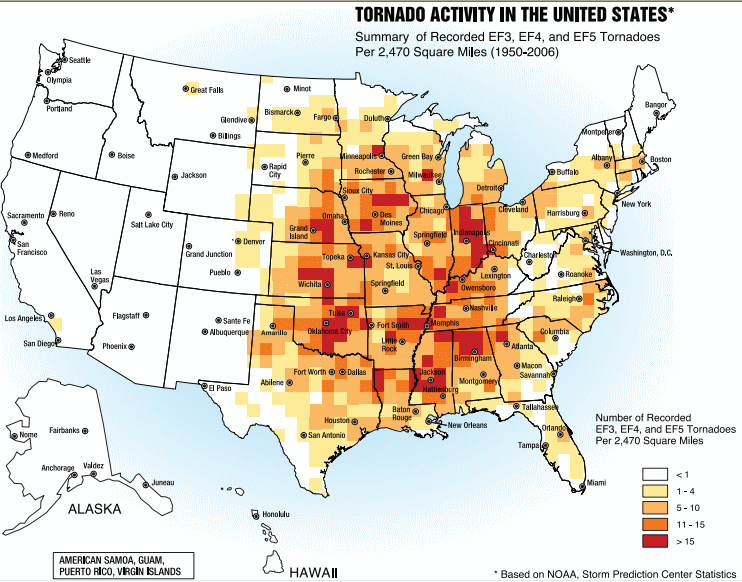
You can see which states really took off with wind power, I don't know why you're highlighting coastal areas and the Great Lakes when Colorado and Texas have demonstrated an equally large potential.
Does the Bible say something about windmills being evil? Not much going on in the southeast according to that GIF.
-
My Opinion, More BFE Buffalo Ridge ProjectsThere's over two hundred Z-750 windmills (the largest turbines made in the USA when they were put up in the 90s) on farmland in Minnesota along Buffalo Ridge, my father helped pour the foundations for them. As far as I know (and Wikipedia state):
Xcel has contracted an additional three hundred megawatts of wind energy by 2010 and must obtain ten percent of its own electricity from renewable sources by 2015. Xcel is expected to increase its wind power contracts from 302 megawatts to one 1125 megawatts by 2010.
If you're worried about avian species, Wikipedia quotes two studies that found in seven months a death of 1.1 to 1.4 birds killed per windmill. Bats are higher but it's lower than bat deaths related to lighthouses, communication towers, tall buildings, power lines, and fences. So while unfortunate, it could probably be viewed as acceptable.
The advancements in turbine technology and infrastructure will always be needed but to answer the DOE's "Annual installations need to increase more than threefold." Why don't they just buy up a bunch of (relatively) cheap farmland in Minnesota? I think you can get away with negotiating the small plot of land they use and service roads through fields while still letting the bulk of the land be used for farming. Farmers already maneuver around sloughs that rise and fall with the water table. I don't know how the rights to offshore wind farms work or what the costs to permits are but it seems like you'd just have a strip of them so why not just do a huge block out in the middle of nowhere instead?
You can see which states really took off with wind power, I don't know why you're highlighting coastal areas and the Great Lakes when Colorado and Texas have demonstrated an equally large potential. -
Re:Cheating Moon
While you can't see the Great Lakes in this picture, the Moon is not that big compared to them.
They would completely dominate Rhea's surface.
http://upload.wikimedia.org/wikipedia/commons/3/3a/Rhea_Earth_Moon_Comparison.png
-
Re:Yeah...
http://commons.wikimedia.org/wiki/File:Uganda_mobile_phone_charging_service.jpg
One of quite a few possibilities...
-
Re:Remind me again
I cringe at the thought of running open office or gimp on a smartphone.
-
Re:Look for the upside
No, just the R&D that costs trillions with no foreseeable return. There is nothing even remotely as expensive as space exploration. It's not the same as spending $500 million curing a disease. That's a bargain. There are no bargains in space... it's all retail x1000.
Wow - you make an interesting argument. The way I see it, in the context that you're talking about, $500M in disease research and $500M in space exploration are exactly the same. When have you ever seen a disease cured with an associated price tag that's known beforehand. When diseases are researched, we don't know how much it would take until we see a return on investment.
As far as your statement about nothing being more expensive than space exploration - I'm not sure if you're being facetious or are just ignorant. Entitlement programs are orders of magnitude more expensive than space exploration. Look at a summary of the federal budget sometime. Here's a nice simple chart. Now, take a look at NASA's budget. 1.3 trillion for medicare + medicaid + social security versus 17.9 billion for NASA. Hell, even if you take out social security and just include medicare and medicaid, you're talking about 676 billion versus 17.9 billion. Even at it's peak during the Apollo program, NASA's budget was just 33.5 billion (2007 constant) dollars. A drop in the bucket compared to modern entitlement programs.
Frankly, I'm astounded by the positions that you've taken, and the absolute statements that you toss around - as if we should all feel the same way as you - and if not, should find another planet. Good luck with all that.
-
ATSC vs the world
I invite you to watch these different DTT tests. Yes, i know North America are already screwed, but just to be clear Digital TV is not the problem, but the standard chosen in your country. Sure, in theory ATSC can reach farther from a single source, but whats the point when the system is so fragile analog works better? Naturally the rest of the world is avoiding ATSC.
This is how the Japanese system performs on the road. Can yours do the same? Actually, no.
-
Re:So.. factories are *moving* within china
I think the world is overpopulated. I also think that's the prime reason pollution is a problem - we're sitting in our own filth. If the world only had 1 billion (like the year 1800) that problem would disappear.
I agree. Europe is helping, but we got to convince other countries to lower their birth rates ASAP.
-
Re:Point proven
Maybe they're worried about the radioactive waste that a fusion reactor generates when it reaches it's end of life. After all, fast neutrons generated during fusion will activate materials near it. But as far is I know, these activated stuff will only have a half-life of about 300a. Sure, it has to be dumped in a safe place, but...
-
Re:Real linkMore than 17,000, all stored in huge Storagetek libraries:
http://upload.wikimedia.org/wikipedia/commons/e/eb/Storagetek-tape_drive_hg.jpg
More info on CERN's infosystems for the collider, as they're the Tier-0 site (which means, in realtime, they take the raw detector data, strip it to the bare essentials, and than shove it out to Tier-1 sites at up to 40Gb/s (depending on the detector/experiment):
-
Re:Interplanetary re-entry
Yeah I suppose so but the Galileo entry probe entered Jupiter at 45km/s or so and it survived okay. Designing a heat shield is really just a question of how much energy vs how thick to make it.
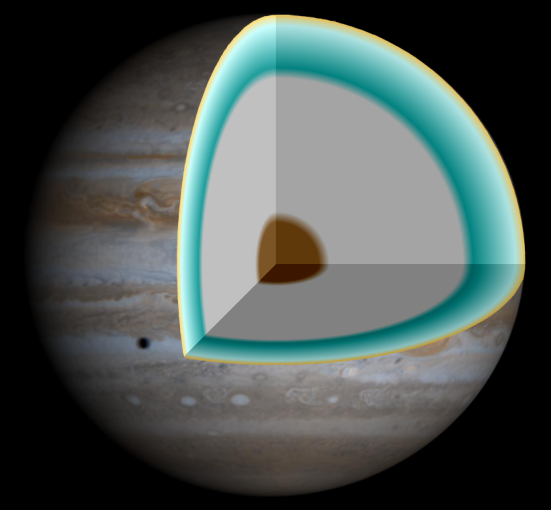
You mean it survived OK for a little over an hour. On a planet that may or may not have a solid surface to speak of, and probably has a huge "liquid" layer that the probe didn't get close to reaching it (See the thin yellow line, the probe stopped communicating somewhere in there!) would be analogous to the Hayabusa completely burning-up before leaving the mesosphere.
The heat shield is for aerobraking which takes a few minutes at the most. There is no guarantee that this probe will survive for hours in the Australian outback without assistance, too.
-
Re:Interplanetary re-entry
Yeah I suppose so but the Galileo entry probe entered Jupiter at 45km/s or so and it survived okay. Designing a heat shield is really just a question of how much energy vs how thick to make it.
You mean it survived OK for a little over an hour. On a planet that may or may not have a solid surface to speak of, and probably has a huge "liquid" layer that the probe didn't get close to reaching it (See the thin yellow line, the probe stopped communicating somewhere in there!) would be analogous to the Hayabusa completely burning-up before leaving the mesosphere.
The heat shield is for aerobraking which takes a few minutes at the most. There is no guarantee that this probe will survive for hours in the Australian outback without assistance, too.
-
Re:Interplanetary re-entry
Yeah I suppose so but the Galileo entry probe entered Jupiter at 45km/s or so and it survived okay. Designing a heat shield is really just a question of how much energy vs how thick to make it.
You mean it survived OK for a little over an hour. On a planet that may or may not have a solid surface to speak of, and probably has a huge "liquid" layer that the probe didn't get close to reaching it (See the thin yellow line, the probe stopped communicating somewhere in there!) would be analogous to the Hayabusa completely burning-up before leaving the mesosphere.
The heat shield is for aerobraking which takes a few minutes at the most. There is no guarantee that this probe will survive for hours in the Australian outback without assistance, too.
-
Re:Interplanetary re-entry
Yeah I suppose so but the Galileo entry probe entered Jupiter at 45km/s or so and it survived okay. Designing a heat shield is really just a question of how much energy vs how thick to make it.
You mean it survived OK for a little over an hour. On a planet that may or may not have a solid surface to speak of, and probably has a huge "liquid" layer that the probe didn't get close to reaching it (See the thin yellow line, the probe stopped communicating somewhere in there!) would be analogous to the Hayabusa completely burning-up before leaving the mesosphere.
-
Re:Interplanetary re-entry
Yeah I suppose so but the Galileo entry probe entered Jupiter at 45km/s or so and it survived okay. Designing a heat shield is really just a question of how much energy vs how thick to make it.
You mean it survived OK for a little over an hour. On a planet that may or may not have a solid surface to speak of, and probably has a huge "liquid" layer that the probe didn't get close to reaching it (See the thin yellow line, the probe stopped communicating somewhere in there!) would be analogous to the Hayabusa completely burning-up before leaving the mesosphere.
-
Re:Interplanetary re-entry
Yeah I suppose so but the Galileo entry probe entered Jupiter at 45km/s or so and it survived okay. Designing a heat shield is really just a question of how much energy vs how thick to make it.
You mean it survived OK for a little over an hour. On a planet that may or may not have a solid surface to speak of, and probably has a huge "liquid" layer that the probe didn't get close to reaching it (See the thin yellow line, the probe stopped communicating somewhere in there!) would be analogous to the Hayabusa completely burning-up before leaving the mesosphere.
-
Re:Noooooooooo
Try Vega Strike. Oolite keeps the same gameplay as elite but updated for modern hardware, Vega Strike keeps very similar gameplay but updates it a lot. You have multiple factions, a missions, different stations that produce different things. You can trade or fight, explore or do missions. In the last version, there was a nice trade route buying coffee on a planet and trading it for refined metals on an asteroid mine - unlike some other games, the commodity pricing actually makes sense.
-
Re:Worthless plan
Google is your friend. Clue one. The southern cross cable *network* doesn't just go to Austria.
I am fully aware of that fact, and I did check Google before posting. Now instead of being so patronising, I suggest you make note of the following clues yourself, and then provide some evidence to back up your claim:
- I never claimed the SSC system was a single cable - read my post again.
- The SSC system doesn't go to *Austria* either - we don't live in the middle of Europe.
- The SSC system is a ring network connecting NZ and Australia to the US via Hawaii & Fiji (ref).
- There is no other cable system connecting NZ to anywhere of note internationally with a design capacity over half a gigabit or so.
- You mention additional cables headed to the US and Japan with capacity charges on the order of 'cents per 100 gigabits', yet I find it extremely hard to believe such a claim - if that were true, then I could lease the entire capacity of one of the other low-capacity cables for a couple of bucks.
So as I said before - references please. Your claim has no credibility otherwise.
-
Re:wtf AGAIN
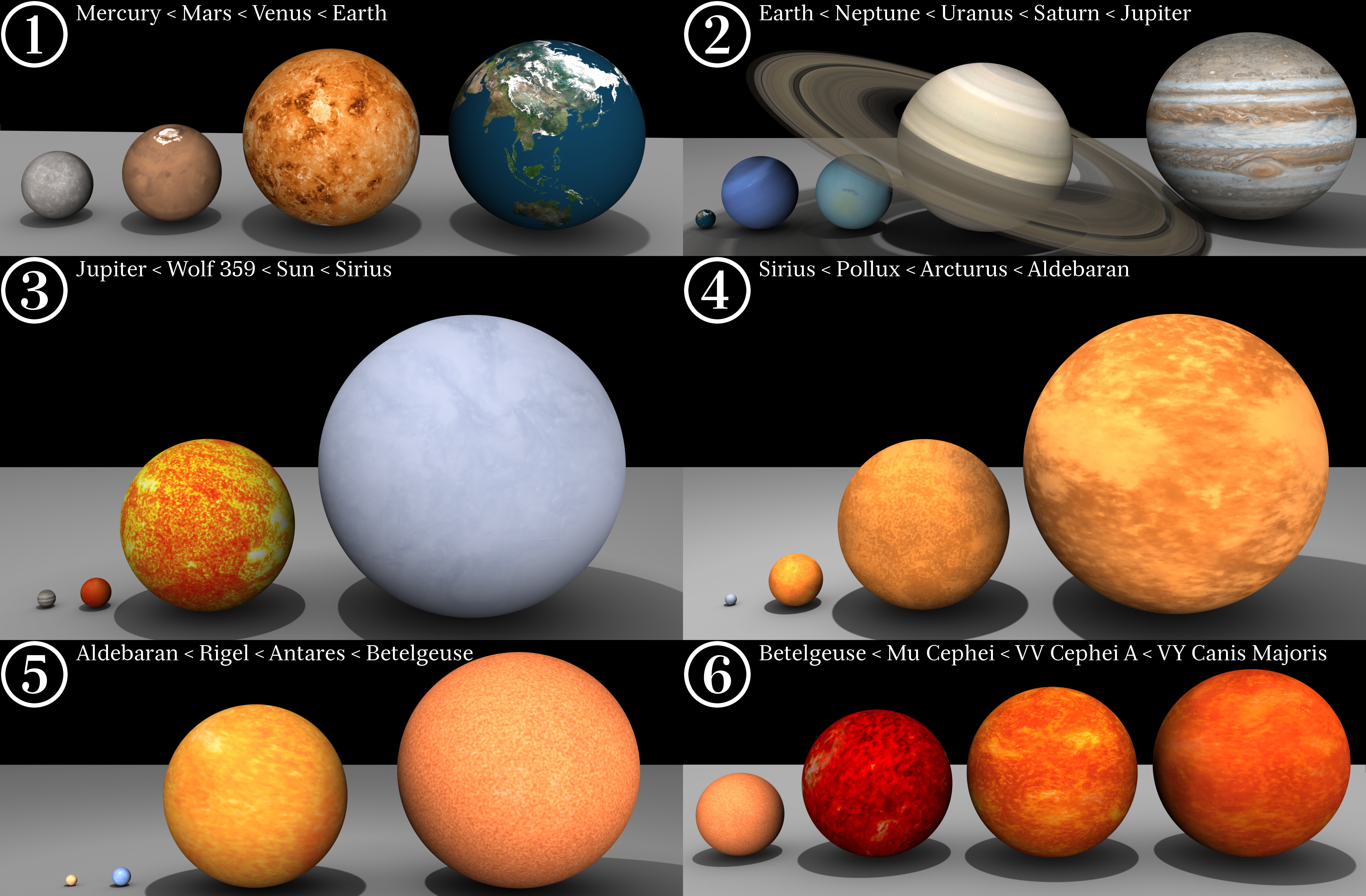
However, as soon as you start to assign numbers to this kind of stuff, the brain just sort of stops trying and you occasionally find yourself just kind of going "wow".
Ahh here is the picture I was looking for:
http://upload.wikimedia.org/wikipedia/commons/c/cc/Star-sizes.jpgWhen you wrap your mind about the significance of the transition from frame 4 to 5 is when I really get that 'wow' feeling.
-
Re:Integrated bench
Well, you have to admit, the Cray I looks an awful lot like a piece of furniture.
I wouldn't be able to sit on one, though. It would somehow seem....disrespectful.
-
Re:Cosmetics?
You seriously trust a website run by a guy who looks like this? He looks like he'd be more at home peddling CD's of his pan flute music at the local farmers market than spouting new age mumbo-jumbo and conspiracy theories on the interwebs.
Seriously! It's much safer to only trust people with a more orthodox appearance...
The first one doesn't matter because Disco's dead. the second one is what nightmares are made of.