Slashdot Mirror
Domain: wisc.edu
Stories and comments across the archive that link to wisc.edu.
Comments · 1,436
-
Re:Bad Belkin
Agreed. I am astonished that this happened. I thought the router companies would have learned their lesson after the SNTP nonsense over a decade ago. Clearly I was mistaken. For those that do not know about that incident, here you go:
-
Re:Another terrible article courtesy of samzenpus
Double posting from the same article with this nugget:
Why the difference? The Florida landfill did not have a clay cap during the study, which would have sealed it from the elements. Caps are federally mandated to reduce pollution from water flowing into landfills. In the process, however, they reduce moisture content in the waste, the "master variable" in helping garbage decompose.
http://www.engr.wisc.edu/news/...
Does anyone know if that capping is still a federal mandate? If so, this is a case where regulation against one hazard is creating another.
-
Re:Another terrible article courtesy of samzenpus
The residents are still free to waste all the food they want as long as they put it in the correct bin.
Although the issue here is about what bin you put waste food into, let me point you to a 1998 article on the topic of waste landfills and the types vs. the time of decomposition:
http://www.engr.wisc.edu/news/...
The point I am trying to make is that this law is targeting the wrong thing.
The study found that food decomposes relatively quickly. After six years in the Madison site, pasta, lima beans, peanuts and sunflower seeds all lost at least half of their dry weight, and pasta almost completely vanished. In Florida, the food samples were all more than 75 percent decomposed after only two years.
Newspaper was the only material that showed little change: Only 17.4 percent decomposed in Florida after two years, and 8.5 percent in Madison after six years.
Given a choice, putting the fine on paper products especially newspaper makes more sense from the point of view of reducing landfill real estate. Of course, someone putting food in the paper bin would upset the recycling process a miniscule amount not one that is too difficult to solve at the dump site. I suspect this is more about generating more revenue selling the compost since that pile would be reduced from wrong bin sorting. That's just my speculation though not supported by any facts.
-
Original sources
It is really surprising that neither the linked Extremetech article, nor the slashdot summary cite the original source. This research was presented in HPCA'13 in a paper titled "Power Struggles: Revisiting the RISC vs. CISC Debate on Contemporary ARM and x86 Architectures", by Emily Blem et al, from the University of Wisconsin's Vertical Research group, led by Dr. Karu Sankaralingam. You can find the original conference paper in their website.
The Extremtech article indicates that there are new results with some additional architectures (MIPS Loongson and AMD processors were not included in the original HPCA paper), so I assume that they have published an extended journal version of this work, which is not yet listed in their website. Please add a comment if you have a link to the new work.
I do not have any relation with them, but I knew the original HPCA work.
-
Original sources
It is really surprising that neither the linked Extremetech article, nor the slashdot summary cite the original source. This research was presented in HPCA'13 in a paper titled "Power Struggles: Revisiting the RISC vs. CISC Debate on Contemporary ARM and x86 Architectures", by Emily Blem et al, from the University of Wisconsin's Vertical Research group, led by Dr. Karu Sankaralingam. You can find the original conference paper in their website.
The Extremtech article indicates that there are new results with some additional architectures (MIPS Loongson and AMD processors were not included in the original HPCA paper), so I assume that they have published an extended journal version of this work, which is not yet listed in their website. Please add a comment if you have a link to the new work.
I do not have any relation with them, but I knew the original HPCA work.
-
Original sources
It is really surprising that neither the linked Extremetech article, nor the slashdot summary cite the original source. This research was presented in HPCA'13 in a paper titled "Power Struggles: Revisiting the RISC vs. CISC Debate on Contemporary ARM and x86 Architectures", by Emily Blem et al, from the University of Wisconsin's Vertical Research group, led by Dr. Karu Sankaralingam. You can find the original conference paper in their website.
The Extremtech article indicates that there are new results with some additional architectures (MIPS Loongson and AMD processors were not included in the original HPCA paper), so I assume that they have published an extended journal version of this work, which is not yet listed in their website. Please add a comment if you have a link to the new work.
I do not have any relation with them, but I knew the original HPCA work.
-
Problem and possible alternatives
This is a real pity for the TM community. This is not the first chip with transactional memory support in hardware: The Sun Rock was announced to have hardware TM support, and the IBM Blue Gene/Q Compute chip also supports it. Unlike other proposals for unbounded transactional memory, all these systems employ Hybrid Transactional Memory (ref, ref, ref), in which restricted hardware transactions are designed to correctly coexist with unbounded software transactions, so a software transaction can be started in case a hardware transaction fails for some unavoidable issue (such as lack of cache size or associativity to hold speculative data from the transaction, not because of a conflict). Note that, in any case, very large transactions should arguably be very uncommon, since they would significantly reduce performance (similar to very large critical sections protected by locks).
The problem with the hardware implementation of transactional memory is that they are not simply a new set of instructions which are independent from the rest of the processor. HTM implies multiple aspects, including multiversioning caching for speculative data; allowing for the commit of speculative (transactional) instructions, which could be later rolled back (note that in any other speculative operation such as instructions after branch prediction, the speculation is always resolved before instruction commits because the branch commits earlier); a tight integration with the coherence protocol (see LogTM-SE for an alternative to this very last issue, but still...); a mechanism to support atomic commits in presence of coherence invalidations... From the point of view of processor verification, this is a complete nightmare because these new "extensions" basically impact the complete processor pipeline and coherence protocol, and verifying that every single instruction and data structure behaves as expected in isolation does not guarantee that they will operate correctly in presence of multiple transactions (and non-transactional conflicting code) in multiple cores. There are some formal studies such as this or this, and the IBM people discuss the verification of their Blue Gene TM system in this paper (paywalled).
As some others commented before, the nature of the "bug" has not been disclosed. However, since it seems to be easy to reproduce systematically, I would expect it to be related to incorrect speculative data handling in a single transaction (or something similar), rather than races between multiple transactions.
Regarding the alternatives, Intel cannot simply remove these instructions opcodes because previous code would fail. I assume that the patch will make all hardware transactions fail on startup, with an specific error (EAX bit 1 indicates if the transaction can succeed on a retry; setting this flag to 0 should trigger a software transaction). In such case, execution continues at the fallback routine indicated in the XBEGIN instruction, which should begin a software transaction. Effectively, this will be similar to a software TM (STM) with additional overheads (starting the hardware transaction and aborting it; detecting conflicts with nonexistent hardware transactions) that would make it slower than a pure STM implementation.
-
Re:Or deal with pointer arithmetic properly
Pointer arithmetic? Whose dumb-ass idea is that? http://www.neurophys.wisc.edu/...
-
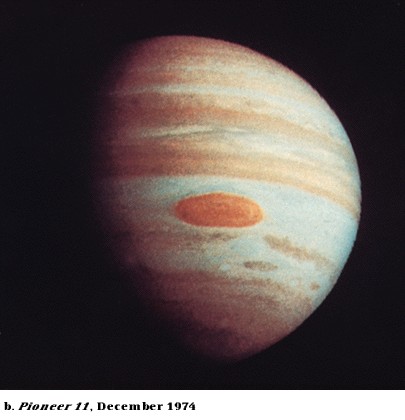
1974 for comparison:
Look how wide it was in 1974, when Pioneer 11 flew by:
-
Re:Five hundred years?
How does a 500 year data set apply to a 4.5 billion year old planet?
This is absurd. Do seconds not matter, because, days, months, years? Earthquakes occur in about a minute or so, right? Seconds, even. How can they apply to a 4.5 billion year old planet? The mass of the earth is about 6E24 kg. Does a scale measuring micrograms not function on the earth? Do single cells of your body not matter because, you know, there are trillions of them?
Here's a page with the basic science and statistics. Educate yourself.
-
Re:Careful now
And the placebo effect has no side effects while "approaching the treatment effect" when certain conditions are met. Personally, if the doctor has no options for say, treating facial nerve pain (aka "suicide syndrome") then I'll try homeopathy. I've seen it work with rather amazing effectiveness up close and personal, even for skeptics and even for small children.
-
Re:Microwaves?
Curvature of the earth?
Interesting idea, but simply NOT workable.
http://ara.wipac.wisc.edu/home 6 kilometer radius.
The Earth's curvature results in less than 3 meters of drop from the center to the furthest station, so it actually works in your favor. -
Re:Cambridge Dogma
Whoah. Are you even remotely aware of what is being done in cosmology these days?
Planck Sloan Digital Sky Survey
Square Kilometer Array
Ice Cube
Large Synoptic Survey Telescope
Euclid
Hardly "ideologically/branding driven pseudoscience". Who the hell modded you up? -
Re:is that really better than earth based?
One way to put material into orbit is a large rail gun, powering it would require a major
hydro electric dam or reactor, or something on par.http://www.csmonitor.com/Scien...
One method talked of using a vacuum tube to eliminate initial friction inside the launch tube.
https://en.wikipedia.org/wiki/...
This idea has been around awhile.
I think it would be good for sending back HE3 canisters from the moon
to power HE3 fusion reactors like the one at University of Wisconsin. -
Re:is that really better than earth based?
One way to put material into orbit is a large rail gun, powering it would require a major
hydro electric dam or reactor, or something on par.http://www.csmonitor.com/Scien...
One method talked of using a vacuum tube to eliminate initial friction inside the launch tube.
https://en.wikipedia.org/wiki/...
This idea has been around awhile.
I think it would be good for sending back HE3 canisters from the moon
to power HE3 fusion reactors like the one at University of Wisconsin. -
Re:Rule of acquisition 18
"Some day socialism will finally work when products magically appear infinitely cheaply."
When robots walk around with hands that are 3D printers, and they can print hybrid
graphene carbon nano tube solar cells and stick them to all the structures on the planet perhaps.And the robots can print more robots...
Maybe we will have to wait for robot to mine the moon for HE3 to power a Fusion reactor ?
http://www.kurzweilai.net/poss...
https://en.wikipedia.org/wiki/...
http://fti.neep.wisc.edu/galle...
I don't like some aspects of socialism, but if we can have a star trek world,
and power becomes so cheap its not worth metering then we are closer
then most ppl think.This is part of Kurzweil's singularity.
https://en.wikipedia.org/wiki/...
It will need the power, and it is coming closer.
Think a billion solar roofs...or more...
-
Re:Woooo
My money is on this version...
This is the reason ppl are talking about mining the moon, Helium-3 is
needed for this method. -
Re:You have to be joking getting rare earths from
Again, only one up there is worth going up there for.
HE3.
And here is why...
-
Re:Reality check
HE3 for fusion, a prototype reactor is running at University of Wisconsin.
http://fti.neep.wisc.edu/galle...
The equivalent of one shuttle load would power the entire planet for about 1 year.
The solar wind puts more HE3 back in the regolith over time.
If the mining is done by robots similar to pathfinder, a mag coil mass driver
can fling it back to earth.The mag coil mass driver flinging material back to earth is an old NASA plan.
it could make ocean parachute landing like the Apollo missions did.
-
Re:Rare Earths?
You are correct , HE3 is is the #1 reason, thou you could call it a rare earth technically.
-
Re:"rare earths"
There is a working HE3 reactor now, the fuel is the only issue, time for you to read up.
http://fti.neep.wisc.edu/galle...
Scaling up to power production is not done, but the experimental stage is there.
-
Re:Liking my old cars more and more.
But I can tell you that there have been at least 5 times when I was sure the lane next to me was empty but the blind spot light was on. 4 times, somebody had legitimately come into my blind spot from an unseen angle.
Are you sure you have your mirrors adjusted correctly? Many (most?) people adjust their side mirrors so they can see the rear end of their car, but better method is to adjust them so the images slightly overlap with the center mirror - as described here or here or here. (or Google: adjust car side mirror) This method eliminates all of the blind spots.
To adjust mine, I simply park on a long straight road and adjust each side mirror until the image on the inside edge just overlaps the image on the outside edge of the center mirror.
I just buy the little convex mirrors and stick them on my side mirrors. This way I can see anything to either side of me no matter where they are. I primarily got them for towing my boat but they work great for everyday driving.
-
Re:Liking my old cars more and more.
But I can tell you that there have been at least 5 times when I was sure the lane next to me was empty but the blind spot light was on. 4 times, somebody had legitimately come into my blind spot from an unseen angle.
Are you sure you have your mirrors adjusted correctly? Many (most?) people adjust their side mirrors so they can see the rear end of their car, but better method is to adjust them so the images slightly overlap with the center mirror - as described here or here or here. (or Google: adjust car side mirror) This method eliminates all of the blind spots.
To adjust mine, I simply park on a long straight road and adjust each side mirror until the image on the inside edge just overlaps the image on the outside edge of the center mirror.
-
Re:Something about cart and house, counting chicke
Catcha a falling neutrino why don't you.
Being done as we speak, by one of the coolest (both figuratively and literally) experiments ever designed.
(Technically, they weren't falling but rising- Ice Cube uses the Earth as a shield to screen non-neutrino events)
-
Re:A bigger risk
A greater intelligence may prefer internally inconsistent rules and use complex heuristics to choose between them. To us, the results of that process may seem so unfathomably complex that it looks random.
I enjoyed this story which is related: http://www.ssec.wisc.edu/~billh/g/mcnrsts.html
-
Condor and other on EC2: PiCloud,
Docker looks promising, but there are other existing services stacked on EC2 that address the needs of science workloads. PiCloud does exactly the things you're asking for: http://www.picloud.com/platform/ . And the folks at Cycle Computing use Condor to manage the largest jobs ever run on EC2: http://www.cyclecomputing.com/ . I'm still working on my own stuff based on Groovy and Condor which I call Gondor, but it isn't at all ready for others to use. One thing I have found to be great is that there is a MacPorts portfile for Condor which works dandy. Just "sudo port install htcondor && sudo port load htcondor". http://research.cs.wisc.edu/htcondor/HTCondorWeek2013/presentations/SingerL_MacPorts.pdf . I don't yet see a nice single workflow that gets us to an integrated reproducible published result at the other end like Elsevier's Executable Paper http://www.elsevier.com/physical-sciences/computer-science/executable-papers, but I think we'll be there soon.
-
Re:they're not geeks, theyre assholes.
2. Grinding poverty and inequality: Monarchial rule begets serfdom and a midevil class structure. furthermore that class is infected upon your name for generations. Kings decide what you can and cannot eat with hunting laws, and who you can and cannot marry by proxy of the church. in the past, even certain hats and colors were banned by monarchies.
While there are problems with monarchies, this is not one of them, not relative to modern society. Gaps in inequality were much less in feudalism (though everyone had less overall, too),
Oh my. Citiation needed.
Let's see, around 1100 AD in England 75% of the wealth (land) was owned by just 200 people (0.01% of the population): http://faculty.history.wisc.edu/sommerville/123/123%2013%20Society.htm
As bad as wealth inequality is in the US (it is by far the most extreme among the economically advanced nations), here it takes a full 10% of the population to reach this level of wealth ownership: http://en.wikipedia.org/wiki/Wealth_inequality_in_the_United_States
that bad, no worse than your average modern wage-slave (and serfs actually tended to work fewer hours each day than we do).
Support for your claim?
-
Ugh
Is Slashdot powered by Mechanical Turk?
BAD:
At Long Last: IceCube Spots 28 High-Energy Neutrinos
Wired reports that IceCube, the detection facility built just to detect such things, has seen just what it was looking for, even though the researchers involved didn't knot it at the time. High-energy neutrinos, the target that IceCube was seeking, weren't showing up as had been hoped, but it turns out that there were quite a few (nearly 30 already, with 2013's data still being recorded) in the three years that the detector has been operating — they just weren't obvious until the data was combed for it. "Most of the 28 high-energy neutrinos so far detected originate from parts of the night sky that don’t include the Milky Way, making it quite likely that they are arriving from a distant source. There are still too few neutrinos to make any specific conclusions about AGNs or gamma-ray bursts, but the IceCube team will continue gathering new data."
Good:
At Least 28 High-Energy Neutrinos Detected by IceCube
From Wired ( http://www.wired.com/wiredscience/2013/11/icecube-neutrinos-detected/ )The high-energy neutrino detector IceCube ( http://icecube.wisc.edu/ ) has detected at least 28 high-energy neutrinos in the past 3 years. Until recently, this number was thought to be zero.
The quote from an unknown person is useless because it doesn't tell us what high-energy neutrinos are, why they didn't know about the 28 detections until now, or what AGNs are.
-
Re:A whole 100,000 bucks?
Doesn't even pay the tuition plus living expenses for an *average* college.
That certainly more than pays for tuition and living expenses for in-state residents at a public school (often above average schools).
Spring 2013 Tuition at University of Wisconsin-Madison: $10,400/year [1]
Which would leave $14,600/year for living expenses. More than enough.
Non-residents have to pay $26,600/year so tuition would be nearly covered, but not living expenses. However, I think most states have an "average" public university, or reciprocity with a near by state which does. I've even heard of state universities offering free or highly reduced tuition for students who have decent grades or ACT/SAT scores. These numbers, of course, don't include any other financial assistance or scholarships.
[1]http://registrar.wisc.edu/tuition_&_fees.htm -
Re:Rust
* memory management is explicit [merriam-webster.com] -- what does this mean?
Quantifying the Performance of Garbage Collection vs. Explicit Memory Management
Automatic vs. Explicit Memory Management: Settling the debate* deterministic [merriam-webster.com] -- what does this mean?
I thought it was self evident. Here is a discussion of the matter.
* endemic [merriam-webster.com] use of a garbage collector... -- what does this mean?
Pervasive would be a better word. Languages that make garbage collected allocations for most or all things. For example in Java, aside from primitives, all allocations conceptually occur on the a garbage collected heap.
reference-counted heap objects
Reference counting: counting the number of references to an object.
Heap: an arena of memory maintained by a memory allocator. Also CPUs typically have no knowledge of how software manages heaps. You may be thinking of virtual memory
Objects: object in the generic sense of some amount of memory managed on a heap. These lecture notes show the same usage. The editors of this page also use the word 'object' in exactly the same manner when discussing pointers. It's not that hard to follow.Putting it together we have objects on a heap for which reference counts are maintained; reference-counted heap objects.
"exchange" heap -- what does this mean?
* "local" heap -- what does this mean?The link I provide to Patrick Walton's blog would get you there. Also, there is documentation, Sorry if discussing a new programming language involves terms you haven't heard. Computing can be like that sometimes.
(note: there is only one "heap" on most CPU architectures, so now we have added abstraction)
Now you are definitely confusing heaps and virtual memory. There are usually many, possibly thousands of heaps on a system at any given time with many distinct implementations of which the CPU is entirely ignorant. Memory allocators and virtual memory are different things.
* via an "owned" pointer -- what does this mean?
Similar to a C++ auto_ptr or unique_ptr. Again, the link I provided would get you there.
* wild pointers -- what does this mean?
Dangling pointer and wild pointer are synonomous.
Use of the exchange heap is exceptional and explicit yet immediately available when necessary -- what does this mean?
I provided a link directly to a discussion of this.
Memory "management" is reduced to efficient stack pointer manipulation -- uhh, what? the language sits around modifying content at %esp and %ebp along with some offsets? sounds far from efficient)
Incrementing a decrementing stack pointer registers is very efficient. Offsets are computed at compile time and the instructions typically require one CPU cycle and no memory access, given a naive model of a CPU. These techniques are a ancient and ubiquitous. Sorry you weren't familiar with them.
or simple, deterministic destruction -- what does this mean?
-
Re:Last known position 33.50 S 169.41E June 4th
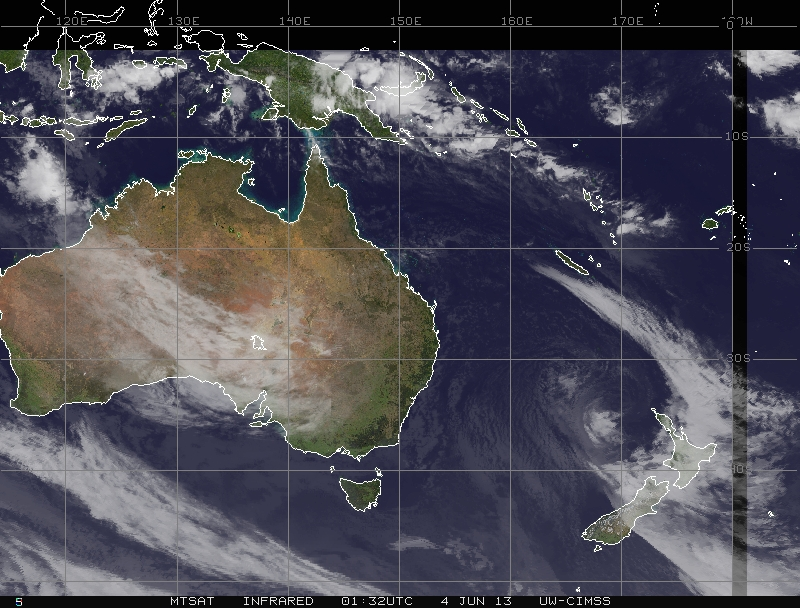
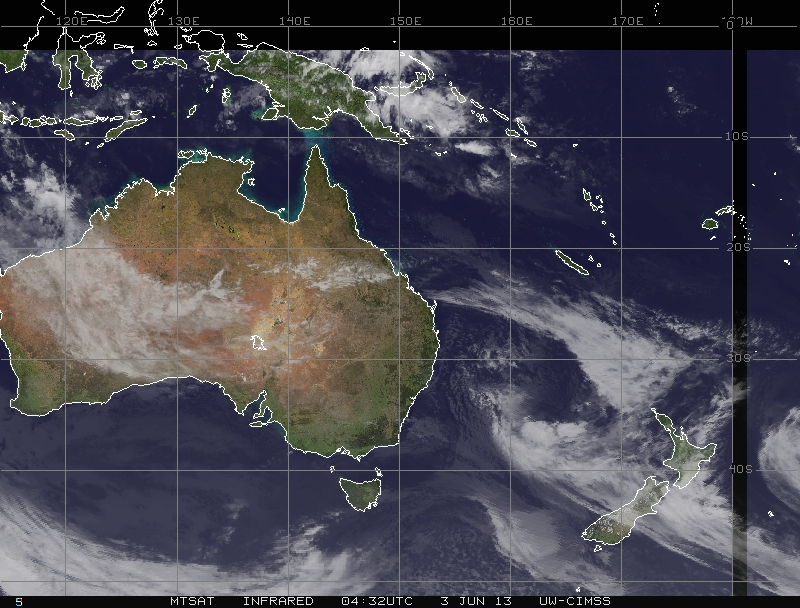
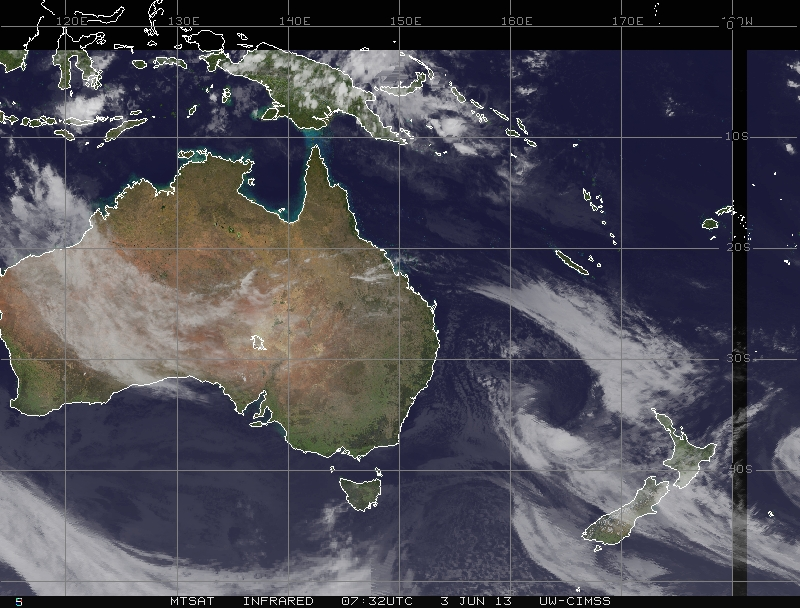
I just noticed the date of the Pan-Pan alert. I wonder if the standard for PanPan broadcasts is Zulu time or local time and if so, what locale? Anyway by midnight June 4th Z, the storm was right over them and then sending them south should have reduced their time in the storm but it would have risked giving them a fierce headwind and driving them back to New Zealand if they were disabled.
-
Last known position 33.50 S 169.41E
Posted on the cruisers forum:
Current from Australia Maritime Safety Information current at 300000 UTC JUN 13 Issued by the Australian Maritime Safety Authority Rescue Coordination Centre (RCC Australia) Part 1. Distress, Urgency, CQ and Safety Messages: PAN PAN FM RCC AUSTRALIA 260143Z JUN 2013 AUSSAR 2013/4000 TASMAN SEA RCC AUSTRALIA REQUESTS INFORMATION REGARDING SIGHTINGS OR COMMUNICATIONS WITH THE WHITE AND GREEN 60FT SCHOONER RIGGED VESESL 'NINA'. THE VESSEL HAS 7 POB, AND WAS ON A VOYAGE FROM OPUA NEW ZEALAND TO NEWCASTLE AUSTRALIA, LAST KNOWN POSITION 33-50S 169-41E 04 JUNE 2013. REPORTS TO THIS STATION OR RCC AUSTRALIA VIA TELEPHONE +61262306811 INMARSAT THROUGH LES BURUM (POR 212,IOR 312), SPECIAL ACCESS CODE (SAC) 39, HF DSC 005030001, EMAIL: rccaus@amsa.gov.au OR BY FAX +61262306868. NNNN
So this is why they're still looking in NZ. Last known position was north of the center of the storm which means she would have been initially blown east if she'd been dis-masted or her crew was otherwise set adrift on June 3-4th. One thing I don't understand is given this position, why would they have been guided to sail south, towards the center of the storm in order to "get out of this nasty weather"?
Notice that they aren't too far from an intense white spot (thunderhead?) in this photo. Could they have been guided from inside a relatively localized thunderstorm towards the eye of the storm?
-
Re:more information here
Good thread. If someone Evi loved and respected were lost at sea, she might want to help organize a crowdsourced search and rescue effort like the one used in search of Jim Gray, Tyler Wright and Steve Fosset. What we need is data. As someone who has sailed for decades, I won't underestimate the scope of the effort. VHF radio doesn't reach much beyond the horizon and a mast of a ship that size wouldn't be seen or return a RADAR reflection more than about 7 miles under ideal conditions. So if EPIRB, HF and Satellite are down, the ship only has a 6 or 7 mile radius of observability, less if it has been dis-masted. (Somewhat likely given the conditions.) But the Tasman sea is huge so we need to use data to focus the search effort. The coast guard has a protocol which does this, based on tidal and weather patterns. But we can extend this based on the particular kind of boat, how well it sails into the wind, how fast it is, the captain and crew's behavior and the recommendations to go south of a low on June 3rd, 2013. Apparently GPS coordinates weren't part of Evi's last broadcast. But we can take the same reasonable assumption that I've see rescue people speak of, that they were in th center of the storm. Here is a weather satellite photo of the area on June 3rd. The storm seemed strongest at about 38S 165E. If they were in the thick of it by June 3rd, they were already pulled south of the rhumb-line to their destination, they might have drifted or been forced even further south. The storm grew stronger for at least another day as it moved east on June 4th. If they were ahead of (West of) the storm, they were almost certainly pushed north and west because lows circulate clockwise in the southern hemisphere. If they were behind it they may have been pushed south but I think this is less likely since they should have been already pretty far from NZ and the storm was moving east as they were moving west. Here are the weather satellite photos for the rest of June. But what we need are high resolution satellite or aircraft photos. Unfortunately this part of the world at this time of year is covered in clouds much of the time. Even the recon mission photos might not show much. So like the guy who looks for his keys under the streetlight, we might be limited in where we can crowdsource search. If someone were really industrious, they'd send out drones or balloons equipped with high resolution cameras. It's still a needle in a haystack, but its something. And if it helps bring these people home, it's worth it. If you ever want to read a harrowing story about someone lost at sea, only a few dozen miles from shore in the relatively tiny Irish sea, read the story of Fastnet 79, "Left for Dead." Evi, we're not giving up on you or the rest of the crew so keep hopeful and focus on yours and your friend's survival.
-
Re:more information here
Good thread. If someone Evi loved and respected were lost at sea, she might want to help organize a crowdsourced search and rescue effort like the one used in search of Jim Gray, Tyler Wright and Steve Fosset. What we need is data. As someone who has sailed for decades, I won't underestimate the scope of the effort. VHF radio doesn't reach much beyond the horizon and a mast of a ship that size wouldn't be seen or return a RADAR reflection more than about 7 miles under ideal conditions. So if EPIRB, HF and Satellite are down, the ship only has a 6 or 7 mile radius of observability, less if it has been dis-masted. (Somewhat likely given the conditions.) But the Tasman sea is huge so we need to use data to focus the search effort. The coast guard has a protocol which does this, based on tidal and weather patterns. But we can extend this based on the particular kind of boat, how well it sails into the wind, how fast it is, the captain and crew's behavior and the recommendations to go south of a low on June 3rd, 2013. Apparently GPS coordinates weren't part of Evi's last broadcast. But we can take the same reasonable assumption that I've see rescue people speak of, that they were in th center of the storm. Here is a weather satellite photo of the area on June 3rd. The storm seemed strongest at about 38S 165E. If they were in the thick of it by June 3rd, they were already pulled south of the rhumb-line to their destination, they might have drifted or been forced even further south. The storm grew stronger for at least another day as it moved east on June 4th. If they were ahead of (West of) the storm, they were almost certainly pushed north and west because lows circulate clockwise in the southern hemisphere. If they were behind it they may have been pushed south but I think this is less likely since they should have been already pretty far from NZ and the storm was moving east as they were moving west. Here are the weather satellite photos for the rest of June. But what we need are high resolution satellite or aircraft photos. Unfortunately this part of the world at this time of year is covered in clouds much of the time. Even the recon mission photos might not show much. So like the guy who looks for his keys under the streetlight, we might be limited in where we can crowdsource search. If someone were really industrious, they'd send out drones or balloons equipped with high resolution cameras. It's still a needle in a haystack, but its something. And if it helps bring these people home, it's worth it. If you ever want to read a harrowing story about someone lost at sea, only a few dozen miles from shore in the relatively tiny Irish sea, read the story of Fastnet 79, "Left for Dead." Evi, we're not giving up on you or the rest of the crew so keep hopeful and focus on yours and your friend's survival.
-
I don't think this is the whole story
This goes much further into explaining some of the variance, both seasonal and longish-term (only goes back to the Fifties), of water table levels in the entire Chad basin - a system that covers a tenth of the entire African continent, not just a relatively small body of surface water. The human impact, according to that paper, accounts for about one twentieth of the total variance in the system but as much as 40% of the surface area of the lake itself (and up to half the volume), with most of that variance originating upstream in tributary river systems. AGW is barely even considered (or even mentioned, going by a quick scan down the paper), since the effects of AGW, if it even exists, have not been or cannot currently be measured because until it is properly defined, nobody even knows what to look for. It does deal with precipitation, which has had a bit of a lull over recent decades (1985-1994 being particularly dry years), but again this deals with the entire system not just the lake.
-
More Information
The satellite blog at University of Wisconsin has more information including some images from GOES 14, now turned on.
-
Paper is freely availible
The paper is freely available from the research group's website: http://oxide.engr.wisc.edu/publications.htm
-
Re:So why call this a breakthrough?
Unless say they published every single one of their papers somewhere else that is free to access... like say on group's publication page. They might not have updated it for the newest one yet, but every previous one seems to be there, including from other Nature journals, so I would expect that one to show up pretty soon considering the article only got published today.
-
Re:We need gas control!
I suspect that there was significantly less looting of the Korean owned stores than there was of the London stores.
I suspect more of them died, thinking that they could protect their stores with guns. I suspect more of them killed innocent people, thinking they were protecting their stores with guns.
"Edward Song Lee
TIME: 9:50 p.m. LOCATION: Near corner of Third Street and Hobart Boulevard, Wilshire District
Lee, 18, a Korean-American living with his mom in the Wilshire District, was out with three friends when they got into a fight with another group of Koreans. Police responded to the gunfight and exchanged fire with both groups. Lee suffered two fatal hits to the chest as he sat in the front seat of a car. Someone in the rival group shot him. Detectives later learned the gun battle was a tragic mistake. Each group had been protecting Korean-owned stores and mistook the other for looters. Police made an arrest; no charges filed."
http://www.ssc.wisc.edu/~oliver/soc220/Lectures220/AfricanAmericans/LA%20Riot%201992%20Deaths.htm -
Re:Bull. Shit.
22 days where I work is all that is allowed by just the HR limits, assuming you had nothing to get done and no scheduling conflicts that prevent you from using those days anyways. Last year I only managed to use about 12 vacation days, some of which I was working while on the road, and my boss used less than that. That is for 12 month appointments. In principle you can get 9 month appointments, which would give you 3 months of "vacation" but those also only pay about $20-30 k a year for just instruction, so that summer is used to find another job.
-
Re:Who cares about some damage to a few cars...
Two weeks later, but hey, why not. Are you a farmer yourself? Do you grow organically? It doesn't sound like it.
And when you talk about 10% organic matter, you're too funny. 10% organic matter exists in tropical forest floors, but not in any farmland in north america. http://www.soils.wisc.edu/courses/SS325/organic.htm . Brazilian farmers get pretty excited about burning down rainforest to plant in that 10% soil. All that organic matter reduces inputs dramatically and generates extremely high yields, for a few years. Then the soil is depleted to the normal levels typical on North American farms and they find their input costs are driven way up, so they abandon that land and burn some more rainforest down. In North America we don't have that luxury if you want to call it that. One thing I do know about replenishing the soil is that erosion can harm soil and it will never ever recover.
Organic farming, really, is similar to Brazilian soil mining, unless you fertilize (manure can provide a lot of this) a lot. You will run out of the other nutrients also. That's why organic farming is no more sustainable than any other form of farming. That gets into weed control.
I repeat rotation is about weed and disease control plain and simple. You telling me it is otherwise is kind of like telling me I'm putting gas in my car for reasons other than I need fuel. I've told you that I rotate crops for weed and disease control.
Sadly in both of these particular areas, organic farming is falling way short. We had a near lawsuit over organic farming in my area because one guy's organic operation was spreading weeds far and wide an forcing neighbors to spray a lot more than they would normally, and for the next several years. Didn't impress me at all.
-
Re:Apple bashing
Well, oh wise one, what reference should they have used to check the plausibility of the route?
Use this handy guide to check the software version that your iDevice is running. If the 'version' value is 6.x, you know you have a plausibility problem. Simple!
-
Re:Pythagoras strikes again...
I think, for example, of Gamelan tunings which are not harmonious in the sense of the overtones lining up, but sure sound right to folks in Indonesia
Gamelan instruments possess strongly inharmonic partials. I read that gamelan tunings were a way of making these partials line up. The exception you give therefore tends to prove the rule.
Further reading : Tuning Timbre Spectrum Scale by William A. Sethares
The gamelan "orchestras" of Central Java in Indonesia are one of the great musical traditions. The gamelan consists of a large family of nonharmonic metallophones that are tuned to either the five note slendro or the seven tone pelog scales. Neither scale lies close to the familiar 12-tet. The nonharmonic spectra of certain instruments of the gamelan are related to the unusual intervals of the pelog and slendro scales in much the same way that the harmonic spectra of instruments in the Western tradition is related to the Western diatonic scale.
Source : The Gamelan - Sethares
Note to all geeks -- tuning theory is very cool.
Strongly agree !
-
Re:Pythagoras strikes again...
I think, for example, of Gamelan tunings which are not harmonious in the sense of the overtones lining up, but sure sound right to folks in Indonesia
Gamelan instruments possess strongly inharmonic partials. I read that gamelan tunings were a way of making these partials line up. The exception you give therefore tends to prove the rule.
Further reading : Tuning Timbre Spectrum Scale by William A. Sethares
The gamelan "orchestras" of Central Java in Indonesia are one of the great musical traditions. The gamelan consists of a large family of nonharmonic metallophones that are tuned to either the five note slendro or the seven tone pelog scales. Neither scale lies close to the familiar 12-tet. The nonharmonic spectra of certain instruments of the gamelan are related to the unusual intervals of the pelog and slendro scales in much the same way that the harmonic spectra of instruments in the Western tradition is related to the Western diatonic scale.
Source : The Gamelan - Sethares
Note to all geeks -- tuning theory is very cool.
Strongly agree !
-
Bill Sethares
Bill Sethares has some nice work about this question, too: http://sethares.engr.wisc.edu/
-
Re:Just saying...
It's been available for years in other places; my partner wrote her dissertation on 17th century science, and used scans of Hooke from a couple of online sources. The National Library of Medicine has a beautiful flash version of it. There is a decent version at the University of Wisconsin. It's at archive.org in a nice scan. The PG edition is very good, an original spelling transcription with scans of the original plates. IIRC there's also a scanned edition in the (pay access) database Early English Books Online. So this is not news at all.
But it's always a good time to look at Hooke. His illustrations really are astonishingly beautiful, and weren't bested for a century or more, and the text conveys something of the wonder to be the first person to *ever* see these things. It's pretty astonishing to imagine what that might have felt like. Hooke not only first saw cells, he coined the word in its biological sense, because he thought the cells in cork bark looked like the cells that monks live in. Hooke was a polymath, a successful mathematician, an architect and inventor, and by all accounts a very good musician. He was also apparently a bit unpleasant and a little crazed, but genius is allowed these things (at least when it's no longer around to annoy you) -
Re:Obligatory:
This IS Beta Centauri Five!!! Beta Centauri Six exploded, six months after we were left here. The orbit of the planet shifted. ADMIRAL Kirk never came back to check on our progress...
Amusing, but, no, Alpha Centauri B is not Beta Centauri. Beta Centauri is a completely different star, about 300 light years away.
http://www.astro.wisc.edu/~dolan/constellations/hr/5267.html
-
The 60s and 70s? Try modern times.
You can still see the characteristic and beautiful Cherenkov radiation at the research reactor at the University of Wisconsin-Madison. I've seen it a number of times.
Up until recently, it contained 1400 pounds of highly-enriched (weapons grade) U-235 in 58-pound bundles. It is in a building across from a 7-level parking ramp and an 80,000-person football stadium.
There are a number of such "Research and Test Reactors" around the US.
A 2005 ABC News report found:
- "No guards. No metal detectors. Bags were brought into the reactor room. Doors to the building are open during the day, and no IDs are required for entry."
- "The building was undergoing major renovation, and construction workers, large trucks and building materials surrounded the rear exterior."
- "The university Web site includes a 'virtual tour' and detailed photos, descriptions and diagrams of the reactor, the fuel elements and the control room. The reactor manager informed the Fellows that tours had to be scheduled three weeks in advance and that a locked door with a window view of the reactor was the closest they could get. But a friendly professor told the Fellows about a basement entry to the reactor room, where a reactor operator opened the door and let the Fellows photograph the reactor from the doorway. Two other operators allowed the Fellows to come inside carrying their tote bags, and briefly take photographs about 15 feet from the reactor's base. No campus security ever approached the Fellows."
An 2004 New York Times report found:
- "[UWNR's] fuel is weapons-grade uranium. If it were stolen, experts say, it could give terrorists or criminals a major head start on an atomic bomb."
- "[...] out of concern that the uranium might be turned into bomb fuel, the Department of Energy has spent millions of dollars to develop lower-grade fuel and convert scores of reactors to run on it. [...] But the six campus reactors in this country are not among them."
- "Campus reactors have far less security than places where the government keeps bomb-grade uranium, and they may have foreign students of unknown political sympathies."
- "[...] the fuel now in the campus reactors is dangerously radioactive, making it hard to handle. [...] however, that highly enriched uranium was an easier fuel from which to build a bomb than is plutonium."
- "The reactor operators are paid $10.50 an hour. They recently got a raise to that level [...] because someone discovered that campus file clerks were paid more than the reactor operators.
- "[...] the current fuel load will last about 108 years at current rates of use."
"The truck is the real threat. You want to make sure the truck stays away 250 feet minimum." - Ronald Timm, Former Department of Energy security analyst
Here, the primary entrance to a major parking ramp is about 50 feet away.
Also, it's not like it's really a mystery what he saw at BNL. There have only been so many reactors there in the last 60 years. It's odd, beautiful, and I suppose comparatively rare for a person to see, but it's not a big deal.
-
Re:And the motorcycles ....
Why is this "5, Insightful": it is one man arguing from experience to absolutely discount another's experience!!!...there is such a thing as a BLIND SPOT you know.
Fair question, and a good point. This is a bit of an old topic by now, so I apologize for being late back into the game, but I think it's worth replying. I did a Google search for statistics, and you know what? I really couldn't find anything to conclusively back either side of the argument. Apparently, I'm not alone; neither could this guy. There is a bit of a priori reasoning, however, that can help sway the argument. As mentioned in the link above, as well as this one, the Hurt report suggests that 77% of multi-vehicle motorcycle accidents are caused by a driver ahead of the bike; most of the exhaust noise is directed rearward, however. Yes, sound propagates in all directions, but it is more attenuated towards the front of a motorcycle...precisely where it would do the most good, if "loud pipes [really] save[d] lives." Furthermore, the Hurt Report summary makes a number of bullet points drawn from the accident statistics. Points 1, 6, 7, 9, and arguably 13 and 30 support the "loud pipes" argument (mostly, IMHO, by pointing out that conspicuity helps to prevent accidents). However, points 15, 16, 17, 21, 22, 23, 24, 25, 26, 33, 34, and 41 support the "loud pipes do *NOT* save lives" argument (again IMHO, mostly by pointing out that rider training/skills and proper safety gear have the greatest correlation to a reduction in accidents and accident severity).
So...do I have any proof to support my position? Not really. I can make a decent circumstantial case for it, but no, I can't really prove it. I can, however, make a case -- despite your suggestion that the Interstate Commerce Clause is a get-out-of-jail-free card -- that loud pipes result in restrictions to motorcycle activities (see the two links I provided above for examples). I'm not a lawyer, nor do I play one on
Finally, I'll point out one more thing: claiming that you only ride with loud pipes on your bike in the interest of safety is rather disingenuous when the motorcyclist making that claim is riding NATGATT ("Not 'All The Gear, All The Time'" for those unfamiliar with the acronym). You're not wearing a helmet, gloves, etc.? You're going to have a tough time convincing me that safety is what you are really interested in, then. Yes, it gets hot in the summer. That's why manufacturers make mesh gear in colors other than black. -
Re:Enough competing hypervisors already!!
OS compartmentalization doesn't help running different OSs on the same hardware
The only reason for running multiple OSes on the same hardware is some software being sabotaged to not run on OS where everything else runs. There is no benefit in encouraging this kind of behavior.
and I don't know of any implementations that allow for live migration between physical hosts
It's such a rarely needed capability, no one bothered implementing it since Condor (that exists, but no one uses it). Any infrastructure for state persistency on the application level serves the same putpose better and provide other benefits unachievable by a simple checkpointing/transfer. However if it was necessary, it would be implemented with or without compartmentalization (it is not always necessary to combine hosts, when the goal is migrating applications).