Slashdot Mirror
Domain: alioth.net
Stories and comments across the archive that link to alioth.net.
Comments · 49
-
Re:Force them to warrenty whole unit..
If you never meant a low frequency square wave, then you're not going to keep the speaker in one position for any length of time (which was your original hypothesis).
As the frequency gets higher and higher, it will look less and less like a square wave. The amplifier design will likely include a low pass filter somewhere in its design which will limit the fastest rise and fall time of the wave form. As the frequency gets close to the upper end of the audible range (say above ~12 to 15KHz or so) you'll probably find the amplitude of the signal reaching the speaker starts to roll off even if you send a maximum amplitude square wave to the input of the audio amplifier. Your square wave will at best look like a triangle or sawtooth wave and will be decreasing in amplitude more and more until it has virtually disappeared.
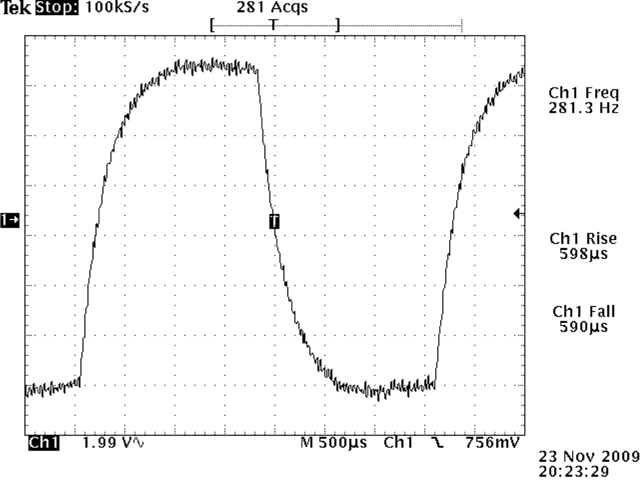
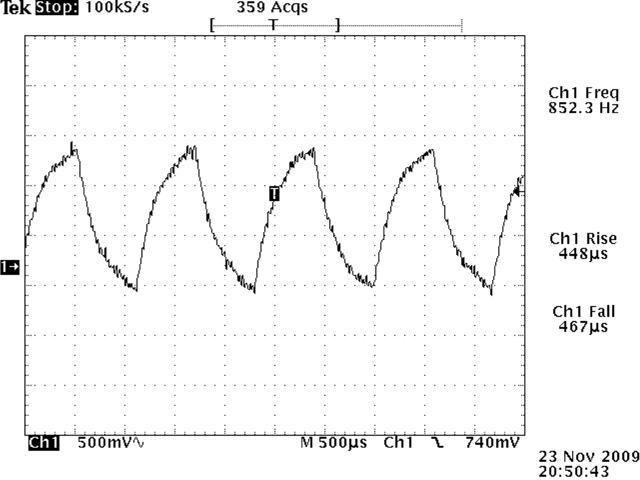
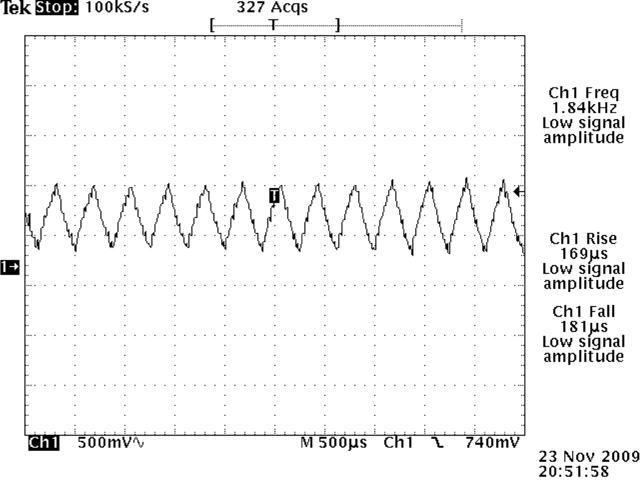
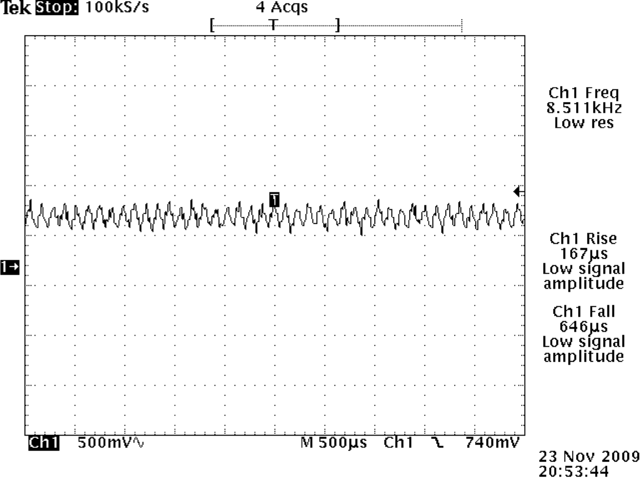
Some time ago I measured a square wave through a simple audio circuit (a typical amplifier in a modern laptop will perform rather better, but it still shows what will happen to a square wave as the frequency increases as it passes through a typical audio amplifier), and I still have the screen grabs from the oscilloscope. Let me demonstrate:
Waveform 1 (lowest frequency): http://photo.alioth.net/tmp2/b...
Waveform 2 (mid frequency): http://photo.alioth.net/tmp2/b...
Waveform 3 (highish frequency): http://photo.alioth.net/tmp2/b...
Waveform 4 (highest): http://photo.alioth.net/tmp2/b...The square wave input was of identical amplitude for each of these, the only thing changed was the frequency. As I said the low pass filter in a typical amplifier found in a laptop's audio circuit won't start seriously attenuating the circuit anywhere near as low as this particular circuit, but it certainly will do the same in any case.
An audio designer who doesn't expect square waves at full design amplitude to go through his system is described by one word: "negligent". Typical 1980s analogue synthesizers often generated square waves, so you have to expect that some sound might contain a lot of square wave content. If a square wave not exceeding rated power can kill the Dell's speaker or audio circuit, then the product is defective and they should fix it under warranty, as warranties are supposed to fix defects caused by bad workmanship.
-
Re:Force them to warrenty whole unit..
If you never meant a low frequency square wave, then you're not going to keep the speaker in one position for any length of time (which was your original hypothesis).
As the frequency gets higher and higher, it will look less and less like a square wave. The amplifier design will likely include a low pass filter somewhere in its design which will limit the fastest rise and fall time of the wave form. As the frequency gets close to the upper end of the audible range (say above ~12 to 15KHz or so) you'll probably find the amplitude of the signal reaching the speaker starts to roll off even if you send a maximum amplitude square wave to the input of the audio amplifier. Your square wave will at best look like a triangle or sawtooth wave and will be decreasing in amplitude more and more until it has virtually disappeared.
Some time ago I measured a square wave through a simple audio circuit (a typical amplifier in a modern laptop will perform rather better, but it still shows what will happen to a square wave as the frequency increases as it passes through a typical audio amplifier), and I still have the screen grabs from the oscilloscope. Let me demonstrate:
Waveform 1 (lowest frequency): http://photo.alioth.net/tmp2/b...
Waveform 2 (mid frequency): http://photo.alioth.net/tmp2/b...
Waveform 3 (highish frequency): http://photo.alioth.net/tmp2/b...
Waveform 4 (highest): http://photo.alioth.net/tmp2/b...The square wave input was of identical amplitude for each of these, the only thing changed was the frequency. As I said the low pass filter in a typical amplifier found in a laptop's audio circuit won't start seriously attenuating the circuit anywhere near as low as this particular circuit, but it certainly will do the same in any case.
An audio designer who doesn't expect square waves at full design amplitude to go through his system is described by one word: "negligent". Typical 1980s analogue synthesizers often generated square waves, so you have to expect that some sound might contain a lot of square wave content. If a square wave not exceeding rated power can kill the Dell's speaker or audio circuit, then the product is defective and they should fix it under warranty, as warranties are supposed to fix defects caused by bad workmanship.
-
Re:Force them to warrenty whole unit..
If you never meant a low frequency square wave, then you're not going to keep the speaker in one position for any length of time (which was your original hypothesis).
As the frequency gets higher and higher, it will look less and less like a square wave. The amplifier design will likely include a low pass filter somewhere in its design which will limit the fastest rise and fall time of the wave form. As the frequency gets close to the upper end of the audible range (say above ~12 to 15KHz or so) you'll probably find the amplitude of the signal reaching the speaker starts to roll off even if you send a maximum amplitude square wave to the input of the audio amplifier. Your square wave will at best look like a triangle or sawtooth wave and will be decreasing in amplitude more and more until it has virtually disappeared.
Some time ago I measured a square wave through a simple audio circuit (a typical amplifier in a modern laptop will perform rather better, but it still shows what will happen to a square wave as the frequency increases as it passes through a typical audio amplifier), and I still have the screen grabs from the oscilloscope. Let me demonstrate:
Waveform 1 (lowest frequency): http://photo.alioth.net/tmp2/b...
Waveform 2 (mid frequency): http://photo.alioth.net/tmp2/b...
Waveform 3 (highish frequency): http://photo.alioth.net/tmp2/b...
Waveform 4 (highest): http://photo.alioth.net/tmp2/b...The square wave input was of identical amplitude for each of these, the only thing changed was the frequency. As I said the low pass filter in a typical amplifier found in a laptop's audio circuit won't start seriously attenuating the circuit anywhere near as low as this particular circuit, but it certainly will do the same in any case.
An audio designer who doesn't expect square waves at full design amplitude to go through his system is described by one word: "negligent". Typical 1980s analogue synthesizers often generated square waves, so you have to expect that some sound might contain a lot of square wave content. If a square wave not exceeding rated power can kill the Dell's speaker or audio circuit, then the product is defective and they should fix it under warranty, as warranties are supposed to fix defects caused by bad workmanship.
-
Re:Force them to warrenty whole unit..
If you never meant a low frequency square wave, then you're not going to keep the speaker in one position for any length of time (which was your original hypothesis).
As the frequency gets higher and higher, it will look less and less like a square wave. The amplifier design will likely include a low pass filter somewhere in its design which will limit the fastest rise and fall time of the wave form. As the frequency gets close to the upper end of the audible range (say above ~12 to 15KHz or so) you'll probably find the amplitude of the signal reaching the speaker starts to roll off even if you send a maximum amplitude square wave to the input of the audio amplifier. Your square wave will at best look like a triangle or sawtooth wave and will be decreasing in amplitude more and more until it has virtually disappeared.
Some time ago I measured a square wave through a simple audio circuit (a typical amplifier in a modern laptop will perform rather better, but it still shows what will happen to a square wave as the frequency increases as it passes through a typical audio amplifier), and I still have the screen grabs from the oscilloscope. Let me demonstrate:
Waveform 1 (lowest frequency): http://photo.alioth.net/tmp2/b...
Waveform 2 (mid frequency): http://photo.alioth.net/tmp2/b...
Waveform 3 (highish frequency): http://photo.alioth.net/tmp2/b...
Waveform 4 (highest): http://photo.alioth.net/tmp2/b...The square wave input was of identical amplitude for each of these, the only thing changed was the frequency. As I said the low pass filter in a typical amplifier found in a laptop's audio circuit won't start seriously attenuating the circuit anywhere near as low as this particular circuit, but it certainly will do the same in any case.
An audio designer who doesn't expect square waves at full design amplitude to go through his system is described by one word: "negligent". Typical 1980s analogue synthesizers often generated square waves, so you have to expect that some sound might contain a lot of square wave content. If a square wave not exceeding rated power can kill the Dell's speaker or audio circuit, then the product is defective and they should fix it under warranty, as warranties are supposed to fix defects caused by bad workmanship.
-
Meh..
Could it represent the seed money for the Europa Clipper?
It'd be so much cooler if it represented the seed money for a full scale Panther Clipper.
-
Re:$2.2 million to develop a modern PC/Console gam
David Braben will not want to let any publisher anywhere near his baby after the Gametek fiasco with Elite 3 (FFE) http://wiki.alioth.net/index.php/Gametek
-
Send Commander Jameson
-
Re:No comments on oolite yet?
Sorry, I was too busy playing Oolite to read
The thing about Oolite is the customisation options...you can make the 'Ooniverse' into pretty much any kind of experience you want to.
And as for the lack of instructions, well you get a reference sheet with the (free, open source) download, and the Wiki is excellent as is the Forum. -
Re:Looking forward to this one.
Not that new...
Moray Star Boats - since 1984.
-
Re:One of the more famous recent cases
One of the authors of the original Elite (on the BBC Micro) released the source years ago. Sadly, it's pretty much incomprehensible. I used to program on that platform, but endless pages of uncommented assembly language with multiple instructions per line are actually harder to read than a well formatted disassembly.
Oolite is the 21st century's free elite, it has many expansion packs and an active community.
Ubuntu users: do not install Oolite from Synaptic/Software Center - that's an old version. Download the tar archive.
-
We still have fun with the Speccy!
A few of us make hardware for the humble Speccy still, you can now go on the Internet with the Spectranet http://spectrum.alioth.net/doc - at the VCF in 2010, much fun was had sending tweets from a Sinclair Spectrum, you can connect hard drives/CF cards with the DivIDE http://baze.au.com/divide/, there's a USB interface (although the developer seems to have disappeared, hmm...) and various other fun bits of hardware to play with. Retro enthusasts are still writing some really nice games for the Spectrum and there's a strong demoscene, too.
The ULA (the custom logic IC) has also been reverse engineered by actually de-encapsulating the chip and photographing it with a microscope http://www.zxdesign.info/ - you can buy the book there, by the way... There were some interesting anecdotes from that. Today we have FPGAs and CPLDs and you can essentially make custom logic at home, but back in the early 1980s, companies like Ferranti made generic dies, and stored them, and you made your actual custom logic by specifying the interconnection layer. Richard Altwasser had only 6 weeks to design the circuit for the Spectrum's ULA (which handles video and all other I/O for the basic machine). When Ferranti completed the first wafer of Spectrum ULAs, they ran tests and found that they didn't work. It turns out that a Ferranti engineer had made a mistake when making the phototools to make the metallization layer, and basically half the chip lacked its clock signal. However, one single die on the whole wafer DID work. It turns out that despite all this being done in a clean room, a spec of dust had landed in precisely the right place on the phototools to connect the clock circuit, so they had one working ULA die on the wafer, and Sinclair could test and validate their ULA.
Incidentally if you're in London on the 5th/6th May, there's a 30th anniversary of the Spectrum celebration at the British Film Institute. It's free to enter. Details are here:
http://www.imperica.com/horizons -
Re:So much for the importance of "market share"
That leaves two possibilities for now:
- Sell Android devices also to other species (rodents for example)
- Search for alien lifeforms to sell the devices to
There are plenty of alien rodents on Riedquat
-
Re:Energy Depleted
No, it is an Elite reference.
-
Re:A lot of us Americans did play Elite, though
Your package manager of choice will probably install OOlite version 1.65 (which is several years old). You'll want version 1.75 - even if 1.75 is in "beta", but the beta is more stable than the "stable" release. Also check out the OOlite expansion packs.
-
Euskal Encounter
And I thought Euskal Encounter was pretty monumental (big LAN party in the Bilbao Exhibition Centre in Spain every year, which I go to). Here's a couple of pics from the 2010 event (I've been too lazy to upload 2011's pics):
http://photo.alioth.net/RE10/pabellon.jpg - the main hall, it's about the size of a football pitch
http://photo.alioth.net/RE10/tentcity.jpg - Where many people sleep, another BEC hall full of tents!
http://photo.alioth.net/RE10/bushnell1.jpg Nolan Bushnell, Atari's founder visited us.
http://photo.alioth.net/RE10/bushnell2.jpg
Nolan Bushnell is still highly enthusiastic about gaming, it was a real pleasure to meet him.
http://photo.alioth.net/RE10/twitter-euskera.jpg Retro activities, twittering from a 1980s vintage Sinclair Spectrum!
http://photo.alioth.net/RE10/descansar.jpg Random geeks getting a bit too tired
-
Euskal Encounter
And I thought Euskal Encounter was pretty monumental (big LAN party in the Bilbao Exhibition Centre in Spain every year, which I go to). Here's a couple of pics from the 2010 event (I've been too lazy to upload 2011's pics):
http://photo.alioth.net/RE10/pabellon.jpg - the main hall, it's about the size of a football pitch
http://photo.alioth.net/RE10/tentcity.jpg - Where many people sleep, another BEC hall full of tents!
http://photo.alioth.net/RE10/bushnell1.jpg Nolan Bushnell, Atari's founder visited us.
http://photo.alioth.net/RE10/bushnell2.jpg
Nolan Bushnell is still highly enthusiastic about gaming, it was a real pleasure to meet him.
http://photo.alioth.net/RE10/twitter-euskera.jpg Retro activities, twittering from a 1980s vintage Sinclair Spectrum!
http://photo.alioth.net/RE10/descansar.jpg Random geeks getting a bit too tired
-
Euskal Encounter
And I thought Euskal Encounter was pretty monumental (big LAN party in the Bilbao Exhibition Centre in Spain every year, which I go to). Here's a couple of pics from the 2010 event (I've been too lazy to upload 2011's pics):
http://photo.alioth.net/RE10/pabellon.jpg - the main hall, it's about the size of a football pitch
http://photo.alioth.net/RE10/tentcity.jpg - Where many people sleep, another BEC hall full of tents!
http://photo.alioth.net/RE10/bushnell1.jpg Nolan Bushnell, Atari's founder visited us.
http://photo.alioth.net/RE10/bushnell2.jpg
Nolan Bushnell is still highly enthusiastic about gaming, it was a real pleasure to meet him.
http://photo.alioth.net/RE10/twitter-euskera.jpg Retro activities, twittering from a 1980s vintage Sinclair Spectrum!
http://photo.alioth.net/RE10/descansar.jpg Random geeks getting a bit too tired
-
Euskal Encounter
And I thought Euskal Encounter was pretty monumental (big LAN party in the Bilbao Exhibition Centre in Spain every year, which I go to). Here's a couple of pics from the 2010 event (I've been too lazy to upload 2011's pics):
http://photo.alioth.net/RE10/pabellon.jpg - the main hall, it's about the size of a football pitch
http://photo.alioth.net/RE10/tentcity.jpg - Where many people sleep, another BEC hall full of tents!
http://photo.alioth.net/RE10/bushnell1.jpg Nolan Bushnell, Atari's founder visited us.
http://photo.alioth.net/RE10/bushnell2.jpg
Nolan Bushnell is still highly enthusiastic about gaming, it was a real pleasure to meet him.
http://photo.alioth.net/RE10/twitter-euskera.jpg Retro activities, twittering from a 1980s vintage Sinclair Spectrum!
http://photo.alioth.net/RE10/descansar.jpg Random geeks getting a bit too tired
-
Euskal Encounter
And I thought Euskal Encounter was pretty monumental (big LAN party in the Bilbao Exhibition Centre in Spain every year, which I go to). Here's a couple of pics from the 2010 event (I've been too lazy to upload 2011's pics):
http://photo.alioth.net/RE10/pabellon.jpg - the main hall, it's about the size of a football pitch
http://photo.alioth.net/RE10/tentcity.jpg - Where many people sleep, another BEC hall full of tents!
http://photo.alioth.net/RE10/bushnell1.jpg Nolan Bushnell, Atari's founder visited us.
http://photo.alioth.net/RE10/bushnell2.jpg
Nolan Bushnell is still highly enthusiastic about gaming, it was a real pleasure to meet him.
http://photo.alioth.net/RE10/twitter-euskera.jpg Retro activities, twittering from a 1980s vintage Sinclair Spectrum!
http://photo.alioth.net/RE10/descansar.jpg Random geeks getting a bit too tired
-
Euskal Encounter
And I thought Euskal Encounter was pretty monumental (big LAN party in the Bilbao Exhibition Centre in Spain every year, which I go to). Here's a couple of pics from the 2010 event (I've been too lazy to upload 2011's pics):
http://photo.alioth.net/RE10/pabellon.jpg - the main hall, it's about the size of a football pitch
http://photo.alioth.net/RE10/tentcity.jpg - Where many people sleep, another BEC hall full of tents!
http://photo.alioth.net/RE10/bushnell1.jpg Nolan Bushnell, Atari's founder visited us.
http://photo.alioth.net/RE10/bushnell2.jpg
Nolan Bushnell is still highly enthusiastic about gaming, it was a real pleasure to meet him.
http://photo.alioth.net/RE10/twitter-euskera.jpg Retro activities, twittering from a 1980s vintage Sinclair Spectrum!
http://photo.alioth.net/RE10/descansar.jpg Random geeks getting a bit too tired
-
Re:Sweet!!!
You can certainly get a Sinclair Spectrum online (but not with this board), with the Spectranet, which is an ethernet board designed for it. You'll even be able to buy a Spectranet soon.
The Spectranet provides the Speccy with a BSD-like socket library, and a host of ROM-based modules (it has 128K of NOR flash that gets mapped into the lower 16K), such as filesystem modules, modules that snapshot memory over the network etc. (as well as the more mundane stuff like the DHCP client).
A couple of quick demos:
Streaming video - http://www.youtube.com/watch?v=ooi9rpx6ECM
Twitter client - http://www.youtube.com/watch?v=-ECnN7jdgA4&feature=relatedSome (incomplete) technical information: http://spectrum.alioth.net/doc
-
Re:OLPC Owned
Hmm.. I Care to disagree.
-Screen, HDMI screens need to be added to price. Price? hdmi screen are not free. And the screen needs to be powered as well.
-add price of 9Volt battery. (couple of doller)
-Add price of keyboard (couple of dollars)And what is deerly missing is:
-Networking. (OLPC has wireless)OLPC added (not required for learning, but still very usefule)
-VGA CAM
-sound SpeakersYou might be able to beeft the development board up to OLPC specs. I will not look that nice.
And last but not least, Besides the hardware, OLPC has a organisation and distibution channel. You cannot simply take a Cobra_Mk.1 and ship the development board to a rural area.
-
Re:What we want?
-
Oolite
A little late here, but I've recently started playing Oolite (an Elite clone) and really enjoying it. With a lot of expansions as well.
-
If you liked Elite...
...you may like Oolite, an Elite tribute. It has the goodness that ArcElite has too - it is not player centric, you can encounter epic battles (I've seen three or four distinct groups of ships battling it out, with the Police mixed in there too). The game is open source (GPL) and expandable with expansion packs (so now you can have Generation Ships and Space Dredgers, as well as scenes from the Dark Wheel like the Tionisla Orbital Graveyard). It's available for OSX, Linux and Windows (it was originally developed for OSX).
Latest version is 1.73, and there is a wiki for the game at http://wiki.alioth.net/
-
I went back to Elite
I really wanted to play Eve but couldn't get the client to work (this was a while ago). Instead I got a good hit of nostalgia playing oolite, a copy of the old 8-bit Elite. I haven't tried out the crazy amount of expansion packs. If anybody knows anything similar or better please post below!
Phillip.
-
Small scale ethernet
There's quite a bit of small scale ethernet stuff available - my favorite chip at the moment for handling ethernet is Wiznet's tiny W5100 (or its bigger brother the W5300). These contain not only an ethernet MAC/PHY but a TCP offload engine, so your microcontroller can get on with whatever job it needs to and only deal with the higher levels of the protocol - meaning the software on your microcontroller can be simpler and spend more of its time dealing with whatever task you're using it for. The W5100 is in a 0.4mm pitch LQFP-80. I've been having great fun with this little chip: http://spectrum.alioth.net/doc
The W5100 also can act as a true memory mapped device (you can either talk to it with SPI, or via an indirect parallel bus, or through direct addressing) so it's a great chip for 8 bit CPUs which have a full address/data bus because you can transfer data to and from the chip many times faster than you can with SPI.
There are also other ethernet MAC/PHY (with no TCP offload) chips other than Microchip's offering - SiLabs have one in several packages (including a terribly hard to solder by hand leadless QFN).
-
Re:Our Tandem
-
Spectrum too soon!
Hopefully we can do the same with the Sinclair Spectrum soon - I've almost completed the prototype ethernet card for the Spectrum. The prototype is working - I've had it connect to IRC, but there are some things to finish on the library and the board's CPLD.
Picture is here: http://spectrum.alioth.net/doc/index.php/Image:Itlives.jpg
-
As a 25th anniversary tribute
I've also made a 25th anniversary hardware project for the Sinclair Spectrum - an add-on board to be used for helping diagnose problems with sick Sinclair Spectrums:
http://www.alioth.net/Projects/Spectrum-Diag
It uses LEDs to display the test progress and status, so even if you can't get a picture out of the Spectrum, you can at least find out if the CPU and memory is working, and a good idea whether the ULA is servicable. -
Re:Oldies
Tell me about it - I have one rubber key Spectrum, two Spectrum+ and a toast-rack 128K Spectrum. I had to repair the rubber keyed one and one of the Spectrum+ machines - both had bad 4116 (lower RAM) chips and bad keyboard membranes. By the way, you can buy brand new Spectrum keyboard membranes and rubber mats for a very reasonable price from http://www.rwapsoftware.co.uk/ . He's just had another run of them made.
I still enjoy many of the Spectrum games. This month, by the way, is the 25th anniversary, and I bought a T-shirt for the occasion
http://www.alioth.net/tmp/25YrsOfSpectrum.jpg
I'm such a geek... -
Re:BBC Model B - Elite
You can always try Oolite, which is a remake for modern computers (and easily expandible):
http://oolite.aegidian.org/
http://wiki.alioth.net/index.php/Oolite_Main_Page -
Making your own computer and assembly
I'm building my own computer (no, not getting some random PCI cards and plugging them into a motherboard), but designing a simple Z80 system for fun.
If you want to mess around with this sort of thing, you cannot avoid writing things in asm. I've got this far:
http://www.alioth.net/Projects/Z80/Z80-Project/Z80 -Project-Pages/Image19.html
- having laid out a double sided PCB, and got everything shoehorned onto a 160x100mm 'Eurocard' sized motherboard.
However, I've also retargeted the z88dk (Z88 Development Kit, originally designed for the Cambridge Z88 portable computer) to my Z80 board because while it'll be best to have all the low level stuff done in assembly language, writing things that use floating point will just be ten times faster to write in C.
But even if you never intend to hack hardware, it's still important to at least be familiar with assembly language - if only to know why unchecked buffers are bad. If you've ever written a program in asm and accidentally overwritten the stack and tromped all over your return address, you fundamentally understand why this is a bad thing. We've got into a whole world of hurt because many programmers didn't understand this. -
Re:Things have changed since I tinkered long ago..
I currently have an 8 bit computer breadboarded - Z80 CPU, 32K RAM, 128K flash ROM, PIO, LCD interface and keypad. Breadboarding is practical for any IC you can get in DIL packages. I'm still learning, and there are plenty of fairly complex circuits you can make on breadboard (even if they do look like a rats nest).
Most things are still available in DIL packages - the Z80 CPU and its peripheral chips are *still manufactured* in that form. Static RAM and flash ROM is easy to get hold of in DIL packages. Of course, there are mountains of 74-series and 4000-series logic and other things like 555 timers made in their tens of millions.
Here is my current rat's nest: http://www.alioth.net/Projects/Z80/Z80-Project/Z80 -Project-Pages/Image4.html
You probably don't want to start learning and experimenting directly with 100 pin QFPs. It would be an exercise in futility. -
Experiment!
Experiment. Really.
I started with electronics properly in about September time. Probably the most valuable parts I have in terms of experimentation:
1. A large breadboard (the plug in type). This means you can rapidly try things out. I now have two breadboards - one small, and one large.
2. An oscilloscope. I bought a dual trace 20MHz Gould scope off an eBayer. I would have been lost without it. The dual trace is very useful too when you need to compare signals or check that things are synchronized.
3. The Internet. Seriously - some good resources:
http://www.ibiblio.org/kuphaldt/electricCircuits/ - Lessons in Electric Circuits, a free book - will get you started.
http://www.standardics.nxp.com/products/ Datasheets for every standard logic IC (4000 series and 74 series). Browse the site for chips you're interested in. They are cheap to buy from your local distributor (in Britain, you've got several choices - RS components, Maplin (a bit on the expensive side, but very fast delivery), Bowood Electronics (a superb small firm, fast delivery), Farnell (not used them yet, but they have an extensive catalogue).
http://www.wikipedia.org/ Lots of good articles. I used their article on buck and boost converters to get started on making high voltage switch mode power supplies for my first proper project.
The first thing I did on my breadboard was make simple circuits and understand them - using the versatile 555 timer, making logic gates out of discrete components, making an oscillator from transistors, capacitors and resistors. Then learned about how inductors work - how to use a small inductor to make a DC-DC converter. Comparing how bipolar transistors and MOSFETs work. Making small practical circuits like pulse generators etc. Then using logic ICs
I then built a Nixie tube display (with 7 tubes) out of raw 4000 series logic - essentially, I designed and built my own UART to receive data from a computer's RS232 port and display it on the tubes, and to be able to send data back to select what to display on the tubes. (Two pages of pictures here: http://www.alioth.net/pics/nixies/nixies.html). The nixie tube project was a great one to do as I had to learn lots of different things to be able to make it work: how to make a 170 volt switch mode power supply to the use of digital logic and how to debounce switches.
Now I've started designing and building an 8 bit computer based around the Z80, with flash ROM and static RAM plus an LCD interface etc. It actually works, too - I've got it running off a 4MHz crystal oscillator that I built. There's still a lot to learn - but I've gone from having very little knowledge of how to build electronic circuits to designing and building a simple 8 bit computer (with a keypad for input and LCD for output) in just a few months - if you're already experienced with software, learning about digital electronics is fairly natural. I can really recommend building something reasonably complex out of discrete 4000 or 74 series parts, because this is a great vehicle for learning about digital electronics, and how the real world tends to impinge on you a lot more than it does with software.
Pictures of the rat's nest of wiring that's the Z80 project is here (I've not updated it in a few weeks, I have more photos and assembler code to go in soon): http://www.alioth.net/Projects/Z80/
Why the Z80? Unlike all other processors, the Z80 has registers implemented in static memory. This means when you're experimenting, you can clock the processor arbitrarily slowly - fractions of 1Hz if you really want (or even clock it by hand). This makes early circuits A LOT easier to debug. It's not hard to program, has superb documentation free to download from Zilog. It has separate I/O -
Experiment!
Experiment. Really.
I started with electronics properly in about September time. Probably the most valuable parts I have in terms of experimentation:
1. A large breadboard (the plug in type). This means you can rapidly try things out. I now have two breadboards - one small, and one large.
2. An oscilloscope. I bought a dual trace 20MHz Gould scope off an eBayer. I would have been lost without it. The dual trace is very useful too when you need to compare signals or check that things are synchronized.
3. The Internet. Seriously - some good resources:
http://www.ibiblio.org/kuphaldt/electricCircuits/ - Lessons in Electric Circuits, a free book - will get you started.
http://www.standardics.nxp.com/products/ Datasheets for every standard logic IC (4000 series and 74 series). Browse the site for chips you're interested in. They are cheap to buy from your local distributor (in Britain, you've got several choices - RS components, Maplin (a bit on the expensive side, but very fast delivery), Bowood Electronics (a superb small firm, fast delivery), Farnell (not used them yet, but they have an extensive catalogue).
http://www.wikipedia.org/ Lots of good articles. I used their article on buck and boost converters to get started on making high voltage switch mode power supplies for my first proper project.
The first thing I did on my breadboard was make simple circuits and understand them - using the versatile 555 timer, making logic gates out of discrete components, making an oscillator from transistors, capacitors and resistors. Then learned about how inductors work - how to use a small inductor to make a DC-DC converter. Comparing how bipolar transistors and MOSFETs work. Making small practical circuits like pulse generators etc. Then using logic ICs
I then built a Nixie tube display (with 7 tubes) out of raw 4000 series logic - essentially, I designed and built my own UART to receive data from a computer's RS232 port and display it on the tubes, and to be able to send data back to select what to display on the tubes. (Two pages of pictures here: http://www.alioth.net/pics/nixies/nixies.html). The nixie tube project was a great one to do as I had to learn lots of different things to be able to make it work: how to make a 170 volt switch mode power supply to the use of digital logic and how to debounce switches.
Now I've started designing and building an 8 bit computer based around the Z80, with flash ROM and static RAM plus an LCD interface etc. It actually works, too - I've got it running off a 4MHz crystal oscillator that I built. There's still a lot to learn - but I've gone from having very little knowledge of how to build electronic circuits to designing and building a simple 8 bit computer (with a keypad for input and LCD for output) in just a few months - if you're already experienced with software, learning about digital electronics is fairly natural. I can really recommend building something reasonably complex out of discrete 4000 or 74 series parts, because this is a great vehicle for learning about digital electronics, and how the real world tends to impinge on you a lot more than it does with software.
Pictures of the rat's nest of wiring that's the Z80 project is here (I've not updated it in a few weeks, I have more photos and assembler code to go in soon): http://www.alioth.net/Projects/Z80/
Why the Z80? Unlike all other processors, the Z80 has registers implemented in static memory. This means when you're experimenting, you can clock the processor arbitrarily slowly - fractions of 1Hz if you really want (or even clock it by hand). This makes early circuits A LOT easier to debug. It's not hard to program, has superb documentation free to download from Zilog. It has separate I/O -
Nixie tube display for a computer
A few months ago, I started learning electronics. My first project is (electronically) complete - it just needs some finishing off to the housing.
It's a Nixie tube display, with 7 nixie tubes. I built an RS-232 reciever/sender out of 4000-series logic ICs (not a CPU or microcontroller in sight) - mostly counters and registers, and a few AND gates and inverters.
Pictures of the project's progress are at http://www.alioth.net/pics/nixies/nixies.html (two pages of photos - the working project is on page 2). I've also kept a journal of building and learning in my Slashdot journal.
The hardest part of it was probably getting the 170 volt switch mode power supply to work correctly (mainly getting it to regulate) and not put so much noise back into the 5 volt supply to cause latches and registers to lose their values. Some help from the NEONIXIE-L group on Yahoo was invaluable here, and I now have a decent 170 volt supply.
I'm now learning how to make things with microprocessors, and once I've done some breadboard experimentation, my next project is to build a logging weather station for the glider club, using a Z80 processor, a flash EPROM, some RAM and probably compact flash for mass storage (not that it'll use a lot of it!), and a small graphics LCD module for display. Currently, I'm at the stage where I've breadboarded a very basic Z80 system that can output values on a crude output device. But it works! -
Re:Linux set to take on Desktop PC market with gus
Here it is!
Btw, I haven't RTFL but it looks like it fits. -
Re:Ultra-capacitors for a different type of hybrid
Your expectations of solar cells are several orders of magnitude too high.
I'm doing some experimentations with a solar panel - the panel itself is about one metre long and just under half a metre wide. Pictures here: http://www.alioth.net/pics/SolarProject/SolarProje ct.html . The panel is made up of monocrystalline cells - the most efficient kind being manufactured in any quantity.
The panel is nominally 80 watts peak. That's 80 watts if the sun is shining with no atmospheric haze perpendicular to the panel - i.e. a 50 mile visibility day with the panel perfectly angled into the sun. Your car roof is probably only three times the size of this - so you'd be generating only 240 watts in the very best case. This amount of power is so trivial in the context of electric cars, it wouldn't even put a noticable charge on your car.
Worse than that, it's unlikely that you will be getting peak power out of the panels for more than 30 minutes a day even if you live in the desert. Even a very thin layer of cirrus cloud or just a poor visibility day cuts the power output of the panel by more than half. Even being 30 degrees off perpendicular to the sun cuts the output by more than half. On the brightest day, at 4pm, the panel only produces 30% of rated output unless you can tilt it directly into the sun. On a bright cloudy day (where there's still enough sunlight getting through to cast shadows) the panel produces less than 10% of rated power. On an overcast day with no sharp shadows being cast, the most I've seen the panel make is around 5% of rated power. -
Re:Whoops!
The power never failed?
I beg to differ
http://www.alioth.net/tmp/vaxen.html
Englightening and very amusing story about the mainframe room and a VAX admin's experience of an IBM one. -
Re:Don't.
Ironic that you talk about the Mac and Elite in the same posting - there's a great new open source Elite-clone for OS X called oolite. It's got some of the best features of the 'classic' Elites including coming up on fleets of ships with escorts and police patrols. See http://frontiernews.alioth.net/ for news on this.
As for OS X, I've only recently got a Mac (a PowerBook) after buying my Dad a replacement for his machine at home (an eMac). I found it to be quite a bit snappier to use than an equivalent priced Windows system (and it comes with a built in display which the HP system doesn't), and the GUI actually makes use of the 3D hardware. -
Re:Don't.
Elite 4. He's even got job ads out for programmers to work on it. There's some discussion on alt.fan.elite and the EBBS (http://www.alioth.net/cgi-bin/bbs.pl?siteId=1&ac
t ion=show)
Frontier Developments now employs 60 people - it's getting to be a reasonable sized concern.
-
Re:Are there discount rates for long-term parking?
I believe the parking is free at Mojave. I've been there a couple of times (by light plane, not by car). Mojave itself is a bit of a dump, but the airport's pretty good.
I went there to see the XCor unveiling (despite the article, XCor is not in the X-Prize competition). My writeup of the Xcor trip is here if you are interested. -
Xcor - a cool company!
I actually went to CA to see the unveiling of their Rocket-Ez a couple of years ago, and we heard Jeff Greason speak on the visions for the company - the mission, to make a nontoxic, reusable (in the real sense) rocket motor. They are already selling small rocket engines for manoevering thrusters on spacecraft.
I wrote about it at the time on my website and took plenty of photos. It was quite impressive the number of firsts that Xcor were achieving. -
Re:IP6s problem is the numeric addresses r so comp
Oh for heaven's sake, that's a pretty lame excuse.
I didn't find it particularly difficult to set my entire server network running with IPv6. DNS wasn't hard to set up (both forward and PTR). Routing was no more difficult than IPv4. My website is available over IPv6 and even the forum is IPv6 aware (including having an IPv6 whois).
Once it's set up in DNS, you seldom have to touch it again - that's what DNS is there for. -
Re:Addiction through the ages....MUD: Well, I played Shades in the 1980s. In fact, I've started playing Shades again. It used to run on Micronet 800.
But now...telnet to games.world.co.uk (yes, it runs on port 23) and you can get back into Shades again! Quite a few people play it. And it's still lots of fun!Elite - I think the follow-ons are better, particularly Frontier: First Encounters. However, the learning curve is a little steeper (it uses Newtownian physics, not 'airplane in space' physics). And it inspires people: see all the FEU-fanfiction that's around. You might be interested to know that (hopefully) the Elite Club will be forming soon.
Doom - I agree with your comments entirely. The atmosphere was amazing. It actually made you feel kind of anxious as you could hear all the monsters shuffling around. I played it with the lights off and the headphones on. One day, a friend of mine scared the tar out of me by throwing a little bean-bag frog at my back whilst I was playing the game. I think I jumped about five feet! We still play Doom at lan parties today.
-
Fandom? What fandom?As other posters have pointed out...this case is pretty ironic.
I run a fan-site myself (although I doubt I'd ever be a target of anything: fandom of Elite and Frontier First Encounters is rather a niche kind of thing to start off with).
But I have to think: what could I do if I was threatened in this way? In reality, not a lot, and sites like fandom.com know this - and use it to their advantage. They know they can steamroller the 'little guys' and they do.
My father told me one thing when I was a kid - concerning company mergers. "Son, in business, there is never a marriage. Only a rape".
When fandom.com picks up a new site - marriage or rape? I would HOPE it would be the former. But it looks like my Dad was right all along...
-
Re:Classic games really this important?Yes. The entire Elite series - Elite, Frontier Elite 2 and Frontier: First Encounters.
They have a big fanfiction following, and the Elite Club will soon be offering the source code for FE:2 and FFE. See Frontier Developments website for more info on these games, or see alioth.net for a website set in the fictional Frontier Elite Universe.
-
Elite!I saw this article a few days ago.
It's great that it metioned one of the all-time great games from the 8-bit days: Elite. It's a game that really started a genre, and nothing has quite surpassed it. Many versions were produced. Frontier Developments is now making an Elite 4. (Elite 2 and 3 were Frontier: Elite 2 and Frontier: First Encounters respectively).
The game fired the imagination, so much so there's quite a lot of Frontier Elite Universe fiction out there on various websites (including my own), the newsgroup alt.fan.elite, plus even a JAVA Spectrum Emulator running Elite out there on the Web. The 8-bit days really were the new frontier too, where code bloat could not exist, and super-tight coding was a measure of a software house's superiority, rather than MICROS~1's share price.
I fondly remember the BBC Micro too. A great machine: see the website, the BBC Lives! for emulators and the background of this superb machine.