Slashdot Mirror
Domain: anandtech.com
Stories and comments across the archive that link to anandtech.com.
Comments · 3,318
-
Tom's was wrongAnandTech has an in depth analysis. Like most things, the answer can't be found in a headline.
http://www.anandtech.com/mobile/showdoc.aspx?i=269 3/We've spent almost the past two weeks performing non-stop battery life testing on five notebooks with up to 4 different USB devices, testing theories, trying to pinpoint exactly what causes this problem and testing Microsoft's fix. What follows is the process that we went through in our labs when faced with this strange bug.
-
anandtech test
According to some testing over at anandtech, problem was in the way Windows XP polls USB2 devices.
-
Re:Great!
Well you can check the link to be sure -- the only thing that struck me about that IBM box is that it has a pretty nice graphics card, although I don't think it's the NVidia one that you're thinking it is.
It's the "3Dlabs Wildcat Realizm 800" which is apparently a dual-GPU, PCI Express monster of a card (640MB RAM) that takes at least 2, if not 3, card slots because of its thickness [2], and is designed to either drive two monitors independently or drive a stereoscopic system. Still, it only lists separately for about $2k, so it doesn't go that far in justifying the Intellistation's price tag. Plus at least according to Anandtech [1], it's outperformed by the NVidia Quadro 4400. So it's not even the ultimate top of the line (according to them). The only really special thing I've seen about it is that it does video genlock, so you can use an external "house clock" source if you were working with digital video. [3] However that doesn't really mesh with the application for a big IBM workstation, at least that I've ever seen. But what do I know.
If anyone wants to offer a good explanation of why the IBM Opteron workstations cost so much, except for the three letters on the front, I'm curious. But I sure as hell can't figure it out.
[1] http://www.anandtech.com/video/showdoc.aspx?i=2383 &p=4
[2] http://www.computerarts.co.uk/news/3dlabs_unleashe s_wildcat_realizm_800
[3] http://www.3dlabs.com/products/product.asp?prod=29 3 -
Close, but it's not Windows..
OS X is miles ahead of OS 9, but the mach kernel has real performance issues. In short, it's terrible at handling concurrency.
I have no idea whether the problem is deep and profound, and therefore difficult or impossible to fix. Perhaps a few tweaks and the mach kernel will kick into gear. It's rather old though, so I doubt it.
Fortunately, the fact that OS X is basically a posix system means swapping out the kernel might not be that big a deal. Meaning
Should they do this, they would be king of the performance hill, for both workstations and servers. That's the plan. I'd like to see Apple sue an Anonymous Coward for leaking it... -
Close, but it's not Windows..
OS X is miles ahead of OS 9, but the mach kernel has real performance issues. In short, it's terrible at handling concurrency.
I have no idea whether the problem is deep and profound, and therefore difficult or impossible to fix. Perhaps a few tweaks and the mach kernel will kick into gear. It's rather old though, so I doubt it.
Fortunately, the fact that OS X is basically a posix system means swapping out the kernel might not be that big a deal. Meaning
Should they do this, they would be king of the performance hill, for both workstations and servers. That's the plan. I'd like to see Apple sue an Anonymous Coward for leaking it... -
Re:New Egg not one of my faves
Check out AnandTech's Real Time Price Engine. It tracks product prices at lots of vendors and shows price history. You can watch the price fluctuations on a pretty graph.
http://labs.anandtech.com/index.php/ -
Re:I hope anandtech picked up some servers
-
Re:I hope anandtech picked up some servers
-
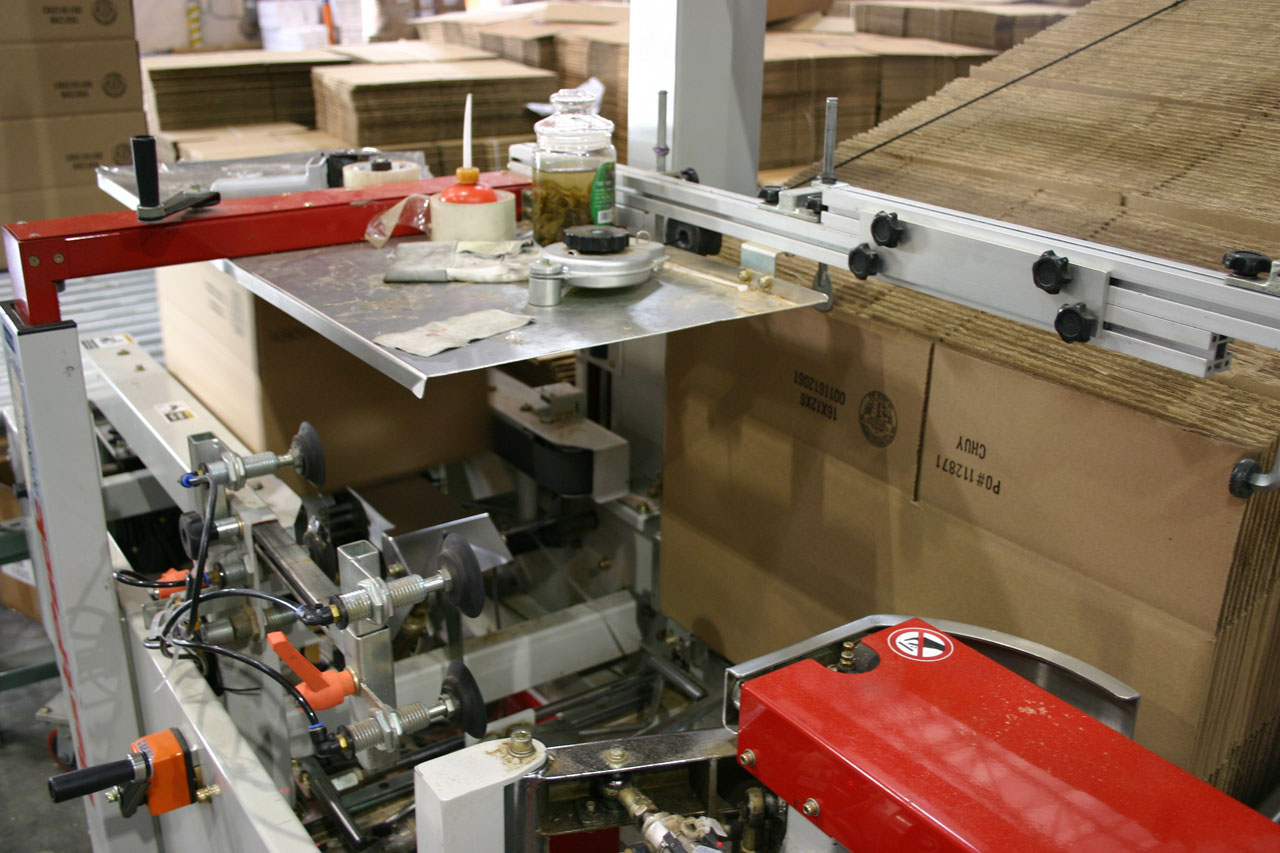
What's with the jar of pickles?
How does a jar of pickles help make boxes?
http://images.anandtech.com/reviews/IT/InsideNeweg g/automaticboxmaker.jpg -
What's with the jar of pickles?
How does a jar of pickles help make boxes?
http://images.anandtech.com/reviews/IT/InsideNeweg g/automaticboxmaker.jpg -
Have you not heard of the "Preview" button?
Here's the linkified link (posted using "Plain Old Text"): bloat free article
-
Re:mTurion MTs
Sorry guys, I left out the AMD CPU in question (to compare to the Solo): mTurion MT-34 (1.8GHz 25W TDP)
I think it's also important to note that Core Solo (and Duo) has some architectural improvements over the Pentium M such as 667MHz FSB (up from 533MHz), DDR2-667, enhanced floating point performance, and enhanced SIMD.Since TFA showed a 2.0GHz Pentium M outperforming a 2.4GHz Turion in most of the important benchmarks, I think the 1.66GHz Core Solo (with its architectural improvements over the Pentium M) might outperform a 1.8GHz Turion by even more.
I think TFA is pretty weak, though. They emphasize the importance of performance per watt, but they don't include the widely available Turion MT. They also used freakin' desktop chipsets with these mobile processors. Doesn't this make the "system power consumption" numbers useless for most readers? I thought the mobile chipsets were supposed to have important power-saving technologies in their FSB, memory contollers, wirless modules, etc.
-
Re:mTurion MTs
Sorry guys, I left out the AMD CPU in question (to compare to the Solo): mTurion MT-34 (1.8GHz 25W TDP)
I think it's also important to note that Core Solo (and Duo) has some architectural improvements over the Pentium M such as 667MHz FSB (up from 533MHz), DDR2-667, enhanced floating point performance, and enhanced SIMD.Since TFA showed a 2.0GHz Pentium M outperforming a 2.4GHz Turion in most of the important benchmarks, I think the 1.66GHz Core Solo (with its architectural improvements over the Pentium M) might outperform a 1.8GHz Turion by even more.
I think TFA is pretty weak, though. They emphasize the importance of performance per watt, but they don't include the widely available Turion MT. They also used freakin' desktop chipsets with these mobile processors. Doesn't this make the "system power consumption" numbers useless for most readers? I thought the mobile chipsets were supposed to have important power-saving technologies in their FSB, memory contollers, wirless modules, etc.
-
Re:Low Blow
Well, there is something called Anti-Trust to keep capitalism fair. I think that's the issue here.
But check this out:
http://www.anandtech.com/cpuchipsets/showdoc.aspx? i=2648
Itty, bitty mobile processor Yonah, at 2GHz, with no 64-bit extensions, kicks the bloody shit out of AMDs top of the line offering on almost all the benchmarks. Can't wait to see their 64bit mobile part in a few months. -
Re:I wonder why.
-
Re:compute per silicon-area/watt/$
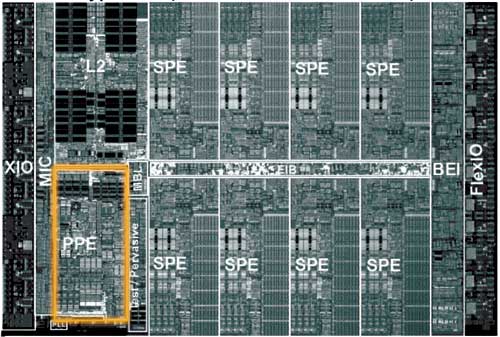
From the images of the core that I've seen, PPEs are virtually the same size as the SPEs.
I refer you to this image:
http://images.anandtech.com/reviews/cpu/cell/ppehi ghlight.jpg
Perhaps you mean the PPE and it's supporting hardware, such as the cache? That'd ideally be shared among multiple PPEs.
If you look closely at the PPEs, a huge amount of their real estate seems to go to what looks like their 256KB of cache. Cache takes up a lot of space. Since the PPE's wouldn't each have dedicated cache, they're still about the same size. -
Specs vs Actual Performance[claim that the 360 is capable of doing more than the PS3]
Now, all I have to ask is -- how the FUCK is that even possible? The PS3's specs beat the Xbox360's in every possible way!A lot of the theoretical power in the PS3 comes from multiplying the power of each processor times the number of processors. Actually being able to make use of parallel processing power is notoriously hard. Usually one step of a computation depends on another. Programming for concurrency is in general a nightmare. Games will be buggier and much harder to develop if they want to make full use of the parallel cores. Sorry, no free lunch here.
Comparing the specs of the system is not straightforward. You can't just do something like a 0-60 mph benchmark like you would for a car. I don't think you are up for it, but if you want to get an inkling of the tradeoffs involved, here's a link: Microsoft's Xbox 360, Sony's PS3 - A Hardware Discussion
I feel sorry for the developers who have to make their games portable for both systems. I suspect we will get a lot of lowest-common-denominator games. It will be interesting to see if Sony can make a game that shows off the PS3 in a way that the 360 can't match.
-
Re:Not worth It.
Motherboards using the ULi M1695/M1567 chipsets have both AGP and PCIe slots. The graphics cards in each slot can be used in conjunction with each other for SLi type applications and multi-monitor setups. Additionally, there is a minimal performance hit for the AGP slot (http://www.anandtech.com/mb/showdoc.aspx?i=2524&
p =9).
Amazingly, PCI graphics cards can be added into the mix too for even more displays. The only motherboard which uses this combo to my knowledge is currently the ASRock 939Dual-SATA2, and sadly since nVidia recently swallowed ULi it may well be that other manufacturers have put their plans on hold with this chipset.
To say that all machines with AGP slots are underpowered to house such a graphics card is wrong. -
Re:It can't run 64-bit Windows Vista
It's a performance thing.
64-bit linux benchmarks in math intensive apps run 20-25% faster than 32-bit linux benchmarks on the same exact hardware.
It's not about addressing; its about performance.
Of course, the Core Duo might just be all that; it might just be fast enough to get over the performance delta of the x86_64 instruction set.
Then again, it might not. Neck and neck with similar Athlon 64 X2s, but only competitive on the low range of the X2 lineup, and slower in gaming.
This is in 32-bit mode, only. Expect an Athlon X2 to win out in 64-bit mode. -
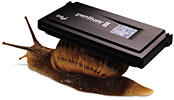
The snail
Vista? What's that? Get an Intel Duo laptop with OS X!
I wonder if apple would ever use a centrino, though... I doubt it.
I think the snail and the bunny still apply to centrinos.
--
The Television Wiki -
Other reviews/articles
-
I'd prefer a review that compared it w/ ATI x850
You know, an actual competing product instead of an older product from the same company...
Say, like, the one at Anandtech.
Amazing how different a part can come across in two different review/tests... I mean, Anand still shows it worthy, on the strength of being a little cheaper than the x850, but it is in perspective. The review linked makes it look like an AGP renaissance... -
Intel is up to something...
Recently an article was published on anandtech that puts the itanium in a new light: it's actually very efficient in terms of die area utilization. Combine this with Intel's recent announcement that they were scrapping the hardware x86 compatibility on the itanium, which takes up a fair bit of die space, and you have a very small core of the sort that's absolutely perfect for multi-core applications.
Itanium needs a lot of cache to function well, for reasons that the aforementioned article describes, but it's not unreasonable to assume that intel's shared cache technology from Yonah will make its way into Itanium.
This thing might be trying to compete with chips like the Ultrasparc T1.
-
Performance is irrelevant here
I doubt that Apple's move to Intel had a great deal to do with performance, and I dislike this fact being used as a key selling point for the iMac. If you refer to the "definitive" G5 vs. everyone else benchmarks at http://www.anandtech.com/mac/showdoc.aspx?i=2436 it is apparent that the G5 is largely comparable to offerings from AMD and Intel (admitedly the new Intel Core Duo is not benchmarked) and although the G5 is, in many cases, not the fastest chip, it is similar. The increases of 2-3x in performance between the G5 and MacIntel iMac are a consequence of having a dual core chip (and being a generation ahead of the G5) besides, Apple could have feasibly used the dual-core G5 chips that they've had at their disposal for a while now. Any Mac zealot will argue that their PowerPC Mac is "just" as fast as an intel based system, but performance is NOT the issue. This is why the iMac was updated first, it is a consumer product, supporting Apple's fledgling attempts to enter the living room (consider front row ) - it desperately needs Intel's brand name associated with its hardware.
The significance of this new product is long term and cannot be underestimated.
Apple finanlly has penetrated the consumer electronics market with the iPod, and their brand recognition and image could not be better. Apple has shoehorned its way into the psyche of the common man. It now has to bring its key product, the mac, to the masses. Consumers will be attracted from a design perspective and because it shares the same logo as their iPod, the OS is a little different to windows, but now at least you have the reasurrance of dual booting into windows (I'd like proof of this concept, but I'm sure it will come) and the processor gives the security of a well recognised brand name (consider brand strengh of Intel vs. AMD).
In the future, I doubt that IBM's die shrunk Power chips will share the low power consumption that I expect Intel will bring, and many concepts for great products will never be realised. I'll be interested to see if the new Intel chips can match up to the PowerPC altivec-ised vDSP FFT's , but in a way I don't care. It is an exciting time to be a Mac user, as more people join the fantastic experience that we have had for so long, and new software and hardware comes our way. Either way, they're finally here and it will be interesting to see what the future holds. -
On package
i'm still waiting for these to show up:
http://www.anandtech.com/showdoc.aspx?i=2511 -
It is.
With AMD banning retail sale of OEM processors, they're getting harder and more expensive to find. Most places here sell retail at or below OEM prices, so I think it is correct to say that the cooler is essentially free.
-
Undervolting is not underclocking.
It seems a lot of people just assume that undervolting would be something akin to getting the inverse result of overclocking.
Here's the link to an interesting page about undervolting pentium M processors.
Experience shows that the processor may continue working correctly at lower-than-nominal voltages and frequencies, thereby reducing power consumption, heat and fan noise.
Even if your system seems stable, it may still suffer transient faults leading to arbitrary data corruption. In addition, errors in following these instructions (or changes between processor models) may operate the CPU above its nominal parameters, with effects up to and including laptop meltdown.
There's also a thourough discussion and user results from undervoltage on this thread. -
Re:Compiler?
According to this article Apple is in the habit of compiling for size, not for performance (the -0s switch). This was with the G5 - a very capable chip.
Of course they're going to throttle their machines a little to drive hardware sales. Is that so surprising? They're an aggressive corporation hell-bent on dominating the market in volume sales. They will treat customers like idiots, and as well trained idiots most will give money to that charismatic older man in the Armani suit.
The performance of stock (barely affordable) Apple boxes has always been a joke - I don't see that changing too soon. -
Performance is irrelevant here
I doubt that Apple's move to Intel had a great deal to do with performance, and I dislike this fact being used as a key selling point for the iMac. If you refer to the "definitive" G5 vs. everyone else benchmarks at http://www.anandtech.com/mac/showdoc.aspx?i=2436 it is apparent that the G5 is largely comparable to offerings from AMD and Intel (admitedly the new Intel Core Duo is not benchmarked) and although the G5 is, in many cases, not the fastest chip, it is similar. The increases of 2-3x in performance between the G5 and MacIntel iMac are a consequence of having a dual core chip (and being a generation ahead of the G5) besides, Apple could have feasibly used the dual-core G5 chips that they've had at their disposal for a while now. Any Mac zealot will argue that their PowerPC Mac is "just" as fast as an intel based system, but performance is NOT the issue. This is why the iMac was updated first, it is a consumer product, supporting Apple's fledgling attempts to enter the living room (consider front row ) - it desperately needs Intel's brand name associated with its hardware.
The significance of this new product is long term and cannot be underestimated.
Apple finanlly has penetrated the consumer electronics market with the iPod, and their brand recognition and image could not be better. Apple has shoehorned its way into the psyche of the common man. It now has to bring its key product, the mac, to the masses. Consumers will be attracted from a design perspective and because it shares the same logo as their iPod, the OS is a little different to windows, but now at least you have the reasurrance of dual booting into windows (I'd like proof of this concept, but I'm sure it will come) and the processor gives the security of a well recognised brand name (consider brand strengh of Intel vs. AMD). In the future, I doubt that IBM's die shrunk Power chips will share the low power consumption that I expect Intel will bring, and many concepts for great products will never be realised. I'll be interested to see if the new Intel chips can match up to the PowerPC altivec-ised vDSP FFT's , but in a way I don't care. It is an exciting time to be a Mac user, as more people join the fantastic experience that we have had for so long, and new software and hardware comes our way. Either way, they're finally here and it will be interesting to see what the future holds. -
Re:Is this really a surprise?
actually, OSX's threading performance isn't quite as good as other *nixes. There was a comparison between OSX, Linux and a BSD on G5 hardware running mysql and apache, and OSX compared quite poorly compared to the other OSes.
personally, I never liked running OSX as a general, public server because it never really felt quite right. the only thing I've ever used OSX for when it comes to serving is LAN-based fileserving (SMB/AFP). -
Itanium future has potential
Here's a surprisingly cogent article (surpisingly so for a hobbiest web site like anandtech, that is) about how trends in cpu manufacturing processes may make Itanium a bigger winner in the near future:
http://anandtech.com/printarticle.aspx?i=2598 -
Re:Uhmmmm
You're mixing up two different announcements in the article.
IBM announced a dual-core 970FX. That's what's currently used in the PowerMac line at dual 2.0 and dual 2.3 frequencies. It's definitely not low-power and still sports the large heatsinks used on the prior PowerMacs.
They also announced a single core low-power 970FX at 1.4GHz and 1.6GHz. That's slower than the current 1.67GHz G4 in the last Powerbook, and the Powerbook was already a slow machine. So, it looks to me like the move to a 1.6GHz low-power G5 just wouldn't have been enough performance to make the change worth it, while Intel had a dual core 1.83GHz Core Duo ready to go.
Also, the max power consumption is a bit misleading, since Core Duo can shut down parts of itself to save power. Discussed here. I'm not sure what the power consumption is though, or if the MacBooks even use that feature. -
cost and performance are irrelevant here
I doubt that Apple's move to Intel had a great deal to do with performance, and I dislike this fact being used as a key selling point for the iMac. If you refer to the "definitive" G5 vs. everyone else benchmarks at http://www.anandtech.com/mac/showdoc.aspx?i=2436i
t is apparent that the G5 is largely comparable to offerings from AMD and Intel (admitedly the new Intel Core Duo is not benchmarked) and although the G5 is, in many cases, not the fastest chip, it is similar. The increases of 2-3x in performance between the G5 and MacIntel iMac are a consequence of having a dual core chip (and being a generation ahead of the G5) besides, Apple could have feasibly used the dual-core G5 chips that they've had at their disposal for a while now. Any Mac zealot will argue that their PowerPC Mac is "just" as fast as an intel based system, but performance is NOT the issue. This is why the iMac was updated first, it is a consumer product, supporting Apple's fledgling attempts to enter the living room (consider front row ) - it desperately needs Intel's brand name associated with its hardware.
The significance of this new product is long term and cannot be underestimated.
Apple finanlly has penetrated the consumer electronics market with the iPod, and their brand recognition and image could not be better. Apple has shoehorned its way into the psyche of the common man. It now has to bring its key product, the mac, to the masses. Consumers will be attracted from a design perspective and because it shares the same logo as their iPod, the OS is a little different to windows, but now at least you have the reasurrance of dual booting into windows (I'd like proof of this concept, but I'm sure it will come) and the processor gives the security of a well recognised brand name (consider brand strengh of Intel vs. AMD).
In the future, I doubt that IBM's die shrunk Power chips will share the low power consumption that I expect Intel will bring, and many concepts for great products will never be realised. I'll be interested to see if the new Intel chips can match up to the PowerPC altivec-ised vDSP FFT's , but in a way I don't care. It is an exciting time to be a Mac user, as more people join the fantastic experience that we have had for so long, and new software and hardware comes our way. Either way, they're finally here and it will be interesting to see what the future holds. -
Re:Pentium-M
but is providing Athlon64 class performance with much lower power consumption.
Lower power consumption yes, Athlon64 performance? Not yet. According to this roadmap the highest clockspeed Yonah core is slated for January 2006 release and it's 2.16 GHZ. Now, Anandtech did some tests of the 2.0 GHZ core. This 2.0 GHZ core is barely able to reach Athlon64 3800+ X2 performance levels (the "slowest" AMD dualcore CPU, 90nm vs 65nm of Yonah). A 2.16 GHZ version should reach the 4200+ X2 and that's about it. Yonah is a nice CPU, but nowhere near top AMD performance. Maybe with higher clockspeeds in the future, not today though. -
Intel goes outside
-
Re:Disappointing.
Looking at the screenshots, I would have to say the changes are very noticeable. And there is one new test. But yes, it is just a refresh of 3DMark05, expect a 3DMark07 after DirectX 10 comes around.
-
Re:Benchmarks, accuracy, and choice
Also, the dual-core Yonah uses something like 1/4 to 1/2 the power of the single-core G5. Pretty nice!
According to Anandtech, a 2GHz Yonah consumes between 92 watts (idle) and 108 watts (fully loaded). That's about double of the original 130nm single core G5's and 4 times as much as the 90nm single core G5's.A dual core G5 at 1.6GHz consumes 16 watts (typical usage). Given that power consumption goes up quadratically in relation to the frequency, this comes to about 23 watts for 2.0 GHz (typically, max consumption can be (much) higher). It seems to me rather that the G5 consumes 1/2 to 1/4 of Yonah, instead of the other way round.
Don't ask me why Steve kept saying the G5 requires so much power, I don't know... Maybe it's one of the G5's chipsets that requires so much power (I do notice that the U3 chipset gets a lot hotter than either of my first generation 18 GHz G5's -- but afaik that's an Apple and not an IBM design).
No, at best that demonstrated that each Yonah core is speed-competitive with the G5. Since the G5 has one core, and Yonah has two, that makes Yonah...twice as "fast". (Really only twice as fast on perfectly parallel code, but hey...)
Oh come on, like the G5 was twice as fast as a single core P4? It doesn't work like that in practice.I'm looking forward to getting a Macbook Pro as soon as possible.
I'm definitely going to wait until the second or third generation and until someone can tell me the battery life, because for the first time Apple does not mention battery life on its tech specs page. This suggests to me that battery life has become worse, even though they use a higher capacity battery for the MacBook Pro. -
Re:No AMD macs?
I have a hard time imagining you could be so far wrong by accident. Since I don't want to duplicate my last post, here's a link... Feel free to point me to any of your sources showing an Intel chip using less power at 100% than the lowest-power AMD chips. (Note: Idiots on other web forums, and talking dogs don't count.)
How about next time you feel like posting numbers you actually look up the chip we're talking about. The Intel Duo is not a Pentium-M, like the ones you listed in your previous post. You're the one who is out of date. Intel Core Duo (known as the Yonah before the official name was released) is the 65nm chip and has been out for a while now. Here's a link to a review and a pertinent quote, "In fact, a 2.0GHz Yonah under 100% load consumes less power than an Athlon 64 X2 3800+ at idle." These are comparisons of Intel's latest versus AMDs current offerings, that compare similarly for performance. Please feel free to show me any comparisons of AMD chips that outperform the Intel Core Duo, or even come close, but I don't expect to see anything in that range until AMD brings their 65nm solution to market in Q4.
-
this
Yonah
Comparable to a Athlon 64 X2 (that's a desktop chip) with way less power draw (both idle and peak load).
Other factors exist too... AMD used to have a reputation for poor QA on the line, and while they seem to have overcome it, hey history is a stinger when you are dealing with companies like Apple. -
iMacs performance is irrelevant
I doubt that Apple's move to Intel had a great deal to do with performance, and I dislike this fact being used as a key selling point. If you refer to the "definitive" G5 vs. everyone else benchmarks at http://www.anandtech.com/mac/showdoc.aspx?i=2436 it is apparent that the G5 is largely comparable to offerings from AMD and Intel (admitedly the new Intel Core Duo is not benchmarked) and although the G5 is, in many cases, not the fastest chip, it is similar. The increases of 2-3x in performance between the G5 and MacIntel iMac are a consequence of having a dual core chip (and being a generation ahead of the G5) besides, Apple could have feasibly used the dual-core G5 chips that they've had at their disposal for a while now. Any Mac zealot will argue that their PowerPC Mac is "just" as fast as an intel based system, but performance is NOT the issue. This is why the iMac was updated first, it is a consumer product, supporting Apple's fledgling attempts to enter the living room (consider front row) - it desperately needs Intel's brand name associated with its hardware.
The significance of this new product is long term and cannot be underestimated.
Apple finanlly has penetrated the consumer electronics market with the iPod, and their brand recognition and image could not be better. Apple has shoehorned its way into the psyche of the common man. It now has to bring its key product, the mac, to the masses. Consumers will be attracted from a design perspective and because it shares the same logo as their iPod, the OS is a little different to windows, but now at least you have the reasurrance of dual booting into windows (I'd like proof of this concept, but I'm sure it will come) and the processor gives the security of a well recognised brand name (consider brand strengh of Intel vs. AMD).
In the future, I doubt that IBM's die shrunk Power chips will share the low power consumption that I expect Intel will bring, and many concepts for great products will never be realised. I'll be interested to see if the new Intel chips can match up to the PowerPC altivec-ised vDSP FFT's, but in a way I don't care. It is an exciting time to be a Mac user, as more people join the fantastic experience that we have had for so long, and new software and hardware comes our way. Either way, they're finally here and it will be interesting to see what the future holds. -
PowerMac Replacement?
This comparison really makes me wonder about the Intel-based PowerMac replacement. What kind of processor are they going to put into that? The logical choice would seem to be the Conroe. There are rumors of a 3.3 GHz dual-cores being sent out later this month. Intel claims that Conroe will outperform Core Duo 2-1 on a performance-per-watt basis. So a 3.3 GHz Conroe might be as much as 3.6 times as fast (pure performance, it's ok for a desktop chip to consume twice as much juice as a laptop, right?) as a Core Duo. So if you take the iMac comparisons against the current G5s and extrapolate... well a PowerMac based on a Conroe could be a mighty beast. Give it 4 GB of RAM like the PowerMac in the comparison, and it should easily outperform the PowerMac (at least on non-Altivec tasks, but that's a different story.) Of course it's still going to have the stupid front side bus, albeit running at 1.0+ GHz with 4 MB of L2 cache.
Another possibility would be for Apple to wait for the Extreme Edition of the Conroe, the Kentsfield. That would give them four cores, like the current PowerMacs. It won't be out until 2007, and Apple seems anxious to switch everything over ASAP. So they could go with Woodcrest, basically Conroe for servers. This might let them put together a dual-cpu/dual-core setup like they have with the current PowerMacs. This kind of setup was demonstrated by Intel last fall. There were also rumors last year of Apple pressuring Intel to give them Woodcrest chips ahead of schedule.
And of course there's the more mundane question of what will they call the PowerMac replacement? They seem to want to get away from the Power prefix, while stressing the Pro tie-in to their Pro apps. So maybe Mac Pro? Seems too short. Maybe bring out the whole name, Macintosh Pro. Whatever it is, can it make people as upset as "MacBook" did? -
Therefore, Merom (64-bit) CPU might be supportedIt's interesting to note that the new iMacs are using a standard Intel 945 Series chipset, and an Intel 82801GBM southbridge...
I haven't seen any articles confirming if Merom will work with the earliest Yonah motherboards, but some articles have confirmed that Merom will be compatible with this chipset:
From Anandtech's link:
One thing that we found very interesting is that Napa also appears to be the platform of choice for Merom. In fact, Intel's platform for Merom is listed in their literature as either being Napa or a Napa Refresh, not a brand new design. We are hoping this means that Merom will work in Yonah motherboards, also hopefully meaning that Conroe will work in the next-generation Pentium D motherboards.
For those that don't know, Merom is the next-generation "Core Duo" with EM64T (64-bit), Virtualization, floating point performance enhancements, longer pipeline (14 stages), and a 4-issue out-of-order execution engine (Yonah is 3-issue). -
Re:Noise?Instead of the PC horror of one fan that has to suck out a large volume the whole time and runs at full blast no matter what.
As others have pointed out, this is incorrect and sounds suspiciously like FUD. Intel chipsets have had temperature-controlled fans since at least the 845 chipset, which was released in 2001. From that link to Intel's site:
With Intel® Precision Cooling Technology, your system fans will automatically adjust their speeds according to the internal chassis temperature. If your system temperature is within normal operating specifications, your fans will operate at reduced speeds, thereby reducing noise and power consumption.
...- Fan speeds adjust real time according to system temperatures
- Reduces unnecessary noise & energy consumption
- OS-independent - not affected by a software failure or virus
- Separate thermal zones for CPU & system temperature
-
Re:Smart
Intel's new Core Duo kick AMD's ass on power. Don't believe me. Believe Anandtech.
http://anandtech.com/cpuchipsets/showdoc.aspx?i=26 27 -
Re:h.264 accelleration in geforce 6, 7 gpus
Oh are you talking about Pure Video? You mean the same Pure Video that took 8 months to actually "work" after it was advertised as being a key feature? Surely you cant be talking about this http://www.anandtech.com/video/showdoc.aspx?i=230
5
OR THIS http://www.theinquirer.net/?article=20515
Yes I am bitter since I was one of those GF 6800 Ultra owners -
Re:Gb or GB?
Exactly, all Creative Labs Muvo flash players (and likely the N200 series) use this concept. They have two PCBs bridged by a modular connector. The main PCB has the logic, USB connector and buttons. The other PCB has the memory and LCD. So, they can take advantage of this and produce multiple memory PCBs, and use the same main PCB for all device variations.
Have a look here for deconstruction of the Muvo 512MB -
Re:Apple could buy Sun
You'd probably be interested in this article.
-
Re:What about HDTV ?
CableCard support is coming soon from ATI. See the AnandTech preview of ATI's OCUR.
-
Re:I still don't understand why you would want to.
Now we have a high end (and high priced) peice of hardware, that runs an operating system that provides everything you need to be productive, and it's polished as heck. So why would you want to dual boot to anything? You can get the performance out of many other peices of hardware for cheaper if you want to run windows.
Because even after spending alot of time working with OSX many Linux users find it lethargic, and the UI far too much work to be productive. OSX has an expensive upgrade ramp Linux users are not used to dealing with and any equivalent of Linux-like package management (fink) is either broken or barely useable on the platform. OSX also has a crippled bash implementation and makes customisation (eg growing into a computer as opposed to yielding to some useability Ph.D's notion of HCI) extremely difficult. OSX doesn't even ship with virtual desktops as a default (something Linux has had for nearly 10 years and it's 2006 for chrissakes) and where the hell is the OSX equivalent of CTRL-ALT-F1 when you really need it?
Frankly OSX has alot of catching up to do before I'll be giggling with iLife. -
Some times you have to admire the presses timing
Here's a little article I'd like to share on the scope of the NSA 'wire tapping'. It's titled: Spy Agency Mined Vast Data Trove, Officials Report if you want to google it. It's originally from the NY Times but they like to lock up articles and make you pay for them. The original popped up in an obscure corner of the times on Christmas Eve. What great timing for such a story...