Slashdot Mirror
Domain: base.com
Stories and comments across the archive that link to base.com.
Comments · 62
-
URL speech
-
Re:Die-mensional Computing
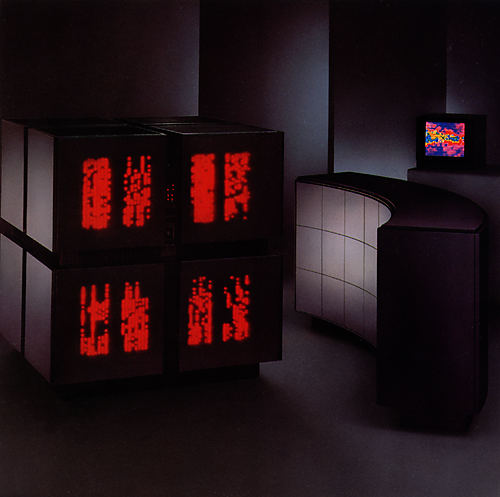
Reminds me of the Connection Machine 2, which had a cubic architecture from both the computing and the outer design: http://mission.base.com/tamiko/cm/cm-image.html
-
Re:Anyone out there care to comment?
You can watch the load on the National Center for Supercomputing Applications online system monitor.
I can't tell you what all the little widgets mean though. All I know is that while they may be informative, they can't beat the cool blinky lights of the old Connection Machine -
Patent liability
I have experience with a few different companies that make chips for PCs. I've found that the most common reason for keeping specs proprietary is patent liability. Areas like computer graphics are minefields with thousands and thousands of patents held by unfriendly entities. If you publicly release a detailed spec for your graphics chip you are inviting these unfriendly patent holders to look for potential litigation.
It's not like nVidia and ATI are looking for reasons to sue each other, it's more about some no-name holding company looking to litigate something like Cadtrak's XOR Cursor patent.
This might also be a competitive thing for Microsoft since they own a big pile of 3D graphics patents from SGI. Microsoft might take legal action against a chip supplier that publishes a spec for a 3D graphics chip that violates one of the old SGI patents.
In my experience most tech companies are now pretty hip about linux and free software, but the potential downside holds them back from releasing specs to the community.
jeff -
Re:Please kids don't steal
Yes they would... imagine if someone made a movie about all the companies that Microsoft crushed and stole from, just because they could. I know there is a much, much longer list of little companies who were lured in by Microsoft, had all their ideas stolen, and then cast aside.
I'll start the list.
Stac Electronics
Burst.com
Borland
Caldera over Dr. DOS in UK
This is almost a job for Michael Moore.... -
not just immitation
It is paranoia when they are really out to get you. Microsoft copied the Mac interface, but Microsoft also stole Stacker and included that as part of DOS 6 as drivespace.
-
Stacker
Stacker was actually illegally included in DOS 6.0 as DoubleSpace. See here or here for an english translation. They removed it for 6.2 & created DriveSpace for 6.22. DriveSpace was used in almost an identical manner, but was incompatible wiht DoubleSpace, causing upgraders who were using drive compression no end of grief.
-
GaAs and Relational CalculusFirst of all, when DARPA decided to directly back specific technologies such as Danny Hillis' "Connection Machine" while supercomputer sales were flagging, they corrupted the market-driven support for supercomputing innovation. As a result just when Seymour Cray had a viable production line for GaAs cpus there was virtually zero market demand for the technology. The lower capacitance as well as higher mobility of the electrons of his version of GaAs technology weren't the sole benefits -- it was also about a factor of 10 cheaper to capitalize the fabrication facilities.
Whenever the government "picks winners" rather than letting nature pick winners, the technologists and therefore technology loses.
(Now that Cray is dead, according to the supercomputing FAQ, "The CCC intellectual property was purchased for a mere $250 thousand by Dasu, LLC - a corporation set up and (AFAIK) wholly owned by Mr. Hub Finkelstein, a Texas oilman. He's owned this stuff for five years and hasn't done anything with it.")
Secondly, as I've discussed before both operating system and database programming are awaiting the development of relations, most likely via the predicate calculus, as a foundation for software. Both are essentially parallel processing foundations for software.
This feeds into quantum computing quite nicely as well, as relations are not just inherently parallel, but are parallel in such a way that they precisely model quantum software.
-
Re:Hypocritical at best
Don't forget the times they stole infringed on another company's patent to bankrupt them. Respect for IP, indeed.
-
Re:Retroactive?
How can you claim that patents are not harder to get than copyright? Your post, mine too, are both protected by copyright. Neither of us did ANYTHING to accomplish that. TO get a patent you have to hire a patent lawyer to help write it, pay the filing fee, and it frequently takes multiple submissions to get accepted (if it gets accepted). Then about 3 years later, poof you have a patent!
On the other hand, if I'll infringe your copyright right now, in order to protect your rights you would have to commence a quite costly legal hassle. Should I be a vicious corporation that could countersue you to death - you'd stand no chance in that battle. With patents, it's the other way round. They are indeed harder to get than copyright, but they are incredibly easy to defend (once acquired). And there are known cases when a small company succesfully defended its patent against a Microsoft-sized giant, even against Microsoft itself. Actually, the ease of getting patents is the main danger in software patents - you never know who patented what when you start to write your own program. -
Re:What is a supercomputer ?
Doesn't the above imply that a supercomputer should really be just a single computer, and not a network or cluster of many computers ?
So what, exactly, is a "single computer"? Most supercomputers that I can think of use multiple processors. The characteristics of each machine come largely from answers to questions like "How big is each individual processor?" and "How many processors does the machine have?" and "How are the processors connected to each other?" One one end of the scale you've got small numbers of very large, powerful processors, like the IBM 3090 vector processors. The one I knew had six processors, I think, and it filled a huge room. At the other end of the spectrum, you've got the Connection Machine with 65,536 processors connected in a hypercube architecture. I never saw one, but from the picture a CM-2 looks to require only about 30 square feet.
I'm sure you'd agree that an individual Xserve is a "single computer," but the Xserve itself has two G5 processors. And if you want to break it down further, each G5 processor contains multiple execution units, so you could almost argue that even a single processor is not a "single computer." It gets even worse with multi-core CPU's.
What, really, is the difference between a CM-2 and the Virginia Tech cluster? Just the number of processors (the CM-2 had about 30x more), the power of each processor (the 64-bit G5 clearly beats the CM-2's 1-bit processors), and the connection architecture. That, and the fact that the VT machine is more modular, and doesn't look nearly as pretty. -
3D torus topologyI checked out the topology of the Cray X1; they call it an "enhanced 3D torus." A 3D torus would be if you made an NxNxN cube of nodes, connected all ajacent nodes (top, bottom, left, right, front, back), and then connected all the processors on one face thru to the opposite face. I can't tell what an "enhanced" torus is. (Each X1 node, by the way, has four 12.8 gflop MSPs, and each MSP has eight 32-stage, 64 bit floating point pipelines.)
So each node is directly connected to six ajacent nodes. Contrast this with the Thinking Machines Connection Machine CM2 topology, which had 2^N nodes connected in an N dimensional hypercube. So each node in a 16384 node CM2 was directly connected to 16 other nodes. There's a theorem that you can always embed a lower dimensional torus in an N dimensional hypercube, so the CM2 had all the benefits of a torus and more. This topology was criticized because you never needed as much connectivity as you got in the higher node-count machines, to CM2 was in effect selling you too much wiring.
Thinking Machines changed the topology to fat trees in the CM5. One of the cool things about the fat tree is it allows you to buy as much connectivity as you need. I'm really surprised that it seems to have died when Thinking Machines collapsed. On the other hand, any kind of 3D mesh is probably pretty good for simulating physics in 3D. You can have each node model a block of atmosphere for a weather simulation, or a little wedge of hydrogen for an H-bomb simulation. But it might be useful to have one more dimension of connection for distributing global results to the nodes.
-
Re:patents protect the little guy
You still have to try the exercise of imagining the value of software innovation would be without patents.
You don't need to do exercises for that. You just have to look at existing studies on the motivations of software companies to innovate, for example this presentation of a study performed by the Fraunhofer Institute (owners of the MP3 patents) and the Max Planck Institute. Have a look at slide 15. Patents are the least used way to protect software development, especially in the "primary sector" (= software development sector in their study, the secondary sector was for them companies whose primary purpose is not to develop software, but who also do it to e.g. steer their washing machines etc.)
You don't need software patents to protect investments in software development and RD, and at the same time software patents held by others can completely undermine any investments you made.
I don't say the patent system is perfect. I just say it is the best we have.
No, it is not, especially not as far as software innovation is concerned.
Do you honestly think the big guys are really interested in a few tens (hundreds) thousands lines of code or a bunch of engineers? No, they are after their innovative ideas, i.e. their patents. No patent, no cash.
It's true that big companies try to amass as many patents as possible, but that has nothing to do with wanting to get access to innovative ideas they wouldn't come up with themselves. It's called strategic patenting, for both offensive (keep others out of the market) and defensive (make sure others can't keep you out of the market) purposes.
If there weren't any patents, smaller companies would be picked based on their ability to turn great ideas into great products, instead of based on their ability to turn basic ideas into broad patents.
Having a few big companies fighting each other over patents is actually not that bad. The little guy will have some bargaining power by threatening to sell his patent to some other company.
And what if the little guy isn't interested in acquiring patents for EUR 40,000 a piece, but simply wants to develop great software? And what's so great about companies spending millions on litigation instead of on R&D?
Having big companies interested in funding research department is not that a bad idea either. Where else do you expect innovation to come from?
Spending much on patents is completely different from innovating a lot. Have a look at e.g. this study (ppt slides) which shows that it's not the innovators that get most patents. Also look at this arcticle by the senior VP of IBM, where he bluntly states that
It would be naive for any company (or for that matter, any country) to assume that amassing patents for patents' sake is a meaningful measure of success. Invention only matters when it positively transforms an institution, a business, a society or our lives. Rather than numbers, it's the application of invention--coupled with deep insight, experience and even intuition--that results in genuine innovation.
You don't need patents to encourage insightful applications, experience and intuition. If anything, they hamper that. Companies will not stop pouring money into software research and innovation if they can't get patents for that. After all, they already did that before they could get them, and they also have to continue doing that to remain competitive. If they stop innovating, they will fall behind in the race for the customer.
Note that I'm not claiming that the most innovative company always has the highest market share, there are obviously other fac
-
Re:At this rate....
Here's a short list: For lying and stealing DOS For stealing code from Stac Electronics For stealing the NT kernel destroying Netscape via monopoly tactics even if AOL caved in. For pulling the same crap with Real Networks For ripping off customers and makeing "90%+ margins" on what is Insecure by Design. Seriously. I know we live in an Enron world and any given company is about as honest as the politicians they buy off, but just look at the track record. These guys are serious slimeballs. Period. And the list above doesn't even cover how they screwed over Apple, used university resources in the early days to pursue a commercial venture.
-
Re:I have been doing this for years...
And before DoubleSpace, there was Stacker. Even better!
Actually, they were about the same. -
Re:I call bluff
Since when is Sun a friend of open source?
Sun pays for NFS v4 port to Linux.
Sun supports Xemacs.
Sun donates internationalization code to X.org.
Sun buys StarOffice and donates the code to OpenOffice.
Sun support development and porting of TCL.
Sun donates elliptic curve technology to openssl.org.
Etc., etc., etc.
Sun established open standards, such as: NIS, NFS, etc., etc.,...
Sun is a much bigger friend to "open source" and *nix than just about any other corporation.
So, are you trolling, or uninformed? Maybe just abusing a friend to open source?
-
Am I really so much outdated ?
The low-level software would have some support for existing computer languages. But users would gain maximum benefit when they generated the low-level code based on the new technical computing language Sun has asked IBM and Cray to help define.
I ever since hearing of CMs up to now thought that issues were parallelizing compilers and languages enabling application specific concepts (e.g. "A High-Level, Massively Parallel Programming Environment and Its Realization") Is this so much outdated ?
CC.
P.S.: Besides, this must have been the result of a paraphrasing engine -
The Connetion Machine
In an age where clusters are becoming more prevalent for parallel computing I've often wondered where the parallel processor was. How about you?"
Danny Hillis, the guy who founded ThinkingMachines designed a mchine called The Connection Machine, (this story has a cooler, more sci-fi lookin' pic of the old beastie) the central design philosophy was to achieve MASSIVE computing power through parallelism. It had 65,535 procs, each of lived on a wafer with dram thereon and a high bandwidth connection to up to (if I remember correctly) up to 4 other of the procs. Young sir Danny wrote a book on his exploits, well worth checking out (seemingly, it's been calling to me from my bookshelf for about a year now).
And as someone pointed out, it seems we've seen this topic before. I'd have modded him up, (hint, hint) but I really like mentioning the connection machine where appropriate. -
Re:Could be intaresting....
I think you're right (and some other posters have said this, too.)
Most of MS' patent portfolio is taken out defensively because they're a big fat deep-pocket target.
Recall some version of DOS where MS had infringed upon someone else's compression technology and, among other things, had to re-release their product after legal action that was taken against them.
There's cases where MS has transgressed others technology, and sometimes they've gotten bitten for it, but they've certainly learned to patent everything to protect their butts. (And to keep a sharp lookout for new technology that could be really important to their business and to buy it out, eg, Citrix).
As long as MS owns the technology, it's usually no skin off their nose to rent it out to others. It's not like anyone else has the same kind of marketing leverage that MS does.
-
Re:This hearkens back
To me, the Connection Machine range of supercomputers were the ultimate in blinkenlighten computing.
The Connection Machine CM-2 cube. Another picture.
Presently, there's the Connection Machine CM-5. Another image.
-
Oh yeah, Microsoft's regard for IP is [in]famousThey are rightfully concerned that if a developer looks at source, they can be sued if s/he produces something similar later.
What crap. You are talking about a company that got it's start from dumpster diving someone else's BASIC. Their whole business model is raping what they call "loss leaders" and publically state they will never enter a "market" untill it's "mature", in other words, they stay out of a technology until someone else has done all the work. Then they come in with the famous $500,000 check to aquire, shutdown or destroy ala Netscape, DRDOS and others. They also advocate "Extreem Programming" in which source code is not touched for the most part, only modified slightly. I imagine that most M$ developer time is put in trying to "integrate" the vast Byzantine raft of other people's code that they have aquired, one way or another. Yeah, and they steal code too, that's why they keep losing lawsuits.
Either you are deluded enough to think M$ cares about anyone or you are an Astroturfer. What version is the Steve Barkto program up to?
-
Oh, of course not...
-
Much doubt about their case
SCO contends that Linux could not have gotten the "enterprise" features without IBM copying Unix code and pasting it into the Linux kernel. That is the only real claim I have heard (read).
A couple of questions I have. If I am using linux in desktop mode on a single cpu, how can I possibly be using the actual features that they claim were necessary to scale beyond 4 processors?
I also have a client that is running a 4 year old Linux distro on a closed network that just runs night and day. How could this possibly infringe since it predates the IBM kernel contributions that SCO claims started this bruhaha? Yet they seem to want a license fee for any vintage of running Linux.
SCO wants to distribute a binary only Unixware runtime that can execute Linux binaries, presumably as the only "legal and non-infringing" platform for doing so. How can they completely incorporate this capability without taking any GPL'd code and ignoring the license?
My opinion after dwelling on this for a while is this:
1 - SCO is trying to overthrow the entire Linux movement that threatens their struggling business. They are scaring the heck out of businesses that currently run or were thinking about deploying Linux. They are not allowing any access to information about their claimed code swap. This means they have no desire to co-exist, but to supercede completely. Their steps so far support this opinion, future moves may change this opinion. Kernel coders have expressed great interest in learning which features supposedly infringe on SCO IP so they can be replaced. It seems that SCO has been completely unwilling to inform them without having them sign an NDA that would then prevent them from fixing any actual code infringment.
2 - SCO is attempting to openly break and defy the terms of the (L)GPL. If they can do so, then they weaken it tremendously and encourage others to dissent too. They are also attempting to change established precedent concerning IP infringment and end user rights. Way back in the early 1990's Microsoft stole compression technology from Stac and had to pay them a large settlement. The outcome for consumers that had already purchased the infringing product? They got to keep possession and continue to use the product they had payed for. Some people got free upgrades, but the ones that chose to keep using the original MS stealware didn't have to get an additional license from Stac to remain legal. Microsoft also countersued claiming that Stac had illegaly reverse engineered part of MS-DOS to enable them to seemlessly integrate their product below the filesystem level. MS won the counter-suit and a smaller $13million award. Customers that had purchased Stac products still had the legal right to use them too. This is because the customer or end user wasn't involved in the actual theft and only indirectly get benefit from the illegal acts on both sides. This precedent holds true in all of the cases that come easily to mind, but there may be exceptions. What the freak is SCO trying to pull? -
Re:elxsi MBOS
In fact, here's a picture of the Connection Machine:
http://mission.base.com/tamiko/cm/cm-image.html -
Learn and do
Europeans, please do something. Phone you MEPs on Monday (or leave a message today and phone again on Monday).
Patents are going to ruin the software industry by handing even more power to the companies that have vast bank accounts and legal team (i.e. the ones that really don't need this extra power).
Read about the affects of patents at:
http://www.softwarepatents.co.uk/
Read the UK patent office's "consultation on software patents":
http://www.patent.gov.uk/about/consultations/concl usions.htm
Examples of bad or missused software patents:
http://www.base.com/software-patents/examples.html
Bad EU patents that have already been issued:
http://swpat.ffii.org/patents/samples/index.en.htm l#pag
(these aren't really enforcable until software patents become clearly legal)
A good proposed amendment:
http://swpat.ffii.org/analysis/epc52/index.en.html
(tell you MEPs to look at this, we have to unite with a definite proposal. Simply saying "we don't want software patents" doesn't give an MEP much to say)
Use the phone. Email is easily ignored. You'll often get answering machines so think of a short useful message to leave, mention the proposed amendment and tell them your sending them an email with the details.
Ciaran O'Riordan -
Re:All evidence to the contrary
This is clearly hyperbolae. The parade of horribles didn't happen in the U.S., it is unlikely to happen in the E.U. The U.S. patent office finally rejects hundreds of applications in software arts every day, and will continue to do so.
You are trolling right? If not, WAKE UP!! There are US patents on virtually every trivial aspect of software development, to the extent that IBM can (and has) gone to companies and essentially said "you are probably violating one of our patents - pay up!". See here for some examples.Nothing in the EU proposal permits (and the law actually precludes) the allowance of a patent claim, where the differences betweeen the claim and the prior art would be obvious to a person of ordinary skill in the art.
In theory, yes, but in practice the patent office is poorly motivated to deny patent claims, leaving it up to the courts to sort it out. Only the largest software companies then have the resources to fight it out in court, and typically the big guy wins just by virtue of stamina. -
USP doesn't care about prior artThe software department of the U.S. patent office is a joke, and I doubt prior art has stopped anyone eager enough from getting a patent.
After all, someones once patented a XOR cursor routine (patent #4,197,590)
You may be amused, or horrified, by some of these software patent examples. It appears that Europe is not really that much better, something the Patent Horror Gallery explicates.
So Be Aware: If my karma drops below good, I may issue a patent for a system that karmafies people and then sue the hell out of OSDN
-
A Real Nostradamus
1. It must be data oriented with no concept of instructions (just routing information), data flows in the system and transformed in a non-linear way, and the output will be all possible computations doable by the transformations.
So, what would these transformations be other than... instructions? You could show me a list of "transformations" that the input data is to undergo to generate an output, and I'd show you a list of "instructions" that tell the computer what to do to the input data to generate an output.
Furthermore, what you want is impossible-- "all possible combinations doable by the [yet uncounted] transformations." That's an arbitrarily large amount of work that requires an arbitrarily large machine and time to accomplish it.
2. It must be based on a fully interconnected grid of very simple processing elements.
Kinda like a Connection Machine, huh? Those are real new.
3. The performance of said computer will be measured in terms of bandwidth not the usual MIPS. As you can see you will need a classical type computer to operate the described computer above so it will not totally replace it.
Hrm. I suppose you've never noticed that memory buses are now specified by what amounts to a bandwidth number, as are IDE (ATA) bus family members. As to the "classical type" computer, again your prototype is the Connection Machine, circa 1983. -
Perl, Python, and Java need to also provide thisSounds like the way to go. Binding should occur at application build time. This is the reason C applications are robust, while Perl, Python, and Java are only toy languages.
The alleged memo on why Sun doesn't use Java internally was largely about applications breaking when the Java environment was upgraded. Once again, problems resulting from using dynamic binding instead of static binding at application build time.
See What Perl, Python, and Java need to learn from C for more details.
-
Re:Embrace, extend, destroy?Stac Electronics
(Follow-up here.)
-
Re:Don't Forget Message Networks and STACKER!
And don't forget Stacker !
I remember trying to fit all that FIDO mail on a 20MB Seagate RLL Harddrive. Remember when harddrive used to cost $800? Imagine the BBS you could run if could magically transport a modern system back in time. The storage and speed would be insane!
I used to run the T.A.G. BBS, and I even wrote some door programs in Borland Turbo Pascal. Remember the automagic file detecting ZMODEM upload door? That was mine -
Re:Any small companies that MS hasn't screwed?
a rather large court settlement
Rethink that statement. The settlement was about $100 million in a year that Microsoft had revenues of about $2 billion - see here for reference. That's about 5% of their annual revenue. That's like a $100 speeding ticket for someone earning $20,000 annually. It's like having $50,000 in income and paying $2,500 in taxes. It's like spilling one mouthful from a can of beer.
BTW, I can no longer find Stac Electronics on the web. I doubt that the cash settlement meant much to them. Microsoft, on the other hand, now has a cash pool of something like $42 billion. They could afford to lose $100 million 400 times. -
Read Oracle's Patent Policy
"Oracle filed its first patent application in November 1991, not because it felt that its software was suddenly worthy of patent protection; it filed that application because of concerns that other inventors, afforded patent protection by a flawed patent system, might find themselves in a position to seriously weaken the Company's competitive edge by alleging patent infringement."
http://www.base.com/software-patents/statements/or acle.html -
Hypercubes and fat treesHypercubes have been around for a long time. The first commercial implementation was the Connection Machine CM-2 circa 1985 by Thinking Machines Corporation. Its a rather cool box with lots of blinky lights. Its successor, the CM-5, used a fat tree network, which was a more economical way of achieving scalable bandwidth.
Thinking Machines Corp went out of business around 1994.
-
Re:What can be done?
Free Code with Patents:
1. mpeg. Lots of free code, lots of patents
2. svg. Apple holds a patent on alpha channels (I'm thinking Macromedia and Adobe have simular patents)
3. css. Microsoft holds a patent on CSS2
4. drivers. HP's GPLed printer drivers have patents behind them. I wouldn't be suprised if 3com had some patents in the linux drivers.
5. ghostscript. Definitaly has patents behind it.
6. linux. Heck, at one time the blinking cursor was patented by IBM. No joke. Some of the unix patents have expired.
7. OpenGL. More patents
8. RSA. Now free, but was patented (RSA corp let this expire). RC4 is a trade secret. MD5 is patented. DES is an IBM patent (expired, iirc).
9. X11/Freetype. MS and Apple each hold patents on portions of TrueType. Rob Pike/ATT hold the patent on backing store. I'm sure there's patents on the transport mechanism.
10. GIF. Lots of free gif software, one stinkin nasty patent.
11. JPG. Patented, freely licensed
12. JPEG2k Patented, most portions freely licensed.
Just because you are not aware of patents, doesn't make you qualified to state that most free software is patent free. That's garbage, and a comprehensive study would be too expensive.
Just because you stick your head in a hole and hide from patents doesn't mean that people arn't out there, right now, writing them for something you're working on in free code, unawares. You need to go down to your library and figure it out.
enlighen yourself.
Pan -
Re:It's not too late...
Patents serve only to tip the scales to the party with the most money/lawyers.
That's certainly the conventional (Slashdot) belief, but it's frankly not true. Patent attorneys will often work on a contingency basis if you have a real case. Prove it to me: Show me a patent that was filed by a little guy that was "smashed" by a big guy.
I can easily show the opposite. Heck, let's look at the Stac lawsuit against Microsoft. They won $120M lawsuit against MS, and they we're a tiny company.
Corporate interests own hundreds of thousands (millions?) of patents. What do you think they own them for?
They own them because they invented something first. What difference does it make how big an entity is if they invent something novel? I repeat: Big interests have the same rights as small interests. Personally, I don't think someone should lose rights just because they get larger.
Now, software patents are a different deal, because we've had a lot of abuses of the system by trying to patent prior art. But that's a problem with how patents are granted, not patents themselves.
(And here is my opportunity to be controversial): The only reason many Slashdotters are against patents is because they want to steal other people's ideas, not because they are worried about corporations stealing the little guy's ideas.
-
Re:"best", but not most sexy...
While slower, I think the CM-2 is sexier. It looks more like "nefarious movie computer" than the CM-5, IMAO. The CM-5 looks too functional.
-
Strangely enough
In 3 lawsuits the existence of the Pohlig-Hellman algorithm was missed. To be sure, there is a good case against their patent. But the fact remains that the connection was not necessarily obvious.
In fact comments by the authors of the Pohlig-Hellman algorithm suggest that it was not. Go here and scroll down to "Martin Hellman". They were actively looking for a good public-key algorithm. They did not find it. They were experts who knew the field, clearly knew their own algorithm, were looking for something like RSA, but did not succeed in finding it. That alone qualifies as extremely good evidence that the idea was non-obvious at the time, no matter how obvious it appears in retrospect.
Simplicity of an idea has nothing to do with how patentable it is!
As for the fact that it is math, check the qualification I gave. If you consider anything in math or computers (by which I meant software) patentable, then RSA clearly should qualify. Whether or not an algorithm should be patentable is another - far more questionable - issue.
Cheers,
Ben
PS There was one thing that I was wrong on. The first public key algorithm predated RSA. However RSA is the first publically available public key algorithm that still stands. Here are some details. But the spooks apparently had it well before that. -
More references and activism infoFor even more information see one of these fine references:
- USPTO Patent FAQ
- EFF's IP page
- Oracle's testimony
- An overview of software patent opposition
- The League for Programming Freedom's Software Patent page
- USPTO Patent FAQ
-
Do they still believe it five years on?
I noticed the page was not at the oracle site. A little probe shows that this is one of several
statements by various companies.
The directory listing reveals the date:
oracle.html 30-May-1994 02:36
and the IBM (and others) testimony reveals more:
Public Hearing on Use of the Patent System to Protect Software Related Inventions
Transcript of Proceedings Wednesday, January 26, 1994 San Jose Convention Center
The statement itself is old news but does anyone know if anything was done about more and better trained patent examiners? -
More companies' statements on software patents
-
More companies' statements on software patents
-
More companies' statements on software patents
-
More companies' statements on software patents
-
More companies' statements on software patents
-
More companies' statements on software patents
-
More companies' statements on software patents
-
More companies' statements on software patents
-
More companies' statements on software patents
-
More companies' statements on software patents