Slashdot Mirror
Domain: cell.com
Stories and comments across the archive that link to cell.com.
Stories · 124
-
Researchers: Smartphone Use Changing Our Brain and Thumb Interaction
Rambo Tribble writes Researchers from the University of Zurich, ETH Zurich, and University of Fribourg have found evidence that smartphone use changes the way your brain interacts with your thumbs. Using electroencephalography to study brain activity in smartphone users vs. feature-phone users, they found apparently persistent, increased activity in areas of the brain associated with the thumbs. Of course, this may well be true of other repetitive activities, like keyboard use. Reuters provide a bit more approachable coverage. -
Humans' Big Brains Linked To a Small Stretch of DNA
A new study (abstract) described in the L.A. Times suggests that "just 10 differences on one particular strand of human DNA lying near a brain-development gene could have been instrumental in the explosive growth in the human neocortex." The DNA region, containing just 1,200 base pairs, is not a gene. But it lies near one that is known to affect early development of the human neocortex, according to the study, published online Thursday in Current Biology. Researchers showed that the region, known as HARE5, acts as an enhancer of the gene FZD8. Embryos of mice altered with human HARE5 developed significantly larger brains and more neurons compared with embryos carrying the chimp version, according to the study. -
Ancient Viruses Altered Human Brains
giulioprisco writes: A new study from Lund University in Sweden (abstract) indicates inherited viruses that are millions of years old play an important role in building up the complex networks that characterize the human brain. The Lund study shows that retroviruses seem to play a central role in the basic functions of the brain — over the course of evolution, the viruses took an increasingly firm hold on the steering wheel in our cellular machinery. In particular, the retroviruses seem to play an important role in the regulation of which genes are to be expressed, and when." -
Birds Fled Area Before Tornadoes Appeared
SternisheFan sends a report from scientists who were tracking a group of birds — golden-winged warblers — in the Appalachian mountains. Just a few days after the birds completed their seasonal migration, they did something odd — they picked up and moved again. Shortly thereafter, a series of storms swept through that area of the U.S., which led to a destructive tornado outbreak (abstract). After the storm had blown over, the team recaptured five of the warblers and removed the geolocators. These are tiny devices weighing about half a gram, which measure light levels. Based on the timing and length of the days they record, these gadgets allow scientists to calculate and track the approximate location of migratory birds. In this case, all five indicated that the birds had taken unprecedented evasive action, beginning one to two days ahead of the storm's arrival. "The warblers in our study flew at least 1,500km (932 miles) in total," Dr. Streby said. They escaped just south of the tornadoes' path — and then went straight home again. By 2 May, all five were back in their nesting area." -
Study: Body Weight Heavily Influenced By Heritable Gut Microbes
FirephoxRising writes Our genetic makeup influences whether we are fat or thin by shaping which types of microbes thrive in our body, according to a new study. Scientists identified a specific, little known bacterial family that is highly heritable and more common in individuals with low body weight. So we are what we eat, and what we got from out parents. From the article: "The study, funded by National Institutes of Health (NIH), researchers sequenced the genes of microbes found in more than 1,000 fecal samples from 416 pairs of twins. The abundances of specific types of microbes were found to be more similar in identical twins, who share 100 per cent of their genes, than in non-identical twins, who share on average only half of the genes that vary between people. These findings demonstrate that genes influence the composition of gut microbes." -
Robot Makes People Feel Like a Ghost Is Nearby
sciencehabit writes: In 2006, cognitive neuroscientist Olaf Blanke of the University of Geneva in Switzerland was testing a patient's brain functions before her epilepsy surgery when he noticed something strange. Every time he electrically stimulated the region of her brain responsible for integrating different sensory signals from the body, the patient would look behind her back as if a person was there, even when she knew full well that no one was actually present. Now, with the help of robots, Blanke and colleagues have not only found a neurological explanation for this illusion, but also tricked healthy people into sensing "ghosts," they report online in Current Biology (abstract). The study could help explain why schizophrenia patients sometimes hallucinate that aliens control their movements. -
Reactions To Disgusting Images Predict a Persons Political Ideology
LuxuryYacht writes A new study shows that the way your brain responds to photos of of maggots, mutilated carcasses, and gunk in the kitchen sink gives a pretty good indication of whether you're liberal or conservative. "Remarkably, we found that the brain's response to a single disgusting image was enough to predict an individual's political ideology," Read Montague, a Virginia Tech Carilion Research Institute psychology professor who led the study, said in a written statement. 83 men and women viewed a series of images while having their brains scanned in a functional MRI (fMRI) machine. The images included the disgusting photos described above, along with photos of babies and pleasant landscapes. Afterward, the participants were asked to rate how grossed out they were by each photo. They also completed a survey about their political beliefs, which included questions about their attitudes toward school prayer, gun control, immigration, and gay marriage. There was no significant difference in how liberals and conservatives rated the photos. But the researchers noted differences between the two groups in the activity of brain regions associated with disgust recognition, emotion regulation, attention and even memory. The differences were so pronounced that the researchers could analyze a scan and predict the person's political leaning with 95 percent accuracy. -
Oxytocin Regulates Sociosexual Behavior In Female Mice
Chipmunk100 writes In a research article in the journal Cell scientists report that there is a subset of neurons that are vital in social interest of female mice for males during estrus, the sexually receptive phase of their cycle. They say that these neurons are responsive to oxytocin. The level of oxytocin rise when we hug or kiss a loved one. The BBC has an article on the findings as well, and reports that Without [oxytocin], female mice were no more attracted to a mate than to a block of Lego ... [The affected] neurons are situated in the prefrontal cortex, an area of the brain important for personality, learning and social behaviour. Both when the hormone was withheld and when the cells were silenced, the females lost interest in mating during oestrous, which is when female mice are sexually active. -
It's Not Just How Smart You Are: Curiosity Is Key To Learning
Scientific American reports that a UC Davis study (paywalled) on how learning interacts with curiosity indicates that curiosity can lead to demonstrably better recall. From the SciAm article: Neuroscientist Charan Ranganath and his fellow researchers asked 19 participants to review more than 100 questions, rating each in terms of how curious they were about the answer. Next, each subject revisited 112 of the questions—half of which strongly intrigued them whereas the rest they found uninteresting—while the researchers scanned their brain activity using functional magnetic resonance imaging (fMRI). During the scanning session participants would view a question then wait 14 seconds and view a photograph of a face totally unrelated to the trivia before seeing the answer. Afterward the researchers tested participants to see how well they could recall and retain both the trivia answers and the faces they had seen. Ranganath and his colleagues discovered that greater interest in a question would predict not only better memory for the answer but also for the unrelated face that had preceded it. A follow-up test one day later found the same results—people could better remember a face if it had been preceded by an intriguing question. Somehow curiosity could prepare the brain for learning and long-term memory more broadly." -
Medical Milestone: Scientists Reset Human Stem Cells
SternisheFan sends news that researchers from the University of Cambridge have made a breakthrough in the production of human pluripotent stem cells. The goal when developing this kind of stem cell is to have them as early in the cell's lifecycle as possible, so that they're more like true embryonic stem cells and can fulfill whatever role is needed. But all of them made so far are advanced slightly down their developmental pathway. The new work, published in the journal Cell (abstract), has found a way to "reset" the cells by introducing two genes that induce a developmental "ground state." -
UCLA Biologists Delay the Aging Process In Fruit Flies
An anonymous reader writes:Life scientists at UCLA have located a gene in fruit flies which, when intentionally activated, increases lifespan by about 30%. The gene (called AMPK) is normal important as an energy sensor, usually triggered by cells with low energy levels. By triggering it at other times, the researchers slowed the fruit flies' aging process (PDF), even beyond the organ system in which the triggering occurred. "Walker said that the findings are important because extending the healthy life of humans would presumably require protecting many of the body's organ systems from the ravages of aging — but delivering anti-aging treatments to the brain or other key organs could prove technically difficult. The study suggests that activating AMPK in a more accessible organ such as the intestine, for example, could ultimately slow the aging process throughout the entire body, including the brain." -
Endorphins Make Tanning Addictive
Rambo Tribble writes: Research published in the journal Cell describes a mechanism whereby exposure to UV light leads to endorphin production in the skin. Additionally, they show that rodents exhibit the characteristics of addiction to those substances. This adds to earlier studies which demonstrated withdrawal-like symptoms in frequent tanners One of the researchers, Dr. David Fisher, commented, "It sounds like a cruel joke to be addicted the most ubiquitous carcinogen in the world,' The researchers conclusions are subject to some skepticism, however. Addiction researcher Dr. David Belin is quoted as opining, "... their study is going to be seminal even though their conclusions are not supported by their results." The BBC offers nicely rounded coverage, as well. -
Fasting Triggers Stem Cell Regeneration of Damaged, Old Immune System
schwit1 sends word of research showing that cycles of prolonged fasting can both protect the immune system from harm and also induce regeneration by causing stem cells to start renewing themselves. 'In both mice and a Phase 1 human clinical trial (abstract), long periods of not eating significantly lowered white blood cell counts. In mice, fasting cycles then "flipped a regenerative switch," changing the signaling pathways for hematopoietic stem cells, which are responsible for the generation of blood and immune systems, the research showed. "PKA is the key gene that needs to shut down in order for these stem cells to switch into regenerative mode. It gives the OK for stem cells to go ahead and begin proliferating and rebuild the entire system," explained [study author Valter Longo], noting the potential of clinical applications that mimic the effects of prolonged fasting to rejuvenate the immune system. "And the good news is that the body got rid of the parts of the system that might be damaged or old, the inefficient parts, during the fasting. Now, if you start with a system heavily damaged by chemotherapy or aging, fasting cycles can generate, literally, a new immune system."' -
Fossils of Earliest Known Pterosaur Found
damn_registrars writes: "A fossil of the earliest known Pterosaur flying reptile was found recently in China. Named Kryptodrakon progenitor, it was described in a paper published yesterday in the journal Current Biology (abstract). Its wingspan was about a meter and a half, very small compared to its evolutionary descendents, whose wingspan reached over 10 meters. 'The pterosaurs remained largely unchanged for tens of millions of years — with characteristics like long tails and relatively small heads — and none became very big. But later during the Jurassic period, some developed anatomical changes that heralded the arrival of a new branch called pterodactyloids that eventually replaced the more primitive forms of pterosaurs. Many of these pterodactyloids had massive, elongated heads topped with huge crests, lost their teeth and grew to huge sizes. Perhaps the defining characteristic of the group is an elongation in the bone at the base of the fourth finger called the fourth metacarpal, and Kryptodrakon is the oldest known pterosaur to have this advance, the researchers said.'" -
Computer Spots Fakers Better Than People Do
Rambo Tribble (1273454) writes "Using sophisticated pattern matching software, researchers have had substantially better success with a computer, than was obtained with human subjects, in spotting faked facial expressions of pain. [Original, paywalled article in Current Biology] From the Reuters piece: '... human subjects did no better than chance — about 50 percent ...', 'The computer was right 85 percent of the time.'" -
Low-Protein Diet May Extend Lifespan
sciencehabit writes "A new theory about the foods that can extend life is taking shape, and it's sure to be a controversial one. Two studies out this week, one in mice (PDF) and another primarily in people (PDF), suggest that eating relatively little protein and lots of carbohydrates — the opposite of what's urged by many human diet plans, including the popular Atkins Diet — extends life and fortifies health." -
Low-Protein Diet May Extend Lifespan
sciencehabit writes "A new theory about the foods that can extend life is taking shape, and it's sure to be a controversial one. Two studies out this week, one in mice (PDF) and another primarily in people (PDF), suggest that eating relatively little protein and lots of carbohydrates — the opposite of what's urged by many human diet plans, including the popular Atkins Diet — extends life and fortifies health." -
"Jumping Genes" Linked To Schizophrenia
sciencehabit writes "Roaming bits of DNA that can relocate and proliferate throughout the genome, called 'jumping genes,' may contribute to schizophrenia, a new study suggests (abstract). These rogue genetic elements pepper the brain tissue of deceased people with the disorder and multiply in response to stressful events, such as infection during pregnancy, which increase the risk of the disease. The study could help explain how genes and environment work together to produce the complex disorder and may even point to ways of lowering the risk of the disease, researchers say." -
Neglect Causes Massive Loss of 'Irreplaceable' Research Data
Nerval's Lobster writes "Research scientists could learn an important thing or two from computer scientists, according to a new study (abstract) showing that data underpinning even groundbreaking research tends to disappear over time. Researchers also disappear, though more slowly and only in terms of the email addresses and the other public contact methods that other scientists would normally use to contact them. Almost all the data supporting studies published during the past two years is still available, as are at least some of the researchers, according to a study published Dec. 19 in the journal Current Biology. The odds that supporting data is still available for studies published between 2 years and 22 years ago drops 17 percent every year after the first two. The odds of finding a working email address for the first, last or corresponding author of a paper also dropped 7 percent per year, according to the study, which examined the state of data from 516 studies between 2 years and 22 years old. Having data available from an original study is critical for other scientists wanting to confirm, replicate or build on previous research – goals that are core parts of the evolutionary, usually self-correcting dynamic of the scientific method on which nearly all modern research is based. No matter how invested in their own work, scientists appear to be 'poor stewards' of their own work, the study concluded." -
Scientists Reverse Muscle Aging In Mice
retroworks sends word that a group of researchers has found a chemical that successfully rejuvenated muscle tissue in mice. The scientists "said it was the equivalent of transforming a 60-year-old's muscle to that of a 20-year-old — but muscle strength did not improve." The study (abstract) is being called an "exciting finding" but the researchers are quick to point out the chemical only reverses one aspect of aging. Damage to DNA and shortening of telomeres continues. Still, it's one piece of the puzzle, and the group is hoping to begin clinical trials in 2015. -
Web Surfing Improves Motor Skills
sciencehabit writes "Don't worry about watching all those cat videos on the Internet. You're not wasting time when you are at your computer — you're honing your fine-motor skills. A study (abstract) of people's ability to translate training that involves clicking and twiddling a computer mouse reveals that the brain can apply that expertise to other fine-motor tasks requiring the hands. The research involved some interesting methodology, including having Chinese migrant workers play the classic arcade game Pong for two hours a day." -
Scientific Data Disappears At Alarming Rate, 80% Lost In Two Decades
cold fjord writes "UPI reports, 'Eighty percent of scientific data are lost within two decades, disappearing into old email addresses and obsolete storage devices, a Canadian study (abstract, article paywalled) indicated. The finding comes from a study tracking the accessibility of scientific data over time, conducted at the University of British Columbia. Researchers attempted to collect original research data from a random set of 516 studies published between 1991 and 2011. While all data sets were available two years after publication, the odds of obtaining the underlying data dropped by 17 per cent per year after that, they reported. "Publicly funded science generates an extraordinary amount of data each year," UBC visiting scholar Tim Vines said. "Much of these data are unique to a time and place, and is thus irreplaceable, and many other data sets are expensive to regenerate.' — More at The Vancouver Sun and Smithsonian." -
Scientists Boost the "Will To Persevere" With Current To the Brain
schliz writes "Stanford scientists say they could help boost people's motivation to overcome difficulties by electrically stimulating the anterior midcingulate cortex in the brain. The study involved two patients, who described the 'will to persevere' beautifully. One said it was like driving into a storm front and knowing that he had to get through. From the article: 'Stanford University neuroscientists passed a small current through an area in the part of the brain that deals with error detection, anticipation of tasks, attention, motivation, and emotional responses. Both patients involved in the study had epilepsy, and already had electrodes implanted in their brains to help doctors learn about the source of their seizures." -
Plastic Waste Threatens Marine Diversity
Rambo Tribble writes "An article in Current Biology (abstract) details the finding that minute particles of plastic waste are affecting marine worms, potentially having grave impacts on marine biodiversity (PDF) and leading to the accumulation of toxins in marine animals. 'The team found that the tiny bits of plastic, which measure 1mm or smaller, transferred pollutants and additive chemicals — such as flame-retardants — into the guts of lugworms (Arenicola marina). This process results in the chemical reaching the creatures' tissue, causing a range of biological effects such as thermal stress and the inability to consume as much sediment.' Unfortunately, policymakers have routinely treated such wastes as benign. The BBC provides more approachable coverage of the findings." -
Plastic Waste Threatens Marine Diversity
Rambo Tribble writes "An article in Current Biology (abstract) details the finding that minute particles of plastic waste are affecting marine worms, potentially having grave impacts on marine biodiversity (PDF) and leading to the accumulation of toxins in marine animals. 'The team found that the tiny bits of plastic, which measure 1mm or smaller, transferred pollutants and additive chemicals — such as flame-retardants — into the guts of lugworms (Arenicola marina). This process results in the chemical reaching the creatures' tissue, causing a range of biological effects such as thermal stress and the inability to consume as much sediment.' Unfortunately, policymakers have routinely treated such wastes as benign. The BBC provides more approachable coverage of the findings." -
Changing a Single Gene Allows Mice To Live 20 Percent Longer
An anonymous reader writes "A research team at the National Heart, Lung, and Blood Institute has been experimenting with changing mouse genes and seeing how it impacts their life. In a surprising discovery, when targeting just one gene change it was found they could extend the life of a mouse by 20 percent. The gene the researchers focused on is called mTOR and is associated with metabolism. By lowering its expression (to about 25 percent of what is normal) in a batch of mice they did indeed live longer (abstract). They also displayed better memory, balance, muscle strength, and posture as they aged. However, the health of their bones deteriorated more quickly and their immune system was weakened, suggesting that extra time alive wouldn’t really be worth it in terms of overall health. Lead researcher Toren Finkel said, 'While the high extension in lifespan is noteworthy, this study reinforces an important facet of aging; it is not uniform. Rather, similar to circadian rhythms, an animal might have several organ-specific aging clocks that generally work together to govern the aging of the whole organism.'" -
Camping Helps Set Circadian Clocks Straight
cold fjord writes "Counsel & Heal reports, 'Many people are stuck in the vicious cycle of late nights and late mornings. However, a new study reveals that a week of camping in the great outdoors may help people set their clocks straight. A new study, published in the journal Current Biology, reveals that if given a chance, our body's internal biological clocks will tightly synchronize to a natural, midsummer light-dark cycle. The study found that a week of exposure to true dawn and dusk with no artificial lights had a significant effect on people who might otherwise describe themselves as night owls. Researchers found that under those conditions, night owls quickly become early birds. "By increasing our exposure to sunlight and reducing our exposure to electrical lighting at night, we can turn our internal clock and sleep times back and likely make it easier to awaken and be alert in the morning," Kenneth Wright of the University of Colorado Boulder said in a news release.'" -
Laser Blood Scan Could Help Identify Malaria and Other Diseases
sciencehabit writes "Combining lasers with a principle discovered by Alexander Graham Bell over 100 years ago, researchers have developed a new way to collect high-resolution information about the shape of red blood cells. The lasers pulse every 760 nanoseconds to induce red blood cells to emit sound waves with frequencies of more than 100MHz, one of the highest frequencies ever achieved. Testing the laser on blood samples collected from a group of human volunteers, researchers showed that the high-frequency sound waves emitted by red blood cells in the blood samples revealed the tiniest details about the cells' shapes. Because diseases like malaria can alter the shape of the body's cells, the device may provide a way to accurately diagnose various blood disorders before it's too late." Abstract (actual paper is paywalled). -
Human Stem Cell Cloning Paper Contains Reused Images
An anonymous reader writes "A very recent paper in the prestigious biology journal Cell — 'Human Embryonic Stem Cells Derived by Somatic Cell Nuclear Transfer' (openly accessible) — reports the novel creation of human embryonic stem cells from somatic nuclei. It has received massive media coverage and is surely penciled in as a strong candidate for scientific publication of the year. It does however have several examples of image reuse that have been pointed out by a submission on PubPeer. In the paper, it is recorded that the journal Cell accepted this paper just 4 days after submission. Perhaps, under the circumstances, the pre-publication peer review had to be a little hasty? At least at PubPeer, while conducting post publication review, we can take as long as necessary to make up for that lost time. 'In 2004 scientists led by Woo Suk Hwang of Seoul National University claimed to have produced human embryonic stem cells through the same technique used by the Oregon team. Their paper, published in Science, turned out to contain fabricated data. That came to light when scientists figured out that some of the images in the paper were copied or manipulated.''" -
Predicting IQ With a Simple Visual Test
New submitter trendspotter writes "Scientists at the University of Rochester found a unique way to measure high IQ and IQ of the brain in general just by studying individuals and their abilities to filter out noise in images (abstract). The results of a visual test where people were told to quickly detect movements showed similar IQ results as a classic intelligence test. 'The relationship between IQ and motion suppression points to the fundamental cognitive processes that underlie intelligence, the authors write. The brain is bombarded by an overwhelming amount of sensory information, and its efficiency is built not only on how quickly our neural networks process these signals, but also on how good they are at suppressing less meaningful information. ... The researchers point out that this vision test could remove some of the limitations associated with standard IQ tests, which have been criticized for cultural bias.'" -
Scientists Clone Human Embryos To Make Stem Cells
cyachallenge writes "Scientists say they have, for the first time, cloned human embryos capable of producing embryonic stem cells. 'We had to find the perfect combination,' Mitalipov says. As it turned out, that perfect combination included something surprising: caffeine. That ingredient, plus other tweaks in the process, including using fresh eggs and determining the optimal stage of each egg's development, Mitalipov says." -
Transfusions Reverse Aging Effects On Hearts In Mice
symbolset writes "Research published yesterday in the journal Cell (abstract) by Richard Lee and Amy Wagers of Harvard has isolated GDF-11 as a negative regulator of age-associated cardiac hypertrophy. 'When the protein ... was injected into old mice, which develop thickened heart walls in a manner similar to aging humans, the hearts were reduced in size and thickness, resembling the healthy hearts of younger mice.' Through a type of transfusion called parabiotic or 'shared circulation' in mice — one old and sick, the other young and well — they managed to reverse this age-associated heart disease. From there, they isolated an active agent, GDF-11, present in the younger mouse but absent in the older, which reverses the condition when administered directly. They are also using the agent to restore other aged/diseased tissues and organs. Human applications are expected within six years. Since the basis for the treatment is ordinary sharing of blood between an older ill, and younger healthy patient, we can probably expect someone to start offering the transfusion treatment somewhere in the world, soon, to those with the means to find a young and healthy volunteer." -
'Master Gene' Makes Mouse Brain Look More Human
sciencehabit writes "Researchers have found a genetic mutation that causes mammalian neural tissue to expand and fold. When they mutated this gene in mice, the rodents developed brains that look more like ours (abstract). The discovery may help explain why humans evolved more elaborate brains than mice, and it could suggest ways to treat disorders such as autism and epilepsy that arise from abnormal neural development. The findings go against a common conception that 'dumber species will have different genes' for brain development than more intelligent species, Borrell says. He adds that the mechanism could help explain how New World monkeys, with their small, smooth brains, could have evolved from an ancestor with a bigger and more folded brain." -
Play Tetris To Fix Your Lazy Eye
MightyMait writes "A study from a team at McGill University has found Tetris to be a good treatment for lazy eye. 'Armed with a special pair of video goggles they set up an experiment that would make both eyes work as a team. Nine volunteers with amblyopia were asked to wear the goggles for an hour a day over the next two weeks while playing Tetris, the falling building block video game. The goggles allowed one eye to see only the falling objects, while the other eye could see only the blocks that accumulate on the ground in the game. For comparison, another group of nine volunteers with amblyopia wore similar goggles but had their good eye covered, and watched the whole game through only their lazy eye. At the end of the two weeks, the group who used both eyes had more improvement in their vision than the patched group (abstract).' As someone born with crossed-eyes who underwent surgery as an infant and has lived with a lazy eye his whole life (without 3-D vision), the prospect of fixing my vision by playing Tetris is an enticing one." -
Roadkill Forcing Cliff Swallows To Evolve
sciencehabit writes "Cliff swallows that build nests that dangle precariously from highway overpasses have a lower chance of becoming roadkill than in years past thanks to a shorter wingspan that lets them dodge oncoming traffic. That's the conclusion of a new study based on 3 decades of data collected on one population of the birds. The results suggest that shorter wingspan has been selected for over this time period because of the evolutionary pressure put on the population by cars." -
Scientists Have Re-Cloned Mice To the 25th Generation
derekmead writes "Dolly's mere existence was profound. It was also unusually short, at just six years. But scientists in Japan announced yesterday they have succeeded in cloning mice using the same technique that created Dolly with more or less perfect results: The mice are healthy, they live just as long as regular mice, and they've been flawlessly cloned and recloned from the same source to the 25th generation. Researchers claim it's the first example of seamless, repeat cloning using the Dolly method—known as "somatic cell nuclear transfer" (SCNT)—in which the nucleus from an adult source animal is transferred to an egg with its nucleus removed. Until recently, the process was fraught with failures and mutations. But the team led by Teruhiko Wakayama, whose results were published today in the journal Cell Stem Cell, was able to create 581 clones from the same original mouse. Scientists, including Dolly's creator, have long felt the process was still too unstable—and too wasteful of precious eggs, given the failure rate—to be used on humans any time soon. But perhaps it's not so far off, after all." -
Amazing Video of a Brain Perceiving the External World
redletterdave points out work from Japanese researchers who produced an incredible visualization of how a brain perceives its environment. Studying zebrafish larvae, the scientists were able to observe neuronal signals in real time as the zebrafish saw and identified is prey, a paramecium. The results are illustrated in a brief video posted to YouTube, and in a longer video abstract hosted at Current Biology. (Direct download). The work is important because it demonstrates direct mapping of external stimuli to internal neuron activity in the optic tectum. -
Amazing Video of a Brain Perceiving the External World
redletterdave points out work from Japanese researchers who produced an incredible visualization of how a brain perceives its environment. Studying zebrafish larvae, the scientists were able to observe neuronal signals in real time as the zebrafish saw and identified is prey, a paramecium. The results are illustrated in a brief video posted to YouTube, and in a longer video abstract hosted at Current Biology. (Direct download). The work is important because it demonstrates direct mapping of external stimuli to internal neuron activity in the optic tectum. -
Dung Beetles Navigate By the Milky Way; Pigeons Tune In To Magnetism
sciencehabit writes with this excerpt from Science magazine's colorful synopsis of a paywalled article at Current Biology "A day in the life of a male dung beetle goes something like this: Fly to a heap of dung, sculpt a clump of it into a large ball, then roll the ball away from the pile as fast as possible. However, it turns out that the beetles, who work at night, need some sort of compass to prevent them from rolling around in circles. New research suggests that the insects use starlight to guide their way. Birds, seals, and humans also use starlight to navigate, but this is the first time it's been shown in an insect." Also on the topic of How Animals Get Around Without GPS, new research has considerably heightened scientists understanding of birds' sensitivity to magnetic fields. For homing pigeons at least, this ability seems to be tied to a cluster of just 53 neurons (original paper, also behind a paywall). -
Drug Allows Deafened Mice to Regrow Inner Ear Hair
sciencehabit writes "All you graying, half-deaf Def Leppard fans, listen up. A drug applied to the ears of mice deafened by noise can restore some hearing in the animals. By blocking a key protein, the drug allows sound-sensing cells that are damaged by noise to regrow. The treatment isn't anywhere near ready for use in humans, but the advance at least raises the prospect of restoring hearing to some deafened people." -
Scientists Breed Big-Brained Guppies To Demonstrate Evolution's Trade-Offs
An anonymous reader writes "Scientists have long suspected that big brains come with an evolutionary price — but now they've published the first experimental evidence to support that suspicion, based on their efforts to breed big-brained fish. A Swedish team found it relatively easy to select and interbreed common guppies to produce bigger (or smaller) brains — as much as 9.3 percent bigger, to be precise (abstract). But the bigger-brained fish also tended to have smaller guts and produce fewer babies." -
IQ 'a Myth,' Study Says
An anonymous reader send this quote from The Star: "The idea that intelligence can be measured by a single number — your IQ — is wrong, according to a recent study led by researchers at the University of Western Ontario (abstract). The study, published in the journal Neuron on Wednesday, involved 100,000 participants around the world taking 12 cognitive tests, with a smaller sample of the group undergoing simultaneous brain-scan testing. 'When we looked at the data, the bottom line is the whole concept of IQ — or of you having a higher IQ than me — is a myth,' said Dr. Adrian Owen, the study’s senior investigator... 'There is no such thing as a single measure of IQ or a measure of general intelligence.'" -
Scientists Make Fish Grow "Hands" In Experiment Revealing How Fins Became Limbs
An anonymous reader writes "While fossils have long shown that limbs evolved from fins, scientists have shown live in the laboratory how the transition may have happened. Researchers said that the new study published in the journal Developmental Cell offers evidence revealing that the development of hands and feet occurred through the acquisition of new DNA elements capable of activating specific genes." -
Study Claims Human Intelligence Peaked Two To Six Millennia Ago
eldavojohn writes "Professor Gerald "Jerry" Crabtree of Stanford's Crabtree Laboratory published a paper (PDF) that has appeared in two parts in Trends in Genetics. The paper opens with a very controversial suggestion: 'I would be willing to wager that if an average citizen from Athens of 1000 BC were to appear suddenly among us, he or she would be among the brightest and most intellectually alive of our colleagues and companions.' From there, Crabtree speculates we're on the decline of human intelligence and we have been for at least a couple millennia. His argument suggests agriculture and, following from that, cities, have allowed us to break free of some environmental forces on competitive genetic mutations — a la Mike Judge's theory. However, the conclusion of the paper urges humans to keep calm and carry on, as any attempt to fix this genetic trend would almost certainly be futile and disturbing." -
Study Claims Human Intelligence Peaked Two To Six Millennia Ago
eldavojohn writes "Professor Gerald "Jerry" Crabtree of Stanford's Crabtree Laboratory published a paper (PDF) that has appeared in two parts in Trends in Genetics. The paper opens with a very controversial suggestion: 'I would be willing to wager that if an average citizen from Athens of 1000 BC were to appear suddenly among us, he or she would be among the brightest and most intellectually alive of our colleagues and companions.' From there, Crabtree speculates we're on the decline of human intelligence and we have been for at least a couple millennia. His argument suggests agriculture and, following from that, cities, have allowed us to break free of some environmental forces on competitive genetic mutations — a la Mike Judge's theory. However, the conclusion of the paper urges humans to keep calm and carry on, as any attempt to fix this genetic trend would almost certainly be futile and disturbing." -
Cockatoo Manufactures, Uses Tools
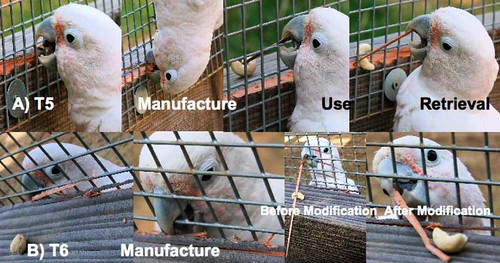
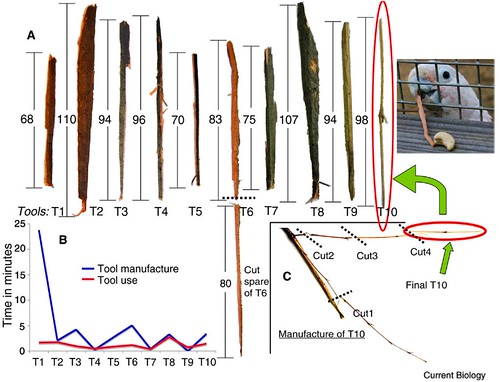
grrlscientist writes with news of a cockatoo named Figaro, who was observed to construct and use his own tools to retrieve objects that were outside of his cage. Quoting: "One day, a student caregiver noticed Figaro pushing a stone pebble through the aviary wire mesh, where it fell on a wood structural beam. Unable to retrieve the stone with his foot, Figaro then fetched a piece of bamboo and again attempted to retrieve the stone using the bamboo stick. ... During the next three days, the researchers ran trials of the original scenario, which was repeated ten times but substituting a cashew nut for the pebble. All trials were captured on video and the process of tool manufacture and use was documented photographically. ... 'Figaro made a new tool for every nut we placed there and each time the bird was successful in obtaining it,' reports cognitive biologist Alice Auersperg of the University of Vienna, who led the study (PDF). During these trials, Figaro used 10 tools, nine of which he manufactured and one of which was ready-made." -
Birth Control For Men Edges Closer
ananyo writes "Developing oral contraceptives for men has not gone as swiftly as researchers imagined in the early 1970s; they suggested at the time that a 'male pill' was not far off. But researchers now report a new way to make male mice temporarily infertile. Although the treatment is not ready for human use, the method avoids some of the pitfalls of earlier attempts. The technique appears to have a much more specific action than previous methods: it impairs sperm production by blocking a protein called BRDT. This protein was singled out as a potential therapeutic target five years ago because it only occurs in the testes, where it is required for the division of sperm cells. If the approach proves safe in humans, it would be an improvement over hormone-based methods of male contraception, which are not completely effective and cause side effects such as mood swings, acne and a loss of libido (abstract). On the downside, however, the compound 'shrank the mice's testes.'" -
Controlling Monkey Brains and Behavior With Light
An anonymous reader writes "Researchers reporting online on July 26 in Current Biology have for the first time shown that they can control the behavior of monkeys by using pulses of blue light to very specifically activate particular brain cells (abstract). The findings represent a key advance for optogenetics, a state-of-the-art method for making causal connections between brain activity and behavior. Based on the discovery, the researchers say that similar light-based mind control could likely also be made to work in humans for therapeutic ends." -
Software Emulates Organism's Entire Lifespan
An anonymous reader "Scientists have developed a software simulation, running on 128 computers, of an entire organism, a step toward carrying out full experiments without traditional instruments (abstract). 'For their computer simulation, the researchers had the advantage of extensive scientific literature on the bacterium. They were able to use data taken from more than 900 scientific papers to validate the accuracy of their software model. Still, they said that the model of the simplest biological system was pushing the limits of their computers. "Right now, running a simulation for a single cell to divide only one time takes around 10 hours and generates half a gigabyte of data," Dr. Covert wrote. "I find this fact completely fascinating, because I don’t know that anyone has ever asked how much data a living thing truly holds. We often think of the DNA as the storage medium, but clearly there is more to it than that." In designing their model, the scientists chose an approach that parallels the design of modern software systems, known as object-oriented programming. Software designers organize their programs in modules, which communicate with one another by passing data and instructions back and forth. Similarly, the simulated bacterium is a series of modules that mimic the different functions of the cell.'" -
Oldest DNA Recovered From 7,000-Year-Old Skeletons In Spain
An anonymous reader writes "Researchers published a paper in the current issue of Current Biology detailing their analysis of DNA from 7,000-year old cavemen in northern Spain. From the article: 'The bones of the two young adult males were found in a cave in the Cantabarian mountain range in 2006 by a handful of explorers, 4,920 feet above sea level. The cold atmosphere is what preserved the DNA in the remains of the two bodies. The cavemen lived during the Mesolithic period and were hunter-gatherers, as determined by an ornament one of the skeletons was holding. They have named the two skeletons Braña1 and Braña2 after the Braña-Arintero site in which they were discovered. They were in near-perfect condition.'"