Slashdot Mirror
Domain: computercloset.org
Stories and comments across the archive that link to computercloset.org.
Comments · 28
-
Not Really Hiding Anything
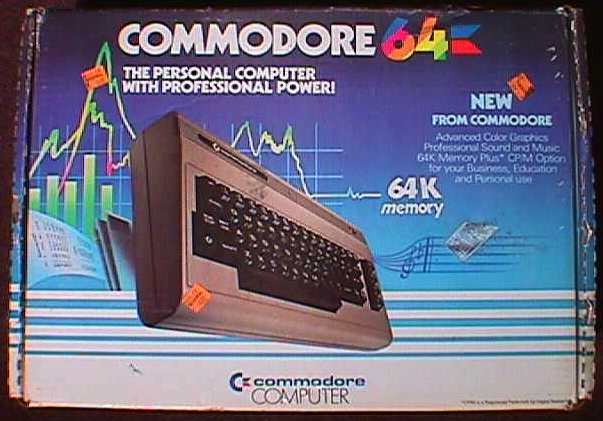
The Commodore-64 Came Out 30 Years Ago
Yup, with that Rainbow Logo the Commodore-64 was Out And Proud from day one.
-
Re:WTF?
I had one way before that. IT ran Windows for Workgroups 3.11 for Pen computing.
http://www.computercloset.org/DauphinDTR1.htm is what it ran on in 1996 when they were end of life for the FBI and they were selling them off cheap.
-
Dazzler? Nothing new.
We had those way back in 1977! Two circuit boards, lots of TTL chips.
-
Oh, first "Popular" portable
Sure, but what about the Epson HX-20, circa 1981? I didn't actually own one, but I got to borrow one from a guy who was using them to run CNC machines.
And does anybody else have a Convergent Technologies WorkSlate? I should see if I can get that baby to fire up . . . -
Oh, first "Popular" portable
Sure, but what about the Epson HX-20, circa 1981? I didn't actually own one, but I got to borrow one from a guy who was using them to run CNC machines.
And does anybody else have a Convergent Technologies WorkSlate? I should see if I can get that baby to fire up . . . -
Coleco Telstar Arcade
My father brought home the Coleco Telstar Arcade when I was probably about 5 or 6. It was my first real video game. The games were basically three types - Pong-based sports games that used the two paddle knobs (the only difference between some of them was the color of the background), a driving game, and shooting games where you had to use the light gun to shoot a white square or some other blob that appeared briefly on the tv screen. I think we had 3 of the 4 cartridges. I bet my parents still have the console too. It was actually a lot of fun, especially the pong-varients. My sister and I used to waste a lot of time playing, although it was kind of a pain in the butt to set up and attach to the TV - we were too short and so we had to have Dad set it up for us.
-
Re:non-standard layouts
The double-row enter key was a pretty standard PC keyboard style circa 1988 when I got my first XT. I think it might have been in response to the Apple IIe keyboard. At that time, Apple II's were still in serious competition with PCs for the home market.
-
Advancing technology
Technology can break down. Maybe rarer as the farther one advances, but I still bet there are mishaps.
Yeah, because Windows crashes so much less often than DOS did. Going back even farther, I remember that my Apple II used to blue screen on me all the time. My Compucolor II would crash even before I turned it on! -
Re:Wii-tf
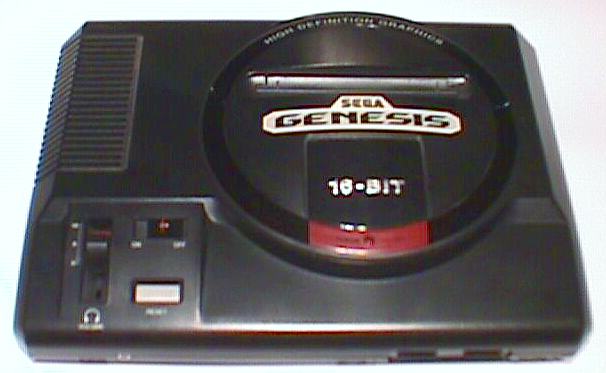
Not to be pedantic, but there were actually four sega genesis systems
http://www.computercloset.org/SegaGenesis1.jpg
http://akamai.edeal.com/images/catalog3091/folder2 0963/img2422571.jpg
http://www.emulationgalaxy.co.yu/images/systems/MD 2_Genesis3.jpg
http://di1.shopping.com/images/di/47/74/30/3339453 66e5f6349324f7a4b50395932735241-150x188-0-0.jpg
(ok ok, that last one is not a console exactly, as it doesn't come with the ability to swap carts, but it does use the exact same chip as the 3rd real console, same manufacturer even - you can rewire it to accept controllers and games!)
The first genesis lacked some of the output options that the second one had. So this is nothing new! -
Re:The Essentials
I concur. This is a good list of the dawn of personal computing. I disagree with other posters about vintage mainframes and minicomputers (such as PDP/11) since they were not widely accessible. For those system not available, emulators are a good choice:
http://en.wikipedia.org/wiki/Emulator
http://www.emulator-zone.com/
These sites have good descriptions of the history and the classics (my favorites at top):
http://oldcomputers.net/
http://www.old-computers.com/news/default.asp
http://www.vintage-computer.com/
http://www.obsoletecomputermuseum.org/
http://www.computercloset.org/
http://www.sinasohn.com/clascomp/
It is important to keep the history alive. Although for us old timers, it just seems like yesterday, many youngsters do not realize the history of their shiny new laptops, etc.
-
Re:I'm not giving it up!
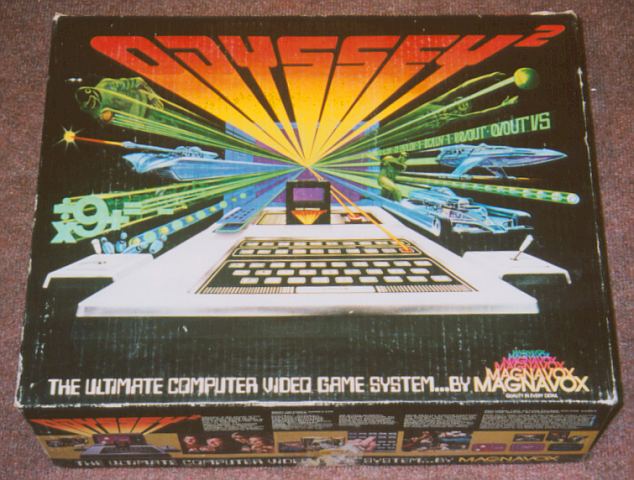
*chuckle* Oh well, I'll have to keep an eye out and see if I bump into something similar. I'm starting to womder, though. Maybe someone repackaged it in the Odyssey^2 box? I could easily see it happening that someone got a new Odyssey^2, didn't have the box for the old one, so packed it in the new box to sell it. The Odyssey^2 box looks like this, while the original Odyssey box looked like this.
Anyway, thanks for the discussion. -
Re:Screw that - I'm going back to stone tablets
These guys beat you to it:
Sounds like a rehash of the old SoftStrip concept, only now it works with the now-ubiquitous flatbed scanner instead of a special reader device.
(Hmm...some issues of Nibble had their programs included in SoftStrip format as well as printed source listings. I wonder if anybody ever came up with a program that'd read SoftStrip data from a scanned image.)
-
Re:so light!
I'm a little worried to use this as a replacement for my Amstrad PPC. Yes, I want something portable, but not so small and light I could lose it down the back of the couch!
-
Re:Don't confuse these with a laptop
Are you talking about the Compaq Portable 386? Those things rocked. Mine still does. Every once in a while I boot it up (with my EGA monitor attached) to play Space Quest 2 in all of its glory. For some reason computers just don't seem as fun anymore...
-
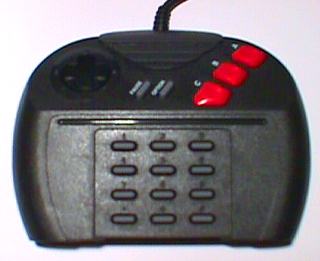
2600? What about the Jaguar
That's when they got it right!
-
Those who do not know history
...are destined to repeat it:
i'd not heard of this before.
You must be a bit young, or a bit new to personal computing. The first generation of personal computers were all implemented using a passive backplane architecture.
Nowadays chips are cheap so the whole system is disposable--if that multi-hundred-pin superscalar chip fries you just drop in a whole new board, which today becomes a full blown PC with the addition of CPU, RAM and HD. Back in the day even the primitive 6502 was several hours wage for most people and reliability wasn't as good, so integration was a bad thing--at least with cards if one blows there is a good chance the $1000s of other circuitry were still intact. Thus, you had a nice chunky cabinet full of cards---CPU, RAM, terminal I/O or maybe a video card, floppy controller, etc etc.
Industrial controllers are still almost always backplane-and-card setups to this day. Modern controllers have taken this to a new level and are typically hot-pluggable as well. In industrial settings, servicability and maximum availability are more important than lowest cost, so in any critical operation you won't see a PLC processor with integrated network, digital I/O, etc etc etc...'cause you'll never be able to hot-swap chips that are surface-mount soldered to a processor board. -
I had an 800XL in 1983!
-
Finally, what we've always wanted.
I'll be able to play Tekken and Ridge Racer on my Bandai Pippin @World!
-
Re:very simple processor
you haven't lived until you've programmed a computer with 544 bytes of memory. This computer was released in 1985!
The web page says program words, but those were equivalent to bytes. Tokenizing the BASIC keywords helped save memory, but line numbers were stored as ASCII, so "GOTO 5" took half the memory of "GOTO 500" -
Some things never change...
Hmm...console as computer or terminal eh? Well the "geeky allure" certainly has nothing to do with novelty, as the concept is far from new. Witness the following:
1. The Bally Astrocade console of 1978 was the first to explore the concept commercially, as one of it's "game" carts was the BASIC programming language and cassette interface.
2. Later in 1978 Magnavox (the producer of the first ever home console called Odyssey) introduced the successor Odyssey^2. Marketed head-to-head with the Atari 2600 as a console, it actually had an integrated keyboard. It wasn't really a computer (The Sinclair ZX81 came standard with EIGHT TIMES the memory of the O^2!) the idea was that adventure/strategy games could better use a keyboard than a joystick, and that expanding it to a computer would simply involve adding a RAM expansion pack.
3. It seems Mattel had intentions from the start to give the Intellivision a computer expansion option, and touted those intentions from the console's intro in 1979. However, they were late in delivering on their promises, and were eventually forced by the FTC to bring out the computer expansion or pay huge fines. They did comply--barely--by selling a few hundred in test markets, then pulled out. Eventually the introduced a newer, quite different design to a wider market, however the result was a major disappointment.
4. Atari beat both Bally and Magnavox to the colour console market with the 2600, but it was a bit later in exploting the computer expansion option. This was probably because they figured the entry-level micro market was served adequately by its Atari 400 offering. In the end the "Graduate" keyboard was never released.
5. Coleco was probably had the most success at turning their Colecovision console into a computer in terms of units produced (300K to 500K, although much of that stock never sold) and time on the market (nearly 1.5 years starting in 1983). This was probably more to do with Coleco selling the ADAM as a self contained computer alongside the "expansion module 3" that attached to an existing Colecovision--which sold in lower numbers. The ADAM in fact simply contained a slightly modified Colecovision and the logic board of the Expansion Module 3 in one case.
And that only covers until 1983. Nintendo Famicom and the Sony PS2 could also be made into a computer (with the manufacturer's blessing and products). There certainly is some appeal in being able to "tinker" and have the flexibility of a full-fledged computer, so why did none of these ideas really take off?
I'd have to say that both price and features had a great deal to do with it--the same reason the whole market crashed in 1984. With the exception of the Coleco products (which failed because of poor marketing/late delivery and poor quality control of its initial run) all these expanded consoles were lousy computers, and the combined cost of the console and expander was the same or more than a better entry-level micro. Why would you purchase an Atari 2600 and graduate if the Atari 400 by itself was a way better system that had great games already? Why buy an intellivision that you MIGHT be able to expand to a computer when you could get a VIC or a 400 or a Speccy that was already a computer for the same price? Not only that, but these computers all came with great games to boot.
I also find the "geeky allure" appealing, but I think the market is limited--in fact I think the drive to "tinker" with some of these devices is because the were commercial failures. Hardcore fans feel like they are abandoned by the company and band together for support and to get the most out of the system. Because the supply of orphaned sys -
Chipset-based motherboards?!
Good thing I'm still using my chipset-less motherboard. It's just a bus!
-
Link
Neat!
Dauphin Info
Specifications and information
Introduced:
Original Price:
CPU: Cyrix 486DRX2-50
Memory: 4MB RAM
Operating System: MS-DOS and Microsoft Windows 3.1 with Pen Extensions
Input/Output: Monochrome VGA LCD display; pen input with handwriting recognition; optional separate keyboard
Resolution: 640x480 grayscale
Bus: N/A
Other Items in Collection: Keyboard; carrying case; external 3.5" floppy disk drive; documentation; original box
Items Needed:
Weighing in at only 2 pounds, the DTR-1 was the original Windows-based palmtop pen computer, years before the advent of Windows CE.
-
Re:Not a true hack...
Don't know about that, but imagine a copy of MS Virtual PC running on top of that! Now you'd have a x86 emulator on top of a PPC emulator on top of a natively running x86 OS, and perhaps even the speed of this machine!
-
Re:Wow! We've come so far!
We can now put information down on paper!!!
Just think of what we can do now!
Be careful at what you laugh at.
Data (other than print) has been stored on paper via bar codes. Some early programmable calculators (notably hp) used this to store programs.
Then came the SoftStrip, a kind of 2d barcode that could store higher densities of data. It was used primarily by magazines in the late eighties to print programs that you could scan into your computer (most likely an apple II) rather than laboriously typing them in, which was fraught with errors. A couple of magazines that this appeared in was Nibble and Byte.
But this was not economical for large programs (as it competed with advertising space), and it never achieved widespread popularity.
But the idea was just too clever to die, and other applications of this idea have appeared along with imitators.
The most readily available example of this idea being used is postage printing, that seems to now be widespread.
This technology will always be cheaper than RFIDs, magnetic strips, and smartcards.
As an aside, the benefit of this paper disc that Sony invented is going to be the cost of the media. This is the primary reason Dataplay discs were not able to get off the ground. With the media being inexpensive and a company like Sony to boost it in their applications, I suspect that this could become popular.
One last thing - don't forget that the first technique of storing data on paper other than writing and pictures would be the thumbprint. -
Re:slashbot
Please explain how pocket, portable computing would have been possible even ten years ago.
I'll tell you how it was possible. I used to own one. The Dauphin DTR-1. It wasn't exactly a pocket computer but it was a very small tablet with a pen-based version of Windows, which even included a nifty handwriting recognition system *gasp*. This was in ~1994, and I got it out of a discount catalog, so it must have been at least a year old at the time. I held it in my hands and got a lot of use out of it, so I'd say it was perfectly possible to have portable computing 10 years ago. Guess what, the software back then didn't need nearly as much power as it does now. Full size desktop computers at the time ran fine with a 486SX/33 and 4MB of RAM.
I really miss that old computer. Had a 486SLC and a 40MB hard drive. Not much but it ran Windows 3.1 just fine. That thing was so cool. Everyone who saw it loved it. And I've always wondered why I've never seen anything like it in the intervening years. Well, this article about Microsoft and Go pretty much explains it. After Go Corp. collapsed, Microsoft dropped the whole PenWindows and portable computing project. I can only imagine what neat things we could have seen if Microsoft hadn't interfered as usual.
Slashdot FUD, my ass. This is real damage to market innovation caused by a real monopoly. Put that in yer pipe and smoke it. -
an actual linkclick here
To make a link, type: <a href="http://www.com/">click here</a>
-
S-100 graphics card: Cromemco Dazzler
Sorry about the previous confusing post, hit return instead of shift by accident. Anyway, I was going to mod you up but instead chose to add to your post by offering a quick link to the Cromemco Dazzler, the S-100 card(s) of which you speak. Great card for its time. If I remember correctly it offered 128x128 pixel resolution with eight color support, and output to a normal television using a standard RF modulator. I remember a pretty cool Trek game for use with the dazzler that ran on most 8080/Z80 S-100 systems under CP/M. Played it a bunch as a kid. But I have to admit that Star Raiders on the Atari 800 absolutely blew me away in comparison. The Dazzler, while an amazing early adopter card, just didn't have enough market penetration to supprt a game market like the Apple II, Atari 400/800 and TRS-80 systems did (and yes, the TRS-80 - even with its clunky 128x48 B/W graphics - did have some pretty cool games. Anyone remember Crushg Crumble and Chomp!?!?! Or any of the Big Five games for that matter...) Oh well, thats enough of memory lane for now...
-
Re:Someone RAM Bill
Now I'm no Gates apologist -- I haven't even used Windows for years, except when I am forced to kicking and screaming -- but harping on these statements bothers me.
In 1981, NOBODY needed 640k on the desktop. IBM PCs shipped with a tenth that amount of memory. Even assuming memory growth is exponential in the same manner as Moore's Law, this meant that the average user probably wouldn't need 640k for five years or more. Even in 1987, I remember programs (such as WordPerfect 4.2) that could fit on a single 360k floppy -- so the 640k prediction held for several generations of machine. Not a bad prediction in the computer industry.
There were good reasons for making the 640k assumption. All I'm saying is, don't fault an engineer for making a design decision, even if you don't like him personally.
Having said that, you want a desktop application that takes up more than 4 GB of physical memory? Go download the OpenOffice source and add a line:
calloc(4294967296,sizeof(char));
Take THAT, Bill!