Slashdot Mirror
Domain: freebsd.org
Stories and comments across the archive that link to freebsd.org.
Comments · 3,599
-
There are a few other things that ruin men:
- Karma whoring (leads to faggotry, gay orgies, and AIDS)
- Necrophilia (sex with the dead is wrong)
- Anime obsession (leads to faggotry similar to karma whoring)
-
Just as long as nobody abuses Ceren...
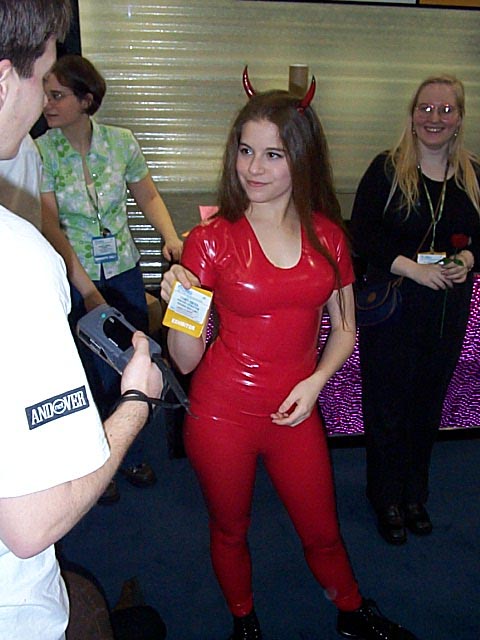
How can people say BSD is dying when it has a mascot like this?! Linux needs to get its act together if it's going to compete with the kind of hot chicks and gorgeous babes that BSD has to offer!
You just can't take Linux seriously when its fronted by losers like these. Would you buy software from them? I don't think so! You Linux groupies need to find some sexy girls like her! I mean just look at this girl! Doesn't she excite you? I know this little hottie puts me in need of a cold shower! This guy looks like he is about to cream his pants standing next to such a fox. As you can see, no man can resist this sexy little minx. I mean are you telling me you wouldn't like to get your hands on this ass?!
With sexy chicks like the lovely Ceren you could have people queuing up to buy open source products. Could you really refuse to buy a copy of BSD if she told you to? Come on, you must admit she is better than an overweight penguin or a gay looking goat! Don't you wish you could get one of these? Personally I know I would give my right arm to get this close to such a divine beauty!
Join the campaign for more cute open source babes today! -
Just as long as nobody abuses Ceren...
How can people say BSD is dying when it has a mascot like this?! Linux needs to get its act together if it's going to compete with the kind of hot chicks and gorgeous babes that BSD has to offer!
You just can't take Linux seriously when its fronted by losers like these. Would you buy software from them? I don't think so! You Linux groupies need to find some sexy girls like her! I mean just look at this girl! Doesn't she excite you? I know this little hottie puts me in need of a cold shower! This guy looks like he is about to cream his pants standing next to such a fox. As you can see, no man can resist this sexy little minx. I mean are you telling me you wouldn't like to get your hands on this ass?!
With sexy chicks like the lovely Ceren you could have people queuing up to buy open source products. Could you really refuse to buy a copy of BSD if she told you to? Come on, you must admit she is better than an overweight penguin or a gay looking goat! Don't you wish you could get one of these? Personally I know I would give my right arm to get this close to such a divine beauty!
Join the campaign for more cute open source babes today! -
Re:How much is your time worth now-a-days
Uuh.. Linus is the one in the middle, holding the bag...
Well I wouldn't know what Linus looks like since I use a better OS than Linux, but if it's true then it proves my point that he's a sad loser who could never get a girl like Ceren. -
Linux sucks! Use BSD!
How can people say BSD is dying when it has a mascot like this?! Linux needs to get its act together if it's going to compete with the kind of hot chicks and gorgeous babes that BSD has to offer!
You just can't take Linux seriously when its fronted by losers like these. Would you buy software from them? I don't think so! You Linux groupies need to find some sexy girls like her! I mean just look at this girl! Doesn't she excite you? I know this little hottie puts me in need of a cold shower! This guy looks like he is about to cream his pants standing next to such a fox. As you can see, no man can resist this sexy little minx. I mean are you telling me you wouldn't like to get your hands on this ass?!
With sexy chicks like the lovely Ceren you could have people queuing up to buy open source products. Could you really refuse to buy a copy of BSD if she told you to? Come on, you must admit she is better than an overweight penguin or a gay looking goat! Don't you wish you could get one of these? Personally I know I would give my right arm to get this close to such a divine beauty!
Join the campaign for more cute open source babes today! -
Linux sucks! Use BSD!
How can people say BSD is dying when it has a mascot like this?! Linux needs to get its act together if it's going to compete with the kind of hot chicks and gorgeous babes that BSD has to offer!
You just can't take Linux seriously when its fronted by losers like these. Would you buy software from them? I don't think so! You Linux groupies need to find some sexy girls like her! I mean just look at this girl! Doesn't she excite you? I know this little hottie puts me in need of a cold shower! This guy looks like he is about to cream his pants standing next to such a fox. As you can see, no man can resist this sexy little minx. I mean are you telling me you wouldn't like to get your hands on this ass?!
With sexy chicks like the lovely Ceren you could have people queuing up to buy open source products. Could you really refuse to buy a copy of BSD if she told you to? Come on, you must admit she is better than an overweight penguin or a gay looking goat! Don't you wish you could get one of these? Personally I know I would give my right arm to get this close to such a divine beauty!
Join the campaign for more cute open source babes today! -
Who needs perl when we could have...
How can people say BSD is dying when it has a mascot like this?! Linux needs to get its act together if it's going to compete with the kind of hot chicks and gorgeous babes that BSD has to offer!
You just can't take Linux seriously when its fronted by losers like these. Would you buy software from them? I don't think so! You Linux groupies need to find some sexy girls like her! I mean just look at this girl! Doesn't she excite you? I know this little hottie puts me in need of a cold shower! This guy looks like he is about to cream his pants standing next to such a fox. As you can see, no man can resist this sexy little minx. I mean are you telling me you wouldn't like to get your hands on this ass?!
With sexy chicks like the lovely Ceren you could have people queuing up to buy open source products. Could you really refuse to buy a copy of BSD if she told you to? Come on, you must admit she is better than an overweight penguin or a gay looking goat! Don't you wish you could get one of these? Personally I know I would give my right arm to get this close to such a divine beauty!
Join the campaign for more cute open source babes today! -
Who needs perl when we could have...
How can people say BSD is dying when it has a mascot like this?! Linux needs to get its act together if it's going to compete with the kind of hot chicks and gorgeous babes that BSD has to offer!
You just can't take Linux seriously when its fronted by losers like these. Would you buy software from them? I don't think so! You Linux groupies need to find some sexy girls like her! I mean just look at this girl! Doesn't she excite you? I know this little hottie puts me in need of a cold shower! This guy looks like he is about to cream his pants standing next to such a fox. As you can see, no man can resist this sexy little minx. I mean are you telling me you wouldn't like to get your hands on this ass?!
With sexy chicks like the lovely Ceren you could have people queuing up to buy open source products. Could you really refuse to buy a copy of BSD if she told you to? Come on, you must admit she is better than an overweight penguin or a gay looking goat! Don't you wish you could get one of these? Personally I know I would give my right arm to get this close to such a divine beauty!
Join the campaign for more cute open source babes today! -
The Scoop
Not from the featured article, but from here:
4.4 What versions of BSD are available?
In contrast to the numerous Linux distributions, there are only three open source BSDs. Each BSD project maintains its own source tree and its own kernel. In practice, though, there appear to be fewer divergences between the userland code of the projects than there is in Linux.
It is difficult to categorize the goals of each project: the differences are very subjective. Basically,
*
FreeBSD aims for high performance and ease of use by end users, and is a favourite of web content providers. It runs on PCs and Compaq's Alpha processors. The FreeBSD project has significantly more users than the other projects.
*
NetBSD aims for maximum portability: ``of course it runs NetBSD''. It runs on machines from palmtops to large servers, and has even been used on NASA space missions. It is a particularly good choice for running on old non-Intel hardware.
*
OpenBSD aims for security and code purity: it uses a combination of the open source concept and rigorous code reviews to create a system which is demonstrably correct, making it the choice of security-conscious organizations such as banks, stock exchanges and US Government departments. Like NetBSD, it runs on a number of platforms.
There are also two additional BSD UNIX operating systems which are not open source, BSD/OS and Apple's Mac OS(R) X:
*
BSD/OS is the oldest of the 4.4BSD derivatives. It is not open source, though source code licenses are available at relatively low cost. It resembles FreeBSD in many ways.
*
Mac OS X is the latest version of the operating system for Apple Computer Inc.'s Macintosh(R) line. The BSD core of this operating system, Darwin, is available as a fully functional open source operating system for x86 and PPC computers. The Aqua/Quartz graphics system and many other proprietary aspects of Mac OS X remain closed-source, however. Several Darwin developers are also FreeBSD committers, and vice-versa.
-
Re:BSD?
We're talking about Linux vs FreeBSD here, clown, not to mention that you provided zero evidence. You got failed.
Linux and FreeBSD kernels, which
1. is the most SMP scalable (parallel)
Linux
2. is the most algorithmically scalable
Linux
3. has fastest single threaded performance
Linux
4. runs on more architectures
Linux. See here and here
5. supports the most hardware
Linux. See here and here
6. has the fastest TCP/IP stack
Linux
Hope this has been helpful. See you again next year. -
Re:BSD?
We're talking about Linux vs FreeBSD here, clown, not to mention that you provided zero evidence. You got failed.
Linux and FreeBSD kernels, which
1. is the most SMP scalable (parallel)
Linux
2. is the most algorithmically scalable
Linux
3. has fastest single threaded performance
Linux
4. runs on more architectures
Linux. See here and here
5. supports the most hardware
Linux. See here and here
6. has the fastest TCP/IP stack
Linux
Hope this has been helpful. See you again next year. -
Re:Java on BSD
The sky is clearing.
FreeBSD Java(TM) Project -
Re:Oh, I tried it
Should've tried FreeBSD. And as for the
-
Re:Other options? FreeBSD?
I'm looking into moving to FreeBSD myself, serves my needs.
-
Re:BSD is MS-Unix beta
I only read the pages posted to
Ohhh, how enlighted of you!
licensing differences between BSD and Linux. Both are open source, one is free software.
And that would be FreeBSD.
As with any free software project,
The following licenses do qualify as free software licenses,....The modified BSD license.
As you can see, the FreeBSD project calls itself Free Software and the FSF says that is correct.
So therefore, Linux must not be free software, just Open Source or you are wrong about there being "one is free software." -
page 9BSD Myths
General
There're all sorts of myths and objections and "common knowledge" and "conventional wisdom" and such floating around about BSD. I'm always a little surprised at how quick some Linux people are to latch onto such over-simplifications and long-dead statements about the BSDs, especially since they then spend so much effort screaming about people doing the same thing concerning Linux. Oh well. Let's rip up a few.
Hardware
"BSD doesn't support common hardware."
Does Linux support hardware that BSD doesn't? Probably. Does it matter? Only if you have that hardware.
I'll betcha Windows supports hardware Linux doesn't. For that matter, MacOS probably supports hardware that none of the rest do. BSD supports most common hardware you'd stick in a server, most common hardware you'd stick in a workstation, most common hardware you'd stick in a desktop... There are gaps, but the gaps change from release to release, just like every other system.
Video card support, for instance, is hardly ever claimed in any BSD documentation, while Linux documentation talks about it a lot. That seems weird, until you realize that in the BSD worldview, the OS isn't supporting any of those video cards; X is, which is a separate package. So you can use any video card under BSD that you can under Linux, since neither the BSD kernel nor the Linux kernel is supporting the video card. Now, that's not strictly true, particularly in some of the more esoteric reaches of 3D and DRI, which require more direct hardware ties and more grubbing in the kernel itself. Of course, I don't follow that, so I don't even know what the current state of the world is in FreeBSD, to say nothing of Linux. Maybe BSD doesn't have support on a par with Linux on that. Maybe it does. I dunno, and it'll probably change between the time I write this and the time you read it.
But most hardware is simple. Most common IDE and SCSI mass storage controllers work just fine. Even most RAID controllers are supported to some extent. Most network cards, wired and wireless, most sound cards, some crypto-assist cards...
But it is simple. You don't care what hardware the OS supports, as long as it supports what you have. Read the hardware support lists and/or just try booting it up. You might be surprised.
When in doubt, check the lists. Hardware support lists are available per-release, such as the lists for 5.2-RELEASE and for 4.9-RELEASE of FreeBSD.
Program Availability
"But Linux has more programs than BSD!"
How do you figure? Most of these "programs" you're so hot about are things that are open source or source-available anyway. If it's written reasonably portably, 95% or better of it will compile right off on any vaguely POSIX-compliant system. Heck, just look in the ports tree; there are over 10,000 programs and packages there.
Of course, there's a lot of software out there that won't compile on anything but Linux. Sometimes, that's because it really does require facilities that only Linux has, or does things that only matter on Linux. Sometimes, that means you need to pick up a 2x4 and go find the author, because they've put in something gratuitously imcompatible through malice or laziness. There are people who do the same with BSD, or with HP/UX, of course, but the rapidly growing Linux community, combined with the number of people writing programs who have with less experience in traditional software engineering, make it far more visible there.
Of course, there are some things that won't cross-build, particularly those that stick their fingers deep in implementation details. Some require only a little work to port, some major work, and some don't even have any meaning on other systems (When did anybody ever port Mic
-
page 9BSD Myths
General
There're all sorts of myths and objections and "common knowledge" and "conventional wisdom" and such floating around about BSD. I'm always a little surprised at how quick some Linux people are to latch onto such over-simplifications and long-dead statements about the BSDs, especially since they then spend so much effort screaming about people doing the same thing concerning Linux. Oh well. Let's rip up a few.
Hardware
"BSD doesn't support common hardware."
Does Linux support hardware that BSD doesn't? Probably. Does it matter? Only if you have that hardware.
I'll betcha Windows supports hardware Linux doesn't. For that matter, MacOS probably supports hardware that none of the rest do. BSD supports most common hardware you'd stick in a server, most common hardware you'd stick in a workstation, most common hardware you'd stick in a desktop... There are gaps, but the gaps change from release to release, just like every other system.
Video card support, for instance, is hardly ever claimed in any BSD documentation, while Linux documentation talks about it a lot. That seems weird, until you realize that in the BSD worldview, the OS isn't supporting any of those video cards; X is, which is a separate package. So you can use any video card under BSD that you can under Linux, since neither the BSD kernel nor the Linux kernel is supporting the video card. Now, that's not strictly true, particularly in some of the more esoteric reaches of 3D and DRI, which require more direct hardware ties and more grubbing in the kernel itself. Of course, I don't follow that, so I don't even know what the current state of the world is in FreeBSD, to say nothing of Linux. Maybe BSD doesn't have support on a par with Linux on that. Maybe it does. I dunno, and it'll probably change between the time I write this and the time you read it.
But most hardware is simple. Most common IDE and SCSI mass storage controllers work just fine. Even most RAID controllers are supported to some extent. Most network cards, wired and wireless, most sound cards, some crypto-assist cards...
But it is simple. You don't care what hardware the OS supports, as long as it supports what you have. Read the hardware support lists and/or just try booting it up. You might be surprised.
When in doubt, check the lists. Hardware support lists are available per-release, such as the lists for 5.2-RELEASE and for 4.9-RELEASE of FreeBSD.
Program Availability
"But Linux has more programs than BSD!"
How do you figure? Most of these "programs" you're so hot about are things that are open source or source-available anyway. If it's written reasonably portably, 95% or better of it will compile right off on any vaguely POSIX-compliant system. Heck, just look in the ports tree; there are over 10,000 programs and packages there.
Of course, there's a lot of software out there that won't compile on anything but Linux. Sometimes, that's because it really does require facilities that only Linux has, or does things that only matter on Linux. Sometimes, that means you need to pick up a 2x4 and go find the author, because they've put in something gratuitously imcompatible through malice or laziness. There are people who do the same with BSD, or with HP/UX, of course, but the rapidly growing Linux community, combined with the number of people writing programs who have with less experience in traditional software engineering, make it far more visible there.
Of course, there are some things that won't cross-build, particularly those that stick their fingers deep in implementation details. Some require only a little work to port, some major work, and some don't even have any meaning on other systems (When did anybody ever port Mic
-
Re:Bsd uptime?
There is indeed such a thing: kldload
-
Page 5...Release Engineering
The BSDs all keep the system under revision control; all the free BSDs use CVS. Revision control (in extremely brief) is a process by which editing a program means checking out a file or group of files, making the changes, then checking in the new versions, along with a message describing the change. A full history of all changes is kept in the revision control system, so you can view a history of the changes, check out an old version, look at the differences between arbitrary versions, etc.
All the BSDs provide public access to their CVS repositories in one way or another; generally through anonymous CVS, or CVSup checkout or mirroring, or often both. That means that, as a user, you can see exactly what changes happened when, who did them, and why they did them. You can also always get your hands on the latest changes (within a few hours, anyway, depending on mirroring strategies). All of the free BSDs have mailing lists that you can subscribe to and see the changes as they're made. In fact, they all have web frontends as well; you can poke around FreeBSD's entire source tree online at http://cvsweb.freebsd.org/src/, and see all the history of every file.
Linux, historically, hasn't used any version control for the kernel. I don't have exact data at my fingertips here, but I believe it was somewhere in mid-2.4 days that the kernel began being kept in a public BitKeeper repository. Many of the other utilities use revision control, but since they're all developed separately, there isn't any central place you can go to to look through the changes. So it's sometimes hard to get a historic picture of even any one part; to so do for a whole distribution is practically impossible.
This leads to a lot of differences. In a very real sense, BSD systems are constantly developed; I can always update my system to the absolute latest code, irrespective of "releases". In Linux, that doesn't really have as much meaning, because the release process is very different. I think the most appropriate verb for a Linux release is "assembled". A Linux release is assembled from version A.B of this program, plus version C.D of this program, plus version E.F of this program... all together with version X.Y.Z of the Linux kernel. In BSD, however, since the pieces are all developed together, the verb "cut" makes a lot more sense; a release is "cut" at a certain time.
Linux releases kernels in two parallel lines (well, often more than 2, but we're simplifying); a version with an odd minor release number, as a "development" version, and a version with an even minor release number, as a "production" version. The BSDs also have "development" and "production" tracks, but they're handled rather differently.
CVS, like most version control systems, has the concept of "branches". It's easy to understand, but somewhat difficult to explain. Basically, when you "branch" a file or a set of files (or a whole directory tree), you create a new version of the file which exists in parallel with the primary version. When you make changes to the primary version, it doesn't affect the branched version. And you can make changes to the branched version without affecting the primary.
In FreeBSD, there's usually 2 active development lines; one called "-CURRENT", which is the development version, and the other called "-STABLE", which is the production version. Both, of course, are under development, and both have some attempt to be made to keep them usable. -STABLE, as a rule, gets bug and security fixes, but only gets new features and such that are well tested, usually by a stint in -CURRENT first. -CURRENT gets new features, big architectural changes, and all those sorts of new development stuff. It should be noted that the naming of the branches doesn't necessarily mean what it seems to; while -STABLE usually is "stable" as in
-
Re:Come to the dark side!
FreeBSD's support policy, at least according to their handbook, is 12 months of fixes for each -RELEASE.
Where the heck did you get that number? From the Handbook, "We can not continue to support old releases of FreeBSD forever, although we do support them for many years." -
Re:wow
There's an obvious solution to this. -
Re:Arrogance
You speak for all of *BSD developers?
Obviously no one does. I draw my conclusion from seeing their posts, and their logic.
This thread is about arrogance.
I was merely saying, arrogance is one obstacle in any possibility of merging code from Linux. (Theoretically, if it could be done.) There's exceptions to every rule. I think your misread what I'm saying.
I'm in no way implying Linux code is evil. I've got a debian box with an uptime that's only been affected by a severly long power outage, it's perfect for what it does.
Well, I see that you took a nice cheapshot at Linux.
No cheapshot, you misconstrue what I'm saying. Again, I'm not saying with any specificity that Linux code is unclean, plenty of parts of Linux code are great. I only say that because of many developer's mindsets, and The BSD Vision
and because of the Architectural Guidelines although it's open to interpretation I suppose.
I highly doubt any of the legally copied *BSD code in Linux is just copied and pasted before it goes in
I don't seeing anyone say that
-mpf -
Re:Arrogance
You speak for all of *BSD developers?
Obviously no one does. I draw my conclusion from seeing their posts, and their logic.
This thread is about arrogance.
I was merely saying, arrogance is one obstacle in any possibility of merging code from Linux. (Theoretically, if it could be done.) There's exceptions to every rule. I think your misread what I'm saying.
I'm in no way implying Linux code is evil. I've got a debian box with an uptime that's only been affected by a severly long power outage, it's perfect for what it does.
Well, I see that you took a nice cheapshot at Linux.
No cheapshot, you misconstrue what I'm saying. Again, I'm not saying with any specificity that Linux code is unclean, plenty of parts of Linux code are great. I only say that because of many developer's mindsets, and The BSD Vision
and because of the Architectural Guidelines although it's open to interpretation I suppose.
I highly doubt any of the legally copied *BSD code in Linux is just copied and pasted before it goes in
I don't seeing anyone say that
-mpf -
Re:Arrogance
*BSD doesn't wish to use Linux code.
I agree with you on the zealot issue, there's zealots in both camps. The difference I see is, many BSD users have been admins for years, and have ran Linux, or admin'd a machine running it, at some point in time. (Such as myself, I've been a Linux advocate and admin/user since kernel 0.99, albeit that first machine did very little on one of my networks.
Linus Torvalds: "Oh yeah? Well people compare Linux to BSD constantly. But there can be no comparison. Any time BSD does something better than Linux, we incorporate their code. But our performance wins can't be ported to BSD because the GPL prevents it. The code just flows one-way baby, so there's no real hope that BSD can remain competitive. It's embrace and encumber cats, embrace and encumber."
Reference: SlashNot
Linus blatently stating they rip BSD code at times, which is just fine by me. Yet if *BSD sucks so horridly as the Linux zealots have stated, then why ever rip or merge code from said codebase? Some Linux users certainly need to get their facts straight before shooting their mouths off.
Even if core members could rip Linux code, I highly doubt they'd ever want to. Infact, I'd bet on it. If not for their own arrogance (Not all of them are.), but then for the sanctity, and purity of the codebase.
I say this because: The BSD Vision seems to reinforce my belief. Just my $0.02.
-mpf -
I'll take, FreeBSD release notes for 800, please?
What is... FreeBSD 5.2-RELEASE Release Notes Alex?
Release Notes are obtainable via many methods, not just FTP. Neither FTP nor HTTP are inheriently superior to the other for the transfer of files, so your premise is rather skewed. For you to say HTTP is better fitted to serve that specific file is a moot point.
The main FreeBSD repository server is very busy, especially during release time. That's why there's more mirrors for FreeBSD than Michael Jackson has in "neverneverland ranch". So you can download from a mirror that's geographically closest to you, thus you don't go through fubar'd routing and such.
-mpf -
Re:Hmm...FreeBSD does this -- in fact, that's where his terminology comes from, I believe.
http://www.freebsd.org/doc/en_US.ISO8859-1/books/
h andbook/sound-setup.html -
Re:FreeBSD as a Desktop?
You definitely should. I was a RedHa (7.3) then mandrake (9.0, 9.1) then Debian (woody, updated to testing) guy until tried freebsd 5.1. Stayed with it since then, and I will. I use it as a desktop OS, and it works perfectly. Since sremick answered most of your questions, some notes on digital cameras:
Check out this thread: http://www.freebsdforums.org/forums/showthread.php ?s=&threadid=12015 - and join that forum
Another advice: freebsd folks spend a great deal of effort (money, resources, time) in writing the best *nix documentation out there. This is true across the entire distribution. The man pages are superb and cleaner than those I find in linux, and there are more of them (almost every
I've been in love with FreeBSD since the moment I tried it (I installed it because when I pulled shorewall from sarge, it erased my
1) Java - it works, but it is 'difficult' to install. By difficult I mean: you have to download some files manually, portinstall jdk14 won't work out of the box). When you get used to freebsd's package management/ports (yes, you have both, with automatic dependency resolution) you consider this as annoying
2) Flash - no native flash for freebsd, and again, you have to install linux-flash manually. It works in mozilla/firebird (both native and linux version) but not in konqi. A better solution is on the way though.
If you can live with these, you will love freebsd, especially if you want to get the latest and greatest progs. I find (I know, since my roommate uses it) that freebsd ports are slightly more up to date than portage in gentoo (which is no minor accomplishment). For example, gimp 2.0pre was added the day it was released. -
Re:FreeBSD 5 works fine in production, here4.x has crashed on me a few times in the last couple of months, 5.x hasn't so far (at least not without there being obvious reasons like cpu/memory failure due to overclocking)
Wish I could say the same. While 4.x has been rock solid, I've had some rather serious problems with 5-CURRENT. Specifically, if I enable DMA on my drive, my average uptime is 12 hours (it always crashes during the daily Amanda backups). I've been running in PIO for a few weeks, but the entire system is draggy and less responsive.
ATA DMA works perfectly on that machine under 4.x and old versions of 5.x (before the big September ATAng commit), but it doesn't work at all now. If this doesn't improve soon, I'll have to decide between buying a new server or installing Linux - and given that this is currently a hobby server that I don't want to spend a lot of money on, it'll probably be the latter.
I love FreeBSD, but the -CURRENT branch does have some instabilities on certain hardware.
-
Re:Question
Disclaimer: I am not anti-Linux. However, here is why I like FreeBSD..
1) PORTS. FreeBSD could win on this point alone. The ports system is AWESOME. I have never used Linux, but I hear a lot of people bitch about RPMs and "dependency hell". FreeBSD has dependencies but the ports system tracks all that. Every file, every version, every port is noted. I can just go to a directory and type "make clean install" and everything will be downloaded, built to my tastes, along with all dependencies and their dependencies and built in the proper order, then registered in the database. Daily I sync my ports tree and see what's new. If I want it, I can upgrade it (along with dependencies) safely with one command. It just doesn't get better than this. Recently, FreeBSD pass the 10,000 ports mark. There's also a nice overview of the ports system at Arstechnica.
2) Stability. FreeBSD is notoriously stable. You can pick any Netcraft report (such as here, here, here, here, or here. ) for evidence of this.
3) Consolidation. There is only one "FreeBSD". If I have 5.2 and you have 5.2, we have the same OS. There is no one "Linux". In reality, Linux is a kernel, and when you add a userland then you have a distribution. FreeBSD is kernel + userland.
4) File organization. Linux seems to lay out its file hierarchy somewhat randomly, with no consistancy of where an installed executable binary might be placed or separation of base/user. FreeBSD has polished this and adheres rigidly to a formal structure. For example, I know my base system is under
5) Community. I find the FreeBSD community to be less fanatical and instead more disciplined and polite. I feel like I'm getting help from someone wearing a suit & tie (though I doubt they really are..:) ) instead of a "LINUX RULEZ!!!" kid.
6) Documentation. FreeBSD has EXTENSIVE DOCUMENTATION, which is helped by Reason #3. There are also a number of excellent books on FreeBSD, all of which in this list I own. Sure, there are a bazillion books on Linux, but FreeBSD doesn't need so many because there's just one FreeBSD, and once you get beyond the OS, the rest is specific to the application/server and is not OS-specific.
7) Performance. FreeBSD is notorious for performing well. In fact, sometimes applications under Linux-emulation (see #8) run better than on a native Linux box. FreeBSD's TCP/IP implementation is also well-known for being very fast.
8) Linux-emulation. Most stuff for Linux is available as open-source and can be compiled natively for FreeBSD (and is probably in the ports tree), but for the few binary-only things that aren't, FreeBSD can still run them. Some of the Linux stuff I run myself include RealPlayer, Acrobat Reader (although gpdf works well too), the Flash plugin (running in a native Firebird, btw), and maybe some other things I ca -
Re:Question
Stability. Responsiveness under massive load. Support for older/non-Intel hardware.
On the flipside, if you want a much larger userbase (and correspondingly, greater web and usenet support) Linux is where it's at. Linux is large, and messy, and anarchic, whereas BSD (FreeBSD, anyway, which is the most mainstream of the BSDs) tends much more towards stability and 'correctness', sometimes to the point of near-absurdity. If you're an ISP, for example, and want a system that will laugh at massive loads, and barring hardware fatalities, never crash, then get thee a copy of BSD. You'll love it, at least if you're prepared to deal with a little less user-friendliness than you're used to.
Personally, I used to run Free on my toy server (c3po.futureconsortium.com) but switched to Debian after witnessing the power of apt. Now, I run Debian on Intel/AMD servers, Mandrake or SuSE or Fedora on desktops, and BSD on Alphas or older hardware.
The BSD VM system is a work of art, for example (read this for details), and I've seen this born out in practice. Of course, Linux is still very impressive, especially on very large systems. -
But can they predict this?
How can people say BSD is dying when it has a mascot like this?! Linux needs to get its act together if it's going to compete with the kind of hot chicks and gorgeous babes that BSD has to offer!
You just can't take Linux seriously when its fronted by losers like these. Would you buy software from them? I don't think so! You Linux groupies need to find some sexy girls like her! I mean just look at this girl! Doesn't she excite you? I know this little hottie puts me in need of a cold shower! This guy looks like he is about to cream his pants standing next to such a fox. As you can see, no man can resist this sexy little minx. I mean are you telling me you wouldn't like to get your hands on this ass?!
With sexy chicks like the lovely Ceren you could have people queuing up to buy open source products. Could you really refuse to buy a copy of BSD if she told you to? Come on, you must admit she is better than an overweight penguin or a gay looking goat! Don't you wish you could get one of these? Personally I know I would give my right arm to get this close to such a divine beauty!
Join the campaign for more cute open source babes today! -
But can they predict this?
How can people say BSD is dying when it has a mascot like this?! Linux needs to get its act together if it's going to compete with the kind of hot chicks and gorgeous babes that BSD has to offer!
You just can't take Linux seriously when its fronted by losers like these. Would you buy software from them? I don't think so! You Linux groupies need to find some sexy girls like her! I mean just look at this girl! Doesn't she excite you? I know this little hottie puts me in need of a cold shower! This guy looks like he is about to cream his pants standing next to such a fox. As you can see, no man can resist this sexy little minx. I mean are you telling me you wouldn't like to get your hands on this ass?!
With sexy chicks like the lovely Ceren you could have people queuing up to buy open source products. Could you really refuse to buy a copy of BSD if she told you to? Come on, you must admit she is better than an overweight penguin or a gay looking goat! Don't you wish you could get one of these? Personally I know I would give my right arm to get this close to such a divine beauty!
Join the campaign for more cute open source babes today! -
FTP2 trafficAs always, it's fun to watch the traffic on the server when a new release comes out:
-
Re:QuestionOpenBSD is probably as slow as you can go. Their goal is not ultimate desktop performance, it's security. Look for performance somewhere else until it's "secure enough".
FreeBSD has for a long time been THE STUFF for speed, but that's not quite true longer since the release of Linux 2.6.
Ports offer a great advantage if you want to build stuff with your own options, but it requires time, bandwidth and some knowledge of what you are doing. The speed difference will probably not be worth it but atleast you don't have to use all those toolkits you don't like anyway.
Philosophy? Definitly, now we are talking. If you are a developer the BSD License let you enjoy the greatness of having all the source code at your hands without having to release your own works source just because you found a nice idea or borrowed some code.
But imho the great thing with all the BSDs are documentation. Sure you have manpages in Linux, sure there are howtos, and even install guides. But with the hundreds of Linux distributions and different places and names of files and modified content of them it doesn't come close to the documentation you have in any of OpenBSD, NetBSD or FreeBSD.
FreeBSD handbook
NetBSD documentation
OpenBSD F.A.Q.
OpenBSD stable documentation
O'reillys BSD articles -
Still not stable
Look here to see what other work needs to be done.
They claim 5.3 will be the stable version but I will not upgrade. I am sticking with 4.9 for now.
-
Re:Curious
I hear there is this website freebsd.org that has a lot of information on FreeBSD.
it's just a rumor though... -
Re:Not quite.
It's here, anyway:
ftp://ftp.freebsd.org/pub/FreeBSD/releases/i386/5. 2-RELEASE/ -
Re:Not on Thinkpad X40
Well, according to this, they didn't start BUILDING RC2 until 2003/12/21. Two months ago, you probably would have built some seriously unstable code. This isn't -STABLE, it's -CURRENT. And if you'd done a upgrade from 4.x to 5.x without an intervening format, you'd have been in for some fun as well. If you'll look at the release notes, you'll also see that statfs(2) got a tweak that probably caused all sorts of problems for you if you weren't paying attention to the freeber-current list. Perhaps next time, you'll have better luck with something that's not in the MIDDLE of a development cycle?
-
Not quite.
As of 8:53 AM EST, the annoucement page does not have it listed and the
freebsd-announce mailing list has not mentioned it.
This means that it is not yet released.
Dinivin -
Not quite.
As of 8:53 AM EST, the annoucement page does not have it listed and the
freebsd-announce mailing list has not mentioned it.
This means that it is not yet released.
Dinivin -
Re:First Big Butt Post
-
Re:Gadgets, schmadgets....
The only booth girl worth caring about...
How can people say BSD is dying when it has a mascot like this?! Linux needs to get its act together if it's going to compete with the kind of hot chicks and gorgeous babes that BSD has to offer!
You just can't take Linux seriously when its fronted by losers like these. Would you buy software from them? I don't think so! You Linux groupies need to find some sexy girls like her! I mean just look at this girl! Doesn't she excite you? I know this little hottie puts me in need of a cold shower! This guy looks like he is about to cream his pants standing next to such a fox. As you can see, no man can resist this sexy little minx. I mean are you telling me you wouldn't like to get your hands on this ass?!
With sexy chicks like the lovely Ceren you could have people queuing up to buy open source products. Could you really refuse to buy a copy of BSD if she told you to? Come on, you must admit she is better than an overweight penguin or a gay looking goat! Don't you wish you could get one of these? Personally I know I would give my right arm to get this close to such a divine beauty!
Join the campaign for more cute open source babes today! -
Re:Gadgets, schmadgets....
The only booth girl worth caring about...
How can people say BSD is dying when it has a mascot like this?! Linux needs to get its act together if it's going to compete with the kind of hot chicks and gorgeous babes that BSD has to offer!
You just can't take Linux seriously when its fronted by losers like these. Would you buy software from them? I don't think so! You Linux groupies need to find some sexy girls like her! I mean just look at this girl! Doesn't she excite you? I know this little hottie puts me in need of a cold shower! This guy looks like he is about to cream his pants standing next to such a fox. As you can see, no man can resist this sexy little minx. I mean are you telling me you wouldn't like to get your hands on this ass?!
With sexy chicks like the lovely Ceren you could have people queuing up to buy open source products. Could you really refuse to buy a copy of BSD if she told you to? Come on, you must admit she is better than an overweight penguin or a gay looking goat! Don't you wish you could get one of these? Personally I know I would give my right arm to get this close to such a divine beauty!
Join the campaign for more cute open source babes today! -
You can't criticise this...
How can people say BSD is dying when it has a mascot like this?! Linux needs to get its act together if it's going to compete with the kind of hot chicks and gorgeous babes that BSD has to offer!
You just can't take Linux seriously when its fronted by losers like these. Would you buy software from them? I don't think so! You Linux groupies need to find some sexy girls like her! I mean just look at this girl! Doesn't she excite you? I know this little hottie puts me in need of a cold shower! This guy looks like he is about to cream his pants standing next to such a fox. As you can see, no man can resist this sexy little minx. I mean are you telling me you wouldn't like to get your hands on this ass?!
With sexy chicks like the lovely Ceren you could have people queuing up to buy open source products. Could you really refuse to buy a copy of BSD if she told you to? Come on, you must admit she is better than an overweight penguin or a gay looking goat! Don't you wish you could get one of these? Personally I know I would give my right arm to get this close to such a divine beauty!
Join the campaign for more cute open source babes today! -
You can't criticise this...
How can people say BSD is dying when it has a mascot like this?! Linux needs to get its act together if it's going to compete with the kind of hot chicks and gorgeous babes that BSD has to offer!
You just can't take Linux seriously when its fronted by losers like these. Would you buy software from them? I don't think so! You Linux groupies need to find some sexy girls like her! I mean just look at this girl! Doesn't she excite you? I know this little hottie puts me in need of a cold shower! This guy looks like he is about to cream his pants standing next to such a fox. As you can see, no man can resist this sexy little minx. I mean are you telling me you wouldn't like to get your hands on this ass?!
With sexy chicks like the lovely Ceren you could have people queuing up to buy open source products. Could you really refuse to buy a copy of BSD if she told you to? Come on, you must admit she is better than an overweight penguin or a gay looking goat! Don't you wish you could get one of these? Personally I know I would give my right arm to get this close to such a divine beauty!
Join the campaign for more cute open source babes today! -
Tove,you beautiful baby, get the sexy going...
Hey All! Have you ever seen Linus Torvald's wife Tove Torvalds? Not to be rude but can't that beautiful baby get a makeover and put on the sexy?! I mean, Linus has become very metro recently and he is a very trendy metrosexal! You see, Linus used to look like a complete dork. But now, if I was a faggot, I would be all over this guy today! In the meantime, I'm sure Linus is getting his share of the booth babes...
-
Re:Compiler optimtizations???
-
Re:Yet another yealot joke....
Or a mirror of the service pack here
-
Re:I use Xandros 2.0
ah..wait, they're all made in Santa Cruz, California these days....
That is some damn outdated version of their history. Their present name is just SCO, their HQ is nowadays located in Utah and their Nasdaq ID has changed from SCOC to SCOX.
The answer to your other question is that of course, there are, but as one with deep knowledge in this subject has taught me in my school, I think the distros made in Finland are far superior to those, which are not.
(Just kidding - actually Linus left the school about a year before I entered it, and besides my primary box (my laptop) runs Mac OS X aka BSD, although I have another box, too, which runs Linux.) -
isdn4bsd
In the FreeBSD 3.something days I remember to have used isdn4bsd - a very fine software package. I am not sure if that still holds true today, but iirc it did just what you asked for.