Slashdot Mirror
Domain: geni.org
Stories and comments across the archive that link to geni.org.
Comments · 27
-
Re:What happens in 15-20 years?
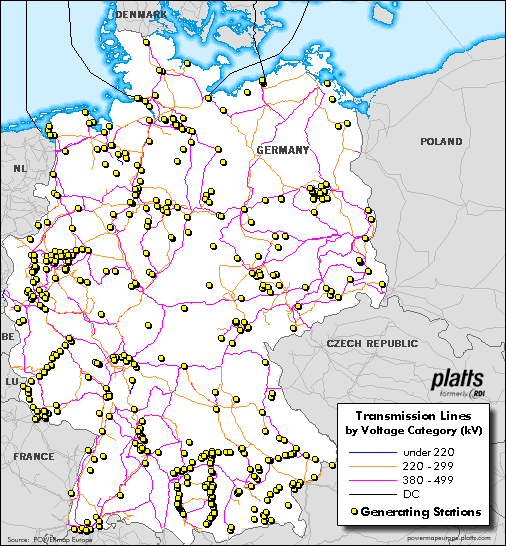
Up to yoou to find Schleswig-Holstein on the map: http://www.geni.org/globalener...
-
Re:thereÃ(TM)s simply no foolproof way to kil
Sure, one has to determine how one stores-up energy to use when the planet's rotation obscures the sun
Maybe a good idea is in order... But then who says international cooperation is a good idea these days?
-
Gee!
Set your wayback machine to 1938.
This small step would be nice though.
-
Re: Solution to the net-metering "problem"
It's an ancient idea..
Cost effectiveness is totally dependent on the observer.
-
Re:Oh boy... Nuclear!
We would need a whole new power grid...
old idea...
-
Re:OK, what's with this ridiculous meme?
The Grid just needs to go global.
-
Re:Science requires falsifiability
Sure no problem - here are observations that would falsify my hypothesis of economic catastrophe:
1) any alternative fuel source to natural petroleum products becomes cheaper in absolute dollars;
This one is really important - if the "save the environment" action is in fact, absolutely cheaper (not artificially subsidized or manipulated or costed in inflated dollars), then of course, the "action" to move to say, solar and wind, wouldn't cause catastrophe. Thus far, solar and wind are an order of magnitude more expensive, in absolute terms, than natural petroleum.
2) any alternative fuel source to natural petroleum products becomes 100% reliable, 24/7
This is also pretty important - unless you cost in making alternative energy sources 100% reliable 24/7 (currently done by building additional natural gas plants to take over when either solar or wind variability doesn't provide power), you can't move to them without severe disruption. Surely there are all kinds of possible technical solutions here, but it's also bounded by #1.
3) find any example of lower-per capita energy usage but a higher quality of life
Last, but not least, my hypothesis depends on the assertion that higher per-capita energy usage is linked to higher quality of life. If we find one example of a country that *lowered* per-capita energy usage, and *increased* quality of life, then my hypothesis would fail. See: http://www.geni.org/globalener...
So, now, back to you - can you quote a necessary and sufficient falsifiable hypothesis statement for CAGW? Or was your question simply a dodge to avoid giving an answer? Be honest.
-
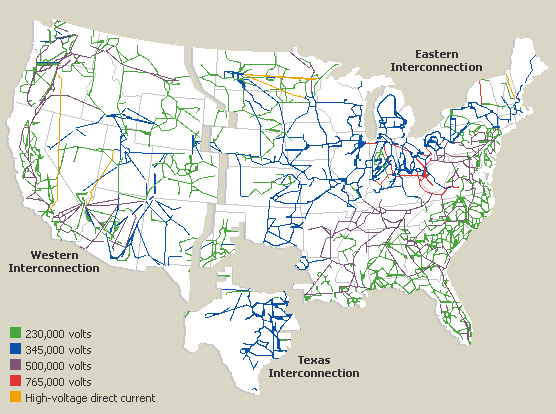
Glad I live in Texas
A downed transmission line in Ohio or wildfire in California shouldn't affect me.
-
Re:Not a replacement yet
You seem to be a player of words rather than a physician.
I don't see how being a medical doctor has anything to do with this discussion. Did you mean physicist?
I don't see any relation to our previous discussion. What exactly is your point?
1. more transmission lines and switsching stations don't make the energy grid unstable. Your claim is nonsense.
My point is that each additional transmission line and switching station adds points of failure. More points of failure means more instability.
Where do you actually get your power from? Increase that and you are fine.
I get mine from rivers and some fossil fuel plants. Most of the usable rivers are already being used and we are trying to move away from fossil fuel plants. We need new sources to meed the demand and wind and solar sources are not everywhere.
Minnesota is an excellent place for solar power
I guess you never have had to deal with snow storms.
However you claimed: to increase power transfered you have to increase the frequency. Which is either plain wrong or misleading. Your call.
What I meant was that to send more power down the line frequency must be increased back to the desired level not over. he point I was trying to make is that over draw of power causes frequency variations and not peak voltage variations.
You don't even know what this (capacitive) means, or you would not link the wrong "graph" (mixing up capacity as in storage capacity of a capacitor/battery with transport "capability" of a power line, sigh, that is such a retarded mistake).
Again you do not understand the physics of a long AC conductor. Capacitance and inductance resist the changes in voltage. As the conductor gets longer the capacitance and inductance gets larger decreasing the capacity of the conductor to transmit power. There is a physical limit to how long an AC conductor can be.
First of all: such nonsense is written by people like you. I doubt anyone with a degree in physics or engineering was involved in that article.
Again, you prefer to assume facts instead of actually looking them up. The Reference is to an article from the Global Energy Network Institute so your assumption is patently false.
Why should it not be cost effective to import electric power
Because neighboring states have similar climate issues which limit the availability of green power.
It seems that your solution is to build more plants and transmission lines close to cities. It is not that simple to supply electricity and recuce greenhouse gasses.
-
Re:Not a replacement yet
You seem to be a player of words rather than a physician.
I don't see how being a medical doctor has anything to do with this discussion. Did you mean physicist?
I don't see any relation to our previous discussion. What exactly is your point?
1. more transmission lines and switsching stations don't make the energy grid unstable. Your claim is nonsense.
My point is that each additional transmission line and switching station adds points of failure. More points of failure means more instability.
Where do you actually get your power from? Increase that and you are fine.
I get mine from rivers and some fossil fuel plants. Most of the usable rivers are already being used and we are trying to move away from fossil fuel plants. We need new sources to meed the demand and wind and solar sources are not everywhere.
Minnesota is an excellent place for solar power
I guess you never have had to deal with snow storms.
However you claimed: to increase power transfered you have to increase the frequency. Which is either plain wrong or misleading. Your call.
What I meant was that to send more power down the line frequency must be increased back to the desired level not over. he point I was trying to make is that over draw of power causes frequency variations and not peak voltage variations.
You don't even know what this (capacitive) means, or you would not link the wrong "graph" (mixing up capacity as in storage capacity of a capacitor/battery with transport "capability" of a power line, sigh, that is such a retarded mistake).
Again you do not understand the physics of a long AC conductor. Capacitance and inductance resist the changes in voltage. As the conductor gets longer the capacitance and inductance gets larger decreasing the capacity of the conductor to transmit power. There is a physical limit to how long an AC conductor can be.
First of all: such nonsense is written by people like you. I doubt anyone with a degree in physics or engineering was involved in that article.
Again, you prefer to assume facts instead of actually looking them up. The Reference is to an article from the Global Energy Network Institute so your assumption is patently false.
Why should it not be cost effective to import electric power
Because neighboring states have similar climate issues which limit the availability of green power.
It seems that your solution is to build more plants and transmission lines close to cities. It is not that simple to supply electricity and recuce greenhouse gasses.
-
Re:Not a replacement yet
When points fail the ability to supply power to the lines decreases. The power companies compensate for this by changing the frequency of the AC current not the voltage. The peak voltages are the same but the frequency is different. As frequencies increase power transmitted increases. Here is a meter showing the frequency of the UK grid. Read the explanation.
You can upgrade current plants or simply build new plants in proximity.
Sorry but a solar farm in Minnesota would not be very effective in the winter. New green technology is quite restricted in where it can be placed. Fossil fuel powered thermal plants can be placed anywhere but we are trying to get away from that.
Perhaps you don't know: all europe and northern asia is interconnected in an AC grid spanning 10,000ds of miles
Considering the earth's circumference is about 24,000miles you may be exaggerating and that exaggeration is not helping your case.
Here is a map of the European grid. The longest straight line distance is about 3,000 miles.I guess you missed the recent HVDC lines put in between the UK and continent, Africa and Europe and several connections across the Baltic. -
Re:How do we generate the power?
This is a summary of an article showing that DC transmission of electric power is cost effective up to about 7000km (4300 mi). It's rather old, but I don't think anything has changed in terms of physics. Also superconducting power lines have started being installed, which was not the case when this article was written: http://www.geni.org/globalenergy/library/technical-articles/transmission/cigre/present-limits-of-very-long-distance-transmission-systems/index.shtml Regarding the climate change, I think that is debatable. The amount of incoming energy is the same whether or not PV panels are present or not. More may be reflected from white sand than a dark panel, but a lot of the heat the PV panels generate is reradiated upwards. And you also have to factor in the reduction in CO2 output the PV panels give you vs gasoline engines, coal, etc.
-
Re:December
For that we still use AC transfer lines.
The issue is that a large weather system can effect every wind turbine and solar plant in Germany. Many have touted sending power from areas outside of Germany to compensate for the weather issue. This requires a DC grid because AC loss is too high over long distances. According to this article the practical distance limit of AC lines is 1200km. For example if electricity needs to be transferred from Spain to Germany, at distance of 1600km, it would require DC.
The daily amount of wind power and solar power fed into the grid can be looked up on the companies web sites.
Care to post a reference?
-
Re:Moving on
-
Re:Free Market
I will repost again this updated http://slashdot.org/comments.pl?sid=2035046&cid=35472440 post.
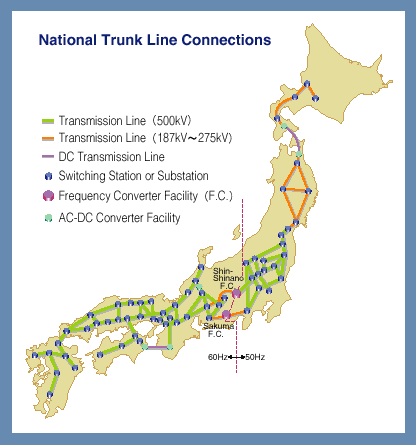
Wikipedia has a inaccurate map of Japan's power grid:
http://en.wikipedia.org/wiki/File:Power_Grid_of_Japan.PNGA better map, more detailed that shows how really is actually the grid:
http://www.geni.org/globalenergy/library/national_energy_grid/japan/graphics/japangridmap.gifUpdates at the end since the following is necessary to put things in context.
They have 2 FC facilities able to exchange 1200 MW at best, but the exchange between the two grids goes around 7-8% yearly, both ways, far, far less than what is needed at the moment and what they could provide, I doubt that Japan doesn't have at least 15% spare capacity in both grids. The FC are only able to replace units 1 and 2 from Fukushima Power Plant. 1200 MW are nothing versus the demand of eastern Japan. The reason that eastern Japan blackouts will be more bad than needed and Tepco's problems with their nuclear power plants comes in this report http://www.ieej.or.jp/aperc/pdf/GRID_COMBINED_DRAFT.pdf from APEC:
But power interconnections are far less developed between Japan’s electric service areas than within them. Thus, an issue has arisen with respect to what might happen to the reliability of power supply in Japan when a particular class of generating capacity has to be taken out of service. In August 2002, the Tokyo Electric Power Company (TEPCO) was required by the Japanese government to take all of its nuclear power plants out of service since the utility had failed to report technical safety violations at some of the plants as required by law. Although subsequent safety inspections revealed that none of the violations presented an actual threat to public safety, continuing public distrust meant that nearly all of Tokyo’s nuclear plants remained out of service through the summer of 2003 and beyond. (emphasis mine) Since summer is when Tokyo’s power demand peaks, and since TEPCO relied on nuclear power for 29 percent of its generating capacity and 47 percent of its electricity generation in 200117, there were real concerns that power demand might not be met.
Normally, TEPCO would have had roughly 72 GW of generating capacity available to meet Tokyo’s needs during the summer of 2003, including 60 GW of its own capacity, 8 GW owned by Japan’s Electric Power Development Corporation (EPDC) and other generators in its area, and 4 GW from companies outside of its area. But with 13 GW of nuclear capacity remaining out of service (though about 4 GW of nuclear capacity had already been allowed to resume service), and with 4 GW of thermal power plants out of service for scheduled maintenance, the actual amount of generating capacity on which TEPCO could rely that summer was only around 55 GW. By comparison, the utility projected that peak demand would be around 61 GW if the weather were normal and 64 GW if the summer were hot. Hence, it had to plan for a possible 9 GW shortfall.
TEPCO’s plans for filling the gap between available capacity and possible peak summer demand included a variety of supply-side and demand-side measures. On the supply side, the utility anticipated that it could obtain 2,190 MW by restarting thermal plants that had been shut down due to their relative inefficiency and high cost, 760 MW by accelerating the testing and start-up of new plants, 700 MW by rescheduling thermal plant repairs, and 1,660 MW through extra purchases from neighbours. Somewhat more alarmingly, the utility hoped to obtain 3,200 MW if necessary through emergency supply measures such as power drawn from the trial operation of thermal
-
Re:Unit 1 should have been offline since February
Please have a look at this Japanese grid, they are isolated grids, based on this is what I based my observations:
http://en.wikipedia.org/wiki/File:Power_Grid_of_Japan.PNGMy bad for believing in Wikipedia. Thank you for your critic, it prompted me to research more the subject.
A better map, more detailed that shows how really is actually the grid:
http://www.geni.org/globalenergy/library/national_energy_grid/japan/graphics/japangridmap.gifThey have 2 FC facilities able to exchange 1200 MW at best, but the exchange between the two grids goes around 7-8% yearly, both ways, far, far less than what is needed at the moment and what they could provide, I doubt that Japan doesn't have at least 15% spare capacity in both grids. The FC are only able to replace units 1 and 2 from Fukushima Power Plant. 1200 MW are nothing versus the demand of eastern Japan. The reason that eastern Japan blackouts will be more bad than needed and Tepco's problems with their nuclear power plants comes in this report http://www.ieej.or.jp/aperc/pdf/GRID_COMBINED_DRAFT.pdf from APEC:
But power interconnections are far less developed between Japan’s electric service areas than within them. Thus, an issue has arisen with respect to what might happen to the reliability of power supply in Japan when a particular class of generating capacity has to be taken out of service. In August 2002, the Tokyo Electric Power Company (TEPCO) was required by the Japanese government to take all of its nuclear power plants out of service since the utility had failed to report technical safety violations at some of the plants as required by law. Although subsequent safety inspections revealed that none of the violations presented an actual threat to public safety, continuing public distrust meant that nearly all of Tokyo’s nuclear plants remained out of service through the summer of 2003 and beyond. (emphasis mine) Since summer is when Tokyo’s power demand peaks, and since TEPCO relied on nuclear power for 29 percent of its generating capacity and 47 percent of its electricity generation in 200117, there were real concerns that power demand might not be met.
Normally, TEPCO would have had roughly 72 GW of generating capacity available to meet Tokyo’s needs during the summer of 2003, including 60 GW of its own capacity, 8 GW owned by Japan’s Electric Power Development Corporation (EPDC) and other generators in its area, and 4 GW from companies outside of its area. But with 13 GW of nuclear capacity remaining out of service (though about 4 GW of nuclear capacity had already been allowed to resume service), and with 4 GW of thermal power plants out of service for scheduled maintenance, the actual amount of generating capacity on which TEPCO could rely that summer was only around 55 GW. By comparison, the utility projected that peak demand would be around 61 GW if the weather were normal and 64 GW if the summer were hot. Hence, it had to plan for a possible 9 GW shortfall.
TEPCO’s plans for filling the gap between available capacity and possible peak summer demand included a variety of supply-side and demand-side measures. On the supply side, the utility anticipated that it could obtain 2,190 MW by restarting thermal plants that had been shut down due to their relative inefficiency and high cost, 760 MW by accelerating the testing and start-up of new plants, 700 MW by rescheduling thermal plant repairs, and 1,660 MW through extra purchases from neighbours. Somewhat more alarmingly, the utility hoped to obtain 3,200 MW if necessary through emergency supply measures such as power drawn from the trial operation of thermal plants and requests for neighbouring utilities to raise the output of thermal plants above t
-
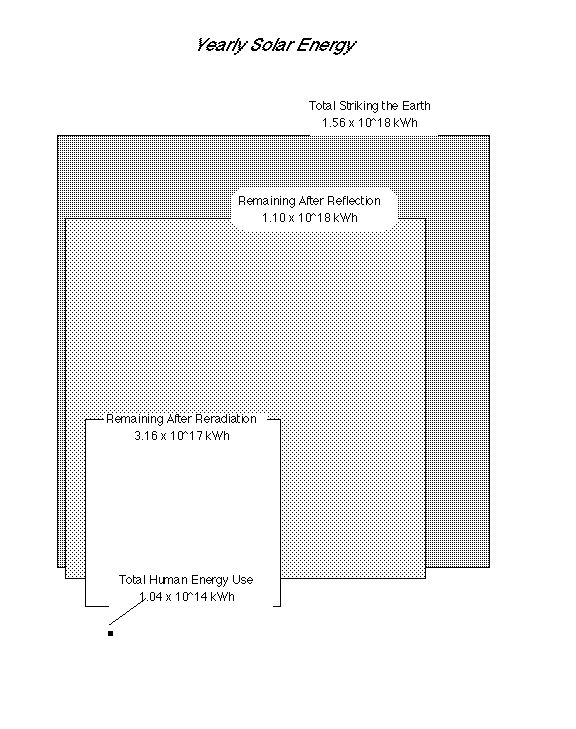
Modelling the Economy as a Physics Problem?It is these same bullshit approximations using nonsense equations based on wholly incomplete observations of complex systems that gave us marvels like the Drake Equation. One would think these Malthusian jerk asses would have learned by now. I propose we start reducing population by offing the people who write this sort of drivel. Here, look at the difference in scale between yearly human energy consumption and solar insulation. Perhaps we should implode the Sun at the same time we kill off the population. Yeah that would work.
Please do continue measuring tree rings, directly extrapolating tree ring thickness as a proxy for temperature for a thousand years, while discarding the last decades where you actually had accurate temperature measurements as they don't fit the tree ring data. Antropogenic global warming isn't even falsifiable. If temperature rises, its due to global warming. If it falls, it is due to global warming. This is not real science.
-
Re:Does not change the basics.
"the whole of europe" HAH. he speaks of Germany, Uk, Spain. have you seen a map recently ? You can transport electricty for over 7000 Km (see http://www.geni.org/globalenergy/library/technical-articles/transmission/cigre/present-limits-of-very-long-distance-transmission-systems/index.shtml) relatively cost-efficient. (that's TWICE the distance from Moscow to Madrid
-
Re:parse error at "generous amounts of aid"I'll just repeat two things. First, the earlier poster added to the definition of self-sufficient:
This refers to an immediate state, independent of how that state was achieved.
That was the context for my reply. Self-sufficient doesn't mean much when it requires a bunch of outside money to start up and to maintain.
Alan Shore says, "Objection, your honor: Speculation." Proof plz? And just for the record, you do know that a subsidy is, right? Denmark is not exactly known for corruption problems, so I doubt they'd claim something like self-sustainability (including monetary) which could be disproved by checking the local government financial records.
Denmark is as is most of the EU, well supplied with subsidies. I said nothing about "corruption". And where do elected officials say anything about self-sustainability in terms of money?
Incredible You should call the Catholic Church. Nice to see how, somehow, what started out as your unproven assertions and baseless accusations have now trans-substantiated into irrefutable fact.
Sloppy editing on my part. Here's a link illustrating the extent of their wind power subsidies.
Until 1999, the government provided direct grants for each kWh turbine owners sold to the grid. Now Denmark has about 15 subsidy programs for both energy production and consumption. The largest subsidy is a production subsidy per kWh for electricity generated from renewable energy resources.
I find it amusing how this article later speaks of the "temporary nature" of the subsidies even though there have been heavy subsidies for wind power and later renewable energy since 1979. We also know of the particular subsidy (of indefinite size) for the Samso project. Do I still belong to the Roman Catholic Church? My early suppositions are now facts.
Sure, it's a pilot program. But my beef has been that it is so heavily subsidized (and you and I both know what subsidies mean) that we can't conclude how successful the program really is. With enough other peoples' money, you can do anything. As I see it, it's also a boondoggle, a tremendous waste of public funds to little consequence. -
How about the power infrastructure?
How about the power infrastructure?
* Electric infrastructure systems research (publications) from the National Renewable Energy Laboratory
* Electric Power Research Institute re: a distributed network.
* Electric power transmission
* Hydrogen power wiki (questionable) * [pdf] Present limits of high-voltage transmission
* Power station diagram (and more)
* Energy development as well as * "The SuperGrid for Electricity & Hydrogen"- but no designs are included.
And with DIY wind turbine and the DIY UPS system, maybe we can cook something up?
Need more information. -
Re:False choiceAs you'll see in the link to the meeting, California has already done what you ask.
On a time scale choice, how about the Moore's Law scale since it is silicon after all. Remember also that a fabrication plant produces more capacity every year so this year's built GW of capacity means 25 GW over 25 years after which is has to change over to recyling what it previously produced, though at lower cost.
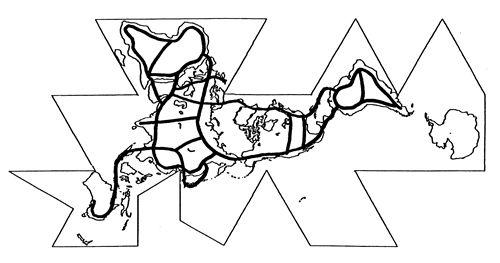
There is an organization that is working of Fuller's vision called GENI. Here is a quote from this link http://www.geni.org/globalenergy/library/geni/simu lation/the-GENI-model.shtml#6
Current research from CIGRE,(7) (International Conference on Large High Voltage Electric Systems), indicates that long-distance transmission can be made reliable and economically successful up to 7000 kilometers with HVDC, (High-Voltage Direct Current), and 4000 kilometers with HVAC, (High-Voltage Alternating Current). This permits inter-regional and even intercontinental power delivery from remote sites where large renewable energy sources are found.
Granted, they are thinking of large remote hydro and pulling together resources from a dispersed grid for long distance transmission might be a problem. I'm not so sure though that if we consider an intercontinental interconnect carrying enough power to cover night time use that we really want to use the same thinking about depreciation as we would for a 200 mile run of transmission. One might want to build it to last a few hundred years, in which case thicker conductors might be justified allowing much lower losses. We seem to be willing to build intercontinental oil and gas pipelines that will only last 30 years before the fields are exhausted. That is quite a bit of material to put out for such a short return. However, energy storage is likely going to be important and I'm not sure what the balance will be. You'd want a large over capacity before you start sending power to your benighted neighbors on the other side of the world.
Some of the biggest solar fabrication plants are going in in China http://www.treehugger.com/files/2006/11/chinas_ric hest.php -
Feasible transmission distances
This study http://www.geni.org/globalenergy/library/technica
l -articles/transmission/cigre/present-limits-of-ver y-long-distance-transmission-systems/index.shtml suggests that 7000 km transmission legs might be economically feasible. On the other hand, keeping Bagdad supplied with electricity is proving more difficult than keeping it supplied with generator fuel since trucks provide a work around for attacks against oil pipelines. It seems to me that what is really going on is that the sunk costs for current power generation provide inertia against which your plan has to push. What is needed is to make renewables cheaper than fossil fuel costs so that fossil fuel (and nuclear) plants have to operate at a loss to compete. This may mean placing renewable power generation closer to where it is consumed for the present.
--
Generate clean power at home: http://mdsolar.blogspot.com/2007/01/slashdot-users -selling-solar.html -
Re:Making green energy from nuclear energy
This is done a lot in Norway,
There they have double water dams/basins one high one low.
During peak hour the water is rushed down for electricity.
During night they buy cheap French nuclear energy to pump water back.
I don't doubt that they do this, but I doubt that much electricity from France is involved. The Scandinavian grid and the Middle European grid are not synchronized, so only DC links between them exist (or perhaps AC links with phase regeneration, but does anyone do that anymore?) The amount of electricity that could be moved is rather small -- there has been much talk about increasing capacity, but has anything really happened? In fact, if I read the map on GENI right, the Norwegian power grid is somewhat wimpy and reliant on the Swedish grid. That's the kind of thing you can get away with when you have lots of hydro spread across the country, but not the kind of thing for major energy import/export. -
Mod down parent
It's obvious that the parent is quite ignorant about China.
1. The power grid in China covers 96.4% of the Country.
2. The offical number of people in China is around 1.3 billion, but in reality it's probably 1.5 billion (calculated from their consumption of weat).
Perhaps you should visit China to see it first hand. No, I'm not Chinese or even Asian... but I've travelled the region, including China. They do have problems, but electricity is not high up on that list. -
Re:This has all been gone over before...Photoelectric won't work, won't solve even a small fraction of our power needs, not remotely.
Don't confuse photoelectrics with photovoltaics.
For example, Sandia Labs has a plant currently in operation that produces 5MW in 9 acres, by focusing light onto a tower that heats molten salt which drives turbines. It can produce energy 24 hours a day.
The United States' generating capacity a few years ago was 813 gigawatts, so at
Realistically, you don't need a power generation mechanism to be able to handle the entire United States energy needs before you put it in production. You just need it to be cheap (and cheap after the costs of fighting NIMBY lawsuits are factored in).
Sandia's web site doesn't say what their cost per megawatt hour is, but they do say the entire facility is currently worth $120 million. Since this type of system uses nothing exotic, I would expect economies of scale to change the numbers quite a bit. Assuming a life of 30 years, they'd have to be able to reduce the cost by about a factor of 10 to be competitive with today's rates. It could happen.
-
Re:Cost ?
Maybe this will help with the case of establishing the Global Energy Network? But only if we can overcome the "what's in it for me ($_$)" approach and look to how we can benefit all humanity.
Then we could get the areas that would benefit from this the most to send electricity to where it's needed? And in the case of the southwestern U.S. If they don't do it, then we'll stop sending them water! -
Re:So much for supply and demand.The prophet has already spoken, the people were too busy with their bread and circuses, and the band played on. I'm talking about R. Buckminster Fuller's global power grid.
It will never work, because people are trained from birth to understand the economics of enforced scarcity rather than the truth, that wealth is infinite.
Scarcity is at the heart of capitalism; in the tradeoff between supply and demand, since demand will always increase over time, (barring a disaster which reverses the growth of population) the owners have a vested interest in controlling supply to maximize profit. This explains why energy efficiency and use of renewable resources is achieved only after an uphill battle of regulation or public protest.
Regardless of the asking price, no power company will voluntarily rely on another party to meet the demand in its area. To rely on a competitor is tantamount to admitting defeat, and to rely on a non-competitor in another country is to undermine the foundation of the cathedral of capitalism, enforced scarcity.
The company will complain just long enough to get the public finger of blame pointed at a certain party (Silicon Valley, Intel, etc.) and then hike rates on everyone, citing the costs of adding capacity to existing plants and building new ones. Powers keep on lyin', people keep on dyin', world keep on turnin'.
So what's the answer? Change human nature, or at least several thousand years worth of learned behaviour. Might as well try to kick a hole in the sky.
Thank you...
...cunt.
Love,
Slashfucker