Slashdot Mirror
Domain: gnu.org
Stories and comments across the archive that link to gnu.org.
Comments · 13,360
-
Re:Not plausible
Stallman's take on the whole thing can be found here. As usual it is as much helpful as it is inflammatory. Hell, the letters RMS is all it takes to completely shutdown half the minds and all productive discussion here. I think you're better off bringing up our favorite group of 40's Teutonic goose-steppers.
Well, the GNU/Linux thing gets a revisit. Eben Moglen has been a much classier act. I think he does much better at being a spokesman for the FSF. The message is essentially the same but the impression you get is far more tactful and thoughtful and dare I say clean-cut..professional even. The FSF has a link page to Moglen and Kuhn's public answers to SCO here. -
Re:Why so many distros?
Linus' idea? What are you talking about?
Free software - which allows everyone to start their own distro - was Richard Stallman's idea, Linus just contributed to the already vast bank of free software.
(and Linux was proprietary to begin with, it was liberated in 1992 when Linus changed the license to the GNU GPL.)
Here's the history of GNU -
GPL doesn't prohibit for-profit distribution.
Since all the software available on the website is available for free download, and its all GPL, yes it is. As well as people have previously asked SuSE and they've said yes as long as you don't distribute for profit.
This makes no sense to me. If all the software SUSE distributes on this ISO is licensed under the GNU GPL (or if it is all licensed under any set of free software licenses), anyone should be able to distribute copies for profit. One of the criteria for a license to qualify as a free software license is that it must allow commercial distribution.
-
Re:List of prizes:The FSF asks us to boycott Amazon.com because of the one click patent.
This is not true. FSF has in fact ended the boycott.
-
Re:Lisp
The misanthropes that took over comp.lang.lisp are pathetic. I've never seen a techical discussion group that hostile and defensive.
Ah, I see. You probably made the mistake of phrasing a question as an assertion that something is broken in Common Lisp. Not only do the denizens of c.l.l. look unfavorably on that, but many of them have been involved in the design of Common Lisp, and may take such inflammatory statements as reflections on the quality of their work. I see you're still upset by the experience. Grow a thicker skin, and next time read some messages in a newsgroup before posting to it.Common Lisp fossilized sometime back in the Reagan Administration and has since lost almost all ability to improve.
This is why Common Lisp will still be used in the year 3000. "I tell you, two go-go 80's Reaganauts like us; we can rule this world."As a result, the vast majority of former users have abandoned it and those who remain almost have to take a position that there is no further NEED for improvement except in trivial ways (more libraries, more "complete" implementations, etc.) that, if you think about it, are merely restatements of the "nothing needs to be improved" notion.
Have you ever worked with an ANSI standards committee? Do you want to pay $700 per year (travel expenses not included) to sit around while someone doesn't show up or vetoes your decision? Neither does anyone else involved with Common Lisp (that's why almost all of those involved dropped out by 1990).Arc is announcementware. It has shown no signs of life since its first few weeks.
You link to Paul Graham's website, but obviously you don't realise that Arc is still in planning. The ICFP committee doesn't agree with you either, as this year Paul is one of the invited speakers.There are several dozen different Schemes, all incompatible, with an average of maybe 1.1 implementers each.
You know, I'm starting to hear more and more people complain about the lack of the "one true" implementation of Lisp. This is where I think Scheme comes in. Pick one implementation and stick with it. Personally, I'm rooting for DrScheme, but the GNU people seem to be doing a mighty fine job with Guile.Of course, if you really want a one-implementation, brand-spanking-new (no compatibilities here, sir!) Lisp, then by all means check out newLISP.
-
I want my future boss to be...
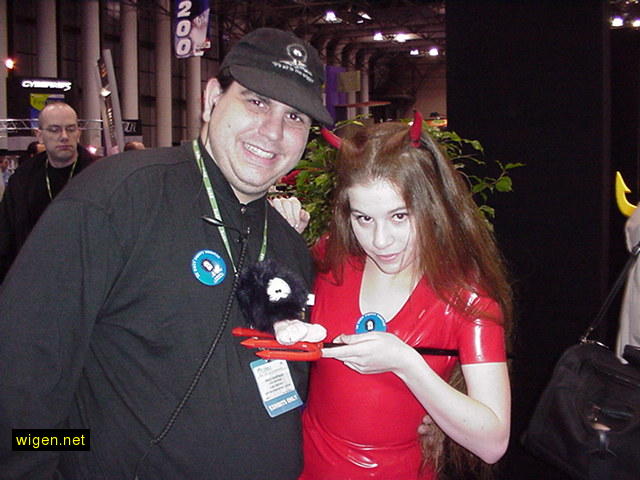
Is it any wonder people think Linux users are a bunch of flaming homosexuals when its fronted by obviously gay losers like these?! BSD has a mascot who leaves us in no doubt that this is the OS for real men! If Linux had more hot chicks and gorgeous babes then maybe it would be able to compete with BSD! Hell this girl should be a model!
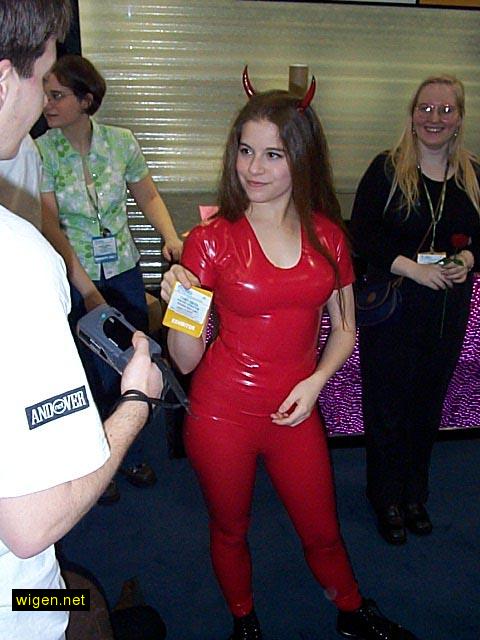
Linux is a joke as long as it continues to lack sexy girls like her! I mean just look at this girl! Doesn't she excite you? I know this little hottie puts me in need of a cold shower! This guy looks like he is about to cream his pants standing next to such a fox. As you can see, no man can resist this sexy little minx. Don't you wish the guy in this pic was you? Are you telling me you wouldn't like to get your hands on this ass?! Wouldn't this just make your Christmas?! Yes doctor, this uber babe definitely gets my pulse racing! Oh how I envy the lucky girl in this shot! Linux has nothing that can possibly compete. Come on, you must admit she is better than an overweight penguin or a gay looking goat! Wouldn't this be more liklely to influence your choice of OS?
With sexy chicks like the lovely Ceren you could have people queuing up to buy open source products. Could you really refuse to buy a copy of BSD if she told you to? Personally I know I would give my right arm to get this close to such a divine beauty!
Don't be a fag! Join the campaign for more cute open source babes today!
$Id: ceren.html,v 7.0 2004/01/01 11:32:04 ceren_rocks Exp $ -
Linux sues BSD for having a hotter mascot
Is it any wonder people think Linux users are a bunch of flaming homosexuals when its fronted by obviously gay losers like these?! BSD has a mascot who leaves us in no doubt that this is the OS for real men! If Linux had more hot chicks and gorgeous babes then maybe it would be able to compete with BSD! Hell this girl should be a model!
Linux is a joke as long as it continues to lack sexy girls like her! I mean just look at this girl! Doesn't she excite you? I know this little hottie puts me in need of a cold shower! This guy looks like he is about to cream his pants standing next to such a fox. As you can see, no man can resist this sexy little minx. Don't you wish the guy in this pic was you? Are you telling me you wouldn't like to get your hands on this ass?! Wouldn't this just make your Christmas?! Yes doctor, this uber babe definitely gets my pulse racing! Oh how I envy the lucky girl in this shot! Linux has nothing that can possibly compete. Come on, you must admit she is better than an overweight penguin or a gay looking goat! Wouldn't this be more liklely to influence your choice of OS?
With sexy chicks like the lovely Ceren you could have people queuing up to buy open source products. Could you really refuse to buy a copy of BSD if she told you to? Personally I know I would give my right arm to get this close to such a divine beauty!
Don't be a fag! Join the campaign for more cute open source babes today!
$Id: ceren.html,v 7.0 2004/01/01 11:32:04 ceren_rocks Exp $ -
Popularity and freedom -- two different goals.
Because the open source movement pursues popularity and taking credit for the works of others is a convenient way to attain that goal without having to do the hard work of actually writing the licenses and defining the concepts that helped define and build our now 20-year-old community. Consider the GNU General Public License which was written well before the Open Source Initiative began and speaks of a different philosophy than that which the open source movement speaks to. The OSI defined the terms of license acceptance such that they could add the GPL to their approved license list. The Free Software Foundation wrote the license and started the free software community about 2 decades ago.
Mark Webbink, counsel for Red Hat, wrote an essay on licenses used in the open source movement. Webbink, like Red Hat, is a proponent of "open source". In this essay Webbink goes to some effort to reinvent the concept of copyleft without once calling it by that name. He obviously finds value in breaking up licenses into groups along those that are copylefted and those that are not, but nowhere is any credit given to the people that invented this concept and assigned that name to it about 20 years before his essay came out.
Eric Raymond responded to AdTI's error-riddled argument about the Linux kernal. Raymond cited a number of "open-source projects" to bolster his argument, unfortunately one of them was Emacs co-written by founder of the free software movement -- Richard Stallman -- years before the OSI existed. I've written here about this before, so I won't repeat the details. It's safe to assume that RMS does not do any of his work for the benefit of the open source movement.
He, and others (myself included), are grateful that open source proponents do so much work helping to bring users to software freedom by increasing the use of free software licenses (chiefly the GNU GPL). But there's no honor in taking credit for someone else's work. And there's no sense in conflating placing a license on a list of approved licenses with writing a license and creating a community. Building on the work of others is not the same as appropriating it. Given the number of times I've seen "free software" mistranslated or inaccurately conveyed as "open source", particularly when describing the endeavors of those outside the US, I would not be surprised if the Reuters article was completely wrong in its summary (as well as its statement about what "open source" is, which has been partially debunked elsewhere in this thread). Software freedom is something worth pursuing, helping business more efficiently find and use unpaid labor is not something many are eager to help with doing.
-
Re:data managers
At the risk of starting yet another editor war:
emacs plus:
- calendar mode for diary info (optionally encrypted)
- todo-mode.el for emacs (should come with emacs)
If not, you can get todo-mode.el from any emacs source location.
A proposal has been made to add some simple fontification to the todo-mode.el. You can find the mail message here among other places.
I use it because it works with the calendar-mode, diary mode, and since it's emacs it runs everywhere emacs does.
I know, boring, boring, boring. However, when you have the kitchen sink of editors, you might as well turn on the water.
-
Open Source
If the article is about Open Source, why does it have a GNU on it? Why not use the OSI logo?
Or, if the article is about GNU, why not say Free Software?
Unless, of course, there is some advantage to creating confusion between the two that I am simply unaware of.
-Peter -
Re:DRM
The FSF recommends against using the term "digital rights management". They suggest other terms, such as "digital restrictions management" or "handcuffware".
-
Re:Doesn't mean people are happy with it...
Just wait till RMS and Rob Malda start a group.
And folks will whine about how their music sucks so much worse than it used to
Hey, we're not whining, we're just telling it like it is! How can you compare the original purity of the unplugged free software song with RMS's later descent into techno? -
Re:"Still an important tool"
I never understood why the hell the terminal-interface for vim tries to open an X connection...
I use the screen package a lot, and often times, I will detach my session and exit X, only to re-attach my session on the console... Then when I try to open vim... Well, it tries to open an X session, and let's just say things don't work out in that regard.
It took me a long time to figure out that it was doing this, and that that's what the slowdown was for. So now I just unset the DISPLAY variable. (Terminal-interface vim will not try to muck with X if $DISPLAY is not set.)
Still. I don't understand why a terminal application opens an X connection at all. Even when it does successfully open the X connection, it doesn't seem to do anything with it; it just does the normal terminal interface. I said "vim", not "gvim"... So why is it trying to mess with X? -
Re:Check out Lisp
-
A simple solution
Most people reading comments like this will either say "Yes, I do that" or freak out and say "My web site has worked for 5 years and there's no way in hell I'm changing it now."
Simple solution: make a list of all the pixel widths, add them up, and divide by 100. Now go through each pixel width and divide by the total from the previous calculations to get a percentage. Plug in the percentage (adding a % sign means the browser sees it as such) and load up the new page on a large monitor (1600x1200). Play with resizing it a lot. Decide if there's anywhere you need to tweak.
Do the same thing for heights, if you really have them.
The only place I see this not working is pages which have a specific, large image as a background for the entire site, and everything is either on top of that image or part of it (an image map). Even there, you can use Flash or SVG, but you really should get over it and just use a solid color or a repeating pattern for a background.
Look at gnu (and my site, for that matter) for an example of the best web design. Make your point with words. Add some images here and there if you need to, but honestly, if your product sucks, users won't stay there just to look at your pretty site design, and if your product rules, people will stay there despite not having anything pretty to look at it. -
Re:Repeating my comment on OSNews...
Another point worth to be noted is that, under Un*x, the DLL Hell is a non-issue, as we've had libraries versioning since day 1. So, I might as well install multiple versions of a library, and yet do not have the need to recompile an application.
I wish that were true. I really, really wish that were true. Too many people do not understand the correct way to determine the version numbers on their libraries, and instead fix them to whatever release of the package is. Ask the people who packaged KDE for Debian why this is a good idea, and I'll bet you'll get an earfull.I suppose it's just Murphy's law. There's two ways for programmers to interpret the version number on
-
Re:a simple question...
We have here a fine example of a gap between theory and practice. The GCC project has a development plan according to which, a new version would be released about every 6 months. However so far, they project has never managed to follow the schedule and new releases slipped by many months. So while it's true that the new version is scheduled to be released at the end of this year, it is well possible that it doesn't make it.
-
Re:most destructive?
-
Re:I apologize if this is a stupid question, but..
-
Re:I apologize if this is a stupid question, but..
-
Re:I apologize if this is a stupid question, but..
The GCC web site has a documentation here
-
Re:GNU STL not commercial quality
You should also note that lately, the GCC developers have put more effort in speeding up libstdc++. You might want to check the GCC 3.4 release notes and the Proceedings of the GCC summit in that context.
-
Re:The future of GCC (LLVM?)
Unfortunately, the FSF currently has a rather strict policy regarding GCC development which does not permit implementing features like LLVM. I hope this policy will change some time as currently it seems to be a bit blocking for certain interresting features that could be implemented. See the following discussion for this policy:
http://gcc.gnu.org/ml/gcc/2003-11/msg00402.html -
ObjC in GCC; Openstep API in GNUstep
As a downside though, I'm not sure how well supported it is on non-OS-X platforms.
The GCC source code distribution includes an Objective-C front end. Are these platforms enough for you? Sure, you don't get the Cocoa/Openstep libraries everywhere, but the GNUstep team is working on that.
-
Simple
Who honestly cares about or uses Ogg?
I care. Some media activists care. All artists definitely should care. And, most importantly, some great hackers care as well.
Seriously, as much as I constantly feel insulted by the bloody ignorance of profanum vulgus, or unwashed masses, if you will--please don't mind if I take offence to you outrageously ignorant remark--I don't really care who cares about the software I use--be it Debian, OpenBSD, EROS, PostgreSQL, Perl 6 or Ogg Vorbis--as long as the developers care. We don't need large user base to break even, now do we?
Music is very important to me, almost as important as the freedom I have. And it's not about the price, mind you. I write it listening to another version of Tchaikovsky's Piano Concerto No. 1 in B flat minor, Op. 23, I couldn't resist to buy today on a new and expensive CD with all the money I had. I don't care about the proce of free software. For me it's all about freedom. I do believe quite a few people think that way.
Really. I have yet to even contemplate it. Sure I have the codec on my machine, but I haven't used it. Nothing is out there in the format that I am interested in or have even ran across accidently. I like portability of my music so I use MP3. [..] I have no intention of recording anything into the format, so it would be a poor choice for me to use it. How many people is it a good choice for? Why?
Actually, the reason is quite simple.
-
Re:Anyone got a match?
What is Emacs? To quote the Emacs Manual: Emacs is the extensible, customizable, self-documenting real-time display editor.
see for yourself -
O3? Equivalent programs?
Why did he use only -O2?
-O3 adds function inlining and register renaming.
Also, some of the code doesn't look too much of a test of the language, but more of a test of the libraries. Both versions of hash rely on the library implementations, and it looks like hash.cpp does an extra strdup that the java version doesn't. I don't know either of the hash libraries well enough, but I don't see why this significant slowdown would be necessary in the gcc version. -
How to do it rightWe just put a replacement radio in my wife's car, a '93, and instead of knobs and a few large buttons there are these tiny little buttons that I can't read the labels for without a magnifying glass. WTF is that?
It's amusing how bad controls on radios are. They're designed to be easy to implement, not easy to use.
The right way to do it would be to have two big knobs - volume and channel. But "channel" should be smart. If the channel isn't in use, it doesn't get a position on the knob. Turning the knob should instantly switch to the next channel, within 50ms or so. No wait for AGC, AFC, or DRM cryptosync. No fading out during channel switching.
That's actually hard to do. Right now, you have a basic radio front-ended by a simple microprocessor tied to some buttons and a display. Doing it right requires at least two radio front ends. You need one for the channel you're listening to, and one to maintain the inventory of incoming stations. Systems that receive digital radio may need more, so they can have the adjacent stations synched up in advance.
Or you could use a whole-band digital radio, like Gnu Radio.
There is no excuse for an entertainment device in a car requiring "head-down time".
-
Re:Where have all the VCs gone?
An even crappier song, the GNU song, as sung by RMS. "Hackers, you'll be free"
If you REALLY want to get a kick, rent "Revolution OS" from Netflix and watch RMS sing it. That is a great movie, also. Its got all the big open source giants and even describes the beginnings of the term "open source".
Chris -
Make it web-basedOthers have already discussed how to set up a wireless intranet with non-routable addresses. The next step is to decide what kind of community you create. I recommend setting up a webserver with some kind of web-based community to start with, you could use Slash or Scoop. Most likely most casual Wi-Fi users in your area will be most at home with a web-based community.
Of course if you wanted to be more old-school you could set up a public-access *NIX login, or even run an old-school BBS type deal via telnet. It would still be a good idea to route people to a website explaining how to get in. For that check out here and here, and here
-
for different operating systems...From the FAQ:
Any chance of a *nix or Windows version?
While I use a mac, most of my development is using unix editors like emacs or vim. As a unix developer you do not have to wait for these guys to port to *nix. You already have this functionality!
We love developing macintosh applications with Cocoa and are determined to improve SubEthaEdit on that platform. We currently have neither resources nor experience to port our products to other platforms.
Just install screen. First user starts screen with an editor inside. Make a new screen console and change the permission of the personal screen socket. Let other users log in and hook into your screen usingscreen -x
Done! Oh, for chat, use irc -
Interesting girl...
Is it any wonder people think Linux users are a bunch of flaming homosexuals when its fronted by obviously gay losers like these?! BSD has a mascot who leaves us in no doubt that this is the OS for real men! If Linux had more hot chicks and gorgeous babes then maybe it would be able to compete with BSD! Hell this girl should be a model!
Linux is a joke as long as it continues to lack sexy girls like her! I mean just look at this girl! Doesn't she excite you? I know this little hottie puts me in need of a cold shower! This guy looks like he is about to cream his pants standing next to such a fox. As you can see, no man can resist this sexy little minx. Don't you wish the guy in this pic was you? Are you telling me you wouldn't like to get your hands on this ass?! Wouldn't this just make your Christmas?! Yes doctor, this uber babe definitely gets my pulse racing! Oh how I envy the lucky girl in this shot! Linux has nothing that can possibly compete. Come on, you must admit she is better than an overweight penguin or a gay looking goat! Wouldn't this be more liklely to influence your choice of OS?
With sexy chicks like the lovely Ceren you could have people queuing up to buy open source products. Could you really refuse to buy a copy of BSD if she told you to? Personally I know I would give my right arm to get this close to such a divine beauty!
Don't be a fag! Join the campaign for more cute open source babes today!
$Id: ceren.html,v 7.0 2004/01/01 11:32:04 ceren_rocks Exp $ -
Ceren does not use Spatial Nautilus
Is it any wonder people think Linux users are a bunch of flaming homosexuals when its fronted by obviously gay losers like these?! BSD has a mascot who leaves us in no doubt that this is the OS for real men! If Linux had more hot chicks and gorgeous babes then maybe it would be able to compete with BSD! Hell this girl should be a model!
Linux is a joke as long as it continues to lack sexy girls like her! I mean just look at this girl! Doesn't she excite you? I know this little hottie puts me in need of a cold shower! This guy looks like he is about to cream his pants standing next to such a fox. As you can see, no man can resist this sexy little minx. Don't you wish the guy in this pic was you? Are you telling me you wouldn't like to get your hands on this ass?! Wouldn't this just make your Christmas?! Yes doctor, this uber babe definitely gets my pulse racing! Oh how I envy the lucky girl in this shot! Linux has nothing that can possibly compete. Come on, you must admit she is better than an overweight penguin or a gay looking goat! Wouldn't this be more liklely to influence your choice of OS?
With sexy chicks like the lovely Ceren you could have people queuing up to buy open source products. Could you really refuse to buy a copy of BSD if she told you to? Personally I know I would give my right arm to get this close to such a divine beauty!
Don't be a fag! Join the campaign for more cute open source babes today!
$Id: ceren.html,v 7.0 2004/01/01 11:32:04 ceren_rocks Exp $ -
Giving credit where credit is due.
The GNU General Public License (GPL) was written years before there was an "open source" movement. Linking together the open source movement with the GPL misstates history and authorship. The language used in the GPL and the freedoms it talks about are not part of the philosophy of the open source movement, they are part of the free software movement which created the free software community we still enjoy today 20 years later. The real author of the GPL is the FSF (most notably, Richard Stallman and Eben Moglen). In a post to the GCC mailing list responding to someone who wanted to help the "open source community", RMS said
Open source advocates do contribute to our community, when they work on free software packages, but our community is older than that movement, and owes its existence to the idealism that movement rejects. It was built by the free software movement, so it is the free software community. If you help us, please keep in mind that what you're helping is the free software movement.
ESR would similarly miscredit the open source movement when he referred to a number of programs as "open-source" projects even though they were written before that movement existed:
[...] Many other open-source projects of the order of complexity of the early Linux kernel predated it; the BSD Unixes, for example, or the Emacs editor. [...]
Maybe the authors of the various BSD OSes and the authors of the Linux kernal don't mind being lumped in with that movement, but ESR also includes Emacs which was co-written by RMS, founder of the free software movement. Emacs was most certainly not written with the open source movement in mind nor to benefit those ideals. Emacs was written to benefit the free software movement. RMS has repeatedly stated how he does not want to be lumped in with the open source movement. The FSF provides a concise and informative description of the differences between the two movements which includes RMS asking the reader to know enough about the movements to distinguish between their philosophies.
So what did the open source movement do? The Open Source Initiative placed the GPL on a list of approved licenses. Open source advocates have contributed to practical projects and endorsed the GPL. I'm sure the free software advocates have no issue with endorsing the GPL and increasing its use. But the reason this license protects ones freedoms to share and modify software so well is not due to anything anyone at the OSI or the open source movement has done. Thus it is not fair for that movement to receive credit for the GPL.
-
Giving credit where credit is due.
The GNU General Public License (GPL) was written years before there was an "open source" movement. Linking together the open source movement with the GPL misstates history and authorship. The language used in the GPL and the freedoms it talks about are not part of the philosophy of the open source movement, they are part of the free software movement which created the free software community we still enjoy today 20 years later. The real author of the GPL is the FSF (most notably, Richard Stallman and Eben Moglen). In a post to the GCC mailing list responding to someone who wanted to help the "open source community", RMS said
Open source advocates do contribute to our community, when they work on free software packages, but our community is older than that movement, and owes its existence to the idealism that movement rejects. It was built by the free software movement, so it is the free software community. If you help us, please keep in mind that what you're helping is the free software movement.
ESR would similarly miscredit the open source movement when he referred to a number of programs as "open-source" projects even though they were written before that movement existed:
[...] Many other open-source projects of the order of complexity of the early Linux kernel predated it; the BSD Unixes, for example, or the Emacs editor. [...]
Maybe the authors of the various BSD OSes and the authors of the Linux kernal don't mind being lumped in with that movement, but ESR also includes Emacs which was co-written by RMS, founder of the free software movement. Emacs was most certainly not written with the open source movement in mind nor to benefit those ideals. Emacs was written to benefit the free software movement. RMS has repeatedly stated how he does not want to be lumped in with the open source movement. The FSF provides a concise and informative description of the differences between the two movements which includes RMS asking the reader to know enough about the movements to distinguish between their philosophies.
So what did the open source movement do? The Open Source Initiative placed the GPL on a list of approved licenses. Open source advocates have contributed to practical projects and endorsed the GPL. I'm sure the free software advocates have no issue with endorsing the GPL and increasing its use. But the reason this license protects ones freedoms to share and modify software so well is not due to anything anyone at the OSI or the open source movement has done. Thus it is not fair for that movement to receive credit for the GPL.
-
Re:don't bother........
Although i have never programming, my first college leve CSCI class used SCHEME (a direct descendant of Lisp if i remember correctly) as the language.
Scheme is not an acronym, and it's not a descendant of Lisp. It's a Lisp-like language that borrowed and extended the idea of lexical scoping from Algol, and kept some of the good ideas of Lisp (such as the syntax and source code representation).This language is structed very difficult for a new computer science student to easily understand.
I disagree. I first learned Scheme (and computer programming) in the introductory CS class at Stuy, and I don't recall that anybody in the class had any problems (I certainly had a lot of fun!). I abandoned computer programming for two years after taking the class, until I read about Abelson and Sussmans' Structure and Interpretation of Computer Programs somewhere. Within a week of picking up that book, I not only had a firm grasp of the language, but a much better understanding of programming and recursion as well.The endless parenthesis does not help either.
Scheme was invented in 1975, well after glass teletypes first became available. I suggest to anyone using or learning Scheme that they avail themselves of a full-screen display editor with such advanced capabilities as character blinking (to help match parenthesis, among other things).And, on top of this, the language is completely dead!
Tell it to these people, and these, and these.I much rather would have learned an assembly language. This would have given students a better feel for the hardware and would have had useful applications.
You obviously didn't have SICP as your course textbook. In chapter 5, you first write a simulator for a simplified register machine, and then write a simplified Scheme compiler targeting it. -
DotGNU and Parrot : The Real Story
DotGNU Support in Parrot CVS | Parrot Support in DotGNU CVS*g* -- I like parrot -- In fact I want Parrot to become the FreeSoftware VM
-
Re:That's whyGNU Screen
Screen is a full-screen window manager that multiplexes a physical terminal between several processes, typically interactive shells.
You dont need x-windows but it is a window manager. -
Re:Whats your favourite cow exploit?
"I can't wait for the first time a hurd of wirelessly controlled cows get hacked. Imagine the fun you could have with a hurd of cows at your command."
Sorry, but you'll simply HAVE to wait. Non-monolithic cows take decades to develop. -RMS -
Re:Could someoneThe GPL does not preclude you from selling software licensed under the GPL.
Check out the GNU site where it explains it.
Once the software is purchased, then it can be distributed freely (with source included).
-
Re:Don't know what they are talking about
... intellectual property
Can we stop using "intellectual property" already? Holy St. IGNUcius already schooled us about this.
-
Proactively Protect Lost Freedoms
I just finished reading Free Culture, Lawrence Lessig's latest book. That was an interesting read, and I found it remarkably similar on some points to thoughts I've had on the subject lately.
The last few chapters discuss ways that individuals and governments can and should act to preserve free culture and prevent the culture cartels from gaining more influence. He gives several examples of proactive efforts to preserve freedoms that were lost as technology developed. The Free Software movement was the first example, and Lessig explained how the GPL proactively protects freedom to derivitize, use, and distribute software. It has taken a couple of decades, but there is now a healthy and vibrant ecology in the copyleft commons of software.
He then listed several examples of using ideas from the FSF copyleft commons to proactively protect freedom of non-software things. The Public Library of Science was discussed, as well as the Creative Commons. I remember reading the philosophy section of the GNU project website a few years ago and thinking, "You know, these guys are really on to something..." The ball is rolling, and with work and time we will have a free culture protected by copyleft, including art, literature, music, software, entertainment, and scientific discovery. This is not about communism. It's about FREEDOM, sweet FREEDOM.
-
BSD IS DYING!BSD zealots are quick to deny the "death" of BSD nowadays by pointing to the existence of OS X, which has supposedly given BSD "thousands" of users. Infact this is a myth propagated by Apple, eager to tout the "Industrial Strength Unix Foundations" of their new "Darwin" OS.
The kernel of Darwin is not the BSD kernel, but rather the Mach kernel, Infact, the core of Darwin is of a totally different design to BSD, being of an elegant microkernel structure rather than the monolithic structure that BSD still retains. It is strange that Apple would choose to tout that their OS is based on 4.4BSD, which even by BSD standards is obsolete by over 10 years.
Darwin includes totally rewritten filesystem and network support and does not use the BSD code here either. Infact, BSD code is only used in the OS as a "skin" to wrap the underlying OS in order to provide a virtual Unix-like environment, in much the same way as Cygwin wraps Windows.
Higher up in userland, adapted versions of the BSD tools are used for the Unix command line, an odd choice, considering the GNU utilities are superior. Files are kept in odd places and in many cases manpages are out of date. Many basic system services such as user authentication are provided by Apple's own proprietary system rather than the traditional Unix methods. In general, the OS X command line is a lackluster and messy ordeal, and certainly radically unlike any BSD system.
-
Re:What else besides games?
What other applications besides games really tax the CPU right now?
Keeping a Gentoo system up-to-date?GNU Radio is a great example of something that is very cool, but requires more processing power than most people have. It's right on the horizon of feasibility (so it's not just a pipe dream totally out of reach) but still makes you ache for more power, more, more, more!!
-
Eraser (GPL)
That is only gratis software, so you really don't know how well it works, if at all.
A better choice is Eraser, it is GPLed.
http://sourceforge.net/projects/eraser/You can also make a nuke boot disk with this program that automatically starts erasing everything upon start up. Don't forget to clearly label it
-
Very simpleIt's very simple:
Microsoft Windows is not Free Software.
-
Re:I don't see the problem
the GNU GPL forbids the addition of extra restrictions.
Correction: The current GPL forbids it. From the GPL version 2:"Each version is given a distinguishing version number. If the Program specifies a version number of this License which applies to it and 'any later version', you have the option of following the terms and conditions either of that version or of any later version published by the Free Software Foundation. If the Program does not specify a version number of this License, you may choose any version ever published by the Free Software Foundation."
So if the FSF wish to, they can create another version of the GPL, call it V2EU, which allows a legally mandated restriction that would otherwise be against the spirit of the GPL. Since it's a version of the GPL, the various coders have already given their consent to have their code released under that newer/alternate version. I'm sure someone could come up with wording that would please the FSF folks (the clause only applies when legally mandated) and meet the letter of the law.
Whether the FSF would be willing to even discuss it, though, is another matter. My guess is that they would rather you push for a change in EU law than a change in the GPL to accomodate EU law. But the choice may come down to this: Do you want people using a legally restricted but otherwise free program, or do you want them to have no choice but to use a non-free program?
-
BSD challenges Linux to find a hotter chick...
Is it any wonder people think Linux users are a bunch of flaming homosexuals when its fronted by obviously gay losers like these?! BSD has a mascot who leaves us in no doubt that this is the OS for real men! If Linux had more hot chicks and gorgeous babes then maybe it would be able to compete with BSD! Hell this girl should be a model!
Linux is a joke as long as it continues to lack sexy girls like her! I mean just look at this girl! Doesn't she excite you? I know this little hottie puts me in need of a cold shower! This guy looks like he is about to cream his pants standing next to such a fox. As you can see, no man can resist this sexy little minx. Don't you wish the guy in this pic was you? Are you telling me you wouldn't like to get your hands on this ass?! Wouldn't this just make your Christmas?! Yes doctor, this uber babe definitely gets my pulse racing! Oh how I envy the lucky girl in this shot! Linux has nothing that can possibly compete. Come on, you must admit she is better than an overweight penguin or a gay looking goat! Wouldn't this be more liklely to influence your choice of OS?
With sexy chicks like the lovely Ceren you could have people queuing up to buy open source products. Could you really refuse to buy a copy of BSD if she told you to? Personally I know I would give my right arm to get this close to such a divine beauty!
Don't be a fag! Join the campaign for more cute open source babes today!
$Id: ceren.html,v 7.0 2004/01/01 11:32:04 ceren_rocks Exp $ -
Open Spectrum?
I'm surprised no one has mentioned GNU Radio or the open spectrum concept in general.
There's no reason for the FCC to continue to exist, but this guy's idea of the alternative is just a little off. -
gcc 3.4.1 does not exist yet