Slashdot Mirror
Domain: gnu.org
Stories and comments across the archive that link to gnu.org.
Comments · 13,360
-
Re:For god's sake
Did you even read what I wrote?
First off, you're not a libertarian.
Sure I am. I'm currently a minarchist libertarian, but learning towards anarchist, also known as anarcho-capitalist.
There's more than one kind of libertarian, you know. Those who, like me, disagree with intellectual property laws are still a minority within the movement, but we are a significant minority. Here's a good discussion of the issue. Here's some more perspective. Saying libertarians are all agreed on the issue and that I'm not a libertarian because of my position on this is a misrepresentation. As Eric Raymond says, the non-coercion principle is about the only thing all libertarians agree on.
Secondly, a basic government is needed to protect property rights (that's a tenent of Libertariansim)
You're dismissing an entire branch of libertarianism, there. Anarcho-libertarians do not believe a basic government is needed, at all, or believe that government itself should be demonopolized (allowing a choice between any number of independent governments in a geographic area, or starting your own). Now, most of the ones I hear from still seem to believe in intellectual property, but I'm at a loss as to how intellectual property law is to be enforced in anarchy.
Furthermore, as I said in my post (did you read it?), I do not believe "intellectual property" is a property right. Nowhere in our legal code is it acknowledged as a right; it is a gift from the public encoded in the Constitution NOT because people have an "inherent right" to their ideas, but in order to promote the progress of science and the useful arts. (Did you read the Constitution?)
Your assumption is that everybody wants to code for free, which is utter bullshit.
Where did I say that? Strawman, or else you're reading somebody else's post.
I don't code for free, but I don't produce proprietary software, either. Something like 70% or more of the coding industry is not jobs for software makers like Microsoft or your favorite game company but coding custom software that is only of interest to one particular company. This will never go away; intellectual property laws have zero bearing on whether this kind of work needs to be done or not. Furthermore, removing the government-monopoly grant of intellectual property would radically change the software industry but not destroy it. Free software is demonstrating that. We are slowly approaching the point where, even with the protection of the government grant of exclusive rights "for a time," proprietary software will be unable to compete on price, features, performance, or TCO with Free software. That's the point of the whole article from Tocqueville! They see Free software as a neutron bomb that will "kill" the industry. What it will do is not kill it, but change it forever. There will still be money to be made in Free software. And even if not, people still have the right to give their "intellectual property" away for free, so this change is going to happen anyway.
How do you propose protecting the rights of people who develop software and want to sell it?
I do not believe anyone has a right to a profit at any particular business model, nor do I believe anyone has an exclusive right to an idea they have originated, thus I do not propose protecting these alleged "rights." (I do, of course, believe in protecting all the same rights for everybody, so they'd have the same basic rights as you and me.)
Meanwhile, it's not impossible to make money selling Free software. Why don't you do some reading some time?
so all software development is in the hands of people who happen to have the time and mone
-
Open Source != Free Software
[...] "Open source software, also described as free software..." [...]
Whether we're talking about free speech or free lunch, "open source" does not necessarily mean "free" in either sense. Both the open source and free software movements have lengthy explanations for this. -
Re:For god's sake
Read Selling Free Software from GNU. As I said in my other post, noone ever seems to bother to actually read the things RMS and GNU puts out.
I'm not really karma whoring with this link; just trying to get more people to read this so we can actually see informed discussions instead of misunderstandings like this.
-
Difference between movements often misunderstood.
The OSS scene suffers from the idea they are members of some religion and by using anything other then Open Source they are committing a crime against the movement.
This is not the open source movement's message. Open source is far more compatible with business interests, in fact the whole movement was defined to be more friendly to businesses. The reason they push aside software freedom is because the founders of the open source movement believed that "free software" made business leaders feel uncomfortable. So the open source movement founders not only dropped the phrase "free software", they also adopted a similar but more lax set of rules by which they would judge licenses. As a result, licenses that don't qualify as "free software" can (and some do) qualify as "open source". One is wise to be careful when evaluating licenses approved by the Open Source Initiative that they don't adversely affect your ability to continue developing your own software (such as having to choose between defending patents and licensing software, like the early APSLs did; or making embrace-and-extend possible, because the OSI has no criteria that is comparable to copyleft).
The charge of being a "religion" is nonsense, even when it is lobbed against the free software movement. It shows a lack of appreciation for what religions are and what the free software movement has been working on achieving since 1984. Nobody in the free software movement frames their argument in religious terms, in fact I've seen RMS take pains to avoid such reference. Their argument is based on what kind of society we want to live in -- one that caters to business interests or one where we and businesses can work as equals to give us all the freedom to make our computers do what we want them to do. I recommend you read the essay from the FSF that elaborates on the differences between the two movements and then reconsider the arguments the two movements are making.
-
Re:Open Source Audio programs for Windows
GNUMP3d is now part of the GNU project, and isn't located on sourceforge any longer.
Instead find it at the GNU site, or via gnump3d.org. -
Re:New codec?Agreed! Imagine if there were several patented forms of written language, and you were required to buy special licensed reading glasses that decoded your book. You'd need different glasses for each publisher, and you would not be allowed to make your own glasses, nor to publish your own books without licensing a special publishing system. The idea sounds so outrageously unreasonable that no one would be willing to put up with it, yet this is exactly what Microsoft, Apple, Real, and the media companies are doing to us with digital media.
Everyone should read Stallman's essay The Right to Read. When I first saw it, I thought it was so implausible that there was no need to worry about it. But since then I've observed much of the groundwork for this dystopia being laid. It is absolutely vital that consumers be educated to reject commercial technologies that take away their rights (including fair use), and instead prefer free and open technologies such as Dirac (assuming that it doesn't run into patent problems).
-
Re:Sigh
You do realise that:
(1) He started the whole GNU project, without which you wouldn't have HURD or GNOME or (open source) XFree86 (without which you wouldn't have Xorg) etc.
(2) He coded the first version of GCC, without which you wouldn't have Linux
Surely, you won't even give him respect for starting the whole shebang, without which you wouldn't have any GNU software at all?
While it might be biased, This document sheds some light on why progress on HURD is (percieved as) so slow:
It didn't really start until 1990. The previous incarnation, TRIX, which was started in the 1980s was discarded. Though, this about puts it at equal footing with Linux in terms of time; the difference being Linux probably has 10 times the number of developers as HURD (now).
If you won't even stop to give HURD the time of day, you'll never see it come to a usable state because there are few users to test it and even fewer developers to work on it, and thus you won't even stop to give HURD the time of day. It's a causal loop. And there are many, many more people like you. Don't complain about the poor progress of the HURD if you won't even try to actively use it. (It's just like those people who go about whining about GNU/Linux based on hearsay without even using it. It's just like the people who go about complaining about the slow progress of , and decide they won't help develop said software project or even use said software)
I call flamebait. -
Re:Sigh
-
Re:Suck it up!
-
If people would just LISTEN TO HIM
-
Can't download babes this hot!
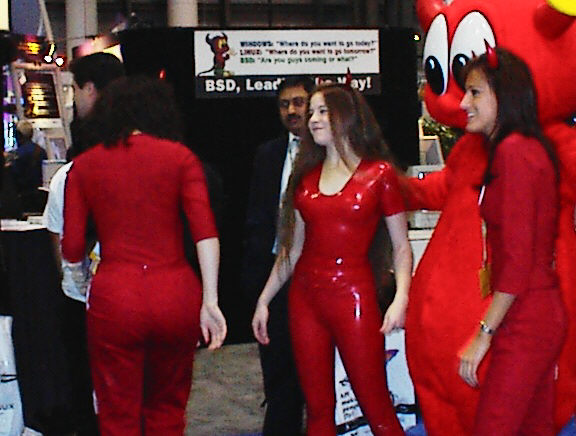
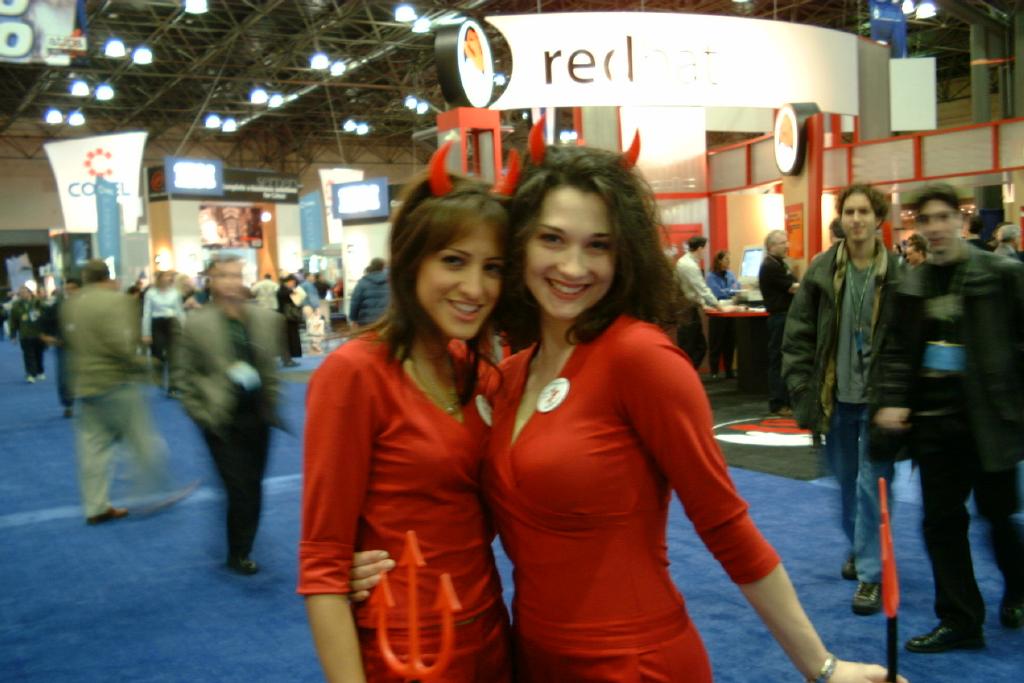
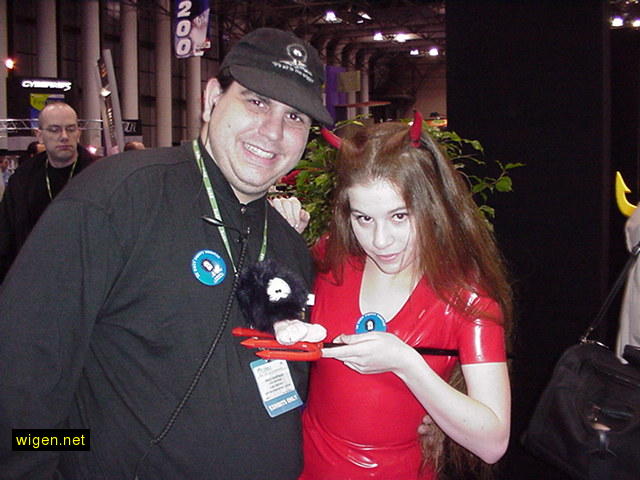
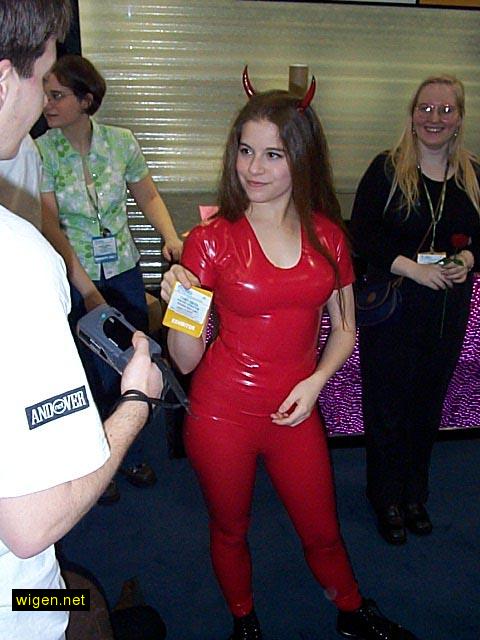
Is it any wonder people think Linux users are a bunch of flaming homosexuals when its fronted by obviously gay losers like these?! BSD has a mascot who leaves us in no doubt that this is the OS for real men! If Linux had more hot chicks and gorgeous babes then maybe it would be able to compete with BSD! Hell this girl should be a model!
Linux is a joke as long as it continues to lack sexy girls like her! I mean just look at this girl! Doesn't she excite you? I know this little hottie puts me in need of a cold shower! This guy looks like he is about to cream his pants standing next to such a fox. As you can see, no man can resist this sexy little minx. Don't you wish the guy in this pic was you? Are you telling me you wouldn't like to get your hands on this ass?! Wouldn't this just make your Christmas?! Yes doctor, this uber babe definitely gets my pulse racing! Oh how I envy the lucky girl in this shot! Linux has nothing that can possibly compete. Come on, you must admit she is better than an overweight penguin or a gay looking goat! Wouldn't this be more liklely to influence your choice of OS?
With sexy chicks like the lovely Ceren you could have people queuing up to buy open source products. Could you really refuse to buy a copy of BSD if she told you to? Personally I know I would give my right arm to get this close to such a divine beauty!
Don't be a fag! Join the campaign for more cute open source babes today!
$Id: ceren.html,v 7.0 2004/01/01 11:32:04 ceren_rocks Exp $ -
Re:Hey lets support the thieves!
What exactly did the "pirates" take from anyone such that he does not have it now? Nothing, thus its not theft.
No, they did not "take" the money they would have paid, because saying that you're assuming that they would have paid anything in the first place, and that taking away something someone never had is theft. Its not.
Demonizing those who do not believe strong limitations on the freedom of everyone are necessary to create an incentive is worse than the act of "piracy" (Ok, lets try to say copyright infringement from now on, thank you).
Everyone infringes on software copyrights, except very few people (probably you, too), and once we have effective DRM, we shall see that. We will probably also see software copyright being undone or severely crippled. I don't think people would go along with this.
Software copyrights must be abolished. Vote with your software, use Free Software or at least don't pay for software. -
Re:What about Gnumeric?
I'm all for GNU stuff, but with an ugly UI like Gnumeric Gnumeric Screenshots
it can never catch on with all the suits, moms and grandmothers. -
Re:uhmOh my God, where do I start ?
I really don't get it. Why is it better to write an application that works on linux than to try and make a platform that can utilize both linux and windoze apps?
Yes, you don't get it. Because the windows API is in purpose a moving target that you have to reverse engineer. Project WINE is doing a huge effort and they could never hit 100% the moving target.As long as the aforementioned platform is free as in Willy, who cares anymore? The whole point of the excercize was to be freed from the constraints of the evil kingdom in Redmond, right?
Wrong, this has never been the whole point. It is one, rather lateral point. Most people in this story follow either the Open Source philosopy, or the Free(dom) Software Philosophy. You have some reading to do, but in short: access to the source code and freedom to use the code.So if you can run windows apps without windows, you're free, right?
Wrong, you are still paying MS taxes for generic software that in many cases actually exists natively in the Free Software world. The reason ? MS even even keeps the filesystems specs and application data formats closed. This is why:Why is Samba good for providing linux-windoze compatibility and suchlike, but this Canadian linux bad for providing (allegedly, I haven't tried it so I don't know for sure) the capability to run windoze apps on linux bad?
Because Samba let's you get network interoperability in case you need to deal with MS machines in your network, and this project (which is not bad but is meant to fail) promises 100% binary compatibility, which is impossible and not necesessarily the best thing. This also why OpenOffice is great. It interoperates with MS office even though the latter doesn't want to.Sounds to me like a bad case of "blame Canada"
Wha ??? Candians are as involved in Free Software as anybody else -
Re:whats going to happen to their website?
/starts downloading the entire TechTV website..... wget is your best friend.
-
Opensource, compile to native Java
a closed-source language which does not really compile into direct-to-hardware code.
gcj
Compile Jave to J-code, Java to native, and J-code to native. Is GPL'd. With libgcj to provide the API's.
Besides, I think your comment about closed-source language are off base. A language must be well specified to be useful, and thus an opensource compiler/interpeter can be written, always. The only issue with this would be patents, and I would agree that using a patented language would be a problem. -
Re:Trademarks must be respected...
The GNU "system"?
Yes. In the 1980s, RMS concieved the idea of a complete Unix-like system that would be Free Software:
By the 1980s, almost all software was proprietary, which means that it had owners who forbid and prevent cooperation by users. This made the GNU Project necessary.
Every computer user needs an operating system; if there is no free operating system, then you can't even get started using a computer without resorting to proprietary software. So the first item on the free software agenda is a free operating system.
An operating system is not just a kernel; it also includes compilers, editors, text formatters, mail software, and many other things. Thus, writing a whole operating system is a very large job. It took many years.
We decided to make the operating system compatible with Unix because the overall design was already proven and portable, and because compatibility makes it easy for Unix users to switch from Unix to GNU.
The initial goal of a free Unix-like operating system has been achieved. By the 1990s, we had either found or written all the major components except one--the kernel. Then Linux, a free kernel, was developed by Linus Torvalds. Combining Linux with the almost-complete GNU system resulted in a complete operating system: a Linux-based GNU system. Estimates are that hundreds of thousands of people now use Linux-based GNU systems, including Slackware, Debian, Red Hat, and others.
The GNU system began long before the Linux kernel, and exists independently of it. If for some reason the Linux kernel disappeared tomorrow, it would still be possible to run the GNU system on top of other kernels. (Even, with Cygwin, on top of MS Windows kernels.)
Boy was I wrong, here I was thinking that the GNU utilities were nothing more than a bunch of seperate utilites.
Then you need to learn more about the history and scope of the GNU project.
-
Re:Trademarks must be respected...
The GNU "system"?
Yes. In the 1980s, RMS concieved the idea of a complete Unix-like system that would be Free Software:
By the 1980s, almost all software was proprietary, which means that it had owners who forbid and prevent cooperation by users. This made the GNU Project necessary.
Every computer user needs an operating system; if there is no free operating system, then you can't even get started using a computer without resorting to proprietary software. So the first item on the free software agenda is a free operating system.
An operating system is not just a kernel; it also includes compilers, editors, text formatters, mail software, and many other things. Thus, writing a whole operating system is a very large job. It took many years.
We decided to make the operating system compatible with Unix because the overall design was already proven and portable, and because compatibility makes it easy for Unix users to switch from Unix to GNU.
The initial goal of a free Unix-like operating system has been achieved. By the 1990s, we had either found or written all the major components except one--the kernel. Then Linux, a free kernel, was developed by Linus Torvalds. Combining Linux with the almost-complete GNU system resulted in a complete operating system: a Linux-based GNU system. Estimates are that hundreds of thousands of people now use Linux-based GNU systems, including Slackware, Debian, Red Hat, and others.
The GNU system began long before the Linux kernel, and exists independently of it. If for some reason the Linux kernel disappeared tomorrow, it would still be possible to run the GNU system on top of other kernels. (Even, with Cygwin, on top of MS Windows kernels.)
Boy was I wrong, here I was thinking that the GNU utilities were nothing more than a bunch of seperate utilites.
Then you need to learn more about the history and scope of the GNU project.
-
Consider changing "open source" to "free software"
The open source movement did not exist at the time the GPL, copyleft, the free software movement, and the GNU project started. It seems odd, therefore, to give credit to a movement that had nothing to do with creating these documents and forming these ideas. As it stands, you appear to be using the terms "open source" and "free software" interchangably, as though they refer to the same thing. However the open source movement stands for a different philosophy than the free software movement.
-
Respect for the community is good to share.
How ironic that your demand to give GNU no credit at all is worded so strongly. The FSF asks you to give GNU a share of the credit, it is not a demand. Lots of people (including Debian, one of the most respected GNU/Linux distributions) choose to do so out of respect for creating the free software community and the GNU General Public License. This is not a trademark infringement.
GNU is an operating system, it was designed to be so right from the start, just as the Linux kernal was designed to be a kernal from the start. Now you can run GNU without the Linux kernal; there are variants of GNU running with a NetBSD kernal and the official GNU running with the HURD kernal replacement. Neither of these are currently as popular as the variant of GNU with the Linux kernal, but they exist and are being developed. Calling things what they are is more technically accurate and it's reasonable to call works by the names their creators gave them. Giving credit where credit is due is a good thing to do.
-
Conclusion bugs me
Personally, I wouldn't have put the people calling it into question and then the fact that it is unproven legally at the end. It might be best for the flow, but to conclude "All of this might be meaningless, as it hasn't been proven to work!" is slightly strange to me.
I didn't learn anything new from reading this, but there are those that might, as was stated by the submitter. In my opinion, telling the uninitiated simply that the GPL grants the right to use the code however you like, but if you decide to distribute it you have to agree to the contract stating that you'll give the source as well. If they have other questions, send them to the GNU.org philosophy page -
Rebranding wrong?
One guy was rebranding everything, QCad was LuxuriosityCAD, and then there was Luxuriosity Office.
I thought rebranding was OK, as long as the copyright notices shipped with the product adhere to the original work's license. Netscape is a rebranded Mozilla. Linspire is a rebranded Debian GNU/Linux. Mandrake began as a rebranded Red Hat Linux. Can you give more detail on what problem you have with rebranding a customized OpenOffice.org suite as Luxuriosity Office? Or do you want to reintroduce the horrid advertising clause that applied to older BSD operating systems?
-
MoreThis is a great idea, but there's not a great deal on there. I've been making up CDs full of free and open source Windows software for a couple of years now, which (along with Knoppix and Toms) prove to be extremely useful. Here's just some of what's on there (note that some of the links don't actually point to the Windows version of that software; you might need to dig around a bit):
- Abiword - Word processor, supports
- Open Office - Whole Office suite, including a database frontend and BASIC macro language.
- Perl - Scripting language
- Python - Scripting language
- Cygwin - UNIX emulator. Can create Windows programs, reliant on a cygwin1.dll.
- MinGW - Port of some of the UNIX utilities (BASH, gcc, vi...) to Windows.
- djgpp - UNIX emulator for DOS.
- Mozilla, Firefox, Thunderbird - Web browser, e-mail client, IRC client, lots more.
- Filezilla - FTP client.
- xchat - IRC client.
- putty, pscp, psftp and others - Telnet/SSH clients.
- Gaim - Client for IRC/Yahoo/MSN/ICQ/AIM and more.
- gzip - Compression (usually better than
- tar - Extracts/Makes tar archives.
- bzip2 - Totally ace compression (usually better than gzip).
- Info-ZIP - Support for
- 7-zip - Support for multiple compression formats.
- frhed - Hex editor
- Ext2fs - Several programs for doing Ext2 under Windows.
- Antiword - Converts documents out of the proprietary
- MySQL - RDBMS.
- Apache - Web/Proxy server
- sendmail - Mail server
- squid - Proxy server
- freeamp - Audio player
- winlame - MP3 encoder
- cd-ex - MP3/OGG encoder?
- gimp - Very detailed graphics program.
- imagemagick - Graphic manipulation. Provides the 'convert' utility under UNIX.
- freeciv - Civilisation clone.
- gnuplot - Plotting package.
- TightVNC - A fork of VNC, with enhancements.
- RealVNC - The original VNC.
- rdesktop - Access Windows Terminal Services and Remote Desktops.
- Nmap - Well known port scanner.
- John the Ripper - Password cracker. Does NT and MD5.
- Abiword - Word processor, supports
-
MoreThis is a great idea, but there's not a great deal on there. I've been making up CDs full of free and open source Windows software for a couple of years now, which (along with Knoppix and Toms) prove to be extremely useful. Here's just some of what's on there (note that some of the links don't actually point to the Windows version of that software; you might need to dig around a bit):
- Abiword - Word processor, supports
- Open Office - Whole Office suite, including a database frontend and BASIC macro language.
- Perl - Scripting language
- Python - Scripting language
- Cygwin - UNIX emulator. Can create Windows programs, reliant on a cygwin1.dll.
- MinGW - Port of some of the UNIX utilities (BASH, gcc, vi...) to Windows.
- djgpp - UNIX emulator for DOS.
- Mozilla, Firefox, Thunderbird - Web browser, e-mail client, IRC client, lots more.
- Filezilla - FTP client.
- xchat - IRC client.
- putty, pscp, psftp and others - Telnet/SSH clients.
- Gaim - Client for IRC/Yahoo/MSN/ICQ/AIM and more.
- gzip - Compression (usually better than
- tar - Extracts/Makes tar archives.
- bzip2 - Totally ace compression (usually better than gzip).
- Info-ZIP - Support for
- 7-zip - Support for multiple compression formats.
- frhed - Hex editor
- Ext2fs - Several programs for doing Ext2 under Windows.
- Antiword - Converts documents out of the proprietary
- MySQL - RDBMS.
- Apache - Web/Proxy server
- sendmail - Mail server
- squid - Proxy server
- freeamp - Audio player
- winlame - MP3 encoder
- cd-ex - MP3/OGG encoder?
- gimp - Very detailed graphics program.
- imagemagick - Graphic manipulation. Provides the 'convert' utility under UNIX.
- freeciv - Civilisation clone.
- gnuplot - Plotting package.
- TightVNC - A fork of VNC, with enhancements.
- RealVNC - The original VNC.
- rdesktop - Access Windows Terminal Services and Remote Desktops.
- Nmap - Well known port scanner.
- John the Ripper - Password cracker. Does NT and MD5.
- Abiword - Word processor, supports
-
Re:convince...?
With 3200+ comments under your belt, you should be able to write your own rebuttal with half your brain tied behind your back, even if you don't believe it.
Nevertheless, because I'm avoiding studying for finals, I'll dish out the standard reply:
There are two reasons to choose a piece of open source software. The first is the pragmatic, is-this-the-best-fit reason. You choose an OSS app because it does what you want better than any of the alternatives.
The often low-to-zero price is sometimes a big advantage from this perspective, but it is just one part of the overall fit. The availability of source code is another. Availability from multiple vendors and adherence to standards can also be attractive from this viewpoint.
The second reason, of course, is all about freedom. This is the one that causes many people to embrace open source applications even when the proprietary world is kicking its butt as far as features and ease of use go. The freedom to explore, to experiment, to use in virtually any way you see fit. The freedom to modify and redistribute. Also, because anyone can take the product and fork it if they're unhappy, OSS packages generally have to avoid doing nasty things to annoy the user base. Spyware, malware, ad-ware, all becomes virtually impossible. Why? Because people don't want it, and because it's *free* nobody can force it on them.
Look at the web browser situation. When IE doesn't have stiff competition, everyone writes HTML with an eye towards IE, not towards accepted standards. This gives Microsoft a great deal of control over how most of us experience the Internet.
This is just one of many examples of how ordinary software users are affected by their choice of tools, and why software can be considered a worthwhile cause for non-developers. -
Why ReactOS? == Why GNU?
Your argument -- almost word for word -- was probably used over a two decades ago when RMS started the GNU project to build a Free UNIX. The exact same reasons why the GNU project was started apply to why the ReactOS project should exist.
Today we have Linux. Who knows what we'll have ten years from now if ReactOS can keep up the good work? -
BSD patents hot geek babes!
Is it any wonder people think Linux users are a bunch of flaming homosexuals when its fronted by obviously gay losers like these?! BSD has a mascot who leaves us in no doubt that this is the OS for real men! If Linux had more hot chicks and gorgeous babes then maybe it would be able to compete with BSD! Hell this girl should be a model!
Linux is a joke as long as it continues to lack sexy girls like her! I mean just look at this girl! Doesn't she excite you? I know this little hottie puts me in need of a cold shower! This guy looks like he is about to cream his pants standing next to such a fox. As you can see, no man can resist this sexy little minx. Don't you wish the guy in this pic was you? Are you telling me you wouldn't like to get your hands on this ass?! Wouldn't this just make your Christmas?! Yes doctor, this uber babe definitely gets my pulse racing! Oh how I envy the lucky girl in this shot! Linux has nothing that can possibly compete. Come on, you must admit she is better than an overweight penguin or a gay looking goat! Wouldn't this be more liklely to influence your choice of OS?
With sexy chicks like the lovely Ceren you could have people queuing up to buy open source products. Could you really refuse to buy a copy of BSD if she told you to? Personally I know I would give my right arm to get this close to such a divine beauty!
Don't be a fag! Join the campaign for more cute open source babes today!
$Id: ceren.html,v 7.0 2004/01/01 11:32:04 ceren_rocks Exp $ -
Re:the end of computing as we know it is coming...
-
I have found...it is easiest if you just leave the bugs out in the first place.
Failing that, as most of us do, the next best practice is to program defensively: anticipate where problems might occur in your code and include assertion checking and logging (yes, print statements) to illuminate those problem spots. Generally, I include debugging flags on the command line that allow me to control the level of assertion checking and logging (0=no logging, except for errors (the default), 1=log all branches, 2=log branches and variable values, 4=log everything).
This defensive debugging strategy works quite well. First, it forces the programmer to think harder about both the algorithms they are using, and their implementation. I catch about a quarter of my programming errors just in the process of adding assertions. Second, the program will tend to abort as soon as a problem is detected, rather than running on for a couple billion instructions, dumping crap into the output file or database and then either aborting mysteriously on some marginally related condition, or, worse, completing without any reported errors! Finally, when errors are detected, the debugging can usually be done simply by inspecting the soure and following actual execution from the log file.
All debugging comes down to one, fairly simple, idea: show me the program status at crucial points in the flow of control (generally at every branch and return). A few other tools are of some use under special circumstances: Purify, Electric Fence or Valgrind for detecting problems with dynamically allocated memory, or something like ddd for examining linked structures (though I prefer to just write a validation function for my data structures, see my AVL-tree code for an example). Defensive programming works because it answers the important question that usually forces you into using the debugger: what the hell just happened?!? Defensive programming gives you a way to examine program states without invoking an outside tool.
The only class of bugs that doesn't succumb well to this approach is race conditions. Unfortunately, anything that changes the timing of the program (such as stepping instruction-by-instruction in a debugger, or writting log messages out to a disk file) will change the behavior of the race condition. I'd be really interested in tools or techniques that could address this class of bugs.
-
Re:Another cool technique
DDD also allows "undo"ing steps you've made and also shows the data structures in nice structures, with arrows to successors and such...
It's a very nice tool to use when you are trying to debug your AVL tree for a homework assignment for a Data Structures course -
Re:Why open Java?
-
Re:Let's see here.
As always, the problem is in the meaning of the word "free". The FSF, and ESR in the text you quoted, uses the word in the context of "freedom". You specifically use the phrase "no cost". That's not the same. The only thing the GNU GPL says about cost is that the license is free. You can charge for the media and even the software, but not the license. The FSF has lots of documents about their philosophy. Sorry I can't find you the relevent doc, searching for "free" on that page is useless. Hope that helped.
-
Re:Let me guess...
-
Re:"Even more open-source than it is already"...
Java is much more then just a compiler. It is a framework. Why do you think that glibc (GNU C Library) is released under the LGPL and not GPL?
-
Re:Why open Java?The reasons are well documented and well understood.
-
Re:How can a language be open-source?
Don't forget that there's a whole run-time library associated with Java. You have the language specifications, of course, but there's also all the classes that are coming with the JRE already. These are available in source code within the Java SDK, but under a more restrictive license. And then there's also, of course, the compiler itself, the virtual machine, and tools like javadoc. OK, there's kaffe, for instance, but they're not completely there yet (read their What is Kaffe not? section on the title page). There's also GNU classpath to replace Java's core class libraries, but they're not quite there yet either.
-
Re:Not such a big deal?
Maybe there needs to be a distinction between and Open Source License and an Open Source Development Process.
Open Source software is based on a development process. You are asking for a distinction between Free Software and Open Source software witch does exist, but is often confused.
-
Re:Please Mister the Boss...
I don't like programming in Java, but having a free Java (as in speech) would be really great !
There is a very good free java implementaiton. GCJ (GNU Compiler for Java). The library lacks a few things (e.g. AWT/Swing), though, but other than that it is a great implementation. And it is not based on a JVM, but is a traditional ahead of time compiler, so the related disadvantages (as well as the advantages, if any) dissapear. It uses the same (or at least a very similar) object model as C++, so interoperation with it is much easier.
Think about how it can be easy to include Java in a Linux Distro.
Sun's Java JVM can be included in linux distributions without problems. Knoppix, SuSE and SoL include it. Don't know about others. The reason some distributions don't include Sun's Java implementation is because they don't want to include it.
If Java becomes free, I can imagine a lot of thing. Why not bindings with GTK for example They already exist. Check Java-GNOME. It includes GTK and GNOME bindings for Java.
There are also bindings for Qt and KDE.
You can also use GTK via the SWT toolkit .
Java is NOT a proprietary language (despite some ignorant people who say so), you can find many open source libraries for it, and there is at least a high quality free (as in speech) implementation of it. -
"Even more open-source than it is already"...
Java is not open-source at all.
(Pre-emptive response to the argumentative sorts who point out the various GNU Java projects: These are not "Java proper". Java is a Sun product, and it is not open-sourced.) -
Re:Just what we need.
Why does GNU get first billing in GNU/Linux anyway? The GNU Project does not contribute to the Linux kernel, nor do they distribute a Linux product (a la RedHat Linux).
Because the vast amount of software on a GNU/Linux system is GNU software, the linux kernel source-code is a relatively small part (apparently only 3% according to the FSF) compared to the GNU userland tools (28%) such as gcc, gdb, glibc, autotools, bash, emacs, etc. More info here... -
Re:One thing about photoshop!
Indeed. Photoshop has gotten a lot of attention, and it's payed off.
And let me just say that, as a graphics editor, I find myself using GIMP more and more. I still, easily, use PS quite a bit more than the GIMP. However, GIMP continues to pile on desirable features, and at the very least, I am compelled to save all my final works using GIMP's superior compression for JPEG, and PNG (and probably more).
Even though I love my photoshop, I hope to one day see it replaced with GIMP or another Free Software (RMS' definition) solution.
-
They should install BSD!
Is it any wonder people think Linux users are a bunch of flaming homosexuals when its fronted by obviously gay losers like these?! BSD has a mascot who leaves us in no doubt that this is the OS for real men! If Linux had more hot chicks and gorgeous babes then maybe it would be able to compete with BSD! Hell this girl should be a model!
Linux is a joke as long as it continues to lack sexy girls like her! I mean just look at this girl! Doesn't she excite you? I know this little hottie puts me in need of a cold shower! This guy looks like he is about to cream his pants standing next to such a fox. As you can see, no man can resist this sexy little minx. I mean are you telling me you wouldn't like to get your hands on this ass?! Wouldn't this just make your Christmas?! Yes doctor, this uber babe definitely gets my pulse racing! Oh how I envy the lucky girl in this shot! Linux has nothing that can possibly compete. Come on, you must admit she is better than an overweight penguin or a gay looking goat! Wouldn't this be more liklely to influence your choice of OS?
With sexy chicks like the lovely Ceren you could have people queuing up to buy open source products. Could you really refuse to buy a copy of BSD if she told you to? Don't you wish you could get one of these? Personally I know I would give my right arm to get this close to such a divine beauty!
Don't be a fag! Join the campaign for more cute open source babes today! -
Re:How Ironic
Seriously not trolling.
Care to point out a tiny sample of "most" Open Source that follows this norm?
In the interest of being taken seriously I will point out a few that I know of that seem rather well thought out:
fltk
FOX
gcc
Oh yeah, here
and others
You were modded informative yet I see nothing informative in your post. Perhaps because I have contributed to some of these projects and I am jaded? Perhaps because more work gets done in these projects than the corporate arena of closed source that I used to work in and I might be close minded and missing your point? It's a possiblity but I will try to become openminded in case I missed the informative part of your post. -
Re:How Ironic
Seriously not trolling.
Care to point out a tiny sample of "most" Open Source that follows this norm?
In the interest of being taken seriously I will point out a few that I know of that seem rather well thought out:
fltk
FOX
gcc
Oh yeah, here
and others
You were modded informative yet I see nothing informative in your post. Perhaps because I have contributed to some of these projects and I am jaded? Perhaps because more work gets done in these projects than the corporate arena of closed source that I used to work in and I might be close minded and missing your point? It's a possiblity but I will try to become openminded in case I missed the informative part of your post. -
Re:Open Source?So are we going to see some concerted work on an open source alternative.
After all gnu.free's website says:
On the 25th October 2002 The FREE e-democracy Project (who supported and organised GNU.FREE's development) formally stopped production and support of the GNU.FREE Internet voting system.
Governments indicate they'd like a secure e-voting system. If the open source movement can't deliver one, we can bet a private closed source company will.
-
Microsoft made me do it...thank goodness.
This is pretty simple to sum up in my mind. Although my desktop is still running windows at work, at home I rarely see it.
But when asked the question why I have moved to Open Office from Microsoft Office, and why I have moved to Linux from Windows, what is the answer?
It's mostly about rights and freedom. I'm not yet willing to admit that I am a full out FSF supporter, though I have been a supporter of the Open Source movement. Microsoft's licensing tactics (and not just theirs but the general tactics of many other folks have led me as far away from proprietary "treat-the-custer-as-a-theif" software as I can possibly get.
Linux is great, and it has been an incredible learning experience (I've honestly never felt so dumb sitting in front of a command prompt as I did during my first Gentoo installation).
I was never a *NIX user. I never had any desire to run anything other than Windows because I was happy with the product.
But they forced me to look elsewhere, and when I did I learned what I was missing.
So IMO, what lies ahead for linux is more users...and I don't believe that is limited to the server. From the desktop side, the strides that have been made in KDE and GNOME in the last couple of revisions have made them dramatically nicer to work with. From the server side...not having to have a GUI running on a server is quite a bit more efficient.
Back in the day I remeber Microsoft recommending you change the screen saver to the black screen instead of one of those OpenGL screen savers on your Windows NT SQL server because the screen saver would bury your processor. I couldn't help but think why do I have this huge GUI running on what is supposed to resemble a somewhat powerful database server?!! -
Free Software
Firstly I feel I must correct the author on his error in referring to an operating system using the Linux kernel as Linux, instead of GNU/Linux. For the reasoning behing this see here.
Secondly I note that accompanying any book on programming there should be a book on Free Software to educate the programmers of the future as to the importance of Free Software and the evils of supporting proprietary software.
-
Free Software
Firstly I feel I must correct the author on his error in referring to an operating system using the Linux kernel as Linux, instead of GNU/Linux. For the reasoning behing this see here.
Secondly I note that accompanying any book on programming there should be a book on Free Software to educate the programmers of the future as to the importance of Free Software and the evils of supporting proprietary software.
-
Re:That's obvious
-
A few clarifications on terms and philosophy.
If we had gone open source (proprietary or software libre, either would have been better) we could hack rolled our own patch. But when you go closed source you are at the mercy of the vendor. And THAT is the advantage. Free as 'Liberty to make software soft'.
"Open source" and proprietary software are not the same thing. With Microsoft's software, you had proprietary software. The limitations of proprietary software is what gave your business such a hard time inspecting and improving the programs you were dependant on.
Ironically, your conclusion doesn't even support the philosophy of the open source movement. The open source movement does not talk about the freedoms of free software; the open source movement was designed to move away from talking about software freedom (which the OSI calls "ideological tub-thumping") to talking about practical goals which that movement's founders believed businesses (their chief audience) wanted to hear about more. So instead of talking about all computer users being free to share and modify software, the open source movement's philosophy talks about more people (not necessarily including the users) having source code access so the program can be enhanced faster and less expensively. I understand that you might think you're better off siding with the open source movement's philosophy because your experience came in a business setting, but your conclusion presents an argument supporting the free software movement's philosophy. The two philosophies are not the same. This doesn't make the two movements adversaries (in fact proponents of both philosophies get along well together), it makes them different.