Slashdot Mirror
Domain: levenez.com
Stories and comments across the archive that link to levenez.com.
Comments · 185
-
Re:Jonathan Schwartz's previous company was awsome
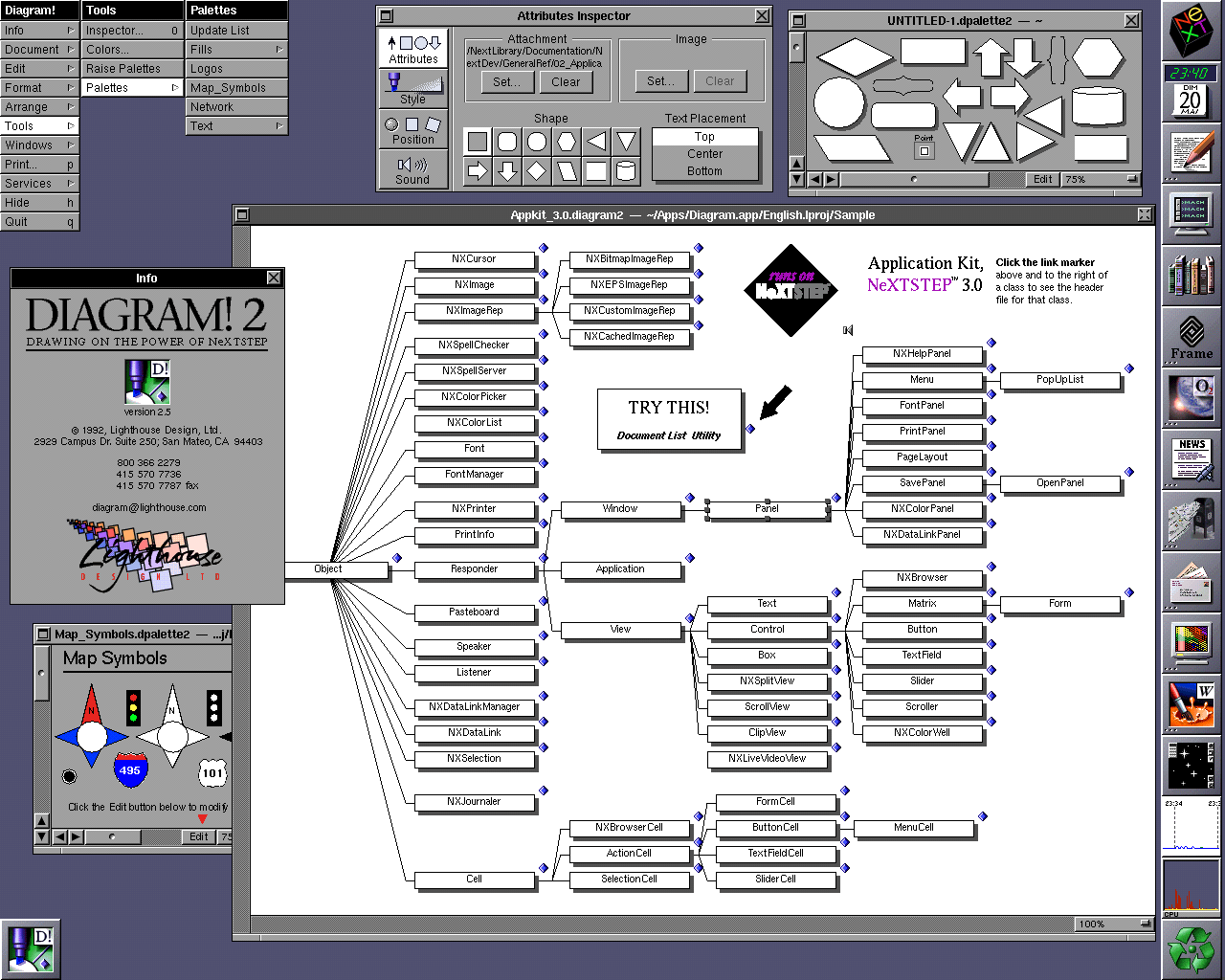
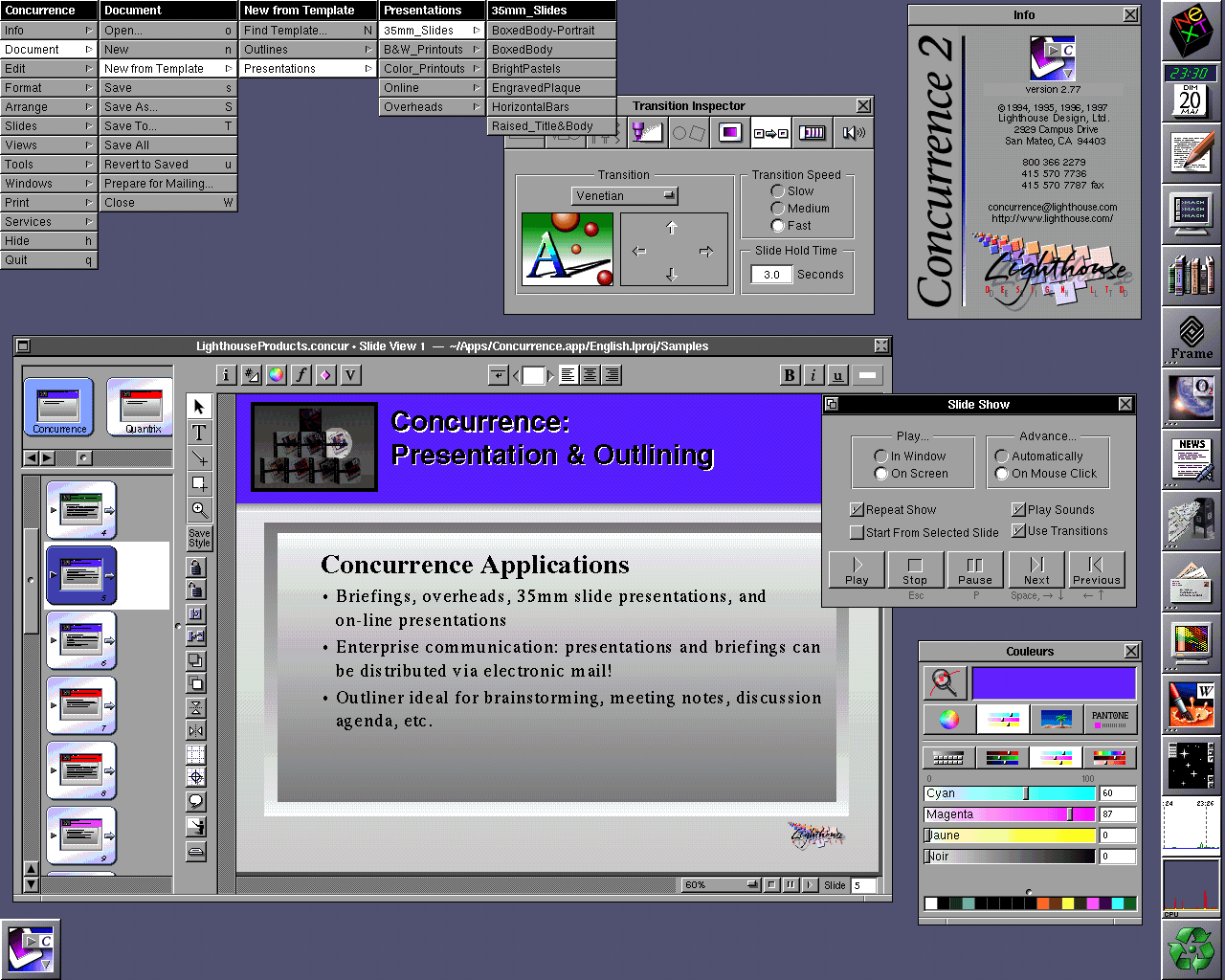
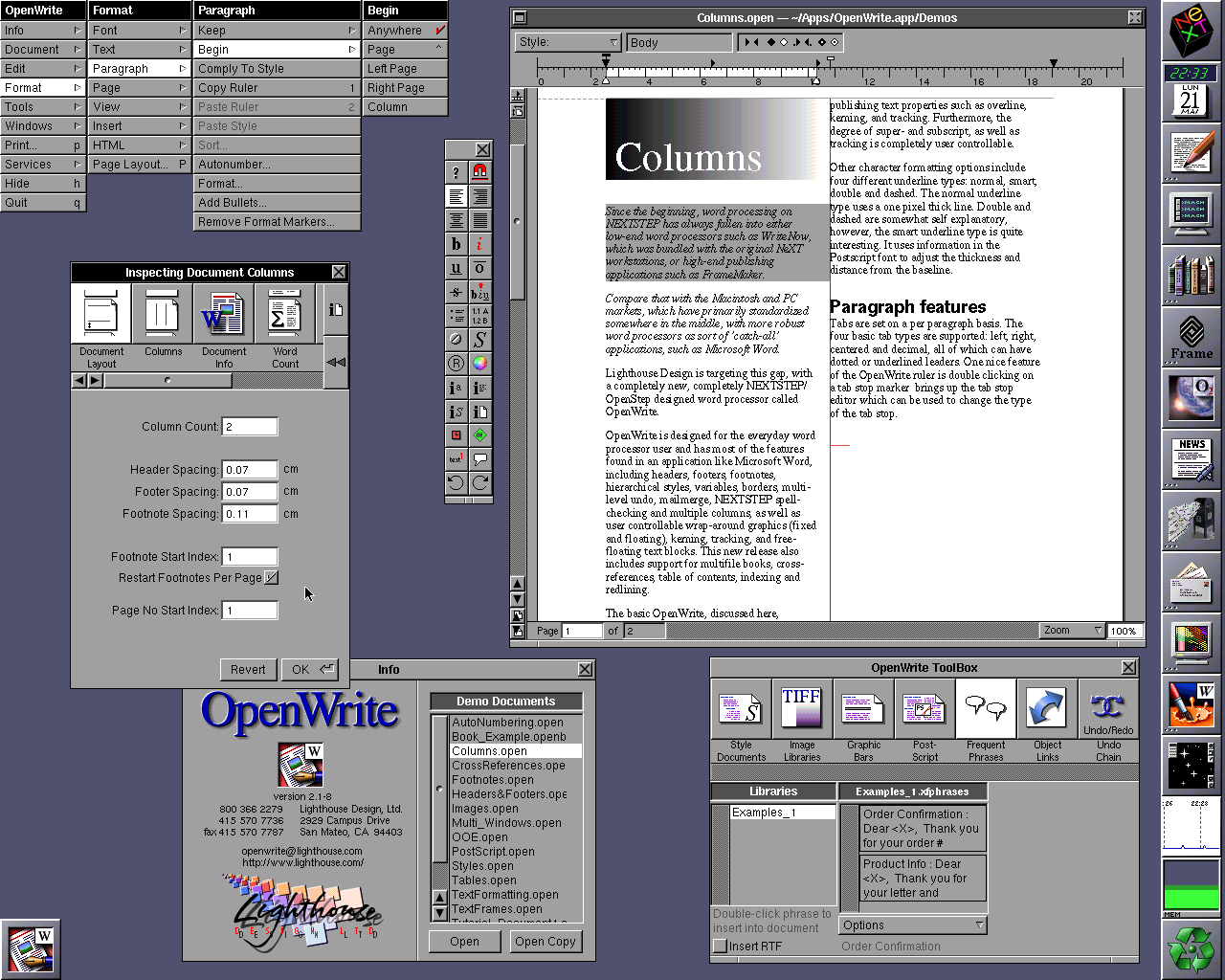
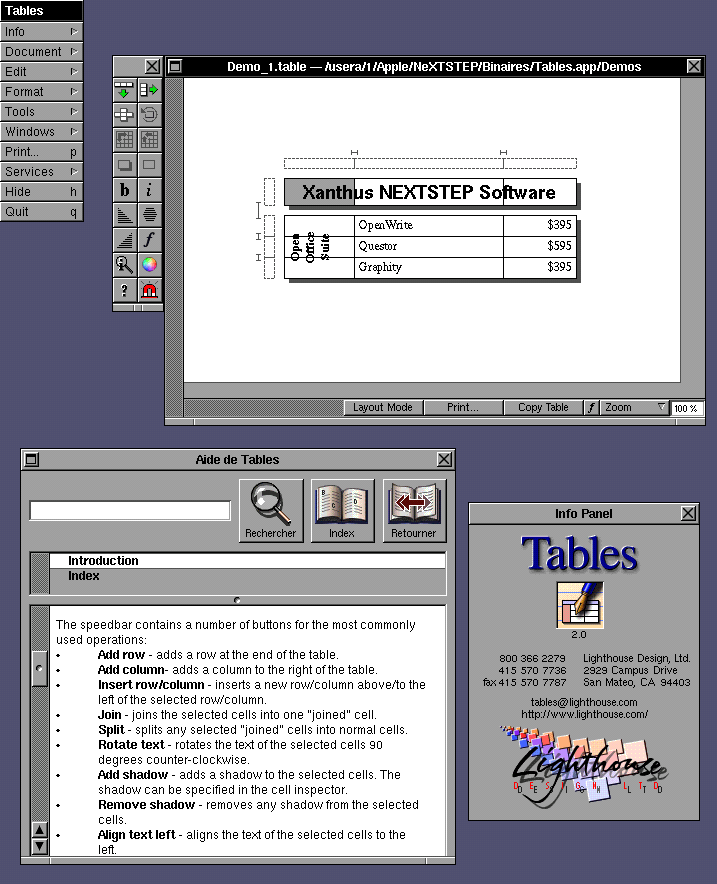
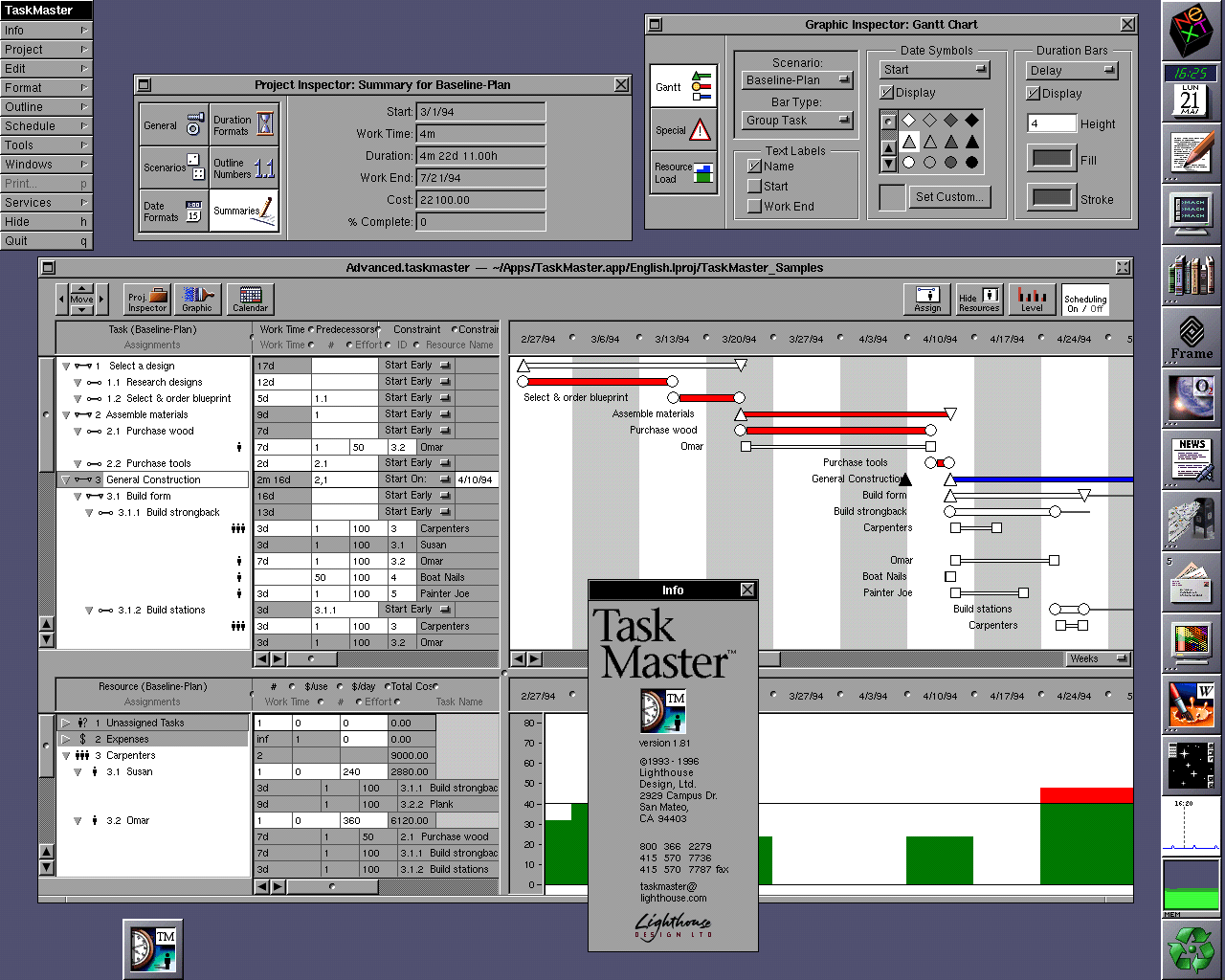
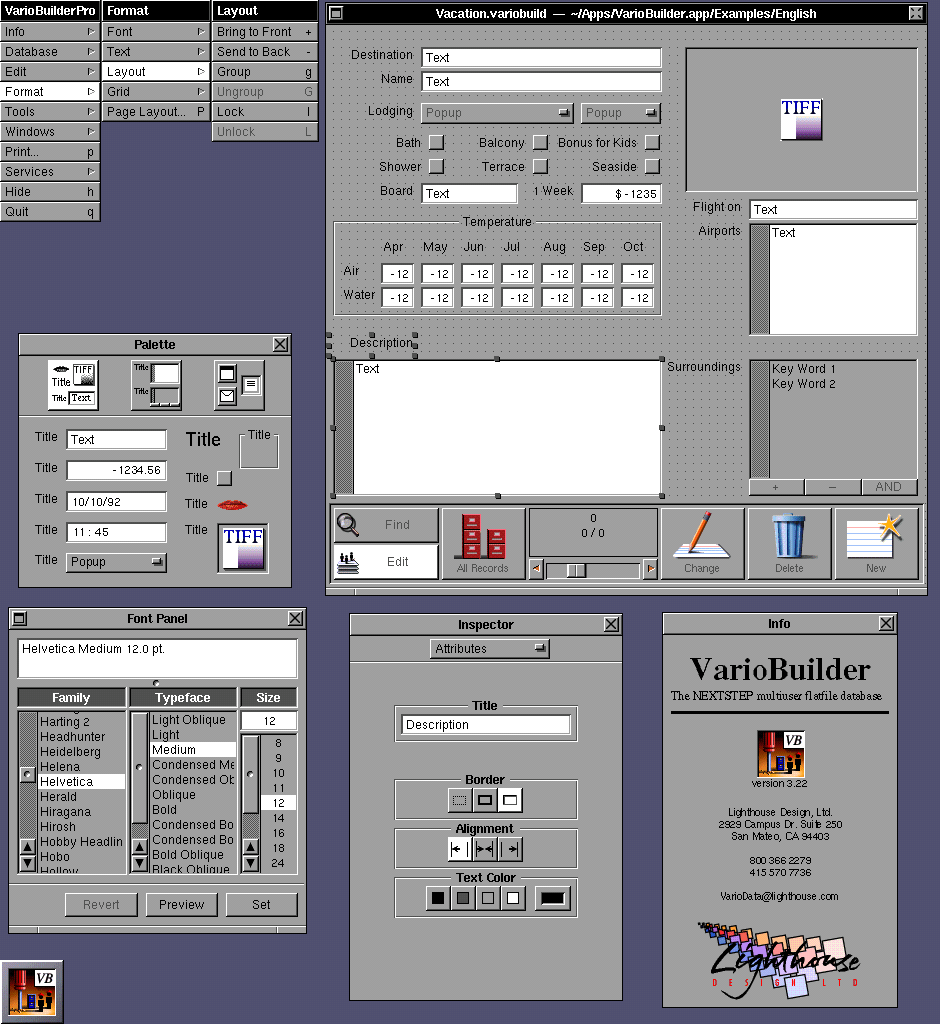
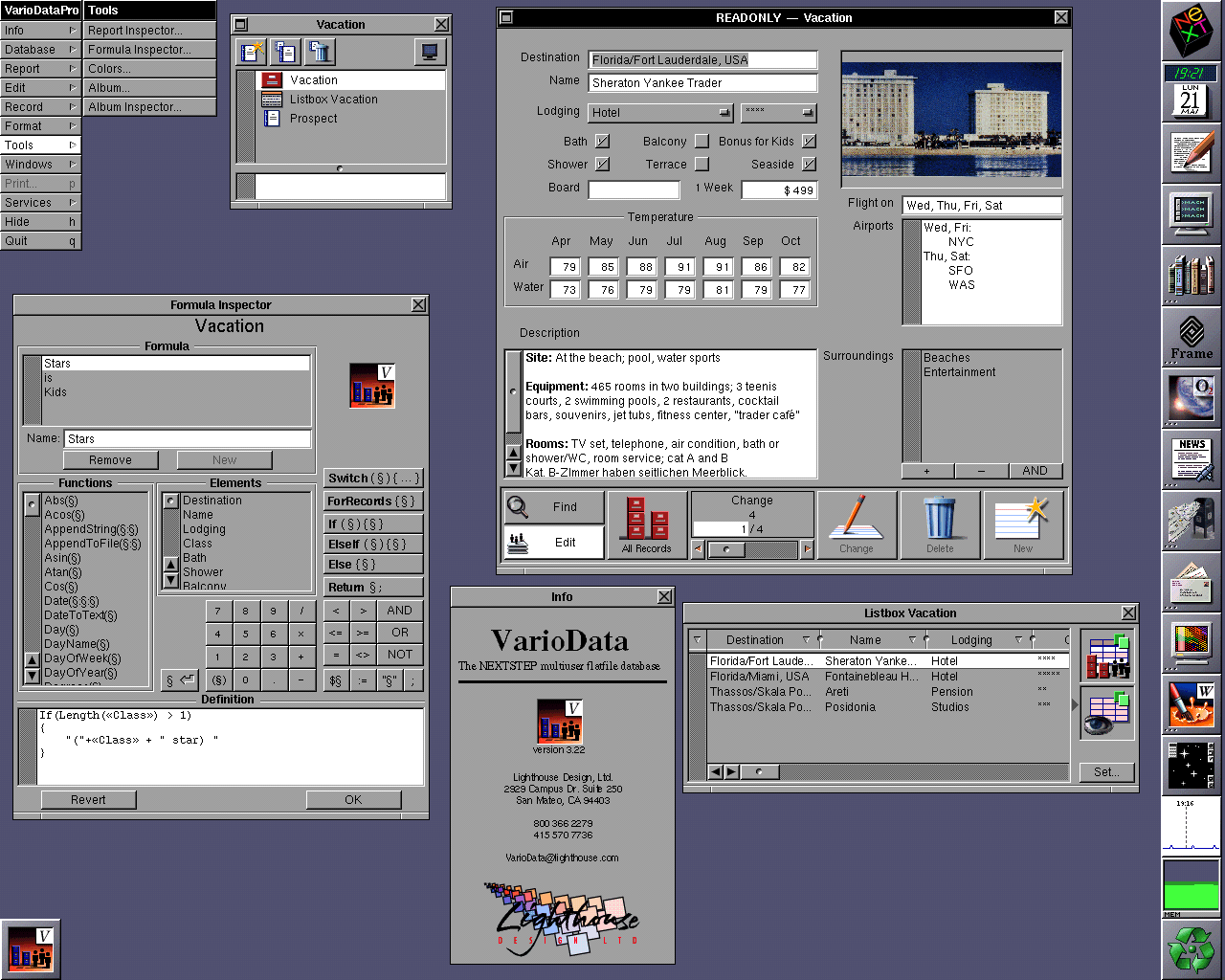
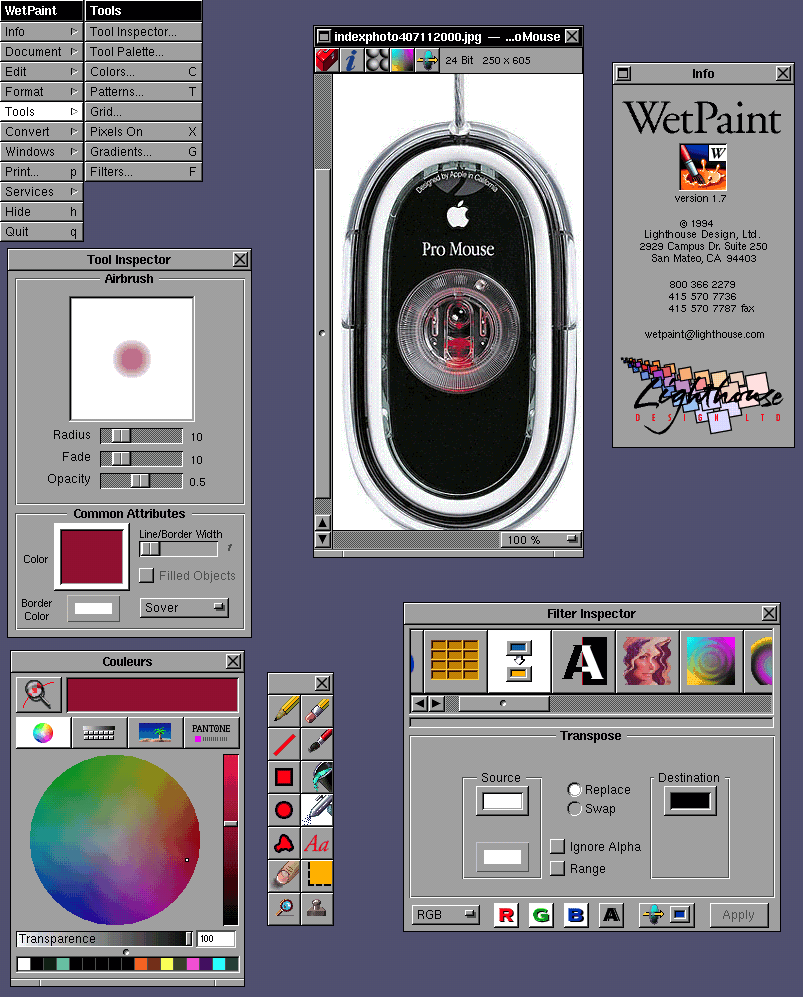
Screen shots of Lighthouse apps: [Be gentle with the poor host that provides these shots]
http://www.levenez.com/NeXTSTEP/Diagram.gif
http://www.levenez.com/NeXTSTEP/Concurrence.gif
http://www.levenez.com/NeXTSTEP/OpenWrite.gif
http://www.levenez.com/NeXTSTEP/Quantrix.gif
http://www.levenez.com/NeXTSTEP/Tables.gif
http://www.levenez.com/NeXTSTEP/TaskMaster.gif
http://www.levenez.com/NeXTSTEP/VarioBuilder.gif
http://www.levenez.com/NeXTSTEP/VarioData.gif
http://www.levenez.com/NeXTSTEP/WetPaint.gif
Doom just for fun:
http://www.linuks.mine.nu/openstep/doom.png -
Re:Jonathan Schwartz's previous company was awsome
Screen shots of Lighthouse apps: [Be gentle with the poor host that provides these shots]
http://www.levenez.com/NeXTSTEP/Diagram.gif
http://www.levenez.com/NeXTSTEP/Concurrence.gif
http://www.levenez.com/NeXTSTEP/OpenWrite.gif
http://www.levenez.com/NeXTSTEP/Quantrix.gif
http://www.levenez.com/NeXTSTEP/Tables.gif
http://www.levenez.com/NeXTSTEP/TaskMaster.gif
http://www.levenez.com/NeXTSTEP/VarioBuilder.gif
http://www.levenez.com/NeXTSTEP/VarioData.gif
http://www.levenez.com/NeXTSTEP/WetPaint.gif
Doom just for fun:
http://www.linuks.mine.nu/openstep/doom.png -
Re:Jonathan Schwartz's previous company was awsome
Screen shots of Lighthouse apps: [Be gentle with the poor host that provides these shots]
http://www.levenez.com/NeXTSTEP/Diagram.gif
http://www.levenez.com/NeXTSTEP/Concurrence.gif
http://www.levenez.com/NeXTSTEP/OpenWrite.gif
http://www.levenez.com/NeXTSTEP/Quantrix.gif
http://www.levenez.com/NeXTSTEP/Tables.gif
http://www.levenez.com/NeXTSTEP/TaskMaster.gif
http://www.levenez.com/NeXTSTEP/VarioBuilder.gif
http://www.levenez.com/NeXTSTEP/VarioData.gif
http://www.levenez.com/NeXTSTEP/WetPaint.gif
Doom just for fun:
http://www.linuks.mine.nu/openstep/doom.png -
Re:Jonathan Schwartz's previous company was awsome
Screen shots of Lighthouse apps: [Be gentle with the poor host that provides these shots]
http://www.levenez.com/NeXTSTEP/Diagram.gif
http://www.levenez.com/NeXTSTEP/Concurrence.gif
http://www.levenez.com/NeXTSTEP/OpenWrite.gif
http://www.levenez.com/NeXTSTEP/Quantrix.gif
http://www.levenez.com/NeXTSTEP/Tables.gif
http://www.levenez.com/NeXTSTEP/TaskMaster.gif
http://www.levenez.com/NeXTSTEP/VarioBuilder.gif
http://www.levenez.com/NeXTSTEP/VarioData.gif
http://www.levenez.com/NeXTSTEP/WetPaint.gif
Doom just for fun:
http://www.linuks.mine.nu/openstep/doom.png -
Re:Jonathan Schwartz's previous company was awsome
Screen shots of Lighthouse apps: [Be gentle with the poor host that provides these shots]
http://www.levenez.com/NeXTSTEP/Diagram.gif
http://www.levenez.com/NeXTSTEP/Concurrence.gif
http://www.levenez.com/NeXTSTEP/OpenWrite.gif
http://www.levenez.com/NeXTSTEP/Quantrix.gif
http://www.levenez.com/NeXTSTEP/Tables.gif
http://www.levenez.com/NeXTSTEP/TaskMaster.gif
http://www.levenez.com/NeXTSTEP/VarioBuilder.gif
http://www.levenez.com/NeXTSTEP/VarioData.gif
http://www.levenez.com/NeXTSTEP/WetPaint.gif
Doom just for fun:
http://www.linuks.mine.nu/openstep/doom.png -
Re:Jonathan Schwartz's previous company was awsome
Screen shots of Lighthouse apps: [Be gentle with the poor host that provides these shots]
http://www.levenez.com/NeXTSTEP/Diagram.gif
http://www.levenez.com/NeXTSTEP/Concurrence.gif
http://www.levenez.com/NeXTSTEP/OpenWrite.gif
http://www.levenez.com/NeXTSTEP/Quantrix.gif
http://www.levenez.com/NeXTSTEP/Tables.gif
http://www.levenez.com/NeXTSTEP/TaskMaster.gif
http://www.levenez.com/NeXTSTEP/VarioBuilder.gif
http://www.levenez.com/NeXTSTEP/VarioData.gif
http://www.levenez.com/NeXTSTEP/WetPaint.gif
Doom just for fun:
http://www.linuks.mine.nu/openstep/doom.png -
Re:Call me weird, but...
Review this graphical history of unix.
-
Re:Version inflationUm, just for clarification sake, FreeBSD has never skipped a major version number. Going from 5.5 to 6.0 doesn't count as version bloat. (see here if you have an hour to spare: http://www.levenez.com/unix/history.html). If anything, the BSD projects went backwards: from 4.4BSD to (Free|Net)BSD 1.0.
Also, how exactly did "NetBSD did it"? As is stated here: http://www.netbsd.org/Misc/history.html the version numbering is clean.
-
Re:Not a bad article.
Well, the guy also has a Computer Languages Timeline (with only the 50 most used/interresting languages or so)...
-
Re:Not a bad article.
For the history of Unix (timeline), read this one:
http://www.levenez.com/unix/ -
Re:Old code
Well, it is like darwinian evolution. The survival of the fittest and evolving. If a life form (read OS) finds a good design to deal with some problem or event, why would it change a good design for an unproven new design? If BSD or any other unix is working very good, there is no need to throw it to the can and write something new. It is better to keep the good things and change what is bad or what is needed to solve new problems.
If you want to see the complete (I hope so) heritage of the unix OS take a look here: http://www.levenez.com/unix/
If you look for the MacOSX, you will find it is there, and its roots are there since 1986.
Good OSes are like good wine, they get better with time. Bad ones don's live too long.
About the command line, I recommend you to read: Neal Stephenson's "In the beginning... was the command line" Here is a link to the book.
http://www.amazon.com/gp/product/0380815931/qid=11 38338378/sr=8-1/ref=pd_bbs_1/102-7077303-6245742?n =507846&s=books&v=glance -
Re:Linux the first? Don't make me laugh
Yeah, like Linux.
Linux had NAT a long time before iptables existed. Ever heard of ipchains, or even ipfwadm? ipchains was native to the 2.2 kernel, ipfwadm to late 1.3 - 2.0 series. iptables was only introduced for 2.4+.
A bit of digging gave me some rough dates for when NAT was introduced in ipfwadm vs. ipfilter (which I'm assuming would be the reference for FreeBSD). The first mention of IP masquerading in ipfwadm was on or around 1996-05-05, with version 2.0. The first reference I see to NAT in ipfilter is on 1996-02-04. HOWEVER, the ipfilter site says that ipfilter has been part of FreeBSD since version 2.2, which was (according to the Unix Timeline) released on 1997-03-16. (Yes, ipfilter was reported to have been tested as early as FreeBSD 2.0.0, but I'm not sure how stable that was, or exactly when NAT support was introduced.)
I can provide sources if requested. (Funny thing about posting as AC: you don't have to back up your idiotic claims.)
I won't speak for 64-bit x86 support (yet?), as I'm not so intimately familiar with the territory there. -
Re:Eolas, dlopen(), and Sun Microsystems.
Actually, the NetBSD manpage says "Some of the dl* functions first appeared in SunOS 4", which, according to the Unix history chart, came out in 1989. The manpage doesn't specify which functions appeared, but it seems reasonable to assume that dlopen was among them.
That'd be nine years before the patent was granted, then - so even if you assume it was filed a few years before being awarded, and even if you take into account the ~1 year that prior art actually has to come prior to the patent's filing to be considered "prior" (IANAL, but I think it's roughly that much), this should qualify as prior art, or at least a priori. -
Re:Depends on what you mean by Unix...
Macs running OS10 are arguably genetic Unix (only arguably, because while they build on a BSD userland, and BSD is genetic Unix, the XNU kernel is not a descendent of any Unix system.)
MacOS X is built on top of the Mach kernel, which was developed from the BSD Unix kernel. See the opening parargraphs on the Darwin page, and the Unix timeline for 1985. Mach was forked from 4.2BSD.
-
Re:When I choose ___ OS, it is because...
Solaris 2 (aka SunOS5) was derived from both BSD and SysVR4.
http://www.levenez.com/unix/history.html -
protected memory? 30 years too late
-
Re:Arbitrary marketing decision
This pretty cool chart would actually suggest that Microsoft is largely consolidating its OSs.
-
Re:Will it cost money?
Seeing people getting all excited at the thought of buying yet another yearly remake of the same OS is, well, a bit strange.
1) I wouldn't call it a remake... you get new features and capabilities (for both users and developers) more often then the 4-5+ year cycle seen on the Windows side and in a single package. I personally like this.
2) It isn't yearly by any means and in fact Apple has said now that Mac OS X has matured (said around the time of 10.3 release) that major revisions will come less frequently then before (hinted to 18+ month cycle), Tiger is an example of that.
10.0 (Cheetah) released March 24th 2001
10.1 (Puma) released September 29th 2001 (free upgrade)
10.2 (Jaguar) released August 13th 2002
10.3 (Panther) released October 24th 2003
10.4 (Tiger) not released as of March 30th 2005 (possibly in April but all but assured before end of July)
(see Unix History for dates, including the free minor releases to Mac OS X)
Unless the new version is absolutely needed to run some application, most of us couldn't care less about it.
Which is likely true for many Mac OS X users as well...
So, pray tell, just for my curiosity: _what_ applications didn't work with the old release?
What do you mean? If the application existed on Mac OS X before Tiger then it must have worked on some release of Mac OS X and if so the existence of Tiger won't make it magically break.
Is there some much needed functionality comes in this release and was sorely missing in Panther? I'm just, you know, curious.
Need depends on the user/developer so no one can answer that for you... review Apple's Mac OS X user page (click across the "tour" items) and developer page to understand some of what is new in Tiger. -
Re:It's as if icons STARTED 2-4 years ago...
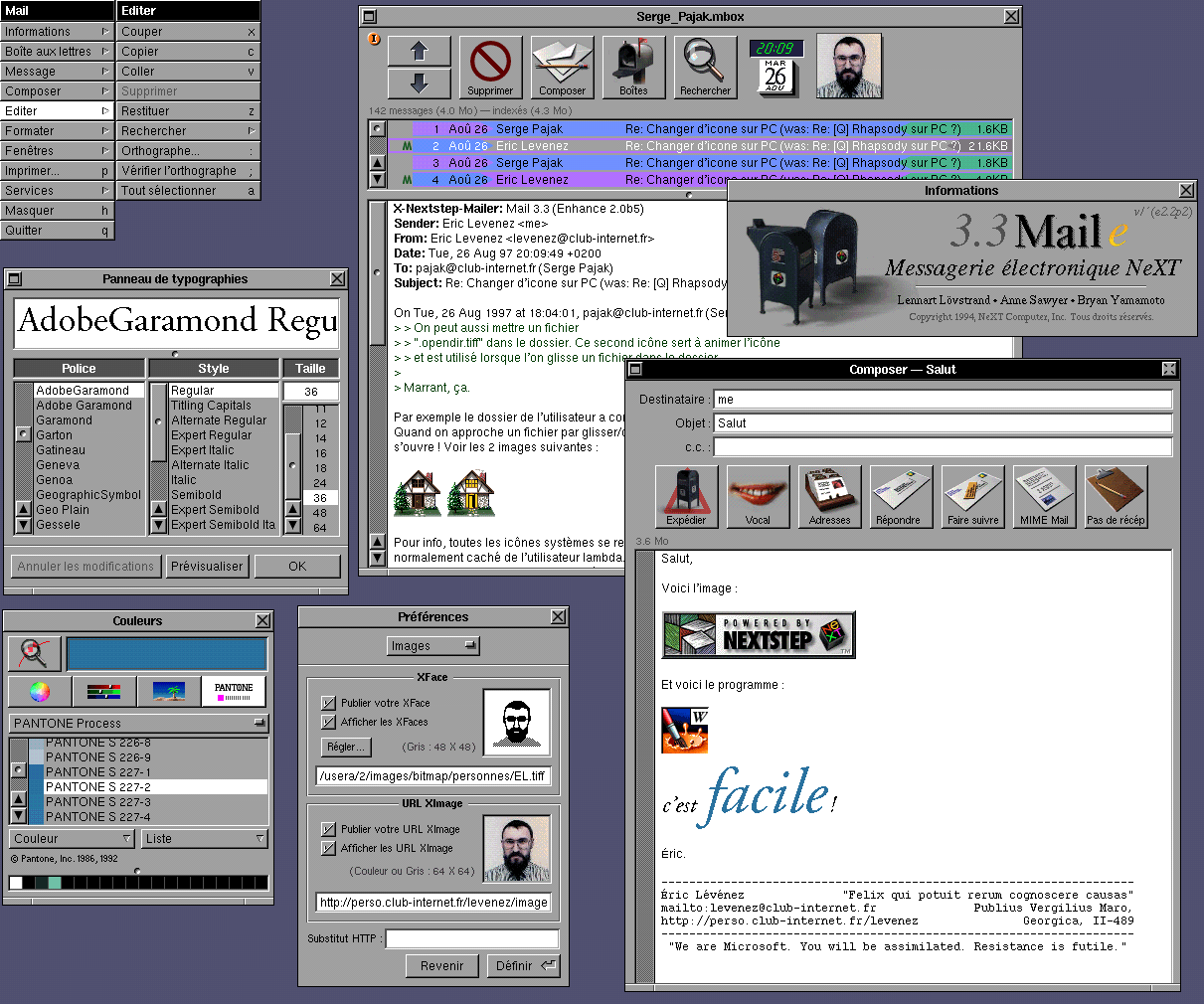
NeXTSTEP as also 32 bits icons. They were built with http://www.levenez.com/NeXTSTEP/IconBuilder.jpg. They can also be animated in the Dock http://www.levenez.com/NeXTSTEP/Fonctions_Noms.ht
m l#Icones. -
Re:It's as if icons STARTED 2-4 years ago...
NeXTSTEP as also 32 bits icons. They were built with http://www.levenez.com/NeXTSTEP/IconBuilder.jpg. They can also be animated in the Dock http://www.levenez.com/NeXTSTEP/Fonctions_Noms.ht
m l#Icones. -
Re:No decent langauges...Your examples don't make any sense because Ada and Eiffel have a very C-like syntax. As does Pascal, Visual Basic, and a ton of other languages
Just a little pedantry here, but Pascal is 1 year older than C, which would seem to mean that C has a Pascalish syntax, rather than the other way around. (Other than that, I'm inclined to agree with you)
--dw
-
Re:"What Is Message Queuing?"And here are the glibc bindings. For local machines, msgsnd(2) goes back to SVr1, which was released in 1981. That's right, message queueing is pushing 25 years old. You only need to actually queue header files containing socket, timing, and/or versioning information, not the 100MB data blocks. Slap on a slow but reliable network stack (TCP) for the control messages and an unreliable but high-bandwidth network stack (UDP) for the actual data, and you've got yourself a distributed system. Yes yes, it's not quite that simple, but I don't see what all the fuss is over.
[/reinvent-wheel]
-
It's the fonts, stupidOK, I'm going to go off on a limb here with a rant that's probably an unpopular opinion. But what do I hate about virtually all Linux distros (and the current Mac)? It's this fad of antialiased fonts.
Am I the only one left who prefers clean bit-mapped fonts?
Sure, the screenshots shown in the article look pretty snappy from a distance, because the fonts are large. But to get a lot of work done you want small, even tiny fonts. That's the whole point of high screen resolution, right?
Antialiased small fonts look awful. Compare the crisp, clean bitmaps of NeXTSTEP or even Windows to the small blurry fonts in GNUStep or the Mac. With aliasing letters bleed together , the shapes aren't quite right, etc. It gets so tiring to read after a while.
And if you turn off antialiasing they're barely legible (and sometimes even touch each other - I hate it when letters touch each other!) because no one takes the time to produce correct bitmaps for specific font sizes. (OK, to be honest I haven't seen the Mac with antialiasing turned off.) I don't even care about a zillion different sizes, just give me a couple of fixed sizes, small and smaller, that look right.
As much as I hate Windows, one thing it has going for it is that the fonts are very clean and legible with antialiasing turned off. I tried the latest Ubuntu for a while, playing with all the font settings available (even LCD subpixel) and in end couldn't stand it because of the fonts. Such a beautiful OS gone to waste because it's unreadable with antialiasing turned off, and I can't stand it turned on. Isn't readability like half the point of a computer in the first place? Or do all people care about anymore is just getting a pretty "printed page" effect from a blurry distance?
The irony is that font bitmaps are not even copyrightable! Heck, just steal them from NEXTStep! Or even Windows! (The bitmaps, that is.) Why doesn't anyone do this?
(End rant.)
-
Re:yeah... but it looks like its from the 80s
I agree, too. Judging by the screenshots, the Mac OS X port looks very attractive and, to my knowledge, follows the Apple Human Interface Guidelines completely. Heck, it looks just as good as the Mail.app bundled with Mac OS X. The GNUstep version, on the other hand, doesn't look as attractive. Assuming that GNUstep applications follow the design of NEXTSTEP applications, it needs some work. The toolbar should look like buttons, not like an Internet Explorer 3.0-esque design. I also don't really like the arrangement of some of the widgets.
This is an example of the NEXTSTEP Mail.app program. You can see that the GNUMail.app application got many parts right, but its interface still needs some cleaning up to do.
-
BASIC, not Basic,
re: the first one http://www.levenez.com/lang/history.html it is BASIC, not Basic. Also, there was MS-BASIC, GW-BASIC, BASICA, Apple BASIC, MS QBASIC, MS QuickBasic, QuickBasic Extended/PDS. Also, they list JScript, and not VBScript; PHP and not ASP. Also, this one is missing Rexx. http://people.mandrakesoft.com/~prigaux/language-
s tudy/diagram.pdf seems to have some data that is off to the right of the page, including what appears to say "PostScript". -
Simula and smalltalk ... and LISP
Alan Kay also credits influence of LISP in the essay, as shown in the Levenez chart
-
A few errors - E.G. JavaScript
There seem to be a few errors with both charts. For instance, the pdf diagram shows JavaScript to be directly influenced by only Java, while the Éric Lévénez's history shows links from both C++ and C. However, JavaScript was actually designed to be Self in C's clothing. Some features of LISP and other object-functional languages also influenced it's design. I wonder how the links in these charts were determined.
-
Re:Original and Updated
If you look on Éric Lévénez Computer Languages History page you'll see that there is a link to O'Reilly. "O'REILLY has published a color version of The History of Programming Languages."
-
Re:Original and Updated
look at the copyright at the bottom of the O'Riley poster and look at the copyright on this one....Eric Levenez - the O'Riley poster even gives his website www.levenez.com
-
Fine....here's the family tree for Windows then
-
Re:BBC BASIC!!!
I loved BBC BASIC. I think it was unique enough to warrant its own mention.
The UNIX History page thankfully included a reference to RISC iX though. -
UNIX timeline
This website also houses a timeline for UNIX and its derivatives/relatives.
-
This has been around forever
Might have been updated lately, though. Always interesting, though. There's one for UNIX, too.
-
Re:Linux is open-source
The argument from SCO is that they collaborated with IBM to provide various UNIX solutions (Dynix etc...) . Their argument is that any source code that was added to Dynix shouldn't be in the Linux kernel. Going by the UNIX time line, the last time anything was transferred from SCO to AIX was in 1992-1993.
-
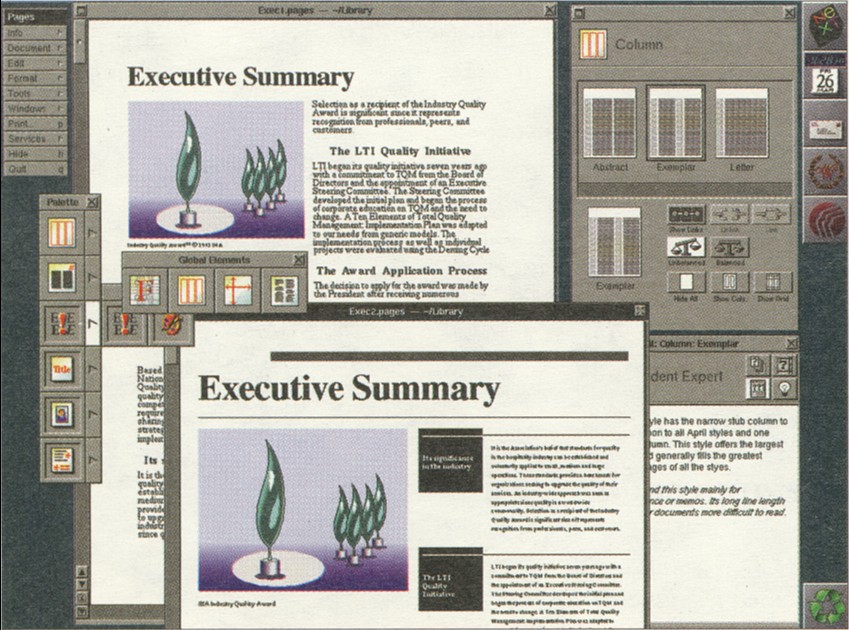
Re:I'm looking for an OASISNot sure what happened to Pages. I read something that mentioned some big changes that happened at NeXT that basically killed the software, but can't remember the link now.
Anyway, here's a screenshot for it.
-
Re:Several frustrating points
Resier4 or XFS is what UNIX should have started with...
ACL's make more sense, and UNIX should have had them from the start.
Just to check, you know that Unix started in 1971(ish), right? Expecting filesystems developed in the last ten years targetting modern hardware to have existed thirty years ago on hardware less powerful than the PalmOS device in my pocket seems a little optimistic.
You touch on some things that Unix (and it's children) can definately do better, but you seem out of touch with Unix's history. Unix evolved to where it is today over thirty-five years. Doing everything all at once wasn't an option; indeed Grand Visions generally fail while something Good Enough that continually improves (warts and all) generally wins. Thus Worse is Better (that's just an excerpt from the original article, see it all here.
-
BSD is UNIX
BSD is UNIX. Linux is a UNIX work-alike and, for all practical purposes, the same as UNIX (but SVR5 instead of BSD). There is a great chart showing the history of UNIX at http://www.levenez.com/unix/.
-
NeXTSTEP world
If you can read french, there is a site full of screenshots
http://www.levenez.com/NeXTSTEP/. -
Re:OSX
This article actually describes a pretty heated battle between AT&T and Berkeley/BSD, so I probably didn't have that clear in my head, but I really recall reading somewhere that it was a partnership early on with students working on the AT&T code. When it comes down to it, though, BSD and AT&T's System 5 UNIX had a great deal of common code - in particular look at the discussion of the TCP/IP code, which was a part of BSD UNIX used in System 5.
I personally would never call Linux a UN*X OS because Linux was originally built (mostly) from the ground up to emulate UNIX, where most OSes that bear the UN*X tag originated from much of the same original source. Check out this cool UNIX history chart. Granted, the author definitely takes some liberties with the term UNIX, since the Linux tree and other UNIX-like OSes are included, but it's a pretty incredible timeline nonetheless. My understanding is that Linux and UNIX have very different takes on the kernel, and that to me differentiates the two trees enough that they should not both be called by the same term. That said, there's a great deal of code that's fairly portable between the two.
-
Re:Why
The only proprietary BSD fork was BSD/OS, but that was a fork created by one of the orginal developers.
BSD/OS was not the only proprietary fork. There were literally dozens. From an article by Eugene Kim: "Indeed, most of the commercial versions of UNIX in the 1980s were based on BSD UNIX". A partial list of BSDs was prepared by Levenez for his UNIX History. And don't feel tempted to discredit or dismiss Levenez just because SCO intentionally misrepresents the information on his website. Levenez is a decent bloke who does a good job of documenting UNIX history.
And that fork actually predates any of the current free and open source BSD projects.
I fail to see what relevance that has to my comment.
Thus, your use of the word "notorious" borders on the disingenuous.
I disagree.
-
Re:That's great, BUT....
The more I think about it, your argument seems to be based on the assumtion that *nix is somehow _new_. It isn't, it chronology can be found here: http://www.levenez.com/unix/history.html#05 As to it being perfect, it isn't and I dont think anyone is really expecting such. Windows is far from perfect, but it isn't marketed as such. It is marketed as an OS for the masses. It falls short in many areas, but Joe User isn't expected to know the guts of the OS in order to load a new peice of hardware or load a new app. As much as it surprises me to say it, Apple has stepped into that void in the last couple years and filled done an admirable job at filling that gap. Have you looked at 10.3 or 10.4 recently?
-
Re:NeXTish
I saw it in a "complete family tree of UNIX", which I'm furiously trying to locate.
This one? If so, note that the OS X Server releases starting with the one labeled "Mac OS X Server 10.0.3" have arrows from the OS X client line. The earlier OS X Server releases didn't have an Aqua GUI - they had a more Mac-like GUI (more Rhapsody-derived).
I also found http://www.macintouch.com/mxs.html which near the very top is talking about how the interface is heavily NeXT and not like traditional Mac OS, granted it's quite old information
Exactly. It's talking about one of the old OS X server 1.x releases that came out before the client OS X 10.0.
but that tends to confirm what I gathered informally from other sources.
Perhaps those other sources think OS X Server is still more like the older 1.x releases, without all the stuff added on the client side since then, including the Aqua GUI (or are old source from when it was one of the older 1.x releases).
but it seems (again, from informal observation) that the consumer version is much more FreeBSDish and the server version is much more Machish
The Mach stuff that's generally visible is mainly the object file format; that stuff is present in both client and server, as is the Mach+BSD kernel (/mach_kernel) and Mach-related user-mode servers such as mach_init. What stuff have you observed that shows the client being "more FreeBSDish" and the server ("server" meaning "server with the same version as the client", e.g. if your client is 10.3[.x], the server should be another 10.3 version, not one of the really old servers) being "more Machish"?
-
Re:It's a vicious cyclewell actually it could be argued that linux came from minix which came from SVR2
Windows came from DOS and later seeded MS OS/2 which eventually forked to NT which forked to W2K which forked to Windows
OS X came from Mach 3, and OS X server came from Rhapsody which evolved out of OpenStep formerly known as NextStep which was forked out of Mach 2
SCO Unix goes back to Xenix which came out of the TSS V7 which came after the v6 split for BSD and PWB which inspires USG who forks CB Unix which eventually evolves into the System III, then IV then V which later turns into UnixWare and then SCO Unixware
you're probably better off studying Eric Levenz' Unix History and his Windows' History to understand connections on a lower layer.
Now on the surface are we saying that common ideas are developed and re-used across platforms and projects that share a common focus, market segment, or set of solutions? Great, but I think this isn't a very interesting discussion
-
Re:It's a vicious cyclewell actually it could be argued that linux came from minix which came from SVR2
Windows came from DOS and later seeded MS OS/2 which eventually forked to NT which forked to W2K which forked to Windows
OS X came from Mach 3, and OS X server came from Rhapsody which evolved out of OpenStep formerly known as NextStep which was forked out of Mach 2
SCO Unix goes back to Xenix which came out of the TSS V7 which came after the v6 split for BSD and PWB which inspires USG who forks CB Unix which eventually evolves into the System III, then IV then V which later turns into UnixWare and then SCO Unixware
you're probably better off studying Eric Levenz' Unix History and his Windows' History to understand connections on a lower layer.
Now on the surface are we saying that common ideas are developed and re-used across platforms and projects that share a common focus, market segment, or set of solutions? Great, but I think this isn't a very interesting discussion
-
Re:This is ridiculous
When desktop and corporate customers are willing to wait 10 years for products that incorporate new technology, we can talk.
Heh. I love it. Imagine Corporate America suddenly demanding Microsoft offer support contracts for Windows for Workgroups 3.11 running on MS-DOS 6.22 (the best they had for sale as of June 28, 1994, according to Windows History).
-
The Diagram Is Not Measuring Source DependancyFrom the notes accompanying the diagram:
Note 1 : an arrow indicates an inheritance like a compatibility, it is not only a matter of source code.
Emphasis is not mine.
Thus is, an arrow does not imply that Linux's source code is derived from Minix. It only implies that, in some way, the functionality may be compatible with Minix. Source code is not the only criteria for an arrow.
-
Notable errors and omissions.O'Reilly's and Levenez's original charts include a number of errors and omissions. Many have already been pointed out by other posters, but I'll nonetheless compile my own list, in the order of what I think is decreasing importance. Guide to the symbols used: $ Error in both charts. * Error in O'Reilly's chart.
- $ - CLOS is listed as a separate language. The Common Lisp Object System, as it's name implies, is an object-oriented extension to Common Lisp. Why they thought it was a separate programming language is beyond me.
- $ - No ANS Forth. The ANSI Forth specification was ratified in 1994, and is known as ANSI X3.215-1994.
- $ - No Lisp dialects between 1.6 and Common Lisp. This is an incredibly glaring omission. There were a number of widely used, divergent dialects of Lisp after 1.6, the chief two being MIT's MACLISP and BBN/Xerox Interlisp, both of which were used well into the 80s and had a major influence on Common Lisp, among other languages. This is not to mention the other dialects of Lisp left out (the principal ones I can think of are Portable Standard Lisp, EU_LISP, Le Lisp, Lisp Machine Lisp).
- $ - No ISLISP or XLISP. ISLISP became an ISO standard in 1997, and is a subset of Common Lisp with additions from several European Lisp dialects. XLISP, on which AutoLisp is based, became available for PCs in the late 80s, and due to the popularity of AutoCad was for a time the most widely used dialect of Lisp.
- $ - No StarLogo. StarLogo is a parallel version of Logo which was developed at MIT in the late 90s. It's used in a lot of grade-school computer courses.
- * - Haskell has an arrow pointing to CLOS. Not only is CLOS it's own language, apparently it is also a purely functional one. Again, where this was pulled out of remains a mystery.
- $ - No R^3, R^4 Scheme revisions. PHP has a box for every 0.0.x revision. They could have at least acknowledged the major revisions of other languages (and of course Scheme is not the only language this applies to!).
- $ - No Squeak. Squeak is a derivative of Smalltalk started by Alan Kay and Dan Ingalls (among others) in 1994. Today it is the most popular Open Source Smalltalk.
There are also a lot of languages that can be included, like Carl Hewitt's PLANNER (MIT's precursor to Prolog) and ACTORS (a purely message-passing object-oriented formalism that predated Smalltalk, and had several implementations and a lot of influence on other object-oriented languages).
All in all, I think both charts are pretty lame. O'Reilly should have at least solicited public comments before producing such a factually erroneous telling of history. This is altogether more surprising considering that O'Reilly is not a general publisher but instead specializes (in what they claim are) accurate technical manuscripts.
-
Forth?A quick check with Google didn't provide an answer -- does anyone know what was the earliest implementation of Forth for the 8080? It might not have been as early as Gates' BASIC, but given the ease of implementation, I would expect it to have appeared fairly quickly.
Also, a similar and more complete language chart is available here.
-
Another one...
This has been around for awhile: http://www.levenez.com/lang/
-
Timeline includes 50 of the more than 2500 ...
documented programming languages. It is based on an original diagram created by Eric Levenez (http://www.levenez.com)
If you read the lower left-hand side of the poster you'll see this statement plus more.