Slashdot Mirror
Domain: mit.edu
Stories and comments across the archive that link to mit.edu.
Comments · 7,673
-
Re:Whoopty doo
So lemme guess. You're at MIT.
Nope, went to UCSB, a long while ago. But MIT has a reputation for clever engineering hacks (and even non-engineering ones). -
Re:Can they record?
In my college, MIT, a number of professors record their lectures and post them on the class website for student use. In fact, one of the most famous introductory computer science courses, Structure and Interpretation of Computer Programs, is now completely based on Powerpoint presentations viewed online, with notes and the professor's voiceover. I agree - it's often valuable to have a lecture recording, but if the professor does that already, then there is no additional value in having students each record their own copy. Unless, of course, one could *annotate* the lectures one records. Now that would be smart and useful.
-
Sounds so good, we've been doing this, too!
Check out the program and video from MIT's MASLab 2003. Our robot's use a very similar setup. Geode+Orinico+RedHat. Next year we're moving to Eden+WindowsXP Embedded
From the program:
The electrical components used in MASLab are quite different from other
contests. At the heart of each team's robot is the "Geode," a 300 MHz
x86-compatible processor. With 256 MB of RAM, a 6GB hard disk, wireless
networking, and a full complement of peripherals. This PC runs an
unmodified installation of RedHat Linux.
The Geode itself cannot control motors nor interface with sensors, so
the MASLab staff designed and manufactured a robotics controller board.
We call the controller the "ORC", for "Our Robotics Controller". This
board serves as a slave to the Geode, executing simple commands under
the direction of a program running on the Geode. The Geode and ORC
communicate over an RS-232 serial link. It contains an LCD display,
support for four 12V motors, integrated battery charger, and power
regulation. The ORC board features several Cyprus Microsystems
Programmable System-on-a-Chip (PSoC) parts connected by a serial bus.
The PSoCs are configured to support three servos and an array of analog
and digital sensors including ultrasound and optical encoders.
While the usual assortment of robotics sensors are available (ultrasound
range finders, infrared range finders, momentary buttons), MASLab
additionally includes a web camera. This color camera has a resolution
of 640x480 and serves as most robots' primary sensor, scanning the
playing field looking for targets and scoring areas. -
Very similar to MIT's Project Oxygen
MIT's Project Oxygen is a very similar concept. It's meant to create intelligent environments that respond to your routines and commands as well. Naturally, Oxygen seems to be far more complete, but less likely to fall into the hands of just about anyone. Check out their site, it's a great read.
-
Re:Why?...Applying technology to running trains goes far back in the geek tradition.
MIT is famous for their train club, which goes way back
Tech Model Railroad Club of MIT
Note that Steve Russel's development of the first video game is tied in with his time at TMRC. Note also many geek terms originated here (As seen in a dictionary derived from one originally written in 1959 by Pete Samson)
The real world engineering problems in running trains are also a good education
-
Re:Why?...Applying technology to running trains goes far back in the geek tradition.
MIT is famous for their train club, which goes way back
Tech Model Railroad Club of MIT
Note that Steve Russel's development of the first video game is tied in with his time at TMRC. Note also many geek terms originated here (As seen in a dictionary derived from one originally written in 1959 by Pete Samson)
The real world engineering problems in running trains are also a good education
-
Re:Choo Choo Choo
You don't know your hacker's lore. This article is about as on-topic as Slashdot gets.
-Ed
-
Re:Web Services Based LabView Next?Seems to me that National Instruments could use this recommendation to develop a web services based version of LabView
They already pretty much have this, only they call it "DataSocket." Some folks at MIT have written a tutorial on how to put data on your web page using a Java DataSocket client.
Someone else has implemented a Python DSTP server and client, so you don't have to buy from NI.
-
MIT OpenCourseWare
The MIT OpenCourseWare project has course material/textbooks for many subjects, including a few for math. It is licensed under MIT's own Creative Commons Public License (CCPL) which is similar to the FDL. IANAL, but the major difference seems to be that CCPL only allows non-commercial use. The project is just getting started so the selection is limited, but by 2007 they hope to have all of MIT's course material available.
-
MIT OpenCourseWare
The MIT OpenCourseWare project has course material/textbooks for many subjects, including a few for math. It is licensed under MIT's own Creative Commons Public License (CCPL) which is similar to the FDL. IANAL, but the major difference seems to be that CCPL only allows non-commercial use. The project is just getting started so the selection is limited, but by 2007 they hope to have all of MIT's course material available.
-
Re:Irony
Well, don't give up. Evan a "crappy little band" can help kill off the RIAA and their ilk. There are a lot of file-sharing programs out there now. Ask around and you'll probably find someone willing to make your stuff available online.
A couple years ago I wrote a little article about a case hereabouts. There's probably someone in your area doing the same sort of thing.
The more peope we can get involved in such things, the sooner we can tear down the wall (as Ronnie Reagan said) that the big corporations have built between musicians and their audiences.
-
Origins of this stuffTom Knight and some other MIT people were talking about this kind of stuff in 1996-97. This was the same group interested in amorphous computing at the time. They saw it all as one big research agenda, and amorphous computing fell under the DOD funding umbrella for autonomous battlefield surveillance widgets.
These guys were poking around with some genuinely interesting ideas. Their idea was that if you relaxed the requirements on manufacturing quality, you could make nodes that were super-cheap with a modest (but today-considered-unacceptable) failure rate. They set forth a collection of programming axioms that treated a sea-of-nodes as a continuous computational "gunk". Very cool stuff.
-
MemoriesAsk yourself whether either of these phrases mean anything to you. If so, you know that Spaf merely recognized the problem earlier.
-
Where there's life there's hope / Please pass the
... lavender soap. I've heard those two phrases can be difficult to tell apart by a lip reader.
As for computer lip reading, there's a chapter in Hal's Legacy about this very topic. -
So computers can now talk to themselves (Re /.)
A couple months ago, a very fine article was posted to
http://cerboli.mit.edu:8000/research/mary101/resul ts/results.html -
Re:Real "wrath of God" type stuff
What's next? The fall of communism?
Erm, that already happened. -
Re:To the "It won't work" folks
Still, there are some theoretical limitations, e.g.:
This gives a worst-case linear lower bound on the size of an index structure for substring search, which is obviously necessary for "full" regexp power. Of course, I doubt anyone really wants full regexps; the challenge you face is constructing a powerful enough subset that is easy to implement.
Personally, like other posters have mentioned, I am only really interested in stem searches such as stem*. -
What We Can Learn From BSDWhat We Can Learn From BSD
By Chinese Karma Whore , Version 1.0Everyone knows about BSD's failure and imminent demise. As we pore over the history of BSD, we'll uncover a story of fatal mistakes, poor priorities, and personal rivalry, and we'll learn what mistakes to avoid so as to save Linux from a similarly grisly fate.
Let's not be overly morbid and give BSD credit for its early successes. In the 1970s, Ken Thompson and Bill Joy both made significant contributions to the computing world on the BSD platform. In the 80s, DARPA saw BSD as the premiere open platform, and, after initial successes with the 4.1BSD product, gave the BSD company a 2 year contract.
These early triumphs would soon be forgotten in a series of internal conflicts that would mar BSD's progress. In 1992, AT&T filed suit against Berkeley Software, claiming that proprietary code agreements had been haphazardly violated. In the same year, BSD filed countersuit, reciprocating bad intentions and fueling internal rivalry. While AT&T and Berkeley Software lawyers battled in court, lead developers of various BSD distributions quarreled on Usenet. In 1995, Theo de Raadt, one of the founders of the NetBSD project, formed his own rival distribution, OpenBSD, as the result of a quarrel that he documents on his website. Mr. de Raadt's stubborn arrogance was later seen in his clash with Darren Reed, which resulted in the expulsion of IPF from the OpenBSD distribution.
As personal rivalries took precedence over a quality product, BSD's codebase became worse and worse. As we all know, incompatibilities between each BSD distribution make code sharing an arduous task. Research conducted at MIT found BSD's filesystem implementation to be "very poorly performing." Even BSD's acclaimed TCP/IP stack has lagged behind, according to this study.
Problems with BSD's codebase were compounded by fundamental flaws in the BSD design approach. As argued by Eric Raymond in his watershed essay, The Cathedral and the Bazaar, rapid, decentralized development models are inherently superior to slow, centralized ones in software development. BSD developers never heeded Mr. Raymond's lesson and insisted that centralized models lead to 'cleaner code.' Don't believe their hype - BSD's development model has significantly impaired its progress. Any achievements that BSD managed to make were nullified by the BSD license, which allows corporations and coders alike to reap profits without reciprocating the goodwill of open-source. Fortunately, Linux is not prone to this exploitation, as it is licensed under the GPL.
The failure of BSD culminated in the resignation of Jordan Hubbard and Michael Smith from the FreeBSD core team. They both believed that FreeBSD had long lost its earlier vitality. Like an empire in decline, BSD had become bureaucratic and stagnant. As Linux gains market share and as BSD sinks deeper into the mire of decay, their parting addresses will resound as fitting eulogies to BSD's demise.
-
uhh... WRONG!
Ken Thompson invented Unix so that he could continue playing spacewar.
-
Re:vi or emacs
What about jed? It has a pull down similar to MS-DOS Edit's.
Still, every Unix/Linux guru in the world is going to pick on you for using it. Take the verbal abuse, or open up a terminal window and type in "vimtutor" and learn the damned editor.
Also, keep in mind that Edit didn't show up until around MS-DOS 4 or 5, I believe. Before that, you had Edlin. And vi and emacs are a _whole_ lot better than that peice of crap!
(I'd paste an example of edlin here, but I don't happen to have a DOS machine handy.) -
Re:This is Slashdot worthy?
Maybe you missed it, but I don't think the similarity between this and this is a coincidence.
And Gnome isn't a window manager. It's a desktop environment. -
Re:This is Slashdot worthy?
The truly beautiful hacks were the Cathedral of Our Lady of the All-Night Tool and the campus police car on the Great Dome. This one was cute, but it doesn't even compare to the One Ring on the Great Dome.
-
Re:This is Slashdot worthy?
The truly beautiful hacks were the Cathedral of Our Lady of the All-Night Tool and the campus police car on the Great Dome. This one was cute, but it doesn't even compare to the One Ring on the Great Dome.
-
Re:This is Slashdot worthy?
The truly beautiful hacks were the Cathedral of Our Lady of the All-Night Tool and the campus police car on the Great Dome. This one was cute, but it doesn't even compare to the One Ring on the Great Dome.
-
Re:All the bases covered!
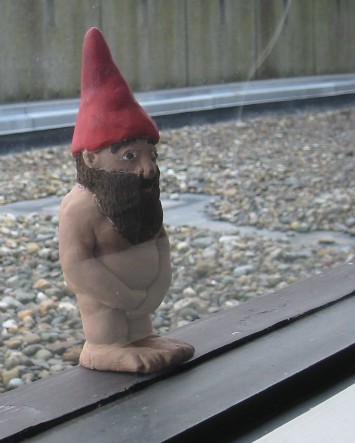
Not every gnome was pictured in the hack gallery. There were literally hundreds. And even so, there were at least several gnomes of african descent and at least one jewish gnome
-
Re:All the bases covered!
Not every gnome was pictured in the hack gallery. There were literally hundreds. And even so, there were at least several gnomes of african descent and at least one jewish gnome
-
As a student at MIT, the parent is a troll
Don't mod someone up just because he claims to know what's going on.
See for yourself - http://web.mit.edu/bin/cgicso?query=stanley+blizte r -
Re:This is Slashdot worthy?
It's not annual, they happen far more frequently. Please go hit up the Freshman Fishwrap's Hack Gallery.
-
Re:This is Slashdot worthy?
fair enough. at least you brought attention to the buzzword bingo. I hadn't looked that far back into the archives myself. thanks for sharing. personally, I'd have to go with the talking elevator hack. there's just something about making an elevator say odd things, when usually it just goes "ding".
-
Re:This is Slashdot worthy?
it's not annual. guys at MIT do hacks all year round.
-
Jhonen Would Be Proud
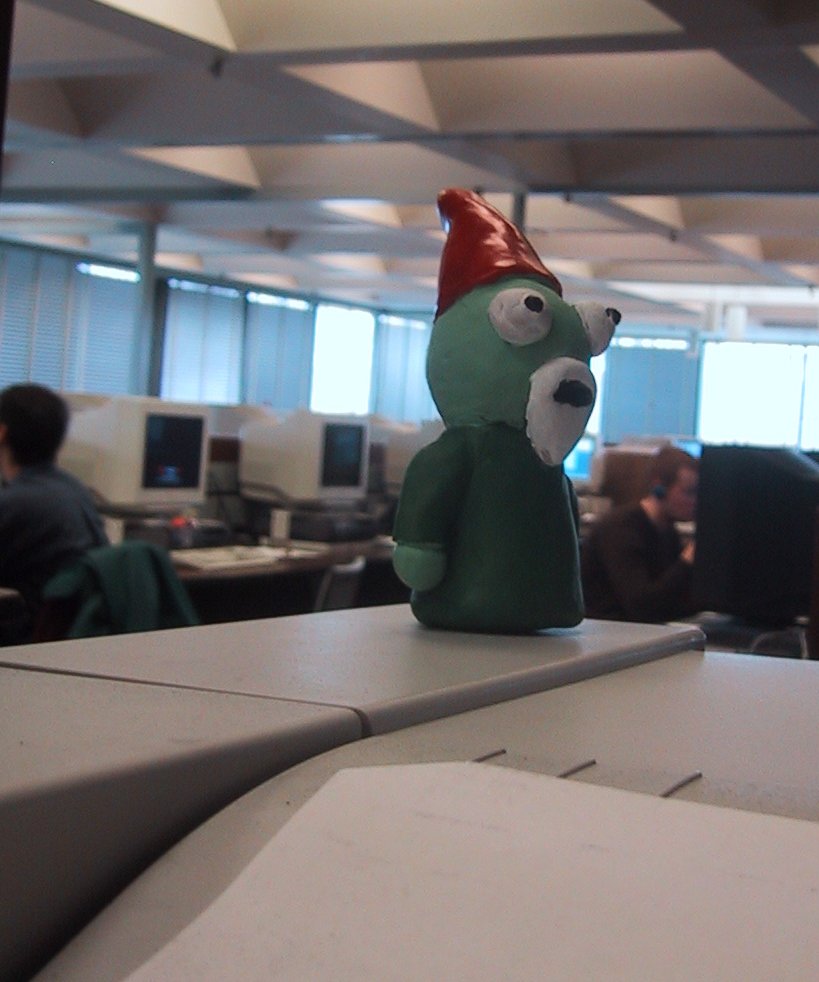
Look! It's one of Zim's Lawn Gnomes!
-
My favorites
My favorite is the 1982 Havard/Yale/MIT football game. My second favorite was the police car on top of the dome, including donut.
-
Watch your @$$ MIT students
Those gnomes are nuts about underpants. Obviously they've gone all out. They're even taken on their own
-
Re:This is Slashdot worthy?
This is the annual MIT hack. It's an old tradition that is *definitely* Slashdot worthy. My favorite has always been Buzzword Bingo!
-
Re:Other MIT hacks
Working Link. I like the dome beanie
-
Re: also The Eudaemonic Piethen there's Eudaemonic Pie by Thomas Bass. About how some tech smart folks attempted to win at roulette by digitally modelling the spinning wheels (hint: the ball usually falls off the high side of a tilted wheel, and they're all slightly tilted). The Eudaemons built some of the first wearable computers. A fun read.
-
check out the errata!Here's the MIT Press's page about Mathematics of Marriage .
In particular, check out the errata! How often do you see graph whose axes are Behavior, Fear, and Rage!
-
check out the errata!Here's the MIT Press's page about Mathematics of Marriage .
In particular, check out the errata! How often do you see graph whose axes are Behavior, Fear, and Rage!
-
Borda count
Will e-voting ever allow us to implement the Borda count method?
-
Hershey & Chase (then) forward engineering (no
Then:
I believe Watson and Crick's solution to DNA structure was a fabulous achievement, but press should also be given to Hershey and Chase's 1952 experiment proving DNA as the genetic material. Of course, they too rested on the shoulders of giants in chemistry and biology, but their work has equal claim to initiating an era of reverse engineering hereditary mechanisms.
Now:
Biology has come a long way reverse engineering life, but still has a long way to go. Unlike systems composed of similar components interacting to create a complex and often unpredictable outcome, life is composed of a huge variety of components which can interact to create stable outcomes (homeostasis). As we identify the individual components and subsystems, a new field is emerging. This field, called systems biology, is about modeling this complexity.
Now/Next:
Perhaps most exciting, there now exists enough information to begin forward engineering life. In living systems we have the ultimate collection of both components and subsumption architectures for making complex systems. Rodney Brooks was brilliant for modeling his robots after living systems, but a living system can be the starting point for further engineering. This work has begun, but consists mostly as limited applied science with pharmaceutical, agricultural, or industrial enzyme goals. Is anyone (else) engineering life for the sake of engineering? -
Re:What's the Point...
This isn't at all hypothetical. I wrote up a little javascript demo a couple of years ago. Similar things can be done to you if you have any sort of "scripting" turned on in your browser, email program, etc.
This is especially a problem on Windows machines, where all sorts of software comes with the ability to execute downloaded files, and this is usually turned on by default. Most Windows users aren't much aware of the problem, and don't understand it when you try to explain it to them. The config thingies that disable it are hidden all over the system, and very difficult to find. And they change from one release of Windows to the next.
It's not just Windows, though. Unix/linux browsers tend to come with javascript enabled, too, which can make you susceptible to this sort of attack.
I've seen a number of machines at work with porn in the browser cache, and users who seem to be honestly surprised when I show it to them. If you've seen how simple the code is, you are likely to believe them when they say they didn't download those things. Anyway, you're welcome to my demo code. There are lots of other such things around on "HOWTO" sites.
-
Re:it only bothers the unknowing honest.
If I simply send everything encrypted AND send lots of fake packets... I.E. random sized files that consist of the contents of
Following on this, you might find Ron Rivest's chaffing idea to be interesting. (Rivest is the R in "RSA".) -
Re:Make "Cell" chip Open Source!
You are so amusing. I personally know two such individuals, Lorenz Huelsbergen at Bell Labs, and the other one is Dr. David Kranz at MIT.
-
Re:Still searching for my perfect mp3 player
You might like Rhythmbox a bit better than GQmpeg or xmms but it depends how you weight your different needs. It doesn't look like ass and it has neat metadata but 1. no viz, 2. no ID3 editing, and 3, no moon on a stick.
This is assuming a gtk2 app is acceptable, you can get it running-without-crashing for enough time to build up useful playlists and use it enough to make the metadata actually have an effect.
If you can't, there was a fork/branch a while back that add's streaming management and is relatively stable.
The lack of viz kills me - I generally run xmms and hide the ugly old winamp2x gui on its own desktop plus gtk playlist, a sticky cd-cover plugin and a sticky Goom vis.For the id3 tags, I highly highly recommend EasyTAG.
-
easter message from MIT
god is dead, and i am alive. easter greetings
-
Re:Why FP isn't much used in reality
The first demonstration of the chaotic nature of the solar system was done using Lisp. A link. Look for the paper titled "Chaotic evolution of the solar system."
-
Re:Blackboard
dotLRN is in use at MIT's sloan school of business. looks pretty good; I've set one up for culverhouse here in tuscaloosa.
-
Re:Legal issues around feral robots
"I'm just wondering the about the legal issues surrounding the release of a 'feral' robot.."
Chilling effects alive and well I see. Stories of cool hacks greeted with "oooohhh. [sucking of breath]... wouldn't that be... somehow illegal?"
The hacker ethic is dead in maharg. Abandon his soul to the matrix.
-
Concurrency oriented programming
An interesting approach that should be investigated is concurrency oriented programming.
More details here: http://ll2.ai.mit.edu/talks/armstrong.pdf
Joe Armstrong explains in the conference why and how it can overcome conceptions problems when designing concurrent applications.
--
Mickaël Rémond
http://www.erlang-projects.org/ -
Re:Oh no, more Grey Goo worries!
A machine that could convert just about anything on the planet into useful materials, and duplicate itself endlessly, would probably be difficult to make INTENTIONALLY, let alone accidentally. It would also be extremely easy to insert safeguards to prevent anything like that from happening. Either require the presence of a particular molecule for the machines to duplicate themselves. Add replication limits to the nanomachines. Never include self-replication in the same nanomachine as one that can break down most/all things into raw materials.
I have to disagree with this. It's hard to come up with a remotely plausible reason how/why someone would create something like this intentionally. (Vonnegut fans please put down your copies of Cat's Cradle. Ice-9 was part of a satire. And the distribution occurred despite safeguards.) It's the accidental creation we have to worry about. A scientist isn't going to sit down and say: "I'm going to make gray goo". He/She will say "I'm going to make a self-replicating nano-machine with safeguards." Kinda like the safeguards in the Morris worm. It had safeguards, but they didn't work as intended and it spread uncontrollably. I use that example because Morris was a pioneer in the world of network-propagated computer viruses. Many other computer virus authors (think Melissa) have also been quoted as saying they had no idea how quickly their creations would spread.
I'm agree with your conclusion that research should always be encouraged in order to understand the threats and build effective countermeasures. I just disagree with how you're ranking the threats.