Slashdot Mirror
Domain: nasa.gov
Stories and comments across the archive that link to nasa.gov.
Comments · 16,365
-
Re:no research, no results (was Re:And this is new
Here:
http://spaceplace.nasa.gov/en/kids/spinoffs2.shtml
or here:
http://www.thespaceplace.com/nasa/spinoffs.html
Also, how does the GPS in a smartphone work w/o a satellite?
William
-
Re:If Apollo program had continued
1) Yes, given that we have that now, even though we have significantly less launch capacity than the Saturn V. 2) Less frequent than what? There have been 0 trips between the ISS and the moon. 3) Yes, given that humans haven't been back to the moon since '72, that would be more frequent. No, if there is only one method of transport, it is, by definition the most economical. You have to have competition to have a comparison. 4) Possibly. Von Braun had plans for a very different type of shuttle called the Saturn shuttle. 5) Yes, given that we've already done this, Dawn Mission is En Route http://dawn.jpl.nasa.gov/ 6) I disagree, the Saturn V launcher would have made it possible to assemble a mars ship in orbit in with multiple launches comparatively cheaply. It launched Skylab in one launch! 7) Also disagree, we've got fixed research stations on Mars in addition to the rovers, see the Mars Phoenix Lander, the Mars Pathfinder Lander (Carl Sagan Station) the Viking probes, etc. 8) Maybe. There's limited advantage in orbital nuke stations compared to ICBMs and IRBMs. Plus, they cost fuel to maintain and there's the danger of accidental reentry. 9) Cruise missiles are of more use in a Cold War since they don't have that nasty problem of appearing to be a strategic launch.
-
Re:Trip to Mars takes 9 months
Note, by the way, that some of the crews of Mir spent six months on Mir, which is smaller than a Mars craft is likely to be.
Yeah, but those were Russians.
Not all of them-- Shannon Lucid spent six months on Mir.
-
Re:Trip to Mars takes 9 months
Maybe they have a working antimatter drive?
Another significant advantage is speed. The Reference Mission spacecraft would take astronauts to Mars in about 180 days. "Our advanced designs, like the gas core and the ablative engine concepts, could take astronauts to Mars in half that time, and perhaps even in as little as 45 days," said Kirby Meyer, an engineer with Positronics Research on the study.
http://www.nasa.gov/exploration/home/antimatter_spaceship.html
-
Re:Just wait!
You mean like this example from NASA's own site? I found that in 15 seconds on google.
Where do you think they would send the ISS? A Lagrange point? Please.
It is going to be thrown away just after it is complete. I think it is sick, but they have been talking about this ever since the 1990's. I remember reading about this planned destruction at age 12 in Popular Science--even before they had launched the first component. I was very disgusted with our "progress" in space exploration, then as now.
-
Incompatible with other OSS
One thing that seems to always be left out of these discussions is that the GPL is incompatible with many sincere open-source licenses, including some that are approved by the Open Source Initiative (http://www.opensource.org). Consider the NASA Open Source Agreement, under which NASA contributes some pretty good open-source code such as http://ti.arc.nasa.gov/project/nasa-vision-workbench/ -- this license is incompatible with the GPL because it requires all contributions to be the contributor's original creation, but it is a solid OSI-approved license.
I understand why the FSF takes a hard line with regard to linking GPL code with code that is licensed under GPL-incompatible OSS licenses -- linking does technically create a derivative work, the LGPL is also available, and the FSF has a long-term political agenda (with which I do not entirely disagree).
What bothers me is that some OSS developers who claim to use the GPL to inhibit its use by companies (in order to sell licenses) are quite myopic in their views of those who are contributing to the OSS community and thus are deserving of free -- in both senses of the word -- usage of their code.
True story: I worked for a while on an open-source NASA project. I needed to add some new features, and the best fit for providing some of the back-end functionality was a GPL-licensed library. I contacted the author of this library about adding a linking exception to its license (so that it could be linked with NASA OSA-licensed code), assuming that he would be honored that NASA was interested in his library, and happy that another open-source project would be promoting his library by requiring it as a dependency (for some optional features). To my great surprise, the author refused unless NASA would pay. In the end, everybody lost -- my project used an inferior library because it was LGPL, and the GPL library got no new users and no free publicity from being linked from my project's webpage. -
Re:In answer to your question
The landing site is visible from the earth with a telescope strong enough
ORLY? You should let NASA borrow your telescope then, because they don't have one strong enough.
And that's how a Big Lie gets believed: someone makes a plausible sounding claim in a confident, dismissive manner, and nobody calls them on their bullshit. You, Sir, are Called.
-
Re:55% say they are Democrats
ï It may be inconvenient to inject data into a fantasy discussion, if so excuse me. Let us not get hysterical, but cut to the chase. It doesn't make much sense to make a decision on CO2 unless we have some consensus on which facts are relevant. Discussing the CO2 contribution of volcanoes as compared to anthropogenic contribution is interesting but not very useful. (one volcanic eruption put square miles of ash into the air and in less than a year cooled the earth one half degrees Celsius. Now that is climate change power! http://www.gsfc.nasa.gov/gsfc/service/gallery/fact_sheets/earthsci/volcano.htm [nasa.gov] http://www.cas.org/newsevents/connections/volcanoes.html [cas.org] ) To get a useful perspective we need to consider all of the natural sources of CO2 and compare that number against the anthropogenic. This following article takes the position that our contribution is not significant. It has cites. I chose it of many just because I like the notebook style. http://www.geocraft.com/WVFossils/greenhouse_data.html [geocraft.com] If you do not accept this data then what data will you propose we accept? Cites please. It has to pass a reasonableness criterion. From a position of consensus on the data we should be in a position to debate possible action..
-
Re:Unfortunately, it will never happen.
An ion drive is currently being used with the Dawn Mission, where the delta-v requirements are certainly as comparable to going from LEO to L-5. That mission started in 1997 (yes, it is in space right now and flying with the engine running and producing thrust right now) and it will ultimately last until at least 2015, reaching Vesta in 2011. Using that as a rule of thumb, I would expect at a maximum of a similar duration of time to get the ISS to L5... about 3-4 years if you use this comparison. I would expect it to happen much faster, and certainly not take decades.
The ISS is clearly intended to be boosted up into a higher orbit, and the hardpoints to keep the vehicle together are well understood... at least with moderate thrust velocities. I would expect accelerations similar to that provided by Progress boosters to be similar, and there are designs to put the engines directly on the ISS for altitude control. An ESA resupply module docket to the ISS and provided a delta-v that accelerated to an additional 2.65 m/s. I don't know how long that took (giving some idea on the acceleration tolerances of the ISS), but it was a conventional rocket. Surprisingly, this is nearly half of the delta-v that is necessary to get to L-5.
Using the previous example, I don't think the ISS would spend all that much time in the Van Allen belts, and to leave it unmanned for a brief period of time wouldn't be the end of the world either. This is something that certainly could happen if there was an objective to make it happen, and even just moving the ISS to L-5 as a place to "park" the structure as a historical monument to future generations rather than having it crash into the Earth causing potential damage or even death may make the effort worthwhile.
Heck, it may even be cheaper in terms of boosting the ISS to a very high altitude rather than using a similar booster to attempt a more controlled re-entry over what would be presumably an uninhabited part of the Earth like the Pacific Ocean. Sending a crew up to the ISS to perform the dismantling process, getting multiple boosters onto each ISS module, and simply trying to deal with the thing may on the whole be easier to even crash it on the Moon.
-
Re:radiation
The material that you wish to use to protect you from radiation (like solar flares) spits out neutrons at you when hit with cosmic rays, it's not shielding you from much other than the various things from a solar flare or CME. The Moon is too small and the lunar rock just turns relatively benign cosmic rays (which statistically pass through your body more often than interact with it) into much more dangerous neutrons when it interacts with kilometers of matter. The neutrons bubble up under your feet when you're standing on the moon, if you dig a tunnel they'll be bubbling up under your feet and around your body too. The Earth is big enough that most of the cosmic rays that hit the opposite side interact with matter are far from the surface and the neutrons are (mostly) absorbed before getting to us (and is a tiny fraction of the radiation dose we get every day).
Your "solution" is naive. I didn't have to dig very hard to find facts around the subject, did you just read some of the wild papers on the subject that ignores some of the inconvenient science the Russians and NASA have collected about the moon in the past 15 years? There are many dozens of papers on idealistic models for building lunar bases, but I could find none that address the problems scientists have discovered in the past decade.
Also Radon is difficult to seal out of a system, even an "airtight" one. And it exists in abundant quantities in the Moon. Live in a deep tunnel or trench and it could be a significant component of the atmosphere on a lunar base.
A very short article on the Radioactive Moon that mentions at least some more current issues.
-
Re:Unfortunately, it will never happen.
-
Re:Global Governance
If you have a problem with any of the individual statements they make, they look ready to respond to any questions. Given that this individual post was endorsed by Nature, and that one of the top contributors is a NASA climatologist, I'd like to ask if "left-wing" can be supported by anything other than the topic of defending the concept of global climate change itself.
And yes, scientists have acknowledged as a non-anthropogenic warming phenomenon as a drop in the intensity of sandstorms in the Middle East. The sand in the air lowers the albedo of the Earth's surface, causing it to reflect less light and warm the surrounding area. The opposite effect occurs on Mars, when dust storms cause huge temperature increases, which I would then assume is due to the Martian dirt being darker. However, the most credible study of solar cycles contributing to global warming of which I have heard estimated the effect to be as high as 25%, but this was refuted by other scientists and the study was withdrawn by its authors.
With regard to skepticism concerning computer models, would you accept that if a computer model can accurately model climate changes from 1900 to 2000, and is fed accurate data, then if it is powerful enough, it can predict future climate changes to a limited extent? There is such a project that exists using distributed computing, where you download a "module" that starts in 1900 and finishes in 2000 before going into future decades. The results are sent back to the scientists, and each one helps improve future models.
If one day a model from 1900 to 2000 is perfectly correct, might you be inclined to give it some credence? At first the project did things like use a solid slab ocean, without currents, as a developmental stage, but it has progressed far since then. It's hosted by Berkley and you might care to look into it, since their methods are so transparent.
-
Like ThisNot pertinent to the current delays, but this story reminded me of a cool picture.
I wonder if lasers could be used to divert lightning from commercial airliners in-flight? There was some speculation it could have contributed to the recent Air France crash, though apparently it's not a leading theory.
-
Re:55% say they are Democrats
NASA's figures says you are.
I can spot more than five decades of supposed cooling during the 20th century as per you definition, but as you can clearly see the overall trend is not cooling.
It is actually worse than that:
http://www.climateaudit.org/?p=6540 -
Re:55% say they are Democrats
and yet the world has cooled over the last 10 years so one of your assumptions is wrong. Which one is it?
Alternatively, you're wrong. NASA's figures says you are.
I can spot more than five decades of supposed cooling during the 20th century as per you definition, but as you can clearly see the overall trend is not cooling.
-
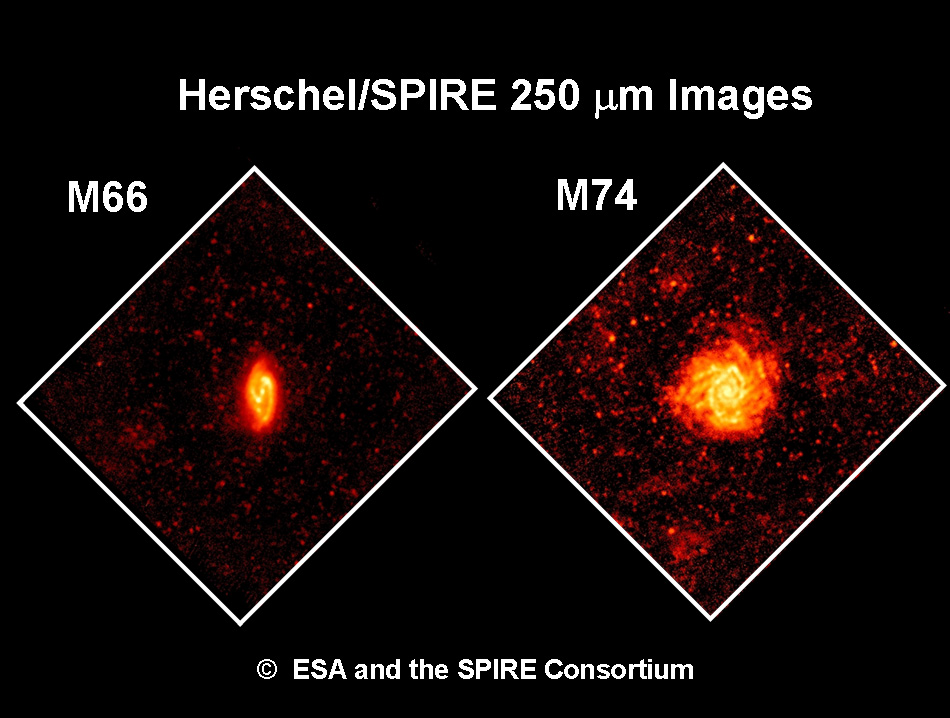
Hershel vs. Hubble
Saying that the blurry ESA's image is showing some unseen features is rather strange. It is an IR image, but still.. Hubble shows amazing detail on M74, and I mean amazing.
Hubble:
http://antwrp.gsfc.nasa.gov/apod/ap071201.html
Hershel:
http://www.esa.int/images/SPIRE250_M66_M74_fig1_H.jpg -
Re:Oh, I don't know, but
So people are just imagining the ice that is melting?
http://earthobservatory.nasa.gov/IOTD/view.php?id=7738
Now I'm not saying humans are 100% responsible, but you can't deny that ice all over the world that has existed for thousands of years is melting (well I guess you can, if you ignore the sheets of ice turning into water).
How about the animals arriving in the north that have never been seen there before?
Yeah you can deny it all you want, and we can argue all day about the causes (until it is too late for us to do anything about them), but it is indeed happening. Wouldn't it be a real bummer if this was part of a "normal" warming cycle and because of our stupidity we tipped things too far and made the earth uninhabitable?
-
Launch video
From the NASA site, here is the video of the launch:
http://www.nasa.gov/multimedia/nasatv/on_demand_video.html?param=http://anon.nasa-global.edgesuite.net/qt.nasa-global/ccvideos/larc/mlas-launch.mov&_id=undefined&_title=undefined&_tnimage=test.gif#However, I cannot get it to play on my Kubuntu system.
-
Re:Maybe next year
Not live but recent images here: http://mediaarchive.ksc.nasa.gov/search.cfm?cat=4
-
Re:Sorry, which planet Earth? -sextants still in u
In the parent's defense, events strong enough to distrupt GPS comms do not have to be on the scale of the Carrington Event that you mentioned. From
http://science.nasa.gov/headlines/y2008/06may_carringtonflare.htmIn December 2005, X-rays from another solar storm disrupted satellite-to-ground communications and Global Positioning System (GPS) navigation signals for about 10 minutes. That may not sound like much, but as Lanzerotti noted, "I would not have wanted to be on a commercial airplane being guided in for a landing by GPS or on a ship being docked by GPS during that 10 minutes."
The same article says
On Earth, power lines and long-distance telephone cables might be affected by auroral currents, as happened in 1989. Radar, cell phone communications, and GPS receivers could be disrupted by solar radio noise. Experts who have studied the question say there is little to be done to protect satellites from a Carrington-class flare.
Granted, recent the recent flare-related GPS disruption didn't last several days, but large flares do happen on a fairly regular basis (the article mentions 'huge' storms in 1942 and 1989). Which confirms the parent's main point: that backup tech (like sextants) is really a necessity when lives are at stake, simply on the basis of solar flares.
Obviously, backup tech is also needed to cover everyday problems like systems breakdowns while at sea.
-
Re:Ames Research Center....
from http://oea.larc.nasa.gov/PAIS/WindTunnel.html
The largest wind tunnel in the world is at NASA's Ames Research Center. This subsonic tunnel, which can test planes with wing spans of up to 100 feet, is over 1,400 feet long and 180 feet high. It has two test sections: one 80 feet high and 120 feet wide, the other 40 feet high and 80 feet wide. Air is driven through these test sections by six 15-bladed fans. Each fan has a diameter equal to the height of a four-story build
windturbines currently being deployed have blades of over 60 meters (200 feet, so a diameter of 400 feet) how are you going to fit them into those tunnels ?
-
Re:110 kilograms
and then there's the whole "driving around in a bomb" thing... not to mention dealing with trapped H2 gas in the ceilings of parking garrages, your home garrage, and other places it collects and explodes in. H2 is simply NEVER going to be an acceptible fuel for humans except possibly for running giant scale fuel calls at sites where H2 can be produced and stored on-site.
Driving around in a bomb.....you mean like cars that explode when something happens to the gas tank? We're already driving around in bombs. But when a gasoline powered vehicle has a fuel tank rupture, the fuel pours down to the ground, pools, and becomes very dangerous, as a simple spark can ignite it.
Hydrogen, on the other hand, is so light that it immediately rises and dissipates. You ever try to light dissipating hydrogen? Unless you happen to have an open flame right at the leak point, it's pretty much impossible.
As far as it getting trapped in parking garages and your home garage.....H2 atoms are so small that it leaks fairly quickly out of a sealed latex balloon. You seriously think a parking garage is going to have better sealing than a balloon?
If you'd ever been in an underground parking garage, you'd probably have seen those huge ass fans they have to provide ventilation for the toxic hydrocarbon car exhaust that is currently produced in such places. It has to be removed quickly, because people die from breathing too much of it. Do you think these fans won't work with hydrogen?
If it's an above ground parking garage, well, every one of these I've ever seen has sloping ceilings, eventually rising to the point where the top level opens to the atmosphere.
Even with zero wind, the hydrogen is going to climb through the building until it gets to the top, where it will rise and dissipate. With even a slight amount of wind, it will blow out the sides of the structure.Your home garage probably has an attic access door in the garage. This obviously doesn't seal well. Any hydrogen leaked will quickly make it's way out this door, into the attic, where it will be vented through the peak vents on your roof, the cracks between 4x8 sheets of plywood, nail holes, and even directly through the wood and shingles themselves.
Seriously. Hydrogen isn't that big of a risk.
Now, as far as transportation goes, yes, it's a little more difficult. The pressures and temperatures involved make it hard to transport from, say, Alberta's oil fields to Toronto, as we currently do with crude oil and refined products.
But, the beauty of hydrogen is, it can be manufactured anywhere, with pretty small equipment. It's entirely feasible to build a small home hydrogen generator, which uses sunlight, wind, and rain to power your car. Maybe not the rain part if you live somewhere like Arizona, but in places with enough rainfall, a simple electrolysis device powered by a wind generator and solar panels, and a multi stage compression and refridgeration system (which could also be powered by wind/solar) would let you fill your car's gas tank for free.
And even if it takes 4-6 hours to do it (I've never heard a time that extreme before your post, and I've looked into this quite a bit) just do it overnight. You drive to work every day with a full tank. Nothing different than the electric cars planned that you have to plug in every night.Or, you could figure out a way to use NASA's method and fill a tank in under 5 minutes.
You've also got to consider:
- you'd have plenty of time to fill your car, unless you're on a road trip somewhere.
- venting hydrogen out of a tank lowers the tank temperature very quickly.
- using hydrogen for your engine would have the same effect as venting.
- the colder your tank is, the faster you can fill it.
- running a full tank empty on a long trip will result in a ferociously cold tank.
- you can fill that cold tank pretty quickly.So when you need a quick fill, you can get one. When you don't, it doesn't matter.
-
Re:Um, why?
-
Re:Um, why?
"Why send people?" is modded "Troll"? A bit offtopic maybe, but not "Troll". This is the question we must be able to answer if we are to have a successful manned space program, Constellation, DIRECT, COTS, or otherwise.
In the Apollo era, manned space flight provided another means to fund weapons development. The launch vehicles of the early space program, including the Saturn family, are variations of ballistic missiles or started development as heavy launch vehicles for DoD payloads. We are no longer in the same kind of arms race, and finding money to fund civil aerospace ventures is not as easy as military ones.
Many have tried to explain "why" manned space flight in general, let alone the moon and Mars (recently here and here). It is not an easy question to answer. Arguments to the contrary range from "robots are cheaper" to "we should stop spending money on space altogether and address the large number of problems we have here on Earth".
There are those that will say we should do it simply because it is there to explore. That it is human nature. Because it is the unknown, the "final frontier", if you will. A romantic notion (and one that is more than enough to convince some of us), but in the end, this is a political question. We must justify spending tax dollars on manned space flight. What's in it for the taxpayers? While some like to point to technologies that have been spun off of NASA's work over the years, it's not easy to say that the tax-paying public will get X, Y, and Z from future investments.
The true answer here is one that few, if any, politician would ever use even if they knew it was the answer. Why send people? So that we can to guarantee our survival as a species. Humanity has spread beyond the cradle of its birth for many reasons. Initially the exodus was to find more room and resources to support our growing species. Later it was from reasons ranging from natural disasters to religious disputes to dreams of fortune in other lands. If our entire species lived at the foot of a volcano, the volcano could wipe us all out. Our species has spread such that it cannot be wiped out by most natural (or even man-made) disasters. It is only recently that we have started thinking at a scale larger than our local area on this planet. There is plenty of evidence of mass extinctions throughout the Earth's history. Whether by internal (global climate change) or external (comet/asteroid) forces, we are essentially planted at the base of a cosmic volcano. It is time to move beyond the fertile cradle of humanity's birth to ensure its long-term survival. In the past it took picking up and moving to a new field or forest or across a desert or an ocean. These took a variety of effort and planning, but none compare to the journey ahead of us. Our vision as a species, recognizing our strengths and weaknesses and the environment that surrounds us, must guide these decisions for the future. We have taken the first steps to develop habitats for humans to live and work and experiment and learn outside of Earth's atmosphere. We now must take the next steps to develop habitats and technologies that allow us to survive in even harsher environments...those on other planetary bodies. The moon is the closest, and perhaps one of the harshest, places for us to start to take these steps. Without this step, we cannot make the more important steps of leaving our orbit for others around the sun, and someday to other solar systems. We will most definitely not see the results in our lifetimes, but we need to be at a place where our short individual lives don't dictate every decision we make as a species.
Most people alive today can name Armstrong and Aldrin (and some even Collins...though sadly not enough). How many know the names of Cernan, Evans, and Schmitt? Or can name the most recent shuttle o -
Re:Oh please
You're not going to land an outpost on the Moon with a 70mt launcher, and you're definitely not going to go to Mars with that.
This is a common belief, but there doesn't seem to be much evidence for it. With existing and/or straightforward upgrade launchers it seems quite reasonable to do a lunar outpost (and perhaps even a Mars outpost), no super-heavy-lift required. Just take a look at the studies done for NASA before Michael Griffin came in and tossed all the prior work out. You just need to take advantage of things like in-orbit assembly, propellant depots, etc.
http://selenianboondocks.com/category/lunar-exploration-and-development/
http://exploration.nasa.gov/documents/reports/cer_final/Boeing.pdf
http://exploration.nasa.gov/documents/reports/cer_final/tSpace.pdf
http://exploration.nasa.gov/documents/reports/cer_midterm/tSpace.pdf
http://exploration.nasa.gov/documents/reports/cer_final/Lockheed_Martin.pdf
http://exploration.nasa.gov/documents/reports/cer_final/Schafer.pdf -
Re:Oh please
You're not going to land an outpost on the Moon with a 70mt launcher, and you're definitely not going to go to Mars with that.
This is a common belief, but there doesn't seem to be much evidence for it. With existing and/or straightforward upgrade launchers it seems quite reasonable to do a lunar outpost (and perhaps even a Mars outpost), no super-heavy-lift required. Just take a look at the studies done for NASA before Michael Griffin came in and tossed all the prior work out. You just need to take advantage of things like in-orbit assembly, propellant depots, etc.
http://selenianboondocks.com/category/lunar-exploration-and-development/
http://exploration.nasa.gov/documents/reports/cer_final/Boeing.pdf
http://exploration.nasa.gov/documents/reports/cer_final/tSpace.pdf
http://exploration.nasa.gov/documents/reports/cer_midterm/tSpace.pdf
http://exploration.nasa.gov/documents/reports/cer_final/Lockheed_Martin.pdf
http://exploration.nasa.gov/documents/reports/cer_final/Schafer.pdf -
Re:Oh please
You're not going to land an outpost on the Moon with a 70mt launcher, and you're definitely not going to go to Mars with that.
This is a common belief, but there doesn't seem to be much evidence for it. With existing and/or straightforward upgrade launchers it seems quite reasonable to do a lunar outpost (and perhaps even a Mars outpost), no super-heavy-lift required. Just take a look at the studies done for NASA before Michael Griffin came in and tossed all the prior work out. You just need to take advantage of things like in-orbit assembly, propellant depots, etc.
http://selenianboondocks.com/category/lunar-exploration-and-development/
http://exploration.nasa.gov/documents/reports/cer_final/Boeing.pdf
http://exploration.nasa.gov/documents/reports/cer_final/tSpace.pdf
http://exploration.nasa.gov/documents/reports/cer_midterm/tSpace.pdf
http://exploration.nasa.gov/documents/reports/cer_final/Lockheed_Martin.pdf
http://exploration.nasa.gov/documents/reports/cer_final/Schafer.pdf -
Re:Oh please
You're not going to land an outpost on the Moon with a 70mt launcher, and you're definitely not going to go to Mars with that.
This is a common belief, but there doesn't seem to be much evidence for it. With existing and/or straightforward upgrade launchers it seems quite reasonable to do a lunar outpost (and perhaps even a Mars outpost), no super-heavy-lift required. Just take a look at the studies done for NASA before Michael Griffin came in and tossed all the prior work out. You just need to take advantage of things like in-orbit assembly, propellant depots, etc.
http://selenianboondocks.com/category/lunar-exploration-and-development/
http://exploration.nasa.gov/documents/reports/cer_final/Boeing.pdf
http://exploration.nasa.gov/documents/reports/cer_final/tSpace.pdf
http://exploration.nasa.gov/documents/reports/cer_midterm/tSpace.pdf
http://exploration.nasa.gov/documents/reports/cer_final/Lockheed_Martin.pdf
http://exploration.nasa.gov/documents/reports/cer_final/Schafer.pdf -
Re:Oh please
You're not going to land an outpost on the Moon with a 70mt launcher, and you're definitely not going to go to Mars with that.
This is a common belief, but there doesn't seem to be much evidence for it. With existing and/or straightforward upgrade launchers it seems quite reasonable to do a lunar outpost (and perhaps even a Mars outpost), no super-heavy-lift required. Just take a look at the studies done for NASA before Michael Griffin came in and tossed all the prior work out. You just need to take advantage of things like in-orbit assembly, propellant depots, etc.
http://selenianboondocks.com/category/lunar-exploration-and-development/
http://exploration.nasa.gov/documents/reports/cer_final/Boeing.pdf
http://exploration.nasa.gov/documents/reports/cer_final/tSpace.pdf
http://exploration.nasa.gov/documents/reports/cer_midterm/tSpace.pdf
http://exploration.nasa.gov/documents/reports/cer_final/Lockheed_Martin.pdf
http://exploration.nasa.gov/documents/reports/cer_final/Schafer.pdf -
Re:Um, why?
BTW, the Mars Design Reference Mission 5.0 identifies a 6 month flight time using chemical rockets. 500 days there. 6 months flight time back. That's a standard conjunction mission profile.
I've never seen any studies on NTP, NEP, or VASIMR that were beyond the "guessing" stage. They're simply not funded to do mission studies.
-
When it passes overhead, be quick about it!
You can use NASA's satellite finder to view the time when it will pass over your city.
I looked it up for Mexico City and there are two great citing opportunities there, five or six minutes long. Vancouver has over a dozen, better than in my city, and Toronto has many sighting opportunities as well. Suffice it to say, the best ones will likely be from 8 to 11pm local time, and the ISS will be only available for five or six minutes at most.
The last time the ISS flew over my city, I was ready at hand with my dinky 70mm telescope, which I've had a lot of trouble being able to steady despite having it for a year. By the time I had the knobs adjusted right such that it wouldn't slide down as I put my eye to it, I had to run with my telescope after it to a better spotting place before it disappeared with the horizon. It appeared in my viewfinder as two distinct overlapping yellow blurs, but I'm sure I saw it and this time I'd like to try again with a camera.
-
Flyby times
As mentioned in the article, you can get fly-by information from Nasa's ISS tracker
-
Re:wrong
Why do you insist on posting your own fantasies as if they had anything to do with the truth?
Have you told Penn State College of Agricultures Diary and Animal Science you know more than they do yet?
The UMass link you provide says nothing about greenhouses gases. The closest it comes to the word "gas" is "gasketing". And though the other link does us "gas" and "carbon dioxide" it says nothing about whether greenhouse gases, which is not used.
You have provided no links to evidence to support your position but I have, including the Penn State link above which you obviously did not read or you're just acting like a troll. Just in case you're not trolling here are some more links:
- What is the Greenhouse Effect?
- Water Vapor Confirmed as Major Player in Climate Change
- Greenhouse Gases, Climate Change, and Energy
- Greenhouse Gas Emissions
- Greenhouse Gas Emissions in the Everglades: The Role of Hydrologic Conditions
Now unless you provide links to support your position I can only conclude you are trolling. And the 2 links you did provide did not do so.
Falcon
-
Re:
they already are part autonomous: http://marsrovers.nasa.gov/technology/is_autonomous_mobility.html At least when it comes to driving. The NASA guys are pretty smart, and I'm sure other tasks are as autonomous as they could make them with the technology they had when they built them.
-
Re:That any government attempt to control...
First of all, we're calling Global Climate Change now, since, you know, the planet has been COOLING for the last decade, despite all the CO2.
Well you can say that, but the data says different. Secondly global atmospheric temperature is not the same as the amount of heat energy. The heat capacity of the oceans are far greater than the atmosphere, but it is rather hard to measure the temperature of the entire ocean. If you really think that we will experince cooling in the next 10 years then take a bet with this guy.
No, the fact is, I haven't heard a scientific THEORY about CO2, at all.
Well that shows your ignorance. In fact the reasoning is simple for CO2 influence on global temperature, which is why I "believe" it. In fact this is not hypothesis, nor is it theory. It is FACT that increased concentrations of CO2 will block infra-red radiation radiating into space. The only possible way that increased CO2 does not create a warmer climate is if there is a feedback loop that increased CO2 levels produces which more than cancels their known warming effect. Don't even think plant growth because if that were the case than the CO2 levels over the last 200 years would never have risen.
-
Re:Not really important
they already are part autonomous:
http://marsrovers.nasa.gov/technology/is_autonomous_mobility.html
At least when it comes to driving. The NASA guys are pretty smart, and I'm sure other tasks are as autonomous as they could make them with the technology they had when they built them. -
Re:Not a new idea
The red dwarf star Gliese 710 is predicted to come within nearly 1 light-year of the Sun
-
Re:God dammit
Yes, I believe the moon landings happened. Still, it's fun to consider.
Did anyone ever point a laser at the Apollo landing sites before the Apollo missions allegedly landed? How do you know that wasn't a natural occurrence (some shiny rock) that NASA took advantage of?
Again, as the parent points out, no one is saying NASA was unable to land things on the moon. I'm pretty sure everybody believes, for example, that the Surveyor missions weren't faked. So I'd imagine that NASA would be able to land something on the moon that would reflect laser beams back to Earth.
As for the communications, I would assume that the transmissions were sent from the site of the fake moon landing (Area 51) to the Moon and then back. Why? Because that's obviously the first thing that the Russians would check--are these signals coming from the moon?
The tracking? Remember, these guys tracked a capsule that went to the Moon. Again, nobody has any doubts that capsules went to the moon. Were there people on board these capsules? We heard radio transmissions from the capsules, but much like above, there's no reasons the capsules couldn't have sent back voices from the US.
Moon rocks? What was the big thing we learned from the moon rocks? That they had many of the same qualities as Earth rocks! What a coincidence! So NASA got some pretty exotic rocks from Earth and stuck them in orbit for a year or so to soak up all the various cosmic rays that our atmosphere protects us from. One of astronauts from the Gemini missions picked them up during a spacewalk or some such and you have instant moon rocks--rocks from Earth that have been exposed to cosmic rays.
As I have said, I believe that men walked on the moon. But I do think it's a fun question: Could the moon landings have been faked--not were the moon landings faked. Could an individual mission--like Apollo 11--have been faked?
-
Re:The other %1?GP wrote:
It's probably the portion of the poles that the orbital inclination didn't allow to be mapped.
To which you replied:
Yes. From here:
The new ASTER data expands coverage to 99 percent, from 83 degrees north latitude and 83 degrees south. Each elevation measurement point in the new data is 98 feet apart.
If you read the linked article you'd see that it says nothing about orbital inclination.
-
Re:Original Sources
Oh yeah, I see it now. Buried amidst the "See Also" and "Top Stories" noise. After a quick Goog, 1st NASA page announcing their new wonderful project available for download doesn't even link to the download page.
lolsGood thing they did not put the link in the story, that would have just been straight-up asinine.
-
Re:Solar Panels
Durrrr.
http://www.nasa.gov/mission_pages/phoenix/spacecraft/tega.html(I never said anything about rovers, you did. I talked about solar panels, and yes, it's evident that cleaning them off is a fucking great thing.)
-
Re:The other %1?Yes. From here:
The new ASTER data expands coverage to 99 percent, from 83 degrees north latitude and 83 degrees south. Each elevation measurement point in the new data is 98 feet apart.
-
Re:Original Sources
Uhh... The BBC link to this page. http://asterweb.jpl.nasa.gov/
Over on the right hand side, under 'related internet links'. -
The TIF File
If anyone is interested in the TIF file here it is:
http://www.nasa.gov/images/content/363790main_PIA12090_gdem-press-colorized-topo.tif -
Original Sources
Apparently, the data will be free to download and use.
You know, it never ceases to amaze me that CNN, BBC, Fox News, everybody who's a major player can't link to the original source of information (and Japan's site). One might find the warehouse inventory search tool (note registration required for ASTER global digital elevation model) interesting to play around with if they are interested in the story.
-
Original Sources
Apparently, the data will be free to download and use.
You know, it never ceases to amaze me that CNN, BBC, Fox News, everybody who's a major player can't link to the original source of information (and Japan's site). One might find the warehouse inventory search tool (note registration required for ASTER global digital elevation model) interesting to play around with if they are interested in the story.
-
Re:This is just a temp gig.
Why can't they have the other one go over and at least push?
The rover's average speed is about 34 meters per hour. It stops every
Their landing sites were basically on opposite sides of the planet, 6,000 miles apart.
I think it would take quite a while for Opportunity to get over and help Spirit...
Sources:
Speed
Distance travelled
Landing site distance -
Re:This is just a temp gig.
Why can't they have the other one go over and at least push?
The rover's average speed is about 34 meters per hour. It stops every
Their landing sites were basically on opposite sides of the planet, 6,000 miles apart.
I think it would take quite a while for Opportunity to get over and help Spirit...
Sources:
Speed
Distance travelled
Landing site distance -
Re:Format Suggestion
obviously, bittorrent to distribute the resulting set far and wide.
Well they're off to a good start as they're already running a torrent tracker for their Blue Marble image collections...
Off topic, but this quote from their FAQ is refreshing. They should share it with media companies and ISPs
I thought P2P and Filesharing were illegal!
This is a common misconception. BitTorrent, and peer-to-peer (P2P) are protocols, like HTTP and EMail. It is true that they can be used to share files illegally, but the same is true of HTTP. Our use here is legitimate, however, so you should have no need to be concerned. -
Re:Format Suggestion
obviously, bittorrent to distribute the resulting set far and wide.
Well they're off to a good start as they're already running a torrent tracker for their Blue Marble image collections...
Off topic, but this quote from their FAQ is refreshing. They should share it with media companies and ISPs
I thought P2P and Filesharing were illegal!
This is a common misconception. BitTorrent, and peer-to-peer (P2P) are protocols, like HTTP and EMail. It is true that they can be used to share files illegally, but the same is true of HTTP. Our use here is legitimate, however, so you should have no need to be concerned.