Slashdot Mirror
Domain: nytimes.com
Stories and comments across the archive that link to nytimes.com.
Stories · 5,561
-
Fed Raids Software Pirates in 27 Cities
akiaki007 was among many who wrote in to say: "Check out this article on the New York Times (free reg, blah blah) site. The Feds have raided 27 cities in 21 states. Raid sites include MIT, UCLA, Purdue, Duke, UofO. Their main target was the group DrinkOrDie. 'This is a new frontier for crime,' Kenneth W. Dam, deputy secretary of the Treasury, said at a news briefing. 'The costs are enormous to both industry and consumers.' I better hide my burned Linux CD's. They might think it's some weird hacking tool." -
Ebola + HIV = Great Gene Therapy?
Artifice_Eternity writes: "This NY Times article describes a new gene therapy technique, built from two of the most feared diseases known to humankind. The Ebola and HIV virii each possess qualities that are useful in getting new genes into the body, to replace defective ones. Researchers at the University of Pennsylvania's Institute for Human Gene Therapy have snipped out bits from each virus, and successfully used their hybrid virus to deliver a marker gene to mice, by spraying it into their respiratory tracts. This could prove useful in treating cystic fibrosis and other genetically-caused lung diseases. Here's the IHGT's own page on the project. But: here's a Washington Post article from March on the same topic, featuring skeptical comments from Dr. Robert Gallo, co-discoverer of HIV. Gallo fears that such a hybrid could potentially combine with 'wild HIV' to produce a new contagion (airborne HIV, anyone? *cough*)." -
The Year In Ideas
matthewg writes: "This week's New York Times Magazine (free registration required) consists primarily of a special feature, The Year In Ideas. Subtitled 'An encyclopedia of innovations, conceptual leaps, harebrained schemes, cultural tremors, & hindsight reckonings that made a difference in 2001,' the feature describes 80 different "notions, inventions, conceptual swerves and philosophical leaps that mattered this year and may well continue to matter in years to come" in between a couple of paragraphs and half a page. Complete with illustrations which range from informative to whimsical, it covers a lot of interesting ideas, many of which will probably be new to you. The article's subjects include such Slashdot-fodder as software as speech, steganography Goes Digital, and collaborative composition, as well as a plethora of intriguing new ideas, such as new ideas in basic rights and global warming lawsuits. And, of course, the solution to every Slashdotter's woes." -
The Year In Ideas
matthewg writes: "This week's New York Times Magazine (free registration required) consists primarily of a special feature, The Year In Ideas. Subtitled 'An encyclopedia of innovations, conceptual leaps, harebrained schemes, cultural tremors, & hindsight reckonings that made a difference in 2001,' the feature describes 80 different "notions, inventions, conceptual swerves and philosophical leaps that mattered this year and may well continue to matter in years to come" in between a couple of paragraphs and half a page. Complete with illustrations which range from informative to whimsical, it covers a lot of interesting ideas, many of which will probably be new to you. The article's subjects include such Slashdot-fodder as software as speech, steganography Goes Digital, and collaborative composition, as well as a plethora of intriguing new ideas, such as new ideas in basic rights and global warming lawsuits. And, of course, the solution to every Slashdotter's woes." -
The Year In Ideas
matthewg writes: "This week's New York Times Magazine (free registration required) consists primarily of a special feature, The Year In Ideas. Subtitled 'An encyclopedia of innovations, conceptual leaps, harebrained schemes, cultural tremors, & hindsight reckonings that made a difference in 2001,' the feature describes 80 different "notions, inventions, conceptual swerves and philosophical leaps that mattered this year and may well continue to matter in years to come" in between a couple of paragraphs and half a page. Complete with illustrations which range from informative to whimsical, it covers a lot of interesting ideas, many of which will probably be new to you. The article's subjects include such Slashdot-fodder as software as speech, steganography Goes Digital, and collaborative composition, as well as a plethora of intriguing new ideas, such as new ideas in basic rights and global warming lawsuits. And, of course, the solution to every Slashdotter's woes." -
The Year In Ideas
matthewg writes: "This week's New York Times Magazine (free registration required) consists primarily of a special feature, The Year In Ideas. Subtitled 'An encyclopedia of innovations, conceptual leaps, harebrained schemes, cultural tremors, & hindsight reckonings that made a difference in 2001,' the feature describes 80 different "notions, inventions, conceptual swerves and philosophical leaps that mattered this year and may well continue to matter in years to come" in between a couple of paragraphs and half a page. Complete with illustrations which range from informative to whimsical, it covers a lot of interesting ideas, many of which will probably be new to you. The article's subjects include such Slashdot-fodder as software as speech, steganography Goes Digital, and collaborative composition, as well as a plethora of intriguing new ideas, such as new ideas in basic rights and global warming lawsuits. And, of course, the solution to every Slashdotter's woes." -
The Year In Ideas
matthewg writes: "This week's New York Times Magazine (free registration required) consists primarily of a special feature, The Year In Ideas. Subtitled 'An encyclopedia of innovations, conceptual leaps, harebrained schemes, cultural tremors, & hindsight reckonings that made a difference in 2001,' the feature describes 80 different "notions, inventions, conceptual swerves and philosophical leaps that mattered this year and may well continue to matter in years to come" in between a couple of paragraphs and half a page. Complete with illustrations which range from informative to whimsical, it covers a lot of interesting ideas, many of which will probably be new to you. The article's subjects include such Slashdot-fodder as software as speech, steganography Goes Digital, and collaborative composition, as well as a plethora of intriguing new ideas, such as new ideas in basic rights and global warming lawsuits. And, of course, the solution to every Slashdotter's woes." -
The Year In Ideas
matthewg writes: "This week's New York Times Magazine (free registration required) consists primarily of a special feature, The Year In Ideas. Subtitled 'An encyclopedia of innovations, conceptual leaps, harebrained schemes, cultural tremors, & hindsight reckonings that made a difference in 2001,' the feature describes 80 different "notions, inventions, conceptual swerves and philosophical leaps that mattered this year and may well continue to matter in years to come" in between a couple of paragraphs and half a page. Complete with illustrations which range from informative to whimsical, it covers a lot of interesting ideas, many of which will probably be new to you. The article's subjects include such Slashdot-fodder as software as speech, steganography Goes Digital, and collaborative composition, as well as a plethora of intriguing new ideas, such as new ideas in basic rights and global warming lawsuits. And, of course, the solution to every Slashdotter's woes." -
The Year In Ideas
matthewg writes: "This week's New York Times Magazine (free registration required) consists primarily of a special feature, The Year In Ideas. Subtitled 'An encyclopedia of innovations, conceptual leaps, harebrained schemes, cultural tremors, & hindsight reckonings that made a difference in 2001,' the feature describes 80 different "notions, inventions, conceptual swerves and philosophical leaps that mattered this year and may well continue to matter in years to come" in between a couple of paragraphs and half a page. Complete with illustrations which range from informative to whimsical, it covers a lot of interesting ideas, many of which will probably be new to you. The article's subjects include such Slashdot-fodder as software as speech, steganography Goes Digital, and collaborative composition, as well as a plethora of intriguing new ideas, such as new ideas in basic rights and global warming lawsuits. And, of course, the solution to every Slashdotter's woes." -
Email Turns Thirty
milquetoast writes: "The NYTimes has an article on e-mail's 30th birthday. where would we be without it?" Wearing out a lot fewer delete keys, that's where. The NYT also has an interview with Tomlinson, and a speculative article suggesting email will kill the fax machine (not any time soon). Tomlinson may think he gets a lot of email, but he doesn't. -
Email Turns Thirty
milquetoast writes: "The NYTimes has an article on e-mail's 30th birthday. where would we be without it?" Wearing out a lot fewer delete keys, that's where. The NYT also has an interview with Tomlinson, and a speculative article suggesting email will kill the fax machine (not any time soon). Tomlinson may think he gets a lot of email, but he doesn't. -
Email Turns Thirty
milquetoast writes: "The NYTimes has an article on e-mail's 30th birthday. where would we be without it?" Wearing out a lot fewer delete keys, that's where. The NYT also has an interview with Tomlinson, and a speculative article suggesting email will kill the fax machine (not any time soon). Tomlinson may think he gets a lot of email, but he doesn't. -
Email Turns Thirty
milquetoast writes: "The NYTimes has an article on e-mail's 30th birthday. where would we be without it?" Wearing out a lot fewer delete keys, that's where. The NYT also has an interview with Tomlinson, and a speculative article suggesting email will kill the fax machine (not any time soon). Tomlinson may think he gets a lot of email, but he doesn't. -
Physicists War Over a Unified Theory
beggs writes: "I was looking through the New York Times and came across an article which talks about a new front in the war to find a unified theory, but this one does not come from the particle physicists, it comes from the solid state physicists. Here is a little quote for wet your appetite: 'some solid-state physicists are trying to show that the laws of relativity, long considered part of the very bedrock of the physical world, are not platonic truths that have existed since time began.'" -
Physicists War Over a Unified Theory
beggs writes: "I was looking through the New York Times and came across an article which talks about a new front in the war to find a unified theory, but this one does not come from the particle physicists, it comes from the solid state physicists. Here is a little quote for wet your appetite: 'some solid-state physicists are trying to show that the laws of relativity, long considered part of the very bedrock of the physical world, are not platonic truths that have existed since time began.'" -
This is IT?
Dave (picked at random) and 8000 other slashdot readers wrote in to tell us that they too had been overcome by the relentless hype machine that is IT, Ginger, Segway, whatever. Read about IT in your favorite hype-dispensing media outlet, each of which thinks that it has an exclusive on the story of IT. Flash diagram of IT. Time. NY Times. Reuters. And don't forget to watch the advertisement, errr, "demonstration" of IT on Good Morning Consumers tomorrow. Update: 12/03 13:37 GMT by T : Segway's webmaster John Grohol points out the segway website as well. -
Robots, Robots, Robots
destructor writes: "It looks as though robots can answer the questions of life and capitalism through robotic soccer simulations. I found this article over at megarad.com that tells us about Dr. Balch's experiments with soccer robots [NYT, free reg, blah blah]. For now, it is purely a computer simulation, but I guess it will be turned into a physical environment rather soon." Additionally Shabazz writes: "The SF Weekly has a story about a band called 'Captured! by Robots' that started by Jay Vance (who some may recognize from Skankin' Pickle) and several robots that he created. The band is a bit out there, but something that any true geek can appreciate. Maybe this is the start of something great!" Additionally Phred noted that the Oregon Robotics Tournament being held this Saturday (December 1). -
Sell Out: Blocking an Open Net
Globalism ought to be a counterforce, democratizing the world and spreading technological and economic equality. Too often, it isn't. Take, for example, the corporatist American and European companies happily selling blocking software to countries like China and Saudi Arabia so their governments can pervert the Net to deny their citizens basic freedoms. This is a significant blow to the notion that technology will forge a more open world. And it might not be all that distant a threat. We have plenty of zealots and fanatics right here, all itching for a model way of blocking a free Net.Governments in Muslim nations, as well as China, have repeatedly made overtures to and done business with Net-filtering companies. But no nation has used blocking software as vigorously as Saudi Arabia, according to the New York Times. By royal decree, virtually all public Internet traffic to and from the kingdom has been funneled through a single control center outside Riyadh since the Net was first introduced there three years ago. If the Riyadh center blocks a site, a warning appears in both English and Arabic: "Access to the requested URL is not allowed!" Saudi Arabia blocks sex and pornography sites, as well as those relating to religion and human rights.
Now nearly a dozen software companies, most American, are competing for a hefty new contract to help block access to even more sites the Saudi government deems inappropriate for its country's half-million Net users. In fact, the Saudi government is helping to pioneer something once thought impossible -- a sanitized Net for an entire nation and culture.
American software companies are only too happy to help them do it. Software executives say they are only providing politically neutral tools. "Once we sell them the product, we can't enforce how they use it," Matthew Holt, a sales executive for San Jose's Secure Computing, told the Times earlier this week. Secure provides filtering software to the Saudi government under a contract that expires in 2003. The Saudi government is also reportedly talking with Websense, SurfControl and N2H2 of Seattle.
The Saudi government has already spent a fortune to design its centralized control system before permitting Net use a few years ago, selecting Secure Computing's Smart Filter software from four competing U.S. products. SmartFilter came with ready-made blocking categories like pornography and gambling and was also customized to exclude sites the Saudis perceived as bad for Islam, the royal family, or the country's political positions.
This is a radical assault on the spirit of the Net, of its open, point-to-point design, its great promise to democratize information. By allies, no less. And don't for a minute think there aren't plenty of fanatics and zealots in the United States who won't love the idea as well. Remember that the Harry Potter series is now the most banned book series in American libraries.
The Saudi government, along with other non-democratic countries, are notoriously technophobic. They are eager to participate in the emerging global economy, but desperate to stanch the free flow of information that might provide diverse information to their citizens. And they have no problem finding software companies, including American ones, that are happy to help extend censorship. The corporatist rule is simple -- maximize profits at all costs under virtually all circumstances.
Countries like Iraq, Saudi Arabia and China have been surprisingly successful at wiring up certain segments of their societies while controlling information deemed insensitive for political or religious reasons. The Net can, in fact, be used to make money and suppress freedom. These governments have undercut the great promise of globalism, prosperity, technology and democracy, allowing corrupt and anti-democratic governments to prosper, in part by censoring information -- something many of us thought the Net would make impossible.
This highlights the menacing way corporatism exploits technology, undermining the most basic American values.
"We have a really serious problem in terms of the American free speech idea," says Jack Balkin, a Yale Law School professor who specializes in the politics of Internet filtering. "But it is very American to make money. Between anti-censorship and the desire to make money, the desire to make money will win out." This is a profound blow to the whole idea of using technology -- especially the Net -- to force a more open society.
That's a bitter indictment of a nation that purports to be advancing democracy throughout the world, that's supposedly fighting a war to protect freedom. The reason money will always win out is corporatism, which subverts almost every other value in the name of profit, and which has made globalism a dirty word.
-
Saudi Arabia's 'Great Firewall'
securitas writes: "We've all heard about The Great Firewall of China (see this Wired feature) but many don't know about Saudi Arabia's version of the same. The New York Times reports on the challenges and problems of filtering the Internet for an entire nation. San Jose's Secure Computing has the contract but may lose it when it comes up for renewal next year." -
Bush Wants an Unhackable Private Network
Slur points out an article at the New York Times which says that the "Bush administration is considering the creation of a secure new government communications network separate from the Internet that would be less vulnerable to attack and efforts to disrupt critical federal activities," writing "It seems to me money would be better spent getting the next-generation Internet going, for the government to fund more of the existing research and standards boards to create protocols that are invulnerable to the kinds of attacks the government seems to fear, namely massive DOS attacks. Or is there something else a 'net terrorist' could do to 'disrupt the vital flow of information'?" Isn't hard-to-disrupt communication the reason that DARPA got involved in this "Internet" business anyhow? Update: 11/19 22:48 GMT by T : This was mentioned before a little while ago when USA Today wrote about the same concept, but apparently a Digital Pearl Harbor is still being flogged. -
Onstar Navigation System to Deliver In-Car Spam
pneuma_66 writes: "According to the New York Times (Free reg, don't cha know) navigation systems, like OnStar, are planning to deliver ads based on the car's location. For example, the system will 'notify' the driver of sales in nearby stores. The vp of OnStar says "The privacy and the confidentiality of our subscribers are of the utmost importance", well lets see how the big companies play with this new wealth of information." -
SuperK Neutrino Detector Severely Damaged.
Eric Sharkey writes "The Super-Kamiokande neutrino detector, which announced the discovery of neutrino oscillation and mass in 1998 (covered by Slashdot at the time), has been severely damaged. The NY Times (free reg, blah blah) has an article here. Most of the phototubes have been destroyed. Repair estimates top $30M, leaving the world far less capable of observing the next supernova neutrino burst, should it arrive before repairs or a replacement could be completed." CD: I called the lead of the project and he was in the tank checking out the damage. The webpage for the Super-Kamiokande is here. There are pictures for you to peruse. -
Council of Europe Pushes Net Hate-Speech Ban
omnirealm writes: "The N.Y. Times is reporting that the 43-nation Council of Europe is trying to ban racist and hate speech from the Internet by adding a protocol, or side agreement, to its cybercrime convention, which was stamped for ratification on Thursday." -
Who Invented Packet-Switching?
Saint Aardvark writes "It's how the Internet works, and now who invented packet-switching is under dispute. A posthumous paper by British scientist Dr. Donald Davies disputes the claim by Leonard Kleinrock to have invented the technique, saying Kleinrock never took it beyond the case of a single node. Kleinrock, whose lab was the first node on Arpanet, is willing to concede that Davies invented the term "packet-switching."" -
Parasitic Wasp Reprograms Its Host Spider
Dan writes: "The New York Times has an article about a bizarre Costa Rican spider parasite. This tiny wasp larva forces its host, an orb spider, to do its bidding before killing it. Instead of building a normal round web, the spider spends its last night stringing together a frame. The larva then kills the spider and uses the frame to support its cocoon. The scientist who discovered the behavior still doesn't know how the parasite does it." Since this is an older article, there's probably some more recent information available about this critter. -
Parasitic Wasp Reprograms Its Host Spider
Dan writes: "The New York Times has an article about a bizarre Costa Rican spider parasite. This tiny wasp larva forces its host, an orb spider, to do its bidding before killing it. Instead of building a normal round web, the spider spends its last night stringing together a frame. The larva then kills the spider and uses the frame to support its cocoon. The scientist who discovered the behavior still doesn't know how the parasite does it." Since this is an older article, there's probably some more recent information available about this critter. -
IBM Launches Public Domain Project "Eclipse"
ccf writes "NY Times is carrying an article about how IBM is launching a new developer organization (Free Reg blah blah blah) called Eclipse, for open source development. The article is not rich in details; it says the stuff will be in the "public domain" but makes no mention of specific licenses." If anyone can find some links that make more sense about what this actually is, please post them. -
NASA Task Force Recommends Radical Changes
darrellsilver writes: "As reported at the nytimes (free reg, etc) here and msnbc here, an independant task force initiated in July by the now resigning Dan Goldin concluded this week that "radical changes" need to be put into place if the space station is to continue functioning. The full report in PDF format is available from NASA here." We've reported on this before but we didn't have a link to the report itself. Budgetary woes have already taken their toll on the station and this report is recommending even more cuts. -
NASA Task Force Recommends Radical Changes
darrellsilver writes: "As reported at the nytimes (free reg, etc) here and msnbc here, an independant task force initiated in July by the now resigning Dan Goldin concluded this week that "radical changes" need to be put into place if the space station is to continue functioning. The full report in PDF format is available from NASA here." We've reported on this before but we didn't have a link to the report itself. Budgetary woes have already taken their toll on the station and this report is recommending even more cuts. -
Microsoft, DoJ Reach Tentative Settlement
JeffMagnus writes: "MSNBC is reporting that the tentative settlement between Microsoft and the DoJ calls for a five-year consent decree between the government and Microsoft governing the company's conduct. A three person panel of independent experts will be created to review the companys' future activity." The New York Times appears to be the original source for the settlement stories; there's also an AP article. -
TV Networks Sue ReplayTV
Robert Wilde writes: "Three major television networks have sued Sonicblue over the ReplayTV 4000 and asked the court to grant an injunction to prevent the sale of the device." Here's another blurb about the lawsuit. All you readers that predicted that Replay would get sued over this device, give yourselves a pat on the back. -
Microsoft Edits English
jbarr writes "An article in the 23-Oct-2000 issue of the New York Times (free reg blah blah blah) talks about how Microsoft has eliminated words from its thesaurus so as to "not suggest words that may have offensive uses or provide offensive definitions for any words". Entering a word like "idiot" yields no hits in Word 2000 unlike the numerous hits in Word 97." I don't think there's anything evil here, but it sure is funny. -
Microsoft Edits English
jbarr writes "An article in the 23-Oct-2000 issue of the New York Times (free reg blah blah blah) talks about how Microsoft has eliminated words from its thesaurus so as to "not suggest words that may have offensive uses or provide offensive definitions for any words". Entering a word like "idiot" yields no hits in Word 2000 unlike the numerous hits in Word 97." I don't think there's anything evil here, but it sure is funny. -
Slashback: Drives, Pods, OEMs
Slashback tonight with a look at Microsoft's OEM practices, the true nature and size of the Apple iPod, IBM drives (and hard drives in general), and the RIAA's alleged lobbying efforts for a license to invade machines looking for copyright infringement. All below, all now.Drive-n to strong drink and harsh words. Kenneth Yu writes: "You might recall the overwhelming response to a recent 'Ask Slashdot' regarding the abnormally high failure rates of IBM 75GXP Hard drives, and the pulling of all 75GXP from Pair Networks' Servers. A class action lawsuit has been filed by Michael Granido, Jr., on behalf of himself and all others similarly situated. You can view the complaint in PDF format at http://www.sheller.com/IBM_complaint.pdf. This story was initially reported by Tech Report (http://www.tech-report.com)."
Apropos that, jriskin writes: "Storagereview.com has its new reliability database up and running. I have no affiliation with the site, but it only benifits the community to have as many people contribute as possible. The database is a listing of hard drives and whether or not they have failed, when they were purchased, etc. So get over there and put in all your HD data!" Things like this could help eliminate the anecdotal-only nature of many of hardware complaints, especially if people who are happy with their hardware bother to report it.
Falling far from a tree has nothing to do with it. Majik writes "A quick correction - the iPod has *10* gigs of storage, not 5 (or 6 like the Nomad). And with the Firewire interface you can move an entire CD in under a minute. Although I admit I was hoping for more out of the product announcement, it's still pretty darn cool ... "
On the other hand, jchristopher writes: "Love it or hate it, Apple's new iPod digital music player is here. Yesterday, many people commented that "at least it has no copy protection" and praised Apple's attitude toward digital music. Unfortunately, this may not be the case - according to this New York Times article, the iPod does indeed have copy protection - MP3 files copied to the iPod from one Mac to the iPod CAN'T be offloaded onto a different computer. Ouch!" That means (at least without further hacking) it can't be used as a transfer medium between the G3 and work and the iMac kept hidden in your darkest closet, which is sort of a shame considering that it has all the right things built in to be even better than the several portable firewire drives on the market.
Unorginal Equipment Makers. An Anonymous Coward writes: "This is a follow-up on a previous story posted to Slashdot about Microsoft's anti-competitive OEM contracts." It's a report by German journalist Erik Möller (hi, Erik!), who too an extremely thorough look at the details of OEM bundling deals, and what they mean to customers. Möller's conclusion: "No operating system will ever be able to compete with Microsoft Windows on the desktop market as long as OEMs cannot legally install it besides Windows without losing their license."
'Technical meaures' covers a pretty broad swath. Robotech_Master writes "The RIAA has responded to the 'license to virus' story, calling it a false Internet rumor and explaining their side of the story." So the RIAA officially does not want a license to hack, at least on paper.
-
Slashback: Retail, Preparedness, Games
Tonight in Slashback: More on TransGaming's approach to the world (and licenses), another sweet box of French Linux goodness, another piece of the stolen-Enigma puzzle is pressed firmly into place, and a small piece of travel advice."Getting off easy" defined. dgroskind writes: "This AP story might be interesting as a slashback followup to an item about the theft of the Enigma machine from Bletchly Park. The accused got 10 months with the charge of blackmail left open for possible later prosecution. Also, this story today says a U.S. spy tipped off the Germans that the Enigma code had been broken but they didn't believe it."
Of course, you could tell your boss it got blown up. You may have already written your congressional representatives (especially if you live in South Carolina) about Fritz Holling's proposed SSSCA, but for air-traveling technical types, there's another post-bomb consideration. cloudscout writes: "In the past, I've always been nervous before travelling... am I remembering my toothpaste? Razor? Shoes? Now I've learned there is something else to remember. Charge my batteries. The current state of air travel security means more random searches and since I tend to travel with lots of electronic gadgets, these searches take a while and they test every device. I was chosen for a random search. Notebook, PDA, Digital Camera, Camcorder, Cellphone... the MiniDisc player had a dead battery. I was stuck. I didn't know what to do. They demanded that I prove the devices functionality. I dug around in my bag and, luckily, was able to take a battery from another device in order to power up the MD but it could have been a much worse situation if I didn't have a spare battery. The lesson here? If you're going to fly, be prepared."
Last week, flying between several supposedly very security-conscious airports (Dulles, Munich, Berlin, Frankfurt), I never had to turn my laptop on, probably because I had carefully charged the battery beforehand.
I'll believe it when I record my 2nd sample FMD disk. Perhaps unimpressed with the perpetually promised quarter-sized CDs mentioned the other day, an Anonymous Coward writes: "What optical medium has 8 layers, stores 24 GBs, and plays at 22Mbits/sec? And it's just the first age, with plans to reach 140 GB soon afterwards. Constellation 3D are developing FMD-ROM format that will change the capacity of data storage we use today, furtheir information can be obtained from FMD insider which is a news site that reports the progress and general information about this product. Constellation 3D seem to have lowered their expectations of their first line of products, to something more realistic and affordable, and they expect to make the technology available to some markets by the end of 2002.
Are you ready?"Street performances need to beware Sturgeon's Law. joestar writes "As said on Slashdot this week-end, Transgaming is about to release - with Electronic Arts and MandrakeSoft - a special Linux distro aimed at games called Mandrake Linux Gaming Edition. Their technology - WineX - is actually a DirectX to Mesa translator that allows to port most recent Windows games to Linux apparently very efficiently compared to a simple Wine port. A great article with lots of details about that project GameSpyDaily has just been released. By the way, WineX is released under the Alladin License."
Picking your poison gets more complicated. Red Hat 7.2 is out, but as you might expect, MandrakeSoft isn't sitting still: The newest Mandrake, 8.1, is also available in stores. (But when will 8.1 PPC be ready? ;))
-
Lucent's New Chip Is Just One Molecule Thick
lotusFlow writes: "According to this NYTimes article, Lucent has developed a chip with a layer of transistors that is one molecule thick. This development is considered a new tep above nanotech because "here you direct the molecules with self-assembly to go where you want them to go." Commercial applications of this technology are years in the making, of course." -
Autonomic Computing
pvcpie writes: "The New York Times has a story today about Autonomic Computing, which is described as "a biological metaphor suggesting a systemic approach to attaining a higher level of automation in computing;" and they published a paper (pdf) on the topic. Apparently there are already some universities signed up on Autonomic Computing projects, more info was available on the website and in the nyt article. It also appeared in CNET." -
Vulnerability of Telco Switching Equipment
call -151 writes: "Interesting New York times article about the Sept 11th attacks' effect on the Verizon switches in lower Manhattan. Turns out there was a problem in that much of the network switching was in one building and it has taken a while to restore service. Sounds like there is lots of pondering about the vulnerability of the network, even when it is distributed across many physical locations. Of course the attacks are making lots of people rethink their vulnerabilities, but the estimate is for five years' work before there could be redundant paths for the lines into their switches in the one building, with no plans to spend the money to do it. Maybe someone should send them a few hundred thousand 'self-install' kits like they do with their DSL service ..." -
Talking Palm
Isotopia writes: "This article from the NY Times is very cool. It's about this guy from IBM who was able to put voice recognition on his Palm III and it talks to him! It can remind him about meetings and it will tell him when his battery is getting low." I bet if you used this much, it would tell you how low the battery is -- frequently. That aside, it's amazing that IBM has been able to squeeze this onto a Palm. -
Shrimpoluminescence
Jeff writes: "Researchers discover that snapping shrimp also emit light. I think this is one of the coolest new words to come along in a while. Hope readers will enjoy slipping "shrimpoluminescence" into casual conversation." -
Ubiquitous Surveillance
lightray writes: "The New York Times is running an article titled A Cautionary Tale for a New Age of Surveillance which gives an alarming view of America's possible future -- and Britain's present." Excellent article, just excellent. (The author has also written a good book on privacy recently.) "And rather than thwarting serious crime, the cameras are being used to enforce social conformity in ways that Americans may prefer to avoid." -
Geek Guard to the Rescue
Ant sends a link about the Geek Guard proposal that is floating around. Supposedly technology companies would form the backbone of a fast-response technology force. But Verizon was and is part of the problem with regard to communications, not part of the solution. A lot of technically-inclined people and groups like NYC Wireless did assist in lower Manhattan after Sept. 11, and they're still helping out businesses and people with no internet/phone connections and not even an ETA from Verizon on when Verizon might get around to hooking them up. If Verizon fulfilled their Geek Guard duties with all the rapidity that they, say, install DSL lines for competing DSL providers, they would have "rescheduled" their disaster response three times and we'd have an appointment for early November right now. -
Cyberspace a Separate Place?
Sierran writes: "According to the U.S. Eleventh Circuit Court of appeals (and reported by The New York Times) cyberspace (and a person's or corporation's activities therein) exist in 'a place' distinct from their physical location. This has some interesting legal ramifications; does this mean we'll see Internet 'virtual estate' zoning as in Stephenson's Snow Crash?" Most courts have held the opposite - that internet activities are firmly rooted in the real world, located wherever the computers and people are. -
FTC Abandons Call for Stronger Privacy Laws
Anonymous Coward writes: "Found this article on CNN explaining that the FTC has decided to not seek stronger consumer privacy laws in the wake of the events of last month. The article also details how several companies broke their own privacy policies by voluntarily giving customer data to federal authorities." The NY Times has an article about this as well, with a couple of good comments from interested parties. -
Supreme Court To Revisit 1996 Telecom Act This Term
Masem writes "In addition to the cases of online adult material mentioned yesterday, the Supreme Court is slated to hear several cases regarding the failure of the 1996 Telecommunications Bill and it's affect on the current market, as summarized by NYTimes (Free Reg Req). Namely, 10 high profile cases that were in the federal circuits are being condensed into 3 specific cases that the court will hear separately. The first is dealing with rates and fees the local bell can incur on competing services (including alternate carriers and DSL CLECs) that use their equipment. The second is whether there still exists differences between the concept of common carrier between phone and cable services since the types of service that both are providing are quickly merging. The third is in regard to the ability for the federal system to overrule state utility boards in their decison and penalty of telecom companies." -
Search and Rescue Robots
An anonymous submitter sent in: "Interesting article on the New York Times [need an acct, blah] about the various robots currently in use to search the rubble of the WTC. Not a very technical article (expectedly). Seems to be all telepresence stuff. No mention of any autonomous devices, which is as I'd expect. Too bad we don't have a few platoons of those sony bipeds with firefighter/s&r programming to make that first response." -
Search and Rescue Robots
An anonymous submitter sent in: "Interesting article on the New York Times [need an acct, blah] about the various robots currently in use to search the rubble of the WTC. Not a very technical article (expectedly). Seems to be all telepresence stuff. No mention of any autonomous devices, which is as I'd expect. Too bad we don't have a few platoons of those sony bipeds with firefighter/s&r programming to make that first response." -
Fighting For Privacy With Art and Words
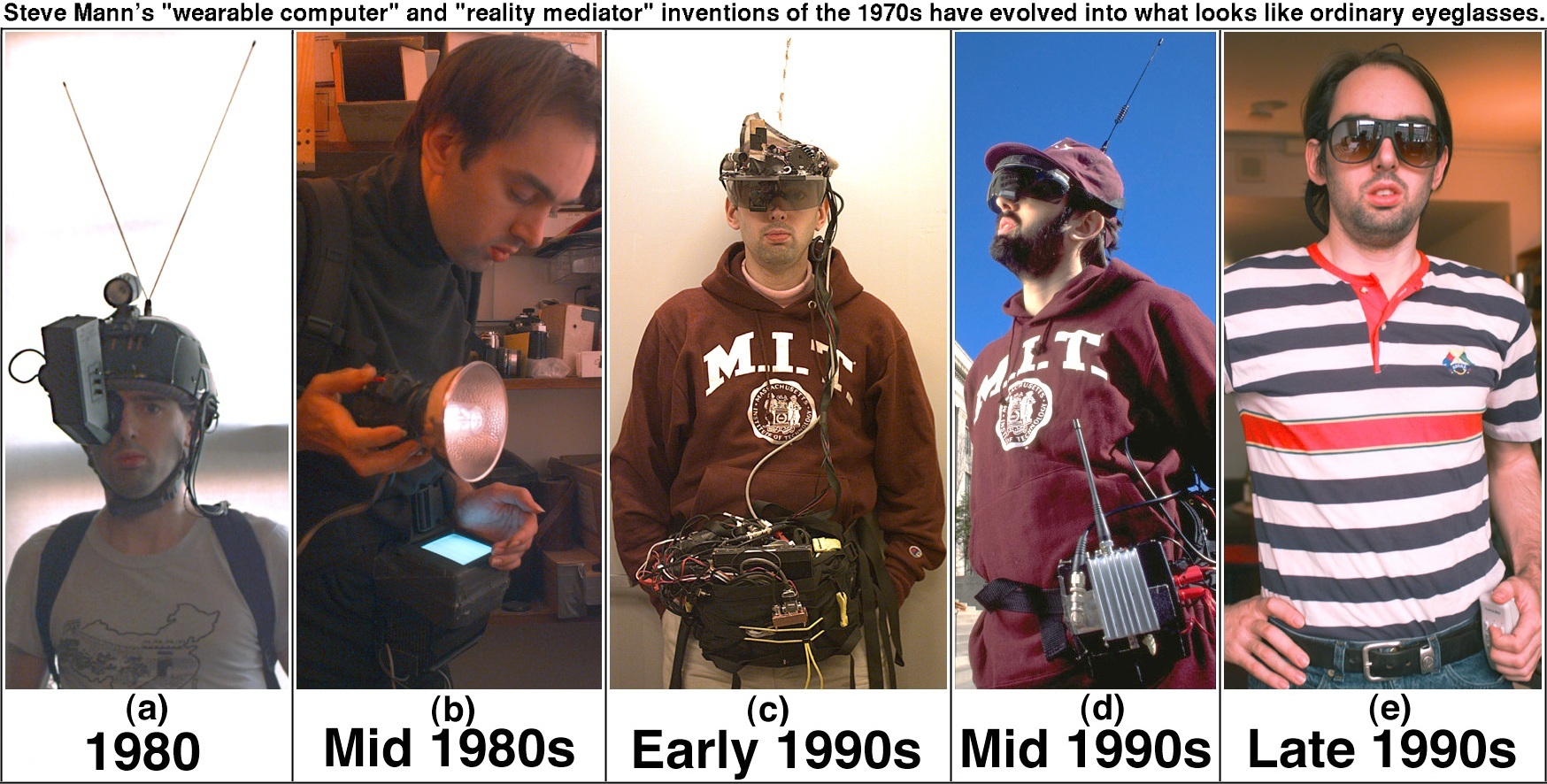
HomeSkillet writes contributes this link to an interesting NYT feature on the recent works of privacy activist, wearables pioneer and artist Steve Mann. Mann has been mentioned here a few times before, but in light of current moves to scan, monitor and track your every move by subtle and unsubtle means, it's never been more relevant. Can anyone suggest a non-registration source for this story? -
Ethics in Scientific Research
call -151 writes: "There is an interesting NYT article `When Science Inadvertently Aids an Enemy' discussing how some of the "encryption should be free for everyone" attitudes are changing with the WTC attacks. The article makes some interesting points and it is good to see discussions like these in more of the mainstream, even if the tone has definitely changed recently." Well, the questions are being asked again, but most of the researchers dealing with these issues have already answered the questions for themselves. -
Mapping Ground Zero with Lasers
securitas writes: "Amazing how the WTC disaster has shone a light on technology (pun intended). LIDAR (Light Detecting and Ranging) is the optical equivalent of RADAR. It's being used to create hyper-detailed maps of the WTC disaster site from an altitude of 5000 feet to detect shifts in the rubble as well as areas in danger of collapse."