Slashdot Mirror
Domain: obspm.fr
Stories and comments across the archive that link to obspm.fr.
Comments · 47
-
Re:Is there a better way?
That's already provided.
And, before you say you need to know that before you write your code, do you also need to know in advance that "JohnQSmith/aE8&fv84%" might someday be a user's name and password? If you're writing a program which requires deterministic future time intervals, you shouldn't be using the UTC time scale. -
OH it's SO My turn....
a couple things to ponder..
http://hpiers.obspm.fr/eop-pc/...
http://hpiers.obspm.fr/eop-pc/...http://rwgresearch.com/open-pr...
http://www.waterpoweredcar.com...
next fascist UNITED NATIONS GLOBAL WARMING prick that wants to say it can't be done will LOSE THEIR FUCKING TEETH!!!
same motherfucking pieces of shit who want my guns, gold, silver, and lead
I'll give ya the LEAD FOR FREE!
-
OH it's SO My turn....
a couple things to ponder..
http://hpiers.obspm.fr/eop-pc/...
http://hpiers.obspm.fr/eop-pc/...http://rwgresearch.com/open-pr...
http://www.waterpoweredcar.com...
next fascist UNITED NATIONS GLOBAL WARMING prick that wants to say it can't be done will LOSE THEIR FUCKING TEETH!!!
same motherfucking pieces of shit who want my guns, gold, silver, and lead
I'll give ya the LEAD FOR FREE!
-
immeasurably small
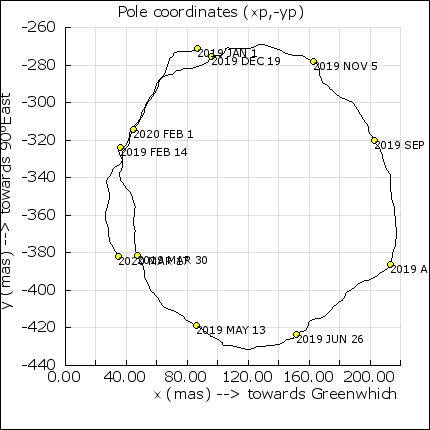
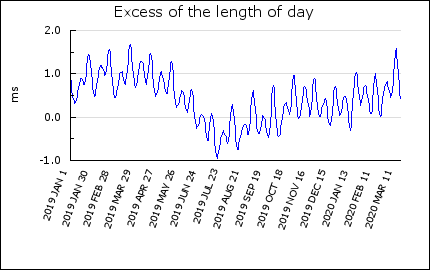
Look at the amount that the pole moves and the length of day changes annually. The normal variations are 1000 times greater than anything the earthquake has caused. See the IERS saying "hardly discernible" because a large snowstorm can cause a greater change.
-
immeasurably small
Look at the amount that the pole moves and the length of day changes annually. The normal variations are 1000 times greater than anything the earthquake has caused. See the IERS saying "hardly discernible" because a large snowstorm can cause a greater change.
-
Standard communication bus
If you want to know where you are coming from, a bus interface commonly used right now on satellites in U.S. and Europe is MIL-STD-1553B. This is basically a dual-redundant differential 1 Mb/s bus over a wire pair. There's a single bus controller which initiates all the transactions, and up to 31 remote terminals which respond to the bus controller.
What is a bit surprising is that for military aircraft, current designs have been moving from 1553 to Firewire (which is plug and play). So that may suggest that Firewire would be unsuitable for satellites. -
Re:Agreed, this is silly.
Actually a black *can* be observed.
There is quite a bit of difference between the simple-minded view of black-holes s given in introductory texts and what our present understanding of physics tells us.
-
Ocean Equivalent
Since Mars's Surface Area = 144 million km^2, this implies (for 2.5 million km^3 of ice) that ice caps are enough to supply a water layer 17 meters deep over the entire surface, or maybe 50 meters deep in Hellas and the Northern lowlands, if it was all melted. (If the polar caps entirely melted, that alone would raise the surface pressure above the triple point of water, so liquid water would be possible. The Hellas Basin is deep enough that the pressure is above the triple point now, and it definitely could have liquid water in it if the climate warmed some.)
Note that the polar caps show very clear signs of layering, presumably caused by the long period obliquity oscillations, and are in general very young geologically, so it is not beyond belief that, say, the Hellas basin fills up with water on a regular basis, every 500,000 years or so.
-
Re:Leap seconds fix a diferent problem
Yeah. an hour is meant to be 1/24 of a day. but unfortunatly, every day has a different length. You can have a look at the length of the days for each day the past 2 years here: http://hpiers.obspm.fr/eop-pc/
Yep, that means that meanwhile, our clocks are far more precise than the earth rotation itself.
-
Re:Black Holes
Black holes are not invisible on two accounts.
1- They emit black body radiation at the Hawkings temperature due to quantum evaporation, which for a tiny black hole is very high. A black hole created by an accelerator, composed of the mass of a few particles would likely be extremely hot for a very short time, and so would emit gamma rays. Wikipedia has the calculation for a 1kg BH : the lifetime is approximately 10^{-16} seconds, and the energy output equivalent to the complete anihilation of the 1kg mass (you don't want to be around). Small black holes are *fierce*, however subatomic ones don't really matter. After all accelerators anihiliate particles all the time.
The above is the #1 reason BH potentially created by accelerators are not a concern.
2- Even very large BH are in fact directly visible. They reflect light better than a highly polished metallic sphere.
These two facts are direct illustrations that most people, including well-educated scientists, don't know the first thing about BH. -
Doesn't Anyone Read TFA ?
Apparently not, even at the BBC. What they were saying is that there could be hundreds of worlds in the solar system, not in the galaxy. (They meant in the Kuiper belt, far outside of Pluto and Neptune.)
We have already found 273 extra-solar planets in the galaxy. No one doubts now that there are millions, if not billions, in the galaxy, and a puling "hundreds" of Earth type planets in the galaxy would strike most people following this research as a very low estimate.
From the article : "Some astronomers believe there may be hundreds of small rocky bodies in the outer edges of our own Solar System, and perhaps even a handful of frozen Earth-sized worlds."
I would also regard this as almost not news at all, given the rapid rate of discovery of TNOs (Trans Neptunian Objects), three of which so far are the size of Pluto or larger. -
Accelerating solar windTheoretical models of the Solar Wind suggest that its speed steadily increases until at least 20 or 30 solar radii, and perhaps somewhat past Mercury, and is perhaps even increasing past the orbit of Earth. See "Explaining the acceleration of the fast solar wind" at http://www.obspm.fr/actual/nouvelle/jun05/solarw.en.shtml, and in particular Figure 2 (Zouganelis et al, The Astrophysical Journal Letters, 2005).
This seems at odds with the Voyager mission, where "Researchers had long predicted that the solar wind speed would decrease with distance from the Sun" and verified by Voyager 2, see http://spacephysics.ucr.edu/index.php?content=v25/v8.html.
It is also noted that "Since 1977, Voyager has been monitoring the solar wind velocity and density", and the "Image - 39k" seems less conclusive, see http://spacephysics.ucr.edu/index.php?content=solar_wind/sw/swq1.html -
Re:Evidence, please!
It's actually non-controversial enough that we can just look it up in wikipedia. There are multiple references to the unsolved acceleration problem there
http://en.wikipedia.org/wiki/Solar_wind
There is more discussion here, with an attempt to explain it
http://www.obspm.fr/actual/nouvelle/jun05/solarw.en.shtml
I pulled my data from "The Electric Sky", and they reference Peter Gallagher's conference on the subject, "Seminar on Observations and Modeling of the Corona and Solar Wind - Big Bear Solar Observatory". They appear to have published a slide from his presentation., which is where I got the numbers from. -
Re:catalog of exoplanets
even better, check this one:
http://vo.obspm.fr/exoplanetes/encyclo/encycl.html
updated more frequently, also maintained by astronomers. -
Re:How did you use yours?
Most NTP servers use UTC time, so yes.
http://hpiers.obspm.fr/iers/bul/bulc/bulletinc.dat - leap second bulletin -
Re:It's all software
The problem is that you don't know in advance when http://hpiers.obspm.fr/International Earth Rotation Service (IERS) is going to introduce another leap second. They monitor Earht roration and could do it with only 6 month notice. The latest leap second was anounced this summer and we had to spend few weeks to add it to our data files and test the app before the release. If we had a release a month earlier we would not have included it and it would result in a small, but unacceptable errors unless users upgrade our software. It basically means that there is no way to build an embedded software and leave it running disconnected from anything and maintain high time accuracy at the same time. You either have to create a system for automatic updates of code and data, or rely on human operator to make changes. Both methods introduce unnesessary risks and inconviniences.
-
Accurately for 10k years impossible: leap seconde
Because this depend of the earth roation speed variation that no one can predict for a such long time now.
http://en.wikipedia.org/wiki/Leap_second
http://hpiers.obspm.fr/iers/bul/bulc/bulletinc.dat
http://tycho.usno.navy.mil/leapsec.html
http://maia.usno.navy.mil/eo/leapsec.html
http://maia.usno.navy.mil/whatiseop.html
Last prediction are for one year ahead at most:
http://maia.usno.navy.mil/ser7/ser7.dat
Did you realize that the next new year will be after the 31 december 2005 at 23 hour 59 minute and 60 seconde, not 59 seconde ? So this clock will show false time in a few months, no needs to wait 10'000 year!!! -
Re:I wonder.
From what I understand, most of the star systems we've been able to watch closely have superjovian planets in orbit around them
That was a long time ago, and it was only because the doppler-shift techniques used for detecting them were intially only sensitive enough to detect massive super-jovian planets.
If you take a look at an extra-solar planets catalog you'll find lots of sub jovian planets. Note that a lot of them have pretty short periods, but again this is more a feature of the way they're detected, and doesn't say anything about a typical star system.
Extra solar planetary detection techniques are still being refined, and many astronomers expect to be able to detect earth size planets at earth-like distances from their suns. I've even been to a talk by an astronomer who was enthusiastically discussing the possibility of spectral analysis of these planets to determine what their atmospheres might contain. -
Re:Uh, that's not how they detect planetsThis German article lists a number of ways to detect planets. In addition the two you mentioned, they have the Pulsar-Timing-Method which can of course only find planets around Pulsars, Gravitational Microlensing, and the Transit-Timing-Method . And occlusion of starlight IS an important way to find planets.
Of course, you can always check this site for all extra-solar planets found, and method they were found with.
-
Re:Not 100% true...
As far as I know (and I have checked the latest update here, 2M1207b is an extrasolar planet candidate orbiting a brown dwarf, 2M1207a. Although it may be picking nits as to what's a large planet or a tiny star, as brown dwarfs emit light (I believe) from gravitational collapse, not from nuclear fusion as most standard stars do.
-
Earth Rotation Service reports tiny changeThe Earth Rotation Service, not NASA, tracks length of day and orbital position. Their length of day table doesn't show much of a change on December 26, 2004. The earth's axis of rotation did move a measureable amount, but the excursion on December 27th isn't the biggest change of 2004. It's not clear yet whether this is a permanent change, or just the transient effects of ocean movement. It's not much bigger than the noise, though.
This is not a significant change.
-
Earth Rotation Service reports tiny changeThe Earth Rotation Service, not NASA, tracks length of day and orbital position. Their length of day table doesn't show much of a change on December 26, 2004. The earth's axis of rotation did move a measureable amount, but the excursion on December 27th isn't the biggest change of 2004. It's not clear yet whether this is a permanent change, or just the transient effects of ocean movement. It's not much bigger than the noise, though.
This is not a significant change.
-
Re:Interesting for different reasons:
There are three planets generally ignored by scientists because they are dead and orbit a neutron star. However they are Earth sized and there is a possibility that in the distant past they may have harbored life.
I'd say that possibility is nonexistent, if our current theories about the evolution of stars are at least approximately correct.
The neutron star must have once been a red supergiant (which then underwent a supernova explosion). The orbits of these planets are much smaller than the size the star must have had at the supergiant stage. This means these planets must have formed after the star became a neutron star, perhaps from the remains of the supernova. -
Re:Gun-Jumping
Not every one. I believe earlier this spring a Jupiter sized planet was found orbiting in a Jupiter or Saturn distanced orbit around it's Sun. They are out there.
I think it was Epsilon Eridani but don't quote me...
Besides, what if they find one tomorrow?
-
The IAU is drafting a position on this.There's a draft position paper on this from the IAU. It's a real issue, because planets are now being detected in other solar systems. (The current count of extrasolar planets is around 120.) The smallest one detected thus far is about a tenth the mass of Jupiter. Detection of Earth-sized extrasolar planets, let alone Pluto-sized ones, is a ways off.
The IAU's current concern is to distinguish between extrasolar planets and dark stars. It takes about 13x the mass of Jupiter before an object generates the gravitational pressure needed to ignite the D-D reaction. So the IAU says that if it's smaller than 13x Jupiter, it's a planet. Bigger than that, it's a "brown dwarf" if not shining.
-
Re:Off the top of my head..
One of those universe/solar system simulations - I forget the name.
Possibly because there's more than one name to forget... (=
Let's see, for general touring around the Solar system and neighborhood, there's nothing quite like Celestia. Hours of fun, and very pretty to look at.
Noctis is also similar, but set in a fictional universe.
For more pretty pictures, but less interactivity, see The Solar Journey homepage or the Solar System Simulator. Also The Nine Planets for Kids.
Naturally, kids aren't that interested in just flying around. Well, Orbit lets them blow each other up in space, but with realistic physics and visuals. Once that gets boring, you can let them fly a space shuttle to the ISS with Orbiter. Beware, though. Orbiter is no simple game - you actually need to know how space flight works. There's also the Microsoft Space Simulator, which Orbiter has more or less superseded.
If you're not looking to get that far off the ground, FlightGear's an excellent flight simulator in which you can fly everything from the original Wright Brothers' craft right up to concept superplanes.
More links, mainly astronomy related, here, here, here, here, and here.
Finally, you might wish to try browsing the Tucows Games site and Freshmeat's game section (you'll need to login to make full use of Freshmeat).
Good luck, have fun searching. -
Re:IBM won't dump windows anytime soon...
It already is to a large extent.
Example
Personally, my Thinkpad has everything working except:
Wireless Networking - Intel to release driver Q2 this year I believe
Modem - Never tried it
Power Management - Troulbe with suspend to RAM
Other than the above which I'm confidant will be worked out sooner rather than later it works fine with Linux (Gentoo to be specific). -
Re:Grav/Mag effects on solar convection
There are serious theoretical reasons to believe magnetism AND tidal interactions are a factor. Related articles here, here (postscript) and here (postscript). (Can't read postscript? Get ghostscript, or read the text versions.
-
Re:Grav/Mag effects on solar convection
There are serious theoretical reasons to believe magnetism AND tidal interactions are a factor. Related articles here, here (postscript) and here (postscript). (Can't read postscript? Get ghostscript, or read the text versions.
-
here is a plot of the length of day
The IERS has a plot showing how the length of day has decreased over the past few years. Curiously, the current phase of accelerated rotation of the crust began right around the time we started adding leap seconds to UTC.
-
Re:prior art foundWell, I did find an excerpt from L'Ecume des jours, by Boris Vian, the renowned member of the "College de pataphysique" (which also appears to have an anglophonic branch).
And it's even translated into English. So here it goes, from this page:
'Would you like a drink first?' asked Colin. 'I've finished my pianocktail and we could try it out.'
'Does it really work?' asked Chick.
'Of course it does. I had a hard job perfecting it, but the finished result is beyond my wildest dreams. When I played the Black and Tan Fantasy I got a really fantastic concoction.'
'How does it work?' asked Chick.
'For each note,' said Colin, 'there's a corresponding drink - either a wine, spirit, liqueur or fruit juice. The loud pedal puts in egg flip and the soft pedal adds ice. For soda you play a cadenza in F sharp. The quantities depend on how long a note is held - you get the sixteenth of a measure for a hemidemisemiquaver; a whole measure for a black note; and four measures for a semibreve. When you play a slow tune, then tone comes into control too to prevent the amounts growing too large and the drink getting too big for a cocktail - but the alcoholic content remains unchanged. And, depending on the length of the tune, you can, if you like, vary the measures used, reducing them, say, to a hundredth in order to get a drink taking advantage of all the harmonics, by means of an adjustment on the side.'
'It's a bit complicated,' said Chick.
'The whole thing is controlled by electrical contacts and relays. I won't go into all the technicalities because you know all about them anyway. And, besides, the piano itself really works.'
'It's wonderful,' said Chick.
'Only one thing still worries me,' said Colin, 'and that's the loud pedal and the egg flip. I had to put in a special gear system because if you play something too hot, lumps of omelette fall into the glass, and they're rather hard to swallow. I've still got a little bit of modification to do there. But it's all right if you're careful. And for a dash of fresh cream, you add a chord in G major.'
'I'm going to try an improvisation on Loveless Love,' said Chick. 'That should be crazy.'
'It's still in the junk room that I use as my workshop,' said Colin, 'because the guard plates aren't screwed down yet. Come in there with me. I'll set it for two cocktails of about seventy-five milligallons each to start with.'
Chick sat at the piano. When he'd reached the end of the tune a section of the front panel came down with a sharp click and a row of glasses appeared. Two of them were brimming with an appetizing mixture.
'You scared me,' said Colin. 'You played a wrong note once. Luckily it was only in the harmonization.'
'You don't mean to say that that comes into it too?' said Chick.
'Not always,' said Colin. 'That would make it too elaborate. So we just give it a few passing acknowledgements. Now drink up-and we'll go and eat.'
This other page has a different translation, and other interesting stuff about it all. -
interstellar dust reddens
Atoms produce very specific patterns of absorption or emission in the light spectrum depending on species. A familiar example, is the solar spectrum, which is created by absorption of narrow bands in the spectrum by a large number of different elements in different states of ionization. Redshift causes the entire set of these lines to be moved towards the red end of the spectrum. They retain the spacing between themselves, so they can still be recognized in their new positions, and their new positions tell us how fast the object that created them is moving. Reddening caused by dust doesn't move these absorption lines. Instead it scatters light preferentially at the blue end of the spectrum, causing the entire end of that spectrum to dim, rather than creating narrow bands in it or moving narrow bands around. These two different processes are usually distinguishable.
-
Re:groanActually, there has been a direct detection; one of the extra-solar planets (HD 209458) has been observed to transit. That means they've obseved the dip in brightness of the parent star when it gets (partially) eclipsed by the planet. It's a very, very solid detection (there is a gorgeous light-curve taken with HST). Check out this link for more info, e.g. the light curve is available through a link at the bottom of the page.
I would say that is a pretty direct detection, as Charbonneau et al. have even detected sodium in the atmosphere of that planet.
The issue you are talking about concerns one star out of close to a hundred with planet candidates. Don't be so quick to dismiss some very nice work that people (several independent groups) have been doing for years now. You start to sound like a crank
-
Extrasolar Planets Encylopedia
You might want to look at Jean Schneider's Extrasolar Planetary Encylopedia for a lot more information, including accurate information that hasn't been put through the popular press.
After all, we ALL know how precise the media is, right?
55 Canri, btw, has been on the extrasolar planetary astronomy watch list for some time. Read the paper references at Jean's site. I wondered why it looked so familiar... -
ummm, excuse me...
What ever happene dto Gliese 229?
That was imaged back quite a while ago by a caltech team.
I found papers about it at Jean Schnieder's webpage, but not a listing...
-
More info...
-
More info
How amusing. I submitted this earlier and got it rejected. oh well.
This link I was using has a nice story attached. Also for more general info about extra solar planets try Jean Schneider's here or its mirror here.
I'm getting funky time outs all over the place, so its hard to tell whether or not things are up. Unless you guys have gotten so good at slashdotting a site that you do it BEFORE a site has been posted.
-
Fantastic!
This is great news, for two primary reasons.
First off, it's more or less in our cosmic neighborhood. 10.5 lightyears!! We could quite conceivably send a probe in that direction well within the next century. Knowing that extrasolar planets exist this close to earth is a very good sign indeed.
The planet is also at a very moderate distance from its parent star -- although I see no data regarding the shape of its orbit. It might well be extremely elliptical, but we can always hope for something vaguely circular. In any case, it should make for some interesting viewing.
For more information about extrasolar planets, consult your local library. No, just kidding, try this site here.
First one there gets to name it!
yours,
john -
Re:Wow! Great animation!
Did you see the barred spirals after the first collision? It makes me wonder if the barred spirals that we observe are formed by the collision of a galazy with a less luminous but very massive object.
AFAIK, bars (along with lots of other detail in spirals, including much of the spiral structure itself) are generally thought to be the consequence of interaction between galaxies. I don't think it would require a "less luminous
---
-
Re:If this false reading started it all ...Actually, surprisingly enough the very first extrasolar planets were detected after a false alarm. These are not the relatively nearby planrts of Marcy and Butler, but the rather bizarre pulsar planets found by Alexander Wolszczan, of which two have been confirmed since 1994. In 1992, Matthew Bailes, then a PhD student at Jodrell Bank (I think - later he was a post-doc in the astro group I was in) "discovered" a pulsar planet with a period of 6 months - had a paper published in Nature and all. Then had to retract the claim a few months later when they realised it was a calibration error. But others were already looking for other pulsar planets and found some real ones!
I can tell you, he is NOT in the least bit proud to have sent others looking in the right direction by his mistake!!
An excellent reference on extra-solar planets in general is the Extrasolar Planets Encyclopedia.
-
Most astronomers didn't think it was a planet...As another poster has already stated, most astronomers doubted the claim that this object was actually a planet. The evidence was skimpy:
- it was close to a close binary star
- it was dimmer than the stars
- some claimed to see a "filament" joining the object to the binary
Astronomers have had a number of bad experiences based on "filaments" which appear to connect two objects -- which are actually at very different distances from us. There was a heavily publicized case a few years back, in which Halton Arp claimed that such a "filament" joined a quasar and a nearby galaxy, thereby "proving" that the quasar was much closer than its redshift would indicate. Sigh.
Anyway, back to TMR-1C. I remember talking to other astronomers at the summer meeting of the American Astronomical Society in 1997, in San Diego, and most of them agreed with me that this was just a chance superposition of a background star with the binary. We thought that the discoverers should have waited for some additional evidence:
- did the "planet" share a common motion in space with the binary star (we call this "proper motion"); it would take a few years to confirm this, since one has to wait for the stars to move a perceptable amount
- did the "planet" have the proper colors? A planet in this system would have a particular ratio of visible to near-infrared to far-infrared radiation, whereas a background star would have very different ratios. Again, this would take time to confirm, since one would need to apply for telescope time at observatories with the proper equipment.
My guess is that when the researchers (who work for NASA) started talking about their work with their colleagues, word reached the upper echelons of administrators, who probably ordered the press releases. I am speculating that it might have been hard for one of the astronomers on the team, if he or she had serious doubts about the claim;
it's not easy to tell your boss to shut up.
But a scientist is supposed to do this
Oh, and the poster who claims that astronomers have not detected ANY extra-solar planets is dead wrong. The radial velocity measurements he interprets as "changes in stellar shape" are really due to the motions of stars in orbits around their center of mass with bona-fide planets. Check out
http://cannon.sfsu.ed u/~gmarcy/planetsearch/planetsearch.html
and
- it was close to a close binary star
-
Re:Time Zones
Actually, the time lords are rather the Bureau International des Poids et Mesures (International Weights and Measures Bureau) for TAI (atomic time) and the International Earth Rotation Service for UTC (who make the decision of when to add leap seconds for example).
Granted, on last reading, the USNO master clock was only five nanoseconds fast of UTC, as computed by the BIPM (by averaging many different atomic clock's reading of UTC).
-
Hair-splitting to smithereens
Let's have some fun splitting these hairs in real tiny pieces.
There are several standards used for keeping track of time. The most important, by far, is Universal Time Coordinated (UTC), sometime known as GMT (Greenwhich Mean Time). This is the standard time for Earth, and it is with respect to this time that local time is defined (offset by a certain number of seconds, generally a multiple of 3600, i.e. an integer number of hours).
UTC does not flow linearly. That is, the interval between time t1 UTC and time t2 UTC is not always t2-t1. This is because leap seconds get inserted occasionally in UTC, so as to keep it more or less synchronized with the sun. More precisely: there are 86400 SI seconds in an SI day; but the mean solar day is approximately 2 milliseconds longer, because the Earth's rotational period is getting longer (the Earth is slowing down) at an order of magnitude of 1 millisecond per day per century. Terrestrial Time (sometime called Ephemeris Time) is the astronomical time: it is currently 0.184 seconds (roughly) fast of UTC. And UTC will be corrected so as to always keep it to within 0.9 seconds of TT (i.e. the sun should always be overhead on Greenwhich meridian to within 0.9 seconds at noon UTC).
Adding a leap second can take place after December 31 or June 31 (or possibly also March 31 or September 31, but that has never occurred), in the following form: after 23:59:59UTC comes 23:59:60UTC and after that comes 00:00:00UTC. The last leap second happened after December 31, 1998, and there will be no leap second after December 31, 1999 (today). It is the International Earth Rotation Service that is in charge of deciding when a leap second should be inserted. (Theoretically, a second can also be substracted, but that has never happened and presumably never will.)
The other important time standard is the Temps Atomique International (this is in French because the Bureau International des Poids et Mesures is in Sèvres, France), TAI for short. Contrary to UTC, TAI is a linear time scale (to the best of the precision we can achieve, that is, i.e. to within a few dozens of nanoseconds per year). TAI ticks one second every SI second, and it is maintained by averaging over about 50 atomic clocks around the world (there is no Master clock for TAI); the calculated offsets of the atomic clocks wrt TAI can be found in this FTP directory.
The Temps Atomique International and the Universal Time Coordinated are offset one to the other by an integer number of SI seconds (since 1972). This offset increases by one every time a leap second is inserted in UTC. Currently (since January 1, 1999 and at least to June 31, 2000) TAI is 32 seconds fast of UTC (so by the time UTC reaches January 1, 2000, 00:00:00, TAI will read January 1, 2000, 00:00:32).
So TAI will say Y2k precisely 32 seconds before UTC says so. (There is also GPS time, which is exactly 19 seconds back of TAI, but never mind that one. And, of course, there is Terrestrial Time, which nearly coincides with UTC, but not by a round number.)
Now, which of these times should be used on computers? Well, if you look in the
System time should be a linear time. If clocks were precise enough, it would be inadmissible to skew the clock by as much as one second (even by diluting the effect over a certain period). Thus, system time should be put to TAI (and not to UTC, let alone local time). This is why the right/ time zones are there: if you set your system clock to TAI and set your
On the other hand, the POSIX standard (see POSIX.1, Annex B, 2.2.2) specifies that the time() system call should measure the difference between the current UTC time and the UTC time of the Epoch (January 1, 1970 at 00:00:00UTC). This is most unfortunate, because a difference of UTC times is not a number of seconds elapsed. And it is especially unfortunate since the rules for computing UTC from TAI were rather complicated before January 1, 1972 (at which time UTC was resynchronized to TAI-10s). Thus, the Unix Epoch, though it is January 1, 1970 at 00:00:00UTC, is actually January 1, 1970 at 00:00:08.000082TAI, and although on January 1, 2000 at 00:00:00UTC (January 1, 2000 at 00:00:32TAI) exactly 946684823.999918 seconds (as measured with respect to TAI) will have elapsed since the Unix Epoch, the time() function will return 946684800.
This being so, either the POSIX standard is mad, or the right/ timezones are wrong. I would tend to say that POSIX is crazy, and that system clocks should measure TAI and leave out the leap seconds. But since system clocks are synchronized by NTP, and since NTP gives UTC (while skewing the system clock to somehow jam in the leap seconds), the POSIX standard is followed de facto. (As a compromise, I would suggest moving the Epoch back in time by 82 microseconds to avoid these funky non-integer figures.)
If I recall correctly, VMS measures time using the Modified Julian Date. This is also synchronized with UTC. January 1, 2000 will be julian day 2451544.5, so MJD 51544.
To summarize, I say that Y2k is when the Unix time() function returns 946684800, which is exactly 946684823.999918 second of atomic time after the Unix Epoch.
Another stupid bit of trivia: according to ISO (the ISO8601:1988 standard), Y2k doesn't start until the first monday of the year, i.e. January 3, 2000. As for January 1, 2000, it is still ``day 6 of week 52 of 1999''. See your local emacs for information on what this day is in various other calendars.
-
Re:Not the first Earth-sized planets, either
The link given was bogus (I think J05H was trying to make it pop up in a new window and
-
Re:Not the first Earth-sized planets, either
The link given was bogus (I think J05H was trying to make it pop up in a new window and
-
Not the first Earth-sized planets, either
Just the first one found around a main sequence or nearly-main sequence star.
In 1989, three Earth sized (well, one is Mars sized, but close enough) planets were discovered
orbitting a pulsar. They are obviously dead planets, like their star, but they always fail
to be mentioned, especially in the mainstream media. Anyway, check out the Extrasolar Planets Encyclopedia for more info on all of this. -
up And first CONFIRMED, NOT first
There are a number of other planetary systems
that are likely, and one that has been known
but not exactly.
The known system is 55 Cancri, it has two large
planets.
The other "likelies" are Lalande 21185 and a bunch
of pulsars. Lal 21185 has at least two likely
companions that are detectable, but they are long
period orbits (est. 5.8 and 30 year orbits) so
they will take longer to confirm.
The only reason this is getting news is that both
the SFSU and AFOE teams concur on the system. I'm
not dissing on either team, they have both done
insanely cool work that is shattering and
rebuilding our understanding of planetary
sciences. The SFSU team, headed by Marcy and
Butler, have discovered or confirmed the majority
of the extrasolar planets that are known, and
continue to release new results every couple of
months.
For a great resource, check out the Extrasolar
Planets Encyclopedia at: http://www.obspm.fr:80/departement/darc/planets/en cycl.html