Slashdot Mirror
Domain: slideshare.net
Stories and comments across the archive that link to slideshare.net.
Comments · 198
-
Re:Would it hurt ...
MongoDB uses mmap but the similarity ends there. It uses a journal, not COW. It suffers from a number of durability and consistency vulnerabilities. LMDB has no such weaknesses.
http://www.slideshare.net/mong...
This research group at University of Wisconsin cites 1 vulnerability for LMDB, but they were mistaken:
-
Re:Are all codecs hardware accelerated?
VP8 already does, in anything based on Snapdragon 800 (and higher, presumably). Apparently, it even has hardware VP8 encoding, for what it's worth
-
How to do it.
Advances in Deep Learning have made it far easier to extract features from vision -- in fact, feeding pixels straight to the neural net is pretty close to being all you need to do.
Take a look at these slides and read about convolutional neural networks: http://www.slideshare.net/0xda...
-
Re:Powershell
Of course, the more you explain about C the less sensible it appears.
Quote:
both in C and certainly in C++, it is uncommon to see a screenful containing only well defined and conforming code.
That's what proper language design is supposed to avoid. Oh well.
-
Java is obnoxious
1. Java is obnoxiously verbose. Despite having an example of properties from C# and cries for them to support them, they have failed to do so. So the syntax for creating getters and setters takes so much longer. Everytime I wrote code in Java over C#, it takes so many more lines. C++ compiler should support properties by now too.
A few years old but: http://www.slideshare.net/jeff...2. The IDE. Besides having the look of an app from the 90's, Eclipse is a mess. It takes hours and hours of plugin research to get the same feature set as the default install of VS. Even basic features, like basic font size and themes, are unacceptably difficult. Then you have to add plugins to do anything worth while. Netbeans seemed to work better for some things but have less plugins.
3. The java installation is a pain. Both java and the IDE. Microsoft has the benefit of
4. Oracle. Enough said.
-
Re:Smells of bullshit.
Exactly. Ot is more than impossible that a 'hacker' can access any flight system/avionics via WiFi
Communication between avionic components are usually done via buses with 2 wire serial connections. There are roughly two dozen protocols/technologies in use, all but 2 or three involving wires, the others glass fibers. I'm only aware of Airbus A380 using ethernet, not sure to what extend.
An overview you can find here: http://de.slideshare.net/mobil...
A plane where there is a potential access to the avionics by passengers would never fly. No regulation authority would allow that, no insurance company would insure such a plane.
Assuming otherwise is simply nonsense. -
Re:RTFA: real engineering is going on
please stop calling the thing a quantum COMPUTER"
Why? It computes the global minimum of a field with many local minima. A wide variety of computational problems can be recast as searches for a such field minimum, and classical simulated annealing typically finds an approximate result. Quantum simulated annealing can either find an approximate result more quickly (which can be handy) or alternatively can find an *exact* result in reasonable time (which is sometimes hugely more useful, especially in cases where classical SA probably cannot).
Where QSA does remarkably well is when the local minima are deep and separated by thin higher-valued barriers. This is a common case already, and again a wide variety of problems can be recast as QSA problems that with certain classes of data sets are especially well suited for D-Wave type quantum computers.
An example is here http://www.slideshare.net/shu-...
-
Re:What? Bad interpretations
In slides of his presentation he does mention iPads, iPhone and OSX. See Slide #18:
-
Re:Use confiscated drugs
While there are so many things that can kill a human, I find it hard to believe that they are having a hard time killing humans!
It isn't the killing that is difficult. It is the bureaucracy surrounding them that makes everything difficult.
Veterinarians have to euthanize animals comfortably all the time. Why not use the same drug?
Not so fast. This is very debatable. One of the more popular methods of "euthanasia" (the term is often used improperly) for animals is the deep barbiturate injection, which can cause a great deal of fear and stress (which means it's not technically "euthanasia" at all). IV barbiturates are far more humane, but even that can cause stress because of the administration of IV by unfamiliar people.
Another popular method today is CO2, but there is actually a lot of evidence that it is anything but humane. It is at its root a fancy means of suffocation. Same with the vacuum chambers that have been used in a similar way.
If you want to know what "humane" actually is, I would look at how most doctors commit suicide: an overdose of oral barbiturates.
IV infustion of barbiturates is probably second best but now we are back to the same problem: the emotional distress that causes, and the physical pain and distress that cheap substitutes can cause. -
Re:Mod parent up
That's not a very good piece of evidence, it shows linux better in some, and windows better in others. There are other types of benchmarks too, like network throughput.
That's beside the point though, I wouldn't use Windows unless it was forced on me. Compared to other good OSes, what data do you have on performance? -
And here's why Humanities are attacked:
Social sciences is a misnomer because they aren't sciences, and some of them are not even arts. Many of them are as harmful as phrenology, specially when used in courts. For example, psychologists, influenced by feminists, erroneously postulated that rapers cannot reintegrate into society, that as soon as they leave prison they will rape again, and therefore they should be chemically castrated or be kept in prison for a long time without furlough. However, recent social studies using facts rather than assumptions actually found that violators rarely fall back into crime, with only 5% of them posing any risk (people identified with a profile of mental disorders), while the usual rate of reoffenses for other delinquents is 30% or higher. This study means that many men have been chemically castrated or faced longer prison times due to wrong assumptions taken as science facts. Other social pseudosciences like "Women Studies" or "Sociology" persist in repeating long-time ago discredited lies and marxist propaganda that doesn't resist scientific, economic, nor mathematical scrutiny. Sociology in particular is the only field of science whose students often refuse to acknowledge as science even though that automatically implies falling grades, and is well known for the "Sokal Scandal", an hoax in which they have fall more than once.
Lastly, "Climate Change" is known to fudge data, create models with no predictive power (aka. writing science fiction), rely on statistic correlations with infinitesimals so the results become white noise, and have their proponents constantly fall on fallacies such as argumentum ad verecundiam, argumentum ad populum, and Circular logic, behaving more as a religious zealots preaching doomsday and shunning the nonbelievers, rather than as serious sciencists.
-
Re:He's defending EA?
Oh. He WORKS for EA. Go hide under a rock, worm.
There's this gem of a presentation in the article comments on Polygon, done by the same person defending F2P: http://www.slideshare.net/bcou... -
CATV leakage is an issue too
As Verizon (especially) lights up LTE they bring in trucks that look for problems in the 700MHz bands. They are taking a proactive approach to cleaning up the band before RFI causes problems. This makes sense since LTE uses QAM and high symbol rates to push data, meaning that the carrier to noise requirements are much higher than 3G. Most cable companies use the same frequency band, up to 750MHz. To make matters worse, cable systems use QAM carriers too, so the demodulators can get confused and pick up the wrong carrier.
Cable companies monitor their plant for signal egress from broken coax, cracked housings, poor craftsmanship, etc (leakage), but usually around 115MHz, in the aeronautical bands (since there's been cases of planes lining up on leaks instead of the glide path). Because some types of leaks are frequency dependent, a system that looks great in the aeronautical band might leak like a sieve at 700MHz. In fact a certain set top box happened to have vent slots that made a perfect antenna at 700MHz.
-
prizes were an integral part of American history
No, you're wrong, bounties and prizes were an integral part of American history.
-
Not really tick/tock but rather "drip drip drip"
Computing has always been tiered: a small elite which pioneers what ultimately tickles down to the masses. When the first abacus was made, not everyone was able to use it. But when the masses learned to use it, the Mesopotamian elite already had adopted written language for accounting (sorry, only the German Wiki page contains said info). The first computers were all elitist devices. The masses were using tables to approximate sin/cos/log etc.
Today we call this elite supercomputers. Techniques developed for these eventually get adopted for mainstream hardware. The GPUs we have today are essentially modeled after the vector CPUs used in the supercomputers of the 1980s.
You're right though, that there is a feedback between both: the mainstream with its incredible volume drives manufacturing. As we approach the 7nm wall, manufacturing is becoming increasingly expensive. Only mass markets can finance the required R&D. Supercomputing is increasingly taking advantage of mainstream tech. E.g. ORNL's Titan is based on NVIDIA Tesla K20x GPUs, which technically aren't your average gamer GPUs, but the chips are essentially spin-offs of these.
-
Re:It's not only RAM
but.. I've heard* that it is generally better to compile in 64-bit mode, because the 32-bit part of the CPU is "legacy" and potentially less efficient than the 64-bit operations.
I hate watching videos, but I looked at the slides from the presentation, and slide 16 has, as one of its points, "Prefer 64-bit code, 32-bit data", which doesn't sound very consistent with "oh, the 32-bit stuff is legacy".
On x86, some reasons to prefer 64-bit code are that you have twice as many registers (although instructions that use the 8 new registers are one byte longer, as they need an additional instruction prefix to add additional register specifier bits), and that, as you're allowed to break binary compatibility when going 64-bit, the calling sequence was changed to support passing parameters in registers. Those have nothing to do with the 32-bit stuff being potentially-slower "legacy".
In fact, if you're talking about processors that don't have "Itanium" in the name, it's not clear what "the 32-bit part of the CPU" is:
- for most RISC architectures, and for {System/3x0}/{z/Architecture}, the 64-bit version of the instruction set is just a widened flavor of the 32-bit version and the same data paths, registers, and instruction decoder can be used in 32-bit and 64-bit mode;
- for x86, "the 32-bit part of the CPU" would be the lower half of 8 of the GPRs, the program counter, and the ALU(s), and the parts of the instruction decoder that handle the prefix used to get at extra registers as INC/DEC instructions with embedded register numbers, so the data paths, half of the registers, and almost all of the instruction decoder are used in both modes;
- for ARM, "the 32-bit part of the CPU" would be the lower half of 16 of the GPRs, the program counter, and the ALU(s), and the part of the instruction decoder that handles AArch32 instructions, so a lot of that is used in both modes;
so I'm not sure why "the 32-bit part of the CPU" would be "legacy" and possibly slower.
-
A non-Slashdotted link to the PDF.
http://www.slideshare.net/daniel_bilar/acoustic-20131218
A link that's not Slashdotted (yet).
-
Re:The paper gives examples
It's no so much a violation as assuming behaviour is defined when it is not.
Yes, that's a better way to say it.
The passing of parameters and return values falls under the purview of calling conventions and ABIs. These are discussed in the compiler manual (yes, yours has one), but usually ignored on PCs. (Or really anything with an OS.) In embedded programming, that stuff is much more useful, since you're more often interfacing C and assembly functions. It's also helpful for debugging, since the debugger is often confused by optimization. Put a breakpoint on the branch instruction and the parameters will be in the registers or on the stack.
Someone posted a link to Deep C elsewhere in the comments, which goes over some of these details.
-
Know your C
Somewhat this made me remember that slideshow on Deep C. I only know that i don't know nothing of C, after reading it.
-
Hours 35 == less gets done
I remember reading an article written by S.A.S. several years ago, about how they used their own stats software on their business practices.
Including training costs, turnover rates, and other factors, they determined that any work beyond 35 hours per week decreased productivity.
It would lead to code requiring more bug fixing / rewriting, staff leaving, etc.Crunch was okay if it was for 2 weeks only. After that, things would deteriorate to the point where everybody would get less done in a day while working OT than if they would have just worked a normal day. You also need recovery time after working OT, in order to return to regular productivity.
From my own experience in the games industry, If you know you'll be working late and you already have been working late for quite awhile, you will be more prone to spread your tasks out more, since you need time to let your brain rest.
All in all, if you want to ship something on time, don't work overtime. Work 35 hours per week (I think that doesn't include lunch).
Here's a presentation on this very topic:
http://www.slideshare.net/flowtown/rules-of-productivity-2756161 -
Breakthrough Cosmology
This seems to be a breakthrough and I would not be surprised if it would have an impact on cosmology. May be it would be worth looking at the Schwadron Retention Theory and on boundary layers in general: http://de.slideshare.net/ppalme/the-schwadron-retention-theory
-
Re:Not just Win8
-
Re:Er...make a PowerPoint and upload it?
Seems like it would be a short book. Step 1: Make a PowerPoint presentation. Step 2: Fricken' upload it to a site designed to accept PowerPoint presentations.
But this is a free web 2.0 based slide hosting service! That's gotta be worth way more than the ability to disassemble translate the XML in a frickin' PowerPoint into HTML, doesn't it?
Free: We monetize clicks on it.
Web 2.0: We track who uploads and who reads it, click by click, slide by slide, so instead of just some HTML with a bunch of IMG tags, where you could click on one piece of static HTML that loaded the images, and then just page down or scroll through the entire presentation, we're going to require that Javascript be enabled, use lazy-loading to make sure only two or three images are actually visible at any given time, and track whether people scroll up or down, and how long they read each slide, and so on...
Service: For example, this slideshow on FAIL could have been represented with a few paragraphs of text, but it's 93 mouse clicks from start to finish, and a big happy sidebar with facebook, twitter, whatever the fuck inShare is, g+, Pinterest, and Wordpress social icons!
-
Re:Government-run Utility
Here is one solution. (Slides are from 2009, but it still works.)
http://www.slideshare.net/eCommConf/26-brough-turner
This is the way it's done in Stockholm/Sweden. Lowest price and a ton of isp's to chose from (like 300 in stockholm)
I pay like 12 dollars a month for 100/100. Have been for 6 years... could get faster like gigabit but I'm lazy. -
Prior Art
Near_sound_data_transfer is already implemented and sold by TagAttitude.
Audio data transfer in Android is discussed in this stackoverflow post which mentions this slideshow.
This dude posted his same idea over a year ago.
Modem-style data transfer between smartphones is a cool idea - but the software and protocol would need to be ubiquitous (read: open). If only a few apps or devices support this tech, it's no different from requiring hardware like NFC or software to support a bluetooth data sharing connection.
-
Re: Citation Needed
In the grand scheme, Node and Mongo are still quite new; for the most part, ace JavaScript developers who can write brilliant code on both sides of the request transaction have yet to emerge, but if and when they do, the things they build could be jaw-dropping.
Can any real developer explain why having a javascript backend would be any different to any other backend in such a way where something jaw-dropping could only be the result of the javascript backend?
Not so much the Javascript backend; but the fact that node.js is highly scalable, as well as event-based and non-blocking IO features.
-
Re:That explains things
I think some of your options for mobile web development are jQuery Mobile, Sencha Touch, Appcelerator Titanium, HTML5 Mobile Boilerplate, and a bunch of other stuff.
Here is a slideshow/review you might find useful:
http://www.slideshare.net/stevedrucker/mobile-platforms-19979061
One thing to keep in mind: I don't think any of these tools will give you a true mobile app experience. So if you are looking for that you might want to look into other tools instead.
-
Re:Don't worry
How was the rootkit installed? Can you please elaborate on what security failures were involved?
Not sure if you are looking for how he did it, or indirectly doubting the story, but in case this is in doubt - there are plenty of Linux rootkits.
http://blog.sucuri.net/2013/02/linux-based-sshd-rootkit-floating-the-interwebs.html
http://www.securelist.com/en/blog/208193935/New_64_bit_Linux_Rootkit_Doing_iFrame_Injections
http://arstechnica.com/security/2012/11/new-linux-rootkit-exploits-web-servers-to-attack-visitors/
http://packetstormsecurity.com/UNIX/penetration/rootkits/
http://www.slideshare.net/AndrewCase/omfw-2012-analyzing-linux-kernel-rootkits-with-volatlitylist could go on for quite a while..
-
Re:Crap, the sky is falling
You have some interesting thoughts, and it's clear that you've put some energy into your opinion, but I'd like to point out a few things.
Bitcoin is currently a small curiosity, it's only just becoming big enough to attract the interest of the real sharks, and I'm not convinced the creators have the resources, motivation or interest to keep the currency fair and secure once serious money becomes involved.
You might consider that this is an excellent argument for starting to play around with (dare I say "invest in"?) bitcoin. If even a small percentage of the word's commerce, or even e-commerce, is transacted with bitcoin, the opportunity is virtually unlimited while your risk is limited to whatever you put into it (a couple hundred bucks? You'll never miss it).
Many of the exchanges are still pitifully insecure (run on VPSs !), the infrastructure is not well managed (witness problem above), and the creators probably never expected it to take off or really thought through the implications.
The part about exchanges may be true, but you don't have to keep your bitcoin or cash with an exchange - you can keep it in your own wallet. As for the creators not having thought through the implications, I'd like you to consider the words of respected security researcher Dan Kaminsky who says that normally when a security researcher looks at this sort of thing it looks good on the surface, but once you start to scratch a little deeper you realize how poorly thought out the whole thing is. Kaminsky claims that bitcoin is rather the opposite- it looks pretty bad on the surface but once you start digging you realize that it is really well thought out. (source: slide 3.
Once there is serious money involved, lots of people are going to want to change the rules. If Bitcoin becomes popular it will be easy to coopt, devalue, and tax until it is just another currency, probably tied to a particular corporation or government. There's absolutely nothing you can do about that as a user of bitcoin. If the developers decided to change the direction of the currency you have your life savings in, devalue it, create a new block chain, you don't even have a vote on the matter.
This and much of the rest of your post is actually quite wrong as already addressed quite well by slashdot user "seizer". I would also encourage you to do some more reading about bitcoin - it's fascinating.
-
Re:Welcome to STEM Jeopardy
Sorry, nope. I manage engineers, and no amount of training will ever make an average engineer into an extraordinary engineer. See Reed Hasting's (Netflix CEO) philosophy of hiring and compensating, he hits the nail on the head. Netflix Hiring
-
Re:You're not kidding
Here's Kaminsky: http://www.slideshare.net/dakami/bitcoin-8776098
Scammers and legitimate entrepreneurs make these same arguments, and try as hard as they can to sound the same. Of course if you worked a little at something and it seemed vaguely original to you, you are the lifeblood of capitalism and no amount of reward seems too much. If it went south later and screwed everyone downstream, who could have ever foreseen it? Just be careful your arguments would sound convincing to a jury when all the downstream people come calling.
As a side note I am quite sure the mining difficulty explosion was expected. The entire design expects it, and the papers explain this clearly. It's necessary for the system to work.
We actually are very hesitant for the law to protect people from their investment decisions, rightly so, and I think it would take our society quite a while to come up with any kind of response, let alone protections surrounding, these decentralized financial systems. I believe, don't get me wrong, that they have an important future. But in the meantime, buyer beware.
-
Re:You're not kidding
I haven't analyzed it but I bet a lot of people have.
I bet there hasn't been a lot of people analyzing it, there was already a problem with miners all having to agree to revert back to a previous version of bitcoin, so there's versioning issues for starters.
Scalability looks like a problem:
http://www.slideshare.net/dakami/bitcoin-8776098I like bitcoin but there are a lot of unanswered questions like what happens if the bitchain split happens again and some people stick with the wrong client version?
Also how well will bitcoin work if bitcoins become worth $10,000 dollars each and everyone starts trading 0.0001 bitcoins.
And if someone trys to cash in a few million dollars worth all at once that'd probably crash the value back down to a dollar.
I don't think it's been well thought out at all, a billion dollars riding on a beta bit of software. It won't last forever.
-
Re:You're not kidding
I'm not a crypto expert but Bitcoin does seem to have scalability issues with regards to transactions, see:
http://www.slideshare.net/dakami/bitcoin-8776098 referencing:
https://bitcoin.it/wiki/ScalabilityAnd the transaction history which the main client keeps is mushrooming approx' 1GB per month but that can apparently be pruned, but how much I don't know.
What the Bitcoin wiki says is acceptable is actually absurd, most people do not want their broadband connection saturated 24/7 or even 1% of that to keep Bitcoin going.
-
Re:New and interesting technology
The people already doing this would qualify as prior art, and it is obvious to anyone educated in the field:
Transfer data over audio (download the code) (2009)
Sound for mobile communication ala NFC (2011)
Transferring data using audio in android.(2012)
He probably got the idea by reading about what Bitcoiners are already doing.
-
I can't see how the Mac Pro could actually fail...
As everyone's commenting how "retarded" this EU directive is without actually reading it I thought I'd find out exactly what it says, as it seemed strange that it would ban all unguarded internal fans.
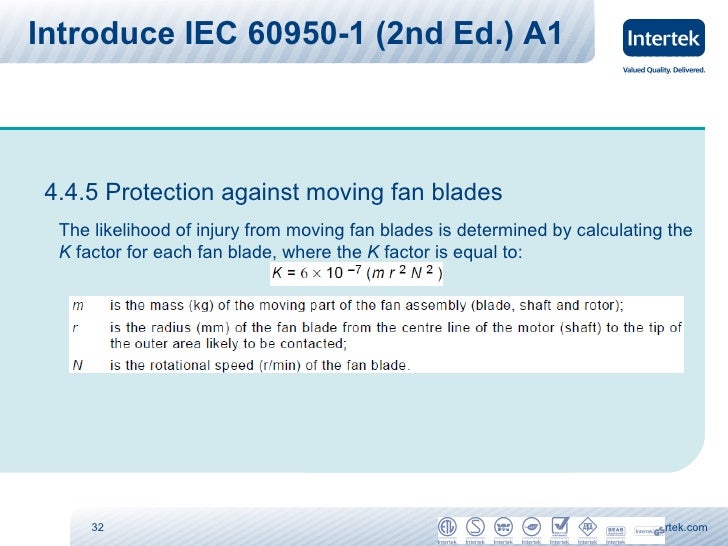
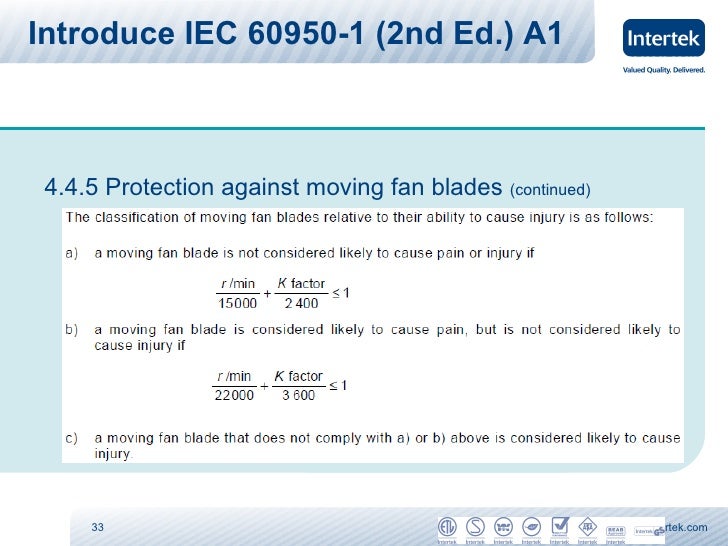
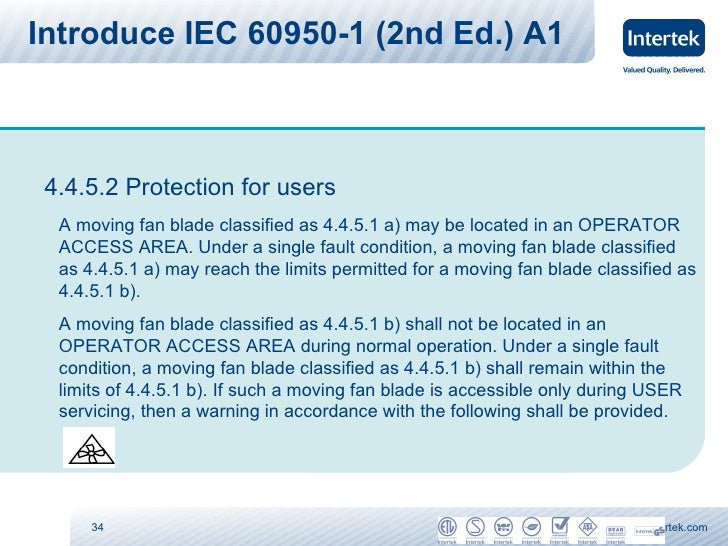
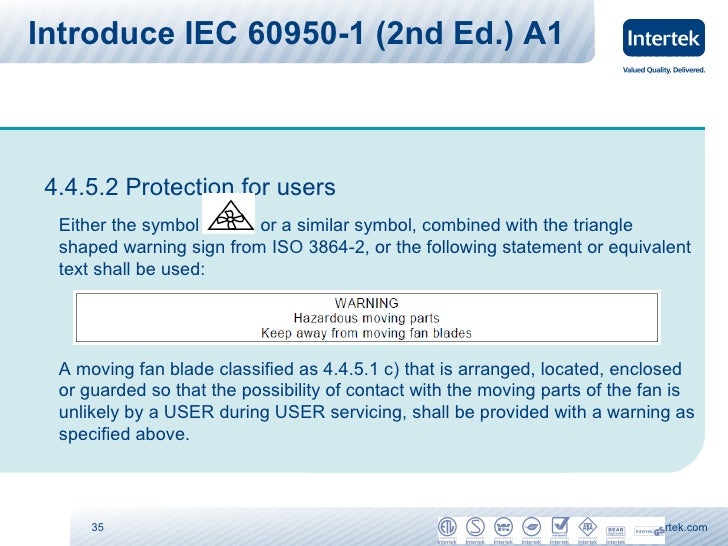
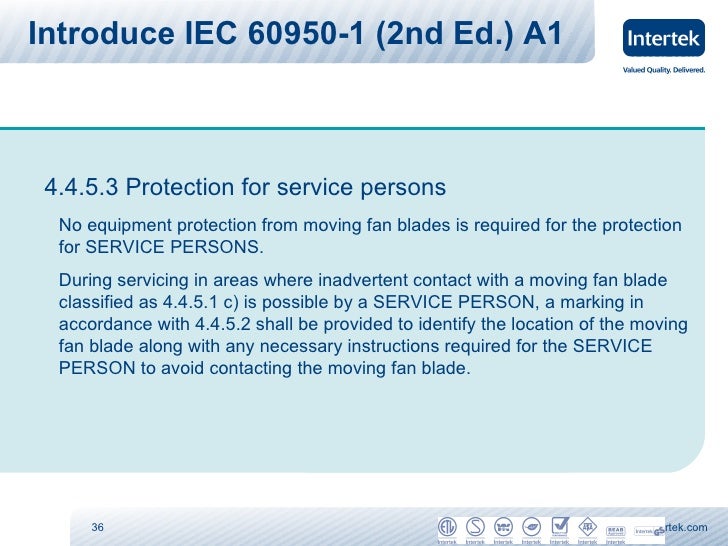
I found this presentation on the EU directive, the part about fans starts at slide 32, or some direct links to the slides: 32, 33, 34, 35, 36.
Basically it appears fans are divided into 3 categories based on their diameter, fan blade speed and weight: a) Won't hurt if touched, b) Will hurt but won't injure if touched and c) Will injure if touched. Category a are fine anywhere, category b are ok in user serviceable areas as long as there's a warning sticker and category c fans can only be accessible to "service personnel". Seems pretty sensible for me.
Now I ran the numbers in the formula just to make sure they're not too strict and a fan with a 5cm blade radius and 100g weight going at 3000rpm (faster than the Mac Pro max rpm) is category a. Seriously a large case fan could be on the outside of the thing with no grill and still be legal.
Even if I've got the figures wrong for the Mac Pro's fans I can't imagine any of the fans being more than category b, which only requires a warning label. I can't help but think Apple are just using it as a PR excuse for failing the "electrical port protection" rules by trying to make the rules seem ridiculously strict.
-
Re:Wait, what?
-
Re:Wait, what?
-
Re:GNOME devs are so blind
Gnome 3.12 = Gnome 4.0 = Gnome-OS. Coming to us in March 2014.
They don't care about the Distro community, they want to go up against Android.http://www.slideshare.net/juanjosanchezpenas/brightfuture-gnome/
Slide 18 up .They have been deliberately breaking Community themes and extensions, because of their "brand" image.
Blog with links for those who are interested.https://igurublog.wordpress.com/2012/11/05/gnome-et-al-rotting-in-threes//
Anon. -
The Ant Fable
Print copies of this fable for the break room and make sure your boss and the project manager read it.
http://www.slideshare.net/faisalkhadia/the-ant-fable
This is gold!
-
Full Planet, Empty Plate
I highly recommend reading this:
http://www.slideshare.net/earthpolicy/full-planet-empty-plates-slideshow-presentation
A shift will need to take place in the priorities of those in the "First World" regarding water usage, diet, food and crop priorities, etc;.
The overly consumptive lifestyle we have been used to will need to become a thing of the past. -
Re:Huge misunderstanding
That's not the way the world works, while people like ourselves are resistant to corporate bs. Other people rationalize and defend the behavior. Just look around the net at people DEFENDING drm and calling piracy 'theft' (when it is infringement). The great masses of humanity don't think.
On the brain:
http://bit.ly/dYaWUcSee this when you have the time:
http://www.slideshare.net/bcousins/paying-to-winThey've done the analytics, us bitchers and sticking to our guns are a minority of the gaming population, esp when it comes to big releases that people are emotionally invested in.
-
Good slide show
For those who do read the article and didn't understand what the debate was about. Here is a good slide show from google about the advantages of SPDY. Which also explicate the issues in "HTTP routers" in the article: http://www.slideshare.net/bjarlestam/spdy-11723049
-
Re:Jobs left
Actually a recent Harvard study found out that Job's storied "reality distortion field" was actually just repressed homosexuality.
Go figure eh?
-
Re:"Level playing field" is a sham
Attaching a cost to pollution is meaningless. You either reduce (in absolute terms) by a certain fixed amount or you don't. Nature doesn't care about your greenbacks.
Nature doesn't, but humans, who are the ones who have to actually do the reducing, do. An arguably effective way for them to do that is for it to be in their financial best interest to do so.
The only thing an economic system of carbon emissions trading does
Who said anything about emissions trading? That's not the only way to make emissions have a cost. Hansen himself favors a tax-and-dividend plan.
-
Best presentation on presenting:" Death by PPT"
I always go thru it before making a presentation:
http://www.slideshare.net/thecroaker/death-by-powerpoint
also, for good practice, play powerpoint karaoke -
Death by PowerPoint
Read this:
http://www.slideshare.net/eduruiz8/death-by-power-point-presentationThis is a short and sweet classic on how to make an engaging presentation. It will not help you if you're a boring, antisocial and mumbling clerk, though.
Regards,
Ruemere -
Some Thoughts
I work in IT for a K-12 School District as well, under much the same conditions. What we have found is that standardization is the key to getting a handle on cost. We had to sell this however, and did so through the use of an analysis of the cost of standardization versus the cost of non-standardization. To do this, you must be able to explain the total cost of ownership over the lifespan of the computer. Often times what seems like a great bargain ends up costing far more in the end, because people take the internal cost for maintenance for granted and don't include it in the overall cost of the computing resource.
Total Cost of Ownership
A 2008 study by the Gartner Group determined that a $1,200 dollar PC could have a 4-year TCO as high as $5,867 per year. However properly locking down and managing the computer could cut that by as much as 42% or $3,413.
Rick Kaestner of the Consortium of School Networking (CoSN) has a wonderful presentation about TCO as well as a great tool to help determine what your TCO is. I would suggest running several current case scenarios and a best case scenario for comparison.
While cookie cutters work in the school lunch room, it has been my experience that many school districts fail to draw a distinction between the needs of instructional and business portions of operations. There is really no "one size fits all" solutions. The single platform approach tends to fail in the face of specialized requirements so it is important from a cost-effectiveness standpoint to analyze these areas and group their requirements accordingly, then focus standardized environments that meet the needs of these groups.
The Importance of Partnerships
Districts are also somewhat myopic in how they construct purchasing agreements, often confusing the terms price and value. Inexpensive doesn't always mean valuable. As an example, one district I worked for determined that it wanted to lower the initial aquisition costs, and to that end produced and evaluated an RFP containing evaluation criteria focused primarily on initial cost. After awarding the contract and receiving the first batch of computers, the district became rapidly aware that they had an issue when 50% or more of the machines were dead-on-arrival, requiring additional time and expense to return. This affected the value over time portion of the TCO of this equipment and after much consernation, the district was forced at additional cost to rebid the equipment, modify the evaluation criteria and waste implementation time overturning the original decision.
The lack of insight with initial aquisition costs led the district in the long run to changes its way of thinking and to embrace longer-term contracts, but even more importantly it became aware of the advantages of long term partnerships. Long term partnerships bring some intangible items into the equation such as the availability of higher end resources such as access to engineers, as well as assistance with integration and other things that are important to business. On the instructional side, many of the larger computer companies maintain divisions who specialize in working with K-12 environments. The bottom line is that it is important to get a handle on the big picture and to make as many people as possible aware of the current picture and give them of a vision of how things could improve. School districts tend to pay attention when someone says "I can save us money, get better service and have data to prove it." -
I Agree - Zimbra Does This TODAY
I Agree and Zimbra Does This TODAY.
Here's a comparison between Zimbra from a few yrs ago to MS-Exchange:
http://www.slideshare.net/agileware/zimbra-collaboration-suite-vs-microsoft-exchange-2008We deployed Zimbra a few years ago because we needed enterprise calendaring. You know - seeing other people's calendars and setting up shared calendars for a group. We aren't a Microsoft-shop.
Zimbra made all that easy.
For a long time, using the calendar meant having to use the zimbra web-client or a java-based thick-client. That changed about a year ago when Thunderbird+Lightning finally started working with calendars properly.
Since June-ish, I haven't used the Zimbra web-client at all.
When MS-Office switched to the Ribbon, people my age with 15 yrs using the old menus were thrown for a loop. At that point, I dumped MS-Office and haven't looked back. The only Office-like tool I still use is Visio. There isn't any substitute for that and I don't see one on the way either.Because I work in a smaller company now, we've switched to web-apps for every corporate app that we could. This means we don't mandate any specific desktop and encourage departments to use what works for them and their budgets. More and more are deploying Linux-based desktops AND solving real problems with it. I doubt it will ever completely replace Ms-Windows here. Some things just aren't possible with Linux, but we provide terminal servers for those groups. Business productivity software works great over the LAN using RDP - when and if it is necessary. Not having to deal with AV and viruses on the desktops constantly has this CIO happier. When a virus does hit here, it is on a server or a printer, not most desktops.
I know this method can't work for everyone inside every company. Heck, we can't do it for ours 100% either.
Zimbra has freed us from the MS-Koolaid. If you run Exchange, you must run AD
Younger users - those in their 20s are used to integrated webmail+webcal+webIM+webdocs. It isn't a big leap for them to use Zimbra.
As a replacement for Sharepoint, we use Alfresco. It isn't perfect, but the price is right. Did you know that whitehouse.gov uses a Drupal front-end connected to an Alfesco back-end?
Costs for acquisition and support for both Zimbra and Alfresco are much less than the Microsoft options overall while providing competitive features. It is definitely worth a look.
-
Re:Is PERL still active
A few years back, Tim Bunce did some talks about: Perl Myths. You might want to take a look at it... in summary: the idea that perl is "dead" (or inactive) is ridiculous by any objective measure: it's mentioned frequently in job ads, there's a lot of activity in CPAN module development, the perl5 developers are hard at work on getting new features working (and old features working better).
In general, I would say that the perl culture continues to be active in stealing ideas from anywhere it can (including perl 6). You like Rails? Well here's Catalyst. You like Rack? Well here's Plack. You think perl objects need improvement? Try Moose. And so on...
-
Re:Not free, but open source
They have been told this:
http://www.slideshare.net/ckleclerc/2011-nasa-open-source-summit-david-wheeler
See in particular slide 22.
I suspect any meaningful change in the policy dictating NOSA use, if its even possible, will take years....