Slashdot Mirror
Domain: theincidentaleconomist.com
Stories and comments across the archive that link to theincidentaleconomist.com.
Comments · 28
-
Re:cut full time down to 30-32 hours and Medicare
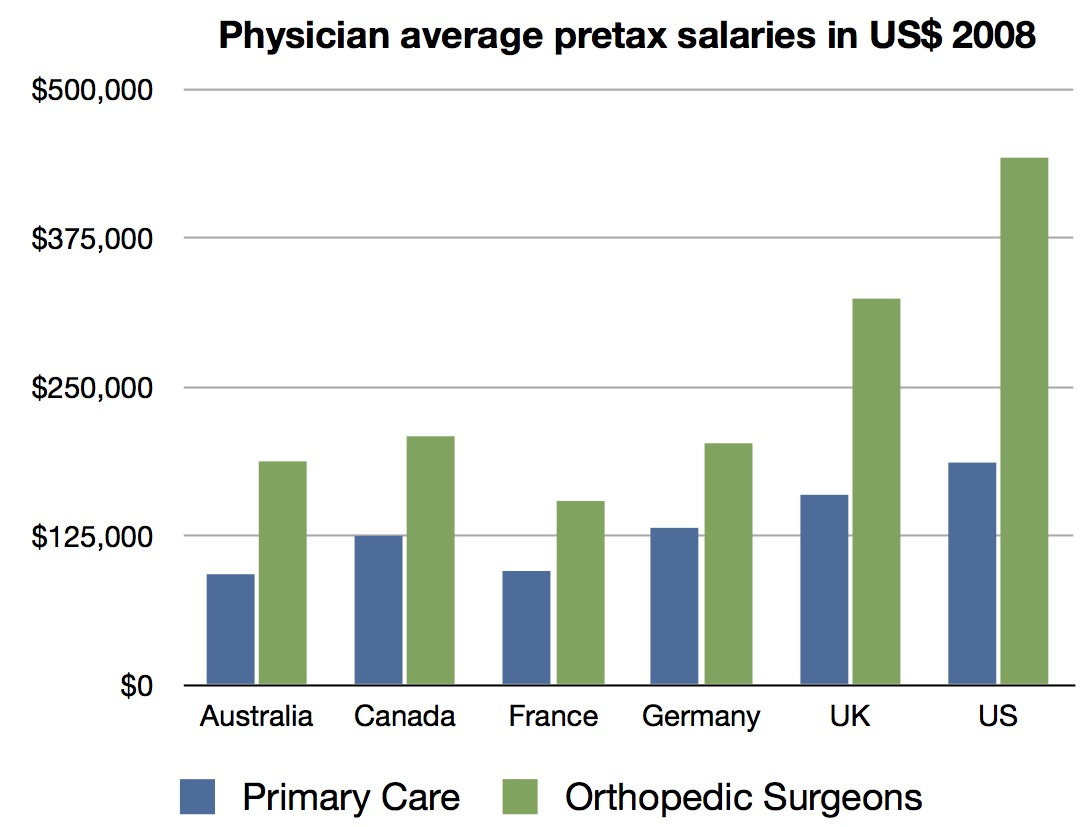
In case anyone cares, simple graphic from 2008:
https://theincidentaleconomist... -
Re: Give up meat and fizzy drinks... no problem
Thanks for these references.
I think we agree that red meat (processed and unprocessed) causes cancer.
Definite agreement on sugar and diabetes.
Here's some perspective on alcohol and cancer:
https://theincidentaleconomist...
https://theincidentaleconomist... -
Re: Give up meat and fizzy drinks... no problem
Thanks for these references.
I think we agree that red meat (processed and unprocessed) causes cancer.
Definite agreement on sugar and diabetes.
Here's some perspective on alcohol and cancer:
https://theincidentaleconomist...
https://theincidentaleconomist... -
Re:Automation is not the boogie-man
Just remember that this is the same society that thinks you will die if you run a fan in a closed room
Appeal to irrelevant ignorance. They're wrong, but not because they're wrong about fans.
-
Re:If you're talking about making it a public util
Reality calling:
http://theincidentaleconomist....
-rich people have always ignored borders
-they're not talking about life threatening medicine, but elective medicine. non-lifethreatening.know how you reduce wait times?
by spending more money.its the old engineer axiom:
fast, cheap, or effective. pick two. -
Re:slippery slope
Prefacing this with the fact that I don't disagree with the thrust of your argument, necessarily.
Correlation is not causation, but absence of correlation is absence of causation.
Not actually true. One example is if event A causes B, and event A is non-causally correlated to event C, and C causes ~B, then you can show no correlation between A and B even though A causes B.
Or look at this guy's argument: http://theincidentaleconomist..... I didn't check out the rest of his site but the mathematical argument seems sound.
-
Re:America
No generalized health insurance - Good. Why should I, someone who takes good care of his body, fund the risky behaviours of others who don't? Although I agree that congenital disorders should be
Because you're a moral person?
Or you believe in a religion that says you should care for those less fortunate then you?
Or you are completely self-interest driven and are so full of yourself to be sure sure bad things can't happen to you but would prefer not to be mugged for money by someone who happens to be less lucky then you and is willing to risk his life to get enough cash to pay for his treatment?Or because you believe in living longer. Here's a link to look at: http://theincidentaleconomist.... - spoiler alert: The US spends the most in health care and gets a life expectancy equivalent to Czechoslovakia.
One of those reasons?
Min
-
Re:What about the rights of those injured by firea
Gun violence is down across the board.
Yeah, but deaths due to firearms have been steadily rising. Gun deaths declined quite rapidly starting in 1994, just coincidentally when the U.S. assault weapons ban was passed, sand they have been increasing steadily since it was repealed in 2004.
You know, facts and all that.
-
Elephant in the room: WP's don't actually work
WP's are largely a means by which 'health consultants' make money off corporations.
And now FitBit is simply trying to get in on that action.Now there's a difference between actually caring about your employee's health, and just trying to save money.
But let's be realistic: most companies are trying to save money by doing this.Multiple independent research studies (have shown that Wellness Programs don't work, and don't save companies any money, nor make them any additional revenue, and actually harm health instead of improving it. Which rather contradicts the (rather self-serving) studies coming out of the wellness industry itself. (And some companies are simply using them to penalize their poorer and/or unhealthier (two conditions that tend to go hand in hand in a vicious cycle) workers.)
Overall what their finding is that there is very little return on investment, basically about breaking even.
The broader wellness programs, with the most preventive measures/incentives (ie the most overbearing) do the least, and actually decrease worker health.At the same time more narrow, targeted programs, such as specific disease treatment programs (such as asthma, diabetes, etc) do the most, mostly likely because these are conditions people already have, and having a program at work that supports them and helps them manage their conditions does alleviate some burden, compared to the more traditional approach where the company doesn't care and leaves you to worry about it on your own, and/or raises your insurance costs or even dismisses you over it.
http://theincidentaleconomist....
http://www.nationaljournal.com...
https://hbr.org/2010/12/whats-...
http://www.bloomberg.com/news/...
http://www.nytimes.com/2014/09... -
The Incidental Economist, Bill Maher,
Only blogs I see regularly are The Incidental Economist (healthcare news, reform, and research) and Real Time with Bill Maher (It's...um...Bill Maher...).
http://theincidentaleconomist....
http://www.real-time-with-bill... -
Re:it's a just a first tiny step
at some point in your life, you want to get out of the propaganda bubble of lies you live under, and actually try to understand and appreciate actual truth and reality you open your ignorant mouth on
http://www.washingtonpost.com/...
yes, i would suppose that if you are extremely rich, you have no waiting periods and the best care. are you extremely rich you dumb fuck? is that how you build a health system: good for the extremely rich only?
as to your lies on waiting periods:
http://theincidentaleconomist....
what happens is the lying media you listen to lies to you, and your dim ignorant mind latches onto it in spite of actual reality, like "death panels". abject morons like yourself rant and rant and rant about it, when the actual fucking truth of the matter is in complete opposite to what you lied to propaganda victims "think"
you are a hopelessly ignorant propaganda victim. you are dumb. you are useless. you loudly shriek lies spoonfed to you and you believe media outlets which exist for the expressed reason to shovel propaganda. you're like russians who believe the west or ukraine hurt them somehow and so invading a sovereign country makes sense: propagandized retards. that is what you are, you are a completely moronic propagandized stupid useless asshole. objectively so, not a baseless insult: you believe lies, unquestioningly, then you shout the lies out and believe it wholeheartedly. how would you objectively describe a piece of shit who believes lies and never tries to understand real facts and shrieks the lies constantly when anyone tries to talk reason to them?
why do you like being a lied to moron? that's a serious question. because that is exactly what you are
why do you listen to and believe "media" which exists to shovel lies in the small skulls of dimwits? again, a serious question. that's is genuinely what you are in this world. that is genuinely what you are
zero respect to you ignorant propagandized piece of shit. you are without any use on this topic
-
Re:Another pro-government article...
So what matters to you most is whether its pro or anti government....
not whether or not its working...
not wther the outcomes are better or worse...
and not whether or not its producing a better return on money spent than the alternative...See, that's why you're stupid.
--And then you just pull some random stuff out of thin air...
and link to one man's personal choice for himself (explcitly stated in the article)...
and then pull some more random made up stuff...And apparently you dont understand what EOL counseling is.
It's not telling someone they need to pull the plug. The choice is always the individuals.
But many people are not accepting of death. I'm myself am not, i tell you right now.But it doesnt matter if we're accepting, cause its gonna happen.
We cant fight it forever.
And at a certain point in our lives our bodies just start failing.
and the treatment costs go up, and we get nothing to show for it.Funny thing though, that actually is another indictment of our own system.
you can make the case that if it didnt cost so much, there would be less reason for the EOL counseling.
in our country even EOL counseling revolves more around healthcare as a financial decision than a quality of life one.
people wouldnt have to make decisions to continue or stop treatment based on finances, but could isntead do it based on QOL.they could make the decision instead based on the same criteria people in other (more advanced) countries do.
To not have this conversation with yoruself, your family, your doctor, until its too late, is irresponsible.
These are real question that you WILL have to ask yourself at some point:
"Do I risk open haeart surgery and dying on the table (15% chance), or just live with the problem and risk random death any day?"
"Do I take more chemo which might give me another 8 weeks of life, 8 weeks of miserable sick barely alive life...or stop chemo knowing I wont live more than another 4 weeks?"Theres some good peices at The Incidental Economist (doctors and health professionals who write about health policy) on EOL:
http://theincidentaleconomist....The essay is brave and constructive. It’s brave because Emanuel and others who want to encourage end of life discussions have been falsely accused of promoting euthanasia — Emanuel [the guy who wrote the piece your linked to] has been a notable opponent of euthanasia and assisted suicide — and this article elicited more of the same. It’s constructive because Emanuel writes informally, candidly, and personally in a way that may help make it possible for the rest of us to reflect on our choices in the light of our values.
(Emphasis added)
-
Re:The WHO
JFC. Did I say the words "ready to die" ?? you insist on misquoting to make your points, intentionally noncomprehending...that or you're just stupid. the number of 80 and 90 year olds who are enjoying a healthy life rather than slowly crumbling under the weight of age is so seriously one sided you only further prove your ignorance.
the medical community, made of medical professionals have the highest rate of living will and end of life planning of any statistical group. its because they see this crap every day. they see the vast overwhelming numbers of people who DONT make these decisions beforehand, who DONT make any sort of plans, who dont think about what is coming. End of life care and planning is seriously lacking in most of hte world, and hte US especially. we dont like to think about it. we put it off.
Medical professionals dont avoid that thinking, that planning (as much), because they see what its effects are.
hell, they're fucking doctors, so they know exactly what they have to look forward to. Constant unfathomable pain from cancer. The slow undignified loss of the ability to control your own body. The loss of mind that patients suffer from and aren't even aware of themselves, but can see from the looks on the faces of their loved ones that something is wrong.Yes, a blessed few avoid all that and simply go in their sleep.
That kind of end doesn't require any planning.
Almost everyone, if given the choice, would prefer to go that way.
But simply because there's a chance you may go that way, doesn't mean you shouldn't think about what you want to do in case of the alternative.This is what realistic thinking on this looks like:
Do you want chemo and three months of life, or six weeks of life without the nausea and vomiting that the chemo causes?
Do you want high-risk open-heart surgery, with a fifteen-per-cent risk of dying during the operation, or would you rather continue as you are, with a fifty-per-cent chance you will be dead in two years?
Do you want a prostatectomy, which has a five-per-cent chance of impotence and incontinence, or radiation, with a three-per-cent chance of leaving a hole in your rectum, or would you rather “watch and wait,” with the chance that your cancer will never grow at all?
( http://theincidentaleconomist.... )
some people think (for various reasons, usually religious) that they have to hold on to the very end. no matter how bad it gets, no matter how much it costs (and remember friend: in this country your family has to pick up that tab, since we refuse to create a national system), no matter the suffering you or your family goes through. now if thats what you want, and youve thought it through and your family is on board (and it helps if you're rich), then power to you.
But at some point youre going to face those kind of decisions.
I just hope you show a higher intellectual ability by then than you are here.Just remember: if we can show our pets the compassion to not force them to endure a living nightmare of misery, then surely we can show the same compassion to each other, to respect each others wishes. The only thing that's certain in life is death, and it's one of the most personal decisions you can make for yourself.
-
Re:ObamaCare is a Horrific Debacle
Your theory of lawyers being the cause of expensive health care has been studied extensively and it is wrong. Malpractice insurance/ lawsuits/ defensive medicine/ etc. only contributes 1 or 2 % to the high cost of health care. If you'd like to read about this, here are some good places to start:
http://theincidentaleconomist....
http://theincidentaleconomist.... -
Re:ObamaCare is a Horrific Debacle
Your theory of lawyers being the cause of expensive health care has been studied extensively and it is wrong. Malpractice insurance/ lawsuits/ defensive medicine/ etc. only contributes 1 or 2 % to the high cost of health care. If you'd like to read about this, here are some good places to start:
http://theincidentaleconomist....
http://theincidentaleconomist.... -
Re:How about they just scrap it entirely?
1: Nope.
2: Nope.
3: Contributes, but nearly as much as people think.
4: Nope. In fact the opposite. Hospitals can get away with charging more because the insurers act a a shock absorber, insulator, between your wallet and the true cost of care. they dispute some, but not all excessive costs, because they act more as a match maker between patients and hospitals than a representative of the patient. in fact, it can be argued that hte true commodity is the patients, and the customers are the hospitals.
5: Nope. Red herring. It contributes, but negligibly so.
6: Finally got one right. Lack of competition and economic pressure. This single factor is responsible for the majority of high cost of healthcare in this country. Quite simply, healthcare costs so much because it can. Because they can get away with it. Because there is a middleman between our wallets and the caregivers, that sheilds us from direct costs. Because healthcare isnt like a car sale...you're not going to walk away from life saving surgery because it's too expensive.It's as a simple as that. Number 6 is the single most important factor, all others are either false or negligible.
http://theincidentaleconomist.com/wordpress/what-makes-the-us-health-care-system-so-expensive-introduction/
http://theincidentaleconomist.com/wordpress/what-makes-the-us-health-care-system-so-expensive-red-herrings/We should have access to fairly priced health care that we can work out the details of paying for it. And choose whether or not it's worth the money to us as individuals.
Again: no one actually does that. No one is ever going to do that. If I tell you you need to take these pills, that cost 100$ per pill, or you will die, you're not going to walk away and just accept death. People just dont do that. and since you care to mention government...the single most cost efficient sector of our healthcare system IS the government run single payer segments: Medicaire/Medicaide.
-
Re:How about they just scrap it entirely?
1: Nope.
2: Nope.
3: Contributes, but nearly as much as people think.
4: Nope. In fact the opposite. Hospitals can get away with charging more because the insurers act a a shock absorber, insulator, between your wallet and the true cost of care. they dispute some, but not all excessive costs, because they act more as a match maker between patients and hospitals than a representative of the patient. in fact, it can be argued that hte true commodity is the patients, and the customers are the hospitals.
5: Nope. Red herring. It contributes, but negligibly so.
6: Finally got one right. Lack of competition and economic pressure. This single factor is responsible for the majority of high cost of healthcare in this country. Quite simply, healthcare costs so much because it can. Because they can get away with it. Because there is a middleman between our wallets and the caregivers, that sheilds us from direct costs. Because healthcare isnt like a car sale...you're not going to walk away from life saving surgery because it's too expensive.It's as a simple as that. Number 6 is the single most important factor, all others are either false or negligible.
http://theincidentaleconomist.com/wordpress/what-makes-the-us-health-care-system-so-expensive-introduction/
http://theincidentaleconomist.com/wordpress/what-makes-the-us-health-care-system-so-expensive-red-herrings/We should have access to fairly priced health care that we can work out the details of paying for it. And choose whether or not it's worth the money to us as individuals.
Again: no one actually does that. No one is ever going to do that. If I tell you you need to take these pills, that cost 100$ per pill, or you will die, you're not going to walk away and just accept death. People just dont do that. and since you care to mention government...the single most cost efficient sector of our healthcare system IS the government run single payer segments: Medicaire/Medicaide.
-
Re:cure worse than the disease
If they could now find out that it's cheaper to find tumors early and have them removed rather than keeping the patient alive that year or two he still lives after it's discovered and determined to be terminal...
Part of the US's vaunted 5 year cancer survival rates vs European single payer systems isn't due to screenings leading to earlier treatment, its due to the disease running the same course over the same period of years and killing the same number of people but being detected earlier in the progression. Imagine a deadly cancer for which there are early screening tests but no treatments at all. The screening typically finds the cancer 4-8 years before death, otherwise the cancer is usually diagnosed via symptoms 1-4 years before death. One country uses the screening test, the other does not. Guess which one has a better 5-year survival rate?
That's an extreme analogy of course, and screening does save lives, but screening can also artificially inflate survival statistics. Cancer mortality rates are the way to go, and overall the US is more or less tied with the EU. For the most preventable common cancer (lung), the US is actually worse than the EU:
-
Re:Here is the difference Mr. President
You say do the research? I have.
Your daily caller article is pure BS.It's a myth, frequently and easily debunked.
No one sneaks into the US from canada to get treatment.
Very few come to the US for treatment.And no one is dying for lack of treatment in Canada. Its very improtant to note just what elective treatment is, and what treatments we're talkijng about specifically.
the procedures your article is lying about arent lifesaving, arent emergency. that's what "elective" means! the statistics they always use are for treatmetns for senios citizens like hip replacements, being a popular statistic.thing is....who pays for old people in this country? Medicaire.
And what is Medicaire? A centralized single payer system....just like Canada's... that also happens to be the most efficient and cost effective sector of our health care system.http://theincidentaleconomist.com/wordpress/in-defense-of-canada/
They pay similar taxes.
They earn similar pay.
Their healthcare is more effective, more widely available, and cheaper too.
Oh, and they have a fairly balanced budget.In short: Hey thanks for the story from your biased and full of crap article that was spoon fed you and you bought hook line and sinker without having to do all that crazy research stuff. So ya, it is all BS, Canada is a nice country, they aren't trained sheep, and their healthcare IS tons better than ours.
-
Re:yep
It's also important to note WHAT elective means: Not a medical emergency. Not "he's gonna die jim unless we do something now". Its "elective".
but I digress. Read this:
http://theincidentaleconomist.com/wordpress/in-defense-of-canada/
http://theincidentaleconomist.com/wordpress/why-do-they-keep-talking-about-hip-replacements/4) Claiming that hip replacements and cataract surgeries happen faster in the US does not prove that a single payer system doesn’t work
When people want to demonize single payer systems, they always wind up going after rationing, and more often than you’d think with hip replacements
It’s not true. They don’t deny hip replacements to the elderly. But there’s more.
Do you know who gets most of the hip replacements in the United States? The elderly.
Do you know who pays for care for the elderly in the United States? Medicare.
Do you know what Medicare is? A single-payer system.5) Canada’s wait times aren’t due to its being a singe-payer system
PThe wait times that Canada might experience are not caused by its being a single payer system.
Do you know who pays for care for the elderly in the United States? Medicare.
Do you know what Medicare is? A single-payer system.So our single-payer system manages not to have the wait times issue theirs does. There must be some other reason for the wait times. There is, of course. It’s this: [[graph omitted...read article]]
Canada isn’t some dictatorship. They aren’t oppressed. In 1966, the democratically elected government enacted their single-payer health care system (also known as Medicare). Since then, as a country, they have made a conscious decision to hold down costs. One of the ways they do that is by limiting supply, mostly for elective things, which can create wait times. Their outcomes are otherwise comparable to ours.
Please understand, the wait times could be overcome. They could spend more. They don’t want to. We can choose to dislike wait times in principle, but they are a byproduct of Canada’s choice to be fiscally conservative. They chose this. In a rational world, those who are concerned about health care costs and what they mean to the economy might respect that course of action. But instead, we attack.
7) In Canada, they may “ration” by making some people wait for some things, but here in the US we also “ration” – by cost
[[graph omitted..read article...it shows that 33% of Americans avoid care because of costs, while only 15% do in Canada]]
About one third of Americans report that they didn’t go to the doctor when sick, didn’t get recommended care when needed, did not fill a prescription, or skipped doses of medications in the last year because of cost. -
Re:yep
It's also important to note WHAT elective means: Not a medical emergency. Not "he's gonna die jim unless we do something now". Its "elective".
but I digress. Read this:
http://theincidentaleconomist.com/wordpress/in-defense-of-canada/
http://theincidentaleconomist.com/wordpress/why-do-they-keep-talking-about-hip-replacements/4) Claiming that hip replacements and cataract surgeries happen faster in the US does not prove that a single payer system doesn’t work
When people want to demonize single payer systems, they always wind up going after rationing, and more often than you’d think with hip replacements
It’s not true. They don’t deny hip replacements to the elderly. But there’s more.
Do you know who gets most of the hip replacements in the United States? The elderly.
Do you know who pays for care for the elderly in the United States? Medicare.
Do you know what Medicare is? A single-payer system.5) Canada’s wait times aren’t due to its being a singe-payer system
PThe wait times that Canada might experience are not caused by its being a single payer system.
Do you know who pays for care for the elderly in the United States? Medicare.
Do you know what Medicare is? A single-payer system.So our single-payer system manages not to have the wait times issue theirs does. There must be some other reason for the wait times. There is, of course. It’s this: [[graph omitted...read article]]
Canada isn’t some dictatorship. They aren’t oppressed. In 1966, the democratically elected government enacted their single-payer health care system (also known as Medicare). Since then, as a country, they have made a conscious decision to hold down costs. One of the ways they do that is by limiting supply, mostly for elective things, which can create wait times. Their outcomes are otherwise comparable to ours.
Please understand, the wait times could be overcome. They could spend more. They don’t want to. We can choose to dislike wait times in principle, but they are a byproduct of Canada’s choice to be fiscally conservative. They chose this. In a rational world, those who are concerned about health care costs and what they mean to the economy might respect that course of action. But instead, we attack.
7) In Canada, they may “ration” by making some people wait for some things, but here in the US we also “ration” – by cost
[[graph omitted..read article...it shows that 33% of Americans avoid care because of costs, while only 15% do in Canada]]
About one third of Americans report that they didn’t go to the doctor when sick, didn’t get recommended care when needed, did not fill a prescription, or skipped doses of medications in the last year because of cost. -
Re:yep
-
Re:yep
dont quote the heritage foundation, its a pack of liars.
as for wait times.. http://theincidentaleconomist.com/wordpress/enough-with-the-wait-times-already/
-
Re:Place names
Won't be true for our cohort, we're going to get less (if anything), but the scare quotes are deserved.
Nope, the scare quotes are still a Big Lie.
On balance, today's retirees are going to withdraw more from SS than they put in.
A Zombie Lie that just wont die. Lifespans have gone up - but only for the upper middle class and the rich. For poor minorities they've actually started to decline.
Not-increasing lifespans + giant cut to benefits from a hike in the eligibility age = Big Lie.
-
Re:Denier
Some analysis of your first point here:
http://theincidentaleconomist.com/wordpress/how-flawed-is-life-expectancy/
tl;dr - people at the USA still have lower life expectancy when measured from later ages
With regard to your second point, this page:
http://en.wikipedia.org/wiki/List_of_countries_by_foreign-born_population_in_2005
gives the USA and Germany almost identical percentages of foreign-born residents. (12.81% and 12.31%) France and UK are not far behind. No breakdown of where they came from but most immigrants to Europe are from poorer countries.
-
Re:Best Preference
" You hear stories about Canadians coming to the US and paying cash and getting right in. "
That's true, but nowhere near what a lot of people think it is.. One time, a anti-single-payer individual was showing me a chart where it showed 200 Canadians had to trek to the US for medical care in 2010. Then I pulled out my calculator and showed him that it is 0.0057% of the population (if I got my decimal points right). If that's all the people that's slipping through the cracks, sounds like they're doing a pretty fine job. -
Re:Best care money can buy helps
I'm skeptical of the claims made in the linked article because it's on the website for a professional organization of orthopedic surgeons, a specialty with some of the highest malpractice insurance premiums, and also because the file name of the linked page includes the word "advocacy."
Most estimates of the cost of malpractice tort awards are around 2% of health care spending, which definitely isn't nothing. Levels haven't changed much, however, and insurance premiums overall (as opposed to cherry-picking certain specialties) haven't increased as fast as overall spending, which suggests that malpractice/defensive medicine isn't a big part of the cost growth problem, and reducing costs related with malpractice and defensive medicine will serve more to lower doctors' insurance premiums rather than lowering costs.
This link is to the Red Herrings part of a series examining the causes of high cost and cost growth in American health care. I highly recommend the whole series, but at least check out the Malpractice section of this page:
http://theincidentaleconomist.com/wordpress/what-makes-the-us-health-care-system-so-expensive-red-herrings/There is a fraud problem in American health care, but it is providers defrauding public programs (Medicare and Medicaid) rather than people defrauding hospitals, as you said. I haven't seen a compelling solution to this, but I think that more thorough auditing (brought about by more complicated reimbursement policies enacted in the PPACA) could help.
-
CBO
PS: Link to the CBO numbers I mentioned: