Slashdot Mirror
Domain: trailing-edge.com
Stories and comments across the archive that link to trailing-edge.com.
Comments · 92
-
Re:Where can one get training?
This http://www.conmicro.cx/hercules/ is what you want a 370 & 390 emulator for your pc! it runs under windows & Linux/unix!
For even older check out simh
http://simh.trailing-edge.com/
Enjoy! -
Re:What about the hardware itself?
It seems at least a couple of important people there know about the situation, judging from this recent message on the cctalk classic-computing mailing list. (Sellam Ismail is the museum's software curator. I don't know if Al Kossow actually works for the museum, but he's certainly contributed a great deal to preserving computer history.)
-
Linux Decnet
As a user of the linux decnet stack, I would say the Linux decnet stack works pretty well for talking to old VAXen. There are still places with old VAX computer embedded in equipment that would take millions to replace. The Navy is using Charon VAX http://www.softresint.com/charon-vax/ in some places to keep from having to replace the attached hardware. SIMH http://simh.trailing-edge.com/ works very well for emulating a vax, but is software only. A vax emulation running on SIMH on linux can talk decnet, and so can the linux machine it runs on. However, because DECNET sets the mac address as the decnet address, the Linux's decnet can't talk to the SIMH running on it. So, I had to put tcp/ip on the simulator to get them to talk. It would be nice if Linux's emulator could set it's mac address at runtime, and have several, so it could to the routing, and talk to the SIMH emulator, but it isn't possible now.
-
VMS clustersWant practice with decades-mature enterprise clusters? Why not get a few old VAX or Alpha systems on eBay, and/or fire up a few instances of the simh emulator, then join the free OpenVMS hobbyist program (I recommend the also-free-to-hobbyists Process Software's Multinet TCP/IP stack and server software).
And please, don't be put off by VMS because DCL = your first exposure to a VMS system - feels more awkward than bash (in many ways, it certainly is!). It's in the underlying architecture of the OS where the fruits of tight engineering are really demonstrated.
-
Re:NetBSD
Read the article... SIHM is used to emulate a PDP-11... do you know how much power a PDP-11 has? NetBSD appears to need a little Oomph behind it.
-
Re:Software License barriers
If you go to the SimH page, there are pointers to downloadable software that can be used with various simulators. Among these you'll find RT-11 and RSTS/e kits (alas, someone else bought the rights to RSX-11M and it isn't available). Also, there's a pointer to the information about the OpenVMS Hobbyist program which can be used as a source of licenses for just about any available OpenVMS software provided you are strictly a hobbyist user (no commercial use).
I'm currently running OpenVMS under SimH on an Athlon XP 1600 using hobbyist licenses. This gives me performance approximately equivalent to a MicroVAX II processor but I/O is quick since disk data is normally found in the linux disk cache.
-
SIMH URLSIMH Website.
Been wanting to buy an old 11/780 shell for a while. Not for a bar, but to mount both my Mac and Gaming PC innards in. This'd be a real trip to run as an emulator during parties. Now to interface the VT-120... Hack the shell I suppose. Run everything USB. >:D
-
Intermediate step: SIMHIn an enterprise environment (where VAXen are most often used), it's not feasible to just drop the architecture and switch to another. The amount of code running on the VAX is likely massive and no, it doesn't easily translate into code that works on Unix systems.
A good intermediate step in any migration is to use the SIMH simulator (http://simh.trailing-edge.com). SIMH can simulate quite a few systems (including a VAX) at the CPU level. As you may expect, this involves emulating every single CPU instruction... not a very efficient way to run code! However, its saving grace is that modern processors are very fast and old VAX systems are not. Depending on how old your VAX hardware is, you might find that an emulated VAX running on a newer P4/Xeon/Athlon/Opteron will be faster than the stock VAX!
This doesn't solve the migration problem but it does allow you to run your old code on modern easily-fixable and readily-available hardware. Beats having to get all of your parts off of eBay.
-
VAX emulators
The article mentions SRI's Charon VAX. This is very expensive software that requires a USB dongle for licensing.
However, you can also run VAX VMS on a free i386 VAX emulator called SIMH. I don't seem to be able to get very good ethernet performance with SIMH. However, you can run NetBSD/VAX on it out of the box, and OpenBSD will run with a kernel patch. SIMH also has a PDP-11 emulator and includes images of the original UNIX V7 from AT&T (courtesy of SCaldera). SIMH is an interesting way to run both ancient and modern UNIXen without reformatting your PC.
You can also get free VMS licenses for SIMH/VAX. They must be renewed yearly.
Alpha VMS also supported a VAX binary emulator called VEST, which is mentioned in another post here. Support for VEST is dying, however (modern RDB releases have dropped it). The Charon VAX emulator also runs on Alpha VMS.
-
simhHe should try adding a couple of other emulators to his system - that would increase his O/S options by another 100 or so - e.g. Bob Supnik's simh. That way he could claim to run DG RDOS, RT11, RSX-11, VMS, OS/8 and a host of far more obscure systems and a couple of dozen different machine architectures. Many software kits are included. Now that's fun.
From the simh web page:
SIMH implements simulators for:
- Data General Nova, Eclipse
- Digital Equipment Corporation PDP-1, PDP-4, PDP-7, PDP-8, PDP-9, PDP-10, PDP-11, PDP-15, VAX
- GRI Corporation GRI-909
- IBM 1401, 1620, 1130, System 3
- Interdata (Perkin-Elmer) 16b and 32b systems
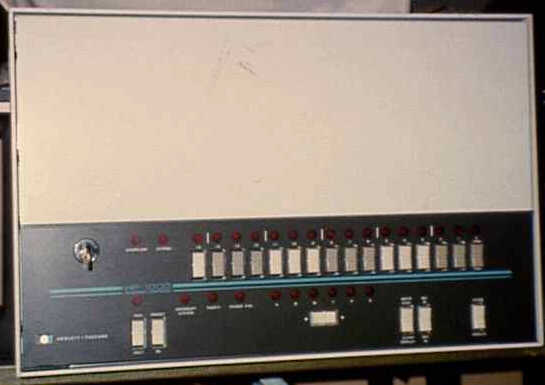
- Hewlett-Packard 2116, 2100, 21MX
- Honeywell H316
- MITS Altair 8800, with both 8080 and Z80
- Scientific Data Systems SDS 940
-
simhHe should try adding a couple of other emulators to his system - that would increase his O/S options by another 100 or so - e.g. Bob Supnik's simh. That way he could claim to run DG RDOS, RT11, RSX-11, VMS, OS/8 and a host of far more obscure systems and a couple of dozen different machine architectures. Many software kits are included. Now that's fun.
From the simh web page:
SIMH implements simulators for:
- Data General Nova, Eclipse
- Digital Equipment Corporation PDP-1, PDP-4, PDP-7, PDP-8, PDP-9, PDP-10, PDP-11, PDP-15, VAX
- GRI Corporation GRI-909
- IBM 1401, 1620, 1130, System 3
- Interdata (Perkin-Elmer) 16b and 32b systems
- Hewlett-Packard 2116, 2100, 21MX
- Honeywell H316
- MITS Altair 8800, with both 8080 and Z80
- Scientific Data Systems SDS 940
-
Bah, this so nineties...
This is where the real stuff is: The Trailing Edge and Trailing-Edge.
-
Re:Yeah, but...Who archives old copies of VisiCalc, RT-11, or PRIMEOS?
Can't help with PrimeOS, but I bet someone's got it.
BTW, both the above downloads are with the blessing of the coypright holders. Not that anyone should be able to hold a copyright on software that old, but it was nice of Dan Bricklin (Visicalc) and Mentec (RT-11) to make the gesture.
-
Consider a free emulator
Depending on what you consider a mainframe, there's always SIMH, a rather nice emulator for PDPs, PEs, and a number of others. There are some other free emulators out there, but I know nothing aout them. I've brought up a PDP-8 and PDP-11 under SimH before.
-
Don't just complain, DO SOMETHINGI know it's far easier to complain about the situation rather than do something about it. But there are groups doing something about it:
-
Don't just complain, DO SOMETHINGI know it's far easier to complain about the situation rather than do something about it. But there are groups doing something about it:
-
Am I the only one that has used SCO's UNIX here?
It has hardly been updated in a decade! We're talking X11R5, no support for pthreads without installing extensions, etc.
In this world, your OS can't be "just as good as" Windows to survive. Linux, Solaris, AIX, and Mac OS X are each doing well because they are substantially better at what they do than the competition.
On the upside, they are allowing free use of Unix Version 7. Well, sorta free. apt-get install simh and boot the sucker up if you want to see the somewhat humble beginnings of UNIX. -
Re:No place to experience/learnActually, you've just got to look around a bit. Do like you learn any other programming language, pick up a cobol book. Got one myself on the bookshelf. Both windows and Linux have Cobol compilers available, google for them and you'll find dozens of hits, including some open source versions.
As far as finding an S/390 to work on, I'll admit it's hard to find the actual iron to bang on, but there's a damn good emulator for it. For learning OpenVMS, you don't have to use an Itanium; you can pick up an old VAX or Alpha for next to nothing off of ebay or the local surpluss place. Hell, if you don't want to get physical hardware, you can always emulate it; won't be fast, but it'll teach you the basics. And VMS-based systems are all over the board as far as their size goes. A single processor Alpha or VAX is very much a micro. A system or cluster with a dozen or so procs is getting into the midrange area, and the really big iron, like the VAX 7000, can ease into the high-end server/mainframe range when using VMS's built in insanely reliable clustering. Yeah, it'll be tough discovering a truly non-trivial project, but hey, that's part of learning.
-
Re:Preserving CD-ROM Images!
Well, I can emulate a PDP-1, which was from 1960 - that's a nice 40-some years so far... Seems to me that emulation (especially for something as popular as the x86 architecture, when it finally fades from vogue) is going to be around for a long, long time.
-
That's hardly impressiveWhen one of the sites that I serve, The Computer History Simulation Project, was slashdotted, I was serving 40-50 pages per second (which is nearly ten times the rate attributed to Ace's Hardware) on a 4-year-old webserver (a K6II-500) that cost about $200 to put together. And the server itself was ticking along with only a few percent CPU usage.
OTOH, my puny little SDSL connection was seriously maxed out.
Even old hardware can happily serve up hundreds of documents a second, if the pages are static.
-
1975 Reference to "Undo"
The Interlisp Editor had an "Undo" function in 1975. See the directory listing here.
-
1975 Reference to "Undo"
The Interlisp Editor had an "Undo" function in 1975. See the directory listing here.
-
Just use the history simulator
run your very own pdp8, pdp11 or even an Altair with disk basic or cp/m - here. I've recently completed some serious z80 assy projects using simh on my Linux notebook. Works great w/o having to mess w/ flaky hw.
-
Re:Some stories...
You want a story? Go read Alice's PDP-10
If you want a to try a PDP-10 you can use KLH10. It supports TOPS and ITS. -
Re:Don't fix it, if it ain't broke
-
Re:Don't fix it, if it ain't broke
-
Re:Oh yeah? I can list plenty of dead OS's...
So where is RT-11? RSX?
right here of course
-
RT-11 is hereRT-11 is here:
http://simh.trailing-edge.com/.
However, if it's not open sourced, obviously, it can't evolve much further, so in that sense, operating systems do die.
-
mini-ITX form factor servers
I recently put together a web and mail server based on a mini-ITX motherboard with a Via C3 processor on it. It cost less than $300 altogether and installing Linux was a breeze.
-
Problems are legal, not technicalWhere legal permission to preserve old data has been obtained, lots of interesting stuff has been saved. Examples that I'm personally involved with:
- The PDP-10 Software Archive. Hundreds of tapes from the 60's, 70's, and 80's have been rescued with sources and documentation for the systems on which the ARPAnet was built.
- The Unix Heritage Society collection. Again, source code, data, and documentation that are all vitally important.
But the only reason these archives can be built and maintained is that it is legal to do so, thanks to the hard work of preservationists like Bob Supnik (see his SIMH "old iron" simulation packages) and Warren Toomey who have secured such licenses. Without such permission, many other archives of historical software that I've assembled myself cannot be distributed to the rest of the world.
-
Problems are legal, not technicalWhere legal permission to preserve old data has been obtained, lots of interesting stuff has been saved. Examples that I'm personally involved with:
- The PDP-10 Software Archive. Hundreds of tapes from the 60's, 70's, and 80's have been rescued with sources and documentation for the systems on which the ARPAnet was built.
- The Unix Heritage Society collection. Again, source code, data, and documentation that are all vitally important.
But the only reason these archives can be built and maintained is that it is legal to do so, thanks to the hard work of preservationists like Bob Supnik (see his SIMH "old iron" simulation packages) and Warren Toomey who have secured such licenses. Without such permission, many other archives of historical software that I've assembled myself cannot be distributed to the rest of the world.
-
Re: Hope for VMS yetNot quite free in that sense but if you are really interested
- you can get a VAX hardware emulator such as simh
- Join Encompass (Assocaite - just enough to get the hobbyest licenses)
- Get a VMS hobbiest license (details and some media)
- Install VMS
- Have fun...
-
PDP-11 in my wallet
I made a wallet-sized PDP-11 (see photo) using these tools.
I put the simh PDP-11 emulator and unix_v7_rl.dsk along with the following script onto a CF card formatted as a DOS FAT partition.
set cpu 18b
set rl0 RL02
att rl0 unix_v7_rl.dsk
boot rl0
#boot
#rl(0,0)rl2unixYou have to type those last two lines manually to the PDP-11's boot prompt.
I'm ready to roll with a PDP-11 in my wallet (or, if you include the $9.95 CF-USB (Linux driver) card, in my Penguin Mints container, which matches the black and yellow 48MB Lexar card I got on sale at Fry's for $19.95).
Total cost for a PDP-11 running Unix: $29.90, mints not included.
BTW, the default V7 "root" password is "root" (I ran John the Ripper and it took 0.00002 seconds).
-
PDP-11 in my wallet
I made a wallet-sized PDP-11 (see photo) using these tools.
I put the simh PDP-11 emulator and unix_v7_rl.dsk along with the following script onto a CF card formatted as a DOS FAT partition.
set cpu 18b
set rl0 RL02
att rl0 unix_v7_rl.dsk
boot rl0
#boot
#rl(0,0)rl2unixYou have to type those last two lines manually to the PDP-11's boot prompt.
I'm ready to roll with a PDP-11 in my wallet (or, if you include the $9.95 CF-USB (Linux driver) card, in my Penguin Mints container, which matches the black and yellow 48MB Lexar card I got on sale at Fry's for $19.95).
Total cost for a PDP-11 running Unix: $29.90, mints not included.
BTW, the default V7 "root" password is "root" (I ran John the Ripper and it took 0.00002 seconds).
-
Cool!
After looking at some of the system pictures on their page, like that one, you can feel lucky you were not working in the IT field 30 years ago.
-
Also..
Check out http://simh.trailing-edge.com/ too. There's some 1401 stuff there, although probably not as useful as that in my previous post.
-
Re:Seems sensible, but for one problemSo the basic answer is: I don't know how much traffic I've used. And I've got a fair idea what I'm doing.
I've gotten even less idea what you're doing, but MRTG can track traffic usage for an amazingly wide number of network (and non-network!) interfaces. If your interface supports SNMP it's automatic; if it doesn't, there is probably some way of dealing with it.
Check out my network usage for an example - integrate the area under the curve and you have net hourly/daily/weekly/monthly/yearly usage, and you can look at the peaks to determine peak (5-min avg) usage. It even keeps track of that machine's CPU temperature and fan speed.
-
Re:Seems sensible, but for one problemSo the basic answer is: I don't know how much traffic I've used. And I've got a fair idea what I'm doing.
I've gotten even less idea what you're doing, but MRTG can track traffic usage for an amazingly wide number of network (and non-network!) interfaces. If your interface supports SNMP it's automatic; if it doesn't, there is probably some way of dealing with it.
Check out my network usage for an example - integrate the area under the curve and you have net hourly/daily/weekly/monthly/yearly usage, and you can look at the peaks to determine peak (5-min avg) usage. It even keeps track of that machine's CPU temperature and fan speed.
-
It's already being doneFor much historically-interesting software, hobbyist-type licenses are available. (No, it's not always open source, and it's not always public-domain, but it's a start.)
See for example the massive collection of PDP-10 (the architecture that the Arpanet and early TCP/IP stuff was done on, and certainly the source of much of the hacker culture) software at
The PDP-10 Software Archive
or the large number of historically interesting OS's and tools (including many early Unix releases) that you can run onBob Supnik's SIMH computer history simulation project
That said, these only scratch the surface of vitally interesting stuff that needs to be preserved, so anything to further similar projects is 100% goodness.
-
It's already being doneFor much historically-interesting software, hobbyist-type licenses are available. (No, it's not always open source, and it's not always public-domain, but it's a start.)
See for example the massive collection of PDP-10 (the architecture that the Arpanet and early TCP/IP stuff was done on, and certainly the source of much of the hacker culture) software at
The PDP-10 Software Archive
or the large number of historically interesting OS's and tools (including many early Unix releases) that you can run onBob Supnik's SIMH computer history simulation project
That said, these only scratch the surface of vitally interesting stuff that needs to be preserved, so anything to further similar projects is 100% goodness.
-
Brits and emulators...Two thoughts:
First off, don't neglect the British --- Williams tubes (early CRT memories), index registers, and demand paging from Manchester alone; the first well documented subroutine library, first commercial use of a computer in business (Lyons LEO), and a very influential textbook from the EDSAC group at Cambridge. (It's interesting to note that the word "page" was already used at Manchester for a unit of physical memory block-transferred to backing storage --- magnetic drum --- in Alan Turing's manual for the commercialized Manchester Mk. I).
Second, emulators are available for a lot of historical systems --- Bob Supnik has his SIMH suite of emulators for most of the PDP computers, and a few other early minis from IBM, DG, and so forth. Historical Unix (v5, v6, v7) is generally available and does boot on the PDP-11 emulator. He's still working on the PDP-10, for which see also Tim Stark's ts10, also in alpha, but already booting TOPS-10; TOPS-20 and ITS are on the todo list. (The annoying thing is that working PDP-10 emulators do exist, but are not available to the public).
There's a limit to the versimilitude here --- virtual tape never kinks up, the virtual card readers never jam, and the emulators often run an order of magnitude faster than the real machines on modern hardware. But they can still help give student a feel of the environments that people had to deal with thirty and forty years ago.
-
Want a PDP-10?