Slashdot Mirror
Domain: wikimedia.org
Stories and comments across the archive that link to wikimedia.org.
Comments · 6,832
-
Re:I'm no engineer..
The larger the turbine and the higher it gets, the more efficient they are, both in construction and operating costs and in electricity delivered. see : http://en.wikipedia.org/wiki/Wind_turbine_design#Turbine_size
They are getting close now to maximum size because of materials science limitations (cost/benefit), and also because of the transportation limits mentioned in the article. Much larger ones could be built directly adjacent to a seaport dock then barged to a direct sea or coastal installation point, but once you have to transport them on land, it gets iffy. Notice the shuttle has to be flown back piggyback when it has to land at edwards-there's simply no reasonable way to move the thing on land, just too big.
Now there's some HUGEMONGOUS mining equipment out there, but it doesn't travel on the roads, and even to transport the things (excavators, dump trucks, crawlers, etc) they have to be partially disassembled and then reassembled on site and they use rail transport as much as they can to get to the site.
Just for fun if you like big land stuff
http://en.wikipedia.org/wiki/Bagger_288
http://en.wikipedia.org/wiki/Liebherr_T_282B
http://en.wikipedia.org/wiki/Caterpillar_797B
http://en.wikipedia.org/wiki/Komatsu_D575 (we have two impressive big crawlers here on the farm, serious big oak pushing around brutes, smaller than this bad boy though, one is 114 tons and the other one I don't know, looks to be a scosh bigger)
and I always liked this one, I wanted one as soon as I heard about it when I was a kid
http://commons.wikimedia.org/wiki/Category:Alaskan_land_train
What's neat about this stuff... real terraforming
-
Re:How long will peak rates be around for?
it's true, batteries are still very expensive, but I believe economies of scale would/will bring down the price. the only battery lifetime numbers that I have come across are for the Toyota RAV4 EV, which says the battery should last at least 300,000 miles.
I think electric cars actually get more range in city driving than on the highway, as the mean velocity is lower. wind resistance rises with the square of velocity. in any case, the discrepancy is much less than an equivalent gas powered car.
I admit my circumstances make me biased. electricity here (British Columbia) is really cheap, about $0.06/kWh (about $0.05US), and gasoline has been $1.00 to $1.10 CAD per liter over the last couple of weeks, which is about $3.50 to $3.80 USD per gallon. the speed limits are lower here, max is around 90km/h, or about 56mph, and the nearest neighbouring cities are about 50 miles away. I might go farther than that maybe once a year.
I agree that the government "helping" can do more harm than good. I'm not sure about ethanol in general, but ethanol from corn is terrible. I read that it only produces about 25% more energy than it took to produce it. the Hydrogen economy is terrifying. hydrogen alone is bad enough, but even to get the same energy per volume of Lithium Ion batteries, it has to be compressed to over 500psi. not to mention it attacks any metal container you put it in. I think this says it all. -
Re:No
IIRC the LEM already knocked it over when it blasted off for the return flight. Theoretically a lot of the bootprints will also have been erased by the exhaust as well.
I'm not so sure about that. The LEM consisted of two parts, the descent stage, and the ascent stage. The Ascent stage stood about 11 feet off of the ground atop the descent stage. The descent stage would have acted as a deflector, shunting aside the ascent motor exhaust and protecting the bootprint. If you watch the Apollo 14 and Apollo 17 ascents, you can see how surprisingly gentle they are. The bootprints may have been filled in a little, but likely they wouldn't have been erased by the exhaust. You've got to remember, there's no atmosphere on the moon, so the exhaust expands in all directions. Furthermore, it doesn't push any air out of the way, so there's no collateral dust movement. The final frame of this montage of Apollo 15's ascent shows rover tire marks surviving the exhaust.
No, the thing that would have destroyed the first steps was the astronauts themselves as they did their moonwalks. -
Re:The "Moon": A Ridiculous Liberal Myth
These satellites are sensitive enough to tell the difference between a Colt
Well, yeah. It's easy to tell the difference between Colt 45 and a 38 Special.
-
Re:Image uploads are restricted
I am sure if you went and asked at the English Wikipedia help desk they could sort the problem out. The rule is there to prevent vandalism from new accounts, which was becoming a big problem before the rule was started. Because wikipedia user accounts are largely separated from their IPs (a "checkuser" from one of only a very limited number of admins is required) it was very easy for people to make scripts to generate thousands of accounts and make one piece of vandalism for each one. Forced to choose between making file uploads (the most resource intensive of these vandals) only available to "established editors" (where the bar is really pretty low) or making IPs less anonymous from user accounts, Wikipedia chose the former, and I think I agree with them.
I don't think the rule applies to images uploaded to Wikimedia Commons. Commons acts as a pool of images (and other media) that are used in all Wikipedia projects (not just English Wikipedia) so it would probably be the better place to upload your images anyway.
-
Not according to the wiki-thieves
If you license an image as CC-BY-SA then all versions of the image are CC-BY-SA not just the low res that you uploaded to wikipedia. Its the work that is licensed not the particular digital file. So if a wiki-thief happens upon a larger size they can upload that one to wikipedia and Fagin will spend his time justifying it.
-
Oh my God
What to wear now?
-
Need more serious amatures....
I share wikipedia's aim of freely redistributable content and images, so when I have a photo that's helpfull I upload it. I'd like to think that a few of the photos I take are better than what someone took with a little digicam. http://commons.wikimedia.org/wiki/File:Soarin'_Over_California.JPG It might be quite soft, but the wide angle can't be beat.
-
Re:Pictures versus digital photos...
Actually, I do realize that American and European copyright law is different. I just didn't bother to mention it because we're talking about an American who uploaded the pictures to a set of servers administered by an American organization and located in America. Therefore, only American copyright is relevant.
-
Homemade Images
The obvious solution for much of Wikipedia's image needs is for talented users to take their own photographs of a page's subject and submit them under whatever licence Wikipedia prefers.
With that, I give you a snippet from the User Talk page of Richie X, an entirely too enthusiastic submitter of homemade photographs in the category "genitals" (no pictures on the linked page, thankfully):
If you wish to show your equipment to the world, there's about a billion pages out there to do that. I however do not believe this to be the goal of Wikipedia, Commons, or any related project. And in accordance with Note: This gallery does not need more general home-made images of penises. If you upload a home-made photo of your penis, do not be surprised if it gets deleted. in the header of the Penis-Gallery, I will continue to delete home-made pictures without any encyclopedic use. Lennert B 17:26, 18 February 2008 (UTC)
Images despoticly deleted by Lennert B were primarily in the category shaved genitalia, there are not many male images in this category. Obviously Lennert B wants omnipotently keep only female images there. This is not a suitable or an equal way of handling things under admin rights. Richiex 13:18, 20 February 2008 (UTC)
-
Re:Freedom versus high quality pictures
I think that is an excellent point; we're better off the way things are than with fake retouched Hollywood "photos." Look at this wikipedia photo of Jack Nicholson (I picked a celebrity at random). Is there anything at all wrong with this photo, for the purpose? No, not at all. If you ever saw Jack Nicholson in person, that's exactly how he'd look. Like a handsome older man.
-
Re:would the spots be the same?
Nope. The spots are only partly genetically based, also depends on development and a range of other factors. Much like the first cloned cats were a different colour from the original.
Out of interest though, here's Snuppy, and another shot and here's the dog he was cloned from (on the left). -
Re:Really
Well wikimedia mostly sticks to JPG for photos but 3000*4000 is not that uncommon for objects rather than people:
http://commons.wikimedia.org/wiki/File:Shorland_armoured_car_mk1.jpg
-
Prior Art
Lenslok, hated by 8-bit gamers everywhere.
-
About that 'maintain the copyright' quote...
The combination of the NYT's editing and Slashdot's summarizing has been rather unkind to that "they should allow photographers to maintain the copyright" quote, imho.
> If a professional photographer wanted to increase his exposure (no pun intended), he could contribute to wikipedia under a free license.
That's exactly what the guy who the quote was attributed to has done.
The story quoted Jerry Avenaim, who has contributed his photos to Wikipedia, for example here. He says that photographers get paid very little for celebrity shots and make most of their money on resales of their photos (presumably print and online). If a freely licensed version on Wikipedia exists, then many publishers would simply take the wikipedia photo.
Given that Avenaim himself has contributed photos, he's obviously aware of the upsides and the downsides of doing so - he even notes that he gets free publicity out of it. But re his "they should allow photographers to maintain the copyright" quote, it sounds like he meant Wikipedia should have a license that allows photographers to contribute _only to Wikipedia_ (presumably *.wikipedia.org) and still retain rights for usage of that photo anywhere else.
I can see how this could be made to work. Have a 'better' photo for use on wikipedia.org, and point to an alternate free copy for use e.g. when other sites re-use wikipedia. That way photographers can contribute high-quality photos AND get paid, wikipedia gains, AND freedom to reuse is not lost.
However, given that wikipedians are pretty hard-core about free (libre) content, it's unlikely anyone will take him seriously. Which is a pity. Good illustrations really enhance the value of an encyclopedia, but I'm guessing wikipedia won't compromise on its core 'free-ness' thing to get them.
-
Here's the thing...
(Please note, stating my Conflict of Interest up front: I am currently a Wikipedia Administrator, one of the 2,500 or so)
I do agree that photos are not a good spot for Wikipedia. And we're currently in a spot where our pictures are simultaneously decried as not good enough (this topic) and too good (http://news.slashdot.org/story/09/07/17/085244/New-Developments-In-NPGWikipedia-Lawsuit-Threat , the museum in question says that low res versions would be ok, but high res infringes on their copyright (note, the items in question are in the public domain in the US, but the laws regarding reproductions of items are a bit wonky in the UK)
We are a free encyclopedia. The people who use the encyclopedia have a right to reuse the material on Wikipedia in any way possible. Therefore, we cannot present any material that doesn't meet the requirements, because outside the two categories (things permissible under the GFDL/CC-BY-SA licensing terms, and limited fair-use exemptions, usually when no other picture is possible, such as photos of a person who is no longer living).
One could quite possibly argue that if we did not restrict items to these categories, then on other versions of Wikipedia, or otherwise legal use of Wikipedia (for example, reusing the article elsewhere), Wikipedia would be contributing to copyright infringement, or even considering the terms the rest of the website is under, encouraging copyright infringement.
Do I (speaking more as a user of the encyclopedia, rather than an administrator) want professional looking photographs and information on Wikipedia? Yes, Of course. I would LOVE for a lot of professional photographers to be able to release their work. But it's their decision. If they don't want to donate the phots under the suitable license, then, unfortunately, we cannot use them.
And I should say that there are categories where Wikipedia shines. Several governments including the German goverment (http://news.slashdot.org/article.pl?sid=08%2F12%2F06%2F1654246&from=rss) have released hundreds of thousands of historical to current day photographs to be used on Wikipedia by the site's terms.
I know a user on Wikipedia (who I am proud to call a friend), who makes it their mission to restore old, faded pictures and photographs. They have close to 300 featured picture credits to their name. There's a whole category at the Wikipedia Commons (a sister project to Wikipedia) that makes it their goal to restore these photos and historical documents. (http://commons.wikimedia.org/wiki/Commons:Potential_restorations).
So it's an ever-improving process. We can only take what we are GIVEN, but everyday we're given more and more to work with.
-
Re:Try doing the same in the US
Anyone care to try posting some images from Getty on Wiki....?
Feel free, as long as they're verifiably slavish copies of out-of-copyright works. Wikimedia's stance on the issue is crystal-clear, no one will delete them. There are already some Getty images on Commons marked as public domain, like this portrait of Shakespeare.
-
Re:Pictures versus digital photos...
I think we'll have to agree to disagree on whether there's any artistry in photographing a painting...
On the contrary, you're just flat-out wrong -- at least for the sort of photography (for the purpose of archival/preservation/digitization) we're talking about here. The artistry in photography is expressed by the choices of the photographer, but no choices were made! Did the photographer choose the subject? No, he's just systematically shooting each painting in the gallery. Did the photographer choose the composition? No, it's rigidly defined to be orthogonal to the painting and cropped at the edge. Did the photographer choose the lighting, colors, effects, etc.? No, he just used whatever lighting and camera settings would best preserve the color gamut of the original (and "best" isn't his choice either; it means minimizing the measured, mathematical difference). It's a mechanical process, not a creative one!
Now, there can be artistry in photographing a painting, but the photo would have had to been made for some purpose other than digitizing an existing work. For example, this photo (that I found randomly from a Google image search) is copyrightable because it was creatively composed. For another example, this one from one of the images being disputed, perhaps even this would be copyrightable (even though the original is certainly not) because whoever did the cropping had to creatively choose what to focus on -- and the copyright would belong to the cropper, not NPG.
-
Re:Pictures versus digital photos...
I think we'll have to agree to disagree on whether there's any artistry in photographing a painting...
On the contrary, you're just flat-out wrong -- at least for the sort of photography (for the purpose of archival/preservation/digitization) we're talking about here. The artistry in photography is expressed by the choices of the photographer, but no choices were made! Did the photographer choose the subject? No, he's just systematically shooting each painting in the gallery. Did the photographer choose the composition? No, it's rigidly defined to be orthogonal to the painting and cropped at the edge. Did the photographer choose the lighting, colors, effects, etc.? No, he just used whatever lighting and camera settings would best preserve the color gamut of the original (and "best" isn't his choice either; it means minimizing the measured, mathematical difference). It's a mechanical process, not a creative one!
Now, there can be artistry in photographing a painting, but the photo would have had to been made for some purpose other than digitizing an existing work. For example, this photo (that I found randomly from a Google image search) is copyrightable because it was creatively composed. For another example, this one from one of the images being disputed, perhaps even this would be copyrightable (even though the original is certainly not) because whoever did the cropping had to creatively choose what to focus on -- and the copyright would belong to the cropper, not NPG.
-
Re:0.97 0.98 0.99 ???
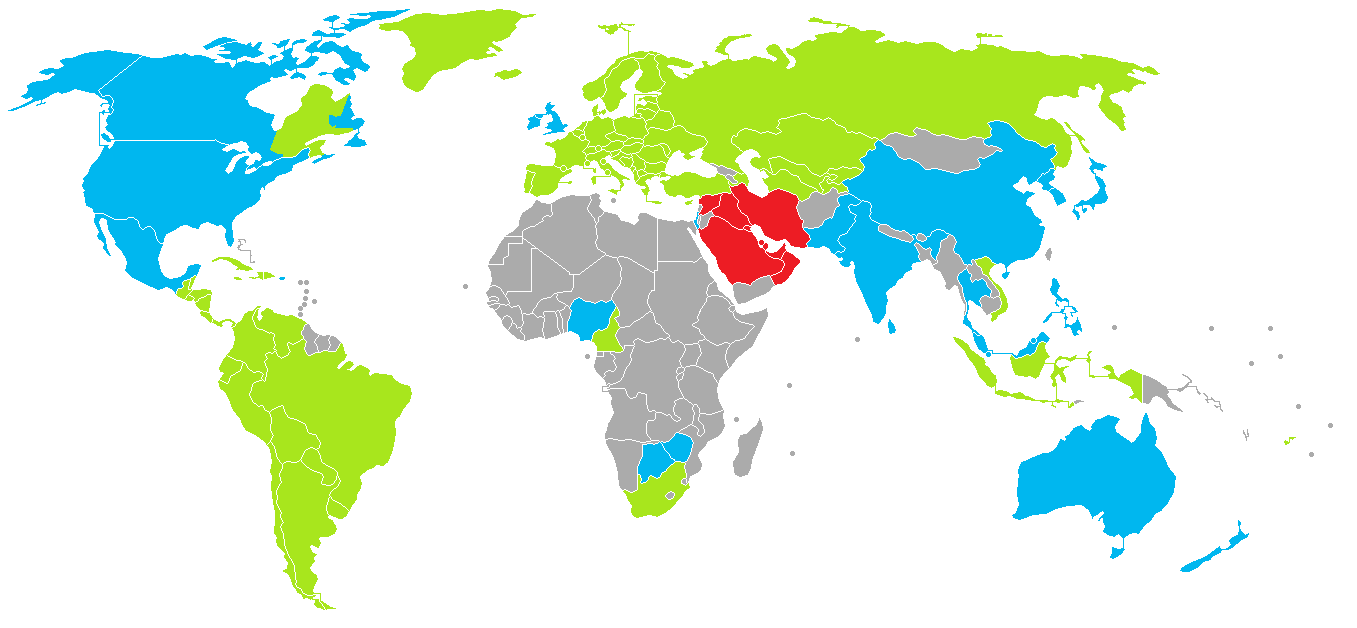
What are you talking about? Look at this map.
Blue countries use the dot. Green countries use the comma. From this map, it looks like aside from the United Kingdom and Ireland, pretty much everyone in Europe use the comma as the decimal separator. That's certainly more than "some".
-
Re:What would happen...
Only prettier. Your basic "yellow/orange and lots of black smoke" hydrocarbon fire is overdone and played out. The intense red/violet of a lithium fire is deliciously modern.
-
Re:Trapped on earth
What you are thinking of is the Kessler Syndrome.
-
Re:55% say they are Democrats
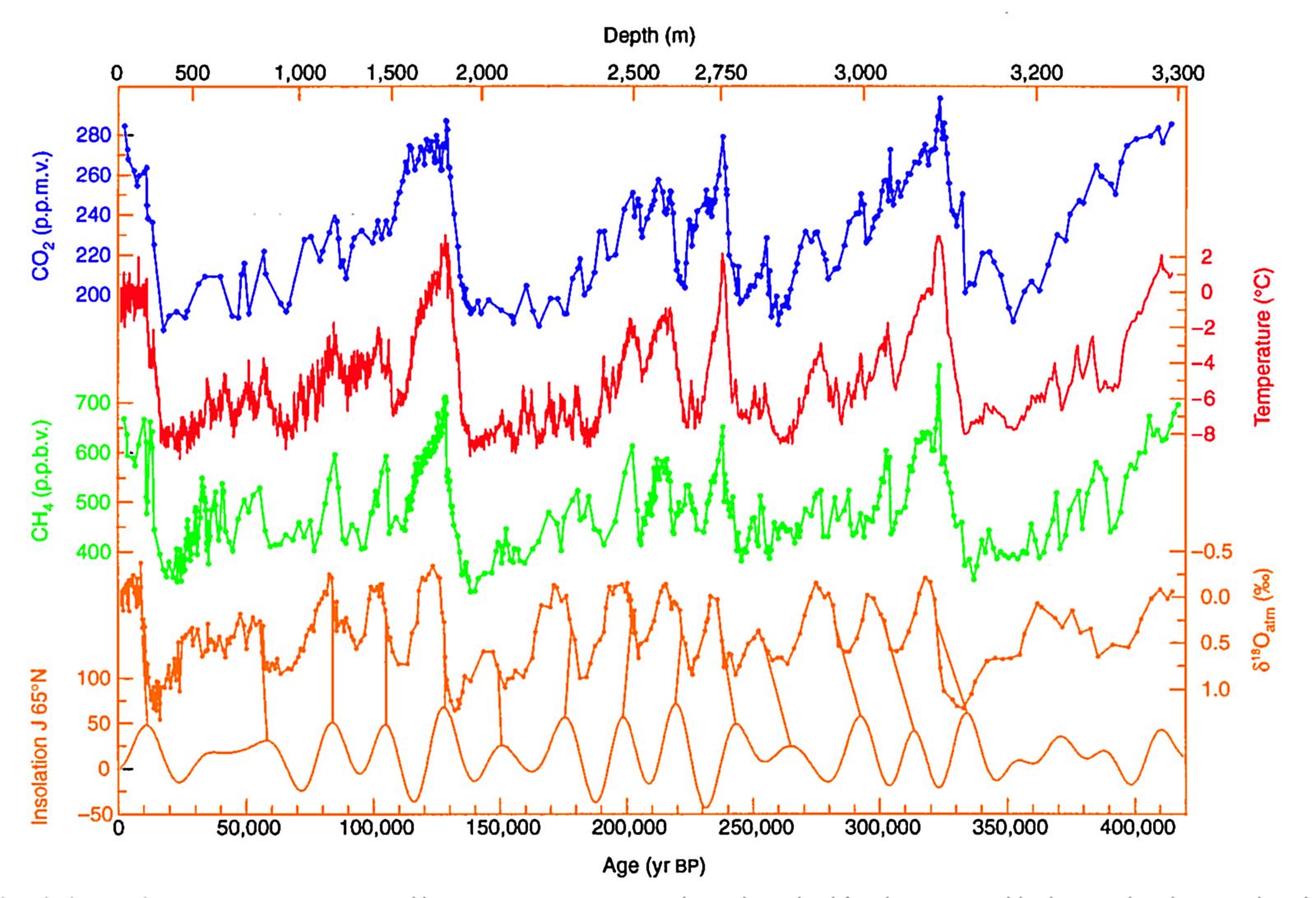
Wow! Where do you get your data? You have been radicalized! First of all relax take a deep breath. You will be OK. This temperature change has actually happened cyclically and we have data. So your fear that the heating up is something new and out of control is not the case. Your main assertions are not based in fact (and I have included the cite) so your conclusions are flawed. This should please you because your hysteria is by logic of a flawed premise not warranted. You are free! http://upload.wikimedia.org/wikipedia/commons/7/77/Vostok_420ky_4curves_insolation.jpg Read the graph! Don't mix up cause with correlation. On the graph cited it shows three cycles and humans were not the cause because 16,000 years ago when the temperature started to rise there weren't enough of them in the world to populate Maine at its present human density. This smashes the concept that humans were responsible for this cycle or the ones before. So if humans weren't responsible what about all of the CO2 we are pushing up into the atmosphere? It is only logical that it must have some effect on warming. Right? Well maybe. The data suggests that you are overstating the effect of the relatively small contribution. As a percentage of the total contribution human contribution is about 3.8%. We are only important to us. http://www.geocraft.com/WVFossils/greenhouse_data.html You seem to think that we can and should DO SOMETHING ABOUT IT. That depends on what it is. Global warming or climate change? These are huge natural forces at work as our planet goes through an aging process which you my friend or the Congress can't stop. Kind of like voting to stop the daily tides. If you want to promote a vote to keep the tide out be my guest but please don't do something that will hurt our quality of life for no effect. So in a couple of paragraphs I have given you enough information and cites to suggest that your assertions are not true, climate change is natural and is like the tide not much we can do about it. To those who predict Noahs flood you could ruin their day by showing the data of 450,000 years of ice cores that through several cycles the Antarctic ice has remained and to really make a point look up the Beacon Valley Pliocene ice ( one two or eight million year old ice!) or the 750,000 year old Arctic perma frost.
-
Minutia vs. the "big" picture
Since when did scientists âoevoteâ on science? One scientist can move ahead the understanding in the back of an envelope. Politics has hijacked science many times . Please examine the cited graph and explain the cyclivity demonstrated over the past 450,000 years in terms of human anthropogenic causes. http://upload.wikimedia.org/wikipedia/commons/7/77/Vostok_420ky_4curves_insolation.jpg If you are able to take the leap that what we are looking at is a cycle then the hysterics are amusing. Too bad we are shooting ourselves in the foot over this new religion. Not unlike predicting Noahâ(TM)s flood based upon each dayâ(TM)s rising tide. For those who fear that this one time, in spite of all evidence it should be comforting to know that if the same hysterical predictions came to pass in the last three cycles we would not be examining 450,000 year old ice in Antarctica, 750,000 year old perma- frost in the arctic and possibly Permian aged ice in the Beacon Valley in Antarctica. I think that there is a large strategy to feed disinformation to the public.A disinformed public is allowed to vote and unfortunately fantasy decsions have real world consequences. Also not unlike the concept of the earth being the center of the universe. Poor GALELEO!
-
Re:These plaintiffs are being very reasonable
Ithey ask for (almost entirely) reasonable steps to avoid the lawsuit
They may not realize it, but the steps they ask for are impossible. Even if Dcoetzee wanted to, he couldn't "permanently delete" images, even if he's uploaded them. He was a sysop at the time of the request, but a) sysops can't permanently delete anything, only hide it from the public; and b) policy would prevent him from deleting the images. If he tried, he'd just be desysopped and they'd be restored by another sysop.
Now he's no longer even an administrator. He was temporarily demoted while the implications of this threat play out. It's even more obviously impossible for him to comply with their demands now.
The fact of the matter is that the only ones who could delete the images are either the Wikimedia Foundation, or the Commons community by discussion and vote. No individual user has the power to remove images en masse like this just because they personally want to. This is not Flickr, where users have any control whatsoever over the content they upload.
If I ever get sued, I want to be sued by these people. They're working with the law and with their client's needs, and not violating the public's needs for information.
Only because they know their case is incredibly weak. If he lived in the UK, you can bet they'd be coming down on him with a sledgehammer. I'm going to guess they were desperately hoping he'd get scared and go along with their demands (not that he even could, as noted; but they probably didn't realize that). When he says he won't, I'm going to bet they drop it, because they can't do squat. (But IANAL.)
-
Re:Wait a sec- he took the photos or someone else?
The works are fully attributed, although they don't need to be since they are public domain.
http://commons.wikimedia.org/wiki/File:Sir_Edward_Belcher_by_Stephen_Pearce.jpg -
Let's read what they say.
"claims of copyright over works hundreds of years old"
No, certainly not. Instead, claims of copyright over "original photographs taken within the last thirty years".
And the letter is clear. Add fear if you like, but let's skip the uncertainty and doubt: there's no need to call anyone first thing Monday to "establish just what they think they're doing"; whether or not you or I agree with it, what they're doing is clearly explained here. -
Sue and be subject to radioactive publicity
For several years, the National Portrait Gallery has claimed copyright over public domain images in their possession. Wikimedia has ignored these claims, occasionally laughing. (Bridgeman v. Corel. Sweat of the brow is not creation in US law; go away.) Our official stance in this time has been "sue and be damned."
So the National Portrait Gallery has tried. Here's their letter. A lollipop for every misconception or unlikely or impossible demand. This was sent after (so they claim) the WMF ignored their latest missive. The editor they sent the threat to is
A UK organisation is threatening an American with legal action over uploading images that are public domain in the US to an American server — unambiguously, in established US law, not a copyright violation of any sort. I wonder how the case will go.
The letter is particularly odious in that it admits that his actions were completely within US law, but threatens to make his life a misery just because they think they can unless he (an individual) can actually make the WMF do something the NPG wants. This is actually worse than the RIAA.
It's most unfortunate that the National Portrait Gallery considers this in any way sensible behaviour, considering how well we've been going with museum partnerships for Wikipedia Loves Art — the V&A were fantastically helpful and lovely people, who realise that spreading their name and exhibits far and wide is much more likely to get them money and fame than claims of copyright over works hundreds of years old.
I can't see this ending well for the National Portrait Gallery, whatever happens. Anyone who could speak on their behalf at this level won't be in until Monday; I wonder if they'll be surprised at the people politely queueing with pitchforks and torches.
I'll be calling them first thing Monday (in my capacity as "just a blogger on Wikimedia-related topics") to establish just what they think they're doing here. Other bloggers and, if interested, journalists may wish to do the same, to establish what their consistent response is.
-
Well, that makes it straightforward.
Huh. Well, the Foundation has apparently taken the stand that this is okay by them. This was done by a straw poll , no less. (Why not just put up a poll asking if users should be able to upload random pictures on the internet that don't have a clear copyright assignment on them? What a fucking joke.)
These sorts of claims probably aren't valid in the United States, which is why museums here don't usually prohibit photography--people can just scan their books or postcards. On the other hand, museums in the UK do prohibit photography, because this allows them to retain copyright over the images. The postcards and books that they sell are still owned by them, and prohibiting photography means that they're the only source for those images.
It's vital to their funding model, and they're just protecting their interests. Suddenly cutting off a major stream of revenue would be catastrophic. On the other hand, museums in the States manage to get by with different revenue models. It's not like it's impossible for them to continue existing, but I can understand why they'd fight to protect their model.
-
Well, that makes it straightforward.
Huh. Well, the Foundation has apparently taken the stand that this is okay by them. This was done by a straw poll , no less. (Why not just put up a poll asking if users should be able to upload random pictures on the internet that don't have a clear copyright assignment on them? What a fucking joke.)
These sorts of claims probably aren't valid in the United States, which is why museums here don't usually prohibit photography--people can just scan their books or postcards. On the other hand, museums in the UK do prohibit photography, because this allows them to retain copyright over the images. The postcards and books that they sell are still owned by them, and prohibiting photography means that they're the only source for those images.
It's vital to their funding model, and they're just protecting their interests. Suddenly cutting off a major stream of revenue would be catastrophic. On the other hand, museums in the States manage to get by with different revenue models. It's not like it's impossible for them to continue existing, but I can understand why they'd fight to protect their model.
-
Re:VERY, VERY
Here is another one in Australia from multiple angles. http://upload.wikimedia.org/wikipedia/commons/3/38/Perth_Impossible_Triangle.jpg
-
Re:VERY, VERY
This guy has wasted his life.
Okay, smart-ass, here's your ONE image.
-
I am The Architect. I created the Internets.
Has anyone else noticed how much Vint Cerf resembles the Architect out of the Matrix films?
The Architect
Vint CerfI think maybe we should be worried, especially if he's lecturing at "Singularity University".
-
Re:I SWEAR
[...] I bet it's really embarrassing if someone tries to kill you.
-
Re:Comes up a little short
It depends on what kind of 'solution' you are interested in. The U.S. already has an anti-ballistic missile system designed to stop small-scale launches (a single missile from North Korea, an accidental launch of a Russian or Chinese missile). However, there is no technology that would work in a larger-scale conflict. Nuclear weapons and delivery methods are simply too effective. As has been said many times, hitting a missile out of the air is like hitting a bullet with a bullet, only harder. Technology isn't a quick or easy fix, you have to stop it at the source - it's easier to prevent someone firing a gun than stopping the bullet once it's launched.
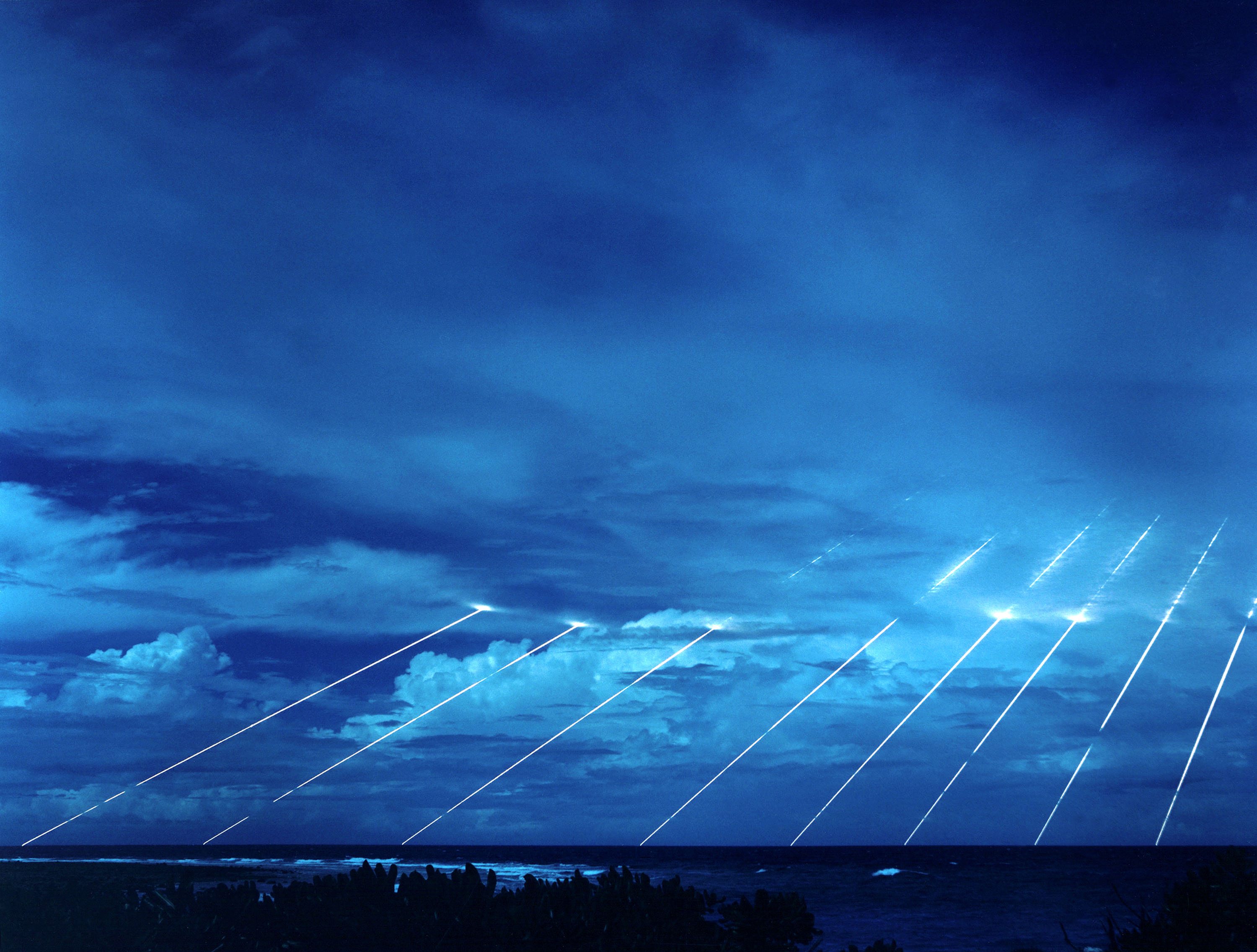
A modern ICBM is very hard to track; it only burns fuel for about 5 minutes, then continues to ascend for 20 minutes, reaching a height of over 1000 kilometers. A MIRVed missile will then break apart into (up to) eight separate warheads, as well as releasing chaff, reflective balloons, and decoy warheads. These warheads then fall to Earth at 4 km/s in less than two minutes, in a variable pattern (something like this ). That is a little under 30 minutes to see the launch, determine the ballistic course, and launch enough missiles from hundreds of miles away to attempt to intercept hundreds of real warheads amongst the greater amount of decoys and penetration aids. Oh, and some warheads can be set to detonate in the atmosphere to create an EMP effect, throwing off radar and other tracking systems. Radar and ABM sites will also be among the first targets. We have a hard enough time shooting down slow-moving single targets (the military has effective tactical anti-missile technology such as the Patriot and AEGIS, but there are orders of magnitude of difference between tactical missiles and ICBMs), but the very idea of a strategic nuclear defense is laughable. We've spent hundreds of billions of dollars on a system that we hope can take out a rogue missile or two. -
Re:Today is a good day
a black president? are you serious? his mom looks really white to me: http://upload.wikimedia.org/wikipedia/en/e/e5/Ann_Dunham_with_father_and_children_(enhanced).jpg racist comments such as yours prove to me that america is still not ready for a black president.
-
Re:I also wonder how true that really is
>Personally, I felt UT2004 (Unreal Engine 2) looked better over all.
I think Doom 3 looks so clearly better than UT2004, it's not even a matter of taste. The models of UT2004 look low-poly in direct comparison with Doom 3 and have little or no facial features:
http://downtown-dmz.de/uploads/ut2004.jpg
http://upload.wikimedia.org/wikipedia/en/e/ef/Master_Sergeant_Kelly_(Doom).jpgand the environments in Doom 3 are alot more fleshed out, detailed and interesting than in UT2004, not to speak of the overall atmosphere and special effects. There's also a technical reason why Doom 3 looks alot better than UT2004. A typical UT2004 game has alot more action on the screen at once than in Doom3, where the action is limited to single smaller rooms or corridors. Therefore Doom 3 could afford to cram more detail into everything whereas UT2004 models and environments had to be limited due to the expanse and intensity of the action. Anyway, concering graphics quality, Doom 3 was clearly half a generation ahead of UT2004.
By the way, I'm not an Id fanboy. I like both Doom and UT. And I don't intend to brag, but I work with OpenGL 3D graphics professionally. I think I know what I'm talking about here.
Seriously, no! -
Re:Cool
As of October 2006, the English Wikipedia database was 4.4Gig, and had been doubling annually.
-
About an Autobahn lane projector ?
Where this projector would be adapted on a car to project an autobahn lane with no speed limit while driving on the highway
http://upload.wikimedia.org/wikipedia/commons/thumb/b/b4/Zeichen_330.svg/100px-Zeichen_330.svg.png
Anyway, would this type of device be legal everywhere even for bikes ?
-
Re:I have no problem with this
True! However, there's also WP:CENSORED. Granted, that page (part) mostly refers to sexual material, but the general principle is clear: Wikipedia Isn't Censored.
In other words, removing information because it's not properly sourced is fine. Removing information because you want to suppress it is, generally speaking, not fine. It's unclear to me whether the ends justify the means in this particular case, but at the very least, I see a rather slippery slope here, and I'm concerned about principles such as the lack of censorship being outright ignored so easily.
-
Re:Correlation =/= Causation.
As long as you had food, water, and pr0n you could live forever on your computer chair.
Yeah, if you like bedsores on your ass!
There aren't enough details to decide but I could understand how being slightly overweight could be beneficial to women in particular. There's a reason why women like these and this were considered the most attractive in antiquity. Chubby is coming back in style
Even today many guys like me prefer chubby women - they're softer to cuddle with, they tend to have bigger and more plump breasts, they're curvature is accentuated and their plumpness makes them look "cuter", they're better-equipped to have healthy babies, and (in my experience) they have more orgasms. The homos out there are aware of the popularity of "bears".
I'm glad that the starving, anorexic "heroin-chic" fad is going out the door. One can be fit and comfortable without having to go hungry or be unattractively obese. Vanity, like eating, is unattractive in excess. -
Re:Wikipedia?
And that's exactly what Wikimedia Commons is for, isn't it?
-
Re:picture of Earth
-
Wonderful (but really awful) irony
How about take a page from the Talmud? Seems a perfect format, and there's been thousands of years of indexing of that document.
-
A few bits of info...
Secondly, he also states that global temperatures have fallen for the last 11 years
AFAIK, this is true*. 1998 was a particularly warm year, and recent mean global temperatures (MGT) are about 0.1 degrees Celsius cooler than they were in 1998. Draw a straight line between these points**, and you get a nice convinient cooling trend. This cooling, however, is nothing compared to the overall trend though (roughly a MGT increase of 1 degree in the last 150 years). Unfortunately, 'the planet has cooled!' ia a handy soundbite.
Solar emissions, ENSO, and other contributing factors to MGT vary, some of them cyclicly, and this is why the graph of MGT*** has peaks and ditches. We're just in a minor ditch right now. The only bit of trouble is that the ditch is halfway up a mountain.
----
*The source for this shaky assertion is my geography teacher, so bear this in mind.
**Not an accurate model of temperature fluctuations.
***Search for 'hockey stick graph' for the same graph, but with 'older' temperatures added. -
Re:Wikipedia article - More info
More info about the Wikipedia downtime in the Wikimedia Techblog: http://techblog.wikimedia.org/2009/06/current-events/
Ironically, at the moment all blogs of the Wikimedia Foundation are down as well... unfortunately, I can't find a cached version around. Try later.
-
Re:I don't think so
Though the Chinese government has its faults, I don't think your statement, "a nation's Government is the single largest institution that decides its prosperity," disqualifies China from continuing its rise. The government is very aware of what will allow China's continued economics rise. This can be seen with some of the long-term partnerships China has developed with countries around the world. It is slowly learning how to implement a civil society without ensuring its own destruction.
But I disagree with your statement more generally, too. As ElectricTurtle said, East Asia, especially China, was on top of the world for about a millennium. And they didn't do it under a democracy. They did it because China has the world's oldest tradition of a meritocracy. Since Confucius, the way you made it up in the world was through passing an exam. That's why China has been able to rise so quickly -- the people value education, and are willing to sacrifice everything so that their children might have more.
I wanted to add one more example to ElectricTurtle's list. China had ships that could carry 15x the tonnage as Christopher Columbus' ships almost a century before he "discovered" America. And they were much harder to sink because they had separate compartments around the base of the ship. If one was punctured and flooded, they could keep sailing. Why didn't they become the great explorers then? Two reasons. One, China was the center of the world and so they weren't so interested in exploring. And two, the internal culture just happened to become xenophobic just as Zhenghe's (the admiral of the ships described above) era of exploration was coming to an end. (And, under the next dynasty, run by the Mongols, there was an effort to appease the Chinese by sticking to their traditions. This impeded progress. Sort of like if the U.S. all became Amish.)
To further cast doubt on the manifest destiny that "inevitably" lead to Europe's rise, consider this. The Europeans were brutal to those they colonized. They demanded submission and subservience. During Zhenghe's day, the Chinese didn't. They created trade pacts, but let the people be. So what might have happened if the wheels of development had been a little more favorably aligned for the Chinese (and all other non-Europeans?) What if Zhenghe had been alive at the time of Columbus? Do you think the people of the world would have rather dealt with the European colonizers or partnered with the must more respectful Chinese?
Note: a fun model comparing Zhenghe's treasure ships to Columbus'. http://upload.wikimedia.org/wikipedia/commons/thumb/1/10/Zheng_He's_ship_compared_to_Columbus's.JPG.jpg/800px-Zheng_He's_ship_compared_to_Columbus's.JPG.jpg
-
I'm very tired of global warming
http://upload.wikimedia.org/wikipedia/commons/thumb/7/7a/Atmosphere_gas_proportions.svg/180px-Atmosphere_gas_proportions.svg.png and of the greenhouse gases... http://theglobalhoax.com/science/greenhousegassource.gif [decidedly biases source... but you get the idea] Either way, I'm tired of all this global warming... nonsensical, non-scientific, love-fest. Greenhouse gases are not an issue. At least not one we can control beyond the
-
Use Wildblue
WildBlue provides satellite service throughout most of the U.S. Speeds, low. Latency, high. Gaming, impossible. But at least it works.
I believe that they use low earth orbit satellites, which means that they may not have the technical capability to provide coverage over Iran, at least not all the time. And then there's the matter of getting ground stations smuggled in and installed, and they're large enough (the size of a DirectTV dish) to be difficult to conceal.
-
Re:Surprised? Don't be, it's open source.
Basically, open source projects that weren't initiated by a commercial vendor suck.
Most major linux distribution are descended from either Slackware or Debian.





.jpg)

.jpg)