Slashdot Mirror
Domain: wikimedia.org
Stories and comments across the archive that link to wikimedia.org.
Comments · 6,832
-
Re:cars equipped with short-range radio
I prefer my handheld tribander. I can still talk on CB if I want, but it can do sooo much more (and it -is- a wideband receiver so you can listen to just about anything* that's unencrypted.)
* - Other than cellular phone frequencies (which are protected by FCC regs and Federal law) anything the antenna and electronics can pull from the air is fair game.
-
Re:IP address proves nothing
In every case I have heard so far, all computers and removable media and USB drives in the residence were confiscated and searched at a government facility.
Personally I have no issue with that when it comes to child porn.
Given what falls under the definition of CP, you bloody well should have.
Consider the following fragment of (bad) prose: "... then I took of her blouse and started playing with her nipples. She had amazing tits for someone 41 years old".
Nothing special, right? Crap like this can be found in paperbacks available in book-stores and public libraries, PG-13 movies, what have you. BUT, reverse the digit order and suddenly just writing a couple of sentences becomes a crime of the highest degree, punishable by ruining the person's life forever.
Think that can never happen? Well, it does in Australia, Ontario, Ohio, etc.
Hell, even federal judges have an issue with the fact that mandatory sentences for possessing CP are harsher than those given to actual child abusers.
So, if I happen to meet you and hear that, in the course of your jury duty, you helped put away a child molester, I will happily treat you to a beverage of your choice. However, if you were instrumental in ruining the life of somebody whose only crime was committing his fantasies to paper, the tone of the conversation will be very different.
-
Re:Indeed
dammnit, suckered by a quest for knowledge...and a well hidden trap indeed. For some reason my brain just had to know what icelandic rock band was a rival to ABBA so I clicked...fool of a Took.
However, Google saved me. I don't think these bands matched the star power of ABBA, but now I know Icelandic Rock is real.
-
Re:What'll be after Zippy Zebedee?
Well, if you do the heresy of RTFA, you'll find the proposal includes dropping the code names... and sticking to: alpha, beta and release.
The official version scheme is already YYMM. if anything, it should be changed into YYYY-MM as per the ISO 8601 standard.
-
You shall not crucify mankind upon a cross of gold
See the Cross of Gold speech by William Jennings Bryan. Deflationary currencies facilitate concentration of wealth in fewer pockets.
-
Re:who is their market, any more?
Then there's Jeri Ellsworth (around 37, according to wikipedia). She fabbed microchips at home, just to show that it could be done.
-
Raspberry Pi
How about the Raspberry Pi? https://secure.wikimedia.org/wikipedia/en/wiki/Raspberry_Pi
-
2011: A Space Oddity
For a while I thought Major Tom had returned to Earth in a blaze of glory.
-
Re:Why the comment on the capacity
I'm sorry. You're wrong.
1K = 1024 bytes, because of bits for memory addressing and pins and whatnot. It started with memory. It had nothing to do with shift operations. Further, changing KB from 1024 to 1000 increases inaccuracy, as you will never which standard someone is referring to.
https://secure.wikimedia.org/wikipedia/en/wiki/Binary_prefix
-
Eat The Rich
I still think P.J. O'Rourke's Eat The Rich is the best book on this subject. Every Economics major should have to read this book. His basic premise is that almost any socioeconomic system can work provided that there is rule of law and private property rights. Take away these things and nothing works, whether it be capitalism, socialism, communism or anything else.
-
Re:Long-Term or Short-Term Trends?
In terms of immiseration, the problem isn't exploitation but globalization (and cheap transport and communications). Back in the day, you competed for wages largely with people in your own country. Now, you're competing with workers from around the world.
Yet some of the most prosperous countries (based on the inequality-adjusted Human Development Index) are those with the highest cost of living (Norway, Sweden, Germany), and consequently higher wages. There must be more going on here than a competition over wages.
-
Re:Green Vs Blue Laser questions
I understand longer wavelength light (i.e. -> infra red) but blue photons have higher energy than green ones, so would a blue laser be better or worse than a green laser for burning/meltng stuff?
They're rated in watts, not photons/second, so that's irrelevant.
Given we know that exposing your eyes to any laser light is a bad idea, and that blue light has more energy but your eyes are way more sensitive to green, which color laser would potentially be a higher risk for damaging your eyes (say from specular reflections)?
At the same power level, blue is worse, but specular reflections are high enough power density to burn your retina (which depends almost entirely on power, not wavelength).
-
zero CRI
I'm all for efficient lighting, but when the color rendering index (CRI) goes to zero, all the photon in the world won't allow you to see better.
-
Re:IS IT WEIRD OUT HERE - OR IS IT JUST ME?
"We ARE as Gods, and HAVE to get good at it."
-- Stuart Brand, 2009, "Whole Earth Discipline"
Whole Earth Discipline: An Ecopragmatist Manifesto. The book examines how urbanization, nuclear power, genetic engineering, geoengineering, and wildlife restoration can be used as powerful tools in the humanity's ongoing fight against global warming.
https://secure.wikimedia.org/wikipedia/en/wiki/Stewart_BrandYeah. Just another technophilic face on the eugenicist "New World Order" bullshit.
These "Long Now" creeps are the Nazi/Freemason/whatever of "The New Frontier".
-
Re:Noise?
NOTAR works better. Fans can be much quieter, and this leaves you with only one large rotor.
-
Re:Slightly disingenuous
Impressive yes, but it looks like they`re defining a motor as an armateur while ignoring the equipment that generates the electric fields.
No.
FTFA:
the molecule's hops were not random but slightly biased towards rotating clockwise, allowing the researchers to classify it as a motor.
An electric motor converts electrical energy into mechanical energy.
If you're going to be a pedant on Slashdot, you really need to practice more - Mr. Over-a-million-user-id
-
Re:Best thing ever made with a Microsoft logo
Code Complete [...]
Seconded. Code Complete improved the quality of my work more than any other book I've read. It's worth its weight in high-quality code you wrote after reading Code Complete.
https://secure.wikimedia.org/wikipedia/en/wiki/Code_Complete
https://thepiratebay.org/torrent/4168190/Code_Complete__2nd_Edition_(2004).chm
-
Re:Woah
I never realized how much I relied on the home-row dimples until one day I sat down at an older Apple keyboard. It had the dimples on the D and K keys instead of F and J. I wondered why so often I'd go to type and start banging away jibberish, and then I looked down and noticed the difference. Modern Apple keyboards have switched to the F/J convention, thankfully.
I recall reading somewhere that your middle fingers' tips are supposedly more sensitive than your index fingers' tips, which is why they did that. Who knows... Does anyone know if other keyboards put dimples on D/K?
-
Re:We need the Pirate Party in the USA
There is a Pirate Party in the US...
https://secure.wikimedia.org/wikipedia/en/wiki/United_States_Pirate_Party
It's just the US two-party system that pushes all the small parties under the rock.
-
Re:Looks like a toaster
You want to see a monstrosity? There aren't any near me, but this comes pretty close.
We call it the slug.
-
Re:Where did you get those numbers?
Not to mention "No wonder they went from distant 2nd place last gen to last place this gen." is incorrect too!
The PS3 is in fact in last place in terms of sales figures: https://secure.wikimedia.org/wikipedia/en/wiki/Console_wars#Worldwide_sales_figures_6
gp obviously pulled some numbers from magical fairy land. -
Where did you get those numbers?
They have been in the console market for ten years now and they still think they can buy/bribe/threaten their way to beating Sony and Nintendo.
Sony has some 21 first party studios.
Nintendo has about 10.Microsoft has only 3 or so first party studios.
Woah, wait a second. Where the crap did you get that? Wikipedia says that Sony has sixteen first-party studios, Nintendo has eighteen, and Microsoft has eleven. Some of the games that are made by studios like Level-5, Next Level Games or Insomniac are actually second-party studios that are not directly owned by the companies they collaborate with (especially Level-5, who releases games pretty much everywhere).
I don't know where you did your research, but that's REALLY misleading (and a little biased towards Sony, there). Microsoft publishes quite a bit of first-party content, even though it's not as much as Sony or Nintendo (especially Nintendo, even more so if you count their HUGE list of second-party studios).
-
Where did you get those numbers?
They have been in the console market for ten years now and they still think they can buy/bribe/threaten their way to beating Sony and Nintendo.
Sony has some 21 first party studios.
Nintendo has about 10.Microsoft has only 3 or so first party studios.
Woah, wait a second. Where the crap did you get that? Wikipedia says that Sony has sixteen first-party studios, Nintendo has eighteen, and Microsoft has eleven. Some of the games that are made by studios like Level-5, Next Level Games or Insomniac are actually second-party studios that are not directly owned by the companies they collaborate with (especially Level-5, who releases games pretty much everywhere).
I don't know where you did your research, but that's REALLY misleading (and a little biased towards Sony, there). Microsoft publishes quite a bit of first-party content, even though it's not as much as Sony or Nintendo (especially Nintendo, even more so if you count their HUGE list of second-party studios).
-
Where did you get those numbers?
They have been in the console market for ten years now and they still think they can buy/bribe/threaten their way to beating Sony and Nintendo.
Sony has some 21 first party studios.
Nintendo has about 10.Microsoft has only 3 or so first party studios.
Woah, wait a second. Where the crap did you get that? Wikipedia says that Sony has sixteen first-party studios, Nintendo has eighteen, and Microsoft has eleven. Some of the games that are made by studios like Level-5, Next Level Games or Insomniac are actually second-party studios that are not directly owned by the companies they collaborate with (especially Level-5, who releases games pretty much everywhere).
I don't know where you did your research, but that's REALLY misleading (and a little biased towards Sony, there). Microsoft publishes quite a bit of first-party content, even though it's not as much as Sony or Nintendo (especially Nintendo, even more so if you count their HUGE list of second-party studios).
-
Re:Google is now officially mature company
Try looking for '(public) web annotation'. I remember playing with a Mozilla Suite extension years ago that more or less did what Sidewiki does. Incidentally, there's a Wikimedia project proposal for this, too.
-
You're not qualified.
Every O-S project starts somewhere, U.JS had a humble beginning - so has mine. They are considerably different in their goals and current implementation. I strongly advise you know the difference before choosing or listening to the dismissive people in this thread.
You think an "odd number" means "divisible by 3", which means you have a less-than-middle-school education in math. That's not a "humble beginning". You're simply not qualified for the task you've undertaken. For fuck's sake, you didn't even look at the wikipedia page on parity, apparently.
-
Re:The cops who wrote those emails should be fired
Correct me if I'm wrong: Anonymous are the bad guys, and need to be hunted down and arrested, and the police are the good guys who deserve the respect of society and the high pay that is usually accorded to these positions of trust.
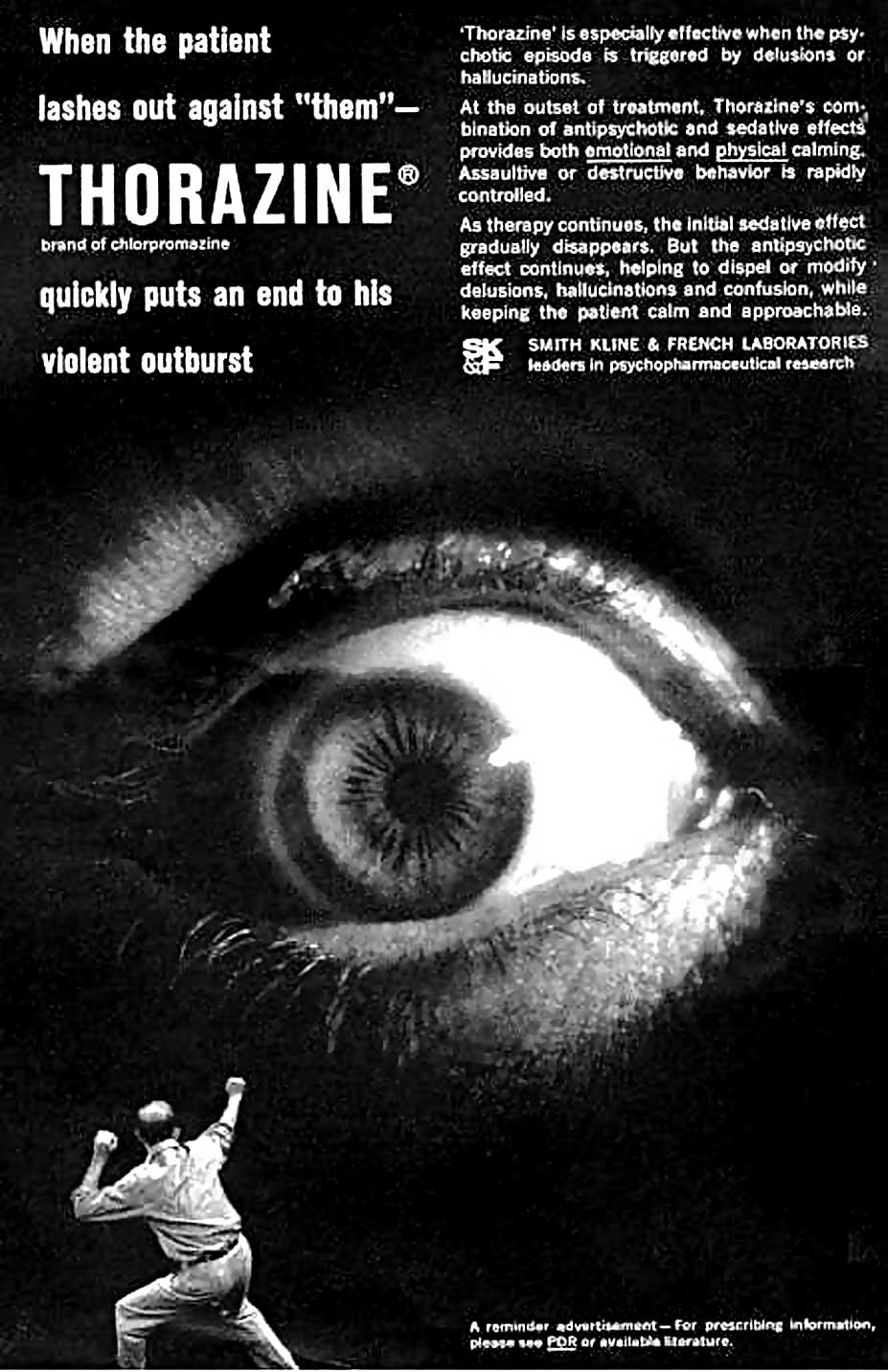
And people like Robert Wieners, the Chief of Police for Friendswood, Texas; are promoted to leadership positions because "Those folks got the criminal cure.". Sometimes I wonder if I should be on Thorazine.
-
Re:Really?
Ok, now we're confusing "means" and "end". So, let's start with the US Constitution:
To promote the Progress of Science and useful Arts, by securing for limited Times to Authors and Inventors the exclusive Right to their respective Writings and Discoveries
The "end" of copyright is to "promote
Looking at pretty much any modern copyright law, there are three very clear ways to spot that the laws aren't about control. Firstly, they're time-limited. If copyright was about giving creators control, it would either last indefinitely, or as long as the creator lived - so they could control their work. This is particularly obvious in the early copyright laws were the duration was anything from 14 years to 5. In fact, in the Constitution quoted above, there's that "limited time" part, highlighting this.
Secondly, copyright isn't absolute. While the early copyright acts (the British Copyright Act 1709, US Copyright Act 1790) didn't contain them, defences to copyright cropped up fairly quickly (with "fair abridgement", the precursor to "fair use" being created in 1740, in Gyles v Wilcox. These days they tend to be enshrined in legislation (fair use is in the 1976 US Copyright Act and the UK's Copyright, Designs and Patents Act 1988 has a whole host of "permitted acts"). Again, if copyright was about control, why would there be exceptions and defences? This takes away control from creators.
Thirdly (perhaps the weakest argument) copyright is transferable or revocable. It can be bought and sold like any other intangible property (at least, in some jurisdictions; some or all of it in others are bound to the creator); this gives creators control over their works by allowing them to give up control over it. That seems a rather odd way of doing so.
Of course, when I wrote that comment I didn't have the US Constitution in mind; I was thinking of the original Copyright Act 1709 (8 Anne c.21, often referred to as simply the Statute of Anne), or to give it its full title:
An Act for the Encouragement of Learning, by Vesting the Copies of Printed Books in the Authors or Purchasers of such Copies, during the Times therein mentioned.
Again, this is about "encouraging learning", not about giving authors control. In fact, if you read the text (which I recommend, it's a good read; particularly comparing it with modern copyright laws) the purpose it gives (along with the above) is to prevent booksellers and publishers from printing works to the "very great Detriment" of authors and the "Ruin of them and their Families." In order to fix this, it gives authors (or those who would become known as copyright owners) the "sole Liberty of Printing and Reprinting" their books for 14 years (subject to some qualifications about price and registration). [If it helps, the 1790 Act was mostly copied (ah, the irony) from the 1709 Act.]
To me, this implies that copyright was originally about money, not control. It was a means to ensure that authors had the first chance at getting a reasonable financial return on their books, not a means to give them complete control over their works.
Anyway, I hope some of this will help convince you that copyright isn't entirely about control (or wasn't originally), but by giving copyright owners some limited control (as a means to an end), has led them to feel entitled to greater control. Perhaps that might encourage you to revise your opinion of my post...
-
Re:That's thilly....
The SF police are no sissies. They are strong and tough, like pictured below (possibly not safe for homophobes, though fully clothed and just standing around):
http://upload.wikimedia.org/wikipedia/en/1/1f/DaddyandTheMuscle.jpg -
Re:Occam's Razor
Occam's Razor says that, if a model works without one of its factors, then it is safe to remove that factor. It's a rule about logic, not about science.
Actually, what Occam is alleged to have said was "entia non sunt multiplicanda praeter necessitatem" ("entities must not be multiplied beyond necessity"), which is a theological statement (see Ockham/nominalism on Wikipedia) rather than a proposition in philosophical logic.
-
Re:Occam's Razor
Occam's Razor says that, if a model works without one of its factors, then it is safe to remove that factor. It's a rule about logic, not about science.
Actually, what Occam is alleged to have said was "entia non sunt multiplicanda praeter necessitatem" ("entities must not be multiplied beyond necessity"), which is a theological statement (see Ockham/nominalism on Wikipedia) rather than a proposition in philosophical logic.
-
Re:Really?
Starz is a monopoly? What kind of twisted logic is that? By that definition, Ford is a monopoly because they are the only ones selling Ford vehicles. Toyota is also a monopoly, as they are the only ones selling Toyotas. And let's not forget the juggernaut monopoly of Bentley.
You are confusing the content monopoly with the distribution system monopoly. Yes, Ford has a monopoly on the manufacture Ford cars, but they're not the only ones selling them. You can get them second-hand, through a dealer, through a distributor etc.. Imagine, instead, if Ford could prevent people from selling a Ford car without a licence - they could then insist that the only way to buy a Ford would be from them, and when you did that, you had to get 5 cars at once, and agree to buy cars from them for the next 10 years...
Of course, if they tried to do that, no one would buy Ford cars; they'd move to Toyota or Bentley (now part of VW) - but when the top half-dozen manufacturers control over 50% of production (rough estimate from here), such a practice could easily become standard.
The other major point is that a car is a car, and what makes a Ford a Ford (v a VW or Skoda) is the Ford logo on the front. While there are significant variations, and individual companies may hold design rights and patents on certain elements, very few substantial designs are restricted to one company. This means that while Ford have the monopoly on Ford cars, Toyota could, if it wanted to, make a car very similar to a particular Ford model, but stick their logo on. This makes the market much more competitive and gives consumers much more choice.
In contrast, while the contrary could be argued in some cases, each TV show/film is unique. There is no other way to get an episode of, for example, the recent Camelot series, or Torchwood: Miracle Day without going to Starz (or their partners). The very essence and purpose of the object (the show) is protected by copyright etc., whereas with a car, it is only the specifics (the logos, design, possible patented parts) that is unique to any one manufacturer.
-
Re:Really?
Starz is a monopoly? What kind of twisted logic is that? By that definition, Ford is a monopoly because they are the only ones selling Ford vehicles. Toyota is also a monopoly, as they are the only ones selling Toyotas. And let's not forget the juggernaut monopoly of Bentley.
You are confusing the content monopoly with the distribution system monopoly. Yes, Ford has a monopoly on the manufacture Ford cars, but they're not the only ones selling them. You can get them second-hand, through a dealer, through a distributor etc.. Imagine, instead, if Ford could prevent people from selling a Ford car without a licence - they could then insist that the only way to buy a Ford would be from them, and when you did that, you had to get 5 cars at once, and agree to buy cars from them for the next 10 years...
Of course, if they tried to do that, no one would buy Ford cars; they'd move to Toyota or Bentley (now part of VW) - but when the top half-dozen manufacturers control over 50% of production (rough estimate from here), such a practice could easily become standard.
The other major point is that a car is a car, and what makes a Ford a Ford (v a VW or Skoda) is the Ford logo on the front. While there are significant variations, and individual companies may hold design rights and patents on certain elements, very few substantial designs are restricted to one company. This means that while Ford have the monopoly on Ford cars, Toyota could, if it wanted to, make a car very similar to a particular Ford model, but stick their logo on. This makes the market much more competitive and gives consumers much more choice.
In contrast, while the contrary could be argued in some cases, each TV show/film is unique. There is no other way to get an episode of, for example, the recent Camelot series, or Torchwood: Miracle Day without going to Starz (or their partners). The very essence and purpose of the object (the show) is protected by copyright etc., whereas with a car, it is only the specifics (the logos, design, possible patented parts) that is unique to any one manufacturer.
-
Re:Really?
Starz is a monopoly? What kind of twisted logic is that? By that definition, Ford is a monopoly because they are the only ones selling Ford vehicles. Toyota is also a monopoly, as they are the only ones selling Toyotas. And let's not forget the juggernaut monopoly of Bentley.
You are confusing the content monopoly with the distribution system monopoly. Yes, Ford has a monopoly on the manufacture Ford cars, but they're not the only ones selling them. You can get them second-hand, through a dealer, through a distributor etc.. Imagine, instead, if Ford could prevent people from selling a Ford car without a licence - they could then insist that the only way to buy a Ford would be from them, and when you did that, you had to get 5 cars at once, and agree to buy cars from them for the next 10 years...
Of course, if they tried to do that, no one would buy Ford cars; they'd move to Toyota or Bentley (now part of VW) - but when the top half-dozen manufacturers control over 50% of production (rough estimate from here), such a practice could easily become standard.
The other major point is that a car is a car, and what makes a Ford a Ford (v a VW or Skoda) is the Ford logo on the front. While there are significant variations, and individual companies may hold design rights and patents on certain elements, very few substantial designs are restricted to one company. This means that while Ford have the monopoly on Ford cars, Toyota could, if it wanted to, make a car very similar to a particular Ford model, but stick their logo on. This makes the market much more competitive and gives consumers much more choice.
In contrast, while the contrary could be argued in some cases, each TV show/film is unique. There is no other way to get an episode of, for example, the recent Camelot series, or Torchwood: Miracle Day without going to Starz (or their partners). The very essence and purpose of the object (the show) is protected by copyright etc., whereas with a car, it is only the specifics (the logos, design, possible patented parts) that is unique to any one manufacturer.
-
Re:Really?
So you blame Netflix? There are two parties in this contract; we won't know which one is at fault without knowing how much Starz is demanding, and how little Netflix is offering.
Of course, the real villain here is copyright. Not the law, but the idea that it gives publishers complete control over their works (rather than just being a way to help them make a reasonable return). It means that publishers like Starz feel entitled to demand whatever price they want for their content, or flat-out refuse to license it - particularly if they'd rather you spent $10/mo on their service (even though you only want to watch the odd show), rather than paying Netflix $x/mo, of which only a fraction will end back at Starz.
The same issue is gradually making itself known with computer gaming; particularly the current Valve/EA fight, with contract negotiations breaking down as both parties want to push their own distribution systems (Steam/Origin resp.) with their products (notably Crysis2, Dragon Age 2, and soon SW:tOR).
This is bundling, it occurs when you have publishers, distributors and copyright owners all mixed together, and is anti-competitive and evil. This is what led to the EU fining Microsoft €899m in 2008, for bundling WMP with Windows (and made MS give EU users a choice of web browser, by default).
Sadly, the only way around this (short of having very strict and rigorously-enforced anti-trust laws - which take a long time to work; the initial complaint against MS above was made in 1994 - an appeal is still pending) is compulsory licensing. This would mean we could get dozens of Netflixes and Hulus, iTuneses and Spotifies, Steams and Origins, all offering competing services to access the same content - giving consumers the choice for which service to go with (rather than the copyright owner), depending on the terms ($n/mo for streaming v $m per download etc.) - with copyright owners getting paid a 'fair' amount, and not having to worry about endless contract negotiations.
Of course, this will never happen in the US/EU etc. as it would involve the big copyright owners (Disney, Warner Bros, Starz etc.) giving up control, and their refusal to allow these sorts of services already (or reliance on excessive DRM) shows how tightly they cling on to this. Plus it would probably have to involve registering copyrights, a state-run scheme, international co-operation and a significant change to the big copyright treaties (such as TRIPS or the Berne Convention).
But one can dream...
-
Re:A few kids might be able to get it
I started learning to program aged 7, so it's definitely not to young to get an idea of what is involved. My school also had Capsela for children to play with, which forms a better analogy for modern modular programming than lego. Each capsule contains a set of gears (or something like a motor) and you can connect them together in a variety of ways. Low-level programming is analogous to building the individual capsules out of the individual gears, high-level programming to assembling them.
-
Re:FMC?
No such thing. It is actually cast into the metal..
-
Re:How dare they sue us!
What about these?
GRiDPad (1989)
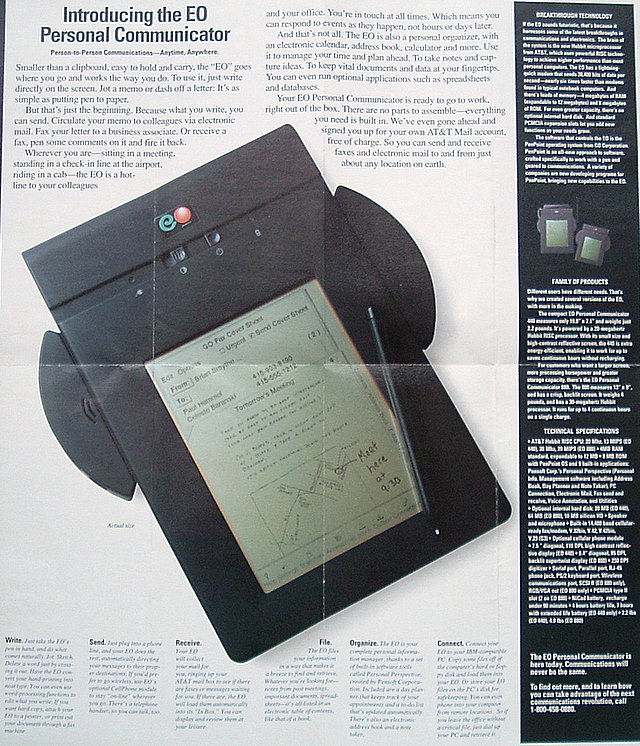
EO Personal Communicator (1993)
DEC Lectrice (1996)
PaceBook D110 (2000)
Microsoft Tablet PC (2002)
HP TC1000 (2003)
Samsung Q1 (2006)
JooJoo (2010, about one week before iPad release)
And those are just a few of them. If anyone did some design copying, it was Apple.
-
Re:How dare they sue us!
What about these?
GRiDPad (1989)
EO Personal Communicator (1993)
DEC Lectrice (1996)
PaceBook D110 (2000)
Microsoft Tablet PC (2002)
HP TC1000 (2003)
Samsung Q1 (2006)
JooJoo (2010, about one week before iPad release)
And those are just a few of them. If anyone did some design copying, it was Apple.
-
Re:Hold up on your patents!
Those materials were available in the 19th century. I wonder if anyone previously discovered this?
-
Looks Good on Paper But ...
Companies should have a "don't sell to dictators" policy. We should isolate them from all trade. No more business with China until they have a freely elected government.
So when you deny these countries all trade, who do you think it hurts the most? Do you the dictator and their cronies care? They might care that they don't get their Bentleys and 80 year old scotch but who really gets hurt are the people.
Here's some bedtime reading for your altruistic folks that an Egyptian pointed out to me when I said that US Sanctions are the only ethical way to get dictatorships in line. When we sanctioned Iraq, half a million children died. Now, you might say that it's not your problem that a country of sand can't get an agriculture infrastructure together to save its own children but when we went in there all cavalier like a couple times do you think the people praised our troops for ousting the dictator? Do you think they didn't know that we had imposed sanctions on their country which meant many of them starved?
You can say "no more high end commodities, only food and water" which is slightly better but then those simple commodities just become the prized possessions and dictators/warlords sit on rice and use it to control their starving populace. It's a good thought but you have to be prepared for the reality of what ensues. -
Re:birds aren't lizards
Dinos are reptiles, birds are dinos
http://en.wikipedia.org/wiki/Phylogenetics
http://evolution.berkeley.edu/evolibrary/article/phylogenetics_04
https://secure.wikimedia.org/wikipedia/en/wiki/File:Phylogenetic-Groups.svgHowever, mammals are not reptiles (but reptiles and mammals are both amniotes)
-
Re:Oh dear God I hope so.
Speed limits actually hinder driving safety more often than they help.
Citation, please.
https://secure.wikimedia.org/wikipedia/en/wiki/Speed_limit#Opposition
http://www.motorists.org/press/montana-no-speed-limit-safety-paradox
http://money.msn.com/auto-insurance/town-slams-brakes-on-traffic-tickets-carinsurance.aspx?page=2
-
Re:Hold up on your patents!
Sorry mate, but anything involved in being clear requires a payment to your local Scientology chapter. We have effective ways of enforcing our intellectual property.
Why do you think the music and movie industries can get politicians to accept continuous copyright extensions? That's because of the influence of Scientology. Just ask Tom Cruise.
-
Re:Still a long way away
Not really contradicting anything you said, but I thought Grover's algorithm allowed for a useful speed-up for NP-complete problems, even though it did not make them polynomial.
-
Re:LISP? really??? really??
Sun's eGate Integrator platform (a predecessor to JCAPS) used a LISP derived language called Monk as a scripting language. Of course, it's been phased out in recent versions
-
Re:It's a shame...
it isn't that simple. to my knowledge there is no negative side effect from wearing your seatbelt, however there can be for vaccines.
Perhaps your knowledge of both vaccines and seat belts is incomplete.
-
Re: Stenography
And have you actually seen anybody doing stenography the last decade or two? Those people have been pretty much invisible since the Cypherpunks movement started - they were part of one of our great successes, Silent Trystero's Typing Pool...
Stenography is different from what court reporters do, though both of them are trying to capture speech in real time. It's a shorthand version of writing that a well-trained secretary could use to capture notes that she'd then type up, and Dictaphones were a technical alternative. (I don't watch Mad Men, but they probably had somebody on there doing shorthand, as well as fetching coffee and smoking cigarettes in the office.)
-
Re:What percentage of those infected...
Nobody (with standing) has EVER claimed that a vaccine is 100% effective at stopping whatever it is supposed to. It's impossible. For a start, evolution dictates that something stronger and more powerful and able to overcome the vaccine will, eventually, come along (that's what MRSA is, for instance) - and it's actually (in avoiding natural selection terms) worse if only a tiny minority of people are susceptible to the disease/virus/whatever than if everyone is susceptible or everyone is immune. It provides greater scope for a successful mutation to arise.
As always, dickheads with zero medical experience telling people what they should or should not do have been the bane of humanity and cost more lives than the accidents of doctors, or an ineffective vaccine.
You don't get vaccinated for YOU. You get vaccinated for OTHERS. Those with compromised immune systems, those who you would spread the disease to, those you would be an asymptomatic carrier for (Typhoid Mary), etc. You don't get immunised against German Measles (Rubella) for yourself - you do it so that you DON'T give it to that pregnant woman in your family, or who lives down the road.
That said, I haven't had any vaccinations since my school days (for purely selfish reasons that have nothing to do with their safety), but then I avoid almost everything that otherwise normal people think is "essential" in medicine nowadays - including headache tablets, stomach remedies, cold remedies and just about anything that comes in a blister-pack.
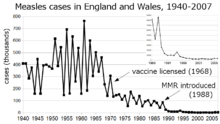
In terms of medicine, a vaccination will never be perfect, but that doesn't mean it can't eradicate a disease to the point that it leaves living memory either permanently (smallpox), or in first-world countries (polio).
-
Pale Blue Dot
A quote of Carl Sagan, for those who don't know.
_Keyboard_M0116.jpg)