Slashdot Mirror
Domain: wikimedia.org
Stories and comments across the archive that link to wikimedia.org.
Comments · 6,832
-
Re:But... I thought that was a good thing
-
Re:Simplified
They probably didn't know the citizen recorded, otherwise it could very well have been possible that he forgot to put the tape in the camera... Just like with a high profile incident such as the shooting of Jean Charles de Menezes where the hard drives from the CCTV camera's all went missing... It's funny how CCTV is used so actively by government to check on citizens, but when citizens want to check on the government there just happens to be a malfunction... It's almost as if they don't want citizens having proof of their failures...
So all we citizens can do is hope we don't get shot in the head 7 times because we look like a terrorist or behave suspiciously like for example going into a hypoglycemic coma! -
whoosh - the red flag act
Well done. Yes, safety regulation is about finding the proper balance between risk and inconvenience.
"Well done"
-
They could do worse
Than this versatile groove (played quietly, and w/o vocals or string synth).
-
Re:Is it really so outrageous?
Pension funds? Did you post your message via time portal from the 1980s? The corporations you seem to love so much have done away with those (except possibly for executives). Maybe you mean 401Ks, but those are definitely not the same thing.
You're wrong. Pension funds are among the largest investors in the world today, 21 Dec 2010. See, for example, TIAA-CREF and CalPERS.
-
Re:Is it really so outrageous?
Pension funds? Did you post your message via time portal from the 1980s? The corporations you seem to love so much have done away with those (except possibly for executives). Maybe you mean 401Ks, but those are definitely not the same thing.
You're wrong. Pension funds are among the largest investors in the world today, 21 Dec 2010. See, for example, TIAA-CREF and CalPERS.
-
Re:What's the big deal?
Go to google and type in layer three switch.
I found this though if it helps you. Emphasis mine.
"Some MLS's are also able to route between VLANs and/or ports like a common router. The routing is normally as quick as switching (at wirespeed). According to Cisco, Level 3 switches are basically routers that switch based on Layer 3 information , the basic difference being processing speed and/or the way they do the switching; Level 3 switches use ASICs/hardware instead of the CPU/software that a router would."
https://secure.wikimedia.org/wikipedia/en/wiki/Multilayer_switch
-
Re:Based on what happens
In practice this kind of dominance only comes about as a result of regulation
Only? How was Standard Oil created by government regulation? Reading their history, it sounds like it grew as a result of a lot of shrewd business sense, prompted by ethically dubious dealings with other private companies, in spite of regulations. Or, for the
You're making a very big claim with that statement, and without some strong evidence, I don't buy it. I'll grant you that poor legislation can lead to monopolies, but I highly doubt that this is the only way they can form.
Again, going back to my earlier statement, I believe that the right answer is some middle ground between pushing regulations down everywhere, and not imposing any. I would also be especially suspicious of any regulation that is not opposed by the largest companies in a field.
In general, whenever large groups of individuals focused on personal liberty (the EFF, the ACLU) are at odds with large companies regarding a piece of legislation, I find it easier to believe the group that doesn't have any financial interest.
Also, regarding net neutrality, I think that there is clear opportunity for a 1st amendment type law (yes, I know that it isn't a perfect analogy) regarding the throttling of network traffic. I am not a lawyer, so I will refrain from trying to offer any specific wording, but I think that you get what I'm getting at.
-
Re:You thought the GOP/TP represented regular peop
That the Bush Tax Cuts combined with massive military spending (two wars) and massive unpaid-for entitlement expansion (Medicare Part D) are the reason we've got such a huge deficit, and national debt, right?
The Democrat controlled Congress just extended those exact same tax cuts you're complaining about. And the cost of the wars is dwarfed by entitlement expenses (but no one ever seems to take Mandatory Spending into account when talking about expenses).
Reagan TRIPLED the debt. Bush I doubled it. Bush II doubled it again. After Clinton, we were looking at surplusses as far as the eye could see,
Terrible comparisons that ignores all factors except "who controls the presidency." You ignore not only who is controlling the other branches of office, but also the general state of the economy (boom/bust/etc) that is generally unrelated to government. As you can see from this chart: https://webcache.googleusercontent.com/search?q=cache:cGw2iu1drOQJ:uspolitics.about.com/od/usgovernment/l/bl_party_division_2.htm+&cd=1&hl=en&ct=clnk&gl=us&client=firefox-a and this chart https://secure.wikimedia.org/wikipedia/en/wiki/File:US_Federal_Debt_as_Percent_of_GDP_by_President.png):
1950 -> 1980: Deficit decrease under 3 Republican presidents and 3 Democrat presidents. In all of these situations, we had a mixed congress (most of the time two-thirds Dem).
1981 -> 1987: Deficit increase. Republicans control presidency + two-thirds congress
1987 -> 1993: Deficit increase. Republicans control presidency. Dems control two-thirds congress
1993 -> 2001: Deficit decrease. Democrats controls presidency. Republicans control two-thirds congress
2001 -> 2005: Deficit increase. Republicans control presidency + two-thirds congress
2007 -> 2009: Deficit increase. Republicans control presidency. Dems control two-thirds congress
2009 -> current: Deficit increase. Democrat full control. This is also the largest deficit increase ever.And that often-cited meme that Obama "trippled the deficit"?
I don't know what the exact number is, but it's the largest ever: http://money.cnn.com/2010/12/20/news/economy/total_stimulus_cost/index.htm
I might add that TARP, although proposed by Bush, was very heavily voted against by Republicans in Congress -- it only passed due to a substantial majority of Democrat voting. AND it has pretty much been 100% paid back and then some (unlike Obama's stimulus).The biggest lie ever told (and bought by too many people) is that Republicans are in any way financially conservative or fiscally responsible.
No, the biggest lie ever told is that either party is fiscally responsible when they control all branches of government. The second biggest lie is that the actions of literally a handful of presidents in office somehow define an entire party or its agenda, with full ignorance of any other aspect of the political or economic circumstances.
At least when Democrats spend money, Americans benefit
So Americans are benefitting from the 1+ Trillion we spend annually on Social Security/Medicare/Medicaid? From what I've head, no one has any retirement money and our healthcare here is pisspoor. AND we're damn near bankrupt because of it. And I dare you to show me how "war spending" in any way equals 1 Trillio
-
Re:Whoops: DHS, not FBI. Same question.
No, you can't sue the DHS, or the government in general, because of a most pernicious doctrine called "sovereign immunity." Since the government created the courts and endows them with legitimacy, you can't use its own courts against it, except in very limited circumstances. (It's like dividing by zero, sort of.)
However, if an agent of the government uses his/her position to commit a crime, you can sue the agent him/herself, but not their employer. (Of course, that's no guarantee that the suit won't get tossed, only that you can, in fact, proceed with it.) Also, if they use the apparatus of the government for purposes of racial discrimination, they can also be sued. But generally, no, you can't sue.
WIkipedia explains it in more detail: linky
-
Re:Why are they so stupid?
Simple. They don't care.
If you're innocent, pay the thousands in court costs and missing time off, and fight it in court. Otherwise just pay the money and nobody is going to get hurt.
https://secure.wikimedia.org/wikipedia/en/wiki/SLAPP - related.
-
Re:Gah...
Since 2002 MSFT has had a tablet additions to their OS.
You are a decade out there. Microsoft first made their tablet extensions for Windows 3.1 in 1991.
in that time they didn't do anything as simple as updating the mail client to work better with tablets.
They changed their mail client to use the ribbon interface. I was never a big fan of the move to ribbons in Office, but I do have to admit that the ribbon makes it much easier to use on a tablet.
Apple didn't release a tablet OS, until after the web browser or mail client worked well for tablets.
I guess you are assuming that a tablet PC must use a finger-based interface, rather than a pen-based one. Microsoft's vision of a tablet has always assumed a pen interface, which given the time that it was first made seems like a reasonable thing to do. Even Apple's early tablet attempts used this. Despite your assertions, the first version of the Newton wasn't a particularly successful interface. I still recall an Apple rep struggling to get it to work properly during a demonstration at a trade show.
I have always (fondly) called that device the Apple Nurses, because of its inability to recognise its own name during that first presentations. It reminded me of how the Amiga's speech systhesis couldn't pronounce "Amiga" correctly.
-
I think I found his most terrifying work.
-
Re:metrix007 "SHOT DOWN IN FLAMES", rotflmao
This link should interest you.
-
Re:This is why the Dems lost the House
he can literally say "this is bullshit guys, you must treat people of all sexual orientations equally"
No, he can't. He couldn't.
Clinton tried to do that -- to do exactly what Truman did on race. He announced before taking office his intent to declare that gays could serve openly. In response, Congress passed the Don't Ask Don't Tell legislation to tie the president's hands. And they told Clinton, "You will sign it or we have enough votes to put through a veto-proof version that increases instead of decreases the investigations into military personnel.
You can read the full history here: https://secure.wikimedia.org/wikipedia/en/wiki/Don't_ask,_don't_tell
-
Re:Deep packet inspection is not the problem
But they can't tell if you're connected to them through an anonymizing proxy.
Then how can Wikimedia tell whether a user is connecting through an open proxy? See "WikiProject on open proxies" on Meta.
-
Re:It's called the "employee mobility pool"
"We believe there is a ideal home for Delicious outside of the company where it can be resourced to the level where it can be competitive."
The dumpster behind 701 First Avenue, Sunnydale, California is technically "outside of the company", and I'm sure that there are plenty of resources there.
If you get there before the next pickup you may even find about six hundred recently laid-off people looking for jobs. I'm sure that some of them may want to do some "resourcing".
Sunnydale: http://i276.photobucket.com/albums/kk30/smgfan777/WALLPAPER%207/SUNNYDALE-HIGH.jpg
Sunnyvale: http://upload.wikimedia.org/wikipedia/commons/8/82/Yahoo_Headquarters.jpg
-
Re:Not the first...
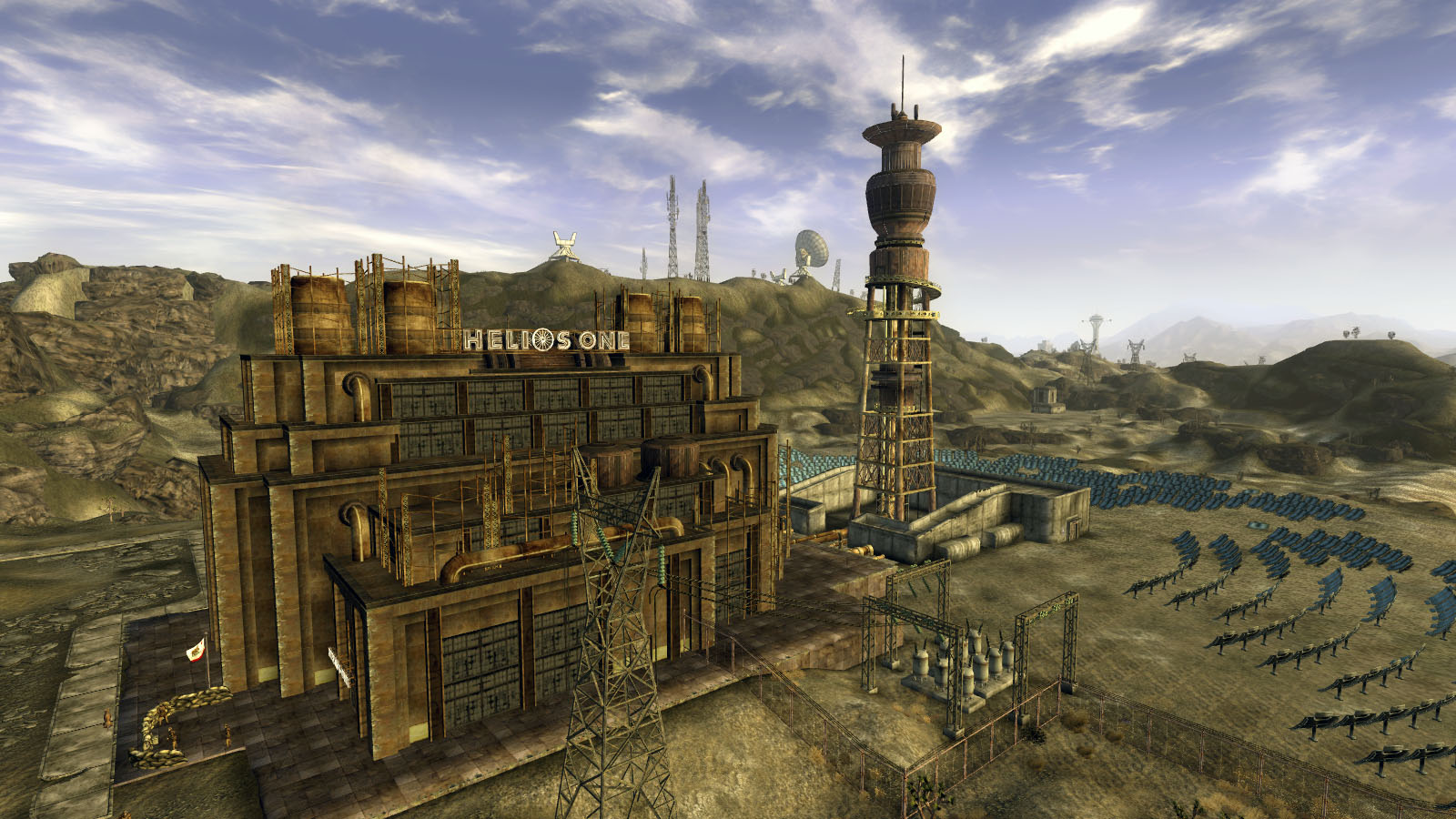
Helios One doesn't "use space lazzors" to generate energy, but contains the control mechanism for the Archimedes II space-based laser weapon.
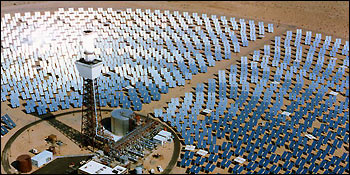
It's clear from looking at the pictures that Helios One was modelled pretty directly on Solar One and Solar Two.
-
Re:Seriously?
as we've seen in just about every country that has one.
*sigh*
That is not an argument.
https://secure.wikimedia.org/wikipedia/en/wiki/Fallacy_of_the_single_cause
https://secure.wikimedia.org/wikipedia/en/wiki/Proof_by_example
-
Re:Seriously?
as we've seen in just about every country that has one.
*sigh*
That is not an argument.
https://secure.wikimedia.org/wikipedia/en/wiki/Fallacy_of_the_single_cause
https://secure.wikimedia.org/wikipedia/en/wiki/Proof_by_example
-
Re:Discount the above
I would say that you are a Centrist Libertarian. But you have to realize that Libertarianism is an ideal in the two axis political spectrum. What I was pointing out was that in no way does Fox News fall within the Libertarian spectrum. I myself lean more towards Anarchism (leftist libertarianism).
-
Re:Yo, Jimmy, I've got an idea:
Wikipedia is not collecting money for Wikipedia. Wikipedia has enough money. Wikimedia is collecting money to build up Wikipedia's sister projects...
"It's absolutely not clear to me (and I don't think anyone) that a focused investment in, say, textbook development is actually going to result in predictable payoff in a transformatively larger number of sustainable content contributors. That doesn't mean that there isn't a potential for such an investment to be successful, and it doesn't mean that it's not a risk worth taking." -- Erik Moeller, Deputy Director, Wikimedia Foundation
http://lists.wikimedia.org/pipermail/foundation-l/2010-October/061608.html -
Re:$20 Million a year?
Yup. $9.8 million just for salaries for 58 people.
http://upload.wikimedia.org/wikipedia/foundation/d/dd/2010-11_Wikimedia_Foundation_Annual_Plan_FINAL_FOR_WEBSITE.pdf The entire budget is $20.4 million. -
Re:Great news for Europe
-
Underwriting vs. standard advertising
Look, PBS has ads now.
PBS uses underwriting, which is a rather limited form of advertising. Non-commercial television and radio stations are limited to giving sponsors underwriting spots in the U.S. You can call them "ads", but they really aren't as obnoxious (although some I've seen recently push the distinction to the limit), and they only appear at the beginning and end of a program.
Wikipedia's article on underwriting is okay, but not really good. The PBS information is clipped from elsewhere, and there is no mention of specific restrictions for non-commercial radio.
In any case, I just donated $35, seeing as how the plea is now urgent. Personally, I usually ignore the banners when I see them, as I assume a lot of people are donating to Wikipedia as something that is of interest to everyone. I generally make my donations to organizations that serve niche interests that don't see as much traffic. A lot of people probably take the same approach. If Wikipedia really needs the money, I hope they have a plan to make it quite clear to these people. This
-
Underwriting vs. standard advertising
Look, PBS has ads now.
PBS uses underwriting, which is a rather limited form of advertising. Non-commercial television and radio stations are limited to giving sponsors underwriting spots in the U.S. You can call them "ads", but they really aren't as obnoxious (although some I've seen recently push the distinction to the limit), and they only appear at the beginning and end of a program.
Wikipedia's article on underwriting is okay, but not really good. The PBS information is clipped from elsewhere, and there is no mention of specific restrictions for non-commercial radio.
In any case, I just donated $35, seeing as how the plea is now urgent. Personally, I usually ignore the banners when I see them, as I assume a lot of people are donating to Wikipedia as something that is of interest to everyone. I generally make my donations to organizations that serve niche interests that don't see as much traffic. A lot of people probably take the same approach. If Wikipedia really needs the money, I hope they have a plan to make it quite clear to these people. This
-
Re:How wasteful we humans are.I wasn't asking if you'd destroy the factory of knives (KNOWING what I know I wouldn't arrest him either. And I insist on the word KNOWING)... I was asking what would happen to him if he got busted by a cop (other than his sister)? . At some point he was even hesitating to kill Doakes, in the end it was that chick who killed him.
Killing is evil no matter what the reason. There are reasons to justify it, but that doesn't make it less evil.
https://secure.wikimedia.org/wikipedia/en/wiki/Israel_and_weapons_of_mass_destruction
https://secure.wikimedia.org/wikipedia/en/wiki/Iran_and_weapons_of_mass_destruction
Iran is suspected of trying to build one. Israel allegedly has is already. India has it. That said, this is extremely dangerous stuff (nukes), Hiroshima and Nagasaki should have convinced every one to get rid of all nukes, and drop any nuclear weapons program. and therefor there should be NO EXCEPTION TO THE RULE. NO one is ALLOWED to PRODUCE nukes.It just has lots of friends who have nukes, most of whom would be willing to use them if push came to shove and a country decided to go on a killing spree.
lot of friends == USA, that's it. Israel or any other country or anything for that matter is worth protecting with nukes. Country_1 shoots nukes &&
-
Re:How wasteful we humans are.I wasn't asking if you'd destroy the factory of knives (KNOWING what I know I wouldn't arrest him either. And I insist on the word KNOWING)... I was asking what would happen to him if he got busted by a cop (other than his sister)? . At some point he was even hesitating to kill Doakes, in the end it was that chick who killed him.
Killing is evil no matter what the reason. There are reasons to justify it, but that doesn't make it less evil.
https://secure.wikimedia.org/wikipedia/en/wiki/Israel_and_weapons_of_mass_destruction
https://secure.wikimedia.org/wikipedia/en/wiki/Iran_and_weapons_of_mass_destruction
Iran is suspected of trying to build one. Israel allegedly has is already. India has it. That said, this is extremely dangerous stuff (nukes), Hiroshima and Nagasaki should have convinced every one to get rid of all nukes, and drop any nuclear weapons program. and therefor there should be NO EXCEPTION TO THE RULE. NO one is ALLOWED to PRODUCE nukes.It just has lots of friends who have nukes, most of whom would be willing to use them if push came to shove and a country decided to go on a killing spree.
lot of friends == USA, that's it. Israel or any other country or anything for that matter is worth protecting with nukes. Country_1 shoots nukes &&
-
Re:First sale doctrine
"The Judicial Power" of Article III flows from English Commonlaw which already gave the high courts the right to strike down laws or edicts for a variety of reasons (including, as I read it, simply for being logically contradictory). Marbury vs Madison simply formally brings that forward into U.S. law.
A History of the Supreme Court get's into it a bit early on: See Dr. Bonham for more.
Pug
-
Stand Alone Complex
A real life stand alone complex: "a phenomenon where unrelated, yet very similar actions of individuals create a seemingly concerted effort". The anime connection isn't farfetched given the youth of those reported to have been arrested for the DDoS.
-
Re:And...
Ah, yes; it's put in the bank and loaned.
Except . . . during recessions . . . when
when what the banks do is invest in the safest securities available.
You know . . Government Bonds.I highly recommend FRED for details.
The wheels on the bus go round and round . . .
-
Salting is merely a good start
Salting addresses some attacks, but as CPU time becomes cheaper, it becomes increasingly feasible to brute-force even salted hashes. To address this issue, you need key strengthening as well.
Or, better yet, just use the system designed to store passwords: bcrypt.
*sigh* Then again, I'm confident that we'll see incompetent web application developers using unsalted MD5 for decades to come. People don't learn from others' mistakes it seems.
-
Harry Harrison
Minor point: Harry Harrison is American, not British.
-
Re:Biggest problem is photography and edits
See also Alfred Hitchcock's Rope, Alexander Sokurov's Russian Ark, and Spiros Stathoulopoulos' PVC-1. The last two in particular are notable for being shot in one continuous take.
-
Re:Biggest problem is photography and edits
See also Alfred Hitchcock's Rope, Alexander Sokurov's Russian Ark, and Spiros Stathoulopoulos' PVC-1. The last two in particular are notable for being shot in one continuous take.
-
Re:Biggest problem is photography and edits
See also Alfred Hitchcock's Rope, Alexander Sokurov's Russian Ark, and Spiros Stathoulopoulos' PVC-1. The last two in particular are notable for being shot in one continuous take.
-
Re:And This Is What Happens
And moreover, he's unaware that for all his leaks, at least as far as government leaks are concerned, it's all for not. What's going to change? Security protocols and the methods by which they select who has access to data, where and when.
No, that is precisely his goal.
Ultimately wikileaks is not about leaking information. It's about fighting conspiracies. Back in 2006 Assange wrote some essays that explain the motivation for the creation of wikileaks. Assange's operational plan is a form of jiu-jitsu.
He has two core assumptions. First is that authoritarian organisations need secrecy to thrive. Second is that secrecy is a barrier to effective communication. He believes that demonstrating leaks to an authoritarian organisation will cause it to increase its secrecy. Pushed far enough, that secrecy makes the organisation cumbersome and inflexible, allowing opponents to easily get inside its OODA loop. The end result is that the organisation must choose between curbing its authoritarian tendencies or collapse.
You may not agree with his assessments but to say he's unaware of the kind of response wikileaks will provoke is just a total misread of the situation. Understandable since so little of the news coverage bothers to do any better, but still totally off the mark.
-
Re:Great Job, Republican Judge
From a normal person's perspective, health insurance is setting aside a portion of today's current wages to protect greater losses from tomorrow's future wages. I realize I'm feeding the fire here, but the general ignorance of what insurance is and isn't sticks in my craw.
$9/$10 for your entire life is a lot better than $9/$10 for half of it and $0/$10 for the other half.... like say you're diagnosed with cancer at age 50, and can't afford to pay for treatment so your choices are to A) die, or, B) go bankrupt...and then die.
In summary. Insurance does guarantee minimum wealth via hedging current earnings against future returns. Insurance doesn't make you better - that's the job of hospitals for when you get sick, car dealerships for when your vehicle is stolen, and realtors for when your house burns down. Savy?
-
Re:Wow
-
Re:Gee, why cooperate when you can be redundant?
As I see it, the Higgs could fit into one of two energy ranges:
1. A range that the limited LHC and Fermilab can both probe now, with the LHC having some advantage.
2. A range that only the full LHC can reach.
If it falls into the latter, then nobody is discovering the Higgs for a few years until they get the LHC in gear. If it falls into #1, does it REALLY matter that much who finds it first?Currently excluded
Tevatron sensitivity, slide 18
Only the 180 - maybe 190 GeV range is allowed but outside the Tevatron's reach energy-wise. The LHC and Tevatron aren't redundant, though. Any signal seen by both can be combined for more certainty.
Upgrading the LHC from 7 to 14 TeV doesn't really help find the Higgs.Also, who knows what other interesting physics we'll find at the higher LHC design energies, that we're just pushing off for years sticking where we are at now?
I don't know what the odds of not seeing SUSY at 7 TeV but seeing it at 14 are, but I don't think they're that great. If SUSY exists at the electroweak scale, at least some of the particles should be seen at 7 TeV. OTOH, colliding at 14 TeV should make it easier (faster) to see new particles, even if they are around 1 TeV. Dunno what the arguments for and against running a year more before the upgrade have really been.
-
Re:Developing new batteries
[...]. Aluminium stores roughly 83 MJ/L. You wouldn't be scared to have a ton of aluminium lying around behind your house, but that block could store enough energy to run your house for a year.
How would you extract power from a ton of aluminum? (honest question
Thermite is sometimes used for welding.
-
Re:Developing new batteries
I like the direct borohydride fuel cell idea, myself. It would use sodium borohydride as fuel, which is very energy dense (and the fuel cell is efficient). The only problems are that converting the "waste" (sodium metaborate) back into borohydride is difficult, and that it requires 70'C temperatures to work.
-
Re:Developing new batteries
I like the direct borohydride fuel cell idea, myself. It would use sodium borohydride as fuel, which is very energy dense (and the fuel cell is efficient). The only problems are that converting the "waste" (sodium metaborate) back into borohydride is difficult, and that it requires 70'C temperatures to work.
-
Re:Computers do what they are told to
https://secure.wikimedia.org/wikipedia/en/wiki/Ada_(programming_language)
I think the problem is that most of the hobby, and perhaps even commercial, programming happens on a "scratch itch" basis. Once it does what the programmer set out to do, the job is done no matter how nasty the code may look. And any language that allows the programmer to get there quickly get instant love. Then there are situations, mostly on the bare metal level tho, where doing things in crazy ways is the only way to get it done.
-
They left out Therac-25
-
Re:They reconsidered
You'd think with all of that money he'd be able to buy himself some fucking eyebrows.
-
Re:wikileaks
When you do something whose main purpose seems to be to embarrass the U.S. rather than actually expose corruption, what happens? The U.S. loses influence in the world. But who do you think gains influence? Sure some of the less-corrupt democracies do, except their openness means they're vulnerable to the same blind-eye type releases of secrets Wikileaks is conducting. No, the real winners here are totalitarian states which keep a tight lid on their secrets. They gain the most from a system which predominantly exposes the secrets of open societies.
It is my pleasure to point out the vast majority of the above to be false on many levels. Most of the claims has been debunked in so many Slashdot comments today, yesterday and before that you better go and read up. If I repeat it here, it doesn't serve anyone as you could instead just scroll a few posts in any direction and get the same answers there. Instead, I'll comment only a few more unique ways how the above quoted text is misinformend.
When U.S. corruption is exposed, other corrupted governments see that it can happen to them too. Either they clean up their act, or they hurt themselves by adding numerous procedures to avoid leaking that make their own life hard. I quote Assange:
in a world where leaking is easy, secretive or unjust systems are nonlinearly hit relative to open, just systems. Since unjust systems, by their nature induce opponents, and in many places barely have the upper hand, mass leaking leaves them exquisitely vulnerable to those who seek to replace them with more open forms of governance.
Open and just systems have a lot less need for ineffective secretive procedures, and thus for example doubling the security has a very small net effect. Unjust, corrupt systems rely heavily on secrecy, so to increase secrecy, a huge amount of extra expenses and ineffeciency need to be introduced. In short: Not only is it wrong to claim "their openness means they're vulnerable", it is completely the opposite of truth by Assange's logic, which has a lot of merit to it.
US has unsuccesfully tried to keep a tight lid about many of its secrets. Even before the recent lax policy, their secrets have been leaked often and intensively. Check out the cases of Robert Hanssen and Aldrich Ames for two examples and the "see also" sections for more. Any regime more totalitarian than the US has a similar risk running at all times of its operation.
The following could be applied for Russia or any other state you may want to imagine: If some piece of information or volumes of it gets everyone in the country enraged at their government, the government has a lot less means of staying in power than prior to that information leaking. You are correct for claiming that when governments, like China, suppress the information so that their citizens don't know what's going on don't suffer the same effect - but that is only until someone finds a way to leak information through the oppressive Great Firewall or other means employed.
This is more likely happen if any local activists in those countries receive support in form of information, training, resources, connections and any other form from outside. The less our government keeps us in the dark, the more we an concentrate on issues that exist without our government creating them first. Like issues with totalitarian regimes that we wish to do something about.
Prior to Wikileaks the US government had much success in fooling their citizens to think "Do we, the righteous US of A, have power abroad where someone is threatening us? No! Let's attack before they get us!" Now that it's harder for the government to spend more than
-
Re:wikileaks
When you do something whose main purpose seems to be to embarrass the U.S. rather than actually expose corruption, what happens? The U.S. loses influence in the world. But who do you think gains influence? Sure some of the less-corrupt democracies do, except their openness means they're vulnerable to the same blind-eye type releases of secrets Wikileaks is conducting. No, the real winners here are totalitarian states which keep a tight lid on their secrets. They gain the most from a system which predominantly exposes the secrets of open societies.
It is my pleasure to point out the vast majority of the above to be false on many levels. Most of the claims has been debunked in so many Slashdot comments today, yesterday and before that you better go and read up. If I repeat it here, it doesn't serve anyone as you could instead just scroll a few posts in any direction and get the same answers there. Instead, I'll comment only a few more unique ways how the above quoted text is misinformend.
When U.S. corruption is exposed, other corrupted governments see that it can happen to them too. Either they clean up their act, or they hurt themselves by adding numerous procedures to avoid leaking that make their own life hard. I quote Assange:
in a world where leaking is easy, secretive or unjust systems are nonlinearly hit relative to open, just systems. Since unjust systems, by their nature induce opponents, and in many places barely have the upper hand, mass leaking leaves them exquisitely vulnerable to those who seek to replace them with more open forms of governance.
Open and just systems have a lot less need for ineffective secretive procedures, and thus for example doubling the security has a very small net effect. Unjust, corrupt systems rely heavily on secrecy, so to increase secrecy, a huge amount of extra expenses and ineffeciency need to be introduced. In short: Not only is it wrong to claim "their openness means they're vulnerable", it is completely the opposite of truth by Assange's logic, which has a lot of merit to it.
US has unsuccesfully tried to keep a tight lid about many of its secrets. Even before the recent lax policy, their secrets have been leaked often and intensively. Check out the cases of Robert Hanssen and Aldrich Ames for two examples and the "see also" sections for more. Any regime more totalitarian than the US has a similar risk running at all times of its operation.
The following could be applied for Russia or any other state you may want to imagine: If some piece of information or volumes of it gets everyone in the country enraged at their government, the government has a lot less means of staying in power than prior to that information leaking. You are correct for claiming that when governments, like China, suppress the information so that their citizens don't know what's going on don't suffer the same effect - but that is only until someone finds a way to leak information through the oppressive Great Firewall or other means employed.
This is more likely happen if any local activists in those countries receive support in form of information, training, resources, connections and any other form from outside. The less our government keeps us in the dark, the more we an concentrate on issues that exist without our government creating them first. Like issues with totalitarian regimes that we wish to do something about.
Prior to Wikileaks the US government had much success in fooling their citizens to think "Do we, the righteous US of A, have power abroad where someone is threatening us? No! Let's attack before they get us!" Now that it's harder for the government to spend more than
-
Re: Iran...
You don't need a time machine. Standing up and preventing your government from doing these stunts again and again would do.
You do need a time machine if you want to stop the real culprits who started this cyberwar in cyberspace with their cybermissile. No, I'm not talking about the United States, or Isreal, or Saudi Arabia or even Theodore Donald 'The Rat' Finch AKA Mr. "Hack the Planet." No, the real villan here is clearly the CYBERMAN !!!!
-
Re: Iran...
You don't need a time machine. Standing up and preventing your government from doing these stunts again and again would do.
You do need a time machine if you want to stop the real culprits who started this cyberwar in cyberspace with their cybermissile. No, I'm not talking about the United States, or Isreal, or Saudi Arabia or even Theodore Donald 'The Rat' Finch AKA Mr. "Hack the Planet." No, the real villan here is clearly the CYBERMAN !!!!