Slashdot Mirror


Help Solve the Mystery of the Pioneer Anomaly

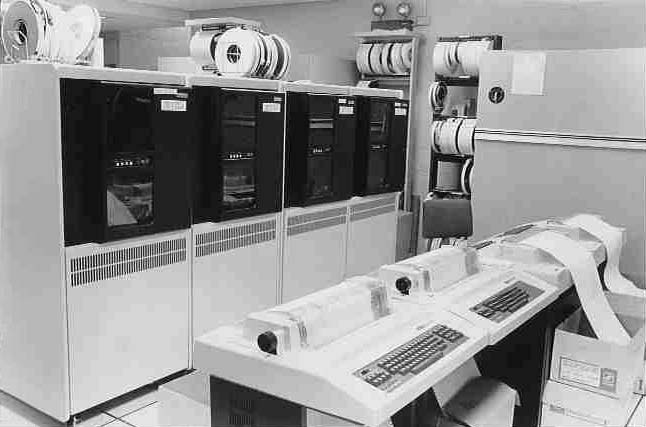
deglr6328 writes "Very soon, NASA will be dismantling and scrapping its only computer left which is able to access and process the data on its ancient 7- and 9-track magnetic tapes. "Who cares", you say? Well, the Planetary Society for one and they're hoping you might care as well. The data held on these (few hundred) tapes is no ordinary forgettable data, it is the complete archive of the first 15 years of all the data returned to Earth by the Pioneer spacecraft which were sent into interstellar space. This additional and thus far unexamined data (the data after 1988 is available and has already been examined) may hold the key to solving what is considered one of the top problems in physics today, the so called Pioneer anomaly, where the observed trajectory of these spacecraft (and a couple others) deviates noticeably from our very precise expectation. The reason for the anomaly may be as mundane as uneven radiation pressure or escaping thruster fuel or it may be as groundbreaking as a clue to completely new physics, perhaps related to dark matter or dark energy. The Planetary Society is planning on recovering this data and poring over it meticulously to look for something which may have been missed or hidden from current investigations into the phenomenon. They need money to do this, about $250,000, and are asking for donations to fund the project. You do not need to be a member to donate. There are no serious proposals to send any more spin-stabilized spacecraft on solar escape trajectories any time in the near future and this is probably the only tenable method we have to directly investigate this mystery in the interim."
102 of 473 comments (clear)

  1. It's obviously an alien plot. by BlackCobra43 · · Score: 2, Funny

    1.Deviate spacecrafts from their precisely-planned flightpaths
    2.???
    3.Profit!

    --
    I never spellcheck and I freely admit it. Save your karma for more worthwhile "lol erorrs" replies
    1. Re:It's obviously an alien plot. by pixelpusher220 · · Score: 2, Insightful

      speaking of 'profit'...

      One thing that *most* charitable donations allow is designating which fund your money should go towards.

      Looking at the donation page, there's no reference as to what your donation goes toward. That means The Planetary Society is completely free to collect your money and use it for anything, not you intended purpose.

      Don't want to put a downer on a really great project but it would be nice if they let is specify *this* particular project, and not whatever they end up choosing later down the line...


      --
      People in cars cause accidents....accidents in cars cause people :-D
    2. Re:It's obviously an alien plot. by ninti · · Score: 4, Informative

      I have been involved with the Planetary Society before and they are a group of good people. If you put a note saying this is specifically what you want your money spent on, I'm sure they would honor it.

    3. Re:It's obviously an alien plot. by pixelpusher220 · · Score: 2, Informative

      I have no doubt that they are a fine upstanding group with honorable intentions.

      Legally speaking though, if there isn't a designation the money can be used for just about anything. I used to work for a company that did non-profit fundraising software development. It's a pretty basic requirement to allow fund designation, that's all.


      --
      People in cars cause accidents....accidents in cars cause people :-D
    4. Re:It's obviously an alien plot. by athakur999 · · Score: 2, Funny

      The "???" part is already known.

      1. Deviate spacecrafts from their precisely-planned flightpaths
      2. Set up space advocacy group and beg for donations to help solve "mystery" introduced in step 1.
      3. Profit!

      --
      "People that quote themselves in their signatures bother me" - athakur999
    5. Re:It's obviously an alien plot. by Linus+Torvaalds · · Score: 4, Funny

      UFO - 500 zarbos

      Tractor beam - 100 zarbos

      Antimatter fuel - 30 zarbos

      Confusing the puny humans for decades - priceless

    6. Re:It's obviously an alien plot. by M1FCJ · · Score: 3, Funny

      OK, I just sent ten quid by paypal, if my alien doesn't arrive at my door in two weeks I'll see them in court! I hope they are better traders than most ebayers...

  2. I solved my mystery by Psionicist · · Score: 4, Funny

    The damn thing only supported DVD-R discs, not DVD+R, that's why it didn't work.

  3. I can help by Rosco+P.+Coltrane · · Score: 4, Funny

    I have an 8-track deck in my Charger...

    --
    "A door is what a dog is perpetually on the wrong side of" - Ogden Nash
    1. Re:I can help by PakProtector · · Score: 4, Funny

      An 8-track? With genuine mono sound!?

      Does your Charger also have a device for slowing and speeding up the passage of time?

      --

      Edward@Tomato - /home/Edward/ man woman
      man: no entry for woman in the manual.
      "Qua!?"

    2. Re:I can help by pizen · · Score: 2, Funny

      Yeah, it's under the seat.

    3. Re:I can help by dodongo · · Score: 2, Funny

      Screw time travel; we'll still miss one track from the 9-track tapes.

      Maybe we can use the leftover track from reading the 7-track tapes to our advantage...

    4. Re:I can help by blugu64 · · Score: 2, Funny

      you made a a time machine...out of a DeLorean???

      --
      "Personal ownership is a hallmark of conservative capitalism. And I don't believe I am entitled to anything that I did n
  4. Have you heard of Nero? by yotto · · Score: 4, Insightful

    I'm not making a joke. Can't they just rip the tapes to a hard drive? This isn't Star Wars where you can't copy the "data tapes" after all.

    1. Re:Have you heard of Nero? by scsirob · · Score: 4, Informative

      There's hardly any hardware available to read these tapes anymore. Proprietary format, ancient tape drives and undocumented data formats make this a huge problem.

      --
      To Terminate, or not to Terminate, that's the question - SCSIROB
    2. Re:Have you heard of Nero? by Rosco+P.+Coltrane · · Score: 5, Interesting

      Surely considering the priceless data on these tapes, I'm sure they could hire engineers to rebuild the original tape readers, perhap with modern heads to account for magnetic fading.

      Frankly, I've worked for companies that paid a great deal of money to save their software assets that were stored on old, seemingly unreadable media (a shitload of Digital Research files, the recovery cost us $50k), and that data wasn't even close to the value of the Pioneer probe data. If that's what stops NASA from salvaging that data, somebody needs to be fired there...

      --
      "A door is what a dog is perpetually on the wrong side of" - Ogden Nash
    3. Re:Have you heard of Nero? by bazio · · Score: 3, Informative

      The largest part of the cost does not come from recovering the data (although that will be costly), it is from the cost to actually analyze the data and perform any necessary calculations. Despite the current economic conditions, PhD's don't work cheap, at least, not the ones with the required skill sets for this analysis. Additionally, the storage cost is going to be a bit in and of itself. I am not sure of the density and capacity of the tapes NASA used, but 15 years worth of every useful piece of data (observations, navigation, status, etc...) has got to be a lot. Just "ripping it to a hard drive" would require a bit of hard drive space, and would be a bit useless, since they would just be moving it from one aging magnetic media to a slightly newer magnetic media. They are probably hoping to either move the data to some sort of optical storage, or read it directly from the tapes.

      --
      Set the bar high, then bring a tall ladder.
    4. Re:Have you heard of Nero? by gclef · · Score: 4, Informative

      One thing to consider: old tape is fragile. I worked with audio tape for years, and tape older than 10 years had to be literally baked (heated & cooled again) before playing. If you didn't bake an old tape the filings from the tape would slough off onto the reading heads...you might (if you were lucky) get one play out of an unbaked tape, but the audio on the tape would definitely be destroyed.

      Given the age of these tapes, getting the data off without destroying it is not as simple as just slapping it onto the machine & hitting "play."

    5. Re:Have you heard of Nero? by stienman · · Score: 2, Interesting

      1. Chances are good that this is a labor intensive process. It's is likely slow, and the number of tapes and age of the equipment means jamming.

      2. Note that the 'society' wants to get 1/4 million not just for the data conversion, but also a fund to study the data.

      Quite frankly I might donate if it were simply to convert the data and make it publicly available. Note that they won't release the data until after it has been analyzed, and give no definite timeframe (months to a year).

      Not that I'm against the project, but I don't know anything about this society, and the press release has very little information other than "Help us get our hands on the data by giving our society money." Do their members get access to the data as it's converted? What exactly is the process and timeline if they reach their goal? What happens to the money if they don't reach their goal?

      -Adam

    6. Re:Have you heard of Nero? by saider · · Score: 2, Insightful

      I hope it works faster than realtime, or you'll be capturing data for the next 40 years.

      --


      Remember, You are unique...just like everyone else.
    7. Re:Have you heard of Nero? by Skjellifetti · · Score: 4, Funny

      Despite the current economic conditions, PhD's don't work cheap.

      No. but their grad students do.

    8. Re:Have you heard of Nero? by Lawrence_Bird · · Score: 2, Insightful

      The problem is probably less to do with the need for a 9 track
      and more to do with the physical quality of the tape. They
      tend to basically turn to dust because they are so brittle and
      require special handling if they can be used at all

    9. Re:Have you heard of Nero? by slashrogue · · Score: 2, Interesting

      I think it has more to do with the fact that the people at NASA probably believe that it is some pedestrian reason and the likelihood of it being some crazy new physics is just not worth putting the money into researching it.

    10. Re:Have you heard of Nero? by sfjoe · · Score: 4, Funny

      If that's what stops NASA from salvaging that data, somebody needs to be fired there...

      Somebody DOES need to be fired but not at NASA. Unfortunately, the elections are over a year away.

      --
      It's simple: I demand prosecution for torture.
  5. Huh? by pair-a-noyd · · Score: 2, Insightful

    This additional and thus far unexamined data

    Let me be the first to say WTF?!!

    This is inexcusable.
    It's insane to throw this project out the window..
    I hope people will step up to the plate on this. I for one will..

  6. How much do you want to bet... by scorp1us · · Score: 4, Insightful

    That those several hundred tapes will fit on a $10 USB key? That's what 128 or 256MB these days?

    --
    Slashdot's rate-of-post filter: Preventing you from posting too many great ideas at once.
    1. Re:How much do you want to bet... by 'nother+poster · · Score: 2, Funny

      Yes, they most likely will fit. Now please invent a time machine and yourself back to the 1960's so you can have them install a USB port, preferably USB 2.0, on the computers for the Pioneer project. See, all the problems are solved!

    2. Re:How much do you want to bet... by scorp1us · · Score: 4, Interesting

      Actually it shoulnd't be that hard... as an embedded software engineer, i would say run the signal from the tape head to a DAC (if analog) and just write out the data the same way a wav file is written. When you "write out" the data, you only need to signal the USB serial protocol which would wrap the (analog?) data. The actual mediaum for USB data is a differential pair of wires. Some micro geek with tape reading experience could probably build a tape -to-usb reader for a few bucks. You wouldn't even need a USB tranceiver, though it probably would make it much, much easier.

      All in all, remmeber you only have to take some data and wrap it in a protocol that is expressed on a differential pair. Not that hard...

      --
      Slashdot's rate-of-post filter: Preventing you from posting too many great ideas at once.
    3. Re:How much do you want to bet... by dlefavor · · Score: 2, Informative
      Actually, I'd bet quite a bit.

      A 2400 foot reel of 6250 bpi 9-track tape contains about 160 MB, given large block size. If they're the 3490 type tapes, each cartridge can hold as much as 1600MB. Block size is important because there's an inter-block gap on the tapes that is essentially wasted space, and the more blocks, the more waste.

    4. Re:How much do you want to bet... by wideBlueSkies · · Score: 2, Interesting

      It is possible that some tech team at NASA back in the late 80's proposed a project to convert the data from the old format to the newer (and on it's way to becoming prevalent) IBM or MAC PC format?

      I just don't get it, here we have an agency full of engineers, and no one could think, "hey wouldn't it be cool to look at the data on a PC/Mac, a UNIX machine, or an IBM Mainframe?".

      It's a shame, becuase more than likely most of the engineers involved with the original pioneer project would have been alive and able to otherwise contribute to such a conversion.

      Now that so much time has passed, these things are much harder.

      The high level tasks for the project would be:
      1. Engineer a hardware solution that suports the comm(item 2) and data conversion(item 3). This is the really hard part. Maybe bypass the pioneer era computer and just design an interface from the tape reader to a serial port on a PC?

      2. Some type of comm protocol recognizable by both sets of hardware. The burden of this is most likely going to have to be carried by the newer hardware. Not sure about the source platform and how programmable it is these days, but maybe we can teach a PC or UNIX box to speak 'old tape'. THe more I think about this, the more it sounds like we'd need to write 'drivers' for the old tape drives.

      3. Devise a proper data mapping/converison scheme from pioneer to ascii (or ebcidic) based storage.
      Involves probably writing conversion software on the receiving machine. (I'd love to take a crack at this myself to be honest.)

      so we need:
      1. conversion hardware
      2. communications software (or driver for the old tape drives)
      3. conversion software

      Any analysis would take place using the output of 3.

      Like I said above, I can't believe that no one at NASA has thought about this. SOmeone, somewhere must have had at least preliminary plans for something like this.

      wbs.

      --
      Huh?
  7. If... by fimbulvetr · · Score: 4, Insightful

    If we donate, and they reach the amount, will the data be open to everyone?
    That is absolutely critical, I will not donate unless I can see the data.

  8. And miss.... by Blitzenn · · Score: 4, Funny

    What and miss a great opportunity for a wonderful conspiracy theory in the future?

    "They destroyed those things so we wouldn't know what it REALLY found. I know they did! Why else would they destroy them. It must be a conspiracy!"

  9. Free money? by ActionJesus · · Score: 4, Funny
    You do not need to be a member to donate.

    Just as well, i was away to send a million pounds but thought "oh no! im not a member! theyll never accept my non-space-geek cash!"

  10. Funding by fejikso · · Score: 5, Insightful

    $250,000 sounds like very little money compared to other NASA projects. Why can't my tax dollars go to these projects instead of the military?

    1. Re:Funding by Leroy_Brown242 · · Score: 3, Funny

      I'm sorry, that's classified.

    2. Re:Funding by KilobyteKnight · · Score: 2, Insightful
      $250,000 sounds like very little money compared to other NASA projects. Why can't my tax dollars go to these projects instead of the military?

      Why can't my tax dollars stay in my pocket so I can decide how to spend them?

      Yes, I know, too many people think they know better than I do how my money needs to be spent... and they keep electing politicians willing to take it away from me to give to someone else.
      --
      When will Windows be ready for the desktop?
    3. Re:Funding by RexRhino · · Score: 2, Informative

      Because that is not how taxes work! If they were going to spend the money on something you really wanted or needed, they wouldn't have to forcefully extract the money from you at gunpoint, now would they? You would give it voluntarily (like people are going to do for the Planetary Society and this project).

    4. Re:Funding by Anonymous Coward · · Score: 2, Insightful
      Why can't my tax dollars stay in my pocket so I can decide how to spend them?


      Because if you are anything like most of the population you wouldn't give any money to anyone, but would still bitch when the roads started to look like shit, and the schools start turning out even more McJob canidates. And yes, you do have to pay for schools even if you don't have kids, the education is not just for the benifit of the person getting it, but also for those around him who will benifit from what he does with it.
    5. Re:Funding by modecx · · Score: 2, Insightful

      $250,000 is such a pathetic amount of money distributed across the 250 million or so people that our country collects tax from that it's just not funny. Is the cost of a thousandth of a cent too much to preserve this historic data to you?

      If you want to be all upset about taxes, that's fine... I don't blame you--nobody likes taxes! However, This is small fish compared to pretty much everything else out there. It's not like politicians regularly use tens of thousand times this amount to go to lavish conventions and other inane stuff, or anything.

      This is important, and actually has the potential to increase our understanding of the universe--unlike much that the government does at greater expense. This is hardly a blip on the radar. Crow sized, even.

      --
      Constitutional rights may be respected, repealed, or modified; but they must never be ignored.
    6. Re:Funding by jafac · · Score: 4, Insightful

      Because defense spending is a necessary and Constitutionally-justified federal espense. Space exploration is not.

      Think of space exploration as far-sighted defense spending. Otherwise, think of how the world would be today if, in the 1940's and 1950's, the US did no ballistic missile research at all, and let the Soviets take LEO, Geosynchronous Orbit, the Moon, and everything else.

      Every dollar invested into the space program, public education, interstate highways, power grids, even welfare and medicaid, is a dollar well-spent towards shoring up national defense. Just not in as direct a way as you'd like.

      What is money POORLY invested in defense or national security, is $200 Billion to invade a country, destabilize it's govenrment so it can be taken over by Iran. http://www.salon.com/news/feature/2005/07/21/iran/ index_np.html

      --

      These are my friends, See how they glisten. See this one shine, how he smiles in the light.
    7. Re:Funding by brunes69 · · Score: 2, Insightful

      Why can't my tax dollars stay in my pocket so I can decide how to spend them?

      Because if society worked this way, human greed would prevail and services such as paved roads, public parks, snow removal, and disaster relief would not exist.

      Greed is good for some things (see capitalism), but a modern society can not succeed on greed alone, no mater what staunch libertarians would have you believe.

      Going all the way to that extreme won't get you any further ahead than going all the way to the other extreme (marxism).

    8. Re:Funding by iabervon · · Score: 2, Insightful

      Why can't my tax dollars stay in my pocket so I can decide how to spend them?

      Because then you'd have to make individual one-dollar payments to a couple hundred organizations that you're likely to consider worthwhile if you were to look into them, and they'd have to spend a lot of money advertizing their worthiness to you. Having a government you pay taxes to which pays departments is an O(n) process, while having individuals pay them directly is O(n^2). If you think your taxes are complicated now, just think how much it would suck if you had to essentially work out the federal budget yourself each year.

  11. Why the deviance? by lawpoop · · Score: 3, Interesting
    Do all of these spacefaring craft differ from their expected trajectories by the same factor? If so, it seems that that would mean there is some as-yet unknown, pervasive force that exerts itself more-or-less evenly in the area that these craft have traveled.

    If the difference of their expected trajectories have no commonality, it would seem to mean either some new force is affecting the craft differently, or each craft has its own mechanical explanation as to why they aren't staying the course.

    Do *none* of these craft follow the expected trajectory? If not, then we really can't be sure whether this is a collection of mechanical issues or various effects of the unknown force. If one or two craft followed course perfectly, I would be inclined to say that the rest have mechanical issues knocking them off course.

    --
    Computers are useless. They can only give you answers.
    -- Pablo Picasso
    1. Re:Why the deviance? by tgrimley · · Score: 5, Informative

      from the wikipedia link:

      "When all known forces acting on the spacecraft are taken into consideration, a very small but unexplained force remains. It causes a constant sunwards acceleration of (8.74 ± 1.33) × 10^-10 m/s2 for both spacecraft.

      ...

      "Data from the Galileo and Ulysses spacecraft are also indicative of a similar effect, although for various reasons (such as their relative proximity to the Sun) firm conclusions cannot be drawn from these sources."

    2. Re:Why the deviance? by mollymoo · · Score: 5, Informative
      Is there a Voyager anomaly?

      Perhaps. We don't know because Voyager, like most other spacecraft, is 3-axis stabilised. That means it keeps pointed the right way using only its thrusters. Pioneer is spin stabilised, like a rifle bullet in flight, so requires much smaller pointing corrections using thrusters. The anomaly is a very slight one, so slight that it is lost in the uncertainty caused by the level of thruster activity on 3-axis stabilised craft.

      --
      Chernobyl 'not a wildlife haven' - BBC News
    3. Re:Why the deviance? by mollymoo · · Score: 2, Informative

      Spins like a rifle bullet, but a damn slight slower! Of the order of a few rpm.

      --
      Chernobyl 'not a wildlife haven' - BBC News
  12. 9 track tapes by wulfhound · · Score: 4, Interesting

    Anyone care to shed any further light on what format these tapes are in, how many there are and in what condition?

    I had a summer job a decade ago ripping 9-track tapes (geophys data) to CD-R (back when CD-Rs were $20 each and a burner was $5k!), pretty sure the people I did it for still have the gear. Planetary guys - I couldn't see a contact address on your page!

  13. RTFF by spellraiser · · Score: 5, Informative
    From the FAQ:

    Will the data be made publicly available?
    Yes. First, the data first must be recovered, validated, documented, and preliminary analyses must be done. After those tasks are completed (probably taking months to a year), the data will be made publicly available, including second-order data products when the raw data is processed by JPL orbit software.

    --
    I hear there's rumors on the Slashdots
    1. Re:RTFF by Otter · · Score: 5, Insightful
      Thanks for pulling that out. It seems to me, though, that the key part is:
      Why does it cost $250,000 to recover the data? This seems like a lot.

      This amount enables us first to save the data from destruction, and then to support the complex analyses necessary to solve this mystery. We may well have to bring in more help from other eminent "celestial mechanicians" to provide fresh perspectives on the anomaly.

      Before giving them a cent, I'd really like to know a) how much the data retrieval costs and b) whether it really can't be done by EDS or someone else accustomed to dealing with ancient data files. I'm certainly not donating for them to "may well have to bring in more help".
    2. Re:RTFF by badmammajamma · · Score: 2, Insightful

      What's the point in recovering the data if they can't analyze it after they get it? The purpose of the project is to figure out why these space craft are not on the precise trajectories they have calculated -- it's not simply the gathering of old data.

      --
      Any man who afflicts the human race with ideas must be prepared to see them misunderstood. -- H. L. Mencken
    3. Re:RTFF by Rich0 · · Score: 5, Insightful

      Yes, but the only urgent part of this project is recovering the data.

      In theory for far less you could simply recover the data, test that it was recovered properly, and then stick it on a webpage for anybody in the world to analyze.

      Their proposal is to solve the secrets of the universe for $250k. I might suggest that maybe the goal should be to simply transfer the data for $10k, and let somebody else pay for solving the secrets of the universe. The data recovery project is also far more likely to be successful...

    4. Re:RTFF by DavidTC · · Score: 2, Insightful
      The thing I care about, and what most of slashdot cares about, is saving the data. We could care less if it's analyzed now or ten years from now. Because we know that some scientist is going to come along and decide to do it when he has a theory about it. (In fact, it makes no sense to talk about 'analyzing' the data without a theory that roughly matches what happened. We already know the facts.)

      However, he can't do that if no one can get to the data because morons at NASA trashed the readers without copying the tapes first.

      We know they have the space. They can probably fit the entire data stream in the same space as ten minutes worth of data from any recent rover project.

      I don't know what the hell is wrong with NASA. This is just idiotic, or possibly the Planetary Society are a bunch of liars.

      --
      If corporations are people, aren't stockholders guilty of slavery?
    5. Re:RTFF by Pete · · Score: 4, Insightful
      I don't have anything particularly intelligent to say other than that I totally agree with you.

      That Planetary Society FAQ does seem like... now what's the right word.... bullshit. So they came up with a suspiciously large and round number ($250K) but, as far as we've seen, no detailed budget behind it? No explanation of what happens to excess funds?

      For fuck's sake, Planetary Society people, it looks disturbingly like a "don't think just donate! QUICKLY!" campaign, built around fear of NASA apparently doing something extraordinarily stupid. There are just too many holes in the story, too much that makes no sense.

      I strongly suspect that they really just want to fund a few qualified people to work on the data full-time for 6-12 months. But if that's so, a little honesty would be appreciated. There's no fucking way I'd donate to support some ridiculous US salary, when I'm sure there are an enormous number of university-based people all around the world that would love to spend time analysing this kind of data and would do it for free.

      And yeah, it is kind of hazy regarding what information of value they hope to extract from this data. The slashdot writeup "...or it may be as groundbreaking as a clue to completely new physics, perhaps related to dark matter or dark energy" sounds like a nutcase trying to sell something.

    6. Re:RTFF by DrJimbo · · Score: 4, Informative
      Rich0 said:
      Yes, but the only urgent part of this project is recovering the data.

      In theory for far less you could simply recover the data, test that it was recovered properly, and then stick it on a webpage for anybody in the world to analyze.

      TFF said:
      Will the data be made publicly available? Yes. First, the data first must be recovered, validated, documented, and preliminary analyses must be done. After those tasks are completed (probably taking months to a year), the data will be made publicly available, including second-order data products when the raw data is processed by JPL orbit software.
      I am a scientist and I have worked on analyzing large data sets such as this before. The tricky part is what you describe as "test that it was recovered properly". This is what TFF described as "preliminary analyses".

      It would be foolish for a programmer to publish a program on the web without first running it a few times to catch bugs. In the same way, a scientist must check her data (even "raw" data) before just blindly putting it up on the web for all to see. If she posts faulty data then she wastes everyone's time, she looks like a fool and pisses a lot of people off. Her reputation may be ruined.

      But how can she know for sure that the data was recovered properly? Checking parity bits is not nearly enough, because she needs to know for sure that she did not make any subtle mistakes and that no one in the chain of generating and producing the data made any subtle mistakes.

      One necessary (but not sufficient) step is to actually analyze the data with your model(s) and see if it makes sense. If it doesn't, then you may need correct your transcription procedure and go back to the original tapes and read them again.

      Transferring the data for $10K and not doing the preliminary analysis would be foolish beyond belief. I think a better cost estimate is roughly $100K for the transfer(s) and preliminary analysis needed to ensure the transfer was done properly. Since everything would already be set up to analyze the data it makes perfect sense to also get another $100K to do the "real" analysis. Since something may well go wrong, ask for another $50K so you can be reasonably sure of getting it done right in the first go round.

      --
      We don't see the world as it is, we see it as we are.
      -- Anais Nin
  14. So in short by Rosco+P.+Coltrane · · Score: 5, Insightful

    The Planetary Society is planning on recovering this data and poring over it meticulously to look for something which may have been missed or hidden from current investigations into the phenomenon. They need money to do this, about $250,000, and are asking for donations to fund the project.

    Let me sum up: the USA boldly sends a probe in space, at a very great cost to taxpayers. Some decades later, NASA is forced to scrap the only computer that can access the unique (and very expensive) data collected by said probe, because the administration refuses to fund them properly.

    That's sad enough, but the saddest thing is: a bunch of passionate guys (the planetary society) are begging a measly quarter million bucks to save that priceless data, and the administration just stands there! That's like the cost of running a humvee for a week in Iraq or something. How does that look to the outside world? like a decrepit country where non-profit orgs are forced to take matters into their own hands to save their national treasures. Well done USA :-(

    --
    "A door is what a dog is perpetually on the wrong side of" - Ogden Nash
    1. Re:So in short by isa-kuruption · · Score: 2, Interesting
      Let me sum up: the USA boldly sends a probe in space, at a very great cost to taxpayers. Some decades later, NASA is forced to scrap the only computer that can access the unique (and very expensive) data collected by said probe, because the administration refuses to fund them properly.


      Actually, Congress allocates funding for NASA and thus is responsible for the lack of funds. You should contact your local Senate and House representatives if you wish to continue research in this area.

      However, please note that due to beaurocracy alone, the cost of NASA performing this research is on the order of twenty times larger than an exterior organization which uses primarily volunteers and college students and collects money via donations and/or selling T-shirts.
    2. Re:So in short by szaz · · Score: 2, Insightful

      Give it a bloody rest. Patriotism does not preclude disliking what your Country is doing. It doesn't mean 'finding the good in every situation, regarldess of how stupid the situation is'. This has ABSOLUTLY NOTHING TO DO WITH PATRIOTISM. Do you know how 'AMERICAN PATRIOTISM' comes accross in the wider world. Just give it a rest.

    3. Re:So in short by CheshireCatCO · · Score: 5, Insightful

      Except that most of the useful data from the missions have been saved in other formats by now. I can go to the planetary data system and pull up a lot of Pioneer data right now if I wanted to.

      Not every data bit is equally valuable. In this case, the data was probably not originally considered very interesting so wasn't moved at the time. The fact that NASA hasn't copied the data already suggests to me that people near research didn't think that that data would be very helpful in the first place. So while I wish that they'd transfered the data long ago and I applaude the Planetary Society, I am not convinced that this is a horrible failing on NASA's part.

    4. Re:So in short by DavidTC · · Score: 2, Insightful
      You, sir, are an fucking moron.

      He complained, quite rightly, that trashing irreplaceable data for lack of a quarter of a million dollars makes the US government look very very stupid.

      And in addition to appearing that way, it actually is very very stupid. (Do I need to mention what the two unsolved mysteries in physics lead to 100 years ago? Here's a hint: Einstein won a Nobel Peace Prize for solving one of them, but is most famous for solving the other one.) We should have teams of scientists working on figuring out this mysterious force.

      It is not, despite what you may think, 'unpatriotic' to point out when our government is doing stupid things. In fact, pointing out flaws in the current operating procedures of the government is the definition of patriotic in a republic like this one.

      When we see the people running the government are operating it incorrectly, we must point this out to them, and, if they fail to listen, we must replace this, this is our duty as Americans and citizens in a republic.

      Something that is not our duty is to care about what the outside world thinks about our internal politics.

      OTOH, maybe we should pay some attention to what they think about our politics in relation to them and other countries, simply because you can't have political relationships with other nations unless they come, too.

      Oh, wait, you're one of those people who think you owe your loyalty to your party, not your country. So while your party is in power, you translate party=country=government.

      Well, here's a clue. No citizen of the US owes anything to the US government. The US government works for us, we own it. There are places where governments are 'owed' loyaties, but the US is not one of them. Even soldiers do not swear allegience to the government, but to the Constitution, and there's a reason for that.

      And you can owe your party whatever you want, it is, obviously, a free country.

      But, like I said, what you owe your country is the best government you can give it. You can either do that by operating the government, or by chosing people to do so, and complaining when they fail.

      --
      If corporations are people, aren't stockholders guilty of slavery?
  15. Re:Archive in different format by mikeswi · · Score: 5, Informative

    That's just what they're planning to do. The problem is that the current format can only be understood by a particular type of obsolete computer that NASA is about to scrap.

    I had a letter somewhere that explained the problem in detail but I must have tossed it (I'm a member of the society, so I get the occasional mailing). They're planning to port the data to a modern format so it can be examined properly.

  16. Re:Funding TP by Camel+Pilot · · Score: 3, Insightful

    Yep, the military probably spends $250,000 for just ass wipe per day in Iraq.

  17. Lots of other data by couch_warrior · · Score: 5, Interesting

    If you think this data loss would be unfortunate, you should check out the Earth Resource Observing Satellite (EROS) Data Center run by the US Geological Survey in Sioux Falls South Dakota. For years NASA has been dumping all manner of data tapes there. 9-track, 24-track, literally hundreds of Terabytes of data. And many of those tapes are literally growing mold, sitting in boxes and racks in the basement, for lack of funding to transfer them to more permanent media.
    Think about it, decades of climate data , going back to the 1970's, is being lost due to lethargy on the part of Clowngress. Or is it lethargy.
    Let's see, three and a half decades of climate change data, detailed and explicit. Hmmmm.... who *wouldn't* want that data placed online where researchers could access it? I wonder.....

    --
    "Sic Semper Path of Least Resistance"
    1. Re:Lots of other data by Ignignot · · Score: 2, Informative

      And based on my extensive personal experience, anyone who expects a couple decades worth of knowledge that WE ALREADY HAVE in other formats (ground based stations, etc) to prove or disprove something as complicated as global climate change (and very sudden, non-linear global climate change, to boot) is going to be disappointed.

      If you are interested in a history going back to at least the 50's, with extremely good resolution, just ask the NOAA for it and they will be happy to furnish you with more information than you will know what to do with.

      I know the parent or grandparent are probably trolls, but this deserves a useful response.

      --
      I submitted this story last night, and it didn't get posted.
  18. Why not? by quark007 · · Score: 2, Insightful

    Why is there a big hoopla about Planetary society raising meager $250,000?

    You need money to carry out research.
    NASA obviously doesn't care much about basic sciences, and is quite busy wasting tax dollars in 'spectacular' but dumb and useless shuttle launches.

    Planetary society is atleast trying to make some sense. Why not help them?

    --
    - Sh!t
    1. Re:Why not? by DerekLyons · · Score: 2, Informative
      Why is there a big hoopla about Planetary society raising meager $250,000? You need money to carry out research. NASA obviously doesn't care much about basic sciences, and is quite busy wasting tax dollars in 'spectacular' but dumb and useless shuttle launches.
      NASA cares plenty about basic science - and the basic science these tapes were meant to accomplish was accomplished decades ago. (In fact a great deal of both the data and the science is available on the web.) What TPS wants to do is 'extended science', something NASA has been trying to get funding for over the past few years - but has been unable to do so.

      TPS is essentially lying to you when it claims the tapes haven't been read or analyzed.

  19. But how huge? by John+Harrison · · Score: 4, Insightful
    For instance, how much data is there? I've read some of the linked articles and I can't find any estimate of how many MB there might be. I would guess that there isn't a massive amount of data simply because the thing was designed within the limits of 1970s technology and they had to be able to record the data as it was coming in.

    Also, I would be shocked if NASA didn't document any of the file formats used. I've worked on a NASA project and they are all about documentation. In fact, I was writing a system used to document the shuttle booster production process.

    1. Re:But how huge? by pilgrim23 · · Score: 5, Interesting

      Several years ago my father (who is a retired research scientist) commented that he had the cumulative data of some 7 years of research in a obsolete database system (MUMPS) on a 9 track tape squirreled away in his office closet...He really would have liked to look at that data, but no drive was available to read it.
      Thanks to the Internet, and one international mail list I was a member of, I found a wonderful lady at a government data center who was willing to copy the data to a modern medium. And, it was a good thing I put in my request when I did; their one remaining 9 track tape drive was being decommissioned the next month!
      A quick visit to the the UPS fairy and the tape was on its way. A week later I get an email to check a particular ftp for a tar ball and there it was: 30 mbs. - 7 years of research; a mere blip on a modern jump drive......
      Dad was delighted. That data is now on CD, 4 separate hard drives in 2 physical locations, and even an actual paper printout.

      --
      - Minutus cantorum, minutus balorum, minutus carborata descendum pantorum.
    2. Re:But how huge? by cnettel · · Score: 3, Insightful
      If Doppler data is relevant, and has been saved, this indicates that there can be quite a lot of metadata, in addition to the transmission itself.

      (I would imagine that 16 bps is the raw data rate from the probe?)

    3. Re:But how huge? by 'nother+poster · · Score: 2, Informative

      Yes. 16 bps on an 8W transmitter. At least for the pioneer 6-10 series if I read the data correctly.

  20. What about the hardware itself? by Colin+Douglas+Howell · · Score: 3, Informative
    Does anyone have any idea what these machines are or whether they can be saved from the scrapper?

    As for the data, a lot of people here seem to be really naive about how hard it is to recover old data like this. "Just download it onto a hard disk." Well, yeah, but the trick is getting working 9-track drives (relatively easy) and 7-track drives (much harder) and going through the effort required to ensure you get the data off successfully instead of destroying it. (Remember, these tapes are very old and probably extremely fragile, and you may only get one shot at recovering the data.)

    1. Re:What about the hardware itself? by argent · · Score: 2, Informative

      Sounds like a job for The Computer Museum.

    2. Re:What about the hardware itself? by Colin+Douglas+Howell · · Score: 2, Informative

      It seems at least a couple of important people there know about the situation, judging from this recent message on the cctalk classic-computing mailing list. (Sellam Ismail is the museum's software curator. I don't know if Al Kossow actually works for the museum, but he's certainly contributed a great deal to preserving computer history.)

  21. Re:Why dismantle the computer by Rosco+P.+Coltrane · · Score: 4, Interesting

    Does anyone know why NASA is dismantling the computers if there really is such a potential treasure-trove of knowledge on these tapes?

    My guess is the operating cost. Those old machines are very VERY costly to run, between the power they need, the special rooms, and the ridiculous MTBF of the componentry that's measured in dozens of minutes.

    But still, I agree. Scrapping the computer on that reason alone is forgetting the hundreds of millions spent on sending the probe out in space in the first place.

    --
    "A door is what a dog is perpetually on the wrong side of" - Ogden Nash
  22. Re:Archive in different format by Omega+Hacker · · Score: 2, Insightful

    What I utterly fail to understand is why NASA thinks they can get away with scrapping the only computer on the planet that can read the tapes, without spending a few days to read the tapes off first????? What kind of <oxymoron>brilliant NASA administrator<oxymoron> thought that was even remotely a good idea?

    AFAICT, They are fully aware of the fact that they have data that defines priceless, and they're just going to toss it in the trash along with the computer because they got tired of trying to figure it out.

    Now that's a FAQ for you, Planetary Society...

    --
    GStreamer - The only way to stream!
  23. Re:Why dismantle the computer by Bazman · · Score: 4, Interesting

    Possibly because the computer is the size of a large room, the tape drive is half the size of a car, and the air-conditioning for it is in danger of melting. Maybe.

    When I was a physicist we had a DEC VAX with a tape drive, it took a whole room, and probably had less power than my laptop. Tape drives are not small things.

  24. Rather qualified by Richard+W.M.+Jones · · Score: 4, Insightful

    First, the data first must be recovered, validated, documented, and preliminary analyses must be done. After those tasks are completed (probably taking months to a year),

    Why not publish the data immediately, and qualify and expand it as they go along?

    Rich.

    1. Re:Rather qualified by terrymr · · Score: 3, Insightful

      Probably because publishing 10010100101001010100101001010100101010101001 .... isn't going to help you a whole lot without knowledge of where you are in the data stream, what instrument is telling you that etc.

      The validation, documentation & preliminary analysis steps are all about taking the raw data stream and making it into a useful set of values.

  25. A worthy cause, but $250,000.00?? by gwait · · Score: 2, Interesting

    Yes, it's not a lot of cash in the scheme of things,
    but why the hell won't NASA just donate the computer and tapes to a university? If they're going to toss it in the trash, they should be interested in giving it away for free. Put the data on the Web for all, and we're done. In fact NASA themselves should be able to do this inside of a week or two, presumably they know how to read these tapes themselves..
    I don't see where anyone needs to raise $250K..??
    Please explain yourselves, planetary society types..

    --
    Bavarian Purity Law of Rice Krispie Squares: Rice Krispies, Marshmallows, Butter, Vanilla.
  26. Frame dragging by CarlJagt · · Score: 2, Interesting
    Easy, its frame dragging on a large, solar system scale. We only see hints of it now because of the large distances the Pioneers have travelled.

    Next...

  27. I own a Kennedy 9-Track and a very old 7 track by jbottoms · · Score: 5, Informative

    These tapes should be readable on any midrange or mainframe. I own a Pr1me computer which should serve the purpose. Contactinformation is below: Jeffrey Bottoms, 4405 Pease #3, Houston, TX 77023

  28. I think this is being distorted and dramatized by i41Overlord · · Score: 3, Interesting

    First of all, why would NASA have years worth of data coming in from a spacecraft they launched, and NOT have analysed it? I find this very hard to believe. Also, if they thought this information held valuable clues to a puzzling scientific mystery, they would have surely looked into it. In addition, how can this tape player be the only one on Earth that can read these tapes?

    I think that the issue is being distorted and blown out of proportion. I have a feeling that someone wanted to further their pet cause and they didn't mind letting pesky facts get in their way.

  29. This is typical of Govt funded thought processes. by cbelt3 · · Score: 4, Informative

    I'm not surprised that NASA was unable to develop funding to convert / analyze this data. After working with them for a few years, and with the 'Military Industrial Complex" for more than that, I can clearly say:
    "If it isn't in the requirements document, it's not going to get done, no matter how simple or beneficial it is."

    I worked on a project back in the early 80's. We were launching missles on a test range. I was responsible for the telemetry recording. We used a massive Honeywell tape drive and a bunch of telemetry circuitry to record at 1MHz. After designing the circuitry to measure and feed the data (all analog, BTW) to the drives, I asked my boss where the specs were for the circuitry to read the data back off the tapes for analysis.

    I was told there wasn't any. It wasn't a requirement. And I had better leave it at that. I kind of freaked- how the hell can we spend $100K in hardware and time to record tapes that can never, ever be read ?

    The answer ? It was basically butt covering. If something happened they would ask the gummint to fund a project to read the data off the tapes.

    I went ahead and designd and built a playback system on the side, nights and weekends. We went ahead and launched missles. We had guidance failures. I was asked to read the tapes. I pulled out my breadboarded setup, and read the tapes. The project team was happy, problems were solved, etc.

    And I was put on the next layoff list for 'failing to obey orders'. So I got a better job, and quit before the axe fell (large defense contractor axes fell sloowly back then- lots of little clerk types had to spent their quality time with each piece of paper).

    The Moral ? Never underestimate the stupidity of large organizations- governmental or otherwise.

  30. re: tape baking by King_TJ · · Score: 3, Interesting

    As far as I understand it, this need to bake tapes to resuce them was only an issue because of a specific type of "binder" glue used in their original production. I believe Maxell was one of the companies responsible for using what turned out to be poor binder, between a certain set of production years, for example.

    That's why you'll see plenty of people having no problem playing back 20+ year old tapes, yet others have huge problems.

  31. Re:Archive in different format by CheshireCatCO · · Score: 3, Interesting

    Because thee are probably hundreds of tapes of data that would take weeks to read and transfer. You have to pay someone to do this, as well as pay someone to maintain the machine in the interm. Neither of which is cheap. Particularly for a mission whose funding has long since turned to dust.

    At my lab in grad school we had some Voyager tapes that were only readable by one type of (obsolete) machine. We always wanted to get rid of the machine because it was taking up a ton of space and was a bitch to keep working. But getting the people reasonsible to copy the data to a new format was an uphill battle because there was no money to pay someone (even a student) to do it.

    I'm not saying that this is the way things should be or that priorities have been well-set, here. But the economic reality is that it's not as simple as you think.

  32. Steve Jobs, Bill Gates, Paul Allen, you reading... by exp(pi*sqrt(163)) · · Score: 3, Insightful

    ...this? Get your damn wallet out!

    --
    Doesn't it make you feel good to know that our freedoms are protected by politicans, lawyers and journalists.
  33. This is a problem... by Siener · · Score: 2, Informative

    Danny Hillis of the Long Now Foundation has been pointing out these kinds of problems for years.

    Most types of digital storage is not good for conserving data in the long run. Hardware changes. File formats change. Most digital media have a very limited lifetime.

    As an example: We have a very good record of the letters that Greek philosophers wrote to each other 2000 years ago. On the other had there's loads of important research data from the early days of computing that's already lost forever.

  34. Re:Funding TP by ArsonSmith · · Score: 2, Insightful

    It's funny because of all the cheese and peanutbutter they pack in MREs. You never shit after eating those things, and $250,000 is way to much to be spending on TP for a bunch of non-shitting soldiers.

    --
    Paying taxes to buy civilization is like paying a hooker to buy love.
  35. Some background... by ear1grey · · Score: 4, Informative

    This paper reviews the current status of the anomaly and describes how the Pioneer data could help. It may be a bit math-intensive for some, but the words surrounding the sums do pull them all into focus.

  36. Re:It's obviously an alien plot. -- missing step by Nom+du+Keyboard · · Score: 4, Funny

    1.Deviate spacecrafts from their precisely-planned flightpaths.
    2.Blockbuster movie staring famous Scientologist.
    3.Profit!

    --
    "It's the height of ridiculousness to say for those 9 lines you get hundreds of millions."
  37. Re:Why isn't NASA doing this itself? by sloepoke51 · · Score: 2, Insightful

    Ah, I see you haven't been around government projects very long. If the Planetary Society needs $250K, then NASA would need something like $250 million. You know, cost over runs, incompenent / lazy workers, the "it ain't my job" syndrome, etc.

  38. Re:I can help - RTFA please by Nom+du+Keyboard · · Score: 2, Interesting
    I have an 8-track deck in my Charger...

    Will you please RTFA. It clearly says 7 and 9 track tapes.

    But given the obvious age of your vehicle, I'm sure it can be lined up for a stand-in role in The Dukes of Hazzard 2 -- The Search for our Alienated Fans.

    --
    "It's the height of ridiculousness to say for those 9 lines you get hundreds of millions."
  39. Re:GPL the Data by maxwell+demon · · Score: 3, Funny

    GPL? Sure, there is so much value in being able to modify that data ...

    --
    The Tao of math: The numbers you can count are not the real numbers.
  40. I talked to the guy who used to run Pioneer... by david.given · · Score: 5, Informative
    ...and the situation is as follows:
    • The data used to be stored on magnetic tape. When the tape started deteriorating, all the data was archived off onto then state-of-the-art MO disks.
    • The machine used was a MicroVAX with a DEC RWZ21 SCSI MO drive, which is apparently quite rare. The disks are 128MB each.
    • For Pioneer 10, there are 155 disks, making 19840 MB of data.
    • For Pioneer 11, there are 217 disks, making 27776 MB of data.
    • Each disk takes about 10 minutes to read to the MicroVAX, and then more time to move across onto a real computer, of course.

    I would have happily volunteered to spend a couple of days swapping disks in order to salvage all this lot, but alas, I'm the wrong side of the Atlantic. The guy in charge has recently been made redundant, and he was desperate to find someone to hand off all this to... but there's incredible beaurocracy. (I gather all the data was actually supposed to have been destroyed some years ago, but through some 'oversight' hadn't been.)

    Alas, I don't have permission to publish his address, but I'll put him in touch with the Planetary Society on the off chance he doesn't know about this.

    Interestingly, for years he ran the Pioneer spacecraft off a Mac Quadra 950! Check out the screen shots...

  41. I got this same email this morning... by telstar · · Score: 3, Funny

    Only it was from the Nigerian Planetary Society, and they promised a return on my investment.

  42. Re:Archive in different format by some+guy+I+know · · Score: 2, Insightful
    The problem is that the current format can only be understood by a particular type of obsolete computer that NASA is about to scrap.
    The operative word here is "about".
    The computer hasn't been scrapped yet, and they should take advantage of that.

    Why can't they use the obsolete equipment to read all of the tapes and transfer the raw data to a more modern medium?
    My totally uninformed guess is that a couple of hundred tapes should fit on a couple of DVDs, which can then be replicated as many times as needed.
    The hardware needed to communicate the info between the obsolete computer and an ordinary PC (say, over an RS-232 line or Centronics-style parallel port) should be relatively trivial to build.
    I don't see why the entire operation should cost a quarter of a million dollars.
    However, if they want to pay me that much, I'll do it.
    --
    Those who sacrifice security to condemn liberty deserve to repeat history or something. - Benjamin Santayana
  43. Re:I can help - RTFA please by Skjellifetti · · Score: 4, Funny

    I have an 8-track deck in my Charger...

    Will you please RTFA. It clearly says 7 and 9 track tapes.

    But statistically speaking, it ought to work on average.

  44. Harware Hacking by dosboss · · Score: 2, Insightful

    Here's a project for ya:

    - Go to eBay and buy one. (wait for the DRMO auction for the 7-track unit)
    - Build a box to acess the drive - not real hard for a good hardware hacker
    - build a Linux driver to access it (presuming no driver exists already for the card you connect it to)
    - get the tapes via FOIA

    Conclusion: get the data for next to nothing.

    Oh, yeah, one last step:

    - ship the 245,000 smackers you didn't use to my house, in .9999 gold coins please.

  45. Old drives aren't _that_ hard to find... by Anonymous Coward · · Score: 3, Interesting

    Nine track tapes were an industry standard for a LONG time. Finding drives to read them isn't that big a deal. I've got about six of them. One of which is connected to a Linux box right here, for the purpose of writing boot tapes for my PDP-11. SCSI MO drives aren't hard to find either. I've got several, and they turn up often. There are lots of people out there in the computer collecting community with VAXen and MO drives and tape drives of all sorts. I hear often of people that can't find a machine "anywhere" to read their old data. They apparently don't look too hard. There are several mailing lists and newsgroups of computer collectors, and it wouldn't be hard to find someone to help you recover your data. Us computer collectors love to have someone _else_ think that our hardware is useful.

    And, if NASA is getting rid of an archaic machine and drives - someone should save it! There are LOTS of collectors out there, lots of hardware hackers and geeks like myself that love working on old machines, and could keep the machine operational and help transfer data.

    In other words, yes, there is still a way to get data read in, even if you're sure that the media is too obsolete that nobody has a working drive. Nine track tapes, Magneto Optical, 8" floppies, Bernoulli cartridges, TK50 CompacTapes, QIC cartridges, MFM hard drives, SyQuest cartridges, paper tape, punched cards... The hardware is piled up all over the place, in the basements and bedrooms of people like me. Wether it's as common as a Commodore 64 5 1/4" floppy or as exotic as an Exatron Stringy Floppy or a 1600BPI nine track tape, chances are you can find someone with the machine and willing to help you.

  46. pioneer data all available online by intelsquirrel · · Score: 3, Informative

    Here are some links published on another group about this same topic, and all data that NASA knows about is already saved.

    > http://nssdc.gsfc.nasa.gov/database/MasterCatalog? sc=1972-012A&ds=*
    > http://nssdc.gsfc.nasa.gov/database/MasterCatalog? sc=1973-019A&ds=*

    >Well, well, well...it looks like every bit of Pioneer 10 and 11 has been saved already, and can be accessed thru the proper channels (on tape, but apparently they will burn a CDROM on request).

  47. Re:Archive in different format by ninjagin · · Score: 2, Interesting
    Aye. Your instincts are good. The job is do-able.

    An old friend of mine came into an old arcade game (defender) and the battery that kept the mainboard toasty (and the score history) had leaked acid all over it, nearly destroying it. He picked off what salvageable components were left on the board, scrounged around a number of dusty electronics stores to replace what could not be salvaged, bought a ROM programmer, made a new mainboard, slapped everything back together and the old game was restored. A few of the old pieces salvaged could not be made to work dependably and had to be replaced again, but over time the machine was back up and running.

    The hard part is probably the media. I worked in radio for awhile and we were often faced with duplicating tapes after they'd exceeded a 5-7 year shelf life. I'm surprised that there was no plan for duping the data periodically to formats/platforms that could be sustained.

    --
    .. pa-ra-bo-la, pa-ra-bo-la, 2 pi R, 2 pi R, where's your latus rectum, where's your latus rectum, 2 pi R
  48. 7 Track Tapes by RagingChipmunk · · Score: 2, Insightful

    After reading TFA its not clear if the original data is in analog format or digital. It seems that most readers assume its digital format, and thats what I was assuming too. If it were purely digital, then transferring the data to a new format would be a reasonably easy migration.

    I suspect its in analog format - probably the original signal recordings. Which would make more sense for the expense of analyzing it - because you would be very interested in the phase relationships between different channels of data and their doppler shifts. Its the analog waveforms that could give insights into the timing effects over long distances.

    --
    The only PT Boat Journal on the web: http://www.PT171.org
  49. Those old tapes may already be unreadable by DrTime · · Score: 2, Informative

    I worked for the Lunar & Planetary Lab many years ago when we recieved hundreds of such tapes from Pioneer. At the time they were stored in racks in the computer room with an IBM 1130 system. Track density in those days was either 556 bpi or 800 bpi on 1 inch tape (memory) and recording technology was crude at best. Even then the fear was that the data would be irrecoverable in years. At the time, the lab was run by Dr. Sonnett who credited with the discovery that CMOS circuits were static sensitive. He came up with idea of grounding workers. This paved the way for low power electonics on some of these payloads. They were interesting days.