Slashdot Mirror
Domain: biopsychiatry.com
Stories and comments across the archive that link to biopsychiatry.com.
Comments · 20
-
Re:Ridiculous comparison
That's not how a lot of people work. Many of us are wired to respond stronger to maliciousness and attemt to punish the offender, it's in our genes.
-
Re:Apple?
I know several vocal groups of people.
But the vocal minority can be misleading, we know that.
who buys one because it IS locked down
Agreed, I doubt anyone does. But as I said: The lockdown can be part of a bigger reason. The whole experience is certainly something people desire, and we also know from many other experiences that people actually do prefer a "one stop shopping" experience. So by offering one and only one experience, the iPad may well be more attractive to a larger group of people than if there were a freedom of choice. See The Tyranny of Choice.
is not going to affect "non-technical users"
Wrong, it is. The effect is not in the personal iPad use, it is in looking at the iPad of your more geeky friend and noticing that he has stuff on there that you don't and can't find in the App Store. It fragments the device experience. It's not just that you don't open the hood - it's that your mechanic friend's car does things that yours doesn't. Visible things, not just 1% more fuel efficiency, but, say, he can turn his into a convertible and you can't.
The recent changes to OSX in Lion are evidence of that trend.
Remind me, which ones? Launchpad or the inversion of the scroll bar?
You need to engage the argument honestly. So far you haven't.
I've yet to see an argument, honestly. You speculate on the future - everyone can do that. You vaguely hint, but you don't have any evidence. None. We talked about what it would take to prevent a computer from running any software, to limit it to a single installation source - where's the evidence that things are moving in that direction? Where's the evidence that root access is going to go away? That's a huge, major change that would most likely be implemented in steps, like changes to the OS so that you can actually install, configure and run the system without having root access. Or changes to the kernel so that it runs only signed binaries, that would require a key infrastructure, again not something that you would implement over night, so show me the kernel hooks.
You've got nothing but ideas. But ideas are a dime a dozen. And yes, speculating in the other direction is trivial, but I'm not going to do it just to prove a point. I'm looking for facts, not more wild goose hunts.
-
whoooooosh
Well, when someone implies that climate scientists don't know how to account for water vapor (which guess what, they do)
I mean, like, dude, talking about taking someone's comment (originally part of a sarcastic comment with a bit of truth followed by a very funny comment) completely out of context. Here, the following will help remove the sand and soap-boxed centipedes out of your irritated, self-righteous whining/indignant private areas:
-
It has been a known side effect for years!
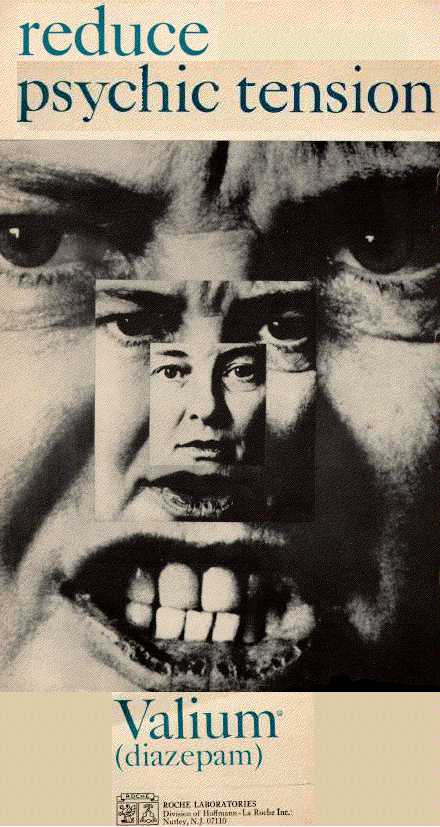
Increased suicide rates have been a known side effect of antidepressants for years. Because of this, amongst other things, one should avoid Diazepam/Valium when having severe depression.
-
Medicinal Value of psychoactive drugs?Many psychoactive drugs have been shown to influence serotonin levels as described in the article. For example, LSD has been shown to be a 5HT2A antagonist. This study suggests that these drugs could have a very significant medical application. In the US, the Controlled Substances Act categorizes LSD, and many other psychoactives, in Section 1, as a drug with the following qualities:
"(A) The drug or other substance has a high potential for abuse. (B) The drug or other substance has no currently accepted medical use in treatment in the United States. (C) There is a lack of accepted safety for use of the drug or other substance under medical supervision."
This article suggests that many of the psychoactive drugs in section 1 are misplaced and have legitimate medical uses. Many of these same drugs have been shown to be non-addicting and have LD50 rates that are comparable to things like caffeine, tobacco, and alcohol, which implies that they meet none of these three conditions.
Congress needs to acknowledge that the power to decide what does or does not have medical uses lies with the medical community and not the federal government. The fact that scientific evidence repeatedly refutes the placement of these drugs in section 1 suggests that Congress had ulterior motives is passing this law. -
Re:A thousand words...
Probable too much dopamine.
Just a guess.http://biopsychiatry.com/violence.htm
Sadly, I feel I must post this, becasue there is a certien loud mouth minority group that will will say stupid shit if I don't.
Understanding the brain and how different chemicals cause people to behave in certain ways in no way excuses the actions of the person.
-
The brain can have physical problems too.
There are indeed many issues with the mind that can be fixed purely through therapy, meditation, religion, what-have-you... However, why is it so difficult for you to accept that there possibly are problems that simply cannot be fixed that way? Chronic pain can also be managed under some circumstances via the same means, but that does not make the pain caused by chronic disease any less real, or have any less of a physical cause.
There are plenty of folks who know a heck of a lot more about medicine than you or me that also believe that depression can be caused by chemical regulation issues:
http://www.biopsychiatry.com/serotonin/genetic.html
There is evidence that the chemical imbalances have a genetic nature, which would certainly suggest a physical issue with the structure of the brain of victims.
http://www.mpipsykl.mpg.de/pages/english/info/news/mpifirst.html
That the emotions experienced by the human brain can be affected by physical phenomena, is commonly accepted, and doesn't require a belief in anything.
Can you provide evidence that a common root cause of depression is a physical disorder?
Certainly.
Until tests were developed for Thyroid malfunction, many people were simply thought to be lazy, unmotivated, and/or gloomy folk. (or hyper-active and irritable, depending on what was wrong with it) (There are other symptoms of Thyroid malfunction, but not all sufferers have the more obvious physical ones.) When the Thyroid was discovered to be the cause of these problems, treatment became relatively straightforward. (One medical test almost all people with suspected clinical depression (or anxiety) undergo is a test of Thyroid function for just this reason.) Just because we don't know the trigger for most clinical depression and can't find crap visibly falling apart in the brain doesn't mean it does not have a physical cause; it could just mean we haven't found it yet.
There are plenty of other well-known physical problems in the brain that can cause depression: Alzheimer's, tumors, malformed glands, physical trauma...
In my somewhat limited experience with those close to me, I have seen that for clinically depressed folks, therapy works to help the patient cope with the mind-breaking stress of a depressive episode; helps to keep them from killing themselves, even when every instinct is screaming that all is hopeless; it can help the patient live something outwardly resembling a normal life, even when they can barely pry themselves out of bed. In that way, depressive patients are lucky that it is a disease of the mind... the disease can managed to keep it from killing you while a drug regimen is sought. But when a proper drug regimen is found, the problem simply goes away (or at least gets quite a bit better). Drugs don't always work, but they are the best tool we have right now when therapy doesn't work either.
It is absolutely correct that treating the brain purely as a physical organ can lead to grave errors in diagnosis and treatment. Anti-depressants are completely ineffective in those that are not suffering from depression. Anti-depressants will not cure grief caused by the loss of a loved one, they will not cure apathy caused by the loss of a job, they will not fix anxiety caused by a big test coming up. Grief is a natural response to loss, anxiety is a natural response to stress. A doctor prescribing anti-depressants in those circumstances is being lazy and likely hoping the placebo affect will fix things. Likewise, a therapist that does not refer a patient to a MD for chronic depression where there are no triggers in their life and the therapy is utterly ineffective in curing the depression is also not making a correct decision.
The brain is, in the end, a physical organ that can have physical issues, just like the rest of the body; it is not immune from defect -
Cells in the CNS don't replicate.. Hippocampus?
The article states that the cells in the brain don't really replicate or regenerate.
However, recent research has shown that cells in the area of the hippocampus do in fact replicate, and are indicated in the role they play in cancer:
Take a peak:
http://www.biopsychiatry.com/newbraincell/index.ht ml -
Re:But of course
It doesn't take a damned expert to figure out what's wrong, ask any geek that's in high school or recently graduated. Our problem is cultural, there's such an anti-intellectual problem in schools and the rest of society, actively encourage exploration (you know, the heart of science) throughout the development of today's youth, and within one generation we'll be sorted.
You aren't wrong. But I think more can be said on the subject. As a physicist currently working at the Swiss Federal Institute of Technology (it's where Einstein went to school), I would like to offer my perspective.
What the united states government should do, in order to preserve it's dominance in research and development is to STOP ACTIVELY HARMING RESEARCH AND DEVELOPMENT. What are we actively doing to harm research and development? Well, I'm glad you asked. Here are some of the things that I see screwing the U.S. research community:
- The Patriot Act(s): The horrible progression towards a totalitarian police state. No I'm not exagerating, flamebaiting or fudding here. The fact that America no longer has habeus corpus, that America has now adopted the military strategies/justifications of imperial japan and nazi germany (pre-emptive war), the numerous videos of excessive violency by U.S. cops, the onerous security conditions international travelers into the U.S. are subject to... All of this stuff gets a lot attention in the civilized world, and has a harmful effect on research in the U.S. Of my colleagues about 5% categorically refuse to travel to the U.S. for conferences or employment. About 50% would never take a position in the U.S. regardless of the pay on moral or safety grounds, and virtually everyone, when looking around for conferences to attend, will, all other things being equal, pick the conference that is NOT in the scary police state. Just to give you an example, most of my colleagues would feel safer going to a conference in Singapore than anywhere in the states.
- Stop trying to introduce political and economic bias into research. If you think censoring NASA's JPL and the so-called 'intelligent design' movments don't screw up both our reputation (which is important in getting the best people to come and do research in the U.S.) and don't screw up the research climate in the states, well, you need to rethink the issue. What are some issues that can't be studied without undue pressure in the U.S.? It seems to me that biology, atmospheric physics, and medicine have all suffer here, but I'd like to hear from colleagues in those fields how strong that effect is. One area where one hasn't been able to do good research in the United States is drug use and abuse. See http://www.biopsychiatry.com/ for an excellent, if not entirely accessible discussion. Alternative energy and environmental research seems to be another victim. We need a government for whom science and facts are more important than faith.
- The DMCA
- Software and applied mathematics patents
I'm sure other points can be raised as well, but these are the ones I see most obviously damaging U.S. research. I would like to mention one more point which is less defensible. I believe the U.S. would benefit from more funding for basic research, outside of DARPA and war justifications. DARPA has been responsible for wonderful things, I just don't like how seemingly everything (in physics anyway) has to be linked somehow peripherally to war applications to get any funding in the states.
Besides the significant, immediate, direct, and observable impact these things have on U.S. science, they further reinforce the anti-intellectual climate you have complained about. Don't forget that one reason the U.S. enjoyed such a period of scientific dominance post WWII is we got all the great scientists the nazi's chased out of europe to come here. Now we're chasing away our best scientists.
Closing point, this line of thinking applies to many aspects of U.S. government. Before doing something to fix a problem, think a bit about what we are doing to create a problem, and see what we can do to address that.
-
Re:Safe?
Actually, not all of the ADHD medicines are amphetamines, and have slightly different modes of action. The primary action of amphetamines, such as Adderal, is to trigger the release of neurotransmitters (primarily dopamine) from both the axon (the "sending" side of the synapse) and the vesicles in the axon that are storing the neurotransmitters for the next signalled release. This occurs by the drug triggering a reversal of the "pumps" that take the neurotransmitters back up into the axon or into the vesicles in the axon for storage. This is actually the source of much of amphetamines' reported neurotoxicity, the vast depletion of the neurotransmitters to a high degree. Ritalin, as with cocaine, does not appear to reverse the synaptic and vesicle transporters like amphetamines do, but instead appears to block the uptake of neurotransmitters at the synapse (mainly dopamine). This lessens its potential to be neurotoxic, but not completely. Strattera acts in a similar way, but only on norepinephrine transporters.
Just because these compounds are prescribed by doctors does not mean they are safe by any means. Nor should you necessarily trust anything our government has to say about recreational use or other ingestion not overseen by a doctor. Too many lies and exaggerations have shadowed the really important information. Instead, find out everything you can about these compounds, from multiple sources, know what they will do to you and why, what the potential risks and side effects are, and weigh for yourself the consequences of your actions. Know yourself, know your source, know your drug.
aloha
psilo -
Let's take a critical assessment of the risks...
Although you don't mention it, the first link shows only a minor 4.1 pt decrease and only for heavy current users. Moderate and former users showed an increase greater than non-users - 5.8 and 3.5 vs 2.6 pts, respectively.
Inhaling smoke of any kind is, of course, not good for your lungs. There are other admittedly less popular means of administration.
It does appear that marijuana may cause immune system depression, but the extent and ways in which it does so is still being researched. This article explores the counter-viewpoints. Another study has shown a decrease in tumor resistance with injected THC in rats, but I'm not sure of the doses. It should be noted as well that in some people, like MS patients, a supressed immune system can be a good thing.
Although psychotic symptoms can be produced by Cannabis consumption, it's certainly not typical. Just as some people have severe reactions to peanuts, some may have psychotic reactions to Cannabis. However, due mainly to heavy restrictions on studies, we still don't know much about endocannabinoids' role in the nervous system and the actions of various cannabinoids. This study suggests that endocannabinoids may actually prevent psychosis; since smoking Cannabis would cause stimulation of endocannabinoid receptors, cannabinoids may be useful in preventing psychosis. Or, it might further reduce your body's production of endocannabinoids and lead to greater psychotic effects when you quit smoking. Or something else, it's hard to say at this point. Research is still being done, however, and I certainly wouldn't suggest getting high to get rid of psychotic symptoms - in fact, I would actively advise against it.
I can't read your memory and learning study, so I can't really comment on it. Cannabinoids certainly have been shown to impair memory and learning in various degrees under different circumstances, but their role - believed to be effected in the hippocampus - may, as this article (the one the post is on) may have positive effects as well.
Conclusion: Cannabis is not a panacea. It should come as no surprise to anyone that there are both good and bad sides to Cannabis - as with all medicine, as with everything. It's absurd to pretend that there are no negative effects, but it's also absurd to pretend like we have all the answers. We have to keep researching, and we have to make sure the government allows needed research. That being said, overall, cannabis has relatively few and insubstantial side effects compared to other drugs, and it's ridiculous beyond comprehension that it's a Class I substance. -
Re:So is ...
I was under the impression that the phrase for opiate den patronage was "riding the dragon" not chasing it...
I suppose it's possible that both phrases could be euphemisms for the same activity, however, a quick google of the term "chasing the dragon" returns 58,200 hits with the majority of the entire first page being drug related in some aspect (first link example: http://www.biopsychiatry.com/heroin.htm/)
A syntactically identical search for "riding the dragon" returns no opiate or apparent drug related information on the first page, or on any of the first few subsequent pages.
Thus, while I cannot prove a negative, I suspect that "riding the dragon" is not the correct euphemism.
-
Kill me now.
On the other hand people who drink coffee are much less likely to commit suicide. If you avoid all the unhealthy pleasures in life then your body might wind up in better shape, but you will wish you were dead.
-
Re:Theres no scientific proof for any of this.
Ok, heres some supporting evidence. You can follow my sources of research.
Source1
source3
source4
source5
source6 Warning Warnings
"Methylphenidate should not be used in children under 6 years of age, since safety and efficacy in this age group have not been established.
Although a causal relationship has not been established, suppression of growth (i.e. weight gain and/or height) has been reported with the long-term use of stimulants in children. Therefore, patients requiring long-term therapy should be carefully monitored. In addition, the use of "Drug Holidays" is recommended, that is, withholding the drug on weekends and during school holidays in as much as the clinical situation permits.
Methylphenidate should not be used for severe depression of either exogenous or endogenous origin. Clinical experience suggests that in psychotic children, administration of methylphenidate may exacerbate symptoms of behavior disturbance and thought disorder.
Methylphenidate should not be used for the prevention or treatment of normal fatigue states.
There is some clinical evidence that methylphenidate may lower the convulsive threshold in patients with prior history of seizures, with prior EEG abnormalities in absence of seizures and, very rarely, in patients with no prior EEG evidence nor history of seizures. Safe concomitant use of anticonvulsants and methylphenidate has not been established. In the presence of seizures, the drug should be discontinued. Use cautiously in patients with hypertension. Blood pressure should be monitored at appropriate intervals in all patients taking methylphenidate, especially those with hypertension."
source7a
source7b
source8
source9 Yet, "since the late 1990s, a spate of scientific research has begun to establish that adults do generate new brain cells in some regions of the brain, well into old age.
And now, for the first time, scientists have seen that new neurons become functional members of the brain, forging new connections and firing "action potentials" like any other neuron.
Although this latest discovery has only been observed in the brains of mice, the analogy to humans suggests that the rules of the card game have indeed changed. It also points toward new directions in potential therapies for neurological disorders or brain injuries."
Source10
"biologists at Princeton University have found that thousands of freshly born neurons arrive each day in the cerebral cortex, the outer rind of the brain where higher intellectual functions and personality are centered." -
Probably redundant
I have ADD and no hyperactivity.
ADD is far less treatable medicaly, and my doctor recomended against any medicine except for school (at work I should cope).
I am a very good worker in general I believe, but I do spend about 30 minutes of my 8 hour workday trying to find stuff I misplaced. Stupid little things like tape and pens.
If I work a 12 hour shift I probably waste another 30 minutes in my last 4 hours.
I do my best to kick ass and get through as much work as possible. Since a lot of people flat out don't give work their all while they are working I more than make up for my disadvantages.
So my advice is to be likable and work hard.
Also as a warning, there have been some studies that found brain chemistry changes similar to long term cocaine use in long term ritalin use (duh, it kinda is the same).
here
I took ritalin when there were no other options and I was speedin hard core on a minimum dose (again ADD, not ADHD).
whatever blah.
-
Re:Addictiveness of videogames
Cocaine on the other hand, is not physiologically addicting. You'll miss and crave the hit it gives you, but you have to go through the sweats and shakes. You might start using it again, you might even take to crime to do it, but you'll do it through conscious choice.
That's not true. Cocaine addiction is similar to nicotine addiction. See here and here. Also www.cocaine.org is a good overview.In that respect, EverQuest's nickname of EverCrack is quite appropriate. You'll miss playing it. You'll miss the good feelings and memories that you associate with playing it. But you should be able to come off it quickly, and with no harmful effects in the short or long term, if you want to.
The psychological withdrawal from an online RPG is pretty powerful, having experienced it myself. And playing is not always fun, it's often very repetitive and boring to be gaining XP and stuff but people do it anyway. -
The 2000 Ig Nobel Prize Winners
Loved those winners of 2000:
CHEMISTRY
"Romantic love may be indistinguishable from having severe obsessive-compulsive disorder."
COMPUTER SCIENCE
"Detecting when a cat is walking across your computer keyboard."
Of course I always knew the first one, so it's quite useful to tell people who are "in love", dunno about the later. -
Re:Employee of MSMajor Burrito:
It amazes me that you could write so innocently on this topic. You unknowingly gave a revelatory insight into the way MS programmers think, and how they are able to justify the work they do.
Before you can understand anything I will write in this short essay, you must realize that MS programmers think fundamentally differently than most free software/open source programmers. And that way of thinking is clipped by a desire for money which does not exist in the Open Source environment.
In essence, as you so eloquently made clear, we open sourcers do not work for money. We work primarily for passion, with money as a secondary issue. MS employees are the opposite, they tend to work for money first, and passion second. Thus 'they were continually amazed at the amount of work that is poured into free software,' as you said. To Open Sourcers, this is not a source of amazement. This is simply a moment of recognizing the fact that others enjoy programming as much as I do. Lots of others.
Work For Money vs. Work For No Money? It's not quite that simple, but you can understand a lot if you use that as a reference point in building principles to understand what is happening. Here is why I prefer this as a reference point:
For the love of money is the root of all evil: which while some coveted after, they have erred from the faith, and pierced themselves through with many sorrows.
If you stand back from the whole MS/Open Source debate from any distance, this kind of generalization becomes possible, and necessary if you want to comprehend it in a meaningful way. There are many complicated issues stemming from this single duality, none of which I want to address here.My point is that MS employees work within the "old" American Dream, where all you need to do is get a decent job making money, work at it for a number of years, and voila! You're retired, driving your RV around the country, untrammeled by the daily woes of the great masses.
This doesn't work for the artist. The artist doesn't want to live a life dreaming of the future. The artist LIVES in the future, and makes his own life beautiful each day. Thus, you'll never find an artist in an RV. He can't afford one, and thus has no desire for one. Instead, he creates something beautiful each day, and sleeps well that night.
Sleeping that well at night is a mystery to the man who seeks money. Artists have all kinds of problems we don't need to get into, so I'm not glorifying the art of being an artist, I'm only presenting it side-by-side with the typical MS programmer, who works for money, not for passion. I work for passion. I create an entirely different kind of product than my co-worker, also a programmer, who works for money. Sure, he has passion, but it is sublimated beneath his desire to fulfill his portion of the "American Dream." I chuckle wrily at his earnest efforts to get something THAT ALWAYS MOVES AWAY FROM HIM.
I say, Major Burrito, latch on to the American Dream which is not an illusion. Let Nikola Tesla be your role model, not Thomas Edison. Both were phenomenal inventors. But a close study of their two lives reveals that one worked for money and the other worked for passion. (Both were money hungry, but one more than the other). Same with Salieri and Mozart, Plato and Aristotle, Freud and Jung, and so many other great dualities.
The point I want to make is that the MS perspective is only half the spectrum. The other half is populated by people who wonder what MS would be like if it were programmed by people with REAL passion, not one sublimated by other desires.
This is an easy thing to see for most Open Source programmers. As for whether Open Source programmers have talent or not... we do it the hard way. -Water Paradox
-
_Really_ smart drugs
dumbassed chemicals just doing their thing.
What a great description of psychopharmacology! Can I use it when I teach undergrads?
For all the chemicals it pumps out, the body is surprisingly parsimonious sometimes. You can take Prozac(TM) or ecstasy to raise your mood, and end up with high blood pressure, confusion, tremor, possibly death (admittedly more likely if you take both at once). Serotonin syndrome occurs because lots of receptors throughout the brain and body have the same chemical as a signal to do different things. But if we had a substance that could stimulate receptors with the serotonin-seeking shape and tell the difference between a mood-affecting receptor and a blood-pressure raising receptor, we could get the benefits without the side effects.
This is only crudely possible with dumb chemicals. But nanomachines could communicate with a transmitter at a known location on the subject's body, using it to position themselves and either stimulate receptors or release chemicals at a single, tightly controlled locus. Such micromanagement is already used in neuroscience experiments, but at this time they require inserting a catheter directly into the desired part of the brain (yeah, we can treat your depression if you don't feel like getting out of bed anytime soon...). If the drug could place itself...
- laborit
do you know more now, or not?
The bad do bad because the bad is rewarded. The good do good because the good is rewarded. -
Re:Drugs and Geeks
All drugs essentially do is to release various forms of artificial chemicals into the body and cause something that is seen as "good" in the brain. Now this is usually a bad thing. When you start messing with the brain you have problems. Hell even things that are supposedly "good" for you are usually not all that good.
I just came across a interesting (but somewhat suspicious) site, THE RESPONSIBLE PARENT'S GUIDE TO HEALTHY MOOD-BOOSTERS FOR ALL THE FAMILY (the name made me curios).
Incidently there was a real good comment exactly to what you say there:
By way of illustration, it's worth contemplating one far-fetched scenario. How might an everlasting-happiness drug - a drug which (implausibly!) left someone who tried it once living happily-ever-after - find itself described in the literature?
"Substance x induces severe, irreversible structural damage to neurotransmitter sub-system y. Its sequelae include mood-congruent cognitive delusions, treatment-resistant euphoria, and toxic affective psychosis."
My point is: Drugs aren't bad, bad drugs are bad.