Slashdot Mirror
Domain: cdc.gov
Stories and comments across the archive that link to cdc.gov.
Comments · 2,135
-
Re:Good
The flue isn't really airborne.
Now I understand that droplet spreading is quite a but like airborne but it can be effectivly managed by washing hands, people sneezing and coughing into their sleeve and if you was a around someone who sneezed or coughed washing or using sanitizer is still somewhat effective.
-
Re:Captain Obvious
From http://www.npr.org/templates/story/story.php?storyId=113154000,
"If you are vaccinated with the injected vaccine, you have about a 70 percent chance of preventing influenza."
70% is a crap-shoot? Really?
Because the media would never misquote numbers right? http://www.cdc.gov/flu/about/qa/vaccineeffect.htm First, the flu shot will not completely prevent getting the flu. It most cases having had the right flu vacine to match the strain you are infected with will reduce the severity and duration That 30-70% figure the figure for how many people will experience reduced symptoms. This is still completely ignoring the fact that your odds of getting the right vacinne to match your particular strain are very low.
-
You probably should
The flu shot, on the other hand, can be extremely dangerous. My aunt was a nurse, and thus was required by her job to take the flu shot every year. She had been taking them for nearly a decade when, in her mid-thirties, she was paralyzed from the waist down by the side-effects of the flu shot. Had she not taken the shot, the worst that would have happened to her would have been simply getting the flu. She got a large settlement from the vaccine manufacturer and her employer.
And if she'd had the flu shot every year, and then one year gotten hit by a car, would that be the fault of the vaccine, too?
People get this kind of paralysis all the time without being vaccinated. It can be triggered by a cold or an infection. So it is certainly plausible that it could have been triggered by a flu shot. The vaccine compensation program gives the benefit of the doubt to people who may have been injured, which is reasonable, because people who get vaccinated are performing a public service by protecting their neighbors. But except for 1976 year when there was a spike in Guillain-Barré Syndrome paralysis (and the flu vaccinations were discontinued), there has been no clear evidence of increased rates of paralysis. It is even possible that some other infection going around in '76 was actually at fault. The risk, if it exists, is probably on the order of 1 in a million, less than the risk of dying from flu.
Here is the CDC info page on the subject.
-
Re:You probably shouldn't get it in the first plac
The simple fact is that the "swine flu" is the same as the "regular flu" that we get every year.
Generalizing much? H1N1 2009: "It has two genes from flu viruses that normally circulate in pigs in Europe and Asia and bird (avian) genes and human genes. Scientists call this a "quadruple reassortant" virus. (http://www.cdc.gov/h1n1flu/qa.htm)
If the flu vaccine reduces the chance of getting the other 15-20 strains of flu by a significant amount, but doubles your risk of this particular strain, you still come out ahead.
The seasonal flu vaccine is made to respond to three strains of influenza virus, not 15-20 strains. (Google it.)
Your aunt was probably hit by the Guillain-Barré -syndrome which affects 1 in a million people vaccinated. Anecdotal evidence is the root of many evil and should not appear in medical debate.
-
Re:You probably shouldn't get it in the first plac
The simple fact is that the "swine flu" is the same as the "regular flu" that we get every year. It is not particularly more infectious or deadly in any segment of the population than any other flu strain.
This contradicts several news stories I've heard. I haven't heard much about H1N1 being more deadly, but I have heard a higher percentage of people are getting it than normal seasonal flu. Can you provide any references to resolve our contradictory stories?
My aunt was a nurse, and thus was required by her job to take the flu shot every year. She had been taking them for nearly a decade when, in her mid-thirties, she was paralyzed from the waist down by the side-effects of the flu shot.
It sounds like your aunt might have gotten Guillain-Barré Syndrome. According to the CDC one study suggested a 1 in a million people will get GBS from flu vaccinations, though several others have shown no such association.Assuming this is the case, the evidence is sketchy about a correlation between the two. At best it's a one in a million chance.
I do agree though that there's little reason for normal healthy people to get flu vaccinations. I never have myself, and my workplace offers them for free. I've seen a few people feel cruddy, or get mildly sick from flu vaccines, so I personally would rather just take my chances. A think your alarm is a bit unwarranted though. People take much higher risks for far lower rewards every day.
-
Re:How did they collect their data
Here's the CDC's weekly summary - not exactly what was asked for, but it does contain (among other things) the latest week's breakdown by age group.
The thinking behind that statement (in the GP post) is that many older people have already been exposed to a relative of the current novel H1N1 - perhaps the swine flu outbreak from the late 1970s.
-
Re:I'm sure it didn't help.
The CDC did a study and estimated that 36,000 people in the US die from the flue each year. This estimate includes people dieing from other diseases while having the flue since the flu compromises the immunity system and allows other chronic illnesses to set in or strengthen. I'm going to assume the numbers for Sweden do the same.
Also, the population of US is more around 33.20 times that of Sweden. 30 times is enough for a rough estimate but seeing how we got real numbers from the CDC, I figure pointing this out too could be helpful. The 33.20 cam from dividing the population of the US by the population of Sweden as reported in their respective Wikipedia entries. OF course we should know to take Wikipedia with a grain of salt but I have no reason to think the numbers aren't real.
-
Re:Hands-free is allowed
Only 2600 deaths a year? Sad how something that causes so little damage is treated with a higher priority than something far worse... like smoking. (Which causes 443,000 deaths per year according to the CDC).
http://www.cdc.gov/tobacco/data_statistics/tables/health/attrdeaths/
You think that's bad? Wait till you see what it takes to get us to invade 2 countries, run up a monstrous debt and turn the world against us.
Smoking-related disease, like most disease, is polite and kills its victims in nice private, quiet settings, like hospital beds and easy chairs. If there were a disease that only killed a few hundred people a year in a population the size of the US, but did so by causing them to spontaneously explode among crowds in a spray of blood, tissue and lethal bone fragments, you can bet we spend more on that then AIDS, cancer and cardio-pulmonary disease put together.
-
Re:Hands-free is allowed
Only 2600 deaths a year? Sad how something that causes so little damage is treated with a higher priority than something far worse... like smoking.
(Which causes 443,000 deaths per year according to the CDC).http://www.cdc.gov/tobacco/data_statistics/tables/health/attrdeaths/
-
The principle is good, but the evidence is lacking
I strongly support government intervention to discourage any harmful product or behavior as long as such intervention is supported by appropriate evidence and as long as the risk/benefit ratio of what the government is trying to discourage is sufficiently high.
The increasing severity of the obesity epidemic over recent decades is alarming as demonstrated by the Center for Disease Control's map of obesity prevalence in the United States from 1985-2008. A government intervention to stop this epidemic is warranted, but that intervention must be backed by evidence.
The authors of the New England Journal of Medicine article cite the evidence demonstrating a correlation between the consumption of sugar-sweetened beverages and obesity. They then cite the results of the four long-term randomized controlled trials that studied the effect of discouraging these beverages on weight gain in school children. A one-year United Kingdom study did not show a significant change in body mass index although a decrease in the overweight rate was statistically significant. The authors failed to mention, however, that a follow-up of these subjects two years after completion of the study showed that this difference in the overweight rate was not sustained. It would seem that this dietary intervention had no more than a transient effect without impacting the long-term propensity of these children to become obese.
The other three long-term studies cited by the authors all failed to meet their primary endpoints. Instead the authors rely on the results of sub-group analysis of these studies to conclude that there is a benefit to discouraging these beverages. The conclusions of the sub-group analysis between these studies don't even match up as one study suggested that only the more overweight kids would benefit, another study suggested that only the more overweight girls would benefit, and the last study suggested only a benefit of increased lean body tissue. These mismatched results of subgroup analysis are only useful as a basis for designing future clinical studies.
So which dietary interventions work? Well, all of them... and none of them. Clinical studies have show a wide variety of diets to be effective (e.g. low fat diets, low carbohydrate diets, etc.) but the most a population of highly motivated obese people can expect to keep off in the long term with any diet is about 5% of their body weight (although there is a lot of individual variability). No diet has been shown to effect the long term propensity to be obese - i.e. you must keep on the diet forever. I think that discouraging sugar-sweetened beverages probably will have some effect, but it is unlikely to be superior to any other intervention. Even if restricting sugar-sweetened beverages does cause weight loss we cannot assume that combining it with another dietary intervention such as a low-fat diet will result in an additive benefit.
Body weight is exquisitely regulated and "will power" can only be used to vary ones weight within a very narrow range. We need to admit to ourselves that we do not understand the etiology of the current obesity epidemic and we should not be distracted by trying to fix it via unproven interventions like restricting beverages. Maybe then we can focus more on basic science to find the true etiology.
-
Re:The safety measures are wholly inadequate.
Indeed, some of the studies actually showed increase mental capacity in the groups associated with ethylmercury exposure from thimerasol in vaccines. http://www.cdc.gov/vaccines/recs/acip/downloads/min-oct07.pdf
-
Re:mice?
That's a legend.
-
Re:It happens on Linux too
I hope you're never in charge of any serious software package, because that would flatten some rather important webpages.
-
Re:Good Marketing
One of the consequences of working for a truly global conspiracy is that many of us are based in countries where, despite our malign influence on the mass media, US television is sadly unavailable. Our sources inform us that 'Colbert' can only be accessed in our current location by a subscription to News Corporation's FX channel, and there some things even we are not prepared to stoop to. We humbly suggest that your cultural assumptions are even wider of the mark than your beliefs about infectious disease, though it is of course perfectly understandable that anyone immersed in the American mass media would attribute all use of ironic language to one of the few sources they are likely to be familiar with.
We do not, of course, encourage critical thinking. Anyone wishing to follow this dangerous route would probably start by consulting one of the providers of 'reliable' information we have not yet managed to suppress or discredit, such as:
http://www.cidrap.umn.edu/cidrap/content/influenza/panflu/index.html
http://www.euro.who.int/influenza/ah1n1
and applying some common sense and a modicum of scientific training. We would much prefer that everyone else receives their information from (e.g.) self-publicising osteopaths citing scare stories from UK tabloids with similar credibility to Fox News, including the memorable article that turns a sensible precaution about a possible rare complication of vaccination into a Deadly Nerve Disease Warning. Otherwise we might get people reading things like this:
http://www.cdc.gov/FLU/about/qa/gbs.htm
"Several studies have been done to evaluate if other flu vaccines since 1976 were associated with GBS. Only one of the studies showed an association. That study suggested that one person out of 1 million vaccinated persons may be at risk of GBS associated with the vaccine."
and comparing any possible risk with the real case fatality rate of swine flu, which would never do.
-
Re:Good Marketing
One of the consequences of working for a truly global conspiracy is that many of us are based in countries where, despite our malign influence on the mass media, US television is sadly unavailable. Our sources inform us that 'Colbert' can only be accessed in our current location by a subscription to News Corporation's FX channel, and there some things even we are not prepared to stoop to. We humbly suggest that your cultural assumptions are even wider of the mark than your beliefs about infectious disease, though it is of course perfectly understandable that anyone immersed in the American mass media would attribute all use of ironic language to one of the few sources they are likely to be familiar with.
We do not, of course, encourage critical thinking. Anyone wishing to follow this dangerous route would probably start by consulting one of the providers of 'reliable' information we have not yet managed to suppress or discredit, such as:
http://www.cidrap.umn.edu/cidrap/content/influenza/panflu/index.html
http://www.euro.who.int/influenza/ah1n1
and applying some common sense and a modicum of scientific training. We would much prefer that everyone else receives their information from (e.g.) self-publicising osteopaths citing scare stories from UK tabloids with similar credibility to Fox News, including the memorable article that turns a sensible precaution about a possible rare complication of vaccination into a Deadly Nerve Disease Warning. Otherwise we might get people reading things like this:
http://www.cdc.gov/FLU/about/qa/gbs.htm
"Several studies have been done to evaluate if other flu vaccines since 1976 were associated with GBS. Only one of the studies showed an association. That study suggested that one person out of 1 million vaccinated persons may be at risk of GBS associated with the vaccine."
and comparing any possible risk with the real case fatality rate of swine flu, which would never do.
-
Re:Spread the FUD
I agree with almost everything you say except for the mortality rate being higher for the elderly and the young.
Check out the Graph at the CDC. If you scroll to the bottom, the graph shows that 41% of the people that died were in the age group 25-49. But, 3 times as many people from 5-24 were infected. (see the graph 2 above it) So the death rate for 25-49 was much higher!
This is only for early infections and it doesn't provide any co-factors, but it is still very interesting. I'm not saying be concerned since the total mortality rate is still really low (and the number of sample was low), but i found the graph very interesting.
-
Re:Spread the FUD
Hmmm... That's not what this pretty graph on the CDC website says: http://www.cdc.gov/H1N1flu/surveillanceqa.htm#7 "This epidemiological data supports laboratory serology studies that indicate that older people may have pre-existing immunity to the novel H1N1 flu virus. This age distribution is very different from what is normally seen for seasonal flu, where older people are more heavily impacted."
-
Re:Spread the FUDWell, this FAQ entry at the CDC website: http://cdc.gov/h1n1flu/qa.htm fetched on 09/09/09 contradicts your statements:
How does 2009 H1N1 flu compare to seasonal flu in terms of its severity and infection rates?
With seasonal flu, we know that seasons vary in terms of timing, duration and severity. Seasonal influenza can cause mild to severe illness, and at times can lead to death. Each year, in the United States, on average 36,000 people die from flu-related complications and more than 200,000 people are hospitalized from flu-related causes. Of those hospitalized, 20,000 are children younger than 5 years old. Over 90% of deaths and about 60 percent of hospitalization occur in people older than 65.
When the 2009 H1N1 outbreak was first detected in mid-April 2009, CDC began working with states to collect, compile and analyze information regarding the 2009 H1N1 flu outbreak, including the numbers of confirmed and probable cases and the ages of these people. The information analyzed by CDC supports the conclusion that 2009 H1N1 flu has caused greater disease burden in people younger than 25 years of age than older people. At this time, there are few cases and few deaths reported in people older than 64 years old, which is unusual when compared with seasonal flu. However, pregnancy and other previously recognized high risk medical conditions from seasonal influenza appear to be associated with increased risk of complications from this 2009 H1N1. These underlying conditions include asthma, diabetes, suppressed immune systems, heart disease, kidney disease, neurocognitive and neuromuscular disorders and pregnancy.Notice that "over 90%" of "normal" flu deaths are in the over 64 age group, but for swine flu according to the CDC there are "few cases and few deaths" in people over 64 and "greater disease burden" in under 25 year olds than older people.
The H1N1 2009 flu is far from normal. The mass media may be spreading FUD, but that doesn't give you free reign to spread misinformation to discredit the FUD. Two wrongs don't make a right. Please post your sources (and don't post links to the LA Times from April 2009... that information is no longer relevant since its from early in the outbreak.) -
Re:Spread the FUD
Not "Had", actually.
From the Health Services website linked to from the article:
http://www.kingcounty.gov/healthservices/health/preparedness/pandemicflu/swineflu.aspx"Do not seek medical care if you are not ill or have mild symptoms for which you would not ordinarily seek medical care. If you have more severe symptoms of fever, cough, sore throat, body aches or are feeling more seriously ill, call your health care provider to discuss your symptoms and if you need to be evaluated."
But that's not really the reason the numbers are different.
To compare them from CDC stats:
http://www.cdc.gov/ncidod/EID/vol12no01/05-0979.htmAn estimated one third of the world's population (or 500 million persons) were infected and had clinically apparent illnesses during the 1918-1919 influenza pandemic. The disease was exceptionally severe. Case-fatality rates were >2.5%, compared to 0.1% in other influenza pandemics. Total deaths were estimated at 50 million (5-7) and were arguably as high as 100 million.
Compared to the recent stats cited in the news:
http://www.indianexpress.com/news/india-tops-h1n1-mortality-rate/509543/According to the World Health Organization (WHO), as on August 21, there have been 1,799 deaths in total 182,000 laboratory confirmed cases across the world, which makes 0.9 per cent the mortality rate across the world.
But the stats are not all that clear taken as a whole.
From the same article:With 584 deaths, Brazil tops the list of countries reporting fatalities due to the H1N1 virus. The mortality rate in Brazil is 0.29 per cent. However, if one takes into consideration the 5,206 laboratory confirmed cases, the mortality rate is 10 per cent -- much higher than India's.
-
WHO
http://www.who.int/csr/don/2009_09_04/en/index.html (most recent as of right now)
I'd think these guys know better than anyone what's going on. It's up, it's down. Some countries have increased numbers of H1N1 influenza cases, some countries' numbers are on the decline. The *really* interesting part will come sometime between now and the beginning of next year ( http://www.cdc.gov/flu/keyfacts.htm ) when the United States "flu season" typically peaks. So many people who are afraid to call in sick for fear of discipline or losing their jobs will go to work anyways, infecting others in the closed-in environments. Thank goodness so many of us IT people can telecommute. -
Re:Why would you go to doctor?
Here's what the CDC says.
They list warning signs that advise seeking medical care for adults on that page: Difficulty breathing or shortness of breath; pain or pressure in the chest or abdomen; sudden dizziness; confusion; severe or persistent vomiting; or flu-like symptoms improve but then return with fever and worse cough.
-
Re:Spread the FUD
Citation needed.
CNN/ABC/NBC/CBS/Fox news are not valid reference sources.
Its mortality rate is lower than the standard seasonal flu. (Standard rate: %0.12, Swine Flu: %0.05)
The CDC believes ever case of 'the flu' this summer has been of the swine flu strain.
Your body becomes resistant after a single infection.
Some people are resistant to it after having dealt with infections from other flu strains, which is why it doesn't appear to affect anyone born before 1957.
Citation: http://www.cdc.gov/flu/
getthefacts.slashdot.org kthx
-
Re:non-ionizing means no chemical reactions.
Lung Cancer has gone from 20 deaths per 100,000 people in the United States to about 80 per 100,000 today.
You don't cite what year the 20 per 100,000 rate is from. I will tell you that Lung cancer takes 20 years to develop, so a high rate of smoking in the past (like we had in the 40s-60s) will lead to higher cancer rates 20 years down the road.(oh, and you might want to note that Lung cancer rates are generally going DOWN since 1991, not up)
Here's a link to some sited statistics with years and scientific evidence behind it:
http://www.cdc.gov/cancer/lung/statistics/trends.htmSo there's really no reason to look to exotic causes of lung cancer. I'm not sure where you're getting the idea that there's more pollution now than there was 30 or 40 years ago, or where this new "Radiation" that somehow is floating through the air in supposed greater quantities is.
-
Re:who would object?
It's not an inoculation for being wrong on this subject, but I'm a cancer researcher with a BS in physics, so I have some "exposure" to this topic.
The alpha particles do pass cell membranes (mammalian cells don't have walls) - cell membranes are only 3-5 nm thick and the mean free path of uranium-decay alpha particles (4.3MeV) is much greater than that, even in water. But they don't have to to get into cells to cause damage since uranium and other radioactive elements can be internalized into cells and can form precipitates and can concentrate in bones. Nor does an alpha particle have to hit DNA to cause genetic damage. The particle carries a naked +2 charge and will quickly cause ionization events which that propagate by creating secondary ionization events. The net result is free-radical formation and disruption of molecular bonds. This leads to cell death or mutation and subsequent risk of cancer.
There are multiple examples of alpha-particle induced biologic damage, such as chronic exposure to Radon (an alpha-emitter) which has been linked to cancer.
That said, Uranium itself has a very long half-life and is more likely to be damaging by being toxic than by being radioactive at levels found in the environment. -
Re:what?True, it isn't the whole US health system.
However, the CDC is pretty much at the center of the US health system. To quote from their website,The Centers for Disease Control and Prevention (CDC), a part of the U.S. Department of Health and Human Services, is the primary Federal agency for conducting and supporting public health activities in the United States.
While it may not be the whole health system, referring someone to the Center for Disease Control is the closest you will get to a single point of contact for the entire US health system. They are tied into every hospital in America, so its not too far out of reach to think that when the CDC releases a statement, it is acting as a representative for the "US Health System"
-
Re:Increasing mortality is bad for business
Increase propaganda through FUD is pretty bad as well. In relation to the USA. Regular Flu: Since January, more than 13,000 have died of complications from seasonal flu (April 2009) Swine Flu: Since January, 10 reported deaths (May 2009) In 1976, when 40 million people received the H1N1 vaccination over a period of a few months, the incidence of Guillain-Barre syndrome was about one out of 150,000.
There has been a lot of discussion recently among public health officials about the 1976 outbreak and Guillain-Barre. It is estimated that modern flu vaccines produce Guillain-Barre at about 1 per 1,000,000 vaccinations http://www.cdc.gov/FLU/about/qa/gbs.htm
The H1N1 vaccines under development are essentially the same as the regular flu vaccine and can be reliably expected to produce Guillian-Barre at the same rate.
Oh - and the number of confirmed h1n1 deaths in the usa currently stands at 556 http://www.cdc.gov/h1n1flu/updates/us/#totalcases, which when I last checked was a wee bit bigger than 10.
Talk about spreading FUD.
-
Re:Increasing mortality is bad for business
Increase propaganda through FUD is pretty bad as well. In relation to the USA. Regular Flu: Since January, more than 13,000 have died of complications from seasonal flu (April 2009) Swine Flu: Since January, 10 reported deaths (May 2009) In 1976, when 40 million people received the H1N1 vaccination over a period of a few months, the incidence of Guillain-Barre syndrome was about one out of 150,000.
There has been a lot of discussion recently among public health officials about the 1976 outbreak and Guillain-Barre. It is estimated that modern flu vaccines produce Guillain-Barre at about 1 per 1,000,000 vaccinations http://www.cdc.gov/FLU/about/qa/gbs.htm
The H1N1 vaccines under development are essentially the same as the regular flu vaccine and can be reliably expected to produce Guillian-Barre at the same rate.
Oh - and the number of confirmed h1n1 deaths in the usa currently stands at 556 http://www.cdc.gov/h1n1flu/updates/us/#totalcases, which when I last checked was a wee bit bigger than 10.
Talk about spreading FUD.
-
Re:The US isn't all first world.
Well, half the voters don't even believe in public health. If the carriers of an epidemic are deemed unworthy of health care, the free market solution is to wait until everybody gets it, then treat those with money.
That would explain why we don't have a Center for Disease Control for things like infectious diseases and plagues.
-
Re:And California is releasing the "non violent"
I'd agree with you if it wasn't for one thing. alcohol has been shown to be beneficial for people post heart attack in reasonable quantities. Cannabis also is useful for pain control for MS sufferers.
Thats not to say there are no negative effects if you over use either of these substances.
Lets look at a bigger problem heart disease
http://www.cdc.gov/heartDisease/statistics.htmIn 2005 Heart Disease was responsible for 27.1% of all American deaths.
In 2009, heart disease is projected to cost more than $304.6 billion, including health care services, medications, and lost productivity.The biggest substance abuse in the world today is food and the most lethal versions are fast foods high in fat content and sugar. The biggest dealers of this junk are household names and not even children have any protection in law.
Even worse there are companies taking healthy food and cutting it with junk like transfats and selling it on the open market, they are even allowed to advertise on the TV.
The biggest problems with drugs are not the substances themselves but the legal framework surrounding them.
The resources consumed just by locking up drug users in prison, the crimes that are committed to pay black market rates for drugs that cost pennies to produce. Yet the real killers are allowed to operate openly legally.The worst of the stupidity is that some drugs are given out which are worse than what people choose to use but have the one advantage of being legal. Logically the war on drugs is pointless and needs to end, far better to do something constructive like improving the health of the nation.
Yes drug use isn't exactly great for the health of the nation but throwing users in prison or giving them addictive or damaging legal substitutes is not helping.
I'm barely scratching the surface of these issues, two interesting questions why do people use drugs and why are some people so antidrugs.Obviously some people use drugs to an extreme which is damaging but for myself the therapeutic moderate use of alcohol will prolong my life and the worst things i've put in my body have been and are perfectly legal.
-
Re:Wowza
I hate it when simpson's paradox is ignored...
Just for instance, check the relative demographics of the US and UK and then examine the life expectency broken down by race and sex in the US (about page 141 in the file). Combining the 2 and looking only at males, we get a life expectency of 74.8 in the US. Compare the english and scotch combined in the UK (the population percentages add up to more than a 100, but this is just an illustrative example rather than definitively good statistics), of roughly 92%. Using the same life expectancy by racial group, the UK would have a male life expectancy of 75.6. I would love to find a source to compare the life expectancy in the UK broken down by ethnicity and sex for a more direct comparison. It's possible for the life expectancy of each racial group to be better in the US but nonetheless worse overall.
On a related note, if someone wants to look at infant mortality, I reccomend perinatal mortality instead. It partially avoids the issues about defining a live birth, which not all countries do the same way. As an example, the US has a better perinatal mortality rate than the UK, although our infant mortality is worse. -
Re:This isn't the NHS; Public vs Private Accountab
Of course, the government option will have to be as good as any private insurance, right? Otherwise why have it?
Because a whole lot of working class people DON'T have it.
A public option doesn't guarantee this people WILL have it. We don't know the real reasons behind why these people don't have it. If it's affordability, I'm willing to bet there are plenty that CAN afford it, but their priorities are f****d up.
I now know you can die of cowardace. But may who who could be saved and WOULD seek medical treatment can't. You're paying for this, as the hospital eats the cost of treatment for those without insurance as part of their operating expenses. You insurance company is paying for people who they're not insuring, and that cost is passed on to you in the form of your insurance premiums.
That's why the US dosn't have the highest life expectancy, and why it has the highest cost per capita. There is no more wasteful system on earth.
This drives me wild. There are more reasons for longevity not related to whether or not a few people do or don't have insurance. The USA doesn't have the highest life expectancy because we're all a bunch of lard asses, or have more other unhealthy habits compared to other countries. We also don't know the effects of living in some different areas yet. It does make a difference. The leading cause of death in the USA is heart disease. No system in the world can help your fat ass out except doing insane amounts of bypasses, but even then you're still a ticking time bomb.
Well, tax the rich, of course
See above. You're already paying a tax, only the government doesn't collect it, your insurance company does.
Yes, but then we'll have a tax AND we'll be paying in. Sounds expensive to me.
So now you have a competitor to the private sector that is just as good or better than the private sector, at half the cost.
The insurance companies' costs go down, because they're no longer paying for patients who aren't insured.
It is financed by the American taxpayer so it can profit is not a concern.
That also cuts costs -- the middleman is gone.
Yes, but now instead of businessmen handling business, you got a bunch of politicians who are notorious for overspending, wasting money, and being incredibly poor managers of any system.
If an insurance company screws over enough of its customers, word gets out and it loses its customers and goes out of business.
Nope, because most of its customers don't have a choice -- you're insured by whatever company your employer decides on.
Agreed. But I don't believe that a public option is the answer to everything. What employer in their right mind would be willing to pay a tax for the public option whether you take it or not and continue to pay the majority of the costs of the non-public plan? It'd all cost too much and they would just leave you the public "option", leaving no choices, and we're back to square one.
For the rest of the reform, I also believe there should be more protections for customers, and information should be legally required to be VERY available, and VERY clear. They shouldn't be able to drop you because you actually used the insurance, and you should be able to get some form of coverage with most pre-existing conditions, or at least transfer coverage from one place to the next.
I'd also like to point out that the public option does nothing for the quality of health care. All this bill is mandating is who you are paying for insurance. I'd venture to guess the most of the same problems will still be here even with Obamacare.
Taxing the "rich" constantly to solve our budget problems is not the answer. -
Re:Slashkos
My fat ass googled it.
http://www.cdc.gov/nchs/FASTATS/lcod.htm
http://www.the-eggman.com/writings/death_stats.htmlFound a bunch of other charts too. FBI wasn't in the early results and my fat ass is too lazy to click the first "o". I would ask for a link but why would I look to the FBI for information about the leading cause of death in the US?
BTW, guns only make 1 of the 2 lists above and it's the last thing. Oh, also, besides cancer the top causes of death are from being a fat ass. Health care coverage isn't going to change that.
-
Re:what?In reply, let me quote to you the posting itself. not even the fucking article.
report published in PLoS Medicine by a team led by Harvard's Majid Ezzati, adding that 'study results are troubling because an oft-stated aim of the US health system is the improvement of the health of "all people, and especially those at greater risk of health disparities.'"
If that wasn't clear enough, you could click on the link, and find the citation used in the article. To make it easy for you, I will post the cited link myself for your benefit.
It is the Center for Disease Control's Strategic Imperatives
To save you time, it states"All people, and especially those at greater risk of health disparities, will achieve their optimal lifespan with the best possible quality of health in every stage of life."
-
Source: CDC = US health system?
Apparently the quote is from the CDC website
-
CDC Data for Obesity
When you look at the 20 year trend chart for obesity in the United States, it's clear that there's going to be repercussions. It's appalling what has happened. The cost of obesity isn't going to manifest right away, but over the next two decades, it's going to hit the mortality rate hard. And to think that people fear disease but don't seem to be doing too much about preventable self-inflicted health problems.
-
Sounds normal
If the average US citizen was 35 years old, overweight, and tends toward depression, this would be completely unsurprising.
Given that the average American is 37 years old and 20-30% of Americans are not just overweight, but obese...
Depending on what "tends toward depression" means, this study might have just found that gamers are perfectly normal. -
Re:How?
Sex, needle sharing, blood transfusion, or breast feeding. Take your pick.
Seriously... I'd guess biting or something like that. There's more here:
http://www.cdc.gov/hiv/resources/factsheets/transmission.htm
-
Re:World improves
The post that led to this mentions meat, and for those 'huge' has a clear definition.
-
Tired of response bashing...You know, I'm kind of tired of this bashing of the swine flu "hysteria". All reports coming from Mexico, since confirmed by studies, have shown that younger people were much more highly afflicted by this flu (I believe almost 50% were younger adults), and it seemed to be spreading very quickly. This was early information that was very alarming and showed it may become something very pandemic-like. Since then, some of this information has changed, or the virus may have mutated and become less deadly, but some of the pandemic-like characteristics still remain. Even the spanish flu started milder in the summer before it really broke out.
And, nobody really knew what this early information meant. Even in April, some universities estimated the worst-case in the united states will be approximately 1,000 by May 18th (link) while the try number of cases was AT least 5x that (link). The actual cases were probably much more, and by july it was estimated at around a million in the US. Sure, it was becoming clearer that the death rate was small by then, but this couldn't have been known earlier on.
The response to this information was nothing draconian: no viruses were mandated or anything like that. People were simply asked to wash their hands, avoid coming out if sick, etc. Schools were shut down, but again not that big of a deal. Obviously the majority of the big cities in Mexico, the epicenter, were shut down. The only possible conspiracy-theory type reasoning that may be true is that companies making tamiflu and other drugs made a lot of money off of this. Without additional evidence, that doesn't mean the "hysteria" was manufactured.
All in all, everybody go to exercise their preparedness responses, and improve on them if they were deficient. I think the response, while probably not perfect, was pretty impressive actually.
-
Re:Here it is for 5c
[citation needed]
The CDC's circumcision factsheet cites studies showing increased transmission of HIV and syphilis in uncircumcised males. It cites a lot of studies on HIV.
For HIV, scientists have shown increased viral uptake using foreskin tissue in the lab. It's hard to get less biased evidence than that.
I would think that most STDs should be transmitted less frequently to circumcised males, even if only slightly, because there's less surface area to be transmitted to. Any conclusions otherwise are immediately suspect for that reason alone. STDs like herpes and HPV that can be transmitted via skin-to-skin contact, not requiring mucus membrane contact, obviously won't have as dramatic a difference in transmission rates as HIV, but I would expect there still to be some difference.
And no, I'm not in favor of circumcision at birth. I think parents and sons should have a reasonable discussion about it when sons are old enough to understand the issue and decide for themselves. Unfortunately, the parents most likely to circumcise their children at birth are also least likely to have any sort of discussion with their boys about sex, beyond "don't have it." Those boys are also the most likely to be having unprotected sex. Banning circumcision at birth is likely to result in (inept) back-alley circumcisions and more STDs among teens from conservative families who didn't opt for back-alley circumcisions, because their parents are too fucking inept and repressed to have honest conversations with their kids about sex and STDs even if it might save their kids' lives.
Also, fuck religion. NOMA my ass. STDs, particularly in Africa, are a case study for how religion can affect people's health in very real and scientifically quantifiable ways.
-
Re:Here it is for 5c
Wrong...
A condom is not 100% safe, it reduces the odds of getting STDs with 85% (only staying in your mom's basement with the doors locked from in- & outside is).
You are forgetting the risk of the condom cracking, which happens quite a lot, actually. Next to that you are forgetting the odds of performing cunnilingus on a woman also brings risks with it (not a hell of a lot, between 0.5 and 1 in 10.000), but still...
Anyhow, even getting your partner tested doesn't really say anything, because the tests are only 99% sure 6 months after the unprotected sex, so anything in between isn't sure.
Trust between partners is a very important thing, but i wouldn't build my physical health upon it... -
Re:Here it is for 5c
Disproven? Seems scientific double-blind studies disagree with you.
To quote: "Male circumcision has been associated with a lower risk for HIV infection in international observational studies and in three randomized controlled clinical trials."
-
Re:Do not be afraid
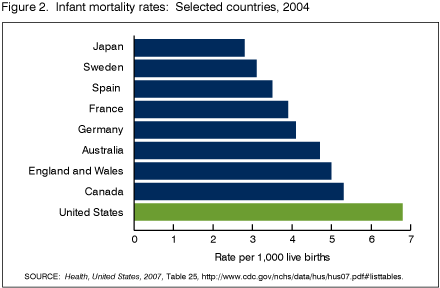
Or, as mentioned, we might be concerned that in the US we have a higher infant mortality rate than Cuba or Hungary, the worst in the developed world.
For the record, I'm here to fix a false statement. I don't care if this was posted yesterday, and I don't care what this argument is about--the parent is modded 5, and a statement this misleading about something so ethically charged I just have to fix it. I also really hate when numbers are skewed.
When I saw this quote, I absolutely had to see this for myself. One part of the statement is true, and even then, the point of the comment is splitting statistical hairs to prop up an argument. If there are lies, damned lies, and statistics, this is certainly a "statistic." Quick breakdown for perspective, and I'll even use the UN's numbers:
The UN says that 6.3 is the infant mortality rate in the United States. That's not a percentage, though.
The US rate is 6.3 deaths per 1,000 (.0063%).
Cuba? 5.1 deaths per 1,000 (.0051%).
Hungary is 6.8 deaths per 1,000 (you guessed it:
Let's put this into perspective. This is the chart the CDC provides. That looks ugly, doesn't it? That's "statistics" for you. Let's look at the real picture. (Don't mind my notes.)
As a final note, even though the differences are equally minimal as the ones stated above, Greece (.0067%), Russia (.0167%), and Kuwait (.0081%) will be surprised to learn that though the UN considers them to be on the short list of part of the developed world, they are apparently ommited from the quoted 'fact' above.
This myth is BUSTED. (Always wanted to have a good reason to say that.) -
Re:True, but
OK so you don't die of prostate cancer. But eventually you're going to die of something, and it could be a difference cancer (but very similar ending unfortunately) - in fact if your body is more prone to cancer, the odds are high you will get another cancer even if it's not related to the first one.
You can dodge bullets. But you can't dodge all of them.
See: http://www.cdc.gov/men/lcod/index.htm
Eventually you lose the die roll.
The people who smoke are not necessarily bat shit insane. They may figure the pleasure is worth the final pain. I don't think it's worth it so I don't smoke.
We all are building sand castles that will eventually be washed away. Learning to accept that is a good way to have more fun.
FWIW, I think having a massive heart attack isn't such a bad way to go. Sure it's excruciatingly painful. But it's only excruciatingly painful for 20 minutes or so. Not like needing pain killers for 6 months to put up with cancer chewing up your body and still it's not enough... Unfortunately, the same risk factors for heart attacks tend to raise the risk of getting a stroke which is unpleasant as well especially if it doesn't kill you...
-
Re:financially sound
you are insane. and also very incorrect.
let's start with something really easy: job creation by presidential party. the numbers don't lend themselves to a nice pithy "party A good; party B bad" conclusion, but certainly the average shows that, on average, we as a country do better on jobs with Democrats in the head office than Republicans.
okay, maybe you don't like "job creation" as the employment metric (there are decent reasons not to). unemployment is more straight-forward to measure and the data comes in regularly and frequently; what's it tell us? try this analysis. i'll save you some reading, since i imagine that's a problem for you; the conclusion, on page 2, includes the punchline: "Over the past 34 years, Democratic Presidents have overseen periods when the unemployed became employed, and Republican administrations were characterized by an increase in unemployment."
alright, alright, it's not fair to focus only on "employment". there are other ways of generating wealth (although where that gets focused is an interesting question), and the employment numbers don't tell us as much about turnover as we'd like. how about some other metrics? well, this analysis is old enough that we don't get to poke at Bush II much, but the numbers are pretty conclusive over modern US history. "...since 1900, Democratic presidents have produced a 12.3 percent annual total return on the S&P 500, but Republicans only an 8 percent return." c'mon, tell me there's a liberal bias in S&P. you'd have to also lump in the Dow (nearly the same numbers). focusing on congress is also pretty damning; the spread is less dramatic, but still statistically relevant.
perhaps the most important macro metric of all - real GDP - follows the same trend as the stock market, at least since 1930.
how 'bout regionally? well, at least up until the current collapse, New England has been growing substantially faster than the rest of the country (left two columns in this chart; right two aren't really relevant). note the increasing spread between New England and the national average, either by percent or absolute dollars, as it coincides with the blue shift in the region over the same time period.
the Republicans got a lot of traction in the last election cycle out of the "redistribution of wealth" phrase, which they're still pimping. but the reality is that modern Republicans are far more guilty of it. take a look at GDP vs. median wageduring the Bush II years. the nominal increase in the economy after the Bush II crash was all focused on the top slice of the economy - doing very little to stimulate overall economic growth and stability.
you make some pretty weird claims about migration. can you show any evidence for a mass migration from blue to red states? i can't find it. instead, the conventional cause for census shifts are taken to be birth rates differing by states (for a good time, compare to teen birth rates when Republican hacks keep talking about the moral center of Real America) and immigration rates differing by states in roughly the same areas. the net domestic migration numbers, which i think are what you want to look at, don't seem to indicate what you want them to, although i could only find back to 1990. since then, there's been a departure from the northeast, midwest, and pacific coast for the western mo -
it IS a pandemic
just not particularly lethal
in 1918, the same thing happened: the flu appeared in the spring, outside its usual pattern of appearing in the fall, and then percolated all summer, just below the radar, expanding stealthily but inevitable everywhere
http://www.cdc.gov/ncidod/eid/vol12no01/05-0979.htm
then (in the northern hemisphere, it would explode in the cold months of the spring in the southern hemisphere) the flu exploded in the fall, and killed millions that winter. this is inevitable with flu because the flu virus actually survives in cold air for a longer period of time
http://www.nytimes.com/2007/12/05/health/05flu.html?_r=1&hp=&pagewanted=print&oref=login
so the summer months deaden its spread (really, just slow down its spread) so that it spreads stealthily but inevitably, while the winter months allow it to flourish and explode, seemingly everywhere at the same time (because the summer months allowed to actually go everywhere, just in small little clusters everywhere)
its also important to note that flu in 1918 killed at a very low rate, like under 1% of its victims. whatever strain dominates this winter, will be the real issue. will it have a 0.0003% mortality rate? or a 0.3% mortality rate? we're talking about the difference of tens of millions of lives in that difference, and no one knows what that mortality rate will be, since its such tiny little variations and random chance of one mutation dominating or another at work here
so beware false alarmism, and beware false complacency. this virus is a genuine unknown quantity. it really could kill a lot this winter, it could really completely fizzle out. both anyone freaking out, or completely blase and lackadaisacal about the whole thing, are fooling themselves
an unknown is an unknown is an unknown. neither false complacency or false alarmism is an appropriate response to that
-
MPG is middle of the priority list
The real reason SUVs are popular is because huge vehicles are safe (for those inside). Car accidents are the single leading cause of death and debilitation from ages 1 to 44 in the US (oddly, in 35-44, poisoning barely edges out motor vehicle traffic...), so having a car built like a tank is rational if you're interested in retaining life and limb. Most Americans care more about this than pollution, global warming and Middle East wars, which are statistically much less likely to kill them. A 2008 Jeep Patriot starts at $16,500 MSRP, a Mini One starts at $19,000 but doesn't have enough horsepower for AC, so it isn't sold in the US (MINI Cooper starts $18,500). Both have similar acceleration (11 sec, 0 to 100kmph), Jeep Patriot is safer (19 out of 20 NHTSA Stars vs 17 for AC equipped MINI Cooper), MINI Cooper beats in mpg (28/37 vs 23/28).
The afore mentioned "subsidy" was meant to give US car manufacturers a competitive advantage vis a vis their foreign competitors, and applied to businesses, not consumers. This was not a subsidy per se, but an "accelerated depreciation" tax credit. According to Taxpayers for Common Sense, only 100,000 out of 3.6 million SUVs sold in 2002 claimed the tax credit, so people were clearly not choosing the vehicles primarily for the tax credit. And SUVs were popular before this, so hopefully that "cause" is debunked.
Motorcycles get fantastic MPG, but are much, much more likely to kill you. Walking and horses have even better MPG, but are probably also more likely to kill you per mile traveled.
-
Re:EMP Testing
-
Re:Good call
waiting for a pig fly-by..
Sorry. That was last month
-
Re:The only way to prevent these tragedies...
The best data I could find does not support 11 ft as the LD50 for falls. The mean height was 48 ft and the median was 28 feet in a study by NIOSH. . Still best not to fall off the roof of your home.