Slashdot Mirror
Domain: census.gov
Stories and comments across the archive that link to census.gov.
Comments · 1,746
-
Re:OpenStreetMap?
Yeah, because the US already has free geodata, so OpenStreetMap's efforts have thus far been concentrated in Europe. The coverage of the UK and Germany is coming on very fast, and the Netherlands is complete.
For what it's worth OSM has recently started importing the US TIGER data, so Philadelphia will be there sooner rather than later.
-
Re:34 million active users is Bull PuckyFrom here at least 12 billion users are outside the US. You must be counting the virtual second lifers because as far as I know there are only 6.6 billion people on the this planet. But I'm assuming you meant millions. Which is fine and well, but again where do these user numbers come from? And what defines an active user? And since there is no way of independently auditing numbers, like Neilsen ratings (which is it's own statistical ball of wax), how can numbers like these ever be trusted? I've been in professional media all my career, and let me tell you EVERYONE twists the numbers. I still fail to believe that there are 22 million men, women, elderly, and children in the United States (by your calculation) that use Facebook on a regular basis.
-
Re:Well, here's your problemThis is complete and utter FUD. You (the cable company) control the street going both ways. Us (telivision consumers) need you to get access to the channels we want to watch. They (the content providers) need you to get their shows (and, thus their ads) to us. You are the ONLY ones with any leverage here.
The only numbers I could find says that in 2005 Comcast had 21.4 million basic subscribers. If we assume an average household size of 2.59 then that means that Comcast alone has about 55 and a half million potential sets of eyeballs (note that this is NOT including digital subscribers).
You can't tell me that that isn't leveragable against the content providers. You think ESPN wouldn't renegotiate if they were about to lose that many eyeballs? How about if you add in the 53.6 million that Time-Warner controls? These two companies alone control the television choices of 1/3 of the adult American population. NO content provider would negotiate away that much potential revenue. If they did then a competing channel would rise to fill the gap.
The cable companies are the ones with the power in the us/you/them equation. If they decided to use it they would have no problem implementing the system proposed by this lawsuit (and they'd probably come out ahead).
But to the networks, YOU ARE NOT THE CUSTOMER, YOU ARE THE PRODUCT.
If this is true, then why are you charged for us and not paid? In your scenarion you are offering a product (us) to a consumer (the content providers) and you're the one being charged for it. If I walked in to any company offering products for sale and demanded that they pay me to take their products they'd laugh me out of the building... how is this any different?
The argument also falls apart when you consider that Comcast either owns or is majority owner in over a half-dozen channels. Why can't we a'la cart those? -
Parity error
I don't expect Canadians will see much benefit from this for a while, in terms of trading with the US.
Case in point: I live in Canada. I want a new cordless reciprocating saw that works with my Home Depot-brand Ryobi cordless tool set. So I went to the American homedepot.com website and looked it up. I discovered it was available for $50. Great, the price should be about the same in Canada, I thought. I went to the Home Depot closest to where I live and found the saw - where it was selling for $80. There's no excuse other than price-gouging to sell an item for that kind of markup when the Canadian dollar and American dollar are almost equal.
Conclusion: It's going to take a while for prices to equalize while American companies with footholds in Canada will gouge as much as they can out of us to pay for that stock they imported when the dollar was worth less.
And for the record, for all the Americans who don't think this is important, the US is Canada's biggest trading partner, but Canada is the US's biggest trading partner, too. Look it up. -
Re:Benefits to a cheaper dollar
Can't believe that the parent was modded insightful
That would be because - as you said - you don't understand economics.What consumer products are manufactured in the U.S. nowadays?
Food, textiles, clothes, wood products, paper, printing, chemicals, plastics, cement, metal, machine and building parts, machinery,
Each of those has hundreds of thousands of people employed in the US, and there's lots more - I just got bored listing them. The whole "there's no manufacturing in the US!1!" meme is popular, but that doesn't mean it's true. -
Re:Ignoring the Human Factor is not Bliss
And yet the actual numbers indicate differently. Excluding immigration and emigration, more are being born than dying. Including those numbers, more are immigrating than emigrating (net gain of 1 per 26 seconds). Immigrants pay into the system as well.
-
huh?
US Population Growth
Net gain of one person every..................... 10 seconds
You can't discount immigration without discounting emigration as well. But immigration/emigration don't have enough of an effect to say that without them there isn't any growth.
World Population Growth
The growth rate is slowing (going down), but the population is still going up. -
huh?
US Population Growth
Net gain of one person every..................... 10 seconds
You can't discount immigration without discounting emigration as well. But immigration/emigration don't have enough of an effect to say that without them there isn't any growth.
World Population Growth
The growth rate is slowing (going down), but the population is still going up. -
Re:The bigger story of the day..
-
Re:More interesting pattern
Sorry to have to be the one to point this out, but India + China population is about 2.45 billion http://www.census.gov/cgi-bin/ipc/idbrank.pl, which works out to be about 37%. And that is slowly rising, in spite of massive population growth rates in the Islamic bloc countries.
The question is not why China (which has a very warm relationship with Microsoft) or India (which has a huge English speaking population) disapproved of OOXML. The question is why did so many European countries that should have a problem with OOXML's US English centric definitions voted to approve OOXML.
I am not outrightly contesting the correlation presented here, just questioning why did so many low CPI countries in Europe with excellent reasons to vote against OOXML, vote for it. -
Re:Imploding? Hardly..
I'll start by saying that I don't *want* the US to be in decline. I much prefer a US hegemony to a Chinese hegemony.
I'm just a bit worried about your economy, your human rights and your leader. Oh, and your economy. Oh, and your economy.
By the way, ad hominem attacks are fun, but if a hippy says something true, it's still true no matter what kind of hair they have.
Peter
-
I am not an economist, nor do I play one on TV,but
So, all in all, you can (on average) afford way more stuff than we can. Yet you complain about the cost of things every bit as much as we do.
Well, perhaps. It's a complicated subject and no doubt difficult to compare statistics given the differences in data and methods, but the median household income before taxes appears to be :
US - $48,201
UK - $56,000 (£28,000)
for 2005/2006. It would be interesting to compare them after taxes, and of course there's all sorts of confounding factors like purchasing power, but the salaries do seem to be lower in the US than in the UK, which is compensated by slightly lower prices (though given prices are quoted before tax there and not in the UK, it's difficult to compare directly). Median income after tax looks surprisingly high in the UK in that graph (around $52,000), and in the US ($40,843), given how much everyone moans about taxes. Interestingly the figure after tax is much closer to median income (because of benefits on the low end and higher tax on the high end perhaps?) for the UK than for the US. This doesn't include the shared health care etc in the UK of course.
It would probably be very healthy for a lot of governments to be forced to publish their figures in comparative tables with other countries - I'm sure it would smash a few myths about who spends or taxes the most, but good comparative data is hard to find. -
Re:And so help us...
Mostly out of my ass...
however...the basis was my rough memory of world populations at different times in history.
Looking here for hard data: http://www.census.gov/ipc/www/worldhis.html I was a little bit low.
Considering a lack of fuel and fuel based fertilizer would return us to about the 1750 to 1800 period that shows support for about 629 to 980 million people. -
US Scientific PayScience positions in the UK are particularly poorly paid. If the country needed more scientists, surely the high wages would indicate the problem.
Amen. While I can't speak for the UK, as I have a PhD in Immunology I can certainly speak for the United States. People who are already interested in science are leaving the profession in droves. While an undergraduate in the 1990s, quite a few of my classmates who were graduating with a BS in Biochemistry left for non-science professions such as banking or consulting because the pay was much better. I attended a graduate program at a top university (the Immunology program is consistently ranked in the top ten), and of my 'class', ony two of nine (includes myself) continued on for a post-doc (some went into medical writing, others consulting, and some chose non-college level teaching). The problem isn't the love of science, the problem is pay. To put numbers behind what I'm saying, after 5.5 - 6 years of graduate school (the average length of a PhD program in the biological sciences), you have the option of leaving science, going onto industry as a glorified technician, or continuing on to a post-doc position (the good industry jobs require several years of post-doc experience as do academic positions). The salary at my institution are as follows:
Years of Experience - Salary
0 - $35000
1 - $36050
2 - $37131
3 - $38245
4 - $39392
5 - $40574
6 - "end" of post-doctoral training
(you either find a job, or continue on as an "instructor", doing the same job)
To put this in perspective, the median income in in the United States is $48000 . My university is on the upper end of the post-doc salary range. Our youngest graduate student are ~27 or so when they graduate. Several have 2 - 3 years of working experience before they join graduate school. So the people making the salaries listed above are ~28 - 34 (minimum), with a PhD. I might add, that the post-docs at my institution just started receiving retirement benefits three years ago.
Oh, but wait, it gets better. According to two recent Nature editorials (Nature is one of the top scientific magazines - More Biologists but Tenure Stays Static. Nature, 448:848-9; Indentured Labour. Nature 448:839-40) the percentage of post-docs receiving tenure track positions is now 30%. This certainly jives with what we're seeing here as most post-docs (the high quality post-docs, ignoring those who shouldn't move on) aren't able to find a job. Industry is saturated as well. If a post-doc is able to find a tenure track position, the pay (our University is at the high end) is ~$70,000 per year. After seven years, the individual undergoes review, and if they are granted tenure, the salary jumps to $120,000 per year (most people are >40 at this point - excpt for some of our foreign born faculty).
In contrast, my colleagues (at least the six I still keep in touch with) who left science after receiving their BS were all making over $100,000 per year before I finished with my PhD. Most of those who were in my graduate program and left science after their PhD are making over $100,000 per year. Those of us who stayed with science, most of us make well under 100k per year, and those that make more are all in industry.
Smart people don't join science. The hours are long, the pay is low, and our job prospects are highly uncertain. Those in government can change the scientific curriculum all they want in an effort to 'encourage future scientists', but they're all missing the point and addressing the wrong problem.
-
Re:... and the Daily Show is off this week.
For the record, I'm neither a democrat nor republican, but I can't say I'm equally disgusted with both sides here. In fact, that would be statistically very unlikely, and to say that both of these parties, who represent billions of people, are *equal* is pretty much admitting that you're full of shit.
Speaking of being informed...
We're talking about US political parties. You do know that there are only about 300 million people in the US, right? -
Re:Not likelyWhat does work is the National Popular Vote, and it's not a huge overhaul of the electoral process. I disagree. About 1/3rd of the US population lives in the top 11 MSA's (Metropolitican Statistical Area):
http://www.census.gov/population/cen2000/phc-t29/t ab01a.xls
And a lot of those MSA's are geographically clustered:
Boston, New York, Philadelphia, & Washington DC
Los Angeles, San Fransisco
Dallas-Fort Worth, Houston
The end result would the reduction of almost all of the interior states to irrelevance, both during the campaign and also the election. Now, whether or not North Dakota (total state population less than El Paso, TX) or Wisconsin (total state population about the same as the DFW MSA) SHOULD be relevant is a different debate. But don't kid yourself, going to a popular vote would shake things up dramatically. -
Re:Article Summary
Perhaps they would, but that still doesn't explain why any old resident of France, Russia, Iraq, Jamaica, Papa New Guinea or Mongolia would need to get a
Also, there may be 5m 'ex-pats', but how many of them want to own
As I said, Canada manages it somehow so it must be possible.
It also seems fairer to have 60 million potential registrants have access to the domains they want for their own country TLD with the side effect that 5 million potential registrants (a number less than 10% of the residential population) have to have family in the country or similar to register a
(Yes, I know the numbers also include children and babies, but it is easier to estimate off pure populations).
Other countries with residency requirements (some I thought of and quickly checked and skimmed): -
Re:Black Family Channel
Interesting.. there are 2 posts here calling the major networks racist in favor of whites...
The 2000 Census states that 12.9 percent of the population is "Black or African American"
I'd like to see some hard statistics for broadcasting, but it seems that more than 12.9% of the faces seen on the major networks are ""Black or African American".
Comparing programming on all channels, according to the Census 22.9% of the population is non-white. But taking TV programming as a whole, a visiting alien might get the impression that about 35 or 40% of our population was non-white. It doesn't take much channel surfing to see that a good deal more than 1 in 5 people are non-white.
Racism in any form is disgusting and sad. It's not a word to throw around lightly. Statistically speaking, I think "the TV" (as Homer would say) does a pretty good job in favor of minorites. You just don't see it when watching your favorite sit-coms, as they're usually pretty targeted to a specific cultural audience.
Having a 2 year-old is like having a visiting alien sometimes... the things they say can get you thinking about all kinds of things. -
Re:To put it into 'software piracy' terms...
12.5 billion isn't that much. There are about 80 million people between the age of 15 to 34, which would make about 156.25 dollars per person per year. Thats kind of reasonable to spend on music per year, one CD per month isn't to bad. Its definitely a fraction of what I spend on booze
-
Papers for Yosemite?!
Could have picked a better title. At least 36.4 million residents of California wouldn't need this to visit Yosemite. Maybe Mt. Rushmore would have been more appropriate. For other reasons, too.
-
Papers for Yosemite?!
Could have picked a better title. At least 36.4 million residents of California wouldn't need this to visit Yosemite. Maybe Mt. Rushmore would have been more appropriate. For other reasons, too.
-
Re: Call center in Oregon...AMAZING! In all likelihood, English was their first language too!
Year 2000 Census Stats for Portland, Oregon:
Foreign born 13%
Language other than English spoken at home pct age 5+ 17%
Asian origin 6%
Hispanic origin 7%The stats are for the city proper - but close enough to Greater Portland [population about 2,000,000] to be serviceable.
The state is gaining population in roughly equal numbers from immigration and migration from other states. Oregon
-
Re:This is stupid.
I agree that simply throwing money at a problem is rarely a solution. But just to back up that "Some places with relatively high spending per child have the crappiest schools" idea with some data...
http://www.census.gov/Press-Release/www/releases/a rchives/education/010125.html
Or, a few clicks from that page is the actual report (2005 data, released April 2007):
http://ftp2.census.gov/govs/school/05f33pub.pdf
Page 12 ranks each state spending per pupil per year for primary and secondary education. Top 10 spenders are, in order: New York, New Jersey, DC, Vermont, Connecticut, Massachusetts, Delaware, Arkansas, Pennsylvania, Rhode Island.
From this page: http://www.psk12.com/rating/USthreeRsphp/STATE_US_ level_Middle_CountyID_0.html (2003 data - Middle Schools only!) the overall rankings for the above top-10 spenders are, in order of spending: New York (#21), New Jersey (#16), DC (#51 - bottom of the barrel, folks!), Vermont (#5), Connecticut (#10), Massachusetts (#1), Delaware (#29), Arkansas (#43), Pennsylvania (#28), Rhode Island (#37)
Clearly there is no strong correlation between money spent and education quality. Here is a list of the top 10 states by education rank (again, middle schools only!) with their spending rank in parenthesis: Massachusetts (#5), Minnesota (#23), New Hampshire (#15), North Dakota (#25), Vermont (#4), Montana (#28), South Dakota (#41), Iowa (#30), Colorado (#31), Connecticut (#5)
Interesting that South Dakota is apparently 7th in the nation for education quality and 41st in the nation for education spending... And DC is #3 in spending but dead last in results... By a huge margin, too! The difference between #50 and #15 (33 points) is more than two thirds the distance between #1 and #50 (45 points)! Smells like corruption to me.
=Smidge= -
Re:This is stupid.
I agree that simply throwing money at a problem is rarely a solution. But just to back up that "Some places with relatively high spending per child have the crappiest schools" idea with some data...
http://www.census.gov/Press-Release/www/releases/a rchives/education/010125.html
Or, a few clicks from that page is the actual report (2005 data, released April 2007):
http://ftp2.census.gov/govs/school/05f33pub.pdf
Page 12 ranks each state spending per pupil per year for primary and secondary education. Top 10 spenders are, in order: New York, New Jersey, DC, Vermont, Connecticut, Massachusetts, Delaware, Arkansas, Pennsylvania, Rhode Island.
From this page: http://www.psk12.com/rating/USthreeRsphp/STATE_US_ level_Middle_CountyID_0.html (2003 data - Middle Schools only!) the overall rankings for the above top-10 spenders are, in order of spending: New York (#21), New Jersey (#16), DC (#51 - bottom of the barrel, folks!), Vermont (#5), Connecticut (#10), Massachusetts (#1), Delaware (#29), Arkansas (#43), Pennsylvania (#28), Rhode Island (#37)
Clearly there is no strong correlation between money spent and education quality. Here is a list of the top 10 states by education rank (again, middle schools only!) with their spending rank in parenthesis: Massachusetts (#5), Minnesota (#23), New Hampshire (#15), North Dakota (#25), Vermont (#4), Montana (#28), South Dakota (#41), Iowa (#30), Colorado (#31), Connecticut (#5)
Interesting that South Dakota is apparently 7th in the nation for education quality and 41st in the nation for education spending... And DC is #3 in spending but dead last in results... By a huge margin, too! The difference between #50 and #15 (33 points) is more than two thirds the distance between #1 and #50 (45 points)! Smells like corruption to me.
=Smidge= -
Re:And unlike so many other Chinese Manufacturers
Can you afford to take a 20% hit to your customer base?
Yes, but my company is unusual. Besides which, we don't really do much business with the US.
Few companies can-
True, however some companies, upon losing a large customer have sought out other markets for their products, or changed their business model. Others, of course, have gone bankrupt. But isn't that a just reward for those so lazy that they rely on the American consumer to keep their business afloat?
On the flip side of that coin, can you afford to pay 20-50% more for your consumer goods? According to the US census bureau: In 2005, 37.0 million people were in poverty. I guess your plan involves re-employing those people in all of the jobs that went overseas when manufacturers outsourced?
I'd like to see us go cold turkey- unilaterally exit the WTO, NAFTA and CAFTA, and replace them with FAIR TRADE agreements.
But that would mean that the US doesn't get to screw third world countries with one-sided trading agreements. I love your idealism, but really, do you think that the US rich and powerful are going to give up their free ride just like that? Do you think the US consumer is going to give up the purchasing power of the US dollar without complaint?
That is the entire point. With one world standard in labor and environment, there would no longer be a need for all of that crap.
Yes, but that is NEVER going to happen, so it is rather pointless planning for, or thinking about a world in which it does. The strong prey upon the weak, they can't help themselves, it's in the DNA. Universal equality will never be achieved, because it would take an enormous authoritarian apparatus to enforce it.
Misguided idealism is what gives Socialism a bad name. -
Re:Pass the buckExcept the first time he wasn't actually elected, and the second time he was "elected" via electronic voting machines. I don't think there's adequate evidence to call the majority of Americans idiots. When you add the 35-40% of those eligible to vote who simply failed to show up (http://www.census.gov/population/www/socdemo/vot
i ng.html), to the 30-35% who actually voted for Bush, I think we've established majority stupidity. -
Re:Updated Figures
Well, he said "per person" and your data is "per student."
Going back to the original source finds that they list a total US educational spending of $427,167,462,000 with the per-student spending at $8,701 as you already mentioned. So if we assume that the original poster really did mean "per person" and that the US population is currently 310,000,000 (the US census population clock places it closer to 302,000,000 so this figure will be low), then we get a total education expense of $1,378 per person.
Which leaves the $50 per person figure as being amazingly inaccurate.
-
Re:Updated Figures
Well, he said "per person" and your data is "per student."
Going back to the original source finds that they list a total US educational spending of $427,167,462,000 with the per-student spending at $8,701 as you already mentioned. So if we assume that the original poster really did mean "per person" and that the US population is currently 310,000,000 (the US census population clock places it closer to 302,000,000 so this figure will be low), then we get a total education expense of $1,378 per person.
Which leaves the $50 per person figure as being amazingly inaccurate.
-
Updated Figures
Current data puts the average per-student spending at $8,701. I'm really curious about where you got YOUR figures.
-
Re:Not so hard, really
Also, if you've ever visited Manhattan, you'd know that children there are a rarity
Don't know where you were, If you look at the census data you will see that almost 20% of Manhattan's population is under the age of 18. All I know is that I can't walk down the sidewalk without dodging mom's and dad's and their damn strollers.
And, don't worry: the end of the petroleum economy will radically change the American landscape. It's already happening in some areas. Atlanta, for instance, has seen big increase in people moving away from the 'burbs and into the city center to get away from long commutes and having to own a car.
-
Re:Stereotypes
Yeah, actually I do. It is relevant, or at least it is in the USA.
This is a list of earnings that men made broken down by occupation done by the US Census Bureau.
http://www.census.gov/hhes/www/income/earnings/cal l2usmale.html
They also did this for women.
http://www.census.gov/hhes/www/income/earnings/cal l2usfemale.html
We'll just take a look at the first statistic here, but you can go ahead and take a look at all other computer/math related fields. You will notice that in all branches, women made less than men. Sometimes by as much as $30,000 a year (poor Actuaries!)
Male Computer Scientists and System Analysts made an average of $56,955 in a year. Women on the other hand made $47,797, which is almost $10,000 less. As you can see we do make less. "As long as you get payed less, for doing less work, I don't see a problem, either." I think you and I have reached an agreement. My flexible 8 hour day of 4 hours at home and 4 hours at work does seem like a fair deal suddenly, doesn't it. -
Re:Stereotypes
Yeah, actually I do. It is relevant, or at least it is in the USA.
This is a list of earnings that men made broken down by occupation done by the US Census Bureau.
http://www.census.gov/hhes/www/income/earnings/cal l2usmale.html
They also did this for women.
http://www.census.gov/hhes/www/income/earnings/cal l2usfemale.html
We'll just take a look at the first statistic here, but you can go ahead and take a look at all other computer/math related fields. You will notice that in all branches, women made less than men. Sometimes by as much as $30,000 a year (poor Actuaries!)
Male Computer Scientists and System Analysts made an average of $56,955 in a year. Women on the other hand made $47,797, which is almost $10,000 less. As you can see we do make less. "As long as you get payed less, for doing less work, I don't see a problem, either." I think you and I have reached an agreement. My flexible 8 hour day of 4 hours at home and 4 hours at work does seem like a fair deal suddenly, doesn't it. -
Erm What?
So apparently 6Billion out of the 6.6Billion (Ref) people on earth have interweb access! Some how overnight the Internet usage went from 1.1Billion (Ref) to 6Billion overnight!
To debunk this author just a little more, Facebook has a comprehensive developer system which allows anyone to program features in to facebook. And the beauty is, facebook controls the style of the interface so it doesn't look like myspace does -
Re:I think you're missing the point
On the contrary, I think a 96-bit addressing system would work just fine.
That's still assuming a 64-bit local address space to fit EIC-64 addresses in.
See, with a 64-bit network address, that means there can be up to 18,446,744,073,709,551,616. That's 18.4 quintillion network addresses (or 18.4 trillion if you use the other naming system).
A 32-bit network address would still make 4,294,967,296 (4.3 billion or 4,300 million) network addresses available. That's over two-thirds of the number of people on our planet just in network addresses. (The current estimated world population is 6,609,253,022 according to the US Census Bureau)
The only disadvantage I see to having a 96-bit address is that, to express it as a set of unsigned 64-bit integers, you'd have an empty 32-bits in one of them. However, if it's being treated as unsigned 32-bit integers, then you'd need exactly 3 of them. -
Re:Big Changes, huh?I live in Central MN, and I don't own an SUV. I own a '99 Ford F-250 (gas 2WD 5-speed), a '98 Ford Contour that I drive every day, and a '67 Ford Galaxie 500. However, I don't have A) a family, B) a boat/other toys, or C) a need to load up on groceries. I DO commute, however.
Lots of people in MN do pretty well for themselves, well enough that they can own a house AND a cabin, and probably have more than one vehicle in the family. Ours had several all the time. Why not that other vehicle be some electric car that they can commute with? Keep the SUV/truck parked until you need to pull the boat/horse trailer/other toys; insurance isn't that expensive when you have more than one vehicle.
Obviously electric cars won't work for everyone. My dad drives a '70 Peterbilt 15 miles to work every day because it has all of his tools, welder, air compressor, torches, etc. built into it, and occasionally he'll have to fix excavating equipment on the site. He wouldn't benefit from an electric car, and I can't imagine farmers would, either. However, only 3 million Americans consider themselves "farmers." http://www.census.gov/apsd/www/statbrief/sb93_10.
p df/How many people take I-94, I-35, 169, 10, 12, Hwy. 55, Hwy 36, etc. into work every day, and then drive back out? It doesn't matter if you live in Sauk Center or Red Wing, you've been to the Cities before during rush hour traffic - it's discussed for an hour when old people from the country have to "drive to the cities" (read: Maple Grove) and got caught in "rush hour." (read: noon!) All of those people who commute could be driving an electric car. Then they can drive home, and hook the truck up to the boat, and head out. Regardless, electric cars are still viable for a LOT of people, they just don't know it yet. Not everyone, but a large group.
-
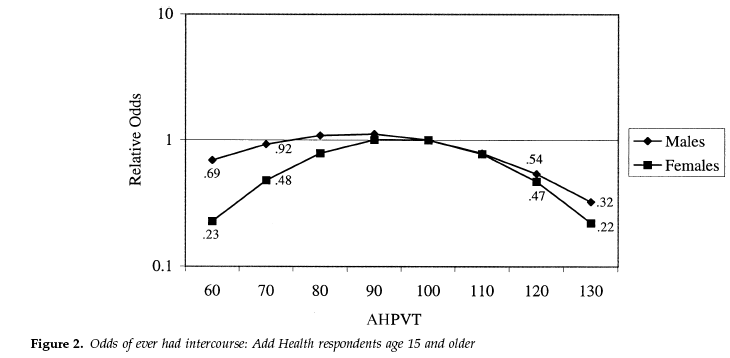
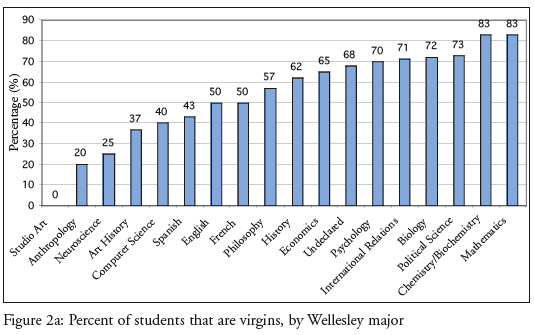
Re:IdiocracyIf the amount of sex correlates to number of children (which is not necessarily true), and IQ is mostly inherited (which I don't think it is), then Fig. 2 indicates that women will stay the same, but that men will become dumber and dumber; and according to Fig. 2a the world will be overrun by religious artists...
I personally think it's unethical to become a biological parent considering all the problems the current 6608952031 are causing, and considering the tens of millions of unadopted orphans out there.
-
Re:Oh so wrong.
I was thinking that the majority of citizens in the US are in the $30K -and up range, which I'd consider "middle class". Most people making this amount of money, would have either employer provided or private retirement funds that are based in the stock market.
Keep in mind the $42,148 was for household, so if both adults work (in a married household) then they would be less likely to be working for an employer that provides retirement.
Here is another source of information from the US Census: http://www.census.gov/compendia/statab/tables/07s
0 541.xlsAccording to Census in 2002: Only 41.5% of the total population participated in a private pension plan. This too does not support your assertion.
-
Re:Oh so wrong.
I have no numbers to back it up, mind you, but, I'd have thought that the middle class and upper classes make up the majority of the US populace...and most people in those categories at least have some type of 401K or retirement plan that has its investment basis in stocks.
Do you need numbers? I got your numbers right here http://www.census.gov/prod/2001pubs/p60-213.pdf.
The US Census says that the median income for 2000 was $42,148.00. So being median, that means that half of the US households make below $42,148.00. This does not back up your assertions.
-
Re:Another problem...
I wondered about that too. To make a guess about the answer, I had to find some maps showing US population density. Here's one (in PDF format) from the US government (I wish it had the year). Here's one from a
At first I thought this easily backed up my suspicion that, as you put it, the "spread out America" excuse doesn't work so well.
But then I checked out a global map of population distribution and now, after all this effort, I'm firmly back in the "not sure" category. Bring up the full-size map and compare Europe and Japan with the USA. Perhaps for New York, New Jersey, much of Florida and California there's not much excuse. Anywhere else in the USA and it's not so clear to me. -
Re:hmm...
According to Avert.org there are 39.5 million people living with HIV/AIDS. Let's round that up to 40 mil and say each one gains $100k for the drug company in question. That's $4 trillion in revenue for the company in question. Now let's presume that they make a vaccine and have that vaccine cost $10k. According to the US Census Bureau there were 242.4 million insured Americans in 2003, which is roughly 80% of America. Assume that a bunch of them don't want or don't get the vaccine for some variety of reasons. Let's say we end up with 200 million people who want the vaccine. That's $2 trillion in revenue -- for America alone. Canada, Great Britain, France, Russia . . . that $2T shortfall will be made up quickly. Furthermore, a whole generation will have to be immunized, since by these projections, the virus will be far from wiped out. (Note: If 95% of humanity as a whole got the vaccine, 95% of 6 billion paying $10k is a huge, huge amount of money, even if it's just one time only.)
If that's not enough to convince you it's very lucrative, let me point this out: there are SEVERAL pharmaceutical companies. If you aren't the one making the $100k/year treatment for AIDS, you really, really, really want a slice of that pie. If you can do it by curing the disease and making trillions of dollars, you certainly will.
And if several companies split the $100k treatment between them, it gets even more lucrative to have exclusive control over the vaccine.
This vaccine would be immensely profitable; nobody would pass it up. Not even the companies making the treatment. -
Re:still a lot of people
Okay, 300 million Americans, less than 62%[1] use computers, and 0.5% use DVD copying software: That's under 930,000 people who copy DVDs. Though the number is high compared to, for example, the number of people in your office building, it's still less than one in three hundred people and doesn't seem to be of pandemic proportions.
[1] http://www.census.gov/prod/2005pubs/p23-208.pdf - Less than because not everyone in every household with internet access uses it. One-year-olds, for instance, rarely download porn. -
Re:References?
On the doors to the computer labs at the University of Alaska (Fairbanks), there are signs that say something to the effect of
"Viewing porn on these machines is not illegal under Alaska state law, but please be courteous to those around you"
That said, according to the 2005 Census estimate, there are 103 males per 100 females statewide, which is actually a smaller gender gap than the rest of the country (the average is 96.3 males/100 females), albeit in the other direction.
So, although it sometimes feels like it, there's not really a big gap at all. -
Re:Apparently even /. has shifted right.
1/3 in poverty? more like 1/8. It's a debateble whether the official measure of poverty overstates or understates the problem. I lean towards overstatement, due to everyone being materially better off. The official poverty rates were formed with an assumption about food being about 30% of expenses, which explicitly has changed. The standards are increased by the Urban consumer price index, but they have not actually gone back and recalculated things from the beginning, and the original assumptions aren't as good as you might hope.
Incidentally, the earth is NOT a closed system. Economics is NOT a zero sum game. Two people engaging in trade can both be better off because of it. -
Re:Great idea for a state...
It's very misleading to look at raw quantity of emissions. A more sensible measurement is per-capita emissions. I took the raw CO2 emissions figures and the state population figures for the same year, and did the relevant calculation. Turns out many states are worse than Texas for greenhouse gas emissions. By my calculations, New York is by far the worst.
-
Re:I would've loved Barney Frank...
If he grew the understanding, that I, unlike millions of Americans, presently have the option of saving for retirement, finding job, choosing health-care options, etcetera
There, fixed. No charge. Sorry for the PDF.
-
Re:If it's viewable, it's hackableFor all interested, Ari Fleischer -- ex-bush press secretary -- has made a more detailed whine using this same statistic.
It is also useful to consider other statistics such as how much income the wealthiest one percent actually makes. When it comes to actually living life, 50% of hundreds of thousands of dollars to billions of dollars is much different than 50% of ten to twenty grand. It's the difference between "Am I going to be able to buy a boat upon which to stand around and drink alcoholic beverages?" and "Can I afford a place to live and food to eat?". Well said.
The way I see it, the more you benefit from an organized, stable economy, the more you owe to it. People making $30k/year are not benefiting the same way that people receiving $200m retirement packages are. Besides, nobody needs $200m.
We need to tax wealth. When you no longer have to work to make money, but your money works for you, then something is wrong and you need to have some of it taken away until you have to return to working. -
Re:If it's viewable, it's hackable
For all interested, Ari Fleischer -- ex-bush press secretary -- has made a more detailed whine using this same statistic.
It is also useful to consider other statistics such as how much income the wealthiest one percent actually makes. When it comes to actually living life, 50% of hundreds of thousands of dollars to billions of dollars is much different than 50% of ten to twenty grand. It's the difference between "Am I going to be able to buy a boat upon which to stand around and drink alcoholic beverages?" and "Can I afford a place to live and food to eat?". -
Simple answer: To get nice huge houses
Americans have greater expectations on personal space than Europeans. The average size of an American residence has nearly doubled in the last 30 years (warning PDF link). When I visit people I know in Europe, at first I was shocked at how small peoples' residences were, and I think about how I would have felt deprived if I had to share a bedroom with my sibling when I was young. Not to mention that you have not achieved the American dream if you don't have a big lawn and a ride on lawnmower.
Americans could live 10 miles from their workplaces... if they wanted to settle for "tiny" residences and forgo the huge lawns. But they look at the kind of house that they could buy if they live 50 miles away for much cheaper and they decide that spending two hours a day in traffic is worth it. Personally, I'm not in that category, but thats just me.
-
Re:Hmm..
It's easy as anything to play the numbers game, depending on what premises you accept.
By my count, there are just over 6 billion people who have licensed the right to use Linux.Counting actual installations gives a different number though.
-
Why do you keep saying this nonsense?
Some people here in
Check the statistics of your own government:
http://www.census.gov/foreign-trade/Press-Release/ 2006pr/aip/related_party/
please tell me which of those industries has anything to do remotely with "IP exports".