Slashdot Mirror
Domain: digitaltrends.com
Stories and comments across the archive that link to digitaltrends.com.
Comments · 362
-
Re:Dumb dumb dumb advice...
At some level, security boils down to trust. At least, it does today. You have to ensure that your password manager is controlled by an organization that you trust: one that has very strict security safeguards. I do think that LastPass meets this requirement, though you're welcome to investigate yourself.
That said, in a few years we might not be so concerned about this sort of thing. We might be using secure keys instead of passwords, such as the keys that Google is working on.
-
Re:That's Less Than $1 per Device
Actually isn't it that around 25% of a device cost goes to royalties/patent costs?
http://www.itnews.com.au/News/...
http://www.digitaltrends.com/m... -
Re:Big Difference
The difference is the DVR in question. Aero's DVR is in the cloud and Dish's is in the home of the subscriber. It seems the Supreme Court saw a big enough difference in Aero's distribution as to be infringing while Dish's distribution has been covered for decades by fair use rules. Dish's DVR is no different than a VHS or VCR system from a legal standpoint. In fact I can get a modern DVR for Over The Air (ATSC) recording from several different companies. In fact I just found this article discussing Aero alternatives and it mentions all three of the devices I just linked to. The only problem for a select few is that Aero had chosen a choice location for its array of antenna and some people can't get a good signal due to metal walls or distance from towers.
-
Re:Well then
Oh, but you can. Well it's not exactly the same thing. Have you heard of a femtocell doodad? When I first heard of stingray, I thought back to an interview from a guy at blackhat or defcon, I can't remember which. Anyway, here's a few links. I remember hearing them say that the traffic from the devices communicated w/o encryption to the servers. Supposedly that was fixed, but may very well still have more vulnerabilities like this one.
http://hackaday.com/2012/04/12...
so 1) they already do sell things with retarded capability to consumers
2) the argument "we don't want the criminal element to know we have this kind of capability because they'll know how we find them" is invalid.
http://money.cnn.com/2013/07/1...
http://www.digitaltrends.com/m... -
Re:Government fails again
Think of all the great scientific revolutions and achievements. Now subtract the ones which required very little in the way of costs (IE, costs for Newton to make calculus were something along the lines of "Food to keep Newton's brain working", or mendel's pea plants, which costs were "Whatever a monk's time was worth in the mid 1800s").
How many items on your list were funded through free-market forces? Were there any? If so, I'd invite you to dig deeper. Almost every major finding in biomedical research is directly funded by the US government, to say nothing of the collaborators and background knowledge which is also supported by US grants.
With space exploration too, it's been government all along. Goddard, father of american rocketry, needed government funding in 1917. The SpaceX corporation is getting funding from NASA and obviously, without NASA, there wouldn't be a SpaceX conceptually anyway.
I honestly can't think of a "great dream" scientifically that isn't, from conception to being sold to consumers, government funded. I'd argue that instead, we must forcefully take our government from the short-sighted hands it's fallen into. -
Re:Facebook just care about privacy.
[Facebook] is a service that you voluntarily sign up for and every time you share something you actively choose to share that info, who to share it with.
Not everyone signs up for it.
-
Re:Why not Zoidberg? I mean both.
-
Re:Market Share
LG sells 13 million smartphones during q4 up 54 percent
Those days when Apple only sells 12 or 13 million handsets a quarter are on their way back, isn't that great? See, Tim Cook may wear the black turtleneck but he doesn't fill the shoes.
-
Re:And one time at band camp.
Yes, it's being done to maximize embarrassment but half of the shit that's being published looks absolutely fraudulent. Take this one for example, I'm sorry this is standard practice but it was cobbled together in a few minutes and nobody who values their fat bureaucratic, pensioned job would present something like this. Shit I could probably put something on the back of a restaurant napkin and then pass it off as "General Alexander's design for new surveillance."
-
Re:Safety
I agree with you (from your first post) that the sale of "smart" weapons isn't a bad thing.
If somebody wants one, I believe they should be allowed to buy it. I'm free market like that.
As for finger/palm reading, what if I'm wearing gloves? I'm not police, I'm military, but I can say that I'm wearing gloves at least half the time I'm handling a firearm, whether for duty or practicing at a range or during an exercise. They're not thick gloves, but a palm print won't even penetrate thin latex gloves.
On the other hand, a watch type RFID system would require me to use both hands or the hand with the watch - and I'm used to wearing a watch on my left hand. What if I have to shoot off-handed?
Hell, the weapon would still fire if the user's arm is within 10" of it, such as if the criminal and user are wrestling for control of the weapon. So the user might STILL get shot.
it might save some lives.
I've found that "It might save some lives" to nearly always be a suprisingly poor reason to do something.
Consider Police Officers. In the last 10 years, 535 were murdered. 25 with their own gun. Per Wiki there's 780k Officers. Firearms are almost the definition of 'durable goods'. So we're looking at ~800k firearms*. At $100 a pop for the smart technology, that's $80M if you don't accellerate replacement of firearms at all. More like $800M* if you really want them in officer's hands NOW.
$80M/25 = $3.2M per officer saved, assuming that the technology prevents every officer death with his stolen weapon, that the officer isn't killed in a different way, and that no officers are killed because their weapon failed to fire when it was supposed to in the Officer's hands.
Given that my valuation for a random life is hovering around $2-3M, it might be worth it only if it's really only $100. But what do you know, it's available for sale in California...
Price Notes: Typical mid-range
Armatix iP1
Watch: $400(And one is NOT included with the gun).So if you figure that the RFID option is $1k, that boosts the cost per life saved to $32M. It seems to be more of a 'let's not have POOR people armed' option at this price point. Which would infringe on the RKBA.
The above also assumes that the system doesn't have to be redesigned/reinforced when you go from the very lightweight
*Probably more. $100 price increase for the technology, $1000 to buy a gun with it. The version of the firearm without the option would be $900.
-
Re:Congressional fix?
They could also have taken Netflix up on their standing offer to provide cache servers.
Also known as co-location, another service that ISPs have traditionally provided for a fee, fees that Netflix is attempting not to pay by throwing its weight around. It's not Comcast's job to subsidize Netflix's business model. That's what it is, a subsidy, because those "free" servers take up rack space, electricity, man-hours, and bandwidth.
Seriously, I don't understand why Netflix comes off as the golden boy in these discussions, or even why people are such fans of them. What other company can double prices during a recession, delay new content, and fail to pro-rate refunds, yet still have such a loyal following?
-
Re:Well.Sapphire is second hardest material (1st is diamond) known and much more scratch resistant than gorilla glass. This is the best feature of sapphire glass. Check out the youtube video in this article -- even a concrete block can't scratch the sapphire glass. However, sapphire glass has many disadvantages:
- *10x more expensive than gorilla glass
- *1.6 times heavier than gorilla glass
- *Higher refractive index so it's dimmer and therefore consumes more battery power to get same brightness as gorilla glass. A phone user is very interested in this property.
- *Not environmentally friendly (energy consumption very high to produce glass)
-
Re:not really sales, just the first sale
-
Re:not really sales, just the first sale
I recall there was a video rental service that did pretty much that (pop the DVD in a drive at the rental location and stream the video).
Naturally, they got sued out of existence.
(not sure if that's close enough of a comparison for you...it is slightly different conceptually as the consumer never *mounted* the DVD)
-
Re:ToS not a contract
Where's Groklaw when we need it?
In the US, under the CFAA you can be prosecuted for violating a ToS.
If a prosecutor so chooses, she can use the CFAA to argue that anyone who violates a Terms of Service is committing a felony. That means every 12-year-old who uses Google Search (or Facebook, for that matter) could technically be targeted under CFAA.
It's not a great law by any means and I don't support it but until it's repealed it can ruin anybody's life.
-
Re:Here's what I don't get
Here's a source that says 6 out of every 10 ATMs is running a version of XP of which support will end coming April: http://www.computerworld.com/s...
In the UK, at least the nation's top 5 banks are paying Microsoft extra fees in order to keep supporting their soon-to-be-obsolete ATMs: http://www.digitaltrends.com/c...
This wouldn't be happening if the machines in question would be running the embedded version of XP, now would it?
-
Re:Here's what I don't get
No. The ATMs in question are running XP Pro, not Embedded. The same thing is happening in the UK, where banks are paying Microsoft hundreds of millions of dollars for extended support contracts (link), just to keep releasing patches every now and then. This wouldn't be the case if the machines were on XP Embedded.
-
Re: Sure, why not?
Elon Musk himself said the government loan was not critical to the success of Tesla http://www.digitaltrends.com/cars/elon-musk-daimler-not-the-government-saved-tesla/ . He just took the money because it was cheap.
-
Re:I'd say Great Idea
The summary must be wrong because Google glass has a 30-minute battery life while shooting video.
Don't most NY cops only have a 30 minute working time followed by a 2 hour donut break. They can use that time to beat and shoot more unarmed minorities.
FYP
-
Re:I'd say Great Idea
The summary must be wrong because Google glass has a 30-minute battery life while shooting video.
Don't most NY cops only have a 30 minute working time followed by a 2 hour donut break. They can use that time to charge the batteries.
-
Re:I'd say Great Idea
The summary must be wrong because Google glass has a 30-minute battery life while shooting video.
-
Re:ouch!
and avoid a war with their customers.
Exactly. Nail hit squarely on the head.
Samsung leaked a Tizen phone just to get Google's attention.
Google extracted a patent deal in exchange for getting out of the hardware deal, and now they complete their end of the bargain. -
Re: ouch!
Not at all, Motorola seems to be making better phones now, and Google has the parents. I assume the purchase was very hedging, in case android as an ecosystem didn't take off, they could try to make them alone. The need to hedge is over, Google gets some money, and a company that has proven it's ability to manage american brands is in the mix.
Google can now release moto based nexus items (if they dream moto to be good for it), without threatening the ecosystem.
The hedge on android probably was worth it to them.
Android had already captured about 75% of all hanset sales by the time the Moto Buy happened.
So I don't think they were hedging.However, you might have hit the mark after all, in a slightly different way: Preventing Android from being eroded.
Its entirely possible there was a quietly brewing manufacturer revolt going on due to Google competing with its user base by manufacturing phones.
Samsung leaked a Tizen Phone, and Mozilla funding a phone OS (paid for by Google, as is 95% of everything Mozilla does), and the Chinese also brewing up a phone OS, it might have come to Google's attention that getting rid of Moto might have been the best choice.They keep the patents, secure Android's future, and already pocketed the tax write off when acquiring Moto's debts. Win, Win, Win.
-
Battery life?
My recollection was that the battery life on those things while recording was crap anyway (like 20-30 min. tops)... everyone's afraid of flying cars, and no one is realizing you need fusion reactors to make it look anything like the movies....
-
NC governor's test drive killed an anti-TeslaTesla arranged for NC governor McCrory to test-drive a Tesla. http://www.newsobserver.com/2013/06/10/2953779/dome-tesla-lobbyists-give-mccrory.html
McCrory hopped in for a ride, with a state trooper behind the wheel. Before long, McCrory and the trooper switched, giving the Governor a chance to guide the sleek vehicle around Raleigh.
-
Re:7th gen consoles held back PC game spec creep
Sounds like what everyone else is saying, that current hardware is good enough and they have no reason to update.
That was true in the seventh generation when PlayStation 3 and Xbox 360 were stuck on tech that was high-end in 2005. But now, the latest consoles are up to 2013 tech (AMD Jaguar, do the math), and PC games' system requirements are likely to rise to meet PlayStation 4 and Xbox One specs.
If you bought or built a PC in the last couple of years it is already more powerful than the new consoles. To bring it up to par you may have to add RAM (about $65 worth) and a video card (about $150). PCs will continue to have an advantage over consoles as it takes time for console development.
http://www.digitaltrends.com/computing/pc-vs-ps4-xbox-one-how-to-upgrade-pc/
-
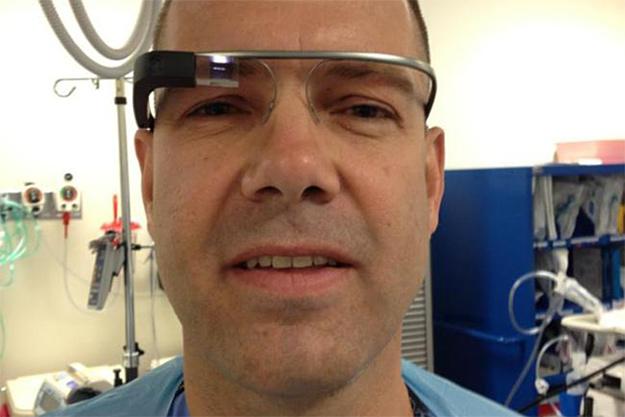
Head Mirror 2.0
-
Tesla Pickup timeline
-
Re:Underfunded
And Facebook operated for 6 years on $500 million.
Twitter operated for 5 years on $360 million.
LinkedIn has spent $200 million.
Spotify has spent $288 million.http://www.digitaltrends.com/opinion/obamacare-healthcare-gov-website-cost/
-
Re:LOL Tesla
Of course the real problem is that there simply isn't enough data available. Three times in as many months could be a fluke. Or it could be a pattern.
When you add in the other electric vehicles that suffered from battery fires, the problem is reasonably well understood. The fires occur WELL AFTER the crash event. You have a fairly long time to exit these vehicles.
No doubt Tesla and the other manufacturers will do something like Boeing did, and build thermal barriers into the battery and perhaps build in stronger penetration barriers. But I'm not sure you can protect against all fires when a car goes airborne and crashes into a concrete barrier. Nor does it even seem to be a priority in my view. That the driver walked away.
-
Re:Or better eyes
But the human eye can't tell the difference.
http://icdn3.digitaltrends.com/image/720vs1080-625x1000.pngunless you've got your nose to the monitor and have a 30" screen
This is just like the audiophile garbage. We hit "Max Quality" in audio some time in the 80s after CDs came out. And yes, if you have crap speakers you can still get poor quality but the fact of the matter is any stereo at walmart that costs more than $200 would produce sound indistinguishable from a $10k "audiophile" amp you got from a boutique shop in a blind test.
4k will be useful for theaters simply because their screens are so large. But any further enhancements in resolution are just a marketing ploy to get fools to part with their money.
-
Re:Documents shared with Google?
Is processing for Quickoffice done off-phone? Or, to put it another way, does Quickoffice share all of your work with Google?
According to the rumor mongering tech press Google has great Cloud plans for QuickOffice, and knowing Google they will be dissecting your work for their own purposes. One thing is for sure, when you sign up for any free Google services (or any other free online services for that matter) you should expect to end up paying for it with a chunk of your privacy. This should not surprise anybody (although it surprisingly often does) since running a service like QuickOffice costs money and Google has to pay for it somehow. If you, the customer, are not paying money for the service Google has to get it's pound of flesh in some other way. The best part is that if you believe the
-
Re:Maybe
Alright smartypants,
Did you look at picture of them?
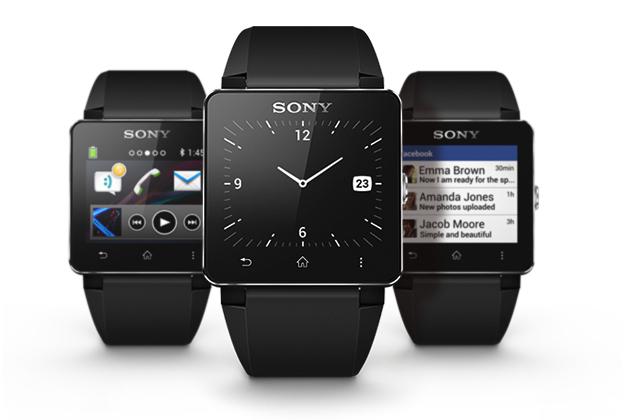
Here is sony's smartwatch: http://www.digitaltrends.com/wp-content/uploads/2013/06/Sony-SmartWatch-2.jpgHere is samsung's smart watch: http://s1.ibtimes.com/sites/www.ibtimes.com/files/styles/v2_article_large/public/2013/09/05/samsung-galaxy-gear.jpg
Here is a moschino square (not smart) watch: http://www.the-watch-store.com/shop/3042-11914-large/moschino-cheap-and-chic-unit-square-watch-mw0275.jpg
Ok, the camera on the samsung gear is a little strange and I'd rather it not be there. But overall, it does not look much different. If you just google "square watch" you will find plenty of classical watch which look quite similar to the smartwatches.
-
Re:Electric cars are *not* more energy efficient
It doesn't make sense that city driving in a car with the Model S' strong regen braking would be lower than motorway driving at 55 mph, for which the estimate is 301 miles.
So the difference must be because you don't normally charge to the full 81 kWh if you're not going on a long trip aka "range charge"If you look at the range vs speed curve at http://www.teslamotors.com/goelectric#range , you'll see that a speed of 30 mph gets you approx. 400 miles which is borne out by the real-world testing of teams in Florida & Holland
http://www.digitaltrends.com/cars/tesla-model-s-goes-388-miles-in-the-netherlands/
So it's about 500 kJ/km.
That difference gets swallowed up by the other factors, assuming they are accurate and you don't say how you derived the numbers for battery manufacturing.You're also assuming that no energy is used in getting the diesel from well to vehicle tank? According to the DOE, the efficiency of refining and distribution is 83%.
And your number for MPG seems too high but leaving that aside and assuming all other numbers are correct we get 1552 kJ/km for the Tesla and 1690 * 1.17 or 1977 kJ/km for the diesel which is a difference of 22%
Clearly nothing to sneeze at. -
Re:Ad marking
Time to resurrect the blinky tag?
Maybe time to resurrect the pink/tan background Google used to put on ads. Over time, the ad background became lighter and lighter. At one time, Google was under a Federal Trade Commission ruling requiring them to clearly distinguish ads from content. Google seems to have escaped from that.
It's getting harder to tell content from ads. Google Shopping is an interesting case. Everything on Google Shopping is a paid ad now. Google Shopping used to be a price search engine, but in 2012, it became strictly pay to play. For a while after the transition, our Ad Limiter was trimming down Google Shopping pages to one entry, because the links there are ad links. That was overkill - you got a nearly blank page with one result. So we backed off on that. Google Shopping also has explicit ads on top of the search results, which are ads too. Google is overdoing it there.
Ad recognition is an interesting problem. We do it by looking at where links go. Then we analyze the page layout in the add-on to find the boundaries of the ad. This is quite different from most screen-scrapers, which rely on specific named CSS tags. So we don't have to update our add-on very often, and it recognizes most new kinds of ads automatically.
AdBlock Plus has a big file of regular expressions for recognizing ads, which are frantically updated as sites change their HTML and CSS. Advertisers can pay to not have your ad blocked by AdBlock Plus. That's the problem with an add-on that's high-maintenance. Somebody has to pay for the maintenance.
-
Re:I'm inclined to agree
I'm not saying the technology might not prove itself within a few decades
Toyota will start selling it's hydrogen fuel cell car in 2015.
The bottom line is that fuel cells work, and hydrogen storage is at least as safe as gasoline. On of the big stumbling blocks is cost. Toyota has managed to reduce the platinum requirement from 100g to 30g.
-
Re:64 bit CPU issuesWorkarounds: Always make sure you back out of documents before tapping that Home button.
Disable iCloud sync for the iWork apps by going to Settings > iCloud > Documents & Data, and sliding Pages, Keynote, and Numbers to off.
Try to use apps that have been updated to take advantage of iOS 7. Apple has not updated Pages, Keynote, or Numbers. You can tell. Read more: http://www.digitaltrends.com/mobile/iphone-5s-problems/#ixzz2hbat50sJ
-
Re:Chromebook is a waste
Is 500,000 in sales considered pretty good? To put this in comparison the Surface has been considered a disaster by many here (myself included) and that sold 1.7 million.
I won't argue your other points on mouse and multiple on-screen app windows as they are quite valid. My point is that I think Google could be much more successful in pushing Android on laptops than Chrome. Certainly there is work that would be needed, but that is absolutely paltry compared to the amount of work that it would take to bring Chrome up to par in terms of apps, developer familiarity and market acceptance.
-
Re:iPad is not a Mac
I always find it hilarious when a well-known hater of a company pulls an easily explained and entirely expected data point (in this case, a local minima in sales at the end of a product's lifespan) out of context and then makes sweeping generalizations based on it. And that's true regardless of which company we're talking about, since even though you may reach a conclusion that is eventually proven correct, I'd hope to not see such poor justifications on Slashdot.
For instance, if you're talking about Android dominating in the tablet space and iPad sales being down, then you must be talking about the last reported quarter (since iPad sales were up in the three quarters prior to that and they had a majority market share for two of those three). If that's the case, then you've unintentionally (or misleadingly?) failed to mention that the year-ago quarter was the launch quarter for the third-gen iPad, whereas this year's quarter saw no launches, which easily explains the admittedly MUCH lower sales. We can't pull generalizations from just those numbers.
The fact is, the trend is favoring Android, with the situation currently being that Android is on top overall but each side is trading the top sales spot depending on when product launches occur. Contrary to your implications, Apple is doing fairly well (e.g. this last quarter, despite being "dominated", it still outsold the next four companies combined), and if we put the data in context and use past performance as a guide, we can reasonably predict that Apple will take a majority of the market for this holiday quarter and possibly the one after that as well (which would match what they did last year and the year before and the year before), but will then cede the top spot to Android for the remainder of 2014 (just as they did this year).
Similarly, you misleadingly seem to imply that Chromebook's gains are coming at the expense of a meaningful number of Apple laptop sales, yet the only place where Chromebooks have proven competitive is in the sub-$300 laptop market, where they've managed to capture about 25% of the market (across the whole laptop market, Acer acknowledges that Chromebooks represent only around 5-10%). If you're looking at the $1000+ end of the market where Apple competes, the high-end Chromebooks don't seem to be considered competitive against Apple's offerings. Chromebooks are a class of product that I really want to see succeed (I even applied to be a beta tester for the Cr-48 back before it was publicly available), and I do think that they will succeed eventually, but at least for now, they aren't competing for the same customers with anything in Apple's laptop lines.
As for the other Macs, again, you seem to be ignoring the cyclicality of product launches. The Macbook Air is the only Mac to have had its regular update so far this year, whereas the iMac, Mac mini, Macbook Pro, and Mac Pro--literally every one of the other Mac products--have either missed their usual update or are at the end of their cycle and should have an update soon. Even so, Android and iOS devices are proving to be viable alternatives for many light users, so some of the lower sales figures are almost certainly due to sales that were lost to tablets and won't be coming back.
Really, when you get down to it, this year has been an extraordinary one (in the sense of it being unusual) for Apple, in that they've had VERY few product launches. As such, it's difficult to pull any trends out of the data until we see how the public responds to the next round of product refreshes and introductions, since none of the data either of us has mentioned is sufficient to make or break the idea that Apple is on the decline. Pointing to an expected local minima and drawing conclusions from it without regard for the fact that past performance indicates they'll have a local maxima next quarter is akin to using the fact that the temperatures are dropping as we near winter to justify a belief that global cooling is occurring, without regard for the fact that we can reasonably expect evidence in favor of the exact opposite position in the very near future.
-
Ignore CNET
-
Re:After 3 iPhones, I switched to Windows Phone 8
Microsoft Windows 8 has mimimum requirements of 4GB of flash, 1GB of RAM, and a dual-core processor. The latest Android requires 340MB of RAM and 0.5MB of flash. Windows Phone is bloated, buggy, and an awful UI that cannot be changed (unlike Android where you can put any launcher, or indeed custom rom, instead).
People are not buying Microsoft Windows phones. The reason is that both the hardware and the software is inferior.
Phillip.
-
LG has 2.5% profit share
LG made $54 million on phones in the last quarter. That sounds pretty significant.
Samsung took 95% of all Android profits in 2013. That is $5.1 Billion out of total profits of $5.3 Billion. So yeah, $54 million is quite insignificant. LG's share of the profit is 2.5%. Everyone else combined made 2.7%. And somehow we are supposed to believe that Nokia somehow is going to displace Samsung from the top of the Android market segment? VERY doubtful.
-
Re:Expensive
http://www.digitaltrends.com/mobile/nexus-4-problems/
I have heard from many people who experience one, some or all of these common Nexus 4 problems. The spontaneously shattering back plate seems to be the most common issue and even happens to phones that have simply been placed in a pocket or gently set down on a table. They start cracking usually around the speaker hole and just continue to spread from there.
Overheating has been a major issue on all LG smartphones. Nothing new there, but it sucks when the phone starts throttling because of the poor design. Battery life is another area where LG traditionally fails, offering a only about 5-6 hours of real world use.
-
Stop making this way too hard
The person asking the question thinks the solution to needing to provide Wifi Hotspots is to use cellular based devices and maybe try to find a way to get better 4G coverage.
You're trying to solve the wrong problem. Using 4G to provide wifi has several drawbacks, first is cost. Second, you can't get the bandwidth you really need, and third, you have to compete with every device there trying to connect to thier cellular provider. Provide hotspots with Wifi Routers getting their connections from a wired source instead. Ideally, you'd run wires to your wifi access points but if you can't do that very well in some places, use wifi repeaters.
If putting wires to the places you need access points is really a serious problem that you can't solve with wifi repeaters, then use microwave. It's not too expensive to set up and it can give you a no-wires high bandwidth internet connection for long distances.
Since the wrong question was asked, it is hard to provide the right answer, but here are some tips:
- If money isn't the problem, let AT&T provide Wifi. It might even be the cheapest option since you may not have to buy the equipment. At least find out how much it will cost you. (Other service providers might work as well, I just haven't had others offer to provide proposals in the last few years.)
- If you're thinking "but LTE is good enough" then read this: http://www.digitaltrends.com/mobile/broadband-grudge-match-cable-vs-dsl-vs-4g/
- If you're needing to provide large crowd service, say 20,000 people plus in a small space, read this: http://www.mobileindustryreview.com/2010/08/new-series-how-to-deliver-wifi-for-10000-delegates-properly.html
- If you're questioning whether you should provide wifi, read this: http://www.asaecenter.org/Resources/ANowDetail.cfm?ItemNumber=181334
- If you think you need to set up wireless access points at distances that make cabling impractical, read this: http://www.technewsworld.com/story/78459.html
- If you don't need that kind of range, and just need better wifi coverage, look into Wifi repeaters, like this one from Radioshack for $99.99: Amped Wireless® High-Power Wireless-N 600mW Smart Repeater, Model:SR10000 Catalog #: 55055046
-
Re:There *was* a perfect time
I know one person who didn't downgrade to Windows 7 Pro.
You're smoking crack if you think RT spurred Intel to do anything. Intel wants the ARM marketplace. They could care less about Surface.
You're smoking crack about Nokia, too
A billion dollars at $100 a license is only 1,000,000 licenses. Compare that to 2010, when Office sold 30 million copies.
Clearly you're a delusional fanboi.
-
Re:"the cloud" is just mainframes again
I'd say obviously that was satire, but terrifyingly at least one of these terms has been used (albeit wildly wrongly.)
-
Re:Amazing ...
I'm guessing MS learned the wrong lessons from the Zune and Windows Phone.
MS: Zune's only problem was we didn't to market it right. Okay, spend tons of money with dancers in commercials to make Surface cool.
MS: WP7 and WP8's only problem was that their hardware sucked because of the OEMs. Okay, let's make Surface ourselves.
There were multiple reasons neither of those products got many sales. Namely both of them didn't offer much of an advantage from the competition but priced almost the same or more. Sure Metro is different than what iOS or Android offers but it's not a lot for someone to change platforms. For new owners, WP7 and WP8 don't offer a lot of apps. The overall number isn't as important as they don't offer many of most popular apps that exist on iOS or Android. Zune's main problem was it was a media player that competed against the portable computing device that the iPod Touch is.
Well this time, MS can't say they fully committed to a device. I think MS realizes that PCs are on their way out but their decades long offerings of lackluster Tablet PCs were not going to go anywhere. Many people here many not remember that Ballmer was trying to hawk Win 7 tablets at CES 2010 a month before the iPad came out. Everyone was claiming it to be the Year of the Tablet. It was. But it was iPad's year not Tablet PC. So MS has to do a lot.
-
Re:Kettle, pot
Dear Mr. Hayden:
Edward Snowden hit that
Enjoy your senescence. -
Re: Don't forget
One word, Shadow Profiles http://m.digitaltrends.com/social-media/what-exactly-is-a-facebook-shadow-profile/
-
Ultrabook a failure?
So you agree that you're wrong, then. Good. Clearly if 56% of consumers are buying the Mac Air instead of an Ultrabook, they're selling a lot of them.
No I think the market segment is a bit of a failure.
Ultra-hyped ultrabooks ultra-flopped in 2012 http://www.networkworld.com/news/2013/010713-ultrabooks-265469.html
http://www.digitaltrends.com/computing/are-ultrabooks-an-epic-failure/ http://www.digitaltrends.com/computing/are-ultrabooks-an-epic-failure/
A year on, Ultrabooks are a worse disaster than most expected http://semiaccurate.com/2012/10/02/a-year-on-ultrabooks-are-a-worse-disaster-than-most-expected/
Remember Ultrabooks? Yeah, That Was A Good Time http://techcrunch.com/2012/10/01/remember-ultrabooks-yeah-that-was-a-good-time/as I said apples sales are down 22%, 2% and 7%