Slashdot Mirror
Domain: earlham.edu
Stories and comments across the archive that link to earlham.edu.
Comments · 144
-
Re:Performance gap but not Conformance gap
http://www.earlham.edu/~peters/writing/infapp.htm
The cardinality of a finite line segment, a line, and a plane are all the same.
Theorem 21. The set of all points in an infinite plane has the same cardinality as the set of all points in a finite line segment, namely, c.
# Proof. Think of the plane as marked off into an infinite number of square cells, like graph paper. First we show that there will be denumerably many, or À0, such square cells. Pick one cell arbitrarily, and number it 0. Go to the cell above it and number that cell 1. Go one cell to the right and number it 2. Continue in this way to circle the "0" cell. The result will be a spiral that would eventually cover the plane. Yet each cell contains a natural number. Hence the cells and the natural numbers can be put into one-to-one correspondence. Second we note that each cell contains c points, under Theorem 18. Therefore, the number of points in the infinite plane is the number of cells, À0, times the number of points in a cell, c (by Theorem 18), which we know is equal to c (by Theorem 15). -
Re:More reason to ditch publishers
This militates against the argument that the "imprimatur" of a publisher always adds to a journal's legitimacy.
It sure does. Especially since Elseiver has explicitly made that argument. Here's an official Elsevier position paper on open access: "By introducing an author-pays model, Open Access risks undermining public trust in the integrity and quality of scientific publications that has been established over hundreds of years. The subscription model, where the users pay
That gives the open access movement a big boost..
-
Re:I have seen the same
The first place I go when looking for a new subject is Wikipedia. It usually gives you some background - just hold your nose if it is an even remotely controversial subject. Reading the "wrong viewpoint" won't hurt you
The next thing that I'll typically do is look down at the references in the Wikipedia article and use those for my next step. But at some point you have to step back and do your own research as a sanity check.
Again, it depends on the subject.
Oh, and there is a Directory of Open Access Journals for more heavy research. And Peter Suber runs a blog concerned with opening up peer-reviewed research.
-
Re:Finite tape = finite states
I could be misreading you, so I apologize if that's the case.
I think you are confusing a finite number of states (or maybe a finite language) with finite tape. Here's a decent link explaining TM's with finite tape:
http://www.earlham.edu/~peters/courses/logsys/turing.htm
The problem with saying TMs reduce to a finite state automata, is that usually implies a DFA which doesn't write any information back to the system. That is - no storage, no heap, no stack. See:
http://en.wikipedia.org/wiki/Computability_theory_(computer_science) -
Open access
Suber's overview of the scene (there's an rss feed somewhere in there too)
- another blog
Alliance for Taxpayer Access
Directory of Open Access Journals
Directory of Open Access Repositories
The "Open Knowledge" Definition
And Wikipedia has lots of text on the subject. -
Re:So?
It's quite easy to explain. They don't sue the person, they sue the person's property (e.g. The United States of America vs $124,700 in United States Currency). Where does it say that property has the right to be secure in itself? (Quite similar to a Scam in Nomic)
Furthermore, they bridge over the others using civil, rather than criminal, court.
-
SPARC OA letter - chronology of US OA legislation
Peter Suber who maintains the Scholarly Publishing and Academic Resources Coalition (SPARC) Open Access newsletter and the Free Online Scholarship (FOS) newsletter has been following this story for years.
You can find a lot of contextual detail relevant to the discussion by starting with the 11/2/2007 copy of this newsletter.
http://www.earlham.edu/~peters/fos/newsletter/11-02-07.htm -
Re:The problem? Darned thing is busted, that's wha
Or, in other words, lawyers don't sue people, people sue people.
Total, unmitigated bullshit. The responsibility is joint and several and lawyers washing their hands of their responsibility is a large part of the problem. Or to put it another way "I was only following orders" went out as an excuse a very long time ago.
Lawyers are the experts in the domain of law and their clients generally follow their advice, including whether or not to sue and whether or not to get patents.
The current bullshit IP rush is driven almost entirely by and for lawyers, aided and abetted by the lawyers in congress who create the self-serving IP laws in the first place. A not very surprising consequence of the amorality of many lawyers and the quantity of lawyers in this country. A gigantic and extremely harmful game of real life nomic.
---
It's wrong that an intellectual property creator should not be rewarded for their work.
It's equally wrong that an IP creator should be rewarded too many times for the one piece of work, for exactly the same reasons.
Reform IP law and stop the M$/RIAA abuse. -
Cool subject
This site is very informative on the topic of Open Access.
http://www.earlham.edu/~peters/fos/overview.htm -
This is why we need Open Access.
I think the usage in question certainly falls under 'fair use.' It certainly fits into the norms in the scientific community. Even though the journals are part owners (or sometimes full owners) of the copyright of papers, it's very normal for scientists to email each other PDFs, post copies on their websites, reproduce graphs in presentations, and so on. This is not only considered "fair" but very much considered "necessary" to maintaining healthy progress in science.
Yet despite the fact that these allegations have little merit (ethical or even legal), they create a very real chilling effect that slows science and decreases the distribution of information. Add to that the fact that most of this published research is funded by tax-dollars through government grants, and it becomes positively infuriating that the very scientists who do all the work are not allowed to freely disseminate the results of that work to the people, who pay for it.
This is why we all need to support the push towards Open Access in scientific publishing. If you are a librarian, student, postdoc, academic or industrial scientist, you should be putting pressure on journals to open their content to the people who do the work and foot the bill. For instance, consider publishing in an open access journal (see list here), or at least sign the petitions (US or Europe). Also see a discussion here which lists a bunch of things (small and large) that you can do to promote open access. -
This is why we need Open Access.
I think the usage in question certainly falls under 'fair use.' It certainly fits into the norms in the scientific community. Even though the journals are part owners (or sometimes full owners) of the copyright of papers, it's very normal for scientists to email each other PDFs, post copies on their websites, reproduce graphs in presentations, and so on. This is not only considered "fair" but very much considered "necessary" to maintaining healthy progress in science.
Yet despite the fact that these allegations have little merit (ethical or even legal), they create a very real chilling effect that slows science and decreases the distribution of information. Add to that the fact that most of this published research is funded by tax-dollars through government grants, and it becomes positively infuriating that the very scientists who do all the work are not allowed to freely disseminate the results of that work to the people, who pay for it.
This is why we all need to support the push towards Open Access in scientific publishing. If you are a librarian, student, postdoc, academic or industrial scientist, you should be putting pressure on journals to open their content to the people who do the work and foot the bill. For instance, consider publishing in an open access journal (see list here), or at least sign the petitions (US or Europe). Also see a discussion here which lists a bunch of things (small and large) that you can do to promote open access. -
Re:Lets not get holier than thou here in the US
I have no problem with that, it makes sense. Others will feign mental or emotional or constitutional damage. "Help, help, I'm being oppressed!"
"I didn't know you were called Dennis." -
Re:Editorial board...
http://www.earlham.edu/~peters/fos/newsletter/05-
0 2-06.htm#frpaa
http://pkp.sfu.ca/
http://ijoc.org/ojs/index.php/ijoc/issue/view/1
Looks like shortly academics and scientists will have their own open access journal if their work is paid by a federal agency that pays out more than $100 million a year in grants. The problem is that I didn't even know this existed 5 minutes ago. Apparently, the bill allows each agency to make their own central deposit of info. I can see why they did that to get less anti-lobbying against the bill from those organizations, but as an average citizen, I'd love one federal research site that I could go to and have easy access to all federally sponsered research. That'll kill some sections of wikipedia when it really hits full steam. Wikipedia won't die. It has a place mainly in cataloging pop culture and things that would otherwise drop below academics radars. -
Uh
It's a "mite", not a "might". A mite is small - it means you're feeling a little bit better. Other words like this that slashdotters frequently fuck up include the reins of power - as if you are in control, e.g. of a horse - I haven't seen anyone use "rain" for either of these yet but it's only a matter of time; An allusion is a reference while elusion is an escape; You worship at an altar but you alter things you change... and now I'm bored but I've seen all of these used and abused here on slashdot. (See more here.)
-
Re:How is this different
There is one underlying assumption here that should be looked at more deeply. How long will the storage media last?
CD Disks: < 300 years due to degradation of plastics and reflective layers - (unless placed in vacuum & chilled to liquid Nitrogen temps)
Hard Disk: drive mechanism < 5 years due to degradation of heads (oxidation) drying & degradation of lubricants (I have two Apple LISA 5 MB HDD's that are still operational, but that is probably just Apple over spec-ing components and the robustness of the technology). disk platters < 10 years due to thermal & magnetic noise affecting domain orientation
Scrolls: ink on scraped goat or sheep skin < 10,000 years (earliest Dead Sea Scroll is about 150 BC, or about 2,150 years old), Cuneiform on Papyrus < 10,000 years (earliest writing on Papyrus is about 2,600 BC or about 4,600 years old)
Clay Tablets: writing indentations in clay ~ practically imperishable (earliest writing on clay tablets is about 3,000 BC or about 5,000 years old)
We can come up with many ideas for universal data formats, embedded universal virtual machines that can be run on future systems to read, display, play... our data, but the underlying storage infrastructure must change as well. It is a bit difficult to store a 17 MB JPEG image, or a Seu Jorge album on clay tablets.
-
Re:Crash and Burn Testing
-
Re:AMD?
And Intel chips don't run hot?
http://video.google.com/videoplay?docid=-726366834 6151253701&q=pentium+4
Intel has been screwing stuff up since the infamous FPU bug on the pentium. They even tried to cover it up. Later, they gave into customer demands and replaced the part that they shipped even after they were aware that it had a broken fpu.
http://www.cs.earlham.edu/~dusko/cs63/fdiv.html
Most of the code that didn't function on AMD chips back in the day was on account of Intel intentionally hobbling code for AMD chips.
http://www.betanews.com/article/Suit_Intel_Sabotag ed_Compiler_for_AMD/1121274628?do=reply&reply_to=7 1938
AMD is the only company innovating right now and the only one that has channel partners instead of victims. Intel is run by a marketing scumbag who only cares that people believe Intel chips are better instead of actually having advantages. Sure, they developed a lot of chips since the 8086, but their size has definitely gotten to them. Ironic that their ticket away from being a sole-source provider, AMD, who they later tried to crush by withdrawing 386 licensing, is now going to pawn them down to size.
Anyone wasting $9k on a so-called gaming computer ought to have enough sense to know that Intel chips are far lower bang for buck, require far more cooling, and have developed a habbit lately of being rushed out the door since Intel is desperately trying to at least look like they don't have an impossible ammount of catching up to do.
Dell would not have wasted their time acquiring Alienware if they didn't want to sell AMD. The Dell marketing machine is powerful enough to win the hearts of those dumb enough to buy gaming machines with Intel chips. Dell needs more than brand name to get the rest. Of course, the smartest people can put together their own rigs and don't pay a premium on parts just because of a snazzy case. And the true enthusiasts probably lean towards hacksaws and spray paint to achieve the individual effect. -
Re:Lawyers are to blame
Apparently instead earning one's self a JD is automatically evil in your world?
Evil, no. Self serving, yes.
I want people in congress representing my interests, not just those of lawyers.
The drafting of laws is a technical function that should be relegated to the public service, just like programming and bridge building.
Having competing democratic/republican/whatever lawyers design the laws leads to a real life version of nomic.
---
It's wrong that an intellectual property creator should not be rewarded for their work.
It's equally wrong that an IP creator should be rewarded too many times for the one piece of work, for exactly the same reasons.
Reform IP law and stop the M$/RIAA abuse. -
Re:MOD PARENT BACK DOWN IT WAS A SOFTWARE BUG
Like I said elsewhere today: the Wikipedia links http://en.wikipedia.org/wiki/Pentium_FDIV_bug to http://www.cs.earlham.edu/~dusko/cs63/fdiv.html which indicates that it's the microcode at fault.
-
Link to proof?
The slashthink holds that this event was the impetus for softcode in processors; I'm not convinced because the Pentium begun the muddling of RISC and CISC architectures with CISC words and RISC internals through microcode. The detailed explanation of the FDIV bug at http://www.cs.earlham.edu/~dusko/cs63/fdiv.html seems to indicate that the flaw was in the microcde (without explicitly stating so, and I don't know enough about the core behaviour of Pentiums to say).
-
Cluster
Queue the shameless plug.... I've been working with my advisor and a couple other students on a portable cluster of these things. We've got eight nodes in a Pelican box, and it's just small enough to be taken as airplane carry-on. We've finally worked out all the hardware issues (diskless booting, consoldiated power supplies, etc.), and now we're moving on to making the software easy to manage. Pretty sweet, over all.
-
A few more...
Digging through my bookmarks, I found a few more. There is Meteo, which does data collection with a C program, storage using MySQL and delivery via PHP (and, apparently, RRDtool).
Here's another neat one: Joe Jaworski's vproweather uses a C-based program to pull the data from the Davis VantagePro stations, and some Bourne shell scripting to glue it all together. One neat thing about his approach: he is using SerialEthernet converters and a little program called remserial to tie his stations to his computer. This costs more than my method of using the Davis station's wireless capability to transmit the data, but is capable of sending the data over much longer distances--even around the world, I suppose.
Finally, these guys are using C, PostgreSQL, and Perl for their Davis-based station. -
Open Access
This is perhaps slightly astray of the topic, but what's more important than noting that this study has been overhyped and stretched by the media into something it isn't, is Liberman's mention of Open Access journals. I'm overjoyed to read that the key scientists involved with some journals have rebelled against the overbearing corporate presence in the world of the scientific journal and have taken their expertise with them to found new journals based on principles of open access to all.
The point of journals is to provide a mechanism for peer review of research, to filter the copious amounts of research for the benefit of the reader. However, the trend has been to jack up the price so severely - both for subscribers and for accepted submitters - that access to peer-reviewed research has been hampered rather than enhanced by journals. The spirit of scientific research is that of the Creative Commons, and I am really hoping that the technology and cheap distributed bandwidth offered by the Internet will allow the interests of the scientific community to be separated from the interests of the corporate world. We would be much better off with journals that essentially provide digital signatures for the research articles they accept for "publication", allowing the researchers themselves or third parties to distribute the articles under a CC-type license, thus eliminating the need for a large publishing infrastructure, since any publishing could occur on the reader's or the library's printers. -
Re:Paranoia.While it's true that it probably has happened many times before, and we never knew it because we NEVER LOOKED!?!... the best argument for attempting to repair the tile filler extrusions is to confirm that it works.
I believe that the plethora of cameras that monitored this launch have given us so much data, along with the scrutiny applied upon arriving in orbit, that we will be able to improve things enormously.
We shoulda done this decades ago... Looking for problems before they raise up and kill people is just sound development practice... We have been very unimaginative in our search for unforeseen gotchas -- probably due to budgetary considerations.
I would, as an engineer, and mindful of the likelihood that this has probably happened before, opt to repair some and leave others as-is, so we can see the before-and-after in each case. Real world data beats carefully crafted experimental simulations every time. Of course, if you're going to trim the extruded material, one would have to be an idiot to leave the extrusions sticking out on a critical portion of the vehicle (assuming there exist portions that are less critical where they could be left alone).
Remember, this is an experimental space vehicle, and part of the experiment is to try to make it safer, without harming the occupants in the process.
BUT IT IS AN EXPERIMENTAL VEHICLE AND NOTHING IS GUARANTEED.
Don't think those who venture forth in it are unaware of the risk. Every one of them has the past disasters and the words of Alan Shepard tatooed on his/her heart:
"You know, being a test pilot isn't always the healthiest business in the world."And knowing that, they don't hestitate to take the risk.
All that being said, the easiest and most certain way of reducing ice build-up on the external tank is top STOP LAUNCHING IT OUT OF A SWAMP. For instance, we could approach Chile and offer to lease a launch site in the Atacama desert -- the driest desert on earth, located at about 4000m altitude, and at less than 20 degrees off the equator, compared to the Cape Canaveral launch site's 28+ degrees off the equator. In addition to virtually eliminating the problems of ice build-up, you could increase payload capacity considerably by virtue of the 8 degrees closer to the equator and the 4000m higher starting point for the climb into space -- that's 4000m through the densest portion of the atmosphere.
Of course, there are the political impossibilities, like getting Dubya to explain this to his bro' Jeb about the need to take all that lovely gummint cash flow away from the Florida economy and send it offshore. Yeah, that'd be a toughie.
-
Not a new idea
-
Re:soon...
I would reply that I said 'Pretty Much.' I would also reply that true altruism is a very rare trait in human beings.
Bullshit, everybody is altruistic sometimes.
It's just enlightened self interest. When a boy scout helps a little old lady across the road, that's altruism. When Carnegie endowed CMU, that's altruism. When Gates endows third world health, that's altruism. When a homeless man tells another one where to get food, that's altruism. When a F/OSS source programmer writes one of the 100,000 programs on sourceforge, that's altruism.
I for one want to live in an altruistic world, not the sort of dog-eat-dog, push the underdog down dystopia that many corporate types try to push.
After all, putting others ahead of yourself is one of the most assured ways to not live, and therefore, to not reproduce. Therefore, people who are altruistic would reproduce less, and contribute to the gene pool whatever genes (if any) lead to the increase in altruism.
You are ignoring the fact that we share many genes. By helping you I help many of my genes to survive. The simple greed-is-good mantra people like you push is nonsense.
And that's completely ignoring the statistics of open source and IP in general, where all it takes is one person in a million being altruistic and you can get something happening. Software/IP only has to be written once and it can be copied a billion times. The broken IP model we are currently stuck with and the vested interests that push it completely ignores that.
---
Every new patent is another opportunity for a lawyer to make money at the expense of the community - real life nomic.
-
Code for Weatherduck
We've written some self-rolled C code and Perl scripts to pull data from the Weatherduck, stuff it into a Postgres database, and trigger an alarm if the temperature or humidity get outside a certain range. Here's a link to our CVSWeb.
The basic procedure is that you pipe output from monitor into db_interface, and then run alert as a separate process. You can use the CGI script to generate GNUPlot graphs from a web form, or you can invoke it directly with graph.
-
Re:What drugs are they on?
Actually they'll make a big issue of how viruses won't be able to run because they're not 'blessed' and how it can be used to make shure you have the best drivers and how it'll block terrorist (have no clue how they could claim the last, but I'm shure they'll find a way) and so on.
No, as soon as the first virus spreading over AMT will apear (and trust me, it will!) people will go crazy. Everybody will be an easy target to such an atack and since these chips will be primarly used in small servers and high end systems people will not just stand there and watch as their systems get owned.
Remember what happened with the Pentium FDIV bug? Intel has adopted a no-questions-asked replacement policy for its customers with the Pentium FDIV bug. As soon as the first security hole is discovered in AMT or DRM hell will break lose again for Intel and this time they won't have ANY excuse. No customer asked for these so-called features and Intel will have to have their precessors fixed. The sooner it happens the better because after that no other processor builder will risk such a certain fiasco. Only Microsoft would be arogant enough to try it, but fortunately they are not building processors (yet).
-
The evolution of intelligent designPerhaps the core argument of intelligent design derives from the idea of The Great Chain of Being, (more at: http://www.louisville.edu/a-s/english/haymarket/j
a sonz/zahrchain.html. The idea was best summed up by Arthur Oncken Lovejoy in his seminal book, The Great Chain of Being: A Study of the History of an Idea, while the book investigates the concept from Plato, through the neoplatonists, and on through history, I think the argument as applied to intelligent design centers around the idea of our species as being more perfect than other "more lowly", species. This argument was used to legitimize slavery, as Africans were seen to be subhuman; there is, of course, the obvious connection with Nazism and the idea of a super race.Stephen Jay Gould in his book The Structure of Evolutionary Theory, 1400 hundred pages of Gould at his best, forwarded an argument that goes to the heart of the idea of intelligent design when he described evolution as a random walk, wherein the idea of contingency, might preclude the evolution of our species were the "tape" of evolution to be played over again. The idea of intelligent design is founded on hubris and chavunism. As a Christian belief there is an interesting tie in with 42, ancient numerology and the Greek idea of Logos. There is also a tie in to the patriarchical aspects of Christianity, the subjugation of women and a strange development of Christianity as a spritually, homosexual system of belief, but that would be another post.
cheers
-
Re:Google's great for most things but not for scieThat's a different problem.
See this for an overview of open access to academic journals.
-
Options
There is something to be said for taking time off and starting college WHEN YOU ARE READY. The counter-argument, of course (which usually carries the day) is that it gets harder to go back to school after taking time off.
A good liberal arts college will let you explore your interests before deciding "what you want to be when you grow up." And many offer the opportunity to spend time overseas as part of the degree program. This one for example, sends over half of its students overseas.
There are also post degree fellowships that allow for overseas travel and cultural "exploration" One example is
-
Addendum
The Budapest Open Access Initiative has discussed possible business models in their FAQ.
There are also links on that page for other approaches. -
Addendum
The Budapest Open Access Initiative has discussed possible business models in their FAQ.
There are also links on that page for other approaches. -
Re:3rd post
He must still be using the Pentium
-
Re:my entry!
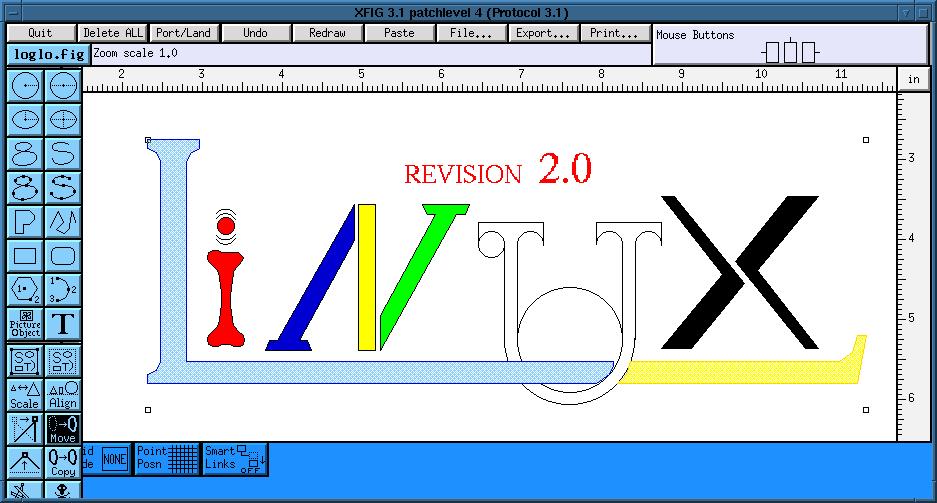
But no more disturbing than This entry for the Linux logo competition.
-
open access to science
Here are some links for those who want more background and detail on the open access movement:
Open Access Overview
http://www.earlham.edu/~peters/fos/overview.htm
(my introduction to OA for those who are new to the concept)
Open Access News blog
http://www.earlham.edu/~peters/fos/fosblog.html
(my blog, updated daily)
SPARC Open Access Newsletter
http://www.earlham.edu/~peters/fos/newsletter/arch ive.htm
(my newsletter, published monthly)
FAQ on the NIH public-access policy
http://www.earlham.edu/~peters/fos/nihfaq.htm
Timeline of the open access movement
http://www.earlham.edu/~peters/fos/timeline.htm
What you can do to help the cause of open access
http://www.earlham.edu/~peters/fos/lists.htm#do
Peter Suber
-
open access to science
Here are some links for those who want more background and detail on the open access movement:
Open Access Overview
http://www.earlham.edu/~peters/fos/overview.htm
(my introduction to OA for those who are new to the concept)
Open Access News blog
http://www.earlham.edu/~peters/fos/fosblog.html
(my blog, updated daily)
SPARC Open Access Newsletter
http://www.earlham.edu/~peters/fos/newsletter/arch ive.htm
(my newsletter, published monthly)
FAQ on the NIH public-access policy
http://www.earlham.edu/~peters/fos/nihfaq.htm
Timeline of the open access movement
http://www.earlham.edu/~peters/fos/timeline.htm
What you can do to help the cause of open access
http://www.earlham.edu/~peters/fos/lists.htm#do
Peter Suber
-
open access to science
Here are some links for those who want more background and detail on the open access movement:
Open Access Overview
http://www.earlham.edu/~peters/fos/overview.htm
(my introduction to OA for those who are new to the concept)
Open Access News blog
http://www.earlham.edu/~peters/fos/fosblog.html
(my blog, updated daily)
SPARC Open Access Newsletter
http://www.earlham.edu/~peters/fos/newsletter/arch ive.htm
(my newsletter, published monthly)
FAQ on the NIH public-access policy
http://www.earlham.edu/~peters/fos/nihfaq.htm
Timeline of the open access movement
http://www.earlham.edu/~peters/fos/timeline.htm
What you can do to help the cause of open access
http://www.earlham.edu/~peters/fos/lists.htm#do
Peter Suber
-
open access to science
Here are some links for those who want more background and detail on the open access movement:
Open Access Overview
http://www.earlham.edu/~peters/fos/overview.htm
(my introduction to OA for those who are new to the concept)
Open Access News blog
http://www.earlham.edu/~peters/fos/fosblog.html
(my blog, updated daily)
SPARC Open Access Newsletter
http://www.earlham.edu/~peters/fos/newsletter/arch ive.htm
(my newsletter, published monthly)
FAQ on the NIH public-access policy
http://www.earlham.edu/~peters/fos/nihfaq.htm
Timeline of the open access movement
http://www.earlham.edu/~peters/fos/timeline.htm
What you can do to help the cause of open access
http://www.earlham.edu/~peters/fos/lists.htm#do
Peter Suber
-
open access to science
Here are some links for those who want more background and detail on the open access movement:
Open Access Overview
http://www.earlham.edu/~peters/fos/overview.htm
(my introduction to OA for those who are new to the concept)
Open Access News blog
http://www.earlham.edu/~peters/fos/fosblog.html
(my blog, updated daily)
SPARC Open Access Newsletter
http://www.earlham.edu/~peters/fos/newsletter/arch ive.htm
(my newsletter, published monthly)
FAQ on the NIH public-access policy
http://www.earlham.edu/~peters/fos/nihfaq.htm
Timeline of the open access movement
http://www.earlham.edu/~peters/fos/timeline.htm
What you can do to help the cause of open access
http://www.earlham.edu/~peters/fos/lists.htm#do
Peter Suber
-
open access to science
Here are some links for those who want more background and detail on the open access movement:
Open Access Overview
http://www.earlham.edu/~peters/fos/overview.htm
(my introduction to OA for those who are new to the concept)
Open Access News blog
http://www.earlham.edu/~peters/fos/fosblog.html
(my blog, updated daily)
SPARC Open Access Newsletter
http://www.earlham.edu/~peters/fos/newsletter/arch ive.htm
(my newsletter, published monthly)
FAQ on the NIH public-access policy
http://www.earlham.edu/~peters/fos/nihfaq.htm
Timeline of the open access movement
http://www.earlham.edu/~peters/fos/timeline.htm
What you can do to help the cause of open access
http://www.earlham.edu/~peters/fos/lists.htm#do
Peter Suber
-
I'm hoping..
I'm hoping that This guy enters - his work just screams "professionalism".
-
Mirrors
-
Mirrors
-
Mirror
-
Intel's favorite [sic] equation
-
Re:a clarification
I go to a Quaker college, and we use a modified approval system for voting. Basically, we mark every confident with either "confidence" or "no confidence. A candidate must get over 10% of the number of votes cast, and get more confidence votes than no confidence votes. A run-off election is held if that doesn't happen. It works marvels here.
-
FAQ on the NIH plan
I maintain an FAQ on the NIH plan. It
answers a lot of the questions and objections raised in this thread. It also lists some concrete ways to help the cause at the end of the file. -
Re:CVS (or insert your favorite alternative here)
Personally, I'm a fan of rcs.mgr. It uses a Perl script frontend to manage an RCS baackend, with all sorts of logging, roll-back, and other options.
-
MirrorThe site seemed like it was getting a bit slow. Here's a few mirrors: