Slashdot Mirror
Domain: electrek.co
Stories and comments across the archive that link to electrek.co.
Comments · 260
-
Re:Cue the Musk haters in ...
Reality says you're wrong.
https://electrek.co/2017/09/17... -
Re:Solution
A recent study shows that they're still better than typical vehicles. https://electrek.co/2017/11/01...
But are they better than my 500cc Yamaha T-Max?
I commute on a scooter. Yes, that's right. A scooter. 28 miles one way, every day. I get to go on the carpool lane, and pass thousands of single-driver cars every day. I do 60mpg, with a bike that's not even 25% of the weight of a Tesla.
Who cares about electric cars. Get out of your damn car.
You do realize that there are electric scooters that will be way less polluting than your 500cc
if you don't need the amenities of a car (multiple persons, large bagage, weather, -
Re:Solution
A recent study shows that they're still better than typical vehicles. https://electrek.co/2017/11/01...
But are they better than my 500cc Yamaha T-Max?
I commute on a scooter. Yes, that's right. A scooter. 28 miles one way, every day. I get to go on the carpool lane, and pass thousands of single-driver cars every day. I do 60mpg, with a bike that's not even 25% of the weight of a Tesla.
Who cares about electric cars. Get out of your damn car. -
Re:Batteries are a bridge
You made the following claim:
Yes, I foolishly assumed you'd compare to the right 3-series, aka a car of equivalent size. Stupid me. I should have known that of course you'd deliberately pick a smaller car to try to bias the comparison. Shock of all shock, if you make a car smaller, it gets lighter!
The Tesla Model 3 isn't comparable to any BMW 3-series.
-
Re:Yet Another Connector 8-(
No, they are using CCS.
https://electrek.co/2017/11/03... -
Re:Yeah, in the 70's we were running out of oil, t
And here's how they could do it. This electric mining truck generates MORE electricity driving down the mountain with a load of ore, than the truck uses going back up the mountain empty "free" electricity "free" refining...
https://electrek.co/2017/09/17... -
Re:Wait, Nickel? What about Lithium?
I found a better article on the elements that go into batteries. The Tesla CTO is quoted as being worried more about Cobalt. Though the Tesla batteries do contain Nickel, but the Nissan Leaf does not.
-
Re:Mud on the federal governmet's face
-
30 MW is good but not a lot
A typical power plant is often on the order of 100s of MW http://www.ucsusa.org/clean_energy/our-energy-choices/how-is-electricity-measured.html, but this is of course what will be just the first such, and more will follow. Since they have a large battery farm, it will also not suffer from the general problem that many solar and wind farms have of being essentially intermittent in their production and often producing more power than one needs sometimes with no way to store it. Taken together with the fact that new wind systems are so efficient that many are repowering wind farms early https://electrek.co/2017/10/16/new-wind-turbine-efficiency-so-great-utilities-repowering-farms-early/, it appears that we're finally at a point where wind is starting to be a a serious competitor. Even if natural as were not killing coal and oil, solar and wind would seem to be doing almost as effective a job.
-
Re:Who is being trolled?
At what point do we ask why this guy is given billions of dollars in state and federal subsidies (which is promptly burned)?
If you're referring to the auto industry loans, Tesla paid them back, with interest, years ahead of time. Unlike part of the Big Three loans. If you're referring to EV subsidies, they're available to any manufacturer, and more to the point were specifically designed to be based on the size of the Chevy Volt's battery pack. It's amusing to see the Big Three struggling against an environment that they crafted.
His latest car factory is actually human powered
It depends on what you mean. If you mean, "There are humans involved in stages of the manufacturing process", yes - but more to the point, you're describing every car factory on Earth. If you mean there's no robotic manufacturing, that's wrong. If you mean "the factory is not fully set up / tuned and requires more manual labour than it will in the end", no-freaking-duh, that's the very reason for announced S curve production plan. Most manufacturers, for a new line, will set it up and work on it for about half a year before starting sale of their production. This is not the approach Tesla is taking. While the plant is most definitely being set up for massive volumes, they are at present one month behind their planned production level at this point in time, and even that planned level was only two cars per hour.
and products are overpriced
Nearly half a million people have disagree with you, and put their money behind their disagreement.
Competition is coming,
Hahahahaha
Sorry, it's just we've heard this constantly for the past decade. And there are no signs that anyone else is taking this seriously, despite their best PR efforts to come across that way. Nobody else is working on similar battery production volumes for any given production year. Nobody else is pouring nearly as much money into production and R&D (100% of Tesla's EV-related spending - excepting that directly dedicated to vehicle production, which earns 25% margins - goes into this. Billions per quarter at present). The competitors are literally missing a "0" at the end of their investment figures from what they need to be investing. Nobody else is even remotely close on fast charging networks, the key differentiating factor that actually lets you do long trips in your vehicle. The closest announcement - VW's network (forced on them by CARB) - will not even get close to what Tesla has today when it's done, let alone the scale of Tesla's network by that point in time.
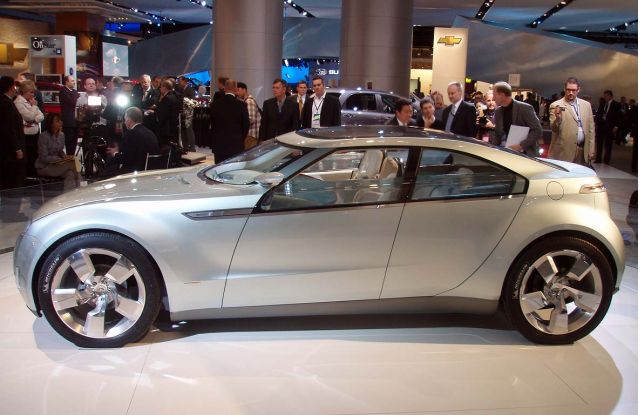
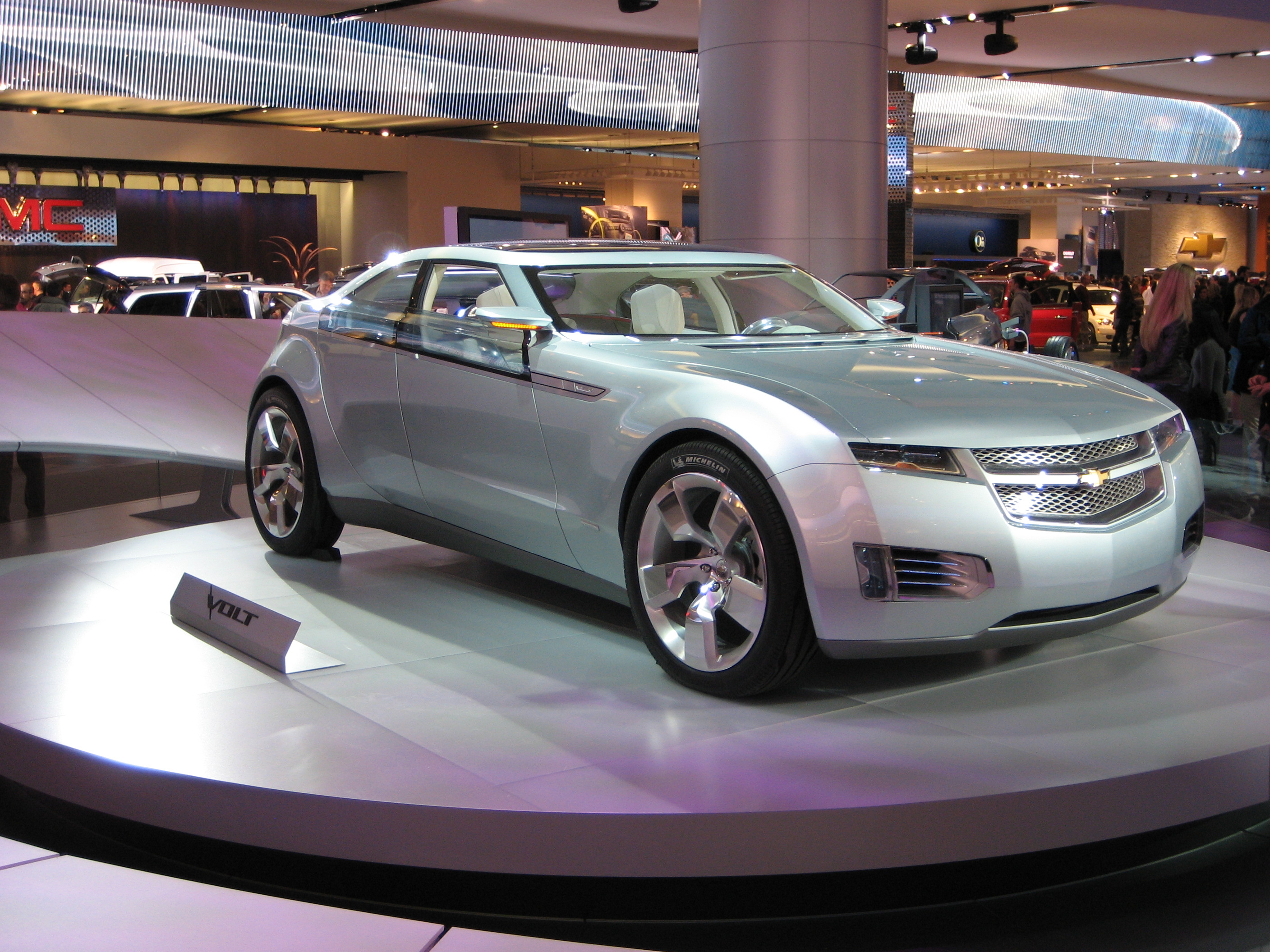
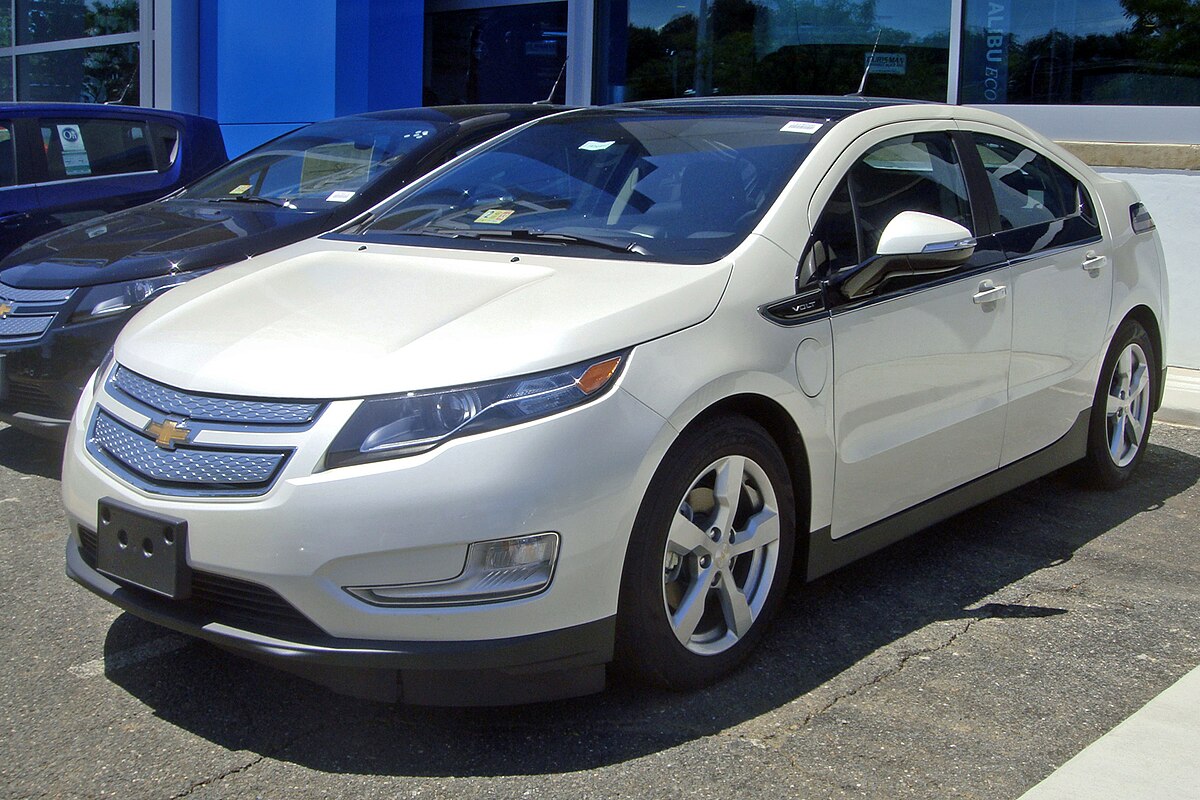
It's funny watching all of the people who see concept cars announced, compare them to Tesla's offerings today, and saying "See, Tesla is about to face serious competition!" Because, again, we've seen this for a decade, but more importantly, it expresses a profound ignorance about how concept cars work. What you see presented as a concept car does not make it to production like that. Regardless of what the company says. They're not designed to be affordable to build, to meet crash standards, to be remotely efficient, and on and on. Most never go to production at all. When they do, they look radically worse (here was the concept Volt, for example), perform worse, and are priced worse. And they only try to sell them where there's pressure on them to sell EVs. Take the Bolt, for example. Go to a Chevy dealership in a ZEV state and there will be Bolts on the lot, and they'll actually push them. Go to one in a non-ZEV state, and the situation is reversed. Go to most
-
Re:You'll have to tear out much of Europe's housin
There might be a vocabulary mis-match here. By "public parking" I mean purpose-designed buildings/spaces where tens/hundreds of vehicles can be parked. I don't include "parked on a residential street" as public parking.
Private = Owned by private citizens
Public = Owned "the public" (city, federal government, etc)It has nothing to do with how parking is arranged. Secondly, why would you assume that only on-street parking would get chargers but not parking garages? In Norway there are entire parking garages dedicated specifically to EVs. And this is just the start - while now 1/3rd of all new vehicle sales in Norway are EVs, due to the lag, they're still only a relatively small fraction of total vehicles on the road. The higher the penetration = the more EV parking. And they're not just slow charging garages - countries starting to move into fast charging garages as well.
Just shopping for fresh foods (meat, lettuce, etc...) so only a few minutes each time.
That didn't answer the question. 1) What is your total average time, in minutes (not just "few") between when you park, and when you get back to your car; and 2) How often do you go to the store?
(not that I actually believe that you only spend "a few minutes" on a grocery store trip and that covers all your groceries)
So if you go for 100% EV you'd have to force companies to build more parking spaces. Could be done, but it will mean more concreting over of green spaces.
It takes no more parking spaces. It takes the conversion of parking spaces. It means that parking spaces have plugs, nothing else.
At high penetrations, this change is inherently incentivized for the exact same reason that having parking at all is inherently incentivized.
-
Re:There they go again
Environmentalists have hated corn ethanol from the beginning (they've been more mixed on biodiesel, but most are not fans). Corn ethanol has the support of midwest farmers and their senators / reps, not environmentalists. Direct your complaints to farmers and their reps.
Then it's going to turn out that manufacturing and remanufacturing batteries en masse is a dirty and expensive business,
It isn't. Do we really need to go into the endless number of peer-reviewed studies that have been conducted on lifecycle assessments of EVs? The short of it is that while low volume EVs may embody about twice the manufacturing pollution of a gasoline vehicle, a mass-manufactured EV embodies only slightly more (depending on the study and its assumptions, around 15%), and regardless, in both cases, pollution from operation vastly outweighs pollution from usage, and both end up recycled, with about 70% average recovery of embodied pollution on the EV. And all this ignores the fact that many manufacturers are working to have their EV production 100% solar driven.
that riding on a half ton of fuel and oxidizer packed closely together
Sorry, that's not how batteries work; you're thinking of rockets. There is no "fuel and oxidizer" reaction in an EV. Lithium-ion batteries work by the migration of lithium ions across a barrier, either intercalated into graphite and/or silicon on the anode side, or into a mixed metal oxide (such as nickel-cobalt-aluminum oxide) or similar structure on the cathode side. Intercalated = they fill up the interstitial sites in their host compound.
Secondly, you betray a complete lack of understanding of chemistry with your statement. How "dangerous" a substance is is not linearly related to its energy density. Nitroglycerin has an energy density of 6,37 MJ/kg. A block of aluminum has an energy density of 31 MJ/kg. Which one is safer? The volumetric difference between the two is even greater, BTW.
Third, there's an implicit "all else being equal" in your argument. But all else is not equal. In a gasoline car, the fuel is just poured into a big open tank in your vehicle. In an EV, there's a huge array of safety measures - cell expansion space, individual cell rupture isolation, active cooling, passive quench, controlled venting, etc, etc. Rates of EV fires have been much lower than rates of gasoline fires; the packs are so difficult to burn that you can sometimes burn the rest of the car without igniting the pack. And when you do force the ignition of a pack, here's what happens (that's Powerwall, but the tech is the same as in Tesla's vehicles).
Everyone talks of every single fire incident in EVs, while ignoring that ~200k gasoline cars catch fire and burn every year in the US alone. The per mile rate for EVs is much lower.
when it's inside 100k rich-man's toys
While it's possible to buy an EV for 100k or more (just like it's possible to buy a $100k+ gasoline car), the overwhelming majority on the market are far cheaper than that.
lowest-bidder Chinese garbage
None of the popular EVs outside China are "Chinese garbage". The most popular are Tesla, GM, Nissan / Renault, Toyota, Mitsubishi, Hyundai, and BMW. There are some additional brands that sell a lot inside China, but almost nothing outside of it.
-
Re:There they go again
Environmentalists have hated corn ethanol from the beginning (they've been more mixed on biodiesel, but most are not fans). Corn ethanol has the support of midwest farmers and their senators / reps, not environmentalists. Direct your complaints to farmers and their reps.
Then it's going to turn out that manufacturing and remanufacturing batteries en masse is a dirty and expensive business,
It isn't. Do we really need to go into the endless number of peer-reviewed studies that have been conducted on lifecycle assessments of EVs? The short of it is that while low volume EVs may embody about twice the manufacturing pollution of a gasoline vehicle, a mass-manufactured EV embodies only slightly more (depending on the study and its assumptions, around 15%), and regardless, in both cases, pollution from operation vastly outweighs pollution from usage, and both end up recycled, with about 70% average recovery of embodied pollution on the EV. And all this ignores the fact that many manufacturers are working to have their EV production 100% solar driven.
that riding on a half ton of fuel and oxidizer packed closely together
Sorry, that's not how batteries work; you're thinking of rockets. There is no "fuel and oxidizer" reaction in an EV. Lithium-ion batteries work by the migration of lithium ions across a barrier, either intercalated into graphite and/or silicon on the anode side, or into a mixed metal oxide (such as nickel-cobalt-aluminum oxide) or similar structure on the cathode side. Intercalated = they fill up the interstitial sites in their host compound.
Secondly, you betray a complete lack of understanding of chemistry with your statement. How "dangerous" a substance is is not linearly related to its energy density. Nitroglycerin has an energy density of 6,37 MJ/kg. A block of aluminum has an energy density of 31 MJ/kg. Which one is safer? The volumetric difference between the two is even greater, BTW.
Third, there's an implicit "all else being equal" in your argument. But all else is not equal. In a gasoline car, the fuel is just poured into a big open tank in your vehicle. In an EV, there's a huge array of safety measures - cell expansion space, individual cell rupture isolation, active cooling, passive quench, controlled venting, etc, etc. Rates of EV fires have been much lower than rates of gasoline fires; the packs are so difficult to burn that you can sometimes burn the rest of the car without igniting the pack. And when you do force the ignition of a pack, here's what happens (that's Powerwall, but the tech is the same as in Tesla's vehicles).
Everyone talks of every single fire incident in EVs, while ignoring that ~200k gasoline cars catch fire and burn every year in the US alone. The per mile rate for EVs is much lower.
when it's inside 100k rich-man's toys
While it's possible to buy an EV for 100k or more (just like it's possible to buy a $100k+ gasoline car), the overwhelming majority on the market are far cheaper than that.
lowest-bidder Chinese garbage
None of the popular EVs outside China are "Chinese garbage". The most popular are Tesla, GM, Nissan / Renault, Toyota, Mitsubishi, Hyundai, and BMW. There are some additional brands that sell a lot inside China, but almost nothing outside of it.
-
Re:Driven by manufacturers..
It depends what part of the market you're referring to. Econoboxes? Gasoline vehicles are cheaper. High performance vehicles? EVs are cheaper. The balance point between the two steadily moves down. A base Tesla Model 3 - without including subsidies or accounting for the operating cost price difference - comes with more standard features and space at the same price as a BMW 330i (and just to head anyone off, and whether you want to believe them or not, literally every reviewer who's been in it has raved over the interior quality)
However, concerning the article itself: Denmark is acting schizophrenic about this one. In one breath they say that they have this aggressive electrification programme, but on the other hand, they got rid of the discount on car taxes that they had for EVs, causing the price to shoot up. Everyone who was even considering an EV bought one before the expiration, and the market penetration dropped to less than 0,1% afterwards. They're talking about temporarily walking back their previous decision, but really, they don't sound particularly serious. By contrast, a third of all new vehicle sales in Norway are electric already; unless there's a radical change in policy, they probably will achieve their goal.
My country, Iceland, is #2 in the world, at over 16% market penetration. We also don't have to pay VAT on electric cars (and obviously the CO2 fee is zero); there's a lot of both public and government interest. Our biggest problem is charging infrastructure. CHAdeMO/CCS chargers only extend halfway around the country, and Tesla (aka, actual fast charging) isn't here at all.
-
Re:Renter's Economy
There is at least one company working on autonomous driving who is publicly talking about your car being able to earn you money while you aren't in it.
-
Re:A Section of Solar panels to Augment Batteries?
Torque Pro estimates the power needed to keep my 1998 Audi A8 cruising down the road at 8-12HP. 8 HP is 6kw. You'd be hard-pressed to get 1kW on your car in the best case. That's not worthless, but until it's a lot easier and cheaper to accomplish, you can expect virtually all automotive solar use to be of the "solar sunroof" variety, which can run the blower fan and maybe keep a normal battery trickle charged. Panasonic has announced a 180W solar glass roof; I'm guessing the panel on top of my (admittedly now quite old) A8 is about 10W. They step the voltage down to around 3V before it even leaves the sunroof, which it does via spring-loaded contacts which close when it does. Panasonic wants the entire roof of your car just to get 180W, which really is quite useless for anything more than just running the climate controls. Still, you might actually be able to run the heat pump and the blower on that, if you are willing to run them both slowly. It could be a substantial improvement over running the blower alone, which is itself a big improvement over nothing; if you combine it with solar coated glass, which every car really ought to have by now, it makes a massive improvement in parked car temperatures. Even on stupidly hot, completely sunny days, my car never gets above about 120. If you had an electrically-driven heat pump, you might be able to keep that down to something comfortable.
-
Re:There *is* a scalability problem
FWIW, that's 63Kg in a ~460Kg battery. Also, that battery is discontinued, the newer batteries are more energy dense. I haven't been able to find a breakdown of the lithium in the new batteries though.
-
EVs have already won here in Norway
Last month both VW (e-Golf) and Tesla (S+X) sold more than 2000 EVs here:
https://electrek.co/2017/10/06...
Currently EVs sell more than plug-in hybrids and both of them outsell diesel or gasoline ICE cars.
We are definitely on target for the planned 2025 date when all new vehicles should be either pure EVs or plug-in hybrids with some serious range in battery-only modus.
The reasons are not to hard to explain: Due to Norway's extremely high vehicle taxes which are waived for EVs, a low-end Tesla like my S70D cost far less than any car, of any make, that is capable of similar acceleration. At the high end a Model S P100DL costs just 50% of the starting price (before options) of an Audi R8 Coupe, and that Audi is a second slower from 0 to 100 km/hr.
We also get a reduced road tax, no toll road fees, access to bus lanes, free parking and free public charging. I save 59 NOK (almost USD 8) in toll fees every day just on the morning drive to my office, so my monthly cost (inlcuding appreciation) is actually lower than for my previous car, a Skoda Octavia 4x4 diesel.
Terje
-
Re:Batteries?
According to this aticle, which, sure, is from a biased source, a researcher funded by Tesla is able to get only 5% decrease in capacity over 1200 cycles, and some of the research is already going into production.
Tesla already uses different chemistry optimized for stationary storage than they do for cars or you see in other applications like phones and laptops.
They're also planning large scale battery recycling at the factory that produces them.
And I'm not sure about the Powerpacks, but the Powerwalls seem to have a 10 year warranty to stay within 70% capacity. -
Re:Wow, I've totally never seen this story before.
To put a bit of a point on it: Mercedes-Benz recently garnered a lot of positive press for an announcement that they're planning to invest $1B (over the course of an unspecified number of years) in electrifying a vehicle plant to make BEVs. That's great! An order of magnitude less than they actually need in order to stay competitive with Tesla's investments, but hey, good for them!
So far, there's one company actually pouring in the huge amounts of money to bring EV production to economic scales (and dominating each market class that they enter, even crushing their ICE competition in sales)... and then there's a bunch of others trying to catch up to where said company was years ago. Yeah, different companies try to have selling points in different regards - GM, for example, by having a moderate range on a BMW-priced (but econobox-styled) vehicle. But when your total sales are 1 1/2 orders of magnitude less than the year and a half line to get a different vehicle in the same price range, well, the market has spoken. And neither GM, nor anyone else, has put forward the capital needed to be able to present and market a vehicle to pose a real threat.
Here's a graph that I think is really telling. The size of the market for vehicles with an average selling price of nearly six figures is vastly smaller than that for vehicles with an average sale price in the ~$35-40k range - and the tax credits on the latter far more meaningful to their buyers. Yet both the Model S and Model X still outsell the Bolt and Leaf in the US.
-
Re: If you can only complete and sell 15 cars a ye
What the fuck is Renault Zoe?
***Facepalm***
Renault is the company that makes the Zoe.
It's even listed as "Renault Zoe" on the very link you gave.] and you will note that nearly every car on that list is between 20-25kwh / 100miles. What an amazing technological advantage the 24kWh/100miles Tesla has.
That's an interesting change in topic, from range to energy consumption per 100 miles. Since we're comparing ton NEDC, not EPA 5-cycle, then the Model 3 SR becomes around 260 miles, because the NEDC is a slow mockery of a drivecycle that generally yields 15-20% higher ranges than the 5-cycle. Meaning that the SR uses about 19kWh/100 miles.
And note that it's being compared to vehicles that are generally much smaller than it.
The first public 350kWh charger is not a Tesla charger and is already in operation.
1) There's a tiny number of high power CCS charging stations out there, and
2) They get that power not with current, but with super-high voltages, which are great for fictional vehicles with super-high voltage battery packs (but meaningless for all real-world EVs).You don't seem to understand this second part, so let me explain. The small number of high power CCS chargers out there don't achieve that through high currents; they achieve it through the much easier means of high voltages. But an EV can't take a voltage higher than its pack voltage. There are no 1000V commercial EVs out there, so these "350kW" chargers are nothing more than a PR exercise; as soon as you connect your EV to them, it immediately has to ramp down its voltage - and thus power - to what your pack actually supports. So when you're low on power (aka, when you can take charge currents the most - you have to ramp down at higher SoC), it cuts down to around 300V or so, meaning that these rare "350kW" chargers function only as 105kW chargers. Versus Tesla's massive network of V2 chargers, which are 145kW shared / 120kW per vehicle.
(A higher voltage pack just under 100% SoC may be ~450V or so. Which in theory would mean that the charger could provide 157,5kW... except at that point the vehicle can only take a couple kilowatts, so again, it's meaningless)
Tesla could easily pull the same stunt (having higher max voltages), since it's easy to do, but it's also pointless to do except as a PR exercise - so they don't.
Oh wow, a "plan" to have "400" by "2020". Color me oh-so-impressed! I'm fainting from how impressed I am with those numbers
Yeah indeed. Showing off what your R&D is being spent on is meaningless.
It's the difference between a mockup of a GUI with only basic functionality implemented for a demo, and an actual deliverable product.
Even when you actually intend to sell the thing, what's shown at a motor show often morphs significantly and - as mentioned - usually not in a way customers like. For example, here's what the Volt was when it was presented at NAIAS; here's what they actually delivered.
Auto Shows are a terrible way to be informed about what companies actually will be delivering.
you should know there is a clear difference between the cars that won't see the light of day and the
-
The figure that matters...
.... is not Wh/kg. It's $/kWh. That is by far the number one aspect for increasing adoption. Tesla for example gets a constant stream of companies pushing new battery technologies, wanting to talk about every aspect except for that one: cost per unit energy. They're always asked to cut straight to the chase.
Of course, we're not even given Wh/kg here in this article.
After cost per kilowatt hour, the number two factor is longevity. Because it correlates directly with cost. Generally it means you have to have shallow cycles (low DoD) if the battery isn't durable, meaning more batteries. In particular, longevity in varying temperature and charging condtions is important. In short, longevity works out to just another aspect of cost.
Barring some unusual problems, cell safety is usually #3 or #4. Not higher, because failures can, and already are, controlled. See for example fire tests of Tesla powerwalls. A combination of physical isolation, active quench (circulating coolant), passive quench (coolant / structure thermal mass, expansion space, venting), and a wide range of other mechanisms mean that you really have to pull out all the stops to burn the packs; there have been Teslas which burned to the ground, down to smouldering wrecks, still without managing to ignite the pack.
(Honestly, it amazes me that it's considered acceptable to store massive amounts of gasoline just in one big open tank - no isolation / compartmentalization / quench systems. Just dump it in and there you go! Not surprising that there's ~200k car fires in the US alone every year)
The other big competitor with safety is power density - the mix of ion mobility (how fast it's physically possible to charge / discharge the cell) and efficiency (how much heat you have to remove from the cells to do so). The heat removal rate is also affected by the heat tolerance. Charge speeds are a more significant limiting factor to the number of purchases than range, and the power output of the packs and high torque they allow are one of the big selling points of EVs.
Heck, Wh/kg (gravimetric energy density) isn't even the most important energy density measure. Practical EVs are not limited by their weights - heck, the Model 3 SR slots right into the middle of its class (compact midrange sedans in their various configurations, and the LR, while on the heavier side, still has some heavier ICE competitors). Their ranges are limited by how many cells you can physically fit into the pack without making the skateboard unreasonably bulky. For example, the Model 3 skateboard, at current cell volumetric energy densities, simply can't scale to higher than 75kWh. Doesn't matter what the gravimetric energy density is - if you want more, you need to improve the volumetric energy density.
-
The figure that matters...
.... is not Wh/kg. It's $/kWh. That is by far the number one aspect for increasing adoption. Tesla for example gets a constant stream of companies pushing new battery technologies, wanting to talk about every aspect except for that one: cost per unit energy. They're always asked to cut straight to the chase.
Of course, we're not even given Wh/kg here in this article.
After cost per kilowatt hour, the number two factor is longevity. Because it correlates directly with cost. Generally it means you have to have shallow cycles (low DoD) if the battery isn't durable, meaning more batteries. In particular, longevity in varying temperature and charging condtions is important. In short, longevity works out to just another aspect of cost.
Barring some unusual problems, cell safety is usually #3 or #4. Not higher, because failures can, and already are, controlled. See for example fire tests of Tesla powerwalls. A combination of physical isolation, active quench (circulating coolant), passive quench (coolant / structure thermal mass, expansion space, venting), and a wide range of other mechanisms mean that you really have to pull out all the stops to burn the packs; there have been Teslas which burned to the ground, down to smouldering wrecks, still without managing to ignite the pack.
(Honestly, it amazes me that it's considered acceptable to store massive amounts of gasoline just in one big open tank - no isolation / compartmentalization / quench systems. Just dump it in and there you go! Not surprising that there's ~200k car fires in the US alone every year)
The other big competitor with safety is power density - the mix of ion mobility (how fast it's physically possible to charge / discharge the cell) and efficiency (how much heat you have to remove from the cells to do so). The heat removal rate is also affected by the heat tolerance. Charge speeds are a more significant limiting factor to the number of purchases than range, and the power output of the packs and high torque they allow are one of the big selling points of EVs.
Heck, Wh/kg (gravimetric energy density) isn't even the most important energy density measure. Practical EVs are not limited by their weights - heck, the Model 3 SR slots right into the middle of its class (compact midrange sedans in their various configurations, and the LR, while on the heavier side, still has some heavier ICE competitors). Their ranges are limited by how many cells you can physically fit into the pack without making the skateboard unreasonably bulky. For example, the Model 3 skateboard, at current cell volumetric energy densities, simply can't scale to higher than 75kWh. Doesn't matter what the gravimetric energy density is - if you want more, you need to improve the volumetric energy density.
-
Re:Anybody know what this means?
"""Monitoring driver attention by measuring the driver's touching of the steering wheel "was a poor surrogate for monitored driving engagement." """
How would you monitor their engagement?
Auto makers are working on attention monitoring tools, as they realize it is important human factors issue with partially autonomous driving systems;
http://www.loebermotors.com/bl...
https://electrek.co/2017/08/01...
http://www.sciencedirect.com/s... -
Re:Then why are EVs more efficient, safe, & re
Really? So when you discover that you need gas on your way home, you arrive home only 2 minutes later than you would have otherwise? I'm going to call BS on that one.
Do you know how long it takes to fill up an EV? 20 seconds. Ten to connect the cable and ten to disconnect. The fact that the charging at home happens while you sleep doesn't affect you one bit. And that's the vast majority of a person's usage. For the minority - long trips? Supercharging happens while you eat lunch and on bathroom breaks. During those stops that you're supposed to take (and which EU commercial drivers can lose their license if they don't take). But to reiterate: that's a solid minority of travel for most people. In your everyday life, charging an EV takes 20 seconds.
goes at least 400 miles between fill-ups
Which affects your everyday life how? Oh, that's right, it's to help you avoid those periodic inconveniences of having to detour on the way home to a gas station.
Not that Tesla ranges are short. The cheapest Model 3 has an EPA range of 220mi (same 5-cycle or equivalency as gasoline cars), while the long range version is 310mi.
has roughly the same range regardless of whether it's hot or bone-chilling cold,
1) That's not true. ICEs also lose range in the winter, and to a lesser extent when running the AC in hot weather.
2) Teslas lose about 20% range in the winter. See the extensive driving data gathered by Björn Nyland's work as a courier in Norway. Other EVs with less efficient heat recapture may lose more, but Teslas do not.
3) ICEs lose a lot of range idling in traffic; EVs lose nearly an order of magnitude less. ICEs lose significant range driving at low speeds due to congestion; EVs gain significant range in such conditions.and would cost new about a quarter of what a Tesla costs sans federal and/or state bailouts and subsidies.
Lastly: I'm going to take a wiiiiild guess that you've never gotten behind the wheel of a Tesla.
-
Re:PC baloney
PC baloney
You keep using that word. I do not think it means what you think it means.
While electrons are easier to transport over distances, molecules are much easier to stockpile and transfer without loss.
Merely even refining transportation fuels is a much less efficient process than charging li-ions.
Carrying your own oxidizer with you is stupid when the air is 20% oxygen, not to mention that riding on a ton of fuel and oxidizer packed in close proximity is silly
Li-ions don't work by oxidation processes, they work by intercalation processes. On one side you have graphite and/or silicon, and on the other you have nickel/cobalt/aluminum oxides. One or both of them are infiltrated with lithium ions in the interstitial space; the charge state is defined by which side the lithium is on.
You seem to be under the mistaken concept that energy density corresponds to safety. Tell me, which is more of a hazard, 100kg of aluminum or 100kg of nitroglycerine? Now tell me, which is more energy dense?
Here's the reality of fire safety in Tesla battery packs. They're so non-flammable that you can generally burn the rest of the car to the ground without burning the pack. Try that with a gasoline car. Gasoline fires in cars are extremely common. 152k gasoline cars catch fire in the US alone every year. Tesla rates of fires are far less than those in gasoline cars.
What boggles the mind *to me* is that gasoline vehicles are allowed to store such huge quantities of a highly flammable fuel in just a big tank. No compartmentalization / isolation system, just pour it in, and there you go!
And lastly: IC engines have consumables yes, but they are field-serviceable and don't require complete remanufacturing to maintain their efficiency.
Simply not true. ICE efficiencies decline over time, and the level of cost required to keep them running at as-of-manufactured efficiency makes it impractical to do for most consumers. Older ICE vehicles are generally much less efficient than new ones. Which also, BTW, reduces range. Proper li-ion packs, like Tesla's, do lose range with time, but only slowly. Click on "charts". Typical degradation is about 4% in the first year, but much slower thereafter. A typical 5-year old car has only about 6-7% total degradation. It's hard to know at this point whether you can continue extrapolating such a slow decline slope over time, but it's at the very least extremely promising. Typical results from Tesla taxis with hundreds of thousands of miles on them are less than 10% degradation.
We're talking "Now, not in a hundred years."
BTW, it also sounds like you're under the impression that EVs remain unusually heavy. Check out the curb weights of the Model 3 variants. SR is 3549lbs (1609kg) and LR is 3814 lbs (1730kg). Its ICE class competitors (BMW 3-series, Audi A4, Mercedes C300, etc) come in a wide variety of configurations:
BMW 3-Series: 1475-1770kg
Audi A4: 1410-1695kg
Mercedes C300: 1630-1715+kgThere's nothing unusual about the Model 3's weight versus its ICE competitors. The LR is a bit on the heavy side, but the SR slots right in the middle.
-
Re:PC baloney
PC baloney
You keep using that word. I do not think it means what you think it means.
While electrons are easier to transport over distances, molecules are much easier to stockpile and transfer without loss.
Merely even refining transportation fuels is a much less efficient process than charging li-ions.
Carrying your own oxidizer with you is stupid when the air is 20% oxygen, not to mention that riding on a ton of fuel and oxidizer packed in close proximity is silly
Li-ions don't work by oxidation processes, they work by intercalation processes. On one side you have graphite and/or silicon, and on the other you have nickel/cobalt/aluminum oxides. One or both of them are infiltrated with lithium ions in the interstitial space; the charge state is defined by which side the lithium is on.
You seem to be under the mistaken concept that energy density corresponds to safety. Tell me, which is more of a hazard, 100kg of aluminum or 100kg of nitroglycerine? Now tell me, which is more energy dense?
Here's the reality of fire safety in Tesla battery packs. They're so non-flammable that you can generally burn the rest of the car to the ground without burning the pack. Try that with a gasoline car. Gasoline fires in cars are extremely common. 152k gasoline cars catch fire in the US alone every year. Tesla rates of fires are far less than those in gasoline cars.
What boggles the mind *to me* is that gasoline vehicles are allowed to store such huge quantities of a highly flammable fuel in just a big tank. No compartmentalization / isolation system, just pour it in, and there you go!
And lastly: IC engines have consumables yes, but they are field-serviceable and don't require complete remanufacturing to maintain their efficiency.
Simply not true. ICE efficiencies decline over time, and the level of cost required to keep them running at as-of-manufactured efficiency makes it impractical to do for most consumers. Older ICE vehicles are generally much less efficient than new ones. Which also, BTW, reduces range. Proper li-ion packs, like Tesla's, do lose range with time, but only slowly. Click on "charts". Typical degradation is about 4% in the first year, but much slower thereafter. A typical 5-year old car has only about 6-7% total degradation. It's hard to know at this point whether you can continue extrapolating such a slow decline slope over time, but it's at the very least extremely promising. Typical results from Tesla taxis with hundreds of thousands of miles on them are less than 10% degradation.
We're talking "Now, not in a hundred years."
BTW, it also sounds like you're under the impression that EVs remain unusually heavy. Check out the curb weights of the Model 3 variants. SR is 3549lbs (1609kg) and LR is 3814 lbs (1730kg). Its ICE class competitors (BMW 3-series, Audi A4, Mercedes C300, etc) come in a wide variety of configurations:
BMW 3-Series: 1475-1770kg
Audi A4: 1410-1695kg
Mercedes C300: 1630-1715+kgThere's nothing unusual about the Model 3's weight versus its ICE competitors. The LR is a bit on the heavy side, but the SR slots right in the middle.
-
Re:The UAW is like the mafia
It is really lame when somebody like you who likes call people trolls is modded more insightful than some Anonymous Coward who allegedly worked at a Tesla plant
FTFY
Also, here's a citation for the injury rate dropping. I'll admit it's biased, since it's coming from Elon who has a vested interest in making these claims. But the claims that the injury rate are so high are coming from the UAW who also have a vested interest in making these claims. So, at worst these claims are equivalent. -
Re:Not real useful
If you've found any such thing, then it's some guy on the internet who doesn't know shit saying it. This is not a matter that's in question. There was an actual real life battery swap station.
Real life limes, for real life customers:
15 minutes for the first time a battery swap is done.
5 minutes for subsequent swaps on the same car. -
Re:Oh for the love of... LEARN about LOGISTICS mor
Well, since 38% of the cost of trucking is just for fuel it could make quite a bit of sense to stop for 30-45 minutes every 300 miles for charging.. Or even better, do a 5 minute stop to replace the battery-pack..
Overview of the costs for a diesel-powered truck.
http://www.atri-online.org/wp-...And if reading this:
https://electrek.co/2017/04/20...Morgan Stanley came out today with a detailed note exploring the business of Tesla Semi and the analysts, Adam Jonas, who covers Tesla for the firm, and Ravi Shanker, a logistic analyst, believe that Tesla will go with a battery leasing model.
So this analysis is not done by Tesla but by Morgan Stanley so i would trust that a lot more than trust anything you spew out..
If Tesla charged $0.25/mile to lease the battery out, (a) the carrier can reduce its total fuel bill by 50%
50% in just fuel-cost reduction. That would be a 20% reduction on the total trucking-cost.. Increase salary-costs to cover the cost of stopping to recharge (if you have long routes) and you will still end up with something like a 15% or higher drop in trucking-costs.... For inter-city deliveries you will not have any separate recharging-stops and you will also not have the increased fuel-cost associated with driving in city-traffic.
I'm not a Tesla-fan but i do see the possible cost-savings that this would enable... If Tesla can meet the demand as described in the electrek.co article above i do not know but there will be more companies than Tesla that will go down the same route.
-
Re:Not real useful
Except that's not true. The greatest cost for a semi operator is not the driver. It's diesel. Costs double what the driver costs on average.
And given that M3 is priced extremely aggressively versus other vehicles in its class on a feature-for-feature, performance-for-performance basis (even ignoring tax credits and energy / maintenance savings), and that Tesla is working with established fleet operators on Semi, I have little doubt that Semi will priced very aggressively as well. Shipping companies are all about the bottom line. They'll amortize any cost if it saves them more in the long run.
-
Re:it's more like 120 miles isn't it?
Your first link is a dead link.
Your second link was for "theoretically" if you drove a Roadster (which never had a 300+ mile range) full out on a track. And guess what, if you drive a gasoline car full-out on a track, it will also have terrible range.
I'm sorry, but EVs do average their EPA ranges in real-world highway driving. This isn't a hypothetical, it's a fact. Slowing down makes you go much further than that - as mentioned, 670 miles for a Model S 100D. If you want to see how speed will affect your range, go here and scroll down. And yes, that is accurate. Or you can use this or this rangefinder, both independent projects unconnected by Tesla, based around real-world collected data in different conditions downloaded straight from the vehicles.
-
Re:Five times
it's much more similar in refinement to a Dacia or a Hyundai
Not according to literally every reveiwer who has been in in the vehicle, which is over a dozen. A base Model 3 is also more feature-rich than its competitors such as the 3-series (there are also comparisons to the A4 and C300 if you'd like)
Now, you can spout nonsense that doesn't correspond at all to any reviews, but that's not to your credit. Seriously, the concept that a soft-touch sports sedan with a 5,6 second *base* 0-60, eight cameras, a dozen ultrasonic sensors and a radar *standard*, automatic crash avoidance *standard*, and a ton of other things is equivalent to a Dacia... why not just call it a used Yugo while you're at it?
Tesla Model 3: 1740kg (claimed)
Wrong. The base curb weight of the Model 3, according to the official press kit, is 3549 lbs, which is 1610kg. 1730kg is the LR version, the heavier version. The BMW 3-Series ranges from 1475-1770kg. The A4 ranges from 1410-1695 kg. I can't find an official total range for the C300, but find values ranging from 1630 kg to 1688kg to 1695kg to 1715kg. While the 1630kg is described as the "base weight" (analogous to the M3's 1610kg), I have no clue what the heaviest C300 config is, there could easily be configurations heavier than the 1715kg one.
To sum up:
Tesla Model 3: 1610-1730kg
BMW 3-Series: 1475-1770kg
Audi A4: 1410-1695kg
Mercedes C300: 1630-1715+kgI'll repeat: The Tesla Model 3's curb weight comes in at pretty much the same as its ICE competitors in its class (BMW 3-Series, Audi A4, Mercedes C300, etc).
-
Re: Five times
-
Re:*THIS* is a company that should be called Tesla
From Tesla's filing for EPA certification:
-
Re:Lets assume TFA is correct
Denialist points.
1. No point in U.S.A. aiming for sustainability if (insert 3rd world country) isn't doing their part. - Check
2. It's just a wealth transfer. - Check
3. Renewables aren't reliable and consistent. - CheckThere is no perfect solution. Saying something is worthless because it's not perfect is just a stalling tactic. There will never be an enforceable, global contract. The Paris accord was a success in getting every nation to recognize the problem and work towards solutions. It was a really good step in the right direction. Nobody claimed it was "gospel" except you. "sent trillions of dollars from the US to anyone who wanted a free bucket of money" Source please. - I call B.S. on that statement.
Your comment that China is "simply not good at keeping promises. They are good at deception, expansion, and colonization" reeks of the type of isolationism rhetoric that's infected the airwaves lately, and it's got little to do with addressing AGW. I'm not defending China and their government, but I take issue with your statement. The truth is that China has exploded over the last 20 years and is still developing rapidly. They've experienced many growing pains including terrible pollution. That pollution has caused them to prioritize clean energy. It's no coincidence they are the lead solar panel manufacturer. They're also a leader in renewable installations and battery powered vehicles. "China added 35 gigawatts of new solar generation in 2016 alone. “That’s almost equal to Germany’s total capacity, just in one year" http://news.nationalgeographic...
"Simply dumping non-renewable sources means that millions suffer and die because we lose necessary power for hospitals, refrigeration, air conditioning"
Pure Fear, Uncertainty, and Doubt. You forgot to mention the children. Nobody is calling to just suddenly shut off all the coal power plants. Anyway, it doesn't matter what you think. The economics of renewables have already overtaken coal. "... solar already rivals the cost of new coal power plants in Germany and the U.S. and by 2021 will do so in quick-growing markets such as China and India." https://www.bloomberg.com/news... My relatives in Mississippi, yes Mississippi, have an offer on a nice chunk of land for the power company to install solar panels. Time to wake up.
"And lets face facts: We will always have some dependency on non-renewable sources of energy. Renewable sources are not consistent, and dead batteries are very bad for the environment."
No. That's not a fact. Not consistent? The sun shines. Water runs. Wind blows. The earth holds heat. Not all the time in every place, but in combination with smart distribution and storage it's very much possible. It's sad the pessimistic view you have on the potential of the human race. The "dead battery" thing is such a red herring. Though no product has 0 impact, common lithium-ion batteries are relatively benign, recyclable, and have lifetimes greater than 10 years. Tesla's lead researcher, Jeff Dahn, one of the world's leading and most respected battery researchers claimed they've doubled the lifetime of batteries. https://electrek.co/2017/05/09... So we have 10 year batteries in service and 20 year batteries on the way - all of which can be recycled. And that's not even looking at Vanadium-Redox, salt water batteries, and lithium-iron-phosphate batteries and so on.
-
Re:Intelligent man loses his mind
Your 85kWh battery is software limited to 77kWh to increase the longevity of the battery, since charging it to full capacity reduces the longevity. The batteries do technically have the capacity you mention, so it's not incorrect. What does the actual kWh of the battery matter anyways? When it comes down to it, we really want to know is what the EPA range is and how long it'll take to charge from empty.
The horsepower outputted by the motors is still 691, but there are other limitations that make the useable horsepower 463, which is actually just an average, this number can be lower or higher. Therefore it's not incorrect to state 691 since that's what the motors are capable of outputting this under ideal conditions. Being upset about this is akin to being upset that a car can't ALWAYS go 600km before running out of gas (because this depends on whether or not you start with a full tank or how fast you drive).
Ludicrous mode is/was limited due to the extra wear and tear that it puts on the car. Alerting drivers of this fact is a good thing, not a bad thing. And as you are probably aware, you can bypass this warning now and continue to damage your car, so this complaint is not applicable.
The changes in AP nags and requirements were directly related to problems associated with AP accidents. For example that guy who got beheaded. After this, too many people were saying that the system should be made safer. I wouldn't blame this one on Tesla, it's those people who insist that the system will kill us all who are ruining it for everyone.
And you're expecting Tesla to quantify every future prediction with "might" or "may"? Every statement about the future is automatically a "might" or "may" statement.
I can't comment on the parity between AP1 and AP2 as I have no personal experience, but I've read that AP2 is really close now. It says in that article that the "latest update is bringing Autopilot 2.0 back to around the same level of efficiency as the first generation of Autopilot". -
Re:Too little, too late
It's funny when you get a response that's like the person didn't even read your post or just skimmed over it.
While there is some lithium produced from hard rock mining, as I distinctly pointed out to you, most lithium is produced from salars, which is probably the most environmentally-nondestructive means of "mining" imaginable. I showed you pictures, but it appears you never clicked the link. By contrast, while you write that you "can" dig pits for steel, that's not accurate - you must dig pits to get at iron ore. They look like this. Perhaps worse is the effect of smelting.
Recycling batteries is not a "joke" - I literally just gave you research showing that in mass production, precisely the opposite is true. Asserting that it's wrong doesn't make it so. In mass production, battery prices are limited by raw materials costs; producers are raw materials constrained. Recycling becomes an important part of the supply chain. And in case you're curious how recycling works: batteries are crushed in controlled conditions. The electrolyte is extracted with supercritical CO2 and distilled. The crushed batteries are ground, then gravimetrically separated. The recovered material can then be recycled directly, or more commonly, sent off for re-smelting (the cathodes are quite similar to natural nickel-cobalt ores). The quantity to be smelted is vastly less than the quantity of steel smelted for a car.
While we are on the subject of end of life of batteries lets consider the environmental effects of disposing carbon fiber.
I'm not sure why we should because not many EVs use carbon fiber - but if you want to. Carbon fibre is disposed of like plastic - either landfills or incineration. All cars make extensive use of plastic parts, so this shouldn't be particularly shocking. Additionally, CF is sometimes ground up and used as fill in new plastics - it only slightly increases their mechanical properties, but some manufacturers like using it because it increases their sales value to say that they have carbon fibre in their part (for example, laptops with "carbon fibre" moulding).
Concerning fire, you don't need to resort to hyperbole - here's what happens if you try to burn one of Tesla's battery packs (that's a powerwall, but it's the same basic technology). They're quite resistant to fire - certainly much more than gasoline. There have only been two Tesla battery packs to catch fire by "puncture", and it wasn't so much "puncture" as being deeply gashed down their length by metal road debris. Since Tesla responded by installing a debris shield, there have been no more such incidents.
Far more of the (few) fires that have occured in Teslas have been from other areas of the vehicle, not the battery pack. And they often don't even manage to burn the battery pack - even if the rest of the vehicle is gutted. As of 2014, there had been well over a billion electric miles driven. For gasoline cars, there is an average of 90 fires per billion miles driven. For the EVs, passing their first billion? Six fires. Zero deaths. Zero injuries.
-
Re:Convenience of electric - except in winter
Tesla is working on a semi truck right now. It is going to be announced before the end of the year.
-
Re:Slashdot user mi
This is one of the dumbest articles I've ever seen on Slashdot, and that's saying a lot.
1) SpaceX has been saving the US government a huge amount of money versus its formerly monopolistic competitor, ULA, which even still gets paid even when it doesn't launch anything. SpaceX charges a tiny fraction as much per launch as ULA does, and this before they get to widespread rocket reuse.
2) The federal EV credits were basically designed by GM, for the Volt. The credit is per-kWh and maxes out precisely at the pack capacity of the Volt (gee, what are the odds of that?). Furthermore, it expires on a per-manufacturer basis. This has the perverse effect that manufacturers of popular EVs - such as Tesla - get no credits (Tesla's phaseout starts next year), but their competitors who make less popular EVs will continue to be subsidized for years to come.
3) Tesla's reservations are in place despite the fact that its US customers know that most of them will be getting a partially-phased-out credit if any at all. That's because even without credits and without accounting for savings in energy and maintenance costs, the Model 3 outcompetes other vehicles in its class (BMW 3-Series, Audi A4, etc) on performance and features for its price point.
(Cue the Slashdotters rushing to pretend that there's no difference between standard features and performance in a midrange sedan and, say, a base-model Yaris. Because that's what these conversations usually devolve to
4) Tesla Motors did get - like the Big Three - government loans during the auto bailout. But unlike some of the Big Three, they paid theirs back 100% with interest - and more to the point, years before they were due.
In large part, the subsidies that affect Tesla's products have had the perverse effect of hurting the company, giving them artificially supported competition. Musk frequently complains about them.
-
Re:Recharge cycles off by an order of magnitude?
Battery decline in the real world by electric car owners are no where near those figures.
https://electrek.co/2016/11/01...
Tesla battery data shows path to over 500,000 miles on a single pack
CEO Elon Musk once referred to a battery pack Tesla was testing in the lab. He said that the company had simulated over 500,000 miles on it and that it was still operating at over 80% of its original capacity. It sounds crazy. The car itself is more likely to give up than the battery pack at this kind of mileage, but based on this new data, it looks a lot more plausible.
The next step is a 1 million-mile battery pack. Considering Tesla is aiming for its drive unit to last 1 million miles, it would make sense to have the same goal for the battery pack.
https://www.teslacentral.com/w...
According to the U.S. Department of Transportation, the average driver in the United States puts 13,476 on their personal vehicle, which works out to about 3 miles per year in decreased range â" it would take the average owner of a 215-mile-range Tesla Model 3 more than five years to dip that range under the 200-mile mark.Then again, after eight years the average Tesla would have lost only around 25 miles off the rated range.
-
Re:Chevy Bolt
Here's what happens when you try to burn one of Tesla's batteries. What, you really didn't think that fire was given a second thought? Fire propagation is controlled by physical isolation, active (pumping) quench, passive quench (coolant thermal inertia), controlled venting, and many other means; they have over a hundred patents and have spent a huge amount on pack engineering to reach this point.
There have been fires in Tesla vehicles, but they've been at a significantly lower rate than in gasoline vehicles. Only two (out of all the vehicles they produced) have started in the battery pack, both from large pieces of metal road debris slicing into the pack (Tesla responded by putting a titanium debris shield on the pack; there have been no more incidents since then). There have been Model S's that burned to the ground without setting off the battery pack.
As for running out of electricity, here's how it actually plays out.
1) Your vehicle keeps an estimate of your available range. It knows where all of the chargers are, what's in use / in service, and has them on navigation. We'll assume that you plan to ignore this and run your car out.
2) Your battery gets low. Your car warns you. You could go to a charger. You decide not to. You could slow down - EVs can drastically increase their range (2-3 fold) by driving slower. You choose not to.
3) Your car hits zero - but you're still not out of battery, you've still got 10-20 miles left. It puts you into power restricted mode to maximize range.
4) If you ever give up your quest to run out of power, pull off at the nearest building of any type and ask if you can plug in. Practical experience from EV owners: you almost never will get a refusal, particularly once you tell them what the power costs (almost nothing) and/or offer to pay. Regular wall charging isn't fast, but you don't need to add a lot of range - just enough to get to the next charger (which for some reason you've been trying to avoid).
I've seen plenty of gas vehicles out of gas and stuck on the road. I've never seen an EV. 5% of our new vehicle sales where I am are EVs. Now, that may just be the luck of the draw (no question that gasoline cars are still much more common), but they're certainly not running out of power left and right like your conception of them. EVs start each day with a full charge; you never "forget to go to the gas station" like happens with gasoline vehicles.
The last time I ran out of gas I was stuck in the middle of a busy road on the way to work. Apparently someone had siphoned gas out of my tank. Eventually someone came with tow cables and dragged me to the nearest gas station. Interestingly enough, had my car been electric and out of electricity (by someone siphoning electrons?), I actually would have regeneratively charged on the way to the station.
-
Re:Chevy Bolt
Here's what happens when you try to burn one of Tesla's batteries. What, you really didn't think that fire was given a second thought? Fire propagation is controlled by physical isolation, active (pumping) quench, passive quench (coolant thermal inertia), controlled venting, and many other means; they have over a hundred patents and have spent a huge amount on pack engineering to reach this point.
There have been fires in Tesla vehicles, but they've been at a significantly lower rate than in gasoline vehicles. Only two (out of all the vehicles they produced) have started in the battery pack, both from large pieces of metal road debris slicing into the pack (Tesla responded by putting a titanium debris shield on the pack; there have been no more incidents since then). There have been Model S's that burned to the ground without setting off the battery pack.
As for running out of electricity, here's how it actually plays out.
1) Your vehicle keeps an estimate of your available range. It knows where all of the chargers are, what's in use / in service, and has them on navigation. We'll assume that you plan to ignore this and run your car out.
2) Your battery gets low. Your car warns you. You could go to a charger. You decide not to. You could slow down - EVs can drastically increase their range (2-3 fold) by driving slower. You choose not to.
3) Your car hits zero - but you're still not out of battery, you've still got 10-20 miles left. It puts you into power restricted mode to maximize range.
4) If you ever give up your quest to run out of power, pull off at the nearest building of any type and ask if you can plug in. Practical experience from EV owners: you almost never will get a refusal, particularly once you tell them what the power costs (almost nothing) and/or offer to pay. Regular wall charging isn't fast, but you don't need to add a lot of range - just enough to get to the next charger (which for some reason you've been trying to avoid).
I've seen plenty of gas vehicles out of gas and stuck on the road. I've never seen an EV. 5% of our new vehicle sales where I am are EVs. Now, that may just be the luck of the draw (no question that gasoline cars are still much more common), but they're certainly not running out of power left and right like your conception of them. EVs start each day with a full charge; you never "forget to go to the gas station" like happens with gasoline vehicles.
The last time I ran out of gas I was stuck in the middle of a busy road on the way to work. Apparently someone had siphoned gas out of my tank. Eventually someone came with tow cables and dragged me to the nearest gas station. Interestingly enough, had my car been electric and out of electricity (by someone siphoning electrons?), I actually would have regeneratively charged on the way to the station.
-
Re:Chevy Bolt
Has been out for awhile and nobody is buying it. What's better about the Model 3?
Lol, okay, let's go down the list. Bolt vs. Model 3. Just the base models (Model 3 is much more upgradeable)
MSRP: $37500 vs $35000
0-60: 6,5s vs. 5,6s
Top speed: 90mph vs. 130mph
Handling: Read for yourself (start at "What's blanching...")
EPA range: 238mi vs. 220mi
Max charge speed: 90mph vs. 260mph
Fast charge network: Poor (single stall, poorly monitored, big holes) vs. excellent (4-8+ stalls, widespread distribution on almost all major interstates)
Dealership experience: Famously hard sell and uneducated about EVs, vs. almost humorously soft-sell, behaving instead like museum curators who just want to talk about their exhibit
Automatic crash avoidance: Optional extra vs. standard
Climate control: Single vs. dual zone
Track record for safety: less-than-stellar vs. outright-insulted-if-they-score-less-than-perfect-in-any-test. And this.
Standard warranty: 3yrs / 36k mi vs. 4yrs / 50k mi (both have the same battery warranty, 8 yrs / 100k mi)
Company dedication: Makes EVs as a side project to their main business vs. fully invested in EVs.
Efficiency: heavier & higher drag vs. lighter and lower drag
Styling: Come on, is there any contest? Even remotely? Bolt vs. Model 3. The interior difference is even worse, with the Bolt being your typical econobox interior (yet at a nearly $40k price point).
Depreciation of past models: Terrible vs. LowI could keep going. I mean, there's just no contest. Unless you're seriously in a rush, or you think Musk is the devil, I can't imagine why anyone would pick the Bolt over the Model 3.
-
Re:Chevy Bolt
Has been out for awhile and nobody is buying it. What's better about the Model 3?
Lol, okay, let's go down the list. Bolt vs. Model 3. Just the base models (Model 3 is much more upgradeable)
MSRP: $37500 vs $35000
0-60: 6,5s vs. 5,6s
Top speed: 90mph vs. 130mph
Handling: Read for yourself (start at "What's blanching...")
EPA range: 238mi vs. 220mi
Max charge speed: 90mph vs. 260mph
Fast charge network: Poor (single stall, poorly monitored, big holes) vs. excellent (4-8+ stalls, widespread distribution on almost all major interstates)
Dealership experience: Famously hard sell and uneducated about EVs, vs. almost humorously soft-sell, behaving instead like museum curators who just want to talk about their exhibit
Automatic crash avoidance: Optional extra vs. standard
Climate control: Single vs. dual zone
Track record for safety: less-than-stellar vs. outright-insulted-if-they-score-less-than-perfect-in-any-test. And this.
Standard warranty: 3yrs / 36k mi vs. 4yrs / 50k mi (both have the same battery warranty, 8 yrs / 100k mi)
Company dedication: Makes EVs as a side project to their main business vs. fully invested in EVs.
Efficiency: heavier & higher drag vs. lighter and lower drag
Styling: Come on, is there any contest? Even remotely? Bolt vs. Model 3. The interior difference is even worse, with the Bolt being your typical econobox interior (yet at a nearly $40k price point).
Depreciation of past models: Terrible vs. LowI could keep going. I mean, there's just no contest. Unless you're seriously in a rush, or you think Musk is the devil, I can't imagine why anyone would pick the Bolt over the Model 3.
-
Re:Anyone care to post Tesla's side of the story?
On the other hand, UAW doesn't bother to mention in their overwork claims that during crunch times Musk has been known to sleep in a sleeping bag at the factory, and has pledged (and at least so far, upheld) to work on any line where any employee gets injured.
Who cares?
Who cares if Musk chooses to sleep in the factory? That doesn't mean the workers aren't being overworked. Musk owns Tesla and is free to set any standard for himself he likes, the workers don't and can't.
Who cares if Musk takes over on the factory line for an injured worker? 1. It's not his job, he shouldn't be there. Solidarity is nice, but he's got to run the company. 2. There. Should. Not. Be. Injuries. On. The. Line. Full stop. No ifs, ands, or buts. The only acceptable target is zero, and the boss stepping in to fill a spot doesn't achieve that.
Your arguments aren't refutations of UAW's points. They highlight them.
-
Anyone care to post Tesla's side of the story?
Anyone? Okay, fine, I will.
"We have received calls from multiple journalists at different publications, all around the same time," the company wrote on Sunday, "with similar allegations from seemingly similar sources about safety in the Tesla factory."
"Safety is an issue the UAW frequently raises in campaigns it runs against companies, and a topic its organizers have been promoting on social media about Tesla."
Tesla went on to says that such reports ignore safety data from 2017, which it outlined in a handful of data points.
Those points proclaim a 52-percent reduction in “lost time incidents” and 30-percent reduction in “recordable incidents” during the first quarter.
Additionally, the automaker's “total recordable incident rate,” a workplace-safety metric tracked by OSHA, sits at 4.6, while the industry average hovers around 6.7.
Hours worked per employee also fell, according to Tesla's data, with a 60-percent reduction in overtime.
And, concerning pay:
To counter that claim, Musk told employees in a leaked memo that production workers actually earn far more in total compensation—when the value of stock options are included—compared to other automakers.
He pegged that difference at $70,000 to $100,000 per year.
Tesla stock prices are now close to all-time highs, and the company's market capitalization now exceeds those of GM and Ford.
Both sides claims should of course be taken with a big grain of salt. For example, Tesla's argument of stock options is great, and yes, the workers could end up quite well off if Tesla does well. But they don't pay the rent until they vest, and UAW is right that local housing prices are killer. On the other hand, UAW doesn't bother to mention in their overwork claims that during crunch times Musk has been known to sleep in a sleeping bag at the factory, and has pledged (and at least so far, upheld) to work on any line where any employee gets injured.
-
Re:Low income communities
They're actually pretty (relatively) cheap now-a-days.
https://electrek.co/2017/07/26...
http://www.carsdirect.com/deal... -
Re:Probably moot by that point...
Recently a Tesla Model S set a new cannonball record for driving from California to New York (2830mi) and averaged 54 mph for the whole trip including charging breaks.
You don't lose as much time as you'd think charging, because you don't need to sit next to your car while it charges, you can simultaneously go get something to eat, use the bathroom or just stretch your legs. Taking these kinds of breaks makes for a nicer road trip anyways.
But sure, your edge case does show that in one way gas powered cars are still better than EVs. -
Re:Probably moot by that point...
I haven't seen any plans for this to happen, so the battery supply will not be there to build these vehicles.
Here,
let me google that for you. At June's shareholder meeting, Tesla announced that they were in the process of finalizing locations for three additional Gigafactories. Construction is expected to start no later than next year.At the same meeting, Tesla told shareholders they expect to eventually build at least 10 and possibly as many as 20 Gigafactories. No timeframe was given for that particular goal.
This may come as a shock to you, but Elon Musk is actually capable of multiplying numbers together. Truly a genius of our time.