Slashdot Mirror
Domain: fas.org
Stories and comments across the archive that link to fas.org.
Comments · 2,098
-
Re:This raises some frightening questions
-
Re:What does the NSA know that we don't, yet?Well at Los Alamos National Labratory, they take the approach of hiding the data in more then one sense.
Usually they will encrypt the data as normal, they took the extra step of physically taking out the hard drive and hiding it someplace. I guess the memo didn't get around, because his superiors couldn't find the data later. How is that for hiding data? =)
If you want to use their methods, here is a description of what happened =)
Los Alamos National Labratory Classified Information techniques
Zeno
-
Re:Who is the real author of Magic Lantern?Despite much reporting, the FBI has yet to actual confirm that Magic Lantern exists. Good luck finding out who the contractor is when they won't even 'fess up
Information Sharing and Analysis Centers (ISACs) are encouraged to be
set up by the private sector in cooperation with the Federal
government and modeled on the Centers for Disease Control and
Prevention;
A National Infrastructure Assurance Council drawn from private sector
leaders and state/local officials to provide guidance to the policy
formulation of a National Plan;
The Critical Infrastructure Assurance Office will provide support to
the National Coordinator's work with government agencies and the
private sector in developing a national plan. The office will also
help coordinate a national education and awareness program, and
legislative and public affairs.
-
Apparently this one is still working:
-
Re:Jamming
The best defense is a good offense. It appears that the general practice of the U.S. military is to first achieve air superiority before moving in ground forces (who are presumably the primary users of the GPS system). Since a jammer is basically a big radio transmitter, turning a jammer on in the presence of one of these (also here) when the U.S. has air superiority is like announcing "Here are my precise coordinates, please shoot me with a missile."
-
Space is BIG! Think BIG!Big bloody exploding things! Nuke bomb powered spacecraft!
Economically viable? Hard to say. Necessary? Yes, eventually. Legal? No, but then again, treaties with USA aren't worth the paper they're written on.
Environmentally friendly? CHRIST NO! Why bother, if you launch it from the moon? The moon (and the rest of space for that matter) is a dead pile of ashes, perfect playground for boys and the big toys. Space is the place where maniacs with giant guns and bombs can do some good!
-
Space is BIG! Think BIG!Big bloody exploding things! Nuke bomb powered spacecraft!
Economically viable? Hard to say. Necessary? Yes, eventually. Legal? No, but then again, treaties with USA aren't worth the paper they're written on.
Environmentally friendly? CHRIST NO! Why bother, if you launch it from the moon? The moon (and the rest of space for that matter) is a dead pile of ashes, perfect playground for boys and the big toys. Space is the place where maniacs with giant guns and bombs can do some good!
-
Re:Grow up, GeorgieThe military has been sendding encryption keys over the radio waves for years. Naturally it has found a way to encrypt them. As far as my post here is what someone told me before an exercise I helped set up. The intel people's data is classified top secret and is encoded with the appropriate encryption. General classified data is secret and isn't encrypted as well as top secret data. At another point these two streams are combined with plain text data and then encrypted again. The opposite happens at the other end. Here is some info on the web: KIV-7
The NSA has some really smart people to rip this stuff apart and certify it to be secure before it goes into production. These products are usually designed to a higher standard than software programmed by people in their spare time or microsoft.
-
Already exists for the DODThe military and intelligence services already have a network like this.
-
Re:Back to Columbine
apparently the author believes that the gamers are reluctant to go to war because in games such as Quake and Unreal Tournament you always end up loosing at least one game.
I've been thinking about what the US
Even though they asked for my help, I know
privacy than they do. Last thing I want
100 Ricochet modems
100 Rifle's, prolly a m16
100 PC104 computers
100 Of those Polaroid sonar units.
100 of those walking robots
100 3CCD ic's
100 of those newfangled mav's
100 copies of quake
Instead of fly by video, have fly by quake engine, it would take alot less
bandwidth to transfer 1
the
pc104 computer. Use the 3CCD i'c to constantly capture video, but just examine
each frame with a countour trace filter, and just send the changed co-ordinates
of the lines to represent enemy movement and a still image of just the trace
(like a magic wand select tool) Connect the servos to the PC104 server and
create fly by wire control surfaces that resemble quake (i.e. WADS & mouse)
I used to work
for ricochet, I know a few things about i'll have to admit
increase the output on the radios from 1 watt to something decent like 100 watts
so they will have good range and less lag. As you fly these things deeper into
the tunnels, they will create a micro cell mesh network (each MAV act's as both
a client and repeater node) so the range is only limited by how spaced the mav's
are from one another. Think of them as flying landable turrents.
It's a million times safer than sending a human in there, and in terms of benefits
paid to the surviving family of a soldier or medical costs due to injury, its
cheaper. Another added benefit is if your best soldier gets shot down, he
doesn't spend 6 months out of commission, just unpack another mav and they're on
their way in 15 minutes.
-
January 28, 1986face it nasa hasn't sent people to another "world" since the late 70s
January 28, 1986 (so mid-eighties)
Space shuttle Challenger
Seven crew members "sent to another world".
We still don't know whether Nasa or Morton-Thiokol caused the accident (through neglect, or otherwise), but is was definitely Nasa who sent them.
Loads of info here
-
Re:An excellent outcome
Idiots:
The fact that AMERICAN politicians do nothing about SCIENTIFIC DATA from satellites and other sources is a travesty. Global warming DOES exist. I trust the opinions of over 90 Nobel Laureats over at FAS and the over than 150 countries signing the Kyoto protocol (the US being the only country to back out) than your pig-headed "patriotic" asses.
About the population situation:
A bomb is an inadequate metaphor for the population crisis. Basically it boils down to this: recent population expansion is a result of oil, and when the oil runs out (predicted mid-21st century), then the energy wont be there to support the civilization it fostered. Humanity will then regress in what will probably be a messy scramble for resources.
You can see that commercial oil usage and mining began in the mid 19th century, approximately when the population started booming. Oil is the foundation for mechanical and electrical energy necessary for industry, farming, and communication, which creates a positive feedback loop with science and medicine, thus progressing population growth through lower mortality, higher birth rate, and more food.
The special thing about oil is that the payoff in energy is so much higher than the amount you put in to harvest it, unlike most other renewable sources.
A good analogy for our present situation: Imagine humans are extinct through some virus. Somewhere in mid-california there are huge werehouses of packaged food. A small pack of bears, say 50, finds this werehouse and begins to sustain themselves on it. After a few generations, there are 5000 bears. Then the food runs out. What happens to the bears?
We are the bears, and the the food is oil. But we are different. We have brains and can figure out how to lower our energy usage and/or find new sources. But we only have 50 years.
LS
-
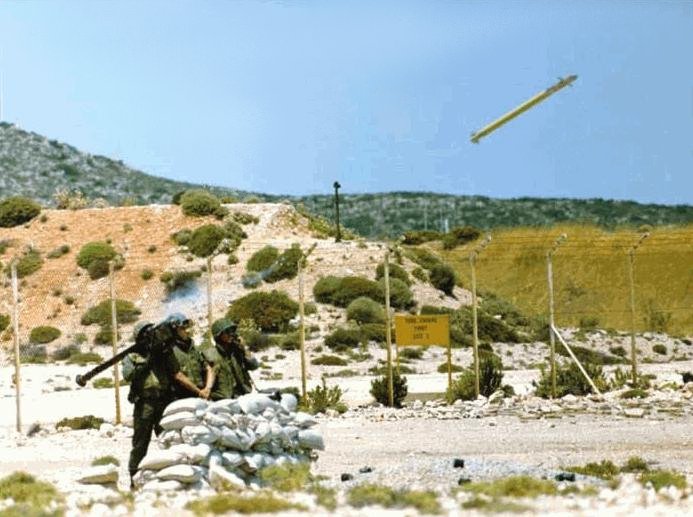
Stinger Missile StatsThe Federation of American Scientists has some good data on Stinger Missiles along with lots of photos.
http://www.fas.org/man/dod-101/sys/land/stinger.h
t m
Some tidbits: The missiles have a range of 1 - 8km. They are heat seaking and weigh only 12.5 pounds and are 5 feet by 1 foot in size. The US gave tons of these out like lollipops to Bin Ladin and other Afghanis when they were fighting the Russians for us. How hard would it have been to shoot one of these from miles away off in some boat in the middle of the bay? Just food for thought. -
Re:Rampant speculation is a good thing
see this link for a picture explaining what I mean.
-
Approval Process SucksI posted this story a last friday and it was rejected, despite links to EFF, CPSR, EPIC, FAIR, and FAS, organizations seeking to safeguard civil liberties which "timothy" and "Saratoga C++" are apparently not familiar with. Along with links to the House and Senate so people could look up the bills themselves. It too late now for slashdot'rs to do much - Bush will sign it in to law today I'm sure.
I guess it was far more important to discuss MSN, MP3s, ATI and the like rather than THE LOSS OF CIVIL LIBERTIES AND UNIVERSAL MONITORING OF NETWORK TRAFFIC. Good Job Slashdot! Toys are much more important than life, right?
-
Re:What Utter BombastWell, perhaps people should listen more, and remember that America didn't actually invent evil. I grabbed this from the Federation of American Scientists:
Some of the specific cases are shocking. According to a recent New York Times article by Peter Schweizer, `between 1987 and 1989, French intelligence planted moles in several U.S. companies, including IBM. In the fall of 1991, a French intelligence team attempted to steal `stealth' technology from Lockheed.' Other accounts report that French intelligence units conduct 10 to 15 break-ins every day at large hotels in Paris to copy documents that belong to businessmen, journalists, and diplomats. According to other accounts, the French have been hiding listening devices on Air France flights in order to pick up useful economic information from business travelers.
But hell, you can search Google for "industrial espionage france" just as well as I can. Do I have first-hand knowledge of any of this? Hardly. Is it possible that the same people who blew the bottom out of a Greenpeace boat might play hardball elsewhere? Yup. -
There's a government standard here-- TEMPEST
I remember reading about TEMPEST standards from the government. The documents were (mostly) declassified recently and have standards for wiring sensitive (RED) data connections in different environments-- all the way to battlefield conditions.
Plus, you have some CYA protection here since it's a predefined standard!
http://www.eskimo.com/~joelm/tempest.html
http://www.fas.org/irp/program/security/tempest.ht m
... but I still like the chain link fence idea with guard dogs -
Yo, Americans!
Yo, USA! Forget about this crypto backdoor and other crap.
Use the holy weapon of peace and resolve this situation. NOW! -
some info on tomahawk missilesI was looking around the net yesterday for info on Tomahawk missiles, the kind
being used to level Afghanistan, and I found these sites pretty interesting..
http://www.chinfo.navy.mil/navpalib/factfile/missi les/wep-toma.html
Millitary specifications on the tomahawk
http://www.fas.org/man/dod-101/sys/smart/bgm-109.h tm
A technical guide to how the Tomahawk works.
http://members.tripod.de/usnavy/weapons/tomahawk.h tm
Some statistics on Tomahawk missiles
http://www.howstuffworks.com/cruise-missile.htm
A less technical guide to how the Tomahawk works.
http://www.softwar.net/emg.html
Information on a cool EMG warhead that a Tomahawk can be
fitted with. -
More Killing Machines
If you want to talk about US military technology then you should check out the Federation of American Scientists website. I was in the Air Force during the Gulf War and have also served at weapons development base after the Gulf War. I must say that this site has a very accurate view of our current and future war capabilities. Check the section for US Smart Weapons for the JDAM. Here is a section under for the Stinger Missle . I have also seen some of our small "Special Forces" teams in action during training scenarios. The only thing I can say about that is, Oh My! I would never want to be at the recieving end of that. Brutal speed, accuracy, and stealth.
90 Perent of the problem with this siutaion is finding the enemy. The rest is taken care of. -
More Killing Machines
If you want to talk about US military technology then you should check out the Federation of American Scientists website. I was in the Air Force during the Gulf War and have also served at weapons development base after the Gulf War. I must say that this site has a very accurate view of our current and future war capabilities. Check the section for US Smart Weapons for the JDAM. Here is a section under for the Stinger Missle . I have also seen some of our small "Special Forces" teams in action during training scenarios. The only thing I can say about that is, Oh My! I would never want to be at the recieving end of that. Brutal speed, accuracy, and stealth.
90 Perent of the problem with this siutaion is finding the enemy. The rest is taken care of. -
More Killing Machines
If you want to talk about US military technology then you should check out the Federation of American Scientists website. I was in the Air Force during the Gulf War and have also served at weapons development base after the Gulf War. I must say that this site has a very accurate view of our current and future war capabilities. Check the section for US Smart Weapons for the JDAM. Here is a section under for the Stinger Missle . I have also seen some of our small "Special Forces" teams in action during training scenarios. The only thing I can say about that is, Oh My! I would never want to be at the recieving end of that. Brutal speed, accuracy, and stealth.
90 Perent of the problem with this siutaion is finding the enemy. The rest is taken care of. -
Re:Use NukesThe two they tested didn't penetrate far enough into the ground to contain even a minimal yield tactical nuke. The resulting fallout spilling into the atmosphere would probably make the US really really unpopular.
-
Link to above speech.
Here's a link that works:
Osama bin Laden: Jihad Against Jews and Crusaders
He is doing what he can to make violence seem reasonable. But it isn't. -
Some info on Tomahawk missiles...I was looking around the net yesterday for info on Tomahawk missiles, the kind being used to level Afghanistan, and I found these sites pretty interesting..
http://www.chinfo.navy.mil/navpalib/factfile/missi les/wep-toma.html
Millitary specifications on the tomahawk
http://www.fas.org/man/dod-101/sys/smart/bgm-109.h tm
A technical guide to how the Tomahawk works.
http://members.tripod.de/usnavy/weapons/tomahawk.h tm
Some statistics on Tomahawk missiles
http://www.howstuffworks.com/cruise-missile.htm
A less technical guide to how the Tomahawk works.
http://www.softwar.net/emg.html
Information on a cool EMG warhead that a Tomahawk can be fitted with. -
Re:First things first....
Just so you know, the Stinger has a max range of 8,000 meters and a flight ceiling of 10,000 meters. I'd hardly consider that an effective defense against a bomber at 30,000 feet. And that's assuming that they've got the latest revision of the weapon system.
-
Re:Innocent bystandersI'm talking about the "Amiriya" (spelling varies) facility, which was one out of two really bad events where a lot of civilians got killed.
(The other one was the brits aiming for a bridge but hitting some kind of market, IIRC, but I'm not sure.)
I figured I'd research this some more but I couldn't find the old documents, and google is down. Hmm, there's some stuff on www.fas.org, but it's not really conclusive. The best one is probably this one but do search around.
I guess we won't really know until in a few years when they declassify the signals intelligence they claim to have.
Also, it does seem in line with the other propaganda that came out of baghdad during the war. Remember the recycled footage of civilian casualties from the Iran-Iraq war, and the dismanteled mosque that they claimed had been bombed (and that one I'm sure I've seen pictures of.)
-
The Terrorists: a perspectiveThe West is taking strong actions against mass terrorists. How well do we understand what we are about to do and what we have done in the past?
To begin with, it is arguably good that this happened. The West is wide open to suicidal terrorist attacks, and if there were ever such an attack with a nuclear bomb, things would be a lot worse. Many people have been warning about this for some time. Now at least some preventative measures will be taken, and the risks will be reduced. Nuclear bombs are actually trivial to make if you have weapons-grade uranium (still a large "if"); so the risk is significant. Bin Laden has been trying to arm himself with nukes for years.
If we want to understand what happened, we should ask what the terrorists' motivations were for attacking. The terrorists seem to hate America for its actions against Muslims in Palestine and Iraq (see below), and Islam teaches that Muslims should aid other Muslims. So, what have been America's actions?
The Palestinians have been brutalized by the Israelis. Consider that the UN High Commissioner for Human Rights stated that rarely had a people been in so obvious need of international protection--last November, after seeing children whose eyes had been blown out by Israeli bullets and watching 40000 Palestinians kept under curfew so that 235 Israelis could go about their business (in Hebron). The Palestinians have repeatedly asked for international observers, but always had this blocked by Israel and America. Palestinians have long been tortured in Israel (this is government- sanctioned). The recent UN report headed by American ex-senator Mitchell made various recommendations, which were entirely accepted by the Palestinian Authority and rejected by Israel. Basically all other independent reports conclude that the Palestinians are treated abominably, including severe economic deprivations. (This is not to say that Israel does not have valid security concerns or grievances against Palestinians.)
Israel can only act this way because of American support. Indeed, America supplies advanced arms, gives Israel's six million citizens billions each year, and is often virtually the sole supporter of Israel in UN discussions-- such as discussions about Israel's violations of UN resolutions. So America is an accomplice. Even the British Foreign Secretary has now acknowledged that "One of the factors which helps breed terrorism is the anger which many people in [the Middle East] feel at events over the years in Palestine."
Some people have claimed that Bill Clinton tried to achieve peace, and so America should not be held to blame. But Israel only exists because of American support. And America, under Clinton, did not use this power. Under Bush Sr., things were different: Bush Sr. threatened to withhold $10 billion in loans (strictly, loan guarantees), if Israel remained brutal. This worked, and led to a viable peace process. The process could have remained on track if America had forced Israel to keep it signed word.
In Iraq, American-dictated sanctions ban anything that could conceivably be used for the military. For example, pencils contain carbon and carbon is often used in nuclear reactors; so pencils were banned. The sanctions are horrid. The sanctions regime is always supervised by a non-American (for political/PR reasons), and the supervisors have always quit in disgust after about a year, which says a lot. Iraq's infrastructure and economy are being crushed, at enormous cost. For example, according to UN estimates, the sanctions have resulted in the death of half a million children under five. (None of his is to suggest that Saddam is undeserving of a very tight leash, nor that this could be applied without the people suffering significantly.)
What does bin Laden say? Even if he was not directly involved in the attacks (which seems unlikely), he is a leading member of the terrorist network; so his words very probably count for something. And in the past he seems to have spoken more or less honestly about his intentions. Moreover, his words have motivated those who carried out the attacks. In a 1999 interview, he said he wanted to instigate "... jihad against the Jews and the Americans" and, citing the sanctions against Iraq, he added, "Our enemy is the crusader alliance led by America, Britain, and Israel." And in 1998, he and four others signed the World Islamic Front Statement, which advocates killing Americans for three reasons: America's support of Israel, America's killing of over a million Iraqis (a figure consistent with UN estimates), and America's stationing its armed forces in the Arabian peninsula. Regarding the third reason, the complaint seems to be partly that America is using the peninsula as a base for aggression against Iraq--i.e. the second and third reasons are closely related--and partly that Muslims consider the peninsula holy and many do not want non-Muslims permanently residing there. (Bin Laden is Saudi Arabian, and first became a terrorist mainly for the third reason. Later, he drew many followers, and the other reasons became prime.)
So, this is not an attack on democracy and freedom per se, as George Bush claims. Nor is it a culture-based "clash of civilizations", as some commentators have tried to claim (alluding to a 1993 essay by Samuel Huntington). Nor is it an attack based on spiteful envy of American wealth and military might, as some others have groundlessly assumed. This is an attack by Muslim fanatics on non-Muslims who have been brutalizing Muslims.
(Some people point out that Muslims sometimes also brutalize other Muslims. This is true: any group of people will have internal conflicts, sometimes very severe--as here--but still often pull together when attacked from outside. This is generally true of families, for example. It is also true of Americans--as this September has shown. It is something to be proud of.)
The terrorist attacks appear to have opened an enormous well-spring of Muslim anti-American feelings. Muslim demonstrations against America have been widely reported. The demonstrators, though, have generally said that they are against the terrorist attacks. But they, and a great many other Muslims, share the hatred felt by the terrorists, for the reasons given above.
Many Americans seem greatly confused by widespread Muslim hatred. To them, the claim that America desires to control the world is ludicrous. Especially since the end of the Cold War, America has tended to interfere in the affairs of other countries only under extreme circumstances. The Balkans is a good example--where Europe fretted fecklessly while tens of thousands were killed or raped. Almost all Americans simply want the world to develop in peace and prosperity--and, incredibly, they ask for nothing in return despite being the world's greatest guarantor of this. But, for many Muslims, it does not look that way. America helps a state with which it is friendly--Israel--and tries to squash a state that is very threatening and sinister--Iraq--and it ends up looking imperialistic.
Regarding the terrorists' motivations, it is interesting to compare the reports given by American and British mass media. Broadly, the American media has portrayed the terrorists as crazies who are against economic modernization and Western culture. Broadly, the British media tends to say that the terrorists are at least rational and that America partly inspired the hatred that they feel by its support of Israel. (Of course British media still strongly condemn the attacks and support the American people.)
Britain has not really supported America's actions in Israel/Palestine. In fact, the previous Foreign Secretary (Robin Cook) was fired in part because he was too blatant in his support for Palestinians. But Britain has--almost alone (to my knowledge)--both aided and supported America's actions against Iraq. The British media thus cites the main Muslim grievance in which Britain is blameless and largely ignores the other. The American media ignores both. Even considering some criticism is unacceptable, it seems.
The media made a lot of sacrifices when the terrorists struck. Hundreds of millions of dollars in advertising were lost as commercials were pulled from TV to make way for more news. And it was clear that many commentators very much had their hearts in their work. I still believe, however, that the media has done a disservice to people by failing to present the terrorists' true motivations--even if they disagreed with them.
The big question now is what can/will be done to make things safer. Despite all the hype, suicide bombers are rare. But, there are about a billion Muslims in the world; so even if only one in a 100000 becomes a bomber, that's 10000 overall. More people will now want to become bombers, though, for three reasons: the success of the attacks on America, the hero status often accorded suicide bombers (in Palestine as well), and the continuing despair that many Muslims feel about the plight of Palestinians and Iraqis.
One obvious way to increase Western safety is to inspire less hatred and give Muslims some hope for a better future. It was the crushing of hope by Israel that led to the recent spate of suicide bombers there. America is plainly well aware of this. Thus, although in the first week Israeli PM Sharon was stating that he still wanted to conquer the Palestinians, on September 18th he did an about-face--obviously under great American pressure. Real peace needs to be brought to Palestine. Arafat wants it, but with land; Sharon only wants victory, but might give in; and there are extremists in both Palestine and Israel who will try hard to derail peace. So lasting peace will hard to get, but maybe
In addition to these diplomatic efforts, there is going to be a military effort. The one purely-American purely-military option that I've seen that might potentially do something is to nuke Afghanistan. This would be politically very difficult. It would also inspire so much hatred in the Muslim world that for each terrorist killed, several more would be spawned.
Some people have suggested heavy (non-nuclear) bombing of Afghanistan, to force the Taliban into expelling the terrorists. There are no substantial military or political targets, however, and the Afghan economy is now virtually nonexistent, thanks to international sanctions and an extended drought. The UN estimates that by November (after snow starts falling), over five million Afghans will be dependent on food aid--out of a population of 20 million. So if the objective is to crush Afghans economically, stopping food aid would do more than any bombs. In fact, this is now happening, as relief agencies flee the country out of fear of military action. Actual bombing seems pointless, then, except perhaps as PR. Will a famine (induced by bombing or threat thereof) compel the Taliban into expelling the terrorists? This is dubious: the Taliban apparently shelter the terrorists because of an Islamic custom--if someone seeks refuge in your tribe, you have to protect him, regardless of the cost (the Taliban actually have little interest in the world outside Afghanistan.) Inducing a famine is also risky: if a million die, it will fuel more Muslim hatred. Would it be moral? You decide.
Some commentators have suggested that a large-scale military operation against Afghanistan might trigger so much popular anger that it destabilises some other Muslim countries. I cannot comment on this, but it should be clear, in any case, that such operations will do vastly more harm than good. Most senior people in the American government now apparently agree.
There has been much discussion about sending special forces into Afghanistan (likely supported by small-scale bombing). This requires intelligence on where the terrorists are hiding. Indeed, by now many of the terrorists will be dispersed among the population: good intelligence from the ground is essential for successful special-forces action against them. America apparently does not have this intelligence itself. It might try to bludgeon the ruling Taliban into supplying such intelligence, but it is very unlikely that the Taliban could be relied upon to act in good faith, if they acted.
The Taliban, however, are very close with Pakistan (see below). So if America were to work with Pakistan for intelligence, it might get somewhere. The president of Pakistan has pledged full support, but this might mean little. The support has to come from the people on the ground, and there have been many demonstrations in Pakistan against helping America. I know of three reasons for these demonstrations. First, Pakistanis are Muslims (95%) and they blame America for what is happening to Muslims in Palestine and Iraq. Second, they don't like being bullied by Westerners generally. The third reason is more involved; briefly, it's as follows.
The current border between Pakistan and Afghanistan is actually just a line of control (the Durand line), from a treaty that expired about five years ago. It was never clear what was to happen when the treaty expired: likely Pashtoonistan--an area overlapping both Pakistan and Afghanistan--was to be made into a state. The Pashtoon people make up nearly half of all Afghans, and they control Afghanistan; so likely Pashtoonistan and Afghanistan would become one. The effect would thus be to have Pakistan cede territory to Afghanistan. (A rough analogy might be how Britain ceded Hong Kong to China after the expiration of a 100-year treaty/lease. The Durand treaty was drawn up in the 1890s, when Pakistan was still a part of India.)
Pakistanis, especially in the military, are very reluctant to cede a large part of their country to Afghanistan. That's why Pakistan created the Taliban. The Taliban were given both military and religious training in Pakistan. They also got lots of arms and money from Pakistan, which is why they were able to conquer (most of) Afghanistan. They were largely controlled by Pakistan, though. And under Pakistani control, they did not force the issue of Pashtoonistan. (Lately, Pakistani control has weakened.) Additionally, having some Afghan territory partially under its control gave Pakistan some extra security from the threat of neighbouring India.
America has addressed this by telling Pakistan that unless it helps, America might rid Pakistan of its nuclear installations and support India militarily: in effect, saying that Pakistan would be liable to lose a majority of its territory (to India) rather than a minority (to Afghanistan). The president of Pakistan has made a televised speech warning people "bad results could put in danger our territorial integrity." This should help to focus the minds of those in the military, especially since Pakistan has a military government. Yet, it has had little effect on the populace, who are more motivated by sympathy for fellow Muslims. Will the low-ranking Pakistani soldiers on the ground go along and will they get enough intelligence from Afghanistan with little help from the populace?
My guess is that Pakistan will pretend to go along, and perhaps even help find a way to get bin Laden--which is good for PR, but not for really eradicating the terrorist network. Maybe America will eventually help to formalize Pakistan's borders, which would facilitate greater Pakistani support. I have not, however, seen this discussed publicly.
There also seems to be a common view that the Taliban should be removed from government. Indeed, it would be very difficult to eradicate the terrorist network without doing this. One approach would be to strongly support the anti-Taliban forces that currently control under 10% of (northern) Afghanistan. (This support might include bombing, but only on a small scale.) Starved of external military support, the Taliban should crumble quickly. A complicating factor is that any large military campaign in the Afghan winter is very difficult, and winter arrives in about October. Most likely, though, all this will be unnecessary: the Taliban should fall on their own, now that they are no longer propped up by Pakistan. What is in any case important is to avoid making it seem that this is American imperialism, which would unite the populace and draw wide Muslim anger.
The military action, whatever form it takes, will make it difficult for the terrorists to train or actively maintain their network in Afghanistan. Capturing many terrorists, though, seems unrealistic. The threatened mass bombing has made this even more difficult, since many Afghans have fled population centres for safety: there seems no good way to find a terrorist, who looks and acts ordinary, in their midst. If the Taliban are removed from government, though, perhaps more Afghans would then supply intelligence.
There is also a lot of detective work underway. Within America, and some other countries, this seems to be on track for some success, for identifying terrorists and also for hindering their financing. There appear to be many suicidal Islamic terrorists in the network that attacked America, though. Estimates are rough, but there could be several hundred who have deeply infiltrated the West. As an example, one of the highjackers had spent several years in Germany getting a technical degree. The network has supposedly spread to roughly 40 countries, which will hinder tracing it. Also, there is no real command structure: there is only a network (like the Internet is a network) with some people more influential than others; so even if someone like bin Laden is caught, the network would hardly be eradicated (a bit like taking out a few major nodes of the Internet would do little). Tracing the network is thus going to take a long effort, but should succeed.
Diplomatic, military, and detective efforts could also be supplemented with religious efforts, though I have not seen this discussed much. Bin Laden has claimed that he is instigating a jihad. Jihads were fought many centuries ago, against the crusaders. The jihad concept was then largely forgotten. When the Soviets invaded Afghanistan in 1979, the CIA looked for ways to help motivate the Afghans to fight (this was during the Cold War; so the CIA was arguably justified). One of they ways the CIA came up with was the revival of the long-abandoned notion of jihad. It worked (although the defining event in the Afghan-Soviet war was probably America's decision to supply the Afghans with shoulder-launched Stinger anti-aircraft missiles).
The Koran, though, teaches that a jihad should not harm women and children. And bin Laden himself said (in 1999) that "God
What are the overall conclusions? In the short term, there is small, but real, risk of another terrorist assault, against America or perhaps Britain (or Israel). In the medium term, the terrorist network will be attacked and largely eradicated, and America's resolve will make all countries very hesitant about sponsoring other terrorist networks. Additionally, there will be widespread, permanent, increases in security measures and both domestic and international intelligence operations. Individual terrorist incidents, however, do not require a sophisticated network or large resources (remember Oklahoma City). It is not realistic to expect to be able to prevent them all. In the long term, then, we also need to lessen the causes of Muslim grievances, even if it means facing up to our past mistakes.
Douglas J. Keenan
Some sources:
The 1999 interview with Osama bin Laden-- http://abcnews.go.com/sections/world/DailyNews/tra nscript_binladen1_990110.html
The 1998 World Islamic Front Statement-- http://www.fas.org/irp/world/para/docs/980223-fatw a.htm
Some insights into Afghanistan-- http://www.iranian.com/Opinion/2001/June/Afghan/in dex.html
The home page of the Palestinian Authority, with many more related links-- http://www.pna.gov.ps/
Links to insightful news stories on Afghanistan, Israel, Pakistan, etc.-- http://www.economist.com/countries/
A UNICEF news release on child mortality in Iraq-- http://www.unicef.org/newsline/99pr29.htm
A BBC report entitled "Explaining Arab Anger" [September 19th]-- http://news.bbc.co.uk/hi/english/world/middle_east -
Re:Nuclear warheads don't kill - people do.
It's quite legal to build an atomic warhead if you just can obtain all the components legally.
-
Re:Memory loss
It has been told that they were testing a version of the Shkval supercavitating torpedo. These torpedoes apparently operate by forming bubbles of gas around the torpedo, therefore reducing the amount of friction.
More on supercavitation here. -
The Terrorists: a perspectiveThe West is about to take strong actions against mass terrorists. How well do we understand what we are about to do and what we have done in the past?
To begin with, it is arguably good that this happened. The West is wide open to suicidal terrorist attacks, and if there were ever such an attack with a nuclear bomb, things would be a lot worse. Many people have been warning about this for some time. Now at least some preventative measures will be taken, and the risks will be reduced. Nuclear bombs are actually trivial to make if you have weapons-grade uranium (still a large "if"); so the risk is significant. Bin Laden has been trying to arm himself with nukes for years.
If we want to understand what happened, we should ask what the terrorists' motivations were for attacking. The terrorists say that they hate America for its actions against Muslims in Palestine and Iraq, and Islam teaches that Muslims should aid other Muslims. So, what have been America's actions?
The Palestinians have been brutalized by the Israelis. Consider that the UN High Commissioner for Human Rights stated that rarely had a people been in so obvious need of international protection--last November, after seeing children whose eyes had been blown out by Israeli bullets and watching 40000 Palestinians kept under curfew so that 235 Israelis could go about their business (in Hebron). The Palestinians have repeatedly asked for international observers, but always had this blocked by Israel and America. Palestinians have long been tortured in Israel (this is government- sanctioned). The recent UN report headed by American ex-senator Mitchell made various recommendations, which were entirely accepted by the Palestinian Authority and rejected by Israel. Basically all other independent reports conclude that the Palestinians are treated abominably, including severe economic deprivations. (This is not to say that Israel does not have valid security concerns or grievances against Palestinians.)
Israel can only act this way because of American support. Indeed, America supplies advanced arms, gives Israel's six million citizens billions each year, and is often virtually the sole supporter of Israel in UN discussions-- such as discussions about Israel's violations of UN resolutions. So America is an accomplice. Even the British Foreign Secretary has now acknowledged that "One of the factors which helps breed terrorism is the anger which many people in [the Middle East] feel at events over the years in Palestine."
Some people have claimed that Bill Clinton tried to achieve peace, and so America should not be held to blame. But Israel only exists because of American support. And America, under Clinton, did not use this power. Under Bush Sr., things were different: Bush Sr. threatened to withhold $10 billion in loans (strictly, loan guarantees), if Israel remained brutal. This worked: the Oslo peace process. The process could have remained on track if America had decided to force Israel to keep it signed word.
In Iraq, American-dictated sanctions ban anything that could conceivably be used for the military. For example, pencils contain carbon and carbon is often used in nuclear reactors; so pencils were banned. The sanctions are horrid. The sanctions regime is always supervised by a non-American (for political/PR reasons), and the supervisors have always quit in disgust after about a year, which says a lot. Iraq's infrastructure and economy are being crushed, at enormous cost. For example, according to UN estimates, the sanctions have resulted in the death of half a million children under five. (None of his is to suggest that Saddam is undeserving of a very tight leash, nor that this could be applied without the people suffering significantly.)
What does bin Laden say? Even if he was not directly involved in the attacks (which seems unlikely), he is a leading member of the terrorist network; so his words very probably count for something. And in the past he seems to have spoken more or less honestly about his intentions. In a 1999 interview, he said he wanted to instigate "... jihad against the Jews and the Americans" and, citing the sanctions against Iraq, he added, "Our enemy is the crusader alliance led by America, Britain, and Israel." And in 1998, he and four others signed the World Islamic Front Statement, which advocates killing Americans for three reasons: America's support of Israel, America's killing of over a million Iraqis (a figure consistent with UN estimates), and America's stationing its armed forces in the Arabian peninsula. Regarding the third reason, the main complaint seems to be that America is using the peninsula as a base for aggression against Iraq--i.e. the second and third reasons are closely related--though it is also true that Muslims consider the peninsula holy and many do not want non-Muslims permanently residing there.
The leader of the Taliban has also said why America was attacked: because America's cruel foreign policies perpetrated atrocities in Muslim countries.
So, this is not an attack on democracy and freedom per se, as George Bush claims. Nor is it a culture-based "clash of civilizations", as some commentators have tried to claim (alluding to a 1993 essay by Samuel Huntington). Nor is it an attack based on spiteful envy of American might, as some others have claimed. This is an attack by Muslim fanatics on non-Muslims who have been brutalizing Muslims. Many Muslims around the world have stated that they share the hatred felt by the terrorists, for the reasons given above, even if they strongly condemn the terrorist attacks.
(Some people point out that Muslims sometimes also brutalize other Muslims. This is true. Any group of people will have internal conflicts, occasionally very severe--as here--but still often pull together when attacked from outside. This is generally true of families, for example. It is also true of Americans--as this month has shown. It is something to be proud of.)
The terrorist attacks appear to have opened an enormous well-spring of Muslim anti-American feelings. Muslim demonstrations against America have been widely reported--even though demonstrators, when interviewed, have said they are against the terrorist attacks. In Indonesia (85% Muslim), gangs of extremists have been going into hotels searching for Americans.
Many Americans seem greatly confused by widespread Muslim hatred. To them, the claim that America desires to control the world is ludicrous. Especially since the end of the Cold War, America has tended to interfere in the affairs of other countries only under extreme circumstances. The Balkans is the prime example--where Europe fretted fecklessly while tens of thousands were killed or raped. Almost all Americans simply want the world to develop in peace and prosperity--and, incredibly, they ask for nothing in return despite being the world's greatest guarantor of this. But, for Muslims, it does not look that way. America helps a state with which it is friendly--Israel--and tries to squash a state that is very threatening and sinister--Iraq--and it ends up looking imperialistic.
Regarding the terrorists' motivations, it is interesting to compare the reports given by American and British mass media. I've spent many hours watching CNN and BBC World, and looked at several major newspapers in both America and Britain. Broadly, the American media has portrayed the terrorists as crazies who are against economic modernization and Western culture. Broadly, the British media tends to say that the terrorists are at least rational and that America inspired the hatred that they feel by its support of Israel. (Of course British media still condemn the attacks.)
Britain has not really supported America's actions in Israel/Palestine. In fact, the previous Foreign Secretary (Robin Cook) was fired in part because he was too blatant in his support for Palestinians. But Britain has--almost alone (to my knowledge)--both aided and supported America's actions against Iraq. The British media thus cites the main Muslim grievance in which Britain is blameless and largely ignores the other. The American media ignores both. Even considering some criticism is unacceptable, it seems.
The media made a lot of sacrifices when the terrorists struck. Hundreds of millions of dollars in advertising were lost as commercials were pulled from TV to make way for more news. And it was clear that many commentators very much had their hearts in their work. I still believe, however, that the media has done a disservice to people by failing to present the terrorists' true motivations--even if they disagreed with them.
The big question now is what can/will be done to make things safer. Despite all the hype, suicide bombers are rare. But, there are about a billion Muslims in the world; so even if only one in a 100000 becomes a bomber, that's 10000 overall. More people will now want to become bombers, though, for three reasons: the success of the attacks on America, the hero status often accorded suicide bombers (in Palestine as well), and the continuing despair that many Muslims feel about the plight of Palestinians and Iraqis.
One obvious way to increase Western safety is to inspire less hatred and give Muslims some hope for a better future. It was the crushing of hope by Israel that led to the recent spate of suicide bombers there. America is plainly well aware of this. Thus, although in the first week Israeli PM Sharon was stating that he still wanted to conquer the Palestinians, on September 18th he did an about-face--obviously under great American pressure. Real peace needs to be brought to Palestine. Arafat wants it, but with land; Sharon only wants victory, but might give in; and there are extremists in both Palestine and Israel who will try hard to derail peace. So lasting peace will hard to get, but maybe
In addition to these diplomatic efforts, there is going to be a military effort. The one purely-American purely-military option that I've seen that might potentially do something is to nuke Afghanistan. This would be politically very difficult. It would also inspire so much hatred in the Muslim world that for each terrorist killed, several more would be spawned. So I don't believe that America will do this. (On the other hand, Russia wants to help generally. And Russia has an enormous grudge against Afghanistan for beating it the 1980s and even more now for Afghan support of the Chechnya rebels. Russian TV has recently been reporting that Russia plans to nuke Afghanistan. I've no idea what to make of this, but suspect, or hope, that nothing will actually happen.)
Some people have suggested heavy (non-nuclear) bombing of Afghanistan, to force the Taliban into expelling the terrorists. There are no substantial military or political targets, however, and the Afghan economy is now virtually nonexistent, thanks to international sanctions and an extended drought. The UN estimates that by November (after snow starts falling), five million Afghans will be dependent on food aid--out of a population of 20 million. So if the objective is to crush the economy, simply stopping food aid would do more than any bombs. In fact, this is now happening, as relief agencies flee the country out of fear of military action. Actual bombing seems pointless, then, except perhaps as PR. Will a famine (induced by bombing or threat thereof) compel the Taliban into expelling the terrorists? This is dubious: the Taliban apparently shelter the terrorists because of an Islamic custom--if someone seeks refuge in your tribe, you have to protect him, regardless of the cost (the Taliban actually have little interest in the world outside Afghanistan.) Inducing a famine is also risky: if a million die, it will fuel more Muslim hatred. Would it be moral? You decide.
There has been much discussion about sending special forces into Afghanistan. This requires intelligence on where the terrorists are hiding. Indeed, by now many of the terrorists will be dispersed among the population: good intelligence from the ground is essential for successful special-forces action against them. America apparently does not have this intelligence itself. It might try to bludgeon the ruling Taliban into supplying such intelligence, but it is uncertain, at best, that the Taliban should be relied upon to act in good faith, if they acted.
The Taliban, however, are very close with Pakistan (see below). So if America were to work with Pakistan for intelligence, it might get somewhere. The president of Pakistan has pledged full support, but this might mean little. The support has to come from the people on the ground, and there have been many demonstrations in Pakistan against helping America. I know of three reasons for these demonstrations. First, Pakistani's are Muslims (95%) and they blame America for what is happening to Muslims in Palestine and Iraq. Second, they don't like being bullied by Westerners generally. The third reason is more involved; briefly, it's as follows.
The current border between Pakistan and Afghanistan is actually just a line of control (the Durand line), from a treaty that expired about five years ago. It was never clear what was to happen when the treaty expired: likely Pashtoonistan--an area overlapping both Pakistan and Afghanistan--was to be made into a state. The Pashtoon people make up nearly half of all Afghans, and they control Afghanistan; so likely Pashtoonistan and Afghanistan would become one. The effect would thus be to have Pakistan cede territory to Afghanistan. (A rough analogy might be how Britain ceded Hong Kong to China after the expiration of a 100-year treaty/lease. The Durand treaty was drawn up in the 1890s, when Pakistan was still a part of India.)
Pakistanis, especially in the military, are very reluctant to cede a large part of their country to Afghanistan. That's why Pakistan created the Taliban. The Taliban were given both military and religious training in Pakistan. They also got lots of arms and money from Pakistan, which is why they were able to conquer (most of) Afghanistan. They were largely controlled by Pakistan, though. And under Pakistani control, they did not force the issue of Pashtoonistan. (Lately, Pakistani control has weakened.)
America has addressed this by telling Pakistan that unless it helps, America might rid Pakistan of its nuclear installations and support India militarily: in effect, saying that Pakistan would be liable to lose a majority of its territory (to India) rather than a minority (to Afghanistan). The president of Pakistan has made a televised speech warning people "bad results could put in danger our territorial integrity." This should help to focus the minds of those in the military, especially since Pakistan has a military government. Yet, it has had little effect on the populace, who are more motivated by sympathy for fellow Muslims. Will the low-ranking Pakistani soldiers on the ground go along and will they get enough intelligence from Afghanistan with little help from the populace?
My guess is that Pakistan will pretend to go along, and perhaps even help find a way to get bin Laden--which is good for PR, but not for really eradicating the terrorist network. Maybe America will eventually help to formalize Pakistan's borders, which would facilitate greater Pakistani support. I have not, however, seen this discussed publicly.
There also seems to be a common view that the Taliban should be forcibly removed from government. The likely approach here will be to strongly support the anti-Taliban forces that currently control under 10% of (northern) Afghanistan. (This support might include bombing, but only on a small scale.) Starved of external military support, the Taliban should crumble quickly. One complicating factor is that any large military campaign in the Afghan winter is very difficult, and winter arrives in about October. What is also important is to avoid making it seem as if this is American imperialism, which would unite the populace and draw wide Muslim anger.
The military action, whatever form it takes, will make it difficult for the terrorists to train or actively maintain their network in Afghanistan. Capturing many terrorists, though, seems unrealistic. The threatened mass bombing has made this even more difficult, since many Afghans have fled population centers for safety: there seems no good way to find a terrorist, who looks and acts ordinary, in their midst. If the Taliban are removed from government, though, perhaps more Afghans would then supply intelligence.
There is also a lot of detective work underway. Within America, and some other countries, this seems to be on track for some success, for identifying terrorists and also for choking their financing. There appear to be a large number of suicidal Islamic terrorists in the network that attacked America, though. Estimates are rough, but there could be a thousand who have deeply infiltrated the West. As an example, one of the highjackers had apparently spent several years in Germany getting a technical degree. The network has supposedly spread to roughly 40 countries, which will hinder tracing it. Also, there is no real command structure: there is only a network (like the Internet is a network) with some people more influential than others; so even if someone like bin Laden is caught, the network would hardly be eradicated (a bit like taking out a few major nodes of the Internet would do little). Tracing the network is thus going to take a long effort, but should succeed.
Diplomatic, military, and detective efforts could also be supplemented with religious efforts, though I have not seen this discussed much. Bin Laden has claimed that he is instigating a jihad. Jihads were fought many centuries ago, against the crusaders. The jihad concept was then largely forgotten. When the Soviets invaded Afghanistan in 1979, the CIA looked for ways to help motivate the Afghans to fight (this was during the cold war; so the CIA was arguably justified). One of they ways the CIA came up with was the revival of the long-abandoned notion of jihad. It worked (although the defining event in the Afghan-Soviet war was probably America's decision to supply the Afghans with shoulder-launched Stinger anti-aircraft missiles).
The Koran, though, teaches that a jihad should not harm women and children. And bin Laden himself said (in 1999) that "God
What are the overall conclusions? In the short term, there is small, but real, risk of another terrorist assault, against America or perhaps Britain (or Israel). In the medium term, the terrorist network will be attacked and largely eradicated, and America's resolve will make all countries very hesitant about sponsoring other terrorist networks. Additionally, there will be widespread, permanent, increases in security measures. Individual terrorist incidents, however, do not require a sophisticated network or large resources (remember Oklahoma City). It is not realistic to expect to be able to prevent them all. In the long term, then, we also need to lessen the causes of Muslim grievances, even if it means facing up to our past mistakes.
Some sources:
The 1999 interview with Osama bin Laden-- http://abcnews.go.com/sections/world/DailyNews/tra nscript_binladen1_990110.html
The 1998 World Islamic Front Statement-- http://www.fas.org/irp/world/para/docs/980223-fatw a.htm
Some insights into Afghanistan-- http://www.iranian.com/Opinion/2001/June/Afghan/in dex.html
The home page of the Palestinian Authority, with many more related links-- http://www.pna.gov.ps/
Links to insightful news stories on Afghanistan, Israel, Pakistan, etc.-- http://www.economist.com/countries/
A UNICEF news release on child mortality in Iraq-- http://www.unicef.org/newsline/99pr29.htm
A BBC report entitled "Explaining Arab Anger" [September 19th]-- http://news.bbc.co.uk/hi/english/world/middle_east -
Re:As a scientist
That doesn't mean that the pursuit or release of knowledge should be restricted in any way.
As a scientist I am more concerned with what other scientists are *doing* that with what they are *developing*. Our colleagues who developed the techniques to clone DNA into plant cells (a number of whom I know personally) did nothing wrong, and should not have delayed publication because of the "ethical" consideration of what someone else could do with it. The people who are genetically altering corn to make it increasingly resistant to chlorinated organics (roundup) are *doing* something unethical; and they are the ones, largely highly intelligent people, whom we need to reach and educate. Some of the things I'm attempting to do could have direct, terrible applications in germ warfare - but they could also be a great boon to medical research. The resolution of that dillemma is clear: we cannot call a halt to scientific progress because of fear.
Other scientists, and some people may draw an increasingly meaningless distinction and call them engineers, are actually applying these developments to do things that shouldn't be done. Biopreparat doesn't exist anymore, but I'm sure biological weapons research continues. The people who nerve gassed the Tokyo subway where highly educated. These people are doing more damage with their own scientific expertise than laymen ever can, or will, with something you release.
Ethics requirements at graduate schools should be specific, factual and tailored to the particular focus of the student. Individuals who want to go into plant genetics should take courses in the political economics of third world agriculture - the same ones that pol sci students take. Courses in "ethics" are substanceless exercises in sophistry (say that 10 times fast) that don't teach the consequences of the particular actions a student might actually take.
While relatively uneducated terrorists can make certain uses of publically released technologies like culturing eukaryotic cells or near unbreakable encryption, the *real* danger, and it is a real danger, is when the scientists ourselves are actually setting out to do harm; or applying these technologies in ignorance for our own economic gain.
-
EFF as a lobying organization - needs funding
The EFF makes a wonderful contribution with respect to the legal issues of interest to the technically inclined (read: Geek) comunity, and it's admirable how they spech most of their resources in these pursuits, but honestly, they should take a page from the playbook of the NRA with respect to fund raising if they want to compete with the powerful political action committees that live inside the Washington beltway.
There are also other organizations which deserve your support (financial or otherwise), such as the Center for Democracy & Technology and the Federation of American Scientists which has a number of projects that would be of interest to the
--CTH -
How about the FAS?I dunno exactly how effective they are but people might want to write to the Federation of American Scientists. I personally don't consider the EFF a PAC and I doubt the people here in
The Federation of American Scientists conducts analysis and advocacy on science, technology and public policy, including national security, nuclear weapons, arms sales, biological hazards, secrecy, education technology, information technology, energy and the environment... FAS combines the scholarly resources of its scientists with a knowledge of practical politics. As a non-profit organization licensed to lobby in the public interest, FAS is uniquely qualified to bring the scientific perspective to the legislative arena through direct lobbying, membership and grassroots work, and expert testimony at Congressional hearings.
-
Re:Buried Gold ALSO Freon
Phosgene is indeed used as a weapon.
-
Re:Remote attrition
The drones cost 3.3 million/each. Here is the link.
-
Yes, used before.
In Iraq, for instance,, as well as the Balkans.
Apparently, the RQ-1 Predator is made by General Atomics. They claim that it can remain airborne for 40 hours at a stretch, and it can carry a payload of 204 kg. The weight of a Hellfire seems to be on the order of 47 kg, give or take a few depending on model.
According to a 1998 article by the FAS, it also includes a satellite link, meaning that it's providing recon up to the point where it is shot down (if and when that happens). Operating range is listed as 926 kilometers, and at 10-25 thousand feet; FWIW, the General Atomics site mentioned work on a newer version that would have a significantly greater endurance.
For those that own Hellfire missiles, the FAS site also includes a handy-dandy user's guide [PDF] of sorts.
-
Yes, used before.
In Iraq, for instance,, as well as the Balkans.
Apparently, the RQ-1 Predator is made by General Atomics. They claim that it can remain airborne for 40 hours at a stretch, and it can carry a payload of 204 kg. The weight of a Hellfire seems to be on the order of 47 kg, give or take a few depending on model.
According to a 1998 article by the FAS, it also includes a satellite link, meaning that it's providing recon up to the point where it is shot down (if and when that happens). Operating range is listed as 926 kilometers, and at 10-25 thousand feet; FWIW, the General Atomics site mentioned work on a newer version that would have a significantly greater endurance.
For those that own Hellfire missiles, the FAS site also includes a handy-dandy user's guide [PDF] of sorts.
-
Two Lost Over Iraq...Two Predator UAV's were lost over Iraq in just the past month:
http://dailynews.yahoo.com/h/nm/20010911/ts/iraq_
u sa_plane_dc_4.htmlhttp://www.washingtonpost.com/wp-dyn/articles/A45
7 0-2001Aug27.htmlFAS has some more info on the bird here.
-
Wanna build an atomic bomb?Lack of knowledge has never been an obstacle to any nation in developing nuclear weapons. The problem is in obtaining the necessary tools and materials. Nothing I say here could be of any interest or assistance to a nation pursuing a nuclear weapons program. Admittedly, the situation with respect to terrorist acquisition of weapons is a bit different. But even here, actual weapon construction requires a type of information I do not provide, and most importantly it requires access to the proper materials. Preventing access to these materials is the only way of providing security from the spread nuclear weapons. Suppressing discussion of unclassified or public domain information does not provide any measure of security. It provides instead only a potentially dangerous illusion of security.
This highly detailed and accurate FAQ is available here for downloading.
-
Re:Angry
- Look at each proposed limitation on freedom and clearly explain why it won't work.
- Increased security and searches at airports, especially on domestic flights: This will help. It's common in most European countries, and has been recommended several times in the US, most recently by good old Al Gore in 1997.
- Go hog wild with FISA warrants: Might help, although "hog wild" in the context of FISA is relative, and as the details of FISA warrants are secret and non-overseen, how would we know how effective they are?
- Mandatory encryption backdoors: OK, I wrap my message in an older PGP, then wrap that in the backdoored version. How does that help you find or read it?
- Mandatory copy control on all hardware: What the hell has this got to do with this issue, you ask? The Bill under consideration mentions "security". It talks about defending the US economy. It could sneak through just on those merits. That makes it (very unfortunately) relevant to this discussion, as it's a warning that we can't let "me too!" legislation slip through on the back of this.
Some of the proposed measures are effective, and actually overdue. Some, like FISA, are unfortunate necessities. But the backdoors are pointless at best, and at worst, criminalise Joe Public (or more likely, Jane Corporate).
-
Covert Assination Ops Re:Bunk
I'm all in favour of this plan as long as America allows foreign intelligence agencies to operate in America at the same time under the same rules they would bind the CIA to. I wonder who the Mossad, MI5, Cuba's DGI, China's MSS, or Jordan's GID would consider to be people consorting with these groups who happen to reside in the United States.
-
Covert Assination Ops Re:Bunk
I'm all in favour of this plan as long as America allows foreign intelligence agencies to operate in America at the same time under the same rules they would bind the CIA to. I wonder who the Mossad, MI5, Cuba's DGI, China's MSS, or Jordan's GID would consider to be people consorting with these groups who happen to reside in the United States.
-
Covert Assination Ops Re:Bunk
I'm all in favour of this plan as long as America allows foreign intelligence agencies to operate in America at the same time under the same rules they would bind the CIA to. I wonder who the Mossad, MI5, Cuba's DGI, China's MSS, or Jordan's GID would consider to be people consorting with these groups who happen to reside in the United States.
-
Re:Iran... How Ironic...
Here is a good link on that. Essentially his government siezed control of many US owned mines, and he was elected on only 36% of the vote.
-
Real issue: national database and dossiersIn my opinion, "victory" for the United States can be defined to be a narrow achievable objective: Victory is the prevention of another massive terrorist attack on United States soil led by foreign nationals from Middle Eastern countries. It remains to be seen whether the people of the US are prepared to pay the price.
The willingness of the terrorists to die in the commission of their attacks isn't a strength, it's a weakness. The willingness to die restricts potential recruits to a relatively small segment of the population. As far as detection goes, the situation is far better than in the 70s when people who looked like Japanese tourists could suddenly pull automatic weapons out of their bags as happened at Tel Aviv's Lod Airport in May 1972 at the cost of 24 lives. Radical Marxism backed by covert support from Easter bloc intelligence agencies is no longer turning out as many terrorists with different nationalities as Germany did with Baader-Meinhof or Venezuela did with Carlos the Jackal. Furthermore in the 1970s members of attacking terrorist teams often were female such as Leila Khaled.
Trying to track the terrorists back to their native lands is the United States weakness and their strength. On the other hand, their operating on United States soil should be their weakness and our strength. The suspicious eyes and mouths willing to inform the authorities of any suspicious activity should accompany them wherever they go.
Suicide attackers have to be kept in a constant state of psychological preparedness. They have to travel together in at least pairs because they have to have reinforcement of the need for them to die. Often their support comes from the only people they can trust, relatives.
In short, suicide attackers who are foreign nationals from a distinct ethnic group are the perfect targets for proactive profiling. The question is whether the people, the intelligence agencies, the leadership, and the judicial system of the United States are going to be willing to make the necessary painful decisions. To easily separate suspects from nonsuspects, reducing the amount of work by two orders of magnitude, the people will have to accept a comprehensive national database with easy means of checking attributes such as fingerprints, voice, DNA, photographs. The United States does have a population of millions of loyal citizens of Middle Eastern descent. (No suspected hijackers or accomplices born in the United States have been identified so far.) Some means must be found to quickly distinguish them from foreign nationals so that they can efficiently exercise their rights as citizens.
Intelligence agencies must find the means to share information and break the bonds of bureaucratic inertia. Analyses such as Alexander B. Calahan's apply far beyond how to organize assassination teams, they apply equally to how to organize terrorism prevention teams. It is becoming clear that United States intelligence agencies had all the clues needed to prevent the attack. The WTC had been a previous target by the same groups, there had been an earlier plot to hijack a large number of airplanes, two hijackers were under watch by the FBI. What are needed are anti-terrorism units organized like special forces units who are allowed the initiative and the time to follow-up leads and build complete dossiers on suspects and the people they interact with.
Of course for this to happen the leadership and especially the courts have to get out of the way. The courts have to recognize that there has to be a distinction between the rights of citizens and the rights of foreign nationals, especially when there is a clearly demonstrated danger that a segment of foreign nationals is plotting to inflict massive terrorist attacks on the nation.
Carnivore, Echelon are simply manifestations of the truth that supply will increase to meet demand. We are no longer talking about hypotheticals. Foreign nationals are now plotting acts of mass terrorism on United States soil that have the potential to claim 50,000+ lives a strike. Something has to be done and something will be done.
-
Text of the debate and amendmentFollow these links to read the Text of the Hatch-Feinstein "Combating Terrorism Act of 2001" and the floor debate over the amendment.
Sen. Leahy (D-VT) and Sen. Levin (D-MI) are the only ones asking for restraint and thought before bulling forward with this amendment to the Commerce, State and Justice appropriations bill (which is sure to pass).
-
Whoa! I stand corrected...
The United States reaffirms that it will not use nuclear weapons against non-nuclear-weapons States parties to the Treaty on the Non-Proliferation of Nuclear Weapons except in the case of an invasion or any other attack on the United States, its territories, its armed forces or any other troops, its allies or States towards which it has a security commitment, carried out or sustained by such a non-nuclear-weapon State, in association or alliance with a nuclear-weapon State.
That is one hell of a truck-sized loophole, and this situation certainly applies. So it looks like the U.S. could certainly demand the Taliban hand over bin Laden and associates to American authorities, "or else," while not-so-subtly jingling the keys to a Minuteman III.
Other than that, I see the most likely scenario being U.S. military forces invading and sealing the borders of Afghanistan, then hunting down bin Laden themselves.
~Philly -
For those who are not aware(Continuity of Gov't)
For all those individuals who are not aware of the situation, there are numerous executive orders
and laws(the biggest one passed in 1947, IIRC the National Security Act) which lay out and govern the functioning of the government in a state of emergency.
In Bush's case, he is practically required to keep moving until such time that the emergency is over. Again IIRC, during any instance where there are large number of government officials in a small area such as a State of the Union Address,
at least one of the four top officials in the chain of command is taken to another location...just in case.
Amazing how I learned this back in Junior High in Civics class and yet most of the media and the obviously superior and brilliant John Katz are not aware of these simple facts.
For a some discussion visit Continuity of Government - United States Nuclear Forces.
Newsmax has a discussion of accused spy Hanssen allegedly revealing these plans to the Russians located here.
There is a short blurb located here.
CF -
Israel, Munich, "Wrath of God"The United States is facing a difficulty decision in how to strike back. After the Munich Olympics, Israel faced a similar decision. I think everyone should read Alexander B. Calahan's Master of Military Studies thesis "COUNTERING TERRORISM: THE ISRAELI RESPONSE TO THE 1972 MUNICH OLYMPIC MASSACRE AND THE DEVELOPMENT OF INDEPENDENT COVERT ACTION TEAMS". This document is available from among other places the Federation of American Scientists website.
Golda Meir's decision was for Israel to resort to assassination of those responsible for organizing and carrying out the attack, an operation later referred to be the media as the "Wrath of God". Calahan concludes that method which worked was for Mossad to cut loose from bureaucratic restrictions a mostly independent operating team organized similar to current US special forces. This team was given a list of potential targets, a directive to not harm innocents, and autonomy to go hunting.
I am concerned that it would be simply impossible for any current United States government to authorize similar autonomy despite the necessity of success.
One key difference between then and today is that today's targets might be less inclined to be in Europe, an area in which it was relatively easier for the Israeli assassination teams to operate in than say Afghanistan or Pakistan for Americans. Calahan's thesis also mentions an operation where the proximity of Israel to Lebanon enabled a massive force of dozens of Israeli commandos to kill three major targets and about a hundred Palestinian guerillas.
In another disturbing article The Atlantic Monthly raises the issue of whether the unwillingness and/or inability of United States intelligence agencies to conduct longterm missions to penetrate local populations in areas such as Afghanistan might make any effective action against Osama Bin Laden's organization impossible. The United States doesn't even train agents in the local languages let alone assign agents to become experts specializing in a country.