Slashdot Mirror
Domain: microchip.com
Stories and comments across the archive that link to microchip.com.
Comments · 170
-
Re: python cant solve all the problems.
I suspect he wasn't talking about a DSPIC 16 but the truly tiny series that's actually used in coffee makers. https://www.microchip.com/desi...
I kinda doubt micropython would fit. ASM often relies on using otherwise unused bits in registers as ram. It gets pretty tight in there. -
Re:Seriously?
They have improved recently. For instance, here's the MicroChip marketing for them. Power draw can be lower than quartz. Accuracy can be good enough, and actually more stable with varying temperature.
But not in the presence of helium
-
Re:There's no There There
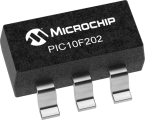
Here is a picture of a complete self-contained microcontroller. The picture only shows one side, it has six pins in an SOT-23-6 package. That means the plastic package is about the size of a grain of rice. It's six pins are four general purpose I/O pins, plus power and ground.
It's not an exotic chip or even an expensive one. It's got programmable flash memory and costs less than 20 cents in medium quantities. It's commercial off-the-shelf stuff you can buy from DigiKey and have delivered in a few days.
It's not a likely candidate for the chip that Bloomburg is crowing about, but it demonstrates the level of tech even available to the most casual off-the-street hacker to 'bug' existing hardware.
-
Re: I love Intel performance per/clock, but...
My ATtiny85 isn't vulnerable to Meltdown either, nor is my ATmega328P.
Shock and awe: those aren't the result of mishandled Unicode characters. Knowing how Slashdot handles curly quotes, that was my first thought on seeing a weird mess of character mashed together.
-
Re: I love Intel performance per/clock, but...
My ATtiny85 isn't vulnerable to Meltdown either, nor is my ATmega328P.
Shock and awe: those aren't the result of mishandled Unicode characters. Knowing how Slashdot handles curly quotes, that was my first thought on seeing a weird mess of character mashed together.
-
Re: Moore's law
8 bit processor with 24 bytes of RAM. Available in a 6 pin package.
-
Re:Yes. A pic can have a GUI, flash disk
You'd have a hard time having any sort of CLI running on this PIC chip, though. That's why I mentioned PIC chips specifically.
-
Re: older generations already had a term for this
Interesting, lets pick those apart a bit.
It's hard to determine because people don't advertise use of them at all. However, I know that my electric toothbrush uses an Epson 4 bit MCU of some description. It's got a status LED, basic NiMH batteryb charger and a PWM controller for an H Bridge. Braun sell a *lot* of electric toothbrushes.
To implement a NiMH or NiCD charger, you need to have an analog input, which the PIC doesn't have. You will also need to be able to store at least 32 samples at 10 bits each sample so that you can detect the charging peak and the *small* voltage drop that signals end of charge. Given that, you will have to have a separate battery management IC, and most of them come with an charge state pin that can be tied to an LED using a $0.004 FET to indicate charge status. The rest is simply a mechanical switch with the appropriate FET and resistor to drive on LED directly from the switch. Putting a uC on a toothbrush is a pointless waste of money, and the fact that it has one in it will last only until downward price pressure from cheap Chinese knockoffs that do not have a uC push the over-expensive product out of the market. I'm not saying that a uC wont be a better solution, as the battery charger chips start at around $1.50 in quantity; What I am saying is that these low end PICs are essentially useless.
Any gadget that's smarter than a simple switch will probably have some sort of basic MCU in it. Alarm system componets, sensor interfaces, timer chip replacements, MOSFET drivers, smart TRIAC drivers and so on. Appliances will have this sort of thing built in. My Bosch stick blender has some sort of speed controller for the motor. You don't need much to deal with that.
Alarm products can come in two varieties: Centralized control and distributed control. For a centralized control, you have "dumb" remote sensors, and a central control IC that can ready the electrical signals from multiple channels. In this case, the central IC needs to have many pins (at least one for every IO sensor attached to the system). For the decentralized controls, the individual devices need to have enough smarts to understand their addressing, but not much more. In the first case, a PIC just isn't going to cut it. In the second case, it would be cheaper to simply use any of a variety of addressable buses devices that can handle the i/o and the bus interactions. again, there is no need for a uC in the "smart" sensor, so why waste the money?
For the blender, motor control requires a feedback mechanism that will require an analog input that the PIC can't handle.
Here's an example of using one as a zero crossing TRIAC controller: http://ww1.microchip.com/downl... [microchip.com]
You want a MOC3021. No need to do any programming, it is a standalone chip that does the same thing, is cheaper per unit than the micro, and has the opto-isolation built in.
Oh and the dimers I've got in my house are definitely MCU controlled. You can communicate using a series of presses to do the setup (rising versus falling edge, minimum level and so on). Basically 3 inputs there (switch, pot and mains phase) and one output. And the dimmers are pretty cheap, so perfect for a 17 cent MCU.
You can do the same thing with a 555 timer chip ($0.03 in large quantities), and a half dozen external passives to gate the behaviors. The trick is setting the "modes" by charging and discharging specific capacitors using the 555 to control behaviors based on timing. If you are going to sell 10M units per year (not at all unreasonable for light bulbs), then a cost difference of $0.01 per unit is $100,000 per year. For that much, it is cost effective to hire an engineer for two years to do nothing but design this one circuit. In reality it will take a competent (read as expensive) engineer about a month to design and test that circuit.
If you want that product to do anything fancier, the PIC wont have enough horsepower for it anyway, so you need a beefier uC anyways
-
Re: older generations already had a term for this
So what are the uses for that? I am curious what things people have put these to use for.
It's hard to determine because people don't advertise use of them at all. However, I know that my electric tothbrush uses an Epson 4 bit MCU of some description. It's got a status LED, basic NiMH batteryb charger and a PWM controller for an H Bridge. Braun sell a *lot* of electric toothbrushes.
Any gadget that's smarter than a simple switch will probably have some sort of basic MCU in it. Alarm system componets, sensor interfaces, timer chip replacements, MOSFET drivers, smart TRIAC drivers and so on. Appliances will have this sort of thing built in. My Bosch stick blender has some sort of speed controller for the motor. You don't need much to deal with that.
Here's an example of using one as a zero crossing TRIAC controller:
http://ww1.microchip.com/downl...
Could easily be buried inside a hotplate or some such.
Oh and the dimers I've got in my house are definitely MCU controlled. You can communicate using a series of presses to do the setup (rising versus falling edge, minimum level and so on). Basically 3 inputs there (switch, pot and mains phase) and one output. And the dimmers are pretty cheap, so perfect for a 17 cent MCU.
-
Re:If your device is fully programmable...
http://www.microchip.com/wwwpr...
(I die a little inside when I see the Microchip logo when looking at an Atmel product page)
-
Re:Surprising
if you have a real CANBUS reader (not one of those $13 ELM junk) you can read every piece of data coming across the bus.
Does ELM327 sniffer mode miss packets?
Coming at you from Detoit. I'm a bona fide expert in CAN (spent the bulk of my career at Vector CANtech). Yes, the ELM327 will miss packets if the busload is high enough. It does not have the hardware to keep up with a saturated bus. Those ELM327 devices use something like this. I don't think the ELM327 microcontroller/firmware can keep up with the data streaming from the CAN chip. You really need an integrated CAN controller (a peripheral attached to one of the buses of the SoC, not SPI) to keep up with a full busload. An ALM327 is a fun little toy for poking, but not a useful tool for logging for this reason.
-
Re:One word: Cowardice
Go look up some datasheets for Bluetooth chips. In fact, here are some datasheets for you:
http://ww1.microchip.com/downl... http://www.bluecreation.com/fd...
15 to 30mA for music streaming, which depends on range and how crowded the 2.4GHz band is. There is no getting around this, no amount of clever power management will help. Radios use power, Bluetooth mandates the time that the radio must be turned on, it just can't go significantly lower. So no matter how efficient the CPU and everything else is, all day on 10% is impossible.
What did I tell you about JUST looking at datasheets and trying to infer an embedded SYSTEM's requirements/performance?
You are the one that brought BT into this. Apple's battery-life tests were no doubt done with no headset of any type, or with the wired headset. Of course, using BT earpieces would bring that down a little. Now, LynwoodRooster, who claims to be a designer of BT devices, sez the iFixit teardown of the iPhone 7 shows that Apple is using a Murata-branded BT/WiFi COMBO module (See step 15 of the teardown; which uses either a Cypress Semiconductor BCM4339 or a Marvell 88W8897 chip, so, that could (likely would) have a different current requirement from the Microchip and whoever-the-hell Bluecreation is; so your 15 to 30 mA figures may or may not be relevant. But even if that was a CONTINUOUS requirement (which I sincerely doubt it is), or just a rough-average, or an "absolute maximum", 15 to 30 mA is still not such a big deal to a 2900 mAh battery. 2900/30 = 96 Hrs at 30mA CONTINUOUS for your BT chips. I couldn't get a straight answer out of the Cypress Datasheet; but assuming it is no more than 30mA for the BT subsections, that shouldn't be a problem.
And of course, with aggressive power-management, that 30mA won't be anything like continuous. -
Re:One word: Cowardice
Go look up some datasheets for Bluetooth chips. In fact, here are some datasheets for you:
http://ww1.microchip.com/downl...
http://www.bluecreation.com/fd...15 to 30mA for music streaming, which depends on range and how crowded the 2.4GHz band is. There is no getting around this, no amount of clever power management will help. Radios use power, Bluetooth mandates the time that the radio must be turned on, it just can't go significantly lower. So no matter how efficient the CPU and everything else is, all day on 10% is impossible.
-
SBU is not what you think it is.
from here:
http://ww1.microchip.com/downl..."The SBU wires are lower speed signal wires that is allocated for Alternate Mode use only. USB Power Delivery is required for Alternate Mode negotiation before these pins may be used for any purpose".
Doesn't sound like headphone power-level or analog to me.
-
Re: Wrong summary
The onboard Ethernet is via a USB to Ethernet controller which also works as a USB hub. Limited to not just USB 2 speeds, but also controlled by the CPU in software to do the networking. Plug in a USB hard drive, if that's in use your Ethernet slows down. The CPU only has one USB I/O.
-
Re:Oh, stop spreading Apple's FUD, what a pile of
It is hard to design USB well, particularly with respect to power: a *huge* thing is making sure it's safe- Lithium batteries are dangerous when charged wrong, and if there is a fire, the lawyers will be after everyone they can possibly name in the suit. Remember that the lithium battery is very energy-dense- a lot of energy in a small space means the potential for a lot of heat in a small space.
All computers have some method of limiting the current out of their USB ports- if they don't, they can't get a USB Logo. During enumeration, a device requests more current, and the computer keeps track of the current available. If the current isn't available, enumeration fails. If a device draws too much current, the computer can crash, as it will drag the computer's 5V rail down. Most computers have current limiting in the form of a NTC resistor that will limit current but only after it heats up, so there is a delay, so short term overcurrents that aren't long enough to heat up the NTC resistor are dangerous. USB relies on the devices following the spec. If you violate the spec, you fail to get USB logo- and many of the big OEMs require logoed devices.
There are many USB hubs that can natively support more than 4 ports: Microchip's USB2517 is one (of many) I'm familiar with.
The 100W devices are coming as part of the USB C Connector, but with all that additional power, you better believe that the computer manufacturers are going to be careful as there is a much bigger chance of fire. To even get 100W, you have to have an active cable that identifies itself to the system as one that can handle the increased power. And Apple is very involved in USB type C development.
-
New how?
Through-the-body communication chips have been around a while; you can click-n-buy them right on Digikey.
http://www.microchip.com/pageh... -
Re:If you cannot answer your own question..
-
Re:32*M*B?See the PIC18F67J60. I currently sell a product I developed which includes a complete software TCP/IP stack, HTTP server, SNMP server, ICMP client and server, NTP, and and so on which fits in this device which has 128K of flash and 3.808K of ram. 32MB is enormous.
My total code + static web page storage (in a small external flash) is around 196KB. That isn't anywhere near 32MB.
I'm in the process of moving to a PIC32 platform to be able to support HTTPS and IPv6, along with a lot of other functionality that needs to be in the next version of this product. This is still going to have a code size of well under 1MB (and probably more in the 3-400K range). So I'm not sure where people get off with saying that 32MB is "extremely resource constrained".
-
Re:How powered off is "powered off"?
Yes, conceptually all flash data has to decay when powered off. But implementation tradeoffs vary widely. A dirt-cheap Microchip PIC18F2580 microcontroller has flash data retention without refresh "conservatively estimated" at 40 YEARS MINIMUM and 100 years typical (page 3, 10, 435). The number of previous erase/program cycles that retention is predicated on is not given, but is probably a single one, or a few, out of a typical endurance of 100,000 cycles and a minimum of 10,000 from -40 to +85 C. AFAIK there is no wear leveling or block sparing in microcontroller flash memories.
I have NEVER HEARD of an embedded guy ever running into a case of either cycle exhaustion or data decay in the program memory such microcontrollers (if data is written to flash during operation, specs do have to be considered).
SSDs have flash design tradeoffs remarkably different from this. For example, MLC individual cell endurance is around 1000-10,000, and retention is far less as seen in the article and comments here. In return, the access time is vastly faster and the density vastly higher.
-
Re: The new power supplies may be sensitve to EMP
Or maybe instead of theorizing incorrectly yourself while also arguing with someone who is attempting to explain it in detail and a lot more reasoning than you give, you can look for other sources. There are plenty of application notes and articles, like this one that discuss this problem in great detail since people designing circuits have to deal with it (unless trying to make cheap audio equipment). All that is needed is some form of rectification, which is present aplenty in semiconductor components in even an unpowered circuit, and it is far easier to couple radio frequencies than audio frequencies, especially considering a transmitter designed for the former, versus accidental circuits for the latter.
-
Re:If it's fast enough, "general purpose" is fine
Because it is inefficient. In addition to higher energy bills, a less efficient architecture means shorter battery life in a mobile device, more noise in a desktop PC, and fewer servers per rack in a datacenter.
There are "general purpose" microcontrollers that use microWatts of power. That can run on one tiny watch battery for years.
For example, http://www.microchip.com/wwwpr...
From datasheet,
* 30 microAmps per Mhz
* 20 nanoAmps in sleepSo a 100mAh 3V watch battery would last 570 years on sleep mode and 3-5 months operating at 1MHz. Or at 31kHz, with some sleep it should operate for years on a button cell.
And it's a fully programmable, general purpose microcontroller.
So what's the problem? Too inefficient?
-
Re:Memory hog on Linux
-
Re:Microchip
-
Re:Microchip
-
Re:'Modified'
Well, a humble PIC32 has something like 300 MIPS these days. According to Microchip, you can do 1+ MB/s with that. And with voice codecs, the bit rate is fairly low. That should be more than enough for a single-(or perhaps dual-)purpose communication device (voice and text).
-
Re:So outbound UDP is a first thing to block
-
Re:So outbound UDP is a first thing to block
Are these compromised, too?
I got myself a handful for christmas, which should in combination with a MCU give a known-good network tap.
Problem NSA? -
Re:Limitations
They will probably make a mess out of it... Last time I went to Staples, I wanted to print some chapters from an Open Publication License book and a datasheet for a Microchip ethernet controller. They refused to print the book without written permission from the publisher, even though the Open Publication License was clearly stated. As for the datasheet, they wanted to charge me a copyright tax because it has "© 2004 Microchip Technology Inc." on the cover...
I said "no thanks" and ended up printing everything on a small mom and pop shop, no fuss at all. Plus no fee for handling USB pen drive, no waiting for almost an hour while someone prints a few hundred photos or decides on wedding invitations, and cheaper prices...
-
Re:Unfortunately for Arduino
-
Re:I'm more optimistic
There already exist microcontrollers that use less than a few uA of current.
http://www.microchip.com/pagehandler/en-us/technology/xlp/
* 30uA/MHz power usage
* 9 nA sleep modeThat is low power. That is 284mAh per year in sleep mode. Or less than 1000 mAh/year running at 1MHz.
-
Re:Lego Case
What would I do with 256 MB of RAM?
I love these sorts of posts. My first computer had 16K of RAM (TRS-80). I do hobby work with embedded controller CPUs that have a whopping 384 BYTES of RAM, and I can do all sorts of cool things - take temp/pres readings and send them to the mother ship via ZigBee, etc.There are even TCP stacks for these sorts of chips that have somewhat more memory.
-
Re:Dynamic RFID Ink?
I wouldn't say the idea of "The Man" tracking us has been put to bed. Who would've thought there'd be thousands of CCTV cameras deployed in London? They are/were expensive, fragile, and need lots of bandwidth. That didn't stop a gov't with a nearly unlimited budget and a penchant for snooping.
Tracking humans as they walk along a street with RFID tags in their clothes? Easy, since a single read from a 'registered' garment will suffice to ID the wearer. Extra reads are gravy. Garments are most often on the outside of the 'ugly bag of mostly water', so attenuation isn't a big deal. The distances involved are very short, and the gov't doesn't have to worry about stealth wrt reader placement. You know gov'ts are deploying RFID readers at borders to track cars by the now-required RFID tag in tires, right?
As for the ZigBee solution: I can't predict prices. ZigBee is in that precarious Ouroboros loop of "there-are-too-few-adopters-beacuse-it's-expensive-but-it-would-be-cheaper-if-there-were-more-adopters". That sort of thought pattern is what blew Norman's circuit breaker.
If you're going for a full-on product, then yes, you'll need those things. If you're hacking together something, then quite literally a few soldered on wires and either a thermistor or solid state temp sensor would do. We're talking an extra $2 or so.
Alternatively you could go with a different chipset. There are 'naked' ZigBee chips out there if development costs are less important than unit cost. You can get the chipset used in the digi modules; also Microchip has a few solutions, but you'll pay dearly to license the ZigBee stack, and be doing some serious low-level hacking.
Another solution if you don't require actual ZigBee interoperability: go with straight 802.15.4 and a simpler, cheaper protocol on top of it. There's MIWI, digimesh, plus a whole host of others.
Good luck with your project - you seem quite passionate about it.
-
Re:Dynamic RFID Ink?
I wouldn't say the idea of "The Man" tracking us has been put to bed. Who would've thought there'd be thousands of CCTV cameras deployed in London? They are/were expensive, fragile, and need lots of bandwidth. That didn't stop a gov't with a nearly unlimited budget and a penchant for snooping.
Tracking humans as they walk along a street with RFID tags in their clothes? Easy, since a single read from a 'registered' garment will suffice to ID the wearer. Extra reads are gravy. Garments are most often on the outside of the 'ugly bag of mostly water', so attenuation isn't a big deal. The distances involved are very short, and the gov't doesn't have to worry about stealth wrt reader placement. You know gov'ts are deploying RFID readers at borders to track cars by the now-required RFID tag in tires, right?
As for the ZigBee solution: I can't predict prices. ZigBee is in that precarious Ouroboros loop of "there-are-too-few-adopters-beacuse-it's-expensive-but-it-would-be-cheaper-if-there-were-more-adopters". That sort of thought pattern is what blew Norman's circuit breaker.
If you're going for a full-on product, then yes, you'll need those things. If you're hacking together something, then quite literally a few soldered on wires and either a thermistor or solid state temp sensor would do. We're talking an extra $2 or so.
Alternatively you could go with a different chipset. There are 'naked' ZigBee chips out there if development costs are less important than unit cost. You can get the chipset used in the digi modules; also Microchip has a few solutions, but you'll pay dearly to license the ZigBee stack, and be doing some serious low-level hacking.
Another solution if you don't require actual ZigBee interoperability: go with straight 802.15.4 and a simpler, cheaper protocol on top of it. There's MIWI, digimesh, plus a whole host of others.
Good luck with your project - you seem quite passionate about it.
-
Re:No its not
You should read a C tutorial. It's akin to realizing "Wow, it's like BASIC but it makes more sense, and I can DO more!"
You can also program PICs with it. Check this out.
-
Microchip PicKit is ~$50
If you want to get back into Microchip PIC programming, the PicKit 3 is USB and supports programming and in-circuit debugging of a large range of their chips. If can be bought for around $50. Many of their PIC's are low-cost and come in hobbyist friendly DIP packages.
-
Re:Arduino deserves the popularity
Also in the mix are the chips from Microchip - there are no-cost C compilers for most of their line, and they've recently adopted Eclipse as their IDE platform.
I was hacking together projects using their CPUs before Arduino existed (IIRC). Before that, Z-80's. RAS/CAS, anyone?
-
Re:Lame design!
A chip like http://www.microchip.com/wwwproducts/Devices.aspx?dDocName=en545659
this PIC32MX695F512L is $9.58 in single unit quantities and is orders of magnitude more versatile
than the 3 Atmel AVRs in the proposed device. It has a full 32-bit processor (MIPS),
512K of Flash, and 128K of RAM, plus ethernet, USB, serial I/O, etc. Couple it with
a small FPGA and you can build quite a system that sells for less than $50.00 and still
make a little profit. -
Re:Serial Ports..My last two gigs involved test and repair of very "modern" devices which still used serial ports for communication and firmware uploads. The whole fixed width scrolling terminal thing to check values and send commands to the device. Only recently did one of them update the GUI to a fixed(updating) number of fields instead of outputting the raw data line-by line(which, of course, is more useful when looking for intermittent problems).
And it is becoming too slow to upload firmware to dead devices, as the firmware updates get larger.
Bah, that's only for the loser end-users who can't void the warranties opening the box. Technicians get to use PICkits and PM3's. Much quicker, man.
-
Re:Pretty fast!
Agreed, you can get a 16 bit, 40 MIPS PIC in a through hole package.
-
Seems kinda low-spec as a starting point
I don't know much about the PICaxe, but for $8 (single unit qtys) you can buy an 80MHz MIPS microcontroller with a lot going for it. This one has 32KB of onboard RAM and 512K of flash.
-
Seems kinda low-spec as a starting point
I don't know much about the PICaxe, but for $8 (single unit qtys) you can buy an 80MHz MIPS microcontroller with a lot going for it. This one has 32KB of onboard RAM and 512K of flash.
-
Seems kinda low-spec as a starting point
I don't know much about the PICaxe, but for $8 (single unit qtys) you can buy an 80MHz MIPS microcontroller with a lot going for it. This one has 32KB of onboard RAM and 512K of flash.
-
Re:PC on a chip
This isn't precisely a pc on a chip (the core is MIPS-based), but Microchip's PIC32 offerings gives you a fully 32-bit processor with integrated RAM, ROM, and some peripherals for about $5 per unit. Perhaps not useful if you need x86, but plenty useful if you just want to compile and run ANSI-C applications (GCC has an appropriate MIPS target).
-
Re:Maybe a book?
Getting Started in Electronics is starting to show its age, in so far as some of the parts used (UJTs) in the projects are not so easy to find, and neglects the large growth area of microcontrollers which can be cheaper than discontinued ICs.
Practical Electronics for Inventors suffers from a large number of errors, mostly typographical, but as a self-taught learning aid, this is frustrating.
My personal favorite beginning book for electronics suitable for adults is Guide to Understanding Electricity and Electronics by Randy Slone (ISBN 0071360573). Not without its own flaws, but contains a nice balance of theory and hands-on practical learning exercises that I feel comfortable recommending it. Another which I do not have a copy of myself, is Understanding Basic Electronics by ARRL. It may be somewhat geared towards RF topics, because it is published by the national USA amateur radio organization, but because they have most of the amateur radio topics covered in another textbook, it should be suitable for general electronics.
The next part is usage of discrete digital logic is now minimal being replaced by programming logic devices like PALs, FPGAs, or microcontrollers like Atmel's AVR and Microchip's PIC, to name only two of the most popular 8-bit microcontrollers available.
Jameco is maybe the most beginner friendly mail-order storefront. Their dead tree catalog is small enough you can find what you are looking for, even if you don't know everything about it. Their prices are reasonable, far cheaper than buying everything from Radio Shack, and you can easier expand to use Digikey, Mouser, Newark, and the hundreds of various surplus (typically new overstock / old stock, but not always) electronics websites. Octopart.com and FindChips.com help finding parts. There is another meta-search but I don't find as useful to amateurs.
Looking at hobbyist robotic, and amateur radio websites, as they have sub-interests within them that are oriented towards electronics. You may even find a local club in your area.
Magazines like Nuts'n'Volts, Servo, and CircuitCellar, Make magazine are good sources for hobbyist friendly resources.
No one kit, and no one book is enough to satisfy most people's self-taught education in electronics. Just as no one book will teach you everything to know about computers (TAOCP?)
-
Re:Inside the NIA
They use a PIC18F2455. A PIC18 with 24KB of flash and 2KB Ram and USB for about $5.
http://www.microchip.com/stellent/idcplg?IdcService=SS_GET_PAGE&nodeId=1335&dDocName=en010273
You can use C too, judging from the app notes. Handy for USB stuff. -
Re:its like DB9 all over again...
http://www.microchip.com/stellent/idcplg?IdcService=SS_GET_PAGE&nodeId=1335&dDocName=en010280 for 28 pin
http://www.microchip.com/stellent/idcplg?IdcService=SS_GET_PAGE&nodeId=1335&dDocName=en010300 for 40 pin
All your circuit needs to contain for USB to work is the pic, a crystal and a handfull of passives.
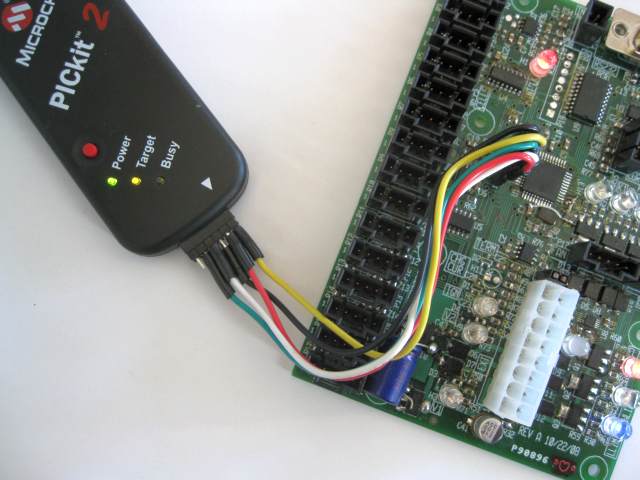
You will need a suitable programmer but they aren't too expensive either. e.g. the pickit 2 is less than £20 http://www.microchipdirect.com/productsearch.aspx?Keywords=PICkit+2+Microcontroller+.
You will need microchip C18 but the "student edition/demo" version of that is perfectly adequate even when it has gone into feature limited mode.
The firmware is a little trickier to find as it is grouped under the stuff for the demo board at http://www.microchip.com/stellent/idcplg?IdcService=SS_GET_PAGE&nodeId=1406&dDocName=en021940 -
Re:its like DB9 all over again...
http://www.microchip.com/stellent/idcplg?IdcService=SS_GET_PAGE&nodeId=1335&dDocName=en010280 for 28 pin
http://www.microchip.com/stellent/idcplg?IdcService=SS_GET_PAGE&nodeId=1335&dDocName=en010300 for 40 pin
All your circuit needs to contain for USB to work is the pic, a crystal and a handfull of passives.
You will need a suitable programmer but they aren't too expensive either. e.g. the pickit 2 is less than £20 http://www.microchipdirect.com/productsearch.aspx?Keywords=PICkit+2+Microcontroller+.
You will need microchip C18 but the "student edition/demo" version of that is perfectly adequate even when it has gone into feature limited mode.
The firmware is a little trickier to find as it is grouped under the stuff for the demo board at http://www.microchip.com/stellent/idcplg?IdcService=SS_GET_PAGE&nodeId=1406&dDocName=en021940 -
Re:its like DB9 all over again...
http://www.microchip.com/stellent/idcplg?IdcService=SS_GET_PAGE&nodeId=1335&dDocName=en010280 for 28 pin
http://www.microchip.com/stellent/idcplg?IdcService=SS_GET_PAGE&nodeId=1335&dDocName=en010300 for 40 pin
All your circuit needs to contain for USB to work is the pic, a crystal and a handfull of passives.
You will need a suitable programmer but they aren't too expensive either. e.g. the pickit 2 is less than £20 http://www.microchipdirect.com/productsearch.aspx?Keywords=PICkit+2+Microcontroller+.
You will need microchip C18 but the "student edition/demo" version of that is perfectly adequate even when it has gone into feature limited mode.
The firmware is a little trickier to find as it is grouped under the stuff for the demo board at http://www.microchip.com/stellent/idcplg?IdcService=SS_GET_PAGE&nodeId=1406&dDocName=en021940 -
Re:I remember a time...Some manufacturers even sent free samples of the chips themselves.
Actually, Texas Instruments, Microchip, and various other companies still fully disclose many specifications and offer samples.
Where have they gone wrong?
http://sample.microchip.com/
http://www.ti.com/home_b_samples
Of course, they don't sample anything as powerful as a modern GPU, but the time of samples isn't over!