Slashdot Mirror
Domain: mit.edu
Stories and comments across the archive that link to mit.edu.
Comments · 7,673
-
Re:Who teaches the teachers?
Why do the librarians need to know how to code?
They don't. But they do need to know enough to point kids at scratch.mit.edu and show them how to open the first Youtube tutorial. The kids can take it from there, with the brighter kids helping the dumb kids.
I teach programming in an after school program for 4-6th graders, and by the 2nd week, the kids are mostly on autopilot, learning at the own rates
-
Re:Short Sighted
Good luck finding one that will allow you to encrypt your whole partition.
Pretty much all providers with KVM technically support this, whether they intend it or not.
The problem is more fundamental. With VPS (as apposed to physical box where one can be certain that RAM snapshots are not easily made) - encrypting a partition won't help, just waste the already constrained cpu cycles. The provider still can trivially make a snapshot of your running VM, including live keys in memory, so what's the point? This is why businesses are not particularly fond of cloud things, and tend to replicate that stuff in-house. There's a field of ZK utility computing, but it is still quite inefficient. -
Re:BULLSHIT
The MIT link makes it very clear that they actually created this new structure in actual graphene. They did not create much of it, but enough to get its structural properties, then they did the rest of the work in simulation. They go on to say that the new configuration is a stronger 3D configuration for many materials, which is why they were able to do additional large scale work on the *geometry* using plastic. https://news.mit.edu/2017/3-d-... In short, yes, they actually produced the new structure, and they actually did do new work.
-
Based on a MIT Student project.
The Perdix drones are based on this MIT student project, which was then turned over to Lincoln Labs for further development.
-
I'm confused
I was confused when I read this news report. Here is MIT's release: https://news.mit.edu/2017/3-d-... Is the pink stuff actually printed graphene, or is it just plastic printed in the 3d structure of the graphene form so that they could do a macroscopic mechanical test?
-
Re: we saw that the science was falsified by the C
Oh, I looked at your "damning" links - and not one of them cited a relevant or useful study. What I saw instead was a lot of "here's a graph, here's another graph - they're different in a way I don't like - therefore, it must be deliberately faked". No attempt was made to find out why the data was adjusted, no evidence that the adjustments made readings less accurate instead of more, and no challenge to the peer-reviewed methodology of the corrections. Instead they leaped immediately to the conclusion that it was a hoax and a conspiracy - just as you are. No contrary evidence of your own, no studies, no science, just "I don't like the results so that science must have been faked". That's the very soul of denial.
Why just the 1970s? If they go further back, it disproves what they're trying to indoctrinate you with. They'd have you believe that bad storms never happened before. Hogg wash. In fact HOGG Island, NYC.
If you bothered to read the paper you'd see the data they present goes back to 1930, and only the recent increase in intensity starts in the 70s. And maybe you'd care to explain how a single storm from 1893 somehow disproves a peer-reviewed statistical analysis about storms getting stronger a hundred years later?
Likewise, please explain where the original "cold snap" study claims that Greenland before 1300 was "MUCH warmer" than today. Please explain how ice cores from two lakes in Greenland somehow mean that the average temperatures for the entire globe were warmer at that time, when no reconstruction places them anywhere close to modern levels. You think the Medieval Warm and Little Ice Age periods are unknown to climatologists? But you're already convinced it's all a scam, despite the evidence directly contradicting your claims.
As for the fuel companies, do you really think that? You think that they won't adapt?
You really think they'll happily wave goodbye to trillions of dollars without a care in the world? You're quite wrong. They'll adapt if they're forced to, but you can be certain they'll do whatever they can to exploit the reserves they have first - there's plenty of evidence of them spending hundreds of millions to confuse and delay the issue as long as they can - just like the tobacco companies did.
Instead, you're harping on about Al Gore - who's not even a scientist. Nobody cares what he says - we care what the climatologists say. They saw the problem long before Gore made a movie, and why would they care if he made money from it? Is Gore paying climatologists to falsify evidence? The ones doing that are the oil companies. Frankly, your efforts to claim that Gore somehow orchestrated the whole thing to make a buck are laughable in the face of the evidence - all the more so when you're so keen to ignore the FAR bigger amounts being made by those who benefit from ignoring it.
-
Re: No.
The barrier to entry for nerdy children is much higher now then it was for me.
This is what my 8 year old daughter did:
1. Go to https://scratch.mit.edu/
2. Start codingTotal time to surmount barriers: 10 seconds.
-
Re:Wood burning is not clean
Health costs of coal: $300-500 billion annually, in the US alone.
Health costs of gasoline/diesel: $40-200 billion annually for the US.Huge annual costs like these are a constant drag on economic growth. And these costs, as the studies admit, are far from comprehensive - the first link lists numerous additional factors not considered in their analysis, saying "The true ecological and health costs of coal are thus far greater than the numbers suggest". Nor do they consider the human-life costs of the hundreds of thousands of premature deaths caused by particulate air pollution, mining & processing wastes etc.
These ongoing costs can be almost completely avoided by transitioning to clean energy, along with reducing other large burdens on the taxpayer such as fossil-fuel industry subsidies and military interventions (plus of course future climate change adaption costs).
-
Re:Back to reality
useless for other tasks like assembling Ikea furniture.
At this point I'm not sure you don't just find tasks others have already completed and then say it's impossible.
IkeaBot -- Automated Multi-Robot Furniture Assembly. MIT 2013.
And robots don't have to be perfect, they just have to be better than the lowest human denominator. They work 24/7. Don't get tired, drunk or play on their phones.
-
Re:Back to reality
useless for other tasks like assembling Ikea furniture.
At this point I'm not sure you don't just find tasks others have already completed and then say it's impossible.
IkeaBot -- Automated Multi-Robot Furniture Assembly. MIT 2013.
And robots don't have to be perfect, they just have to be better than the lowest human denominator. They work 24/7. Don't get tired, drunk or play on their phones.
-
Re:Alterterior Motives...
... I slam on my brakes. Then, the car behind me slams on his brakes automatically, because it rightly knows not to absolutely trust anything coming from V2V, and it's still watching my car with forward sensors. It also announces to the network that we're stopping, so all the cars for a mile behind me brake, too, and the ones that can shift lanes will escape.
Which would also prevent the formation of so-called jamitrons, the traveling waves of braking that persist until attentive drivers cause them to settle. When I think about the close calls I've had from driving in the past, it was because of having to break hard or change lanes abruptly for apparently no reason at all.
-
Re:So, No?
http://www.economist.com/blogs... http://livingwage.mit.edu/page... What we try to do is to calculate what amount of money allow somebody to cover the basic necessities. Maybe there is an argument for $30 but it's not "more is better." The argument for a living wage is that if somebody works a 40-60 hour week, they should be able to afford food, clothing, shelter, and medical care. I don't know of any places where $30/hr would be needed for this. But the "more is better" argument is a ridiculous strawman which is why nobody will debate you.
-
Re:Yey!
"Coding is easy"
It is, if you learn from proper books.
-
Re:Yey!
"Coding is easy"
It is, if you learn from proper books.
-
Re:Unfortunately no and I have a reason
Na. Start with TAOCP, then read the harder books (SICP, CLRS).
I can't read math for shit either, and it's not really that necessary for the verbose style of knuth. So one can do just fine with just pseudocode.
Why SICP later? It is a bit harder to read than TAOCP, as it is not really a bag of ready to use tricks anymore - it challenges the reader to think about (functional) programming at a more fundamental level (and you don't need to know much about "math" either, it's an intro course book). -
Re:Hell no
"Real programmers don't use PASCAL!" http://web.mit.edu/humor/Compu... I picture 110010001000 toggling the OS into the front panel while the rest of us have already bootstrapped the machine with kixtart a month ago. It's ok to stand on the shoulders of giants, but at the same time, it's good to look down and see how the foundation is you're standing on is really laid. There are times in my storied career where I have actually benefitted debugging c# or ruby code because I understood how parsing and execution worked. I have written better database queries in 4GL by knowing what was happening on the metal. So, before you get overly dismissive of knowing soup to nuts, I'd say that you should be aware that YES you can get by without it. But knowing the whole shebang, all the way down to the machine code, at least in broad strokes, DOES help you out occasionally, if not all the time.
-
Re:Post-Brexit?
It depends how you measure it. The US is the biggest export destination of UK goods, but by far more stuff gets imported from Germany than the US:
The UK exports $51 billion to, and imports $44.4 billion from, the US.
The UK exports $46.5 billion to, and imports $100 billion from, Germany.
http://atlas.media.mit.edu/en/...And if you combine the rest of the EU, it is far bigger than the US, in terms of trade with the UK.
But anyway, that's missing the point. His point of his comment was that the UK should expand trade to countries which aren't similar to the UK in terms of desktop-vs-mobile usage, which are places beyond both the EU and the US, like India.
-
Re:one in every home?
The price of batteries is quickly dropping and there are other battery types that show promise for grid storage such as liquid metal batteries. It sounds like the main bottleneck now is the seals to keep air out, otherwise the batteries should be fairly inexpensive and use common materials. This article describes where things are at with liquid metal batteries.
Tesla has said that their grid batteries use NMC, nickel, manganese, cobalt and lithium. Lithium ion batteries typically contain only 3% lithium. The cells should support 5000 charge/discharge cycles, or over 13 years with full daily cycling.. Of course the cells won't be fully cycled every day so they should have a very long life.
Lithium typically is less than 1% the cost of the batteries.
Ethanol for energy storage will be extremely inefficient, especially when one takes into account the costs and energy to:
1. Extract CO2
2. Filter the water to remove contaminants
3. Generate the ethanol
4. separate ethanol from water (which tends to be energy intensive since ethanol loves water)
5. convert the ethanol back into electricityLiquid metal batteries and pumped storage are currently around 70% efficient. Lithium ion batteries are over 90% efficient. Using ethanol will be significantly lower. Batteries will also require a lot less maintenance.
The efficiency increase from using batteries would more than pay for itself long-term since this option also will likely require a lot more maintenance.
-
Re:Is Perl really that hard to learn?
Granted I did some BASIC before I jumped into Perl
BASIC is about the worst possible language for a beginner, because it infects naive users with bad habits that are difficult to unlearn.
Perl is a great language for programs of one-line to one-page, but doesn't scale well beyond that. I don't think Perl is a good language for beginners because it encourages "tricky" and obscure syntax. Many Perl programmers are proud that their code is unreadable.
I work in an after-school program teaching programming and robotics to 4th-6th graders, and I have found that Scratch is the best languages for absolute beginners. Scratch enforces structure, and there are no syntax errors, so the kids can focus on logic and design. For the second year, they move up to Python.
Many high schools use Java, because that is the language used for the CS AP test.
-
Re:CS should _not_ be taught to teenagers
To restore your faith, try something like this free course instead.
-
Re:CS should _not_ be taught to teenagers
You're right, it's about logic. So let's teach them all electronics and circuit design. And mechanical engineering.
Yes, kids should have exposure to all of these things. I teach programming (using Scratch) and robotics (using Mindstorms) to 4th, 5th, and 6th graders. They love the programming, but they also learn how to design circuits and interface them to the robots. They learn the mechanics of grippers, leverage, and gear ratios.
This is way more useful that teaching them cursive writing, or the avoidance of split infinitives and dangling participles.
-
Like MIT's porn policy?
I was a participant in the MIT porn wars in the 1980's, the ones that led to Dean McBay's departure as a complete idiot not in contact with any actual students or staff who actually work with students.
-
Re:We need this
Any battery developed by Dyson will no doubt be massively overpriced like their other products. Even if he were able to double the energy density of batteries, it seems likely you would be able to buy several of the conventional batteries for the same price.
Besides which, it looks like there is already quite a breakthrough happening right now. http://news.mit.edu/2016/lithi... -
Re:Science article: the real numbers are at the or
**original source (posting to slashdot on mobile - aargh)
http://news.mit.edu/2016/solving-network-congestion-megamimo-0823 -
Link to the paper
Here are direct links to the paper's download page and the paper itself.
-
Link to the paper
Here are direct links to the paper's download page and the paper itself.
-
Re:I don't get it
And because of that you know everything about spacecrafts and all possibilities that could be done...
So lets say they can get rid of the hydrazine... Maybe with bleach, that is the recommended neutralizer...... maybe then just coat the inside with some new paint that will contain any small remnants... Put some good chemists on the issue for a real solution...
If we then could maybe make some airogel ( http://www.mit.edu/afs.new/ath... ) for thermal insulation of the module and then cover that with some harder surface that we could fit other things on... Or maybe some type of expanding foam.. that can be shipped in liquid form.
I'm no space expert, but you seem to think you are smarter than everyone... There are a lot smarter people than you and there are areas of research that you have no clue about... Don't think you know everything just because you know a little bit more than people here.. You have a *looong* way until you could be classified as an expert in all areas around this.
-
Re:"Gig Economy" indeed!
If so, it just sounds like they're doing an experiment to see if hiring more people but working them less produces better results (Hint, it does in non-dysfunctional workplaces.)
Actually, at least to a point, hiring the same number of people but working them less produces better results.
That's how we got the 40-hour work-week to begin with. It's generally assumed that time working has decreased over the centuries, but that isn't quite true. Medieval farmers, laborers, and craftsmen did work long days (perhaps 9-12 hours), but winter conditions and lack of light with short days meant that these long days were only for short segments of the year. Yes, during planting and harvest, the farmers might work like crazy, but then they'd have a long winter of time to recuperate. This combination works well both physically and mentally, which is the reason studies tend to show that people who never take "vacations" (especially extended ones) tend to be less productive than those who do.
It wasn't until the Industrial Revolution and the migration of poor laborers to big factories, along with advances in tech, power, etc. that workers could be exploited with long hours essentially year-round. The average medieval or renaissance peasant or laborer probably worked around the number of hours a 40-hour/week worker works today. But by the 19th century, factory workers dramatically increased that -- often working 70+ hours most weeks, sometimes with 14-16 hour days. Factory owners mistakenly thought that working their laborers to death (often quite literally) would maximize profit. What instead happened was increased accidents, along with unhappy exhausted workers who would fall ill and need to be replaced with other untrained laborers. (Reforms (sometimes violent) eventually brought limitations down to 12 or even 10-hour days in some places during the 19th century. Unions fought a piecemeal battle to try to get the requirements lower.)
But the largest reform happened in the early 20th century, when Henry Ford actually experimented with shorter work-weeks (i.e., our standard 5-day, 40-hour week) and realized it (1) increased productivity (not just productivity per hour but productivity per worker), (2) decreased accidents and errors (which were a major cause of decreased productivity on assembly lines, since a major accident could shut down the line for a long time), and (3) increased retention for trained, skilled workers, and (4) also had the side benefit of increasing worker happiness. In many cases, the actual weekly output of the same amount of workers who decreased hours from 60 to 40 per week increased by 50%.
Most of the classic studies of productivity have been done on laborers, and they have generally shown productivity is maximized somewhere between 40 and 50 hours per week. But that's laborers, and those classic studies have been undermined by subsequent studies in Europe in the past couple decades which seem to show people doing even fewer (30-35 hours/week) often are more productive than the classic 40-50 hour folks. Also, the summary mentions "engineers and tech staff," whose "labor" is primarily mental. Productivity studies are harder to design for those sorts of jobs, but it wouldn't surprise me at all to discover that for some jobs the maximum productivity occurs at quite a bit lower than 40 hours/week.
Here's the difference today, though -- Ford paid his workers well, in fact increasing his salaries when he decreased the hours, because he saw the productivity increases. His workers responded well and did better work, because they likely remembered grandpa coming home exhausted from the mines and dying from black lung at age 55 -- and the 40/hour week with decent salary was amazing. Fast forward 80-90 years, though, and executives are all about cutting salaries as much as possible, viewing workers as completely ex
-
Re: Was this before or after adjustments?
It's not an ad hominem attack to call a pseudoskeptic out. The poster made no indication of understanding how data is analyzed, but basically claimed either incompetence or conspiracy by NOAA scientists.
That is called the "Michael Mann is an asshole" attack. (he isn't, by the way)
Claim that the enemy doesn't know what they are doing, Claim they are abusing the statistics claim they are doctoring the data. Then sit back and act like you won the argument. with nothing but the claim, nothing to support their dismissal. Note that I took specific wording from the AC's post.
I'll ask everyone who rejects AGW, where in the hell is all that energy being absorbed by CO2 going?
The amount of radiative forcing added to the atmosphere since the semi arbitrary date in 1750 is nothing short of mind boggling. 800 TeraWatts. 1.6 watts per squar meter sounds pretty innocent, of course, but you don't pump in 800 TW without some effect.
Here is one of the best descriptions for the lay audience http://news.mit.edu/2010/expla...
To expect that to not have an effect is extraordinary. It needs some better proof than dismissing the whole thing.
After all, thermodynamics still reigns supreme last time I heard, so there's no perpetual magic refrigeration unit in the sky getting rid of excess energy be capture due to higher CO2 concentrations, so where is it?
You do know that the next thing is for some wag to dredge up the Data showing the discrepancy between Radiosonde data and satellite data By Christy from the University of Alabama.
Denialists consider this their smoking gun argument.
Unfortunately for them, the discrepancy between the two have long since been eliminated, and attested to as correct by Christy himself. For some reason however, denialists are not capable of finding the updated and correct data.
-
Re:The fifth force is...
Now for real. How does the new proposed fifth force of nature compares to the other proposals? A not so quick search on Google's pages behind the first one results in articles dated as early as 1986 and before. Your results may vary: https://www.google.com.br/#q=fifth+force+of+nature&safe=strict&tbas=0&start=130
-
MOD PARENT UP
The parent is spot on.
And just to add to that, until their recent run of profitability, the last time the airlines as a whole were consistently profitable was in the 1990s, before the dot-com bubble popped. Between roughly 2001 and 2011, they cumulatively lost money (the one bright spot was 2006, but of course the Great Recession hit).
http://web.mit.edu/airlines/analysis/analysis_airline_industry.html (apologies for the tiny image, but historical data more than 5 years out is typically paywalled).
It wasn't until we exited the Great Recession, airlines started charging for food and bags, and airlines did more to increase the passenger load factor (percentage of seats that are filled) to historically crazy levels that they finally became profitable as they have been in the past few years. Until then, even in decently good times, the underlying costs were pulling them down. Too many pilots and attendants drawing too high of a salary, too many flights going out less than full (i.e. too much spare capacity), etc.
So you can imagine why airlines weren't in any rush to invest in high cost, risky IT upgrade projects. When you're trying to just stay in the black, any optional cost not part of the core business (flying) is a risk.
-
Not a new idea.
This isn't a new idea. Kantorovich (one of the inventors of linear programming) considered this venue of economic optimization himself, but the technology of the day wasn't up to the task and the bureaucracy didn't want to be displaced either. Some of his suggestions inspired the reforms that later got implemented by Kosygin, but the Soviet economy was rather distorted by subsidies at that point, so a lot of those reforms got rolled back.
There was also the fear that linear programming, with its shadow prices, would covertly smuggle capitalism into communism. See also Red Plenty for a half-fictionalized account of Kantorovich's attempts (or the Crooked Timber post, In Soviet Union, Optimization Problem Solves You).
Beyond that, there's Towards a New Socialism which is an idea/plan of how to run a socialist centrally planned society with modern technology. It uses sparse linear programming for the plan construction part and is based on sortition for government to diminish the inevitable corruption that comes with concentrating economic power like any CPE does. Would it work? Who knows? It may be interesting in the utopian sense anyway.
Tangentially related (speaking of scientific communism/socialism), there's also Project Cybersyn, the project to use cybernetics to run socialist Chile. That wasn't based on linear programming, though. If linear programming is the neat route, Cybersyn would be the scruffy route. Again, who knows whether it would have worked; if Medina's Cybernetic Revolutionaries is anything to go by, a considerable part of the problem was that of bureaucracy and what the people were used to. Managers didn't use the system because it felt cumbersome to do so, etc. -
Original gummy fingerprint tests beat most scanner
The original presentation on beating fingerprint sensors with ordinary laser printer printed copies of fingerprinters, laid on gelatin, published in 2002, is available at:
http://web.mit.edu/6.857/OldSt...
It's quite a good presentation, and was verified by MythBusters in 2011.
https://www.youtube.com/watch?...
Mythbusters even demonstrated that simply printing a fingerprint on paper, and _licking the paper_, created a fake fingerprint good enough to defeat most sensors. There's little reason to think that the commercial fingerprint sensors have gotten any better, though I'd welcome a modern retest with modern cell phone and computer keyboard based sensors.
Basically, the "fuzziness" of fingerprint sensors which allows to identify real fingers with real sensors is enough "fuziiness" to allow them to be beaten with even casually made fake fingerprints. I've seen no good evidence that the necessarysensor and computational "fuzziness" has ever been worked around with even the most expensive modern sensors: I'd welcome any evidence with honestly done tests showing otherwise.
-
Re:YOU HAVE TO GO BACK
Actually, the US itself is fairly independent of Saudi oil these days.
The problem is that Europe and China are not.
Bullshit. http://atlas.media.mit.edu/en/...
-
Re:"Little Progress"
No superpower. Just the interview process, which is the best tool available to evaluate a potential employee -- even better then *gasp* skin color.
Is it though? People have unconscious biases. There is no perfect objective way to judge individuals, which is why it is important to look at outcomes.
I see this concept parroted repeatedly in discussions like these with nary a real-life metric to back it up. How, pray tell, does having people with different colored skin lead to a "more productive work place"?
Let me google that for you: http://news.mit.edu/2014/workp...
-
Re:Sorry, MIT...
Don't forget when they threw Star Simpson under the bus.
On the other hand, both actions were by administration, not students or profs. Star stuck around and graduated despite what the assholes in administration did to her. A school is more than its admin staff, a good school can be good despite its admin staff.
-
Re:Have they heard of Virtual Machines?
As long as we have a finite number of such developers, we have limited resources.
Developer-numbers aren't the bottleneck...
You also seem perfectly happy to make demands that such developers do things your way, without you actually paying them.
I happen to know, how open source projects work better than 99.9% of people on the planet. Payment is not the issue. Open source developers work because it scratches a particular itch — and for the "bragging rights". Design-decisions of the senior developer(s) of the project are what rules it all.
And the quiche-eaters, who would've been laughed at only 20 years ago, are increasingly making those decisions: yes, 100 million users may each need to buy $30 worth of RAM to use our next version ($3 bln), but we aren't going to spend an extra week coding the new features so that the upgrade does not increase memory-requirements. As I keep repeating in this thread, the bulk of hardware advancements have been spent on convenience of developers, rather than of users. And that's unfortunate...
You also seem to think that GUIs and browsers and the like should run at maximum speed, but in actuality they have to run fast enough
That's true, but the point is not entirely about speed. If the GUI desktop or a browser is taking up most of the workstation's RAM, then there is a problem. As I type this, my Firefox is using over 2Gb of RAM — WTF? Thunderbird is another 1.5Gb — and, although the two apps compile from near-identical code base, their authors make no attempt to share the shared libraries. Both and use their own separate libxul.so (73Mb each) for example — look on your own box for confirmation.
The typical answer from the quiche-eaters — "Memory is cheap, go buy more" — is bogus.
-
Re:can't this hardware be translated to software?
http://livinglab.mit.edu/wp-co...
They use individual cores to speculatively execute very short sequences of instructions, for instance, a function call or loop iteration. The algorithms they benchmark resemble the architecture -- where there's a lot of very small code sequences that aren't usually very dependent on each other, however the individual code sequences aren't large enough for traditional thread-based solutions with high-synchronization overhead to work.
One wonders how this would compare to a lock-free implementation on modern multi-core server processors with transactional memory.
One thing to note is that the algorithms they evaluate are largely biased towards huge numbers of tasks that are known ahead of time. There is a large amount of potential parallelism, but traditional synchronized thread-based methods add too much overhead since each task is very small. General-purpose computing (for instance, browser code) contains scarce little of such algorithms, though.
-
an older paper describing Swarm
-
Re:Revoke all access
Print up a petition, have your other local neighbors all sign it. Take this in to your state senator's actual office as opposed to just having a curbside conversation. Send a copy to all your local and state newspapers and your city council as a "letter to the editor" and tell the Senator that this is now an "official issue". Curbside chats aren't "official business", petitions delivered as a "constituent concern" in-office usually are. I'd make sure to list in the petition that eminent domain should be a "last resort" if some type of agreement can't be realized. I'd also make the petition as specific as possible, using some SLA-type language in it.
Here are some SLA examples to work off of. Good luck! -
Re:Clintons Never Lie!
It might be good to remember that it wasn't the "headjob" that got Bill in trouble. It was his willingness to lie while under oath.
Meanwhile, the guy who followed him...
These are the results of the war that we know. And the overall figures are stunning: 4.5 million displaced, 1-2 million widows, 5 million orphans, about one million dead—in one way or another, affecting nearly one in every two people in Iraq with tragically life-altering (or ending) impacts.
-
Re:Oh so the companies / management / shareholders
Well, if you would not have any globalization you would have a lot less export/import.. If you produce everything locally that becomes a problem too since the cost for local production is quite high compared to large factories that produce goods for the whole world...
What's screwing people over is if a country has a negative trade balance in goods/services, and it looks like the UK does..
http://atlas.media.mit.edu/en/...Globalization is not a problem as long as you export the same amount as you import.. It just makes production more economical, allowing for lower prices on goods.
And btw..
Go to bloody Berlin and allow some of the locals to have a job!?
Adding someone that produces something new that would be exported to other places in the world actually creates new jobs for the locals... It's not like he took a job from someone by coming up with a new idea.
-
Life imitates USENET
-
Re:No expectation of privacy in public?
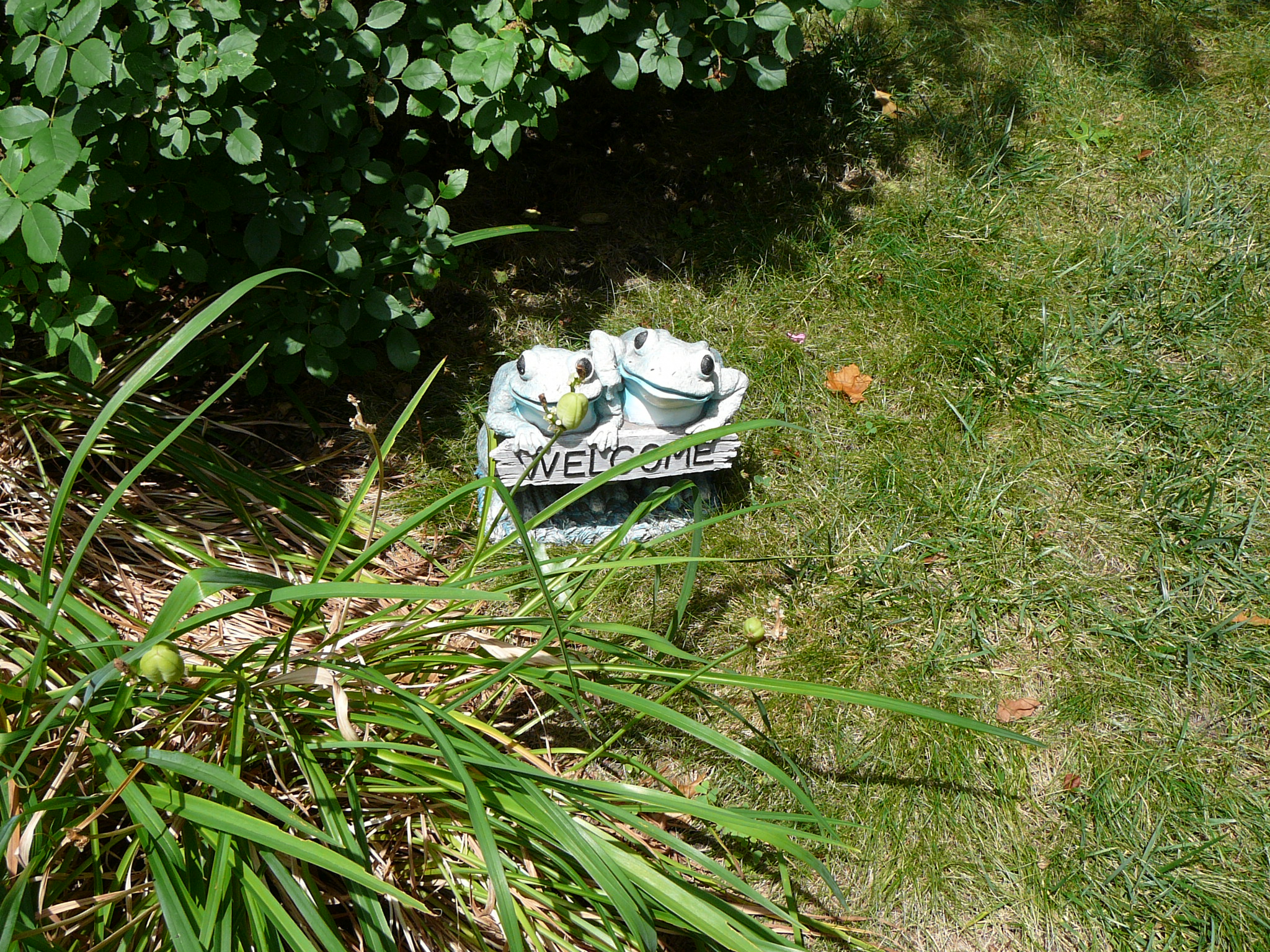
You mean they look like a pair of welcoming frogs?
-
Re:No expectation of privacy in public?
Maybe the cameras general appearance has already been revealed publicly? As shown on these two sites: http://www.dailytech.com/Feder... http://www-math.mit.edu/~rstan... In which case criminals already may know what to look for.
-
Re:Coding
Think Iron-Man style interface where you move data pieces and functions around and connect them visually.
That is the way that Scratch works. Most kids can learn it pretty quickly. There are plenty of Youtube tutorials. You can also pair up smart kids with dumb kids to help them along. I coach after school robotics and programming at my neighborhood school. We start the kids on Scratch in 3rd and 4th grade, and then in 5th and 6th grade they learn Python. Most of the programming assignments are graphical, because that keeps the kids interested. The older kids do Minecraft mods in Python.
-
Re:How many Apollo 11 computers?
This page claims:
The Apollo Guidance Computer weighed 70 pounds, consumed 55 watts of power and occupied only 0.97 cubic feet inside the spacecraft. These first digital flight computers were limited to only 36,000 words of fixed memory and 2,000 words of RAM, and operated at a 12-microsecond clock speed.
That was 16 bit words. 12 microseconds is about 83K-ops/sec. Unclear how many cycles each operation took, but let's give it the benefit of the doubt and say the throughput was instruction per clock. (Probably optimistic).
Those 18-petaflops are probably 32 bit, if not 64 or 80. Let's say each is worth two of the AGC 16-bit ops.
So, 18 petaflops would be similar to 4.3 x 10^11 apollo guidance computers. You can probably swing that by 100X in either direction depending on the assumptions you make, but let's roll with it.
Each AGC weighed 32 kg. 4x10^11 of them would weigh in at ~ 1.4x10^13 kg. For comparison, this is roughly 35 times the combined mass of the entire human population.
-
Re:hanging on every word of a celebrity
That would appear entirely logical. Just like in stream-based computing, you neither evaluate more elements of the stream than you actually need at the moment, nor do you keep around the elements that have already been used and thrown away.
-
We're winning the War on Cholesterol
35 years of widespread use of statins are showing their results. Depression, Alzheimer's, and generally worse health in old age.
-
Re:Recession is really a depression
Why is the parent modded as "insightful"? It's full of bullshit.
For example, the price of beef has NOT tripled: http://www.statista.com/statis... - it went from $2.09 per pound in 2006 to $3.05 in 2015. That's annualized 3.2% price growth rate - quite in line with the official inflation.
And if you don't believe BLS then there's an alternative: http://bpp.mit.edu/usa/ - they collate prices from multiple sources (literally more than a billion price points a day) and compute their own inflation measurements. And it's in agreement with BLS.
Anecdotes like "BLS changes stuff to hide the TRUTH" are totally and ALWAYS a complete bullshit. Always. No exceptions.