Slashdot Mirror
Domain: nature.com
Stories and comments across the archive that link to nature.com.
Stories · 1,757
-
Virginia High Court Rejects Case Against Climatologist Michael Mann
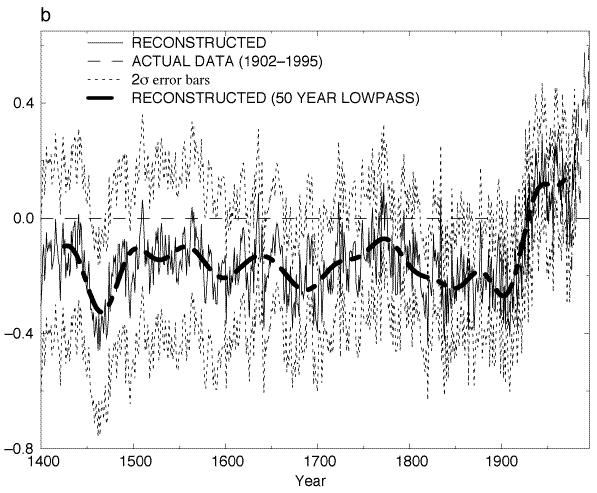
ananyo writes "The Virgina Supreme Court on Friday tossed out an investigation by the state's conservative attorney general, Ken Cuccinelli, into Michael Mann, the former University of Virginia climatologist whose work on the now-famous hockey-stick graph has become a lightning rod for climate skeptics. 'In a dense and conflicted 26-page ruling (PDF) covering a century and a half of case law — including references to kings as well as modern "functional incongruities" that divided the judges themselves — Virginia’s high court ruled that the university is not a "person" and thus is not subject to Cuccinelli’s demands under the state’s Fraud Against Taxpayers Act.' The 'climategate' scientist has been cleared of wrongdoing by a number of investigations." -
Virginia High Court Rejects Case Against Climatologist Michael Mann
ananyo writes "The Virgina Supreme Court on Friday tossed out an investigation by the state's conservative attorney general, Ken Cuccinelli, into Michael Mann, the former University of Virginia climatologist whose work on the now-famous hockey-stick graph has become a lightning rod for climate skeptics. 'In a dense and conflicted 26-page ruling (PDF) covering a century and a half of case law — including references to kings as well as modern "functional incongruities" that divided the judges themselves — Virginia’s high court ruled that the university is not a "person" and thus is not subject to Cuccinelli’s demands under the state’s Fraud Against Taxpayers Act.' The 'climategate' scientist has been cleared of wrongdoing by a number of investigations." -
Majorana Fermion May Have Been Spotted At TU Delft
vikingpower writes "A research group at Technical University Delft around prof. Kouwenhoven has probably not only spotted pairs of so-called Majorana Fermions for the first time (these had been predicted to exist by the Italian physicist Ettore Majorana), but also demonstrated that, by generating them at the end of an Indium-Arsenide microwire, quantum computing with them may have come one more step closer to reality. The excitement around Prof. Kouwenhoven at the American Physical Society annual congress in Boston, after he completed his presentation, was considerable.A nice illustration is provided by this newspaper article (in Dutch)." -
Controversial Bioethicist Resigns From Celltex
ananyo writes "Bioethicist Glenn McGee has resigned his position as president of ethics and strategic initiatives at the stem-cell firm Celltex Therapeutics in Houston, Texas. Yesterday, Slashdot posted a story that suggested Celltex may have administered unproven treatments to several patients. The move comes at the end of a turbulent three months, which has seen McGee blasted by other bioethicists for working at the controversial stem-cell company while also holding the post of editor-in-chief of the American Journal of Bioethics, the most cited bioethics journal in the world. McGee announced that he had resigned, effective 28 February, on Twitter last night — the move came just two weeks after the 13 February press release by Celltex announcing that he would take the position." -
Stem Cell Firm May Have Administered Unproven Treatments
ananyo writes "With Texas pouring millions of dollars into developing adult stem-cell treatments, doctors there are already injecting paying customers with unproven preparations, supplied by an ambitious new company. Celltex Therapeutics 'multiplies and banks' stem cells derived from people's abdominal fat and its facility in Sugar Land opened in December 2011 and houses the largest stem-cell bank in the United States. But Nature has uncovered evidence that the company is involved in the clinical use of the cells on US soil, which the FDA has viewed as illegal in other cases." -
Huge Jurassic Fleas May Have Fed On Dinosaurs
ananyo writes "Primitive fleas were built to sup on dinosaur blood in the Jurassic period, more than 150 million years ago. The potential host–parasite relationship has been uncovered thanks to a set of beautifully preserved fossils found in China. Today, the varied group of parasitic insects known as fleas frequently infests mammals and birds. But little is known about their origins. Researchers have now extended the history of the parasites by at least 60 million years. Whereas modern fleas range from 1 to 10 millimeters in length, the Jurassic and Cretaceous species were between 8 and 21 millimeters. The Jurassic and Cretaceous fleas also lacked the spring-legged, jumping specializations of modern species, and their siphoning mouthparts were armored structures studded with saw-like projections, unlike the smooth jaws of modern fleas." -
Mars Mission Back In the Cards After Budget Cuts
ananyo writes "NASA has said it will re-design its Mars exploration program, and that the new architecture would include input — and money — from the human program as well as the space technology division. Orlando Figueroa, the former deputy director for space and technology at Goddard Space Flight Center in Greenbelt, Maryland, is to head up a seven or eight person committee, and to start developing mission concepts in the next month. One of those concepts would be a possible $700 million mission launching in 2018. The news offers a grain of comfort to a community still reeling from massive cuts to the Mars program." -
Optical Memory Could Speed Up the Internet
ananyo writes "Bits of data travelling the internet have a tough commute — they bounce back and forth between optical signal lines for efficient transmission and electrical signal lines for processing. All-optical routers would be more energy efficient, but their development has been hindered by a lack of optical memory devices. Now, researchers have developed just such a device (journal article abstract), paving the way towards a faster, more energy-efficient internet. The devices are based on optical cavities that can be switched between light-transmitting and light-blocking states to construct digital signals. Researchers have been working on such devices for several years, but previous versions used too much power and could not retain data long enough. The new memory cells use just 30 nanowatts of power, 300 times less than previous designs, and can retain data for one microsecond — long enough to support processing." (See also this paper on all-optical swtiches by four of the same authors.) -
Optical Memory Could Speed Up the Internet
ananyo writes "Bits of data travelling the internet have a tough commute — they bounce back and forth between optical signal lines for efficient transmission and electrical signal lines for processing. All-optical routers would be more energy efficient, but their development has been hindered by a lack of optical memory devices. Now, researchers have developed just such a device (journal article abstract), paving the way towards a faster, more energy-efficient internet. The devices are based on optical cavities that can be switched between light-transmitting and light-blocking states to construct digital signals. Researchers have been working on such devices for several years, but previous versions used too much power and could not retain data long enough. The new memory cells use just 30 nanowatts of power, 300 times less than previous designs, and can retain data for one microsecond — long enough to support processing." (See also this paper on all-optical swtiches by four of the same authors.) -
'Culturomics' Spreads From Google Books To Scientific Preprints
ananyo writes "Cultural Observatory at Harvard University in Cambridge, Massachusetts is to index the whole of the ArXiv pre-print database of papers from the physical sciences, breaking down the full text of the articles into component phrases to see how often a particular word or phrase appears relative to others — a measure of how 'meme-like' a term is. The team has already applied a similar approach to 5 million books in the Google Books database to produce their n-gram viewer. But the Google Books database carries with it a major limitation: because many of the works are under copyright, users cannot be pointed to the actual source material. Applying the tool to ArXiv means it could be used to chart trends in high-energy physics, for example: a quickening pulse of papers citing the Higgs boson, for example, or a peak in papers about supersymmetry, a theory which may soon be waning." -
Academics Not Productive Enough? Sack 'em
ananyo writes "One hundred academics at the University of Sydney, Australia, have this week been told they will lose their jobs for not publishing frequently enough. The move is part of a wider cost-cutting plans designed to pay for new buildings and refurbishment to the university. Letters were posted to researchers on Monday 20 February, informing them their positions were being terminated because they hadn't published at least four 'research outputs' over the past three years. It is unclear which research fields the academics work in. Another 64 academics were told they had a choice between leaving and moving to a teaching-only position, he said." -
The Recycling of the Tevatron
ananyo writes with an excerpt from an article in Nature about the decomissioning of the Tevatron: "It is a 4,000-tonne edifice that stands three stories high, chock full of particle detectors, power supplies, electronics and photomultiplier tubes, all layered like a giant onion around a cylindrical magnet. During 26 years of operation at the Fermi National Accelerator Laboratory in Batavia, Illinois, this behemoth, the Collider Detector at Fermilab (CDF), helped to find the top quark and chased the Higgs boson. But since the lab's flagship particle collider, the Tevatron, was switched off in September 2011, the detector has been surplus stock — and it is now slowly being cannibalized for parts." Currently other projects are taking small bits and pieces of the Tevatron, but another Fermilab project, ORKA, wants to gut the collider to study kaon decay. -
Mathematical Parrot Reveals His Genius With Posthumous Paper
ananyo writes "Even in death, the world's most accomplished parrot continues to amaze. The final experiments involving Alex – a grey parrot trained to count objects – have just been published (abstract). They show that Alex could accurately add together Arabic numerals to a sum of eight, and correctly add three small sets of objects, putting his mathematical abilities on par with (and maybe beyond) those of chimpanzees and other non-human primates." -
Deadly H5N1 Flu Studies To Stay Secret... For Now
Edsj writes "A spokesman for the World Health Organization announced that an agreement had been reached, after a debate, to keep details secret of the controversial work about the highly pathogenic H5N1 avian flu virus until deeper risk analyses have been carried out. The scientists who made the study, led by Ron Fouchier, still want to release the full paper at some future date for public viewing, but for the time being, the NSABB got what it wanted." The moratorium will be extended "probably for several months." -
DNA Nanorobot Halts Growth of Cancer Cells
ananyo writes "DNA origami, a technique for making structures from DNA, has been used to build devices that can seek out and potentially destroy cancer cells. The nanorobots use a similar system to cells in the immune system to engage with receptors on the outside of cells. The barrel-shaped devices, each about 35 nanometers in diameter, contain 12 sites on the inside for attaching payload molecules and two positions on the outside for attaching aptamers, short nucleotide strands with special sequences for recognizing molecules on the target cell (abstract). The aptamers act as clasps: once both have found their target, they spring open the device to release the payload. The researchers tested six combinations of aptamer locks, each of which were designed to target different types of cancer cells in culture. Those designed to hit a leukemia cell could pick that cell out of a mixture of cell types, then release their payload — in this case, an antibody — to stop the cells from growing. The researchers designed the structure of the nanorobots using open-source software, called Cadnano." -
US Seismologist Testifies Against Scientists In Quake-Prediction Case
ananyo writes with this snippet from Nature (for which this earlier Nature article is also background): "'The courthouse in L'Aquila, Italy, yesterday hosted a highly anticipated hearing in the trial of six seismologists and one government official indicted for manslaughter over their reassurances to the public ahead of a deadly earthquake in 2009. .... During the hearing, the former head of the Italian Department of Civil Protection turned from key witness into defendant, and a seismologist from California criticized Italy's top earthquake experts.' Lalliana Mualchin, former chief seismologist for the Department of Transportation in California, criticized the Italian analysis, which he says was based on a poor model. If the court agrees with Mualchin, the defendants could face up to 12 years in jail." -
US Seismologist Testifies Against Scientists In Quake-Prediction Case
ananyo writes with this snippet from Nature (for which this earlier Nature article is also background): "'The courthouse in L'Aquila, Italy, yesterday hosted a highly anticipated hearing in the trial of six seismologists and one government official indicted for manslaughter over their reassurances to the public ahead of a deadly earthquake in 2009. .... During the hearing, the former head of the Italian Department of Civil Protection turned from key witness into defendant, and a seismologist from California criticized Italy's top earthquake experts.' Lalliana Mualchin, former chief seismologist for the Department of Transportation in California, criticized the Italian analysis, which he says was based on a poor model. If the court agrees with Mualchin, the defendants could face up to 12 years in jail." -
Did Life Emerge In Ponds Rather Than Ocean Vents?
ananyo writes "The prevailing scientific view holds that life began in hydrothermal vents in the deep sea. But a controversial study (abstract) suggests that inland pools of condensed and cooled geothermal vapor have the ideal characteristics for the origin of life. The study hinges on the observation that the composition of the cytoplasm of modern cells is very different to that of seawater. On the other hand, the mix of metal ions in cytoplasm is (almost exclusively) found where where hot hydrothermal fluid brings the ions to the surface — places such as geysers and mud pots. There are a number of problems with the study, however — for instance, a lack of land 4 billion years ago would have made it difficult for life to start in such pools." -
Data Sharing Aids the Fight Against Malaria
ananyo writes "Two years ago, GlaxoSmithKline (GSK) announced that it would release details of about 13,500 molecules that had already been shown to inhibit the malaria-causing Plasmodium falciparum parasite to some degree. The molecular structures were published in May 2010, along with similar data from Novartis, based in Basel, Switzerland, and the St Jude Children's Research Hospital in Memphis, Tennessee. Researchers were encouraged to test the combined library of more than 20,000 compounds to pinpoint potential drugs, and then find out how they work so that the molecules could be tweaked to enhance their activity. Such 'open innovation' efforts have since been launched, including an effort unveiled last month which will see 11 companies sharing their intellectual property. But are such efforts working? The answer, judging by the GSK effort, seems to be a cautious 'yes.'" -
Data Sharing Aids the Fight Against Malaria
ananyo writes "Two years ago, GlaxoSmithKline (GSK) announced that it would release details of about 13,500 molecules that had already been shown to inhibit the malaria-causing Plasmodium falciparum parasite to some degree. The molecular structures were published in May 2010, along with similar data from Novartis, based in Basel, Switzerland, and the St Jude Children's Research Hospital in Memphis, Tennessee. Researchers were encouraged to test the combined library of more than 20,000 compounds to pinpoint potential drugs, and then find out how they work so that the molecules could be tweaked to enhance their activity. Such 'open innovation' efforts have since been launched, including an effort unveiled last month which will see 11 companies sharing their intellectual property. But are such efforts working? The answer, judging by the GSK effort, seems to be a cautious 'yes.'" -
FDA Unveils Biosimilars Guidance
ananyo writes "The U.S. Food and Drug Administration has released its long-anticipated draft guidance for drug makers interested in making generic forms of biological drugs such as enzymes and antibodies. The move could open the door for cheaper versions of some of medicine's most expensive drugs, but it is still unclear how many companies will be willing to tackle the challenges and uncertainties of making 'biosimilar' drugs. Copying biological molecules is a stickier proposition than making ordinary generic medicines because proteins are typically much larger and more complex than small molecule drugs. They are also often produced in cell cultures, and even small variations in how the cells are grown can change the properties of the protein produced." -
FDA Unveils Biosimilars Guidance
ananyo writes "The U.S. Food and Drug Administration has released its long-anticipated draft guidance for drug makers interested in making generic forms of biological drugs such as enzymes and antibodies. The move could open the door for cheaper versions of some of medicine's most expensive drugs, but it is still unclear how many companies will be willing to tackle the challenges and uncertainties of making 'biosimilar' drugs. Copying biological molecules is a stickier proposition than making ordinary generic medicines because proteins are typically much larger and more complex than small molecule drugs. They are also often produced in cell cultures, and even small variations in how the cells are grown can change the properties of the protein produced." -
The Lack of Scientific Philanthropy In Japan
ananyo writes "The University of Tokyo this week will unveil Japan's first institute named after a foreign donor: the Kavli Institute for the Physics and Mathematics of the Universe. The announcement adds Norwegian philanthropist Fred Kavli's name, along with a US$7.5-million endowment, to one of Japan's most successful institutes. The new center marks a turning point for Japan: to date, the country's universities and research institutes have long had to make do with few philanthropic donations. Strict laws governing university finances, and the lack of a philanthropic tradition, have discouraged the gifts that serve Western institutions so well. To get around the laws, instead of handing the endowment over to the institute, the Kavli Foundation will continue to manage the sum, giving the institute the return on the funds." -
New Technique Promises Much Faster Hard Drive Write Speeds
MrSeb writes "Hold onto your hats: Scientists at the University of York, England have completely rewritten the rules of magnetic storage (abstract; full paper paywalled). Instead of switching a magnetic region using a magnetic field (like a hard drive head), the researchers have managed to switch a ferrimagnetic nanoisland using a 60-femtosecond laser. Storing magnetic data using lasers is up to 1,000 times faster than writing to a conventional hard drive (we're talking about gigabytes or terabytes per second) — and the ferrimagnetic nanoislands that store the data are capable of storage densities that are some 15 times greater than existing hard drive platters. Unfortunately the York scientists only detailed writing data with lasers; there's no word on how to read it." -
Higgs Signal Gains Strength
ananyo writes "Today the two main experiments at the Large Hadron Collider, the world's most powerful particle accelerator, submitted the results of their latest analyses. The new papers (here here and here) boost the case for December's announcement of a possible Higgs signal. Physicists working on the In the case of the Compact Muon Solenoid experiment, have been able to look at another possible kind of Higgs decay, and that allows them to boost their Higgs signal from 2.5 sigma to 3.1 sigma. Taken together with data from the other detector, ATLAS, Higgs' overall signal now unofficially stands at about 4.3 sigma." -
Little Ice Age: It Was Not the Sun
vikingpower writes "The Little Ice Age, lasting from the end of the Middle Age into the 17th century, may very likely have been caused by the combined effects of four major volcanic eruptions and increased sunlight reflection by increasing sea ice, the so-called Albedo effect. ... The University of Boulder has a press release with maps and photographs. Bette Otto-Bliesner, one of the scientists behind the 'volcano + sea ice' thesis, fields an earnest warning against drawing conclusions too quickly from this research: 'I think people might look at the Little Ice Age and think that all we need to save us from rising temperatures are some volcanic eruptions or the geo-engineering equivalent [...] But when you see what happened when global temperatures dropped by just one degree and you look at current predictions of six or seven degree increases for the future, you realize how precarious things are for life as we know it.'" -
MIT Envisions DIY Solar Cells Made From Grass Clippings
Zothecula writes "Research scientist Andreas Mershin has a dream to bring inexpensive solar power to the masses, especially those in developing countries. After years of research, he and his team at MIT's Center for Bits and Atoms, along with University of Tennessee biochemist Barry Bruce, have worked out a process that extracts functional photosynthetic molecules from common yard and agricultural waste. If all goes well, in a few years it should be possible to gather up a pile of grass clippings, mix it with a blend of cheap chemicals, paint it on your roof and begin producing electricity. Talk about redefining green power plants!" -
Researchers Feel Pressure To Cite Superfluous Papers
ananyo writes "One in five academics in a variety of social science and business fields say they have been asked to pad their papers with superfluous references in order to get published. The figures, from a survey published in the journal Science (abstract), also suggest that journal editors strategically target junior faculty, who in turn were more willing to acquiesce. The controversial practice is not new: those studying publication ethics have for many years noted that some editors encourage extra references in order to boost a journal's impact factor (a measure of the average number of citations an article in the journal receives over two years). But the survey is the first to try to quantify what it calls 'coercive citation,' and shows that this is 'uncomfortably common.' Perhaps the most striking finding of the survey was that although 86% of the respondents said that coercion was inappropriate, and 81% thought it damaged a journal's prestige, 57% said they would add superfluous citations to a paper before submitting it to a journal known to coerce. However, figures from Thomson Reuters suggest that social-science journals tend to have more self-citations than basic-science journals." -
Did North Korea Conduct Secret Nuclear Tests?
gbrumfiel writes "In May of 2010, North Korea made the bizarre claim that it had achieved nuclear fusion. Many, many commentators (including faithful Slashdot readers) mocked the dear leader for his outlandish boast, but could there have been a kernel of truth in the claim? Apparently some odd radioactivity was spotted by detectors surrounding the North just days after the announcement. Now, a new analysis by a Swedish scientist suggests that the radiation may have leaked from covert experiments into boosting fission warheads. The evidence is tentative at best, and many are skeptical, but it does seem that something odd was up on the Korean peninsula that spring." -
Did North Korea Conduct Secret Nuclear Tests?
gbrumfiel writes "In May of 2010, North Korea made the bizarre claim that it had achieved nuclear fusion. Many, many commentators (including faithful Slashdot readers) mocked the dear leader for his outlandish boast, but could there have been a kernel of truth in the claim? Apparently some odd radioactivity was spotted by detectors surrounding the North just days after the announcement. Now, a new analysis by a Swedish scientist suggests that the radiation may have leaked from covert experiments into boosting fission warheads. The evidence is tentative at best, and many are skeptical, but it does seem that something odd was up on the Korean peninsula that spring." -
Norway Brings DNA Sequencing To National Healthcare
ananyo writes "Norway is set to become the first country to incorporate genome sequencing into its national health-care system. The Scandinavian nation, which has a population of 4.8 million, will use 'next-generation' DNA sequencers to trawl for mutations in tumors that might reveal which cancer treatments would be most effective. In its three-year pilot phase, the Norwegian Cancer Genomics Consortium will sequence the tumor genomes of 1,000 patients in the hope of influencing their treatments. It will also look at another 3,000 previously obtained tumor biopsies to get a better idea of the mutations in different cancers, and how they influence a patient's response to a drug. In a second phase, the project will build the laboratory, clinical and computing infrastructure needed to bring such care to the 25,000 Norwegians who are diagnosed with cancer each year. Similar projects are under way in the United Kingdom and at research hospitals in the United States, France and elsewhere. But Norway's will be among the first to look for tumor mutations using next-generation DNA sequencing rather than conventional genetic testing." -
Japan Plans To Merge Major Science Bodies
ananyo writes "In its battle against a sluggish economy, Japan's government is gearing up to make cost savings through a root-and-branch reform of the country's science system, merging some of its most prominent research organizations. Plans approved by the government's cabinet would consolidate the RIKEN network of basic-research laboratories with the National Institute for Materials Science (NIMS), the Japan Agency for Marine-Earth Science and Technology (JAMSTEC), the National Research Institute for Earth Science and Disaster Prevention (NIED) and the Japan Science and Technology Agency (JST) — the national funding body. But with few details about the timing, potential cost savings or full implications of the change, many researchers are concerned that it could be a recipe for harsh funding cuts and even greater bureaucracy." -
Huge Freshwater Bulge In Arctic Ocean
New submitter turkeyfish writes "UK scientists are reporting today in the journal Nature Geoscience that a huge bulge of freshwater is forming in the Western Arctic Ocean caused by a large gyre of freshwater. The gyre appears to indicate that the ice is becoming thin enough over the Arctic Ocean that the wind is beginning to affect the motion of water under the ice. A sudden release of this water or its emergence to the surface will greatly accelerate the melting of the remaining polar oceanic ice and likely alter oceanic circulation in the North Atlantic." -
Mutant Flu Researchers Declare a Time Out
New submitter scibri writes "Researchers working on highly pathogenic H5N1 avian influenza have said they will stop work on the virus for 60 days, to allow them to explain the importance of their work to politicians and the public. Quoting: 'Despite the positive public-health benefits these studies sought to provide, a perceived fear that the ferret-transmissible H5 HA viruses may escape from the laboratories has generated intense public debate in the media on the benefits and potential harm of this type of research. We would like to assure the public that these experiments have been conducted with appropriate regulatory oversight in secure containment facilities by highly trained and responsible personnel to minimize any risk of accidental release.'" Reader Harperdog sends in a related article arguing that we shouldn't be having a debate about the censorship of research, but rather a debate over whether the research should have been allowed in the first place. -
Mutant Flu Researchers Declare a Time Out
New submitter scibri writes "Researchers working on highly pathogenic H5N1 avian influenza have said they will stop work on the virus for 60 days, to allow them to explain the importance of their work to politicians and the public. Quoting: 'Despite the positive public-health benefits these studies sought to provide, a perceived fear that the ferret-transmissible H5 HA viruses may escape from the laboratories has generated intense public debate in the media on the benefits and potential harm of this type of research. We would like to assure the public that these experiments have been conducted with appropriate regulatory oversight in secure containment facilities by highly trained and responsible personnel to minimize any risk of accidental release.'" Reader Harperdog sends in a related article arguing that we shouldn't be having a debate about the censorship of research, but rather a debate over whether the research should have been allowed in the first place. -
Multicellular Life Evolves In Months, In a Lab
ananyo writes "The origin of multicellular life, one of the most important developments in Earth's history, could have occurred with surprising speed, U.S. researchers have shown. In the lab, a single-celled yeast (Saccharomyces cerevisiae) took less than 60 days to evolve into many-celled clusters that behaved as individuals. The clusters even developed a primitive division of labor, with some cells dying so that others could grow and reproduce. Multicellular life has evolved independently at least 25 times, but these transitions are so ancient that they have been hard to study. The researchers wanted to see if they could evolve multicellularity in a single-celled organism, using gravity as the selective pressure. In a tube of liquid, clusters of yeast cells settle at the bottom more quickly than single cells. By culturing only the cells that sank, they selected for those that stick together. After many rounds of selection over 60 days, the yeast had evolved into 'snowflakes' comprising dozens of cells." -
BASF Moves GM Plant Research From Europe To US
ananyo writes "The German chemical giant BASF is moving its transgenic plant operations from Europe to the U.S., it says, because of widespread opposition to the technology. The company on 16 January announced that it would move its plant science headquarters from Limburgerhof, Germany to Raleigh, North Carolina and no longer develop plants solely for cultivation in Europe. The division employs 157 people in Limburgerhof, plus another 63 at facilities elsewhere in Europe. BASF said it would relocate 123 of those jobs to the North Carolina facility. In statement, Stefan Marcinowski, a member of BASF's Board of Executive Directors, cited 'a lack of acceptance for this technology in many parts of Europe – from the majority of consumers, farmers and politicians.' The company instead plans to focus on plant biotechnology markets in the Americas and Asia." -
Totally Drug-Resistant TB Emerges In India
ananyo writes "Physicians in India have identified a form of incurable tuberculosis there, raising further concerns over increasing drug resistance to the disease (abstract). Although reports call this latest form a 'new entity,' researchers suggest that it is instead another development in a long-standing problem. The discovery makes India the third country in which a completely drug-resistant form of the disease has emerged, following cases documented in Italy in 2007 and Iran in 2009." -
Three Tiny Exoplanets Suggest Solar System Not So Special
ananyo writes "Adding to its already long roster of firsts, NASA's Kepler spacecraft has found the three smallest extrasolar planets ever detected — all of them smaller than Earth, and the most diminutive no larger than Mars. The newly discovered trio forms a miniature planetary system orbiting a cool, dim red dwarf star called KOI-961. Because they are so close to their star, the three exoplanets are too hot to support life. But unlike most previously known exoplanets, the vast majority of which are Jupiter-scale gas giants, all three are thought to be rocky worlds like Earth and the other worlds of the inner Solar System." -
Carbon Emissions 'Will Defer Ice Age'
Sven-Erik writes "Due to subtle variations in the Earth's orbit, researchers have calculated that the next Ice Age is due within 1,500 years. However, a new study suggests greenhouse gas emissions mean it will not happen that soon (abstract). 'Dr Skinner's group ... calculates that the atmospheric concentration of CO2 would have to fall below about 240 parts per million (ppm) before the glaciation could begin. The current level is around 390ppm. Other research groups have shown that even if emissions were shut off instantly, concentrations would remain elevated for at least 1,000 years, with enough heat stored in the oceans potentially to cause significant melting of polar ice and sea level rise.'" -
Researchers Show How Cellular Complexity Can Evolve
ananyo writes with an excerpt from a Nature news release: "By bringing long-dead proteins back to life, researchers have worked out the process by which evolution added a component to a cellular machine. ... In a paper published in Nature, researchers recreated an 'ancestral' version of a cellular machine called the V-ATPase proton pump, which channels protons across membranes and is vital for keeping cell compartments at the right acidity. Part of this machine is a ring of six proteins that threads through the membrane. Animals and most other eukaryotes have a ring composed of two types of protein component; fungi are alone in having a ring with three. The researchers used computational methods to work backwards and find the most likely sequences of these proteins hundreds of millions of years ago. The team inserted the DNA into yeast and found that just two mutations can turn the simple 2-protein ring into the more complex 3-protein ring." -
Lower Limit Found For Sudoku Puzzle Clues
ananyo writes "An Irish mathematician has used a complex algorithm and millions of hours of supercomputing time to solve an important open problem in the mathematics of Sudoku, the game popularized in Japan that involves filling in a 9X9 grid of squares with the numbers 1–9 according to certain rules. Gary McGuire of University College Dublin shows in a proof posted online [PDF] that the minimum number of clues — or starting digits — needed to complete a puzzle is 17; puzzles with 16 or fewer clues do not have a unique solution. Most newspaper puzzles have around 25 clues, with the difficulty of the puzzle decreasing as more clues are given." -
Ants Turned Into 'Supersoldiers'
New submitter jmcdougald.esq sends word that a team of researchers from McGill University has tinkered with the development of a type of ant to produce what they call a 'supersoldier' subcaste — ants that are much larger than average workers but only appear naturally in a few species (abstract). The team's work showed that by exposing the ant larvae to a hormone-like chemical, they could induce 'supersoldier' growth in many more species. "This result suggests that supersoldiers existed in the common ancestor of the entire genus. Even though the supersoldier subcaste eventually disappeared in most species, the ants kept the potential to make it. Because the same hormone sets the fate of both supersoldiers and soldiers, it may not have been possible to completely lose one without compromising the other. ... In some species that evolved later, such as Pheidole obtusospinosa, the supersoldiers became a permanent addition. Whereas most Pheidole species simply evacuate their nests when army ants invade, for some reason P. obtusospinosa find it beneficial to stay, which makes supersoldiers a useful addition to the community." -
Weird Fossils Show Ancient Organism Reproducing
ananyo writes "Strange fossils from Doushantuo in China, have turned out to be 570-million-year-old snapshots of an organism caught in the act of reproducing. Researchers have used three-dimensional X-ray scanning techniques to see that the fossils contain nuclei-like structures — and one even has the dumb-bell shape of a modern nucleus about to replicate. The fossils have divided palaeontologists for over a decade. It now seems likely they are fossils of creatures similar to modern single-celled microorganisms called mesomycetozoeans that are neither animals nor bacteria." -
Kepler Discovers First Earth-Sized Exoplanets
ananyo writes "NASA's Kepler telescope has reached one of its major mission milestones: finding an Earth-sized planet outside the Solar System. What's more, it has done it twice in the same star system. Whizzing around the star Kepler-20, about 290 parsecs (946 light-years) from Earth, is not only an Earth-sized planet, but also something just a touch smaller — a Venus." -
India To Cut Out Animal Dissection
ananyo writes "Squeamish science students in India might not have to grapple with cutting up rats or frogs for much longer. The University Grants Commission (UGC), the national body in New Delhi that funds and governs Indian universities, announced new rules earlier this month that would phase out almost all animal dissection and replace it with teaching using computer simulations and models." -
Earth's Core Made In Miniature
ananyo writes "A 3-meter-tall metal sphere full of molten sodium is about to start work modeling the Earth's core. The gigantic dynamo, which has taken researchers ten years to build, 'will generate a self-sustaining electromagnetic field that can be poked, prodded and coaxed for clues about Earth's dynamo, which is generated by the movement of liquid iron in the outer core.'" -
Researchers Build First Molybdenite Microchip
An anonymous reader writes "A Swiss team may have found an alternative to silicon microchips which could result in smaller, more flexible and less energy hungry processors. The Swiss team's chip does not use silicon, but molybdenite (MoS2) a dark-colored, naturally occurring mineral that is able to be used in much thinner layers (paywall)." -
Graphene Spun Into Meter-Long Fibers
ananyo writes "Nano-sized flakes of graphene oxide can be spun into graphene fibers several meters long, researchers in China have shown. The strong, flexible fibers, which can be tied in knots or woven into conductive mats, could be the key to deploying graphene in real-world devices such as flexible batteries." -
Research Data: Share Early, Share Often
Shipud writes "Holland was recently in the news when a psychology professor in Tilburg University was found to have committed large-scale fraud over several years. Now, another Dutch psychologist is suggesting a way to avert these sort of problems, namely by 'sharing early and sharing often,' since fraud may start with small indiscretions due to career-related pressure to publish. In Wilchert's study, he requested raw data from the authors of some 49 papers. He found that the authors' reluctance to share data was associated with 'more errors in the reporting of statistical results and with relatively weaker evidence (against the null hypothesis). The documented errors are arguably the tip of the iceberg of potential errors and biases in statistical analyses and the reporting of statistical results. It is rather disconcerting that roughly 50% of published papers in psychology contain reporting errors and that the unwillingness to share data was most pronounced when the errors concerned statistical significance.'"