Slashdot Mirror
Domain: nvidia.com
Stories and comments across the archive that link to nvidia.com.
Comments · 1,234
-
Re:Feature Bloat?
I'm a newbie at this stuff, but here goes:
"single-rendering-pass order-independent transparency" - let's say I have three translucent objects at roughly the same depth, with parts of one in front of and behind parts of the others (and maybe the same is true for objects B and C as well). Figuring out the correct draw order is absolute fucking murder, and there still isn't a generalized approach for anybody but the most advanced of the most advanced (like Dual depth peeling or making convex hulls out of all translucent geo in the scene). Core API support for dealing with this issue would be a godsend and is about 10 years overdue for ALL graphics APIs.
Neat fact: the PowerVR-based GPU used by the iPhone/iPad uses a tile-based rendering method in which (I am told) this problem generally doesn't arise.
"Capturing GPU-tessellated geometry and drawing multiple instances of the result of a transform feedback to enable complex objects to be efficiently repositioned and replicated;" Easier to quickly render massive crowds, forests, and procedural cities.
"Modifying an arbitrary subset of a compressed texture, without having to re-download the whole texture to the GPU for significant performance improvements;" Shaders not requiring four fucking separate mask textures all dancing on the head of a pin to pull off a simple effect? Yeah, I'll take that. Could probably also have some nice gains in procedural content variation.
"Packing multiple 8 and 16 bit values into a single 32-bit value for efficient shader processing with significantly reduced memory storage and bandwidth, especially useful when transferring data between shader stages." Massive performance gains for any sort of post-processing work, basically.
-
Re:Again
As I'll remind you the next time this comes up. Macs do fail and dont always work, next we'll deal with the myth of inherent security.
Again with the straw man arguments.
It really sucks when your own propaganda is used against you.
Propaganda ? Get some perspective. Take a deep breath and repeat: we're discussing a preference for certain technical solution, not a religion. Don't project your attitudes onto me.
BTW, Windows updates dont fail as badly as this. Have not done so for years. The difference is when an update with Windows or Linux buggers up the drivers, I can get the original driver from Nvidia/Inte/AMD and fix it myself.
Well here's the driver for Snow Leopard for the GeForce GT 330M that's in that Macbook, that might work. Of course once Nvidia releases a driver for Lion you could try installing that but once they do Apple will just distribute it through an update so there'd be no point looking for it yourself. You seem kind of ill informed, you really think there's no downloadable drivers on OSX ?
-
Re:ARM laptops
I'm just waiting for someone to port Linux to it.
It's almost done
XDA member seshmaru posted a guide that explains how to flash Ubuntu onto Tegra 2 based devices. This is not just running it from an SD card but actually flashing this onto the nvflash of the device, so for those of you who were still wondering what use was the security key, this is one such reason. Keep in mind that this is not complete yet as the tools required to flash anything to nvflash are currently under development. However, if you wanted to have a more robust OS than Android, this is certainly something to keep your eye on.
http://www.xda-developers.com/android/want-to-run-linux-in-your-transformer-there-may-be-hope-soon/
If you're really brave (and lucky) the workaround to get Karmic running on Tegra devices is here.
http://tegradeveloper.nvidia.com/tegra/forum/workaround-run-ubuntu-now -
Re:There's no magic behind "UNLIMITED DETAIL"
Sorry, that first URL is missing a character at the end, it should be: http://research.nvidia.com/publication/efficient-sparse-voxel-octrees-analysis-extensions-and-implementation
-
Re:I call bullshit
The technology itself isn't bullshit, but what is bullshit is that Euclideon is taking credit for other people's work.
They say they've invented the methods and algorithms behind it all, well that's just pure fantasy. Here's what Euclideon is basing there technology off of:
http://research.nvidia.com/publication/efficient-sparse-voxel-octrees-analysis-extensions-and-implementatio [nvidia.com]
http://artis.imag.fr/Publications/2009/CNLE09/ [artis.imag.fr]Here's video from 2009 which looks better than Euclideon's videos: http://www.youtube.com/watch?v=HScYuRhgEJw [youtube.com]
They might also be using other people's source code (legally though, it's released under the Apache license): http://code.google.com/p/efficient-sparse-voxel-octrees/ [google.com]
Furthermore, it's not "unlimited detail", you will always have a limited amount of RAM and disk space, therefore you have limits to your detail, even with procedural content generation. But your effective compression rate is 1-bit per voxel, so 20 billion voxels = 2.5GB, so you need to utilize dynamic content streaming from disk to the GPU.
-
Re:The company got back to me
Don't bother, they're taking credit for other people's work. You want to know how their technology works? Here's a couple of research papers:
http://research.nvidia.com/publication/efficient-sparse-voxel-octrees-analysis-extensions-and-implementatio
http://artis.imag.fr/Publications/2009/CNLE09/Want some source code? http://code.google.com/p/efficient-sparse-voxel-octrees/
Want a video? http://www.youtube.com/watch?v=HScYuRhgEJwEuclideon is just spinning up the marketing bullshit and trying to make a profit off of it all. They don't even have good lighting, they're just doing forward shading for each voxel ray-cast intersection using diffuse lighting with a single global point light source. And they haven't demonstrated robust animation yet.
Guess what, it is possible to animate voxel octrees, but Euclideon never came up with the method either. Some researcher in Germany came up with a working solution for his bachelor's thesis: http://www.youtube.com/watch?v=Tl6PE_n6zTk
-
There's no magic behind "UNLIMITED DETAIL"
Euclideon is unjustly taking credit for other people's hard work. They say they've invented the methods and algorithms behind it all, well that's just pure fantasy. Here's what Euclideon is basing there technology off of:
http://research.nvidia.com/publication/efficient-sparse-voxel-octrees-analysis-extensions-and-implementatio
http://artis.imag.fr/Publications/2009/CNLE09/Here's video from 2009 which looks better than Euclideon's videos: http://www.youtube.com/watch?v=HScYuRhgEJw
They might also be using other people's source code (legally though, it's released under the Apache license): http://code.google.com/p/efficient-sparse-voxel-octrees/
Furthermore, it's not "unlimited detail", you will always have a limited amount of RAM and disk space, therefore you have limits to your detail, even with procedural content generation.
Stop virally spreading this video, you're only helping Euclideon profit from more page views and attention.
-
Re:Still in use
You'd better be calling The Good Lord for help right now, because while you weren't looking specialized chips like that DID become the dominant platform, and GPGPU is going to make it more so. The primary processor (which is also from a duopoloy) will just become a system management hypervisor.
Read up on the technological cycle of reincarnation. "All this has happened before. All this will happen again."
-
Re:Well the other thing I'd say it shows
I think this is a big misconception about GPUs. They are good at many applications - not just Linpack.
Take a look at the list of applications ranging from video transcoding to weather forecasting to computational chemistry to physics at:
http://www.nvidia.com/cuda
In fact, the researchers at the Chinese Academy of Sciences just ran one of the fastest scientific simulations using their GPU supercomputer (#2 on the Top500 list):
http://blogs.nvidia.com/2011/06/chinas-investment-in-gpu-supercomputing-begins-to-pay-off-big-time/
There are tons of papers at the Supercomputing conference for real "full" applications in a very diverse range of applications that are accelerated using GPUs. -
Re:Well the other thing I'd say it shows
I think this is a big misconception about GPUs. They are good at many applications - not just Linpack.
Take a look at the list of applications ranging from video transcoding to weather forecasting to computational chemistry to physics at:
http://www.nvidia.com/cuda
In fact, the researchers at the Chinese Academy of Sciences just ran one of the fastest scientific simulations using their GPU supercomputer (#2 on the Top500 list):
http://blogs.nvidia.com/2011/06/chinas-investment-in-gpu-supercomputing-begins-to-pay-off-big-time/
There are tons of papers at the Supercomputing conference for real "full" applications in a very diverse range of applications that are accelerated using GPUs. -
Re:Why are GPUs faster?
My naive interpretation of this: http://www.nvidia.com/object/GPU_Computing.html
In effect, having a good,recent GPU is the equivalent of having hundreds of CPUs all in one single chip. Since password guessing is a task that can be divided easily, the GPU is 100x faster than a regular CPU, and it is very efficient at number-crunching.
-
Will it run Linux?
Will it run Linux?
I'm not being facetious, I got stung by the lack of support by Nvidia for their Optimus graphics cards on my ASUS U30JC.
Thankfully Martin Juhl has been working on a solution using VirtualGL, which gives us the use of our Nvidia cards under linux
-
CUDA C++ and Thrust
This is an awesome development - Microsoft adding support for GPU computing in their mainstream tools and C++.
Today, CUDA C++ already provides a full C++ implementation on NVIDIA's GPUs:
http://developer.nvidia.com/cuda-downloads
And the Thrust template library provides a set of data structures and functions for GPUs (similar in spirit to STL):
http://code.google.com/p/thrust/
- biased NVIDIA employee -
Re:LOL Is hacked slang for consentual buttsecks??
IRIX fan, bitch.
ide fe with a monochrome dumb terminal, hamster wheel, vibrating dildo, and espresso machine, ridiculously large 35" Sony-made SGI-branded CRT monitor with 20 instances of Doom, all connected and performing flawlessly.
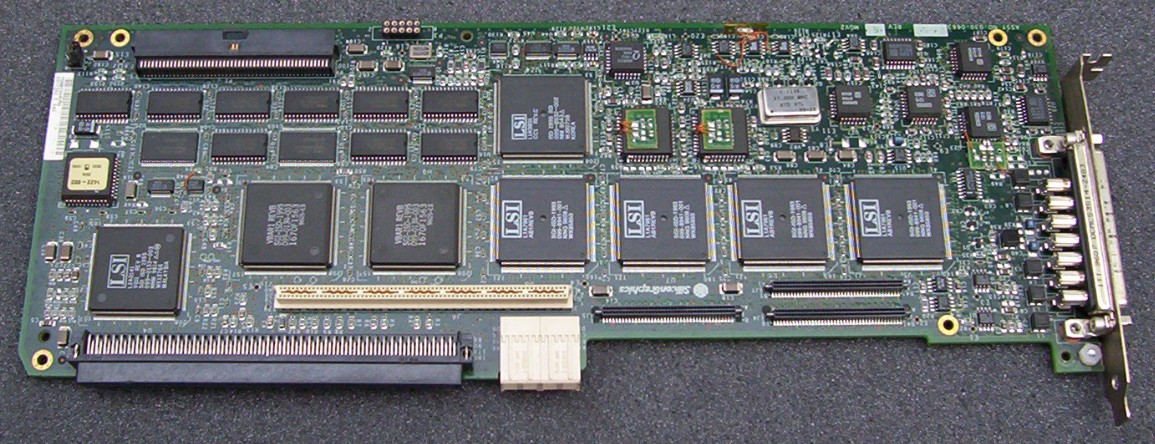
OOh, look at your pretty little Quadro 6000! My motherfucking Impact was fatter than yours and didn't need no pussy fans way back in '95. Dig those LSI chips, man. Same shit you'll find on military-grade cards. -
Re:Progress-loving users
Like preemptive multitasking GPUs (drool....):
http://forums.nvidia.com/index.php?showtopic=181194 -
Lots of GPU-accelerated numerical packages
There are tons of other CUDA accelerated numerical packages besides Matlab -- Mathematica, LabView, plugins / wrappers / libraries for Python, R, IDL. Some of these are linked from NVIDIA's website
http://www.nvidia.com/object/numerical-packages.htmlOthers from
http://www.nvidia.com/object/data_mining_analytics_database.html -
Lots of GPU-accelerated numerical packages
There are tons of other CUDA accelerated numerical packages besides Matlab -- Mathematica, LabView, plugins / wrappers / libraries for Python, R, IDL. Some of these are linked from NVIDIA's website
http://www.nvidia.com/object/numerical-packages.htmlOthers from
http://www.nvidia.com/object/data_mining_analytics_database.html -
Re:Same with 1080p
Because there are no 120hz(or heck, anything better than 60hz) 1920x1200 monitors? At least according to this, 1920x1080 is the best you'll get. And yes, 120hz(or even 75hz) is
-
Re:Lets look at it
You do realise that nvidia has had freebsd amd64 drivers for over a year and a half now? The latest of which is 270.4106
-
Direct source
Why not link directly to the blog post instead of a rewording of it?
http://blogs.nvidia.com/2011/05/sneak-peak-inside-nvidia-emulation-lab/
-
Re:ECB Mode is totally insecure
And because a picture straight from the horse's mouth is worth a thousand words, here's what NVidia has to say about it:
http://http.developer.nvidia.com/GPUGems3/gpugems3_ch36.html
Go to 36.5, figure 36-11 & 36-13.
-
Re:SLI: Sorely Lacking IMOOk, first of all the nvidia Forceware Release 180 drivers are the first drivers to support multi monitor SLI. From the Tom's Hardware story at the time:
Big Bang II is codename for ForceWare Release 180 or R180. The biggest improvement is the introduction of SLI multi-monitor. Yes, you’ve read it correctly, Nvidia has finally allowed more than one monitor to use multiple video cards at once, something it’s been trying to do since SLI’s introduction back in 2004.
From the nvidia 180 driver release:
*Note: The following SLI features are only supported on Windows Vista: Quad SLI technology using GeForce 9800 GX2, 3-way SLI technology, Hybrid SLI, and SLI multi-monitor support.
Even the SLI Zone (an official nvidia site set up for the 180 release) page for multi monitors states:
System requirements > Microsoft® Windows® Vista 32-bit or 64-bit
Now if you're right and some mythical nvidia driver exists that supports dual monitors on Windows XP, just link to it. Or even a single article or forum post explaining how to make it work. Even if it means rolling back my drivers, I will do it and I will come back here and say "thank you Khyber, thank you for showing me the way, even though you were kind of a dick about it."
That's of course totally disregarding the fact that I shouldn't have to roll back my drivers and lose out on all the driver improvements and bugfixes from the last four years that make half the games I own playable. All of which leads right back to my original point, which is that SLI is more trouble than it's worth. Have a look through the bugfix section of almost any nvidia driver release and there will be an entire section devoted to SLI-only bugfixes.
In hindsight, instead of spending 10-20 hours over the last five years trying to get dual monitors to work, struggling with new games that crash constantly due to SLI bugs, driver updates and rollbacks, reinstalls, whatever, I should have just taken on 10-20 hours of additional paid work, which would have easily paid for a new video card every two years, saving me the massive hassle.
Oh and your "raw photographic evidence" is some random photo with a single display running XP? Are those other displays supposed to be connected to the same box? Is the box even running SLI with all the displays attached to the same card? I don't know because there's no fucking way for me to tell.
-
There may be more to this than is obvious
There are a whole lot of comments here about running Windows on phones and tablets built around the ARM architecture. However, that may not be the only reason Microsoft is porting Windows to ARM.
nVidia has announced they are developing a high performance 64-bit processor based on the ARM architecture. They claim is will be used for personal computers and servers, and scale up to supercomputers. They also claim there will be versions with integrated nVidia graphics also.
Now, announcing a product that revolutionary and actually delivering it are very different beasts. If nVidia actually manage to pull it off, I don't think that Microsoft would be happy if the new processors could only run Linux.
-
Re:Reality check
Why do you think Microsoft is only doing this for mobile platforms?
Didn't nVidia announce at CES that they are developing a 64-bit higher performance ARM processor? They claim it will be suitable for "personal computers to servers and supercomputers" with "awesome performance". And have integrated nVidia graphics as well.
If that does indeed come to pass, we will have a whole different ballgame,
-
Re:Troll and flamebait
FYI: I also got a 560ti this week, but I have had almost no problems with the 270.26 beta nvidia driver (running kubuntu 10.10). It took a little tweaking -- namely, make sure the settings on things like vsync match up between that and kde (both in the settings menu), don't install the 32 bit compatibility libraries (which do seem to cause problems), and blacklist noveau (which the installation process did for me automatically). With those things, everything is amazing.
So... not sure if that's evidence for or against, but hey, I'm happy.
-
Re:Open source vs proprietary
The 'games problem' comes full circle: GFX Hardware and drivers were signed to large corps to ensure profit, as such they were only developed for these closed proprietary systems.
This only allowed those in bed together, to access the technical specs needed to develop these cool graphics drivers.
That is why, to this day, FOSS systems suffer this effect; progress on this front was locked down to a certain sector only.Cases in point, only for two companies, there are many others, this is just a subset to strengthen my point:
- (2000) NVIDIA Licenses Breakthrough 3D Technology to Microsoft:
http://www.nvidia.com/object/IO_20010613_6025.html- (1998) NVIDIA and Microsoft Jointly Promote DirectX 6.0 at GDC:
http://www.nvidia.com/object/IO_20020114_4700.html- (2002) NVIDIA Announces Co-development of Microsoft DirectX 6.0:
http://www.nvidia.com/object/IO_20020114_4871.html- (2002) Microsoft lauds NVIDIA's commitment to DirectX:
http://www.nvidia.com/object/IO_20020114_4700.html- (2009) NVIDIA Collaborates With Microsoft:
http://www.nvidia.com/object/io_1234354371335.html -
Re:Open source vs proprietary
The 'games problem' comes full circle: GFX Hardware and drivers were signed to large corps to ensure profit, as such they were only developed for these closed proprietary systems.
This only allowed those in bed together, to access the technical specs needed to develop these cool graphics drivers.
That is why, to this day, FOSS systems suffer this effect; progress on this front was locked down to a certain sector only.Cases in point, only for two companies, there are many others, this is just a subset to strengthen my point:
- (2000) NVIDIA Licenses Breakthrough 3D Technology to Microsoft:
http://www.nvidia.com/object/IO_20010613_6025.html- (1998) NVIDIA and Microsoft Jointly Promote DirectX 6.0 at GDC:
http://www.nvidia.com/object/IO_20020114_4700.html- (2002) NVIDIA Announces Co-development of Microsoft DirectX 6.0:
http://www.nvidia.com/object/IO_20020114_4871.html- (2002) Microsoft lauds NVIDIA's commitment to DirectX:
http://www.nvidia.com/object/IO_20020114_4700.html- (2009) NVIDIA Collaborates With Microsoft:
http://www.nvidia.com/object/io_1234354371335.html -
Re:Open source vs proprietary
The 'games problem' comes full circle: GFX Hardware and drivers were signed to large corps to ensure profit, as such they were only developed for these closed proprietary systems.
This only allowed those in bed together, to access the technical specs needed to develop these cool graphics drivers.
That is why, to this day, FOSS systems suffer this effect; progress on this front was locked down to a certain sector only.Cases in point, only for two companies, there are many others, this is just a subset to strengthen my point:
- (2000) NVIDIA Licenses Breakthrough 3D Technology to Microsoft:
http://www.nvidia.com/object/IO_20010613_6025.html- (1998) NVIDIA and Microsoft Jointly Promote DirectX 6.0 at GDC:
http://www.nvidia.com/object/IO_20020114_4700.html- (2002) NVIDIA Announces Co-development of Microsoft DirectX 6.0:
http://www.nvidia.com/object/IO_20020114_4871.html- (2002) Microsoft lauds NVIDIA's commitment to DirectX:
http://www.nvidia.com/object/IO_20020114_4700.html- (2009) NVIDIA Collaborates With Microsoft:
http://www.nvidia.com/object/io_1234354371335.html -
Re:Open source vs proprietary
The 'games problem' comes full circle: GFX Hardware and drivers were signed to large corps to ensure profit, as such they were only developed for these closed proprietary systems.
This only allowed those in bed together, to access the technical specs needed to develop these cool graphics drivers.
That is why, to this day, FOSS systems suffer this effect; progress on this front was locked down to a certain sector only.Cases in point, only for two companies, there are many others, this is just a subset to strengthen my point:
- (2000) NVIDIA Licenses Breakthrough 3D Technology to Microsoft:
http://www.nvidia.com/object/IO_20010613_6025.html- (1998) NVIDIA and Microsoft Jointly Promote DirectX 6.0 at GDC:
http://www.nvidia.com/object/IO_20020114_4700.html- (2002) NVIDIA Announces Co-development of Microsoft DirectX 6.0:
http://www.nvidia.com/object/IO_20020114_4871.html- (2002) Microsoft lauds NVIDIA's commitment to DirectX:
http://www.nvidia.com/object/IO_20020114_4700.html- (2009) NVIDIA Collaborates With Microsoft:
http://www.nvidia.com/object/io_1234354371335.html -
Re:Open source vs proprietary
The 'games problem' comes full circle: GFX Hardware and drivers were signed to large corps to ensure profit, as such they were only developed for these closed proprietary systems.
This only allowed those in bed together, to access the technical specs needed to develop these cool graphics drivers.
That is why, to this day, FOSS systems suffer this effect; progress on this front was locked down to a certain sector only.Cases in point, only for two companies, there are many others, this is just a subset to strengthen my point:
- (2000) NVIDIA Licenses Breakthrough 3D Technology to Microsoft:
http://www.nvidia.com/object/IO_20010613_6025.html- (1998) NVIDIA and Microsoft Jointly Promote DirectX 6.0 at GDC:
http://www.nvidia.com/object/IO_20020114_4700.html- (2002) NVIDIA Announces Co-development of Microsoft DirectX 6.0:
http://www.nvidia.com/object/IO_20020114_4871.html- (2002) Microsoft lauds NVIDIA's commitment to DirectX:
http://www.nvidia.com/object/IO_20020114_4700.html- (2009) NVIDIA Collaborates With Microsoft:
http://www.nvidia.com/object/io_1234354371335.html -
Re:What should we be thinking?
First of all, in X the model I speak of is that command data is transmitted as a stream from process to process either by network link or in memory by sockets. OpenGL is a hardware abstraction layer, but it does not talk to hardware. The "server" in X takes care of that, and whatever hardware capabilities exist get rendered well or not so well at that time. (As I referenced before, X.org has already made serious changes... the "server" is now always the same and a driver is now used for different hardware or even abstractions for display systems such as VNC, NX and more.) But before anything gets displayed on the screen, the program talks through OpenGL which talks to X which determines the session and user and all that mess, which then talks to the hardware specific device driver passing all needed data and then says "okay, draw me a picture that I just described." It's not quite "direct" is it? This is because X is built around the idea of having a remote display device... a terminal... an X terminal. And that model still exists. (The Client-Server model)
DirectX does something similar, but there is a much closer tie to the hardware as there are memory mapped areas when writing data and graphical commands and such.
OpenGL does not bring a programmer as close to the hardware as Direct3D. To do so would break the X Window model. If I am wrong, cite where I am wrong. It's not enough to throw about insults.
OpenGL on Windows is not the same as OpenGL under the X Window environment. So if you are talking about Windows exclusively, we are not talking about the same thing.
And to be clear, I am talking about "what if there was a way to run native Windows device driver binaries to drive graphics under Linux?" Then the problems of proprietary device drivers not being available to Linux users with equal performance would nearly disappear. But to accomplish that feat, either the X server to driver connection would have to get written, or (because there is a lot of memory mapping going on and expectations that the driver code for devices will run at ring 0) a new graphical display system would have to be developed to replace X.
Just because you didn't understand what I said doesn't make it nonsense. It just means you didn't understand it. I don't understand French, but it doesn't mean that French is nonsense does it? I get the feeling you are thinking about all of this in Windows. I get that feeling because you seem to think the NVidia driver under Windows is the same as the NVidia driver under Linux. They aren't. They don't perform the same. They don't connect with hardware the same. They don't interface with software the same.
What are you talking about with this NVidia direct access extension? Do you mean DGA mentioned here http://us.download.nvidia.com/XFree86/Linux-x86/169.04/README/chapter-07.html ? If so, you will see a lot about what doesn't work and why.
OpenGL is an abstraction API that enables a programmer to write one bunch of code without caring so much about what hardware he's writing to so it could be Nvidia or ATI or Intel or VNC. OpenGL is written expressly for the purpose of removing a programmer from needing to be close to the hardware... or even close to the driver of the hardware.
So please. If you have something to say, say it -- don't sit back and throw insults without offering proof. It just makes you look like a child.
As for boosting FUD? Are you talking about the problem of running device drivers at x86's ring 0? That's not FUD, it's fact. The whole purpose of the ring levels is to prevent a program or device driver from taking the whole computer down in the event of some sort of problem. With Windows, a badly behaving driver can affect literally ANY part of the operating system and you wouldn't necessarily know what the cause is. In a properly written OS, it doesn't happen like that -- only the kernel should run at ring 0 whi
-
GTX graphics cards:64-bit floating point@25% speed
In order to ensure the NVIDIA GTX graphics card you have purchased can't be used for economical general purpose supercomputing NVIDIA has disabled 75% of its double floating point execution units.
In the GeForce family, double-precision throughput has been reduced to 25% of the full design.
Can anyone come up with a worse example of deliberate sabotage of hardware for product differentiation purposes? AMD doesn't cripple their double floating point performance.
-
3 of Top5 Supercomputers already use NVIDIA GPUs
3 of the Top 5 supercomputers are already using NVIDIA GPUs:
NVIDIA press releaseBill Dally outlined NVIDIA's plans for Exascale computing at Supercomputing in Nov 2010:
Bill Dally Keynote -
3 of Top5 Supercomputers already use NVIDIA GPUs
3 of the Top 5 supercomputers are already using NVIDIA GPUs:
NVIDIA press releaseBill Dally outlined NVIDIA's plans for Exascale computing at Supercomputing in Nov 2010:
Bill Dally Keynote -
Re:Minecraft
The trees don't have to be regenerated but rather updated. It's not that difficult with kd-trees. Surely, it's not optimal, but can give reasonable results.
New hardware supports occlusion testing on the GPU. There's a query method to test how many or if any fragments were actually drawn between the beginning of the query and its end. You can then hierarchically draw bounding boxes and only actually draw the geometry you want.
Check this out. -
Re:why?
You have been living under a rug in terms of computer gaming I guess.
All games support these new multi-monitor setups because it's been built into the video card drives for about a year now. The drivers present the game software a single combined resolution which I've never seen any game not support. Yes even stuff like Quake 1 works across 3 monitors like this.
Also some people want to run 3D setups where it must render the game twice at different angles and it takes roughly double the GPU power.
http://www.amd.com/US/PRODUCTS/TECHNOLOGIES/AMD-EYEFINITY-TECHNOLOGY/Pages/eyefinity.aspx
http://www.nvidia.com/object/3d-vision-surround-technology.html -
Re:Another M$ "partnership" bites the dust
Sure. And now NVIDIA is dead
-
Re:almost tempted to buy some shares
You should also take in account that SGI itself could have become what NVIDIA is today. Belluzo licensed to NVIDIA Sillicon Graphis IP related to 3D technologies, preferring to focus the company on the high end workstation market. A great number of talented engineers also migrated from SGI to NVIDIA, at this time.
"For the past 15 years, SGI has been the most important 3D graphics company in the world and has created many fundamental technologies for 3D computer graphics," said Jen-Hsun Huang, CEO and president of NVIDIA. "Our collaboration is bringing together the most talented 3D technologists in the world to develop products that will usher in a new era of breathtaking 3D experiences. This is a defining moment for the 3D graphics industry."
"NVIDIA has an impressive team of 3D technologists, an intense focus on delivering industry-leading technology, and the strongest product roadmap for the high-volume 3D graphics industry," said Rick Belluzzo, chairman and CEO of SGI. "This alliance with NVIDIA is a major step forward in our strategy to partner with industry leaders to develop groundbreaking visualization solutions and deliver them to our customers faster than ever before."
SGI made all the wrong choices. What Belluzo did is corporate suicide.
He ditched the 3D tech business. He ditched IRIX. I don't really know what he expected to sell after this. Lemonades, maybe.
-
Re:Does This Even Matter?
As for hardware support, which model from ARM/AMD/Broadcom has support for WebM? For example, even the latest ARM Cortex A-15 that will come out next year doesn't support WebM. When will we find support for WebM from ARM? 2015? 2020?
I think you're confused about which part of the hardware supports video decoding and why, but for reference here's just one hardware platform with WebM support built-in:
http://www.nvidia.com/object/tegra-2.html
Tegra 2 based handsets are to be released in a matter of weeks. For fun, here's another hardware platform with WebM support. It was announced in October:
-
Re:Incentive structure discourages noninfringing u
Can you name any files that might be more popular than those infringing the copyrights of the MPAA studios, the major porn studios, the big four record labels, or the major video game publishers?
It really doesn't seem to be so hard.
I mean, really: Did you even stop to look around at the world before you wrote that?
Because, frankly, I think the concept that you're attempting to quantify is bullshit.
-
Re:Riding coattails!
Not to mention Google and everyone else seems to be missing the gigantic elephant standing over by the potted plants: Hardware acceleration.
This is a specious argument. By this line of reasoning there would never be any change in video codecs. Let's not forget that mobile web traffic is at most 5% of all web traffic. StatCounter has it at 4.1%:
http://gs.statcounter.com/#mobile_vs_desktop-ww-monthly-200912-201012
Let's also not forget that many devices use a general purpose DSP which can be used for WebM acceleration just as easily as it is used for H.264 acceleration. Even Theora can be accelerated on such devices:
http://www.schleef.org/blog/2009/11/11/theora-on-ti-c64x-dsp-and-omap3/
Many devices are therefore software upgradable to support WebM acceleration. Combine this knowledge with the likes of Nvidia and TI introducing hardware with WebM acceleration:
http://www.youtube.com/watch?v=YcsfOMbfix8
http://www.nvidia.com/object/tegra-2.htmlAnd the conclusion is that this is less a gigantic elephant, more a pot-bellied pig.
-
Re:Security issues not theoretical
there was nothing they could do about it since the old drivers didn't support newer kernels or X.org.
Even the *three* levels of legacy drivers (which are even still distributed in Debian Sid)?
http://www.nvidia.com/object/unix.htmlProprietary drivers always means dropping support.
As if FLOSS developers never drop features to simplify code? GNOME & Handbrake spring instantly to mind.
If I had open source drivers, I could have ported them myself.
Who's out there forking GNOME, adding back all the dropped features?
-
Re:iPhone
Umm... the Android G1 had a 524Mhz Qualcomm processor and that was 2008. The first Android phone to come out with a 1Ghz Snapdragon was the Nexus One, and that wasn't until January 2010. And as far as current-gen Android phones having a 1.2Ghz processor, none of those have been released yet. All Android phones released in 2010 were capped at 1Ghz with chips from either Qualcomm or Samsung. The Samsung Infuse 4G is the first phone I'm aware of that at stock is greater than 1Ghz (it is 1.2Ghz).
As for battery life, I'd like to direct you to this white paper: http://www.nvidia.com/content/PDF/tegra_white_papers/Benefits-of-Multi-core-CPUs-in-Mobile-Devices_Ver1.2.pdf
Sure it's written by nVidia, but I doubt they are allowed to flat out lie, as that's some pretty bad PR. And it's the whole theory behind having dual cores in laptops anyway. 2 cores running at a lower clock speed is more power efficient than running one core at a higher clock speed. -
Vendor documentation
-
Vendor documentation
-
Re:Time to move away from NVidia now?
I'll grant that the situation's always sucked for non-x86 platforms, but Nvidia's done a remarkable job of supporting their older hardware in Linux.
Drivers for GeForce FX Cards, Updated 10/18/2010
Drivers for GeForce2-4 Cards, Updated 11/16/2010
Drivers for the Riva 128 (?!) through GeForce256, Updated 08/04/2010
There are also supported drivers for all of these products for AMD64 Linux. It's no substitute for an open source driver - I support nouveau - but declaring that they leave their old cards unsupported is patently false. They're still one of the only games in town for CUDA and GPU computing. And, as someone who has a house full of systems running Nvidia graphics cards, Nvidia has treated me very well.
-
Re:Time to move away from NVidia now?
I'll grant that the situation's always sucked for non-x86 platforms, but Nvidia's done a remarkable job of supporting their older hardware in Linux.
Drivers for GeForce FX Cards, Updated 10/18/2010
Drivers for GeForce2-4 Cards, Updated 11/16/2010
Drivers for the Riva 128 (?!) through GeForce256, Updated 08/04/2010
There are also supported drivers for all of these products for AMD64 Linux. It's no substitute for an open source driver - I support nouveau - but declaring that they leave their old cards unsupported is patently false. They're still one of the only games in town for CUDA and GPU computing. And, as someone who has a house full of systems running Nvidia graphics cards, Nvidia has treated me very well.
-
Re:Time to move away from NVidia now?
I'll grant that the situation's always sucked for non-x86 platforms, but Nvidia's done a remarkable job of supporting their older hardware in Linux.
Drivers for GeForce FX Cards, Updated 10/18/2010
Drivers for GeForce2-4 Cards, Updated 11/16/2010
Drivers for the Riva 128 (?!) through GeForce256, Updated 08/04/2010
There are also supported drivers for all of these products for AMD64 Linux. It's no substitute for an open source driver - I support nouveau - but declaring that they leave their old cards unsupported is patently false. They're still one of the only games in town for CUDA and GPU computing. And, as someone who has a house full of systems running Nvidia graphics cards, Nvidia has treated me very well.
-
Re:I Don't See A Problem
The Tesla series from NVidia, which the Chinese used, has ECC.
-
Re:Get 'em while they're hot
Nvidia already has those for high end professional rendering. http://store.nvidia.com/store/nvidia/en_US/pd/productID.49538800