Slashdot Mirror
Domain: purdue.edu
Stories and comments across the archive that link to purdue.edu.
Comments · 808
-
Re:Strange logicHi Axel, it's a pleasure to hear from you, it's been a long time indeed. (Axel and I worked together on Wikipedia quite a bit in its first year. He's a perfect example of an "expert" type who is comfortable working in a wiki environment.) The question you raise is just the sort of thing we would talk about on Citizendium-policy. My view, which I could be disabused of, is that the process of publishing stable versions of articles should not be part of the wiki itself, but a separate process altogether. The simplest way forward is to put the approval on the article itself, which will then raise the quality bar and level of attention given to the article (I think--well, that does happen with featured articles on WP after all).
One thing that I think a lot of Wikipedians have forgotten, or never learned, since I left, is that Wikipedia works as well as it does because it is simple. There has been way too much feature creep. Keep the thing the way it is, and if you want to publish, then come up with a system specifically designed for publishing. Use the right (and simplest effective) tool for the job. Don't try to build everything into the wiki software.
Again, just my view, which needs debate and I could easily change my mind on the particular question you raise.
-
Re:DRM is a hassle
I've bought more CD's now
http://owl.english.purdue.edu/handouts/grammar/g_
a post.html -
Re:NupediaI'm not sure how complicated the system is. Probably not more complicated than Wikipedia's current system, in fact. Anyway, there will not be hard-wired "privileges" in the wiki. Everyone will have all the same privileges, as far as the software is concerned (except for constables who will have "administrator"-type privileges). There will be a shared understanding, however, that when an expert is writing about his area(s) of expertise, he is (among) the ranking member(s) and may make final decisions when "final decisions" need to be made. This does not mean that editors may lord it over everyone, squat on articles, fail to engage in debate, etc. They won't have to put up with as much c**p, but they will have to put up with some--in the interests of keeping the project genuinely collaborative and open. Of course, when two experts land on a page and proceed to disagree, the escalation path is different. I propose that a vote of some collection of editors in the relevant discipline decides the matter, but I'm not wedded to that solution.
Whether it can work the way I describe, we won't know until we try. What I am fairly confident of is that we can eventually with creativity find and settle on some set of policies, not hard-wired into the software (that inevitably creates bottlenecks and inefficiencies) but soc-wired into the community, that will work. If you're interested in discussing such matters then join Citizendium-policy.
-
Thanks, Slashdot, and our tech requirementsFirst, thank you, Slashdot, for giving this story your usual lively attention. I've commented in several places above.
Second, if you're interested, may I suggest (maybe after you look at the long or short version of the introductory essay and/or the FAQ) that you sign up to a project mailing list, and especially (since there are so many geeks reading this) the Citizendium-tools list?
You see, I have this crazily optimistic deadline of September 30 for actually setting up the servers and wiki. I can set up and manage a wiki myself that doesn't get slammed a lot, but I know I can't set up Citizendium's wiki (and server(s)). So I need your expert advice!
-
Re:Jargon usageYes, I think TFA's author is referring to the TCP/IP cloud -- as used by Douglas Comer and others. A "précis of Chapter 17 of Doug Comer's book" shows the cloud(s) in action.
Douglas Comer, Computer Networks and Internets with Internet Applications (fourth edition), Prentice Hall, Upper Saddle River, NJ, 2004, ISBN 0-13-143351-2.
Electronic version at: -
Re:Maybe it's just me...
No, he doesn't. When modifying a quote, you enclose the change in square brackets.
-
Nothing wrong
That is the normal range for velocities of propagation of acoustic and elastic waves through rocks. Qualitative table at http://web.ics.purdue.edu/~braile/edumod/waves/Wa
v eDemo.htm . For a typical cross-section through crust (output from seismic tomography) check http://www.ess.washington.edu/SEIS/PNSN/REPTS/Sum9 7/G03084B.jpg . Look at the color scale on the left for values. -
"Lossy" - if you are watching at home, it is lossy
I would not consider myself an expert, but this is my field, so let me give everyone a REALLY quick lesson in 1) JPEG2000 and 2) "lossy" video compression.
JPEG2000 is an advanced set of tools for video compression. It is used at the highest levels of distribution, and has been proposed for consumer use as is the case here. For more on JPEG2000 a decent primer is here.
If you are watching content at home, it already has gone through a "lossy" compression scheme. Whether it is DTH satellite MPEG2 or MPEG4), cable (MPEG2/NTSC - yes NTSC is a lossy compression scheme), or terrestrial (MPEG2 ATSC or NTSC), DVD (MPEG2), or even LaserDisc (NTSC), your content has gone through a lossy scheme.
Remember, Google is your friend, and although not perfect, wikipedia can answer many questions. For more on video compression here is a nice little presentation.
The short story is everyone shouldn't get real upset about JPEG2000 and it being lossy. Cheers.
-
try out my fun toy
this page randomly combines prefixes and suffixes to create neologisms.
-
Re:Tecnhincal vs. business skills
Business skills may not have been mentioned in your school, but they are still learned there. Learning to deal with your peers, being in high-stress situations (e.g. the book report that you put off till the last minute) and adapting to it, learning to see what opportunities exist and choosing the right ones (i.e. selecting your classes in high school or college)... it's all there somewhere.
That being said, in my public university, I earned a degree in Telecommunications and Networking that strongly focused the business understanding of IT. Some public schools do teach those skills. -
Re:Nature survives radiation, but man may not.
We should not be surprised over the fact that these bacteria actually thrive on the radioactive uranium instead of being killed by it.
This isn't the first tyme something like this is shown to help clean pollution. Bioremediation has been studied for years. For instance it was shown hemp can be used to clean lead from soil in brownfields. Purdue has a paper going through some of the things hemp can do, Hemp: A New Crop with New Uses for North America*. And hemp is just one of the plants that may be good for bioremediation, another is Kenaf a plant from Africa.
Falcon -
What can you do with a math degree?
-
Re:Please stop quoting Pimental. He was wrong.
It's happening
As gasoline prices rise, other solutions become economically viable. As they become viable, resources are spent to develop the techniques even further, increasing their viability.
When the demand for ethanol reaches levels tens or hundreds of times what it previously was, investments that wouldn't be profitable in the past become so. Right now the prices are spiking because of increased demand while suppliers are lagging a bit behind. It takes time to build an ethanol plant, after all, and the switch away from MTBE and states requiring it as an additive aren't helping. -
Re:How about they use the old coolant
I was actaully going from memory from my chemistry days at uni - back before I made the switch from chem eng to comp sci. But a google gives:
http://chemed.chem.purdue.edu/genchem/topicreview/ bp/ch22/activate.html#rate
http://www.chem.brown.edu/chem12/catalyst/catalyst .html
and of course at some that don't state the speed must be increased:
http://wine1.sb.fsu.edu/chm1046/notes/Kinetics/Cat alyst/Catalyst.htm
http://www.purchon.com/chemistry/catalyst.htm
So yes I guess people do call inhibitors catalysts - learn something new every day I guess...
As for TEL being a catalyst, I'd still argue it isn't because it isn't the TEL that does anything, it's the products of its decomposition which would be classified as catalysts assuming the link you have is correct (I don't know the details - chem eng was about the cat cracking side of petroleum, not the burn it an engine part -
Re:Secure Passwords lead to Insecure Passwords
Absolutely. I can't agree more. There is an article that goes slightly deeper into this subject:
http://www.cerias.purdue.edu/weblogs/spaf/general/ post-30/ (Security Myths and Passwords) -
One-atom tips are routinely made
The business end of a scanning tunneling microscope is often a one-atom tip. Those are made by cutting a wire of some suitable metal (tungsten, or platinum/iridium), hoping to get a sharp tip. Such tips look like this. As you can see, sometimes the break gives you a very sharp one-atom point, but the area around it is ragged.
The technology for making these tips is embarassingly simple.
Electrochemical etching is used to make better-formed STM tips. Electrochemical etching with STM feedback to determine when the best form has been reached does even better.
-
Re:Lauch?
"your funny"? You miss an apostrophe and an "e" in "you're" (which is short for "you are") and you want to be taken seriously?
-
Remember the Morris Worm!The Morris Worm (the first internet Worm to infect a large portion of the Internet, back in '88) included a very short list (~500) of passwords to try to get root with. It also tried people's first names, last names, etc. (read all about it in spaf's analysis).
Obvious current candidates for obvious-password-cracking are things like MS-SQL, which allows you to send a whole request with a single UDP packet (as demonstrated by the old SQL-Slammer worm in 2003...)
So yes, cracking poor password choices has lead to signifigant breakin and security woes through the years.
On the other hand, rules like "Include mixed case and special symbols" doesn't particularly solve the problem. toggling the case of letters and appending digits on obvious words has been a feature of programs like "crack" for decades, and that's what those rules promote. When user Fred Jones makes his password "FredJonesFredJones123!" to pass the rules check, it still isn't a terribly secure password. Or the user just writes down their password and PostitNotes it to the screen...
A much better approach would be one like one posted here to Slashdot a while back, Inkblot Passwords, where you show a user a series of randomly generated images which are associated with their account, and they enter a two-word phrase associated with each inkblot.
-
Re:Interpersonal and group work skills?
Actually, in good programs, those skills are taught. In my undergrad degree at Purdue almost every one of my Telecom & Networking classes had team projects, and we were forced to take Organisational Leadership and Supervision classes as well, which further enhanced those skills.
Also, most tech people suffer from far more than simply being introverts. Even so, being shy/quiet does affect people in negative ways, preventing them from reaching out and establishing the neccesary communication with their clients/managers/coworkers or from piping up with better ideas in group meetings. The real world sucks - you need to have more than just tech skills to make it. -
Re:Eric Allman
<grammar-nazi>
On his development box, he used to keep the source code to unpublished exploits in his home directory that effected the current version of sendmail.
So the unpublished exploits actually brought about the current version of sendmail? That explains quite a lot actually.
Here is a description of the difference between "effect" and "affect."
</grammar-nazi>
-
Information Security
Philosophy is very important to the topics of security according to the good Dr. Spafford's graduate program:
http://www.cerias.purdue.edu/education/graduate_pr ogram/ -
Re:Bzzzzt!Do you have a reference for this definition of plagarism? The definition I found is more like this:
plagiarism, which is the uncredited use (both intentional and unintentional) of somebody else's words or ideas.
The site you link to contains the following statement:This resource, which does not reflect any official university policy
But helpfully links to the helpful Defining and Avoiding Plagiarism:The WPA Statement on Best Practices.That site contains the following:Definition: In an instructional setting, plagiarism occurs when a writer deliberately uses someone else's language, ideas, or other original (not common-knowledge) material without acknowledging its source.
You might also be interested looking at the definition on dictionary.com -
Re:Bzzzzt!
In this case, while the citation may be there, enough of the text is taken that there's no point in consulting the original article (so it's not like aggregators such as slashdot, which point to the article). The blogger adds no additional content, and effectively profits (whether in "community kudos" or adsense) from unauthorized reproduction of someone else's content.
That's plagiarism, whether cited it or not.
Do you have a reference for this definition of plagarism? The definition I found is more like this:
plagiarism, which is the uncredited use (both intentional and unintentional) of somebody else's words or ideas.
A cited reference, regardless of size, is not an 'uncredited use'. What you describe may be a copyright violation, but doesn't appear to be plagarism. -
Re:Buckle Up
or somehow account for approximately 60 tons of missing aircraft debris at the Pentagon.
Huh?
Let's take a step back for a moment:
1. There were dozens upon dozens of eyewitness reports who say that a commercial jetliner was what crashed into the Pentagon. These were all just ordinary people, going about their business in the DC area, some affiliated with government and/or miltary, some not. Of the witnesses who say it "sounded" like a missile (note the word "sounded"): how is that even relevant? I ask because of the obvious: how many of these people even know what a missile "sounds" like? How many people have heard a commercial jetliner just hundreds of feet (and at some point, tens of feet) off the ground travelling at ~400-500mph? And to repeat, many, many, many people reported directly seeing an American Airlines commercial jetliner.
2. All of the "conspiracy" reports talk about how "no wreckage" was found at the scene. That is patently false. There was TONS of Boeing 757 wreckage recovered, in total, from the Pentagon. Ironically, here are even large pieces of 757 wreckage visible in the photos used to try to "prove" there was no wreckage! Not to mention that the air disaster photos picked for the video were no doubt picked because there WAS wreckage.
3. Remains 184 of 189 of the victims aboard flight 77 were identified AT THE SCENE from DNA: http://www.dcmilitary.com/army/stripe/6_48/nationa l_news/12279-1.html
4. The ONLY place I've EVER seen any claims about supposed video from the Sheraton, gas stations, etc., is in the internet flash video. I have seen no reference or proof ANYWHERE else, from ANY source, that videos have supposedly been confiscated "minutes" later by the FBI.
5. Also, stop and think about this: where was the (visible) "wreckage" from the WTC towers? Is the only reason we even believe that commercial planes crashed into the towers is because we were able to see it with our own eyes? And even that isn't enough for the conspiracy theorists: they still claim that the WTC towers were *rigged with explosives*, such that they could be made to fall AFTER jetliners rammed into the buildings!
For a detailed analysis, see:
Detailed analysis of building, crash, and events:
http://www.abovetopsecret.com/pages/911_pentagon_7 57_plane_evidence.html
http://www.abovetopsecret.com/forum/thread79655/pg 1
Article debunking the conspiracy story:
http://www.prisonplanet.com/articles/august2004/11 0804factsstraight.htm
http://www.snopes.com/rumors/pentagon.htm
http://anderson.ath.cx:8000/911/pen06.html
Purdue University also did a simulation, with associated report, that approximates what happened to flight 77 that day:
http://www.cs.purdue.edu/cgvlab/projects/popescu/p entagonVis_files/pentagonVis2003.mpg
http://www.cs.purdue.edu/cgvlab/projects/popescu/p entagonVis_files/paper_422.pdf
And finally, you might be interested in a test done years ago at Sandia National Laboratory, in which an F-4 was crashed into a concrete wall. Not a 757 and not the Pentagon, but I'd implore you to find any recognizable "wreckage":
http://www.sandia.gov/media/mov_mpg/f_4crash_test_ slow.mpg -
Re:Buckle Up
or somehow account for approximately 60 tons of missing aircraft debris at the Pentagon.
Huh?
Let's take a step back for a moment:
1. There were dozens upon dozens of eyewitness reports who say that a commercial jetliner was what crashed into the Pentagon. These were all just ordinary people, going about their business in the DC area, some affiliated with government and/or miltary, some not. Of the witnesses who say it "sounded" like a missile (note the word "sounded"): how is that even relevant? I ask because of the obvious: how many of these people even know what a missile "sounds" like? How many people have heard a commercial jetliner just hundreds of feet (and at some point, tens of feet) off the ground travelling at ~400-500mph? And to repeat, many, many, many people reported directly seeing an American Airlines commercial jetliner.
2. All of the "conspiracy" reports talk about how "no wreckage" was found at the scene. That is patently false. There was TONS of Boeing 757 wreckage recovered, in total, from the Pentagon. Ironically, here are even large pieces of 757 wreckage visible in the photos used to try to "prove" there was no wreckage! Not to mention that the air disaster photos picked for the video were no doubt picked because there WAS wreckage.
3. Remains 184 of 189 of the victims aboard flight 77 were identified AT THE SCENE from DNA: http://www.dcmilitary.com/army/stripe/6_48/nationa l_news/12279-1.html
4. The ONLY place I've EVER seen any claims about supposed video from the Sheraton, gas stations, etc., is in the internet flash video. I have seen no reference or proof ANYWHERE else, from ANY source, that videos have supposedly been confiscated "minutes" later by the FBI.
5. Also, stop and think about this: where was the (visible) "wreckage" from the WTC towers? Is the only reason we even believe that commercial planes crashed into the towers is because we were able to see it with our own eyes? And even that isn't enough for the conspiracy theorists: they still claim that the WTC towers were *rigged with explosives*, such that they could be made to fall AFTER jetliners rammed into the buildings!
For a detailed analysis, see:
Detailed analysis of building, crash, and events:
http://www.abovetopsecret.com/pages/911_pentagon_7 57_plane_evidence.html
http://www.abovetopsecret.com/forum/thread79655/pg 1
Article debunking the conspiracy story:
http://www.prisonplanet.com/articles/august2004/11 0804factsstraight.htm
http://www.snopes.com/rumors/pentagon.htm
http://anderson.ath.cx:8000/911/pen06.html
Purdue University also did a simulation, with associated report, that approximates what happened to flight 77 that day:
http://www.cs.purdue.edu/cgvlab/projects/popescu/p entagonVis_files/pentagonVis2003.mpg
http://www.cs.purdue.edu/cgvlab/projects/popescu/p entagonVis_files/paper_422.pdf
And finally, you might be interested in a test done years ago at Sandia National Laboratory, in which an F-4 was crashed into a concrete wall. Not a 757 and not the Pentagon, but I'd implore you to find any recognizable "wreckage":
http://www.sandia.gov/media/mov_mpg/f_4crash_test_ slow.mpg -
but you get cool rap songs about you....
http://www.mcplusplus.com/ MC++'s song about Tomek rocks! http://www.cs.purdue.edu/homes/anavabi/mp3/MC%20P
l us+%20-%20Algorhythms%20-%20T.O.M.E.K.mp3 -
Isn't that right..?It'd be incorrect to say "advertisement's", but "ad's" should be ok since it's a contraction.
A contraction is a word (or set of numbers) in which one or more letters (or numbers) have been omitted. The apostrophe shows this omission.
-
New exciting developments in transportation
I've recently been introduced to a wonderful Ultra Low Emissions Vehicle, which usually secretes only a small amount of a sodium chloride / urea solution. Through imaginative manufacturing, the costs of these vehicles have been reduced greatly. I believe they are mostly used in European and Asian countries, as they are a bit small for Americans, outside of an interested hobbyist. They run on kinetic power, and the fuel cell takes any kind of organic matter to be powered: scientists are still discussing the proper blends of ingredients, but most will work.
On top of that, throughout the transportation process there's been shown some health benefits. Since it is a bit unconventional, specialty equipment is recommended or required depending on local statutes, although this being a new technology most commuters and local governments seem to be unaware of it.
I can't find too much more information about this online, but a gentleman at a university was able to provide me with a schema of this vehicle, which you can find here. -
Context of article: new Purdue password policy
The author is a professor in the CS department at Purdue. At the beginning of 2005-2006, Purdue IT announced that they were going to require *every* password on *every* computer to be changed every 30 days. They made it clear that this policy was not restricted to administrator accounts, and in fact it has been pointed out in several articles that students will have to remember to change their passwords during summer and co-op sessions, or their accounts will be disabled. You also won't be allowed to re-use passwords for six replacement cycles. The policy isn't enforced yet but will be "real soon now."
This policy seems to be generally seen as idiotic by students, faculty, and staff. The IT people who talk about it seem to be made to "toe the line," and make up excuses about how this policy went through all the review/administrative processes. Nobody has an explanation for how this policy will be made practical for all the alumni and external accounts which might be accessed only a few times a year.
Many people see this policy as a copout response to the multiple security breaches in the past several years. On multiple occasions the whole university (30K+ studenets, plus faculty/staff) received orders to change passwords immediately because some database was compromised. Rumor had it that one database was storing passwords in plaintext because of incompatibility between hashing mechanisms used by different systems. Rather than take responsibility for and fix their security breaches, they are simply forcing this policy on everyone.
I suspect the author wrote this article largely as a condemnation of this policy.
Here's the link to the Purdue password policy: http://www.itap.purdue.edu/security/procedures/pas sguidelines.cfm -
Re:Please. . .
The quantity of GI does not effect the reality of GO.
On the contrary, GI certainly effects the reality of GO.
-
How to win at CorporateSpeak
-
Re:My College Offered a Class Like This...Purdue University sort of offered something similar. CPT 455 was advertised to freshman as being a class where the lab portion involved securing systems and trying to break into each other's classes. Unfortunately, in reality that meant setting up a firewall 6 different times and then over the course of the last week or two trying to break into each other's systems and grab a certain file without ever having any training in the appropriate tools.
I don't want to demean Purdue's CIT program - it's actually quite good. Sadly, the department head (Jim Goldman) is an idiot with his head so far up his rear he can see daylight again, and he teaches this class.
-
Purdue CERIAS
Purdue University's Center for Education and Research in Information Assurance and Security.
http://www.cerias.purdue.edu/
It's a well-known and top-notch program, one of the first of its kind.
Its head is Eugene Spafford, who seems to be well-known in tech circles and is part of the Center's claim to fame.
CERIAS offers, I think, both masters and PhD's.
I looked at it a few years ago, but I'm sure that it's still worth looking into. I think that their site recently was dugg for some security checklist or something -
apoptosis songI very recently saw a seminar by Howard Shapiro, a scientist who, among other things, wrote a song about apoptosis. He performed it for us with accompanying music. Science songs are always great mnemonic devices.
Two sample stanzas:
When outer leaflets of cell membranes
Let phosphatidylserine show,
Labeled annexin V will bind there,
And you can measure it in flow.
Mitochondria deenergize
And superoxide levels rise,
But the nuclear signs of apoptosis
Come later; then, the cell dies.
-
Re:L'iPod
Why capitalize the second one?
Because, as a rule, you're supposed to capitalize the names of countries, nationalities, and specific languages. -
Burn down the trees?
What's your take on the Copaifera tree? It's 'product' can be put into an engine with no modification.
it's pretty much stuck to south america type climates.
(look around, it's amazing to me)
Would it offend your sensability as an alternative?
http://www.hort.purdue.edu/newcrop/duke_energy/Cop aifera_langsdorfii.html is a good start... -
Fitting Punishment
Disclaimer: This is comming from a K-Town Native.
The only fitting punishment, as any Hoosier would know (that I am) is to put him in the fields and make him do some http://news.uns.purdue.edu/UNS/html4ever/990723.Ni elsen.detassel.htmlCorn Detasseling. It's hand-ripping slave labor. Ask anyone from around there, they'll tell that such a punishment makes Guantanamo Bay look like Club Med.
Oh wait, he still lives in Kokomo. That's punishment enough.
sean s. -
Re:Great Shashdot grammar, as usual
ORLY???
and I'm the one who is modded troll. pfft, 'grammer' boy. -
Re:Must be the tractor transmission...
We actually have two trebuchets, a mini-treb and our full-featured one. The links to picture galleries are here with the mini-treb in the mentor/mentee gallery, and the main trebuchet is in the Ft. Wayne galleries, the Elkhart gallery, and obviously the trebuchet gallery.
-
is it just me?
Or does the image on the right of this look like a new boss monster for Half/Live III???
-
It has NOT been done before, you insensitive clod!No, the usual
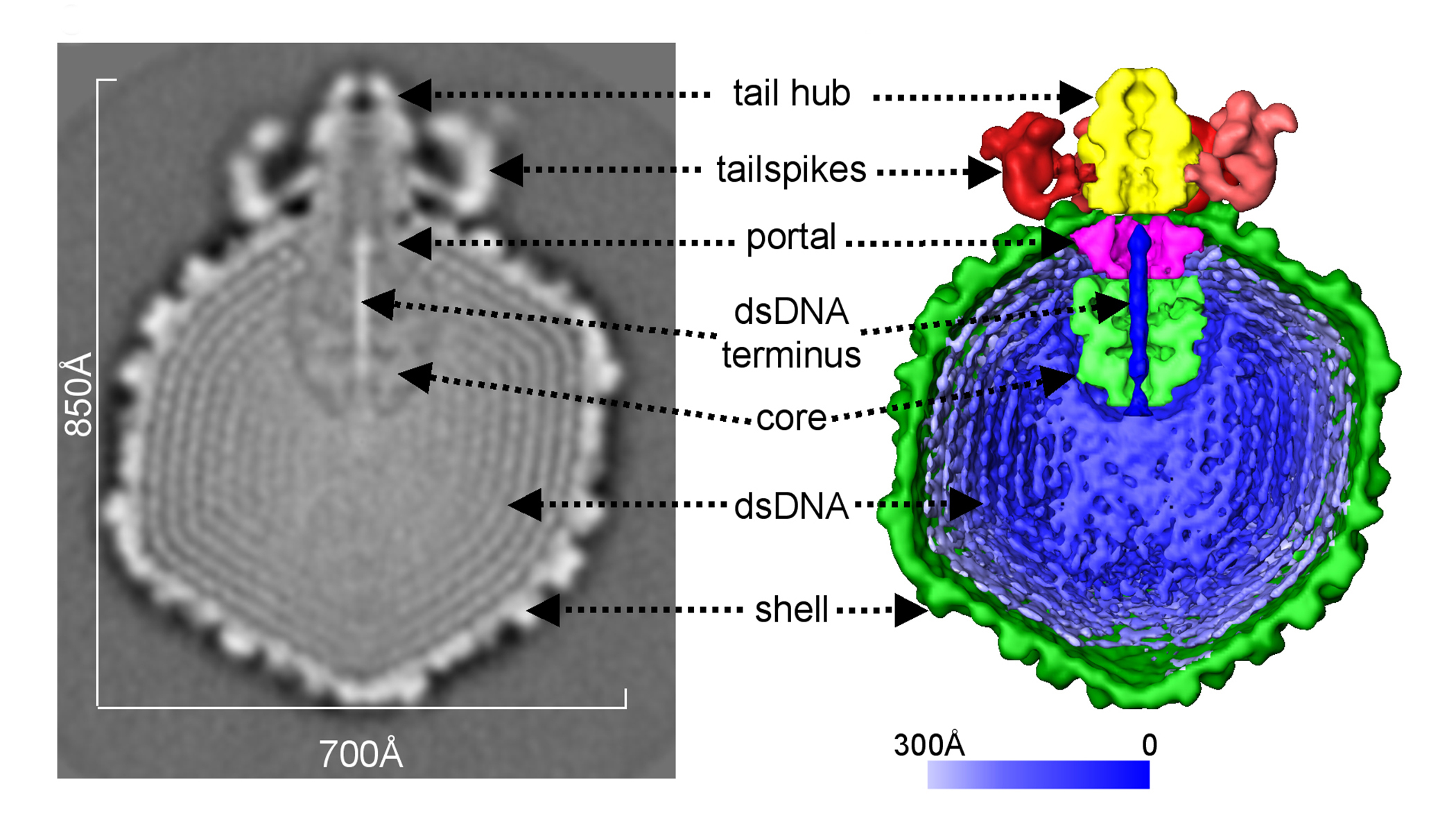
Also I'm sure they had a very good reason for picking this virus as a first from a virologist point of view, whereas people suggesting they should have picked something 'more important' like AIDS are probably saying that because that's the only virus they know (if they even know the difference between a virus and bacteria - not to mention phage...)
Again a bit of insight, combined with reading TFA in question and perhaps a quick visit to Wikipedia would create much more useful reply comments... (and don't give me any of that "you must be new here" crap...)
-
Re:nice couch, but.....
What's with the hat?
It's for dramatic effect. The Flying Nun look lends a sense of speed, especially in this shot. -
Re:Arg
Yes, I apologize for the bad pictures, our webmaster is away with the couch so I couldn't get new ones on the club page, but here is a page of newer, much better quality pictures.
-
Re:Arg
Agreed. Picture 16 is kind of cool, though. The couch is in focus, but the background is heavily motion blurred. Makes it look like the couch is really moving.
-
Windows on a Mac!
These must be some pretty good scientists, as they were able to get windows to run on a mac (in the background). However, they were only able to get it to run on a PPC mac, and not an Intel Macintosh. So close, but so far.
-
Re:Sorry, I'm old schoolAhh, good old David Horowitz...
Him and I have a very personal relationship...
-
Re:"Probably won an award"I'll agree with that. (Nice plug for the book, BTW, for a minute I thought I was reading the back cover or something.) I'll go a step further, however, and take a moment to demonstrate reasons for scorn.
Let's look at the vertical, slot-loading optical drive. Yes, folks, every time you want to insert a disc, you will peer closely at the drive to see which way the letters are and then insert the disk properly. After doing this a few times, you will notice a small, white arrow pointing to the top of the disk. Wait, does it point to the top of the disk or the top of the drive? Does it mean that the disc goes with the label side towards the arrow or that the top goes the way the arrow points? A well designed product (such as most horizontal drives or even vertical trayloaders) make it reasonably obvious which way things go - good natural mapping.
Now let's say I want to add or remove a piece of hardware. Can I hotplug it? Don't even bother building something like this if you can't. It's designed to look like a bookshelf and people will expect it to behave similarly and allow any piece (ok, maybe not the CPU) to be added or removed at whim. It's design, by intent, invites change. Now assume I *can* hotplug it. Great - now can I just pull the drive out or do I have to unlatch it somehow first? Where's the latch button? (Pure speculation, but it's probably very artfully designed - small and black on the black part somewhere. Maybe it's marked.)
I will congratulate the designers for making sure the connectors on the devices are fairly obviously dissimilar from side to side, providing physical constraint as to "right-side up". I will not dwell too much on that fact, however, because from what I can see of their mockup image (warning: big image) the connectors are mirrored from one side to the other. In other words, either 1) devices designed for one side will not fit on the other side, or 2) if devices may be flipped to fit either side, then the lights and controls also reverse position. Harping on the optical drive for a moment, it would be even more confusing to reconfigure and then be habitually putting a CD in upside down.
And of course we must have my $0.02 on DRM - their model will mess with people's heads. If you call it a computer, people will expect it to operate and be capable of what their assumption of 'computer' is and they will use it based on their assumptions of how a computer is supposed to work. Having different rights to different devices will drive people nuts. It's all the same computer, why doesn't this hard drive let me do this when this other drive will? Why does it matter whether I rented this DVD from MegaMovie or this whole series on harddisk from ZipTV? Actually, that's pure speculation again - hopefully it won't matter, but I'd bet it will.
JtM
-
Re:Whatever works best with the...
I still think that this is an artifact of the interfaces we're using. As it currently is, we can't 'reach' behind things with the mouse, given that it's a 2d interface. I'm thinking of things like being able to dive "into" a stack of data with the interface and grab the particular one you need, much as you might select a seldom-used object from behind other objects on a shelf.
Not to mention being able to physically interact with objects in 3d, for example, being able to do modeling by molding virtual clay instead of drawing intersecting primitives, being able to stack and reorder documents and files in a presentation, being able to make larger or more important files feel 'weighty', being able to link files by 'hooking' them together, compressing files by squeezing them, paging through documents by 'turning the page' or 'flipping the book' rather than pressing the page down button.
I could continue on, but these are just initial thoughts. Obviously you have to avoid 'gorilla arm' such as that resulting from touch screens, but that could be offset by allowing the interface to be a 'rest' for the arm when not in use.
For example, http://www.ecn.purdue.edu/HIRL/ purdue is doing things with a 'pen' interface -
Re:Obscure Reference Nabokov and X-files
I recognized the X-files reference, but googled to confirm it and found: Lord Kinbote is a reference to Nabokov's Pale Fire, specifically the character, Charles Kinbote. http://web.ics.purdue.edu/~felluga/sf/pop/PrimerJ
o seChung.html Obscure reference upon obscure reference. Very Geeky. -
Re:Artificial Photosynthesis?So there's a tree called the Copaifera that grows in brazil that, when tapped, produces 40+ liters of biodiesel sap a year with minimal processing. Of course, growing our own rainforest is probably not a very efficient or practical way to solve our energy needs.
If, however, the pathway of genes responsible for creating the sap can be isolated and cloned into a plant more suitable for crop farming, that would be mind-bogglingly cool. So in that sense some serious biotech tinkering is certainly in order.
But in terms of reverse engineering how a plant actually does photosynthesis, plant physiologists and biophysicists have been doing this for years and basically it appears to be so complex and highly tuned it's unlikely we can outdesign billions of years of selection for efficiency.
That said it's so tempting to think about optimizing it (at least for me). The enzyme that actually does the carbon fixation is called RuBisCo, arguably the most important enzyme on the entire planet, and its a really, really lousy enzyme. Its a protein of molecular weight ~5,000,000 which can process a lousy 3 CO2 molecules per second. The only reason plants can grow at all is by brute force, something like 60% of the dry weight of a plant is rubisco. If we could make it just a bit more efficient . . .
It is interesting to note the biochemistry of carbon fixation was discovered by the nobel laureate Melvin Calvin (which is why it's called the calvin cycle). He was also one of the pioneer researchers of Copaifera trees as a source of biodiesel, and dreamed of splicing the genes into weeds to solve our dependence on foreign oil. Sadly I've seen very little work published about this since his death in 1997.