Slashdot Mirror
Domain: raspberrypi.org
Stories and comments across the archive that link to raspberrypi.org.
Comments · 313
-
Re:Excellent
More like "playing card size" than "credit card size" but yeah,
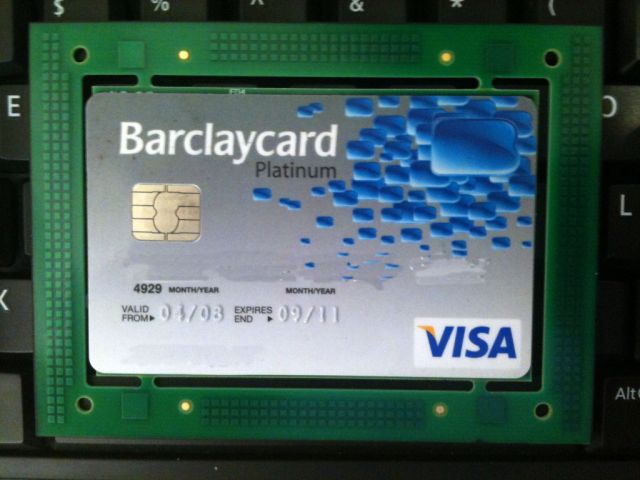
No, actually it's EXACTLY credit card sized. Here's picture proof.
-
Re:Excellent
No, it's credit card sized. How many times do you need to be told?
http://www.raspberrypi.org/wp-content/uploads/2011/12/Picture-001-copy.jpg
(ignore the border - that's removed after manufacture).
-
Re:LTSP
-
Re:Audio and video format support?
The best way to find an answer to this is to ask in the raspi forums here: http://www.raspberrypi.org/forum
-
Combined CPU and DRAM
Wow, we're on Slashdot......almost like being On The Cover of the Rolling Stone.
Answers to various questions and comments:
- We support the Linux toolchain; compilers, debuggers, etc., fortunate to have some of the original gcc team. Ported pieces of various kernels to TOMI Aurora to make certain we had not left anything out and to test the memory manager. Aurora was for use in a tablet type device.
- TOMI Borealis was optimized for Big Data and unstructured data apps like MapReduce that choke at the Memory Wall. Linux could probably be ported without too much difficulty. Most massively parallel installations will use something really light weight instead.
- Potential users said give them more integer cores instead of adding FPU. We gladly cede the FP world to Itanium.
- For raw FP horsepower within a reasonable power budget, its tough to beat Nvidia's GPU approach. That is probably why 3 of the top 10 supercomputers are GPU accelerated. http://www.top500.org/ GPU-type architectures will likely be the future of scientific computing. Venray is focused on Memory Wall limited areas such as Big Data.
- From the computer architecture perspective, the distinction between Big Data and Small Data is whether the datasets will primarily fit within the onboard caches. Video compression, graphics acceleration, encryption, and much of LINPAC (http://en.wikipedia.org/wiki/LINPACK) would be classed as Small Data since most of the computing can be done without leaving the caches (high locality). Legacy architectures choke on Big Data since the datasets overflow the caches and there is much much less data reuse.
- MapReduce is important because it is currently the most visible Big Data application thanks to Google. http://research.google.com/archive/mapreduce.html
- Venray believes Big Data applications are the future of computing. So does McKinsey Consulting. http://www.mckinsey.com/Insights/MGI/Research/Technology_and_Innovation/Big_data_The_next_frontier_for_innovation We leave it to others to accelerate MS Office and Call of Duty.
- The future of Big Data appears to be RAM resident, not disk, not even flash. (See Fred Ho's work at IBM.) https://www.ibm.com/developerworks/mydeveloperworks/blogs/fredho66/?lang=en_us
- re: Mitsubish 3DRAM and other similar ventures, iRAM, Exacute, Gilgamesh, etc....they embedded DRAM into logic. Contrast with TOMI that embeds CPU cores into DRAMs.....our benefits are performance and particularly cost: http://www.edn.com/photo/294/294788-microprocessor_vs_memory_transistors_graph.jpg
- We chose a modified RISC architecture rather than a special purpose one such as Gilgamesh in order to make programming simpler with well understood Linux tools such as gcc. Submit your gcc C, C++, or Fortran to http://www.venraytechnology.com./ Statistics are returned in standard dGen format.
- TSV (through silicon vias) and HMC (hybrid memory cube) are valid attempts to push back the Memory Wall. Discussed in Part 1 for EDN. http://www.edn.com/article/520059-The_future_of_computers_Part_1_Multicore_and_the_Memory_Wall.php Decision may be determined by cost.
- Would love to dispense with caches because they add transistors. 4K data and 4K instruction caches sped us up about 10x. Unlike legacy architectures, TOMI cache lines load in a single DRAM cycle.
- Yes love Raspberry Pi. http://www.raspberrypi.org/
- Quad- -
Re:All on one chip
Well, Rasberry Pi could be described as a proof of concept for the whole SoC as a PC substitute idea. At least for the Windows world, the popular software is only offered as precompiled binaries for x86 based platforms. It may be a while before there's a critical mass of ARM based offerings to attract serious commercial attention. Windows 8 may change this but I think it's still too early to tell.
I think upgradability is possibly not the main advantage of desktops though it's certainly a key factor for many people. I'd argue that a sizeable number of PC's, if not the majority, will never get an upgrade that requires opening the case (so, I'm excluding new peripherals). That's why there's a market for things like onboard (ie. on the mobo) audio, NIC, and others including sometimes GPU.
-
Re:Warning !
Looks like Systems of Hull is not a scam, just the result of a badly uninformed enthusiast.
See his reply on the Raspberry Pi forum:
http://www.raspberrypi.org/forum/general-discussion/order-placed-very-excited/page-3
Post 52, by Andy Lamb -
Re:Warning !
God you Slashdotters really are paranoid nutjobs, aren't you? Yes, I AM ANDREW LAMB. Moron. Thanks for proving my whole "crying wolf when he gets confused" theory beyond a doubt.
Funny, I thought the Raspberry Pi design was open-source. Funny kind of open-source if you all call "scam" on anyone who builds & sells them himself
If you are Andrew Lamb, you're hardly going to get customers with an attitude like that.
You should demonstrate how you're going to fulfil orders. The thread on the forums points out the problems -- why not respond to them?
Here's the best post from that thread:
1) He claims to be VAT registered but doesn't seem to want to state his VAT number. That is a bit strange. I think I will ring up HMRC and check he is registered. I hope he is otherwise he is committing tax fraud.
2) In his terms and conditions he states "All items are covered by a manufacturers 12 month warranty. If an item develops a fault it is best to request an RMA directly with the manufacturer." WRONG!. UK consumer law makes it crystal clear the seller is responsible for goods sold not the manufacturer. It is the sellers duty to mess about with the manufacturer.
3) He is advertising a product he can not honestly expect to have in stock. I suspect he will take people's money and simply tread water until he can get his hands on enough units to send out to people. This could take months and months.
4) He is selling products based on the PI that don't exist yet. I suspect he will simply grab the first "in-car entertainment" project that comes along and sell that. Nice.
5) He is profiting on a charity selling devices. He is doing nothing than attempting to make £4 for doing nothing other than adding delay and bureaucracy.
-
Re:What would have been the cost to be UK-built?
this is the blog post: http://www.raspberrypi.org/archives/509
We investigated a number of possible UK manufacturers, but encountered a few problems, some of which made matters impossible. Firstly, the schedule for manufacture for every UK business we approached was between 12 and 14 weeks (compared to a 3-4 week turnaround in the Far East). That would have meant you’d be waiting three months rather than three weeks to buy your Raspberry Pi, and we didn’t think that was acceptable.
Secondly, we found that pricing in the UK varied enormously with factories’ capacity. If a factory had sufficient capacity to do the work for us, they were typically quoting very high prices; we’d expected a delta between manufacture pricing between the UK and the Far East, but these build prices not only wiped out all our margin, but actually pushed us into the red. Some factories were able to offer us prices which were marginally profitable, but they were only able to produce at most a few hundred units a month; and even then, we were doing better by more than five dollars per unit if we moved that manufacture to the Far East. When you’re talking about tens of thousands of units per batch, losing that sum of money for the charity – a sum that we can spend on more manufacture, more outreach work and more research and development – just to be able to say we’d kept all the work in one country, starts to look irresponsible.
I’d like to draw attention to one cost in particular that really created problems for us in Britain. Simply put, if we build the Raspberry Pi in Britain, we have to pay a lot more tax. If a British company imports components, it has to pay tax on those (and most components are not made in the UK). If, however, a completed device is made abroad and imported into the UK – with all of those components soldered onto it – it does not attract any import duty at all. This means that it’s really, really tax inefficient for an electronics company to do its manufacturing in Britain, and it’s one of the reasons that so much of our manufacturing goes overseas. Right now, the way things stand means that a company doing its manufacturing abroad, depriving the UK economy, gets a tax break. It’s an absolutely mad way for the Inland Revenue to be running things, and it’s an issue we’ve taken up with the Department for Business, Innovation and Skills.
-
model-A is damn close to 1 watt Re:Neat!They're using 5v over micro usb. Model-A's 300mA works out to 0.3A*5V = 1.5 watts. Model-B's 700mA is 0.7A*5V=3.5 watts. (I'd go with Model B just to double the ram (256MB) + ethernet.)
While the gp will have to account for the efficiency of their power supply as well, I'm pretty impressed w/the rPi. It looks really cool. Here is a nice nice overview, the power-suppy section links to the parent's "archives/260" reference.From http://www.raspberrypi.org/archives/260 Model B owners using networking and high-current USB peripherals will require a supply which can source 700mA (many phone chargers meet this requirement). Model A owners with powered USB devices will be able to get away with a much lower current capacity (300mA feels like a reasonable safety margin).
-
model-A is damn close to 1 watt Re:Neat!They're using 5v over micro usb. Model-A's 300mA works out to 0.3A*5V = 1.5 watts. Model-B's 700mA is 0.7A*5V=3.5 watts. (I'd go with Model B just to double the ram (256MB) + ethernet.)
While the gp will have to account for the efficiency of their power supply as well, I'm pretty impressed w/the rPi. It looks really cool. Here is a nice nice overview, the power-suppy section links to the parent's "archives/260" reference.From http://www.raspberrypi.org/archives/260 Model B owners using networking and high-current USB peripherals will require a supply which can source 700mA (many phone chargers meet this requirement). Model A owners with powered USB devices will be able to get away with a much lower current capacity (300mA feels like a reasonable safety margin).
-
Re:Neat!
From http://www.raspberrypi.org/archives/260
Model B owners using networking and high-current USB peripherals will require a supply which can source 700mA (many phone chargers meet this requirement). Model A owners with powered USB devices will be able to get away with a much lower current capacity (300mA feels like a reasonable safety margin). -
raspberry pi
Waiting for some decent raspberry pi box.. actually, just someone packaging that nice little board into a nice case.. after that it's all linux+xbmc (again)
-
Re:Reality is coming
http://www.raspberrypi.org/archives/302
That's the last official word on their blog about their double-price plan. Note the update at the bottom. I haven't seen anything to the contrary on the site, though I don't monitor the forums closely. -
Re:I cant wait to taste that pi
Perhaps you missed it, but Broadcom is selling them the silicon by tacking it on to larger production runs, so they've got as much as they want at quantity pricing.
They've already bought the other parts so sourcing isn't a problem(for the first 10k anyway).
http://www.raspberrypi.org/archives/302
And clearly they've got the marketing down, otherwise you wouldn't be discussing it:)
-
Re:no mounting holes
From the FAQs there will be cases and mounting options just not on initial release. http://www.raspberrypi.org/faqs
-
Re:We tried a big IE8 rollout last summer
Well. Let's see:
If I type:
r
it opens http://www.raspberrypi.org/(or r^C to copy it to paste into a
If I type:
g fooIt googles for foo because I added g as my shortcut for google under Manage Search Engines.
If I type:
w fooIt opens foo in wikipedia for the same reason.
And the only time anything I typed was sent to google was when I explicitly requested it w/ "g foo"
Yay!
-
Re:Needs Revision.
Read the Pi schtick - they are all about changing computer instruction into something cool, and getting away from making everybody into electronic secretaries.
Too late, MSNBC already has stated that geeks are the new chic .
-
Re:Needs Revision.
Read the Pi schtick - they are all about changing computer instruction into something cool, and getting away from making everybody into electronic secretaries.
-
Oh, come on, say it....
Raspberry Pi has a new blog post, and you heard it echoed here first...
-
Re:Definitely Exciting
Why expect everyone else to do things for you?
Instead of whinging, why not make the effort and sign up for their mailing list and they'll email you when its out. (early/mid December is the bookies fav at the moment).
-
Expensive, unnecessarily overpowered
This isn't a new idea, it's a "me too". What, suddenly nobody on
http://slashdot.org/index2.pl?fhfilter=raspberry+pi
http://www.raspberrypi.org/A 1.2GHz dual core CPU is all very nice, but you can run full-on Desktop Linux with considerably more frugal resources and produce a device that's considerably cheaper as a result. It seems bizarre to have over-specified the hardware and under-specified the software stack.
-
Re:What a wonderful project!
More info on this:
http://www.raspberrypi.org/forum?mingleforumaction=viewtopic&t=1018 -
Re:Complicated?
"What concerns me more is the "proprietary" aspect. How many of the chip's features will be accessible by hobbyist developers? Will we be receiving full public documentation on how it works?"
No, getting data sheets from most silicon makers today, is tanamount to asking for state secrets,err...ok not such a good example, well not hapenning... and don't mention to the Pi people.
See:
http://www.raspberrypi.org/forum?mingleforumaction=viewtopic&t=1077
-
Re:Resolution!Rasberry PI
small as a credit card
plays games and plays video in real time at 1080p http://www.raspberrypi.org/
25 bucks
see videos on their site and it's arm
-
Re:Trademark
If you bothered to read the post here: http://www.raspberrypi.org/archives/312 It's abundantly clear that they aren't a reseller of any sort.
And no, my definition isn't loose, it's within the standard definition of fraud. http://en.wikipedia.org/wiki/Fraud
-
What the hell...
...is Google for? Maybe it's so you can find this site? Hint: it's a tiny $25 computer.
Raspberry Pi has been covered numerous times at slashdot. I'm surprised you haven't seen it before.
-
Re:What the hell...I read
There are some rudimentary publishing rules and adding one sentence in the beginning should not be a problem for those who already know the subject. How about:Raspberry-Pi, a start-up promising to sell $25 Linux boards in the near future, already has a knock-off site.
The concept would be easier to grasp if you read some articles written by professional writers once in a while.
-
Re:Raspberry Pi makes OLPC irrelevant
The Raspberry Pi project ("An ARM GNU/Linux box for $25" - http://www.raspberrypi.org/) might just obsolete OLPC.
I doubt it. As much as I like the Raspberry Pi, it doesn't come with a keyboard or display or power supply, and certainly isn't designed for use by the illiterate. As much as I think the OLPC idea is far from being proven to be effective, it's designed for rugged use away from the power grid.
-
Raspberry Pi makes OLPC irrelevant
The OLPC hardware is too expensive. Even middle-income countries like El Salvador and Honduras have struggled to get them introduced into schools. The Raspberry Pi project ("An ARM GNU/Linux box for $25" - http://www.raspberrypi.org/) might just obsolete OLPC.
-
This is plain wrong
10K sets of parts are ordered. This has nothing to do with availability of usable systems. See for yourself what Eben says on the web site: http://www.raspberrypi.org/archives/302
-
Company corrects this
Please read from the horse's mouth:
http://www.raspberrypi.org/Quote:
An article in today's www.geek.com suggested a couple of things -- first, that we're already producing units, and secondly, that we're limiting sales to programmers only at first. Both of these appear to be the result of some horrible miscommunication (blame Eben; he's very tired). -
Re:Where can I buy one?
They're not "vapourware", have a look at the site. Whats been happening, is that we've seen the project from the proof-of-concept in May, through the so called "alpha" boards, such at the one at the ARM conference. Its not often that the development process for a personal computer has such publicity! (I'm looking at other fruit-named hardware manufacturers here. Ahem!) The Foundation is in the process of finalizing the hardware for production and quote "last quarter 2011" for going on sale. Latest estimates indicate early-mid December.
You'll be able to buy one from their commerce site and availability will be announced through the mailing list and on the
-
Hasn't it got through yet?
5 topics covering the Raspberry Pi on Slashdot, one even a QA with Eben Upton and the mass of slashdotters decry it because it has no relevance to THEM. I know that RTFA, or even doing a bit of background reading on the Raspberry Pi website is an article of faith amongst the more blinkered slashdotters but a little intelligence isn't a lot to ask for, is it?
Just pop over there and find:
Its for Education
Its to encourage youngsters to explore computing and programming without interfering with the family PC
Its cheap so its almost pocket money pricing
Most TVs from the past 5 years support HDMI
Most TVs from the past 10 years have either SCART or composite video/audio in.
It has worldwide application, not just the "third world"; not everyone is on the Slashdot median income.
The current worry is that the initial manufacturing run, and probably its follow up won't be able to cope with demand.For a technical lot, some Slashdotters seem to be woefully ignorant about SoC and PoP technology. Suffice to say, 256Mb is the largest available RAM that comes in under the price points. 512Mb is currently stratospheric. Its not like adding some DIMM, you know. Oh well, the more idiots that don't buy Pi, the more there is for the rest of us!
-
Re:What about the monitor/keyboard/mouse
The thing's power input is MicroUSB, and it has a dedicated port for that (it can't go through the "data" ports:
http://www.raspberrypi.org/?p=260 -
Re:What about the monitor/keyboard/mouse
http://www.raspberrypi.org/?page_id=8
"Is there power over USB?
No. Raspberry Pi is a USB host, not a USB device, and you can’t draw power from the uplink port of a hub."
"What are the power requirements?
The device is powered by an external AC adapter, and the Model A consumes around 1W at full load." -
Yes - lets just ditch that pesky phone bit...
and use the processor and ancillary graphics gubbins for a reasonably useful, very cheap Linux PC.
Something like the Raspberry Pi
If you really do want a phone, it shouldn't be too difficult for Nokia to put a version of Linux on one of their own platforms without too much difficulty.
-
Yes, in about two months.
Raspberry Pi. $35 for a 700MHz ARM with 256MB of RAM and 1080p HDMI output. More computer than most people need.
-
Raspberry Pi
I don't believe Raspberry Pi is available yet (see http://www.raspberrypi.org/faqs/, first line), but I'm seriously considering picking one up when it's available. Arduino is definitely an amazing platform, but I just don't need something quite that low level. I'm currently toying with turning one of those cheap $10 "cameras" into a wireless surveillance cam. As far as ARM goes, I'm not deep enough into the hardware to care either way anyway.
-
They're going to have problems
Most "computing" teachers in UK schools are ICT teachers and wouldn't know how to program (even a decent Excel macro) if it bit them in the bum. As for explaining different sort algorithms. *shudder* Show a typical ICT teacher vb.net or c#.net and they'll have a fit of the vapours. (You DO know that Microsoft have signed up to the scheme?) In addidion, most ICT lessons are used as computer time to complete projects/coursework for other curriculum areas, hence the need to be able to "use" Word and Excel, and cut and paste from a web browser.
ICT lessons are already full of children who are bored to tears, either because the existing material is too easy, or (frighteningly enough) its too difficult. Making things interesting for the top end only means that the bottom end become even more disenchanted and its no fun trying to teach a very mixed ability class thats in a ferment of rebellion. Its not that easy to weed out the poor devils who can't cope. Hmmmm - that goes for the teachers too.
What we need is a renaissance in computer programming in the home. Children need to be able to see how much fun it can be to create something for themselves. They need to have access to personal hardware that can't be easily broken, can be used at home and won't break the bank to own. Programming environments need to be easy to find and work in, while execution should be only a mouseclick away from the editor. Compared with the Basic in a BBC B or a Commodore 64, or even Turbo Pascal 3 on a DOS PC, general programming environments on a modern PC (Windows, Mac or Linux) are too involved and intimidating. At present, the Raspberry Pi initiative seems to be approaching the problem in a useful way. We'll have to see what finally emerges in November and if the Pi gets taken up by the educational establishment.
My fingers are crossed that it has a positive impact!
-
Yes, well done Intel, but ok.....
The CPU was running on solar power, and hung when it got a bit dark.
The rest of the lashup was connected to a conventional PSU. You know, things like the graphics card, the logic glue on the motherboard and so on consume LOTS of power. A CPU that has a low power consumption is pretty. Call me back when an entire general purpose computer can run off solar power.
Wait - what about the Raspberry Pi? 1 watt power consumption, runs Linux. Connect one of those solar recharging units. What more do you need?
*grin*
-
Raspberry Pi
In November the $25 Raspberry Pi computer will become available. Check it out.
-
Raspberry Pi, Model B......
$35/element, runs a boring Linux distro, runs very cool, low power consumption (less than 1w), onboard Ethernet.
Sorted!
-
Re:Not custom...
Good enough. I do not deal with big time servers much so thanks for the education.
Now you are making want to add some remote management to my home servers.
maybe when this comes out http://www.raspberrypi.org/ I can use it to do a little bit of home-brew server management With SPI, I2C, a UART, and a little GPIO I could tie in the reset switch, serial port, power switch and some sensors. Unless the bios supports redirecting the bios over serial it will be limited but for home use it should be a fun project and massive over kill. -
Re:What magical formula do you intend to use
^ this. Maybe Mr Upton will answer all these questions with a link to http://elinux.org/RaspberryPiBoard or http://www.raspberrypi.org/?page_id=8
"I'm interested in your product but can't be bothered to click on any links in the summary I just read. Can you please tell me something I could have found out for myself in less than a minute?"
-
Re:Can You Extrapolate on Your Teaching Strategy?
I'm not at all familiar with the Broadcom BCM2835 that you've shown on your alpha boards. All my searches for it just link back to your site.
The Raspi is so far the only device known to use the BCM2835.
-
Can You Extrapolate on Your Teaching Strategy?
I see that you plan on using C and Python for teaching languages. I recognize that I am of an older generation but grasping C in its entirety or even little endian versus big endian was something that didn't fully come around until college for me. What are your strategies for teaching even younger targets with something like C (Python, however is probably easier)? Are you developing a rigid teaching course line or just happy to have the community put anything out? Furthermore, what is the point of putting all these other languages on your wiki like Processing or Lua? Could you or someone on your staff give a brief explanation for each of these links or are they here just to inspire someone to write a tutorial for -- I don't know -- harvesting data with the Raspberry Pi and displaying it in Processing on another computer? Or do you intend the processing application to compile to ARMv6 on the device and run on the device for a UI output? I know ARMv6 is supposed to be a leaner architecture but I'm not at all familiar with the Broadcom BCM2835 that you've shown on your alpha boards. All my searches for it just link back to your site.
-
Open Hardware
You have stated in your FAQ:
"We haven’t made a decision on open hardware yet. "
What is your reasoning process here; Specifically as a charitable non-profit, what would be your motives for not making it an open design?
-
two words
two words, raspberry pi
http://www.raspberrypi.org/
An ARM Linux box for $25 -
Re:In Poland...
as it's a UK thing (and the price I've always seen was 25 pounds, not 25 US dollars) the price in Poland should be the same+shipping
Go to the website: http://www.raspberrypi.org/
Everything is in dollars.