Slashdot Mirror
Domain: sierraclub.org
Stories and comments across the archive that link to sierraclub.org.
Comments · 103
-
Trees Decompose and the CO2 Goes Back Into the Air
If we covered the entire surface of the USA with trees, it'd hide away just 10% of all the CO2 we put into the atmosphere...
Tree decomposition times: 15 years for fine roots, 100 years for bark, 120 years for branches, 500 years for 2' diameter trunks. Forest fires can cause it all to go up immediately. (source)
So trees aren't a viable answer. They can only be PART of a solution -- and likely a small part as well.
-
Re:Nuclear power and hydrocarbon synthesis
Not necessarily due to accidents, but if you look at the whole of chain of energy production:
for coal: by-products storage and disposal - https://content.sierraclub.org...
for dams: large populations have been moved, and agricultural lands are now underwater so the impact is not exactly 0.
Look, I am not saying that nuclear energy is the cleanest, but if you take into account externalities the picture for nuclear is less dark than what people think. The problem with nuclear accidents is that they are dramatic, they are very heavily reported and so we have a large psychological bias against them that other energy sources have not (even though they may be more dangerous or polluting).
The problem with energy is that renewable (solar, polar, wind) is far from covering all our needs. I hope it will someday, and I have opted with my energy provider to pay more and have some of my electricity sourced from renewable. Still, we need either gas, coal, or nuclear to fill the gap. Personally, I'd rather leave 50miles from a nuclear plant than from a coal plant.
-
Re:Complete BS
I have something you can pass on to your Democrat Party buddies
None yet.
I will find it very hard to vote for a Democrat so long as the party platform does not include support for nuclear power.
The Sierra Club doesn't support it. After Fukushima Daiichi, everyone is rolling back the nuclear agenda. Pebble bed reactors are extremely inefficient; and there's a lot of propaganda (not sure if accurate) about the Westinghouse design being built such that if all those extra failsafes do somehow all fail, it just belches shitloads of nuclear dust into the air.
I like nuclear. I don't like nuclear disasters. I'm okay with nuclear if we can show that it's safe; everybody else is distinctly not okay with nuclear. We do have hurricanes, tornadoes, earthquakes, and tsunami, so I can see where someone would question our safety against known-unknown external factors like unexpectedly-large waves and once-in-ten-thousand-years earthquakes.
My answer would probably be to convert the environmental disaster into an economic disaster: build the damned thing so that it breaks and drains into a robust underground holding area (e.g. a graphite sponge or sand bed), where it will cool; cap it with concrete if that ever happens and accept that the disaster, while contained, means your nuclear plant is dead and gone forever. That does require building a sort of underground box that won't shatter in an extreme earthquake--back to uncertainty.
So while I'm behind nuclear if it's safe, I can see why nobody is ready to say it's safe. Pebble bed will work, but costs something like $3,500 per kW--solar is $35/kW for panels, and nowadays about $140/kW installed at utility scale. A large build-out of solar-over-parking-lot would be nearly utility scale.
after 40 years of subsidies and preferential legislation neither have shown the ability to replace coal
The technology is evolving fast. The subsides aren't. For the $7.8 billion of annual subsidies Obama was handing out, we could have directly built 55MW of installed capacity per year. One kW of installed solar produces 3.5kWh/day in some poor-insolation regions (cold places in Germany), so think of a range of 1.2-1.9 MWh per kW installed.
Maryland generates 37,000,000MWh net per year.
That's 20-30 GW of installed capacity, or at least 363 years of subsidies, to replace MD's power output with solar. Of course, 40% of our power is nuclear, a LOT is hydro, and we have a lot of solar now. At the same time, the demand created by electric cars will raise the requirements.
So you're right: economically, solar is viable, but not viable for rapid replacement today (those numbers above will skew: the tech gets cheaper and we get wealthier over time; it's still going to be a while). Off-shore wind is also viable, and requires additional funding on top of solar, so we're picking around in the same pot here and should probably go with one or the other based on the biggest immediate ROI. Nuclear can provide the capacity, but also carries a hell of a severe acute risk in its failure mode unless you use an economically-non-viable plant design (pebble bed). RTGs are low-efficiency and expensive.
It's kind of an annoying problem. I've got one other alternate power source, but it needs a piece of technology that's only in infancy right now, and sort of skirts the laws of thermodynamics by operating in reality instead of in an ideal system (it doesn't work on paper for valid engineering reasons which cannot be reproduced in the real world). Not sure if it works in practice--not just if it's net-positive, but if it's got sufficient energy density. We'll leave that one to the sci-fi writers for now, along with transparent aluminum.
-
Re:Yes to nukes, say climate scientists
How about nuclear energy? That doesn't fart out carbon, and then we can still use, you know, electricity rather than... "Unequivocally no" again?
Actually, environmentalists are very split on this.
No, they're actually not. Actual environmentalists (people who actually care about the environment) are 100% pro-nuclear power. 100%.
Leftist kooks who use faux "environmentalism" as their weapon to push their anti-human agenda on the world tend to be anti-nuke. But they're not actually environmentalists (if they were, they would be pro-nuke).
-
Yes to nukes, say climate scientists
How about nuclear energy? That doesn't fart out carbon, and then we can still use, you know, electricity rather than... "Unequivocally no" again?
Actually, environmentalists are very split on this. Some still are anti-nuke, but a large number of enviornmentalists actually do endorse nuclear power because it doesn't emit carbon dioxide. That group notably includes James Hansen, the climate scientist that the deniers most love to hate.
Some links:
https://www.scientificamerican.com/article/nuclear-power-must-make-a-comeback-for-climate-s-sake/
http://thehill.com/policy/energy-environment/189068-climate-scientists-to-green-activists-embrace-nuke-power
https://cna.ca/news/prominent-environmentalists-embrace-nuclear/
http://www.ucsusa.org/nuclear-power/nuclear-power-and-global-warming#.WBynCeErLOQ
https://www.theguardian.com/environment/2015/dec/03/nuclear-power-paves-the-only-viable-path-forward-on-climate-change -
"Do more, but not anything really effective."
...a report on Thursday found those pledges would see temperature rises significantly overshoot the threshold, with 3C of warming. Environmental groups urged governments to do more.
Oh, you mean like climate engineering to take positive steps to reduce the temperature and soak up excess carbon already up there and maybe prevent the damage already on track to happen? No?? That's so evil that we shouldn't even consider it?
How about nuclear energy? That doesn't fart out carbon, and then we can still use, you know, electricity rather than... "Unequivocally no" again? Oh, right, because Chernobyl happened that proves it can't work. I'm sure a similar nuclear disaster now is just as likely and would be much worse than a silly little 3 degree temperature rise.
So the solution is... wishes, everyone riding around on bikes, and moral superiority? Because it looks to me like we're stuck between a rock and a hard place. The rock of fossil fuel interests keeping us from actually doing anything before it's a crisis, and naive environmentalists groups who rule out actual solutions on the grounds that they might not be completely perfect. -
Thanks @sierraclub
The Sierra Club Beyond Coal campaign has really helped in getting this going. http://content.sierraclub.org/...
-
Re:Graph explains everything
Unfortunately, while some do, many loud and prominent ones do not. Greenpeace is the most obvious example. See especially their opposition to ITER: http://www.greenpeace.org/international/en/press/releases/ITERprojectFrance/, http://www.greenpeace.org/international/en/news/Blogs/nuclear-reaction/lockheed-martins-compact-nuclear-reactor-yet-/blog/51074/, http://www.theregister.co.uk/2008/10/22/fusion_greenpeace_no/.
The Sierra Club which is in many ways more moderate than Greenpeace weakly opposes such fusion also http://www.sierraclub.org/policy/energy/nuclear-power, and while their main argument is that it is too expensive compared to more conventional renewables, they also cite "The dangers posed by the probable releases of tritium used by fusion plants, the problems with decommissioning these plants" which only makes sense if you both don't fully understand how little tritium is being used and how think that the plants will be highly radioactive like conventional fission plants.
Sortir du nucléaire, one of the major French anti-nuclear groups are basically treating ITER and fusion in general very close to how they treat fission power. See e.g. http://www.dw.com/en/france-wins-nuclear-fusion-plant/a-1631650
The environmental movement has done a lot of good and continues to do a lot of good. But there is a definite anti-technology bent in some parts and general anti-nuclear bent which is very unfortunate. There are some environmentalists who understand the potential benefits of fusion and how it is different than fission power, but it is definitely not all of them and certainly doesn't include some of the most prominent organizations.
-
Yeah Sierra club has been pointing this out for ye
2012 Sierra club said it wouldnt happen:
http://blogs.sierraclub.org/co...Same Phil person provided that logic back then. so this is his word against all of science.
I think nature is going to win in the end. Einstein was ridiculed for the first 6 months after his bombshells which have yet to be disproven
So Why is Slashdot acting as the voice for this lone activist and saying he is an authority or expert is really like going through the filo of Sierra Club members to find out if someone can try and create a wedge issue out of this 330 year body of evidence to gate keep "the science" from reality.
Why is the sierra club and it's members treated like authority when they are just a hobby organisation with alot of rich members? With a history of terrorism from the 70's and 80's is anybodys guess.
-
Lies, I say ,,, won't win in the end
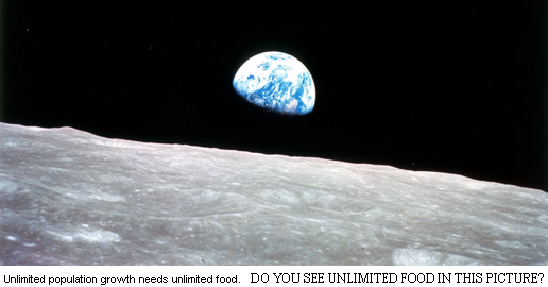
There are a lot of lies spouted during the Overall Abortion Debate. For example, it is a lie to claim that "intrinsic value" exists. It is a lie to claim that an unborn human is not alive. It is a lie to claim that human life matters, in the Grand Scheme of Things. It is a lie to claim that an unborn human is equal to a "baby" or "child" (both of which normally don't have an attached placenta as a vital organ). It is a lie to claim that an unborn human is more than just a mere-animal organism. It is a lie to claim that "human" is always equal to "person" (see all the human life, cuticle cells, getting killed during manicures and pedicures; cuticle cells have the full set of human DNA and modern cloning/stem-cell research shows that any such cell has the potential to act like a zygote --also see "hydatidiform moles" and "brain-dead adults on full life-support" as other examples where "human" does not equal "person"). It is a lie to equate "potential" with "actual" (do you, a potential corpse, want to be buried 6 feet under today?). It is a lie to claim that the finite Earth has endless food-resources for an ever-growing population. It is a lie to claim that fossil fuels will last indefinitely. It is a lie to claim the Earth is not currently overpopulated, when we have such problems as Global Warming, Deforestation, Overfishing, Aquifer Depletion, Farmland Encroachment by Cities, Topsoil Losses, Algae Blooms, and vast amounts of Toxic Waste being dumped into the environment as a side-effect of Mass Production. It is a lie to claim that humanity is immune to a "Malthusian Catastrophe". It is a lie to claim that unborn human animal organisms are "innocent", when they actually act worse than parasites (without actually being parasites). It is even a lie to claim God opposes abortion (see Exodus 20:21, in which causing a miscarriage can be associated with the arbitrary penalty of ZERO). When all the lies are finally extirpated from the Overall Abortion Debate, there will be no valid rationale for illegalizing abortion in this day-and-age.
-
Re:Is a reduction
don't underestimate the value of a successful lobbying campaign.
For every lobbying campaign, there is an equal and opposite lobbying campaign. So a lot of money is spent to accomplish nothing. Why should I donate to an organization that is then going to lobby the government to raise my taxes so I can pay again? Instead of lobbying or lawsuits, the NC worked with the Forest Service, and a state university, provided funding to pull together experts with complementary skills, and solved a real problem. I consider that a much better use of my money that donating to the Sierra Club, so they can lobby the government to shut down nukes, so we can burn more coal, or sue power companies for building windmills that might kill a few birds.
-
Re:Demand
We're taking food and converting it to fuel...
That makes bicycles, which get 48 miles per gallon of orange juice, sound bad.
And if it's wrong to use a natural resource for transportation when that same resource can also be used to produce food, then why are we using fossil fuels for transportation?
And is it wrong to use land to produce biofuels if the biofuel is used to produce or transport food?
For these reasons, the "no food for fuels" argument doesn't make perfect sense to me.
-
regulating in their favor, allergic to paying
Electric Utilities are heavily regulated. I am not sure about Oklahoma, but in many states the rate that utilities can charge is tied back to the cost of electric production
Sure, and the battles over the rates that utilities pay for customer-generated electricity are raging right now.Since electric production tends to be capital intensive
But in this case the utility customers are putting up the money!! I blew $19,000 on solar panels, my utility got a new source of electrons for no money down! I'm taking on the risk for them!Feeding electricity back into the grid is not a free lunch for the utilities – there are costs involved.
Well the utilities say that, but it's mostly fear-mongering. The wires they built to send electricity to my house will happily carry electricity in the other direction. And again, compared to building a new fossil fuel plant buying my excess instead of fueling a plant is easy money for the utilities.(and I am sure that electric utilities will whine loudly in an exaggerated fashion as they fight a rearguard action.)
That's what this is all about. Most states have net metering: if the utility sells to me at 15/kWh , I can sell my excess to them at the same rate. It's currently a win for the utilities because they're getting electrons in the hot summer with minimal capital cost, but they're throwing up roadblocks and raising rates now in fear of a future where a significant percentage of their customers are selling to them. In a fair system they would pay me what they would pay to run a plant at that moment, less a transmission fee and plus a bonus that my electrons are low CO2. this month's Sierra Magazine lists state-by-state efforts to fight net metering, refuse to hook up new solar installations, etc. South Carolina sounds worse than Oklahoma, there "initial determination that rooftop-solar leases should be banned as unfair competition to the utility industry."In a sane approach to limiting global warming, there would be taxes on fossil-generated electricity or (less ideally) carbon emissions trading, and the utilities would be trying to figure out how to decrease those costs. Well hey look, our customers are putting up their own capital to solve the problem for us!
It's a similar situation with V2G (Vehicle 2 Grid) to cope with demand spikes and brown-outs. Electrical vehicle owners could be a huge instantaneous reserve of electrons to avoid, without the capital and operational costs of having dirty peaker plants on standby. There have been dozens of studies of this, but again the electric utilities are allergic to the idea of paying their customers. Most owners would be willing to let the utility drain 20% of their battery, but not if they get nothing in return.
I naively hoped that the electric utilities would be happy about distributed renewable power generation and would evolve to work with customers who are also suppliers to their mutual benefit. But it turns out they're wedded to the idea of burning fossil fuels to make electricity to sell to us, and many are in bed with the fucking Koch brothers. But soon they'll need electrons more than people with renewables need them: "SolarCity is partnering with electric car company Tesla
-
Re:No problem!
The statement that the system was "_out of water_" is an exaggeration.
According to http://www.sanfranciscobay.sie...:"The year 2000 was about average for rainfall (97% of typical precipitation)".
Wikipedia says:
In the summer of 2001 a drought in the northwest states reduced the amount of hydroelectric power available to California. Though at no point during the crisis was California's sum of actual electric-generating capacity plus out-of-state supply less than demand, California's energy reserves were low enough that during peak hours the private industry which owned power-generating plants could effectively hold the State hostage by shutting down their plants for "maintenance" in order to manipulate supply and demand. These critical shutdowns often occurred for no other reason than to force California's electricity grid managers into a position where they would be forced to purchase electricity on the "spot market", where private generators could charge astronomical rates.
-
Re: no thats carbon neutral
If being wrong about electric vehicle pollution makes you an eco-tard, congratulations. You're an eco-tard.
Or maybe we can all just conduct ourselves with a little more respect. That would be really nice.
-
Re:My prediction
No actually that is the mainstream opinion.
Let me quote the President BLM: http://www.doi.gov/news/pressreleases/loader.cfm?csModule=security/getfile&pageid=293917
Which basically summarized is, fracking is a huge economic benefit and the we need to evaluate safety procedures in terms of their costs to keep them down for the oil and gas industry while protecting the long term viability of fracking as an energy source. Both parties are pro-fracking. The debate is over the amount of regulation ranging from the Republican position of almost none to the Democratic position of some but not enough to threaten the growth of this process.
Even the Sierra Club is pushing for more regulation not a halt to the process: http://www.sierraclub.org/naturalgas/rulemaking/
FoxNews is not reality. No one (in any large measure) is against this.
-
Re:Yeah, I'm an AC - so what.
Yes there is a line.
Corporations always do what's necessary to bolster their bottom line and it is always at the expense of people.
By all means, post an example - just one would be more than sufficient since I stated an absolute - of a corporation lobbying on the behalf of the public good AND that is detrimental to their profits.
Just one to blow me out of the water and I'll kiss goatse on the ass.
The Sierra Club is incorporated.
Greenpeace is also a corporation.
-
The problem was
It always looked too much like this
-
These parts of the site are still up
http://www.northcountrygazette.org/category/adirondacks/
http://www.northcountrygazette.org/advertise/
http://www.northcountrygazette.org/investigative-reports/
http://www.northcountrygazette.org/letters-to-the-editor/
Maybe this will be more interesting
I noticed the only name that keeps popping up is June Maxims.
Sounds to me like it might be a 1 horse show. Some blogger with dreams of world domination.
If its an actual paper then Instead of complaining to them Call the people who use them for advertising. Say you wont do business with any company that does business with a company like this one.Heres a list of some of the adds I saw on the site.
US Legal Forms
http://www.uslegalforms.com/?auslf=northcountry
1-877-389-0141Ace Hardware
http://www.acehardwaresuperstore.com/
1 (888) 230-2323Adopt a Pet
http://www.adoptapet.com/
1-800-Save-A-Pet (1-800-728-3273)Shop The Adirondacks
http://www.shoptheadirondacks.com/
(310) 480-3737The Sierra Club
https://tioga.sierraclub.org/joinorgive/member4.htm
415-977-5500Purrs and Paws
http://www.purrsandpawsrescue.org/
518.798.0718Handtrux Toys
http://www.handtruxtoys.com/
973.812.5222Miles Kimball
http://www.mileskimball.com/Amazon
http://www.amazon.com/Dollar Days
http://www.dollardays.com/
877-837-9569And Ironically (to me anyway)
Cyberbullying
http://www.cyberbullying.us/Call all of the people paying them to advertise for them and let them know how you feel.
-
Re:New York's Problem Becomes New Jersey's?
There's a financial compensation that New Jersey's comfortable with. Otherwise, they'd say to just move along.
It's not that easy to say "Move along". Virginia has tried to stop/stem the inflow of out-of-state garbage but was forbidden to do so by the federal government. States no longer have any right to refuse refuse from being dumped into their state! I can't imagine that the founding fathers ever envisioned the Commerce Clause being used to force interstate commerce.
From this article:
"Virginia tried to ban garbage shipments by barge and cap the capacity of the state's seven giant private landfills at 1998 levels. All these state laws have been struck down by higher courts. The U.S. Congress has the power to act. Federal judges have consistently ruled that based on the Commerce Clause of the Constitution, Congress has exclusive power over the interstate trash business."http://virginia.sierraclub.org/issues/recycling-solid-waste.html
-
Re:Surprised?
OK, you linked to a report by the Sierra Club, a group that has a definite agenda. You need to be careful when doing that.
That's ridiculous. Every group has an agenda. The Sierra Club is upfront about theirs:
Since 1892, the Sierra Club has been working to protect communities, wild places, and the planet itself. We are the oldest, largest, and most influential grassroots environmental organization in the United States.
So they have an agenda to protect the environment. Are you suggesting that groups that work towards a stated agenda are untrustworthy, or that we should trust only sources that have 'no agenda'? Who has 'no agenda'? Who would be left as sources of reliable information, if you exclude all groups who have a stated interest in an issue?
As far as the actual report goes, the summary provided by the Sierra Club itself doesn't actually use the term "unsafe", but rather "at-risk", which appears to be entirely consistent with the data they are presenting. So, you have disparaged an organization because a third party has inaccurately reported their work. You need to be careful when doing that.
There is nothing wrong with having an agenda, at least when the agenda is clearly stated. If you want to dispute the facts, go ahead, but to dismiss them because the source might have motivations you don't agree with is silly.
yp.
-
No illuminati?
-
Re:Not getting revenue anyways.
The goal of marketing is not to sell you something you don't need. The goal of marketing is to sell you something that you didn't know existed and that will help you.
No. Since at least the 1950s, the primary goal of marketing has been to convince you that you want and need things you never knew you wanted and needed. Marketing creates and sustains the consumer culture that keeps the economy growing -- growing like a tumor, that is.
-
Re:Nickel toxicity
BTW, thanks for setting me straight on the plain steel vs stainless steel nickel content. I was totally off on that one.
But I did find some other interesting figures from this site: http://www.sierraclub.org/sierra/200711/mrgreen_mailbag.asp#headaches
In any case, Prius batteries, which contain 32 pounds of nickel each, require only a fraction of the world's supply. More than 94 percent of the 1.55 million tons of nickel mined each year is used for stainless steel, alloys, and electroplating. So the batteries for the one million hybrids Toyota has sold so far have required only one percent of the world's annual nickel-mining production. Since the estimates on nickel recycling indicate about 80 percent is being reused, a million Priuses' share of newly mined nickel would really only be about two-tenths of one percent.
Toyota expects to sell about 200,000 Prius worldwide this year that would be about 3,200 tons of nickel or about 0.04% of worldwide nickel consumption (assuming that there is still 1.55 million tons of nickel mined each year and that about 80% of nickel used is recycled). Even if no nickel is recovered through recycling, the Prius battery pack would only use about 0.2% of worldwide nickel consumption.
-
Re:Brilliant
1) Who is "they"? NiMH are currently used in hybrids, but it's a dying tech. Almost no upcoming EVs propose to use it, and it's even starting to be phased out of hybrids on the high-end.
2) Myth. -
Re:Still...
I'll call your bullshit and raise you a citation please:
http://www.energystar.gov/ia/partners/promotions/change_light/downloads/Fact_Sheet_Mercury.pdf
http://www.sierraclub.org/cleanair/factsheets/power.asp
http://www.nrdc.org/health/effects/mercury/sources.asp
http://www.epa.gov/ttn/oarpg/t3/fact_sheets/fs_util.pdfWow, it certainly seems that a lot of people think that coal power plants are the prime emitters of mercury. Care to show some citations that say otherwise?
No? Then please keep your BS to yourself.
-
Re:As I've Said Before
I've found that he's claimed that "the scientific community is warning us that the average hurricane will continue to get stronger because of global warming", which is correct
Actually, the reverse is true. Recent scientific papers show that hurricane activity has decreased during the recent warming, not increased:
Using a well-accepted metric called the Accumulated Cyclone Energy index or ACE for short (Bell and Chelliah 2006), which has been used by Klotzbach (2006) and Emanuel (2005) (PDI is analogous to ACE), and most recently by myself in Maue (2009), simple analysis shows that 24-month running sums of global ACE or hurricane energy have plummeted to levels not seen in 30 years.
You are sadly mistaken in your attempt to exhonerate Gore from alarmism. Here is his speech to the Sierra Summit in 2005:
Al Gore Speech 9/9/05
This quote, from that speech (which was about Katrina), can be found about 2/3rds of the way down:Ladies and gentlemen, the warnings about global warming have been extremely clear for a long time. We are facing a global climate crisis. It is deepening. We are entering a period of consequences.
While telling me to check my facts you have made the error of not checking your own.
-
Re:Depends on HOW the Lime is made... AND...
I did Read the article. I also read all of the links on the cquestrate.com web site.
My Chemistry degree tells me that although the chemistry as stated is possible, even likely, there are so many factors left egregiously unmentioned from both the article and the cquestrate.com web site. Both fail to concretely account for *many essential requirements* and all of the needed logistics necessary to mine Limestone, cook it in kilns, create Lime (CaO), transport the Lime, and deliver Billions of pounds of that same Lime throughout our oceans...
My point is that these *unaccounted logistical and process details* will create, in fact, MORE CO2!
This in all likelihood will negate the net sequestering of existing CO2 from the atmosphere into the oceans.
People need to remember their chemistry and realize that the Reduction/Dehydration of Calcium Carbonate (CaCO3 AKA 'Limestone') into Lime (CaO) + CO2 requires HUGE amounts of energy. This energy must come form somewhere and solar is nowhere close to these needed power levels. Lime manufacture is a very endothermic reaction (it absorbs heat energy) and releases vast amounts of CO2... This heat CANNOT come from any source that also creates CO2, or if it does, there is the additional cost of sequestering all that CO2 created in addition to the CO2 released in the reaction... The authors do not account for fact and they completely neglect the logistics of moving billions of pounds of mass around as well. I suppose they will have to invest a fleet of Nuclear ships and Electric excavators and to invent massive electric Dump Trucks to move the stuff around.
I would love for a Process Engineer and/or Chemical Engineer to weigh in on the actual energy energy requirements for processing a single Ton (2000lbs.) of Limestone into Lime.
Also, would someone send the link for the solar powered 2,700 degree 'calcination' Lime production Kiln facility that is scalable for the amounts of Lime needed?
All of the kilns I have visited use Hydrocarbons as fuel and some use old tires as a supplemental fuel source. Read away: http://www.sierraclub.org/planet/200307/burningrubber.asp
(Also review the Dirty Jobs Episode 13, Season 2 where Mike Rowe shows how 'recycled' tires are used to help fuel the 2,700 Degree kiln needed to make Lime from Limestone. http://www.tv.com/dirty-jobs/shrimper/episode/573544/recap.html ) -
Re:This might be a controversial POV...
Not to be rude but you, good sir, are talking out of your ass. My brother was 14 when he died of pancreatic cancer. He wasn't suffering from "psychological conditions," he wasn't "unwilling to forgive someone" for some imaginary event that caused his body to somehow psychosomatically create the cancer that killed him. You want to know what I think caused his cancer? I think it was Doe Run and Dow Chemical polluting the crap out of the everything around them. We lived in Herculaneum, MO for the first 10 years of his life, and it wouldn't surprise me in the least if that was the cause. Your touchy-feely approach on this smacks of New Age "science" with nothing to back it up. "Oh it was their own feelings that did it!" Right. I suppose next you're going to start telling people that Thetans are causing all the world's ills.
-
No it's not
This is going to cost me karma, but goddammit it has to be said.
"If SUVs are too expensive to own, people will stop buying them and trade to more fuel-efficient vehicles."
What your short sighted mind doesn't seem to comprehend is the regulatory function of the government. It can define the rules and
levels out the playing field when the free market fails to regulate itself.
SUV's are the epitome of consumer irresponsibility with these behemoths causing problems related to pollution as well as road safety and Political Instability
With the "free market" continuously failing to address these "externalities" it is a surprise to me that no action has been taken before in the past. These asshole vehicles should have been taxed the fuck out of ages ago to make them as expensive and unattractive as possible -
Re:Offshore Oil Services
my understanding is that all the offshore drilling is off the Gulf Coast: Louisiana, Mississippi, Alabama, etc
There's drilling or potential drilling sites along the US Atlantic coast as well. The Sierra Club has been trying to block exploration and drilling off the Atlantic as well as off California. Meanwhile drilling's picking up off the coast of Latin America, Africa, China and Taiwan, and in Australia especially in the Timor Gap, between Australia and East Timor. The high prices of petroleum makes drilling in these places economically feasible.
Falcon -
Re:85% of a growing amount
The consumption of oil has grown by "leaps and bounds" because oil was severely underpriced.
http://www.sierraclub.org/globalwarming/cleancars/cafe/briefing_book.pdf
This document shows that American fleet-average fuel economy peaked in 1987 and has declined about ten percent since, despite improvements in fuel consumption technology.
Seriously, with a correct oil price, America should presently have a 24 MPG fleet-average, a 10% improvement over two decades, not something hovering around 20 MPG after a 10% decline.
The difference would offset the 20% of the fuel supply we are now frantically replacing with ethanol, without having to actually make any ethanol.
I think the answer was pretty simple: allow the price of oil to slowly creep upward until the fleet-average fuel economy was tracking a 1 MPG/decade improvement curve. At some price, people will think twice about buying that SUV they don't really need. In my mind, that price would have been a good price, as it would have corresponded with sensible consumption choices.
The whole thing could have been rather slow, steady, and painless, but no, apparently catastrophism is the American way. -
21 years? How about 116!
The Sierra club was founded in May of 1892. Check out their timeline.
-
Re:wow
FACT: Fluorescent bulbs lead to poorer health in humans because of a lack of vitamin D production. In addition to hurting humans, this also makes them wholly unacceptable for use in animal cages because many animals (particularly reptiles) really need this....
I really hope your incandescent bulbs aren't causing your body to produce a lot of vitamin D, because that "biochemical reaction" is triggered by UVB radiation. Incandescent lights won't produce much of that unless they're running really hot (like halogens) - and those need to have a UV blocker on them to keep them from giving you sunburns.FACT: Fluorescent bulbs contain toxic chemicals that are far worse for the environment than all the belching coal smoke from power generation.
This is a common canard from the anti-CFL crowd that has repeatedly been shown to be false. Calculation demonstrates that even if no CFLs are recycled, you still drop less mercury into the environment, from the reduced amount of mercury put into the air by burning coal:FACT: The people who are really pushing CFLs are not the environmentalists (except a few sheep). The people who are really pushing it are the power companies because after years of mismanaging the power grids and failing to upgrade them to accommodate growing energy needs, they have run themselves into a brick wall.
Oh really? That really needs some evidence before we can take it as a "FACT". -
Re:Why?What does Congress have against funding for exploration of Mars? At the present time Mars exploration is an inefficient method of purchasing voters. The money will instead flow to those interests that leverage the largest constituency of the dominant party. What those interests are can be found here, here, here and here, but mostly here. All public proselytizing aside the recent change in US political party dominance has not and will not cause substantial disruption in the flow of funds here, because nothing raises the cost of voters for incumbent rulers as rapidly as martial humiliation.
The good news is that inevitably a rivalry will develop between the US mob and some other nation's mob and NASA will once again be an efficient vote purchasing mechanism. With any luck the US will have a solid launch platform ready for that eventuality despite current shifts in political priorities. We'll have the wisdom of an engineer (in not coupling the fate of launch platform development to Mars exploration,) to thank for this when it comes to pass.
The fact that launch platform development is not coupled directly to Mars Exploration makes this anti-Mars Exploration language from Congress largely symbolic anyhow; NASA will go right on developing the necessary rockets. That fact is the single best argument I can think of against this naive and now very dead notion. -
Deaths: Coal vs. nuclear weapons & nuclear pow
Here's an interesting factoid: In the U.S. alone, pollution from coal power plants kills over 30,000 people each year. Of course, this is just a fraction of the worldwide number, and a fraction of those suffering health ailments from coal pollution. If you look at air pollution in general, the WHO estimates 2.4 million annual deaths worldwide.
This means that every few years (or less), more people die from coal than have died in the entire history of nuclear weapons and accidents, including Hiroshima (140,000), Nagasaki (80,000), and Chernobyl (4,000, although this has been argued about). -
Wake up. Globalwarmingists are KILLING this planet
The most urgent threats to biodiversity are:
1) habitat destruction
2) poaching
3) pollution
This is it! This is how species like the Baiji disappear. Nothing else matters! And so maybe this is off-topic, but is anybody wondering if globalwarmingists even realize? or care?
I mean, does anyone even pay any attention to them anymore? Their lists of "top ten ways to help curb global warming"? LOL, who are these people? Honest, hard-working folks, I suppose. Concerned for us all. Right, but has ANYTHING come from the truckloads of grant money and reels of airtime they've squandered over the years? What have all these pages and pages of nonsense they've printed demanding we all buy energy-smart water heaters and carbon-neutral calculators accomplished? So they convinced some poor folks to buy a hatchback and lower the thermostat on their pool heaters? Pffft, OMG... so what? "Join us!", they celebrate, "...in congratulating Juanita Lopez of San Diego, CA, who has just become the one millionth hybrid driver!" Hooray! Sure, what a wonderful contribution Juanita has made to help the critically endangered rodents that cling to their existence in the Chaparral in her canyon. And as all the neighbors witness Juanita arrive in her chic new car, who is there in Juanita's kitchen window waiting to greet her? Her precious puffy Persian kitty of course! Cleaning the freshly-disemboweled mole entrails from its cute puffy paws! Catches one every day, that kitty! Her nana is so proud!
I just don't get it. With all that's going on in the world, with all the species lost every year, why do we get WEEK after WEEK and magazine cover after magazine cover dedicated to 'global warming'? God sakes, how many photoshop drawings of glowing Suns and flaming Earths and flooded skyscrapers do we need to see on the cover of Newsweek before we can just MOVE ON? How many times will Katie Couric run that same ridiculous segment where some sweaty old lady gets asked in the heat of the day if she feels warmer this particular afternoon than she did in 1958? WHO CARES? For ten months, Katie Couric has begun every newscast with six minutes of Bush bashing, followed it with some vapid global warming update, and ended it with bad ratings. What is the point? Katie Couric sends her field reporter in a taxi to scope out Central Park for camera-ready sunbathers, and meanwhile 6,000 miles away the last Chinese River Dolphin emerges from its filthy Yangtze, draws it's final breath, and descends into the abyss for eternity.
I don't know what to say. Shucks, if there is indeed another Chinese River Dolphin out there somewhere, I can't even imagine what sort of loneliness and sickness it must be enduring right now. Who knows, if it manages to survive just a while longer, perhaps President Hillary's carbon dioxide tax will bring it salvation. -
Re:More Smug to come
In a perfect world, you're right. However, you have losses in the substations and the various transformers along the way. You also have the fact that electricity is not an on-demand power production system, so it has to always run with significant headspace to current usage. That headspace is wasted energy. The ICE, on the other hand, leaves its unneeded fuel in the tank.
Every technical article I've read has shown that the electric car (not the hybrid, but plug-ins) is, in terms of its usage of the total available chemical energy in the fuel burned, for an equivalent vehicle in terms of passenger capacity, cargo space, range and general performance, less efficient than the ICE. I may be wrong, and I don't have the cites handy (if I remember correctly, it was in IEEE Spectrum a few years back). It's also possible that I am operating on old data.
There are also many things that a plug-in electric is just plain bad at. Any off-road or heavy haulage for one. Bio-Diesel doesn't have that problem.
Bio-Diesel is also completely compatible with all the current transportation infrastructure we have (fuel distribution and gas stations). Plug-in electric requires a massive, entirely new, infrastructure.
One thing I am sure of, at least where I live, the power generation and grid can't keep up with current use, and the same crowd that are big advocates of electric cars, are actively opposing the only project likely to fix that.
The response to my post has been fascinating. It's clear to me that this isn't about science, economics, or even fashion. This is a politico-religious movement bordering on a cult.
For the record: I think that we need to abandon petroleum for personal transportation. I believe that as a matter of national security, and, ultimately, justice in the world. The Petroleum economy supports despotism around the world, and arms those who seek to destroy our way of life. However, I'm not a fanatic would shout down or sneer at those who believe differently. I even like hybrids. I just think that the bio-diesel hybrid is the answer, not the plug-in electric.
You can buy Diesels that work fine on bio-diesel today. They can also run on regular diesel when bio-diesel is not available.
Why would everyone want to give the power generation companies even more control over their lives? Doesn't anyone remember the battles Surfrider fought against PG&E and Edison?
It may be easier to make clean power centrally, but it is also easier for those large utilities to bribe (sorry, give contributions to) politicians. They have no reason to shift to alternative fuels. If anything, they could use our greater dependence on them to justify more strip mines, and lobby for lower safety and environmental standards in the coal mining industry, more damming of rivers, and huge ocean wave, tide, and wind power projects.
If you have adequate local (meaning at your home) generation capacity, then maybe a plug-in is the answer. However, there's still that really nasty battery to deal with.
YMMV, but I'm more of a fan of biofuels than electric. -
Re:More Smug to come
In a perfect world, you're right. However, you have losses in the substations and the various transformers along the way. You also have the fact that electricity is not an on-demand power production system, so it has to always run with significant headspace to current usage. That headspace is wasted energy. The ICE, on the other hand, leaves its unneeded fuel in the tank.
Every technical article I've read has shown that the electric car (not the hybrid, but plug-ins) is, in terms of its usage of the total available chemical energy in the fuel burned, for an equivalent vehicle in terms of passenger capacity, cargo space, range and general performance, less efficient than the ICE. I may be wrong, and I don't have the cites handy (if I remember correctly, it was in IEEE Spectrum a few years back). It's also possible that I am operating on old data.
There are also many things that a plug-in electric is just plain bad at. Any off-road or heavy haulage for one. Bio-Diesel doesn't have that problem.
Bio-Diesel is also completely compatible with all the current transportation infrastructure we have (fuel distribution and gas stations). Plug-in electric requires a massive, entirely new, infrastructure.
One thing I am sure of, at least where I live, the power generation and grid can't keep up with current use, and the same crowd that are big advocates of electric cars, are actively opposing the only project likely to fix that.
The response to my post has been fascinating. It's clear to me that this isn't about science, economics, or even fashion. This is a politico-religious movement bordering on a cult.
For the record: I think that we need to abandon petroleum for personal transportation. I believe that as a matter of national security, and, ultimately, justice in the world. The Petroleum economy supports despotism around the world, and arms those who seek to destroy our way of life. However, I'm not a fanatic would shout down or sneer at those who believe differently. I even like hybrids. I just think that the bio-diesel hybrid is the answer, not the plug-in electric.
You can buy Diesels that work fine on bio-diesel today. They can also run on regular diesel when bio-diesel is not available.
Why would everyone want to give the power generation companies even more control over their lives? Doesn't anyone remember the battles Surfrider fought against PG&E and Edison?
It may be easier to make clean power centrally, but it is also easier for those large utilities to bribe (sorry, give contributions to) politicians. They have no reason to shift to alternative fuels. If anything, they could use our greater dependence on them to justify more strip mines, and lobby for lower safety and environmental standards in the coal mining industry, more damming of rivers, and huge ocean wave, tide, and wind power projects.
If you have adequate local (meaning at your home) generation capacity, then maybe a plug-in is the answer. However, there's still that really nasty battery to deal with.
YMMV, but I'm more of a fan of biofuels than electric. -
Re:Standards!
After dodging the question we get to the childish but common cry of "coal is bad so why can't we be bad too" argument, a bit odd since I originally mentioned hydro.
Recycle them? I've looked up the research myself. As for the 'childish' cry, it's called ORM. Operational Risk Management. It means that rather than suck on our thumb in the closet we assess the risks and attempt to minimize them while still getting work done. Coal kills thousands of people a year. It's a big event when nuclear power kills someone; anywhere in the world. I'm not talking about CO2 emissions here, I'm talking about all the other stuff, such as uranium, thorium, sulfer dioxide, NOx, etc... I tend to mention CO2 because that's a big buzzword today, gotta stop global warming.
Sorry about missing the british question. My answer would be that there's evidence of massive incompetence. It happens in government all the time(just look at the Big Dig). Excessive paranoia, cumbersome regulations, and changing plans in the middle don't help.
Would it be possible to name one of these new reactors? Are they new designs or the old ones we know are uneconomic? Are they actually new reactors or just modifications to the existing ones - that is the question that will really get to the heart of it.
Last reactor online: Watt's Bar, in Tennessee, it became operational in 1996. Comanche Peak 2 was also a late build. Sometime this year Brown Ferry 1 is expected to be re-activated, shut down over a decade ago. It's a 1.1GW reactor.
They're expecting new construction to begin around 2010 on a whole bunch of new reactors; but are keeping details close to their chest(less worry about greenpeace that way I guess). -
Re:Waste != Pollution
1st: Something with a 10k half-life actually isn't that dangerous, especially if you spread it around(dilution), rather than trying to keep it concentrated. It even neglects that there's still 90-99% usable fuel in that 'waste', it just needs some reprocessing. Some of the newer designs are even capable of using it with minimal reprocessing.
Should the last 65 years* be considered statically significant on the performance for the next 100,000?
* By the way, it's not good:
Not good? Compared to what? Coal power?
Particulate emissions from power blamed for 30,000 deaths/year
Coal power blamed for 22,000 premature deaths, in the USA, per year
From your links:
2000-2006: 13 workers exposed to 'slight' or 'trace' levels of radiation, one plant had increased radioactive levels about 10% over ambient for "several days" in Hungary. This was considered a critical event. Overall level probably still less than ambient in Colorado Springs. Deaths: None.
1990's: Deaths: 2 Japanese workers at a uranium reprocessing facility who violated procedures. Will likely increase to 3 eventually. Exposed: 2k or so Russian workers exposed to up to 50mSv(half the allowed 5 year dosage). Happened at a plutonium reprocessing facility; most likely nuclear weapons related. Unknown number(but probably under ten) Georgian soldiers; from a military training source, not nuclear power.
1980s: Chernobyl, currently blamed for 93k possible future deaths by Greenpeace(hardly a dispartial source), current death toll by the other side is placed at just over a hundred. The models predicting thousands of deaths use the linear no-threshold model, which is in dispute. Studys on low level radiation exposure actually suggest a negative correlation with cancer(IE more radiation, up to a point, leads to less cancer). Besides Chernobyl, there was 1 other civilian fatality, and 13 Russian navy members died in two submarine accidents. There were four other exposure incidents; half military half civilian, two escaped containment.
I'm skipping earlier than the 1980s. Nuclear power in the '70s was just under development, it'd be like using the model-T to express car safety. The models are just that different.
Even if we take greenpeace's number, pad to to 100k for two decades, that's still 1/6th the death toll as experienced in the USA ALONE for coal power over the same time. And Chernobyl was a worse than worst case scenario; especially when compared to the safety of US plants.
Even Russian power plants are far safer today; Chernobyl was their wakeup, as TMI was ours. -
Re:corporate evolution
By the way: Here's one example, from Sierra Club's own site.
Another Sierra Club action against a railroad: Here's one
-
Re:Ad hominem as well as patently false.I don't think you appreciate just what a gargantuan amount of land would be required to produce sufficient ethanol to meet energy demands.
Let's assume the technical problems of switchgrass-to-ethanol are solved, and we can actually get the 10,000 litres/ha yield (which is actually a net yield of something more like 7,500 if you take into account EROI). The USA uses roughly 20 million barrels of oil a day - that's 3,200 million litres per day (just for simplicity, we'll assume a litre of ethanol is equivalent to a litre of crude). So you need 320,000 hectares - 800,000 acres - just for one day's crude demand. To produce a year's demand, you'd need 292 million acres of switchgrass. That is a equivalent to a square 675 miles to a side, and nearly four times the area on which corn is currently grown.
With regards to stream-bed hydro, my point is simply that the energy extracted from it - worldwide - will be lost in the noise. It is such an irrelevancy to global energy demand as to not be worth more than a moment's consideration for anybody other than the vanishingly small number of people who can benefit from it.
While there may be plenty of individual environmentalists who are comfortable with nuclear power (indeed, I would count myself as such a person), every single one of the major environmental organizations have opposition to nuclear power as a policy and as an active campaign. As a semi-random sample, we have:
- Greenpeace
- The Sierra Club
- World Wide Fund For Nature
- The Green Party of the USA - indeed, pretty much every party thus titled around the world.
- To give an international perspective for you, in Australia, the premier environmental NGO is the Australian Conservation Foundation, who are strongly opposed
Maybe there are internal debates about the topic currently going on in these organizations, but if so it hasn't resulted in any actual changes in policy yet.
-
Re:Historical Data Readings
How about the state of the glaciers in Glacier National Park for easy to analyse data. http://www.sierraclub.org/globalwarming/articles/
g lacier.asp 20,000 year old glaciers are quickly melting. Might that be indicitive of a recent temperture change? hmmmm -
Re:one million litres?From the first google result ( http://www.ri.sierraclub.org/issues/i001.html ) on a search about my state's landfill:
A methane gas-fired electric plant sited at the landfill recovers the methane gas. Some of the electricity produced powers the electricity plant, and the rest is sold back to New England Power Company, where it is directed to the general grid for consumer use.
In fact, they used to have these _huge_ barrels (or were they the ends of enormous pipes) sticking out of the mountain, with huge methane fires blasting out of them at all times. It was a really cool sight to see. -
Re:Seems Fair to Me
care to name specific gripes about Wal-Mart?
You're joking, right?
- They keep wages way too low, straining state welfare systems who have to pick up the slack so that Wal Mart employees can, oh, eat and pay rent, and not die from preventable diseases.
- They force their development plans on unwilling towns and counties, increasing sprawl and erosion.
- The illegally disrupt organization attempts by their employees.
- They lobbied relentlessly to weaken the definition of "organic" food, and then started selling food that can now be called "organic" but isn't by any sane definition of the word.
You've really never heard any of these, or other, complaints about Wal-Mart?
-
Re:Too True
I think you'll find that, by far, the vast majority of the people in these anti-wind groups have never been involved in any other "environmental" movement.
I'm sure this is very true. Where I live the same types of arguments are used for 'open space'. Residents want local officials to deny building permits to developers for no better reason than we need more open space for the environment. Amazingly, the 'open space' is conveniently next to said residents houses. They jump on the environmentalist bandwagon as is convenient.
The same argument can be made for any aspect of society. I believe there are politicians in Washington now that have become very pious for the social and political clout it enables them to wield. There are other individuals in this country that have become very sensitive to issues of race to garner support for their unethical causes. Same thing. There is always a vocal minority of any group that can give that group a bad name, but many of these environmentalist groups have created an atmosphere where these kind of groundless complaints are taken seriously. Look at the DDT restrictions which have been proven unneeded, the Sierra Club's nuclear policys which haven't been updated in the last 30 years, or the emissions laws in California that caused blackouts several years ago. All these people are reaping what they've sown. Environmentalism has been twisted from a valid conservation agenda to a tool where anyone can get what they want. -
Re:Too True
I think you'll find that, by far, the vast majority of the people in these anti-wind groups have never been involved in any other "environmental" movement. There are some, yes, but not very many. For the most part, these groups are comprised of rich folk not wanting their property values to drop, people who don't give a whit about the environment but want the view to be "pretty" by their standards, and general technophobes (boy, you wouldn't believe some of the wacky things they say - calling them "moonbats" would be an insult to any future lunar aerial mammal community).
These groups take on an environmental mantle because it sounds a lot better than the other arguments they'd be making - namely, "My million dollar estate will lose 10% of its value", "Uck, something white that spins!", and "Wind farms cause women to have five periods a month and give them brain cancer." Real environmental groups (for example, the Sierra Club) love wind farms.
It's annoying to see people on sites like slashdot buy into the "oooh, all those nutty environmentalists keep contradicting themselves! They must just want to destroy society!" arguments. -
Lindzen apparently has no trouble securing fundingAccording to a 1995 Harper's Magazine article, Lindzen had no trouble securing funding from fossil fuel interests.
Lindzen, for his part, charges oil and coal interests $2,500 a day for his consulting services; his 1991 trip to testify before a Senate committee was paid for by Western Fuels, and a speech he wrote, entitled "Global Warming: the Origin and Nature of Alleged Scientific Consensus," was underwritten by OPEC.
Also, the Wall Street Journal opinion section is not exactly the place to go to find genuine scientific analysis. It's a propaganda mill for the same business interests which support Richard Lindzen. There is plenty of money for scientists willing to speak on behalf of big business, despite Lindzen's contrary and alarmist claims. It takes a special kind of courage to speak out on behalf of the downtrodden coal and oil industries. -
Re:Networks and roads
The phenomenon's so predictable and the causation's so direct, it's become a central tenet of urban studies and planning over the past couple decades that adding free, unmetered roads ultimately results in more congestion, not less. I remember learning in college this general rule of thumb: 10% more roads results in 15% more traffic. It's pretty much as pure and reliable as economic theory ever gets.
Primarily, this happens because building new (non-toll) lanes and roads increases the attractiveness of driving in the short term, which tempts existing residents to buy cars instead of using public transit. Your city then develops sprawlingly, and in 10-15 years you're stuck with just as much traffic as you began with.
Automobiles are a funny beast in urban planning because their network effects are negative--i.e., the more traffic you have, they very quickly become terribly ineffective. This is exactly opposite the behavior of light rail, buses, and indeed most other concepts that make a city work and move.
A cursory Google search turns up this summary, which references some studies for further reading (if you can look past the source for a moment--nothing against the Sierra Club).