Slashdot Mirror
Domain: slashdot.org
Stories and comments across the archive that link to slashdot.org.
Stories · 37,380
-
Microsoft-Backed Think Tank: K-12 CS Education Cure For Sagging US Productivity
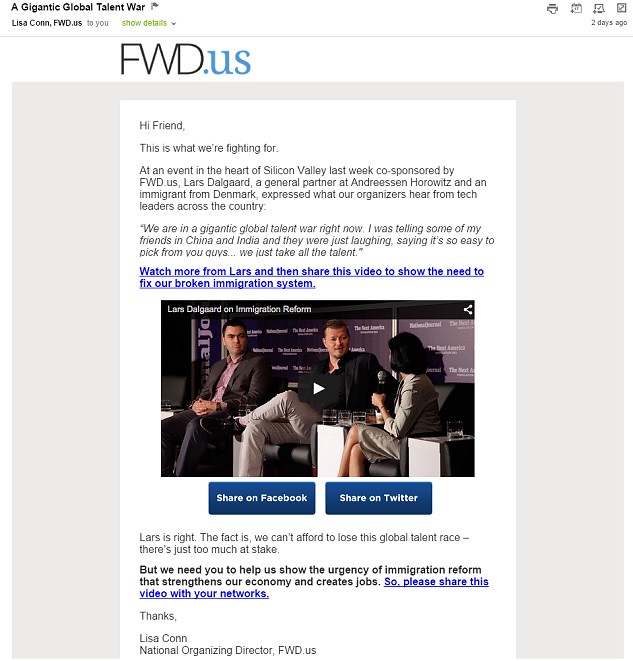
theodp writes: On May 6, notes think tank Brookings, the Department of Labor released labor productivity data showing that output per worker fell by 1.9 percent during the first quarter of 2015. But fear not — the Metropolitan Policy Program of [Microsoft-backed] Brookings says K-12 computer science education is the cure for what ails U.S. productivity: "So how can the United States reverse this trend? First, states, metropolitan areas, and school districts must recognize that basic digital literacy is no longer sufficient preparation for the 21st century workforce. Familiarity with higher-level skills such as coding will be critical as the role of technology continues to grow. The 60-plus school districts that have partnered with [Microsoft-backed] Code.org have already begun to move in this direction. By introducing students to computer science fundamentals early on, Code.org and its partner districts will help get more people on pathways to well-paying jobs in computer programming and other fields." Creating a national K-12 CS and tech immigration crisis was proposed as Microsoft introduced its 'two-pronged' National Talent Strategy to increase K-12 CS education and the number of H-1B visas at a Brookings event in 2012. While creating a K-12 CS crisis fell to Code.org, fanning the flames of a tech immigration crisis is the purvey of [Microsoft exec-backed] FWD.us, the PAC formed by Facebook CEO Mark Zuckerberg, which recently sent an email blast warning U.S. citizens they're in 'A Gigantic Global Talent War', adding that China and India citizens are "just laughing [at the US], saying it's so easy to pick from you guys... we just take all the talent." -
Dropbox Moves Accounts Outside North America To Ireland
monkeyzoo writes: Similar to a previous announcement by Twitter, Dropbox has changed its Terms of Service for users outside of North America (USA/Canada/Mexico) such that services will now be provided out of Ireland. Will other companies follow this trend and leave the USA (and the jurisdiction of the NSA)? Note, the announcement states that North American users are not able to opt into the Irish Terms of Service. -
A Visual Walk Through Amazon's Impact On One Seattle Neighborhood
reifman writes: If you live in Seattle, it's easy to see Amazon.com's impact on downtown construction and growth but not everyone sees what's happening in neighborhoods like formerly sleepy Ballard. One by one, traditional Seattle homes are being razed and replaced by 3 1/2 story behemoths without regard for aesthetics of any kind. The new townhomes offer 12 foot wide living spaces for Amazon's brogrammer class. Take a walk with me down my friend's street to see what it's like to live amongst the returns of e-commerce success. Ballard is also home of the late octogenarian Edith Macefield, who refused to sell her house to developers as construction went up around her. -
Doomed Russian Spacecraft Re-Enters Atmosphere Over Pacific Ocean
astroengine sends word that the Russian cargo ship that spun out of control after launching on a mission to the ISS on April 28 has re-entered the atmosphere somewhere over the Pacific Ocean. Orbital tracking indicated the re-entry took place at 2:20 UTC. Its orbital speed and location were not known with perfect precision, but any bits of the spacecraft that didn't burn up are believed to have landed in the ocean between 350 and 1,300 kilometers off the west coast of Chile.
According to Spaceflight 101, "The component with the highest probability of reaching the ground is the docking mechanism of the spacecraft as one of the most dense spacecraft systems. The docking system hosts an 80-centimeter hatch that is surrounded by the docking interface hosting the hooks and pressure seals facilitated on a massive metal ring. Overall, the system has a mass of 200 Kilograms much of which could reach the ground since the closed hatch would most likely not separate from the docking system and the unit will return mostly intact." -
Superfish Injects Ads In 1 In 25 Google Page Views
An anonymous reader writes: A new report from Google has found that more than 5% of unique daily IP addresses accessing Google — tens of millions — are interrupted by ad-injection techniques, and that Superfish, responsible for a major controversy with Lenovo in February is the leading adware behind what is clearly now an industry. Amongst the report's recommendations to address the problem is the suggestion that browser makers "harden their environments against side-loading extensions or modifying the browser environment without user consent." Some of the most popular extensions for Chrome and Firefox, including ad-blockers, depend on this functionality. -
Keurig Stock Drops, Says It Was Wrong About DRM Coffee Pods
An anonymous reader writes: Green Mountain (Keurig) stock dropped by 10% this morning after a brutal earnings report. The reason? CNN Money reports that DRM has weakened sales of their Keurig 2.0. CEO Brian Kelley admits, "Quite honestly, we were wrong." Last year Green Mountain decided to make their new coffee machines work with licensed pods only. The company says they now plan to license more outside brands, and bring back “My K-Cup” reusable filters. -
Creating the Open Drone Ecosystem Takes Room To Experiment
An anonymous reader writes: Over on Forbes, Jono Bacon writes about the emergence of an open drone ecosystem spearheaded by the recently announced 3D Robotics SOLO which is largely Open Source and has an Open Source SDK. Bacon's argument is that innovation comes from where we least expect it, so open access to the code and tools is critical in helping the burgeoning drone ecosystem to thrive, solve problems, and grow. See also our videos interviews with open-source drone programmers / users John Hawley, Clay McLure, and Mark F. Brown and Joel Rozenweig at the recent Embedded Linux Conference, where Bacon was also a speaker. -
Creating the Open Drone Ecosystem Takes Room To Experiment
An anonymous reader writes: Over on Forbes, Jono Bacon writes about the emergence of an open drone ecosystem spearheaded by the recently announced 3D Robotics SOLO which is largely Open Source and has an Open Source SDK. Bacon's argument is that innovation comes from where we least expect it, so open access to the code and tools is critical in helping the burgeoning drone ecosystem to thrive, solve problems, and grow. See also our videos interviews with open-source drone programmers / users John Hawley, Clay McLure, and Mark F. Brown and Joel Rozenweig at the recent Embedded Linux Conference, where Bacon was also a speaker. -
Creating the Open Drone Ecosystem Takes Room To Experiment
An anonymous reader writes: Over on Forbes, Jono Bacon writes about the emergence of an open drone ecosystem spearheaded by the recently announced 3D Robotics SOLO which is largely Open Source and has an Open Source SDK. Bacon's argument is that innovation comes from where we least expect it, so open access to the code and tools is critical in helping the burgeoning drone ecosystem to thrive, solve problems, and grow. See also our videos interviews with open-source drone programmers / users John Hawley, Clay McLure, and Mark F. Brown and Joel Rozenweig at the recent Embedded Linux Conference, where Bacon was also a speaker. -
Defense Distributed Sues State Department Over 3-D Gun Censorship
SonicSpike writes with word that Cody Wilson, whose projects to create (and disseminate the plans for) printable guns have fascinated some and horrified others, is not going to quietly comply with the U.S. State Deparment's demand that he remove such plans from the internet. Wilson, says Wired, is picking a fight that could pit proponents of gun control and defenders of free speech against each other in an age when the line between a lethal weapon and a collection of bits is blurrier than ever before. Wilson's gun manufacturing advocacy group Defense Distributed, along with the gun rights group the Second Amendment Foundation, on Wednesday filed a lawsuit against the State Department and several of its officials, including Secretary of State John Kerry. In their complaint, they claim that a State Department agency called the Directorate of Defense Trade Controls (DDTC) violated their first amendment right to free speech by telling Defense Distributed that it couldn't publish a 3-D printable file for its one-shot plastic pistol known as the Liberator, along with a collection of other printable gun parts, on its website. -
Defense Distributed Sues State Department Over 3-D Gun Censorship
SonicSpike writes with word that Cody Wilson, whose projects to create (and disseminate the plans for) printable guns have fascinated some and horrified others, is not going to quietly comply with the U.S. State Deparment's demand that he remove such plans from the internet. Wilson, says Wired, is picking a fight that could pit proponents of gun control and defenders of free speech against each other in an age when the line between a lethal weapon and a collection of bits is blurrier than ever before. Wilson's gun manufacturing advocacy group Defense Distributed, along with the gun rights group the Second Amendment Foundation, on Wednesday filed a lawsuit against the State Department and several of its officials, including Secretary of State John Kerry. In their complaint, they claim that a State Department agency called the Directorate of Defense Trade Controls (DDTC) violated their first amendment right to free speech by telling Defense Distributed that it couldn't publish a 3-D printable file for its one-shot plastic pistol known as the Liberator, along with a collection of other printable gun parts, on its website. -
Defense Distributed Sues State Department Over 3-D Gun Censorship
SonicSpike writes with word that Cody Wilson, whose projects to create (and disseminate the plans for) printable guns have fascinated some and horrified others, is not going to quietly comply with the U.S. State Deparment's demand that he remove such plans from the internet. Wilson, says Wired, is picking a fight that could pit proponents of gun control and defenders of free speech against each other in an age when the line between a lethal weapon and a collection of bits is blurrier than ever before. Wilson's gun manufacturing advocacy group Defense Distributed, along with the gun rights group the Second Amendment Foundation, on Wednesday filed a lawsuit against the State Department and several of its officials, including Secretary of State John Kerry. In their complaint, they claim that a State Department agency called the Directorate of Defense Trade Controls (DDTC) violated their first amendment right to free speech by telling Defense Distributed that it couldn't publish a 3-D printable file for its one-shot plastic pistol known as the Liberator, along with a collection of other printable gun parts, on its website. -
NFL Releases Deflategate Report
_xeno_ writes: You may remember back in February that Slashdot covered the NFL asking Columbia University for help investigating Deflategate, a scandal where the New England Patriots were caught deflating their footballs in order to make them easier to catch. The Patriots claimed this was simply a result of the weather, while their opponents disagreed. Well, it's been months, but we finally have our answer: the balls were, in fact, knowingly deflated by the Patriots (to no one's surprise). And while science can explain a little deflation, it cannot explain the amount of deflation seen during the game. Which isn't stopping Boston fans from attacking the science. The report stops short of certainty, though, concluding rather that deliberate underinflation was "more likely than not." Not everyone agrees that a conspiracy is necessary to account for the measured pressure readings. -
Researcher: Drug Infusion Pump Is the "Least Secure IP Device" He's Ever Seen
chicksdaddy writes: This is a bad month for the medical equipment maker Hospira. First, security researcher Billy Rios finds a raft of serious and remotely exploitable holes in the company's MedNet software, prompting a vulnerability alert from ICS CERT. Now, one month later, ICS CERT is again warning of a "10 out of 10" critical vulnerability, this time in Hospira's LifeCare PCA drug infusion pump. The problem? According to this report by Security Ledger the main problem was an almost total lack of security controls on the device. According to independent researcher Jeremy Williams, the PCA pump listens on Telnet port 23. Connecting to the device via Telnet, he was brought immediately to a root shell account that gave him total, administrator level access to the pump without authentication. "The only thing I needed to get in was an interest in the pump," he said. Richards found other examples of loose security on the PCA 3: a FTP server that could be accessed without authentication and an embedded web server that runs Common Gateway Interface (CGI). That could allow an attacker to tamper with the pump's operation using fairly simple scripts. Also: The PCA pump stores wireless keys used to connect to the local (medical device) wireless network in plain text on the device. That means anyone with physical access to the Pump (which has an ethernet port) could gain access to the local medical device network and other devices on it. The problems prompted Richards to call the PCA 3 pump "the least secure IP enabled device" he has ever worked with. -
Grooveshark Resurrected Out of US Jurisdiction
New submitter khoonirobo writes: Less than a week after music streaming service Grooveshark was shut down, it seems to have been brought back to life by an unknown person "connected to the original grooveshark" according to this BGR report. Seemingly, the plan is to get away with it by registering and hosting it outside of U.S. jurisdiction. From the article: "It’s still in the early stages of development, but the team hopes to reproduce the old Grooveshark UI in its entirety, including playlists and favorites." -
Oculus Rift Launching In Q1 2016
An anonymous reader writes: Oculus has announced that their Rift virtual reality headset will be coming out sometime in the first quarter of 2016. They've also posted a couple images of the final consumer headset design. The device was Kickstarted in August, 2012. Consumer-level release dates have slowly slipped further and further out since then, though they've shipped two different development kits. Ars points out that a 2016 launch date will bring the Oculus Rift to market after the Valve/HTC VR headset, and possibly after Sony's Project Morpheus. -
SpaceX Launch Abort Test Successful
An anonymous reader writes: As we discussed yesterday, SpaceX launched a prototype this morning to test its Dragon passenger capsule in an aborted launch. The test was a success — the capsule separated cleanly, propelled itself to a safe distance, deployed its parachutes, and lowered gently down to a water landing, where it remained floating. You can watch video of the test on SpaceX's website — skip to 15:40 to get right to it. Externally, everything seems to have gone fine. I'm sure we'll hear in the coming weeks whether the downrange distance was ideal, whether they hit their splashdown target, and how the crash test dummy inside the capsule weathered the abort! -
Extreme Secrecy Eroding Support For Trans-Pacific Partnership
schwit1 writes with news that political support for the Trans-Pacific Partnership is drying up because of the secrecy involved in developing it. Members of Congress can read the bill if they want, but they need to be located in a single room within the basement of the Capitol Visitor Center, and they can't have their staff with them. They can't have a copy, they can't take notes, and they can only view one section at a time. And they're monitored while they read it. Unsurprisingly, this is souring many members of Congress on the controversial trade agreement.
"Administration aides say they can’t make the details public because the negotiations are still going on with multiple countries at once; if for example, Vietnam knew what the American bottom line was with Japan, that might drive them to change their own terms. Trade might not seem like a national security issue, they say, but it is (and foreign governments regularly try to hack their way in to American trade deliberations)." -
Extreme Secrecy Eroding Support For Trans-Pacific Partnership
schwit1 writes with news that political support for the Trans-Pacific Partnership is drying up because of the secrecy involved in developing it. Members of Congress can read the bill if they want, but they need to be located in a single room within the basement of the Capitol Visitor Center, and they can't have their staff with them. They can't have a copy, they can't take notes, and they can only view one section at a time. And they're monitored while they read it. Unsurprisingly, this is souring many members of Congress on the controversial trade agreement.
"Administration aides say they can’t make the details public because the negotiations are still going on with multiple countries at once; if for example, Vietnam knew what the American bottom line was with Japan, that might drive them to change their own terms. Trade might not seem like a national security issue, they say, but it is (and foreign governments regularly try to hack their way in to American trade deliberations)." -
Extreme Secrecy Eroding Support For Trans-Pacific Partnership
schwit1 writes with news that political support for the Trans-Pacific Partnership is drying up because of the secrecy involved in developing it. Members of Congress can read the bill if they want, but they need to be located in a single room within the basement of the Capitol Visitor Center, and they can't have their staff with them. They can't have a copy, they can't take notes, and they can only view one section at a time. And they're monitored while they read it. Unsurprisingly, this is souring many members of Congress on the controversial trade agreement.
"Administration aides say they can’t make the details public because the negotiations are still going on with multiple countries at once; if for example, Vietnam knew what the American bottom line was with Japan, that might drive them to change their own terms. Trade might not seem like a national security issue, they say, but it is (and foreign governments regularly try to hack their way in to American trade deliberations)." -
French Version of 'Patriot Act' Becomes Law
Taco Cowboy writes: Thanks to the Charlie Hebdo massacre and other instances of terrorism, the French legislature has voted 438 to 86 in favor of the "Intelligence Service Bill," essentially a French version of the Patriot Act. It awards the French intelligence services sweeping powers to tap and intercept any kind of digital correspondence, including phone conversations, emails, and social media.
The bill decrees that hosting providers and Internet service providers in France must be equipped with a "black box" that can retain all digital communications from customers. "The new law would create a 13-member National Commission to Control Intelligence Techniques, which would be made up of six magistrates from the Council of State and the Court of Appeals, three representatives of the National Assembly, three senators from the upper house of Parliament and a technical expert. ... The only judicial oversight is a provision that allows the commission to lodge a complaint with the Council of State, but lawyers are doubtful that it could be convened on a routine basis." We previously discussed news that ISPs may leave France in protest if the bill was passed. Now we'll know shortly if those ISPs will live up to their word. -
French Version of 'Patriot Act' Becomes Law
Taco Cowboy writes: Thanks to the Charlie Hebdo massacre and other instances of terrorism, the French legislature has voted 438 to 86 in favor of the "Intelligence Service Bill," essentially a French version of the Patriot Act. It awards the French intelligence services sweeping powers to tap and intercept any kind of digital correspondence, including phone conversations, emails, and social media.
The bill decrees that hosting providers and Internet service providers in France must be equipped with a "black box" that can retain all digital communications from customers. "The new law would create a 13-member National Commission to Control Intelligence Techniques, which would be made up of six magistrates from the Council of State and the Court of Appeals, three representatives of the National Assembly, three senators from the upper house of Parliament and a technical expert. ... The only judicial oversight is a provision that allows the commission to lodge a complaint with the Council of State, but lawyers are doubtful that it could be convened on a routine basis." We previously discussed news that ISPs may leave France in protest if the bill was passed. Now we'll know shortly if those ISPs will live up to their word. -
Ask Slashdot: Most Chromebook-Like Unofficial ChromeOS Experience?
An anonymous reader writes: I am interested in Chromebooks, for the reasons that Google successfully pushes them: my carry-around laptops serve mostly as terminals, rather than CPU-heavy workhorses, and for the most part the whole reason I'm on my computer is to do something that requires a network connection anyhow. My email is Gmail, and without particularly endorsing any one element, I've moved a lot of things to online services like DropBox. (Some offline capabilities are nice, but since actual Chromebooks have been slowly gaining offline stuff, and theoretically will gain a lot more of that, soon, I no longer worry much about a machine being "useless" if the upstream connection happens to be broken or absent. It would just be useless in the same way my conventional desktop machine would be.) I have some decent but not high-end laptops (Core i3, 2GB-4GB of RAM) that I'd enjoy repurposing as Chromebooks without pedigree: they'd fall somewhat short of the high-end Pixel, but at no out-of-pocket expense for me unless I spring for some cheap SSDs, which I might.
So: how would you go about making a Chromebook-like laptop? Yes, I could just install any Linux distro, and then restrain myself from installing most apps other than a browser and a few utilities, but that's not quite the same; ChromeOS is nicely polished, and very pared down; it also seems to do well with low-memory systems (lots of the current models have just 2GB, which brings many Linux distros to a disk-swapping crawl), and starts up nicely quick.
It looks like the most "authentic" thing would be to dive into building Chromium OS (which looks like a fun hobby), but I'd like to find something more like Cr OS — only Cr OS hasn't been updated in quite a while. Perhaps some other browser-centric pared-down Linux would work as well. How would you build a system? And should I go ahead and order some low-end 16GB SSDs, which I now see from online vendors for less than $25? -
The BBC Looks At Rollover Bugs, Past and Approaching
New submitter Merovech points out an article at the BBC which makes a good followup to the recent news (mentioned within) about a bug in Boeing's new 787. The piece explores various ways that rollover bugs in software have led to failures -- some of them truly disastrous, others just annoying. The 2038 bug is sure to bite some people; hopefully it will be even less of an issue than the Year 2000 rollover. From the article: It was in 1999 that I first wrote about this," comments [programmer William] Porquet. "I acquired the domain name 2038.org and at first it was very tongue-in-cheek. It was almost a piece of satire, a kind of an in-joke with a lot of computer boffins who say, 'oh yes we'll fix that in 2037' But then I realised there are actually some issues with this. -
Appeals Judge Calls Prenda an "Ingenious Crooked Extortionate Operation"
ktetch-pirate ("pirate politician" Andrew Norton) writes with this news from his blog: [Monday] was the long-awaited appeals court hearing in the ongoing Prenda copyright troll saga. Almost exactly two years after Judge Otis Wright went sci-fi on Prenda and its principles, the 9th Circuit Court of Appeals held an appeals hearing requested by Prenda on the sanctions, and it was not a pretty day for Prenda. Highlights included Senior Judge Pregerson calling Prenda's operation an "Ingenious Crooked Extortionate Operation" after describing in detail how they operate.
Prenda also astonished the judges by welcoming the idea of a criminal contempt hearing, which Legal blog Popehat thinks is likely to happen, on top of the sanctions being sustained. -
Internet Customers Surpass Cable Subscribers At Comcast
mpicpp notes that for the first time, the country's largest cable provider has more internet subscribers than cable subscribers. The Internet is taking over television. That shift is occurring at Comcast, where the number of people who subscribe to the company's Internet service surpassed its total video subscribers for the first time during the second quarter this year. Announced in an earnings call on Monday, the development signals a major turning point in the technological evolution sweeping across the media business, as the Internet becomes the gateway for information and entertainment. Comcast, the country's largest cable operator, abandoned its $45 billion takeover of Time Warner Cable last month after the deal drew regulatory scrutiny regarding concerns that the combined company would have too much control over the Internet. Comcast is already the country's largest broadband provider, with more than 22 million high-speed Internet customers. Brian L. Roberts, Comcast's chief executive, said in the call that the company was disappointed about the collapse of the deal but had moved on. He said that Comcast's top priorities now were to advance its existing business and improve its poorly rated customer service. -
No, NASA Did Not Accidentally Invent Warp Drive
StartsWithABang writes: As Slashdot has previously reported, NASA Spaceflight has claimed to have vetted the EM Drive in a vacuum, and found there is still an anomalous thrust/acceleration on the order of 50 microNewtons for the device. While some are claiming this means things like warp drive and 70-day-trips-to-Mars are right on the horizon, it's important to view this from a scientist's point of view. Here's what it will take to turn this from a speculative claim into a robust one. -
Former HP CEO Carly Fiorina Announces Bid For White House
seven of five writes: According to Reuters, "Former Hewlett-Packard Co Chief Executive Carly Fiorina announced on Monday she is running for president, becoming the only woman in the pack of Republican candidates for the White House in 2016. ... Fiorina registers near the bottom of polls of the dozen or so Republican hopefuls and has never held public office. But she has already attracted warm receptions at events in the early voting state of Iowa where she is positioning herself as a conservative, pro-business Republican highly critical of Democratic candidate Hillary Clinton. Fiorina was forced by HP to resign in 2005 as the tech company struggled to digest Compaq after a $19 billion merger."
As part of her announcement, she said, "I think I'm the best person for the job because I understand how the economy actually works. I understand the world, who's in it, how the world works." I'm sure we'll soon begin hearing from all the HP employees, current and former, who have nothing but love for Carly F. -
Former HP CEO Carly Fiorina Announces Bid For White House
seven of five writes: According to Reuters, "Former Hewlett-Packard Co Chief Executive Carly Fiorina announced on Monday she is running for president, becoming the only woman in the pack of Republican candidates for the White House in 2016. ... Fiorina registers near the bottom of polls of the dozen or so Republican hopefuls and has never held public office. But she has already attracted warm receptions at events in the early voting state of Iowa where she is positioning herself as a conservative, pro-business Republican highly critical of Democratic candidate Hillary Clinton. Fiorina was forced by HP to resign in 2005 as the tech company struggled to digest Compaq after a $19 billion merger."
As part of her announcement, she said, "I think I'm the best person for the job because I understand how the economy actually works. I understand the world, who's in it, how the world works." I'm sure we'll soon begin hearing from all the HP employees, current and former, who have nothing but love for Carly F. -
Ubuntu 15.04 Received Well By Linux Community
jones_supa writes: Canonical released Ubuntu 15.04 a couple of weeks ago, and it seems that this release has been a success. The community is mostly reporting a nice experience, which is important since this is the first Ubuntu release that uses systemd instead of upstart. At Slashdot, people have been very nervous about systemd, and last year it was even asked to say something nice about it. To be fair, Ubuntu 15.04 hasn't changed all that much. Some minor visual changes have been implemented, along with a couple of new features, but the operating system has remained pretty much the same. Most importantly it is stable, fast, and it lacks the usual problems accompanied by new releases. -
Ubuntu 15.04 Received Well By Linux Community
jones_supa writes: Canonical released Ubuntu 15.04 a couple of weeks ago, and it seems that this release has been a success. The community is mostly reporting a nice experience, which is important since this is the first Ubuntu release that uses systemd instead of upstart. At Slashdot, people have been very nervous about systemd, and last year it was even asked to say something nice about it. To be fair, Ubuntu 15.04 hasn't changed all that much. Some minor visual changes have been implemented, along with a couple of new features, but the operating system has remained pretty much the same. Most importantly it is stable, fast, and it lacks the usual problems accompanied by new releases. -
US Gov't Will Reveal More About Its Secret Cellphone Tracking Devices
An anonymous reader writes: The U.S. Department of Justice has launched a major review of how law enforcement around the country uses cellphone tracking technology, and they will also begin sharing more information about how it works. So-called "Stingray" devices have been in the news a lot recently, as privacy activists try to piece together how they're used. Police and federal agencies have been notably resistant to sharing how they use this tool, even after we learned that they often don't bother with warrants and may have been drastically overusing it. Still, they're not going to reveal everything about the Stingrays: "Officials said they don't want to reveal so much that it gives criminals clues about how to defeat the devices. Law-enforcement officials also don't want to reveal information that would give new ammunition to defense lawyers in prosecutions where warrants weren't used, according to officials involved in the discussions." -
US Gov't Will Reveal More About Its Secret Cellphone Tracking Devices
An anonymous reader writes: The U.S. Department of Justice has launched a major review of how law enforcement around the country uses cellphone tracking technology, and they will also begin sharing more information about how it works. So-called "Stingray" devices have been in the news a lot recently, as privacy activists try to piece together how they're used. Police and federal agencies have been notably resistant to sharing how they use this tool, even after we learned that they often don't bother with warrants and may have been drastically overusing it. Still, they're not going to reveal everything about the Stingrays: "Officials said they don't want to reveal so much that it gives criminals clues about how to defeat the devices. Law-enforcement officials also don't want to reveal information that would give new ammunition to defense lawyers in prosecutions where warrants weren't used, according to officials involved in the discussions." -
US Gov't Will Reveal More About Its Secret Cellphone Tracking Devices
An anonymous reader writes: The U.S. Department of Justice has launched a major review of how law enforcement around the country uses cellphone tracking technology, and they will also begin sharing more information about how it works. So-called "Stingray" devices have been in the news a lot recently, as privacy activists try to piece together how they're used. Police and federal agencies have been notably resistant to sharing how they use this tool, even after we learned that they often don't bother with warrants and may have been drastically overusing it. Still, they're not going to reveal everything about the Stingrays: "Officials said they don't want to reveal so much that it gives criminals clues about how to defeat the devices. Law-enforcement officials also don't want to reveal information that would give new ammunition to defense lawyers in prosecutions where warrants weren't used, according to officials involved in the discussions." -
Bill Gates Owes His Career To Steven Spielberg's Dad; You May, Too
theodp writes: On the 51st birthday of the BASIC programing language, GE Reports decided it was finally time to give-credit-where-credit-was-long-overdue, reporting that Arnold Spielberg, the 98-year-old father of Hollywood director Steven Spielberg, helped revolutionize computing when he designed the GE-225 mainframe computer. The machine allowed a team of Dartmouth University students and researchers to develop BASIC, which quickly spread and ushered in the era of personal computers. BASIC helped kickstart many computing careers, include those of Bill Gates and Paul Allen, as well as Steve Wozniak and Steve Jobs. -
Android and iOS App Porting Will Not Be Available At Windows 10 Launch
An anonymous reader writes: Arguably the biggest news out of Microsoft's Build 2015 conference was that developers will be able to bring Web apps, Windows desktop apps (Win32), as well as Android and iOS mobile apps to the Windows Store. Yet each of these work differently, and there are a lot of nuances, so we talked to Todd Brix, general manager of Windows apps and store, to get some more detail. First and foremost, upon Windows 10's launch, developers will only be able to bring Web apps to the Windows Store. The Win32, Android, and iOS app toolkits will not be ready in time. That said, with Microsoft's Windows as a service strategy, they will arrive as part of later updates -
New Test Supports NASA's Controversial EM Drive
An anonymous reader writes: Last year, NASA's advanced propulsion research wing made headlines by announcing the successful test of a physics-defying electromagnetic drive, or EM drive. Now, this futuristic engine, which could in theory propel objects to near-relativistic speeds, has been shown to work inside a space-like vacuum. NASA Eagleworks made the announcement quite unassumingly via NASASpaceFlight.com. The EM drive is controversial in that it appears to violate conventional physics and the law of conservation of momentum; the engine, invented by British scientist Roger Sawyer, converts electric power to thrust without the need for any propellant by bouncing microwaves within a closed container. So, with no expulsion of propellant, there’s nothing to balance the change in the spacecraft’s momentum during acceleration. -
Patent Issued Covering Phone Notifications of Delivery Time and Invoice Quantity
eldavojohn writes: The staggering ingenuity of the U.S. Patent system has again been showcased by the EFF's analysis of recent patents. This week's patent and follow-up patent cover the futuristic innovative idea that when you order something, you can update your order and add additional amounts to your order while it's being processed. But wait, it gets even more innovative! You may one day be able to even to notify when you would like it delivered — on your phone! I know, you're busy wiping all that brain matter off your screen as your head seems to have exploded. Well, it turns out that inventor and patent holder Scott Horstemeyer (aka Eclipse IP, LLC of Delray Beach, FL) found no shortage of targets to go after with his new patents. It appears Tiger Fitness (and every other online retailer) was sending notices to customers about shipments. Did I mention Horstemeyer is a lawyer too? But not just a regular lawyer, a "SUPER lawyer" from the same firm that patented social networking in 2007, sued Uber for using location finding technologies in 2013 and sued Overstock.com as well as a small time shoe seller for using shipping notifications in 2014. A related article at Vox makes this case: "The primary problem with the patent system is, well, the patent system. The system makes it too easy to get broad, vague patents, and the litigation process is tilted too far toward plaintiffs. But because so many big companies make so much money off of this system, few in Congress are willing to consider broader reforms." -
Grooveshark Shuts Down
An anonymous reader writes: Grooveshark, one of the most popular music streaming websites, has announced that they are shutting down immediately. Several lawsuits from the record companies pushed the company out of business. In a notice posted on the Grooveshark website, its two founders said, "[D]espite best of intentions, we made very serious mistakes. We failed to secure licenses from rights holders for the vast amount of music on the service. That was wrong. We apologize. Without reservation." All of their music has been deleted, and the site itself now belongs to the record companies. NewYorkCountryLawyer adds that according to the settlement (PDF), Grooveshark must pay $50 million, but no money judgment has been entered against individual defendants. -
Comcast Brings Fiber To City That It Sued 7 Years Ago To Stop Fiber Rollout
An anonymous reader writes with the latest update in Comcast's "if you can't beat them, join them" fiber plan. In April 2008, Comcast sued the Chattanooga Electric Power Board (EPB) to prevent it from building a fiber network to serve residents who were getting slow speeds from the incumbent cable provider. Comcast claimed that EPB illegally subsidized the buildout with ratepayer funds, but it quickly lost in court, and EPB built its fiber network and began offering Internet, TV, and phone service. After EPB launched in 2009, incumbents Comcast and AT&T finally started upgrading their services, EPB officials told Ars when we interviewed them in 2013. But not until this year has Comcast had an Internet offering that can match or beat EPB's $70 gigabit service. Comcast announced its 2Gbps fiber-to-the-home service on April 2, launching first in Atlanta, then in cities in Florida and California, and now in Chattanooga, Tennessee. -
Messenger's Mercury Trip Ends With a Bang, and Silence
mpicpp writes with an expected followup: Nasa's Messenger mission to Mercury has reached its explosive conclusion, after 10 years in space and four in orbit. Now fully out of fuel, the spacecraft smashed into a region near Mercury's north pole, out of sight from Earth, at about 20:00 GMT on Thursday. Mission scientists confirmed the impact minutes later, when the craft's next possible communication pass was silent. Messenger reached Mercury in 2011 and far exceeded its primary mission plan of one year in orbit. That mission ended with an inevitable collision: Messenger slammed into our Solar System's hottest planet at 8,750mph (14,000km/h) — 12 times quicker than the speed of sound. The impact will have completely obliterated this history-making craft. And it only happened because Mercury has no thick atmosphere to burn up incoming objects — the same reason its surface is so pock-marked by impact craters. According to calculations, the 513kg, three-metre craft will have blasted a brand new crater the size of a tennis court. But that lasting monument is far too small to be visible from Earth. -
White House Outsources K-12 CS Education To Infosys Charity
theodp writes: In December, the White House praised the leadership of Code.org for their efforts to get more computer science into K-12 schools, which were bankrolled by $20 million in philanthropic contributions from the likes of Google, Microsoft, Bill Gates, Steve Ballmer, and Mark Zuckerberg. On Monday, it was announced that Infosys Foundation USA will be partnering with Code.org to bring CS education to millions of U.S. students. Infosys Foundation USA Chair Vandana Sikka, who joins execs from Microsoft, Google, and Amazon execs on Code.org's Board, is the spouse of Infosys CEO Vishal Sikka. The announcement from the tax-deductible charity comes as India-based Infosys finds itself scrutinized by U.S. Senators over allegations of H-1B visa program abuses. -
Senate Advances "Secret Science" Bill, Sets Up Possible Showdown With President
sciencehabit writes: Republicans in Congress appear to be headed for a showdown with the White House over controversial "secret science" legislation aimed at changing how the Environmental Protection Agency (EPA) uses scientific studies. A deeply divided Senate panel yesterday advanced a bill that would require EPA to craft its policies based only on public data available to outside experts. The House of Representatives has already passed a similar measure. But Democrats and science groups have harshly criticized the approach, and the White House has threatened a veto. -
Russian Cargo Spacehip Declared Lost
schwit1 writes: The Russians have declared lost the Progress freighter that had been launched to the ISS yesterday. They never could regain control of the craft, plus it was in an incorrect orbit. Moreover, the U.S. Air Force has detected debris nearby, suggesting a significant failure of some kind. The Russians are now considering delaying the next manned launch, scheduled for May 26, while they investigate this failure. Both Soyuz and Progress use some of the same systems, including the radar system that failed on Progress, and they want to make sure the problem won't pop up on the manned mission. At the same time, they are also considering advancing the launch date of the next Progress to ISS from August 6. Based on these reports, I think they might swap the launch dates for the two flights. A Dragon is scheduled to go to ISS in between these missions, though that schedule could be changed as well to accommodate the Russian plans. -
Interviews: Ask Fark Founder Drew Curtis a Question
For many, the day would not be complete without checking Fark.com for the latest funny or weird news. Inspired by the numerous links to interesting news stories he'd send to friends every morning, Drew Curtis created Fark in 1999. By 2009 it was one of the top 100 English language websites with 3-4 million unique visitors, and 60 million page views per month. Recently Drew has been in the news after he announced that he was running for governor in his home state of Kentucky with his wife Heather as his running mate. Calling himself an independent "citizen candidate," the campaign website says: "We have a theory that we’re about to see a huge change in how elections and politics work. Across the country, we have seen regular citizens stepping up and challenging the status quo built by political parties and career politicians. They have been getting closer and closer to victory and, here in Kentucky, we believe we have a chance to win and break the political party stronghold for good." We'll be checking back in with Drew as the race heats up, but for now he's agreed to answer any questions you may have. As usual, ask as many as you'd like, but please, one per post. -
Crowdfunded Android Console Ouya Reportedly Seeking Buyout
An anonymous reader writes: Ouya, the Android-based games console, enjoyed one of the most successful crowdfunding campaigns to date, raising $8.6 million after asking for only $960,000. But now that the console has been on the market for a while, the company is struggling. After borrowing roughly $25 million from investors to keep it going, they're now trying to restructure the debt, and reportedly seeking a buyout. "Interest in Ouya's microconsole has dropped considerably since its launch back in 2013, where it had to offer store credit to dissatisfied Kickstarter backers for failing to deliver devices on time. Following disappointing sales figures for early games, the company has tried several times to turn its fortunes around." -
Crashing iPad App Grounds Dozens of American Airline Flights
infolation writes: American Airlines was forced to delay multiple flights on Tuesday night after the iPad app used by pilots crashed. Introduced in 2013, the cockpit iPads are used as an "electronic flight bag," replacing 16kg (35lb) of paper manuals which pilots are typically required to carry on flights. In some cases, the flights had to return to the gate to access Wi-Fi to fix the issue. -
The Power of Backroom Lobbying: How the Music Industry Got a Copyright Extension
An anonymous reader writes: The Canadian government's unexpected budget decision to extend the term of copyright for sound recordings came as a surprise to most copyright watchers, but not the music industry lobby, which was ready with a press release within minutes. How did the industry seemingly know this was coming? Michael Geist reports that records show the extension is the result of backroom lobbying with monthly meetings between senior government officials and music industry lobbyists paving the way for copyright term extension without public consultation or debate. -
China's Tencent Launches Smart Hardware OS To Rival Alibaba
An anonymous reader writes: Chinese internet and media giant Tencent Holdings has today launched an operating system for mobile devices such as internet-connected phones, TVs, smartwatches and other IoT products. Tencent Operating System (OS) TOS+ is open to all developers and manufacturers free of charge should they agree to share their revenue – a framework similar to Google's popular Android mobile OS. The new Tencent OS offering, which provides voice recognition and mobile payment systems, will rival other home-grown operating systems looking to conquer the smart hardware arena with connected wearables, TVs and smart homeware technology. These competitors include smartphone maker Xiaomi and Asia's largest internet company Alibaba, who hopes to see its recently launched Yun OS eventually installed on tens of millions of smartphones. The Chinese systems for mobile and hardware products provide an alternative to Google's services, which constantly face challenges across the country due to strict censorship and licensing laws. -
An Open Ranking of Wikipedia Pages
vigna writes: The Laboratory for Web Algorithmics of the Università degli studi di Milano did it again: after creating the first open ranking of the World Wide Web they have put together the first entirely open ranking of Wikipedia, using Wikidata to categorize pages. The ranking is based on classic and easily explainable centrality measures or page views, and it is entirely open — all data (Wikipedia and Wikidata dumps) and all software used is publicly available. Just in case you wonder, the most important food is chocolate, the most important band are the Beatles and the most important idea is atheism.