Slashdot Mirror
Domain: slashdot.org
Stories and comments across the archive that link to slashdot.org.
Stories · 37,380
-
Hyperloop Testing Starts Next Year
neanderslob writes: In 2013, Elon Musk told us about a theoretical transportation system he'd been thinking about for a while. It was called "hyperloop," and it was a tube-based system capable of sending people and things at speeds of up to 800mph. Now, a company called Hyperloop Transportation Technologies plans to start construction on an actual hyperloop next year. The idea is to build it to serve Quay Valley (a proposed 75,000-resident solar power city in Kings County, California). The project will be paid for with $100 million the company expects to raise through a direct public offering in the third quarter of this year. The track itself will be a 5-mile loop and won't reach anywhere close to the 800mph Musk proposed in his white paper — but it's a start. -
Microsoft, Amazon, Google, Facebook Press WA For $40M For New UW CS Building
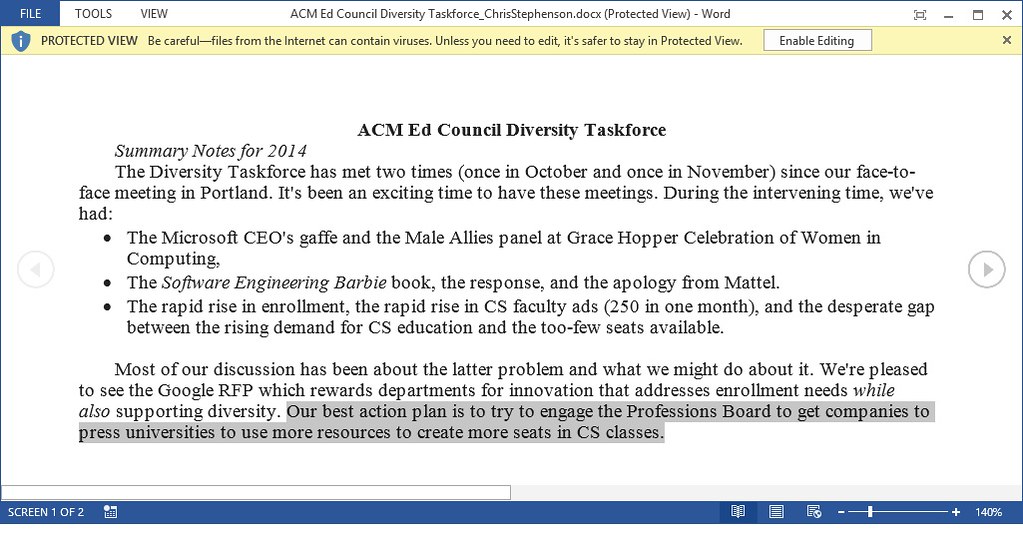
theodp (442580) writes "Nice computer industry you got there. Hate to see something bad happen to it." That's the gist of a letter sent by Microsoft, Amazon, Facebook, Google, Code.org, and other tech giants earlier this week asking the WA State Legislature to approve $40M in capital spending to help fund a new $110M University of Washington computer science building ($70M will be raised privately). "As representatives of companies and businesses that rely on a ready supply of high quality computer science graduates," wrote the letter's 23 signatories, "we believe it is critical for the State to invest in this sector in a way that ensures its vibrancy and growth. Our vision is for Washington to continue to lead the way in technology and computer science, but we must keep pace with the vast demand." The UW Dept. of Computer Science & Engineering profusely thanked tech leaders for pressing for a new building, which UW explained "will accommodate a doubling of our enrollment." Coincidentally, the corporate full-press came not long after the ACM Education Council Diversity Taskforce laid out plans "to get companies to press universities to use more resources to create more seats in CS classes" to address what it called "the desperate gap between the rising demand for CS education and the too-few seats available. -
Patent Trolls On the Run But Not Vanquished Yet
snydeq writes Strong legislation that will weaken the ability of the trolls to shake down innovators is likely to pass Congress, but more should be done, writes InfoWorld's Bill Snyder. "The Innovation Act isn't an ideal fix for the program patent system. But provisions in the proposed law, like one that will make trolls pay legal costs if their claims are rejected, will remove a good deal of the risk that smaller companies face when they decide to resist a spurious lawsuit," Snyder writes. That said, "You'd have to be wildly optimistic to think that software patents will be abolished. Although the EFF's proposals call for the idea to be studied, [EFF attorney Daniel] Nazer doesn't expect it to happen; he instead advocates several reforms not contained in the Innovation Act." -
Facebook Puts Users On Suicide Watch
Mark Wilson writes A few months ago Twitter was criticized for teaming up with suicide prevention charity Samaritans to automatically monitor for key words and phrases that could indicate that someone was struggling to cope with life. Despite the privacy concerns that surrounded Samaritans Radar, Facebook has decided that it is going to launch a similar program in a bid to prevent suicides. Working with mental health organizations including Forefront, Now Matters Now, the National Suicide Prevention Lifeline, and Save.org, Facebook aims to provide greater help and support for anyone considering suicide or self-harm. -
Xeroxed Gene May Have Paved the Way For Large Human Brain
sciencehabit writes Last week, researchers expanded the size of the mouse brain by giving rodents a piece of human DNA. Now another team has topped that feat, pinpointing a human gene that not only grows the mouse brain but also gives it the distinctive folds found in primate brains. The work suggests that scientists are finally beginning to unravel some of the evolutionary steps that boosted the cognitive powers of our species. "This study represents a major milestone in our understanding of the developmental emergence of human uniqueness," says Victor Borrell Franco, a neurobiologist at the Institute of Neurosciences in Alicante, Spain, who was not involved with the work. -
OPSEC For Activists, Because Encryption Is No Guarantee
Nicola Hahn writes: "In the wake of the Snowden revelations strong encryption has been promoted by organizations like The Intercept and Freedom of the Press Foundation as a solution for safeguarding privacy against the encroachment of Big Brother. Even President Obama acknowledges that "there's no scenario in which we don't want really strong encryption."
Yet the public record shows that over the years the NSA has honed its ability to steal encryption keys. Recent reports about the compromise of Gemalto's network and sophisticated firmware manipulation programs by the Office of Tailored Access Operations underscore this reality.
The inconvenient truth is that the current cyber self-defense formulas being presented are conspicuously incomplete. Security tools can and will fail. And when they do, what then? It's called Operational Security (OPSEC), a topic that hasn't received much coverage — but it should. -
OPSEC For Activists, Because Encryption Is No Guarantee
Nicola Hahn writes: "In the wake of the Snowden revelations strong encryption has been promoted by organizations like The Intercept and Freedom of the Press Foundation as a solution for safeguarding privacy against the encroachment of Big Brother. Even President Obama acknowledges that "there's no scenario in which we don't want really strong encryption."
Yet the public record shows that over the years the NSA has honed its ability to steal encryption keys. Recent reports about the compromise of Gemalto's network and sophisticated firmware manipulation programs by the Office of Tailored Access Operations underscore this reality.
The inconvenient truth is that the current cyber self-defense formulas being presented are conspicuously incomplete. Security tools can and will fail. And when they do, what then? It's called Operational Security (OPSEC), a topic that hasn't received much coverage — but it should. -
The State of Linux Gaming In the SteamOS Era
An anonymous reader writes: It's been over a year since Valve announced its Linux-based SteamOS, the biggest push yet from a huge company to bring mainstream gaming to Linux. In this article, Ars Technica takes a look at how their efforts are panning out. Game developers say making Linux ports has gotten dramatically easier: "There are great games shipping for Linux from development teams with no Linux expertise. They hit the 'export to Linux' button in the Unity editor and shipped it and it worked out alright. We didn't get flying cars, but the future is turning out OK so far."
Hardware drivers are still a problem, getting in the way of potential performance gains due to Linux's overall smaller resource footprint than Windows. And while the platform is growing, it's doing so slowly. Major publishers are still hesitant to devote time to Linux, and Valve is taking their time building for it. Their Steam Machine hardware is still in development, and some of their key features are being adopted by other gaming giants, like Microsoft. Still, Valve is sticking with it, and that's huge. It gives developers faith that they can work on supporting Linux without fear that the industry will re-fragment before their game is done. -
Lizard Squad Claims Attack On Lenovo Days After Superfish
Amanda Parker writes with news that hacker group Lizard Squad has claimed responsibility for a defacement of Lenovo's website. This follows last week's revelations that Lenovo installed Superfish adware on consumer laptops, which included a self-signed certificate authority that could have allowed man-in-the-middle attacks. The hackers seemingly replaced the manufacturer's website with images of an unidentified youth, displayed with a song from the Disney film High School Musical playing in the background. Taking to a new Twitter account that has only been active a matter of days, the Lizards also posted emails alleged to be from Lenovo, leading some to speculate that the mail system had been compromised. While some have seen the attack as retaliation for the Superfish bug, it is also possible that Lizard Squad are jumping on the event merely to promote their own hacking services. -
Reddit Imposes Ban On Sexual Content Posted Without Permission
Mark Wilson writes If you want to post naked pictures or videos of people on Reddit without their consent, you only have a couple of weeks to do so. As of March, the site is imposing a ban on content of an explicit nature that the subject has not given permission to be posted. The cleanup of the site comes hot on the heels of news from Google that explicit content will be banned from Blogger. It also comes in the wake of last year's Fappening which saw a glut of naked celebrity photos leaked online. -
Developers Disclose Schematics For 50-1000 MHz Software-Defined Transceiver
Bruce Perens writes Chris Testa KD2BMH and I have been working for years on a software-defined transceiver that would be FCC-legal and could communicate using essentially any mode and protocol up to 1 MHz wide on frequencies between 50 and 1000 MHz. It's been discussed here before, most recently when Chris taught gate-array programming in Python. We are about to submit the third generation of the design for PCB fabrication, and hope that this version will be salable as a "developer board" and later as a packaged walkie-talkie, mobile, and base station. This radio is unique in that it uses your smartphone for the GUI, uses apps to provide communication modes, contains an on-board FLASH-based gate-array and a ucLinux system. We intend to go for FSF "Respects Your Freedom" certification for the device. My slide show contains 20 pages of schematics and is full of ham jargon ("HT" means "handi-talkie", an old Motorola product name and the hams word for "walkie talkie") but many non-hams should be able to parse it with some help from search engines. Bruce Perens K6BP -
Intel Updates NUC Mini PC Line With Broadwell-U, Tested and Benchmarked
MojoKid writes Intel recently released its latest generation of NUC small form factor systems, based on the company's new low-power Broadwell-U series processors. The primary advantages of Intel's 5th Generation Core Series Broadwell-U-based processors are better performance-per-watt, stronger integrated graphics, and a smaller footprint, all things that are perfectly suited to the company's NUC (Next Unit of Computing) products. The Intel NUC5i5RYK packs a Core i5-5250U processor with on-die Intel HD 6000 series graphics. The system also sports built-in 802.11ac Wi-Fi, Gigabit Ethernet, USB 3.0 and USB 2.0, M.2 SSD support, and a host of other features, all in a 115mm x 111mm x 32.7mm enclosure. Performance-wise the new 5th Gen Core Series-powered NUC benchmarks like a midrange notebook and is actually up for a bit of light-duty gaming, though it's probably more at home as a Home Theater PC, media streamer or kiosk desktop machine. -
Interviews: Ask Senior Director Matt Keller About the Global Learning XPRIZE
The former Vice President of One Laptop per Child (OLPC) Matt Keller is currently the Senior Director of the $15 million Global Learning XPRIZE. The competition challenges teams from around the world to develop open source software solutions that will allow children in developing countries to teach themselves basic reading, writing and arithmetic within a 18 month competition period. After 18 months a panel of judges will evaluate the projects and announce semi-finalists. Semi-finalists will have a month to tweak their projects and/or reconfigure their teams before the judges elect the top five finalist to proceed. Each of the five teams selected will receive $1 million to field test their ideas with the eventual winners receiving the Grand Prize of $10 million. The Global Learning XPRIZE is recruiting teams now through April 30, 2015. Matt has agreed to answer any questions you might have about the competition and the future of education in general. As usual, ask as many as you'd like, but please, one per post. -
Jury Tells Apple To Pay $532.9 Million In Patent Suit
An anonymous reader writes: Smartflash LLC has won a patent lawsuit against Apple over DRM and technology relating to the storage of downloaded songs, games, and videos on iTunes. Apple must now pay $532.9 million in damages. An Apple spokesperson did not hesitate to imply Smartflash is a patent troll: "Smartflash makes no products, has no employees, creates no jobs, has no U.S. presence, and is exploiting our patent system to seek royalties for technology Apple invented. We refused to pay off this company for the ideas our employees spent years innovating and unfortunately we have been left with no choice but to take this fight up through the court system." The trial happened in the same court that decided Apple owed VirnetX $368 million over FaceTime-related patents back in 2012. -
Gemalto: NSA and GCHQ Probably Hacked Us, But Didn't Get SIM Encryption Keys
An anonymous reader writes: Last week The Intercept published a report saying agents from the NSA and GCHQ penetrated the internal computer network of Gemalto, the world's largest maker of SIM cards. Gemalto has done an internal investigation, and surprisingly decided to post its results publicly. The findings themselves are a bit surprising, too: Gemalto says it has "reasonable grounds to believe that an operation by NSA and GCHQ probably happened."
They say the two agencies were trying to intercept encryption keys that were being exchanged between mobile operators and the companies (like Gemalto) who supplied them with SIM cards. The company said it had noticed several security incidents in 2010 and 2011 that fit the descriptions in The Intercept's documents. Gemalto had no idea who was behind them until now. They add, "These intrusions only affected the outer parts of our networks – our office networks — which are in contact with the outside world. The SIM encryption keys and other customer data in general, are not stored on these networks." They claim proper use of encryption and isolation of different networks prevented attackers from getting the information they were after. -
FBI Offers $3 Million Reward For Russian Hacker
mpicpp sends word that the FBI and the U.S. State Department have announced the largest-ever reward for a computer hacking case. They're offering up to $3 million for information leading to the arrest of Evgeniy Bogachev, a 31-year-old Russian national. Bogachev is the alleged administrator of the GameOver Zeus botnet, estimated to have affected over a million computers, causing roughly $100 million in damages. "Bogachev has been charged by federal authorities in Pittsburgh, Pennsylvania, with conspiracy, computer hacking, wire fraud, bank fraud and money laundering... He also faces federal bank fraud conspiracy charges in Omaha, Nebraska related to his alleged involvement in an earlier variant of Zeus malware known as 'Jabber Zeus.'" -
FedEx Won't Ship DIY Gunsmithing Machine
An anonymous reader writes Last fall, Defense Distributed — the company created by Cody Wilson of 3D-printed gun fame — announced a DIY gunsmithing machine called the Ghost Gunner. Now, FedEx is refusing to ship the device, saying there are laws or regulations that would prohibit them from shipment. A FedEx spokesperson said, "This device is capable of manufacturing firearms, and potentially by private individuals. We are uncertain at this time whether this device is a regulated commodity by local, state or federal governments. As such, to ensure we comply with the applicable law and regulations, FedEx declined to ship this device until we know more about how it will be regulated." Wilson argues, "They’re acting like this is legal when in fact it’s the expression of a political preference. The artifact that they’re shipping is a CNC mill. There’s nothing about it that is specifically related to firearms except the hocus pocus of the marketing." -
Lenovo Hit With Lawsuit Over Superfish Adware
An anonymous reader writes with news that the fallout from the Superfish fiasco might just be starting for Lenovo. "Lenovo admitted to pre-loading the Superfish adware on some consumer PCs, and unhappy customers are now dragging the company to court on the matter. A proposed class-action suit was filed late last week against Lenovo and Superfish, which charges both companies with 'fraudulent' business practices and of making Lenovo PCs vulnerable to malware and malicious attacks by pre-loading the adware. Plaintiff Jessica Bennett said her laptop was damaged as a result of Superfish, which was called 'spyware' in court documents. She also accused Lenovo and Superfish of invading her privacy and making money by studying her Internet browsing habits." -
Inside the Business of Online Reputation Spin
The Guardian has a long, thought-provoking piece (it's an excerpt from an upcoming book) on the way that online PR works, when individuals or organizations pay online spin doctors to change the way they're perceived online. Embarrassing photos, ill-considered social media posts, even quips that have ended up geting the speaker into hot water, can all be crowded out, even if not actually expunged, by injecting lots of innocuous information, photos, and other bits of information. That crowding out seems to be the reputation managers' prime tactic. Besides a brush of his own with identity theft (or at least unwanted borrowing), the author spoke at length with both Adria Richards and "Hank"; both of whom ended up losing their jobs in the aftermath of what became known as Donglegate, after Richards tweeted about jokes that she overheard Hank and another developer share at PyCon 2013. -
Intel Core M Enables Lower Cost Ultrabooks; Asus UX305 Tested
MojoKid (1002251) writes Asus announced their super-slim Zenbook UX305 during the IFA trade show in Berlin in September. The machine will be available in two models, one with a 1920x1080 IPS display and one with a QHD+ display that boasts a native resolution of 3200x1800. They're both built around Intel's more power-efficient Core M processor, which was designed for ultra-thin and "fanless" form factors. Intel's Core M does seem to offer significant advances both in terms of power consumption and performance, which enables many of the design features found on the 12.3mm thin UX305. The Core M 5Y10 in the Asus Zenbook UX305 is complemented by 8GB of RAM, a 256GB SSD, and this is one of the few ultrabooks to feature a matte display. All told, the machine put up some decent numbers in the benchmarks and battery life was excellent, but what's perhaps most interesting is that this is an "ultrabook" class machine that weighs in at a much more palatable $700 price tag. -
L.A. School Superintendent Folds on Laptops-For-Kids Program
In an announcement yesterday reported on by Ars Technica, [Los Angeles school superintendent] Ramon C. Cortines said that the city can't afford to buy a computer for every student. The statement comes after intense controversy over a $1.3 billion initiative launched by Cortines' predecessor, former superintendent John Deasy, in which every student was supposed to be given an iPad loaded with content from educational publisher Pearson. (That controversy is worth reading about, and sparked an FBI investigation as well.) -
Chicago's Red Light Cameras Now a Point of Contention for Mayoral Candidates
The same system of red-light cameras in Chicago that was shown last year to have been generating bogus tickets is still around -- but now, reports Reuters, it's a political punching bag for opponents of Chicago mayor Rahm Emanuel in an upcoming election. "[Emanuel], who supports the nation's largest automated camera system, is polling slightly under the 50 percent plus one vote he needs to avoid a run-off against the second-highest vote-getter. Three of the four challengers seeking to topple Emanuel say the cameras should go. Emanuel's closest rival, Cook County Commissioner Jesus "Chuy" Garcia, who is polling at about 20 percent, said he would only keep cameras that have been proven to reduce accidents. .... Chicago has red-light cameras at 174 intersections and 144 speed cameras near schools and parks around the city. They have brought in $500 million since 2003, according to media reports, a figure Chicago has neither confirmed nor disputed. -
Ten Lies T-Mobile Told Me About My Data Plan
reifman (786887) writes "Last June, my post "Yes, You Can Spend $750 in International Data Roaming in One Minute on AT&T" was slashdotted and this led to T-Mobile CEO John Legere tweeting 'how crappy @ATT is' and welcoming me to the fold. Unfortunately, now it's TMobile that's having trouble tracking data; it seems to be related to the rollout of their new DataStash promotion. Just like AT&T, they're blaming the customer. Here are the ten lies T-Mobile told me about my data usage today." -
Why Sony Should Ditch Everything But the PlayStation
An anonymous reader writes: A couple weeks ago, we were surprised by news that Sony was spinning off its game development studio. More recently, the company has been thinking about exiting both the mobile phone market and the TV market. An opinion piece suggests Sony shouldn't stop there, focusing more on the its PlayStation division and a few other areas — and giving up on the rest. "Continuing to concentrate on phones and other products actually makes the PlayStation experience worse for most people. Take the PS4's ability to stream games to mobile devices — a killer feature needlessly limited to the PS Vita and Sony's Xperia Android line. Why can't I play Destiny on my iPad when the TV's occupied? The iOS PlayStation app, meanwhile, is a confusing mess that hasn't even been updated for the iPhone 6. These sound like minor points, but imagine what Sony could do if everyone at the company were focused on making its most important product as good as possible. As Microsoft is learning with its recent iOS and Android experiments, you have to serve the customers where they already are." -
TrueCrypt Audit Back On Track After Silence and Uncertainty
itwbennett writes: In October 2013 Cryptography professor Matthew Green and security researcher Kenneth White launched a project to perform a professional security audit of TrueCrypt, partly prompted by the leaks from Edward Snowden that suggested the NSA was engaged in efforts to undermine encryption. Their report, published in April 2014, covered the first phase of the audit. Phase two was supposed to involve a formal review of the program's encryption functions, with the goal of uncovering any potential errors in the cryptographic implementations—but then the unexpected happened. In May 2014, the developers of TrueCrypt, who had remained anonymous over the years for privacy reasons, abruptly announced that they were discontinuing the project and advised users to switch to alternatives. Now, almost a year later, the project is back on track. -
TrueCrypt Audit Back On Track After Silence and Uncertainty
itwbennett writes: In October 2013 Cryptography professor Matthew Green and security researcher Kenneth White launched a project to perform a professional security audit of TrueCrypt, partly prompted by the leaks from Edward Snowden that suggested the NSA was engaged in efforts to undermine encryption. Their report, published in April 2014, covered the first phase of the audit. Phase two was supposed to involve a formal review of the program's encryption functions, with the goal of uncovering any potential errors in the cryptographic implementations—but then the unexpected happened. In May 2014, the developers of TrueCrypt, who had remained anonymous over the years for privacy reasons, abruptly announced that they were discontinuing the project and advised users to switch to alternatives. Now, almost a year later, the project is back on track. -
NVIDIA To Re-Enable GeForce 900M Overclocking
jones_supa writes: One week after NVIDIA disabled overclocking on their GeForce 900M mobility lineup, a representative of the company has reported that NVIDIA will be bringing back the disabled feature for their overclocking enthusiasts on the mobility front. On the GeForce Forums, he writes, "We heard from many of you that you would like this feature enabled again. So, we will again be enabling overclocking in our upcoming driver release next month for those affected notebooks. If you are eager to regain this capability right away, you can also revert back to 344.75." -
Apple Launches Repair Program For Longstanding 2011 MacBook Pro GPU Problems
AmiMoJo writes: Apple has just launched a MacBook Pro Repair Extension Program for Video Issues to provide out-of-warranty repairs for MacBook Pros and Retina MacBook Pros sold between February of 2011 and December of 2013. Symptoms of affected computers include "distorted or scrambled video on the computer screen," "no video on the computer screen (or external display) even though the computer is on," and unexpected restarts. Some users have been complaining about 2011 MacBook Pro GPU issues since shortly after the systems launched. Those complaints continued for well over three years—outside of the warranty window even if you bought AppleCare, at least if you bought the systems at launch—and were more recently the cause of a class-action lawsuit. -
Sony Offers a "Premium Sound" SD Card For a Premium Price
nateman1352 (971364) writes "Don't you just hate all that noise your memory cards make? No? Then you probably aren't going to want to buy Sony's new $160 memory cards, which the company brags offers "Premium Sound" that generates less electrical noise when reading data." As long as it works well with my hi-fi ethernet cable. -
Gadgets That Spy On Us: Way More Than TVs
Presto Vivace writes with a reminder that it's not just Samsung TVs — lots of other gadgets are spying on you "But Samsung's televisions are far from the only seeing-and-listening devices coming into our lives. If we're going to freak out about a Samsung TV that listens in on our living rooms, we should also be panicking about a number of other emergent gadgets that capture voice and visual data in many of the same ways. .... Samsung's competitor, the LG Smart TV, has basically the same phrase about voice capture in its privacy policy: "Please be aware that if your spoken word includes personal or other sensitive information, such information will be among the Voice Information captured through your use of voice recognition features." It isn't just TVs, Microsoft's xBox Kinect, Amazon Echo, GM's Onstar, Chevrolet's MyLink and PDRs, Google's Waze, and Hello's Sense all have snooping capabilities. Welcome to the world of Stasi Tech. -
Samsung Smart TVs Don't Encrypt the Voice Data They Collect
itwbennett writes A week ago, the revelation that Samsung collects words spoken by consumers when they use the voice recognition feature in their smart TVs enraged privacy advocates, since according to Samsung's own privacy policy those words can in some cases include personal or sensitive information. Following the incident, David Lodge, a researcher with a U.K.-based security firm called Pen Test Partners, intercepted and analyzed the Internet traffic generated by a Samsung smart TV and found that Samsung does send captured voice data to a remote server using a connection on port 443, a port typically associated with encrypted HTTPS, but that the data was not encrypted. "It's not even HTTP data, it's a mix of XML and some custom binary data packet," said Lodge in a blog post. -
HTTP/2 Finalized
An anonymous reader writes: Mark Nottingham, chair of the IETF HTTP working group, has announced that the HTTP/2 specification is done. It's on its way to the RFC Editor, along with the HPACK specification, where it'll be cleaned up and published. "The new standard brings a number of benefits to one of the Web's core technologies, such as faster page loads, longer-lived connections, more items arriving sooner and server push. HTTP/2 uses the same HTTP APIs that developers are familiar with, but offers a number of new features they can adopt. One notable change is that HTTP requests will be 'cheaper' to make. ... With HTTP/2, a new multiplexing feature allows lots of requests to be delivered at the same time, so the page load isn't blocked." Here's the HTTP/2 FAQ, and we recently talked about some common criticisms of the spec. -
Russian Man Extradited To US For Heartland, Dow Jones Cyberattacks
itwbennett writes: A Russian man accused of high-profile cyberattacks on Nasdaq, Dow Jones, Heartland Payment Systems and 7-Eleven has been extradited to the U.S. and appeared in court in Newark, New Jersey on Tuesday. Vladimir Drinkman, 34, of Syktyykar and Moscow, Russia was charged for his alleged role in a data theft conspiracy that targeted major corporate networks and stole more than 160 million credit card numbers, the U.S. Department of Justice said in a press release. Drinkman appeared Tuesday in U.S. District Court for the District of New Jersey and entered a plea of not guilty to the 11 counts he faces. His trial is scheduled to begin in April. -
Apple Patents Head-Mounted iPhone
mpicpp sends word of a patent newly awarded to Apple, #8,957,835, which describes a head-mounted apparatus that uses an iPhone (or iPod) as a display. The device "temporarily integrates or merges both mechanically and electronically a head-mounted device with a portable electronic device." It sounds a bit like Samsung's Gear VR headset, and many outlets are reporting it as being a virtual reality device. However, the patent itself doesn't mention VR, and it was filed in 2008, long before the VR rush of the past few years. That said, Apple has recently been trying to hire engineers with experience developing VR-related software, so it's something they could be evaluating. -
Obama Says He's 'A Strong Believer In Strong Encryption'
An anonymous reader writes: U.S. President Barack Obama spoke with Re/code recently on a variety of topics relating to technology. The talk included the president's thoughts on encryption, which has been a controversial subject in tech circles lately after government officials (including Obama himself) have publicly complained about default encryption in modern communication tools. In the interview, he says he's a "strong believer in strong encryption," adding, "I lean probably further on side of strong encryption than some in law enforcement." Obama puts it another way, more bluntly: "There's no scenario in which we don't want really strong encryption." However, the president says the public itself is driving concern for leaving law enforcement a way in: "The first time that an attack takes place in which it turns out that we had a lead and we couldn't follow up on it, the public's going to demand answers." -
Obama Says He's 'A Strong Believer In Strong Encryption'
An anonymous reader writes: U.S. President Barack Obama spoke with Re/code recently on a variety of topics relating to technology. The talk included the president's thoughts on encryption, which has been a controversial subject in tech circles lately after government officials (including Obama himself) have publicly complained about default encryption in modern communication tools. In the interview, he says he's a "strong believer in strong encryption," adding, "I lean probably further on side of strong encryption than some in law enforcement." Obama puts it another way, more bluntly: "There's no scenario in which we don't want really strong encryption." However, the president says the public itself is driving concern for leaving law enforcement a way in: "The first time that an attack takes place in which it turns out that we had a lead and we couldn't follow up on it, the public's going to demand answers." -
Interviews: Ask Stephen Wolfram a Question
Stephen Wolfram's accomplishments and contributions to science and computing are numerous. He earned a PhD in particle physics from Caltech at 20, and has been cited by over 30,000 research publications. Wolfram is the the author of A New Kind of Science, creator of Mathematica, the creator of Wolfram Alpha, and the founder and CEO of Wolfram Research. He developed Wolfram Language, a general multi-paradigm programming language, in 2014. Stephen has graciously agreed to answer any questions you may have for him. As usual, ask as many as you'd like, but please, one per post. -
Interviews: Ask Stephen Wolfram a Question
Stephen Wolfram's accomplishments and contributions to science and computing are numerous. He earned a PhD in particle physics from Caltech at 20, and has been cited by over 30,000 research publications. Wolfram is the the author of A New Kind of Science, creator of Mathematica, the creator of Wolfram Alpha, and the founder and CEO of Wolfram Research. He developed Wolfram Language, a general multi-paradigm programming language, in 2014. Stephen has graciously agreed to answer any questions you may have for him. As usual, ask as many as you'd like, but please, one per post. -
Wheel of Time TV Pilot Producers Sue Robert Jordan's Widow For Defamation
An anonymous reader writes The tale of the late-night Wheel of Time pilot that aired in a paid infomercial slot on FXX has taken another odd turn. Producers Red Eagle Entertainment LLC and Manetheren LLC have filed a lawsuit in the United States District Court for central California against Harriet McDougal (widow of James Rigney, who wrote the Wheel of Time novels under the pen name Robert Jordan), her company, Bandersnatch Group Inc., and twenty unnamed other persons ('Does 1-20'). The suit alleges that McDougal's statements about her lack of involvement in the pilot's production constitute breach of contract, slander, and interference with contractual relations and prospective economic relations; the suit demands declaratory relief and a jury trial. -
Kim Dotcom's Lawyer Plays Down Megaupload Worker's Guilty Plea
mrspoonsi writes with the latest from Kim Dotcom. "Kim Dotcom's US lawyer has denied that a guilty plea by one of the Megaupload's former employees has major implications for his client's case. Andrus Nomm was sentenced to a year in jail after pleading guilty on Friday to conspiracy to commit copyright infringement while working for the now defunct file-sharing site. The US is currently trying to extradite Mr Dotcom, who founded Megaupload, from New Zealand to stand trial. Mr Dotcom denies wrongdoing. The US Department of Justice (DoJ) has alleged that Megaupload's staff had "operated websites that wilfully reproduced and distributed infringing copies of copyrighted works" over a period of five years, causing more than $400m (£260m) of harm to copyright owners. Nomm — a 36-year-old Estonian citizen — agreed to this damages estimate as part of his plea, according to a press release from the DoJ. He had been living in the Netherlands before he travelled to Virginia to make the deal with the US authorities. The DoJ added that Nomm had acknowledged that through his work as a computer programmer for Megaupload, he had become aware of copyright-infringing material being stored on its sites, including films and TV shows that had contained FBI anti-piracy warnings. It said he had also admitted to having downloaded copyright-infringing files himself. "This conviction is a significant step forward in the largest criminal copyright case in US history," said assistant attorney general Leslie Caldwell." -
Ask Slashdot: Are General Engineering Skills Undervalued In Web Development?
nerdyalien writes After reading a recent post about developer competence, I can't help but to ask the question, "Are general engineering skills undervalued in web development?" I am an EE major. The course I completed, and the professors who taught it; mainly emphasized on developing skills rather memorizing reams of facts and figures. As a result, I have acquired a multitude of skills such as analytical, research, programming, communication, project management, planning, self-learning, etc.
A little over 3 years ago, I made the fateful decision to become a web developer in a small SME in SEA. Admittedly, I have an unstructured knowledge about CS theory. Still, within a short period of time I picked up the essentials of web development craft, and delivered reliable web applications. Most of all, I made good use of my existing technical/soft skills, despite the lack of my CS pedigree.
Recently I went through a couple of job interviews in MNCs, SMEs and start-ups alike. All of them grilled my CS theory or Java knowledge. Almost no interviewer asked me about my other skills (or past experiences) that could be helpful in the developer position. In my experience, web development is a cocktail of competing programming languages, frameworks and standards. Rarely a developer gets exposed to a single technology for a substantial period to learn it inside-out. Even still, in web development world, deep in-depth knowledge in anything will be outdated in few years' time as new technologies roll out. So, what matter's today? Knowledge on a particular technology or re-usable engineering skills ? -
Removing Libsystemd0 From a Live-running Debian System
lkcl writes The introduction of systemd has unilaterally created a polarization of the GNU/Linux community that is remarkably similar to the monopolistic power position wielded by Microsoft in the late 1990s. Choices were stark: use Windows (with SMB/CIFS Services), or use UNIX (with NFS and NIS). Only the introduction of fully-compatible reverse-engineered NT Domains services corrected the situation. Instructions on how to remove systemd include dire warnings that "all dependent packages will be removed", rendering a normal Debian Desktop system flat-out impossible to achieve. It was therefore necessary to demonstrate that it is actually possible to run a Debian Desktop GUI system (albeit an unusual one: fvwm) with libsystemd0 removed. The reason for doing so: it doesn't matter how good systemd is believed to be or in fact actually is: the reason for removing it is, apart from the alarm at how extensive systemd is becoming (including interfering with firewall rules), it's the way that it's been introduced in a blatantly cavalier fashion as a polarized all-or-nothing option, forcing people to consider abandoning the GNU/Linux of their choice and to seriously consider using FreeBSD or any other distro that properly respects the Software Freedom principle of the right to choose what software to run. We aren't all "good at coding", or paid to work on Software Libre: that means that those people who are need to be much more responsible, and to start — finally — to listen to what people are saying. Developing a thick skin is a good way to abdicate responsibility and, as a result, place people into untenable positions. -
Star Trek Continues Meets Kickstarter Goal, Aims For Stretch Goals
jdavidb writes: A couple of months ago on Slashdot, I learned about Star Trek Continues, a faithful continuation of the Star Trek original series five-year mission, lovingly recreated by Vic Mignogna and a dedicated cast and crew. The original Enterprise set from Desilu has been recreated, great scripts have been written, fantastic guest stars have been enlisted, including stars from the original series and other Star Trek voyages, and the three episodes filmed so far look like they genuinely came from the era that produced the original series. Continues has now turned my children on to original series Star Trek, and we eagerly await more episodes.
Continues has two more days to go in their Kickstarter campaign. They have already raised enough money to produce two more episodes and meet their first stretch goal: creating a set for Engineering. They're also bumping up against their next stretch goal: creating a planet set so the Continues Enterprise team can visit strange new worlds and experience the tragic loss of nameless redshirts. -
MegaUpload Programmer Pleads Guilty, Gets a Year In Prison
An anonymous reader writes When MegaUpload was shut down a few years back, seven of the company's employees were indicted by the U.S. We heard a lot about Kim Dotcom's court proceedings, but not much about the others. A few days ago, we received word that programmer Andrus Nomm has been arrested in Virginia. This came as a surprise to everyone involved. MegaUpload attorney Ira Rothken said it was likely Nomm had made a deal with the Feds. Now, we know for sure: Nomm has pleaded guilty to felony copyright infringement and was sentenced to a year and a day in prison. In a statement, the Department of Justice said they will continue to pursue his co-conspirators. -
MegaUpload Programmer Pleads Guilty, Gets a Year In Prison
An anonymous reader writes When MegaUpload was shut down a few years back, seven of the company's employees were indicted by the U.S. We heard a lot about Kim Dotcom's court proceedings, but not much about the others. A few days ago, we received word that programmer Andrus Nomm has been arrested in Virginia. This came as a surprise to everyone involved. MegaUpload attorney Ira Rothken said it was likely Nomm had made a deal with the Feds. Now, we know for sure: Nomm has pleaded guilty to felony copyright infringement and was sentenced to a year and a day in prison. In a statement, the Department of Justice said they will continue to pursue his co-conspirators. -
Tech Industry In Search of Leadership At White House Cyber Summit
chicksdaddy writes: President Obama travels to Stanford University on Friday to join Apple CEO Tim Cook in talking about the need for more private-public sector cooperation to fight cyber crime. But technology industry executives attending the White House Summit on Cybersecurity and Consumer Protection complain that a major obstacle to cooperation is a lack of legislative action that clarify the rules of the road for private firms when it comes to sharing information about customers with the government and each other.
The controversy over government surveillance has put the ball in the government's court, said Michael Brown, RSA's Global Public Sector Vice President. "They need to articulate what amount of access to private information is 'appropriate and legal' for law enforcement and the government," Brown said. "It's not just about 'when, where, and how.' They also need to clearly articulate 'why' – for example: this is a matter of public safety and this is the only way we can get this information."
Also on the to-do list, say executives: a re-writing of the 80s-era Computer Fraud and Abuse Act and a federal data breach notification law that creates a consistent, national standard. Currently, 48 states have passed such laws, creating a compliance mess for private firms that discover they have leaked customer data. -
Tech Industry In Search of Leadership At White House Cyber Summit
chicksdaddy writes: President Obama travels to Stanford University on Friday to join Apple CEO Tim Cook in talking about the need for more private-public sector cooperation to fight cyber crime. But technology industry executives attending the White House Summit on Cybersecurity and Consumer Protection complain that a major obstacle to cooperation is a lack of legislative action that clarify the rules of the road for private firms when it comes to sharing information about customers with the government and each other.
The controversy over government surveillance has put the ball in the government's court, said Michael Brown, RSA's Global Public Sector Vice President. "They need to articulate what amount of access to private information is 'appropriate and legal' for law enforcement and the government," Brown said. "It's not just about 'when, where, and how.' They also need to clearly articulate 'why' – for example: this is a matter of public safety and this is the only way we can get this information."
Also on the to-do list, say executives: a re-writing of the 80s-era Computer Fraud and Abuse Act and a federal data breach notification law that creates a consistent, national standard. Currently, 48 states have passed such laws, creating a compliance mess for private firms that discover they have leaked customer data. -
What Intel's $300 Million Diversity Pledge Really Means
itwbennett writes Intel's Rosalind Hudnell is responsible for implementing the company's much-publicized $300 million initiative to bring more women and under-represented minorities into its workforce by 2020. But even with Intel's renewed commitment to diversity, the company's workforce will still be just about 32 percent women in five years, Hudnell estimated. Here's a rough breakdown of how the money will be spent: The funds will be applied over five years to change hiring practices, retool human resources, fund companies run by minorities and women, and promote STEM education in high schools. -
WA Pushes Back On Microsoft and Code.org's Call For Girls-First CS Education
theodp writes On Tuesday, the State of Washington heard public testimony on House Bill 1813 (video), which takes aim at boy's historical over-representation in K-12 computer classes. To allow them to catch flights, representatives of Microsoft and Microsoft-bankrolled Code.org were permitted to give their testimony before anyone else ("way too many young people, particularly our girls...simply don't have access to the courses at all," lamented Jane Broom, who manages Microsoft's philanthropic portfolio), so it's unclear whether they were headed to the airport when a representative of the WA State Superintendent of Public Instruction voiced the sole dissent against the Bill. "The Superintendent strongly believes in the need to improve our ability to teach STEM, to advance computer science, to make technology more available to all students," explained Chris Vance. "Our problem, and our concern, is with the use of the competitive grant program...just providing these opportunities to a small number of students...that's the whole basic problem...disparity of opportunity...if this is a real priority...fund it fully" (HB 1813, like the White House K-12 CS plan, counts on philanthropy to make up for tax shortfalls). Hey, parents of boys are likely to be happy to see another instance of educators striving to be more inclusive than tech when it comes to encouraging CS participation! -
WA Pushes Back On Microsoft and Code.org's Call For Girls-First CS Education
theodp writes On Tuesday, the State of Washington heard public testimony on House Bill 1813 (video), which takes aim at boy's historical over-representation in K-12 computer classes. To allow them to catch flights, representatives of Microsoft and Microsoft-bankrolled Code.org were permitted to give their testimony before anyone else ("way too many young people, particularly our girls...simply don't have access to the courses at all," lamented Jane Broom, who manages Microsoft's philanthropic portfolio), so it's unclear whether they were headed to the airport when a representative of the WA State Superintendent of Public Instruction voiced the sole dissent against the Bill. "The Superintendent strongly believes in the need to improve our ability to teach STEM, to advance computer science, to make technology more available to all students," explained Chris Vance. "Our problem, and our concern, is with the use of the competitive grant program...just providing these opportunities to a small number of students...that's the whole basic problem...disparity of opportunity...if this is a real priority...fund it fully" (HB 1813, like the White House K-12 CS plan, counts on philanthropy to make up for tax shortfalls). Hey, parents of boys are likely to be happy to see another instance of educators striving to be more inclusive than tech when it comes to encouraging CS participation!