Slashdot Mirror
Domain: sweetwater.com
Stories and comments across the archive that link to sweetwater.com.
Comments · 39
-
Please. This complaint has already been addressed
Most of the pro-audio software I've used start with the assumption you'll be using something like The Raven a multi-touch audio controller that lets you tweak the virtual knobs and sliders in real time while mixing. If you're complaining about the interface only allowing mouse input, your job must not rely as heavily on audio manipulation as you say because I've considered buying one of these and I only piss around with recording/mixing my own music a few hours a week. Why? Because it makes the job a BILLION times easier than futzing with a mouse or even a touch pad.
For a cheaper solution, there's also things like Logic Remote for the iPad, that turns your iPad into a virtual controller for Logic.
There are solutions out there, but most of them cost a bit of coin. Frankly, I really, REALLY don't want tweakability removed from pro audio software and plugins just because some newblet doesn't understand they aren't built with the mouse-only desktop in mind.
Standardization would be nice, but I don't see the plugin companies and programmers ever agreeing on one simply because they all have a different idea of what the perfect interface would be. Just like not every hardware mixing desk is set up exactly the same, and not every rack chorus, reverb, or delay is set up the same.
-
Re:Have they added DRM yet?
I'll disagree with you
I'll agree it's mostly hype for little or no benefit, but it isn't entirely fiction.
There's a pretty good, albeit partial, explanation here: https://www.sweetwater.com/ins... -
Re:Tidal?
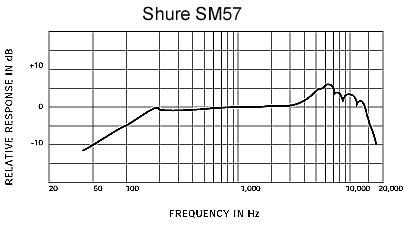
A good point. I took a closer look at the specs of higher end dynamic studio mics, and the difference is pretty clear. A very flat, extended range that likely extends past 20kHz, although since charts never seem to extend beyond that, it's hard to tell. Thanks for the correction, embarrassing as it may be.
I'll stand by the rest of my comments, though. Fortunately, I know a bit more about audio compression and research into subjective AB tests than I do about studio microphones, so I believe the rest of my statements will hold up to scrutiny.
-
Re:Tidal?
Most studio microphone frequency charts typically drop off before or near 20kHz anyhow, so it's unlikely it would even be captured in the first place.
Pfft. Not that I care if people want to blow their money on formats or equipment that's over-engineered by several factors beyond what they could possibly hear. And if they feel a bit more special believing that, unlike most other humans, they alone have "golden ears" that can hear the difference... well, that's fine with me too. Just don't try to shovel that shit in my direction. Prove it to me with a blind A/B test, and then I'll take your claims seriously.
It's pretty telling when you actually hear what Neil Young thinks about compressed audio file formats:
“We’re in the 21st century and we have the worst sound that we’ve ever had. It’s worse than a 78 [rpm record]. What happened?
“The MP3 only has 5 percent of the data present in the original recording The convenience of the digital age has forced people to choose between quality and convenience, but they shouldn’t have to make that choice.”
“If you’re an artist and you created something and you knew the master was 100 percent great, but the consumer got 5 percent, would you be feeling good? “
It's clear he doesn't really understand the technology, and thinks that compressing a song to 1/20th of the original size means that it's only 5% of the value of the original. Yes, you can overcompress audio until it sounds like crap, and MP3 is getting a bit long in the tooth. That's why most people have switched to 256kbps AAC (Apple music streams at this quality, btw), and the overwhelming majority of people in A/B tests can't tell the difference between compressed and non-compressed audio, nor between 16-bit/44.1kHz vs high resolution audio.
-
Re:The guy is full of himself
Well, if someone were to use a logic analyzer to determine which pins of a Thunderbolt cable were PCI Express, so that they can solder up an off-board, wall-powered GPU, that would only run at PCI x4 speeds (ironically, I'd argue that the thermal portion of the equation would be the easiest to solve)...well, someone smart enough to do that is smart enough to use Windows competently
I was referring to a hardware manufacturer that wanted to make an upgrade line for Mac Pro. I'm not sure of many people that are laying and soldering their own PCBs for GPUs at home.
As far as an external Thunderbolt GPU, you can do that.
-
Re:Have some experience here
I will go one step further and recommend the submitter visit Musician's Friend or Sweetwater Sound and check out any of a number of MIDI control surfaces. I am happy a few people have had good luck with Behringer gear, but based on my own experience I refuse to let another piece of it in my home. I can't speak regarding their MIDI gear, but their mixing/recording gear *sucks* - they can't design proper power supplies to save their lives, and in general their gear is designed with low cost as THE primary driving factor and IMO it can sometimes be a fire hazard. It's great fun when you fire up a mixer and smoke rolls out of the power supply, and then you open it up and find that the voltage regulators they used in the supply were rated for about half the current they needed to handle. I bought a Behringer patch bay thinking, "there's no way they could screw THAT up". I was wrong. Plastic parts where metal was needed, and low quality 1/4" jacks throughout.
I'd go with a more upscale manufacturer such as Korg, Yamaha, Roland, etc., or if it has to be low-cost, M-audio is not too bad. -
Re:or maybe
I realize he put it in a rather asinine way, but I too was shocked to hear that they called firewire obsolete. The line between pro and amateur continues to blur as technology gets cheaper and easier to use. Sweetwater Music has three pages of firewire audio interfaces, for example.
-
M-Audio Fast Track
Over the past ten years the price of a decent machine went from a few thousand dollars to a few hundred dollars. Those line-in jacks aren't cheap, so when looking for an easy way to cut costs they're going to drop the stuff 99.9% of the population doesn't need.
I found a need for a line-in and went searching. Came across the m-audio fast track. It costs $99 and comes with the stripped down pro-tools m-powered essentials, which is good enough unless you're doing something that needs more than like 16 tracks. The hardware is required for pro-tools to run, but the hardware will work with any other audio software that doesn't tie the software to the hardware, i.e. every other DAW software on the market. The nice thing is that they have it at Best Buy, so you can even get it locally for the immediate impulse buy. There are other options in the avid family, such as the digidesign mbox2 devices that are a little more expensive, but come with pro-tools le, which is a step up from m-powered. For about $2000 to $2500 you can get one of the 003 devices. Then there's the entire universe of non-pro-tools-oriented stuff which costs less and probably has better audio quality but isn't nearly as fun or well integrated.
Sweetwater, Guitar Center and your local musical instrument and pro-audio store are your best friends. Go there and talk to someone. I had a problem where I was sure a magical $499.95 box was the right move. The sound guy at the local Guitar Center set me straight with the $8 solution. Really, go talk to an audio geek. They can teach you more in a minute hands-on than Ask Slashdot ever could, even if it were loaded with real audio geeks.
note the difference: Audio geeks know what they're talking about because they deal with professional audio equipment and would rather be called engineers or salesmen or something. Audiophiles masturbate to $800 electron-spin directionally optimized bullshit cables. Do not confuse the two. The pro will tell you your $5000 idea is dumb and all you really need is a $12 device and won't let you buy the $5000 device, even though they're the salesguy and make a commission. An audiophile doesn't do audio for a living, has too much money on their hands, and is now masturbating to the newly announced $3100 replacement for their $800 electron-spin directionally optimized bullshit cables.
-
Really?!?
I've looked around for USB sound cards that include a line-in jack, but I haven't been too impressed by the selection.
It's one of the most saturated segments of audio gear: Sweetwater has 119 models. For audio stuff it's frequently a good call to buy a "professional" product; the consumer stuff is designed with the - mostly correct - assumption that people don't care about audio quality.
-
How fancy do you want?
Hard to beat this: http://www.vintageking.com/Prism-Sound-Orpheus?sc=18&category=388
There are tons of sound input devices marketed for music recording, and pretty much every price point you'd care to hit. The Prism is pretty top-of-the-line, but I'm sure there is something that would fit your needs if you just want to back up LPs here:
-
Re:Sound Cards
Maybe not at the consumer level, but there are plenty of Firewire at the amateur/semi-pro musician level. Check out http://www.musiciansfriend.com/, http://www.zzounds.com/ and http://www.sweetwater.com/ for examples.
-
Re:We need this type of thing done in the classroo
Any person who is not tone deaf can tell the difference between solid state distortion and tube distortion. Please don't compare the basic principles of rock guitar with overpriced audiophile folly.
Much of the overpriced is going away along with tube microphonics, gassy tubes, high voltage resistors, capacitors and high power consumption. With Digital Signal Processing DSP is rapidly providing 24 bit 40KHZ or higher modeling of the classic sounds without the problems and high cost. The overdrive curve of tubes can easly be modeled in a DSP.
http://emusician.com/dsp/studio_devil_virtual_guitar_amp/
http://www.analog.com/processors/tigersharc/overview/customerstories/fractalAudio/fractalAudioIndex.html
http://www.sweetwater.com/store/detail/FM15DSP/ -
Re:Has he put his money where his mouth is?
I bet he could put together a very nice studio for less than the cost of a cheap car. (and that's a VERY nice studio).
In a way, yes. In many other ways, no. If I were Trent, I'd have a nice liveroom, just because, which is more than the cost of a car to begin with.
I'd buy a couple Neumann mics for $10k+
And a couple other nice $3k mics
I'd probably get the best preamp available, at $2.9k for two channels for an Avalon. I'd probably get two of these.
And the Avalon stereo compressor for another 2k.
A super awesome mac: 6k (why not get a good one?)
Protools with a nice control surface is 9k: http://www.sweetwater.com/store/detail/Control24LE
If I were trent, I'd have a digital drum kit for $1k-2k
A midi controller that felt nice for $500 or more
And a piano is nice. I'd put that in the liveroom. Say $2000 for a reasonably priced good one.
Now this is far short of the million dollar mark, since I was exaggerating for the sake of being on slashdot, but it's still not cheap. So:
30k - mics
8k - preamp and compressor
6k - mac
9k - protools
1k - drums
500 - midi controller
2k - piano
50k - liveroom
So I think we'lre looking at 100k, which is pretty goddamn reasonable. And I'm also not really estimating the cost of a vocal booth, the engineering room. The studio monitors, the headphones, and all the additional hardware. I've really looked into this a lot, and my friend Joe is an audio engineer, which while far from making me an expert, I've at least talked to someone who's not only taken a theoretical studio building class, but also built a studio. -
Re:To hell with MOTU & Sonar
It wasn't too long ago that there were no (few?) linux drivers for pro-audio hardware. Now that there are drivers for the RME interfaces things have really improved in that respect. With the continuing development of Recording/DAW type programs, it seems there's only one thing missing: real professional quality plug-ins (both processing and instruments.)
I'm not sure what the solution is; Without support for Core Audio, VST, etc. formats none of the existing stuff will work (not to mention all that USB dongle crap) and since these things a require a lot of specialized knowledge and equipment to develop, it seems unlikely that we'll see free (beer) replacements. I'm thinking of things like Ivory and BFD and Bomb Factory processors.
That said, the ability to run a distro optimized for audio is a huge advantage over other platforms. I really look forward to seeing what further progress can be made. -
Re:Source + DAC + Amp +Speaker
Do you know of any stand alone DAC's that would be good?
How much do you want to spend?
$130? Behringer SRC2496
$700? Apogee MiniDAC
$1000? Benchmark DAC1
$1700? A used Apogee Rosetta 200
$2800? Universal Audio 2196
$5900? Weiss Engineering DAC1
$9400? Prism Dream DA-1
These are some options I know of from the Pro Audio world. What sounds better than your built-in DACs is up to your ears. You might also look into a USB audio interface that someone makes Linux drivers for. You'd get a lot more than a DAC, but it might suit your ears and wallet better than some of the options above. -
Re:Source + DAC + Amp +Speaker
Do you know of any stand alone DAC's that would be good?
How much do you want to spend?
$130? Behringer SRC2496
$700? Apogee MiniDAC
$1000? Benchmark DAC1
$1700? A used Apogee Rosetta 200
$2800? Universal Audio 2196
$5900? Weiss Engineering DAC1
$9400? Prism Dream DA-1
These are some options I know of from the Pro Audio world. What sounds better than your built-in DACs is up to your ears. You might also look into a USB audio interface that someone makes Linux drivers for. You'd get a lot more than a DAC, but it might suit your ears and wallet better than some of the options above. -
Re:Source + DAC + Amp +Speaker
Do you know of any stand alone DAC's that would be good?
How much do you want to spend?
$130? Behringer SRC2496
$700? Apogee MiniDAC
$1000? Benchmark DAC1
$1700? A used Apogee Rosetta 200
$2800? Universal Audio 2196
$5900? Weiss Engineering DAC1
$9400? Prism Dream DA-1
These are some options I know of from the Pro Audio world. What sounds better than your built-in DACs is up to your ears. You might also look into a USB audio interface that someone makes Linux drivers for. You'd get a lot more than a DAC, but it might suit your ears and wallet better than some of the options above. -
Re:Source + DAC + Amp +Speaker
Do you know of any stand alone DAC's that would be good?
How much do you want to spend?
$130? Behringer SRC2496
$700? Apogee MiniDAC
$1000? Benchmark DAC1
$1700? A used Apogee Rosetta 200
$2800? Universal Audio 2196
$5900? Weiss Engineering DAC1
$9400? Prism Dream DA-1
These are some options I know of from the Pro Audio world. What sounds better than your built-in DACs is up to your ears. You might also look into a USB audio interface that someone makes Linux drivers for. You'd get a lot more than a DAC, but it might suit your ears and wallet better than some of the options above. -
sweetwater
You might want to give Sweetwater Sound a call and explain to them what your goals are. Also give them the budget you have to work with. They should be able to help you put together a package that suits your needs. Also note that when you look at their Computer Audio section that they don't sell a single thing by Creative. There's a reason for this.
-
Go External.
Here's another vote for an external firewire interface.
For what you are trying to accomplish, you should be able to get an interface and a chinese large-diaphragm condenser together in the $300-500 range. For example, a PreSonus Firebox (~$300) and a Studio Projects B1 (~$100).
For a place to get started shopping, Sweetwater has incredible customer service. BSW has some "podcast" packages with everything you'd need to get started. -
In a Different Community, It Was The StandardListen, I played bass, I worked at a music store that sold effects pedals. "Pod" meant Line 6's guitar pod. People came in and literally said, "I'll take one pod, please." I'm not kidding you, these things were huge and still are. Go into your local Guitar Center or what ever you have and say, "I'll take one pod, please." You can bet your ass the guy at the counter will pull up a guitar pod and ring it up right there.
If you want more evidence, read this article:By the end of 2002, the Line 6 people had proven themselves by designing what were unquestionably (to me, in any case) the best amp and effects models available, including the remarkable Vetta amplifiers and the best selling POD modules.
It's very popular among artists, to quote Wikipedia: "Their products are used and endorsed by artists such as James Hetfield of Metallica, Matthew Bellamy of Muse, Trent Reznor of Nine Inch Nails, and The Edge of U2." -
Re:RME and Ardour
When you say "RME," which of their products did you mean?
They make quite a bit of stuff. List here. And I'm linking to Sweetwater rather than RME's website because their site doesn't link prices and just sends you on this horribly roundabout trip to a dealer's site for a price quote, of which Sweetwater is one. (They also have good service in my experience, just as a shameless plug, and their web site is easy to navigate.)
As far as I can tell, all their inexpensive stuff uses ADAT as its digital interface, and then requires a PCI (or CardBus) card in your PC to do anything with the ADAT output. While this is fine (and there are worse formats than ADAT), I think the OP wanted something that didn't require an additional card.
The only exception is the Fireface 800, but that's $1500; I'm sure it's wonderful, but that's a rather big pill for a lot of musicians to swallow. -
Extended Hearing is key
I tried those BOSE noise cancellation headphones on an airplane recently, and after about 2 hours, my ears were really killing me. Not the outside part of the ear (lobe) but my actual eardrums.
If you're going to have the things on all day long, then think about professionals whose job requires they where headphones all day, every day - studio musicians, engineers, radio announcers, etc.
When I was in Recording School, I bought a pair of the Ubiquitous AKG K240s. At that time, most recording studios had these in large supply. They are fairly durable, comfortable, and you can listen on them a very long time. I've been using mine over 10 years and they're still in great shape.
They may look a bit dorky, and they don't fold, but they've survived my cluttered backback on many a trip. At just under $100, they fit in your price range.
One other thing that's really nice about them... they have an 1/8" jack, and come with a threaded 1/4" adapter. The threaded adapter is priceless if you're contantly plugging your headphones in and out of studio gear.
-
Balanced Inputs
Yes, I second this. MIDI-in, or any other kind of "pro" features, would only be worth anything if they came after having a high quality and easy to access audio inputs.
For me that screams balanced inputs. What would really be nice would be dual XLR (D3F) connectors with switchable phantom power, but I understand that probably drives up the price a lot and isn't useful to a lot of average consumers. (Essentially what you'd have then is this device, which costs a bundle and for good reason.) So I would settle easily for just having balanced line-level inputs, no ALC/AGC and defeatable compression, and use outboard mic pres if I ever wanted a totally portable setup.
If you could have those inputs, you'd really have a useful portable studio tool that you could start adding goodies onto (like MIDI) to do cool stuff with.
But if the only input is through one 1/8" unbalanced stereo jack, count me out. -
Re:This is not unexpected News
My guess is the Oasys will likely come in around at a $2500 price point.
Heh, you wish!
Try $8,000-$9,000 -
Re:Nothing says retro like tube amps
Just search for "400W tube monoblock" in google. Then filter out all the compromisers and equivocators who use a "hybrid" design, and eventually, you'll come across products such as this one.
-
Re:Mike
Depending on the quality of recordings he's looking for, this may not do it. A directional microphone will still pick up what bounces off the walls (much more than you would imagine).
If you've got the money you may want to try something like this -
Re:Er, wait.I didn't make the comment, but I know what he's talking about.
Sweetwater Sound, a seller of professional studio audio equipment has written several articles in their InSync newsletter, including this one.
They don't give a technical reason why, but their experience (which I trust) is that different burn speeds produce different bit-level error rates (BLERs) and most drives seem to have their lowest BLERs at 2x speeds (surprisingly, not 1x). These shouldn't affect data discs, since ISO-9660 incorporates error correction, but it does sometimes have a noticeable effect on audio discs. (And a high BLER on a master disc can cause a duplicator to reject it.)
I realize that Sweetwater is talking about audio media and their article is aimed at recording engineers, but I think it's also relevant to computer users.
(FWIW, I record my data discs at the drive's top speed, but I record my audio discs at 4x (since my setup doesn't seem to allow 2x burning.))
-
Re:Er, wait.I didn't make the comment, but I know what he's talking about.
Sweetwater Sound, a seller of professional studio audio equipment has written several articles in their InSync newsletter, including this one.
They don't give a technical reason why, but their experience (which I trust) is that different burn speeds produce different bit-level error rates (BLERs) and most drives seem to have their lowest BLERs at 2x speeds (surprisingly, not 1x). These shouldn't affect data discs, since ISO-9660 incorporates error correction, but it does sometimes have a noticeable effect on audio discs. (And a high BLER on a master disc can cause a duplicator to reject it.)
I realize that Sweetwater is talking about audio media and their article is aimed at recording engineers, but I think it's also relevant to computer users.
(FWIW, I record my data discs at the drive's top speed, but I record my audio discs at 4x (since my setup doesn't seem to allow 2x burning.))
-
Re:Er, wait.I didn't make the comment, but I know what he's talking about.
Sweetwater Sound, a seller of professional studio audio equipment has written several articles in their InSync newsletter, including this one.
They don't give a technical reason why, but their experience (which I trust) is that different burn speeds produce different bit-level error rates (BLERs) and most drives seem to have their lowest BLERs at 2x speeds (surprisingly, not 1x). These shouldn't affect data discs, since ISO-9660 incorporates error correction, but it does sometimes have a noticeable effect on audio discs. (And a high BLER on a master disc can cause a duplicator to reject it.)
I realize that Sweetwater is talking about audio media and their article is aimed at recording engineers, but I think it's also relevant to computer users.
(FWIW, I record my data discs at the drive's top speed, but I record my audio discs at 4x (since my setup doesn't seem to allow 2x burning.))
-
Re:iPod isn't the only thing that will be crippledIf you listen to your iPod at 100+ dB for a prolonged period of time, you might find yourself with hearing loss. Broken iPods can be fixed or replaced, but unfortunately your eardrums are permanent, and non replaceable.
This assumes, of course, that they're talking about 100+ dB of sound pressure (SPL).
But that's completely ludicrous. The SPL levels are a function of the speaker/headphone design and proximity to your ears in addition to the power output of the amplifier.
A dB is a unit of ratio between a given level (power, pressure, whatever) and a reference level.
In this particular case, they're probably talking about dBu or dBV or dBm or some other ratio involving output voltage/power levels.
104dBu is not the same as 104dBV which is not the same as 104dBm. Either one can translate into high SPL levels, low SPL levels, or anything in between, depending on what kind of speakers, headphones or other amplifiers are attached.
According to Apple the iPod can put out up to 30mw of RMS power per channel. This is about 29 dBm (20 log(30) ),so it's obviously not what the original article is talking about.
I'm actually rather curious now to know what that unqualified "104 dB" figure is referring to, since every different brand/model of headphones you use will have a different SPL for any given power level.
-
Re:iPod isn't the only thing that will be crippledIf you listen to your iPod at 100+ dB for a prolonged period of time, you might find yourself with hearing loss. Broken iPods can be fixed or replaced, but unfortunately your eardrums are permanent, and non replaceable.
This assumes, of course, that they're talking about 100+ dB of sound pressure (SPL).
But that's completely ludicrous. The SPL levels are a function of the speaker/headphone design and proximity to your ears in addition to the power output of the amplifier.
A dB is a unit of ratio between a given level (power, pressure, whatever) and a reference level.
In this particular case, they're probably talking about dBu or dBV or dBm or some other ratio involving output voltage/power levels.
104dBu is not the same as 104dBV which is not the same as 104dBm. Either one can translate into high SPL levels, low SPL levels, or anything in between, depending on what kind of speakers, headphones or other amplifiers are attached.
According to Apple the iPod can put out up to 30mw of RMS power per channel. This is about 29 dBm (20 log(30) ),so it's obviously not what the original article is talking about.
I'm actually rather curious now to know what that unqualified "104 dB" figure is referring to, since every different brand/model of headphones you use will have a different SPL for any given power level.
-
Re:iPod isn't the only thing that will be crippledIf you listen to your iPod at 100+ dB for a prolonged period of time, you might find yourself with hearing loss. Broken iPods can be fixed or replaced, but unfortunately your eardrums are permanent, and non replaceable.
This assumes, of course, that they're talking about 100+ dB of sound pressure (SPL).
But that's completely ludicrous. The SPL levels are a function of the speaker/headphone design and proximity to your ears in addition to the power output of the amplifier.
A dB is a unit of ratio between a given level (power, pressure, whatever) and a reference level.
In this particular case, they're probably talking about dBu or dBV or dBm or some other ratio involving output voltage/power levels.
104dBu is not the same as 104dBV which is not the same as 104dBm. Either one can translate into high SPL levels, low SPL levels, or anything in between, depending on what kind of speakers, headphones or other amplifiers are attached.
According to Apple the iPod can put out up to 30mw of RMS power per channel. This is about 29 dBm (20 log(30) ),so it's obviously not what the original article is talking about.
I'm actually rather curious now to know what that unqualified "104 dB" figure is referring to, since every different brand/model of headphones you use will have a different SPL for any given power level.
-
Re:iPod isn't the only thing that will be crippledIf you listen to your iPod at 100+ dB for a prolonged period of time, you might find yourself with hearing loss. Broken iPods can be fixed or replaced, but unfortunately your eardrums are permanent, and non replaceable.
This assumes, of course, that they're talking about 100+ dB of sound pressure (SPL).
But that's completely ludicrous. The SPL levels are a function of the speaker/headphone design and proximity to your ears in addition to the power output of the amplifier.
A dB is a unit of ratio between a given level (power, pressure, whatever) and a reference level.
In this particular case, they're probably talking about dBu or dBV or dBm or some other ratio involving output voltage/power levels.
104dBu is not the same as 104dBV which is not the same as 104dBm. Either one can translate into high SPL levels, low SPL levels, or anything in between, depending on what kind of speakers, headphones or other amplifiers are attached.
According to Apple the iPod can put out up to 30mw of RMS power per channel. This is about 29 dBm (20 log(30) ),so it's obviously not what the original article is talking about.
I'm actually rather curious now to know what that unqualified "104 dB" figure is referring to, since every different brand/model of headphones you use will have a different SPL for any given power level.
-
Re:iPod isn't the only thing that will be crippledIf you listen to your iPod at 100+ dB for a prolonged period of time, you might find yourself with hearing loss. Broken iPods can be fixed or replaced, but unfortunately your eardrums are permanent, and non replaceable.
This assumes, of course, that they're talking about 100+ dB of sound pressure (SPL).
But that's completely ludicrous. The SPL levels are a function of the speaker/headphone design and proximity to your ears in addition to the power output of the amplifier.
A dB is a unit of ratio between a given level (power, pressure, whatever) and a reference level.
In this particular case, they're probably talking about dBu or dBV or dBm or some other ratio involving output voltage/power levels.
104dBu is not the same as 104dBV which is not the same as 104dBm. Either one can translate into high SPL levels, low SPL levels, or anything in between, depending on what kind of speakers, headphones or other amplifiers are attached.
According to Apple the iPod can put out up to 30mw of RMS power per channel. This is about 29 dBm (20 log(30) ),so it's obviously not what the original article is talking about.
I'm actually rather curious now to know what that unqualified "104 dB" figure is referring to, since every different brand/model of headphones you use will have a different SPL for any given power level.
-
Use Cakewalkleftist said:
"I'm looking for an entry level digital 4 or 8 track digital recorder to experiment with in the $500 range. Any product recommendations or warnings out there in the geek crowd?
If you already have a pretty beefy box to run it on, I'd go with software and a high-end sound card (e.g. this kind of stuff). We used to use an analog tascam fourtrack, and it was somewhere in the $300 range. Now we are using Cakewalk's Guitar Tracks Pro, which gives us 32 tracks for the same price range.Something that uses mp2/mp3 natively a plus!"
Cakewalk uses a proprietary file format, but you can export your projects to mp3. I've never tried importing from mp3, but would not be surprised if they are capable of that, too. -
Re:No digital outputs, but....
Yeah but semi-pro stuff is easy to find and pretty cheap.
This might work for $379.
-
Two Words: Music Stores
Besides the SKB racks already mentioned by another poster, you can buy rack rails and screws very inexpensively online at music stores (http://www.sweetwater.com, and http://www.americanmusical.com come to mind) and build your own rack. I built a nice 14 space rack out of oak plywood (and oak tape becomes your new friend), which while not all-metal industrial-looking, is very sturdy, was a lot of fun to build, and looks great. If you're going to be mounting a lot of stuff, you may also want to put some vent panels in between pieces of equipment. They look slightly better than open rack spaces and provide good airflow room.
-
Re:I saw this in a book
Yes... by tying several knots (ie: ---8---8---8---8---) into a power cord you are basically forming a simple string of single loop inductors in series. The brief duration of lightning strikes gives the characteristic voltage spike the properties of high frequency AC. An inductor's impedance (resistance if talking about DC) to AC (and therefore its power dissipation) increases as a function of frequency. Thus, the inductor should offer enough impedance to the voltage spike and burn itself out instead of allowing the voltage spike to travel into your equipment. I wouldn't recommend this method for protecting anything of value. Use a UPS from Best Power or APC and get their equipment replacement guarantee.