Slashdot Mirror
Domain: ted.com
Stories and comments across the archive that link to ted.com.
Comments · 1,653
-
Just like the Fashion industry?
-
Just like the Fashion industry?
-
Re:FFS
Yeah. By the time this mission could launch, our robots will actually be a lot more capable of doing useful research on Europa than the human settlers, especially when you control for all the mass that needs to be launched in order to keep people alive (and not crazy) for as long as this would take. Instead of people, why not send a nuclear submarine that could use its reactor to melt through all the ice and then navigate the sea beneath? If we have a chance of finding something cool, it will be down there.
I doubt it. While I will agree that there is considerable "low hanging fruit" in terms of very legitimate science that can be done by sending robotic probes, there will reach a point in that research where having actual people physically there will make a whole lot of sense. With the distances involved, bandwidth for sending data can be a considerable problem. Some local synthesis of the data (like was done with the Kepler mission... which had terabytes of data to sift through) can take place in an automated fashion, eventually even that will eventually need to have somebody physically there to evaluate all of that data.
There is a reason why automated probes don't go running around Antarctica, even though sending people there happens at considerable expense. Even with people there in Antarctica at the various research stations, there still is a huge amount of bandwidth sending that research data back to the various countries involved... and even that bandwidth is seen as very limited.
The question isn't if people should go to Europa, but rather when. A good argument could be made that there is no need for human researchers to go for at least a century or more as there is definitely plenty of research that can be done in the meantime with robotic probes including spacecraft dedicated explicitly to Europa.... including the nuclear submarine you have described. Such a vehicle was even described in this TED talk:
http://www.ted.com/talks/bill_stone_explores_the_earth_and_space.html
-
Re:Hold up.
-
Re:hmmm....
Had the same thought. His name is Garrett Lisi
-
Re:I'm not sure how I feel about this
> As long as the USA is a democratic republic the voters can vote for a new government
See Lessig's TED talk about that.
"In theory, there is no difference between theory and practice. In practice, there is."
-
Living in the biosphere.
I really wish that both "sides" in the climate change "debate" could put away the hyperbole and come to grips with the fact that we need to live in some way approaching equilibrium with the various processes happening here on planet Earth. That's not just about co2 production. Even though there is unquestionably consensus among climate scientists that the rising co2 level IS significant, there are *many* other factors at play. It won't matter if we get the co2 situation under control, but still have high-levels of fresh water pollution and half-dead oceans.
We need to pollute less, period.
We need to dramatically increase our total energy efficiency, which can largely be achieved by picking the "low-hanging fruit" of building insulation, indoor daytime lighting and industrial energy usage. All three of these can be addressed (easily!) with incentives like rebates and tax credits -- granted that takes political will, which seems in short supply, but it's all there already, just waiting to happen: just (gradually) shift the subsidies currently granted to fossil fuel companies over to businesses and homeowners that are willing to make investments in long-term energy efficiency and savings, it just makes sense: since energy saving == money saving.
The reality is that our total energy usage is increasing, so the more we stretch it, the more comfortable humanity can be in the long term. We need to be building as many solar, wind, wave, thermal gradient and salinity gradient systems as we can, all the while earnestly studying the effects and operation of these systems, and discovering our mistakes and correcting them as we go. We need better fission reactor designs: meaning serious R&D and testing. We need better (and more!) energy storage systems. And probably most importantly we need to come up with new ideas for generating and storing energy. Life is not static, we can't just say "hey, this is good enough" -- we have to make it better! Life forms don't stop evolving just because they find a successful niche. They keep going, because there's always more pressure around the corner. As humans, we've insulated ourselves from a lot of pressures, but that's really an illusion, since all we can ever really do is make buffers. Everything remains interconnected and interdependent.
As Bunker Roy says: Decentralize, demystify! People should know that they CAN provide for themselves, but they have to understand how it all works.
We are squandering our resources: geological, biological, financial and (most importantly) human. We need to refine our entire way of doing things.
The oil and coal WILL run out someday. It might be 100 years or 1000 -- but we need to be thinking truly long term here. It would be nice to still have plenty of oil and coal left for other stuff when we finally stop having to burn it for fuel just to keep the lights on. It's amazingly useful, and we have a finite supply.
-
Re:won't happen
There has always been "fan fiction" - most of it just never saw the light of day. The huge impact that the web has had is on publishing not production. The cost of publishing/distribution has become trivial. Now it is possible to publish/distribute "fan fiction" for next to nothing - rather than having a 500 page typewritten document in a box that they try to get their friends to read.
Distribution was a big benefit that a musician or author received from signing a contract with a "big" company. Again, if we went back to the first half of the 20th century you would find "big music companies" buying the rights to "regional hits" from independent/smaller campanies. The "big company" had the resources to publish on a large scale that the smaller companies lacked. Now individuals have the ability to get there work in front of a large audience without a "big company" (this applies to music, fiction, non-fiction, software, anything creative)
BTW I can appreciate the amount of effort that goes into producing any creative work. Just because it isn't any good doesn't mean it didn't take a lot of work to produce it. With that said - watch JJ Abrams' TED talk if you want motivation to "create"
-
Re:Links !
I can't seem to find ANY studies besides [this] one
Publication bias. A journal of psychology published a study showing ESP in college students, where college students were able to predict better than chance what card would be pulled next. Many scientists repeated the experiment, and sought to publish their papers in the same journal. The papers were turned down, because "We Found no Evidence of ESP" isn't a very interesting article. Likewise, "Putting Cellphone Next to Plant Doesn't Harm Plant" isn't interesting, isn't likely going to have a paper written (especially when people will yell about "spending federal grant money on clearly obvious things), and if the paper is written would be rejected by a journal for more interesting articles.
The scary part is the same bias exists in medical studies. This TED Talk scares the living daylights out of me.
-
Re:no thanks
About 8 billion dollars worth of stolen material, if we're to believe the lies of RIAA accountants.
-
Re:And the saga continues....
You don't choose the candidates unless you are called Lester. Explicitely not voting the main parties (voting third parties, voting for no candidate where you can do it, not sure if can get there the pirate or green parties) is something you can do. Not going to vote or buying the don't throw your vote message picking one of the 2 main parties (that are anyway controlled by the same people, and have essentially the same agenda) is not doing something against it . Believing their promises that "this time we will change" (Obama main selling point was "change" after all, and you know how that resulted) won't help neither.
Maybe you won't make any difference, even if most people try to follow this, but at least will become even more evident that US is not a democracy.
-
Things people can do
From a previous post, here's the collected list of suggested actions people can take to help change the situation.
Have more ideas? Please post below.
Links worthy of attention:
http://anticorruptionact.org/ [anticorruptionact.org]
http://www.ted.com/talks/lawrence_lessig_we_the_people_and_the_republic_we_must_reclaim.html [ted.com]
http://action.fairelectionsnow.org/fairelections [fairelectionsnow.org]
http://represent.us/ [represent.us]
http://www.protectourdemocracy.com/ [protectourdemocracy.com]
http://www.wolf-pac.com/ [wolf-pac.com]
https://www.unpac.org/ [unpac.org]
http://www.thirty-thousand.org/ [thirty-thousand.org]
Join the class action suit that Rand Paul is bringing against the NSA.
Suggestion #1:
(My idea): If people could band together and agree to vote out the incumbent (senator, representative, president) whenever one of these incidents crop up, there would be incentive for politicians to better serve the people in order to continue in office. This would mean giving up party loyalty and the idea of "lessor of two evils", which a lot of people won't do. Some congressional elections are quite close, so 2,000 or so petitioners might be enough to swing a future election.
Let your house and senate rep know how you feel about this issue / patriot act and encourage those you know to do the same.
If enough people let their representivies know how they feel obviously those officials who want to be reelected will tend to take notice. We have seen what happens when wikipedia and google go "dark", congressional switchboards melt and the 180's start to pile up.
Fax is considered the best way to contact a congressperson,especially if it is on corporate letterhead.
Suggestion #2:
Tor, I2dP and the likes. Let's build a new common internet over the internet. Full strong anonymity and integrity. Transform what an
eavesdropper would see in a huge cypherpunk clusterfuck.Taking back what's ours through technology and educated practices.
Let's go back to the 90' where the internet was a place for knowledgeable and cooperative people.
Someone Added: Let's go full scale by deploying small wireless routers across the globe creating a real mesh network as internet was designed to be!
Suggestion #3:
A first step might be understanding the extent towards which the government actually disagrees with the people. Are we talking about a situation where the government is enacting unpopular policies that people oppose? Or are we talking about a situation where people support the policies? Because the solutions to those two situations are very different.
In many cases involving "national security", I think the situation is closer to the second one. "Tough on X" policies are quite popular, and politicians often pander to people by enacting them. The USA Patriot Act, for example, was hugely popular when it was passed. And in general, politicians get voted out of office more often for being not "tough" on crime and terrorism and whatever else, than for being too over-the-top in pursuing those policies.
Suggestion #4:
What I feel is needed is a true 3rd party, not 3rd, 4th, 5th, and 6th parties, such as Green, Tea Party, Libertarian; we need an agreeable third party that can compete against the two majors without a lot of interference from small parties. We need a consensus third party.
Suggestion #5:
Replace the voting system. Plurality voting will always lead [wikipedia.org] to the mess we have now. The only contribution towards politics I've made in years
-
Re:English
Is not about in particular english or german (in fact, most germanic languages should fit, english is one exception), nor a particular country (maybe his TED talk clears a bit some of the concepts, in countries where there are several languages but the same culture have that differences between the speakers of each language), is about a language feature, and how basis in the language change how you see and understand the world. In mandarin chinese you don't go forward and backward in time, but up and down, for some australian language you don't have your subjective left/right/forward/back, but absolute north/south/east/west (and time goes east to west, as the sun). And that change of view implies changes on attitudes, behaviour or even abilities (like better caring about the future or ever knowing where are the cardinal points, unless you go to tricky test situations). And english, spanish or others could have some features that put them over others that as we see them as natural we can't notice them.
Anyway, even if those things are nice, i don't believe that they will ever be adopted into languages that have its own way to do those things. If we want that way to see things to be adopted into our culture, it must be introduced in another way.
-
Re:Don't categorize
Third, use correct written English. No made up words, strange spelling, or text speak.
Indeed, they make one look incompetently uneducated.
Yeah... the person who can't read it.
A gread TED talk on the topic. -
Re:In Depth Fisking for the time crunched:
Newsflash: the relationship between individuals and society is much more complicated, and has very little to do with the expression "for the sake of". (imho) That expression implies to me a "guiding purpose" for one side or the other of that relationship. I think the evidence for a cognitive guiding purpose, especially one that understands what is good for individuals, or the common good, is
I think the original Slate article did not make the point explicit, but if you'll grant me that parents want to do something for the benefit of their children (not that it is their *duty* any more than it is society's *duty*, but empirical evidence suggests it is a compelling motivation)....
If you grant me that, I think the point can be made that improving the society a child (and that child's child) enters is very much in their best interest. A country with fewer foreign wars, less domestic crime and terrorism, better governance, and (dare I say it?)* higher levels of social justice and economic equality is MUCH MORE IMPORTANT than an extra 5 points on the SAT. (or whatever)
And I think the strategy of supporting public schools is in line with that achieving those goals, even if it takes some of your time, energy, or money away from other things that benefit your child.
I'm trying to stay away from the strident, accusatory tone of the Slate article. It seems to have put your teeth on edge, and I'm sorry for that. I can see why it is completely unconvincing to someone who who rather read corny rebuttals than admit that you might care about more than your own children. (Don't you care about your grandchildren? Neighbors? Do you really think the Louis CK thing and say, I don't care what you do with your f'ing kid?**).
If you do care about your kids, take some time to consider how to make collective agreements with the other people in the world, in your country, state, county or municipality, and even in your local public school district. Making those collective agreements improves that irritating 'society' whose altar you seem so outraged by. Because I really think that if too many people completely ignore it, eventually the collective is going to start doing things that are bad for your kid. I don't have any facts at hand.... it's just a feeling.... but I'm convinced of it. Maybe you've already noticed some evidence?
How you react to that prediction (i.e. with engagement vs disengagement) says a lot about you. I personally choose to support engagement. But, as far as personal liberty goes, I recognize it as a choice.
Last link***, to help you empathize with the people who hold opposing viewpoints: I think this is not a red/blue policy distinction, rather a 'inherited obligation'(red) versus the 'negotiated obligation'(blue). You're explicit that a parent doesn't have a duty (for one thing) but I think you imply that there is another (fixed) duty instead. If I interpreted you correctly, that makes you an 'inherited obligation' thinker. The link (in footnotes) is there to allow you to see the other way (negotiated obligation) as a valid personal choice, held by decent people you'd be happy to call neighbors or friends. Even if you never come to view the world that way yourself.
DFTBA!
-----
* I have a source for that, though it is weak, I'll admit. Economic equality is the subject of my favorite TED talk, with facts and figures. But it doesn't make the case that equality is better than statistically meaningless differentiations on standardized college admissions tests. Only that by itself, it brings better health, longer life, higher literacy, higher levels of societal trust, lower crimes, lower mental health issues, and a raft of other improvements to societal statistics. But not necessarily for *your* kid, so yeah.
http://www.ted.com/talks/richard_wilkinson.html** "Like when you see someone stand up on a talk show and say 'How am I supposed to explain to
-
Re:So is this because...
-
Re:Strawman + math fail
Second of all... have you done the math on how long it will take the human population to decrease as a result of the declining birth rate?
This is a well-studied problem. Check out this TED Talk.
And compare that to how quickly the carbon footprint of the middle class is rising? Do the math... then talk.
Oh, we have the technology to address that now. The Argone integral fast reactor ran perfectly for years, and then the project was killed by Clinton/Gore/Kerry (with a complicit O'Leary). By 2013 we should have been running thousands of them, cleaning up all the existing nuclear waste (which is a separate disaster). There is enough extant waste to power all of the world's electric needs for the rest of this century.
Branson has been trying to get permits from the Obama administration to do just that - Virgin Electric, cleaning up the world's nuclear waste and providing clean energy. He *can't even get a meeting* with them, after years of trying. And by default it's not permitted.
This is entirely a political problem, retarding the natural march of technology. Unfortunately, those in power seem to want to push more humans back into a lower standard of living than to see the world blossom with a world-wide 'upper' class.
-
Can't it be two things?
Look at the populations without internet access - they're also in the population of the world that actually has to worry about starving to death, about persistent government corruption, filled with often violent superstitions and beliefs, lack of access to either medical supplies or trained medical care, completely unaware of farming or grazing techniques that were in use in the 15'th century or living literally, on piles of garbage.
You're really going to worry that these folks will potentially be uplifted in order to sell them a coke? You think they would feel taken advantage of because they can now buy a coke?
Frankly, the way in which we have treated those in the underdeveloped countries should have been made criminal. We should have focused on education with the end goal of a self-sustaining culture. Instead of education, we've provided bibles. Instead of medical training, we've taught them that condoms are evil and vaccines are just tricks by white men to infect them with aids. Instead of expert guidance, GMO crops, fertilizer and pesticides, and machinery to cultivate crops, we've given them food packets. Instead of training them to be doctors, surgeons, nurses, mechanics, lawyers, programmers, architects, - anything really - we have made sure that their death rates go down - especially childbirth, that their average age increases, and we do it all with supplies and techniques that they cannot replicate, and provide them no salable or productive skills in the meanwhile.
What we have done is vastly inflated the problem - by themselves, a poor balance was established, but now we have a massive dependent population that lacks the skills and resources required to support themselves in a reasonable way. In effect, we have traded a few thousand lives for a few million and multiplied the net total suffering in the world.
Outside of fantastic natural resources (like oil, that'd help a lot!), the only realistic way to fix this problem is with abundant education, and right now, the easiest way to do that is via the internet. You don't even need real guidance. Sugata Mitra has shown that just plugging in a computer into a wall of a rural village results in children teaching themselves english and learning all on their own., and it continued when he gave them internet access.
Henry Ford came up with the idea that by paying good wages and providing other benefits, his workers could become his customers. This idea is nothing new. It's impressive that with the myopic focus in the economy today on quarterly or less results, that anyone can assume that this is really capitalistic grab for customers 2 or 3 generations down the road - that's miles adrift in a sea of absurdity - but even if it is, so what? If that's a motivation that results in these people living longer, healthier, productive, HAPPIER lives, should it matter that someone down the line also wants to make a buck?
Before you think too much, realize that if you're reading this, YOU are probably already in that 'exploited' group, if that's what you want to envision it as.
-
Can't it be two things?
Look at the populations without internet access - they're also in the population of the world that actually has to worry about starving to death, about persistent government corruption, filled with often violent superstitions and beliefs, lack of access to either medical supplies or trained medical care, completely unaware of farming or grazing techniques that were in use in the 15'th century or living literally, on piles of garbage.
You're really going to worry that these folks will potentially be uplifted in order to sell them a coke? You think they would feel taken advantage of because they can now buy a coke?
Frankly, the way in which we have treated those in the underdeveloped countries should have been made criminal. We should have focused on education with the end goal of a self-sustaining culture. Instead of education, we've provided bibles. Instead of medical training, we've taught them that condoms are evil and vaccines are just tricks by white men to infect them with aids. Instead of expert guidance, GMO crops, fertilizer and pesticides, and machinery to cultivate crops, we've given them food packets. Instead of training them to be doctors, surgeons, nurses, mechanics, lawyers, programmers, architects, - anything really - we have made sure that their death rates go down - especially childbirth, that their average age increases, and we do it all with supplies and techniques that they cannot replicate, and provide them no salable or productive skills in the meanwhile.
What we have done is vastly inflated the problem - by themselves, a poor balance was established, but now we have a massive dependent population that lacks the skills and resources required to support themselves in a reasonable way. In effect, we have traded a few thousand lives for a few million and multiplied the net total suffering in the world.
Outside of fantastic natural resources (like oil, that'd help a lot!), the only realistic way to fix this problem is with abundant education, and right now, the easiest way to do that is via the internet. You don't even need real guidance. Sugata Mitra has shown that just plugging in a computer into a wall of a rural village results in children teaching themselves english and learning all on their own., and it continued when he gave them internet access.
Henry Ford came up with the idea that by paying good wages and providing other benefits, his workers could become his customers. This idea is nothing new. It's impressive that with the myopic focus in the economy today on quarterly or less results, that anyone can assume that this is really capitalistic grab for customers 2 or 3 generations down the road - that's miles adrift in a sea of absurdity - but even if it is, so what? If that's a motivation that results in these people living longer, healthier, productive, HAPPIER lives, should it matter that someone down the line also wants to make a buck?
Before you think too much, realize that if you're reading this, YOU are probably already in that 'exploited' group, if that's what you want to envision it as.
-
Re:Missing the point as usual
Your friends working on the actual AI problem over here in Linguistics and Psychology find it awfully amusing that you're trying to program a concept before we even know what that concept is.
No, you're just seeing the "problem" from a different angle, much of the modern world around us began by copying from nature, the actual concepts came later and became more refined with time. Humans use things that appear to work, Skinner showed decades ago how random ritual's were spontaneously created by pigeons to handle randomness in their food supply, The ritual dance the pigeon creates has no effect on the food supply, however the length of time it takes to perform the ritual converges a value slightly above the mean interval between pellet drops. Statistically the ritual will "work" the first time, if not a second performance will "work", the need for a third performance would be rare. When something "works" that good, it's near impossible to convince a human that he's wasting his time. Humans may have more complex rituals but for the most part we just follow them like a pigeon does and judge them by their perceived utility. To do otherwise would result in death via decision paralysis. I see absolutely no reason to believe that doing a human "pigeon dance" of copying and modelling the nature of neural networks could not lead to the emergence of an artificial mind by sheer persistence and attention to detail.
Watson is a the current product of that sort of persistence, and IMHO it's an "AI" achievement that is seriously underestimated by people like yourself. It has shown that machines can outperform the best humans in the realm of general human knowledge and has done so just as convincingly as Deep Blue beat the best human chess players a couple of decades ago. The software for the two systems use entirely different architectures and algorithms, the reason for that is the difference in the problems they are attempting to solve.
I haven't RTFA but I strongly agree with the notion that the vast majority of people have a very narrow definition of AI. In a very real sense we already have lots of different versions of AI in existence that can outperform humans in a wide range of restricted problem spaces. Now if we look at nature, we can se that she has done the same thing. A human mind, an octopus mind, and a hive mind (ants nest/bee hive), are all undeniably intelligent and yet they are all undeniably alien to one another because they evolved different solutions to different problem spaces. Even the hardware of the "brain" behind those example minds is very different.
As a degree qualified Computer scientist since 1991 with a armchair interest in the subject for about 30yrs. It's my opinion that we are already surrounded by AI, what people are actually looking for when they say "AI" is an artificial human (eg: blade runner). The Turing test does not meet those expectations, nor was it ever intended to. What is does is tells you whether a computer can perform as well in a human in the restricted problem space of a remote conversation. The problem space it tests is very broad, general knowledge, metaphor, humour, etc. Turing basically came up with the first testable definition of AI, the fact that people have since offered alternative definitions and tests is irrelevant to the utility of the test to those who accept the definition.
Neuroscience and it's related biological and philological fields have a lot to offer in the quest to understand and model how mind emerges from matter (warning: great talk, irritating voice). Having said that, neuroscience is no more or less skewed in it's approach than the engineering POV. When people inevitably ask me about AI, I find I get into much more interesting conversations by responding with another question - what do you mean by the word 'intelligence'? I find more than a few people from th -
Re:Exciting Times
I agree things are getting better all over the world. For a great visual presentation check out the TED talk by Hans Rosling: The best stats you've ever seen http://www.ted.com/playlists/56/making_sense_of_too_much_data.html . After watching this there is not much the doom and gloomers can say that will cause me to believe things are getting worse. Yes we have problems and things are not always fair, sometimes there are setbacks however the world is becoming a better place all around.
-
Relevent Ted Talk
Relevent Ted Talk:
http://www.ted.com/talks/john_searle_our_shared_condition_consciousness.html
Also it's rather funny at times.
-
Re:why don't they
They're doing both. The Gates Foundation also funds Nathan Myhrvold's company which is developing a laser-based system that shoots down mosquitoes (a must-see video, by the way, FF to the end for actual video of the system at work). They've spent $ 2 Billion so far.
-
Re:dupe
Not only that, but we need to raise a *LOT* more grazing animals in order to reduce/revert desertification... if you ask me, what we really need is a bit more demand (and production of) grazing animals like cows, with controlled migration of large herds.
[sarcasm] suck it vegans [/scarcasm] -
Stephen King
Stephen King seems to agree with you.
In his book "On Writing", he explains (among many other good points) that one hallmark of good writing is finding the right combination of words for imagery.
He uses examples like "I lit a cigarette, tasted like a plumber's handkerchief'" from Raymond Chandler and "'It was darker than a carload of assholes' by George V Higgins.
The Odyssey (IIRC) has the phrase "it was a wine dark sea", so this has been around for a very long time.
For casual writing the project may be useful, but I wonder how much imagery will be lost in translation.
Many of the works of revolutionaries, radicals, and dissenters are memorable for their specific imagery. Simon Sinek analyzed "I have a dream", and noted the difference between "I have a dream" and "I have a plan". The two are very different, and have different effects on people. (Viz. TED talk "How Great Leaders Inspire Action")
I'm doubtful that AI has progressed to the point where the mood and emotional content will be preserved in such a translation.
To be effective, defiant writing will still require courage.
-
Paul Stamets
When Paul Stamets has called the network of mycelium in the soil "nature's internet" of course everybody thought that he had eaten a little too much of a certain kind of mushroom. Turns out he had eaten just enough.
It's an interesting talk even if you don't buy into his more extreme ideas.
-
Re:Information shouldn't be free
What's stagnating art is the notion that people need to always be around people, slowly losing their identity in favor of the group identity. Then again most of the great artist weren't exactly the kind you see being another individual in the crowd: they had their ideas, they explored them, they didn't exactly follow societies rules and ideas.
This video is quite interesting in presenting the point I'm trying to express. And I'm positive there is a field in psychology dealing exactly with how individuals behave in a crowd, how they follow the crowd, and how the take on the identify of the crowd.
-
Re:Duh?
How oh how do we counter these academic papers that show us individualism is the path to failure?
Hey, I know, with empirical evidence!
Stalin Mao Pol Pot
and last but not least, a couple of hundred million dead in the name of social justice, equality, and cooperation.
It is rather depressing here on slashdot lately. I week or so ago I used exactly those three names when a discussion came up about social equality. Someone claimed that social equality is the same as oppression. I made the point that conflating those dictators' policies with equality showed a profound lack of education, and left it at that. I expected to get yelled at for going too far by including pol pot, as no realistic thinking person with even the most basic knowledge of history could realistically argue that pol pot had anything to do with social equality. But no, I got yelled at because I made a point without backing it up with arguments. As though common sense and a basic primary school knowledge of history could be taught by a slashdot comment. Well this time I am going to try to explain it. Pol Pot is the easiest. Pol Pot's government was not communist, it was a despotism. Despotism is where a group or individual takes over all the resources and uses the control of those resources to gain power. It was a semi-feudal despotism. Feudalism means that there is a top class of people who are given power, and an underclass of peasants or serfs who work very hard and get nothing. Stalin and Mao created similar systems, but slightly less brutal. Despotism is a form of government that has been popular throughout history, and characterises Europe in the dark ages.
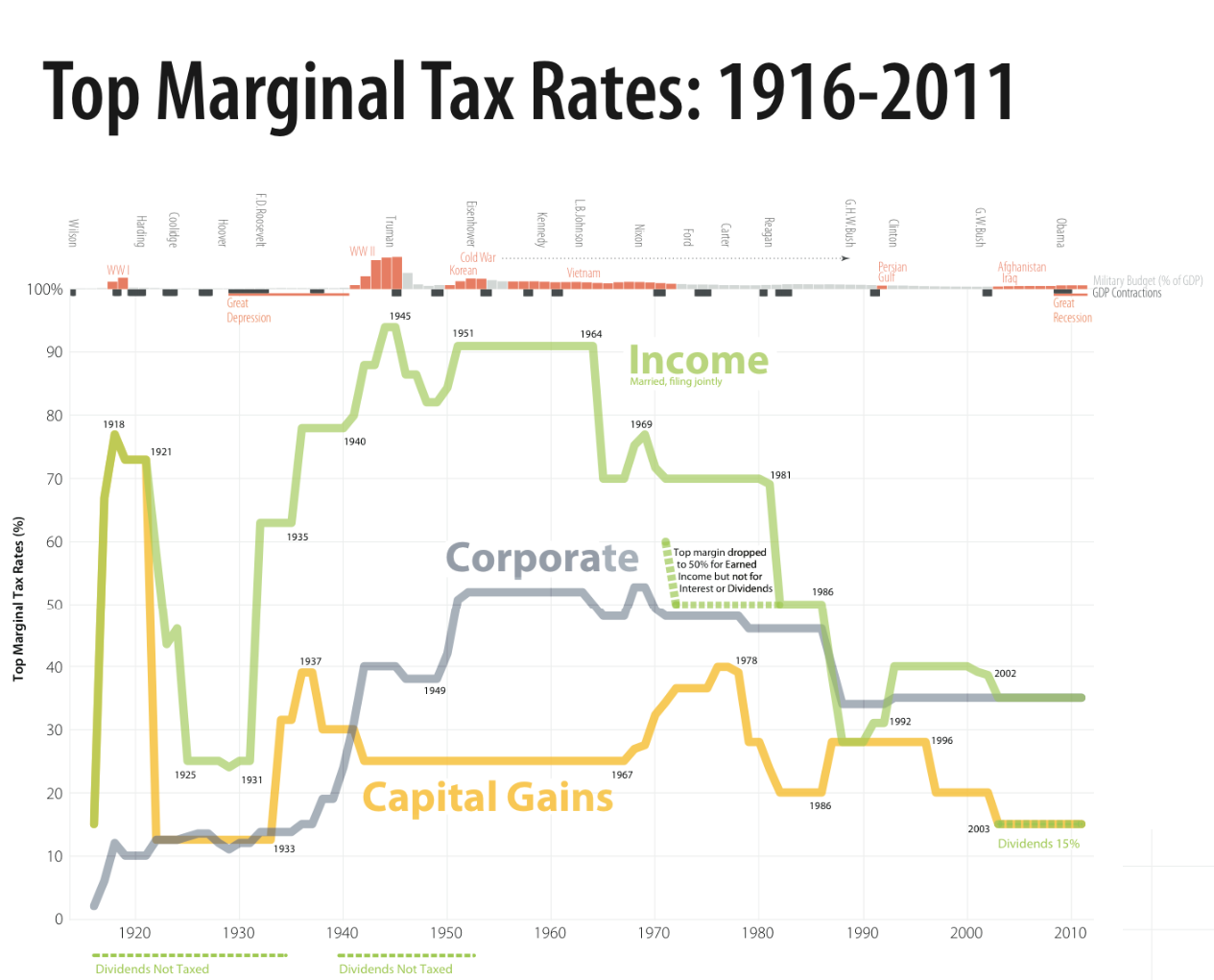
High social equality on the other hand, can be characterised by (to take a completely random example) the USA in the 1950's and 60's. Tax rates were higher and income equality was higher. It is harder to get nice graphs on government oppression during this period in the US, but I am sure we can all agree that less people were executed than under Stalin, Mao and Pol Pot. Other countries that have had a high rate of social equality in the last century are Norway, Sweden, Switzerland, Finland, Iceland, New Zealand. This is not an exhaustive list.
For more information on the statistical correlation between social equality and general wellbeing please see the following statistics lecture. -
Re:NO
primates tend to be in bands and they all protect each other. Mogamy happen because it takes a long time to rise the offspring, and it needs the support of both the female and male, and Love was one of the reward mechanism.
See Helen Fisher's talk
http://www.ted.com/talks/helen_fisher_studies_the_brain_in_love.htmlWhy do you assume all primates are the same socially?
-
NO
primates tend to be in bands and they all protect each other. Mogamy happen because it takes a long time to rise the offspring, and it needs the support of both the female and male, and Love was one of the reward mechanism. See Helen Fisher's talk http://www.ted.com/talks/helen_fisher_studies_the_brain_in_love.html
-
Re:Courts==Govts
You are woefully ignorant if you think the public elects the government in the US.
-
Re:Too much trust
If you happen to live there already, maybe it is about time you let the government know, you are not satisfied with their work.
That thinking is un-patriotic, un-american and will probably get your name added to a number of watch lists.
Either way it would change nothing. You can change one politician for another ans the same will happen.
http://www.ted.com/talks/lawrence_lessig_we_the_people_and_the_republic_we_must_reclaim.htmlThe entire political system needs changing and that will not happen without a worldwide revolution.
-
All Science is Computer Science
All Science is computer science nowadays, and I'm not even a computer scientist. So yes, there are many fields that are in great need of computer scientists and/or programmers. For example this guy, who popularized the term "connectome":
http://hebb.mit.edu/people/seung/
And BTW, his excellent TED talk:
-
Find another career: International exploiterHorizontal transmission evolves virulence. Immobile victims increase the potential virulence achieved by horizontal transmission. The "moral zeitgeist" that Dawkins loves so much is a perfect fit to evolve virulence -- that moral zeitgeist being enforced borders are the ultimate evil -- worse than child molestation by an HIV vector without a condom. Therefore, as this moral zeitgeist is increasingly enforced everywhere in the world, you are either going to be (virtually) eaten by virulent critters that make like they're human as they go from nation to nation exploiting their weaknesses and then moving on before they collapse, or you're going to become one of those virulent critters yourself!
Praise Dawkins' Moral Zeitgeist. Hail Kali! Destroy Creation With Morbidity! Invasive Species Über Alles!
-
Re:Just askin...
Corporations don't kill so much people. They just corrupt their governments so they do the dirty work for them. Or just blackmail them, having access to most of world's private mail surely makes it easy.
-
Re:Just askin...
Could be a republic for you, at least if you are named Lester. Else you just agree with who the Lesters previously choose.
-
Feedback
Worth the trouble? You should weight how much it costs you privacy vs what could cost you don't worry about it, but unfortunately, english is a bad language to realize how important the future is.
How it could affect you? You can check what have the FBI/NSA about you. You can see precedents of what NSA did with private information (if that the respect that soldiers in the battlefield deserve, good luck about you). You can see the starting trend of misusing information and how it could impact you in the future.
I think that the widespread perception of the danger is not enough... yet. But as jailing/killing the people that could inform you about the real situation is the new normal, you probably won't be aware of why you should had done it before until it hits you. Or won't have the chance, as the next salvo probably will be outlawing consumer encryption (it already started). Some of the things that you can do could be complex or cumbersome to do, but you can start progressively with this tools, taking the path of least resistance, it will protect you not just from the NSA, but from other evil people and organizations too.
-
Re:Deadman switch courier shipsHow about this: Open Source Ecology. A lot of work has gone into this.
And there's a TED Presentation for those post apocalyptic net-surfers.
These guys have the blueprints to go from nothing to somewhat modern. The site goes through mining and metal extraction and refining to building useful machines from plows to 3D printers.
See: Coffee can foundry to Casting and so on to the Global Village Costruction Set of 50 machines designed to make modern life possible.
-
Re: Constitution Suspended?
At least the president was elected by most of the people and not by the Lesters only. Qualifies as democracy better than others that claim to be.
-
Re:Men are Free...
Though they mostly were before, HIV transmission through that route is still not that bad. Now, IV drug use, that is where it spreads like wildfire. In fact, there is some speculation that bad drug policy which drove people to IV drugs and then to share needles that actually caused the first wave of the AIDS epidemic.
http://www.ted.com/talks/elizabeth_pisani_sex_drugs_and_hiv_let_s_get_rational_1.html
-
Re:It is a MakerBot after all
What we're really seeing here is the impatience of the Now Generation. What? You have to wait -thirty minutes- for something to be produced?? OMG!
That is because no-one knows how to make most devices any more. Everything is made by an anonymous team of hundreds or thousands, and you only ever interact with a few of these people. I you don't think about it you could come to the conclusion that everything is trivially simple to construct or produce. It's a result of technology exchange according to Matt Ridley, Matt Ridley: When Ideas Have Sex
-
Re:OMG this is a TED talk already
http://www.ted.com/talks/malte_spitz_your_phone_company_is_watching.html
Old news.
Jeez, he gave a talk about this stuff? That figures. "Look, I was in Egypt!" The whole thing just screams "Malte Spitz is important". He's probably just publishing this crap to impress chicks.
-
OMG this is a TED talk already
-
Re:Americans will never defend their constitution
This just in: The other side has the oposite opinion! http://www.ted.com/talks/eric_x_li_a_tale_of_two_political_systems.html
-
Re:The US is nobody's friend
The American Story
http://www.ted.com/talks/aaron_huey.html
A Portrait of McCarthy: Secret Police
http://en.wikipedia.org/wiki/Red_Scare
My Lai Massacre
https://en.wikipedia.org/wiki/My_Lai_MassacreCheap easy & lazy wins the day
-
Re:Since when
They only must look good for the Lesters, and a lot of them are outside the reach of the law anyway.
-
George Whitesides: lab the size of a postage stamp
From 2009: http://www.ted.com/talks/george_whitesides_a_lab_the_size_of_a_postage_stamp.html
"Among his solutions is a low-cost "lab-on-a-chip," made of paper and carpet tape. The paper wicks bodily fluids -- urine, for example -- and turns color to provide diagnostic information, such as how much glucose or protein is present. His goal is to distribute these simple paper diagnostic systems to developing countries, where people with basic training can administer tests and send results to distant doctors via cameraphone." -
Re:How is it okay if he's helping foreign governme
If its not illegal, then the laws are rigged. Im ok that a country that elected their government (US don't qualify on that, but less suppose) could suffer whatever abuse against their rights their government does. But what about the people from rest of the world? The communication don't even need to pass thru US to get intercepted.
The biggest damage is not against people. Is against internet, if you don't trust it or the government behind it, it will damage its adoption, or create not so open alternatives.
Governments are at war and people suffer. The G8 leak was for politics and not to help people. The US does need to fix a lot of it's laws and so do many other nations, but I don't want terrorists corrupting the process and preventing the people who love their countries from fixing the problems. Meaning you can be against illegal spying but also against terrorism and the balance for that position is you have to find a way to keep people physically safe while not infringing on their liberties.
The problem with certain kinds of leaks is that they put peoples lives in danger. To me that is a line which shouldn't be crossed. Snowden made that claim in his interview that he understands that but is saying it from China and also saying how Hong Kong has a free Internet (which might be true but no more free than the US) then goes on to say what he could have done but didn't do, how he has every identity and all sorts of knowledge of all sorts of operations, but even if he does not have those documents on him (we really don't know), the fact that he could remember some stuff could cause problems too.
So the question is how do you protect civil liberties and the Internet without putting innocent peoples lives at risk to do it? Every leak has to be judged on it's own merit, they aren't all equal. In his leak there was no detail about NSA abuses but it may have leaked something which was breaking the law and in that case it should be addressed. At the same time the G8 leak was not breaking the law and he leaked it anyway for unknown reasons.
He did show that the NSA lies to the American people about not spying on Americans and that the NSA may have broken the law. He also revealed sources and methods about how the US spies on the G8 which didn't help anything.
-
Re:How is it okay if he's helping foreign governme
If its not illegal, then the laws are rigged. Im ok that a country that elected their government (US don't qualify on that, but less suppose) could suffer whatever abuse against their rights their government does. But what about the people from rest of the world? The communication don't even need to pass thru US to get intercepted.
The biggest damage is not against people. Is against internet, if you don't trust it or the government behind it, it will damage its adoption, or create not so open alternatives.
-
Actions to take
From a previous post, here's the collected list of suggested actions people can take to help change the situation.
Have more ideas? Please post below.
Links worthy of attention:
http://www.ted.com/talks/lawrence_lessig_we_the_people_and_the_republic_we_must_reclaim.html
http://action.fairelectionsnow.org/fairelections
http://www.protectourdemocracy.com/
http://www.thirty-thousand.org/
Suggestion #1:
(My idea): If people could band together and agree to vote out the incumbent (senator, representative, president) whenever one of these incidents crop up, there would be incentive for politicians to better serve the people in order to continue in office. This would mean giving up party loyalty and the idea of "lessor of two evils", which a lot of people won't do. Some congressional elections are quite close, so 2,000 or so petitioners might be enough to swing a future election.
Someone added: Vote them out AND remove their lifetime, taxpayer-funded, free health care. See how fast the health care system gets fixed.
Someone added:You can start by letting your house and senate rep know how you feel about this issue / patriot act and encourage those you know to do the same.
If enough people let their representivies know how they feel obviously those officials who want to be reelected will tend to take notice. We have seen what happens when wikipedia and google go "dark", congressional switchboards melt and the 180's start to pile up.
I added: Fax is considered the best way to contact a congressperson,especially if it is on corporate letterhead.
Suggestion #2:
Tor, I2dP and the likes. Let's build a new common internet over the internet. Full strong anonymity and integrity. Transform what an
eavesdropper would see in a huge cypherpunk clusterfuck.Taking back what's ours through technology and educated practices.
Let's go back to the 90' where the internet was a place for knowledgeable and cooperative people.
Someone Added: Let's go full scale by deploying small wireless routers across the globe creating a real mesh network as internet was designed to be!
Suggestion #3:
A first step might be understanding the extent towards which the government actually disagrees with the people. Are we talking about a situation where the government is enacting unpopular policies that people oppose? Or are we talking about a situation where people support the policies? Because the solutions to those two situations are very different.
In many cases involving "national security", I think the situation is closer to the second one. "Tough on X" policies are quite popular, and politicians often pander to people by enacting them. The USA Patriot Act, for example, was hugely popular when it was passed. And in general, politicians get voted out of office more often for being not "tough" on crime and terrorism and whatever else, than for being too over-the-top in pursuing those policies.
Suggestion #4:
What I feel is needed is a true 3rd party, not 3rd, 4th, 5th, and 6th parties, such as Green, Tea Party, Libertarian; we need an agreeable third party that can compete against the two majors without a lot of interference from small parties. We need a consensus third party.
Suggestion #5:
Replace the voting system. Plurality voting will always lead to the mess we have now. The only contribution towards politics I'v